NEXT-GENERATION CAR T-CELLS AGAINST CANCER - Gene-Edited Off-The-Shelf Immunotherapies - Cellectis
←
→
Page content transcription
If your browser does not render page correctly, please read the page content below
NEXT-GENERATION CAR T-CELLS
AGAINST CANCER

      Gene-Edited Off-The-Shelf Immunotherapies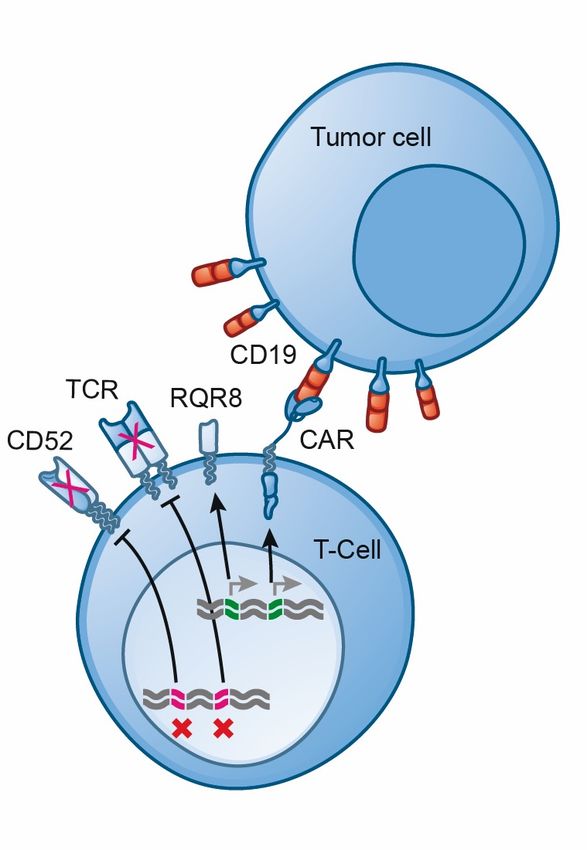
Forward-looking Statements

This presentation contains “forward-looking” statements that are based on our management’s current expectations and
assumptions and on information currently available to management.

Forward-looking statements involve known and unknown risks, uncertainties and other factors that may cause our actual results,
performance or achievements to be materially different from any future results, performance or achievements expressed or implied
by the forward-looking statements.

The risks and uncertainties include, but are not limited to the risk that the preliminary results from our product candidates will not
continue or be repeated, the risk that our clinical trials will not be successful. The risk of not obtaining regulatory approval to
commence clinical trials on additional UCART product candidates, the risk that any one or more of our product candidates will not
be successfully developed and commercialized. Further information on the risk factors that may affect company business and
financial performance, is included our annual report on form 20-f and other filings Cellectis makes with the securities and exchange
commission from time to time and its financial reports.

Except as required by law, we assume no obligation to update these forward-looking statements publicly, or to update the reasons
actual results could differ materially from those anticipated in the forward-looking statements, even if new information becomes
available in the future.

Cellectis proprietary information. Not to be copied, distributed or used without Cellectis’ prior written consent.

                                                                                                                                    2
OUR MISSION
 Translate ground-breaking gene-editing and CAR T-cell
 technology into game changing therapies,
 bringing hope to patients with high unmet needs

OUR VISION
 Transform cell therapies through gene-editing,
 creating readily available pharmaceutical-grade
 products for broad patient populations

OUR STRATEGY
 Enable a paradigm shift in medically relevant targets in
 hematological malignancies and expand into solid
 tumors.
 Explore and offer treatments for other therapeutic
 areas driven by the broad potential of our technology.     3
Investment Highlights

First Company to Turn Gene-Editing into a Therapeutic Success
   In June 2015, the 1st infant ALL patient was treated with Cellectis’ gene-edited
   allogeneic CAR T-cells

Three Allogeneic CAR T-Cell Programs with IND approved by FDA
   UCART19 (ALL) – June 2016
   UCART123 (AML, BPDCN) – July 2017
   UCART22 (ALL) – May 2018

Inventing 21st Century Cell Manufacturing
   Building best-in-class Commercial cGMP facility for Gene-Edited Cell Therapy

Leading Gene-Editing Platform
   Proprietary TALEN® gene-editing platform
   Technologies approved by FDA and EMA for several clinical trials
   Industry-leading precision and multiplexing gene editing capacity
   Broad intellectual property portfolio, built on 18 years of experience
                                                                                      4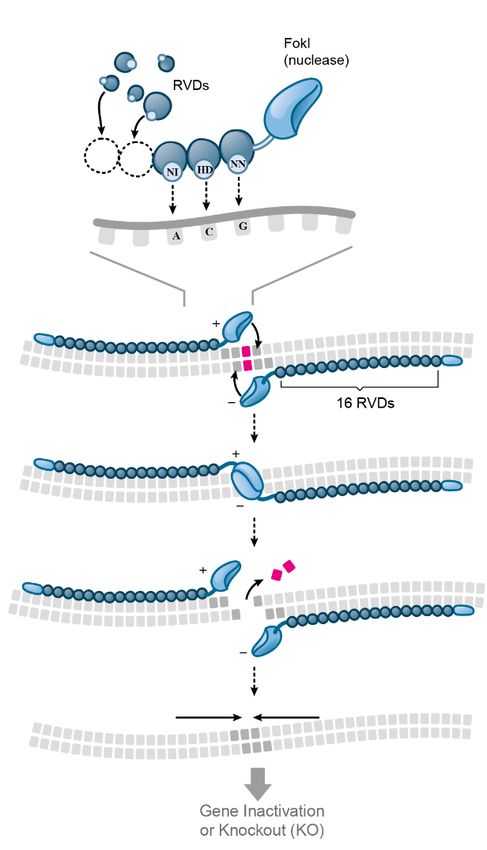
The Allogeneic CAR T-Cell Concept
How it works

                       CS1 or

                                             Chimeric Antigen Receptor
                                                Tumor Recognition

                                Allogeneic
                                CAR T-cell

       Gene Editing
     TALEN® Nuclease
                                                                    5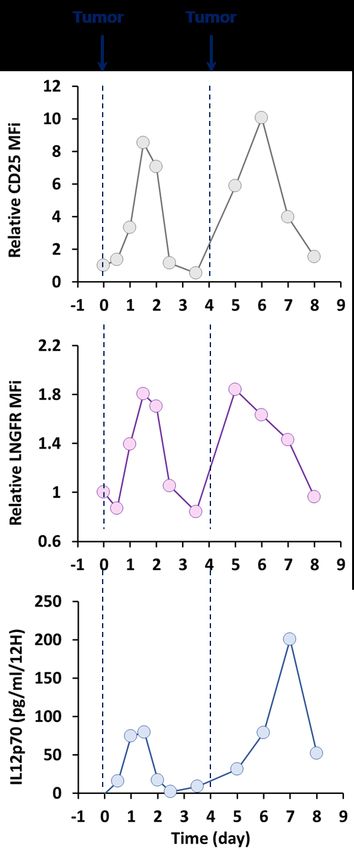
GMP Manufacturing
Integrated System for Gene-Editing And CAR T-Cell Manufacturing

 § Industry-leading experience in allogeneic CAR-T manufacturing
 § Successful GMP manufacturing of UCART19, UCART123, UCART22
 § GMP manufacturing of UCARTCS1 in progress
 § Full QC system in place, cleared for clinical trials in the EU and by the FDA

                                                                                   6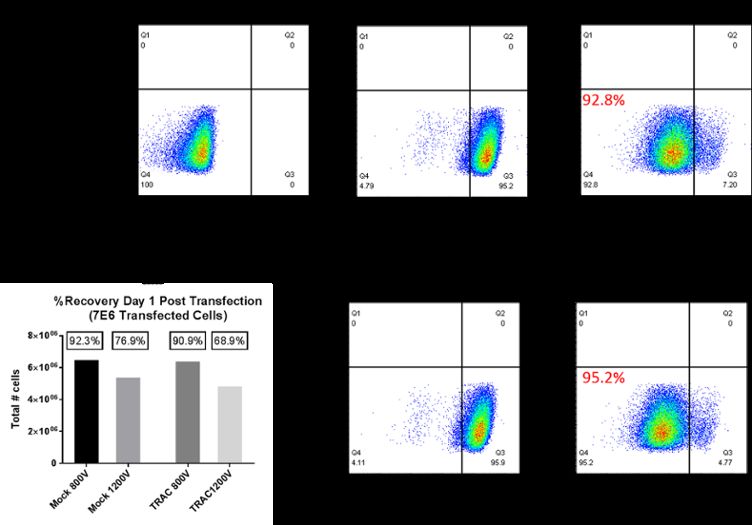
Key Differentiating Objectives of UCARTs
UCARTs = Cellectis’ Allogeneic CAR T-Cells

 Market access
  ! Easily and readily available at hospitals
  ! Potential to address large patient population (broader than autologous CAR T-cells)
  ! Enables a fast and dynamic medical footprint in underserved geographical regions

 Cost of treatment
  ! Possibility to lower the price of CAR T-cell therapies
  ! Scalable business model

  Ability to re-dose
  ! Possibility to re-dose / re-challenge with same antigen targeting CAR T-cells
  ! Possibility to combine different antigen targeting CAR T-cells

                                                                                          7
A Powerhouse in Allogeneic CAR T-Cells
Strategic Alliance With Leading Cell Therapy Team

The leader in allogeneic CAR T-cells:   Economics to Cellectis:       With equity investments by
                                                                      leading pharma partners:

                                        UCART19 (Allogene/Servier):

                                        § $350M in development
                                          milestones
                                        § Royalties on sales
In collaboration with Kite Pharma’s
former leadership team:
                                        15 Licensed Programs
                                        (Allogene):

                                        § $185M in development
                                          milestones per program
                                        § Royalties on sales
Expanding the clinical development
in collaboration with:
                                        > $3bn in potential total
                                        milestone payments

               The success of our Partners is the success of Cellectis                         8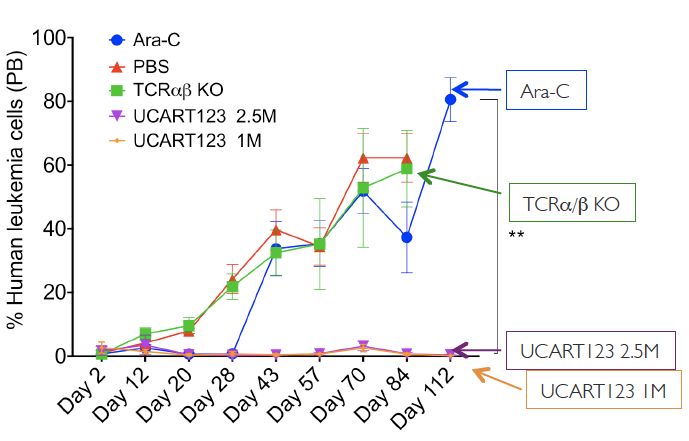
Pipeline
    Rich allogeneic CAR T-Cell pipeline with multiple shots on goal

       INDICATION            PROGRAM                  TARGET              PRE-CLINICAL                 PHASE 1                 PHASE 2   ANTICIPATED MILESTONES

                                                                                                                                         Initiate potential registration trials in
       ALL                   UCART19 1                CD19
                                                                                                                                         ALL in 2H 2019 3

       ALL                   UCART22                  CD22                                                                               Initiate Ph1 trials in 2H 2018

       NHL                   UCART22                  CD22

       NHL                   ALLO-501 2               CD19                                                                               File IND in 1H 2019 3

                                                                                                                                         Initiate potential expansion trials in
       AML                   UCART123                 CD123
                                                                                                                                         AML in 2H 2019

       BPDCN                 UCART123                 CD123

       AML                   UCART CLL1               CLL1

       AML                   ALLO-819 2               FLT3

       MM                    UCART CS1                CS1                                                                                File IND in 1H 2019

       MM                    ALLO-715 2               BCMA                                                                               File IND in 2019 3

       MM                    UCART 38                 CD38

1 UCART19     is exclusively licensed to Servier and under a joint clinical development program between Servier and Allogene              Proprietary Development Program
2 Product   candidate is exclusively licensed to Allogene                                                                                                                            9
                                                                                                                                          Licensed Development Program
3   According to Allogene investor presentation
UCART Targeting Rationale
    A summary of our most advanced CAR T-cell product candidates

CD19 1 in ALL                                                                                                                        CD123 in AML
§    High expression in ALL /                                                                                                        §   High expression on blasts in
     DLBCL / NHL patients                                                                                                                majority of AML patients
§    Well proven CAR T-cell target                                                                                                   §   High relapse rate and poor
                                                                                                                                         overall survival in R/R patients
§    Allogeneic proof-of-concept                                                                                    UCART123
                                                                       UCART19

                                                                            §    TCR gene disruption using
                                                                                 TALEN® to avoid GvHD
                                                                            §    Suicide gene is included
                                                                                 for safety

CD22 in ALL                                                                                                                          CS1 in Multiple Myeloma
§    High number of patients relapse                                                                                                 §   Well proven mAb target with
     after CD19- CAR T-cell treatment                                  UCART22                                       UCART CS1           elotuzumab (BMS/Abbvie)
§    CD22 expression frequently                                                                                                      §   CS1 (SLAMF7) is highly
     maintained in CD19-negative                                                                                                         expressed on MM cancer cells
     blasts

                                                                                                                                                                        10
        1 UCART19   is exclusively licensed to Servier and under a joint clinical development program between Servier and Allogene
UCART19¹
Initial Proof Of Concept In Relapsed / Refractory ALL Patients
Product Objectives
§ Ready-to-use, off-the-shelf therapy
§ Single healthy donor cell batch can be used to treat multiple patients
Development Status
§ Phase I trials started in 2016 in EU, in 2017 in the US
§ Phase II planned for 2019
§ Multiple recruiting centers (EU and the US)
§ Enrolled patients failed >5 lines of treatment, including autologous CAR T-cells
Results to date
§ Similar results to early Phase I results from autologous CAR T-cell trials
§ Some patients received a second dose of UCART19
11
¹ UCART19 is exclusively licensed to Servier and under a joint clinical development program between Servier and Pfizer..UCART191 – Ph 1 R/R Pediatric ALL Study Presentation at 23rd Congress of EHA, June 14-17, 2018 § All patients completed the 28-day evaluation period and were evaluable for anti-leukemic activity § 5/6 pts had achieved complete remission with incomplete blood count recovery and were MRD2 negative (
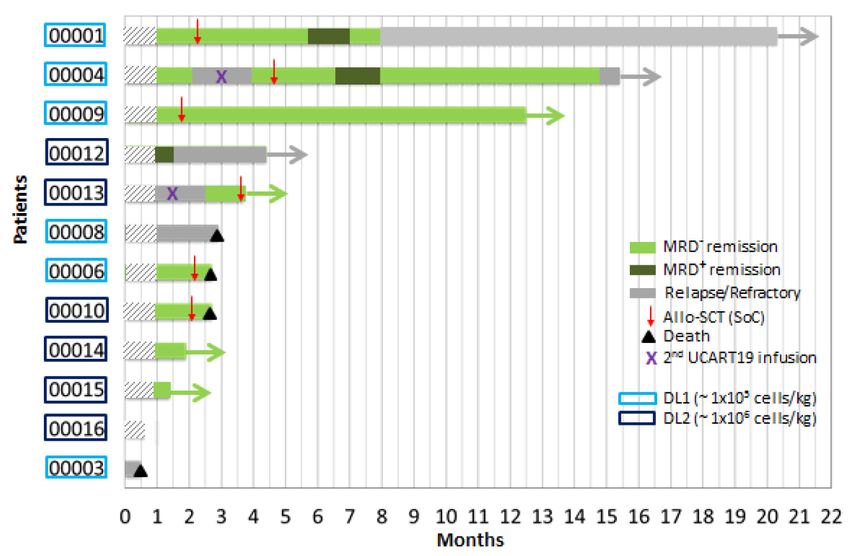
UCART191 – Ph 1 R/R Adult ALL Study
   Presentation at 23rd Congress of EHA, June 14-17, 2018

§ 10/12 patients were evaluable for anti-leukemic activity at day 28 post UCART19 infusion
§ At day 28, 8/10 evaluable patients achieved a complete remission (CR), including 7 patients in
  MRD- CR
§ Two patients have been re-dosed with UCART19 following a first dose. Both patients achieved
  MRD- CR at day 28 following the second dose.

                                  UCART19 Anti-Leukemic Activity (EHA 2018 Poster #PF1782)

1UCART19   is exclusively licensed to Servier and under a joint clinical development program between Servier and Allogene.
2Poster#PF178 “ Phase I study of UCART19, an allogeneic anti-CD19 CAR T-cell product, in high risk adult patients with CD19+ relapsed/refractory (R/R) B-cell ALL: Preliminary results of
                                                                                                                                                                                            13
  phase I CALM study” presented at 23rd EHA Congress, June 14-17, 2018, Stockholm
UCART123
Targeting AML and BPDCN
Unmet Medical Need
§ Current chemotherapeutics fail to eliminate leukemia stem cells (LSC)
§ Newly approved therapies have shown limited benefit over standard of care
Pre-Clinical Data
§ Significant improvement compared to Cytarabine standard-of-care (Ara-C)
§ Encouraging results with CD123 target in autologous CAR T-cell
approaches (City of Hope trials presented at ASH 2017)
CD123 Expression Failure to eliminate leukemia stem cells Peripheral Blood Evaluation
AML Remission Relapse
Minimal residual disease
(MRD)
UCART123 Infusion 14AML – an overview
High unmet medical need remains clinical reality
Substan#al Market Pa#ent Segments
Es#mated new cases in 20171
~21k With Rydapt and Idhifa approvals, AML market is
becoming increasingly fragmented by mutation status
6 New Cases & Deaths - (US) 1992-20131 Mut+
FLT3-mut.30% of cases, IDH1-mut 7.3%, IDH2-mut 8.7%
5
New cases
4 Younger
3 Deaths Patients
Events per 100k
2 Epigenetic dysregulation is a hallmark of AML
1 Mut- regardless of FLT3 or IDH mutation status.
0
Hypomethylating agents are a standard in AML care,
1990 1995 2000 2005 2010 2015
especially in patients unfit for 7+3 and in the r/r setting
Year
Current benchmarks Future
legacy therapies benchmarks
Unmet Need “Unfit” for ≈ 21% CRc
Induction Low-dose cytarabine Venetoclax + LDAC
AML Cancer Deaths & 5-yr Survival Therapy Hypomethylating agents Venetoclax + HMAs
~10.6k 26.9% Older “High-Risk”
Secondary
≈ 33% CRc
Es#mated 2017 deaths1 Es#mated 5-year survival1 Patients AML
“7+3” CPX-351 (likely
SoC)
Pts >55y– Fit Pts >55y – 1L Unfit
(5-yr OS) (mOS)2 “Fit” for ≈ 50% CRc
Induction
6% 5mo “7+3”
1) SEER; 2) ASH Conference 2016 Abstract #102; Dillman et al (1991) Blood; Stone et al (2015) Blood; Stein and Tallman (2016) Blood; Ravandi et al (2016) Cancer; Tefferi and Letendre (2012) JCO; Borate et al (2015) Cancer; Stone et al (2012) 15
Leukemia, Heiblig et al (2016) Medit. J. Hematol Infect Dis.; Burnett et al (2007) Cancer; Lin et al (2016) ASCO Abstract #7007; Pollyea et al (2016) ASCO Abstract #7009; Lancet et al (2016) ASCO Abstract #7000; Stone et al (2015) JCO, European
Hematology Association 2017 Abstract S473UCART123 Dosing Schedule
First Wholly-Controlled CAR T-Cell Program In The Clinic
§ AML Phase 1 dose-escalation trial ongoing at Weill Cornell & MD Anderson Cancer Center
§ First patient dosed in June 2017
Dose Escalation (mTPI) Phase (R/R AML)
Expansion Phase
DL3 5.05x10⁶/kg
RR AML
DL2 6.25x10⁵/kg N=18-37
DL1 2.5x10⁵/kg Untreated AML
ELN Adverse Genetic Group
N=46-107
DL-1 1.25x10⁵/kg
Total Phase I Expansion
N=64-144
Total Dose Escalation N= 18 pts
Clinical research coordinated by principal investigator Prof. Gail J. Roboz, MD, at Weill Cornell
16UCART22
Targeting R/R ALL
Unmet Medical Need
§ Proven target for ALL and potentially NHL
§ No solution for relapsed patients after CD-19 directed CAR T-cell treatment
§ Loss of CD-19 antigen requires new CAR T-cell target
Pre-Clinical Data
§ UCART22 is highly efficient at eradicating tumors in vivo
§ UCART22 cells result in increased mice survival
Enrolment Strategy
CD22+ Cell Line Show no Tumor Progression
§ Relapsed / refractory adult ALL patients first
§ Enrolment open to CD19 treatment naïve patients 1,E+10
G1 Vehicle
Biolum signal (ph/s/sr)
1,E+09 G2 DKO/NT 10x10E6 cells
§ Open also to anti-CD19 pre-treated relapsing patients G5 3x10E6 UCART22
1,E+08
G6 10x10E6 UCART22
§ Selection of strong CD22 expressing B-malignant cells 1,E+07
(>2,000 CD22/cell)
1,E+06
§ First dose cohort starting at 1x10⁵ UCART22 cells per kg 1,E+05
§ Age limit is 65 years 1,E+04
0 7 14 21 28 35
Days post treatment
§ Transplant after UCART22 treatment not a requirement
17UCARTCS1
Targeting Multiple Myeloma
Unmet Medical Need
§ > 30,000 patients / year in the US
§ High relapse rate, median OS of 9 months
§ Autologous BCMA-targeted CAR T-cell therapies show high relapse rate
§ Need for potential multiple dosing strategy
Pre-Clinical Data
§ Strong anti-tumor effect in mice
§ Mice injected with two consecutive doses of UCARTCS1 show longer
survival than single dose injected mice
§ Total number of cells of two doses is lower than single dose
Two consecutive doses vs single dose of UCART CS1 : Knock-Out of CS1 on CAR T-Cells to disable cross-reaction
100
CS1 Antigen CS1 CAR
Percent survival
75
Vehicle
UCARTCS1 3E6
50 UCARTCS1 3E6 redosing
UCARTCS1 10E6
UCARTCS1 10E6 redosing
25
CD8 CD8
0
0 10 20 30 40 50 60 70 80 90 100 110
Time (days)
Day 0 Day 25
1st Injection 2nd injection 18Proprietary TALEN® Gene-Editing Platform
High Knock-Out and Knock-In Efficiencies
§ 95.2% single targeted gene knock-out
§ TRAC Knock-Out
95.2%
TCRab
§ ~80% single gene integration
§ CAR Knock-In at TRAC Locus
TCRab
79.8%
CAR
19TALEN® High Yield Multiplex Gene Editing
Combining Knock-Out and/or Knock-In in T-Cells
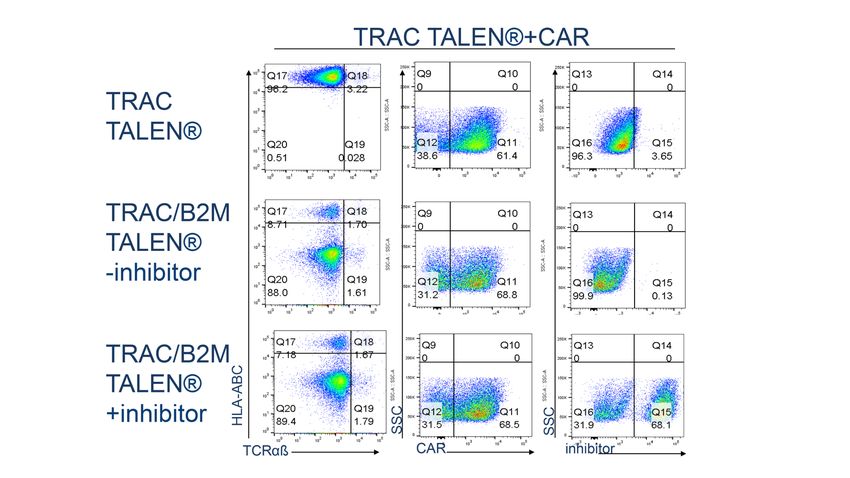
§ 88% double targeted gene knock-out
§ TCR and B2M
B2M
TRAC
§ 60% double targeted gene insertion
NK inhibitor @ B2M
§ CAR insertion at TCR
§ NK inhibitor at B2M
20
CAR @ TRACControl of TALEN® Off-Target Effect
Use of engineered RVDs to discriminate between ON and OFF-site
Ø Educated utilization of engineered RVDs to discriminate HBB loci preventing OFF-site cleavage
HBB ON-Site 25 ON-Site
OFF-site
20
Mutation frequency (%)
OFF-SITE
15
ON-site/OFF-site > 94 % identity
HBD OFF-Site 10
5
Detection
level
0
Natural RVD Engineered RVD
Juillerat et al (scientific report 2015)
100
PD1 ON-Site ON-Site
OFF-site
90
Mutation frequency (%)
80
OFF-SITE
Chr17 q24.1 OFF-Site 10
5
Detection
level
0
21
Natural RVD Engineered RVDNext Gen. CAR-T Cells Targeting Solid Tumors
Synthetic Biology For High Performance UCARTs
Example of targeted integration at CD25 locus
§ IL12 contributes to anti tumor activity (Th1, NK, CD8)
§ I.V. IL12 shows systemic adverse effects (BM, Liver, mucus membranes)
§ Local On-Target IL12 secretion may avoid systemic toxicity
CD25 expression
upon tumor
engagement
Tumor cells
CAR
TALEN®
TCR STOP
CAR
CAR STOP
Engineered IL-12
TCR follows CD25
expression pattern
IL12 CD25 upon tumor
T-cells Engineered
TALEN® IL12 engagement
CD25 STOP
+++
CD25 2A IL12 STOP 22 2A STOP
Tumor dependent
CD25 IL12
expression of
engineered IL-12
under the control of
CD25 promoter
significantly improves
tumor eradication
22The Cellectis Group
70,2% ownership
§ NASDAQ: CLLS
§ EURONEXT GROWTH: ALCLS
§ 491M$ cash as of June 30, 2018
§ Expected to fund operations into § NASDAQ: CLXT
§ 106M$ cash as of June 30, 2018
2022
§ Based in Minnesota
§ Consumer focus
§ High value asset
Gene editing is the link
23THANK YOU
Cellectis S.A.
8, rue de la Croix Jarry
75013 Paris – France
Cellectis, Inc.
430 East 29th Street
10016 New York, NY – USA
investors@cellectis.comYou can also read


