North Coast Regional Plan 2036 - Coffs Harbour Chamber of ...
←
→
Page content transcription
If your browser does not render page correctly, please read the page content below
Planning &
Environment

              2036

 North
 Coast Regional
       Plan
NORTH COAST REGIONAL PLAN 2036
March 2017 © Crown Copyright NSW Government

ISBN: 978–1–76039–489–9
DISCLAIMER
While every reasonable effort has been made to ensure that this document is correct at the time of printing, the State of NSW, its agents and
employees, disclaim any and all liability to any person in respect of anything or the consequences of anything done or omitted to be done in
reliance or upon the whole or any part of this document.

Copyright Notice
In keeping with the NSW Government’s commitment to encourage the availability of information, you are welcome to reproduce the material
that appears in the North Coast Regional Plan 2036 for personal in-house or non-commercial use without formal permission or charge. All
other rights are reserved. If you wish to reproduce, alter, store or transmit material appearing in the North Coast Regional Plan 2036 for any
other purpose, request for formal permission should be directed to:
North Coast Regional Plan 2036, Locked Bag 9022, Grafton, NSW 2460

Cover image:
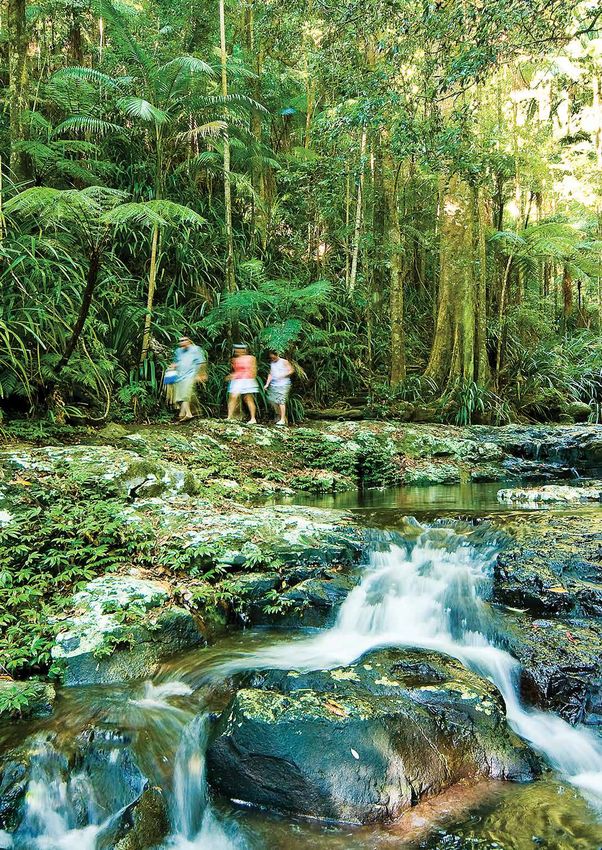
Crystal Shower Falls, Dorrigo National Park
Foreword
The North Coast of NSW is undoubtedly one of            New release areas, including Cumbalum, Kings
the state’s most desirable places to live and work.     Forest, Cobaki, Brimbin and Thrumster will be
                                                        new communities providing the North Coast with
More than 12 million people visit the region each       greater housing choice.
year, making it also one of the great tourist
attractions of the nation.                              By focusing growth in cities and centres we have
                                                        protected the sensitive coastal strip, productive
With the State’s most biologically diverse              farmland and land with significant environmental
environment and vibrant communities                     and cultural values.
increasingly connected to economic
powerhouses to the north and south, the North           This environment will be enhanced and managed
Coast has a solid foundation for a sustainable and      to ensure future generations enjoy the same
prosperous future.                                      outstanding lifestyle that we have.

The North Coast Regional Plan 2036 is our               The distinctive design and character of the North
blueprint for the next two decades that reflects        Coast will be promoted and cycling and walking
community and stakeholder aspirations and               paths will be extended and embellished as we
opportunities from leveraging the North Coast’s         support active and healthy lifestyles and greater
position between two of the fastest growing             enjoyment of the North Coast’s subtropical
population corridors in the nation.                     climate and natural beauty.

The Pacific Highway is a critical link for Australia,   We recognise the Bundjalung, Gumbaynggirr,
NSW and the North Coast. Ongoing upgrades to            Yaegl, Dunghutti and Biripi people are the
the Highway and access to a series of regional          traditional custodians of the North Coast region.
and international airports will drive economic          They are important partners in the economic,
growth and bring communities closer together.           social and environmental future of the North
                                                        Coast and we will work in greater collaboration
Tourism, agribusiness and commerce throughout           into the future.
the region will benefit from vastly improved
access to national and international markets,           The North Coast Regional Plan 2036
whilst our environment and vibrant communities          encompasses a vision, goals and actions geared
will be showcased, energising an increasing             towards delivering greater prosperity in the years
resident population.                                    ahead for those who live, work and visit this
                                                        important region.
The region’s cities – Port Macquarie, Coffs
Harbour, Lismore and Tweed Heads - will be              I urge everyone committed to the North Coast to
vibrant cosmopolitan hearts, accommodating              work together to support its success.
more than three-quarters of the region’s
population growth over the next 20 years, as well
as supporting critical jobs growth and health and
education services.

New housing will be also be accelerated in other        Anthony Roberts MP
centres to maximise existing services, meet the
community’s diverse housing needs and to                Minister for Planning
improve housing affordability.                          Minister for Housing
                                                        Special Minister of State
Contents
                         Introduction                                                                             4
                         Delivering the Plan                                                                      6
                         Vision                                                                                   8
                         Leveraging the Pacific Highway                                                          11
                         Goal 1: The most stunning environment in NSW                                            15
                         Direction 1: Deliver environmentally sustainable growth                                 17
                         Direction 2: Enhance biodiversity, coastal and aquatic habitats, and water catchments   18
                         Direction 3: Manage natural hazards and climate change                                  19
                         Direction 4: Promote renewable energy opportunities                                     22
                         Goal 2: A thriving, interconnected economy                                              25
                         Direction 5: Strengthen communities of interest and cross-regional relationships        25
                         Direction 6: Develop successful centres of employment                                   26
                         Direction 7: Coordinate the growth of regional cities                                   28
                         Direction 8: Promote the growth of tourism                                              35
                         Direction 9: Strengthen regionally significant transport corridors                      36
                         Direction 10: Facilitate air, rail and public transport infrastructure                  37
                         Direction 11: Protect and enhance productive agricultural lands                         38
                         Direction 12: Grow agribusiness across the region                                       40
                         Direction 13: Sustainably manage natural resources                                      41
                         Goal 3: Vibrant and engaged communities                                                 45
                         Direction 14: Provide great places to live and work                                     46
                         Direction 15: Develop healthy, safe, socially engaged and well-connected communities    46
                         Direction 16: Collaborate and partner with Aboriginal communities                       48
                         Direction 17: Increase the economic self-determination of Aboriginal communities        48
                         Direction 18: Respect and protect the North Coast’s Aboriginal heritage                 49
                         Direction 19: Protect historic heritage                                                 49
                         Direction 20: Maintain the region’s distinctive built character                         50
                         Direction 21: Coordinate local infrastructure delivery                                  50
                         Goal 4: Great housing choice and lifestyle options                                      53
                         Direction 22: Deliver greater housing supply                                            54
                         Direction 23: Increase housing diversity and choice                                     56
                         Direction 24: Deliver well-planned rural residential housing areas                      56
                         Direction 25: Deliver more opportunities for affordable housing                         57
                         Local Government Narratives and Urban Growth Area Maps                                  60
                         Appendix A: Urban Growth Area Variation Principles                                      85
                         Appendix B: Important Farmland Interim Variation Criteria                               86
                         Appendix C: Precinct Plan Guidelines                                                    87
                         Glossary                                                                                88
                         Endnotes                                                                                92
Sapphire Beach,
Coffs Harbour courtesy
of Destination NSW
Introduction
The Pacific Highway is
unlocking the potential
of one of Australia’s most
beautiful places
The North Coast boasts more endemic plants and          The NSW Government has listened to the North
animals than any other NSW region.1 The subtropical     Coast community and has no intention to revive
climate and panoramic landscapes attract new            coal seam gas on the North Coast. More than
residents and visitors, and support growing and         $27 million has been spent to buy back the
thriving agriculture and tourism sectors.               exploration licences handed out by the previous
                                                        government. This Plan makes it manifestly clear
The North Coast will harness the opportunities          that coal seam gas resources on the North Coast
provided by its spectacular environment, growing        will remain in the ground.
cities and centres, and increasing connectivity
between communities and with South East
Queensland. Connectivity and prosperity will be
delivered by significant infrastructure investment,       Investment on the North Coast 2
led by the Pacific Highway and Gold Coast
International Airport upgrades, which are
                                                          NSW Government investments on the North
expanding the global reach of the North Coast.
                                                          Coast include:
The North Coast Regional Plan 2036 is the                  • a share of $1.5 billion in funding towards
blueprint to deliver this exciting future.                    the upgrade of the Pacific Highway in
                                                              2016–17, including more than $954
The Plan will guide the NSW Government’s land                 million towards the Woolgoolga to
use planning priorities and decisions to 2036. It is          Ballina project;
not intended to be a step-by-step approach to all          • more than $110 million committed
land use planning. Rather, it provides an overarching         in 2016–17 for upgrades to hospitals
framework to guide subsequent and more detailed               and health facilities, including over
land use plans, development proposals and                     $75 million to fund the Lismore Base
infrastructure funding decisions. While a series of           Hospital redevelopment and
priority actions are included, medium-and                     $35 million for other health facilities;
longer-term actions will be identified to coincide         • over $7 million in funding in 2016–17
with population growth and economic change.                   to fund upgrades to North Coast TAFE
                                                              Institute campuses and facilities; and
Priorities for each council are set out in Local           • $8.8 million funded by the Regional
Government Narratives, which will guide further               Tourism Infrastructure Fund for
investigations and implementation.                            upgrades to Lismore, Ballina–Byron
                                                              and Coffs Harbour airports, with an
The Plan is the product of extensive consultation             additional $9.5 million identified for
with councils, stakeholders and the wider                     potential further works to Ballina–Byron
community, conducted around a draft Plan in 2016.             and Port Macquarie airports to boost
The feedback from this consultation has been                  their capacity, safety and ability to
integral to finalising the North Coast Regional               attract more visitors to regional NSW.3
Plan 2036.

4       North Coast Regional Plan 2036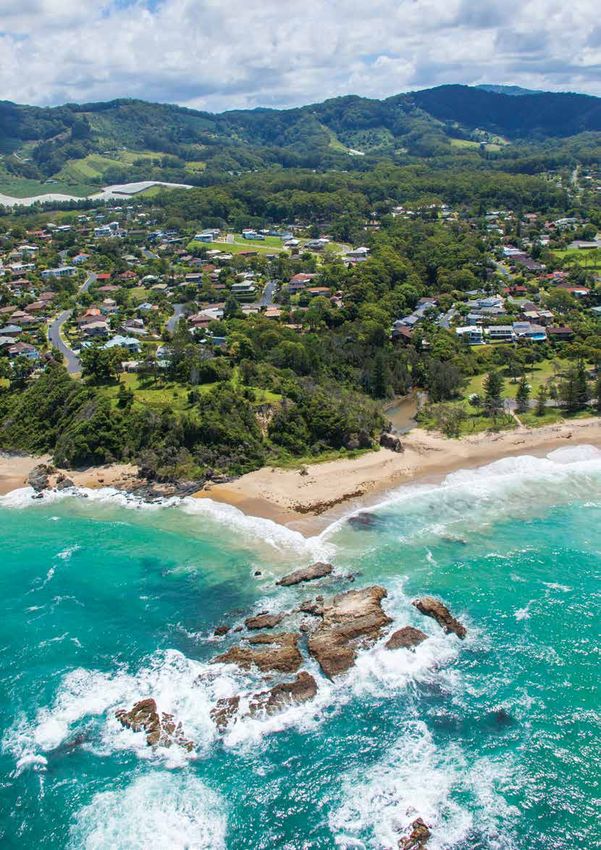
Population Growth                                                             New Dwelling Construction
                                                                                                    2016–2036
                  2016–2036

76,200                               +46,000
                                   more homes required

                                                                                          $11b
                                                                                  Gross Regional
                                                                             Product Contribution

North Coast Gross Regional Product                                                Agriculture Gross Value
                                         2001-2016                                                   2014–2015

                  $20b                                                          $930m
Tourism Impact                                                                      Blueberry Production
                                                                                                          2011
                    2016

                                                 Other Regions
$3.7b                                                       16%
Regional Economy

12.2m                                                            Australia
                                                                                               $134m
Tourist Visits
                                                                         84%     North Coast   Economic
3  RD                                                                                          Contribution
Most popular Australian tourist
destination by overnight stays

Regional Airport Passengers                                                  Pacific Hwy Freight Transport
                             2006-2016                                                               2013-2031

                           250%
                           Increase
                           2016 – 1,064,100
                                                                                               83%
                           2006 – 304,008                                                      Increase
Delivering the Plan
The NSW Government’s commitment

To deliver the North Coast Regional Plan 2036, all        region. In the short term, its focus will be on
levels of government, the private sector and the          supporting cities, cross-border planning, and
community will need to work together. The Plan            managing important farmland, renewable energy
will be incorporated into each stakeholder’s              projects and tourism opportunities. Over time,
future activities.                                        new priorities will be identified to support growth
                                                          and change in the region. Funding will be
                                                          coordinated for regional infrastructure covering
Coordination                                              transport, health, education, open space,
The NSW Government has established the North              recreation, emergency services and justice.
Coast Delivery, Coordination and Monitoring
Committee to deliver, coordinate and be                   This Plan sets regional planning priorities and
accountable for achieving the vision and goals of         provides guidance and direction for regional and
the Plan (see Figure 1). This is a new dedicated          local planning decisions. It identifies where to
body that will comprise councils and State                focus new housing and jobs to deliver social and
agencies. It will listen and work with all                economic benefits. The Plan sets in place strategic,
stakeholders and the community to make sure               line-of-sight land use planning for the region and
that growth is aligned with infrastructure and            each local government area. Line-of-sight
delivered in the right places and at the right time.      planning will support strategic-led planning and
                                                          transparency by establishing clear objectives that
                                                          will guide on-the-ground outcomes.
Delivery
The Committee will implement this Plan,                   An Implementation Plan for 2017–19 accompanies
prioritising the actions needed to seize on               this Plan.
immediate and emerging opportunities for the

Figure 1: North Coast Delivery, Coordination and Monitoring Committee

     North Coast Delivery, Coordination and Monitoring Committee

       Coordination                              Delivery                        Accountability

 • Aligning across                       • Actioning the five-year          • Monitoring activity and
   Government                              Implementation Plan                trends
 • Partnering with local                 • Directing local growth           • Publishing annual reports
   government                                                                 and information
                                         • Supporting local planning
 • Informing infrastructure                                                 • Revising and adjusting
   priorities                                                                 directions towards goals
 • Guiding investment
 • Listening to the community

6       North Coast Regional Plan 2036
Regional district planning may be undertaken                  The report will also include an annual review and,
through a partnership with all stakeholders, led              if necessary, an update of the appendices, and
by the Committee. Priorities for regional district            urban growth area maps. This monitoring will be
planning are highlighted in this Plan where                   conducted in partnership with councils. Every
matters cross jurisdictional boundaries.                      five years, or as necessary, the Plan will be
                                                              reviewed and adjusted to make sure the vision
A Government direction will be issued to                      for 2036 is realised.
councils so that when they prepare new
planning proposals or update local planning
controls, they are consistent with the directions
and actions outlined in the Plan. The Committee                   Local Growth Management
will support the preparation of local growth                      Strategies
management strategies that translate the vision
and guiding principles of this Plan into more
                                                                  Local growth management strategies
detailed priorities for growth and change that
                                                                  will be prepared by councils to reflect
can be applied at the local level.
                                                                  the directions and actions contained in
                                                                  this Plan. Guidelines will be prepared
Accountability                                                    to help councils develop local growth
                                                                  management strategies, which will be
The Committee will monitor and review progress
                                                                  developed prior to preparing a local
towards achieving the vision and goals for 2036.
                                                                  environmental plan to zone land for
This will help prioritise infrastructure delivery and
                                                                  residential, rural residential, commercial
influence policy settings.
                                                                  and industrial land uses.
An annual report will be prepared that presents
indicators for housing, employment, communities
and the environment, as well as advice to
government on the delivery of short-term actions.

Figure 2: State planning hierarchy

                   OUR              Regional              Regional                Local Plans
                   NSW               Plans                Districts               • P
                                                                                     repared by local
                                                                                    councils for each
                                   • Prepared by        • Led by                    council area
                                     Government           Government, in
                                                          partnership with        • Must be consistent
                                   • Sets priorities                                with Regional
                                     and directions       local councils
                                                          and the community         Plan and Regional
                                     for regions                                    District Plans
                                                             • F or priority matters
                                                               that cross council or
                                                               jurisdictional boundaries

                                                                              North Coast Regional Plan 2036   7
Vision
The best region in Australia
to live, work and play
thanks to its spectacular
environment and vibrant
communities
The natural beauty of its environment continues       By supporting local and creative industries,
not just to enrich the lives of its residents, but    agriculture and tourism, reinforcing local
also to sustain a thriving tourism and lifestyle      character and providing greater housing choice
economy. The North Coast’s 15 World Heritage          the network of centres has enlivened their
Areas are a symbol of its stunning biological         communities and enhanced the region’s charm
diversity. The region’s natural environment is        and community wellbeing.
safeguarded and enhanced to deliver a
prosperous future and to ensure that it remains       Communities of interest deliver greater
one of the most beautiful parts of the State.         services and economic opportunities for
                                                      residents and business.
Adding to the attraction of the region is a network
of cosmopolitan cities and centres linked by the      Northern communities have established
Pacific Highway and interconnected to vibrant         important links and are integrated with a
coastal, hinterland and rural communities.            burgeoning South East Queensland. Hinterland
                                                      and rural communities are making the most of the
The regional cities of Tweed Heads, Lismore,          increasing global demand for their high-quality
Coffs Harbour and Port Macquarie are the              agricultural products. Southern and coastal
primary growth anchors, delivering new jobs,          communities are building relationships and
and more diverse housing as well as high quality      leveraging opportunities from the Pacific
essential services.                                   Highway upgrade.

The cities are complemented by two strategic          This is a region where a myriad of lifestyles – rural,
centres, Ballina and Grafton, with new housing        coastal, bohemian, cosmopolitan – and
and employment opportunities and major                opportunities are available. This diversity and
infrastructure, such as the Grafton Hospital and      opportunity continues to make the North Coast
Ballina–Byron Gateway Airport. A network of           one of the great places to live, work and visit.
attractive coastal and hinterland centres, such as
Bellingen, Byron Bay, Casino, Kempsey, Kyogle,
Murwillumbah and Macksville complement the
cities and strategic centres.

8       North Coast Regional Plan 2036
To achieve this vision, the NSW Government has: acknowledged the importance of the environment and the opportunities of the Pacific Highway, South East Queensland and the region’s cities and centres and... set the following regionally focused goals: • The most stunning environment in NSW • A thriving, interconnected economy • Vibrant and engaged communities • Great housing choice and lifestyle options
Figure 3: North Coast 2036

       Regional City

       Strategic Centre

       Centre

       Health Precinct

       Hospital

       Gold Coast Airport -
       Global Gateway

       Airport

       Commercial Port

       Education

       Harbour

       Intra-regional Connection

       Inter-regional Connection

       Communities of Interest

       Railway
Leveraging the
Pacific Highway
A key component in the
North Coast’s success
The Pacific Highway upgrade is one of the largest
and most important projects ever undertaken in
Network of stronger
Australia. By 2020, approximately $15 billion will cities and centres
have been spent on delivering a four-lane divided
highway through the North Coast, from Leveraging and maximising the social and
Newcastle to Queensland.4 The focus for the economic links being delivered by the Pacific
future is to harness new opportunities that arise Highway upgrade to cities and centres will
from the improved travel safety, reduced travel provide business with access to new markets
times, improved transport efficiency and lower and offer residents greater choice in where to
freight transport costs. live and work.
Economic development of the region will By working together across councils, there are
continue to be leveraged off the upgrade and the opportunities for more integrated communities
stronger connections between the region’s cities of interest, such as Coffs Harbour–Clarence Valley
and centres as the engines of economic growth. and Kempsey–Port Macquarie. This will provide a
The increased connectivity is building stronger diverse range of industry choices to areas that have
partnerships and collaboration across communities the least constraints and greatest land availability.
of interest that will drive future prosperity. Tweed Heads, Lismore, Coffs Harbour and Port
The highway not only links the region together Macquarie are regional cities. Ballina and Grafton
but connects it to the wider world. It is providing are strategic centres and Kempsey, Macksville,
greater access to new markets and economic Bellingen, Casino, Kyogle, Byron Bay, Mullumbimby
opportunities in adjoining regions, particularly and Murwillumbah are important centres. These
the important and rapid growth in South East cities and centres are the vibrant social and
Queensland. Making the most of this access economic hubs of their surrounding communities.
will underpin a vibrant economy that will Over the next 20 years, almost 77 per cent of
deliver homes, jobs and infrastructure for population growth on the North Coast will be in
the region’s communities. the regional cities.5 There are opportunities for
these regional cities to deliver greater housing
choice, more jobs and services, and vibrant
precincts that suit the needs of the growing
and changing population.
To capitalise on these opportunities, action
plans will be prepared for the regional cities
to enable opportunities for growth and to
manage development. A steering committee
with representatives from each council will be
established to oversee the coordination and
implementation of these plans.
North Coast Regional Plan 2036 11Cross-border opportunities Interconnected Communities
with South East Queensland
South East Queensland is having a growing influence on the
North Coast. The Pacific Highway and digital technology in
particular are helping to spread the influence of South East
TOOWOOMBA &
DARLING DOWNS
BRISBANE
Queensland beyond the border areas and through the
region towards the Mid North Coast. The access being
provided by the Pacific Highway will enable the North
Coast to deliver housing, jobs, tourism and recreation
activities that maximise the opportunities provided by the MURWILLUMBAH
KYOGLE
growth of South East Queensland to more than five million MULLUMBIMBY
people by 2041.6 LISMORE
BALLINA
The Tweed Shire already has a strong relationship with the CASINO
Gold Coast, which provides many services and facilities
to the Far North Coast. Tweed Heads and Coolangatta
function as ‘twin towns’, with retail and business opportunities
GRAFTON
as well as healthcare and education services used by
residents from either side of the border.
Gold Coast Airport now serves as the major international COFFS HARBOUR
gateway to the region. Transport and economic linkages ARMIDALE BELLINGEN
continue to develop between the rural hinterland areas of MACKSVILLE
Lismore, Kyogle, Casino, Toowoomba, Beaudesert and the TAMWORTH
Darling Downs. New tourism and freight movement KEMPSEY
opportunities for the North Coast economy are also
emerging from the expansion of the Gold Coast and PORT MACQUARIE
Brisbane West Wellcamp airports.
The NSW Cross-Border Commissioner, the Queensland
Government and councils will work together to better NEWCASTLE
integrate cross-border servicing and land use planning to
remove any barriers to economic, housing and jobs growth.
SYDNEY
Pacific Highway,
Tweed Shire
12 North Coast Regional Plan 2036GOAL 1
The most stunning
environment in NSW
Panoramic coastal and rural landscapes define
the distinctive environment, character and lifestyles Protection of koalas and
of this region. The North Coast is one of the
most biologically diverse regions in Australia,7
their habitat
including the outstanding biodiversity assets
of 15 World Heritage Areas, covering over Koalas are an iconic species on the North
117,000 hectares. Coast, and both landholders and the
wider community hold the key to the future
These assets, in addition to their intrinsic value, of this special animal.
deliver clean air and water to communities, and
improve lifestyles and wellbeing. They provide the The koala population on the North Coast
natural resources that underpin industries and are is coming under increased stress, and
the foundation on which a significant tourism protecting habitat is an important factor in
sector has been built. reducing this stress and halting the decline
of the population.
The focus for the future is to deliver sustainable
State Environmental Planning Policy 44 –
land use that protects the North Coast’s
Koala Habitat Protection and koala plans of
biodiversity and environmental values, and its management are important components
stunning environment. Directing growth to of the strategy to protect koala habitat.
locations that do not compromise the natural Protecting koala habitat will have flow-on
environment will ensure the region grows benefits for a wide range of other species
sustainably and in line with community aspirations. and ecological communities. State policy
will continue to seek ways to improve and
Growth can put pressure on environmentally implement appropriate measures to help
sensitive areas, including the 49 coastal lakes and minimise the impacts of development on
estuaries, 900 wetlands and 70 littoral rainforests koalas and their habitat.
on the North Coast. Opportunities for sustainable
growth will be provided that protects highly
valued environment for future generations.
Important planning principles that will help
NSW’s most
to achieve these outcomes are shown on the
next page.
Ecosystems are also subject to natural hazards
and climate change. It is important to build
biologically
resilience and develop innovative ways to
manage water, harness renewable energy
diverse region
and prepare for natural hazards.
Protester Falls,
The Channon, courtesy of
Lismore City Council North Coast Regional Plan 2036 15PLANNING PRINCIPLES
GUIDING GROWTH ON THE NORTH COAST
PRINCIPLE 1: DIRECT GROWTH TO IDENTIFIED URBAN GROWTH AREAS
Urban growth areas have been identified to achieve a balance between urban expansion and
protecting coastal and other environmental assets. They help maintain the distinctive character of the
North Coast, direct growth away from significant farmland and sensitive ecosystems and enable
efficient planning for infrastructure and services.
Maps of these areas are shown in the Local Government Narratives.
PRINCIPLE 2: MANAGE THE SENSITIVE COASTAL STRIP
The coastal strip comprises land east of the planned Pacific Highway alignment plus the urban areas of
Tweed Heads around the Cobaki Broadwater. The coastal strip is ecologically diverse and contains
wetlands, lakes, estuaries, aquifers, significant farmland, and has areas of local, State, national and
international environmental significance. Much of this land is also subject to natural hazards, including
flooding, coastal inundation, erosion and recession.
Demand for new urban and rural residential land in this area is high. To safeguard the sensitive coastal
environment, rural residential development will be limited in this area, and only minor and contiguous
variations to urban growth area boundaries will be considered.
PRINCIPLE 3: PROVIDE GREAT PLACES TO LIVE AND WORK IN A
UNIQUE ENVIRONMENT
Making cities and centres the focus of housing diversity, jobs and activities makes communities more
vibrant and active, reduces pressure on the environment, makes it easier for residents to travel to work
and access services, and builds social cohesion.
The Plan will guide councils in preparing local growth management strategies and planning
proposals to deliver great places to live and work that maximise the advantages of the North Coast’s
unique environment.
Settlement Planning Principles
wy
URBAN
GROWTH
cH
AREA
URBAN
cifi
GROWTH
AREA
Pa
URBAN URBAN
GROWTH GROWTH
AREA AREA
URBAN
GROWTH
URBAN AREA
GROWTH
AREA
COASTAL
16 North Coast Regional Plan 2036 STRIPDirection 1: Deliver Local growth management strategies will enable
communities to assess the broader implications
environmentally sustainable and consequences of identifying locations for
growth proposed urban and employment land.
The North Coast is known for its diverse rural
There may be a need to vary the urban growth
and coastal landscapes and world-class natural
areas as new information becomes available or
environment. The focus for the future is to manage
to correct anomalies. Any variations must be in
growth to protect the conservation and economic
accordance with the Urban Growth Area Variation
value of these important assets so that the region
Principles (Appendix A) and will need to be
remains a great place to live and work.
considered and justified through a strategic
The region’s low-density settlement pattern planning or rezoning process.
has exacerbated growth pressure on sensitive
Only minor and contiguous variations to urban
environments. Directing future growth to locations
growth areas in the coastal strip will be considered
that can sustain additional development, and
due to its environmental sensitivity and the range
are readily serviced, will deliver sustainable
of land uses competing for this limited area.
growth across the region and help protect
the environment. Active and passive community open spaces may
be located outside the urban growth areas. When
Most of the urban settlements are separated by
deciding whether to locate future open space
farmland, bushland, floodplains or environmental
outside the urban growth areas, high-value
features that give the region its distinctive
environmental, heritage or natural resource
character. The urban growth areas will maintain
areas should be avoided.
these ‘green breaks’ to protect environmental
values and attract people to the region.
Actions
The coastal strip covers 12 per cent of the region
and is home to 49 per cent of the population. 1.1 Focus future urban development to
As the region grows, development pressure is mapped urban growth areas.
expected to continue in this area. A balanced 1.2 Review areas identified as ‘under
approach to the use of this land is necessary to investigation’ within urban growth areas
safeguard the sensitive coastal environment. to identify and map sites of potentially
The NSW Government and councils will manage high environmental value.
the growth of new land releases in the coastal 1.3 Identify residential, commercial or
strip by directing development to the mapped industrial uses in urban growth areas by
urban growth areas (see the Local Government developing local growth management
Narratives). This will distribute housing across strategies endorsed by the Department
the region and strengthen the growth of hinterland of Planning and Environment.
communities, where there is capacity for additional
rural and urban housing. It will also help to avoid 1.4 Prepare land release criteria to assess
pressure on the sensitive coastal environment. appropriate locations for future residential,
commercial and industrial uses.
Investigation areas within the urban growth
areas represent potential future land release
opportunities. Not all of these areas will be
suitable for development and further detailed
assessment will be required. Councils will use
the urban growth areas to define the land available
to investigate for release as they prepare their
local growth management strategies.
North Coast Regional Plan 2036 17Direction 2: Enhance
biodiversity, coastal and Explanatory note: Potential
aquatic habitats, and water high environmental values
catchments map
Enhancing areas of high environmental value is
integral to maintaining the biological diversity of A range of criteria were used to map areas
the North Coast. Areas with potential high of high environmental value, including:
environmental values have been mapped as
shown on Figure 4. Using an evidence-based • existing conservation areas,
approach to identifying high environmental value including national parks and
areas and protecting important assets will help to reserves, marine parks, declared
maintain diversity and habitat for flora and fauna, wilderness areas, Crown reserves
including the region’s iconic koala population. dedicated for environmental
protection and conservation, and
The map showing areas of potential high flora reserves;
environmental value will also be used to consider
opportunities for biodiversity offsetting and to • native vegetation of high
inform council planning strategies and local conservation value, including
environmental plans. vegetation types that have been
over-cleared or occur within
The coastal environment, aquatic habitats and over-cleared landscapes, old
freshwater catchments are critical components growth forests and rainforests;
for ecosystem health. They also support
aquaculture, commercial and recreational • threatened ecological
fishing and boating, and tourism. To support communities and key habitats;
these activities and ecosystem health, water
• important wetlands, coastal lakes
quality should be managed in accordance with
and estuaries; and
the NSW Water Quality and River Flow
Objectives. The NSW Department of Primary • sites of geological significance.
Industries is continuing to allocate water in the
region through water sharing plans. Some areas not identified on the map,
including terrestrial and aquatic environments,
New development should be appropriately
will still require environmental assessment.
located to limit any adverse impact on the
region’s biodiversity, coastal and aquatic The data used to identify high
habitats and water catchments. environmental values in this Plan is intended
to provide a regional-level overview for the
Actions purposes of strategic planning. This data
will continue to be updated as new
2.1 Focus development to areas of least information becomes available. Interested
biodiversity sensitivity in the region and parties should contact relevant agencies,
implement the ‘avoid, minimise, offset’ including the Office of Environment and
hierarchy to biodiversity, including areas Heritage, Local Land Services and the
of high environmental value. Department of Primary Industries, for
2.2 Ensure local plans manage marine current data and further support.
environments, water catchment areas and
groundwater sources to avoid potential
development impacts.
Above: Bellbrook near Kempsey,
courtesy of Destination NSW
18 North Coast Regional Plan 2036
Right: Sunset, Lismore
courtesy of Lismore City CouncilDirection 3: Manage natural Flooding is a major hazard on the North Coast
due to its topography and climate. The NSW
hazards and climate change Floodplain Development Manual: the
Many of the features that make the North Coast management of flood liable land (2005)
such a great place to live also make it prone to promotes a merit-based approach to flood risk
natural hazards, including bushfires, coastal management that balances social, economic,
erosion, rising sea levels, storms, floods, acid environmental and flood risk issues to
sulfate soils and landslips. Climate change may determine the appropriate and sustainable
worsen some of these hazards. use of the floodplain.
The Integrated Regional Vulnerability Assessment Some developments (such as aged care facilities)
undertaken by the Office of Environment and can be sensitive to natural hazard events due to
Heritage for the North Coast has identified the difficulty of evacuation in an emergency. Local
climate change vulnerabilities and potential environmental plans and development control
actions in response. This has provided an plans will include appropriate controls for areas
evidence base to enable State and Local subject to natural hazard events.
Government to incorporate climate change
considerations into service planning and delivery.
Actions
Thermal and energy-efficient buildings, 3.1 Reduce the risk from natural hazards,
greenways and stormwater re-use should be including the projected effects of climate
incorporated into the design of developments change, by identifying, avoiding and
and subdivisions to create resilient environments managing vulnerable areas and hazards.
for the future. Land that is prone to hazards should
not be developed unless the hazards can be 3.2 Review and update floodplain risk, bushfire
managed appropriately into the future. and coastal management mapping to
manage risk, particularly where urban
The impacts of rising sea levels and climate growth is being investigated.
change will be critical to managing coastal and
floodplain risks. Planning and natural resource 3.3 Incorporate new knowledge on
management authorities will need to consider regional climate projections and related
mapping and model the impacts of sea-level cumulative impacts in local plans for new
rises, storm surges and inundation to provide urban development.
adequate buffers for landward migration,
protection of coastal saline wetlands, and to limit
development in areas adjoining these wetlands.
The Office of Environment and Heritage’s Adapt
NSW website provides information and tools to
support communities to adapt to climate change.
Relevant councils will need to have coastal zone
management plans and associated controls to
deal with current and potential erosion. The
Office of Environment and Heritage has
developed a Community Resilience Innovation
Program to support community-led projects
designed to increase all-hazard disaster
preparedness and build community capacity
and resilience.
North Coast Regional Plan 2036 19Figure 4: Potential High Environmental Values
Regional City Commonwealth Marine Park State Forest
Strategic Centre NSW Marine Park Waterway
Centre World Heritage Area
Potential High Environmental
National Park and Reserve
ValueDirection 4: Promote Actions
renewable energy 4.1 Diversify the energy sector by identifying
opportunities renewable energy resource precincts and
infrastructure corridors with access to the
The region is fortunate to have a number of
electricity network.
potential sources of renewable energy, including
solar, bio-waste, small-scale hydro, wind, 4.2 Enable appropriate smaller-scale renewable
geothermal and wave power. These sources will energy projects using bio-waste, solar,
contribute to electricity generation, reduce the wind, small-scale hydro, geothermal or
region’s carbon footprint and create new other innovative storage technologies.
economic opportunities and industries.
4.3 Promote appropriate smaller and
A strategic and integrated approach to community-scale renewable
renewable energy projects is needed to energy projects.
leverage the opportunities of renewable
energy, long-term sustainability, and to
support the NSW Government’s goal of a
1 in 5
carbon-neutral NSW by 2050.
The Department of Industry’s Renewable Energy
Action Plan (2013) guides renewable energy
development. Negotiations between network
service providers and investors will be
streamlined so that timeframes for grid
connections in NSW are competitive.
Renewable energy potential maps for the North
Coast can be found at:
www.resourcesandenergy.nsw.gov.au/energy-
supply-industry/renewable-energy/renewable-
resources-map.
Incorporating small-scale cogeneration measures
into the design of new developments and
providing employment lands for research and
development opportunities in the sector will lend Dwellings in the region
further support to the growth of the renewable
energy sector.
have a solar installation
Border Ranges National Park, Kyogle
courtesy of Kyogle Council
22 North Coast Regional Plan 2036GOAL 2
A thriving, interconnected
economy
The North Coast has the foundations for a thriving Direction 5: Strengthen
economy. It has strong cities and centres with
distinctive character, developing inter-regional
communities of interest and
and cross-border links, growing farming and cross-regional relationships
tourism sectors, high-quality infrastructure and a The North Coast has growing and dynamic
unique environment. Leveraging these assets will relationships across local government and state
grow jobs and the economy over the longer term. boundaries. These relationships are building
broader communities of interest based on unique
Opportunities exist to build relationships across
social and economic linkages, and are creating a
communities by leveraging their longstanding
more vibrant and diverse economy.
social and economic associations and the
increasing connectivity being provided by The greater connectivity provided by the Pacific
region-shaping infrastructure like the Pacific Highway upgrade is expected to increase these
Highway upgrade, the Gold Coast Airport opportunities. For example, by working together,
expansion and the new Brisbane West Coffs Harbour–Clarence Valley and Kempsey–
Wellcamp Airport. Port Macquarie can deliver employment lands to
areas that have the least constraints and greatest
The region’s northern communities will develop land availability.
stronger ties with South East Queensland;
coastal communities will continue to benefit In a similar vein, there are economic opportunities
from upgrades to the highway; and hinterland arising from the rapid growth of South East
communities will benefit from new opportunities Queensland, where the number of residents is
in agriculture and agribusiness. projected to increase by 80,000 each year.9
Investors and businesses are seeking to leverage
The North Coast will continue to be the number this growth with greater housing choice and
one tourist destination within regional NSW. The affordability, and employment land with good
number of international and domestic visitors able access to local, national and international markets.
to access the region will increase, thanks to the
Cross-border servicing and land use relationships
$380 million upgrade currently under way of
will be pivotal when planning for future growth,
the Gold Coast Airport, ahead of the 2018
especially on the Far North Coast given the
Commonwealth Games.8
benefits of its outstanding natural environment
Enhancing the social, economic and transport and proximity to the Gold Coast.
links between cities and centres, adjoining Hinterland communities such as Lismore, Kyogle
regions and with South East Queensland and Richmond Valley will also continue to prosper
will open up new markets and increase job as relationships with inland communities like
opportunities. Continued infrastructure delivery Beaudesert and Toowoomba in South East
will be required to support the growth of the Queensland are enhanced and access to freight
region’s communities and economy. transport opportunities at Beaudesert and West
Brisbane Wellcamp Airport are improved.
The growth of the regional economy will be
supported by the delivery of key enabling
infrastructure. This infrastructure will unlock
opportunities for future economic and
employment growth.
Fishermen’s Co-operative,
Coffs Harbour
North Coast Regional Plan 2036 25Actions Centres of Employment
5.1 Collaborate on regional and intra-regional
housing and employment land delivery,
and industry development.
5.2 Integrate cross-border land use planning
Education
between NSW and South East precincts
Queensland, and remove barriers to Health service Food production
precincts and agribusiness
economic, housing and jobs growth.
5.3 Encourage ongoing cooperation and
land use planning between the City of
Gold Coast and Tweed Shire Council. Knowledge and Retail and
creative industries commercial
5.4 Prepare a regional economic development
strategy that drives economic growth
opportunities by identifying key enabling
Freight
infrastructure and other policy interventions Tourism
transport
to unlock growth. Airport
precincts
Direction 6: Develop
successful centres of Strategic centres and centres have opportunities
employment to intensify economic activity around local
industries. For instance, activities associated
The North Coast has a unique mix of cities and
with the Kempsey District Hospital, the North
centres, and their distinctive character, accessibility
Coast TAFE at Mullumbimby or creative
and vitality make them hives of economic
industries in Byron will foster employment and
opportunity. Centres play a significant role within
economic activity. The employment activities
the regional economy as a centrepiece for
within these centres will be enhanced as a focal
employment activities.
point for enabling economic growth.
The region’s cities have sizeable anchors like
The healthcare and education sectors will
major hospitals and university campuses that
continue to deliver important services and sustain
will shape change and growth. The creation of
employment growth, particularly with the ageing
clusters of economic activity in the regional cities
population. These sectors will continue to
will continue to be a source of economic diversity
provide more high-skilled job opportunities
and provide more high-skilled job opportunities
and improve access to services for residents.
(refer to Direction 7).
The education sector will continue to help retain
and attract younger residents to deliver the
jobs needed to serve the growing and ageing
population. Southern Cross University’s
campuses will provide future opportunities for
more interstate and international students by
promoting a range of specialist courses.
Above: UNSW Rural Clinical School,
Port Macquarie
26 North Coast Regional Plan 2036
Right: Manildra Harwood Sugars,
Clarence ValleyThe roll-out of the National Broadband Network An appropriate supply of employment land will
(NBN) is enhancing digital connections and be identified through local growth management
growing knowledge-intensive industries and strategies in locations that are supported by
small businesses. The NBN will continue to freight access and protected from encroachment
provide people with more options to enjoy the by incompatible development. Certain industries
region’s lifestyle while accessing wider markets. may also need to be located away from existing
centres due to their type, scale and nature, and
There is enormous potential to leverage the this should be addressed in these strategies.
significant concentration of creative professionals
in the fields of visual arts, design, literature, New investment will be attracted to the centres
publishing, screen and digital content. The growth of employment by harnessing their unique local
of knowledge industries will drive demand for qualities and competitive advantages. To achieve
purpose-built business facilities in well-located this, partnerships will be forged with business
and accessible areas that offer the benefits of and community leaders to:
agglomeration, corporate prestige, amenities
and proximity to cost-effective labour. • engage communities in the
development of their area;
Growing cities and centres as the principal
centres of employment for commerce and retail • develop initiatives that make cities
sectors as well as for social activity will support and centres more attractive, grow
tourism, foster a strong sense of place and service employment and business
growing populations. The vitality of central opportunities, and improve the
business precincts will be promoted. quality of life for the community; and
New commercial precincts, outside of centres, • develop opportunities for job growth
will be of an appropriate size and scale relative to attract and retain younger people,
to the area they will be servicing. They should and professional and skilled workers.
demonstrate how they will deliver positive social
and economic benefits for the wider community Actions
and maintain the strength of the regional economy.
Proposals for new commercial centres will need 6.1 Facilitate economic activity around industry
to demonstrate how they: anchors such as health, education and
airport facilities by considering new
• respond to retail supply and demand; infrastructure needs and introducing
planning controls that encourage clusters
• respond to innovations in the of related activity.
retail sector;
6.2 Promote knowledge industries by
• maximise the use of existing applying flexible planning controls,
infrastructure (including public providing business park development
transport and community facilities) opportunities and identifying opportunities
commensurate with the scale of the for start-up industries.
proposal; and
• enhance the value of the public realm.
North Coast Regional Plan 2036 276.3 Reinforce centres through local growth The action plans will identify opportunities, while
management strategies and local protecting the unique character of these places.
environmental plans as primary mixed-use Providing greater housing choice in these regional
locations for commerce, housing, tourism, cities through more townhouses, villas and
social activity and regional services. apartments will maximise the use of existing and
new infrastructure and provide greater access to
6.4 Focus retail and commercial activities in jobs, services and lifestyle opportunities.
existing centres and develop place–making
focused planning strategies for centres. Regional cities also have employment, health,
education, residential and airport precincts that
6.5 Promote and enable an appropriate mix of are capable of promoting sustainable
land uses and prevent the encroachment of employment growth for the entire North Coast.
sensitive uses on employment land through
local planning controls. Actions
6.6 Deliver an adequate supply of employment 7.1 Prepare action plans for regional cities
land through local growth management that:
strategies and local environmental plans to
support jobs growth. • ensure planning provisions
promote employment growth
6.7 Ensure employment land delivery is and greater housing diversity;
maintained through an annual North Coast
Housing and Land Monitor. • promote new job opportunities
that complement existing
employment nodes around
Direction 7: Coordinate existing education, health and
the growth of regional cities airport precincts;
The region’s cities are popular places to live • identify infrastructure constraints
and work. Over three-quarters of the future and public domain
population growth is projected to occur in improvements that can make
the Port Macquarie–Hastings, Coffs Harbour, areas more attractive for
Lismore and Tweed local government areas.10 investment; and
Action plans will be prepared, in collaboration • deliver infrastructure and
with councils, to coordinate the delivery of coordinate the most appropriate
investment and infrastructure that will underpin staging and sequencing of
the delivery of over 32,700 homes11 and a development.
significant number of new jobs.
The Department of Planning and Environment
will chair the steering committees, which will
include council officers and representatives from
relevant State agencies, to oversee the delivery
of these plans.
Tweed City Centre
28 North Coast Regional Plan 2036Figure 5: Tweed Regional City
Existing Urban Release Area University Non-Urban Area
Urban Renewal Future Education Precinct Parks and Reserves
Employment Land Health Services Precinct Watercourse
Business Centre Hospital Regional Connection
Proposed Business Corridor Civic Precinct Investigation for Light Rail
City Centre Regional Sports Precinct Local Connection
Gold Coast Airport -
Mixed Tourism and Residential Investigation for Heavy Rail
Global Gateway
Future Knowledge Precinct Urban Area State BorderFigure 6: Lismore Regional City
Investigation Area – Urban Land Education Precinct Urban Area
Existing Urban Release Area Health Services Precinct Non-Urban Area
Urban Renewal Hospital Parks and Reserves
Employment Land Airport Precinct Watercourse
Business Centre Regional Connection
City Centre Local ConnectionFigure 7: Coffs Harbour Regional City
Investigation Area –
City Centre Airport Precinct Urban Area
Urban Land
Existing Urban Release Mixed Residential
Railway Station Non-Urban Area
Area and Tourism
Urban Renewal Education Precinct Railway Parks and Reserves
Health Services
Employment Land Regional Connection Watercourse
Precinct
Investigation Area – Proposed Pacific
Employment Land Civic Precinct Highway Upgrade
Business Centre Harbour Local ConnectionFigure 8: Port Macquarie Regional City
Investigation Area – Health Services Local Transport
Business Centre
Urban Land Precinct Investigation Link
Existing Urban
Tourism Airport Precinct Urban Area
Release Area
Urban Renewal City Centre Regional Connection Non-Urban Area
Commercial and Proposed Pacific
Employment Land Parks and Reserves
Residential Highway Upgrade
Investigation Area –
Education Precinct Local Connection Watercourse
Employment LandDirection 8: Promote the Eco-tourism and nature-based tourism should only
be located where a long-term, beneficial and
growth of tourism sustainable relationship with the environment can
Over 12 million people visit the North Coast be established.
annually12 and the region will remain a major tourism
destination, particularly given the greater access
from an upgraded Gold Coast Airport. Tourism on the North Coast
in 2036
There is an opportunity to expand nature-based
tourism and heritage attractions, including the
many ports, harbours, crown reserves and forests The North Coast’s world-class network
– and to capitalise and build on the region’s of national parks, pristine marine parks,
reputation as a host of major sporting events and magnificent wildlife – such as the iconic
cultural festivals. koala population and famous surf breaks
– deliver unique and authentic tourism
The North Coast’s first people – the Bundjalung, experiences that set the region apart from
Gumbaynggirr, Dunghutti, Biripi and Yaegl – have other tourism destinations.
a rich cultural heritage. In consultation with local
Aboriginal people, opportunities could be Diverse range of communities enjoy a relaxed
identified to celebrate and recognise this rich atmosphere and immediate access to a
cultural heritage, which in turn could provide high-quality environment. This will continue
opportunities to economically empower local to draw visitors for family holidays, tranquil
Aboriginal communities. Destination NSW’s getaways and vibrant cultural and sporting
Aboriginal Tourism Action Plan 2013 – 2016 aims to events and festivals.
support opportunities for visitors to engage with Roadside stalls selling fresh produce,
Aboriginal people and experience their culture. paddock-to-plate cafes and a mix of rural
Destination management plans or other tourism- experiences add to the appeal of travelling
focused strategies will showcase existing tourism across the North Coast.
sites and activities, build relationships with the Aboriginal culture is showcased in a way
regional and international airports of Ballina– that respects the wishes of local Aboriginal
Byron, Coffs Harbour, Port Macquarie, Lismore, communities.
Newcastle and the Gold Coast, and capitalise on
new and emerging trends such as the growing Enhanced walking and cycling trails will
Asian tourism market. Opportunities associated improve opportunities to enjoy the spectacular
with ports, harbours and Crown reserves should environment. Eco-tourism and adventure-
also be considered when developing these plans. based tourism will be sympathetically located
in the environment. A dynamic events
The NSW Government recognises that tourism calendar showcases the diversity of the
can both benefit and increase pressure on the region and its communities.
environment and smaller communities. Tweed
Heads, Ballina, Byron Bay, Coffs Harbour and
Port Macquarie are prime tourism development
areas, with conference and function centres, Gold Coast Airport Passengers
access to public transport and large-scale 2016–2036
accommodation venues.
Medium-to smaller-scale nature-based and coastal
tourism accommodation can be provided outside
these prime tourism areas. Event, dining and
accommodation options in rural areas should only
167%
be considered where they complement and are
consistent with prime agricultural pursuits.
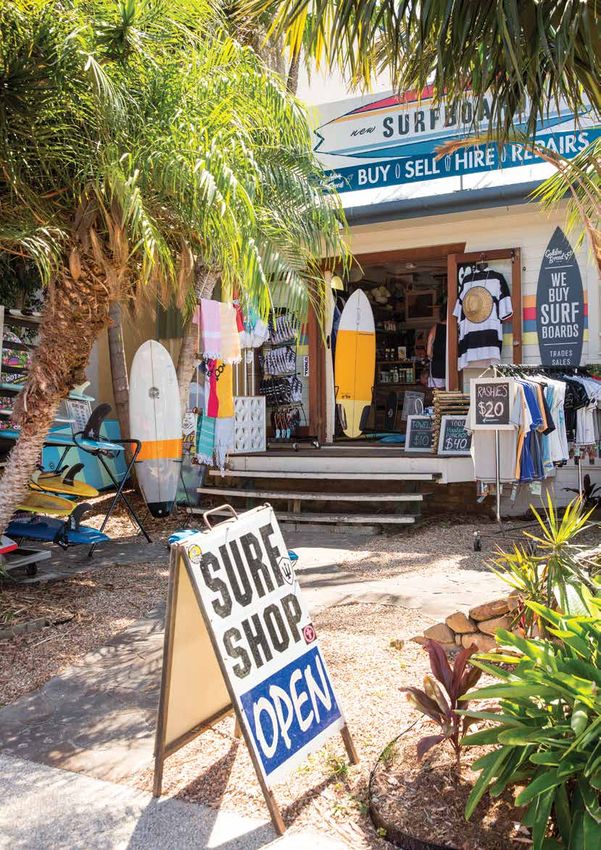
Surf shop, Byron Bay
courtesy of Destination NSW
North Coast Regional Plan 2036 35Actions Direction 9: Strengthen
8.1 Facilitate appropriate large-scale
regionally significant
tourism developments in prime tourism transport corridors
development areas such as Tweed Heads, The region benefits from regional infrastructure
Tweed Coast, Ballina, Byron Bay, Coffs corridors that provide businesses with good
Harbour and Port Macquarie. access to South East Queensland and international
markets, and residents with easier movement
8.2 Facilitate tourism and visitor
around the region.
accommodation and supporting land
uses in coastal and rural hinterland The Pacific Highway upgrade is one of Australia’s
locations through local growth most significant infrastructure investments, and
management strategies and local should be finished by the end of the decade.
environmental plans. The upgrade will improve user safety and travel
times and generate new economic and
8.3 Prepare destination management plans
employment opportunities.
or other tourism-focused strategies that:
The upgrade of the highway has highlighted
• identify culturally appropriate
opportunities for new and expanded freight
Aboriginal tourism opportunities;
facilities and distribution centres. These have
• encourage tourism development particular locational needs as they depend on
in natural areas that support efficient supply chains, access to customers,
conservation outcomes; and land availability and access to main roads. Local
growth management strategies should consider
• strategically plan for a growing the location of these facilities to maintain jobs
international tourism market. growth and grow transport-related industries.
8.4 Promote opportunities to expand Maintaining the safety of this transport corridor is
visitation to regionally significant important. Access to motorway-class sections of
nature-based tourism places, such as the highway will only be allowed via grade-
Ellenborough Falls, Dorrigo National Park, separated interchanges. Local traffic will be
Wollumbin–Mount Warning National directed along service roads or local arterial road
Park, Iluka Nature Reserve and Yuraygir networks, and highway service centres that
Coastal Walk. encourage motorists to take breaks will be
appropriately located.
8.5 Preserve the region’s existing tourist
and visitor accommodation by directing
permanent residential accommodation Pacific Highway Investment
away from tourism developments, 1996–2020
except where it is ancillary to existing
tourism developments or part of an
area otherwise identified for urban
expansion in an endorsed local growth
management strategy.
36 North Coast Regional Plan 2036You can also read


