NSS 2021 Good Practice Guide - Marketing and Promoting the National Student Survey Setting up and Preparing for the National Student Survey - UCL
←
→
Page content transcription
If your browser does not render page correctly, please read the page content below

October 2020

NSS NSS
    Set2021
         UpGood
             Guidance
                Practice Guide 2021
 Marketing and Promoting the National Student Survey
Setting up and Preparing   forinthe
                For providers       National
                                 England only Student Survey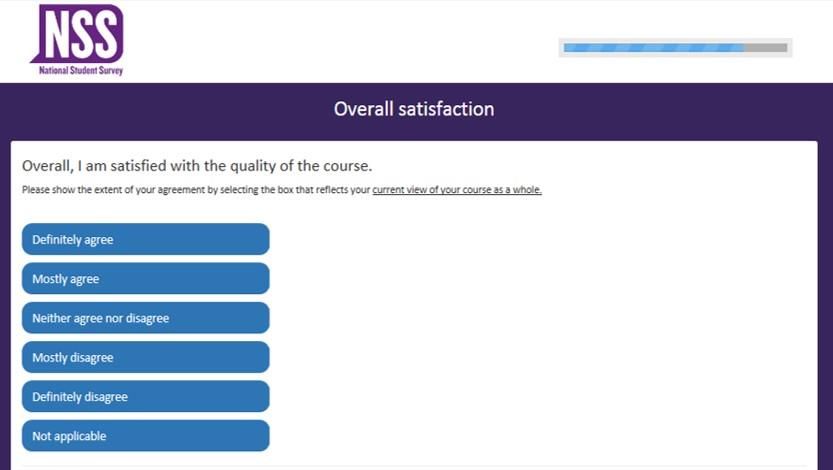
IPSOS MORI | NATIONAL STUDENT SURVEY GOOD PRACTICE GUIDE                                                      FOR ENGLISH PROVIDERS USE ONLY

Contents

INTRODUCTION ................................................................................................................ 3
   USING THIS GOOD PRACTICE GUIDE .................................................................................................................. 3

ABOUT THE NSS................................................................................................................ 5
   WHEN IS THE NSS RUN? ..................................................................................................................................... 5
   HOW WILL STUDENTS ACCESS THE NSS? ........................................................................................................... 5
   HOW WILL THE RESULTS OF THE NSS BE RELEASED?......................................................................................... 6
   ABOUT THE QUESTIONNAIRE ............................................................................................................................. 7

PROMOTING THE NSS .................................................................................................... 9
   STUDENT ELIGIBILITY .......................................................................................................................................... 9
   PLANNING A COMMUNICATION SCHEDULE .................................................................................................... 11
   REQUIRED GDPR PRE-NOTIFICATION COMMUNICATION ................................................................................ 15
   RESPONSE RATE UPDATES................................................................................................................................ 15
   USING SOCIAL MEDIA TO PROMOTE THE NSS ................................................................................................. 18
   USING PRIZE DRAWS TO PROMOTE THE NSS ................................................................................................... 20
   IMPROVING RESPONSE RATES – EXAMPLES OF GOOD PRACTICE ................................................................... 22
   COMMUNICATIONS CHECKLIST........................................................................................................................ 32

INAPPROPRIATE INFLUENCE ...................................................................................... 34
   WHAT IS INAPPROPRIATE INFLUENCE? ............................................................................................................ 34
   AVOIDING INAPPROPRIATE INFLUENCE – DO’S AND DO NOTS ....................................................................... 35
   WHAT COULD THE CONSEQUENCES OF INAPPROPRIATE INFLUENCE BE FOR MY PROVIDER? ....................... 37

NSS MARKETING MATERIALS .................................................................................... 39
   IPSOS MORI MARKETING PACKAGES ............................................................................................................... 39
   CREATION OF OWN MARKETING MATERIALS .................................................................................................. 42

ANNEXES .......................................................................................................................... 44
   1.    PROVIDER INTRANET TEMPLATE ............................................................................................................. 44
   2. LETTERS/MEMOS ..................................................................................................................................... 45
   3. BRIEFING FOR COURSE REPS ........................................................................................................................ 47

IPSOS MORI | NATIONAL STUDENT SURVEY GOOD PRACTICE GUIDE             FOR ENGLISH PROVIDERS USE ONLY

 Introduction

1.    The National Student Survey (NSS) is a high-profile annual census of
      nearly half a million students across the UK. Conducted each year
      since 2005, the NSS has become renowned for producing robust
      and reliable data. The survey asks undergraduates to provide
      feedback on their course.

2.    The NSS is managed by the Office for Students (OfS) and undertaken by Ipsos MORI on behalf of
      the UK funding and regulatory bodies - the Department for the Economy (Northern Ireland), the
      Scottish Funding Council and the Higher Education Funding Council for Wales.

3.    The NSS gathers students’ opinions on the quality of their courses which helps to:

        •   inform prospective students’ choices

        •   supply data that supports providers in improving the student experience

        •   support public accountability.

4.    Every university in the UK takes part in the NSS, as do many colleges and alternative providers.
      NSS response rates have been consistently high.

5.    In 2021, providers in England are no longer required to promote the National Student Survey to
      their students. However, they can choose to do so if they wish.

6.    This guidance applies to providers in England. Providers in Northern Ireland, Scotland and Wales
      are still required to promote the survey to their students and should refer to the Good Practice
      Guide that covers these nations.

 Using this Good Practice Guide
7.    This Good Practice Guide is intended to help provider staff who have a role in delivering the NSS.
      In order for NSS data to be made publicly available to prospective students, each provider needs
      to achieve a minimum of 10 respondents and 50% response rate from the students eligible at
      overall provider level and by each Common Aggregation Hierarchy group (CAH).

8.    In addition to targeted follow-ups, for NSS 2021, all providers who are at risk of not meeting the
      publication threshold will be automatically put into a booster phase to send additional reminders
      to their non-responding students. This will also include an additional SMS reminder to non-
      responding students during the follow-up stage.

                                                                                            3|Page
IPSOS MORI | NATIONAL STUDENT SURVEY GOOD PRACTICE GUIDE FOR ENGLISH PROVIDERS USE ONLY
9. Should you choose to promote the NSS 2021 to your students, the following sections contain
guidelines and instructions on promoting the NSS, including what is considered inappropriate
influence and how to avoid it when encouraging student participation. This guide also details the
marketing materials that will be sent to providers in November 2020 by Ipsos MORI (if requested
via the new order form), and advice for providers that would like to create their own campaigns.
10. Please take the time to familiarise yourself with these guidelines, particularly the information on
inappropriate influence. Allegations of inappropriate influence are taken very seriously by the UK
Funding and Regulatory Bodies and may result in the suppression of data for the affected
course(s)/subject(s) when the NSS results are published.
11. Should you have any questions regarding the content of this guide or wish to discuss your NSS
marketing order or promotion more generally, please contact Ipsos MORI on 020 8861 8110 or
email nss@ipsos.com.
4|PageIPSOS MORI | NATIONAL STUDENT SURVEY GOOD PRACTICE GUIDE FOR ENGLISH PROVIDERS USE ONLY
About the NSS
When is the NSS run?
12. The NSS will go live on 6 January 2021 and will remain open until midnight on 30 April 2021.
How will students access the NSS?
13. The NSS can be completed online or by telephone.
14. All students with valid email addresses will be sent email invitations to take part in the survey by
Ipsos MORI. These emails will be sent on the Thursday of your provider’s chosen start week. They
will contain personalised survey links - when clicked, students must enter their date of birth which
will take them directly into the survey.
15. All students with valid mobile numbers will be sent an SMS reminder by Ipsos MORI, containing
a personalised link that students can use to go directly into the survey. If students do not opt out
of SMS, they may receive an additional reminder in the later stages of the fieldwork if they have
not responded. The online survey is mobile-friendly, so if accessed via a smartphone or tablet
device, students will automatically be taken to the mobile version of the survey.
16. Students can also go online to complete the survey directly at www.thestudentsurvey.com at any
time while the survey is live, regardless of nominated start weeks or whether they have received
an email invitation. When accessing the survey in this way, students are required to enter the
following personal data in order for us to verify that they are eligible to take part:
• Registering provider
• Known ID (student number)
• First and third letter of their forename
• First four letters of their surname
• Day and month of birth
17. Once a validated response has been received from a student, they will receive an automated
confirmation email and should not be contacted by Ipsos MORI again. If students complete the
survey and are still being contacted by us, or if they have not received a confirmation email, it
may be that they either did not fully complete or submit the survey, or they did not enter enough
information to allow us to match them up to an eligible student on our database.
5|PageIPSOS MORI | NATIONAL STUDENT SURVEY GOOD PRACTICE GUIDE FOR ENGLISH PROVIDERS USE ONLY
18. The questions are all displayed in the format below with each one on a separate screen – this
format applies to the core questions as well as the bank of questions and any additional optional
questions.
19. Telephone
From the third week of each provider’s fieldwork schedule, Ipsos MORI will begin follow up calls
to non-responding students where valid UK telephone numbers are available. Ipsos MORI will
attempt calls at different times and days of the week to optimise the opportunities for
response. Student numbers are called a maximum of 8 times. Please note that students cannot
call Ipsos MORI directly to complete the survey but may arrange an appointment if they wish by
contacting thestudentsurvey@ipsos.com. Calls are made on the following days/times: Monday
to Friday – 9am to 9pm; Saturday and Sunday – 10am to 7pm.
How will the results of the NSS be released?
20. Following the outcome of the NSS review1, the OfS will make a decision regarding the publication
of results for providers in England.
21. Response Thresholds
To protect student anonymity and ensure the robustness of the findings from the NSS, the OfS
operates a strict data threshold policy.
1
For further information please see: https://www.officeforstudents.org.uk/advice-and-guidance/student-
information-and-data/national-student-survey-nss/review-of-the-national-student-survey/
6|PageIPSOS MORI | NATIONAL STUDENT SURVEY GOOD PRACTICE GUIDE FOR ENGLISH PROVIDERS USE ONLY
22. For NSS data to be published on the OfS website or on Discover Uni, the provider needs to achieve
a minimum of 10 respondents and 50% response rate from eligible students, both overall and by
each Common Aggregation Hierarchy group (CAH). The results from any providers who have not
reached the threshold will not be published.
23. The NSS data dissemination portal, hosted by Texuna Technologies Ltd, also applies a threshold to
the data that providers can see, to protect the anonymity of the respondents. In order to see the
open text comments for a particular category of responses, a provider must have achieved a
minimum of 10 responses in that category. Otherwise, the data will not be displayed. Users should
not use the data to attempt to identify individuals, or in a way that is likely to facilitate their
inadvertent identification.
24. For the 2021, NSS there is no requirement for English providers to promote the survey however
they can still choose to do so. Ipsos MORI will notify all providers where response rates seem likely
to fall short of the publication thresholds. The funding bodies reserve the right to agree changes
to the survey period with individual providers at risk of not meeting the publication threshold. The
completeness and accuracy of students’ contact data, as supplied by providers, will be a significant
factor in achieving a publishable level of responses.
25.
About the Questionnaire
26. There are 27 core questions, relating to the following aspects of the student learning experience:
• Teaching on my Course
• Learning Opportunities
• Assessment and Feedback
• Academic Support
• Organisation and Management
• Learning Resources
• Learning Community
• Student Voice
• Overall Satisfaction
Students are also given the opportunity to give positive and negative comments on their student
learning experience as a whole.
7|PageIPSOS MORI | NATIONAL STUDENT SURVEY GOOD PRACTICE GUIDE FOR ENGLISH PROVIDERS USE ONLY
27. Other questions included in the NSS include the following:
• NHS practice placement questions. Please note that students will only be asked the NHS
questions if they have been flagged as being on an NHS-funded course. These questions
will be included before question 27 in the core questionnaire.
• Degree Apprenticeship questions. Students will only be asked to respond to these questions
if they have been flagged as being on a degree apprenticeship. These questions will be
asked after the optional bank of questions.
• Providers can add up to six optional modules from a bank of questions, and up to two
questions of their own.
• Marketing question. Students will be asked to tell us where/how they found out about the
NSS after their online response has been submitted. This question is optional and can be
skipped.
28. The full questionnaire and optional banks can be found on the NSS Extranet home page.
8|PageIPSOS MORI | NATIONAL STUDENT SURVEY GOOD PRACTICE GUIDE FOR ENGLISH PROVIDERS USE ONLY
Promoting the NSS
29. Providers registered in England may choose to promote the NSS even though this is no longer a
requirement. This Good Practice Guide outlines guidance for promoting the NSS and parameters
around creating your own marketing materials. Guidance on Inappropriate Influence remains
relevant to all providers whether they actively promote the survey or not.
30. Ipsos MORI will promote the survey to students through a communication schedule and the
production of marketing materials, as detailed in this Good Practice Guide.
31. This guidance applies to providers in England. Providers in Northern Ireland, Scotland and Wales
are still required to promote the survey to their students and should refer to the Good Practice
Guide that covers these nations.
32. This section details the strategy that Ipsos MORI recommends for providers who plan to promote
the NSS.
33. Providers can use the marketing materials supplied by Ipsos MORI and/or, in the event of provider-
led promotion, choose to design their own NSS marketing materials. Please see NSS Marketing
Materials for more information.
34. Please note that promoting the NSS locally at a provider is subject to strict guidelines to avoid the
sharing of confidential information or influencing students’ responses inappropriately. More
information is available in the Inappropriate Influence section.
Student Eligibility
35. Staff should take care to ensure that they are only asking eligible students to complete the survey.
They should work with the relevant departments within their providers to clearly understand which
students are on their NSS target list.
36. Those studying on courses leading to undergraduate credits or qualifications (such as bachelors’
degrees, foundation degrees and higher education diplomas) will be surveyed in their expected
final year of study.
37. Students are included in the 2021 survey population if they are expected to complete their course
between 1 February 2021 and 31 January 2022 inclusive.
38. In addition, students are eligible for the NSS if they:
• Are on more flexible part-time programmes (whose final year cannot be easily predicted).
They will normally be surveyed during their fourth year of study;
9|PageIPSOS MORI | NATIONAL STUDENT SURVEY GOOD PRACTICE GUIDE FOR ENGLISH PROVIDERS USE ONLY
• Have withdrawn from study during their final year. These students will be included in the
survey as their feedback is equally valuable;
• Are repeating their penultimate year in 2021. They will be surveyed (not when they
eventually progress to their final year), unless they are specifically submitted for removal;
• Have changed their course arrangements but were originally expected to graduate in 2021.
These students will be eligible this year and not when they eventually reach their final year,
unless specifically submitted for removal.
39. Students are not eligible for the NSS if they:
• Study programmes that do not lead to undergraduate qualifications or credits;
• Are on a course lasting one year or one FTE (full-time equivalent) or less;
• Were eligible in the NSS 2020 (whether or not they responded) and remain at the same
provider, unless removed by the OfS;
• Are under the age of 16.
40. Please liaise with the Main or Second NSS contacts at your provider to identify which students are
included in the list of eligible students for the 2021 survey. You can also contact the NSS helpline
at nss@ipsos.com.
41. Please note that Ipsos MORI cannot provide the details of students that have/have not completed
the survey.
42. What should we do if we identify an eligible student that cannot access the online survey?
- Please send an email including the student’s learner number and identifier
(HUSID/STUDENT_ID [NI Colleges only]/LearnRefNumber) to nss@ipsos.com and we can check
if they are in our database of eligible students.
- Students can also contact us directly at thestudentsurvey@ipsos.com where we can check
their eligibility.
10 | P a g eIPSOS MORI | NATIONAL STUDENT SURVEY GOOD PRACTICE GUIDE FOR ENGLISH PROVIDERS USE ONLY
Planning a Communication Schedule
43. Whilst it is not a requirement for providers in England to promote the survey in 2021, providers
can choose to do so. This section outlines guidance for planning a communication schedule2.
44. If promoting the NSS, you may choose to deploy a range of methods, including but not limited to
the following:
• Promoting on social media
• Placing posters around campus to familiarise students with the NSS
• Emails to eligible students
• Lecture shout-outs
45. The dates when Ipsos MORI will communicate with your students are in accordance with your
provider’s chosen survey start week. This can be found on the NSS Extranet within the ‘Survey
Options’ form.
46. You can use the following schedule should you want to plan promotion in line with the Ipsos MORI
Fieldwork Timetable:
Provider – Promotional Materials
You can display promotional materials before the launch of the survey. This
ensures it is visible to students and fresh in their minds before they receive
Autumn Term their email invitations. The survey website will remain live until 30 April
2021 and it is useful to display the materials until this date.
Provider – Required GDPR Pre-Notification Communication
As of 2020, we require all providers to send a GDPR pre-notification email
November - December 2020
to their eligible students at the beginning of the academic year. See the
section below for more details.
Provider – Pre-Emptive Reminder Emails
A week before the launch date - if promoting the survey - providers can
send pre-emptive emails to eligible students outlining:
• That they will receive an invitation email from Ipsos MORI
1 week before survey launch containing a unique link to the survey (on which date depending
date on your provider’s survey start week);
2
This applies to providers in England only. Providers in Northern Ireland, Scotland and Wales are still required
to promote the survey to their students and should refer to the Good Practice Guide that covers these nations.
11 | P a g eIPSOS MORI | NATIONAL STUDENT SURVEY GOOD PRACTICE GUIDE FOR ENGLISH PROVIDERS USE ONLY
• The importance of the NSS;
January 2021 • If offered, outline the details of the prize draw.
This email should be signed from either an individual known to the students
or a senior member of staff (e.g. Pro-Vice-Chancellor).
It is important to ensure that your I.T. department/contact is aware that
students’ email accounts will be receiving emails from these domains
(@ipsos-mori.com and @thestudentsurvey.com), and that the IT system is
set up to allow these through.
Ipsos MORI - Invitation Emails
The first email invitations from Ipsos MORI will arrive in students' inboxes
on the Thursday of your chosen survey start week. Emails are sent in
Survey Week 1 batches, so providers’ email systems do not tag them as spam.
Provider - Completion Sessions
(Week 1 of chosen start week) Providers can arrange dedicated sessions with eligible students on
Friday/Monday to maximise the use of unique email links; these should not
be compulsory for students to attend.
Provider - General Promotion
Providers can promote the NSS with reference to the invitation email that
eligible students will receive from Ipsos MORI.
Ipsos MORI – First Reminder Email
Non-responding students will receive a reminder email on Monday of the
second week of the chosen schedule; these emails are sent in batches, so
providers’ email systems do not tag them as spam.
Survey Week 2 Ipsos MORI – SMS Reminders
SMS reminders from Ipsos MORI will be sent to non-responding students’
mobile phones on the Thursday of your second survey week.
(Week 2 of chosen start week)
Provider – Completion Sessions
Providers can arrange dedicated sessions with eligible students on
Tuesday/Wednesday to maximise the use of unique email links, or Friday
while the SMS reminders are still fresh in students’ minds; these should not
be compulsory for students to attend.
Provider – General Promotion
Providers can promote the NSS with reference to the reminder emails.
Ipsos MORI – Second Reminder Email
12 | P a g eIPSOS MORI | NATIONAL STUDENT SURVEY GOOD PRACTICE GUIDE FOR ENGLISH PROVIDERS USE ONLY
A second reminder email from Ipsos MORI will arrive in non-responding
students’ inboxes on Friday of the second survey week; these emails are
also sent in batches, so providers’ email systems do not tag them as spam.
Ipsos MORI – Telephone Interviews
Survey Week 3
Ipsos MORI will begin telephone interviews with students for who we only
hold telephone numbers or who have been identified as ‘hard-to-reach’.
(Week 3 of chosen start week)
Ipsos MORI – Telephone – Follow-Up
Later in the week, Ipsos MORI will begin the main telephone follow-up
phase.
Provider – Completion Sessions
Providers can arrange dedicated sessions on Wednesday/Thursday to
maximise the use of unique email links; these should not be compulsory for
students to attend.
Provider – General Promotion
Providers can promote the NSS with reference to the SMS reminders.
Provider – General Promotion
Survey Week 4-5 Providers can send email reminders to eligible students to encourage
completion.
Provider – Completion Sessions
(Weeks 4-5 of chosen start week)
Providers can arrange dedicated sessions/visit lectures or teaching sessions
to promote the survey; the sessions should not be compulsory for students
to attend.
Survey Week 8-9 Ipsos MORI – Targeted Follow-Up
Ipsos MORI begins the targeted follow-up phase. All non-responsive
students will be contacted, therefore providers and cohorts behind the
(1 March onwards for all) publication threshold will be targeted. For NSS 2021, this will also include
an additional SMS reminder to non-responding students. In addition to
targeted follow-ups, for NSS 2021, all providers who are at risk of not
meeting the publication threshold will be automatically put into a booster
phase to send additional reminders to their non-responding students.
Provider – General Promotion
Providers’ specific communications and promotion can continue until the
survey closes.
Ipsos MORI – Final Reminder Emails
13 | P a g eIPSOS MORI | NATIONAL STUDENT SURVEY GOOD PRACTICE GUIDE FOR ENGLISH PROVIDERS USE ONLY
Reminder emails from Ipsos MORI will arrive in non-responding students’
inboxes in the final survey week; these emails are also sent in batches, so
providers’ email systems do not tag them as spam.
Final Survey Week Provider – Completion Sessions
Providers can arrange final dedicated sessions to maximise the use of
unique email links; these should not be compulsory for students to attend.
47. Please note that providers should use these guidelines to help plan their own communications or
complement Ipsos MORI’s communications. They are not intended to replace existing
communication plans.
14 | P a g eIPSOS MORI | NATIONAL STUDENT SURVEY GOOD PRACTICE GUIDE FOR ENGLISH PROVIDERS USE ONLY
Required GDPR Pre-Notification Communication
48. The OfS requires providers to send a pre-notification email to their eligible student population in
the Autumn term. This email will act as a GDPR notification that their details will be passed onto
Ipsos MORI. Ipsos MORI will provide a template that providers should use; it is preferred that all
providers send out this template which requires minimal edits to the suggested text.
49. This email should be signed from either an individual known to the students or a senior member
of staff (e.g. Pro-Vice-Chancellor). More information on the pre-notification email, including a
suggested email text for providers in England, can be found in the NSS Set Up Guidance, available
via the NSS Extranet.
Response Rate Updates
50. Ipsos MORI will share interim response rate reports with providers three times a week whilst the
survey is live. This includes response rates at the provider overall, as well as at course, department
and CAH-levels. Your NSS Main and Second contacts will have access to these reports and will
either issue them to relevant members of staff or be able to provide you with more information.
51. The sharing of response rates is subject to restrictions. Therefore, please read the section below
carefully to ensure your provider’s practice is compliant with the guidelines. NSS contacts have the
responsibility to ensure that these guidelines are followed.
52. Please note that the figures quoted in the NSS response rate reports are based on data collected
during the fieldwork period. At the end of the NSS fieldwork, the NSS data undergo a cleaning
process. Part of this involves removing any ‘bad’ interviews; these are interviews where the
respondent has selected ‘Not applicable’ for all of the core NSS questions or for a whole section of
questions (e.g. ‘the teaching on my course’), as an example. Due to this cleaning process, response
rates in the final data may not match the response rate reports.
Can provider campaigns share interim response rates during fieldwork?
53. The OfS is designated as a producer of Official Statistics, and therefore complies with the UK
Statistics Authority’s Code of Practice for Statistics. As a consequence, the release of any data
produced through the NSS prior to official publication is subject to various restrictions. This applies
to the release of interim data, namely response rates, whilst the survey fieldwork is ongoing.
54. If running their own marketing campaigns, providers may want to share interim response rates
with students or departments. This includes sharing by email, on their website or VLE, in lecture
shout outs, faculty meetings, on campus TV screens, and in closed social media posts among other
channels. Inter-departmental competitions can also be formed which has been found to boost final
response rates. Both are permitted under the new guidelines.
15 | P a g eIPSOS MORI | NATIONAL STUDENT SURVEY GOOD PRACTICE GUIDE FOR ENGLISH PROVIDERS USE ONLY
55. Despite the changes/restrictions to the use of NSS data, providers are permitted to share interim
response rates as long as this release is documented, limited, and solely for the purposes of
operational requirements and/or quality assurance. The release of response rate data (e.g.
headline figures such as the current response rate at a given department, how it compares to the
overall response and to other departments to a selection of staff, student representative bodies
and relevant/NSS eligible students) is permitted, provided that this release is limited and
documented.
56. Detailed response rate information must not be disclosed to third parties. This includes staff or
students who are not directly involved in the operation of the NSS or for whom the information is
not relevant. Please ensure that all staff and students accessing the information for promotional
purposes are aware that they should consider the information confidential and not for wider or
external circulation.
57. Providers are no longer permitted to share response rates on open social media platforms. This
includes Twitter, Instagram, and public Facebook groups. However, response rates can continue to
be shared on closed social media platforms, such as private/closed Facebook groups which are
controlled by the provider.
58. Failure to comply with these requirements may result in the OfS reconsidering its approach to
providing access to NSS response rates in advance of publication in the future.
What activities are permitted under the guidelines?
59. This section outlines guidance for permitted activities and applies to providers in England only.
Providers in Northern Ireland, Scotland and Wales are still required to promote the survey to their
students and should refer to the Good Practice Guide that covers these nations.
60. Sharing provider response rates with the following groups is permitted, provided that they are
solely for the purpose of encouraging participation in the survey:
• Academic colleagues (at faculty meetings or for the purposes of running inter-departmental
competitions);
• Target student cohorts (through the VLE, lecture shout outs, displays on campus screens
(at the provider only), student mobile apps, and closed social media groups);
• Relevant committees, Students’ Unions, academic boards or other relevant bodies.
61. The following activities are examples of those that are not permitted, as they are unlikely to
improve response rates at the provider:
• Sharing response rates with anyone outside the provider (this includes any media
organisations, and any other group that is not involved in delivering the NSS at the provider
in question);
16 | P a g eIPSOS MORI | NATIONAL STUDENT SURVEY GOOD PRACTICE GUIDE FOR ENGLISH PROVIDERS USE ONLY
• Sharing interim response rates for any purpose other than improving response rates to the
survey, including unrelated promotional purposes.
How should the dissemination of response rate data be documented?
62. Providers who want to share response rates during fieldwork for the purpose of boosting responses
have a duty to make sure that they will be used for this reason alone. The strategy must be
documented in a Project Communication Plan.
63. Keeping a Project Communication Plan is adequate documentation. The document must be on
record for inspection by the OfS or the Office for Statistics Regulation in the event of a breach of
the code of practice for statistics.
64. This plan should form a part of your Provider’s Communication Strategy for promoting the NSS,
and must include the following information:
• Details of each group the information is released to
“Final Year Philosophy Students”
Documenting the target audience is sufficient – it is not necessary to document each
individual who has had access to the information.
• Details of the information that has been shared with them
“Provider-level and Philosophy department interim response rates (as of 13/03/21)”
• Method of distribution
“Entry on Philosophy Department VLE”
• Details of the time the information was shared
“Posted at 19:00 on 14/03/21”
• Operational justification for releasing this information
“Philosophy Department response rate shared to encourage participation in the survey.”
65. If you have any questions regarding these new guidelines, please contact the NSS Helpline at
nss@ipsos.com.
17 | P a g eIPSOS MORI | NATIONAL STUDENT SURVEY GOOD PRACTICE GUIDE FOR ENGLISH PROVIDERS USE ONLY
Using Social Media to Promote the NSS
66. Whilst it is no longer a requirement to promote the survey, providers in England can choose to do
so. This section outlines guidance for the use of social media in promoting the NSS. This applies to
providers in England only. Providers in Northern Ireland, Scotland and Wales are still required to
promote the survey to their students and should refer to the separate Good Practice Guide that
covers these nations.
67. This section aims to provide an overview of social media and present ideas that may be of use.
However, it is not intended to replace any existing social media plans that providers may already
have in place. The ideas outlined here work better as part of a larger promotional campaign to
encourage participation.
68. Social media sites and apps can be an effective way to ‘spread the word’ about an activity, event
or project. The marketing guidelines and rules on inappropriate influence also apply to social media
posts, so please ensure that all those involved in promoting the survey on social media are aware
of what they can and cannot do, as well as the consequences of inappropriate posts. See
Inappropriate Influence for more information.
Facebook:
69. Provide updates and promote participation in the NSS
Departments, SUs/Associations/Guilds and NSS champions with their own
Facebook pages are able to promote general NSS activity, such as announcing
the launch of the survey, offering details about dedicated completion
sessions, sharing response rate updates (in closed groups), and publicising
any giveaways. You can also make use of the Facebook reaction feature where students can use
one of the reaction faces (Like, Love, Care, Wow, Angry and Sad) to engage with your posts.
70. Publicising competitions and prize draws
For example, if you embed an ‘enter the survey’ button as a post, which will take students to
www.thestudentsurvey.com, students who share it will be entered into a prize draw. Please find
more information in the competition and prize draws section below.
71. Create a Facebook photo album
Post pictures or video clips of activities that are happening on your campus in a dedicated Facebook
album.
72. Make use of live broadcasting/streaming
Broadcast live streams of NSS-themed events or sessions; students can interact with these streams
by commenting/reacting to the feed.
Twitter:
73. Post a ‘call to action’ Tweet that includes a direct link to the NSS
Students can click the link and complete the NSS straight away. Tweets can
also be used to spread the word about dedicated completion sessions, how
18 | P a g eIPSOS MORI | NATIONAL STUDENT SURVEY GOOD PRACTICE GUIDE FOR ENGLISH PROVIDERS USE ONLY
long students have left to take part in the survey, when they will be contacted by Ipsos MORI,
incentives, the nature of the survey, why it’s important, details of any NSS-related events, the
impact of results and the survey more widely.
74. Retweet the Official NSS Twitter account
The official NSS Twitter account will not be directly targeting students.
Instead it will post regular updates on the survey that providers’ social @nss_ipsos
media accounts can utilise by re-tweeting to their student population.
75. Engage with students
Twitter is a social dialogue. Therefore, we recommend responding to students and retweeting
posts that others make. 80% of Tweets should focus on driving interactions with followers, such as
retweets, replies, and favourites. Once you have built some rapport, call to action tweets, such as
participating in the NSS, can be posted.
76. Make use of NSS related hashtags
In 2021, the hashtags #NSSGiveYourViews and #NSS2021 will be used widely.
77. Use as many visual elements as possible
Photos average a 35% boost in retweets, while videos get a 28% boost. Animations can be used to
tell a story, while YouTube videos can be shown natively in the Twitter app.
Instagram:
78. General NSS promotion
Providers can post pictures or videos of their NSS campaigns in action alongside
their custom hashtag campaigns, e.g. #NSS2021, etc.
79. Setting up Instagram ‘booths’ across campus
Here, students can take photos for their provider’s Instagram accounts which can then be shared
across linked social media accounts e.g. adding to their Instagram ‘stories’, a function similar to
the Snapchat story feature detailed below.
Snapchat:
80. General NSS promotion, particularly using Stories
It is an option for providers to take pictures and videos of their promotional
campaigns and compile them into one chronological storyline, their ‘NSS
Story’. Each snap added to the storyline lasts for 24 hours, allowing providers
to document each day of their campaign from start to finish.
81. Create an NSS-themed filter
The custom geofilter function could be used to create an NSS-themed filter to use over any photos
or videos taken after dedicated sessions or specific areas on campus
where students complete the survey. This can also be used on Instagram
Stories.
19 | P a g eIPSOS MORI | NATIONAL STUDENT SURVEY GOOD PRACTICE GUIDE FOR ENGLISH PROVIDERS USE ONLY
YouTube:
82. Create and share videos about the NSS
Such videos can inform students of the purpose of the NSS and how to complete it. These can be
embedded into other social networking sites, such as Twitter and Facebook, as well as on providers’
websites/portals and shared amongst eligible students. You can develop an engaging video that
students can be encouraged to share. You can share your videos with the official NSS YouTube
Channel by sending the link to nss@ipsos.com. You may also share the video produced by Ipsos
MORI, by embedding a YouTube link (which will be sent to providers when it is uploaded), or by
downloading the file available via the NSS Extranet. See Digital Materials for more information.
Using Prize Draws to Promote the NSS
83. This section outlines guidance for the use of prize draws in promoting the NSS. This applies to
providers in England only3.
84. For providers who opt to promote the NSS, one way is to communicate any prize draws on offer.
When a provider makes their survey choices via the NSS Extranet (please see the NSS Set up Guide,
available via the NSS Extranet), they can opt to include a prize draw to encourage student
participation. Should the provider offer a prize draw, they should adhere to the following guidance.
Any prize draws that run internally should follow the MRS Guidelines.
85. In the online survey, students can enter the prize draw on offer by ticking the relevant box which
appears on screen before the main NSS questions. Students do not need to complete the survey
in order to enter the prize draw.
86. After the prize draw closing date, Ipsos MORI will draw the required number of winners at random
and notify the necessary NSS contacts at the provider.
Guidelines
87. It is optional for providers to promote the NSS locally however, providers may organise prize draws
if they want to do so. Ipsos MORI is able to publicise providers’ prize draws, provided that complete
and timely information is submitted via the ‘Survey Options’ form on the NSS Extranet. Agreed
details can be promoted in the invitation emails sent to students, as well as through the online
survey.
88. To be able to publicise the prize draw, a precise description of the prize offered by the provider is
required. If the provider has opted to offer a prize draw, Ipsos MORI will be in contact to agree the
description that will be communicated to students. In order to ensure that the survey is ready on
time so that students can access it from 6 January 2021, we cannot deviate from the standard text
3
Providers in Northern Ireland, Scotland and Wales are still required to promote the survey to their students and should
refer to the separate Good Practice Guide that covers these nations. While it is not a requirement for providers in England to
promote the survey in 2021, they can choose to do so.
20 | P a g eIPSOS MORI | NATIONAL STUDENT SURVEY GOOD PRACTICE GUIDE FOR ENGLISH PROVIDERS USE ONLY
that is communicated. This is because the prize draw text forms part of a program that administers
the NSS across all providers that have different survey options. Once the survey is live, no changes
can be made to this text.
89. Please note that details of prize draws will only be available to students who enter the survey
online. Students are invited to take part in the survey and are informed of the prize draw offered
by the provider in their email invitations. Students should be made aware that there is no link
between how they respond and their chances of winning a prize. Completion of the survey cannot
be a condition to entering the online prize draw as all eligible students have an equal chance of
winning. Please see the MRS guidelines on incentives and prize draws for more information.
Opting into a Prize Draw
90. If the provider opts to offer a prize draw, Ipsos MORI will randomly select prize draw winners within
five working days after the closing date on behalf of each participating provider. All eligible
students, including non-respondents, can enter the prize draw. It is the responsibility of the
provider to ensure the prize draw complies with the relevant legislation. The cost and purchase of
the prizes on offer are entirely the responsibility of the provider; Ipsos MORI only supports prize
draws through promotion in communications to students.
91. Please note that prize draws must include all eligible students at a provider. It is not possible to
offer a prize that is only open to a specific cohort of students, e.g. a specific department or college.
Ipsos MORI is unable to facilitate bespoke prize scenarios while fulfilling its MRS and legal
obligations.
92. If you choose to run a tailored or multi-prize draw scheme, please ensure that the provider is able
to administer these while complying with the law and adhering to the MRS guidelines. It is a
21 | P a g eIPSOS MORI | NATIONAL STUDENT SURVEY GOOD PRACTICE GUIDE FOR ENGLISH PROVIDERS USE ONLY
requirement to clearly advertise the prize draw in any correspondence with students and clearly
communicate how and when prize winners will be drawn.
93. To ensure the prize draw is communicated to eligible students online, please complete the
appropriate fields in the ‘Survey Options’ form, identifying whether the provider will be offering a
prize draw, the total number of winners and the closing date for the draw. Following this, Ipsos
MORI will agree the text that will be communicated to eligible students with the provider.
94. Regarding the notification and announcement dates, please allow five working days after the prize
draw closing date for Ipsos MORI to draw the winners.
95. The deadlines to opt-into the prize draw is 27 November 2020. After this date, we will contact the
provider to agree the wording to be displayed to students. We will not be able to advertise prize
draws (or draw winners) for any provider that does not supply Ipsos MORI with the required details
and wording by mid-December 2020. All eligible students must have a fair and equal chance of
entering the prize draw; therefore, we cannot introduce a prize draw after the survey has gone live
in January 2021, regardless of later start weeks.
96. Please see the NSS Set up Guide, via the NSS Extranet, for full details of how to opt into the prize
draw.
Prize draw administration
97. Ipsos MORI will communicate the student identification codes (such as HUSID) of the selected prize
winners to the NSS Main, Second and Marketing Contacts at the provider by the end of May 2021
(or up to five working days after the prize draw closing date if an earlier date is selected). Those
who enter the prize draw are asked to give consent that their contact details can be passed on to
their provider should they win a prize.
Improving Response Rates – Examples of Good Practice
98. This section outlines examples of good practice for improving response rates. This applies to
providers in England only. Providers in England are no longer required to promote the National
Student Survey 2021 but they can choose to do so. Providers in Northern Ireland, Scotland and
Wales are still required to promote the survey to their students and should refer to the Good
Practice Guide that covers these nations.
Create a Challenge
99. Providers can opt to use social media as an avenue to create an internal or external competition
to boost response rates. This can be done in many ways, including:
• Using Datawrapper to post an interactive chart to your intranet or Moodle pages to show the
current response rate versus your overall targets (as documented in your provider’s Project
Communications Plan);
22 | P a g eIPSOS MORI | NATIONAL STUDENT SURVEY GOOD PRACTICE GUIDE FOR ENGLISH PROVIDERS USE ONLY
• Posting response rates in various closed Facebook pages and challenging other departments
or campuses to beat your score (as documented in your provider’s Project Communications
Plan);
• Sharing a link to the online survey and encouraging students to ‘share’ it in order to be in with
a chance to win a small prize;
• Creating a competitive element among campuses and other departments for participation to
help make sure as many subject areas as possible meet the threshold for publication;
• Regularly posting updates using a custom hashtag and encouraging further participation
through the provider’s Instagram, Twitter, Snapchat and Facebook accounts while the survey
is open;
• Taking to Twitter and Instagram to encourage students to spread the word, for example,
offering a reward for the best NSS Tweet or Instagram post of the week, or for the best
method of promotion;
• Running a campaign to boost response rates over fieldwork. For example, a member of staff
or a rep could undertake a forfeit or a dare if internal response rate targets are met. Progress
can be posted on closed Facebook groups (as documented in your provider’s Project
Communications Plan), and final challenges can be filmed/photographed and promoted on
social media sources, such as Twitter and Instagram, or added to your Snapchat story. In 2013,
one SU representative had an NSS logo permanently tattooed to his foot!
Promote Providers’ Prize Draws
100. Any providers choosing to promote the survey can organise prize draws to encourage eligible
students to enter the survey. Prizes are a useful element to communicate via social media
platforms. Details of the prize draws that have been identified to Ipsos MORI can be shared to
encourage students to complete the survey online, as well as any internal rewards and prizes to
help boost response rates. To do this, providers can opt to:
• Have a “complete the NSS” day or week by booking a computer room and providing snacks and
sweets so groups of students can complete the survey together. These sessions should not be
made compulsory and can be promoted using social media. Please be mindful of student
privacy during these sessions and abide by the provider’s Covid-19 safety measures. Staff or
students running the sessions must not monitor students in any way while they complete the
survey and cannot complete the survey on anyone else’s behalf.
• Provide incentives for people to complete the survey using their smartphone or tablet. For
example, a dedicated stall on campus that has any freebies on offer to students that complete
23 | P a g eIPSOS MORI | NATIONAL STUDENT SURVEY GOOD PRACTICE GUIDE FOR ENGLISH PROVIDERS USE ONLY
the survey via a mobile device then and there. Again, be mindful of students’ privacy when they
are completing the survey at organised events and abide by the provider’s Covid-19 safety
measures.
• Encourage students to tweet when they have completed the survey or received a reward for
doing so using custom hashtags such as #NSSRewards or #NSSComplete. Pictures or videos of
students participating in the survey can be uploaded, with their permission, to Instagram and
Snapchat.
• Drive participation using the SU’s Twitter, Instagram and Facebook accounts; for example,
organising a social event for students who complete the survey (using #NSSReward to claim
entry).
• Post real pictures of incentives with SU representatives or an NSS mascot. Share pictures of
eligible students claiming prizes as well, with their permission. Adding a caption such as “Would
you like to get your hands on these?” will contribute towards attracting students’ attention and
encouraging completion. These pictures can be shared across all social media platforms via
Instagram or added to your NSS storyline on Snapchat.
101. Providers can also communicate the outcome of the prize draws once fieldwork has closed or the
winners have been drawn. Some ideas include:
• Sharing the number of rewards that have been claimed, e.g. the number of coffees given
away. In 2020, several providers used their response rate reports to monitor the number of
students that had responded and made a charitable donation for every completed response.
They communicated the total raised throughout fieldwork using social media. Please note
this must be treated the same as response rate data and must be documented in your
provider’s Project Communications Plan.
• Posting a picture or a video of the winners claiming their prize, as above.
Engaging Departments and Teaching Staff
102. Support ‘from the top’ – from senior and academic staff - can be key to improving response rates
and staff members can communicate the benefits and importance of the survey to students. They
can directly communicate how the results will be used by prospective students and to improve the
learning experience at the provider more generally. See Inappropriate Influence.
103. It is no longer a requirement for providers in England to promote the NSS to their eligible students.
However, if providers want to do so, the methods below have been identified by providers who
have previously taken part in the survey as effective ways to encourage staff to get involved:
24 | P a g eIPSOS MORI | NATIONAL STUDENT SURVEY GOOD PRACTICE GUIDE FOR ENGLISH PROVIDERS USE ONLY
Pre-survey launch:
• Brief staff to explain the nature and purpose of the survey, how to engage students, an
overview of eligibility, how the prize draw process works (if offered), as well as to remind
them (and students) about the conduct of the survey (e.g. anonymity and inappropriate
influence).
• Hold meetings with senior management, heads of schools and marketing teams to discuss
an action plan and form a clear communication strategy for engaging students and
encouraging completion. Building a thorough communications plan into the student and
staff calendar, and around Ipsos MORI’s survey schedule, is highly useful to avoid over-
contacting students.
104. During fieldwork. Encourage staff to:
• Sign up to ‘key responsibilities’, e.g. distributing promotional materials, implementing an
NSS feature on their department website, and co-ordinating email communications to
students making them aware of the oncoming survey and the email invitation they will
receive from Ipsos MORI.
• Deliver lecture shout outs to final year students using the Ipsos MORI produced
presentation slides and video, or where applicable, providers’ own materials. NSS flyers can
be sent out to students or used on provider websites.
• Arrange course-specific dedicated sessions for the NSS, possibly incentivised, so students
can make use of their personalised links. These can be built into tutors’ timetables from the
outset. Students should be told that these sessions are not compulsory.
• Use social media platforms to reach out to students about the survey.
• Circulate weekly response rates to teaching staff/department heads, highlighting areas of
good and bad performance and pointing out departments’ progress compared to others.
Please note this must be documented in the provider’s Project Communications Plan.
105. If providers want to promote the NSS, some ideas for ways staff can engage students include:
• Monitoring response rates. You can use the thrice-weekly response rate reports provided
by Ipsos MORI to guide internal promotion of the NSS.
• Creating competitions. You can introduce a table for departments/subjects to identify top
and bottom performers. Some providers have implemented prizes for those who get the
overall best response rate. Social media is particularly effective in creating a sense of
competition among students and boosting response rates.
25 | P a g eIPSOS MORI | NATIONAL STUDENT SURVEY GOOD PRACTICE GUIDE FOR ENGLISH PROVIDERS USE ONLY
• Keeping staff abreast of survey progress. You can forward response rate reports to course
leaders, heads of departments and senior management so that they are aware of the
targets. If they are /are not being met, staff can act on it effectively. Please note this must
be documented in the provider’s Project Communications Plan.
• Building a social media presence. You can use departments’ social media profiles to post
reminders about the survey, response rate updates (in closed groups) and details of any
incentives and/or prize draws on offer.
Email Communications
106. Providers are expected to send a pre-notification email to students at the beginning of their final
academic year to inform them what the National Student Survey is, that their details will be passed
onto Ipsos MORI and how they will be contacted to complete the survey. There is a recommended
email text available to providers in England within the NSS set up guide. There is no requirement
for providers to promote the NSS 2021 via email communications further to this.
107. However, should providers want to further promote the NSS, electronic communication (by
respondents and providers) can be an effective way of doing so. Providers can:
• Send introductory emails before the survey launch to forewarn students that the survey will
be coming and to look out for their email invitations. These emails should include a link to
the survey website www.thestudentsurvey.com so students can find out more.
• Include messages addressed from named contacts such as the Principal, Dean of the
provider or Pro-Vice-Chancellor to email communications, which can add weight to the
email and can be more effective.
• Provide the email details of eligible students to teaching staff to enable them to send
targeted emails. Introductory and reminder emails regarding the NSS should only be sent
to eligible students rather than all final year students to avoid confusion for those who are
not eligible.
Redirecting to the NSS Website
108. Providers can build a pre-survey webpage, which can be branded locally to help providers to
manage their own incentives more effectively. These micro-sites can link directly to the survey and
provide some background information and details about any incentives.
109. Other internal sites previously used to promote the survey include:
• The providers’ intranet sites. Information can be subject-specific or generic.
• Virtual learning environments (VLE), which publicise the NSS, e.g. Moodle. Information can
be subject-specific or generic.
26 | P a g eIPSOS MORI | NATIONAL STUDENT SURVEY GOOD PRACTICE GUIDE FOR ENGLISH PROVIDERS USE ONLY
• IT terminals within the provider, on computers, plasma screens, etc.
Promotional Materials
110. Providers can use a range of promotional tools and methods to improve awareness of the survey
and to maximise participation.
111. Using Ipsos MORI supplied promotional materials. Display official NSS branded posters, stick
around campuses and buildings. Some methods used to maximise the coverage include:
• Displaying posters in areas where final year students will see them such as learning resource
centres/PC laboratories, classes, lecture theatres, seminar rooms, the library, shops or bars.
The NSS video can also be played in these areas and presentation slides can be displayed in
final year classes. At all times, ensure placement of posters and the NSS video abide by the
provider’s Covid-19 safety measures and do not create ‘traffic areas’.
• Targeted distribution of materials. For example, digital dissemination of (electronic) flyers
to students to promote the survey and encourage completion.
112. Create provider-specific marketing materials. For 2021 it is no longer a requirement for providers
in England to promote the NSS however, if they want to providers can still produce their own
branded posters, flyers, banners and screensavers. Providers can also employ innovative
promotional ideas such as NSS stickers on food labels, catering cards that are displayed on tables
in cafes, bars, etc., and NSS-branded clothing for representatives to wear on campus or to be given
away as incentives. Internal promotional materials must adhere to the OfS’s guidelines. Other
promotional tools previously used include:
• Communicating change. Showing students what has changed as a result of the NSS and how
staff are listening, e.g. “You Said, We Did” campaigns.
• On screen promotions. Displaying information about the NSS on plasma screens and IT
terminals around the provider.
• Social media. Build and maintain a social media presence for the NSS, where you can inform
students of the dates of the survey, as well as provide them with links to more information
on what the survey is, the NSS video, and how the results have been used at your provider
to implement change.
Internal Communication and Press Releases
113. Providers may choose to publish feature articles on their staff intranet to provide background
information and tips for engaging students. This can include articles to raise awareness such as
“spotlight” interviews, publicising the previous year’s prize draw winners and communicating
changes that have been implemented as a result of the NSS. It can also include features in student
papers and/or radio stations to encourage completion.
27 | P a g eYou can also read


