OPEN ENROLLMENT 2019 BENEFITS INFORMATION SESSION - Open Enrollment: November 1 - November 21, 2018
←
→
Page content transcription
If your browser does not render page correctly, please read the page content below

OPEN ENROLLMENT 2019

      BENEFITS
 INFORMATION SESSION
          Open Enrollment:
    November 1 – November 21, 2018
AGENDA
Welcome and Overview                   Vision
• Highlights for 2019
• Wellness Incentive                   Accident and Critical Illness
• Spousal/LDA Premium
• Tobacco Premium                      Hyatt Legal
• “Alex” – Online Benefits Counselor   KinderCare
Medical and Prescription Drug
• NEW *PPO 3 HSA*                      How to Enroll

Health Savings Account (HSA)           Paid Time Off Changes
                                       • Paid Parental Leave
Flexible Spending Accounts (FSAs)      • Revised Vacation Policy
                                       • Payout Details
Dental
                                       Open Q&A
OPEN ENROLLMENT HIGHLIGHTS
• Open Enrollment will be held from November 1 to November 21, 2018
• All benefit changes and enrollments will be effective January 1, 2019
• All benefit elections are made through Employee Self Service (ESS): https://lawson.luc.edu
                           Benefit                         Carrier/Administrator
                           Medical                      BlueCross BlueShield of Illinois
                       Prescription Drug                        CVS/Caremark
            Health Savings Account – NEW IN 2019                BenefitWallet
                  Flexible Spending Account                     BenefitExpress
                         Dental – PPO                       Delta Dental of Illinois
                        Dental –DHMO                    Guardian/First Commonwealth
                            Vision                                    VSP
                          Life/AD&D                           Reliance Standard
                           Disability                     Reliance Standard / Matrix
                            FMLA                                    Matrix
                           Accident                           Reliance Standard
                        Critical Illness                      Reliance Standard
                        Pre Paid Legal                            Hyatt Legal
                        Pet Insurance                            Nationwide
            Child Care Tuition Benefit– NEW IN 2019               KinderCare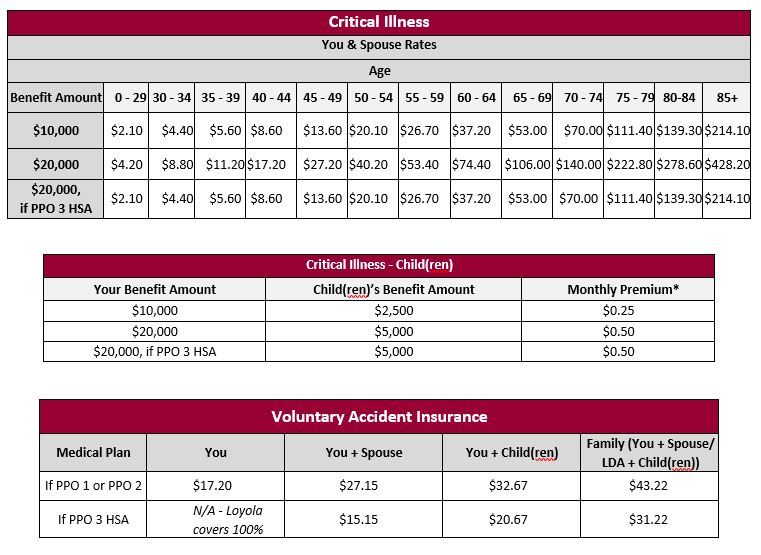
HIGHLIGHTS FOR 2019
• New Medical Plan Option PPO 3 HSA                  • Vision Insurance
    • Lower monthly premiums per pay period              • Frame allowance increasing from $150 to $180
    • Loyola will contribute money to your Health
      Savings Account (HSA)                          • Hyatt Legal
        • $600 for You, Or                               • Includes Identity Management Services
        • $1,200 for You + 1 or More
    • Combined medical and prescription out of
                                                     • Limited Flexible Spending Account (LFSA)
      pocket maximum
                                                         • Dental and vision expenses
    • $10,000 Critical Illness Benefit
    • Accident Benefit
                                                     • KinderCare Child Care Tuition Benefit
• Health Savings Account (HSA)                           • Tuition savings
    • Available for PPO 3 HSA participants
    • Save tax-free for medical expenses now or in
      retirement                                     • Paid Time Off Policy Changes
    • Receive Loyola contribution in January 2019        • Paid Parental Leave
    • Use funds tax-free for qualified expenses
    • Invest or save for future expenses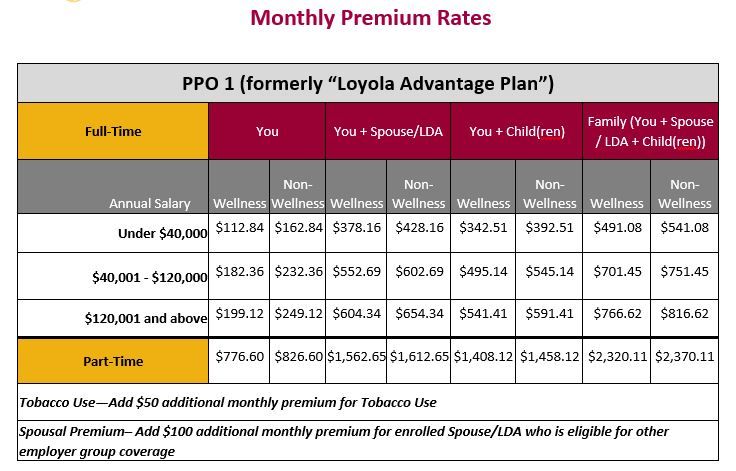
ENROLLING IN BENEFITS
•   Annual Enrollment: Thursday, November 1 – Wednesday, November 21
•   Use Employee Self-Service (ESS): https://lawson.luc.edu
    • Must be connected to Loyola’s secure network
    • Troubles? Contact the ITS Help Desk
         • helpdesk@luc.edu or 773-508-4487

•   What You Need to Do During Open Enrollment:
    • If you don’t enroll, you will miss out on the opportunity to enroll in PPO 3
      HSA, and have an HSA in 2019 with contributions from Loyola
    • Must re-enroll for FSA (PPO 1 and PPO 2 only) through ESS
    • Must complete Tobacco Premium and Spousal Premium Certifications
    • Verify your dependents/beneficiaries

Reminder: Both medical plan participants and their covered spouse/LDAs must
complete the respective Spousal/LDA and wellness incentive by December 7, 2018 in
order to receive the $50 monthly premium discount in 2019.
MEDICAL & PRESCRIPTION DRUG (RX)
MEDICAL PLAN COMPARISONS
Medical                             PPO 1                                PPO 2                   PPO 3
                                  $500 (You)/                         $1,200 (You)/
Annual Deductible
                            $1,000 (You + 1 or More)             $2,400 (You + 1 or More)
                                 $3,000 (You)/                        $4,000 (You)/
Out of Pocket Max
                            $6,000 (You + 1 or More)             $8,000 (You + 1 or More)
                              90% Home Hospital                    90% Home Hospital
Coinsurance
                                80% In Network                       80% In Network

Office Visit               Deductible & Coinsurance             Deductible & Coinsurance

Wellness Visit                 Covered at 100%                      Covered at 100%
Hospital Inpatient –
                       $100 Copay then 90% Coinsurance      $100 Copay then 90% Coinsurance
Home Hospital
                          $250 Copay + Deductible &            $250 Copay + Deductible &
Hospital Inpatient
                                Coinsurance                          Coinsurance

Hospital Outpatient        Deductible & Coinsurance             Deductible & Coinsurance

Pharmacy                            PPO 1                                PPO 2                   PPO 3
Deductible             $100 (You)/ $200 (You + 1 or More)   $100 (You)/ $200 (You + 1 or More)
                         Does not apply to mail order         Does not apply to mail order
Out of Pocket Max                $3,000 (You)/                        $3,000 (You)/
                            $6,000 (You + 1 or More)             $6,000 (You + 1 or More)
Generic                      15% up to $200/script                15% up to $200/script
Preferred Brand              30% up to $200/script                30% up to $200/script
Non-Preferred Brand          45% up to $400/script                45% up to $400/script
Mail Order                      5% / 15% / 25%                       5% / 15% / 25%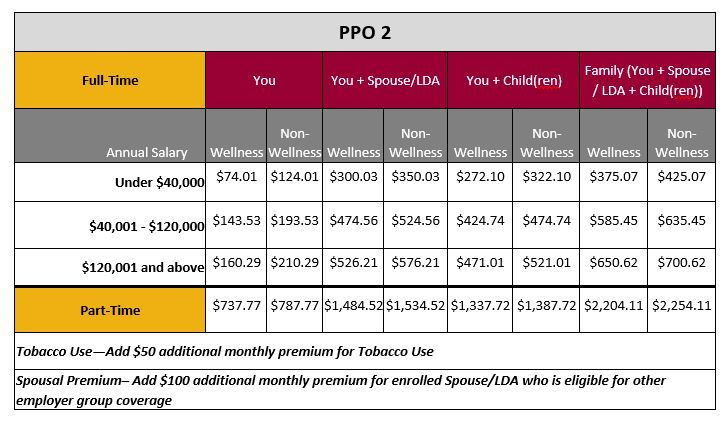
MEDICAL PLAN COMPARISONS
Medical                             PPO 1                                PPO 2                           PPO 3
                                  $500 (You)/                         $1,200 (You)/                   $2,800 (You)/
Annual Deductible
                            $1,000 (You + 1 or More)             $2,400 (You + 1 or More)        $5,600 (You + 1 or More)
                                                                                                       $5,000 (You)/
                                 $3,000 (You)/                        $4,000 (You)/
Out of Pocket Max                                                                                $10,000 (You + 1 or More)
                            $6,000 (You + 1 or More)             $8,000 (You + 1 or More)
                                                                                                       *Includes Rx
                              90% Home Hospital                    90% Home Hospital               90% Home Hospital
Coinsurance
                                80% In Network                       80% In Network                  80% In Network
Office Visit               Deductible & Coinsurance             Deductible & Coinsurance         Deductible & Coinsurance
Wellness Visit                 Covered at 100%                      Covered at 100%                  Covered at 100%
Hospital Inpatient –
                       $100 Copay then 90% Coinsurance      $100 Copay then 90% Coinsurance      Deductible & Coinsurance
Home Hospital
                          $250 Copay + Deductible &            $250 Copay + Deductible &
Hospital Inpatient                                                                               Deductible & Coinsurance
                                Coinsurance                          Coinsurance
Hospital Outpatient        Deductible & Coinsurance             Deductible & Coinsurance         Deductible & Coinsurance
Pharmacy                            PPO 1                                PPO 2                           PPO 3
Deductible             $100 (You)/ $200 (You + 1 or More)   $100 (You)/ $200 (You + 1 or More)
                                                                                                   Included in Medical
                         Does not apply to mail order         Does not apply to mail order
Out of Pocket Max                $3,000 (You)/                        $3,000 (You)/
                                                                                                   Included in Medical
                            $6,000 (You + 1 or More)             $6,000 (You + 1 or More)
Generic                      15% up to $200/script                15% up to $200/script          Deductible & Coinsurance
Preferred Brand              30% up to $200/script                30% up to $200/script          Deductible & Coinsurance
Non-Preferred Brand          45% up to $400/script                45% up to $400/script          Deductible & Coinsurance
Mail Order                      5% / 15% / 25%                       5% / 15% / 25%              Deductible & Coinsurance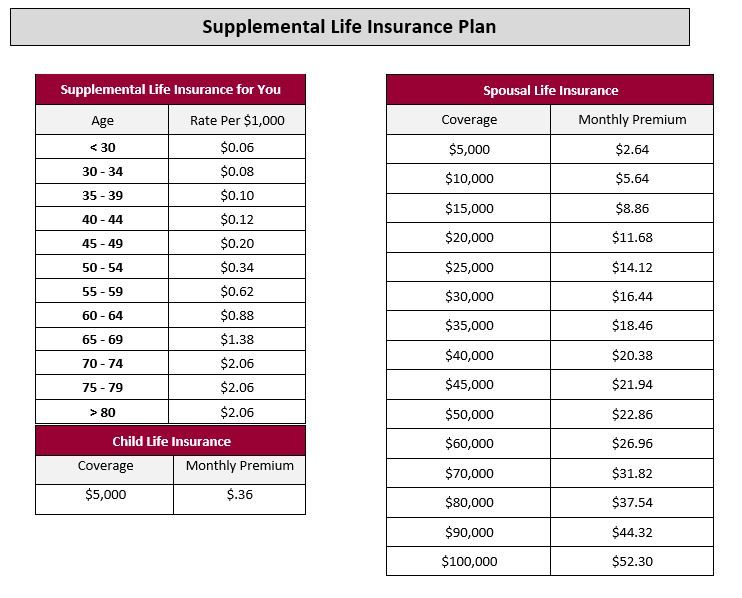
ADVANTAGES OF PPO 3 HSA
Family Deductible is Embedded – No single individual on a plan with employee and a spouse/LDA
and/or child(ren) will have to pay a deductible higher than the individual deductible amount

Out of Pocket Maximum – Includes Deductible, Coinsurance and Prescription Drug Expenses
     • PPO 1 & PPO 2 have a separate medical and RX out of pocket maximum, the total of both in
        either plan option is greater than that of PPO 3 HSA’s combined out of pocket maximum

Health Savings Account (HSA) Compatible – Includes an HSA to use for eligible medical expenses
     • Loyola contributes $600 (You) or $1,200 (You + 1 or More)
     • You can contribute on a pre-tax basis, too!

Limited FSA – You can contribute up to $2,650 pre-tax to use for eligible 2019 dental and vision expenses

Preventive Drug List– Some preventive prescriptions require you to only pay coinsurance, even without
meeting the deductible yet

Lower Premiums – PPO 1 and PPO 2 rates are increasing for 2019
    • PPO 3 HSA monthly premiums are considerably lower than the existing plan options

Like the PPO 1 & PPO 2, you can still take advantage of:
      • Preventive Exams and Certain Preventive Prescriptions covered at 100%
      • National PPO Network – Utilizes the large national BCBS PPO Network; Coinsurance is 90%
         when you use Home Hospitals
      • Includes Virtual Visits, Benefits Value Advisor, Blue365 Deals and more
HEALTH SAVINGS ACCOUNT
         (HSA)
WHAT IS A HEALTH SAVINGS ACCOUNT
(HSA)?
An HSA is a bank account that allows you to save and pay for your share of everyday qualified
health care expenses tax-free.
You can pay for qualified expenses, for you, your spouse, and any tax dependent (including LDAs)
with your HSA– even if they are not covered by your health plan.
Loyola will make a contribution into your HSA account on January 1, 2019
Employee Only Employee + 1 or More
$600 $1,200
You can contribute up to the following amounts tax free (less Loyola's contribution) in 2019:
$3,500 total = $600 Loyola + up to $2,900 (you)
$7,000 total = $1,200 Loyola + up to $5,800 (you + 1 or more)
If you are 55 or older, you can contribute an additional $1,000 in catch-up contributions, too.HEALTH SAVINGS ACCOUNT (HSA)
Access the BenefitWallet member portal at
www.mybenefitwallet.com. Complete your
set up and you will be mailed a Visa® HSA
debit card.
www.mybenefitwalletsite.com/luc
Loyola will fund your HSA on January 1. You
can also contribute via payroll deduction on
a pre-tax basis.
• You can only access the funds that are
currently in your account.
• Choose to spend it on today’s health care
expenses or save for future expenses
• Never pay taxes when using your HSA for
qualified health care expenses.HEALTH SAVINGS ACCOUNT (HSA) Q&A
www.mybenefitwalletsite.com/luc
How do I qualify for an HSA?
You must be enrolled in an HSA qualified health plan option (PPO 3 HSA). If addition, you cannot be covered by another
health plan (including Medicare or Tricare) or be claimed as a dependent on another person’s tax return.
How do I make deposits to my HSA?
You can contribute to your account with payroll deductions, online by making deposits from your checking account, or
by mailing a personal check. Loyola will deposit the University’s contribution in January 2019.
What expenses qualify for payment from an HSA?
Funds in your HSA can be used to pay for any eligible medical, dental, or vision expenses – doctor’s visits, prescriptions,
lab tests, and hospitalizations. See IRS Publication 502 for a complete list of qualified expenses.
Do HSA funds expire?
Your HSA funds never expire. Any funds you don’t spend roll over year after year and can be saved and invested for
retirement. There is an annual limit for contributions, but the total balance of your account has no limit.
What happens if I change jobs or health plans?
You own your HSA. If you change jobs or health plans, you continue to own your account. If you enroll in another HSA-
qualified health plan, you can continue to contribute to your HSA. If you choose another type of health plan, you are still
eligible to spend the funds in your HSA on qualified medical expenses — for you, your spouse, and your tax dependents.
What are the fees for having this account?
The monthly maintenance fee is employer paid by Loyola. $1.90 per employee per month if the monthly average balance
is $3,000 or less. No fee if the monthly average balance is $3,000 or higher.EXAMPLES OF HOW EACH MEMBER COULD BENEFIT FROM AN HSA
Meet Mike. Age 23. Salary < $40,000
•    Mike has limited resources because he is paying off student loans.
•    He’s young and healthy, so he doesn’t have many health-related expenses.
•    He enrolls in the PPO 3 plan because the per pay period premiums are less than PPO 1 & PPO 2.
      o   His annual premiums will be $600 and Loyola contributes $600 to his HSA.
•    Mike also has the Accident and Critical Illness benefits that are also paid for by Loyola.

                    Why should he save in an HSA right now?

     Mike can use his HSA
                                           Once his HSA balance                      By starting now,
       funds for qualified
                                              reaches $1,000,                         Mike will build
     health care expenses,
                                           he can start investing                an important safety net
      such as office visits,
                                           with his HSA – yet still               for future health care
         prescriptions,
                                             access the funds                       expenses –or even
           dental or
                                                 any time.                              retirement.
          vision care.
Meet Max and Emma. Age: Late 30s. Salary $40k - $120k
• A young family on a budget, with third child on the way.
• Emma knows she will satisfy her deductible.
• They have a high-deductible health plan with a $5,600 family deductible.
• Money is tight and they have very little disposable income.
PPO 2 PPO 3 HSA
Emma’s Deductible $1,200 $2,800
Coinsurance $2,800 $2,200
Maximum Medical Out of Pocket for Emma $4,000 $5,000
Maximum Prescription Out of Pocket for Emma $3,000 Included in Medical
Maximum Medical and RX Out of Pocket Maximum $7,000 -
Loyola HSA Contribution $0 ($1,200)
Annual Wellness Premium $7,025 $5,646
Estimated Annual Cost for Emma in 2019 $14,025 $9,446
Annual Difference between PPO 2 & PPO 3 HSA $4,579
Emma can take the premium and maximum out of pocket differential of $4,579 and
contribute that into her HSA.Meet Max and Emma. Age: Late 30s. Salary $40k - $120k
• Emma knows she will incur a medical expense so she can save in her HSA.
• Emma can use the funds as they accumulate or reimburse herself once they accumulate.
How can an HSA help them maximize their health care dollars?
Save on taxes
• When spending $1,000 on health care expenses through
their pre-tax HSA, they can save $350 in taxes.
Spend less on medical costs
• By using their pre-tax HSA to pay for health care, they will
spend up to 35% less on today’s health care costs.
Assumes 35% savings, 25% federal, 3% state, and 7% payroll tax savings. Payroll tax savings apply when
contributions are made through payroll only. Your savings may vary. Consult a tax advisor for more information.Joe & Julie Smith. Age: Early 50s.
• Joe and Julie Smith’s last child has just completed college and moved out of their family home.
• Now empty nesters, they are committed to retiring in the next 5-8 years .
• They have a good start on saving, but their biggest concern is the cost of health care in
retirement.
How can an HSA help them?
The average
couple needs
$370,000*
for medical
To get ready, expenses Once the HSA
they are in retirement. owner reaches age
maxing out 55, they can
their HSA contribute an extra
contributions $1,000 to the HSA
each year. each year.
*HealthView Services, 2016 Retirement Health Care Costs Data ReportJoe & Julie Smith. Age: Early 50s.
The Smiths still worry though. Will contributing to their HSAs help
pave the way to their golden years, even if they face health issues?
• They have over $1,000 in their HSA, so they are eligible to invest that money in a
variety of mutual funds available through BenefitWallet.
• Investment gains in HSAs are not taxed; this will preserve the Smiths’ savings for
future expenses.
• The chart below shows how investing your HSA funds can help you build your
health care savings nest egg.
$397,000 Assumes $3,000 contribution to
$400,000
investment account yearly, earning
8% annual return. All returns and
$300,000
principal remain invested each
$162,000 year.
$200,000
$53,000 BenefitWallet is not recommending any
$100,000
$23,000 investment, nor can it assure you of a
profit or protect you against any loss on
$0
any investment made under the
5 years 10 years 20 years 30 years BenefitWallet investment platform.Meet Andy and Alicia. Age: Early 60s.
• Andy and Alicia are planning to retire in the next couple of years. They have each diligently
saved in their 403(b) plans.
• Now, they would like to contribute up to the maximum in an HSA to help prepare for
retirement – whether for medical expenses or for everyday bills.
How can an HSA help them?
No minimum
After age 65,
required
HSA funds can be
distributions gives
used for any
flexibility to your
expense at all,
withdrawal strategy
just like a 403(b).
during retirement.
Transfers to the spouse
Spend your HSA on upon account holder’s
qualified medical death, with no tax
expenses in retirement, implications.
including Medicare
premiums (Parts A, B Not married? The
and D) – all tax free! HSAs for account will become
part of your estate.
retirementMeet Andy and Alicia. Age: Early 60s.
Regarding HSAs and Medicare, Andy and Alicia will want to
pay attention to these notable points.
• Becoming eligible for Medicare does not impact their ability to make
contributions or withdrawals from the HSA, assuming they remain
HSA eligible.
• If Alicia enrolls in Medicare, Andy (the HSA account holder) can still
contribute to the HSA as long as he is covered by an HSA-qualified
health plan.
• Once they are both enrolled in Medicare, they can no longer
contribute to the HSA, but they can use it to pay for qualified expenses.
Learn more about HSAs and Medicare on the HSA
education site: www.mybenefitwalletsite.com/lucACCIDENT & CRITICAL ILLNESS
BENEFIT PLANSACCIDENT PLAN This coverage is provided at
no cost to employees who
enroll in PPO 3 HSA
• Pays benefits, based on a schedule of services, when you
(coverage for other
seek treatment for injuries sustained in an accident dependents may be
purchased voluntarily).
• All benefits are paid directly to you, regardless of other
benefits you may receive
• You use the benefit as you see fit
• 24-hour coverage
• Guaranteed issue – no health questions
• No waiting periods
• No limit to the number of times you and your family can
use the plan
• Annual Wellness Benefit - $75CRITICAL ILLNESS
$10,000 CI coverage is
provided at no cost to
employees who enroll in
• CI pays a Lump sum benefit directly to you upon PPO 3 HSA (coverage for
diagnosis of a covered critical illness: other dependents may be
• Employee & Spouse: choose $10,000 or $20,000 purchased voluntarily).
• Spousal amount cannot exceed employee amount
• Additional costs due to a critical illness contribute to pressure you are already
under at the worst possible time
• Out-of-pocket medical expenses like co-pays, deductibles, and
coinsurance
• Durable Medical Equipment
• Lost income
• Home modification
• Dependent Child(ren): If elected, coverage will be equal to 25% of employee’s
approved amountCRITICAL ILLNESS
Category 1 Category 2 Category 3
• Life threatening • Heart Attack • Blindness
Cancer • Ruptured Cerebral, • Coma
Carotid or Aortic • Kidney (Renal)
Aneurysm Failure
• Stroke • Paralysis
• Severe Brain
Damage
This benefit includes a wellness benefit – if you receive a health
screening you will receive $50.FLEXIBLE SPENDING ACCOUNTS
FLEXIBLE SPENDING ACCOUNT (FSA)

•    Tax free dollars to be used for qualified medical, dental, and vision expenses for you and your
     tax qualified dependents as determined in the IRS Publication 502.

•    FSA cards are loaded with the entire amount of your Health Care FSA annual election for full
     use as of January 1, 2019.

•    Use it or lose it. Consider signing-up via Employee Self-Service before November 21, 2018.

•    Cannot have both an FSA and an HSA, if you are enrolled in the PPO 3 and receive the LUC
     HSA contribution you cannot enroll in the FSA.

                                        2019 Plan Year
                              Annual Max
                                                          $2,650
                              Contribution
NEW JANUARY 1, 2019
LIMITED FLEXIBLE SPENDING ACCOUNT
(LFSA)
• The Limited FSA (LFSA) is similar to a Health Care FSA, however the LFSA only
reimburses for eligible dental and vision expenses.
• This account will be available if you are enrolled in PPO 3 HSA.
2019 Plan Year
Annual Max
$2,650
ContributionDEPENDENT CARE (DCFSA)
If you have eligible child or adult day care expenses while
working, then a Dependent Care FSA can help you pay your
expenses with tax-free money.
– Consider using tax-free dollars for Qualified Dependent Care expenses!
– Sign up through Employee Self-Service before November 21, 2018.
Examples of Reimbursable Expenses:
2019 Plan Year
• Babysitter Expenses
• Before & After School Expenses
• Day Care Center Expenses Annual Max
$5,000
• Preschool Tuition Contribution
• Elder Care (In Home or Day Care)NAVIGATING THE PRE-TAX OPTIONS
Compatibility Chart
Limited FSA
Health Dependent (Dental &
HSA Care FSA Care FSA Vision Only)
Enrolled in PPO 3 HSA
Enrolled in PPO 1 or
PPO 2DENTAL, VISION, HYATT LEGAL, KINDERCARE
DENTAL INSURANCE
Dental insurance options remain the same for 2019:

       Delta Dental PPO             Guardian/First Commonwealth DHMO

                                       In-network dental care only,
 Choose in-network dentists to
                                       Available in Chicagoland and
receive highest level of benefits
                                          Northwest Indiana only

Choose out-of-network providers
                                       No out-of-network coverage
        (at higher cost)
VISION INSURANCE BENEFIT UPDATE VSP Retail Frame Allowance is increasing from $150 to $180 as of January 1, 2019. • This benefit may be used bi-annually (once every 2 years) VSP members also have access to discounts available at www.vsp.com Non-VSP members with a Loyola medical plan can take advantage of special vision discounts through BCBS. Visit www.blue365deals.com for more information
HYATT LEGAL PLAN ENHANCEMENT
Hyatt Legal Plan premiums remain the same for 2019, but will include Identity
Management Services as of January 1.

LifeStages Identity Management Services from Hyatt Legal Plans keeps pace with
emerging identity threats across all stages of your life, thanks to CyberScout, the
nation’s premier provider of identity services.
     This chart shows how employees of all ages may benefit from Hyatt Legal:
NEW JANUARY 1, 2019 KINDERCARE CHILD CARE TUITION BENEFIT • Loyola University Chicago has partnered with KinderCare to provide tuition savings on early childhood education programs. • When your child enrolls at a participating KinderCare Learning Center or Champions Before-and After-School Program, you'll save 10% on the cost of tuition as a Loyola University Chicago employee. • Visit www.kindercare.com/luc to find a location close to work or home. • Enroll in a Dependent Care FSA to also take advantage of tax savings on KinderCare services.
OPEN ENROLLMENT REMINDERS
TALK TO ALEX
• Need assistance in picking a benefits package?
   • Alex is your personalized benefits counselor!

• ALEX will help you understand medical terminology, and walk you
  through the basics of how your medical plans work using real life
  examples.

• Answer several questions about your benefit utilization and lifestyle so
  Alex can help guide you to the best plan option for you.

Visit ALEX: www.myalex.com/loyola/2019
ENROLLING IN BENEFITS
•   Annual Enrollment: Thursday, November 1 – Wednesday, November 21
•   Employee Self-Service (ESS): https://lawson.luc.edu
    • Must be connected to Loyola’s secure network
    • Troubles? Contact the ITS Help Desk
         • helpdesk@luc.edu or 773-508-4487

•   What You Need to Do During Open Enrollment:
    • If you don’t enroll, you will miss out on the opportunity to enroll in PPO 3
      HSA, and have an HSA in 2019 with contributions from Loyola
    • Must re-enroll for Health Care FSA (PPO 1 and PPO 2 only), LFSA (PPO 3
      only) and/or Dependent Care FSA through ESS
    • Must complete Tobacco Premium and Spousal Premium Certifications
    • Verify your dependents/beneficiaries

Reminder: Both medical plan participants and their covered spouse/LDAs must
complete the respective Spousal/LDA and wellness incentive by December 7, 2018 in
order to receive the $50 monthly premium discount in 2019.
PAID STAFF PARENTAL LEAVE & STAFF VACATION UPDATES
NEW JANUARY 1, 2019
          PAID STAFF PARENTAL LEAVE
•   Three (3) weeks paid staff parental leave for parents due to birth,
    adoption, or placement of a foster child starting January 1, 2019.
     • Applicable to benefits-eligible full-time or part-time staff members
        after 12 months of employment who
     • Have given birth to a child; or
     • Are a spouse/partner of a woman who has given birth to a child; or
     • Have adopted a child or been placed with a foster child.

•   Leave must be taken within 6 months of birth, adoption, or placement of
    foster child.

•   Leave must be taken continuously:
     • Will run concurrently with FMLA.
     • Leave will be applied after STD period for birth.
REVISED STAFF VACATION POLICY
Effective December 23, 2018
Employee Group Years of Service
Less than 10 years 10 years 20 years
Administrative Directors and above* 4 weeks 4 weeks 5 weeks
All Other Full-time Staff 3 weeks 4 weeks 5 weeks
Part-time Staff (30 to < 40 hrs/week) 12 days 16 days 20 days
Part-time Staff (24 to < 30 hrs/week) 8 days 10 days 15 days
Part-time Staff (20 to < 24 hrs/week) 7 days 7 days 10 days
• As of December 23, 2018, paid vacation time for all staff will accrue bi-weekly
according to the schedule above.
• Newly hired employees will be able to use vacation after 90 days, instead of
waiting 6 months.
• Accrual rate is remaining the same, except for non-exempt staff with less than
5 years of service (increase from 2 weeks to 3 weeks of vacation time annually).REVISED STAFF VACATION POLICY
Effective December 23, 2018
• New maximum vacation accrual allotments will be established at one times
(1X) annual accrual (currently two times (2X) annual accrual).
• Any unused vacation above 1X accrual (plus five pay periods) as of
November 10, 2018 will be paid out in the November 16, 2018 paycheck.
• Payout = the accrued vacation time as of November 10, 2018 above the
new 1X maximum vacation accrual + the equivalent of five pay periods of
vacation accruals.
• This brings the accrual below the maximum, and allows you to continue
accruing vacation during the holidays and closure periods.
• Payout subject to the DCRP 403(b) contributions you currently have on file.PAYOUT DETAILS
Check your vacation hours balance using Employee Self-Service and KRONOS.
To adjust your retirement contributions for the November 16, 2018
paycheck only:
1. Contact Transamerica after October 25, and no later than November 2 to
increase/decrease your deferral percentage amount for the November 16
paycheck.
2. Contact Transamerica again after November 8 and no later than
November 16 to adjust your deferral percentage amount for the following
paycheck on November 30.
3. Contact the Retirement Center administered by Transamerica at
773-508-2770 or visit https://luc.trsretire.com.
Reminder: Adjust your contributions accordingly so that you can continue to
maximize the 5% University match through the last pay date of 2018!OPEN ENROLLMENT QUESTIONS… Feel free to contact benefits@luc.edu with any benefits-related questions.
OPEN Q & A
Thank You
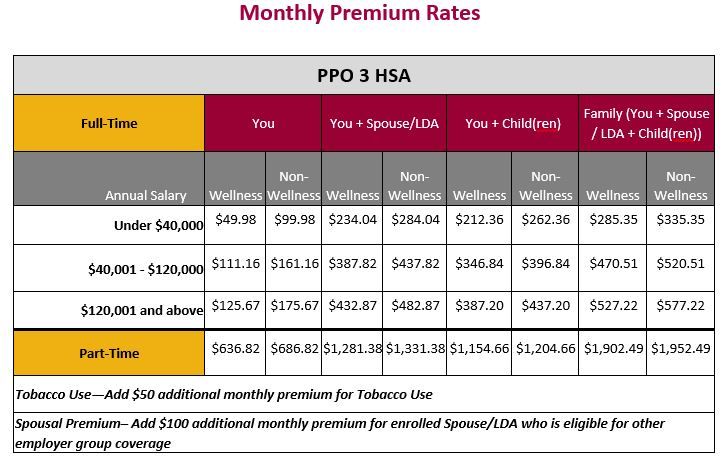
2019 Premium Rates
PPO 1
PPO 2

Monthly Premium Rates
PPO 3 HSA
DENTAL/VISION

Monthly Premium Rates
SUPPLEMENTAL LIFE INSURANCE & AD&D
CRITICAL ILLNESS/VOLUNTARY ACCIDENT INSURANCE; HYATT LEGAL
You can also read


