PARKVILLE URBAN FOREST - PRECINCT PLAN 2015-2025 - CITY OF MELBOURNE
←
→
Page content transcription
If your browser does not render page correctly, please read the page content below

PARKVILLE
Urban FOrest
Precinct Plan
2015-2025

                Parkville Urban Forest Precinct Plan 2015 - 2025 City of Melbourne 1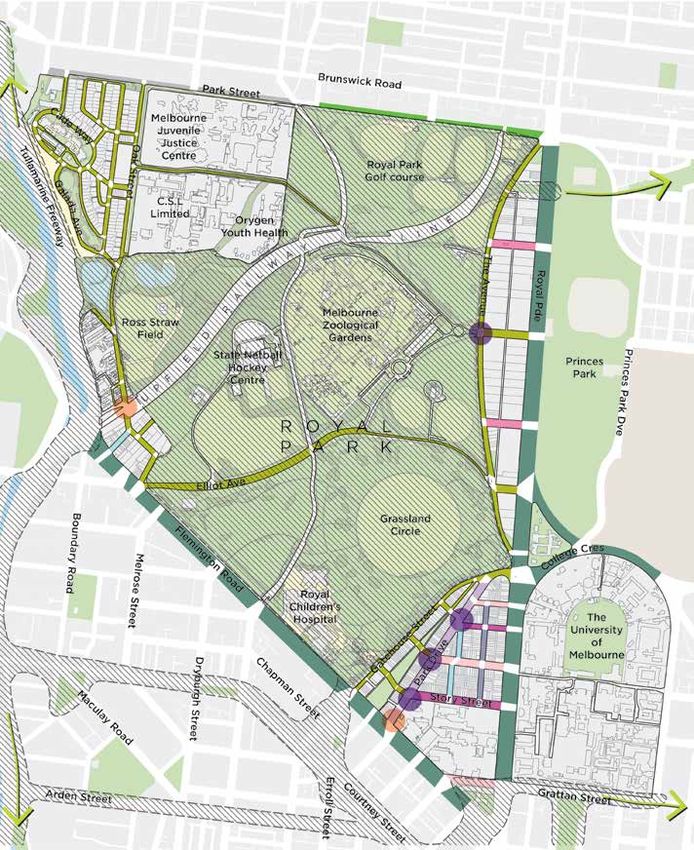
CONTENTS

A Message from                                               Introduction to the precinct plans                                    4

the City of Melbourne                                        How does Melbourne’s urban forest measure up?                         8

The City of Melbourne’s urban                                What will the precinct plans achieve?                               10
forest comprises around 70,000
trees in streets and parks as well
                                                             Community priorities                                                14
as approximately 20,000 trees
located in the private realm, in
addition to a growing number                                 Parkville urban forest in 2015
of green roofs and walls across                              and its projected future                                             18
the municipality.
                                                             Prioritising tree planting in streets                               20
The trees managed by the
City of Melbourne in the public
realm contribute significantly                                Map 1: Planting Priorities                                          21
to the character and identity of
Melbourne. An increasing body                                 uiding principles and considerations
                                                             G
of evidence and research informs
                                       Robert Doyle
                                                             for tree planting                                                   23
us that urban forests and green
                                       Lord Mayor
space are vital to supporting                                 Map 2: Key planting constraints                                    27
a healthy community as well as
providing a means to adapting                                 Map 3: Natural and open space context                              29
to climate change.
                                                              Map 4: Strategic context                                            31
The Urban Forest Strategy
                                                              Map 5: Planting sub precincts                                      33
completed in 2012 identified the
need to generate a new legacy                                 Map 6: Canopy cover and biodiversity outcomes                      35
for Melbourne and create a forest
for future generations. This urban                            Map 7: What should stay and what should change? 39
forest is to be diverse, robust and
resilient in the face of current and                         Planting Strategies                                                 40
future challenges. The urban forest
precinct plan documents are a key                             Map 8: Long-term Planting Strategy                                  41
implementation tool of the
Urban Forest Strategy, providing                              Map 9: 10-Year Planting Plan                                       43
a framework for tree planting
in streets that will meet the                                 Map 10: Guide to species change                                    45
Urban Forest Strategy targets.
                                                             Species Palette                                                     46
We have worked closely with the
community and key stakeholders
to generate this plan and are
                                       Cr Arron Wood
confident that it provides the
                                       Chair Environmental
basis for a street tree planting
                                       portfolio
program that is consistent with
neighbourhood character, the
community’s vision for the future
urban forest, and the principles
of the Urban Forest Strategy.                                Disclaimer
                                                             This report is provided for information and it does not purport to be complete. While care has been taken to ensure the content in the report
                                                             is accurate, we cannot guarantee is without flaw of any kind. There may be errors and omissions or it may not be wholly appropriate for your
                                                             particular purposes. In addition, the publication is a snapshot in time based on historic information which is liable to change. The City of Melbourne
                                                             accepts no responsibility and disclaims all liability for any error, loss or other consequence which may arise from you relying on any information
                                                             contained in this report.

2 City of Melbourne                                                                                                                     Parkville Urban Forest Precinct Plan 2015 - 2025 City of Melbourne 3
Introduction to
the Precinct Plans

Urban forest precinct plans guide      Why is the urban forest                    The Urban Forest Strategy
tree planting and greening in City     important?
of Melbourne streets. Precinct plans
                                       The City of Melbourne is currently
                                                                                     Principles:                The targets set out in the Urban Forest
are subsidiary documents to the
City of Melbourne’s 2012 Urban         facing three significant challenges:

                                                                                                                Strategy are to:
Forest Strategy and form a key         climate change, urban heating and
component of the strategy’s            population growth. These will place           •M
                                                                                       itigate and adapt
implementation. Melbourne is           significant pressure on the built              to climate change
                                       fabric, services and people of the city.                                 Increase canopy cover
divided into 10 precincts.
                                                                                                                The City of Melbourne’s canopy cover will be 40% by 2040.
Each precinct plan has been            A healthy urban forest will play a
                                       critical role in maintaining the health       •R
                                                                                       educe the urban
developed in collaboration with                                                       heat island effect
the community, and is grounded         and liveability of Melbourne by:
                                                                                                                Increase urban forest diversity
in the science underlying the
                                       • cooling the city                                                       The City of Melbourne’s urban forest population will be composed of
Urban Forest Strategy and in
                                       • improving and maintaining                   •D
                                                                                       esign for health        no more than 5% of one tree species, no more than 10% of one genus
sound urban design principles.
                                         the health, well-being and                   and wellbeing             and no more than 20% of any one family.
                                         happiness of urban dwellers
What is an urban forest?
                                       • improving social cohesion
The urban forest comprises all                                                       •C
                                                                                       reate healthier         Improve vegetation health
of the trees and other vegetation –    • cleaning air and water                       ecosystems                90% of the City of Melbourne’s tree population will be healthy by 2040.
and the soil and water that supports   • sequestering and storing carbon
it – within the municipality. It
                                       • attracting people to live, work
incorporates vegetation in streets,                                                  •D
                                                                                       esign for liveability
                                         and visit in Melbourne                                                 Improve soil moisture and water quality
parks, gardens, plazas, campuses,                                                     and cultural integrity
river and creek embankments,           • stimulating economic activity                                          Soil moisture levels will be maintained at levels to provide healthy
wetlands, railway corridors,             in retail and dining precincts                                         growth of vegetation.
community gardens, green walls,        • providing habitat for native
balconies and roofs.                                                                 •B
                                                                                       ecome a water
                                         birds and pollinators
                                                                                      sensitive city
                                                                                                                Improve urban ecology
                                                                                                                Protect and enhance urban ecology and biodiversity to contribute
                                                                                                                to the delivery of healthy ecosystem services.
                                                                                     •P
                                                                                       osition Melbourne
                                                                                      as a leader in
                                                                                      urban forestry
                                                                                                                Inform and consult the community

                        SCIENCE                                                                                 The community will have a broader understanding of the importance
                                                                                                                of our urban forest, increase their connection to it and engage with
                                                                                                                its process of evolution.

                      PRECINCT
                        PLAN
     URBAN                             COMMUNITY
     DESIGN

4 City of Melbourne                                                                                                               Parkville Urban Forest Precinct Plan 2015 - 2025 City of Melbourne 5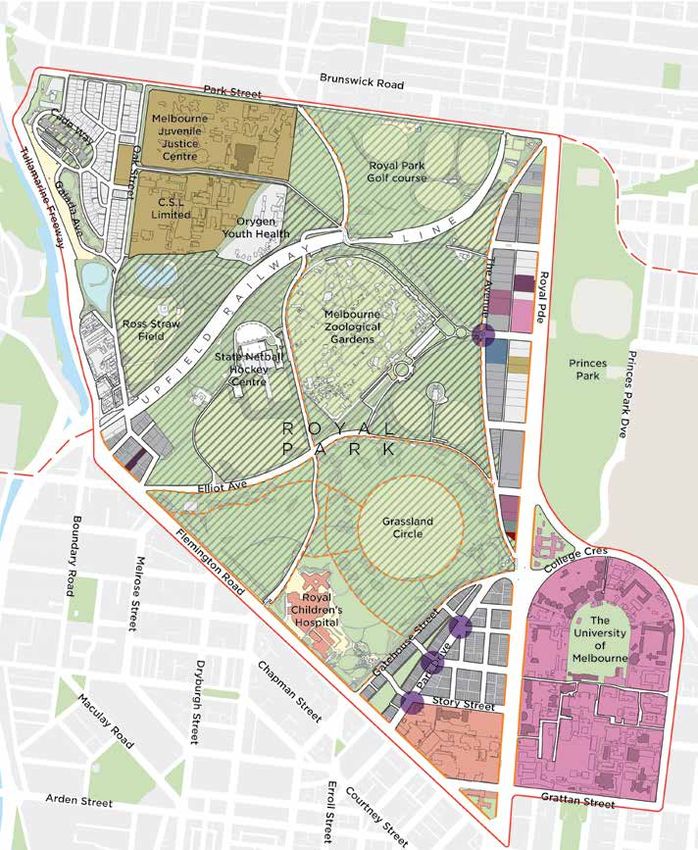
Introduction to the Precinct Plans
CONTINUED

Why are we concerned about               The urban heat island effect             Anticipated population growth          What can the urban forest do?                    benefits that our tree canopy              of mitigating the potential impacts
climate change, urban heat               (whereby urban areas are several         and increasing urban intensification                                                    can provide to mitigate climate            of climate change and heat on our
                                                                                                                         Urban forests provide an array of
island and population growth?            degrees hotter than surrounding          means that more people will be                                                          change impacts are shade, cooling          city. The Urban Forest Strategy has
                                                                                                                         environmental, economic and social
                                         rural areas) means that central          at risk during extreme weather                                                          and rainwater interception.                established principles and targets
Climate change impacts to human                                                                                          benefits that contribute to creating
                                         Melbourne will reach threshold           events and, as a result, there will                                                                                                for developing an urban forest that
health and wellbeing are a significant                                                                                   resilient and sustainable cities that            The urban forest and its associated
                                         temperatures for heat related illness    be a greater demand on health                                                                                                      will meet Melbourne’s needs and
concern for our municipality. Climate                                                                                    are enjoyable places for people to               benefits have been identified as one
                                         in vulnerable populations more           services in the City of Melbourne.                                                                                                 create a city within a forest.
change science indicates that                                                                                            live and work. Some of the significant           of the most cost-effective means
                                         often and for a longer durationthan      Urban intensification also places
Melbourne is likely to experience        surrounding suburban and rural           additional pressure on public
an increase in the frequency and         areas. The urban heat island is          realm open space as the private
severity of extreme weather events       primarily a result of impervious hard    realm becomes increasingly
such as heat waves, drought and          surfaces that absorb heat, human         built-up (for more information see
flooding. Heat waves kill more people    activity that generates heat and low     Melbourne’s Open Space Strategy).
in Australia each year than any other    vegetation cover that fails to provide   Access to open space is critical to
natural disasters. The average annual    adequate shade and natural cooling.      people’s physical and mental health
temperature is expected to increase                                               and wellbeing.
by approximately 2.6 C° and the
number of hot days each year is
expected to increase from nine
to 20 by 2070.

Thermal imaging of
Melbourne, taken late
at night, showing how
paved, unshaded surfaces
store heat from solar
radiation and contribute
to increased temperatures
in urban areas.
                                                                                                                         Useful Life Expectancy mapped for City of Melbourne Trees.

6 City of Melbourne                                                                                                                                                                        Parkville Urban Forest Precinct Plan 2015 - 2025 City of Melbourne 7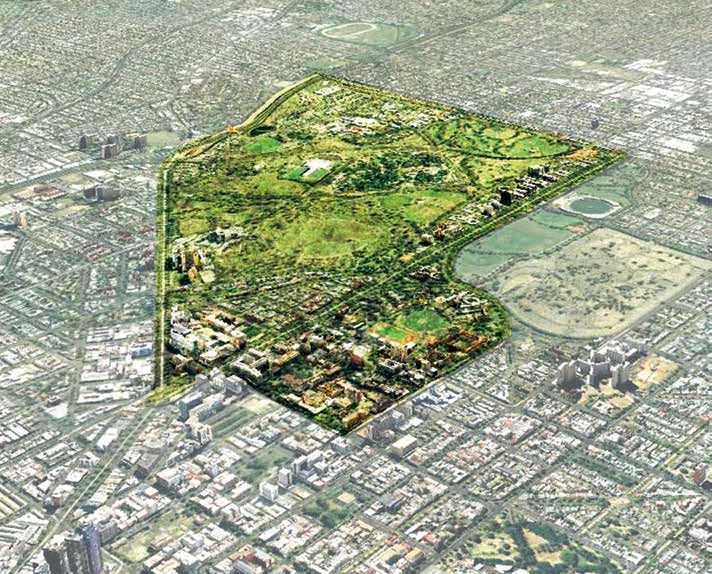
How does Melbourne’s
Urban Forest Measure up?

In order to provide the benefits           Canopy cover                            Urban development has increased            Melbourne’s canopy graphed with and without tree planting
we need from our urban forest                                                      the connectedness of impervious
                                           Increasing the provision of summer
in a changing climate, our tree                                                    surfaces resulting in:
                                           shade and biomass is important to
population needs to be healthy,
                                           combating the urban heat island         • decreased vegetation cover and
diverse and resilient. To assess
                                           effect, adapting to climate change        below ground growing space;                                                                                                                                         40%
its current state we mapped the
                                           and enhancing our streetscapes
trees in our city to measure species/                                              • decreased infiltration of water
                                           for the comfort of people. Canopy
genus/family diversity, useful life                                                  into the ground;
                                           cover is a way of expressing, as a                                                                                                                                      30%
expectancy and tree canopy.
                                           percentage, how much of any given       • increased pollutant runoff; and,                                                         27%
                                           area is shaded by trees. Currently,     • increased hard surfaces which
Useful life expectancy                     77% of Melbourne’s streets and parks                                                         23%
                                                                                     contribute to the urban heat island.
Useful life expectancy is an estimate      are without natural shade, and the
                                           areas of the city with the highest      Fundamentally, the city has low                                                            26%
of how long a tree is likely to                                                                                                                                                                                     25%
                                           population density have the lowest      levels of water permeability (50%)                   23%                                                                                                               21%
remain in the landscape based on
                                           canopy cover. The City aims to          and water has little opportunity to
health, amenity, environmental
                                           double its canopy cover by 2040         infiltrate the soil. Ground surfaces
services contribution and risk to
                                           and is currently planting 3,000 trees   need to allow rainfall to enter the
the community. The recent period
                                           per year to achieve this target.        soil, a huge reservoir that is ready-
of drought and water restrictions
                                                                                   made to provide for a healthy
triggered irreversible decline for
many trees. This exaggerated               How can permeability,                   forest. We are increasingly using
the age-related decline of many            availability of water and soil          methods to increase permeability                     2012                                 2020                                  2030                                 2040
significant elms and other trees.          volume be improved?                     through the use of permeable
Modelling shows that within the                                                    pavement, structural soil cells
next ten years, 23% of our current         The urban environment is highly
                                                                                   and peeling back asphalt where
tree population will be at the end         modified, with harsher conditions                                                                      New and Replacement Planting                                No Future Planting
                                                                                   possible to provide better growing
of their useful lives and within           for plant growth than in natural
                                                                                   conditions for trees and vegetation,
twenty years this figure will have         landscapes. Tree health and the
                                                                                   and a better cooling outcome.
reached 39%. Most dramatically,            ability to maintain shade and
                                                                                                                            The lower line represents what is projected to happen to our canopy cover if we stop planting trees. The line above shows what will happen
55% of Melbourne’s elms are in             cooling benefits are primarily
                                                                                                                            if we replace trees as they are lost and plant new trees at a rate of approximately 3,000 trees per year to 2040
a state of severe decline and will         influenced by the conditions
likely need to be removed from             in which trees are growing.
the landscape within 10 years.
                                           Access to ample soil moisture
                                           enables trees to actively transpire
Tree diversity and vulnerability           and cool the surrounding air.
At present, approximately 40%              Adequate soil moisture is critical
of our trees come from one family          for healthy vegetation. A number
(Myrtaceae). Elm avenues line many         of active and passive approaches
Melbourne boulevards and plane             are currently undertaken to
trees dominate in many streets,            replenish soil moisture and ensure
particularly within the central city.      it is maintained at levels to provide
Within streets 24% of trees are            healthy growth. Our Total Watermark
planes, 11% are elms and 8% are            City as a Catchment is being updated
spotted gums. Reliance on a few            to strategically manage Melbourne’s
species, and a lack of spatial diversity   water catchment. In the meantime,
in species distribution, leaves the        we have implemented numerous
urban forest vulnerable to threats         water sensitive urban design projects
from pests, disease, and stress due        to capture and store water that
to climate change.                         would otherwise go down the drain.
                                           This water is being used to water the
                                           vegetation in our urban landscapes.

8 City of Melbourne                                                                                                                                                                                 Parkville Urban Forest Precinct Plan 2015 - 2025 City of Melbourne 9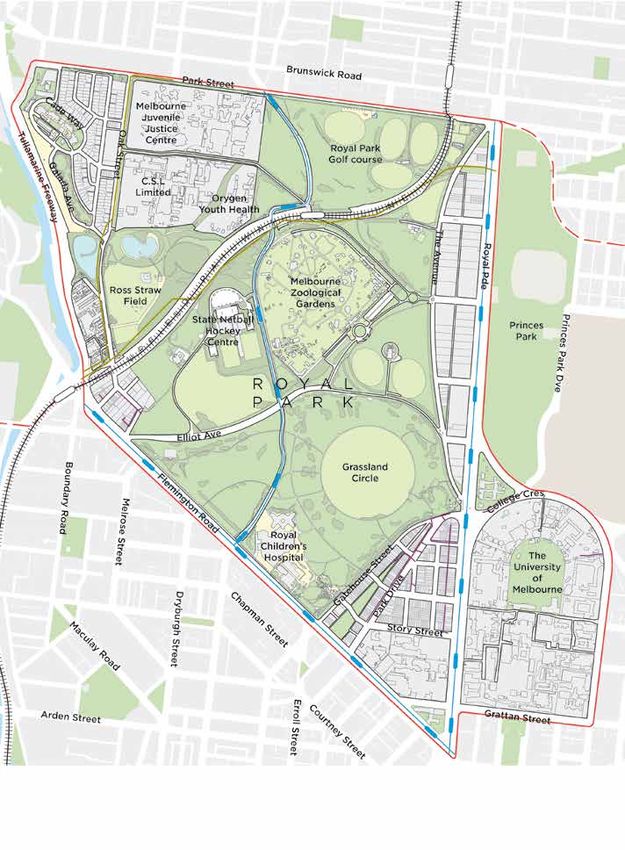
What will the Precinct
Plans Achieve?

The precinct plans will help to           The plans are performance               Policy context                          The Vision for parkville’s Urban Forest
guide implementation of the urban         based in that they establish the
                                                                                  The relationships between the
forest strategy in Melbourne’s streets.   desired outcomes for streets but
                                                                                  precinct plans and City of Melbourne
The information provided in the plans     do not prescribe specific species
                                                                                  documents are outlined in the Urban
                                                                                                                              With shady and layered vegetation, the iconic Parkville
will direct the annual tree planting      for each location. A set of high
                                                                                  Forest Strategy. Within the Parkville
program to achieve urban forest           performance guidelines are being
                                                                                  precinct the Royal Park Master
strategy objectives, protect and
enhance neighbourhood character,
                                          developed for Melbourne’s urban
                                          landscapes and these will support
                                                                                  Plan and Open Space Strategy
                                                                                  will influence the future character
                                                                                                                              urban forest will be smart, productive and diverse
and to prioritise works and budgets
within each precinct.
                                          the precinct plans with case studies
                                          and detailed guidance on how
                                                                                  of the precinct.                            to support people and wildlife while respecting the
Within this document, specific
                                          to achieve outcomes in streets
                                          that are consistent with the urban                                                  existing character.
direction is provided on the selection    forest strategy. Park and significant
of appropriate trees for the precinct.    boulevard trees will be planted
                                          using existing master plans and
                                          site specific plans.

The City of Melbourne
boundary is shown in grey
and the Parkville Precinct
is highlighted in orange.

10 City of Melbourne                                                                                                                                                Parkville Urban Forest Precinct Plan 2015 - 2025 City of Melbourne 11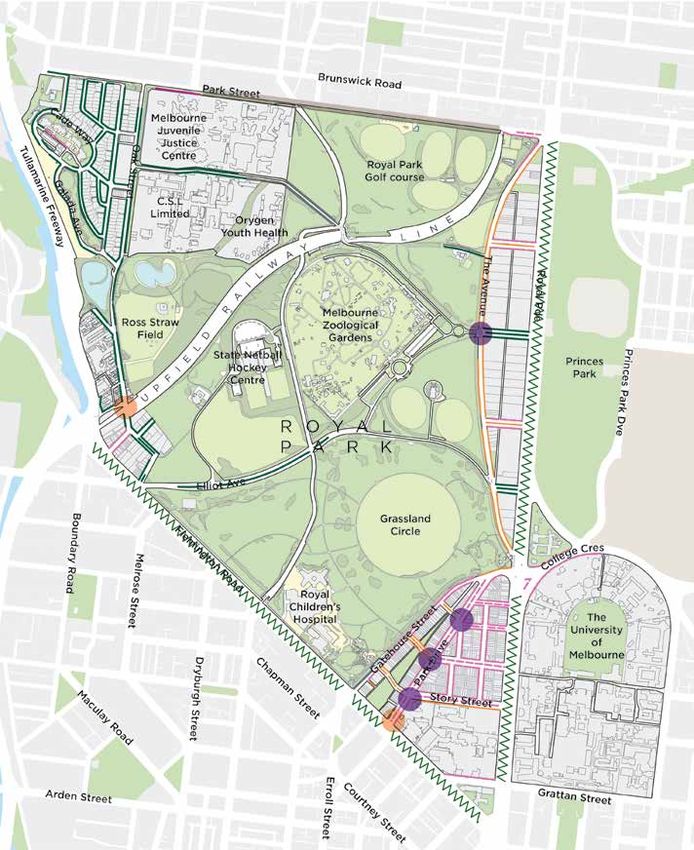
What will the Precinct Plans Achieve?
CONTINUED
Complementary Strategies The Royal Park Master Plan sets areas to the south, east and west Parkville character
out the planting scheme for areas of the park were excised between
The precinct plans address tree The Parkville precinct is unique within
within Royal Park, including roadways. 1859 and 1868 and were initially part
planting in Melbourne’s streets the city, with its main land use and
This is dominated by naturalised open of the separate settlement of North
but there are many ways in which dominant feature being Royal Park.
woodland planting. The Master Plan Melbourne. The more contemporary
the private and public realm can Four physically separate residential
also guides vegetation character Parkville Gardens neighbourhood was
contribute to meeting urban forest areas cling to the edge of the park
in the streets bounding Royal Park, built as the Athlete’s Village for the
objectives and creating a city on the east, south and west.
including The Avenue, Gatehouse 2006 Commonwealth Games.
resilient to climate change.
Street, Manningham Street, Oak The character of the urban forest in
Street and Park Street. Early tree planting was largely
These include: Parkville is heavily influenced by the
driven by the desire to create
Royal Park landscape, particularly in
• water sensitive urban design In and adjacent to the Parkville windbreaks and establish shade.
the neighbouring streets. Royal Park
precinct, the University of Melbourne, The first significant street tree
• tree planting in parks has a less formal style of planting
University High School, Melbourne plantings in the Parkville precinct
than other parks in Melbourne,
• private realm tree planting Zoo, Royal Melbourne Hospital and occurred in the 1850s when Royal
resembling open woodland rather
that contributes to urban forest Royal Children’s Hospital manage Parade (then Sydney Road) was
than a formal garden. In particular,
canopy, diversity and connectivity areas of land that could potentially planted with plantations of fast
Royal Park is known for its native
support greater canopy cover. growing blue gums and radiata
• planting vegetation that enhances and indigenous species palette
The City of Melbourne will work pine. In records, there was mention
urban biodiversity and diverse understorey planting.
with institutional and large holding of boulevard tree planting on
• maximising permeable surfaces Accordingly, native trees have been
land managers across the city to Sydney Road in 1878 being halted
and growing space for trees widely planted in the streets leading
support and encourage the adoption for construction of a tramway. The
into Royal Park, to signify entry points.
• building green roofs and walls of urban forest strategy principles road was divided for the Brunswick
on those lands. Similarly, the City cable tram line that opened in 1887. South Parkville is a compact triangle
• greening balconies of Melbourne will work with Four rows of trees in Sydney Road located in the valley running down
• implementing innovative green neighbouring municipalities are indicated on detailed plans of from Royal Park’s south-east corner,
technologies to support and encourage the the area from 1899. In 1901 the road bounded by Gatehouse Street,
adoption of urban forest strategy was renamed Royal Parade for the Flemington Road and Royal Parade.
The City of Melbourne is working
principles in other jurisdictions. Duke and Duchess of York’s visit North Parkville stretches longitudinally
with stakeholders in both the public `Melbourne and Its Suburbs’ compiled by James Kearney, draughtsman; engraved by
to the university and landscape along the eastern edge of Royal Park,
and private realm to support these David Tulloch and James D. Brown. Victoria. Surveyor-General [Melbourne]: Andrew Clarke,
Historical and existing beautification occurred in advance bounded by Royal Parade and The
outcomes. Opportunities exist to Surveyor General 1855: (part, State Library of Victoria collection)
of that visit. The elms that are present Avenue. Most streets in these areas are
enhance canopy cover in the private tree plantings
today are thought to have been 30 metres wide with narrow footpaths
realm. The projected canopy cover
Parkville’s physical area consists planted in 1913. At one point palms and no nature strips. Central medians
for the entire precinct has included narrower in these areas with
largely of parkland and institutional were interplanted with the elms but have been commonly used to break up
a potential doubling of private evergreen native trees planted
spaces; namely Royal Park, the these were removed in 1947. The the paved expanse and accommodate
realm canopy cover to 2% by 2040. in the parking lanes
University of Melbourne, the other major boulevard on the west large canopy trees, while medium-sized
In order for this to occur, private
Melbourne Zoo, hospitals and of the precinct, Flemington Road, trees are planted between parking bays
and institutional land owners, and When asked, the community
research facilities. Prior to settlement was planted out between the late on the road edge. The urban forest
developers would need to actively recognised that the character of
the Royal Park area was occupied 1878 and 1930. The sugar gums in these areas is predominantly large
create space for and plant trees. the urban forest varies distinctly
by open grassy woodland with the and larger tree plantings that deciduous trees, with the exception between areas in the precinct, but
The City of Melbourne will Moonee Ponds Creek running to its line Elliot Avenue and the park of The Avenue, which is dominated by that each was equally valued and
support private residents to west through the current wetland boundary in some locations are large evergreen eucalypts. should be enhanced. The exotic
plant trees by providing materials and Ross Straw Field site. Remnants estimated to have been planted
plantings in North and South Parkville
that advise on suitable trees to of this indigenous ecology persist in in the 1920s. Based on a review of West Parkville is a small residential
were seen to have great heritage value,
plant in small yards and by seeking the grassland and woodland species aerial photos, it is thought that most area between the Moonee Ponds Creek
with the elm avenue on Royal Parade
creative ways to encourage private of the park. Early in Melbourne’s remaining streets within Parkville and the western edge of Royal Park.
of particular significance. The native
land planting. We will also continue settlement history the southern were planted from 1970 onwards. Parkville Gardens sits at the north-west
character of the urban forest in West
to educate residents on how they portion of Parkville was favoured corner of Royal Park, bounded by the
Parkville and Parkville Gardens was
can contribute to the urban forest for livery stables and Royal Park Citylink freeway, Park Street and the
also highly valued for its beauty and
through our ongoing community provided nearby access to paddocks City of Melbourne municipal boundary
ecological contribution.
engagement work. and grazing lands. The residential to the north. Streets are generally
12 City of Melbourne Parkville Urban Forest Precinct Plan 2015 - 2025 City of Melbourne 13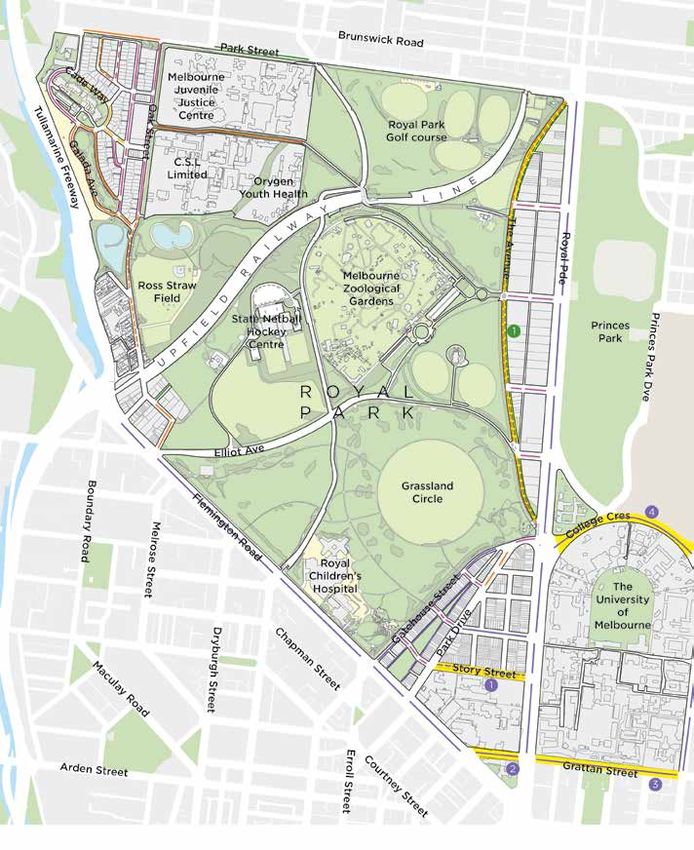
Community Priorities

Parkville’s Urban Forest Precinct         COLOUR   Desired future states defined              Shape, diversity and layers
Plan has been developed in                         by the community:
collaboration with the community,
which is reflected in the character,               • Shady and cool
vision, planting plan and priorities               • Colourful and beautiful
defined for Parkville’s urban forest.
                                                   • Water sensitive and drought
Consultation highlighted that Parkville              resilient
residents and visitors see their urban             • Sustainable
forest as iconic and unique, placing
                                                   • Include understory planting
great value on both the historically
significant exotic plantings and                   • Equitable and inclusive distribution
the native landscapes. There was a                 • Respectful of heritage and
strong sense that the urban forest in                existing character
Parkville should be multi-functional;
                                                   • Maintain the existing diversity of
incorporating sustainable water
                                                     native and non-native landscapes
use, understory planting for
biodiversity, species diversity and
shady canopy. The urban forest
                                                   Urban forest benefits
should be distributed equitably to                 highlighted through community
enhance liveability for all residents              consultation:
and visitors to the precinct.                      • Shade and cooling
Our work with the Parkville                        • Biodiversity
community indicated a preference                   • Cultural and spiritual fulfilment
for trees that will sustain the                      through significant historical
community through the provision                      landscapes
of shade and cooling, as well as
colour and beauty.                                 • Aesthetically beautiful
                                                   • Supporting wellbeing, for example
The longevity of the urban forest                    through tranquillity, connection to
in Parkville should be secured                       nature and providing pedestrian
by the selection of trees that are                   spaces and corridors
resilient to drought and future
climate conditions.                                • Social cohesion and inclusiveness

                                                                                            Images selected as representing a preferred future for Parkville’s urban forest that includes
                                                                                            colour, canopy, shade, seasonal change and shape.

14 City of Melbourne                                                                                             Parkville Urban Forest Precinct Plan 2015 - 2025 City of Melbourne 15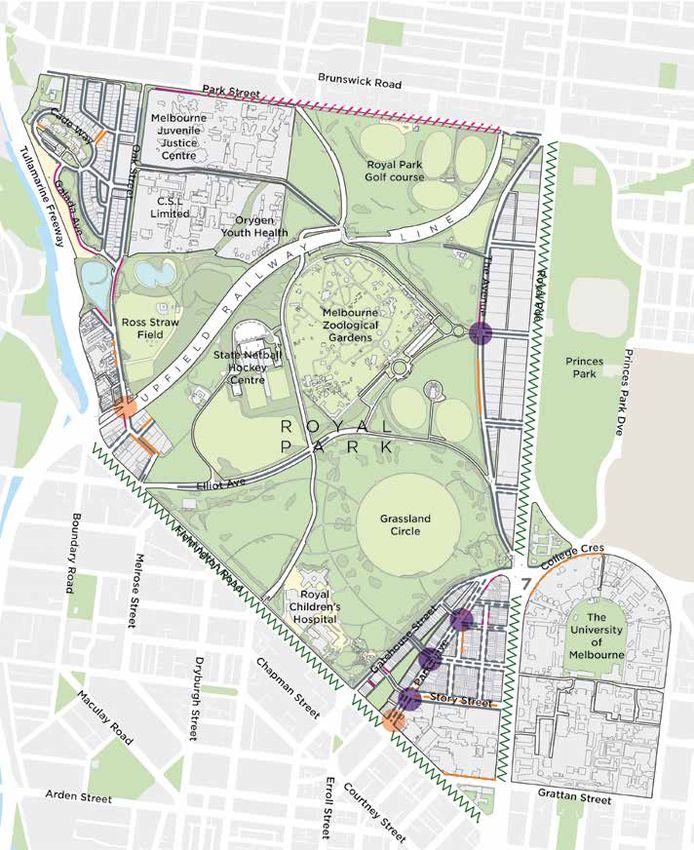
Community Priorities
CONTINUED

  StreetScape            COMMUNITY

                       Parkville community members developing priorities for planting in the precinct. (opposite)

16 City of Melbourne                                                                          Parkville Urban Forest Precinct Plan 2015 - 2025 City of Melbourne 17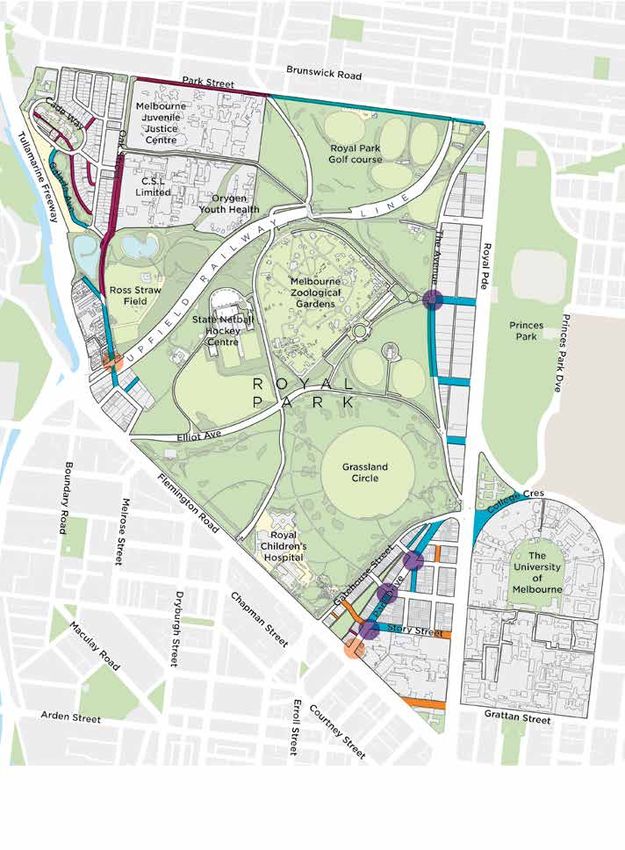
parkville’s Urban Forest in 2015
and its Projected Future
CANOPY - PUBLIC REALM
CANOPY - PUBLIC REALM
CANOPY – PUBLIC REALM
CANOPY - PUBLIC REALM
2015 15% 7%
2015 15% 7%
2015 15% 7%
2025 18% 8%
2025 18% 8%
TREE HEALTH (ULE) - PUBLIC REALM
2025 18% 8% Canopy Park
11191 2040 28% 12% Canopy Park
TREE HEALTH (ULE) - PUBLIC REALM 2040 28% 12% Canopy Road
Canopy Park
TREE HEALTH (ULE) – PUBLIC REALM 11191 2040 28% 12%
Canopy Road
8430
TREE HEALTH (ULE) - PUBLIC REALM Canopy Road
0% 10% 20% 30% 40%
8430 11191 10 years or less 0% 10% 20% 30% 40%
TREE CANOPY AND LOCATIONS FOR PARKVILLE
0% 10% 20% 30% 40%
11 20 years TREE CANOPY AND LOCATIONS FOR PARKVILLE
10 years or less Canopy Park Canopy Road
8430
21 to 30 years TREE CANOPY
Canopy Park AND LOCATIONS
Canopy Road FOR PARKVILLE
916
11 20 years Tree canopy and locations for Parkville
606 782 10 years or less Canopy Park Canopy Road
343 331 343 331 92 331 92 30 years
21 to 30 years
916 782 11 20 years
606 3432015331 331202592
343 331 922040 30 years CANOPY
CANOPY – ENTIRE
- ENTIRE PRECINCT
PRECINCT
21 to 30 years
TREES COUNTS FOR PARKVILLE, CATEGORISED BY USEFUL LIFE TIME EXPECTANCY (ULE) IN YEARS
2015331 916 2025 2040782
CANOPY - ENTIRE PRECINCT
606 343 343 331 331
10 years or less 11 20 years 21 to 3092
years 30 years 92 30 years CANOPY - ENTIRE PRECINCT
TREES COUNTS FOR PARKVILLE, CATEGORISED BY USEFUL LIFE TIME EXPECTANCY (ULE) IN YEARS 2015 8.1% 3.7% 8.3%
NOTE: The ULE of Royal Park trees are unknown,2025
2015 therefore they are omitted from this
2040graph. 2015 8.1% 3.7% 8.3%
10 years or less 11 20 years 21 to 30 years 30 years Canopy Park
TREES COUNTS FOR PARKVILLE, CATEGORISED BY USEFUL LIFE TIME EXPECTANCY (ULE) IN YEARS 2015 8.1% 3.7% 8.3% Canopy Park
NOTE:
Tree counts The ULE
for Parkville of Royal Park
categorised trees are
by useful life unknown, therefore
time expectancy they
(ule) are omitted from this graph.
in years 2025 9.7% 4.3% 8.3% 1% Canopy Road
10 years or less 11 20 years 21 to 30 years 30 years 2025 9.7% 4.3% 8.3% 1% Canopy Park
Canopy Road
TREES - PUBLIC REALM
TREESNOTE:
– PUBLIC
The ULEREALM
of Royal Park trees are unknown, therefore they are omitted from this graph. 2025 9.7% 4.3% 8.3% 1% Canopy Private
Canopy Road
Existing Park Trees
2040 15% 6.4% 8.3% 2% Canopy Private
TREES - PUBLIC REALM 2040 15% 6.4% 8.3% 2% Canopy Private Potential
2015 20041 3656 Replacement Park Trees Canopy Private
Existing Park Trees Canopy Private Potential
2040 15% 6.4% 8.3% 2%
TREES -2015
PUBLIC REALM 20041 3656
New Park Trees
Replacement Park Trees
Canopy Private Potential
0% 10% 20% 30% 40%
2025 19935 5950 3156 1050 Existing Park Trees
0% 10% 20% 30% 40%
106 500 New Street Trees
New Park Trees TREE CANOPY AND LOCATIONS FOR PARKVILLE
2015 20041 3656 Replacement Park Trees 0% 10% 20% 30% 40%
2025 19935 5950 3156 1050
TREE CANOPY AND LOCATIONS FOR PARKVILLE
Existing Street Trees
106 500 4134 New Street Trees Tree canopy andCanopy Parkfor Parkville
locations Canopy Road Canopy Private Canopy Private Potential
2040 25889 2720 480 TREE CANOPY
Canopy Park AND LOCATIONS
Canopy Road FOR PARKVILLE
Canopy Private Canopy Private Potential
New Park Trees
102 572 Replacement Street Trees
2025 19935 5950 3156 1050 Existing Street Trees Canopy Park Canopy Road Canopy Private Canopy Private Potential
2040 25889 106 2720 500 4134 480 New Street Trees
102 572
PRECINCT POPULATION DISTRIBUTION – RESIDENTS
Replacement Street Trees
0 5000 10000 15000 20000 25000 30000 35000 Existing Street Trees
2040 25889 2720 4134 480 PRECINCT POPULATION DISTRIBUTION - RESIDENTS
0
TREES COUNTS & PLANTING BY CITY OF MELBOURNE IN PARKVILLE
5000 10000 15000 20000
102
25000 30000
572
35000
Replacement Street Trees PRECINCT POPULATION DISTRIBUTION - RESIDENTS
Existing Park Trees Replacement Park Trees New Park Trees PRECINCT POPULATION DISTRIBUTION - RESIDENTS
1,800
TREES COUNTS
Existing & PLANTING BYReplacement
Street Trees CITY OF MELBOURNE
Street Trees IN PARKVILLE
New Street Trees 1,800
1,600
Tree counts
0 and planting
5000by City of Melbourne
10000 in Parkville
15000 20000 25000 30000 35000
Existing Park Trees Replacement Park Trees New Park Trees 1,600
1,400
NOTE: The ULE of Royal Park trees are unknown, therefore replacement park trees are underestimated. 1,800
Existing Street Trees 1,400
TREES COUNTS & PLANTING BYReplacement Street Trees IN PARKVILLE
CITY OF MELBOURNE New Street Trees 1,200
1,600
DIVERSITY (BY GENUS) – PUBLIC REALM 1,200
1,000
1,400 2015
NOTE: The Park
Existing ULETrees
of Royal Park trees are unknown,
Replacement therefore replacement
Park Trees park trees are underestimated.
New Park Trees
1,000
DIVERSITY (BY Existing
GENUS) - PUBLIC REALM
Street Trees Replacement Street Trees New Street Trees
800
1,200
800
2015
Eucalyptus 600
1,000 2025
2015
NOTE: The ULE of Royal Park trees are unknown, therefore replacement park trees are underestimated. 600
400 2025
DIVERSITY (BY GENUS) - PUBLIC REALM Ulmus
800
400 2035
2015 32% 19% 11% 5% 4% 4% 25% Eucalyptus
200
600 2025
200
0 2035
Corymbia 400
DIVERSITY
2015 (BY GENUS) - PUBLIC REALM19% Ulmus 0
2035
0- 0- 0-
5 5 rs5 rs rs
10 10 10
15 15 15
20 20 20
25 25 25
30 30 30
35 35 35
40 40 40
45 45 45
50 50 50
55 55 55
60 60 60
65 65 65
70 70 70
75 75 75
80 80 80
85 85 85
32% 11% 5% 4% 4% 25% 200
Lophostemon
-9-9 -9
-14 -14 -14
4 4
-7 -7 -7
-2 -2 -2
-3 -3 -3
-5 -5 -5
-1 -1 -1
-6 -6 -6
-4 -4 -4
-7 -7 -7
Eucalyptus
-2 -2 -2
-5 -5 -5
-3 -3 -3
-8 -8 -8
-6 -6 -6
-4 -4 -4
ye ye ye
2025
ye ye ye
Corymbia
9 9
25% 10% 13% 5% 5% 5% 37% 0
4 4
9 9
9 9
9 9
4 4
9 9
9 9
4 4
4 4
9 9
4 4
4 4
4 4
ar ar ar
Angophora a a
an an an
Ulmus
2015 Lophostemon
d d
32% 19% 11% 5% 4% 4% 25% PROJECTED RESIDENT POPULATION BY AGE FOR PARKVILLE
4
2025
ov ov ov
25% 10% 13% 5% 5% 5% 37%
9
4
9
9
9
4
9
9
4
4
9
4
4
4
Allocasuarina
Corymbia PROJECTED RESIDENT POPULATION2035:
BY AGE FOR PARKVILLE
er er er
2015: Residents 7198 Residents 8782
a
2040 20% 10% 10% 5% 5% 5% 45% WITH 66 OTHER GENUS TYPES Angophora
2015: Residents 7198 2035: Residents 8782
d
Lophostemon
Other PROJECTED RESIDENT POPULATION BY AGE FOR PARKVILLE
2025 25% 10% 13% 5% 5% 5% 37% Allocasuarina
2040 20% 10% 10% 5% 5% 5% 45% WITH 66 OTHER GENUS TYPES
2015: Residents 7198 2035: Residents 8782
Angophora
Other
0% 20% 40% 60% 80% 100%
Projected resident population by age for Parkville
Allocasuarina 2015 2025 2035
2040 20% 10% 10% 5% 5% 5% 45% WITH 66 OTHER GENUS TYPES 2015 2025 2035
Data source: City of Melbourne 2013-2036 Population Forecast, Geografia (last updated March 2015)
Main genus
MAIN GENUS TYPES FOR PARKVILLE Other
0% types for Parkville20% 40% 60% 80% 100%
2015 2025 2035
Eucalyptus Ulmus Corymbia Lophostemon Angophora
18 City ofMAIN GENUS TYPES
Allocasuarina
Melbourne FOR PARKVILLE
Other Parkville Urban Forest Precinct Plan 2015 - 2025 City of Melbourne 19
0% 20% 40% 60% 80% 100%
Eucalyptus
NOTE: Ulmus
This reflects the Corymbia
diversity of street Lophostemon
trees only. Royal Angophora
Park is excluded from the diversity targets.
Allocasuarina
MAIN Other
GENUS TYPES FOR PARKVILLEPrioritising Tree
Planting in Streets
1. S
treets with opportunities 2. H
igh density (>20) of vulnerable 3. Community identified Map 1: Planting Prioritising tree planting
in streets
in summer, and areas where there
is a very low canopy cover.
for planting or replacements residents (74 yo) priority for greening
priorities When prioritising where to plan,
Replacements are only identified
for streets where the useful life
City of Melbourne has prioritised it is important to focus resources expectancy of multiple trees is rated
the work in different streets by in the locations that need it most. at less than 10 years. We used census
using varied criteria and the timing This includes consideration of where and mapping data to spatially define
is provisional only. The schedule we have opportunities to plant new streets with these conditions. We
for some streets may be brought trees or replace trees, where the defined these on the maps overleaf.
forward or delayed by capital highest density of vulnerable people
works, renewal projects or reside, which streets are the hottest
developments that affect tree
planting or survival. Unforeseen How the Precinct Plan Guides Annual Planting
opportunities for streetscape
improvement may also alter
scheduled planting. Set annual planting program
Streets prioritised for work • Priorities (Map 1)
in Years 1 – 4 (2015 – 2018) • Streets Undergoing Unforsee Change
include those: (Eg. Infrastructure Project or Development)
1. Already scheduled for work in • Annual Budget
the current planting season; or,
2. Having a high number of Define objectives for streetscape
vulnerable people with two or
• Review guiding principles and considerations
more occurrences of: community
for tree planting (Map 2 - 7)
4. Hot and very hot streets 5. T
ree replacements 6. Canopy Cover < 20% priority, very low canopy
required in next 10 years cover, temperature hot spot
or replacements required. Define planting strategy
Streets prioritised for work Maps 8 - 10
in Years 5 – 7 (2019 – 2021)
include those:
Select species
1. Having a high number of
vulnerable people with one • Review Streetscape objectives
occurrence of: community
• Review What should change (Map 7)
priority, very low canopy
cover, temperature hot spot • Review Planting plans (Map 8, 9 & 10)
or replacements required. • Review species pallette
Streets prioritised for work
in Years 8 – 10 (2022 – 2025) Implement planting
include those with only:
• Produce streetscape design options
1. High number of vulnerable • Consult with residents
people; or a combination of,
• Plant
2. Community priority;
3. Very low canopy cover;
4. Temperature hot spot; or
5. Replacements required.
20 City of Melbourne Parkville Urban Forest Precinct Plan 2015 - 2025 City of Melbourne 21Map 1: Planting Priorities
Guiding Principles and
Considerations for Tree Planting
Planting in streets presents a Planting types and locations: and construct either medians
variety of challenges, and there Preference large canopy trees or nature strips for large trees, or
are important principles to use provide additional planting in parking
in responding to those challenges A single large canopy tree lanes. This could include infill planting
that will help to meet the Urban provides greater benefits in terms within established streetscapes.
Forest Strategy targets. These of cooling, rainwater interception
principles are expanded on in the and other ecosystem services than Kerb outstands should be considered
Urban Forest Diversity Guidelines, multiple small trees totalling the as opportunities to plant species
which should be referred to same canopy extent. City of drawn from a wider palette that
when designing or planting any Melbourne prioritises large canopy are unique for that location or
streetscape; although Parkville’s trees, with larger trees planted intersection and provide visual
specific principles are outlined below. preferentially in centre medians interest. Roundabouts and closed
or tree islands, then in the roadway road ends should be considered as
and then the footpath. Some wide opportunities to plant large canopy
medians, could support planting in trees and create landmark feature
two staggered rows to maximise landscapes (e.g. roundabouts at
canopy spread over hard surfaces. Park Drive and Bayles Street).
Consider extending the character
Wide streets in South and North of the parks and gardens into the
Parkville present opportunities for surrounding streetscapes to create
planting large trees in the medians linkages between open spaces.
and in some locations there is
potential to reduce road widths
LEGEND
Years 1-4
Years 5-7
Years 8-10
Timing not determined by
precinct plan
Assess opportunites for
feature planting
Landmark planting
opportunity Wide streets in South and North Parkville present opportunities for planting large trees in the medians and in some locations there is
potential to reduce road widths and construct either medians or nature strips for large trees, or provide additional planting in parking lanes.
22 City of Melbourne Parkville Urban Forest Precinct Plan 2015 - 2025 City of Melbourne 23Guiding Principles and
Considerations for
Tree Planting CONTINUED
Planting patterns and species • Use asymmetrical treatments along be focused in areas or planting Soil and moisture conditions: Predominantly clay soils derived from along Flemington Road to Moonee
choice: adopt planting patterns some streets (e.g., local streets positions where losses will have Improve soil moisture conditions Silurian mudstone are located along Ponds Creek. The northern part of
that increase diversity where there are power lines on a lower impact on shade provision and select species appropriate the southern boundary of Royal Park the precinct drains to the Trin Warren
one side only so large trees may (e.g., where there large, long-lived to the site conditions near Gatehouse Street and south Tam-boore Wetlands. The water table
The convention of planting avenues, fit on one side and small ones on trees in medians or on one side across the residential area. Sandy is approximately 2-3 m deep at its
or consistent lines of a single species, the other). of the street, or in landmark/ Always consider opportunities to loam soils are capped over mudstone shallowest part (near the Moonee
can limit species diversity. However, biodiversity plantings). undertake soil volume improvement across the remainder of Royal Ponds Creek area) and is deepest
avenue plantings are important to • Use mixed avenues of two or
in planting areas and to increase Park and The Avenue residential near Royal Parade. Waterlogging is
local character in many streets and more species of similar form and Use a balance of proven and trial permeability or water infiltration area. Within the Parkville Gardens not anticipated to be a frequent issue
open spaces in Melbourne. To balance character where appropriate. species to increase diversity but where needed. Assessment for these development, silty soils are derived in most Parkville streets because they
these two conflicting pressures, • Use informal mixes of species limit the use of trial species in streets interventions is particularly necessary from the alluvial deposits. Between drain to lower lying greenspace areas.
it is important to identify ways to where acceptable (e.g., perimeters to less than 10% of the precinct tree at sites where trees are being Elliot Avenue and the City Link
minimise the extent of homogenous of smaller parks and gardens, population. Use of unproven species replaced because they failed to thrive. entrance shallow, heavy-textured
avenue planting while maintaining streets where most trees senescent should generally be restricted to Interventions to consider include: clay soils occur where a finger of
a strong design outcome. The but important established short streets, streets where frontages deeply weathered basalt caps the
following strategies can be used. specimens remain, streets where are limited or where strong centre • systematic trenching in landscaped Silurian mudstone. Substantial
vegetation from private gardens plantings provide continuity and areas, in medians, between change in native soils has occurred
• Establish a hierarchy of streets/ occasionally overhangs into street canopy cover for the street. tree plots and centre of road over time as creeks and ravines were
paths most important to plant space, etc.). parking zones filled in and land surfaces smoothed,
with continuous avenues and
Select ‘shorter-lived’ (~50 years) • structural soils below permeable therefore soil texture is likely more
• limit use elsewhere. species in approximately 10% of paving variable than described above.
• Identify breaks in avenues at each sub-precinct to better balance • increasing soil volume Historically, several creek drainages
logical points along the length of future age distribution across
• WSUD tree pits or infiltration pits crossed the precinct from east to
streets, where species may change. Parkville. These selections should
west and drained into the wetland
• stormwater harvesting
complex and estuary that existed
The native soils in Parkville are in what is now West Melbourne.
formed predominantly from Silurian Drainage patterns today are similar.
and Tertiary deposits. Smaller areas The northern portion of Royal Parade
of alluvial deposits are present in the drains down through Ievers Reserve
Parkville Gardens development and and through Plane Tree Way and
a finger of basalt old volcanic extends eventually out to what is now Moonee
into the western boundary of Royal Ponds Creek. The central portion of
Park from Flemington Road. the park drains to Elliot Avenue and
Use informal mixes of species where acceptable WSUD at park interface
24 City of Melbourne Parkville Urban Forest Precinct Plan 2015 - 2025 City of Melbourne 25Guiding Principles and Map 2: Key Planting Constraints
Considerations for
Tree Planting CONTINUED
This map indicates locations where
overhead constraints or tramlines
have been identified and may
impact tree selection and the
maximum canopy cover that
can be achieved. Low voltage
overhead wires associated with
electricity distribution and tram
lines have minimum clearance
distances from vegetation that
must be maintained. When selecting
which species to plant beneath
overhead wires, make sure that
the species chosen can be
formatively pruned to create a
pleasing canopy shape, or is at
a mature height that it is a safe
distance from overhead wires.
Small tree under powerlines
LEGEND
Existing open space
Existing tram line with tram
stop
Low voltage powerlines
High voltage powerlines
Extent of City of Melbourne
Tree trimmed under powerlines municipality boundary
Boundary for Parkville
precinct
26 City of Melbourne Parkville Urban Forest Precinct Plan 2015 - 2025 City of Melbourne 27Guiding Principles and Map 3: Natural and Open Space Context
Considerations for
Tree Planting CONTINUED
The following maps show
some of the many layers of Community
information that influence the Significance
opportunities and objectives for
tree planting in Parkville streets.
open space &
urban links
royal park &
biodiversity
bikes
train & tram routes
planning
framework &
institutional uses LEGEND – MAP 3
Existing open space
Heritage
Land subject to inundation
(Victorian Planning Scheme)
Existing ridge line
Drainage & Proposed open space links
innundation horizontal / vertical (Open
space strategy)
Median / centre road
Topography Existing contours 1m
Existing drainage line
Extent of City of Melbourne
municipality boundary
Boundary for Parkville
precinct
28 City of Melbourne Parkville Urban Forest Precinct Plan 2015 - 2025 City of Melbourne 29Guiding Principles and Map 4: Strategic Context
Considerations for
Tree Planting CONTINUED
LEGEND – MAP 4
Existing open space
Heritage listed open space
Heritage listed property
The University of
Melbourne Campus
Hospital
Research facility
Existing bike lane
Existing roundabout
Boundary for Parkville
precinct
Extent of City of Melbourne
municipality boundary
30 City of Melbourne Parkville Urban Forest Precinct Plan 2015 - 2025 City of Melbourne 31Guiding Principles and Map 5: Planting Sub-precincts
Considerations for
Tree Planting CONTINUED
Planting sub-precincts Parkville Gardens Precinct
The following sub-precincts reflect This precinct was formerly the
the varied characteristics of Parkville. Royal Park Psychiatric Institute
These include key differences in land and was redeveloped as the
use, urban character and landform athlete’s village for the 2005
to which planting will respond. Commonwealth Games. More
recent street tree planting in
North Parkville Precinct footpath nature strips is interspersed
North Parkville sits on the plateau with older specimen trees which
between Royal Park and Princes were incorporated in the various
Park with a diverse built form mix pocket parks. Whilst currently
Walker Street roundabout: view towards
of institutions and residences. This separated by the freeway on the the Royal Melbourne Zoo
precinct is defined on the west by west, this precinct is part of the
The Avenue which is characterised Moonee Pond Creek Valley and
by its interface with Royal Park, and the central open spaces continue
on the eastern edge by the heritage to play an important ecological
elm avenues of Royal Parade. The and drainage function.
wide east-west streets have both
Poplar/Park Street Precinct
footpath planting and generous
medians with tree plantings. There This industrial and institutional
are opportunities for increased precinct includes Poplar and
ground level planting to connect Park Streets. Characterised by
the parklands. their wide grassy road verges,
there are opportunities for larger
South Parkville Precinct trees in this precinct. Story Street row of Planes and Golden Elms
This precinct is predominantly
Royal Park Precinct
heritage residential sits southeast
of Gatehouse Street in a small The character and planting of
valley running southwest towards streets surrounding and within
Flemington Road. The former creek Royal Park are guided by the
line is defined by Ievers Reserve. Royal Park Master Plan.
This area is characterised by its wide
streets with footpath and median
plantings. The southern part of this
precinct is dominated by the hospital
and medical institutions that sit on
the junction of Flemington Road and
Parkville Ave, row of Spotted Gums
Royal Parade.
West Parkville Precinct
This residential pocket is a finer grain
than the other areas of Parkville.
Narrower streets limit tree planting
to the footpaths, and parking bays.
This precinct sits on the west facing
embankment of the Moonee Ponds
Creek, and is bisected by the rail
corridor and capital city cycle trail.
Trin Warren Tam-Boore wetlands, Royal Park
32 City of Melbourne Parkville Urban Forest Precinct Plan 2015 - 2025 City of Melbourne 33Guiding Principles and Map 6: Canopy Cover and Biodiversity Outcomes
Considerations for
Tree Planting CONTINUED
Canopy cover Opportunities to enhance biodiversity
in streets include selecting bird and
Anticipated canopy cover at maturity pollinator attracting species, and
is represented as shading in streets adding layers of vegetation to provide
on the map. In some streets the structural diversity. When asked, the
maximum canopy cover is limited community said that the urban forest
due to constraints such as tram routes. in Parkville should support biodiversity
Planting configuration should seek through the use of understorey
to maximise canopy cover in all cases. planting across the precinct.
Biodiversity Species choices for understorey
planting should factor in light
Royal Park is an area of ecological conditions, competition with
significance in the inner Melbourne existing plantings and maintenance
region due to its large size, native requirements related to irrigation
landscape character and valuable and access. See adjacent images
habitats, such as the Trin Warren for examples of canopy cover and
Tam-boore wetlands, native grasslands biodiversity outcomes.
and remnant vegetation. The Parkville
urban forest has an important role
to play in retaining and enhancing
biodiversity corridors into and out
of Royal Park.
Important linkages include the
Moonee Ponds Creek and Upfield
Rail Line. The streets of West Parkville
and Parkville Gardens also provide
connection between the Moonee
Ponds Creek and Trin Warren
Tam-boore wetlands in Royal Park.
The precinct plan will look to enhance
the habitat value of these corridors.
LEGEND – MAP 6
Minimum canopy cover of
40%
Minimum canopy cover of
20% - 40%
Minimum canopy cover of 20%
Key Boulevard
34 City of Melbourne Parkville Urban Forest Precinct Plan 2015 - 2025 City of Melbourne 35Guiding Principles and
Considerations for
Tree Planting CONTINUED
Minimum canopy cover of 20% Minimum canopy cover of 20 - 40% Minimum canopy cover of 40% Biodiversity objective maximise canopy
36 City of Melbourne Parkville Urban Forest Precinct Plan 2015 - 2025 City of Melbourne 37Guiding Principles and Map 7: What Should Stay and What Should Change?
Considerations for
Tree Planting CONTINUED
What should stay and what
should change?
Elms, Corymbia, Lophostemon,
Angophora and Eucalypts are
core genera within Parkville’s urban
forest today. That is not proposed
to change; but their dominance
will be reduced by using alternatives
LEGEND – MAP 7
for new plantings and, in the locations
defined on this map, by breaking up
spatial continuity. Interrupting spatial Existing open space
continuity is necessary to reduce
Proposed genus change
vulnerability within the urban forest
tree population and aids diversity Street with majority brush
targets by providing an opportunity box tree (Lophostemon)
to change species. population
The use of elms and planes will Street with brush box tree
be limited to replacements in (Lophostemon) integrated
locations where they are already with other tree species
planted. A species change is
proposed along the northern section Street with majority elm tree
of College Crescent to create a break (Ulmus) population
between the Elm populations on
Royal Parade and College Crescent/ Street with elm tree (Ulmus)
Cemetery Road. New plantings of integrated with other tree
oaks, except as feature trees, should species
generally be limited to those streets
where they are completing an avenue. Street with majority gum tree
Use of species within the Myrtaceae (Corymbia) population
family should be targeted at streets
Street with gum tree
where they can provide connecting
(Corymbia) integrated with
corridors between open space for
other tree species
native birds, however it is preferable
that different genera and species Street with majority gum tree
be planted in segments or as mixed population (Eucalyptus)
plantings to increase diversity.
Street with gum tree
integrated with other tree
species (Eucalyptus)
Street with majority gum tree
species (Angophora)
Street with gum integrated
with other tree species
(Angophora)
Change from elms in roadside
1 2 3 4 7
Change from Lophostemon:
1
38 City of Melbourne Parkville Urban Forest Precinct Plan 2015 - 2025 City of Melbourne 39Planting Strategies Map 8: Long-term Planting Strategy
Long-term Planting Strategy
This strategy provides the long-term
direction for planting in the precinct.
The selection of tree species for
each street should respond to criteria
including optimal size and other
characteristics that relate to the
street typology and its relationship
to the major planting sub-precincts.
Values of existing vegetation are
also a factor in species selection.
Overarching principles affecting the
planting plan include the following:
• Enhance the character of park
perimeter streets through plantings
that respond to the character and
scale of the park perimeter.
• Green park connector streets
should include a diversity of tree
and understorey plantings. These
streets will provide connections
between Parkville’s open spaces,
reinforcing the character of Royal
and Princes Parks.
• Where large canopy trees in
central medians are possible,
smaller ornamental trees may
be appropriate in the footpath
if not precluded by verandas or LEGEND – MAP 8
other features.
• Long north-south tree avenues Native / indigenous species
should have consistent form and
Large deciduous species
character in centre and roadside
plantings with species changing Large evergreen species
at sub-precinct boundaries.
Street redesign opportunities
• Where trees are in footpaths,
deciduous trees should be
favoured while trees in medians Key Boulevard
may be evergreens.
Existing roundabout /
• Landmark specimen trees at key proposed landmark specimen
roundabouts and intersections will trees
provide way finding and diversity.
Landmark planting opportunity
• Incorporate colour and seasonal
change into species selections.
40 City of Melbourne Parkville Urban Forest Precinct Plan 2015 - 2025 City of Melbourne 41Planting Strategies Map 9: 10-Year Planting Plan
CONTINUED
10-year Planting Plan
This plan provides direction on
where new and replacement planting
is to occur across Parkville. The size
and evergreen/deciduous nature of
the species to be used is also defined
as a solid or dashed line (in the case
of replacements this may be different
to what is planted in that location
currently). Species selection is left
somewhat open; however, Map 7
and Map 8 advise where spatial
diversity should be created and
where core species should be
retained. Streets with opportunities LEGEND – MAP 9
for re-design represent streets where
permeability could be improved Existing open space
through interventions such as park
expansions or new medians. Street re-design opportunities
Key Boulevard
Existing roundabout / proposed
landmark specimen trees
Landmark planting opportunity
EXISTING
Large evergreen tree
Large deciduous tree
Medium – small deciduous tree
REPLACEMENT
Large evergreen tree
Large deciduous tree
Medium – small deciduous tree
NEW
Large evergreen tree
Large deciduous tree
Medium – small deciduous tree
42 City of Melbourne Parkville Urban Forest Precinct Plan 2015 - 2025 City of Melbourne 43Planting Strategies Map 10: Guide to Species Change
CONTINUED
Guide to species change
This map indicates locations along
streets where a change in species
is logical based on sub-precinct
boundaries, topographic factors
or objectives defined for streets
within this plan. The colours do
not indicate species distribution
or specific species. Rather, they
represent points of species change,
with similar colours along a street
indicating use of a range of species
that will achieve a consistent
character for that street.
Select or match species to form,
colour and seasonal themes for
streets to unify character even where
species are varied. Introduce greater
diversity in short east-west blocks,
kerb outstands, roundabouts and
road ends. Long north south tree
LEGEND – MAP 10
avenues should have consistent
form in centre and roadside plantings
with species changing at sub- Existing roundabout /
precinct boundaries. In long streets proposed landmark specimen
with roadside plantings, use a single trees
species for multiple segments then
Existing roundabout /
change between sub-precinct and
proposed landmark specimen
topographic boundaries, or consider
trees
the use of two alternating species
of similar form, scale and colour. In North south avenues -
narrow streets and where there are consistent character with
power lines on one side only use various species
asymmetrical plantings of different
species on each side of the street. East West Streets - consistent
When appropriate, use informal character with various species
mixes of species along perimeters
of smaller parks and gardens or City entry boulevards- new
where vegetation from private sections of avenue with
gardens overhangs the streets. character species
Historic avenue
Open space link - extending
park character to the
streetscape - mixture of
species
Biodiversity corridor
Adjoining biodiversity corridor
44 City of Melbourne Parkville Urban Forest Precinct Plan 2015 - 2025 City of Melbourne 45Species Palette
The following species are provided
for guidance only and do not
Core species (Limited new
plantings)
Deciduous
Frequently I have seen a sick or damaged
tree, or an empty tree
Asked Questions
• Acer buergerianum (Trident Maple)
preclude the use of other trees that • Acer platanoides (Norway maple) plot. How can I tell City
• Ulmus spp.
are consistent with the character of Melbourne about it?
• Eucalyptus spp. • Cercis siliquastrum (Judas tree)
of Parkville, Guiding Principles and
Planting Plan. Elms, Corymbia, • Corymbia spp. • Fraxinus ornus (Manna ash) Where can I find out Please email the location and
Lophostemon, Angophora and • Gleditsia triacanthos var. f. inermis more information about a description of the issue to
Eucalypts are key genera within Large Trees for Streets (Thornless Honeylocust) Melbourne’s urban forest? melbourneurbanforest@melbourne.
Parkville, forming an important • Koelreuteria paniculata (Goldenrain) vic.gov.au
Evergreen A wide range of information
part of the character of its urban • Zelkova serrata (Green Vase)^
• Corymbia citriodora^ (Lemon scented about Melbourne’s urban
forest. While this character will be • Melia azederach^ (White cedar) Can I plant a tree in
gum) forest can be explored at
maintained, species from many a public space?
• Pyrus calleryana (Callery pear) melbourne.vic.gov.au/urbanforest
different genera will also be planted • Eucalyptus polyanthemos (Red box)
• Ulmus parvifolia (Chinese elm) Trees can only be planted on
to increase diversity and reduce • Eucalyptus tricarpa (Red ironbar)
vulnerability within Parkville’s urban • Ficus platypoda (Rock fig) What can I do to contribute public land with council authorisation
Large Feature Trees to Melbourne’s urban forest? or through a sanctioned public
forest population. Feature trees • Flindersia australis (Crow’s ash)
refer to trees that might be used in • Catalpa bignonioides+ (Cigar tree) planting activity. However, if there
• Pinus patula (Patula pine) You can also contribute by staying
roundabouts, kerb outstands, road • Flindersia maculosa+ (Leopardwood) is a location where you would like
• Quercus ilex (Holm oak) informed about the urban forest
ends or that could add structure for to see a tree planted then you can
• Ficus macrophylla (Moreton Bay fig) and by talking to others about
biodiversity enhancement in locations send a request for tree planting to
Deciduous • Pinus canariensis (Canary Island pine) the benefi ts of having trees in
with adequate space. Productive melbourneurbanforest@melbourne.
• Celtis australis (European nettle tree) • Podocarpus falcatus+ (Outeniqua ur urban areas. The City of Melbourne
trees or edible landscapes may be vic.gov.au
• Fraxinus americana (American ash) yellowwood) will continue to provide opportunities
considered in locations such as
• Quercus acutissima (Sawtooth oak) for the community to volunteer
medians or feature landscapes where • Liquidambar styraciflua (Liquidambar
their time and ideas to help achieve Can I make a garden in
they conform to City of Melbourne styraciflua) • Ginkgo biloba (Maidenhair tree)
urban forest objectives. If you would a public space?
policy and the community actively • Maclura pomifera ‘Wichita’ (Osage • Grevillea robusta (silky oak)
like to be added to our mailing list,
provide support for the project. Orange)
• Brachychiton populneus (Kurrajong) Please refer to the City of
or learn more about the Citizen
• Quercus coccinea (Scarlet oak) Melbourne’s Street Garden
Forester volunteer program,
• Quercus rubra (Red oak) Guidelines, which you can find
Small to Medium Feature Trees please email your details to
at melbourne.vic.gov.au
• Tilia cordata/tomentosa (Small-leaved melbourneurbanforest@melbourne.
• Acacia implexa* (Lightwood)
Linden) vic.gov.au
• Acacia melanoxylon* (Australian
blackwood)
Small to Medium Trees for Street
• Allocasuarina verticillata (Drooping
Evergreen sheoak)
• Acacia pendula (Weeping myall) • Corymbia calophylla (Marri gum)
• Brachychiton x roseus • Hakea bucculenta (Red pokers)
• Buckinghamia celsissima (Ivory curl • Leptospermum petersonii (Lemon-
tree) scented tea tree)
• Ceratonia siliqua (Carob tree) • Styphnolobium japonicum+ (Japanese
• Corymbia eximia (Yellow Bloodwood) pagoda tree)
• Geijera parvifolia (Wilga)
• Eucalyptus leucoxylon subsp
^Limited new plantings
connata*^ (Yellow Gum)
*Locally Indigenous (Royal Park)
• Magnolia grandiflora (Southern
+Trial species
magnolia)
46 City of Melbourne Parkville Urban Forest Precinct Plan 2015 - 2025 City of Melbourne 47You can also read


