Personality Disorder Services - Cygnet Health Care
←
→
Page content transcription
If your browser does not render page correctly, please read the page content below

Personality
Disorder Services
Medium Secure
Low Secure
Tier 4 Personality Disorder
Personality Disorder Acute Admissions / Intensive Support
Highly Specialised Personality Disorder (CCG)
Personality Disorder / Eating Disorder Dual Diagnosis
www.cygnethealth.co.uk | 1
Welcome                                                                                                        Introduction
     Cygnet Health Care was established in 1988.         rated ‘Good’ or ‘Outstanding’. We also operate
     Since then we have developed a wide range           an internal system of quality care, treatment
     of services for individuals with mental health      and positive outcomes.
     needs and learning disabilities within the UK. We
     have built a reputation for delivering pioneering
     services and outstanding outcomes for the
                                                                                                                  O    ur national network of specialist personality disorder services offers over 250 beds across
                                                                                                                       13 services which provide medium secure, low secure, emergency, Tier 4 inpatient, highly
                                                                                                                  specialised CCG funded personality disorder and dual diagnosis PD and eating disorder services.
     people in our care.
                                                                                                                  Each of our personality disorder services offers a highly structured environment designed to promote
     Our expert and highly dedicated care enables                                                                 recovery. Care and support are provided in therapeutic environments by comprehensive multi-
     more than 2200 individuals across over 110                                                                   disciplinary teams.
     services to consistently make a positive
     difference to their lives, through service-user                                                              Our services offer a range of interventions including Dialectical Behaviour Therapy (DBT) and
     focused care and rehabilitation.                                                                             Schema Focused Therapy, along with a number of additional interventions to enhance service users’
                                                                                                                  recovery journey. Managed Care Pathways are used to improve clinical effectiveness with a view to
     We maintain a good relationship with the                                                                     move service users through the integrated personality disorder pathway and back to independent
     Care Quality Commission (CQC) and undergo                                                                    community living.
     regular inspections, with 85% of our services

                                                                                                                  Our service user profile:
                                                                                                                                                           Diagnosis of personality disorder and associated mental
                                                                                                                            Age Range:                     health needs

     Contents                                                                                                               18+                            May have forensic history
                                                                                                                                                           May present with co-morbid presentations:
      Introduction                                 3     Highly Specialised Personality Disorder (CCG)                                                     • Self-harm
      Our myPath Care Model                        5     Cygnet Acer Clinic, Derbyshire		                  14		                                            • Self-neglect
      Example DBT Pathway                          6     Cygnet Alders Clinic, Gloucestershire		           15               Gender:                        • History of substance misuse
      Outcomes
      Medium Secure
                                                   7     Cygnet Aspen Clinic, South Yorkshire
                                                         Cygnet Hospital Bierley, West Yorkshire
                                                                                                           16
                                                                                                           18               Male &                         • Complex needs
                                                                                                                                                           • Eating Disorder
      Cygnet Hospital Bury, North-West

      Low Secure
                                                   8     Cygnet Hospital Coventry, Coventry
                                                         Cygnet Hospital Kewstoke, Weston-super-Mare
                                                                                                           19
                                                                                                           20               Female                         May have a history of trauma and/or abuse
                                                         Cygnet Hospital Maidstone, Kent		                 21
      Cygnet Hospital Clifton, East Midlands       9                                                                                                       May have experienced previous placement breakdowns
      Cygnet Hospital Derby, East Midlands         10    Personality Disorder / Eating Disorder Dual Diagnosis
                                                         Cygnet Hospital Coventry, Coventry		 19                           Mental Health
      Tier 4 Personality Disorder                                                                                          Act Status:
      Cygnet Hospital Beckton, London              11    Case Study		 22
      Cygnet Hospital Ealing, London               12    Map		                     24
                                                         How to Make a Referral 		 27
                                                                                                                          Detained
      Personality Disorder Acute Admissions /
      Intensive Support                                                                                                   Informal
      Cygnet Hospital Colchester, Essex             13

2 | www.cygnethealth.co.uk                                                                                                                                                                    www.cygnethealth.co.uk | 3
Our services at a glance: Our myPath Care Model
High staffing ratios Daily living skills
Dialectical Behaviour Therapy (DBT) Cognitive Behavioural Therapy To ensure we cater for each person’s journey and achieve long-term results, we have created a unique
approach to care for people with personality disorder. Our aim is to support clients to work towards a
Schema Focused Therapy Anxiety management
goal of discharge in to community or step down settings following completion of treatment.
Substance misuse / addictions treatment Community and social involvement
Self-harm treatment Vocational initiatives myPath is our unique overarching care model which serves to monitor service user engagement
levels, manage their records, assess individual progress and formulate a personalised and dynamic
care plan with measurable targets.
Within our personality disorder services, myPath is structured to support individuals who require
specialist therapeutic interventions including Dialectical Behaviour Therapy (DBT) and Schema
Our multi-disciplinary teams: Focused Therapy and designed to help service users tackle their symptoms and progress with their
lives. In addition, these services support with preparation for independent life within the community,
Consultant Psychiatrists and Nurses or for moving on to mainstream rehabilitation.
Specialty Doctors
Health care support workers
Psychology For each individual, a daily risk assessment is completed, which enables dynamic responses to
Social workers
Occupational Therapy individual presentation within any 24 hour period enabling immediate support to be provided. Each
Substance misuse practitioners individual is offered a minimum of 25 hours meaningful activity, which is evidenced and documented
DBT practitioners within an individualised activity timetable based around understanding mental health needs, effective
coping strategies and reinforcing daily living skills. All individuals care pathways are reviewed in full
by the multi-disciplinary team on a weekly basis and guided by a dynamic care plan which is closely
linked to our specialist outcome tool, the Global Assessment of Progress (GAP). In our personality
Our outcome measurement tools: disorder services, the GAP allows us to measure an individual’s progress during their admission, plot the
positive developments and changes in well-being whilst formulating plans over potential future risks for
Patient reported outcomes: DBT Programme outcomes:
longer term management. In applying myPath, the team around the individual is able to be responsive
• Recovery Star • Difficulties with Emotion Regulation Scale (DERS)
in their approach and use myPath to focus determine length of stay, ensuring that people move as
• Symptom Checklist-90-Revised • Mental Health Recovery Measure (MHRM)
• Assessment of Communication • Mindfulness Questionnaire quickly as possible to the most appropriate and least restrictive environment.
and Interaction Skills (ACIS) • Rosenberg Self-Esteem Scale
• MOPPs • Borderline Symptom List 23 (BSL-23)
• Vocational Questionnaire (VQ) • DBT Ways of Coping Checklist (DBT-WCCL)
• Model of Human Occupation • Rotter’s Locus of Control Scale
Screening Tool (MoHOST)
• STAXI (anger scale)
• Programme Specific Outcomes
Clinician rated outcomes:
• HoNOS
• START
• DBT programme completion rates
Average length
of stay is
13.5
months
Across Tier 4 and CCG
PD services 2017-18
4 | www.cygnethealth.co.uk www.cygnethealth.co.uk | 5
Example Dialectical Behaviour Therapy Pathway Outcomes
Sample DBT outcomes from New Dawn Ward, Cygnet Hospital Beckton
Pre-admission assessment The outcome measures collected map to the difficulties associated with Emotionally Unstable
Personality Disorder and the areas that the DBT programme aims to address.
• Including assessment of willingness and capacity to
engage in DBT and the suitability of the programme in Data is collected before enrolment in the DBT programme, at 6 months (following the first cycle of DBT
meeting the service user's needs skills modules) and again at 12 months (following completion of the second cycle of skills modules.)
30 The Rosenberg Self-Esteem Scale measures
Admission a person’s level of self-esteem based on their
25
• Psychological / DBT assessment and formulation perceptions of themselves, both individually
and comparison with others. Scores range from
• Assess motivation to engage in DBT 20
0-30, with higher scores indicating a higher level
• Explain 4-miss rule (if a service user misses 4 consecutive of self-esteem.
15
sessions they have ‘opted out’ of DBT)
• Baseline outcome measures administered 10 An increase in scores may suggest that
Refer back to
psychology individuals have developed a more positive
5
for other orientation towards their self-worth over the
If Motivated If not Motivated
intervention course of the DBT programme.
0
Pre Program 6 Months 12 Months
Presentation and Motivation work 140 The Difficulties in Emotion Regulation Scale
allocation at DBT consult
120 (DERS) assesses typical levels of emotion
dysregulation across 6 domains. Higher scores
100 indicate higher levels of emotion dysregulation.
DBT programme Pre-commitment work
80
• Service user and therapist sign DBT contract Overall scores indicate a reduction in
60 overarching emotion dysregulation difficulties,
• Agree DBT enrolment date in line with next module start
40 also noted on each of the measured
domains. This suggests that individuals have
20 a greater awareness, clarity and acceptance
Begin comprehensive DBT 0 of their emotions.
• One standard treatment cycle = 2 x 6 month rounds Pre Program 6 Months 12 Months
• Psychometiric measures to be readministered every 6 months
120 The Five Factor Mindfulness Scale measures five
facets of mindfulness: observing, describing,
100
acting with awareness, non-judging of
Individual Skills Training Skills inner experience and non-reactivity to inner
80
Therapy Group Coaching experience.
60
Overall increases are noted in relation to
40 mindfulness and this is found across all five
Completion of DBT measured facets.
• Psychometiric measures to be readministered 20
at end of programme
0
Pre Program 6 Months 12 Months
6 | www.cygnethealth.co.uk Data presented from 20 service users who completed 12 months of DBT. www.cygnethealth.co.uk | 7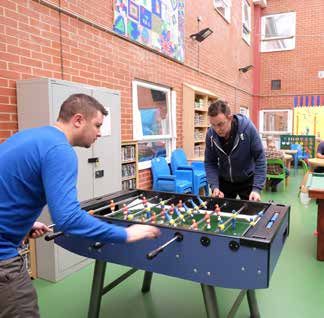
Cygnet Hospital Bury, North-West                                                     Cygnet Hospital Clifton, East Midlands
    Buller Street, Bury, Lancashire, North-West, BL8 2BS                                 Clifton Lane, Clifton, Nottinghamshire, East Midlands, NG11 8NB
    Medium Secure                                                                        Low Secure
         18+        Male          26 beds in 2 wards                                         18+          Male         24 beds in 2 wards

    C    ygnet Hospital Bury offers a dedicated
         personality disorder service on two wards,
    Columbus and Madison, in a medium secure
                                                        Our facilities:                  C   ygnet Hospital Clifton is a 24 bed
                                                                                             specialist low secure service for men with
                                                                                         a personality disorder, who also present with
                                                                                                                                            Our interventions and approaches are
                                                                                                                                            matched according to individual needs
                                                                                                                                            informed by dynamic case formulation. Our
                                                          En-suite bedrooms
    setting. Both wards deliver care for men with                                        complex mental health needs and challenging        team constantly adapt their engagement
    enduring mental health needs, co-morbidity            Gym                            behaviours.                                        techniques and the personnel delivering
    and behaviours which challenge in a calm,             Laundry                                                                           specific interventions to maximise engagement
    therapeutic environment with a focus on                                              At Cygnet Hospital Clifton we create               and create optimum opportunity for progress to
                                                          Occupational therapy kitchen
    service user experience, shared care and                                             opportunities for sustained positive behavioural   be made with the men in our care.
    safety.                                               Therapy garden                 change. We achieve this by applying a
                                                                                         consistent approach where the men in our           Alongside appropriate pharmacological
    There are three core treatment phases:                                               care feel encouraged to develop positive           treatments to stabilise diagnosed mental illness,
     1 Assessment and containment                                                        interpersonal skills to reduce maladaptive         we support the men in our care with a range
                                                                                         behaviours.                                        of psychology-led interventions. These aim to
     2 Treatment and engagement                                                                                                             develop self-regulation skills facilitating the
     3 Recovery and rehabilitation                                                                                                          improved control of impulsive behaviours.

                                                                                                                                            The service is provided across two wards;
     Therapies and activities                                                              Cygnet Hospital Clifton                          Ancaria Ward is our admissions and initial
     Each service user has a treatment plan and
     a weekly therapeutic timetable which can
                                                                                           has helped me with my                            treatment ward, and offers a defined pathway
                                                                                                                                            through to Acorn Ward where the focus is on
     include:                                                                              recovery by challenging my                       rehabilitation and preparation for discharge.
       Individual and group psychology                                                     behavioural problems and
                                                                                                                                            Prison Transfers
       Counselling for drug and alcohol misuse                                             changing my thoughts to move                     We also offer a specialised three month prison
       Anger management                                                                    to a more positive way, giving                   transfer programme, for stabilisation and
                                                                                                                                            assessment of prisoners whose mental health
       Social skills development                                                           me more confidence to deal                       needs cannot be met in the prison environment.
       Daily living skills development                                                     with different disappointments,
       Healthy living                                                                                                                       We provide a rapid response to referrals,
                                                                                           changing my ways of thinking                     and a speedy assessment within the prison
       IT skills training
                                                                                           and giving me responsibility                     environment. Following admission, we offer a
       Education and vocational development                                                                                                 comprehensive inpatient assessment process
       Group games and activities
                                                                                           with (a course on) the                           including robust risk assessment, detailed
                                                                                           Recovery College.                                treatment planning, and recommendations for
     The model of treatment is based on the                                                                                                 onward moves.
     principles of the recovery model including                                            Service user, Cygnet Hospital Clifton
     psychological therapies, occupational therapy,
     social therapy, physical healthcare and
     medication.

     Staff are trained to provide a pattern of care
     that continuously challenges maladaptive
     patterns of behaviour and provides ongoing                                          Our multi-disciplinary team:
     opportunities to learn and try out more adaptive                                       Consultant Forensic Psychiatrist
     courses of action and we use the myPath
     framework to focus interventions towards a                                             Forensic Psychologist
     service user’s future life outside hospital.                                           Occupational Therapist
                                                                                            Social Worker
                                                                                            Nurse leads
                                                                                            Social Therapy leads

8 | www.cygnethealth.co.uk                                                                                                                                          www.cygnethealth.co.uk | 9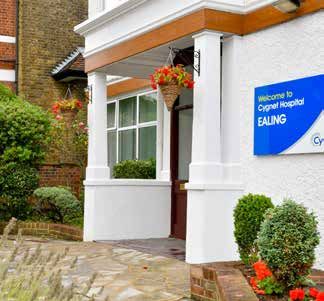
Cygnet Hospital Derby, East Midlands                                               Cygnet Hospital Beckton, London
    100 City Gate, London Road, Derby, East Midlands, DE24 8WZ                         23 Tunnan Leys, Beckton, London, E6 6ZB
    Low Secure                                                                         Tier 4 Personality Disorder
         18+         Female          16 beds in 1 ward                                     18+         Female          18 beds in 2 wards

    A    lvaston Ward at Cygnet Hospital Derby is
         a 16 bed specialist low secure service for
    women with a primary diagnosis of emotionally
                                                                                       N    ew Dawn Ward at Cygnet Hospital Beckton
                                                                                            is an 18 bed specialist Tier 4 Personality
                                                                                       Disorder service. Women can be admitted
                                                                                                                                            The service is structured so that there are two
                                                                                                                                            distinct areas in the ward aligned with the care
                                                                                                                                            pathway; pre-engagement and engagement.
    unstable personality disorder. The ward can                                        to New Dawn if they have a diagnosis of              Following admission, a 12 week assessment
    support women with highly complex needs                                            personality disorder, exhibit self-harming           period is undertaken to establish needs and
    and those who have experienced previously                                          behaviour and are able to accept the need for        determine the appropriate treatment pathway.
    unsuccessful placements.                                                           help. Service users can be informal or detained      Upon completion of the 12 weeks’ assessment,
                                                                                       under the Mental Health Act.                         a clear pathway will be formulated with the
    The primary pre-cursor to an admission to                                                                                               service user and discussed in their first CPA
    Alvaston Ward is that the person is ready to                                                                                            (Care Programme Approach) meeting.
    engage in a therapeutic programme. Service
    users may have a history of involvement in the
    criminal justice system or may present with
    significantly challenging behaviour, severe self-                                    Therapy programme                                    Over 80% DBT programme
    neglect and vulnerability.                                                           Dialectical Behaviour Therapy (DBT) is               completion rate
                                                                                         the main programme of therapy used
    The ethos on Alvaston Ward is to provide                                             on New Dawn Ward. The care pathway
    assertive treatment of a person’s condition. The                                     is structured in phases which include a
    multi-disciplinary team helps individuals address                                    comprehensive clinical, psychometric
    their issues and proactively use Dialectical                                         assessment and formulation within 4-6
    Behaviour Therapy (DBT) and Schema Therapy.                                          weeks of admission.
    The DBT programme is adapted to the needs of                                         Adherent DBT pathway Features two cycles
    the service users and is tailored for individuals                                    of skills training, weekly 1:1 therapy, ad hoc
    who may have educational or learning                                                 skills coaching and 1:1 crisis management
    difficulty issues, such as dyslexia, which may act                                   therapy. Service users who are motivated
    as barriers to the standard DBT programme.                                           and show commitment to DBT will
                                                                                         undertake the full programme.
     Enabling Environments Award                                                         Adapted DBT pathway We recognise
     Alvaston Ward has achieved the Enabling                                             that standard DBT is not suitable for
     Environments Award from the Royal College of                                        everyone, so we also provide an adapted
     Psychiatrists’ Centre for Quality Improvement.                                      programme, based within the DBT
                                                                                         framework but tailored to the needs of
     Enabling Environments is awarded to services                                        individuals particularly where the service
     who have demonstrated an outstanding level                                          user may have an area of cognitive
     of best practice in creating and sustaining a                                       difficulty that impacts their ability to
     positive and effective social environment. To                                       engage and process. There are various
     achieve the award Alvaston Ward had to meet                                         options available on how this is delivered
     and exceed ten core standards based on;                                             for people experiencing attention,
       Belonging
                                                         Our facilities:                 concentration or motivational difficulties           93% of service users
       Boundaries
                                                           En-suite bedrooms             including conversational, experiential
                                                                                         learning and visual aid approaches. This is
                                                                                                                                              discharged to a lower
       Communication
                                                           External secure courtyard     then supported with further individualised           level of security
                                                           Fully equipped gym            practice on a 1:1 basis.
       Development
                                                           Art room
       Involvement                                                                       Alternative therapeutic interventions
       Safety                                              IT classroom                  We also provide alternative NICE                      Each module taught me skills I
                                                           Therapy kitchen               Guideline recommended therapies                       can use to live with, control and
       Structure                                                                         including Cognitive Analytic Therapy
       Empowerment                                                                       (CAT), psychodynamic techniques and                   even overcome my illness
                                                                                         Schema Therapy.                                       Service user, Cygnet Hospital Beckton
       Leadership
       Openness

10 | www.cygnethealth.co.uk                                                                                                                                         www.cygnethealth.co.uk | 11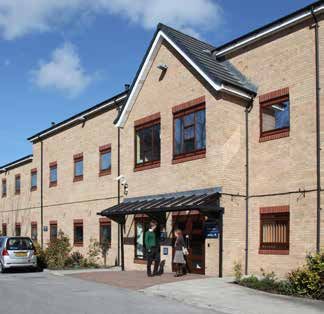
Cygnet Hospital Ealing, London                                                                              Cygnet Hospital Colchester
    22 Corfton Road, Ealing, London, W5 2HT                                                                     Boxted Road, Mile End, Colchester, Essex, CO4 5HF                                         NEW
    Tier 4 Personality Disorder                                                                                 Personality Disorder Acute Admissions / Intensive Support
           18+         Female           9 beds in 1 ward                                                             18+         Female           20 beds across 2 wards

    N   ew Dawn Ward at Cygnet Hospital
        Ealing is a 9 bed specialist Tier 4 service,
    providing treatment, care and support for
                                                            opportunity to address and deal with their
                                                            problems in a safe environment. Cygnet
                                                            Hospital Ealing also provides a specialist Eating
                                                                                                                F   lower Adams Unit provides our crisis/acute
                                                                                                                    admissions and intensive support services for
                                                                                                                women with a diagnosis of personality disorder
                                                                                                                                                                       Flower Adams Ward 2 provides an 11 bed
                                                                                                                                                                       pre-engagement / intensive support service
                                                                                                                                                                       for women with a diagnosis of personality
    women with a personality disorder who are               Disorder service on Sunrise Ward, so service        and complex mental health needs. Across our            disorder who may have difficulties in
    ready to engage in therapy.                             users have access to a dietician if required.       two services we provide robust programmes of           engagement or motivation with therapeutic
                                                            We have close links with Cygnet Lodge Kenton        care for women presenting with high risk, acute        programmes. This service focuses on providing
    Our service can support women who have a                which can be used as a ‘step-down’ unit from        needs or those who may demonstrate difficulties        a positive therapeutic environment, offering
    diagnosis of personality disorder and who need          the New Dawn service.                               with engagement or motivation with therapeutic         pre-engagement work and a wide range
    either:                                                                                                     programmes. Both services support the                  of approaches. The service aims to prepare
                                                            Planning for discharge starts at admission and      personality disorder pathways across the Cygnet        service users for a move to rehabilitation or
    >>   A short-term crisis intervention utilising a DBT   all treatment and interventions are geared          Health Care portfolio by meeting the needs of          step-down services, or where appropriate,
         model (i.e. emergency referrals)                   towards preparing a person for successfully and     women with a personality disorder diagnosis            discharge straight to community services or
    >>   A longer term therapeutic treatment                positively leaving the service. After discharge,    who may have had previous inappropriate                independent living.
         programme utilising the principles of DBT          contact will be maintained with the service         placements, or be difficult to place.
         with skills coaching and individual therapy.       user’s own Community Mental Health Team to
                                                            offer ongoing support and advice.                   Flower Adams Ward 1 provides 9 acute
    New Dawn Ward offers a programme that                                                                       admissions beds as part of our comprehensive
    is well-structured to give service users the                                                                nationwide acute network. The service can
                                                                                                                admit women with a diagnosis of personality
                                                              When I had extremely difficult                    disorder who are presenting in crisis and may
      Therapies and activities                                                                                  have additional co-morbid presentations such
                                                              times, the team didn’t give                       as self-harm or other complex needs. The
      >> Dialectical Behaviour Therapy 		                     up on me and move me on.                          enhanced physical environment and high
            (DBT), including daily Skills Training and                                                          staffing levels provide a robust and safe setting.
            Skills Homework Group
                                                              The DBT the ward taught really                    The aim of the service is a short term intensive
      >>    Daily activities offered by the                   helped me.                                        intervention with the aim of stabilisation. We
                                                                                                                are able to respond to referrals within 1 hour of
            occupational therapy team, including                                                                receipt of clinical information.
            self-nurturing, cooking, creative and             Service user, New Dawn Ward
            walking groups
      >>    Specialist groups including body image                                                                We will respond to crisis
            and healthy relationships (run for a set
            number of weeks)                                                                                      referrals within 1 hour
      >>    Drama therapy with music and                                                                          of receipt of clinical
            creative therapies
      >>    Service users suggest ward activities                                                                 information
            through a fortnightly community meeting
      >>    Carers group once a month
      >>    Monthly leavers group for individuals
            who have been discharged from the
            ward to come and speak about their
            experiences post-discharge
      >>    Family Therapy
      >>    Yoga and massage

12 | www.cygnethealth.co.uk                                                                                                                                                                  www.cygnethealth.co.uk | 13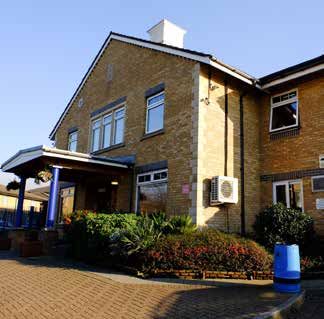
Cygnet Acer Clinic, Derbyshire Cygnet Alders Clinic, Gloucestershire
Worksop Road, Chesterfield, Derbyshire, East Midlands, S43 3DN 155 Podsmead Road, Gloucestershire, South-West, GL1 5UA
Highly Specialised Personality Disorder (CCG) Highly Specialised Personality Disorder (CCG)
18+ Female 28 beds in 2 wards 18+ Female 20 beds in 3 wards
C ygnet Acer Clinic is a 28 bed rehabilitation
service providing assessment, treatment
and rehabilitation for women with personality
Rehabilitation process:
START assessments
C ygnet Alders Clinic is a 20 bed
rehabilitation service providing assessment,
treatment and rehabilitation for women with
Our approach
At Cygnet Alders Clinic we adopt an integrated
disorder and complex needs. Integrated approach combining different personality disorder and complex needs. modular approach to treatment for women
models of therapy (CBT, DBT and with a diagnosis of personality disorder,
Rehabilitation is provided in a therapeutic Schema informed) We provide a specialist psychologically accounting for diagnostic differences, NICE
environment, with a level of security matched informed personality disorder pathway across guidelines and the work of Livesley (2004).
to individual needs. The aim of the treatment, Pre-engagement group three living areas; from Severn, for assessment
rehabilitation and re-socialisation programme and stabilisation, through to Avon, where Through this eclectic approach, and with
Personality Disorder psychoeducation
is to prepare the people in our care either for service users move to as they engage and a focus on the importance of therapeutic
transfer to conditions of lesser security, or for a Mindfulness progress with their treatment pathway; and relationships, we deliver an integrated
life in the community. finally Coln, for a focus on community transition. combination of pharmacologic and
Systems Training for Emotional Predictability psychotherapeutic interventions. The aim is
Our dedicated clinical teams provide a and Problem Solving (STEPPS) to address the core features of personality
multi-disciplinary approach to rehabilitation. Wellness Recovery Action Plan (WRAP) and disorder: problems with emotional regulation,
This includes psychology (including forensic ‘My Safety Plan’ interpersonal functioning, and self-identity
psychology input) occupational therapy, social and to prepare the women in our care for a
work and vocational training. Comprehensive community links to support transition to life in the community.
vocational/educational, self-care and
leisure opportunities Therapeutic interventions and psychological
formulations are tailored to individual need and
utilise techniques drawn from major therapeutic
orientations such as:
Service user profile:
>> DBT
Female, aged 18+
>> CBT
Complex mental health needs,
challenging behaviours and a primary >> CFT
or secondary diagnosis of personality >> MBT
disorder
>> Schema Therapy
Subject to a section of the Mental
Health Act
May have a history of substance
Our pathway
misuse or dependency
May have experienced regular AVON SEVERN COLN
placement breakdowns
Sustained relational and social Assessment and
functioning problems Stabilisation Core Treatment Consolidation
Forensic or non-forensic history
>> Safety >> Exploration >> Integration
Capacity to engage >> Containment >> Change >> Synthesis
Referrals accepted from Tiers 1-4 >> Emotional and >> Cognitive, interpersonal, >> Relapse prevention
behavioural control and occupational and >> Transition
regulation specific psychosocial >> Discharge planning
interventions >> Multi-agency working
>> Crisis management
>> Individualised
>> Individualised >> Increased
psychological psychological independence
formulation formulation >> Resilience
14 | www.cygnethealth.co.uk www.cygnethealth.co.uk | 15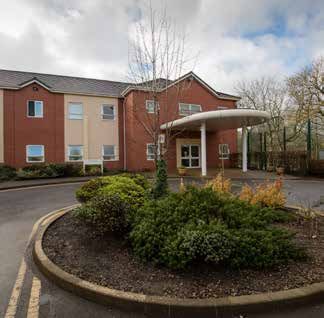
Cygnet Aspen Clinic, South Yorkshire
     Manvers Road, Mexborough, Doncaster, South Yorkshire, Yorkshire & Humber, S64 9EX
     Highly Specialised Personality Disorder (CCG)
           18+         Female           16 beds in 1 ward

    C    ygnet Aspen Clinic is a specialist service
         for women with a diagnosis of personality
     disorder and associated complex needs. We
                                                            Therapeutic approaches
                                                            and assessments
     provide assessment, stabilisation, treatment           Our therapeutic interventions are tailored
     and rehabilitation for up to 16 women.                 to individual presenting needs, based on
                                                            comprehensive psychological formulations
     Our service users may have complex trauma              undertaken on admission. The assessment tools
     histories or have experienced regular
                                                            we use include:
     placement breakdowns. At Cygnet Aspen
     Clinic we provide a collaborative, multi-
     disciplinary approach to care and treatment
                                                            >>   Structured Clinical Interview for PD
                                                                 (SCID-5-PD)
     with a focus on recovery and co-production
     with service users.                                    >>   Millon Clinical Multiaxial Inventory (MCMI)
                                                            >>   Difficulties in Emotion Regulation Scale
     Our approach – a modular                                    (DERS)
     treatment pathway                                      >>   Beck Anxiety Inventory (BAI), Beck
                                                                 Depression Inventory (BDI), Beck
     >>   At Cygnet Aspen Clinic we operate an                   Hopelessness Scale (BHS)
          integrated modular approach to treatment
          for women with a diagnosis of personality         >>   The Awareness of Social Inference Test
          disorder, accounting for diagnostic                    (TASIT)
          differences, NICE guidelines and the work of      >>   Chart of Interpersonal Reactions in Closed
          Livesley (2004).                                       Living Environments (CIRCLE)

     >>   Our multi-modal treatment pathway consists
                                                            >>   Aspects of Identity Questionnaire (AIQ)
          of a range of therapeutic models including        >>   Warwick-Edinburgh Mental Well-being
          Dialectical Behaviour Therapy (DBT), tf-CBT,           Scale (WEMWBS)
          CFT and Schema Therapy techniques.                >>   Model of Human Occupation Screening
                                                                 Tool (MOHOST)
                                                            >>   Assessment of Communication and
                       Regulation and                            Interaction Skills (ACIS)
                         modulation

       Interpersonal                         Identity                                                          “I actually applied the things that I was learning in
                                                                                                                the situations I found myself in and I did this over
                                                                                                                and over again. I was no longer sitting in groups and
                                                                                                                pretending that I was going to be doing the work.
                                                                                                                I started talking, I did the work until it was my first
                                                                                                                response to a situation. I am still changing but now
                                                                                                                at least I can say that I’m in REAL recovery”
                                                                                                                Service user, Cygnet Aspen Clinic

16 | www.cygnethealth.co.uk                                                                                                                                 www.cygnethealth.co.uk | 17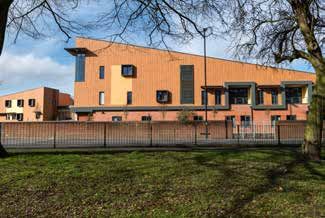
Cygnet Hospital Bierley, West Yorkshire Cygnet Hospital Coventry, Coventry
Bierley Lane, Bradford, West Yorkshire, Yorkshire & Humber, BD4 6AD 2 Lansdowne Street, Coventry, West Midlands, CV2 4BF
Highly Specialised Personality Disorder (CCG) Highly Specialised PD (CCG) PD / Eating Disorder Dual Diagnosis
18+ Female 20 beds in 1 ward (16+4) 18+ Female 23 beds in 2 wards
B owling Ward at Cygnet Hospital Bierley
is a 16 bed specialist service for women
with highly complex needs associated
Other Therapies and activities:
Find your Way (substance misuse)
A riel Ward is Cygnet Hospital Coventry’s
16 bed specialist inpatient personality
disorder service. The service provides a
country either focus on the personality disorder
or the eating disorder. Both aspects can be
treated simultaneously at Cygnet Hospital
with a diagnosis of emotionally unstable behavioural approach and an intensive DBT Coventry, with the appropriate specialist
personality disorder. The service aims to Mindfulness programme focused on generalisation of skills. therapeutic input provided. This will include the
support service users to learn effective Wellness Recovery Action Plan (WRAP) ability to undertake naso-gastric or PEG feeding,
emotional management, to reduce emotional Our comprehensive occupational therapy if required.
dysregulation and to manage their own mental Daily Living skills pathways support service users to enable
health and recovery. Recovery College and empower them with regards to self-care, Ariel Court provides seven transitional living
productivity, vocational and leisure activities units offering the opportunity to safely test out
Comprehensive community links to
The Phoenix Suite is a 4 bed separate treatment support vocational/educational, self-care (creative, culinary, horticulture, music). independent living skills prior to re-integration
environment provided as part of the care and leisure opportunities into the community. Each unit is self-contained
pathway on Bowling Ward. Through positive Ariel Ward also offers a highly specialised with its own facilities for self-catering and
risk-taking and encouraging self-management, service for individuals with a personality disorder laundry, and staff support can be tailored
service users can make the move towards and co-morbid disordered eating. Women with according to individual need. The flatlets help
independence while still having full access this dual diagnosis can often be hard to place to ensure a greater chance of success upon
to the DBT programme and the support of and treat as many existing services across the discharge as individuals move through their
the Bowling Ward team. The aim is to enable programme of rehabilitation.
and empower service users to move towards
independence and recovery through Psychometric measures:
practicing the skills they’ve achieved in a safe Service user profile:
environment. Female, aged 18+ >> The Kentucky Inventory of Mindfulness Skills
Primary diagnosis of personality disorder (KIMS)
Bowling Ward provides a highly structured
environment. All service users have Subject to a section of the Mental >> General Anxiety Disorder Scale (GAD)
individualised ward therapy programmes, Health Act or informal >> Patient Health Questionnaire (Depression)
alongside a personal programme of activities
and interests. The Therapies Department use a
Demonstrate commitment to engage >> Beck Hopelessness Scale (BHS)
whole-person approach to work with service May have co-morbid diagnoses >> Rosenberg Self-Esteem Questionnaire
users to identify which treatments are most including depressive disorder or Post
helpful to their recovery based on assessment Traumatic Stress Disorder (PTSD) >> Barratt Impulsivity Scale
of their needs. May exhibit behaviours including >> State Trait Anger Expression Inventory (STAXI-2)
self-harm, suicidal thoughts/acts, >> Emotional regulation scale
self-neglect, interpersonal difficulties,
Dialectical Behaviour Therapy substance misuse or fire-setting >> Trauma Symptom Inventory (TSI-2)
>> DBT ways of coping check list
The service is supported by a fully comprehensive inpatient Dialectical Behaviour Therapy (DBT)
service, delivered by a multi-disciplinary team. Service users admitted to Bowling ward must express >> Inventory of Altered Self Capacities (IASC)
a willingness to engage in the DBT programme.
For individuals who also have issues
Fully comprehensive DBT programme: 5 treatment modes relating to eating:
>> Binge Eating Scale (BES)
Skills training Individual Skills Structuring the Therapist >> Eating Attitudes Scale (EAT-26)
group therapy coaching environment consultation
The DBT programme on Bowling Ward received an “Excellence in DBT Award” in 2017 from the
Association of Psychological Therapies.
18 | www.cygnethealth.co.uk www.cygnethealth.co.uk | 19Cygnet Hospital Kewstoke, Weston-super-Mare Cygnet Hospital Maidstone, Kent
Beach Road, Kewstoke, Weston-super-Mare, South-West, BS22 9UZ Gidds Pond Way, Weavering, Maidstone, Kent, South-East ME14 5FY NEW
Highly Specialised Personality Disorder (CCG) Highly Specialised Personality Disorder (CCG)
18+ Female 16 beds in 1 ward 18+ Female 16 beds in 1 ward
K nightstone ward is a 16 bed female
personality disorder service, designed to a
Tier 4 service specification but commissioned
working with the service users once they have
moved to the Lodge to facilitate a seamless
transition between the two services.
R oseacre Ward is our service for women
with a personality disorder at Cygnet
Hospital Maidstone, our newest state-of-
by CCGs. Whilst Knightstone Ward is a the-art facility situated in the Kent Medical
rehabilitation service, it is highly specialised Cygnet Hospital Kewstoke has more than 16 Campus. Roseacre Ward is designed to a
in terms of the programme it runs and is acres of landscaped grounds and overlooks Tier 4 specification but commissioned by
supported by Dialectical Behaviour Therapy the Bristol Channel. This beachside location, just CCGs. Building on the expertise of the other
(DBT). There is extensive input from the multi- outside Weston-super-Mare, helps us provide a personality disorder services within the Cygnet
disciplinary team and the aim is to support quiet, peaceful and therapeutic environment. Health Care portfolio, Roseacre Ward further
individuals to manage their mental health, complements our comprehensive national
make changes to their behaviour, reinforce network of specialist services for women with
daily living skills and prepare for a return to this diagnosis.
independent life.
Roseacre Ward is highly specialised in terms of
Bluebell is a dedicated five-bed area on the programmes we operate, and the service
Knightstone Ward for women displaying higher is supported by Dialectical Behaviour Therapy
levels of risk and who may be at risk of severe (DBT). Our comprehensive multi-disciplinary
self-harm or suicide yet at the same time have team includes a Consultant Psychiatrist, Clinical
a desire to engage with services. Our highly Psychology, Occupational Therapy, DBT
Our therapeutic approaches:
experienced team will work with service users on Therapists and a nursing and support work team.
Our therapeutic interventions are tailored
Bluebell to introduce them to the environment The aim of the service is to support individuals to
to individual presenting needs, based on
and prepare them for the DBT programme. manage their mental health, develop coping
comprehensive psychological formulations
Once stabilised the aim is then to move service strategies, reinforce daily living skills and prepare
undertaken on admission. The assessment
users on to the main part of the ward. for a return to independent life.
tools we use include:
We work closely with our sister ward, Cygnet The service operates in partnership with Kent
Lodge Kewstoke, which can provide an on-site and Medway NHS and Social Care Partnership >> The service is underpinned by Dialectical
step down option for service users who have Trust. This partnership helps integrate the Hospital Behaviour Therapy (DBT), including 1:1
completed treatment on Knightstone Ward. into local and regional care pathways and sessions and group skills training. DBT is a
Clinical staff at Cygnet Lodge Kewstoke are community services, with the focus on care close proactive behavioural therapy, requiring
also trained in DBT to provide appropriate to families and friends, lowest length of hospital active engagement, designed to support
support and clinical continuity for service users Service user experience: stay, and reducing the chances of re-admission. individuals to manage distress, regulate
stepping down from Knightstone Ward. In emotion and develop adaptive coping.
addition, the same therapy staff will continue Additionally we offer a range of activities >> Care planning is supported by a
to improve service user experience and model of Positive Behaviour Support
enhance skills for life after discharge: Our facilities: (PBS) and each service user will have
Therapy and support a personalised, co-produced Positive
Therapies offered include: A range of occupational En-suite bedrooms Behaviour Support plan in place to inform
Dialectical Behaviour Therapy (DBT) therapy activities Outside space including ward garden their care and treatment pathway.
and communal roof terrace >> The service is also supported by our tried
Cognitive Analytic Therapy (CAT) Active Life and health promotion
Therapy kitchen and tested myPath model. To ensure we
Cognitive Behavioural Therapy (CBT) Dietetics
Quiet room cater for each individual’s journey and
Schema Therapy Complementary therapies such achieve long-term results, we have created
Gym and external exercise area a unique approach to care for people
Eye Movement Desensitisation as dance, art and music therapy,
Therapy (EMDR) swimming tand horse-riding Extensive therapy space including with personality disorder. myPath ensures
Recovery College classrooms the delivery of high quality and inclusive
Comprehensive substance CV writing and interview techniques
misuse programme Library and movies room care which is continually evaluated
Qualifications through the local college through robust operational and clinical
Family Therapy governance frameworks.
Voluntary work placements
Hearing Voices Network group
20 | www.cygnethealth.co.uk www.cygnethealth.co.uk | 21Ellie’s progress
A number of outcome measures were
Case Study administered at 6 monthly intervals throughout
Ellie’s DBT treatment on Bowling Ward.
Graph 1: Outcome Measures
A personal account from Ellie*, my negative behaviours decreased I was 140
allowed to gain more freedom out in the
a service user who was community. When I realised that the DBT
120
enrolled in the DBT programme was actually helping me I started paying 100
more attention and using the skills more. 80
on Bowling Ward at Cygnet
60
Hospital Bierley: I use the skills that I have been taught in DBT
to keep my emotions more stable. I have 40
My life before admission to Bowling Ward stopped isolating myself from the world and 20
was chaotic. I was trying to live in a world become more confident in myself. Because 0
where I felt I didn’t belong, trying to do the I have used the skills over and over again hs hs hs hs
DBT ont ont ont ont letio
n
same as others my age only to feel like I sometimes I use them subconsciously and ry to 6M 12 M 18 M 24 M mp
Ent Co
was failing. Some of the time everything only after realise that I have coped with a
seemed to go okay… But then there were situation that I would have hidden from in Difficulties in Emotion Regulation Scale
Mental Health Recovery Measure
times when my life consisted of constant the past. *Name has been changed to protect her identity
Borderline Symptoms Checklist 23
visits to A&E after self-harming or overdoses
and admissions to my local mental health
ward. During these times I didn’t believe Graph 2: DBT Ways of Coping Check List (DBT-WCCL)
that I needed help. 12 months following 3.0 Graph 1 demonstrates a self–reported
discharge… reduction in Ellie’s Borderline Personality
2.5
Ultimately, I was sectioned under the Mental Disorder symptoms and emotional
Health Act following an overdose; this then After I was discharged from Bowling Ward, I 2.0 dysregulation over the course of treatment
led to my admission to Bowling Ward. When I went to live in my own flat and enrolled on 1.5 and a steady increase in her self-reported
was first admitted I didn’t want to be there. I a Level 2 Health and Social Care course. It recovery from mental health difficulties.
1.0
was self-harming frequently, sometimes wasn’t easy but each day I took things with
multiple times a day. I didn’t want to work me to remind me of my DBT skills. At the end 0.5 The DBT-Ways of Coping Checklist assesses
with the staff and thought that if I did enough of the year I achieved the highest grade I 0
the frequency of coping using DBT skills and
‘bad’ things they would get rid of me. I had could have and have been accepted on WCCL Skills WCCL Dysfunction WCCL Blame
coping using dysfunctional means, or
lost all sense of who I was as a person; I the Level 3 course. Initial 6 Months 12 Months
blaming others. Graph 2 illustrates that Ellie’s
would stand in front of the mirror and not 18 Months 24 Months 24 Months DBT skill use increased over the course of
even recognise myself. My community psychiatrist has agreed that I the intervention and that her dysfunctional
no longer meet the criteria to be diagnosed ways of coping reduced. Her tendency to
Graph 3: Trauma Related Outcome Measures
After two months on the ward I started the with a personality disorder. This made me blame others however fluctuated, with an
DBT programme to help me change my realise that all the effort and hard work I had 100 increase coinciding with beginning trauma
negative behaviours and find different done during therapy was worth it. 80 focused therapy.
ways of coping in times of distress. At first I
thought it was a load of nonsense and I Because of the DBT and the therapy I had 60 Following a period of stabilisation Ellie
was reluctant to change. However, after a on Bowling Ward, I see a brighter future for 40 began trauma focused therapy. Outcome
few months of doing DBT I started to see myself. I no longer feel controlled by the measures administered before beginning
thoughts and emotions that tear me down. 20
how using the skills I was being taught was this work and on completion (Graph 3),
helping me and I was starting to become They no longer control me because I take 0 show a reduction in her self-reported PTSD
calmer and less distressed. I was self- control of them. PTSD Checklist Experience of Shame Scale symptoms and a decrease in her
harming less as the weeks went on and as Pre-Trauma Therapy Post-Trauma Therapy experience of shame following the therapy.
22 | www.cygnethealth.co.uk www.cygnethealth.co.uk | 23Map
Our specialist services by region
Medium Secure Highly Specialised Personality Disorder (CCG)
1 Cygnet Hospital Bury 7 Cygnet Acer Clinic
Buller Street, Bury, Worksop Road, Chesterfield,
Lancashire, North-West, BL8 2BS Derbyshire, East Midlands, S43 3DN NORTH
T: 0161 762 7200 T: 01246 386 090 EAST
8 Cygnet Alders Clinic
Low Secure 155 Podsmead Road,
Gloucestershire, South West, GL1 5UA
2 Cygnet Hospital Clifton T: 01452 222 390
Clifton Lane, Clifton,
Nottinghamshire, East Midlands, NG11 8NB 9 Cygnet Aspen Clinic
T: 0115 945 7070 / 0115 945 7071 Manvers Road, Mexborough, Doncaster,
South Yorkshire, Yorkshire & Humber, S64 9EX
3 Cygnet Hospital Derby T: 01709 572 770
100 City Gate, London Road, Derby,
Derbyshire, East Midlands, DE24 8WZ 10 Cygnet Hospital Bierley YORKSHIRE &
T: 01332 365 434 Bierley Lane, Bradford, West Yorkshire, HUMBER
Yorkshire & Humber, BD4 6AD
10
T: 01274 686767 NORTH LEEDS
Tier 4 Personality Disorder WEST
11 Cygnet Hospital Coventry
4 Cygnet Hospital Beckton 2 Lansdowne Street,
23 Tunnan Leys, Coventry, West Midlands, CV2 4BF
T: 02475 100 150 1 9
Beckton, London, E6 6ZB
T: 020 7511 2299 MANCHESTER
12 Cygnet Hospital Kewstoke
Beach Road, Kewstoke, 7
5 Cygnet Hospital Ealing
22 Corfton Road, Weston-super-Mare, South-West, BS22 9UZ
Ealing, London, W5 2HT T: 01934 428 989
T: 020 8991 6699 LIVERPOOL
13 Cygnet Hospital Maidstone EAST
Gidd Pond Way, Off Newnham Court Way, MIDLANDS
Personality Disorder Acute Admissions / Weavering, Maidstone, Kent, South-East, ME14 5FY
2
Intensive Support T: N/A 3
6 Cygnet Hospital Colchester
Boxted Road, Mile End, Colchester,
Personality Disorder / Eating Disorder Dual Diagnosis
v Essex, CO4 5HF
11 Cygnet Hospital Coventry WEST
T: 01206 848000 2 Lansdowne Street,
Coventry, West Midlands, CV2 4BF MIDLANDS
T: 02475 100 150
WALES EAST
11
6
8
5
LONDON
4
BRISTOL WESSEX
12 SOUTH 13
WEST
SOUTH EAST
BRIGHTON
SOUTHAMPTON
24 | www.cygnethealth.co.uk www.cygnethealth.co.uk | 25How to Make a Referral
Please call 0808 164 4450 or email chcl.referrals@nhs.net
The Referral Line operates seven days a week:
Monday - Friday: 8:00 - 20:00
Saturday - Sunday and Bank Holidays: 9:00 - 17:00
Outside of these hours, your call will be diverted to the service of your choice.
Crisis referral steps
Referral made Feedback provided Admission agreed
to Cygnet referrals on whether our and arranged with
team via services can meet referring team
0808 164 4450 / the service user’s following
chcl.referrals@nhs.net needs within 1 hour confirmation of
funding
of receipt of full
clinical information
Other referrals
Referral made Assessment Feedback provided Assessment pack Admission agreed
to Cygnet referrals arranged and on whether our formulated and plans for
team via undertaken via our service can meet including care transition arranged
0808 164 4450 / team of dedicated the service user’s plans and funding with referring
nurse assessors needs information team following
chcl.referrals@nhs.net
confirmation of
within 5 working
acceptance of
days placement
26 | www.cygnethealth.co.uk www.cygnethealth.co.uk | 27@cygnethealth
/cygnethealthcare
/company/cygnet-health-care
www.cygnethealth.co.uk
Cygnet Health Care
4 Millbank, 3rd Floor,
Westminster, London, SW1P 3JA
T: 0207 123 5706
28 | www.cygnethealth.co.uk
CYG-28 | Date of Preparation: 11/09/18You can also read


