Post 16 Brochure 2021 - Minsthorpe Community College
←
→
Page content transcription
If your browser does not render page correctly, please read the page content below
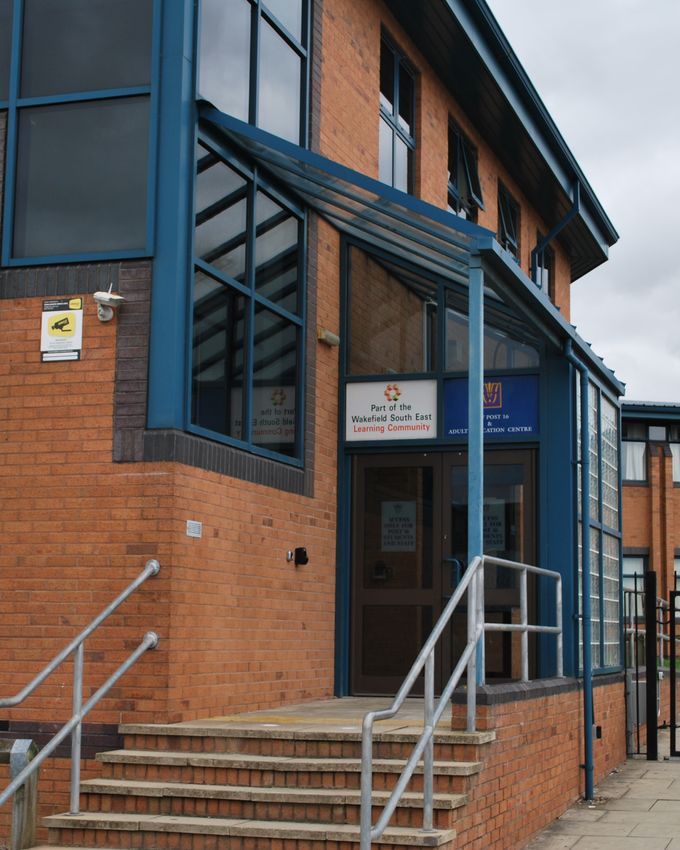
Post 16 Brochure 2021
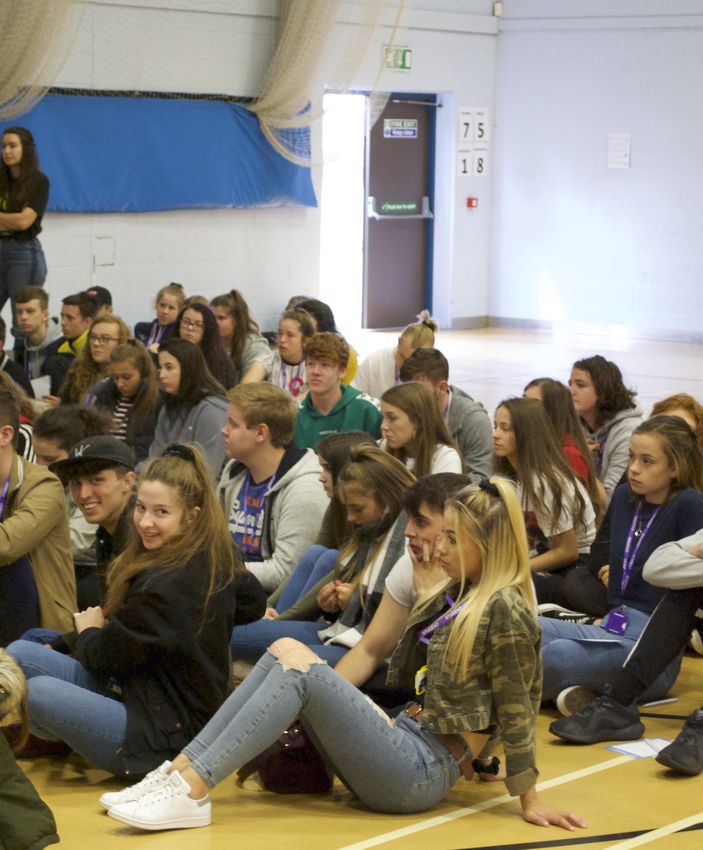
Principal’s Welcome
Welcome from the Principals
Welcome to Minsthorpe Community College. We feel proud and privileged
to provide the young people of the South Kirkby, South Elmsall, Upton and
surrounding areas with enriching educational opportunities and an engaging
curriculum, which promotes lifelong learning. We are delighted that you’re
interested in joining us for your post-16 education. As an inclusive college we
cater for learners at all levels and have an established reputation for very strong
exam performance, a passion for teaching and learning and an unwavering
focus on helping every student achieve their best possible goals.
The Minsthorpe Post 16 is committed to delivering high quality teaching which
provides challenges and opportunities for individual learners. Students have
the opportunity to be creative, innovative and enterprising whilst benefiting
from strong care, support and guidance. The Post 16 team continues to provide
our students with support and motivation to raise their aspirations, succeed in
learning and position themselves for a better future.
In May 2018 Ofsted confirmed that Minsthorpe continues to be a ‘good’ College
and we are delighted that our numbers at Year 7 and Post 16 continue to grow.
We have a well-established ethos of care and support, our students and staff
enjoy working together as ‘Team Minsthorpe’ and everyone is committed to
‘Learning and Behaving the Minsthorpe Way’, because we know this will deliver
the best education for the young people.
We cannot achieve this alone and we firmly believe in a strong partnership
between the college and everyone within our community and express this in
our College vision:
Minsthorpe Community College: A place where everyone plays a part in
strengthening our learning community through motivation, commitment and
care.
This brochure aims to introduce our Post 16, but there can be no substitute for
a personal visit. We would be delighted to speak to you at our Open Evening or
during the normal college day. Please contact us for a visit.

Mark Gilmore                                Rachael Merritt

Minsthorpe Post 16 Aims

At Minsthorpe we aim to support and develop young people onto a pathway
that will provide them with success and happiness in the future. Our wide
range of courses mean that learners of all levels and interests have a fantastic
opportunity to succeed. The Post 16 team strongly believe in working with its
students to ensure that we achieve the best possible outcomes.

David Lloyd
Director of Post 16
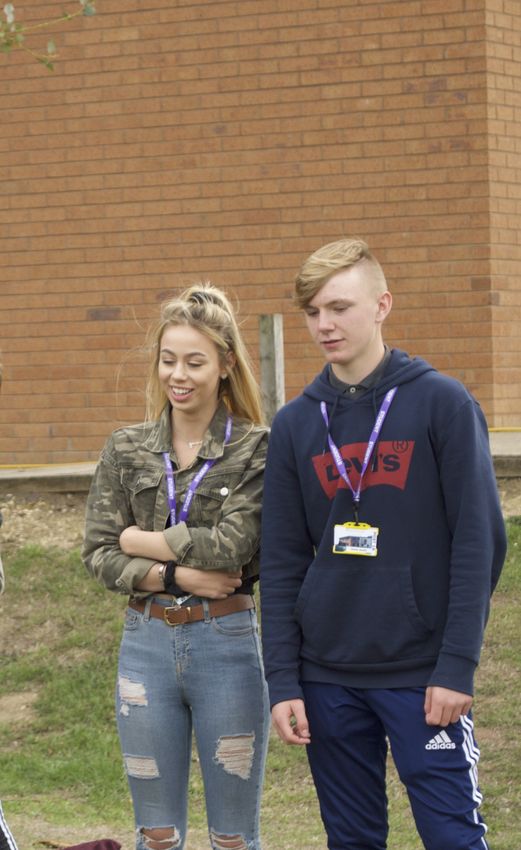
Why Choose Us?
• New 2 year Level 2 Pre-               • Excellent Football Academy
  Apprenticeship course (graduate         opportunities for any interested
  with 2 Level 2 diplomas)                students (play in regional leagues,
                                          professional coaching provided and
• Level 1 Work Skills opportunity         excellent trip opportunities)
  within the above programme
                                        • Familiar, dedicated teaching staff
• Broad range of Level 3 qualifications   who know you
  offered – curriculum offer enables
  students to combine                   • Dedicated Post 16 Block with a
  A Level and BTEC qualifications         Social Area and kitchenette, and
                                          a well-resourced Study Area (ref
• Targeted Enrichment to support          material and excellent hardware
  appropriate progression routes          facilities)
  (University or Apprenticeships)
                                        • Pastoral support from an
• Support through Enrichment to           experienced Post 16 team –
  ensure all students engage in Work      targeted support with transition
  Experience opportunities                from Year 11 into Year 12

                                        • Excellent Career and Progression
                                          support from the Careers Lead

What We Are Wanting From You
• Committed, hard-working and focussed students who can become
  independent learners;
• Role models within the College;
• Excellent attendance and punctuality;
• Young people who aspire to achieve and broaden their horizons and are
  ready to embrace change and challenge.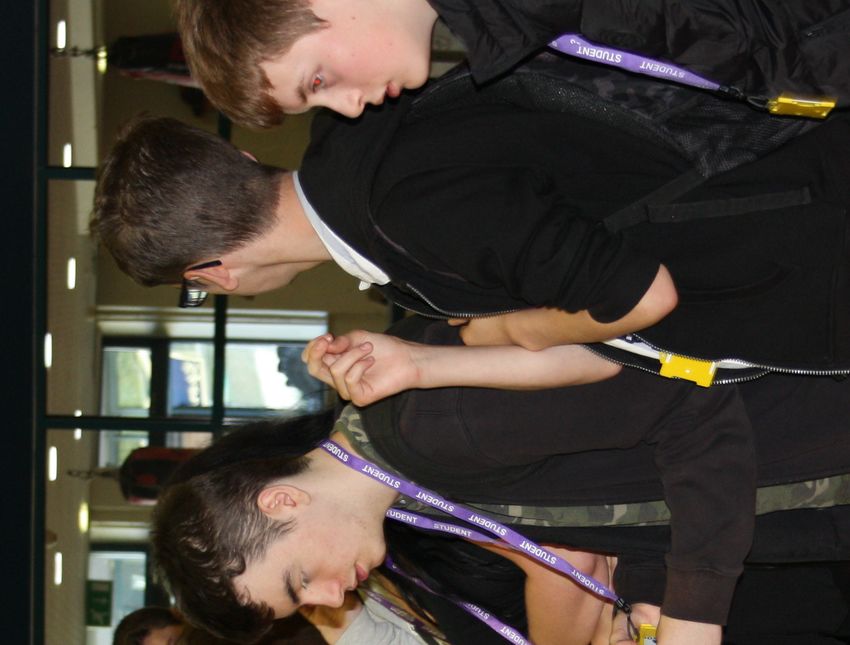
What You Need To Achieve At GCSE To Study
In Post 16 Level 1 and 2
                                     Level 1 and Level 2 Courses
  Pre Apprenticeship        BTEC Diploma x 1     2 GCSEs grades 1-3 (support with Resit Functional Skills
   Foundation - Fire            (Level 1)                   Maths and English if below a 4)
        Service                  1 Year

  Pre Apprenticeship        BTEC Diploma x 2   3 GCSEs grades 2-3 (support with Resit Maths and English if
Programme - Work Skills         (Level 2)                             below a 4)
                                  2 Ye

Level 2 Qualifications in    BTEC Diploma      3 GCSEs grades 3 (support with Resit Maths and English if
 either Sport, Business,       (Level 2)                             below a 4)
    i-Media, H&SC or            1 Year
   Customer Services

Level 1 and 2 qualifictions offer students a pathway to build on their GCSEs with
qualifications that make them more attractive to employers

The curriculum is designed so that if successful students can move from Level 1
to Level 2 or from Level 2 to 3over a 2 year period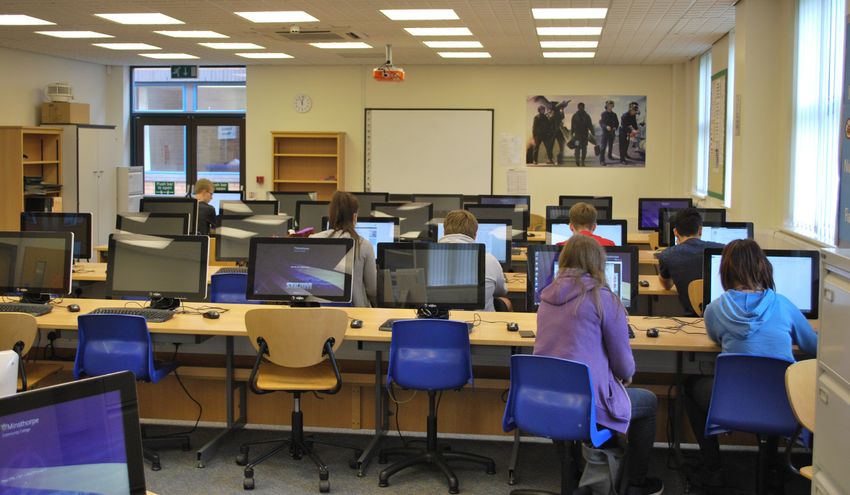
What You Need To Achieve At GCSE To Study
In Post 16 Level 3
Level 3 Students select 3 subjects (or 2 in agreed circumstances) from different
blocks. Students DO NOT select 4 and drop one at the end of Year 12 as used to
be the case. All Level 3 courses are two years.

                                               Level 3 Courses
         Subject              Qualification               Must Have              You Will Also Need A Minimum
                                                                                               Of
           Art                    A Level              Merit in BTEC Art             4 other grade 9-4 GCSEs
  Applied Psychology          BTEC (Level 3)        4 in English and Maths              3 grade 9-4 GCSEs
         Biology                  A Level            5 in single Biology or          2 other grade 9-4 GCSEs
                                                   Combined Science & 4 in
                                                      English and Maths
  BTEC Applied Science        BTEC (Level 3)       4 in Combined Science &           2 other grade 9-4 GCSEs
                                                    4 in English and Maths
     BTEC Business            BTEC (Level 3)        4 in English and Maths              3 grade 9-4 GCSEs
  BTEC Health & Social        BTEC (Level 3)        4 in English and Maths              3 grade 9-4 GCSEs
         Care
       BTEC Music             BTEC (Level 3)        Merit or above in BTEC          4 other grade 9-4 GCSEs (an
                                                             Music                 interest or experience in per-
                                                                                              forming)
 BTEC Performing Arts         BTEC (Level 3)           Pass or above in             4 other Grade 9-4 GCSEs
                                                   Performing Arts (Level 2)
  Cambridge Technical           Cambridge                   4 in PE                     4 grade 9-4 GCSEs
  Certificate in Sport &    Technicals (Level 3)
  Physical Activity (1 A
      Level Equiv)
 Cambridge Technical            Cambridge                   4 in PE              4 grade 9-4 GCSEs (you can study
  Diploma in Sport &        Technicals (Level 3)                                  just this or you can top up with
Physical Activity (Sports                                                          another Level 3 qualification)
Coaching pathway) (2 A
      Level Equiv)
       Chemistry                  A Level          Min 6 in GCSE Chemistry       6 in GCSE Maths + 3 other Grade
                                                   or 6-6 in GCSE Combined              9-4 or A*-C GCSEs
                                                             Science
      Digital Media             Cambridge            5 in English Language           4 other grade 9-4 GCSEs
                            Technicals (Level 3)
   English Language               A Level            5 in English Language           4 other grade 9-4 GCSEs
   English Literature             A Level            5 in English Literature         4 other grade 9-4 GCSEs
   Food and Science           BTEC (Level 3)       Merit or above in Hospi-         4 other Grade 9-4 GCSEs
      Nutrition                                    tality and Catering (Level
                                                               2)

       Geography                  A Level            5 in Geography & 5 in           4 other grade 9-4 GCSEs
                                                            English
         History                  A Level          5 in History & 5 in English       4 other grade 9-4 GCSEs
         Maths                    A Level                 6 in Maths                 4 other grade 9-4 GCSEs
      Photography                 A Level                                         5 grade 9-4 GCSEs (preferably
                                                                                    including a creative, visual
                                                                                             subject)
        Physcics                  A Level          Min 6 in GCSE Physics or      6 in GCSE Maths + 3 other Grade
                                                   6-6 in GCSE Combined                 9-4 or A*-C GCSEs
                                                   Science
        Sociology                 A Level           4 in English and Maths              3 grade 9-4 GCSEs
How You’re Supported In Post 16
          Targeted Support                          Universal Support

Pastorally - Dedicated head of year        Pastorally – through Briefings and
– experienced team of mentors who          information sessions.
work with small groups of students
with specific areas to address for a set   Through the Enrichment programme
duration until issue resolved.             which provides excellent opportunities
                                           such as the Football Academy etc.
Academically – through identified          Academically – by having 5 lessons
intervention and with the pastoral         (4hrs 10mins) per subject each week
support shown above. Through the           with expert practitioners. Through
same SEND support that students            the data gathering process called FF
would expect to receive when in KS3        (Friday Feedback) which identifies
& 4 at high school. Also through           exactly where you are at in terms of
differentiated support with resitting      meeting your deadlines and working
Maths and English GCSE if that is          in the right direction towards your
required.                                  target grades. By Assessment Points
                                           which indicate actual progress in
                                           relation to target. By meeting with
                                           students and their parents twice a
                                           year at a formal parents evening and
                                           through written reports 3 times a
                                           year which are supported by a 1-2-1
                                           interview with a member of Post 16
                                           Leadership to discuss the report and
                                           its findings.

                                           By having dedicated social and study
                                           areas facilitates academic progress
                                           and independent learning.
Careers – through one-to-one               Careers – through experiences such
sessions and group sessions with the       as the Careers Fair which attracts in
Careers lead and through external          the region of 40 external providers
agency support.                            from FE, HE and the world work in to
                                           meet with students.
Progression – through UCAS support         Progression – through visual
group, the Progression Plus Module         advertising both traditional and
and Apprenticeship guidance and            electronic, by having a dedicated
advice.                                    Careers Lead to drop in to whenever
                                           the student likes.
Financially – by the bespoke               Financially – by ensuring that we
approach used to support eligible          provide the best resources the school
students through the Bursary.              is financially able to supply.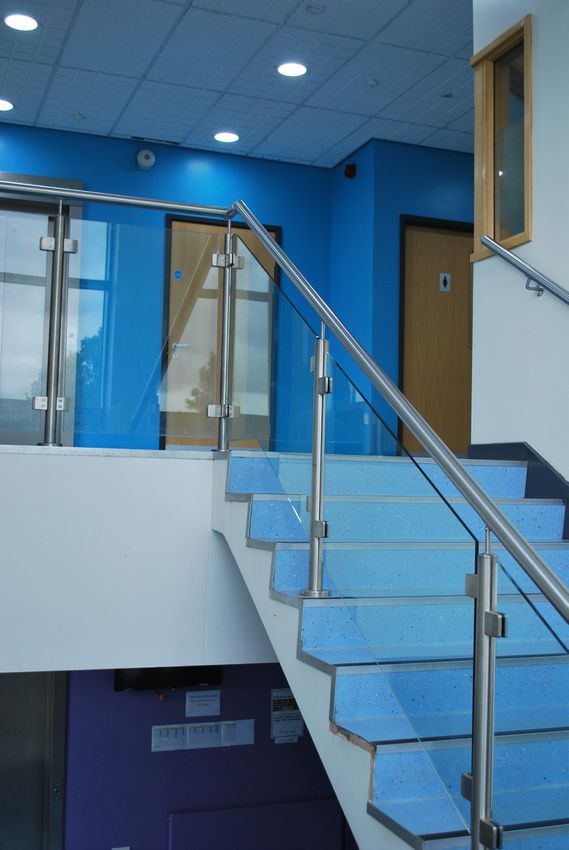
How We Support You To Make The Right Choices
Progression Programme:

Deciding what you want to do next is
rarely an easy decision, that’s why we
ensure that all our students receive
timely universal support, in addition to
a wealth of targeted help and advice
regarding further & higher education and
career options.

Our Progression Programme enables
students to find out about the different
pathways through Learning 4 Life
lessons, targeted support, aspiration
raising programmes, taster sessions,
interviews and the annual Careers
Fair which hosts a wide variety of local
providers such as New College, Wakefield
College and Doncaster College in
addition to a number of niche providers
such as Northern College of Racing and
Askham Bryan. In total 40+ Further &
Higher education providers and businesses attend the event for students (and
parents) to discuss courses and careers.

The Year 12 enrolment day provides students with a 1-2-1 consultation with
a member of the P16 Leadership team and/or the Careers Lead to ensure
appropriate advice and support is given before Level 3 choices are made.
The Careers Lead is available through term time, and during holidays too -
tdowey@minsthorpe.cc

Who Moves Onto What Courses?
If you achieve 5 or more grade 4 or 5    If you achieve predominantly
          GCSEs (4 in Maths)                   grade 2 or 3 GCSEs
         Level 3 Programmes                   Level 2 Programmes
Students are able to follow Level 3   Students are able to follow a Level 2
study programmes which are A’Levels study programme.
or BTECs.

Students select 3 subjects which they
study for a liner course of 2 years.
All Post 16 providers have a minimum       These courses enable the students
requirements document which                to specialise in one subject rather
outlines what grades students have to      than a variety as they do at GCSE. All
achieve to study specific subjects (this   have an element of work experience
is shown above).                           and students are prepared through
                                           these courses to then progress onto
                                           Apprenticeships.
It is very important that Year 10          Students are supported with resitting
and Year 11 students familiarise           Maths and English if they have not
themselves with these requirements         achieved a 4 in one or both.
so they are clear about what standard
of qualification they are required to
achieve.

BTEC Explained
         BTEC Qualification                            Equivalent To
            BTEC Diploma                                Two A Levels
       BTEC Extended Certifcate                         One A Level

UCAS Tariff Points
  A Level Grade         UCAS Tariff           BTEC Award          UCAS Tariff
       A*                  56                     D*                 56
        A                  48                      D                 48
        B                  40                     M                  32
        C                  32                      P                 16
        D                  24
        E                  16
Applied Science BTEC
Course Description                       How will I be assessed?

This course is designed for learners     75% of the course is assignment
who are interested in learning about     based, centred around practical skills
the sector alongside other fields of     and key scientific understanding.
study, with a view to progressing to     25% of the course is examined.
a wide range of higher education         Students must achieve at least a pass
courses, not necessarily in applied      on all aspects to achieve a qualification
science. Students will have the          on the course.
opportunity to carry out practical
procedures to a high degree of           Where can this lead?
accuracy, communicate their findings
and develop a broad understanding of     Students often use BTEC applied
Science.                                 Science to complement A-level Biology
                                         or Cambridge Technical Sport. Many
What Will I Be Studying?                 of our students then go on to courses
                                         such as Sports Science and Forensic
Students study 4 units:                  Science. Others are successful in
                                         applying for apprenticeships.
• Principles and applications of
  science
• Practical scientific procedures and
  techniques
• Science investigation skills
• One option unit

What Do I Need?

Min 4 in a GCSE combined Science,
Maths and an English + 2 other GCSE
Grades 9-4

What skills will I acquire?

•   Practical skills
•   Collecting data
•   Data Analyse (Patterns and Trends)
•   Evaluation skills
•   Investigation skills
Art A Level
What Will I Study?                          Where can this lead?

Art at A level is an exciting exploration   Progression to degree level,
into a wide range of media, materials       many opportunities in the world
and processes that you may not have         of design and jobs such as Fine
used at KS4 in the BTEC qualification.      artist, Illustrator, Photographer,
You will be encouraged to work              Animator, Graphic designer, Arts
independently to your personal              administrator, Printmaker, Teacher/
strengths and research a range of           university lecturer, Graphic designer,
artists, crafts people and designers        Photographer, Interior designer,
that will influence your outcomes. All      Multimedia artist & animator, Fashion
these factors are used to inspire and       designer.
develop a wide range of independent
work.

What Do I Need?

Merit in BTEC Art + 4 other GCSE
Grades 9-4

What skills will I acquire?

•   Confidence
•   Independence
•   Communication
•   Team work
•   Presentation
•   Critical thinking
•   Organisation
•   Self – reflection
•   Evaluation skills
•   Creative thinking
•   Technical skills
•   Creative Interpretation
•   Analytical thinking

How will I be assessed?

2 components over 2 years. 1 is
course work. 2 is an EXTERNALLY set
CONTROLLED TEST which is 15 hours.

There is also a mock exam in Year 12.
Biology A Level
What Will I Study?                          Where can this lead?

The course focuses on the link              A good grade in a Science A level is
between life style and health, to           desirable for any University course due
include a study of heart, lung or           to the challenge and the wide ranging
sense and body defence mechanisms.          skills developed. Examples of courses
In addition students study the              studied at University following a
variety of life and the implications        Science A Level range from Medicine &
of biotechnology in modern society.         neuroscience to accountancy and law.
Students also focus on the effect of
human activity on the diversity of living
things and they consider how humans
maintain their constant internal
environment.

What Do I Need?

Min 5 in GCSE Biology or combined
science, 4 in Maths and an English + 2
other GCSE Grades 9-4

What skills will I acquire?

• Problem solving
• Organisation
• Precision
• Team work
• Presentation
• Research
• Reasoning
• Logical thought
• Identifying reputable sources of
  information
• Resilience

How will I be assessed?

100% examination at the end of the
course. There will be a minimum of
12 practicals carried out throughout
the course which will be assessed in a
written paper.
Business BTEC Level 3
What Will I Study?                      How will I be assessed?

BTEC Business is a broad-based          The course will be assessed by two
qualification that provides the         internally set and marked assignment,
opportunity for students to explore     one externally set and marked
the world of business through various   assignment taken over 3 Hours and
scenarios.                              finally one externally set 2 hour
                                        written.
Unit One – Exploring Business
Unit Two – Developing a Marketing       Where can this lead?
Campaign
Unit Three – Personal and Business      The opportunities are endless. This
Finance                                 qualification can be used in the
Unit Four – Optional Unit               world of: Business,Finance, Central/
                                        Local Government, Administration,
What Do I Need?                         Accountancy.

5 GCSEs 9-4 (must include Maths and
English at 4 or above)

What skills will I acquire?

• Communication skills both written
  and verbal
• Problem solving
• Numerical skills
• Practical skills and techniques
  used within marketing, finance,
  operations management, human
  resource management and the links
  between them
• Enterprise skills
• Careers
• Management, marketing, finance,
  accounting, banking, retailing,
  manufacturing, human resources,
  teaching and local government
Chemistry A-Level
What Will I Study? Sci, also must have a 6 in GCSE Maths
+ 3 other Grade 9-4 or A*-C GCSEs
Ever wondered about fermentation,
worn a new hi-tech fibre, watched a
firework display, needed medicine, How will I be assessed?
used a plastic bottle, repaired a rusting
implement? Then you have studied 100% examination at the end of the
some Chemistry. course.
The ‘A’ level course consists of
modules in Organic, Physical and Where can this lead?
Inorganic Chemistry with associated
practical work relating to advances and A good grade in a Science A-level is
problems associated with materials. desirable for any University course due
Students’ knowledge from theory to the challenge and the wide ranging
lessons is complemented by practical skills developed. Examples of courses
experience. We use software and the studied at University following a
internet to assist with revision, and Science A-level range from Medicine &
students have a course textbook and neuroscience to accountancy and law.
plenty of access to past exam papers
to guide them throughout. Students Further information
are expected to place a refundable
deposit for a text book and buy a lab Students will be expected to complete
book. all home learning to a good standard
and on time. Students need to be able
The ‘A’ level course consists of to show a level of independence which
modules in Organic, Physical and includes revisiting notes and seeking
Inorganic Chemistry with associated help when needed. Attendance to
practical work relating to advances and extra progress support sessions is
problems associated with materials. compulsory when under performing,
Organic Chemistry – aliphatic and however attendance by all is
aromatic compounds with practical encouraged
opportunities.
Inorganic Chemistry – periodicity,
transition metals, halogens with
practical opportunities.
Physical Chemistry – kinetics,
equilibria, electrochemistry, catalysis
with practical opportunities.
What Do I Need?
Min 6 in GCSE Chemistry or Sci & AddCreative iMedia Level 3 Cambridge Technicals
What Will I Study? Where can this lead?
An ideal course for students who This qualification is recognised by
want to extend their knowledge in UCAS and will allow students to
Creative Media completing 5 units; progress onto Degree courses.
Media products and audience; Knowledge and skills gained whilst
Preproduction and Planning; Creating completing this course would easily be
a Media Product; Journalism and the transferred into a place of work.
New Industry and Creation and use
of Sound Media. In addition students
will be encouraged to attend the EGX
Gaming Exhibition.
What Do I Need?
Min 5 in English Language + 4 other
GCSE Grades 9-4 (a GCSE in IT would
be advantageous)
What skills will I acquire?
• Critical thinking
• Problem solving
• Analytical thinking
• Construct logical arguments and
expose illogical arguments
• Communication
• Research
• Legislation
• Time management
• Teamwork
• Presenting
• Independence
How will I be assessed?
This course comprises of 5 units of
work, 2 units are externally assessed.
Units 1 and 2 is assessed by a 2 hour
written examination. The other 3 units
are assignment based and assessed
internally.English Language A Level
What Will I Study? • Detailed, balanced and rigorous
examination of texts or spoken
With exciting text and data-based language and the ability to articulate
sources of language, the specification interpretations to others
introduces the study of English in its • Sensitivity to the power of language
various forms and contexts, with the and its role in creating meaning
concepts and methods appropriate for • A broad vocabulary and ability
the analysis of language underpinning to use critical terminology
all elements of the course. appropriately
• Skills in a variety of research
Unit One – Language, the Individual methods and the ability the
and Society (Exam - 40%) accurately and appropriately
Unit Two – Diversity and Change (Exam present research
- 40%)
Unit Three – Language in Action How will I be assessed?
(Coursework - 20%)
20% Non-Exam Assessment
What Do I Need? (Coursework) and 80% Examination
Min 5 in English Language + 4 other Where can this lead?
Grade 9-4 GCSEs
The variety of assessment styles
What skills will I acquire? used, such as data analysis,
discursive essays, directed writing,
• Knowledge of major literary works, original writing and research-based
genres and critical traditions investigative writing, allows students
• Understand and empathise with to develop a wide range of skills.
other cultures and people through These skills can be used in a variety of
exploring their literacy traditions different job roles such as Teaching,
• Knowledge of linguistic, literary, Journalism, and Marketing etc.
cultural contexts in which literature
is written and read
• Written and oral communication
skills – ability to define audience,
construct an argument, present
an idea, and provide background
information on a variety of issues
• Write and speak with clarity and
precision, and learn the best
methods to persuade an audienceEnglish Literature A Level
What Will I Study? • Knowledge of linguistic, literary,
cultural contexts in which literature
English Literature is a challenging, is written and read
interesting and enjoyable course that • Written and oral communication
enables students to explore their skills – ability to define audience,
love of reading, whilst developing construct an argument, present
analytical skill, verbal articulacy and an idea, and provide background
written eloquence. Students can gain information on a variety of issues
a solid understanding of how texts • Write and speak with clarity and
can be connected and how they can precision, and learn the best
be interpreted in multiple ways so methods to persuade an audience
that students can arrive at their own • Detailed, balanced and rigorous
interpretations and become confident examination of texts or spoken
autonomous readers. Students are language and the ability to articulate
then not only equipped with the interpretations to others
knowledge and skills needed for • Sensitivity to the power of language
both examinations and non-exam and its role in creating meaning
assessment, but also experience a rich,
challenging and coherent approach How will I be assessed?
to English Literature that provides an
excellent basis for studying the subject 20% Non-Exam Assessment
at university. (Coursework) and 80% Examination
Unit One – Literary Genres - Aspects of Where can this lead?
Tragedy (Exam - 40%)
Unit Two – Texts and Genres - Students can gain a solid
Elements of Political Writing (Exam - understanding of how texts can be
40%) connected and how they can be
Unit Three – Theory and Independence interpreted in multiple ways so that
(Coursework - 20%) students can arrive at their own
interpretations and become confident
What Do I Need? autonomous readers. The skills
developed from this subject can be
Min 5 in English Literature + 4 other used in a variety of different job roles.
GCSE Grades 9-4
What skills will I acquire?
• Knowledge of major literary works,
genres and critical traditions
• Understand and empathise with
other cultures and people through
exploring their literacy traditionsFood
What Will I Study? What Do I Need?
The Level 3 Certificate in Food Science Merit or above in Hospitality and
and Nutrition is equivalent in size to Catering in Year 11. Alongside +
one A level. It is for students interested 4 other Grade 9-4 GCSEs ideally
in learning about the food sector in Science, PE and English (and
alongside other fields of study, with a the ability to cook confidently and
view to progressing to a wide range of independently).
HE courses, but not necessarily in food What skills will I acquire?
alone. It lends itself to sport, biology
and health and social care as there are How will I be assessed?
many cross curricular links.
50% coursework and practical and
You will study 3 main units: 50% exam, with the option of 1 re-
Meeting the nutritional needs of sit if needed. 3 units over 2 years.
specific groups Coursework externally assessed and
Ensuring food is safe to eat practical internally assessed.
Current issues in food science and
nutrition Where can this lead?
These units have been designed to This qualification is supported by the
support progression to a range of following organisations:
sector related courses in HE, and also
to link with relevant occupational Higher education,
areas. University of Sheffield Hallam,
This qualification enables you to University of Huddersfield,
acquire substantial cross sector University of Leeds,
knowledge, as well as practical skills University of Bath and Spa
and techniques. University of Cardiff
The course enables learners to Further Information
develop:
Skills for independent learning and Need to be confident in the kitchen
development and be able to work creatively and
A range of generic and transferable independently. Have to have a genuine
skills interest in food and cooking and be
The ability to solve problems organised and willing to put extra time
The skills of project based research into practical outside of college hours.
The ability to work in a professional Ideally to have a passion and flair in
environment the kitchen and a love of food.
The ability to apply learning in a
vocational contextGeography
What Will I Study? remaining 20% of the course.
Geography is the study of the
interactions between humans and
their environment. We learn about
how humans utilise and are affected What Do I Need?
by the world around them. Geography
remains a diverse and engaging Min 5 in Geography & 5 in English + 3
subject that covers issues relevant other Grade 9-4 GCSEs
to our world today. The A- level
embraces contemporary Geography How will I be assessed?
which include the new component of
‘changing places’ whilst retaining key 80% Examination. One for each
elements of traditional Geography component. 20% Non Examined
such as ‘coastal environments’. Assessment.
Having a better understanding of Future opportunities
these issues will help us to live more
sustainably and improve our quality Geography’s strength lies in its broad
of life and wellbeing. Within lessons appeal and the neat overlap with many
you will develop many skills including other subject areas. It combines skills
essay writing, analytical and evaluation and knowledge appropriate to mix
skills as well as improving your with any other A Level.
communication, ICT and teamwork A Geography qualification helps
skills. you to progress to a wide range of
careers because of the humanities-
Course Content and science-based skills you will
learn. Students who study Geography
Students complete 3 components. have gone into surveying, leisure and
Component 1 is Physical Geography recreation, town planning, countryside
where students study Water and management, landscape architecture,
Carbon Cycles, Coastal Systems accountancy, environmental health,
and Landscapes and Hazards. marketing, international development
Component 2 allows students to study and a host of other careers. Others
3 topics, Global Systems and Global have gone onto further research
Governance, Changing Places and in meteorology, volcanology and
Contemporary Urban Environments. glaciology.
Both these components are worth 40%
each. The final component consists
of an independent study where
students will be provided with the
opportunity to complete a field study
in their chosen area. This is considered
a controlled assessment and is theHealth and Social Care BTEC Level 3 Subsidiary What Will I Study? How will I be assessed? This vocational course provides a In Year 12, one unit is assessed taster for those interested in a career externally and one unit is assessed working with children and adults, internally. Students complete a and is extremely suited to students written examination in Year 12. In Year who wish to pursue a career in the 13 both units are assignment based health care sector. Students will learn and assessed internally all about expected development across the different life stages from Where can this lead? birth to old age, and will develop a good understanding of how to care It is a highly respected route for those for people at different life stages in a who wish to move into employment in range of different settings by studying the sector, either directly or following and applying current and relevant further study. In addition it can be thinking behind development. taken further and into a Higher The units are: Human Life-span Education route. Development; Meeting Individual Care and Support Needs; Working in Health and Social Care and Psychological Perspectives. In addition students will need to carry out some work experience in a Health and Social Care setting. What Do I Need? 5 GCSE grades 9-4, preferably with English and Maths at Grade 4 or above What skills will I acquire? • Communication • Independence • Research • Interpreting data • Assessing individuals’ health • Care values • Positive attitudes
History A Level
What Will I Study?                          • Critical thinking
                                            • Communication – both verbal and
History is a fascinating, enjoyable           written
and challenging subject to study. Our       • The ability to construct logical
A Level has been designed to help             arguments
students understand the significance        • Time management
of historical events, the role of
individuals in history and the nature       How will I be assessed?
of change over time. This will help
them to gain a deeper understanding         80% Examination. One for each
of the past through political, social,      module. 20% Non-Examined
economic and cultural perspectives.         Assessment (3000 word essay)
The engaging topics available to
students throughout the course will         Where can this lead?
provide them with the knowledge and
skills they require to succeed as A level   A further Education qualification in
historians.                                 History is regarded with great esteem
                                            with Universities in application for
Students complete two modules. A            academic subjects. In addition, a
breadth study and a development             History qualification can also open the
study. The development study                door for many exciting opportunities
considers the change and                    including, Local Government;
transformation that took place in           Management; Teaching; Leisure and
Britain from 1851-1964. The depth           Tourism; Journalism; Politics and Law.
study focuses on France in Revolution.
1774-1815. Both courses will develop
student’s source analysis and essay
writing skills. In addition students
will complete a 3000 word essay on
a subject of their choice covering a
minimum of 100 years.

What Do I Need?

Min 5 in History & 5 in English + 3
other GCSE Grades 9-4

What skills will I acquire?

• The ability to analyse and interpret
  information
• Problem solving and analytical skills
• Investigative and research skills
Mathematics A Level
What Will I Study? What skills will I acquire?
Mathematics is a challenging and • Critical thinking
rewarding subject to study. The New • Problem solving
A Level has been designed to develop • Analytical thinking
algebraic manipulation, graphical • Quantitative reasoning
modelling, trigonometry and calculus • Ability to manipulate precise and
in real world contexts. In addition to intricate ideas
this there is application of statistical • Ability to manipulate precise and
techniques and the mechanics of intricate ideas
mathematics that ties in with Physics. • Construct logical arguments and
A good grade in A level Mathematics expose illogical arguments
is sought after for further education • Communication
courses as well as employers because • Time management
it demonstrates an individual who is • Teamwork
determined, strives for the best results • Independence
and can apply logical problem solving.
How will I be assessed?
As the New A Level specification has
not yet been accepted by OFQUAL 100% examination at the end of the
we can only speculate as to the exact course
content of this cumulative course.
What we do know is that Students Where can this lead?
will study all elements of algebraic
manipulation, graphical modelling, A Level Maths is a highly sought
trigonometry and calculus with after qualification yet is one of the
elements of statistical techniques and hardest courses. All universities and
mechanics of maths. This this then employers value A Level maths as an
followed up in the second year with indication of an individual who will
further study of the same content at a strive for success, overcome personal
higher level to be examined at the end barriers, seek support and knowledge
of the course. Separate examinations to perform to their highest standard
will be sat for Core content (Algebra, and apply logical problem solving.
graphs, trigonometry and calculus) This is ideal for going on to university
and Additional Elements (Statistics and to study mathematics or sciences but
Mechanics). has applications to a range of other
courses from Midwifery to Computer
What Do I Need? Science.
Min 6 Maths + 4 other GCSE Grades
9-4Music BTEC Level 3 Subsidiary Diploma
What Will I Study? What skills will I acquire?
This course is ideal for students • Confidence
who have a passion for musical • Independence
performance. The course is full of • Creativity
opportunities to make music and • Communication
be centre stage performing live to a • Leadership
variety of audiences. It is a chance • Team work
to develop their musicianship and • Presentation
become the musician they want to be. • Vocal Expression
We will design the programme of study • Organisation
around each individual so they can get • Event management
the most out of the course • Teaching
• Self – reflection
Student will study 6 units: • Musicianship skills
Solo Music Performance (25min solo • Creative thinking
recital to a live audience); • Performance management
Music Practice Techniques (3 separate • Creative Interpretation
solo and 3 ensemble recordings;
Working as a Musical Ensemble Where can this lead?
(student led ensemble rehearsals with
3 performances prepared); Minsthorpe has over 90% of students
Live Music Project (a student led achieving Distinction and Distinction*
concert/live event where every who have completed the Level 3
aspect is decided by the students course. There are a number of
independently. This is a chance to apprenticeships available in the music
work as a group and explore other industry and other future jobs include
aspects of the music industry); music journalist, sound engineer,
Pop Music in Practice (a chance to composer, session musician and many
study the evolution of pop music more.
and compose your own original pop
songs);
Music in the Community (students
teach a class of Y7 students over a 6
week topic of their choice).
What Do I Need?
Merit or above in BTEC Music + 4
other GCSE Grades 9-4 (an interest or
experience in performing)Performing Arts BTEC Level 3
Course Description assessed.
The BTEC Level 3 National Extended
Certificate in Performing Arts is
equivalent in size to one A level.
It is for students interested in Future Opportunities
learning about the sector alongside
other fields of study, with a view This qualification is supported by the
to progressing to a wide range of following organisations:
HE courses, but not necessarily in
performing arts. Higher education;
University of Exeter
Course Content University of Huddersfield
University of Chichester
You will study 4 units, covering the Kingston University
following: Southampton Solent University
● Investigating Practitioners’ Work University of the West of England
● Group Performance Workshop
● Developing Skills and Techniques Professional and trade bodies;
for Live Performance Equity, Employers
● Acting Styles The Royal Ballet School,
These units have been designed JumpStartMove
to support progression to a range Living The Dream
of sector related courses in HE, Vibrant Networks
and also to link with relevant Act On It
occupational areas. Gate Theatre Notting Hill
This qualification enables you to AKA
acquire substantial cross sector
knowledge, as well as practical Further Information
skills.
Need to attend Theatre visits
What do I need? regularly to review and reflect on own
performances. The more work that
Pass or above in Performing Arts + 4 is seen, the more likely you are to
other Grade 9-4 or A*-C GCSEs (and achieve higher levels for performance
the ability to perform in front of a techniques and styles
live audience)
Assessment
4 units over 2 years 3 mandatory
units that students must complete, 2
internally assessed and 2 externallyPhotography A Level What Will I Study? Where can this lead? Photography is a fast paced and Progression to degree level, many exciting course to study where opportunities in the world of design students will gain a wide range of and jobs such as portrait, commercial technical skills including the use or scientific photographer; of a camera, developing images, Photojournalist/News Photographer; photoshoots, lighting, printing and Graphic designer; Interior designer; dark room experience. They will Teaching/lecturing and Fashion research and explore a range of photographer. artists and designers to influence their photography outcomes. All these factors are used to inspire and develop independent, personal and creative work. What Do I Need? Merit in BTEC Art/graphics/textiles + 4 other GCSE Grades 9-4 What skills will I acquire? • Confidence • Independence • Communication • Team work • Presentation • Critical thinking • Organisation • Self – reflection • Evaluation skills • Creative thinking • Technical skills • Creative Interpretation • Analytical thinking How will I be assessed? 2 components over 2 years. 1 is course work. 2 is an EXTERNALLY set CONTROLLED TEST which is 15 hours There is also a mock exam in Year 12
Physics A-Level
What Will I Study?                        • 13 Electronics

Life, the universe and everything - is
the answer really 42? If you want to      What Do I Need?
know, Post 16 Physics could well be the
course for you. Students’ knowledge       Min 6 in GCSE Physics or Sci & Add Sci,
from theory lessons is complemented       also must have a 6 in GCSE Maths + 3
by practical experience. We use           other Grade 9-4 or A*-C GCSEs
software and the internet to assist
with revision, and students have a
course textbook and extensive access      How will I be assessed?
to past exam papers to guide them
throughout. Students are expected to      100% examination at the end of the
place a refundable deposit for a text     course.
book and buy a lab book.                  There is also a mock exam in Year 12

The ‘A’ level consists of 4 modules       Where can this lead?
covering forces, motion and electricity
(essential for engineering careers)       A good grade in a Science A-level is
atomic and sub-atomic physics for         desirable for any University course due
budding Einstein’s. Also optional         to the challenge and the wide ranging
modules open opportunities for            skills developed. Examples of courses
medicine, astronomy and historical        studied at University following a
applications of physics. Theory is        Science A-level range from Medicine &
enhanced with practical work and          neuroscience to accountancy and law.
applications to everyday situations.
Course Details: - AQA Specification A     Students will be expected to complete
                                          all home learning to a good standard
• 1 Measurements and their errors         and on time. Students need to be able
• 2 Particles and radiation               to show a level of independence which
• 3 Waves                                 includes revisiting notes and seeking
• 4 Mechanics and materials               help when needed. Attendance to
• 5 Electricity                           extra progress support sessions is
• 6 Further mechanics and thermal         compulsory when under performing,
physics                                   however attendance by all is
• 7 Fields and their consequences         encouraged.
• 8 Nuclear physics

Options

• 9 Astrophysics
• 10 Medical physics
• 11 Engineering physics
• 12 Turning points in physics
Psychology BTEC
What Will I Study? • The ability to analyse information
and consider alternative points of
Psychology is the study of the human view
mind and behaviour. Students will • Critical thinking
study 4 units. In Year one it is the • Time management
study of Psychological Approaches • Organisation
and Applications which examines
different ways in which psychologists How will I be assessed?
explain behaviour. It also examines
explanations for aggression, consumer The course is 50% coursework and
behaviour and gender identity. This 50% external exam
unit is assessed through a 90 minute
examination. Students will also study Where can this lead?
Criminal and Forensic Psychology
where they will explore different Degree Level Psychology would be
theories used to explain criminal an obvious progression route, but
behaviour and the application of certainly not the only one. Students
criminal and forensic psychology to the with this qualification could work in a
criminal justice system. range of careers such as:
Finally, students will complete an • Clinical/Educational/Occupational
extended piece of coursework for Psychology
this unit. In Year 2 they will study • Health Careers
Health Psychology which is assessed • Law
through a 90 minute examination. • Teaching
Topics covered include explanations • Human Resources
for stress and addiction and ways of
overcoming these as well as carrying
out a research project in the final unit
Conducting Psychological Research
which is a coursework unit.
What Do I Need?
4 in Maths and English and 3 other
GCSEs 9 - 4
What skills will I acquire?
• Written and verbal communication
• ResearchSociology A Level What Will I Study? Where can this lead? Studying sociology offers insights Sociology is a great choice of subject into social and cultural issues, for people who want a career in social helping students to develop a multi- work, nursing or medicine. But the perspective and critical approach to subject is also useful in a number understanding issues around culture, of other careers, like marketing, identity, religion, crime, families and advertising, PR, journalism, law or social power. Students are bound teaching. According to bestcourse4me. to ask themselves the question, com, the top six degree courses taken ‘why has society developed like this, by students who have an A-level in with poverty, ignorance, crime and sociology are: Sociology, Psychology, injustice?’ this they explore and explain English studies, Business studies, Law, during the study of this subject. The Teaching. A Level course has three compulsory units studying the following: Education, Methods in Context, Research methods, Families and households, Crime and deviance, and beliefs in society. What Do I Need? Min 4 in English & Maths + 3 other GCSE Grades 9-4 What skills will I acquire? • The use of evidence to support your arguments • How to investigate facts • Critical thinking • The ability to analyse and better understand societal issues How will I be assessed? At A Level there are three exams, each account for one third of you’re A Level grade. The three exams last 2 hours and are worth 80 marks each. The exams consist of a mixture of short answer and extended writing questions.
Sport and Physical Activity Level 3
Cambridge Technical Extended Certificate
What Will I Study?                         How will I be assessed?

This course is ideal for students who      2 year course comprising two written
would like to extend their knowledge       exams in the first year. Students will
of Sport and Physical Activity through     complete 6 units in total. Controlled
vocational learning. It will provide       coursework and portfolio production
learners with the opportunity to           for 4 units. All units will be graded
develop the core knowledge, skills and     either unclassified, Pass, Merit or
understanding required by the sport        Distinction.
and physical activity sector and to
develop further skills by completing a     Where can this lead?
wide range of units through a sports
coaching pathway.                          This qualification is recognised
                                           by UCAS and will allow students
2 Exams:                                   to progress onto Degree courses.
• Body Systems and the Effects of          Knowledge and skills gained whilst
   Physical Activity                       completing this course would easily be
• Sports Organisation and                  transferred into a place of work.
   Development

3 Coursework units:
• Sports Coaching and Activity
   Leadership
• Organisation of Sports Events
• Practical Skills in Sport and Physical
   Activities

What Do I Need?

4 in PE and 4 other GCSEs 9-4

What skills will I acquire?

•   Critical thinking
•   Problem solving
•   Analytical thinking
•   Quantitative reasoning
•   Construct logical arguments and
    expose illogical arguments
•   Communication
•   Time management
•   Teamwork
•   Independence
Sport and Physical Activity (Sports Coaching) Level 3
Cambridge Technical Diploma
What Will I Study? What skills will I acquire?
This course is ideal for students who • Critical thinking
would like to extend their knowledge • Problem solving
of Sport and Physical Activity through • Analytical thinking
vocational learning. It will provide • Quantitative reasoning
learners with the opportunity to • Construct logical arguments and
develop the core knowledge, skills and expose illogical arguments
understanding required by the sport • Communication
and physical activity sector and to • Time management
develop further skills by completing a • Teamwork
wide range of units through a sports • Independence
coaching pathway.
How will I be assessed?
3 Exams:
• Body Systems and the Effects of 2 year course comprising two written
Physical Activity exams in the first year followed by 1
• Sports Organisation and written exam in year 13. Students will
Development complete 11 units in total. Controlled
• Working Safely in Sport, Exercise, coursework and portfolio production
Health & Leisure for 8 units. All units will be graded
either unclassified, Pass, Merit or
9 Coursework units: Distinction.
• Sports Coaching and Activity
Leadership Where can this lead?
• Performance Analysis in Sport &
Exercise • Sports / Leisure or Fitness Centres
• Organisation of Sports Events • Sports Coaching
• Physical Activity for Specific Groups • Personal Fitness Training
• Health & Fitness Testing for Sport & • Sports Science
Exercise • Sports/Fitness Management
• Sports Injuries & Rehabilitation • Teaching
• Practical Skills in Sport and Physical • Sports Psychology
Activities • Physiotherapy
• Sport & Exercise Psychology • Sports Marketing
What Do I Need?
A minimum of 4 in PE and 4 other
GCSEs 9-4Pre-Apprenticeship Level 2 Programme BTEC
What Will I Study? Students who have achieved exams
outcomes at predominantly 2s and
Year 1 maybe one 3 for their GCSEs will be
guided onto this pathway.
Core Skills Lessons x 8:
• Careers What skills will I acquire?
• Skills for Work
• Communication Skills • Communication skills
• Team Work Skills • Time management
• Teamwork
Subject Pathway Tasters x 3: • Independence
Business, Health & Social Care, Sport, • Resilience
• Understanding about how to gain
(Availability is dependent on sufficient employment
students selecting the option)
How will I be assessed?
Work Experience:
Internal work placement within college There are no exams – 100%
1 day a week coursework assessment
Maths and English Resit (if required): Where can this lead?
1 timetabled lesson in each subject
and 1 Directed Study Time (DST) to This qualification will support
work on set tasks candidates to find suitable sponsored
apprenticeships or employment.
Year 2*
* Some students who have achieved predominantly
3’s and possibly one 4 at GCSE may be guided straight
Subject Pathway Lessons x 8: onto Year 2. to ensure they are sufficiently challenged
Business, Health & Social Care, Sport,
(Availability is dependent on sufficient
students selecting the option)
Work Experience:
External work placement 2 days a
week
Maths and English Resit (if required):
1 timetabled lesson in each subject
and 1 Directed Study Time (DST) to
work on set tasks
What Do I Need?Level 2 Programmes
This option is Year 2 of the Pre-apprenticeship Route – but can
be accesses directly for the more able Level 2 learners
What Will I Study? What Do I Need?
You select ONE of the following Students who have achieved at least 3
options and study this one subject for exams with outcomes at 3s are likely to
the year. be guided straight onto this pathway in
Year 12. For those being guided onto
Sport: the 2 year Pre-apprenticeship course
Learning about both practical and this will be the second year of their
theory aspects of sport, from coaching course.
to nutrition which prepare them
for work in this sector. Students What skills will I acquire?
undertake an external work placement
in a relevant setting. • Communication skills
• Time management
Health and Social Care: • Teamwork
Learning about how different age • Independence
groups from children to old people • Resilience
develop. This is a really good route
for students wanting to work in the How will I be assessed?
‘care’ sector. Students undertake an
external work placement in a relevant There are no exams (bar i-Media)
setting (students can influence – 100% coursework assessment.
where they go depending on their Students are awarded PASS, MERIT,
preference) DISTINCTION or DISTINCTION*
qualifications.
Business:
Learning about how business operates Where can this lead?
from its finances to the roles of the
different people within it, as well These qualifications will qualify
as wider issues such as advertising. candidates to find sponsored
They also engage in enterprise apprenticeships, suitable jobs or to
opportunities. continue in education and seek new
courses at higher levels.
Students undertake an external work
Note: Each course running is dependent on sufficient
placement in a relevant setting. numbers being recruited.How To Apply To Post 16 Contact Mr Dowey direct: tdowey@minsthopre.cc 01977 657600 College Life Student Voice: Become a member of the Post 16 Leadership Team and represent your peers, share your thoughts and ideas about college life and be part of a body of students who can influence change. Equality & Diversity: The college supports and celebrates the differences in all its learners. Inappropriate attitudes are challenged and students are a leading force within the college to embrace equality and diversity which underpins the ethos of tolerance and support within the college. Enrichment: These vary, there is a focus for all students to have completed a relevant work experience opportunity before they complete their two year courses. In addition it provides excellent programmes such as the Football Academy, Progression Plus Module, Tennis Coaching and UCAS support sessions.
P16@
MCC
Principals: Mark Gilmore & Rachael Merritt
 Associate Assistant Principal: David Lloyd
            http://minsthorpe.cc
     Email: enquiries@minsthorpe.cc
              Tel: 01977 657600
You can also read


