Queensland's Personalised Transport Horizon - Stage Two Implementation - Transport and ...
←
→
Page content transcription
If your browser does not render page correctly, please read the page content below

Queensland Government

Queensland’s Personalised
Transport Horizon
Stage Two Implementation

Minister’s foreword

The Queensland Government is             consider not only the changes we are        while ensuring safety, accessibility,
committed to delivering a new            experiencing, but create a framework        affordability and accountability in
framework for personalised               that anticipates and accommodates           relation to the provision of those
transport that responds to               future changes.                             services.
technological change.                    Stage 1 of the Government’s reforms         Personalised transport plays a crucial
                                         were announced in August 2016, with         role in creating a truly connected
At a time of significant structural
                                         ride-booking services legalised on 5        transport network. The Queensland
change in the global transport sector,
                                         September 2016. The reforms removed         Government’s proposed reforms will
it is more important than ever that we
                                         significant red tape for the taxi and       ensure the sector can continue to grow
establish the appropriate regulatory
                                         limousine industries, reducing their        and ensure an improved experience for
frameworks to allow operators, drivers
                                         regulatory burden and delivering more       consumers.
and consumers to engage with new
                                         flexibility to innovate and differentiate
technology and new services.
                                         their offerings.
In addressing this change, we must
                                         Stage 2 of the proposed reforms
consider the impacts it will have
                                         will establish a modern, agile, and         Honourable Mark Bailey MP
on our transport infrastructure, the
                                         simplified regulatory framework for         Minister for Main Roads, Road Safety
safety of those who use these services
                                         personalised transport services that        and Ports and Minister for Energy,
and other road users. We must also
                                         allows greater choice for customers         Biofuels and Water Supply

Queensland’s Personalised Transport Horizon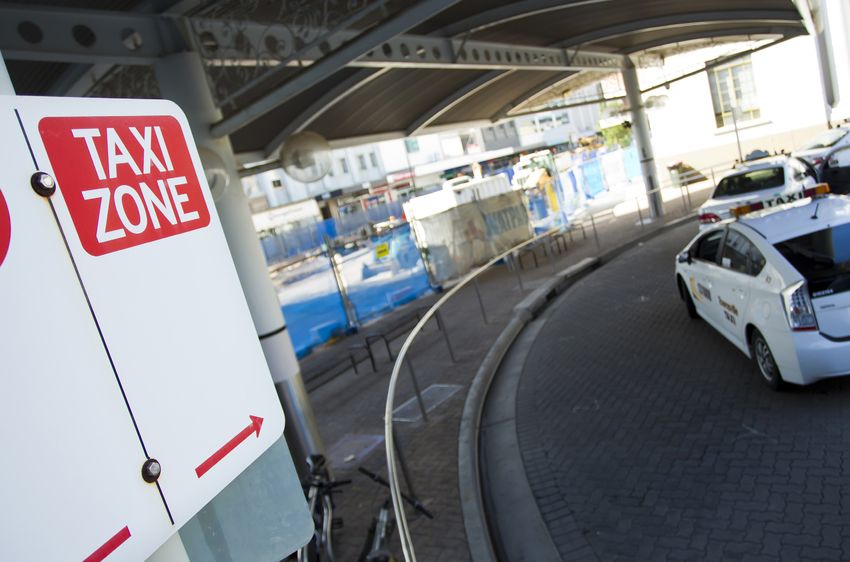
Implementing the new
framework for the personalised
transport industry
On 11 August 2016, the                                In March 2017 the Queensland                     • The creation of a $100 million
Queensland Government                                 Government is introducing into                     Industry Adjustment Assistance
announced reforms to the                              Parliament the legislative changes                 Package (IAAP), which includes $60
personalised transport                                required to support the second stage               million in transitional assistance
                                                      of the personalised transport reforms,
industry through Queensland’s                                                                            for taxi and limousine licence
                                                      with implementation to follow passage
Personalised Transport Horizon                        of the bill.
                                                                                                         holders. Since its commencement
– Five Year Strategic Plan for                                                                           in late 2016 over 90% of available
Personalised Transport Services                       Key outcomes of the personalised                   funds have been distributed to
2016-2021 (Horizons). The                             transport reforms to date include:                 eligible licence holders.
document outlined a staged                            • The preservation of existing taxi              • The implementation of protections
approach for the implementation                         licences.                                        to ensure customers with
of reforms:                                                                                              disabilities have affordable and
                                                      • The retention of exclusive rights to
                                                        rank and hail services by existing               accessible personalised transport.
 Stage One – immediate reforms                                                                           This has been achieved through
                                                        taxi licence holders.
 to legalise ride-booking services
                                                                                                         the retention of taxis’ exclusive
 (including safety requirements for                   • Increased fines to reflect the
 vehicles and drivers) and ease the                                                                      rights to deliver services to
                                                        seriousness of particular offences,
 regulatory burden for the taxi and                                                                      passengers who are members
                                                        including soliciting and touting for
 limousine industries by reducing                       the hiring of a public passenger                 of the Taxi Subsidy Scheme, and
 red tape                                               vehicle (other than taxis) which has             the introduction of an incentive
                                                        doubled from $243 to $487. The                   payment for drivers of wheelchair
 Stage Two – comprehensive changes                      fine for using a rank in a vehicle               accessible taxis to prioritise
 to the legislation to enhance the                      other than a licensed taxi has                   services to Taxi Subsidy Scheme
 safety, efficiency and accessibility                   increased fivefold from $48                      members identified as requiring a
 of personalised transport services                     to $243.
 by establishing new industry                                                                            wheelchair to travel.
 responsibilities, a new licensing                    • Reduced the taxi industry’s
                                                                                                       • Ongoing active education and
 framework for booked hire services                     regulatory burden and increased
                                                                                                         enforcement of all aspects of the
 as well as a new authorisation                         the opportunity to innovate by
                                                                                                         legislation by Transport Inspectors
 framework for booking entities                         removing nearly 80 pieces of
                                                                                                         from the Department of Transport
                                                        regulation.
                                                                                                         and Main Roads.
 Stage Three – ongoing monitoring,
 review and evaluation of the new
 framework

                     Stage 1                                               Stage 2                                   Stage 3
             Immediate reforms                               New framework introduced                        Review of new framework
    5 September      1 November         1 December            March             Mid
        2016            2016               2016               2017              2017                                    2018
                                                                                                                                       2021
   Implementation        Delayed         Industry           Introduction      Legislation                              Ongoing
    of immediate     implementation     Adjustment            of Bill to       enacted                               monitoring,
     changes to     of some changes     Assistance           Parliament                                               review and
     regulations    to allow industry    Package                                     Staged Implementation         evaluation of the
                      time to comply    Legislation                                                                   framework
                                          passed

                                                                    Ongoing monitoring

                                                 Ongoing engagement with personalised transport industry

                                                                                                                                               1
Stage Two – To be phased in
              from the second half of 2017
              Framework Aims                                       Outcomes

                   Strengthen                                         • Annual inspections for all personalised transport vehicles (Certificate of
                   safety standards                                        Inspection)
                   for the whole                                      • Mandatory security cameras for personalised transport vehicles dependant
                   personalised                                            on the risk profile of service
                   transport                                          • New fatigue management requirements as part of the chain of responsibility
                   industry                  Strengthen safety
                                                                      • New class ofEncourage
                                                                  Drive innovation
                                                                                         CTP insurance forEnsure
                                                                                                            booked hire vehicles and limousines
                                             standards for the    and improved        competition and        accountability and
                                             whole                customer service    provide customers      clearly define
                                             personalised         standards
                                                                      • New through
                                                                                annualwith greaterto provideobligations
                                                                                        licence                booked across
                                                                                                                          hire services
                                             transport industry   reduced red tape    choice and             the industry
                   Provide customers                                  • No new perpetual
                                                                                      flexibilitytaxi service licences
                   with greater choice                               • No new annual taxi service licences issued until at least 2018
                   and flexibility                                   • Retention of limousine service licences
                                                                     • Special purpose limousine service licences to be phased out
Enhance                 Drive innovation     Encourage            Ensure
accessibility           and improved         competition and      accountability and
 hrough the
 egalisation and
                   Drivecustomer  service
                         innovation
                        standards through
                                             provide customers
                                             with greater
                                                                  clearly define
                                                                     • More red tape removed
                                                                  obligations across
 egulation of      and improved
                        reduced red tape     choice and           the•industry
                                                                          Removal of operator accreditation. Operators must operate a service under a
 ide-booking                                 flexibility
                   customer service                                    taxi service licence, limousine licence or booked hire service licence
                   standards through                                 • Removal of taxi driver bailment requirements
                   reduced red tape                                  • Removal of taxi service contracts for taxi booking companies
Strengthen safety    Enhance                 Drive innovation     Encourage         Ensure
standards for the    accessibility           and improved         competition and   accountability and
whole                through the             customer service     provide customers clearly define
personalised     Ensure
                     legalisation and        standards through    with greater
                                                                      • New chain ofobligations  across
                                                                                      responsibility    for the personalised transport industry
                 accountability
transport industry   regulation of           reduced red tape     choice and        the industry
                     ride-booking                                     • New booking entity authorisation regime for booking entities
                                                                  flexibility
                   and clearly define
                                                                     • New financial and non-financial penalties for non compliance
                   obligations across
                                                                     • Electronic payment surcharges capped at 5%
                   the industry
Drive innovation    Encourage          Ensure
and improved        competition and    accountability and
customer service    provide customers  clearly define
               Consistent
standards through             requirements
                    with greater             for the
                                       obligations       personalised
                                                    across                     transport industry
reduced red tape    choice and         the industry
                    flexibility
                   Driver fatigue management

                   Zero tolerance for alcohol and drugs

                   Licensing

                   Annual vehicle Certificate of Inspection

                   Driver training

                   Chain of responsibility

                   New penalty regime

              2 Queensland’s Personalised Transport Horizon
Practical licensing
arrangements
The new licensing framework                 The taxi industry security levy will be   Existing limousine licences will be
will provide customers with                 deferred for a further 12 months.         renewable for periods of up to five
greater choice and flexibility.                                                       years, continue to be transferable and
                                            Operator accreditation will be
A booked hire service licence                                                         able to be leased. Service areas will
                                            removed. All taxi services will need
will be created ensuring that all                                                     no longer apply to the provision of a
                                            to be operated under a taxi service
personalised transport service                                                        limousine service, similar to booked
                                            licence. Perpetual taxi service licence   hire services.
providers are licensed.
                                            renewal fees will be $171.40 per
                                            annum.                                    Operator accreditation will be
Taxi service licences
                                                                                      removed. All limousines will need to
Existing taxi service licences will be      Limousine service                         be operated under a limousine licence.
retained and will allow services to be      licences                                  The annual renewal of these licences
provided from a rank, hailed from the                                                 will cost $171.40.
street or booked in advance.                Existing limousine service licences are
                                            perpetual and allow licence holders       Booked hire service
The existing rights of taxi service         to provide a pre-booked service in an
licence holders will be preserved.          approved vehicle where the fare is
                                                                                      licences
No further perpetual licences               agreed prior to the journey.              Since 5 September 2016, ride-booking
will be issued by government,                                                         services have operated legally across
existing licences will continue to be       Following consultation with the           Queensland, without a service
transferable, able to be leased, and        limousine industry, limousine service     licence. Since that time, drivers must
renewable for periods of up to five         licences will be retained. There will     hold a Driver Authorisation which is
years at a time.                            be some changes to the regulatory         consistent across all personalised
                                            framework that applies to limousines.     transport modes.
Taxi service areas will be retained
along with licensing conditions that        Privileges that will be retained for      Drivers of ride-booking services can
limit the area of operation. However,       limousines include:                       only provide pre-booked services. It
current service licence conditions will                                               is illegal for them to solicit or tout for
                                            • the right to use road infrastructure
be streamlined and simplified, namely                                                 business or provide services through a
                                              such as priority lanes or areas, bus
those relating to high occupancy                                                      rank or be hailed.
                                              and transit lanes
vehicles, owner/drivers and green
vehicles.                                   • existing exemptions under the           An annual, non-renewable booked hire
                                              Liquor Act 1992 that enables the        service licence will be introduced. A
A new taxi service licence framework                                                  licence will be required to ensure the
                                              serving of alcohol
will be introduced, but no new taxi                                                   person is suitable to provide these
licences will be issued until at least      • the right to advertise themselves       services and the vehicle complies with
2018. Any new taxi licences will be           as a limousine.                         certain requirements.
made available through public offer,
will not be transferable but will be able   Special purpose limousine service         Booked hire service licences will be
to be leased.                               licences will be phased out over the      issued annually at a cost of $237.26.
                                            next three years given that these
                                            licences are annual licences, much like
                                            booked hire service licences.

                                                                                                                               3
An accountable industry

Accountability for all participants     Chain of responsibility                  Significant financial and non-financial
in the personalised transport                                                    penalties will apply for non-
                                        A new chain of responsibility            compliance, including:
industry has been a guiding
                                        framework setting out the legal
principle of the reforms. Clearly                                                • For a breach of new primary duty of
                                        obligations of each participant in the
defined obligations and an                                                         care and officer liability provisions,
                                        personalised transport supply chain
updated penalty regime which            has been developed. This includes a        significant financial penalties
encourages more proactive               range of obligations across a number       apply (up to 3,000 penalty units
compliance by industry are              of areas with a strong focus on            or $365,000 for an individual or
important elements of the new           improved safety outcomes.                  30,000 penalty units or $3,657,000
framework.                                                                         for a corporation where there is
                                        It applies equally across the              reckless conduct).
                                        personalised transport industry
                                                                                 • Non-financial penalties for booking
                                        in relation to all booking entities,
                                                                                   entities and operators include the
                                        operators, and drivers.
                                                                                   suspension or cancellation of their
                                                                                   booking entity authorisation or
                                                                                   licence.

                                                                                 • The penalty regime for drivers
    Booking               • Taxi booking companies                                 will include a gradual increase in
                                                                                   the financial penalties for repeat
     entity               • Booking platforms and apps
                                                                                   offenders of eligible offences, up to
                          • Operators who run their                                a maximum of 400 penalty units or
                            own business                                           $48,760.

                                                                                 • Where a driver is convicted of
                                                                                   an eligible offence three times
                          • Taxi operators (including
   Operator                 management companies)
                                                                                   within a three year period, an
                                                                                   immediate one month driver licence
                                                                                   suspension will apply.
                          • Limousine operators
                          • Booked hire operators

                          • Taxi drivers
      Driver
                          • Limousine drivers
                          • Booked hire drivers

4 Queensland’s Personalised Transport Horizon
Booking entities                          The fee for booking entity                  Drivers, other than taxi drivers,
                                          authorisation will be based on fleet        must produce records of bookings
Booking entities will have various        size.                                       for services if requested by the
responsibilities, including meeting       1-5 vehicles            $250                Department of Transport and
driver fatigue management                 6-20 vehicles           $700                Main Roads.
requirements, ensuring that               21-50 vehicles          $2,000
drivers hold and maintain Driver          More than 50 vehicles $5,000                For taxi drivers, bailment agreements
Authorisation and that drivers are                                                    will no longer be regulated. All
trained to government-set standards
                                          Operators                                   workplace relations matters (including
in relation to disability awareness,      Operators will have various                 contractual arrangements and
anti-discrimination (including sexual     responsibilities, including meeting         working conditions) are commercial
harassment) and the provision of          driver fatigue management                   matters for the industry to manage.
wheelchair accessible services, and       requirements, ensuring that                 Protections may be offered to drivers
facilitating approved security camera     drivers hold and maintain Driver            under the Independent Contractors
downloads on behalf of operators.         Authorisation and that drivers are          Act 2006 and the Competition and
                                          trained to government-set standards         Consumer Act 2010 depending on their
They will also have responsibility for                                                arrangements.
                                          in relation to disability awareness,
ensuring that all vehicles are licensed
                                          anti-discrimination (including sexual
and compliant.
                                          harassment) and the provision of
                                                                                      Payment surcharges
Booking entities must have proof          wheelchair accessible services.             Further to reforms related to fares
of incorporation or other registered                                                  in stage one, electronic payment
                                          All personalised transport services will    surcharges will be capped at a
business structure in Australia, or
                                          have to operate under a taxi, limousine     maximum of 5%, in line with the
have a nominated officer who is based
                                          or booked hire service licence. They        Reserve Bank of Australia. The amount
in Australia.
                                          will also have responsibility for vehicle   of the surcharge must be listed on an
The Department of Transport and           maintenance and safety requirements.        itemised receipt.
Main Roads will facilitate access
                                          Red tape will be reduced through the
to a register of licences, authorised
                                          removal of operator accreditation.
booking entities and authorised
drivers so that booking entities will                                                  •   Driver fatigue management
                                          Drivers
be able to check that all parties hold                                                     obligations apply to all parties
necessary approvals.                      Drivers must be affiliated with an               in the chain of responsibility
                                          authorised booking entity to provide         •   All personalised transport
Under the reforms, booking entities       personalised transport services.                 drivers must hold and maintain
must retain and provide data to the
                                                                                           the appropriate driver
Department of Transport and Main          Drivers must be trained to government-
                                                                                           authorisation
Roads (such as the operation of           set standards in relation to disability
services), and keep records of all        awareness, anti-discrimination               •   Training obligations for drivers
bookings for at least two years.          (including sexual harassment) and                apply for all personalised
                                          the provision of wheelchair accessible           transport services
Red tape will be further reduced by       services.
the removal of taxi booking company                                                    •   Booking entities will have
service contracts and operator                                                             obligations to provide data
accreditation.

                                                                                                                              5
Enhanced safety

Strengthening safety across the              Similarly, limousines and ride-             Vehicle identification
personalised transport industry              booking services will be required
                                             to have security cameras if their           All personalised transport vehicles
as well as ensuring customers
                                             service delivery model involves             are required to be identified through
have access to safe personalised                                                         different forms of signage or
                                             cash or electronic payment being
transport options has been a                                                             identifiers. Taxis are currently required
                                             made in person during the journey.
guiding principle for the reforms.                                                       to have a hail light and a number plate
                                             The same regional and remote area
These reforms will include                                                               starting with the letter ‘T’. Taxi booking
                                             taxi exemptions will apply to these
new requirements for security                services.                                   companies also use colour and
cameras, more stringent vehicle                                                          branding to differentiate themselves
identification requirements                  Where a personalised transport service      commercially. Limousines must have
and fatigue management                       has an approved security camera             a number plate starting with the letter
requirements.                                installed, the authorised booking           ‘L’ or ’SL’.
                                             entity will be responsible for managing
                                                                                         Requirements for ride-booking
Security cameras                             recordings in accordance with
                                                                                         vehicles to be identifiable were
                                             specifications. Further, it is expected
At present, approved security cameras                                                    introduced under stage one. It is
                                             that the booking entity will continue to
must be fitted in the majority of taxis in                                               proposed to further strengthen these
                                             cooperate with the Queensland Police
Queensland. Under stage two reforms,                                                     requirements under stage two.
                                             Service regarding downloads.
security cameras will be mandatory for
personalised transport vehicles based        A personalised transport service that       Ride-booking vehicles are currently
on the risk profile of the service.          does not meet the risk profile may          required to clearly display a sign at the
                                             voluntarily install security cameras. All   rear of their vehicle. Typically, this has
An approved security camera system                                                       been the logo of the booking entity
                                             security cameras installed (voluntarily
will be mandatory if the service meets                                                   with which the driver is associated.
                                             or mandatory) must be an approved
one of these criteria:
                                             security camera that complies with          Under stage two, a vehicle used to
1. Driver and passenger anonymity            the specifications published by the         provide booked hire services will
   (risk of assault)                         Department of Transport and Main            be required to display appropriate
                                             Roads.                                      square signage of at least 146mm by
2. Cash transactions (risk of theft)
                                             Specifications for security cameras will    146mm on the bottom left hand side
3. Point of payment is during the            be more flexible and outcomes focused       of the front and rear windscreen of the
   journey (risk of fare evasion)            which will reduce existing costs to         vehicle. It must be retroreflective
                                             industry.                                   and be the identification sign
This means security cameras will                                                         advised by the entity who provides
remain mandatory in taxis due to their       Forward and rear facing cameras may         the booking service.
ability to provide rank and hail services    be used by personalised transport
to anonymous passengers. Exemptions          services, however government will
relating to regional and remote areas        not regulate the specifications or
will continue.                               downloads for these cameras. Only an
                                             approved security camera may be used
                                             to record images or audio of persons in
                                             the vehicle.

6 Queensland’s Personalised Transport Horizon
Fatigue to ensure another person does not Road Use
drive while fatigued. In addition,
Duties in relation to driver fatigue will government will also consider Under the Queensland Road Rules,
be placed on persons in the chain of imposing other requirements relating taxis and limousines are permitted
responsibility to ensure the safety to driver fatigue. This could include to use certain lanes (for example,
of taxi, limousine and booked hire standards about time spent driving a bus lanes and bicycle lanes) and
services. motor vehicle; requirements relating clearways in certain circumstances.
to monitoring, recording and reporting Taxis have exclusive access to taxi
Specifically, a person will be zones (or ranks) to pick up or wait for
prohibited from driving a motor vehicle on these matters; use of particular
equipment or technology to manage passengers.
to provide a taxi, limousine or booked
hire service while the person’s ability fatigue; and training of drivers It is not proposed to extend these
to drive safely is impaired by fatigue. and other persons in the chain of privileges to ride-booking vehicles due
responsibility about managing driver to likely impacts on congestion.
A person in the chain of responsibility fatigue.
must also take all reasonable steps
7Standardised vehicle
requirements
Vehicle safety inspection Compulsory Third Party Registration
requirements insurance Three month vehicle registration
Under stage one, all taxis, limousines All vehicles will be required to have the renewal terms, including CTP
and ride-booking vehicles are correct class of Compulsory Third Party payments, will be available to all
required to pass annual vehicle safety insurance (CTP) which reflects the personalised transport providers.
inspections to ensure safety standards claims experience of that class. Ride-booking vehicles will no longer
are applied consistently across the be able to use a Private Purpose of Use
industry. Taxis will remain in a separate class identification.
and a new class will be created for
As a transitional arrangement, ride- limousines and booked hire vehicles.
booking vehicles were required to hold
a safety certificate under stage one
reforms, as opposed to a Certificate of
Inspection which is required for taxis
and limousines.
Under stage two, all personalised
transport vehicles will be required
to pass an annual Certificate of
Inspection.
Accessibility for people
with a disability
The new framework provides Taxis will retain exclusive access to the needs of the members and comply with
protections to ensure customers provision of services to members of the Disability Standards for Accessible
with disabilities have affordable Taxi Subsidy Scheme. Public Transport.
and accessible personalised However into the future, the The Queensland Government remains
transport. Queensland Government may consider committed to the ongoing funding
Booked services for Taxi Subsidy the expansion of other personalised of the lift payment for drivers of
Scheme and wheelchair accessible transport operators providing wheelchair accessible taxis to
services are subject to maximum fare subsidised services to Taxi Subsidy prioritise services to Taxi Subsidy
protections for these customers. Scheme members, subject to operators Scheme members identified as
being able to meet the transportation requiring a wheelchair to travel.
8 Queensland’s Personalised Transport HorizonImplementation
Implementation of Stage 2 Enhanced compliance
reforms will follow passage of the focus
legislation through Parliament.
Effective enforcement is critical to
A staged approach will be taken
ensuring public safety, protection
to implementation to ensure
of the rank and hail market and
there is an orderly transition to
regulatory compliance from all
the new framework. industry participants. An additional
16 Transport Inspectors will be
deployed by the Department of
Transport and Main Roads to ensure
year round education, compliance and
enforcement.
Stage 2 Stage 3
New framework introduced Review of new framework
March Mid
2017 2017 2018
2021
Introduction Legislation Ongoing
of Bill to enacted monitoring,
Parliament review and
Staged Implementation evaluation of the
framework
Key activities during the transition include:
• Ongoing engagement with the personalised transport industry through the
Personalised Transport Industry Reference Group
• Seeking advice from relevant government agencies such as the Queensland
Productivity Commission and Queensland Competition Authority
• Updating systems and processes to align with the new framework
• Ongoing communication and education activities with industry participants
to ensure readiness for new framework
9Summary of Personalised
Transport Reforms
Taxi Limousine Ride-Booking
Practical licensing arrangements
Service licence to operate ✓ ✓ ✓
Licence fee Market driven ✗ ** $237.26 (annual)
Renewal fee $171.40 $171.40 *** ✗
($85.70 for exempt areas)
Renewal term Up to 5 years Up to 5 years *** ✗
Licence issued on demand ✗ ✗ ✓
One licence per vehicle ✓ ✓ ✓
Licence transferable ✓* ✓ *** ✗
Licence can be leased ✓ ✓ *** ✓
Pre-booked services ✓ ✓ ✓
Rank and hail services ✓ ✗ ✗
Service areas ✓ ✗ ✗
Taxi Industry Security Levy 2017/18 ✗ N/A N/A
Advertise as limousine service ✗ ✓ ✗
Liquor licensing exemption ✗ ✓ ✗
An accountable industry
Booking entity authorisation ✓ ✓ ✓
Booking entity fee $ 250 – 1-5 vehicles $ 250 – 1-5 vehicles $ 250 – 1-5 vehicles
$ 700 – 6-20 vehicles $ 700 – 6-20 vehicles $ 700 – 6-20 vehicles
$ 2000 – 21-50 vehicles $ 2000 – 21-50 vehicles $ 2000 – 21-50 vehicles
$ 5000 – > 50 vehicles $ 5000 – > 50 vehicles $ 5000 – > 50 vehicles
Chain of responsibility
- Fatigue management ✓ ✓ ✓
- Driver training ✓ ✓ ✓
- Authorised drivers and vehicles ✓ ✓ ✓
Data reporting ✓ ✓ ✓
Significant financial and ✓ ✓ ✓
non-financial penalties
Mandatory affiliation ✓ ✓ ✓
Operator accreditation ✗ ✗ ✗
Driver authorisation ✓ ✓ ✓
Capped payment surcharges ✓ ✓ ✓
Itemised receipts ✓ ✓ ✓
Provide fare estimates for ✓ ✓ ✓
pre-booked services
Bailment agreements ✗ ✗ ✗
10 Queensland’s Personalised Transport HorizonTaxi Limousine Ride-Booking
Enhanced safety
Security cameras ✓#
Forward and rear facing cameras ✓ ✓ ✓
permitted
Vehicle identification
- T plate ✓ ✗ ✗
- L plate or SL plate ✗ ✓ ✗
- Hail light ✓ ✗ ✗
- Front and rear retroreflective sign ✗ ✗ ✓
Driver fatigue management ✓ ✓ ✓
Use of special lanes ✓ ✓ ✗
Zero tolerance for alcohol and drugs ✓ ✓ ✓
Drivers must wear seatbelts ✓ ✓ ✓
Driver exemption for passenger ✓ ✓ ✓
seatbelt compliance
Standardised vehicle requirements
Annual certificate of inspection ✓ ✓ ✓
CTP insurance class Class 3 Class 26 Class 26
or Class 10A or 11 for or Class 4 for rental
wheelchair accessible vehicles
taxis
Registration purpose of use Taxi Limo Booked Hire or
Booked Hire Rental
3 month registration terms ✓ ✓ ✓
No age limits ✓ ✓ ✓
Prescribed vehicle characteristics ✓ ✓ ✓
Accessibility for people with a disability
Provision of Taxi Subsidy Scheme ✓ ✗ ✗
(TSS) services
Maximum fares regulated ✓^ ✗ ✗
Lift payment ✓ ✗ ✗
Dependent on risk profile
^ Only applies to rank and hail, TSS and wheelchair accessible services
# Due to anonymity of rank and hail services
* Does not apply to new taxi licences
** Only existing Special Purpose Limousine (SPL) licences can continue to obtain annual SPL licences until phased out
*** Does not apply to SPL licences which will be phased out over three years
11You can also read


