RCPCH - RCPCH National Clinical Audit of Seizures and Epilepsies for Children and Young People
←
→
Page content transcription
If your browser does not render page correctly, please read the page content below
Combined organisational                  RCPCH Audits
and clinical audits:
Report for England and Wales
Round 3 Cohort 1 (2018-19)

National Clinical Audit of Seizures and Epilepsies
for Children and Young People

                                         RCPCH
                                         Royal College of
                                         Paediatrics and Child Health
Epilepsy12
National Clinical Audit of Seizures and Epilepsies for Children and Young People
Combined organisational and clinical audits: Report for England and Wales, Round 3 Cohort 1 (2018-19)

The Healthcare Quality Improvement Partnership (HQIP) is led by a consortium of the Academy of
Medical Royal Colleges, the Royal College of Nursing and National Voices. Its aim is to promote quality
improvement in patient outcomes, and in particular, to increase the impact that clinical audit, outcome
review programmes and registries have on healthcare quality in England and Wales. HQIP holds the
contract to commission, manage and develop the National Clinical Audit and Patient Outcomes
Programme (NCAPOP), comprising around 40 projects covering care provided to people with a wide
range of medical, surgical and mental health conditions. The programme is funded by NHS England,
the Welsh Government and, with some individual projects, other devolved administrations and crown
dependencies. www.hqip.org.uk/national-programmes

Front cover image: The author and publisher would like to thank Young Epilepsy for permission to use
the image shown.

© 2020 Healthcare Quality Improvement Partnership (HQIP)

Published by RCPCH September 2020.
The Royal College of Paediatrics and Child Health is a registered charity in England and Wales (1057744) and in Scotland (SCO38299).

Epilepsy12 2020 Combined organisational and clinical audits: Report for England and Wales, Round 3, Cohort 1 2018-19

Acknowledgements
The Epilepsy12 Project Board would like to thank all of the administrators, clinical audit department
staff, data analysts, doctors, nurses and others within participating Health Boards and Trusts who have
given their time and effort to collect information for the audit and who continue to develop and carry
out action plans to improve the paediatric epilepsy services that they deliver. We would particularly like
to thank the Epilepsy12 designated clinical leads and EEG service leads in each Health Board or Trust
and the Organisation of Paediatric Epilepsy Networks in the UK (OPEN UK) regional network leads and
quality improvement facilitators for their continued support.

Epilepsy12 Clinical lead
Dr Colin Dunkley, Consultant Paediatrician and Epilepsy12 Clinical Lead, Sherwood Forest Hospitals NHS
Foundation Trust

Epilepsy12 Project Board members
Dr Sarah Aylett, Chair of British Paediatric Epilepsy Group (December 2019 –)

Nayan Bedia, Project Coordinator, Royal College Paediatrics of Child Health (April 2017 – February 2018)

Ms Nicky Barnes, Nurse Practitioner for Complex Epilepsy, Royal College of Nursing (April 2017 –
September 2017)

Prof Nicholas Bishop, Vice President for Science & Research, Royal College of Paediatrics and Child Health
and Chair of the Epilepsy12 Project Board (March 2019 – )

Ms Ann Brown, Clinical Nurse Specialist Paediatric Epilepsies, Royal College of Nursing

Dr Richard Brown, Consultant Paediatrician, Cambridge University Hospitals NHS Foundation Trust & Chair
of the Organisation of Paediatric Epilepsy Networks in the United Kingdom (OPEN UK) Working Group
Ms Sharon Brown, Clinical Nurse Specialist Paediatric Epilepsies, Royal College of Nursing

Ms Vivien Dunne (née Seagrove), Project Manager, Healthcare Quality Improvement Partnership (HQIP)

Professor Anne Greenough, Vice President, Science and Research, Royal College of Paediatrics and Child
Health and Chair of the Epilepsy12 Project Board (April 2017 – December 2018)
Professor Martin Kirkpatrick, Consultant Paediatric Neurologist, Scottish Paediatric Epilepsy Network

Ms Carol Long, Chief Executive, Young Epilepsy (April 2017 – December 2018)

Dr Katherine Martin, Consultant Paediatrician, British Academy of Childhood Disability

Dr Ailsa McLellan, Consultant Paediatric Neurologist, British Paediatric Neurology Association (April 2017 –
December 2019)
Dr Nandini Mullatti, Consultant Clinical Neurophysiologist, British Society for Clinical Neurophysiology

Ms Rosemarie Pardington, Director of Integrated Care, Young Epilepsy (March 2019 – )

Dr Marcia Philbin, Assistant Director, Research & Policy Division, Royal College of Paediatrics and Child
Health (April 2017 – June 2019)

Ms Angie Pullen, Epilepsy Services Manager, Epilepsy Action

Mr Mirek Skrypak, Associate Director for Quality and Development, Healthcare Quality Improvement
Partnership (HQIP)

                                                                                                                          3
Epilepsy12 2020 Combined organisational and clinical audits: Report for England and Wales, Round 3, Cohort 1 2018-19

Epilepsy12 Methodology and Dataset Group members
Dr Sophie Bennett, Clinical Psychologist, Great Ormond Street Hospital, GOSH

Dr Richard Brown, Consultant Paediatrician, Cambridge University Hospitals NHS Foundation Trust & Chair
of the Organisation of Paediatric Epilepsy Networks in the United Kingdom (OPEN UK) Working Group

Ms Jill Conium, Children’s Epilepsy Specialist Nurse, East and North Hertfordshire NHS Trust (November
2019 – )

Ms Claire Dorer, Chief Executive, National Association of Independent Schools & Non-Maintained Special
Schools (NASS) (April 2017 – November 2019)

Dr Trupti Dhorajiwala, Consultant Paediatrician, Tameside and Glossop Integrated Care NHS Foundation
Trust (November 2019 –)

Ms Diane Flower, Lead Children’s Epilepsy Specialist Nurse, University Hospitals Bristol NHS Foundation
Trust

Dr Ramesh Kumar, Consultant Paediatrician, South Tees Hospitals NHS Foundation Trust

Dr Jeya Naratajan, Consultant Paediatrician, Cym Taf LHB (November 2019 – )

Ms Peri O’Connor, Healthcare Projects Coordinator, Epilepsy Action

Ms Millie Power, Patient & Nurse representative

Dr Colin Reilly, Young Epilepsy Representative (August 2019 – )

Dr Robert Robinson, Consultant Paediatric Neurologist, Great Ormond Street Hospital, GOSH

Mr Malcolm Roxburgh, Epilepsy12 Statistician, Royal College of Paediatrics and Child Health

Ms Lisa Thurston, Parent and Young Epilepsy Representative

Dr Anissa Tonberg, Policy Officer, Epilepsy Scotland

Dr Sara L. Shavel-Jessop, Clinical Paediatric Neuropsychologist, Great Ormond Street Hospital, GOSH

Dr Kelly St Pier, Neurophysiology Professional Service Manager (Video-telemetry), GOSH and Immediate
Past Chair of the Association of Neurophysiological Scientists

Mr Neil Williamson, Epilepsy Nurse Specialist (Children), Lewisham and Greenwich NHS Trust (April 2017 –
August 2019)

4

Epilepsy12 2020 Combined organisational and clinical audits: Report for England and Wales, Round 3, Cohort 1 2018-19

                                                                                                                  5
Contents
Foreword.............................................................................................................................................................. 8
Executive summary.......................................................................................................................................... 9
Introduction ....................................................................................................................................................... 12
            Audit aims and scope ....................................................................................................................................................... 12
            Data completeness ............................................................................................................................................................ 12
            Audit outputs and publications ................................................................................................................................ 13
            Quality improvement ....................................................................................................................................................... 13
            Audit methodology and dataset development .............................................................................................. 14
            Data entry ................................................................................................................................................................................ 15
Themes and recommendations .................................................................................................................. 16
            Clinical audit 2018-2019 results .................................................................................................................................. 16
            Organisational audit 2019 results ............................................................................................................................. 16
            Combined key findings and recommendations............................................................................................ 17
Summary of recommendations ...................................................................................................................32
Organisation of Paediatric Epilepsy Networks in the UK (OPEN UK)............................................. 40
Epilepsy12 Youth Advocate Clinic Chat Checklist................................................................................. 42
            Support with worries and anxieties........................................................................................................................ 42
Epilepsy Quality Improvement Programme (EQIP).............................................................................. 46
            Background............................................................................................................................................................................. 46
            Project scope........................................................................................................................................................................... 47
            How the programme works ......................................................................................................................................... 49
            Residential weekend training...................................................................................................................................... 50
Useful resources................................................................................................................................................. 52
Glossary of terms and abbreviations.......................................................................................................... 55

6
Epilepsy12 2020 Combined organisational and clinical audits: Report for England and Wales, Round 3, Cohort 1 2018-19

The full audit results and additional information are listed below. These are available to
download from Epilepsy12.

Appendix A: Full Epilepsy12 Round 3 2019 organisational audit results
Participation
Workforce
Clinic configuration
Tertiary provision
Investigations
Service contact
Transition
Mental health
Neurodevelopmental support
Care planning
Patient database or registry
Appendix B: Organisational findings by OPEN UK regional networks
Appendix C: List of organisational data figures & tables
Appendix G: Full Epilepsy12 clinical audit results for Round 3, Cohort 1
Participation and case ascertainment
Description of cohort
Diagnostic status
Initial referral and examination
Description of episodes
Convulsive seizures
Family history of epilepsy
Neurodisability or neurodevelopmental problems
Mental health conditions
Investigations
Treatment
Care planning
Professionals and services involved in care
Overview of performance indicators
Appendix H: List of clinical data figures & tables
Appendix I: Data completeness
Appendix J: Participating Health Boards and Trusts by OPEN UK region
Appendix K: Glossary

                                                                                                                         7
Foreword
Epilepsy is the commonest significant neurological disorder affecting children. The needs of children
with long term conditions, including epilepsy, are recognised as requiring particular attention in the
NHS Long Term Plan. It is critical that children and young people have sufficient access to the full
paediatric epilepsy team, and are supported to navigate the transition from child to adult health
services.

The National Epilepsy12 audit was first undertaken in 2009, and in this, its third incarnation, we can
see that significant improvements in epilepsy services for children have come through. There is no
room for complacency, however. In these challenging times, with so many resources being directed
towards saving the lives of those affected by the current Coronavirus pandemic, we need to also
maintain focus on supporting children with epilepsy and their families. The Royal College of
Paediatrics and Child Health with Epilepsy12 will continue to support the NHS services who have
done so much to improve epilepsy care for children and young people.

My heartfelt thanks go to all of those involved in this important work at this difficult time.

Professor Nicholas Bishop
Vice President for Science and Research, Royal College of Paediatrics and Child Health, and Chair of
the Epilepsy12 Project Board

8
Epilepsy12 2020 Combined organisational and clinical audits: Report for England and Wales, Round 3, Cohort 1 2018-19

Executive summary
Epilepsy is the most common significant long-term neurological condition of childhood and affects
an estimated 112,000 children and young people in the UK.1 The State of Child Health2 has highlighted
some key trends in paediatric epilepsy, showing that prevalence of epilepsy has reduced in recent years
which may partly reflect more specific diagnosis and that there has been progress towards closing the
inequality gap in emergency admissions for children with epilepsy. Epilepsy12 (the National Clinical
Audit of Seizures and Epilepsies for Children and Young People) uses data collected from hospitals and
clinics to support further quality improvement in paediatric epilepsy services.

This is a combined report of the organisational and clinical audits. The results are of the organisation
of paediatric epilepsy services for children and young people in England and Wales as described at
November 2019, and the standard of clinical care provided by services that focuses on patients with
a new diagnosis of epilepsy between 12 July 2018 – 30 November 2018 for cohort 1.

Key findings
The key findings bring together important results the organisational and clinical audits, alongside new
recommendations for quality improvement. (The full audit key findings and recommendations
are listed further within the report from pg 17 - pg 32)

Key finding (A) - First EEG waiting times: Almost half of children with an epilepsy had to wait more
than four weeks for their first EEG from the time of request. This is outside the four weeks
stated in NICE’s Quality Statement 2 for children and young people having initial investigations for
epilepsy.

    Recommendation (1) All Health Boards and Trusts* should:
    •      review and improve their referral pathways to ensure all first EEGs are achieved within a maximum
           of four weeks of request date. Health Boards and Trusts with EEG services should co-ordinate
           with their commissioners and regional OPEN UK network to ensure timely access to EEG
           services for all relevant Trusts and Health Boards.
    *This may include: Trust medical director and paediatric epilepsy clinical lead

Key finding (B) - ECG and MRI investigations: A little over two thirds of children and young people
who met the defined indications for an MRI, had received an MRI during their first year of care. A
similar proportion of children and young people with epilepsy and had convulsive seizures obtained
a 12-lead ECG during their first year of care. SIGN guidance, and current British Paediatric Neurology
Association (BPNA) PET teaching curriculum, state that all children with a convulsive seizure should
have a 12-lead ECG.

    Recommendation (2) Health Boards and Trusts* should:

    •      ensure that they can provide MRI to children of all ages via a sedation and/or anaesthetic pathway,
    •      document within medical records and Epilepsy12 audit the confirmed epilepsy syndrome
           diagnosis (including BECTS, CAE, JAE, JME and ‘epilepsy with generalised tonic clonic seizures
           only’) as MRI is not routinely indicated for these children,
    •      review local pathways to include routine 12-lead ECG for children with convulsive seizures,
    •      ensure 12-lead ECG results are accessible within the ongoing clinic health records.

    * This may include: Department leads at MRI, EEG services within Trusts or Health Boards, paediatric epilepsy services

1       Joint Epilepsy Council of the UK and Ireland. (2011). Epilepsy prevalence, incidence, and other statistics
2       Royal College of Paediatrics and Child Health (2020) State of Child Health in the UK
                                                                                                                               9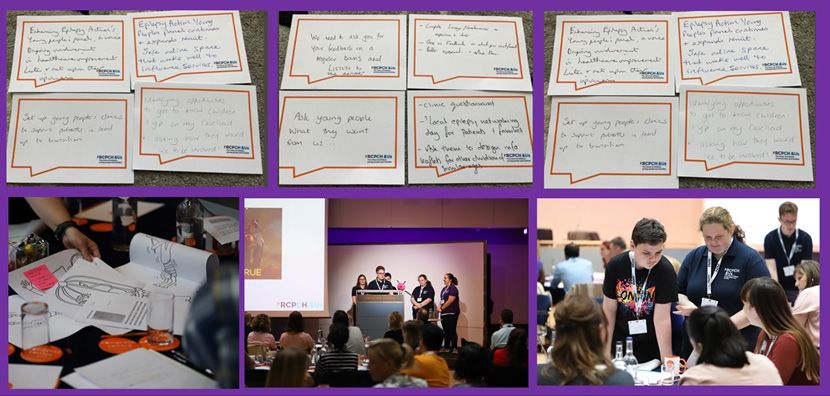
Key finding (C) - Mental health provision: Few Trusts and Health Boards are able to provide co-located
mental health services for children and young people with epilepsy. Routine screening for mental
health was not widely available.
There was a very small number of children and young people with epilepsy who had an identified
mental health condition. This was lower than would be expected based on other available evidence
about the incidence of mental health conditions for children with epilepsy.
Recommendation (3) Commissioners, Health Boards and Trusts* should ensure that:
• all children with an epilepsy should have ongoing screening for a range of mental health
problems using a validated tool (e.g. Strengths and Difficulties Questionnaire),
• where there are concerns about mental health problems the child and young person should be
referred to an appropriate mental health service via an agreed pathway for ongoing diagnosis
and treatment,
• services for children and young people with epilepsy should include sufficient integrated mental
health provision, some of which should be co-located within the epilepsy clinic.
*This may include: Mental health department leads, BPT commissioners, Paediatric epilepsy clinical lead
Key finding (D) - Epilepsy Specialist Nurses: There was evidence of an increasing epilepsy specialist
nurse (ESN) workforce and more widespread involvement within the first year. This positive
development is alongside encouraging increases in contact with specialists and fewer
withdrawals of epilepsy diagnoses. NICE CG 137 and SIGN guidance both highlight the importance of
ESNs as part of paediatric epilepsy care networks and teams. There remain some Health Boards and
Trusts where ESN involvement is absent or insufficient.
Recommendation (4) Epilepsy Specialist Nurses provide a wide-ranging contribution to the care
of the child and roles should take account of local populations and service configurations. All
Health Boards and Trusts should employ sufficient ESNs to ensure at least 1 WTE ESN for every 250
children with epilepsy. This is so that families, alongside other ESN roles, can reliably receive direct
individualised specialist advice by the same or next working day between scheduled reviews.
*This may include: Paediatric commissioners, Trust medical director and paediatric epilepsy clinical lead
Key finding (E) - Specialist paediatricians and clinical leads: There is evidence of increasing
“paediatrician with expertise” involvement within the first year of care, although access to paediatric
neurology where indicated remains static. While children with epilepsy received specialist input during
the first year of care, there was evidence that in many cases there were waits for input beyond 2 weeks.
NICE CG137 and NICE QS1 state that children and young people presenting with a suspected seizure are
seen by a specialist in the diagnosis and management of the epilepsies within 2 weeks of presentation.
Recommendation (5) All OPEN UK regional networks and commissioners* should:
• review the Epilepsy12 findings in their area and ensure there is sufficient capacity for paediatric
neurologists to provide timely assessment and ongoing management.
• support Trusts and Health Boards to define a paediatric clinical lead for their epilepsy services.
* This may include: OPEN UK, Regional Network Epilepsy leads, paediatric commissioners, and regulators (including CQC)
Key finding (F) - Best Practice Criteria for clinics: There are few Trusts and Health Boards able to
provide, or working towards, clinics for paediatric epilepsy which meet the Best Practice Criteria (BPC).
There has been a slight increase between April 2018 and November 2019.
Key finding (G) - Children’s Epilepsy Surgical Service (CESS): There is evidence that many children who
meet the Children’s Epilepsy Surgical Service (CESS) referral criteria are not being referred according to
10Epilepsy12 2020 Combined organisational and clinical audits: Report for England and Wales, Round 3, Cohort 1 2018-19
those criteria, including variation in referral rates between regions. This finding - together with the MRI
findings - suggests there may be children with surgically treatable epilepsies who are missing out on,
or having delayed access to, surgical evaluation and treatment.
Recommendation (6) OPEN UK regional epilepsy networks and CESS should:
• coordinate clear, embedded referral criteria and shared care pathways from secondary care and
paediatric neurology to CESS,
• ensure early identification of referral criteria and ensure referral to CESS where appropriate.
Key finding (H) - Sodium valproate: Sodium valproate must no longer be used in any woman or girl of
childbearing age unless they are enrolled in the pregnancy prevention programme. The results showed
a clear reduction in use of sodium valproate in girls compared to boys after age 9. There was good
evidence of discussion of the associated risks.
Key finding (I) - Comprehensive care plans: The majority of Health Boards and Trusts report
routinely undertaking comprehensive care plans for all children with epilepsy. Yet at individual level
there were gaps in provision of essential elements including the ease of contacting services and
guidance for water safety.
Recommendation (7) All Health Boards and Trusts should implement standardised approaches
to care planning content, or other robust mechanisms, to ensure that essential elements of care are
provided routinely to children with epilepsy at diagnosis and reviewed on an ongoing basis.
Education and health providers* at national, regional and local level should agree procedures
to facilitate appropriate, up-to-date health care planning within education and two-way
information sharing.
*This may include: OFSTED, head teachers, school nurses, paediatric epilepsy service staff, patients and their families, youth
workers, healthcare assistants, sports coaches or out of school organisations that provide activities
Key finding (J) - Transition to adult services: Over half of Health Boards and Trusts hold outpatient
services that combine adult and paediatric professionals. For most paediatric epilepsy services there
are no agreed pathways for children and young people to transition to adult services.
Key finding (K) - Diagnosis and Anti-Epileptic Drugs: There has been an apparent reduction in the rates
of children misdiagnosed with epilepsy. There was very little evidence of children receiving anti-epilepsy
medication unnecessarily. NICE’s CG 137 states that AED therapy should only be started once the diagnosis
of epilepsy is confirmed, except in exceptional circumstances that require discussion and agreement
between the prescriber, the specialist and the individual and their family and/or carers as appropriate.
Key finding (L) - Local and regional variation: There was marked regional variation in the socioeconomic
distributions within the epilepsy populations. There was also regional variation in the proportion of
children diagnosed with epilepsy as a proportion of EEGs requested.
Recommendation (8) Epilepsy12 should develop an ascertainment measure based on estimated
population sizes and estimates of epilepsy incidence according to Health Boards and Trust. This
would allow case ascertainment of the audit to be compared with a measure of the expected
epilepsy incidence and variation in EEG rates.
All Trusts and Health Boards* should ensure that epilepsy services have sufficient clinician
time job-planned to ensure capacity to submit accurate audit data and implement quality
improvement, in addition to clinical activities.
*This may include: Trust medical director, lead for EEG, and paediatric epilepsy clinical lead
111. Introduction
Epilepsy12 was established in 2009 and has the continued aim of helping epilepsy services, and those
who commission health services, to measure and improve the quality of care for children and young
people with seizures and epilepsies. The audit is commissioned by the Healthcare Quality Improvement
Partnership (HQIP) as part of the National Clinical Audit and Patient Outcomes Programme (NCAPOP)
and is delivered by the Royal College of Paediatrics and Child Health (RCPCH).
The RCPCH delivered Rounds 1 and 2 of Epilepsy12 between 2009 and 2015, publishing related national
reports for each Round in 2012 and 2014 respectively. Paediatric epilepsy was once again prioritised as
a topic for the NCAPOP and the RCPCH was re-commissioned by HQIP to deliver Round 3 of Epilepsy12
from 1 April 2017 to 31 March 2021.
Rounds 1 and 2 of the audit included Health Boards and Trusts across England, Northern Ireland,
Scotland and Wales. This report covers the analysis of data collected by the audit on the organisation
of paediatric epilepsy services within Health Boards and Trusts in England and Wales. It is hoped that
in future, Health and Social Care Trusts in Northern Ireland and Health Boards in Scotland will also join
Round 3 of the audit, subject to contractual and governance arrangements being put in place.
As per Rounds 1 and 2, the work of Round 3 of the audit is overseen by a Project Board which includes
representatives of patient and professional organisations and a dedicated project team within the
RCPCH.
Audit aims and scope
Epilepsy is the most common significant long-term neurological condition of childhood and affects an
estimated 112,000 children and young people in the UK.3 The aim of Epilepsy12 is to help to improve
the standard of care for children and young people with epilepsies. To be able to do this, the audit
will collect and process patient identifiable data. By collecting and processing such information the
audit is able to highlight areas where hospitals and clinics are doing well, and also identify areas in
which they need to improve.
In Round 3, Epilepsy12 has expanded the scope and aims of the audit to:
• continue to measure and improve care and outcomes for UK children and young people with
epilepsies,
• include all children and young people with a new onset of epilepsy,
• enable continuous patient ascertainment,
• use a pragmatic and concise dataset,
• incorporate NICE Quality Standards, Mental Health, Educational and Transition metrics,
• obtain approval to include patient identifiers to allow local real-time individual and service dashboard
elements within the audit reporting platform.
Data completeness
There were 149 registered Health Boards and Trusts in Round 3 of Epilepsy12. Eight of the registered
Trusts merged to form four Trusts in 2019, leaving a total of 145 registered Health Boards and Trusts
participating within the audit. The clinical audit phase began in July 2018 and focuses on performance
indicators relating to the first paediatric assessments undertaken for children and young people who
3 Joint Epilepsy Council of the UK and Ireland. (2011). Epilepsy prevalence, incidence, and other statistics.
12Epilepsy12 2020 Combined organisational and clinical audits: Report for England and Wales, Round 3, Cohort 1 2018-19
experience a paroxysmal episode or episodes (includes all epileptic or non-epileptic seizures and
also seizures of uncertain in origin) between July 2018 – November 2018 and the first year of care that
follows those initial assessments up until 30 November 2019. Nine of the registered Health
Boards and Trusts did not submit a 2019 organisation report to the 2018/2019 Epilepsy12 audit
and 36 Health Boards and Trusts were excluded within the clinical audit due to data incompleteness.
There remains considerable variation in respect to Health Boards and Trusts in England and
Wales regarding their ability to staff, resource time within job plans, and adequate IT systems to
collect and submit accurate and complete data to the national audit. We would like to stress the
importance of all paediatric epilepsy services within Health Boards and Trusts being supported with
their data submission to national clinical audits. Health Boards and Trusts can use audit data for
benchmarking practices to identify gaps that require service improvements, share best practice and
improve the completeness. We urge senior Health Board and Trusts management to support their
paediatric epilepsy services to improve upon data completeness to ensure it reflects a more accurate
picture of their standard of practice.
Audit outputs and publications
Round 3 of Epilepsy12 is comprised of three main audit domains: the organisational audit (service
descriptor), the clinical audit (clinical care domain) and associated Health Boards and Trusts profile
and Quality improvement (Patient reported experience measures, EQIP, children and young people’s
engagement). The Epilepsy12 produces the following current and future reports, all of which can be
viewed and downloaded from www.rcpch.ac.uk/epilepsy12
• Epilepsy12 National Organisational Audit Report 2018
• Epilepsy12 National Organisational Audit Report 2018: Health Board and Trusts level results
• 2018 Epilepsy12 &Us - voices from the RCPCH &Us network booklet
• A guide to the 2018 Epilepsy12 National Organisational Audit report for parents and young people
• Epilepsy12 Combined National report 2018/19 key messages
• Epilepsy12 National Organisational Audit Report 2019: Regional/National Results
• Epilepsy12 National Organisational Audit Report 2019: Health Board and Trusts level Results
• Epilepsy12 National Clinical Audit Report 2018/19: Regional/National Results
• Epilepsy12 National Clinical Audit Report 2018/19: Health Board and Trusts level Results
• RCPCH Epilepsy Quality Improvement Programme (EQIP): Supplement (released later this year)
• A guide to the 2018/19 combined Epilepsy12 National Audit report for parents and young people
booklet (released later this year)
• 2018/19 combined Epilepsy12 National Audit report clinic posters (released later this year)
• 2019 Epilepsy12 &Us - voices from the RCPCH &Us network booklet (released later this year)
Quality improvement
Facilitating quality improvement activities is a core element of Epilepsy12. The audit supports these
activities in the following ways.
Supporting regional and national quality improvement activities
Epilepsy12 has continued to support the Organisation of Paediatric Epilepsy Networks (OPEN UK),
hosting quarterly national meetings to help regional leads share learning and co-ordinate strategy.
13Epilepsy12 and OPEN UK are working together to highlight the importance of appropriate resources for paediatric epilepsy networks, identify opportunities for regional QI activities, and share learning across the whole OPEN UK network. The second Epilepsy12 & OPEN UK National Conference took place on 17 June 2019. More than 160 health professionals working in support of paediatric epilepsy services and patient organisation representatives came together with the aim of learning from each other and improving care for all children and young people with epilepsies. The conference was chaired by Dr Sophia Varadkar, Consultant Paediatric Neurologist & Chief of Service for Brain Directorate, GOSH and included a young people-led symposium, keynote speaker and related Q&A session, Epilepsy12 updates and a quality improvement (QI) showcase session with associated QI poster displays. The conference also marked the launch of the RCPCH Epilepsy Quality Improvement Programme (EQIP). Copies of the presentations delivered on the day can be viewed via the project website: www.rcpch.ac.uk/epilepsy12 Epilepsy12 audit data was linked with Office of National Statistics and NHS datasets in recently published research.4 The study examined whether there were associations between quality of paediatric care, hospital admissions, and all-cause deaths among epilepsy patients. The authors report that for adolescents with epilepsy, greater involvement of tertiary specialists in paediatric care was associated with decreased mortality after transition to adult services. Reduced access to an epilepsy specialist nurse was associated with an increase in paediatric epilepsy hospital admissions. Epilepsy Quality Improvement Programme (EQIP) The RCPCH EQIP launched on 17 June 2019 and has been designed as a model for a comprehensive quality improvement programme, tailored to support paediatric epilepsy teams to work together to define their shared aims and identify current gaps in service provision. This pilot programme will run for six months. The programme launched with a weekend training residential event taking place on 16/17 November 2019 and a follow up event of shared learning in July 2020. See chapter 5 for more information on the programme and visit the project website for updated information on the teams’ journeys via www.rcpch.ac.uk/eqip . Children and young people engagement The Epilepsy12 Youth Advocates have been developing a new quality improvement project relating to “Clinic Checks”. A pilot has been taking place in paediatric epilepsy services across England and Wales to assess the support that they provide to young people for their anxieties and worries. See chapter 4 for more information on the Youth Advocates. Audit methodology and dataset development The Epilepsy12 Methodology and Dataset Group was established in April 2017 and tasked with the development of the methodology and related datasets for both the clinical and organisational audit phases of Round 3 of Epilepsy12. The development of the methodology and datasets was broken down into separate work streams which covered different aspects of paediatric epilepsy care. 4 Hargreaves, D S. et al. (2019) Association of quality of paediatric epilepsy care with mortality and unplanned hospital admissions among children and young people with epilepsy in England: a national longitudinal data linkage study. Lancet Child Adolesc Health. 3(9):627-635 14
Epilepsy12 2020 Combined organisational and clinical audits: Report for England and Wales, Round 3, Cohort 1 2018-19

Audit measures were subsequently developed which aligned to:

•   Epilepsies: diagnosis and management (2012) NICE guideline CG137,
•   Epilepsy in children and young people (2013): NICE Quality Standard 27.

Members of the Epilepsy12 project Board reviewed and signed off the Epilepsy12 Round 3 methodology
and dataset in September 2017.

Data entry
The Epilepsy12 Round 3 data platform was configured to allow the registered Health Boards and
Trusts and EEG services to register and complete the clinical and organisational audits. The clinical
audit focuses on care provided to patients with a new diagnosis of epilepsy. Clinical audit data entry is
prospective, with eligible patients grouped into three cohorts. The first cohort is defined by patients
with a first paediatric assessment for a paroxysmal episode (or episodes) between the “Go live” date
(12 July 2018) and 30 November 2018. The first year of care data entry timeframe is 12 July 2018 to 30
November 2019. The organisational audit focuses on services and workforce at Trust and Health Board
level at a designated point in time, this report presents organisational data from November 2019.

Using the Epilepsy12 platform EEG services can register patients that have been referred for their first
EEG for a paroxysmal episode. Designated leads and Health Board/Trust staff members were able to
edit and update their data entry up until 31 December 2019, by which time they had to formally submit
and lock their assessment and first year of care data in order for it to be included in the final data
download for analysis by the Epilepsy12 project team.

Analysis and identification of key findings and recommendations

The Epilepsy12 project team downloaded all submitted and locked clinical and organisational audit
data from participating Health Boards and Trusts in January 2020. Members of the Epilepsy12
project board and methodology and dataset group then met to review the analysis of submitted
data and agree key findings and recommendations for the report.

Managing small numbers

The Epilepsy12 measures and results have been reviewed to manage the risk of disclosure of protected
information about individuals included in the audit data (or those connected to them). This was
assessed on a case-by-case basis, and at points in this report results with small numbers have been
masked. Masked results have been marked with an asterisk (*) and footnoted.

                                                                                                                         15
2. Themes and recommendations
Clinical audit 2018-2019 results
The clinical audit phase of Epilepsy12 began in July 2018. It focuses on performance indicators
relating to the first paediatric assessments undertaken for children and young people who
experience a paroxysmal episode (or episodes) between July 2018 – November 2018 and the first year
of care that follows those initial assessments up until 30 November 2019. This national report includes
the analysis of data from the first cohort of patients from Round 3 clinical audit phase. The
performance indicators align with NICE Guidelines and Quality Standards5 and cover the following
areas:
• input from a paediatrician with expertise in epilepsies
• input from an epilepsy specialist nurse
• tertiary input
• epilepsy surgery referral
• appropriate first paediatric assessment
• seizure formulation
• access to electrocardiogram (ECG)
• access to magnetic resonance imaging (MRI)
• accuracy of diagnosis
• discussion of the risks of treatment with sodium valproate
• comprehensive care planning agreement and content
• school individual healthcare plans.
The Epilepsy12 data platform allows participating Health Boards and Trusts to enter data on the care
that they provide to children and young people for the clinical audit phase and view real time outputs
including individual patient timeline and care planning reports and a performance indicator dashboard.
Full details of the Epilepsy12 Round 3 performance indicators can be viewed on the Epilepsy12 website.
Organisational audit 2019 results
Epilepsy12 brings together a multidisciplinary group of representatives to highlight key findings and
results and translate these into a set of recommendations that can be acted upon to improve paediatric
epilepsy care. The Epilepsy12 audit of the organisation of paediatric services in England and Wales
covered the following areas:
• workforce
• epilepsy clinic configuration
• tertiary provision
• investigations
• service contact
• young people and transition
• mental health provision
• neurodevelopmental support
• care planning
• patient databases or registers.
5 NICE (2012) Clinical Guideline 137 - Epilepsies: diagnosis and management
NICE (2013) Quality Standard 27 - Epilepsy in children and Young People
16Epilepsy12 2020 Combined organisational and clinical audits: Report for England and Wales, Round 3, Cohort 1 2018-19
General and specific recommendations are made to support the existing goals and priorities of
paediatric epilepsy services and regional networks, and are targeted to those with the ability to action
the recommendation.
Full details of the Epilepsy12 Organisational audit indicators can be viewed on the Epilepsy12 website.
Combined key findings and recommendations
The clinical audit covers from the first paediatric assessments undertaken for children and young
people who experience a paroxysmal episode (or episodes), to a record of care for the next 12 months.
The organisational audit supplements this data with insight into the provision of staff and service
availability in each Health Board and Trust.
Within the clinical audit, there are 12 measures which were derived from national guidelines and
recommendations. These are referred to as the ‘Performance Indicators’ in the full results presented
in Appendices A and G. The chart below summarises the results for these 12 measures, showing
where care met the required standards for children and young people in Round 3, cohort 1. There
are some very positive results. Children and young people with epilepsy are receiving care from
specialist paediatricians and nurses, and they are being correctly diagnosed. There is, however, scope
for improvement in aspects including comprehensive care planning and referral to epilepsy surgery
services where children and young people meet relevant criteria.
The performance indicators shown in Figure 1 provide an overview of important aspects of care. The
key findings and recommendations presented in the next section go beyond this, drawing on the full
sets of results from the clinical and organisational audits. Due to this, the key finding sections, and
numbering of recommendations, do not directly match those of the 12 performance indicators.
Detailed results from the clinical and organisational data are available in Appendices A and G. This
includes the results for each measure and analysis by country and regional epilepsy network areas.
Comparisons with previous rounds of the audits are made where available.
1. Paediatrician with experse: 87.9%
2. Epilepsy nurse specialist: 69.0%
3. Terary involvement: 59.3%
3b. Epilepsy Surgery referral: 30.0%
4. Appropriate first paediatric assessment: 61.6%
5. Seizure Formulaon: 88.0%
6. ECG: 67.6%
7. MRI: 68.6%
8. Accuracy of diagnosis: 97.2%
9a. Sodium Valproate females 9 years old and greater: 100.0%
9b. Sodium Valproate all females: 39.7%
10. Comprehensive Care Planning agreement: 62.4%
11. Comprehensive Care Planning content: 70.1%
12. School Individual Healthcare Plan: 32.2%
0% 10% 20% 30% 40% 50% 60% 70% 80% 90% 100%
England and Wales
Figure 1: Epilepsy12 Performance indicators in England and Wales, Round 3 Cohort 1
17Key finding A: First EEG waiting times
An electroencephalogram (EEG) is a recording of brain
EEG
activity. During the test, small sensors are attached to the
request
made
scalp to pick up the electrical signals produced when brain
cells send messages to each other.
43.8%
Almost half of children with an epilepsy had to wait more
than 4 weeks for their first EEG from the time of request.
NICE guidelines (Quality Statement 2) state that children
and young people having initial investigations for epilepsy
First EEG waiting times
undergo the tests within 4 weeks of being requested.
43.8% (487/1112) children and young
people diagnosed with epilepsy obtained
their EEG more than 4 weeks on from
the initial referral request.
• 43.8% (487/1112) children and young people diagnosed with epilepsy obtained their EEG more
than 4 weeks on from the initial referral request.
Recommendation 1
All Health Boards and Trusts* should:
• review and improve their referral pathways to ensure all first EEGs are achieved within
a maximum of 4 weeks of request date.
Health Boards and Trusts with EEG services should:
• co-ordinate with their commissioners and regional OPEN UK network to ensure timely
access to EEG services for all relevant Trusts and Health Boards.
*This may include: Trust Medical director and Paediatric epilepsy clinical lead
18Epilepsy12 2020 Combined organisational and clinical audits: Report for England and Wales, Round 3, Cohort 1 2018-19
Key finding B: ECG and MRI investigations
Magnetic resonance imaging (MRI) is a type of scan that uses strong magnetic fields and radio waves
to produce detailed images of the inside of the body. An electrocardiogram (or 12-lead ECG) gathers
information from 12 different areas of the heart.
The Epilepsy12 performance indicator is based on SIGN guidance and current British Paediatric
Neurology Association (BPNA), Paediatric Epilepsy Training (PET) curriculum. This states that all children
with a convulsive seizure should have a 12-lead ECG.
• 68.6% (317/462) children and young people diagnosed with epilepsy and who met the defined
indications for an MRI, had received an MRI during their first year of care.
• 67.6% (474/701) children and young people diagnosed with epilepsy and who had convulsive
seizures obtained a 12 lead ECG during their first year of care.
• Previously, 63.5% (Round 1, 2012) and 72.2% (Round 2, 2014) of children and young people who
met the defined indications had received an MRI. In earlier rounds investigations by 12-lead
ECG were reported for all children with epilepsy.
Recommendation 2
All Health Boards and Trusts* should:
• ensure that they can provide MRI to children of all ages via a sedation and/or
anaesthetic pathway,
• document within medical records and Epilepsy12 audit the confirmed epilepsy
syndrome diagnosis (including BECTS, CAE, JAE, JME and ‘epilepsy with generalised
tonic clonic seizures only’) as MRI is not routinely indicated for these children,
• review local pathways to include routine 12-lead ECG for children with convulsive
seizures,
• ensure 12- lead ECG results are accessible within the ongoing clinic health records.
*This may include: Department leads at MRI, EEG services within Trusts or Health Boards, paediatric epilepsy
services/ teams
19Key finding C: Mental health provision
6.1% Mental health diagnoses and evidence of involvement of
mental health professionals was very low, considering the
rates of mental health diagnoses in children with epilepsy
evidenced in research.
NHS Best Practice Criteria (2019) states that there should be
Mental Health diagnosis some co-located mental health provision within epilepsy
and provision
clinics. Few services have co-located services, and in
6.1% (43/701) of children and young people addition only a small number of Health Boards and Trusts
between the age of 5-15 years and diagnosed
with epilepsy had a mental health problem
report routinely screening young people for mental health
identified by the end of their first conditions.
year of care.
• 6.1% (43/701) of children and young people between the age of 5-15 years and diagnosed with
epilepsy in cohort 1 had an identified mental health condition by year one in England and
Wales.
• 4.1% (45/1112) of children and young people with epilepsy had some evidence of involvement of
a mental health professional or service by the end of their first year of care.
• However, a study of mental health in children with epilepsy (Dev Med Child Neurol. 2003)
reported a much higher incidence where 37% of 5-15 year olds with epilepsy had a co-existing
mental health disorder.
• 14.0% (19/136) Health Boards and Trusts were able to facilitate mental health provision within
epilepsy clinics.
• 14.7% (20/136) of Health Boards and Trusts routinely provided formal screening services for
mental health disorders, a decrease from 19.6% (29/148) in 2018.
Recommendation 3
Commissioners, Health Boards and Trusts* should ensure that:
• all children with an epilepsy should have ongoing screening for a range of mental
health problems using a validated tool (e.g. Strengths and Difficulties Questionnaire),
• where there are concerns about mental health problems the child or young person
should be referred to an appropriate mental health service via an agreed pathway for
ongoing diagnosis and treatment,
• services for children and young people with epilepsy should include sufficient
integrated mental health provision, some of which should be co-located within the
epilepsy clinic.
*This may include: Mental health department leads, BPT commissioners, Paediatric epilepsy clinical lead
20Epilepsy12 2020 Combined organisational and clinical audits: Report for England and Wales, Round 3, Cohort 1 2018-19
ient Voice
Support for worries and anxieties Pat
Epilepsy12 Youth Advocates selected ‘support for worries and
anxieties’, ‘face to face support’, and ‘school’ as their three
priority areas.
The areas were chosen after consultation with other children and young people,
published in Epilepsy12 &Us - Voices from the RCPCH &Us network (January 2019).
Children and young people wanted more support in helping to explain questions such
as “why me? when will it stop?”. They asked for help to establish coping strategies for
themselves and their families.
21Key finding D: Epilepsy Specialist Nurses
69.0% 47.7 %
3+
DAYS
Epilepsy
Specialist
Nurse
Epilepsy Specialist Nurse Providing specialist advice
69.0% (767/1112) of children and young people 47.7% (62/130) of Health boards/Trusts
diagnosed with epilepsy had input from an reported typical response times for
epilepsy specialist nurse (ESN) by one year. specialist advice of 3 or more days.
There is evidence of an increasing epilepsy specialist nurse (ESN) workforce and more widespread
involvement within the first year. There remains some Health Boards and Trusts where ESN involvement
is absent or insufficient. This positive development is alongside encouraging increases in contact with
specialists and fewer withdrawals of epilepsy diagnoses. NICE Clinical Guideline 137 highlights the need
for ESN to be part of the network of care in epilepsy, and in SIGN Guidance each epilepsy team should
include paediatric epilepsy nurse specialists.
• 69.0% (767/1112) of children and young people diagnosed with epilepsy had input from an epilepsy
specialist nurse during their first year of care.
• 95.6% (130/136) of Health Boards and Trusts described advice available between scheduled
reviews. However, 47.7% (62/130) of Health Boards and Trusts reported typical response times of
three or more days.
• In 2019 there was a total of 158.4 WTE epilepsy specialist nurses (ESN) employed in participating
Health Boards and Trusts across England and Wales.
• 81.6% (111/136) of Health Boards and Trusts employed some ESN time.
Drawing together the findings from both the clinical and organisational audit data, there was a correlation
between having ESNs as part of the local workforce and some positive clinical indicators. In Health Boards
and Trusts that employed some ESN time, children and young people with epilepsy were more likely to:
• be seen by an epilepsy specialist nurse,
• have school Individual Healthcare Plan,
• have an MRI.
Recommendation 4
Epilepsy Specialist Nurses provide a wide-ranging contribution to the care of the child and
roles should take account of local populations and service configurations.
All Health Boards and Trusts* should employ sufficient ESNs to ensure at least 1 WTE ESN
for every 250 children with epilepsy. This is so that families, alongside other ESN roles, can
reliably receive direct individualised specialist advice by the same or next working day
between scheduled reviews.
*This may include: Paediatric commissioners, Trust Medical director and Paediatric epilepsy clinical lead
22Epilepsy12 2020 Combined organisational and clinical audits: Report for England and Wales, Round 3, Cohort 1 2018-19
Key finding E: Specialist paediatricians and clinical leads
CV
11.8% 15.5% Within
WEEKS
2
Paediat
Clinica
ric Epile
l Lead psy
Consultant
Paediatrician
Paediatric
Epilepsy
Lead
Paediatrician with
Paediatric Epilepsy Epilepsy Expertise
Clinical Lead
15.5% (172/1112) of children and young people
11.8% (16/136) of Health Boards/Trusts do diagnosed with epilepsy were seen by a
not have a defined paediatric epilepsy ‘paediatrician with expertise in epilepsy’
clinical lead. within 2 weeks of their first referral
in England and Wales.
There is evidence of increasing paediatrician with
expertise involvement within the first year, although
access to paediatric neurology where indicated remains
23.5% GP SURGERY
static. While children with epilepsy received specialist
DIRECT
REFERRAL
input during the first year of care, there was evidence
that in many cases there were waits for input beyond the
Paediatric
2 weeks from presentation that is recommended in NICE
guidelines (NG137 and NICE QS1).
Neurologist
Direct referrals to
Paediatric Neurologists The neurology services provide specialist input into
paediatric epilepsy care across England and Wales. Where
23.5% (32/136) of Health Boards/Trusts reported that
paediatric neurologists could receive neurology services are setup to accept direct referrals
direct referrals from general practice
or emergency services to assess from general practice and emergency departments this
children with possible epilepsy. will contribute significant additional new patient and
follow up activity, some of which could otherwise be
managed by general paediatric services. This pathway
configuration should have ongoing review by the Trust/
Health board and commissioners to ensure adequate
workforce, value and service capacity for both the patients
with seizures and also other children needing paediatric
neurology input.
• 11.8% (16/136) of Health Boards and Trusts do not have a defined paediatric epilepsy clinical
lead.
• In Round 3, cohort 1, 15.5% (172/1112) children and young people diagnosed with epilepsy were
seen by a ‘paediatrician with expertise in epilepsy’ within 2 weeks of first referral in England
and Wales.
• 23.5% (32/136) of Health Boards and Trusts reported that paediatric neurologists could receive
direct referrals from general practice or emergency services to assess children with possible
epilepsy.
• 82.3% (915/1112) of the children and young people diagnosed with epilepsy had input from a
paediatrician with expertise in epilepsies in England and Wales in year one. This was similar
to Round 2, 86.1% (938/1090).
23• In Round 3 cohort 1, 59.3% (150/253) of children and young people who met paediatric neurology
referral criteria had paediatric neurologist input or Children’s Epilepsy Surgical Service (CESS)
referral by one year of care.
• 92.6% (126/136) of Health Boards and Trusts had agreed referral pathway to tertiary paediatric
neurology services.
We repeat our previous recommendation that:
“All Health Boards and Trusts should ensure they have sufficient defined general paediatricians
with expertise in epilepsies to correctly diagnose epilepsy and provide appropriate ongoing
management for all children with epilepsy.
Children with ‘complex epilepsy’ should also have evidence of input from a paediatric
neurologist.”
Recommendation 5
All OPEN UK regional networks and commissioners* should:
• review the Epilepsy12 findings in their area and ensure there is sufficient capacity for
paediatric neurologists to provide timely assessment and ongoing management,
• support Trusts and Health Boards to define a paediatric clinical lead for their
epilepsy services.
* This may include: OPEN UK, Regional Network Epilepsy leads, paediatric commissioners, and regulators
(including CQC)
Key finding F: Best Practice Criteria for clinics
There are few Trusts and Health Boards able to provide, or working towards, clinics for paediatric
epilepsy which meet the Best Practice Criteria (BPC). There has been a slight increase between
April 2018 and November 2019.
• 46.6% (61/131) of Health Boards and Trusts hold clinics that meet the BPC, and a further 26.0%
(34/131) are developing towards this standard.
24Epilepsy12 2020 Combined organisational and clinical audits: Report for England and Wales, Round 3, Cohort 1 2018-19
Key finding G: Children’s Epilepsy Surgical Service (CESS)
Criteria
CESS Referral
There is evidence that many children who meet CESS referral
criteria are not being referred according to those criteria,
30.3% including variation in referral rates between regions. This
finding together with the MRI performance indicators
suggests there may be children with surgically treatable
epilepsies who are missing out on or having delayed surgical
evaluation and treatment.
Children’s Epilepsy
Surgical Service (CESS)
30.3% (27/89) of the children and young
people who met CESS referral criteria
had CESS referral by one year.
• 30.3% (27/89) of the children and young people who met CESS referral criteria had CESS referral
by one year.
• In Round 3, 8.0% (89/1112) of the children and young people diagnosed with epilepsy met one
or more of the CESS referral criteria in England and Wales.
Recommendation 6
OPEN UK regional epilepsy networks and CESS should:
• coordinate clear, embedded referral criteria and shared care pathways from
secondary care and paediatric neurology to CESS,
• ensure early identification of referral criteria and ensure referral to CESS where
appropriate.
25You can also read


