Reconciliation Action Plan - Innovate 2019 2021 - Mornington Peninsula ...
←
→
Page content transcription
If your browser does not render page correctly, please read the page content below
Reconciliation
Action Plan
Innovate
2019 – 2021

                 1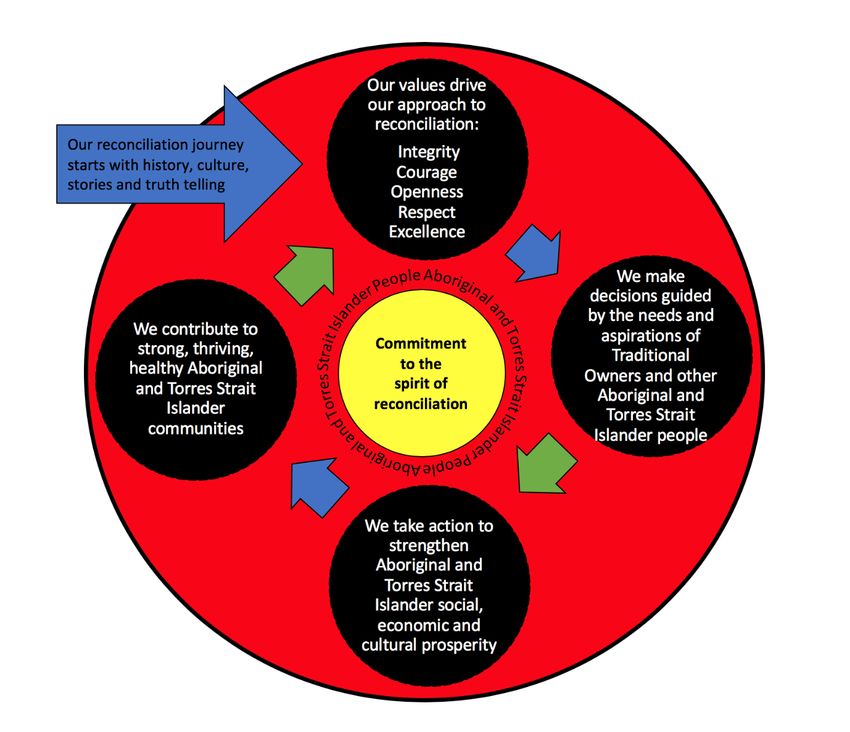
ACKNOWLEDGMENT OF COUNTRY                                     3

MESSAGE FROM THE MAYOR AND CEO                                4

OUR VISION FOR RECONCILIATION                                 5

OUR APPROACH TO THE RECONCILIATION JOURNEY                    6

THE LOCAL ABORIGINAL AND TORRES STRAIT ISLANDER POPULATION    7

THE STRATEGIC CONTEXT                                         8

THE POLICY CONTEXT                                            9

THE HUMAN RIGHTS FRAMEWORK                                   10

OUR BUSINESS                                                 12

OUR RAP                                                      13

OUR RECONCILIATION JOURNEY SO FAR                            15

RAP GOVERNANCE                                               18

RAP THEME: RELATIONSHIPS                                     19

RAP THEME: RESPECT                                           25

RAP THEME: OPPORTUNITIES                                     34

TRACKING PROGRESS AND REPORTING                              43

                                                              2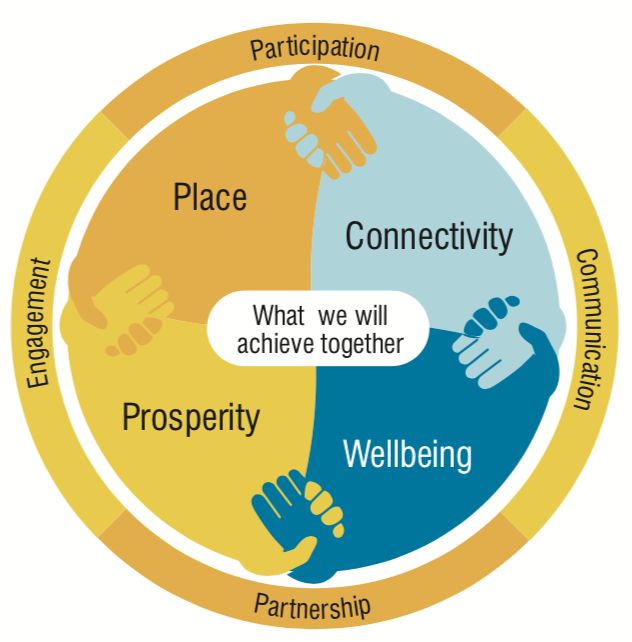
Acknowledgment of Country
Mornington Peninsula Shire acknowledges and pays respect to the Boon
Wurrung/Bunurong people, the Traditional Custodians of these lands and waters.

Mornington Peninsula Shire acknowledges the Bunurong Land Council Aboriginal
Corporation (the Bunurong Land Council) as the Registered Aboriginal Party under
the Aboriginal Heritage Act Vic (2006) with responsibility for cultural heritage matters.

                                                                                       3
Message from the Mayor and CEO
As the Mayor and CEO of the Mornington Peninsula Shire, we are proud to present
the Shire’s first Reconciliation Action Plan (RAP) using Reconciliation Australia’s
RAP framework. The RAP was informed by a comprehensive consultation process
that engaged Traditional Owner groups, local Aboriginal organisations, Aboriginal
peak bodies, Councillors, Shire staff, and the broader community. The RAP
consultations were overwhelmingly positive and demonstrated a compelling
commitment to reconciliation.

The Shire’s organisational vision is to ‘value, protect and improve the unique
characteristics and way of life on our peninsula’. This RAP will help to ensure that
our vision applies equally to Aboriginal and Torres Strait Islander communities on the
Mornington Peninsula. The RAP will build on strong foundations including the
tenacious leadership, resilience and resourcefulness of Aboriginal and Torres Strait
Islander communities, alignment with the Shire’s strategic context, and a strong
human rights framework to guide the way.

Since developing our first Reconciliation Policy and Action Plan, the Shire has many
achievements to celebrate including appointing the Senior Social Planner –
Aboriginal Culture and Community Development to the Shire’s Executive,
strengthening our human resources practices, introducing cultural awareness and
respect training for Councillors and staff, and working to ensure that our services are
culturally safe, inclusive and accessible for Aboriginal and/or Torres Strait Islander
children, young people and their families.

The First People of what is now known as the Mornington Peninsula, the Boon
Wurrung/Bunurong People of the Kulin Nation, have a rich history on the Mornington
Peninsula dating over 40,000 years ago. Today, the Mornington Peninsula has a fast
growing Aboriginal and Torres Strait Islander population including Traditional Owners
and other Aboriginal and Torres Strait Islander peoples with diverse cultures,
identities, and stories. As a local council, we have an important role to play in
promoting and celebrating Aboriginal cultural heritage, arts and cultures as part of
the intrinsic identity and value of the Mornington Peninsula.

With significant reforms at a State level to progress treaty and self-determination, the
Shire is proud to be working with local Aboriginal and Torres Strait Islander
communities to support meaningful social, cultural and economic outcomes. We
know that to do this, strong relationships with Aboriginal and Torres Strait Islander
communities must be at the heart of our work. We are committed to listening to and
learning from Aboriginal and Torres Strait Islander peoples, including Elders and
young people, to ensure that our efforts directly support the needs and aspirations of
Aboriginal and Torres Strait Islander communities.

Cr David Gill             John Baker

Mayor                     Chief Executive Officer   Officer

                                                                                       4
Our vision for reconciliation
It’s important to have a shared and respectful vision for our future as
all Australians (Aboriginal community member)
To walk together with courage to understand, respect, value
and celebrate Aboriginal and/or Torres Strait Islander peoples,
histories, arts and cultures as part of the intrinsic identity of the
Mornington Peninsula for the benefit of the whole community.
In the spirit of reconciliation, the Mornington Peninsula Shire:
• acknowledges that the Boon Wurrung/Bunurong people are the First People of
the land on which we work and live with a deep and enduring connection to the
land and water
• promotes the fundamental human rights of Aboriginal and/or Torres Strait
Islander peoples including self-determination, cultural rights and equality
• recognises the importance of truth telling and deep listening
• acknowledges the responsibility of non-Indigenous people to understand the
ongoing impacts of colonisation as a foundation for moving forward together
• strives for a community that acknowledges and takes pride in First Nations
Peoples as the oldest continuing culture in the world
• strives for a community that celebrates the diversity of Aboriginal cultural
heritage, arts and cultures
• acknowledges the ongoing resilience, strength and resourcefulness of local
Aboriginal and Torres Strait Islander communities
• commits to listening to and learning from Aboriginal and Torres Strait Islander
communities to build strong sustainable relationships on the pathway to
reconciliation.
5Our approach to the reconciliation journey
The concept of truth telling is the first step to reconciliation. By
acknowledging the truth, we can understand our history and how it
affects Aboriginal peoples both in the past and in the present. Truth
is at the heart of healing (Warringinee Group staff member)
Our approach to reconciliation:
1. Heart: Puts the Shire’s commitment to the spirit of reconciliation at the heart of its
work with Traditional Owners and other Aboriginal and Torres Strait Islander
peoples.
2. Learning: Starts with reflection and learning about Aboriginal histories, cultures,
stories and truth telling as the foundation for moving forward together.
3. Values: Embeds Aboriginal and Torres Strait Islander perspectives in the Shire’s
overarching value system to drive reconciliation:
• Integrity means building trust, committing to truth telling, cultural safety, and
upholding Aboriginal and Torres Strait Islander rights.
6• Courage means empowering and advocating for Traditional Owners and other
Aboriginal and Torres Strait Islander peoples to freely determine their own
social, economic and cultural development.
• Openness means connecting, working together and actively seeking feedback
from Traditional Owners and other Aboriginal and Torres Strait Islander
peoples.
• Respect means deep listening and learning. Respect means celebrating
Aboriginal arts, cultures and heritage as part of the intrinsic identity of the
Mornington Peninsula.
• Excellence means acknowledging and celebrating achievements on the
journey to reconciliation, including the pathway that has been paved by those
before us.
4. Decision-making: Ensures that decisions are made together, guided by the
needs and aspirations of Traditional Owners and other Aboriginal and Torres
Strait Islander peoples.
5. Action: Commits to the Shire taking substantive action to strengthen Aboriginal
and Torres Strait Islander prosperity on the Mornington Peninsula.
6. Outcomes: Aims to contribute to strong, thriving, healthy Aboriginal and Torres
Strait Islander peoples, communities and organisations.
The local Aboriginal and Torres Strait Islander population
In the 2016 census, 1,305 people identified as Aboriginal and/or Torres Strait
Islander on the Mornington Peninsula (0.8% of the population). This was a significant
34% increase from 974 people who identified as Aboriginal and/or Torres Strait
Islander in the 2011 census.1
The Aboriginal and Torres Strait Islander population on the Mornington Peninsula is
also a young population with a median age of 23 years old (compared to 46 years
old for the non-Indigenous community) with 57% of Aboriginal and Torres Strait
Islander people under 30.
1
We recognise that the census data may not accurately reflect the Aboriginal and Torres Strait Islander
population on the Mornington Peninsula including because some people choose not to complete the census or to
identify as Aboriginal and/or Torres Strait Islander. However, it is safe to assume that the census data reflects
the minimum number of Aboriginal and/or Torres Strait Islander peoples on the Mornington Peninsula.
7The strategic context
The Shire’s RAP is aligned with the Shire’s broader strategic framework including
the:
• Our Peninsula Council Plan 2017-21 (the Council Plan)
• Our Health and Wellbeing Plan 2017-21 (the Health and Wellbeing Plan).
The RAP also exists in the broader context of the Shire’s policies and plans that
relate to diverse communities including the Shire’s Disability and Inclusion Plan,
Gender Equality Strategy and Access and Equity Policy which is about ‘facilitating
the necessary conditions and opportunities to enable everyone utilising council
services, programs and facilities to be treated fairly, free from any discrimination’.
Council Plan
The Council Plan is the Shire’s overarching strategic plan with four key themes:
‘Our place’ relates to ‘Our connectivity’
the preservation of relates to the provision
Aboriginal cultural of communications and
heritage and histories information to
and the strategic Aboriginal
objective to ‘create communities, as well as
thriving, accessible and connecting Aboriginal
inclusive places to live, residents to the services
work and visit’ they need
‘Our prosperity’ relates
to Aboriginal ‘Our wellbeing’ relates
employment, economic to the health and
development and tourism wellbeing of Aboriginal
including our objective to communities including
‘facilitate opportunities encouraging
for job creation and an collaborative
environment for business relationships to address
to succeed’ issues impacting their
quality of life and which
create greater cultural
connection
Health and Wellbeing Plan
The Shire has an important role to play in ensuring that all
community members have opportunities to live, learn, work and
recreate in environments that maximise their health and wellbeing.
The Shire’s Health and Wellbeing Plan includes the following strategies and actions
that directly relate to Aboriginal and Torres Strait Islander communities:
• Identify and protect sites and features of natural, built, cultural and Aboriginal
heritage
8• Deliver and promote early childhood services that build the capacity of
community members to achieve optimal health and wellbeing for children,
including those specific to Aboriginal and Torres Strait Islander children
• Encourage collaborative relationships and partnerships with Aboriginal and
Torres Strait Islander communities to address the issues impacting their quality of
life and which create greater cultural connection.
The framework for the Health and Wellbeing Plan also includes the key priorities set
out in the previous Victorian Government Strategic Directions for Aboriginal Health
including a healthy start to life; healthy childhood; healthy transition to adulthood;
caring for older people; addressing risk factors and managing care better with
effective services.
The policy context
The Shire’s work to progress reconciliation is also guided by external policies
including the:
Korin Korin Balit-Djak
Victorian Aboriginal Victorian Aboriginal and
Aboriginal health,
Affairs Framework Local Government
wellbeing and safety
2018-23 Action Plan 2016
strategic plan 2017-27
Aboriginal Governance Burra Lotjpa
Victorian Aboriginal
and Accountability Dunguludja: Aboriginal
Economic Strategy
Framework (Korin Korin Justice Agreement
2013-2020
Balit-Djak) (phase 4)
Balit Murrup: Aboriginal Dhelk Dja: Aboriginal
Marrung Aboriginal
Social and Emotional Family Violence 10 Year
Education Plan 2016-26
Wellbeing Framework Agreement
The Roadmap for Victorian public health
Health 2040: Advancing
Reform: Strong and wellbeing plan
health, access and care
Families, Safe Children 2015-19
Victorian, and proud of
Absolutely Everyone: Ngaga-dji (hear me):
it: Victoria's
State Disability Plan young voices creating
Multicultural Policy
2017-20 change for justice
Statement
9Self-determination
The Victorian Aboriginal and Local Government Action Plan explains:
At its core, self-determination is about Aboriginal people being at the centre of
decision-making around the issues that directly affect their lives. In practice this
means a substantive transfer of decision-making power from government to
Aboriginal peoples. A policy of self-determination recognises that the ongoing impact
of colonisation is still being felt today; that Aboriginal people themselves are best
positioned to address issues in their communities; and that the resilience, strength
and resourcefulness of Aboriginal Victorians represents an enormous opportunity to
build a healthy and prosperous future.
Guiding principles of Aboriginal self-determination
The Victorian Aboriginal Affairs Framework 2018-23 sets out 11 guiding principles of self-
determination as a ‘common language’ for what self-determination means in practice:
1. Human rights: Self-determination initiatives honour the norms set out in UNDRIP and Victoria’s
Charter of Human Rights and Responsibilities Act 2006.
2. Cultural integrity: As First Nations peoples, the rich, thriving cultures, knowledge and diverse
experiences of Aboriginal people, including where they fit with family, community and society, will
be recognised, valued, heard and celebrated.
3. Commitment: Aboriginal self-determination will be advanced and embedded through planned
action that is endorsed by, and accountable to, all parties.
4. Aboriginal expertise: Government and agencies will seek out, value and embed Aboriginal
culture, knowledge, expertise and diverse perspectives in policies and practice.
5. Partnership: Partnerships will advance Aboriginal autonomy through equitable participation,
shared authority and decision-making, and will be underpinned by cultural integrity.
6. Decision-making: Decision-makers will respect the right to free, prior and informed consent and
individual choice and will prioritise the transfer of decision-making power to Aboriginal people in
areas that impact their communities.
7. Empowerment: Aboriginal people will have autonomy and participation in the development,
design, implementation, monitoring and evaluation of legislation, policies and programs that
impact their communities.
8. Cultural safety: Programs and services accessed by Aboriginal people will be inclusive,
respectful, responsive and relevant, and informed by culturally safe practice frameworks.
9. Investment: Investment to support self-determination will be sustainable, flexible and appropriate
to strengthen Aboriginal peoples’ aspirations and participation, including around economic
participation, economic independence and building wealth.
10. Equity: Systemic and structural racism, discrimination
and unconscious bias and other barriers to Aboriginal self-determination will be actively identified
and eliminated.
11. Accountability: All parties responsible for delivering outcomes involving Aboriginal people will be
held accountable and subject to Aboriginal-led, independent and transparent oversight.
The human rights framework
Human rights have a special importance for the Aboriginal people of Victoria, as
descendants of Australia’s First People, with their diverse spiritual, social, cultural and
economic relationship with their traditional lands and waters (Charter preamble)
10The Shire’s RAP is underpinned by a strong human rights framework including the:
• United Nations Declaration on the Rights of Indigenous Peoples (the UNDRIP)
and international human rights treaties that Australia is party to
• Charter of Human Rights and Responsibilities 2006 (Vic) (the Charter)
• Equal Opportunity Act 2010 (Vic) (the EO Act).
UNDRIP: The UNDRIP is the global consensus on Indigenous rights. The UNDRIP
rights are grouped into four fundamental principles including self-determination,
participation in decision-making, respect for and protection of culture, and equality
and non-discrimination.
Charter: Section 38 of the Charter requires local councils to act compatibly with the
rights of Aboriginal and Torres Strait Islander peoples including the distinct cultural
rights to enjoy their identities and cultures; maintain and use their language; maintain
their kinship ties; and maintain their distinctive spiritual, material and economic
relationship with the land, waters and other resources with which they have a
connection under traditional laws and customs.
In practice, this means that the Shire must consider Aboriginal cultural rights in all
aspects of its business including employment, service delivery, and planning, as well
as the development, implementation and evaluation of projects and programs.
EO Act: The EO Act plays an important role in promoting equality and freedom from
discrimination for Aboriginal and Torres Strait Islander peoples in Victoria. The EO
Act:
• prohibits unlawful discrimination on the ground of race in areas of public life
related to the Shire’s business including employment and service delivery
• includes a positive duty for ‘duty holders’ including local councils to take
reasonable and proportionate steps to eliminate discrimination as far as possible
• allows the Shire to take ‘special measures’ for Aboriginal and Torres Strait
Islander peoples to promote substantive equality.
11Our business
The Mornington Peninsula Shire is a local council with responsibilities under the
Local Government Act 1989 (Vic) including to ‘provide governance and leadership
for the local community through advocacy, decision making and action’. The Shire
has offices at Hastings, Rosebud, Mornington and Somerville and provides a broad
range of community services and infrastructure to support the wellbeing and
prosperity of the local community.
The Shire’s organisational vision is to ‘value, protect and improve the unique
characteristics and way of life on our peninsula’. This RAP aims to ensure that
Aboriginal and Torres Strait Islander communities enjoy the same life opportunities
and outcomes as the broader community to support the Shire to achieve its vision for
the benefit of everyone.
As explained in the Victorian Aboriginal and Local Government Action Plan:
Local government plays a key role in achieving economic, equity
and liveability outcomes for all Victorians. Like state and federal
governments, councils have a critical role to play as partners in
closing the gap in outcomes for Aboriginal Victorians: this is a goal
that simply cannot be achieved without local government as a
partner.
The Warringinee Group
The Shire’s Warringinee Group, a local Boon Wurrung word meaning ‘home of the
wombat’, is part of the Shire’s Social Planning and Community Development Team.
The Warringinee Group includes five identified Aboriginal and Torres Strait Islander
roles.
The Warringinee Group supports cultural diversity across the Mornington Peninsula
Shire and promotes understanding of the issues challenging Aboriginal and Torres
Strait Islander peoples. It also aims to ensure equitable access to services. The
Warringinee Group’s Senior Social Planner is responsible for coordinating the
Shire’s progress towards reconciliation.
The Balee Program
The Balee Program is the Shire’s Aboriginal and Torres Strait Islander Social
Support Program. The program provides culturally safe workshops and activities to
Aboriginal and Torres Strait Islander peoples and their partners or carers.
The Balee Program includes activities such as men’s didge making, wood burning,
feather flowers, emu egg carving, basket weaving, arts and craft.
12Staff profile
As at July, 2019 [update prior to launch], the Shire employs 1097 staff including seven
staff who identify as Aboriginal and/or Torres Strait Islander (0.6% of the Shire’s total
staff). The Shire also currently has two identified Aboriginal and Torres Strait Islander
roles vacant which will increase the percentage of Aboriginal and/or Torres Strait
Islander staff members to 0.8% of the total staff (which is proportionate to Aboriginal
and Torres Strait Islander population in the Mornington Peninsula Local Government
Area). The Shire currently employs two Aboriginal staff in management roles and three
Aboriginal staff in mainstream roles.
Our RAP
Why we believe our RAP is important
The Shire recognises that Aboriginal and Torres Strait Islander peoples continue to be
significantly overrepresented in family violence, justice, child protection, out-of-home
care, homelessness and unemployment statistics.
The 2018 Victorian Aboriginal Affairs Report revealed that:
• In 2016-17, Aboriginal children were 8.5 times more likely to be the subject of a
child protection substantiation than non-Aboriginal children in Victoria.
• In 2017, almost 1 in 10 Aboriginal children were in out-of-home care in Victoria.
• The unemployment rate for Aboriginal Victorians is double the unemployment rate
for non-Aboriginal Victorians.
• Aboriginal Victorians are nearly five times more likely than non-Aboriginal
Victorians to be homeless.
• Aboriginal youth in Victoria are significantly overrepresented in the youth justice
system at 14 times the rate of non-Aboriginal youth.
• Aboriginal adults are overrepresented in the justice system at 12 times the rate of
non-Aboriginal adults.
• Aboriginal Victorians are overrepresented in family violence incident reports by
more than three times for affected family members and four times for other
Aboriginal people.
The Shire also believes that taking tangible steps to progress reconciliation will support
strong social, economic and cultural prosperity for local Aboriginal and Torres Strait
Islander communities. The Shire’s RAP aims to build on the tireless leadership,
advocacy, strength and resilience of Aboriginal and Torres Strait Islander communities
to work in partnership for the benefit of the whole community on the Mornington
Peninsula.
The Shire recognises that reconciliation is not just about improving outcomes for local
Aboriginal and Torres Strait Islander communities. Reconciliation benefits and
enriches the whole community by providing opportunities for non-Indigenous people
13to learn about, engage with and celebrate Aboriginal and Torres Strait Islander
histories, arts, and cultures.
What the community told us about why reconciliation is important
To create a socially just place for all. Working together achieves the greatest
outcomes.
Recognition and reconciliation is important for the health and wellbeing of Indigenous
people.
It is vital for First Nations People to feel respect, to be acknowledged as the
Traditional Owners of country. Reconciliation will help instil pride and prosperity in
Indigenous people, acknowledging their past history so that future embeds strength
and resilience.
Without reconciliation we will always be a divided nation. We must redress our
wrongs.
To repair, address, and heal the damaging past and history of colonisation,
dispossession, and mistreatment of Indigenous people.
Reconciliation is the way forward...acknowledging the past to live, teach and learn
for a joint future of respectful and inspiring relationship between the Traditional
Owners, Aboriginal people and everyone else....
We are all equal as human beings.
Understanding our first people’s culture is key to understanding Australian identity.
Reconciliation is about respect, knowledge and understanding cultural diversity - this
is extremely important to create harmony in our communities.
Society should recognise and celebrate the traditional culture that existed thousands
of years before white settlement.
Amongst many things, to enable our indigenous history to become an integral and
celebrated part of our national identity and catalyse better futures for our indigenous
population that remains.
Because I want to live in a peaceful society where everyone feels valued and has
equal opportunities to contribute.
Diversity of thought, expression, class, and culture has always existed but not
necessarily been acknowledged in Australia. To recognise that diversity shows that
everyone is appreciated and valued. Reconciliation represents that shared
experience.
Acknowledging history and reality! Enriching us all.
14Our reconciliation journey so far
The RAP builds on the Shire’s previous Reconciliation Policy and Action Plan 2016-
2018 and our achievements since committing to the reconciliation process including:
Acknowledgment and respect
• Working with Traditional Owners to amend the Shire’s Acknowledgment of
Country to:
Mornington Peninsula Shire acknowledges and pays respect to the
Boon Wurrung/Bunurong people, the Traditional Custodians of these
lands and waters
• Adding the Shire’s Acknowledgment of Country to the Shire’s email signatures
• Amending the Shire’s Flying of Flags Policy to include that:
Following a request from the relevant local Aboriginal community
organisation, the Australian Aboriginal flag may be flown at half-
mast to mark the passing of a local Elder
Leadership
Our Journey: Executive leadership at the Shire
In 2019, the Shire’s CEO appointed the Senior Social Planner – Aboriginal Culture
and Community Development as a member of the Shire’s Executive to ensure that
an Aboriginal cultural lens is applied to all Shire business at a strategic leadership
level.
Our Journey: Councillor Leadership
In 2019, as a sign of respect for the Boon Wurrung/Bunurong People, Councillors
commenced a practice of standing for the Acknowledgment of Country at public
Council meetings.
Human resources
• Allocating identified Aboriginal and Torres Strait Islander roles on the Warringinee
Group through an equal opportunity exemption
• Including an equal opportunity statement on advertised employment positions
including that the Shire ‘welcomes applicants who identify as Aboriginal and/or
Torres Strait Islander’
• Including the Shire’s Acknowledgment of Country on all advertised position
descriptions
15Our Journey: Human resources
Kayla joined the Shire in 2010 as a Wal Morrison trainee. Working on a rotation
basis, she was given the opportunity to work in most areas of the Shire, including
customer service, the Aboriginal Support and Development Unit, neighbourhood
support and Statutory Planning. Kayla was trained as a Property Valuer and has just
recently secured a permanent position as the HR Business Analyst. The Shire is also
supporting Kayla academically and she has completed a Double Degree majoring in
Management.
Cultural education
• Providing Cultural Awareness and Respect Training (CART training) for
Councillors, executives and leadership with training currently being rolled out to
all Shire staff as part of the Shire’s training calendar. The CART training is
delivered by Karen Milward.
• Incorporating an Aboriginal cultural experience into the Briars Master Plan to
facilitate public learning about Aboriginal histories, cultural heritage, arts and
cultures.
Participation
• Participation in networks and meetings such as the Local Aboriginal Network
meetings, the Indigenous Family Violence Regional Action Group, the Aboriginal
Health Alliance, the Victorian Government Treaty consultations, and the
Mornington Peninsula-Frankston Aboriginal Action Group meetings
• Ongoing membership of the Inter-Council Aboriginal Consultative Committee
Partnering with local Aboriginal organisations
• Redevelopment of an MOU with the Bunurong Land Council for the management
of the Beggs Artefact collection (currently in draft)
• Engaging the Boon Wurrung Foundation and N’arweet Carolyn Briggs to perform
a Welcome Bubup (baby) to Country ceremony, which was performed for the first
time since European settlement on Boon Wurrung/Bunurong Country
• Supporting Willum Warrain to run the Koori Kids Bush Playgroup
Improving Shire services and communications
• Redevelopment of the Planned Activity Group to popular ‘the Balee Group’
• Creating the Warringinee News and Warringinee Group Facebook page
• Facilitating a range of cultural strengthening, community and health and
wellbeing workshops and activities
• Establishing a partnership with St John of God Hospital and the Shire’s Youth
Services to create an identified Aboriginal Youth Worker position
• Including an Acknowledgment of Country and actions to engage with Traditional
Owners in the Shire’s new draft Biodiversity Conservation Plan
16Our Journey: Culturally safe practices in early years
The Shire’s Education and Care unit is ‘unapologetically proactive in Closing the
Gap’, particularly when it comes to engagement of families with Aboriginal and
Torres Strait Islander babies and young children. The Shire has an ongoing
relationship with the Aboriginal Gathering Place, Willum Warrain, to support a
culturally appropriate bush playgroup.
The unit has also developed holistic approaches with other agencies such as
Peninsula Health Aboriginal Early Start to Life, Frankston City Council, Koori
Education Support Officers and internally with the Shire’s Child and Family Health
Services and outreach services to Aboriginal and Torres Strait Islander families. This
helps to ensure Aboriginal and Torres Strait Islander families are receiving
information that encourages and enables them to enrol their children in the Early
Start to Kindergarten program (ESK).
The Shire has adopted culturally safe practices which has led to a large increase of
Aboriginal and Torres Strait Islander children attending playgroup and a significant
uptake in kindergarten enrolments. Proactive strategies are implemented to assist
new families to access two years of funded kindergarten by identifying those new
enrolments and offering the ESK program. After enrolment, ongoing attendance is
monitored regularly, enabling the support of Koori Education Support Officers to be
sought early, if required. Assistance is also provided to ensure the second year of
ESK is implemented. Families are contacted to offer guidance and encouragement
with the enrolment process.
Support for local Aboriginal organisations and groups
• Supporting the Ngwala Family Violence Women’s wellbeing group
• Supporting National Reconciliation Week activities including the unveiling of the
newly installed Flinders Aboriginal and Torres Strait Islander flags
• Submitting a grant application to the Department of Prime Minister and Cabinet to
partner with Baluk Arts to produce a community art installation and workshop
Our Journey: First 1000 Days Australia
First 1000 Days Australia is an evidence-based model to foster resilience, leadership
and innovation in Aboriginal and Torres Strait Islander families. The Shire’s Senior
Social Planner, Aboriginal Culture and Community Development, Deb Mellett, is a
member of the esteemed First 1000 Days Australia Council. Professor Kerry
Arabena chairs the Council.
First 1000 Days Australia aims to enhance the health, wellbeing and safety of
Aboriginal and Torres Strait Islander children, adolescents and families from
(pre)conception and conception until a child’s second birthday. First 1000 Days
Australia has the view that all Aboriginal and Torres Strait Islander children have a
rightful expectation to be born to parents who can provide them with every
opportunity to become competent, happy and healthy adults.
17Deb Mellett worked with the Shire’s Early Years team (including the Maternal & Child
Health and Education & Care units) to adopt the First 1000 Days framework to
ensure that its services are culturally safe, inclusive and accessible for Aboriginal
and Torres Strait Islander families and children. Through her role on the First 1000
Days Council (including forging partnerships with Indonesia to adopt the model) and
the implementation of the First 1000 Days framework in the Early Years team, Deb
Mellett has been recognised as a leader in the health and wellbeing of Aboriginal
and Torres Strait Islander families and children.
RAP governance
The Shire’s RAP Working Group is responsible for overseeing the development,
implementation and monitoring of the RAP.
The RAP Working Group is co-chaired by the Senior Social Planner, Aboriginal Culture
and Community Development and a volunteer rotating Aboriginal and/or Torres Strait
Islander staff member (or another RAP Working Group member as required).
All Aboriginal and/or Torres Strait Islander staff at the Shire are invited to join or
participate in the RAP Working Group.
In the second year of the RAP, the Shire will establish an external Aboriginal and
Torres Strait Islander Advisory Group to provide cultural guidance and leadership to
the Shire.
Who is on the RAP Working Group?
Senior Social Planner – Aboriginal Culture and Community Development (Chair)
Aboriginal and Torres Strait Islander Access and Support Officer
Executive Manager – Infrastructure Strategy and Climate Change
Head of Governance & Democratic Support
Manager – Family Services and Community Planning
Manager – Project Delivery
Manager – Strategic Projects
Manager – Service Excellence
Manager – Aged and Disability Services
Manager - Workforce Planning
Manager – Briars
Manager – Planning Compliance
Senior Social Planner – Housing Justice and Advocacy
Senior Social Planner – Health and Wellbeing
Senior Social Planner – Place Facilitation and Community Development
Team Leader – Social Planning & Community Development
Team Leader – Child and Family Health
Team Leader – Education and Care
Team Leader – Youth Services
Team Leader – Foreshore Camping
Team Leader – Civil/Urban Project Management
Team Leader – Traffic and Transport
18Team Leader – Planning Services
Team Leader - Communications
Coordinator - Customer Experience
Coordinator - School Focused Youth Services
Coordinator - Youth Programs, Supports and Partnerships
Coordinator - Natural Systems Strategy
Coordinator - Arts and Culture
Coordinator – Libraries
Financial Controller – Corporate Services
Development Officer – Arts and Culture
Corporate Council – Corporate Services
Project Officer – Events
Human Resources Business Analyst
Urban Designer – Planning
Learning and Development Advisor
The RAP Working Group includes all Aboriginal and/or Torres Strait Islander staff
who choose to join or participate in the RAP Working Group.
RAP theme: Relationships
Consult and engage with the community to understand what barriers exist and work
out ways of overcoming these together (RAP survey respondent)
Reconciliation should start with relationships (RAP consultation participant)
The Shire recognises that strong, respectful and enduring relationships with
Aboriginal and Torres Strait Islander communities is central to progressing
reconciliation. The Shire is committed to listening to and learning from Aboriginal and
Torres Strait Islander peoples to build proactive and productive relationships on the
pathway to reconciliation.
Aboriginal and Torres Strait Islander communities on the Mornington Peninsula
include Traditional Owner groups (including Bunurong Land Council, and the Boon
Wurrung Foundations, local Aboriginal organisations (including Willum Warrain and
Baluk Arts), and Aboriginal and Torres Strait Islander peoples, services and
networks (including the Local Aboriginal Network and Bunjilwarra Koori Youth
Alcohol and Drug Healing Service).
Our Journey: Bush Playgroup at Willum Warrain
Bush playgroup runs every Wednesday during term time and is open to Aboriginal
and/or Torres Strait Islander children and their families. The aim of bush playgroup is
for young children (with their mothers, fathers, grandparents and carers) to come
along, have fun, meet other families and learn about Aboriginal and Torres Strait
Islander cultures in a bush setting.
In the bush playgroup's infancy from 2016-2019, Willum Warrain and the Shire
successfully co-facilitated the bush playgroup. From the start of 2019, members of
the Willum Warrain bush playgroup community have taken the lead in facilitating the
19playgroup. Facilitators of the bush playgroup have engaged in further professional
development in the early childhood field to upskill as/in (a possible) career pathways.
The Mornington Peninsula Shire continues to provide support for Willum Warrain
bush playgroup in a passive role as requested.
This is a successful demonstration of true self determination in action at a local level.
The Shire also engages with Aboriginal peak bodies and state-wide organisations to
inform its work such as the Victorian Aboriginal Community Controlled Health
Organisation (VACCHO) and the Victorian Aboriginal Child Care Agency (VACCA).
Aboriginal and Torres Strait Islander community
Aboriginal and
Torres Strait
Aboriginal
Islander
Traditional peak bodies and Local Aboriginal
community
Owners state-wide organisations
members,
organisations
services and
networks
What the community told us about how the Shire can strengthen its
relationships with Aboriginal and Torres Strait Islander communities
Ask Indigenous people what they want through building trust, networks and two way
exchanges.
Listen to their wants and needs.
Genuinely seek wisdom from the community.
Base decision-making on their expertise.
Partner with key organisations and stakeholders and include them in all
consultations.
Greater recognition for the work that our local Indigenous people are already doing.
Communicate regularly and transparently with Indigenous peoples in regard to the
preservation and maintenance of our local environment.
By being open and honest about efforts towards healing past injustice and engaging
with Indigenous groups to ask them what they want.
Connect, Respect, Acknowledge, Support and Collaborate.
20Action plan: Relationships
Focus area: The Council Plan includes the theme ‘our wellbeing’ with the objective
that a self-determined, engaged and inclusive community is accessible to all
residents including to ‘celebrate diversity and promote equality across the Shire’ and
‘encourage collaborative relationships and partnerships with Aboriginal and Torres
Strait Islander communities to address issues impacting their quality of life and which
create greater cultural connection’.
Action Deliverables Timeline Responsibility
RAP Working Group
Action 1: RAP RWG oversees the December 2019 Senior Social
Working Group development, Planner –
(RWG) actively endorsement and launch Aboriginal Culture
monitors RAP of the RAP and Community
Development
development
and
Ensure Aboriginal and December 2019 Senior Social
implementation Planner –
Torres Strait Islander
of actions, Aboriginal Culture
peoples are represented Review in
tracking and Community
on the RWG December 2020
progress and Development
reporting
Meet at least four times December 2019 Senior Social
per year to monitor and March, June, Planner –
report on RAP September, Aboriginal Culture
implementation December 2020 and Community
Development
March, June,
September,
December 2021
Review and update December 2020 Senior Social
Terms of Reference for Planner –
the RWG Aboriginal Culture
and Community
Development
Establish an external December 2020 Senior Social
Aboriginal and Torres Planner –
Strait Islander Advisory Aboriginal Culture
Group to provide cultural and Community
advice and guidance to Development
the Shire
National Reconciliation Week
21Action 2: Organise at least one 27 May to 3 June Aboriginal and
Celebrate and internal event for NRW 2020 and 27 May Torres Strait
participate in each year to 3 June 2021 Islander
National Community
Development
Reconciliation
Officer
Week (NRW)
Register all NRW events Aboriginal and
by providing Torres Strait
via Reconciliation
opportunities to Islander
Australia’s NRW website
build and Community
maintain Development
relationships Officer
between Support an external NRW Aboriginal and
Aboriginal and event Torres Strait
Torres Strait Islander
Islander Community
peoples and Development
Officer
other
Ensure the RAP Working Senior Social
Australians
Group participates in an Planner –
external event to Aboriginal Culture
recognise and celebrate and Community
NRW Development
Extend an invitation to at Senior Social
least one Traditional Planner –
Owner to share their Aboriginal Culture
reconciliation experiences and Community
Development
or stories with Shire staff
Encourage staff to Aboriginal and
participate in external Torres Strait
events to recognise and Islander
celebrate NRW Community
Development
Officer
Download Reconciliation Aboriginal and
Australia’s NRW Torres Strait
resources and circulate to Islander
staff Community
Development
Officer
Hold public event or film Aboriginal and
night to celebrate NRW Torres Strait
including inviting a Islander
Traditional Owner to Community
provide a Welcome to Development
Officer
Country and engaging
Aboriginal and/or Torres
Strait Islander guest
speakers and entertainers
22Celebrate NRW at the Senior Social
public Council meeting Planner –
including inviting a Aboriginal Culture
Traditional Owner to and Community
Development
provide a Welcome to
Country and smoking
ceremony and engaging
Aboriginal and/or Torres
Strait Islander
entertainers
Relationship building
Action 3: Meet with Traditional December 2020 Director,
Develop and Owner Groups and other Communities
maintain Aboriginal and Torres
mutually Strait Islander
beneficial organisations to develop
relationships guiding principles for
with Aboriginal future engagement
and Torres Develop and implement December 2020 Director,
Strait Islander an engagement plan to Communities
peoples, work with our Aboriginal Review in
communities and Torres Strait Islander December 2021
and stakeholders
organisations to Establish and facilitate January, April, Director,
support positive quarterly meetings with July, October 2020 Communities
outcomes the Bunurong Land and 2021
Council and the Boon
Wurrung Foundation
Consult with Traditional Ongoing Chief Executive
Owner groups about all Officer
policy matters, projects Review in
and decisions that may December 2020
affect Traditional Owners
Raising awareness and support
Action 4: Raise Develop and implement a March Team Leader
internal and strategy to communicate 2020 Communications
external our RAP to all internal
awareness of and external stakeholders
our RAP to Promote reconciliation Ongoing Senior Social
promote through ongoing active Planner –
reconciliation engagement with all Review in Aboriginal
across our stakeholders December 2020 Culture and
business and Community
sector Development
Support Reconciliation December 2019, Senior Social
Australia and 2020 and 2021 Planner –
Reconciliation Victoria by Aboriginal
23promoting their websites Culture and
and resources to all staff Community
and on the Shire’s Development
website
Supporting Aboriginal organisations and businesses
Action 5: Explore opportunities for Ongoing Senior Social
Continue to further collaborations and Planner –
support and partnerships with Review in Aboriginal
promote self- Aboriginal organisations December 2020 Culture and
determination and businesses Community
for local Development
Aboriginal Support local Aboriginal Ongoing Senior Social
organisations organisations to progress Planner –
and businesses self-determination by Review in Aboriginal
promoting their services, December 2020 Culture and
programs and events, Community
and holding regular Development
meetings
Supporting Aboriginal services and networks
Action 6: Support Aboriginal Ongoing Aboriginal and
Continue to services by promoting Torres Strait
support local their services, programs Review in Islander
Aboriginal and events and attending December 2020 Community
services and meetings on request Development
networks Officer
Continue to participate as Ongoing Aboriginal and
a member of local Torres Strait
networks including the Review in Islander
Local Aboriginal Network December 2020 Community
(LAN) and Dhelk Dja Development
Action Group Officer
Action 7: Conduct a review of HR March 2021 Director
Promote policies and procedures Performance &
positive race to identify existing anti- Development
relations discrimination provisions,
through anti- and future needs
discrimination Develop, implement and March 2021 Director
strategies communicate an anti- Performance &
discrimination policy for Development
our organisation
Engage with Aboriginal March 2021 Director
and Torres Strait Islander Performance &
staff and/or Aboriginal Development
and Torres Strait Islander
advisors to consult on our
anti-discrimination policy
Educate senior leaders March 2020 and Senior Social
on the effects of racism 2021 Planner,
Aboriginal
Culture and
24Community
Development
RAP theme: Respect
Here in Australia, we’re fortunate enough to have one of the richest and oldest
continuing cultures in the world. This is something we should all be proud of and
celebrate (Dr Tom Calma, Reconciliation Australia Chair)
The theme ‘respect’ is fundamentally about acknowledging, respecting and
celebrating one of the oldest continuing cultures in the world. As a local Council, the
Shire recognises the importance of promoting the visibility and acknowledgment of
Aboriginal histories and the celebration of Aboriginal arts and cultures as part of the
Mornington Peninsula’s identity. The Shire is proud of the diversity of Aboriginal and
Torres Strait Islander arts and cultures on the Peninsula and recognises its role in
promoting Aboriginal cultural rights.
The Shire also understands its role in preserving and promoting Aboriginal cultural
heritage on the Mornington Peninsula. In Victoria, the Aboriginal Heritage Act
recognises ‘Aboriginal cultural heritage’ which includes Aboriginal places, objects
and ancestral remains, as well as ‘Aboriginal intangible heritage’ which means any
knowledge of or expression of Aboriginal tradition and includes oral traditions,
performing arts, stories, rituals, festivals, social practices, craft, visual arts, and
environmental and ecological knowledge.
What the community told us about how the Shire can respect and promote
Aboriginal histories and cultural heritage, arts and cultures
I feel like just increasing awareness of the Peninsula's history is a positive step,
including embracing the dark side of history and working to change it.
As a resident I would love to learn more about what different places were used for
and what was happening where on the Peninsula. These places must be protected
and significance shared as so many of us as residents and visitors - are simply
oblivious.
Embrace Aboriginal culture by making it part of our landscape, practices and
policies.
Alongside all the colonial tourist signs put detailed and honest signs about the Boon
Wurrung and Bunurong people.
Showcase these areas with signs, a trail, public information, support Aboriginal
community to share this with us in a manner that is desirable and acceptable to
them...consult, empower, collaborate in order to share, acknowledge, celebrate and
respect our joint history.
25Action plan: Respect
Focus area: The Council Plan includes the theme ‘our place’ with objectives
including:
• Our stewardship and advocacy protects and enhances the Mornington
Peninsula’s biodiversity and coastal experience including to ‘identify and protect
sites and features of natural, built, cultural and Aboriginal heritage’.
• We create thriving, accessible and inclusive places to live, work and visit
including to ‘advocate for social welfare and social justice issues and initiatives’.
The Council Plan also includes the theme ‘our wellbeing’ with the objective to
facilitate and promote cultural connection and participation including to ‘protect,
promote and enhance the unique cultural heritage of the municipality’, ‘support and
promote local community arts programs and organisations across all ages and
abilities’ and ‘promote arts, music, theatre and cultural connections’.
Action Deliverables Timeline Responsibility
Cultural learning
Action 8: Engage Develop and implement March 2020 Director
employees in an Aboriginal and Torres Performance &
continuous cultural Strait Islander cultural Review in Development
learning awareness and respect March 2021
opportunities to training strategy for our
increase staff which defines
understanding and cultural learning needs of
appreciation of employees in all areas of
Aboriginal and our business and
Torres Strait considers various ways
Islander cultures, cultural learning can be
histories and provided (face to face
achievements workshops or cultural
immersion)
Strengthen cultural December Director
learning by encouraging 2019 to Performance &
staff to attend Cultural December Development
Awareness and Respect 2021 (as per
Training the Shire’s
corporate
calendar each
year)
26Promote Reconciliation February 2020 Director
Australia’s Share Our February 2021 Performance &
Pride online tool to all Development
staff (and include in staff
induction pack)
Identify and promote local June 2020 Aboriginal and
cultural experiences and Torres Strait
immersion opportunities Islander Community
to strengthen cultural Development Officer
competency across all
Shire teams
Develop cultural package June 2020 Senior Social
for new staff including Planner – Aboriginal
information about the Cultural
Warringinee Group,
Traditional Owners,
human rights and relevant
policy documents
including the Shire’s RAP
Action 9: Facilitate Create system to easily June 2020 Libraries
cultural learning in identify all Aboriginal Coordinator,
public libraries and/or Torres Strait Communities
Islander books
Celebrate NAIDOC Annually Libraries
Week, National during Coordinator,
Reconciliation Week and NAIDOC Communities
other significant Week,
Aboriginal and Torres Reconciliation
Strait Islander events in Week and
public libraries other
significant
events
Review in
December
2020
Continue to purchase Ongoing Libraries
accessible Aboriginal and Coordinator,
Torres Strait Islander Review in Communities
literature October 2020
Cultural protocols
Action 10: Increase staff's September Aboriginal and
Engage understanding of the 2020 Torres Strait
employees in purpose and significance Islander Community
understanding the behind cultural protocols, Development Officer
significance of including
Aboriginal and Acknowledgement of
Torres Strait Country and Welcome to
Islander cultural Country protocols by
27protocols, such as developing, implementing
Welcome to and communicating a
Country and cultural protocol
Acknowledgement document. The document
of Country, to must be accessible on the
ensure there is a knowledgebase.
shared meaning
Develop a list of key March 2020 Aboriginal and
contacts for organising a Torres Strait
Welcome to Country and Islander Community
maintaining respectful Development Officer
partnerships
Invite a Traditional Owner March 2020 Aboriginal and
to provide a Welcome to and 2021 Torres Strait
Country at significant Islander Community
events, including the Development Officer
Shire’s National
Reconciliation Week
Council Meeting
Provide opportunities for 27 May to 3 Aboriginal and
Traditional Owners to June 2020 and Torres Strait
explain the purpose and 2021 Islander Community
significance of Welcome Development Officer
to Country and
Acknowledgement of
Country
Include an Ongoing Chief Executive
Acknowledgement of Officer
Country at the Review in
commencement of all December
important internal and 2021
external meetings
Encourage staff to include 27 May to 3 Chief Executive
an Acknowledgement of June 2020 and Officer
Country at the 2021
commencement of all
meetings
Organise and display an June 2020 Executive Manager
Acknowledgment of – Infrastructure
Country plaque all Shire Strategy and
offices and Shire owned Climate
buildings
Use the International Ongoing Coordinator – Arts
Indigenous Design and Culture
Charter protocols to Review in
inform projects involving December
Aboriginal and Torres 2020
28Strait Islander design and
visual and media arts
Action 11: In the event that flag Ongoing Head of
Acknowledge poles are erected new or Governance &
Aboriginal and/or old ensure that Aboriginal Review in Democratic Support
Torres Strait and Torres Strait Islander December
Islander peoples flags are incorporated 2020
and histories in the Review the Shire’s Flying January 2020 Head of
Mornington of Flags Policy to enable Governance &
Peninsula Shire by the Torres Strait Islander Democratic Support
flying the flag to be flown alongside
Aboriginal and the Aboriginal flag at all
Torres Strait Shire offices on a
Islander flags permanent basis
Install Aboriginal and March 2020 Head of
Torres Strait Islander Governance &
flags in all Shire offices in Democratic Support
all Council Chambers
Cultural connection
Action 12: Provide Review HR policies and December Director
opportunities for procedures to ensure 2019 Performance &
Aboriginal and there are no barriers to Development
Torres Strait Aboriginal and Torres
Islander staff to Strait Islander staff
engage with their participating in NAIDOC
cultures and Week and other
communities by significant Aboriginal and
celebrating Torres Strait Islander
NAIDOC Week events
and other Provide opportunities for First week in Chief Executive
significant all Aboriginal and Torres July 2020 and Officer
Aboriginal and Strait Islander staff 2021
Torres Strait (including casual staff) to
Islander events participate with their
cultures and communities
during NAIDOC Week
and other significant
Aboriginal and Torres
Strait Islander events
Action 13: Provide Provide a range of First week in Chief Executive
opportunities for all opportunities for all staff July 2020 and Officer
staff to celebrate to participate in NAIDOC 2021
and support Week and other
NAIDOC Week significant Aboriginal and
and other Torres Strait Islander
significant events.
Aboriginal and Collaborate with First week in Aboriginal and
Torres Strait Aboriginal and/or Torres July 2020 and Torres Strait
Islander events Strait Islander peoples to 2021
29hold internal NAIDOC Islander Community
Week events such as a Development Officer
morning tea, flag raising
and art exhibition
Support an external First week in Aboriginal and
NAIDOC Week July 2020 and Torres Strait
community event 2021 Islander Community
Development Officer
Contact our local June 2020 and Aboriginal and
NAIDOC Week 2021 Torres Strait
Committee to discover Islander Community
events in our community Development Officer
Cultural heritage and history
Action 14: Identify Work in partnership with Ongoing Executive Manager
and manage the Bunurong Land – Infrastructure
Aboriginal cultural Council, as the Review in Strategy and
heritage Registered Aboriginal December Climate Change
Party, to identify and 2020
manage Aboriginal
cultural heritage
Action 15: Consult with Traditional December Coordinator, Arts &
Acknowledge and Owners to incorporate 2019 Culture
celebrate Boon their history into the
Wurrung/Bunurong Shire’s Local History
history and cultural Development Plan
heritage Develop a strategy in June 2021 Executive Manager
install Welcome to – Infrastructure
Country signs at the entry Strategy and
to major townships and Climate Change
on Local Government
Area boundaries including
consultation and
collaboration with Boon
Wurrung/ Bunurong
peoples
Investigate Boon June 2021 Head of
Wurrung/Bunurong Governance &
language names (and Democratic Support
dual place names) for
Shire buildings, suburbs,
wards, waterways,
localities and significant
cultural places (including
consultation and
collaboration with
Traditional Owner groups)
30You can also read


