REDEFINING THE GIFT CARD INDUSTRY - WHITEPAPER - Tokky
←
→
Page content transcription
If your browser does not render page correctly, please read the page content below
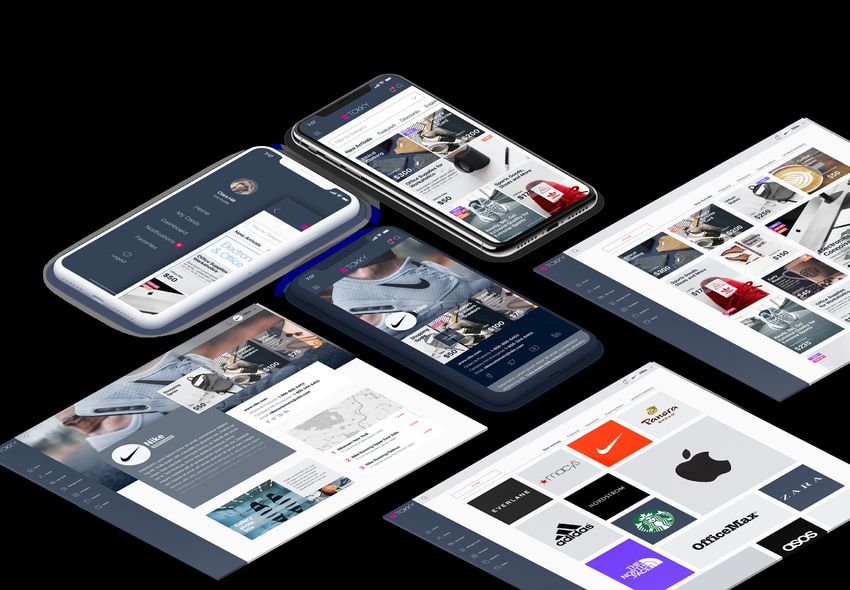
REDEFINING
THE GIFT CARD
INDUSTRY

WHITEPAPER
contact@tokky.io ◇ www.tokky.io

Table of Contents
1. Introduction					3
    What is Tokky						3
2.Team							4
3. Industry Overview					6
   3.1 Industry problems					6
   3.2 Tokky Solutions						7
4. Tokky Platform Participants			 9
   4.1. Businesses						10
   4.2. Independent Promoters				10
   4.3. Customers						11
5. Application Ecosystem				12
   5.1. Tokky app for users					                       12
   5.2. Point-Of-Sale app for businesses			            13
6. Tokky Innovations to the Gift Card Industry      14
   6.1. Independent Promoters mechanism			             14
   6.2. Access to new viral marketing opportunities		  14
   6.3. Flexibility in managing card terms
   and conditions						15
   6.4 Multi-merchant cards					15
   6.5. Shared cards						16
   6.6 Leftover Balance usage					17
7. Essential Processes				19
   7.1 Tokky card value redemption				                 19
   7.2 Funds flow from user to businesses			           20
   7.3 Business verification mechanism			              22
8. Token Utility in the Platform			              24
   8.1. Movement of funds on the Tokky platform		   24
   8.2. Card terms						24
   8.3. Voting mechanism					24
   8.4. Additional services					24
9. Technology Architecture				25
   9.1 Overview							25
   9.2 Blockchain usage					25
   9.3. Protocol layer						26
   9.4. Service layer						26
   9.4. API for 3rd party implementations			 26
10. Token Supply and Allocation			 27
11. Crowdsale Funds Allocation			  28
12. Roadmap						29

2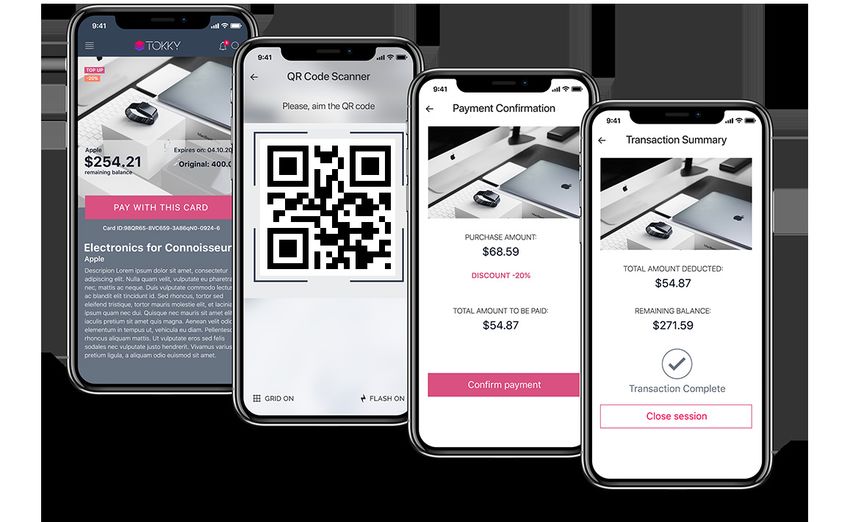
contact@tokky.io ◇ www.tokky.io

1. Introduction

     What is Tokky
     Tokky is a revolutionary Gift Card platform that opens up this lucrative
     method for inspiring customer loyalty to a far wider range of businesses
     across the globe. By utilizing blockchain technology, Tokky solves the
     problems riddling the industry today and introduces innovative concepts
     that will empower businesses and customers like never before.

     Tokky will run off the Ethereum blockchain and will provide certainty
     and security to an industry that is currently beset with a wide range of
     fraudulent activities and cumbersome mechanics. Tokky will become the
     protocol for issuing, managing and reselling digital gift cards. On top of
     the protocol will run an exciting and innovative ecosystem of third party
     applications that will facilitate widespread usage and adoption of the
     technology.

     Tokky will effectively eliminate the barriers to entering the industry
     for smaller businesses and businesses in developing economies, by
     dramatically reducing costs and simplifying the technology required for
     merchants to implement this to just a smartphone.

     By introducing a groundbreaking independent promoters mechanic,
     Tokky will provide businesses with exposure to new audiences and
     eliminate the hassle of managing sale outlets separately, all while allowing
     anyone the opportunity to benefit as a promoter from the Tokky platform.

     Tokky will increase usage, decrease costs and introduce new concepts to
     the industry, both for businesses and customers. Having already gained
     interest from market leading companies like Argos, METRO Cash & Carry
     and Curry’s PC World, Tokky is set to become a highly competitive player
     in the gift and reloadable card industry.

3                                                                    Back to Contents
contact@tokky.io ◇ www.tokky.io

2. Team Members

Veselin Hadjiev                                        Angel Chushev
Co-founder                                             Co-founder

Veselin has over 10 years experience as a software     Angel has 4 years of experience in the discount cards
developer. He is co-founder of 2 startups and senior   and employee engagement industries and over 10
team member at leading companies in e-commerce         years as a software developer. He is well versed in
and card discounts industries.                         leading and growing development teams that built
                                                       products used by companies like Sainsbury’s, Comcast,
                                                       DHL, Vodafone and others.

Vassil Mladjov                                         Sebastian Aspland
Strategy advisor                                       Business development

Former Gartner analyst and digital marketing           Seb is an experienced entrepreneur with a history in
strategist, Vassil has over 30 years of experience     both finance and software development. Products
as a team leader, and startup mentor focusing          he’s launched have generated hundreds of millions in
on growth, VC & corporate VC funding, digital          revenue per year and he is currently working at one of
transformation, Go-To-Market, M&A and innovation       the most exciting fintech startups around.
in the Silicon Valley. Mr. Vassil Mladjov founded
Sharetronix, Blogtronix and StreamingMarketplace.
com. He served as CIO of AlwaysOn Network, a Vice
President and Director of technology of corporate
communications of ABN AMRO Bank.
4
                                                                                                             Back to Contents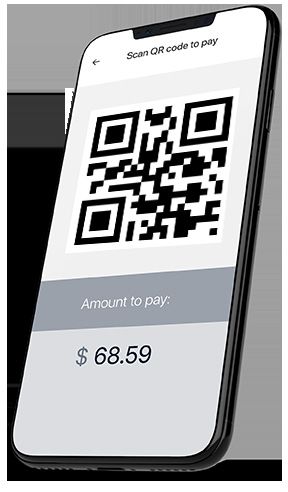
contact@tokky.io ◇ www.tokky.io

Atanas Shtrankov                                              Yanko Kurshumov
Blockchain & Smart Contracts                                  Market expansion

Atanas is a Lead Developer at Accenture, with over 8          Yanko has over 12 years experience in retail and
years of experience in the eCommerce sector, focused          manufacturing as Vice President and co-owner of a
on delivering high performance complex solutions.             leading OEM company in Europe. He works with global
Working with large variety of platforms for clients like      brands like METRO Cash & Carry, Carrefour, Argos. He is
Jumbo.nl, Clarans, ASDA and many more.                        also a co-owner and CEO of an IT company with focus on
                                                              deploying and managing datacenter servers.

Radko Lyutskanov                                              Polya Vassileva
Application architecture                                      UX & Graphics design

Radko is a highly skilled developer working mainly            Polya is a Graphic Designer and brand expert with
on projects in the e-commerce and retail sector. He           10+ years experience in the field of marketing, UX and
is a senior member in teams at Accenture and Reply,           experience design. She has headed branding and
contributing heavily to large projects such as ATG, Costco,   creative teams for companies like Telerik and Progress as
Office, Warehouse, Lakeland. Main lecturer at a software      well as crafted numerous websites and applications in
academy for the past two years.                               the e-commerce, service and software sectors.

5                                                                                                      Back to Contents
contact@tokky.io ◇ www.tokky.io
3. Industry Overview
3.1 Industry Problems
3.1.1. Entry barrier
While offering gift cards can bring considerable financial benefits they are both
extremely expensive and surprisingly complex. Significant investment in retail
infrastructure is required for the initial set up of a traditional gift card programme. The
expenses include, but are not limited to: Point-of-Sale infrastructure, transaction fees,
setup fees and printing fees. A large portion of the retail market consisting of small to
medium businesses, as well as businesses in developing economies, is intimidated by
the process or can’t afford it. This ultimately leads to missed marketing opportunities
and makes it harder to compete for customers’ attention.
Existing digital gift card alternatives alleviate the burden of upfront cost for setting up
the gift cards, but the overall cost of offering them to the customers could even be
higher due to the fact that an additional monthly service cost is introduced to run an
online platform for managing the digital cards. Furthermore, digital gift cards often also
bring a transactional cost of up to 3%.
3.1.2. Fraud vulnerability
Gift card fraud currently costs the industry an exorbitant amount every year and is
surprisingly easy for fraudsters to pull off. Card security is so low that balance theft is
rarely reported or legally pursued due to the lack of personally identifiable attributes
proving ownership of a card. Physical cards are often stolen in the post or providers pay
for insured delivery which is typically very pricey. Other common ways physical cards are
compromised is by simply stealing them from where they are displayed, replacing cards
with blanks in packaging with activation barcodes on the outside and waiting for them
to be activate, etc. These are consequences of the poor design of physical cards.
For digital cards it can be a bit more tricky to steal but when it’s done then a large
number of cards can be compromised quickly. This vulnerability comes because digital
card numbers are typically shared with a vendor before they have money assigned to
them. If the list of available card numbers is compromised then one fraudster can steal
6 Back to Contentscontact@tokky.io ◇ www.tokky.io
millions of dollars from a retailer in a matter of minutes. Additionally, by transitioning to
online services, digital cards have been exposed to the fraud mechanics that all digital
goods are inherently vulnerable to. This has led to them having a higher percentage of
fraud attempts than traditional physical gift cards.
3.1.3. Resale mechanism
The current resale market is rampant with fraud and significant delays. The process
relies on either sending the gift card through the post (the equivalent of sending cash
through the post) or for digital cards relying on a third party vendor to be trustworthy
and reliable when reselling your gift card. Often, parties have no way of verifying the
balances they are buying and vendors have no way to protect themselves from having
the balance of their card stolen
3.2 Tokky Solutions
3.2.1 Entry barrier
Getting a gift card programme up and running only requires registering a retailer
account on the Tokky platform. This grants access to a management interface
where the programme can be customized to suit the business type and marketing
preferences. The cost of setting up a card is only determined by network fees and
issuing cards adds no expense to the merchant. The funds from purchased cards are
available to the retailer immediately if he chooses so, or are batched conveniently to
further avoid banking fees when receiving fiat currencies. To allow for the purchased
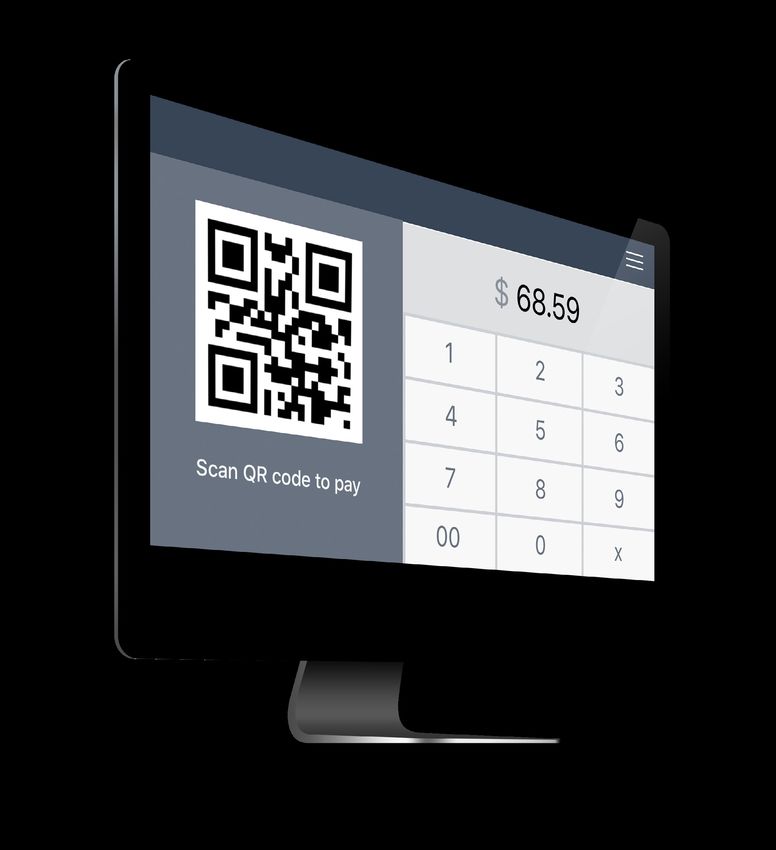
cards to be used at a physical locations, there simply needs to be a Tokky Point-Of-Sale
app available running on any internet connected device. The device is used to generate
a QR code that is scanned by the customer to initiate and confirm the payment.
Payment processing is detailed below in sections 6 and 7.
3.2.2 Fraud vulnerability
By utilising blockchain technology Tokky eradicates all opportunity for fraud. Storing
all critical information on the blockchain means that cards cannot be stolen or gained
access to in any way, and card balances cannot be altered. Furthermore, when a
7 Back to Contentscontact@tokky.io ◇ www.tokky.io
customer makes a purchase using a Tokky card, individual payments are secured with
a transaction approval mechanism that is easy to use and tamperproof. The payment
mechanics and technical details are explained in detail below in sections 6 and 7.
3.2.3 Resale mechanism
Tokky introduces two distinct resale mechanisms which will cater to different user
needs.
3.2.3.1. Leftover Balance reuse
The first option for dealing with unused/unwanted card balance on the Tokky platform
is to simply sell the remaining card balance. Taking advantage of this option means
that the user doesn’t have to be matched up with someone who is willing to buy his
remaining balance. This is especially convenient for reselling cards that have very little
remaining balance, which would not be of interest to another user. Selling leftover
balance has a small fee associated with it which is received by the original business
that issued the card. The fee aims to deter users from carelessly buying cards and
selling balances, and to also benefit the retailer. The leftover balance reuse functions
in a way that doesn’t require the original business who issued the card to approve, pay
for with his own funds, or be technically involved in any way with the transaction. The
mechanism is explained in detail below in section 6.6.
3.2.3.2. Secondary card market
In its essence the secondary card market is similar in function to the existing traditional
solutions where two people exchange the ownership of a card, with the important
difference that the reselling mechanism is an intrinsic part of the Tokky platform. This
means that reselling a card doesn’t require information to be exposed to third parties.
All parts of the reselling process only happen between the buyer and the seller and
the direct peer-to-peer nature of the process also means that it happens immediately.
In comparison to the direct refund mechanism introduced in section 4.3.1, the
secondary market may be preferred in scenarios where the resale price for a card is
not only determined by its balance, but also by its other properties. A good example
of such a scenario would be reselling a card that can be reloaded and has a discount
applied to every purchase made with it - undoubtedly this would make even a zero
balance card valuable.
8 Back to Contentscontact@tokky.io ◇ www.tokky.io
4. Tokky Platform Participants
Three distinct groups of participants are involved in the Tokky ecosystem:
◆◆ Businesses who create Tokky cards
◆◆ Independent Promoters who distribute the Tokky cards
◆◆ Customers who purchase and redeem the cards
9 Back to Contentscontact@tokky.io ◇ www.tokky.io
4.1. Businesses
Businesses are companies or individuals that operate in various spheres of
merchandising and services. They create Tokky cards that fit their needs and
marketing goals. Cards are then sold through own outlets, the official Tokky
outlet and independent promoters.
Brand Set-up Create Gift Cards Receive Payments
Join the Tokky platform to Utilize various card properties Cards are sold through own
set up and personalize the to create Tokky cards that are outlets, the official Tokky outlet
business profile page, including suitable for gifts or personal use and independent promoters.
information like business type, and improve your marketing Businesses only need a
store locations and brand visuals. campaigns. smartphone in-store to let
customers redeem the card.
4.2. Independent Promoters
Independent promoters are companies or individuals who autonomously sell Tokky
cards created by any business and receive a finder’s fee for each sale. Using widgets
provided by Tokky, cards can be promoted on any digital outlet.
Join the Tokky Platform Use Tokky Widgets Profit From Each Card
sold
Set up a promoter account to Sell cards available on the Tokky
independently sell cards created platform on any digital outlet Receive finder’s fee for each card
by any business. by utilizing the various widgets sale that is initiated through your
provided by Tokky. widgets.
10 Back to Contentscontact@tokky.io ◇ www.tokky.io
4.3. Customers
Customers on the Tokky platform purchase cards for personal discount shopping or as
a gift. Card balance can be redeemed in-store or online. Customers can also resell cards
on a convenient secondary market or use a refund balance option.
Browse Tokky cards Purchase Tokky cards Use Tokky cards
Join the Tokky platform as a Pay using a credit card or TOKKY Redeem Tokky cards in store by
Customer and search for cards tokens to purchase cards as scanning a QR code using the
based on brands, category, a gift or for personal discount Tokky app or online by choosing
location and other card shopping. the integrated Tokky payment
properties. method.
11 Back to Contentscontact@tokky.io ◇ www.tokky.io
5. Application Ecosystem
Through powerful development APIs, the Tokky protocol will empower an ecosystem of
applications that make use of all underlying data and services.
The first essential applications that let all platform participants to fulfill their roles (eg.
cards to be created, distributed and redeemed) are developed by Tokky and made
publicly available at launch. Third party developers are able to freely contribute to the
app ecosystem by using the platform resources as they see fit.
5.1. Tokky App for Users
◆◆ Users can access the Tokky platform via an app on their Smartphone or via the
Tokky website
◆◆ Unregistered users can freely browse the available brands and cards
◆◆ Registered users can purchase and manage their cards, pay for goods in-store
and online, manage their personal profile, payment preferences and receive
notifications for promotions and important information
12 Back to Contentscontact@tokky.io ◇ www.tokky.io
5.2. Point-Of-Sale App for Businesses
◆◆ Users can access the Tokky platform via an app on their Smartphone or via the
Tokky website
◆◆ Unregistered users can freely browse the available brands and cards
◆◆ Registered users can purchase and manage their cards, pay for goods in-store
and online, manage their personal profile, payment preferences and receive
notifications for promotions and important information
13 Back to Contentscontact@tokky.io ◇ www.tokky.io
6. Tokky Innovations to
the Gift Card Industry
6.1. Independent Promoters Mechanism
In traditional gift card distribution methods, each seller outlet requires separate and
unique negotiation of terms, money flow, accounting and settlement. Tokky introduces
a mechanism that eliminates all the managing hassle and gives equal opportunity to
anyone interested in becoming a seller outlet. By utilising the Tokky API for promoters,
everyone can utilise the cards inventory of the retailers on the platform. Similar to the
concept of referrals, independent promoters receive a finder’s fee for each card that
is sold through their distribution outlet. When a business makes a change to their
cards properties, everyone in the distribution network automatically begins to serve
the updated inventory. Personalized terms are still possible to negotiate with specific
promoters as well, if the business needs to do so.
6.2. Access to New Viral Marketing
Opportunities
Through the independent promoters mechanic and Tokky API for promoters, all
digital media outlets become a marketing opportunity for the businesses on the
Tokky platform. Implementations of the API for promoters can range widely and
let seller outlets to be creative with its usage. Here are a few examples of possible
implementations:
◆◆ Embedding Tokky widgets that display a specific card on a page that reviews a
product which can be purchased with the featured card at a discount
◆◆ Full-fledged online stores dedicated to selling cards
◆◆ A widget placed in a banner-like area of a website, displaying randomised or user
targeted card offerings
◆◆ A YouTube video product review with a link in the description leading to a specific
discount card by a business selling the product.
14 Back to Contentscontact@tokky.io ◇ www.tokky.io
6.3. Flexibility in Managing Card Terms
and Conditions
All card terms are universally updated when a business edits them and everyone on
the platform automatically start serving the updated information. All new cards are
immediately available to everyone on the platform. This allows for granular and time
sensitive card property controls, opening up new marketing opportunities like limited
time offers and limited card supply offers.
6.4 Multi-Merchant Cards
Multi-merchant cards enable merchants to group up and offer a single card that can be
redeemed at any of the participating businesses.
6.4.1 Benefits
By participating in a multi-merchant card, businesses that are grouped up by location
or other characteristics can create a noticeable entity, which would be seen as an
important shopping destination, similar to traditional gift card offerings from large
shopping malls.
‘High street’ shop owners would have the ability to create a card that serves as a
convenient discounted payment method and desirable gift card option for local
residents.
By owning a multi-merchant card, the user can have a single balance to shop at
multiple brands and locations. This is convenient both as a personal reloadable card
with discounts for frequently visited shopping areas, and as a gift that would give the
recipient freedom to choose the right thing to buy.
6.4.2 Creation
Any business owner can take the initiative for creating a multi-merchant card. The
process is as simple as creating a regular card and enabling the ‘multi-merchant’ option
in the card’s properties. The card would then be listed as such and any business can
request to be added as a participant. Any of the participants that have already joined
can also actively send out invites to other businesses.
15 Back to Contentscontact@tokky.io ◇ www.tokky.io
6.4.3 Management
Each participant will have equal full administrative rights over the card. Each change
in the card’s properties will trigger an approval process that involves all participants.
For the changes to take effect, they would need to be approved by a majority of the
participating businesses. The same approval process takes place when a new business
requests to become a participant, or when one of the participants sends out an invite to
a new member.
6.4.4 Financial settlement
From the businesses’ point of view there is one key difference in receiving funds from
regular single-merchant card and a multi-merchant card. When a user buys a single-
merchant card, the funds spent on purchasing the card are immediately available to
the business. In contrast, when a user buys a multi-merchant card, the funds are not
available to any of the participating businesses until the user redeems the card balance
at one or multiple participants. At the event of a purchase, the funds are made available
to the business which the user has chosen to spend the card balance on.
6.5. Shared Cards
Users will be able to share Tokky cards that they have purchased. In this way a single
card balance can be simultaneously used by multiple users. Here are a few examples of
how this feature would solve problems that people have on a daily basis:
6.5.1. Sharing a groceries store Tokky card with family
members
This will enable families to manage a single balance that everyone can use to buy goods
for the household
6.5.2. Managing expenses for children or other
dependants
A Tokky card can be shared with someone for the purpose of controlling their spending.
The very nature of the card limits the dependant on the goods that can be purchased
with it to the brand/store that has issued the card. Additionally the transactions history
can be easily reviewed in the card’s statistics. A good example would be sharing a
16 Back to Contentscontact@tokky.io ◇ www.tokky.io
card for a clothing store with your children in college - the balance of the card can be
reloaded periodically and the dependant can only spend it on clothes.
6.5.3. Sharing a Tokky card with the intention of a group
gift
A card can be shared with a group of people who can individually contribute to the the
card balance to gather a larger balance that is to be gifted for the celebration of another
person.
6.6 Leftover Balance usage
In the traditional gift card system, when someone has a card that he doesn’t want to
use, his only option is to use the existing secondary market solutions available from
third party companies, whose multiple problems we have described in the previous
sections detailing the issues of the current state of the industry. Even worse, when a non-
reloadable card has been used and has a small amount left in its balance, reselling the
card to another person would be very unlikely. As a result, unwanted cards and cards
with low balance are often left unused and forgotten about, because the secondary
market is hard to use, or because the low remaining balance is not an attractive
purchase for other people on the secondary market.
Tokky solves both scenarios by creating the concept of ‘balance reuse pot’. When a user
has unusable low card balance or wants to sell an unwanted gift card, he would simply
go to his Tokky card details and select the option to sell his card. This would disable his
card and put a status of ‘resale pending’ on it. The card balance will be transferred to
the ‘balance reuse pot’ where it would await another user to purchase a card or balance
reload from this specific business entity. When the awaited transaction is initiated,
the smart contract will first check if there is an outstanding balance in this business’
balance reuse pot. If there is, this pot is used to partially or fully fulfil the transaction,
effectively transferring money from the user that buys/reloads a card to the user that
sold his card. In this way an ‘automatic secondary market’ is created, that doesn’t
require any action from any of the involved participants, completing the transaction
quickly and securely. The end result is that the user who sells his card balance gets the
balance in his account as money usable to buy Tokky cards from any other merchant
and, on the other hand, the business who issued the resold Tokky card receives a fee
for allowing the reuse of funds by another user.
17 Back to Contentscontact@tokky.io ◇ www.tokky.io
Example
1. User 1 buys $100 card and uses 90$ of it
2. User 1 decides he doesn’t want to use the remaining $10
3. User 1 goes to card details screen and clicks ‘sell remaining balance’
4. If the $100 card was purchased with a 10% discount (meaning that the user
actually paid $90 for it), the amount that can be sold is $10 - 10% = $9.
5. 5% resell fee is taken from the $9 amount, which benefits the merchant,
making the final refundable amount $8.55
6. $8.55 balance goes to the business’ ‘balance reuse pot’ without any actual
transfer of tokens or dollars because this amount has already been received by
the business when the initial 100$ card sale took place. At this moment User 1
doesn’t get anything in return for his balance sale.
7. The card User 1 sold is now marked as ‘sell pending’ in his account and is
inactive.
8. User 2 decides to buy a $50 card from the same merchant.
9. User 2 pays the $50 and receives his card, there is nothing different for him, he
doesn’t even know about the existence of the ‘balance reuse pot’
10. At the moment of the $50 card purchase the smart contract checks if the
‘balance reuse pot’ has any value stored. In this case the pot has $8.55 in it.
$41.45 goes to the business’ balance, $8.55 from the ‘balance reuse pot’ goes to
the User 1 balance
11. User 1 now has $8.55 in his balance which he can use towards his next Tokky
card purchase from any retailer. The card that he sold is removed from his
account.
12. The merchant has received $41.55 and issued a $50 card to User 2
18 Back to Contentscontact@tokky.io ◇ www.tokky.io
7. Essential Processes
7.1 Tokky Card Value Redemption
Methods for redeeming the value of a card can be split in two major categories ‒
in-store and online.
7.1.1 In-store
When a user walks into a store to redeem his card he only needs his smartphone with
the Tokky customer app installed. From a merchant point of view, there are two ways to
accept a Tokky payment – using the Tokky Point-of-Sale app on any internet connected
device or integrating the Tokky Point-of-Sale API in an already existing POS merchant
software.
7.1.2 Online
The Tokky Point-of-Sale API can be easily implemented in any website or mobile app.
When the API is implemented and configured with the business’ info, a Tokky payment
method will be available to the users who go through checkout, similar to other
payment methods like PayPal or Credit Card. When the user selects the Tokky payment
method, he will be taken to a Tokky authentication screen, where he can access his
user account and choose the card he wants to pay with. Once he does this, the Tokky
platform processes the payment and the user is returned to the merchant store with a
confirmation message for the payment.
7.1.3 Example in-store payment:
The user goes to the store cash register and opens up the Tokky app on his personal
smartphone. He chooses a card he wants to pay with and clicks the ‘Pay with this
card’ button. A barcode scanner is initiated or a card identifying barcode is generated,
depending on the following two situations:.
7.1.3 a) Retailer uses Tokky Point-of-Sale app
The cashier uses the Tokky POS smartphone app to enter the value of the purchased
goods and a barcode is generated on his screen. The customer scans the barcode
with his smartphone and the Tokky service initiates a transaction between the retailer
and the customer and verifies that the card which the User has chosen has sufficient
19 Back to Contentscontact@tokky.io ◇ www.tokky.io
balance to pay for the transaction. When the balance is verified, the customer receives
a confirmation prompt on his smartphone with all the transaction details. When
he confirms the transaction, he and the retailer receive success notifications for the
transaction. This signifies the end of the transaction and the retailer can register
the payment in his in-store cash register by issuing a receipt, similar to registering a
payment done with traditional paper vouchers.
7.1.3 b) Retailer uses Tokky Point-of-Sale API integration in
existing POS software
If the Merchant already has a computerised POS terminal with barcode scanners in
his in-store locations, the Tokky POS API can be integrated instead of using the Tokky
POS smartphone app. The cashier enters the value of the purchased goods in his POS
terminal and uses the traditional barcode scanner at the cash register to scan the
barcode from the User’s smartphone screen. The confirmation and notification parts
of the process are the same regardless of the transaction initialisation method. In the
end The POS terminal proceeds to issue a receipt and the transaction is complete.
20 Back to Contentscontact@tokky.io ◇ www.tokky.io
7.2 Funds flow from the user purchasing a
card to the business receiving the value
Detailed below are the possible scenarios for the flow of funds from a customer to the
business whose card is being purchased.
7.2.1 User pays with TOKKY
The user has tokens in his account, which he purchased from an exchange or the ICO.
He buys a card with $50 value. An oracle checks the current TOKKY/USD price and
deducts the correct amount of TOKKY from the user’s balance.
7.2.1.1 Business receives TOKKY
7.2.1.1 a) Business is verified
The Business receives the TOKKY in his balance.
7.2.1.1 b) Business is not yet verified
TOKKY is locked in the Smart Contract that processes the purchase. When the
purchased card is successfully used at the business’ Point of Sale the TOKKY is
unlocked and sent to the his balance.
7.2.1.2. Business receives Fiat
7.2.1.2 a) Business is verified
The TOKKY is automatically traded for Fiat on an exchange and held in a Tokky
balance until a cash-out event is triggered according to the business’ account
transaction preferences - immediately, as a repeating event at a specified interval
or when a balance threshold is reached. Price volatility is avoided by the immediate
exchange of TOKKY for Fiat when the card is initially purchased, so any waiting period
until the cash-out event does not affect the Fiat amount that the Business will receive.
21 Back to Contentscontact@tokky.io ◇ www.tokky.io
7.2.1.2 b) Business is not verified
Unverified businesses cannot receive Fiat. Read details on business verification in
section 7.3.
7.2.2 User pays with Fiat
The user buys a card with $50 value by using his credit card. The Fiat from his credit card
is used to purchase TOKKY. The TOKKY is used for the purchase.
7.2.2.1 Business receives TOKKY
Same as 7.2.1.1
7.2.2.2 Business receives Fiat
Same as 7.2.1.2
7.3 Business Verification Mechanism
A business verification mechanism needs to be in place to prevent fraud in the form
of fake business accounts selling cards that end up being unusable. The mechanism
allows users’ funds to be refunded in case of fraudulent activity that prevents them from
redeeming the card value.
7.3.1 Restrictions for unverified businesses and rules for
getting verified
7.3.1.1 For businesses receiving TOKKY
TOKKY for newly purchased Tokky cards is locked in the Smart Contract that processes
the purchase. The TOKKY is released and sent to the business when the owner of the
purchased Tokky card uses it successfully at a point of sale.
22 Back to Contentscontact@tokky.io ◇ www.tokky.io
To verify a business, background examinations are carried out for the first several
purchased Tokky cards. The purpose of the examinations is to assess the authenticity
of the purchase and redeem transactions related to examined cards. If none of the
transactions are flagged as suspicious, the merchant automatically receives a verified
status. However, if suspicious activity is detected, the business needs to provide
documents proving its legitimacy. If proof of legitimacy is not provided, the business will
continue to receive TOKKY for each card sold only when the card has been redeemed
at the business’ point of sale.
7.3.1.2 For businesses receiving Fiat
Unverified businesses will not be eligible for receiving Fiat payments.
To verify a business for receiving Fiat payments, information has to be provided for the
bank account where the business will receive the payments. Proof of legitimacy of the
business and ownership of the bank account must also be provided.
7.3.2 Voting mechanism for raising and settling disputes
In addition to the background checks that the Tokky protocol carries out automatically,
every user on the platform can also manually raise disputes on the legitimacy of
any business. This will be done by staking a predetermined amount of TOKKY. Each
business is ensured to possess the required staking amount, by depositing it in the form
a registration fee when joining the platform.
When a dispute is raised against a business, it automatically stakes the TOKKY amount
and is required to provide proof of legitimacy. Here are the two possible outcomes:
7.3.2.1 The business fails to provide proof of legitimacy
His stake in the dispute is received by the user who raised the dispute and the business’
account is disabled until proof of legitimacy is provided.
7.3.2.2 The business proves its legitimacy
The user who raised the dispute loses his stake and it is received by the business.
23 Back to Contentscontact@tokky.io ◇ www.tokky.io
8. Token Utility in the Platform
8.1. Movement of funds on the Tokky
platform
The Tokky platform only functions by the transfer of TOKKY tokens. Every transaction
that involves Fiat currencies is handled additionally by a separate service layer running
on the platform.
8.2. Setting up new card terms and editing
existing card terms
A TOKKY amount determined by network fees is charged when a merchant creates a
card with new terms or when a merchant edits the terms of an existing card.
8.3. Voting mechanism
The dispute raising and settling mechanism detailed in section 9.2. works by staking
TOKKY tokens.
8.4. Additional services
Service layers will depend on TOKKY to provide additional functionality and means for
monetisation on the Tokky platform
24 Back to Contentscontact@tokky.io ◇ www.tokky.io
9. Technology Architecture
9.1 Overview
Tokky is a protocol built on the Ethereum blockchain and utilises smart contracts for
issuing, managing and reselling digital gift cards. On top of the protocol run service
layers and an ecosystem of third party applications that make use of the protocol
infrastructure and facilitate the usage of its services.
3rd party applications
Applications developed for smartphones, PCs and
other devices, delivering the Tokky platform to end
users
APIs
Providing developers with easy access to
information and utilities on the platform
Service layers
Decentralised applications utilising the core
platform
Protocol
The layer that is responsible for all core functionality
and blockchain interaction
Blockchain
Used for storing and verifying critical data such as
user accounts, balances and card information
9.2 Blockchain Usage
The Ethereum blockchain is used to store critical data such as user and merchant
identification, issued card templates with all terms and conditions and ownership of the
purchased cards. Details for each transaction originated by a payment with Tokky cards
25 Back to Contentscontact@tokky.io ◇ www.tokky.io
will be stored in distributed hyperlog database instances, while proof and essential data
will be stored on the blockchain in hashed format. The hyperlog instances will be read-
only and the data will be accessible only between the user and the merchant.
9.3. Protocol Layer
In its core, Tokky is a protocol that allows the creation of accounts (merchants and users),
setting up card templates, purchasing cards, processing all transactions and managing
the ownership of cards.
The protocol will be the link between the blockchain and decentralized applications
that allow users and merchants to interact with each other. It will provide an API that
will enable third party service layers and software applications to be built on top of the
Tokky network and benefit from it.
9.4. Service Layer
Tokky will create and implement a service layer as a decentralized application, that will
have several modules:
Merchants portal Reseller portal
Allows merchants to register on the network, Allows anyone to register as a card reseller on the
set up their brand, create and manage card network and get their individual referral links. All
templates based on their needs resellers have access to an API for easy managing
of various types of embeddable widgets.
Users portal Advertising module
Allows users to register on the network, create Allows merchants to run marketing campaigns on
their profiles, search for available merchants and the Tokky network. Several options will be available
cards, buy and resell cards, use purchased cards like promoted card listing, targeted call-to-action
to pay in-store or online for goods user messages sent to users on the platform,
targeted airdrops, etc.
9.5. API for 3rd Party Implementations
The Tokky protocol layer will provide an API that can be utilized by any developer to
create their app, website or other software implementation, using the services and data
available on the platform.
26 Back to Contentscontact@tokky.io ◇ www.tokky.io
10. Token Supply and Allocation
Total Supply Hard Cap
100,000,000 TOKKY $20,000,000
Team members and Incentives fund 10%
advisors 10% Tokens used to incentivize
Tokens will be vested for 12 and merchants and customers to
6 months respectively with a 3 join the platform by funding
month cliff their initial adoption efforts.
Crowdsale 65% Company Reserve 15%
Tokens dedicated to contributors Tokens used to ensure smooth operation of the
platform functionality
27 Back to Contentscontact@tokky.io ◇ www.tokky.io
11. Crowdsale Funds Allocation
Marketing - 10% Operations - 5% Development - 60%
Popularizing the Tokky platform Other expenses related to day- Payroll, training and other staff
to-day organisation activities related expenses
Legal - 10% Security - 10% Technology - 5%
Expenses related to Code audits and other Expenses related to hardware,
accommodating laws in various infrastructure precautions authoring tools, project
jurisdictions and licencing fees management tools, servers
infrastructure, etc.
28 Back to Contentscontact@tokky.io ◇ www.tokky.io
12. Roadmap
Q2 2017
Research
Discover how Blockchain
technology can solve the Gift
card industry problems
Q3 2017
Validating interest
Reaching out to contacts in
Q4 2017 leading companies
Begin prototype
development
Proof of concept of the Q2 2018
Tokky protocol
Features & UX
development
Q3 2018 Focus on features for businesses
and user experience
Tokensale
Running a crowd funding
campaign Q4 2018
Public beta version
Release first public version of
Q1 2019 the Tokky protocol
APIs development and
feedback adaptations
Development of APIs, SDKs and Q2 2019
improvements based on feedback Launch
Launch of the Tokky platform
Q3 2019
Expansion
Marketing and expansion
29 Back to ContentsYou can also read


