RENOVATION LCA - Alliance HQE-GBC
←
→
Page content transcription
If your browser does not render page correctly, please read the page content below

RENOVATION LCA
       JUNE 2020*

  Practical            To assess the environmental performance of renovated buildings and
   guide
                                                           compare their levels with E+C-

                                                                                                                          La Salle à Tracer – AIA Life Designers
              Financed by                                                                With support from
                                                                                                                      1
* THIS DOCUMENT HAS BEEN ADAPTED AND TRANSLATED IN ENGLISH SINCE ITS FIRST RELEASE IN JANUARY 2019 (FRENCH VERSION)
2
INTRODUCTION                                                                                                                                                JUINE 2020

 USER GUIDE …
  The renovation LCA guide is an educational document aiming to understand the subtleties of Life Cycle Assessment (LCA) for                        Click on the logo

  renovated buildings. It illustrates and gives advice to implement the application rules for environmental assessment of existing buildings
  of Alliance HQE-GBC. This document mostly relates to the French LCA tools and French methodological background.
  For the international reader, the glossary (page 40) will explain the most specific and technical terms.

  This document is divided into 3 parts:                                                                                                               to access the
                                                                                                                                                    Application rules
  1. The first part covers the methodology of the renovation LCA,                                                                                   French version only
  2. The second part is an inventory of main frequently asked questions about the methodology asked by the modellers,
  3. The last part is a glossary regrouping all vocabulary linked to the renovation LCA.

 … TO IMPLEMENT LCA OF BUILDING RENOVATION                                                                                                          Click on the logo

  The application rules for the environmental assessment of existing buildings are an addendum to the assessment method of the
  ”CARBON ENERGY” environmental performance for new buildings.

  Thus, the topics covered in the framework of the renovation LCA methodology regularly refer to the ”CARBON ENERGY” standard.                      to access the site
  It is therefore highly recommended to familiarize beforehand with the ”CARBON ENERGY” standard.                                                  CARBON ENERGY
                                                                                                                                               www.batiment-energiecarbone .fr
                                                                                                                                                    French version only

                                                                                                                                                                          3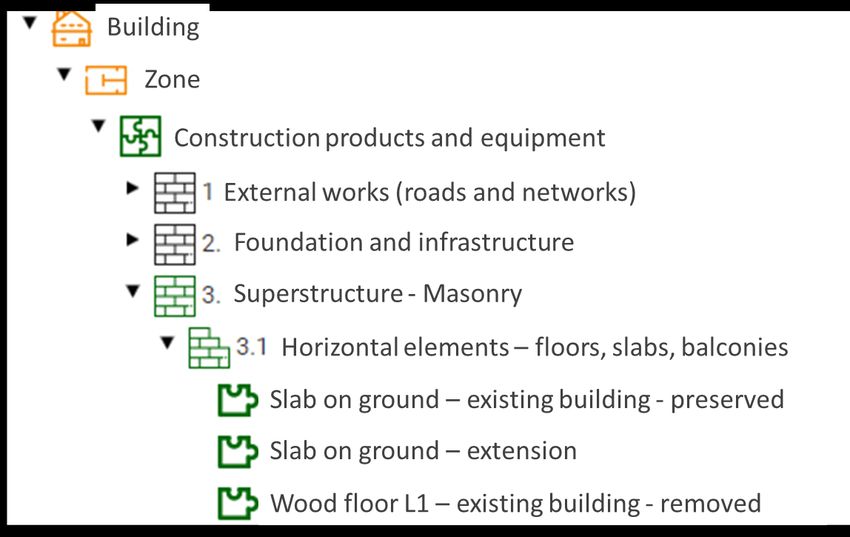
SUMMARY                                    JUNE 2020

              01   MÉTHODOLOGIE
                   METHODOLOGY

          ?   02   FAQ
                   QUESTIONS RÉCURRENTES

              03   GLOSSAIRE
                   GLOSSARY

                                                       4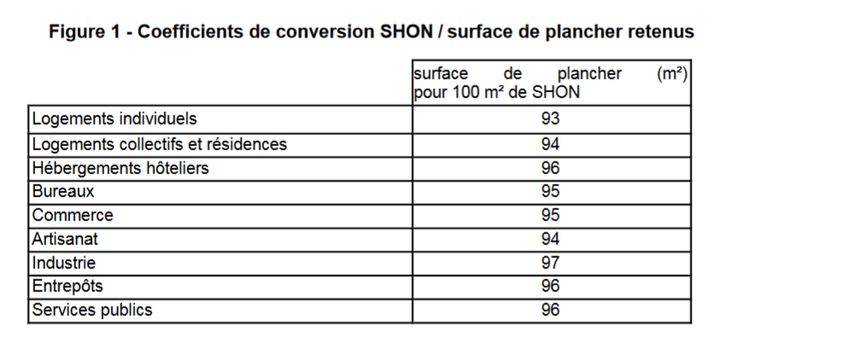
METHODOLOGY

              5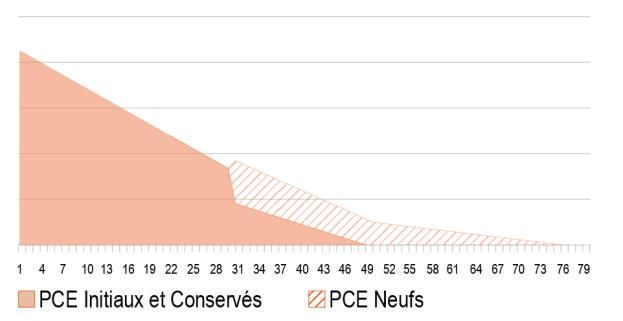
DETAILED SUMMARY OF THE METHODOLOGY                                                                                JUNE 2020

01 METHODOLOGY
 ISSUES OF THE RENOVATION LCA                       7    PRODUCTS & EQUIPEMENT                                   13
                                                                - Methodology                                    13
                                                                - Methodology for new elements                   14
 PERIMETER OF THE STUDY                             8           - Methodology for retained or removed elements   15
        - Spatial perimeter                         8                 - CASE 1                                   16
        - Assessment perimeter                      8                 - CASE 2                                   17
        - Temporal perimeter                        8           - Input procedure                                18

 INPUT DATA                                         9    ENERGY CONSUMPTION                                      19
        - Data collection                           9           - Calculation method                             19
        - Choice of the data                        9
                                                         WATER CONSUMPTION AND REJECTION                         20
 RENOVATION LCA                                     10          - Calculation method                             20
        - Methodology                               10
                                                         BUILDING SITE                                           21
 CALCULATION METHOD                                 11
                                                                - Calculation method                             21
        - Calculation of environmental impacts      11
        - Depreciation method for contributor CPE   12
                                                         RESULTS                                                 22
                                                                - Environmental indicators                       22
                                                                - Interpretation of results                      23

                                                                                                                                  6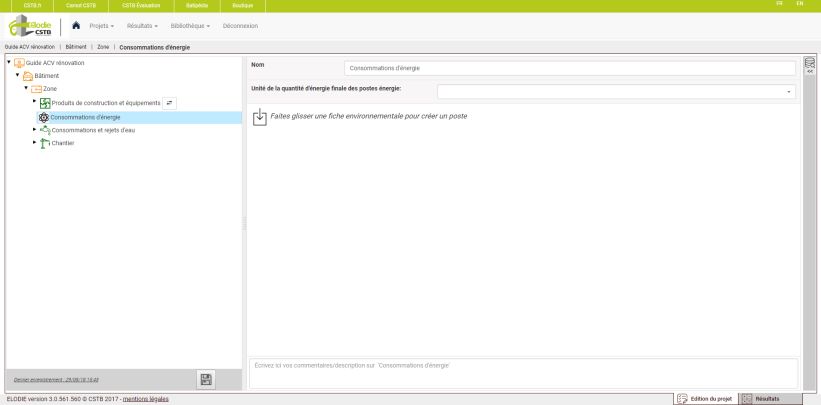
ISSUES OF THE RENOVATION LCA                                                                                                                JUNE 2020

The renovation LCA goals are multiple:

                       - Guidance for a choice between deconstruction / reconstruction vs renovation in terms of environmental performance,

                       - Knowledge of environmental impacts of the construction and/or a building stock at a specific time,

                       - Optimisation of the environmental performance of the renovation project.

                                                                                                                                                          7
PERIMETER OF THE STUDY JUNE 2020
SPATIAL PERIMETER
The building or part of the building
The plot of land & matching a programmatic entity
The outdoor landscaping
Network under the plot of land
ASSESSMENT PERIMETER (4 contributors)
+ + +
Construction Products and Building Equipment Energy consumption Water consumption Building site
(CPE)
TEMPORAL PERIMETER
PER: Reference Study Period (50 years)
Example
Implementation of Assumed end of life
the building Renovation of the building
BEFORE Year 0 Year 50
8INPUT DATA JUNE 2020
DATA COLLECTION
PRODUCE AN
RETRACE EVALUATE ENERGY EVALUATE WATER EVALUATE THE
INVENTORY OF THE
THE HISTORY CONSUMPTION CONSUMPTION IMPACTS OF THE
PRODUCTS AND
OF THE BUILDING SITE
EQUIPMENT
CONSTRUCTION
▪ Date of implementation ▪ Quantitative evaluation of ▪ Evaluate the consumption by ▪ Evaluate water consumption of ▪ Provide the duration of the
▪ Date(s) of renovation existing and new means of regulatory calculation the renovated building building site
▪ Separate new / retained / or Dynamic Thermal ▪ Provide, for information, the ▪ Time of crane usage
removed elements Simulation (DTS) consumption before renovation ▪ Volume of soil excavated and
▪ Retrace the history of retained ▪ Provide, for information, the discharged
/ removed elements consumption before renovation ▪ Distance from the building site
to the location of discharged
soil
CHOICE OF THE DATA
REGULATORY ENERGY
CONSTRUCTION PRODUCTS AND EQUIPMENT
CALCULATION METHOD
1 - Environmental and Health Product Declarations (EHPD) and individual Profile Environmental Product (PEP) - Calculation method TH-C-E-ex for renovated buildings
TH-C-E is the French methodology used in the regulation to assess
Order 2 - Environmental and Health Product Declarations (EHPD) and collective Profile Environmental Product (PEP) the building thermal energy balance
of
priority 3 - Modules of Generic Default Environmental Data (MDGED) Click on the logo to access the
INIES database
4 - Standard values of simplified lots French version only
9RENOVATION LCA JUNE 2020
METHODOLOGY
+
New Retained
elements elements
BUILDING BUILDING
ENERGY BEFORE AFTER ENERGY
RENOVATION RENOVATION
WATER PRODUCTS AND EQUIPEMENTS WATER
BUILDING BUILDNG
SITE SITE
Removed
elements Source : Alliance HQE-GBC
10CALCULATION METHOD JUNE 2020
CALCULATION OF ENVIRONMENTAL IMPACTS
New elements Qt x IDE= Impacts
CPE Retained elements
+
Qt x A x IDE = Impacts = CPE Impacts
Removed Elements Qt x A x IDE
+
= Impacts
+
ENERGY
=
Consumption x IDE = ENERGY Impacts
+
BUILDING
WATER Consumption x IDE = WATER Impacts IMPACTS
+
BUILDING Qt x IDE = BUILDING SITE Impacts
SITE
Numerical values of the factors are varying depending on products, equipment and services.
IDE : Indicators from Environmental Data Qt : Quantities A : Depreciation factor
(EHPD/MDGED/PEP) 11CALCULATION METHOD JUNE 2020
DEPRECIATION METHOD FOR CPE CONTRIBUTOR
The environmental impacts of construction products and equipment are mitigated all along their whole service life, generating a depreciation effect.
For example, if a product has a service life of X years, we will depreciate its environmental impact by 1/X each year.
EXAMPLE
Implementation Renovation Assumed
of the building of the building - Adding new elements end of life
- The initial elements will become retained or
removed elements
- Reduction of consumption (energy and water)
- Renovation work
YEAR 0 YEAR 30 YEAR 80
PRESENTATION OF RESULTS AS GRAPHICAL FIGURES
Graphical figure representing the annual repartition of the Graphical figure representing the linear depreciation of the
impacts for the 4 contributors, impacts related to the products and equipment,
depending on the history of the construction depending on the history of the construction
Impacts The removed elements are not Impacts
depreciated, they are taken into account
by the owner of the building at the time of
the renovation work. The impacts of
removed elements are therefore taken
into account for the year of the
renovation.
Time From the 51rd year on, all products and Time
Operation Initial and retained CPE
initial equipment are depreciated. Initial and retained CPE New CPE
Removed CPE New CPE
12PRODUCTS & EQUIPMENT JUNE 2020
METHODOLOGY
The PCE contributor covers all components of the building and its plot of land.
The description of the elements is carried out according to splitting into lots and sub-lots presented in annex of the “CARBON ENERGY” standard.
In the framework of a rehabilitated or renovated building, the perimeter covers the following products and equipment, and distinguishes:
- New elements, i.e. those newly added to the construction in the renovation operation,
- Retained elements during the operation,
- Removed elements during the work.
13PRODUCTS & EQUIPMENT JUNE 2020
METHODOLOGY FOR NEW ELEMENTS
Impact calculation for a new element remains unchanged with regard to the “CARBON ENERGY” standard.
The following diagram represents a gauge of environmental impacts to be considered.
+
Impacts to be taken
into account [%] For new elements, the environmental impacts must be considered at 100%.
-
14PRODUCTS & EQUIPMENT JUNE 2020
METHODOLOGY FOR RETAINED AND REMOVED ELEMENTS
Impacts related to retained or removed elements are taken into account as following:
- Case 1 : The element did not live its entire RSL* at the time of renovation, it has therefore a remaining service life. The CPE is not depreciated, its remaining impacts shall be taken into account.
- Case 2 : The element lived its entire RSL* at the time of renovation. The CPE is depreciated, no impact is to be considered.
Pro-rata calculation of the
EXAMPLE : Assuming an element with a RSL of 30 years depreciation of a CPE [in %] :
Implementation CASE 1 End of RSL* of CASE 2 Remaining Service Life
of the element RENOVATION the element RENOVATION A=
Reference Service Life (RSL)
Example for case 1 :
YEAR 0 BEFORE 30 YEARS YEAR 30 AFTER 30 YEARS
Assuming an element with a RSL* of 30 years.
The renovation being carried out after 20 years,
CASE 1 CASE 2 the product has not totally paid its
environmental debts. Its remaining service life is
Renovation before the end of the RSL* of the element. Renovation after the end of the RSL* of the element. therefore 10 years. It will have to depreciate 1/3
The impacts to be considered for the element are: The impacts to be considered for the element are: of the CPE impacts (10/30) in its next life cycle.
The ELEMENT is REMOVED or RETAINED Not depreciated The ELEMENT is REMOVED or RETAINED Depreciated
+ +
* RSL: Reference Service Life stated in the EHPD
Impacts to be taken Impacts to be taken and PEP
into account [%] A x impacts into account [%] 0 x impacts
- - 15
Source : Alliance HQE-GBCPRODUCTS & EQUIPMENT JUNE 2020
CASE 1 EXAMPLE: Assuming a product with a RSL of 30 years
Implementation CASE 1 End of RSL* of
of the product RENOVATION the product
GENERAL
CONTEXTE
CONTEXT
GÉNÉRAL
YEAR 0 20 YEARS YEAR 30
RSL > achieved service life. The product is not totally depreciated. IMPACTS TO CONSIDER
20 years Impacts still to be depreciated: A = 10/30 for the retained CPE
RETAINED
ELEMENT
10 years
+
Impacts of one or several replacing elements
RSL > achieved service life. The product is not totally depreciated. IMPACTS TO CONSIDER
Impacts still to be depreciated: A = 10/30 for the REMOVED CPE
20 years
REMOVED
The product is removed and finished its end of life → Impact to be taken into account
ELEMENT
The product is removed and reused in another building → Impact transferred to the new owner (CF
question about reuse)
16PRODUCTS & EQUIPMENT JUNE 2020
CASE 2 EXAMPLE : Assuming a product with a RSL of 30 years
Implementation End of RSL* of CASE 2
of the product the product RENOVATION
GENERAL
CONTEXT
YEAR 0 YEAR 30 YEAR 40
Achieved lifetime > RSL. The product is totally depreciated.
IMPACTS TO CONSIDER
RETAINED
ELEMENT 40 years Only impacts of NEW replacing CPE if necessary.
Achieved lifetime > RSL. The product is totally depreciated. NO IMPACT TO CONSIDER
REMOVED
ELEMENT 40 years
End of life → no impact
Reuse → no impact
NOTE
If the renovation occurs 50 years after the implementation of the building, then all retained and removed elements are depreciated (even if their RSL is higher then 50 years). 17PRODUCTS & EQUIPMENT JUNE 2020
INPUT PROCEDURE
The impact calculation and the input of new elements remain unchanged with regard to the “CARBON ENERGY” standard of new buildings.
For the removed and retained elements, Alliance HQE-GBC offers an EXCEL tool allowing to simplify the input of these elements.
This spreadsheet allows you to rapidly get the quantity of elements (retained or removed) still to be depreciated.
With this tool, you can do your LCA with any software compliant with the “CARBON ENERGY” standard experimentation.
CLICK ON THE LOGO GET DIRECT ACCESS THE TOOL.
French version only
Screenshot of ELODIE, a LCA
software compliant with the PROGRAMMATIC ENTITIES
E+C-standard In some cases, the perimeter
To dissociate the construction of the LCA study may be
products and the building restricted to the programmatic
equipment, for the input, it will be entity. In this case the
necessary to specify if the element is allocation rules by
new, retained or removed. programmatic entities of the
“CARBON ENERGY” standard
shall be applied.
18ENERGY CONSUMPTION JUNE 2020
CALCULATION METHOD
The contributor “energy consumption” covers usage of energy in the building:
- The 5 usages of the French Thermal Regulation RT2012 (heating, hot water, cooling, lighting, ventilation)
- Specific building usages (lifts, outdoor lighting, ventilation and parking lighting)
- Specific furnishing usages (computers, equipment …)
The calculation formula and ratios of specific usages to be taken considered to calculate the associated consumptions are described in the “CARBON ENERGY” standard.
For usages not taken into account (currently outside the scope of the RT2012 French regulation), a Dynamic Thermal Simulation (DTS) or an analysis of consumptions of the old
building should be carried out.
Renovated building
Regulatory calculation method: TH-C-E-ex
In case of an existing calculation by elements, it is necessary to carry out a full calculation of the whole building.
If the building is not covered by the Thermal Regulation, it is necessary to carry out a Dynamic Thermal Simulation (DTS)
The modeller will be asked to fill in, if possible, the energy consumption of the old building, for information, either through the interface of the software, or in a supplemental document.
19WATER CONSUMPTION AND REJECTION JUNE 2020
D’EAU
CALCULATION METHOD
The contributor “water consumption” covers all usages of water in the building, it allows to take following into account:
- Impacts of the treatment for used drinking water in the building;
- Impacts of wastewater treatment and of storm-water management for the plot of land.
The calculation method of impacts linked to the contributor is described in the “CARBON ENERGY” standard .
The modeller will be asked to fill in, if possible, the water consumption and rejection of the old building, for
information, either through the interface of the software, or in a supplemental document.
Screenshot of ELODIE, a French software compliant with
the E+C- standard
The interface of ELODIE software, allows to write comments about each contributor.
20BUILDING SITE JUNE 2020
CALCULATION METHOD
The contributor “building site” covers the various impacts of the renovation work site of the building:
- Energy consumption of the building site (life basis, cranes and construction machinery),
- Water consumption and rejection of the building site,
- Disposal and treatment of excavated soil waste,
- The restoration process and transportation of retained elements. Indeed, some retained elements need a maintenance treatment before being reused in the project.
The calculation method of these impacts is detailed in the FAQ section (click here).
The calculation method of the impacts linked to the contributor is described in the “CARBON ENERGY” standard .
21RESULTS JUNE 2020
Environmental indicators
The Life Cycle Assessment allows to quantify the environmental impacts of a building through various indicators.
The list of indicators of environmental impacts that can be calculated is as follows:
Indicator Simplified name Unit Total use of nonrenewable primary energy
(primary energy and primary energy resources
Non-renewable MJ, inferior Click on the logo
Indicators for environmental impacts primary energy calorific value
used as raw material)
Global warming potential (GWP) GHG emissions kg CO2eq
Ozone depletion potential (ODP) kg CFC11 eq Total use of primary energy (primary energy and MJ, inferior
primary energy resources used as raw material) calorific value
Acidification potential (AP) kg SO2 eq
Use of secondary material kg
Eutrophication potential (EP) kg PO4 eq
Use of renewable secondary fuels MJ
Photochemical oxidant creation potential (POCP) kg C2H2 eq Use of nonrenewable secondary fuels MJ
Use of net fresh water Use of fresh water m3
Abiotic Resource Depletion Potential for elements;
kg Sb eq
ADP_elements Indicators for waste categories to access the CARBON
Abiotic Resource Depletion Potential of fossil fuels MJ, net
Hazardous waste disposed kg
ENERGY website
non-hazardous
ADP_fossil fuels calorific value Non-hazardous waste disposed kg www.batiment-energiecarbone.fr
waste
Air pollution m3
Indicators for output flows French version only
Components for reuse kg
Water pollution m3
Materials for recycling kg
Indicators for resource use Materials for energy recovery (not waste
incineration)
kg Click on the logo
Use of renewable primary energy excluding energy MJ, inferior
resources used as raw material calorific value MJ for each
Exported energy
energy vector
Use of renewable primary energy resources used MJ, inferior : Indicators calculable by the simplified method
as raw material calorific value
Total use of renewable primary energy (primary The list of environmental impacts complies with the
MJ, inferior
energy and primary energy resources used as raw
calorific value “CARBON ENERGY” standard.
material)
to access the NF EN
These indicators are those of the NF EN 15978 standard
Use of non-renewable primary energy excluding MJ, inferior 15978 standard
primary energy resources used as raw material calorific value which has an additional indicator for radioactive waste.
French version only
Use of non-renewable primary energy resources MJ, inferior
used as raw material calorific value
22RESULTS JUNE 2020
Interpretation of results
When interpreting the results, you should pay attention to following:
- For the calculation of energy performance according to E+C- standard, the BEPOS (E) indicator is different from LCA indicators – Total use of resources from primary renewable and
nonrenewable energy. Indeed, the BEPOS indicator does only include all energy consumption in the operational phase, while the environmental indicators take into account the whole
life cycle of the building, which includes construction products and equipment, energy and water consumption as well as the construction work.
- To get an order of magnitude of regular environmental indicators for renovated buildings, it is possible to rely on the thresholds of the E+C- experimentation for the Climatic Change
indicator. And for the other indicators, on the results from the new and renovated HQE performance tests carried out by HQE-GBC Alliance (all indicators).
- LCA of renovated buildings applies to all environmental indicators, each one being as important as the others. Before any study, it will be necessary to target the LCA issues, and identify
the indicators to review in order to offer relevant conceptual choices to reduce their impacts. Indeed, the weight of each contributors can vary significantly depending on the indicator
under consideration.
- Considering the possible variations in terms of completeness of LCA and the reliability of used data, the interpretation of results shall consider a margin of uncertainty.
WARNING
A modification of the usage of the renovated building and/or an implementation of an extension modifies significanty the functional unit of the construction. Therefore, a before/after
comparison will not always be possible and relevant.
23?
FA Q
24? FAQ SUMMARY JUNE 2020
02 FAQ
SOFTWARE 26 ENERGY CALCULATION 33
- What software can I use to make my renovation LCA? 26 - How do we calculate the BEPOS balance indicator (E) of the E+C- experimentation in
case of renovation? 33
PERIMETER 27 DATA 34
- Are there gateway ratios that allow getting from the old Net Floor Area (SHON) to - How do I retrace the history of my building? 34
the new Floor Area (SDP) ? 27 - If I do not have the history of the building, what value of remaining service life should I
- For a ‘core and shell’ building (base build), without completions or partition walls, take into account for the depreciation of the products & equipment? 35
shall i include them in the lca calculation? 28 - If I do not have the measurements of the current building, are there ratios in order to
- My project has a new extension, shall I include it in the renovation LCA calculation? easily quantify the products & equipment? 36
29 - How do I input later-replaced elements? 37
- Should specific environmental data be used to input the products & equipment? - How do I take reused elements into account? 38
30 - How to take into account, for a retained element, a maintenance treatment or a
- Is it possible to use EHPD configurators for my renovation LCA? 31 restoration process (sandblasting, sanding, painting…)? 39
- Is it possible to overlook environmental impacts of an element if its service life is
rather low? 32
25? SOFTWARE JUNE 2020
WHICH SOFTWARE CAN I USE TO MAKE MY RENOVATION LCA?
Any software compatible in the “CARBON ENERGY” standard and connected to the INIES database (French reference Database for environmental and health product and equipment
data) can be used in the French context of the renovation LCA.
At the same time, there are 2 specific cases:
− 1- The software allows LCA calculation without integrating a RSET file. The energy consumption linked to the contributor ENERGY will be input by hand.
− 2 – Use of a LCA gateway software – energy calculation. The energy consumption will be linked and automatically fed into the LCA software.
For any additional information about software’s compatibility with the “CARBON ENERGY” standard and the support charter for the environmental calculation compatibility of the
software, click on the logo below.
www.batiment-energiecarbone.fr/evaluation/logiciels/
French version only
26? PERIMETER JUNE 2020
ARE THERE GATEWAY RATIOS THAT ALLOW GETTING FROM THE OLD NET FLOOR AREA (SHON) TO THE NEW FLOOR AREA (SDP) ?
*These values refer to French construction areas calculation methods which changed in 2012.
Yes, for that purpose, you must refer to the proposal issued by SOeS (Service de l'observation et des statistiques = Statistical and observation Department of the Ministry of
Environment, Energy and Sea):
“The complex calculation modalities of the Net Floor Area (SHON) and the Flor Area (SDP) do not allow any simple relationship between these two types of measurement and need to
refer to the plans of the construction project themselves to finally carry out two parallel assessments. The SOeS estimated a global transformation coefficient for each major building
family in order to calculate the extrapolation of series of construction areas into floor areas. This coefficient was obtained by comparing distributions of construction areas before and
after the reform for individual housing and collective housing. It was established by experts for office buildings and then extrapolated for the other nonresidential types of buildings,
according to their mean area (figure 1). »
Used conversion coefficients SHON (Net Floor Area) / SDP (Floor Area)
Floor Area (m²) for 100 m² of
SHONFloor Area (m²) for 100 m² of SHON
Individual housing 93
Collective housing and residences 94
Hotel accommodation 96
Office 95
Shops 95
Craft 94
Industry 97
Warehouse 96
Public services 96
Proposal of SOeS for the global conversion coefficient for each major building family from SHON to SdP
Source:
http://www.statistiques.developpement-durable.gouv.fr/fileadmin/documents/Themes/Logement-Construction/Construction/en-savoirplus.pdf
27? PERIMETER JUNE 2020
FOR A ‘CORE AND SHELL’ BUILDING (BASE BUILD), WITHOUT COMPLETIONS OR PARTITION WALLS, SHALL I INCLUDE THEM IN THE LCA
CALCULATION?
It is important to consider the same assessment perimeter for all renovation LCA.
In case of a core and shell building where a range of other construction and fit out works are left to be completed before the building is occupied, it is important to include in the
calculation all products and equipment (partition walls, technical equipment and completions…) allowing usage of the building by its occupants.
In order to include these elements in the renovation LCA assessment perimeter, there are two possibilities:
1 – As a first step, it is possible to make assumptions. These assumptions shall be described and justified in comments either in the interface of the software, or in a supplementary
document. Using this method, it will be necessary to determine a plausible scenario for the arrangement of the areas with the future owner(s) of the construction.
2 – If no data is available, you will be asked to use global lots from the simplified method to take into account the impacts of the “forthcoming” elements of these lots.
Please note that this method also applies to any LCA conducted for in-use buildings and fitting-out works.
CLICK ON THE LOGO TO ACCESS THE METHODOLOGICAL NOTICE
French version only
28? PERIMETER JUNE 2020
MY PROJECT HAS A NEW EXTENSION, SHALL I INCLUDE IT IN THE RENOVATION LCA CALCULATION?
The implementation of an extension for the renovated building shall be taken into account in the perimeter of the LCA, thus, it will be necessary to remain vigilant about the various
calculation methods.
RENOVATION EXTENSION
Click on the logo
+
to access the
implementing rules
French version only
LIFE CYCLE ASSESSMENT
Renovation LCA method New building LCA
CALCULATION METHOD
E+C- standard method
Click on the logo
REGULATORY ENERGY
CALCULATION METHOD TH-C-E-ex calculation method TH-B-C-E calculation method
to access the
CARBON ENERGY site
www.batiment-energiecarbone .fr
French version only
29? PERIMETER JUNE 2020
SHOULD SPECIFIC ENVIRONMENTAL DATA BE USED TO INPUT THE PRODUCTS & EQUIPMENT?
You can use all relevant environmental data…
But it is important to use the environmental data that is the closest to the modelled CPE (Construction Products and Equipment)…
And the choice of the environmental data shall comply with the following order of priority:
PRIORITY WHEN SELECTING DATA
CONSTRUCTION PRODUCTS AND EQUIPMENT
1 - Environmental (and health) product declaration (FDES / EPD) and individual Profile Environmental Product (PEP)
2 - Environmental and health product declaration (FDES / EPD) and collective Profile Environmental Product (PEP)
3 - Default Generic Environmental Data Modules (MDEGD) CLICK ON THE LOGO TO
ACCESS THE INIES
4 - Global values for the simplified lots DATABASE
French version only
Priority order of environmental data: 1 2 3 4
30? PERIMETER JUNE 2020
IS IT POSSIBLE TO USE EHPD CONFIGURATORS FOR MY RENOVATION LCA?
The EHPD configurators generate environmental data that are compliant with NF EN 15804+A1 European standard and its national complement. They are therefore compatible with the
“CARBON ENERGY” standard and recognized by the INIES Database.
They are thus usable in the renovation LCA framework.
CLICK ON THE LOGOS TO ACCESS THE CONFIGURATORS
French version only
31? PERIMETER JUNE 2020
IS IT POSSIBLE TO NEGLECT ENVIRONMENTAL IMPACTS OF AN ELEMENT IF ITS SERVICE LIFE IS RATHER LOW?
If the service life of an element is rather low, it is possible to overlook its environmental impacts.
There are two cases:
1 – For all retained or removed elements having a Reference Service Life lower or equal 50 years, if their remaining service life is equal or less than 10 % of the RSL of the element, it
is possible to overlook the impacts.
Example: Assuming an element with a Reference Service Life of 30 years, if its remaining service life is ≤ 3 years, the environmental impacts of the element can be overlooked.
Implementing End of RSL* of
the CPE RENOVATION the CPE
YEAR 0 27 YEARS YEAR 30
Remaining service life = 3 years
2 – For all retained or removed elements having a Reference Service Life over 50 years, there is no possible simplification.
32? ENERGY CALCULATION JUNE 2020
HOW DO WE CALCULATE THE BEPOS BALANCE INDICATOR (E) OF THE E+C- STANDARD IN CASE OF RENOVATION?
The same method than for new buildings available in the “Carbon Energy” standard must be used for new buildings – Assessment method for energy and environmental performance
of new buildings
The BEPOS balance indicator is defined by the difference, expressed as primary energy, between:
- the amount of neither renewable nor recovered energy used by the building,
- and the amount of renewable or recovered energy produced and injected in the network by the building and its immediate area.
The renewable or recovered energy is that defined in article R.712-1 or the French energy code.
Click on the logo
to access the
CARBON ENERGY site
www.batiment-energiecarbone .fr
French version only
33? FAQ JUNE 2020
HOW DO I RETRACE THE HISTORY OF MY BUIDING?
Retracing the history of a specific building is often complex, thus some leads may provide indications about the past of the construction products and equipment
- An owner change,
- A tenant change,
- A change of usage of the construction,
- Renovation work…
Some documents or administrative documents may also provide data about the history of the construction:
- The final implementation file (DOE = Dossiers des Ouvrages Exécutés),
- The waste diagnostic, mandatory in case of renovated projects,
- Diagnostic of resources, optional document allowing the identification of potential recoverable/reusable construction products and equipment for the project…
Finally, exchanges with the actors of the construction may help retracing the history of the construction:
- Project owner,
- Operator of the building,
- Architects,
- Engineers of design offices structure, technique and finishing…
34? DATA JUNE 2020
IF I DO NOT HAVE THE HISTORY OF THE BUILDING, WHAT VALUE OF REMAINING SERVICE LIFE SHOULD I TAKE INTO ACCOUNT FOR THE
DEPRECIATION OF THE PRODUCTS & EQUIPMENT?
The calculation of the remaining service life requires the knowledge of the history of the construction, maintenance and replacements done to estimate the implementation date of the
element in the construction.
If no data is available, it is possible to consider that the remaining service life is equal to half of the Reference Service Life of an equivalent product available on INIES database.
The assumptions for choosing the values shall be described and justified as comments in the interface of the software, or in a supplementary document.
EXAMPLE : Assuming an element with a Reference Service Life of 30 years
If I do not have any information about the origin of the element, I consider its remaining lifetime as 15 years (Reference Lifetime/2).
The impacts to take into account for the element are :
Implementation
of the element RENOVATION THE ELEMENT is RETAINED or REMOVED Not
depreciated
+
?
Impacts to take into
account [%]
50% x impacts
RENOVATION -
35? DATA JUNE 2020
IF I DO NOT HAVE THE MEASUREMENTS OF THE CURRENT BUILDING, ARE THERE RATIOS IN ORDER TO EASILY QUANTIFY THE PRODUCTS &
EQUIPMENT?
In case of lacking detailed data, a simplified method is possible.
This method provides global impact values per typology of building and per lot.
LOTS 1 TO 7
CLICK ON THE LOGO TO ACCESS THE METHODOLOGICAL NOTICE
LOTS 8 TO 12
CLICK ON THE LOGO TO ACCESS THE CARBON ENERGYSITE
www.batiment-energiecarbone.fr
/evaluation/documentation
36? DATA JUNE 2020
HOW DO I INPUT LATER REPLACED ELEMENTS?
“Later replaced elements” are components that are preserved during the renovation and replaced when they reach the end of their service life (RSL) during the reference study period (PER)*
CURRENTLY, the input of later replaced elements as new elements in the current software leads to counting twice the environmental impacts.
SHORTLY, the LCA software will integrate the LCA renovation module. Therefore, this double counting of environmental impacts, presently identified, will be corrected.
Assumed end of life
Implementation End of the
of the CPE RENOVATION RSL* of the
CPE
GENERAL
CONTEXT
YEAR 0 20 YEARS YEAR 30 YEAR 50
PER: Reference Study Period (50 years)
End of life of retained product, the software will not take its
20 years replacement into account
10 years
LATER The replacement of the element
REPLACED must be input as a new element 30 years 20 years
ELEMENT
CURRENTLY Double counting of environmental impacts
Considered as automatic replacement by the software
30 years 10 years
SHORTLY No double counting
37? DATA JUNE 2020
HOW DO I TAKE REUSED ELEMENTS INTO ACCOUNT?
In general, the buyer of the reused element(s) also inherits the environmental impacts.
Therefore, it is important to distinguish two cases:
CASE 1 – Transmission of the reused element
EXAMPLE
At renovation of the building, the slate roof is removed and reused in another ongoing construction project. Therefore, the removed element is not anymore property of the renovated
building, and the buyer of the reused element inherits its environmental impacts.
OPTION 1 – THE ELEMENT IS NOT DEPRECIATED OPTION 2 – THE ELEMENT IS DEPRECIATED
Transmission of the Transmission of the
RENOVATION removed element Slate roof RENOVATION removed element Slate roof
IMPACTS TAKEN INTO ACCOUNT NO IMPACTS *
PRORATA BY THE BUYER *
CASE 2 – Recovery of the reused element
EXAMPLE
The renovated building recovers and reuses a wooden floor coming from the deconstruction of another building. Therefore, the element becomes property of the renovated building, it
is thus important to consider the impacts of the reused CPE in the project. In case of a depreciated CPE (Achieved service life > RSL) no impact has to be considered.
OPTION 1 – THE ELEMENT IS NOT DEPRECIATED OPTION 2 – THE ELEMENT IS DEPRECIATED
Renovation Renovation
Recovery of the IMPACTS TAKEN INTO Recovery of the NO IMPACTS *
Wooden floor Wooden floor removed element
removed element ACCOUNT PRORATA *
38
* The impacts linked to the transport and refurbishment are to be filled in in the contributor CONSTRUCTION WORK? DATA JUNE 2020
HOW TO TAKE INTO ACCOUNT, FOR A RETAINED ELEMENT, A MAINTENANCE TREATMENT OR A RESTORATION PROCESS (SANDBLASTING,
SANDING, PAINTING…)?
The more cumbersome the maintenance or renovation process is, the more important it is to take it into account in the calculation of environmental impacts.
The calculation method of environmental impacts linked to a restoration process is done as following:
OPTION 1
If the process leads to addition of material, it will be necessary to input the EHPD corresponding to this maintenance product in the calculation software (i.e. varnish, paint, ...).
Floor retained in
renovation + Varnishing of retained floor
→ EHPD to be input in the contributor products and equipment
OPTION 2
If the retained element undergoes a physical action (sanding, sandblasting, ...), it shall be stated as comment in the contributor construction work and taken into account using a future
Environmental Service Declaration (ESD) of treatment. Potential transportation to a processing center should also be taken into account.
Floor retained in
renovation + Sanding of retained floor
→ ESD of treatment to input in contributor Construction Work
NOTE
In order to avoid double counting of environmental impacts, it is recommended to analyse phases B2 - Maintenance and B3 – Repairing the life cycle of the restored element. Indeed,
the steps B2 and B3 of the life cycle of the element can take into account the impacts linked to a maintenance process. This data is available in the Environmental and Health Product
Declarations (EHPD) for the products, and Profile Environmental Product (PEP) for the equipment.
39GLOSSARY
40GLOSSARY JUNE 2020
Remaining Service Life: The remaining Service Life is the difference between the RSL of the element and its already achieved service life in the
initial building, that means remaining Service Life = Reference Service Life – achieved Service Life.
RSL: The Reference Service Life is the theoretical service life for the CPE. It is mentioned in the Environmental Product Declaration (EPD or FDES).
Programmatic entity: A programmatic entity is a group of spaces with the same activity, under the responsibility of the same project owner.
FDES or EPD: EPD = Environmental Product Declaration. FDES is the French equivalent of EPDs. FDES stands for Environmental and Health Product
Declarations (FDES = Fiche de Déclaration Environnementale et Sanitaire). FDES include health indicators as well as environmental impacts.
PER: (Période d’étude de référence) The Reference Study Period is the duration of the study for which the life cycle analysis is done. For all buildings, it is a
conventional value decided equal to 50 years. The beginning of the reference period shall match the delivery of the refurbished or renovated construction.
CPE or element: Construction Products and Building Equipment.
BEPOS indicator : BEPOS is an energy performance indicator of the Carbon Energy Standard (Bâtiment à Energie Positive = Positive Energy Building ). It is
defined by the difference, expressed as primary energy, between the amount of neither renewable nor recovered energy used by the
building and the amount of renewable or recovered energy produced and injected in the network by the building and its immediate area.
41GLOSSARY FOR NON TECHNICAL AND INTERNATIONAL READERS JUNE 2020
“CARBON ENERGY” STANDARD / E+C- STANDARD:
The “Carbon Energy” standard (or E+C- standard) is a French environmental certification and methodology which aims to assess energy performance and whole life
cycle carbon footprint of buildings. It was first developed for new buildings in order to prepare the news Environmental Regulation (RE2020) which will be released
in 2021. More information in the dedicated French website.
BUILDINGS TYPOLOGIES Individual Collective Office Other
housing housing buildings regulated
buildings
EVALUATION OF ENERGY PERFORMANCE AND CARBON FOOTPRINT : PERFORMANCE LEVELS
ENERGY PERFORMANCE CARBON PERFORMANCE VARIATION OF THRESHOLDS
- + ENERGY 1 - + CARBON 1 LOCATIO COOLING NEEDS /
- N ACOUSTIC CONTEXT
- + ENERGY 2 + CARBON 2
ALTITUD
- + ENERGY 3 E
TYPOLOGY UNDERGROUND OR
- + ENERGY 4 OUTDOOR CAR PARK
INIES DATABASE : French reference Database (for environmental and health product and equipment data) can be used in the context of the
renovation LCA.
ELODIE SOFTWARE : ELODIE is a French LCA software developed by the CSTB (Scientific and Technical Buildings Center) using FDES / EPDs/ PEPs
from the INIES Database. Other compatible LCA softwares exist : EQUERRE, ARCHIWIZARD, VIZCAB, CLIMAWIN….
42ACKNOLEDGMENTS JUNE 2020
Alliance HQE-GBC acknowledges all actors who participated in the definition and
completion of the Life Cycle Assessment method for renovation.
The actors of the HQE Performance 2017
The members of the WG environmental
indicators of Alliance HQE-GBC.
And in particular:
▪ Lucile BERLIAT-CAMARA, Cerqual
▪ Maxime HAVARD, AIA Environnement
▪ Caroline LESTOURNELLE, AIMCC
▪ Mathilde LOUËRAT, CSTB
▪ Sylviane NIBEL, Certivéa
▪ Jean-Christophe VISIER, CSTB
Warning: : Any reproduction or representation, in whole or in part, and by any means, of the pages published in this document, without further permission of
Alliance HQE-GBC is unlawful and constitutes an infringement. Are only allowed, either reproductions strictly reserved for the usage of the copier and not
intended for a collective use, or analyses and short citations justified by the scientific nature or information of the work in which they are included (Law of 1st
July 1992 - art. L 122-4 and L 122-5 and Penal Code art. 425). You may use the figures specifying on each of them: Source: Alliance HQE-GBC.
This document, usable by anyone, is intended as a living document. If you wish to make changes, add new slides (questions and/or methodology), do not
hesitate to contact Alliance HQE-GBC.
43ABOUT JUNE 2020
AIA Environnement Alliance HQE-GBC
What does a sustainable development approach provide to a project? Alliance HQE-GBC France is the alliance of professionals for a sustainable
This question, always in our mind, sharpens our vigilance and allows us to always quality of life. It brings together unions, professionals federations, companies,
be source of proposals, having a critical and constructive spirit, to find adapted and local authorities and professionals individually. Buildings, urban planning and
appropriate solutions for the contextual issues of a project. infrastructures through all stages of their life cycle – construction, operation,
Because sustainable development and life cycle are closely linked together, we renovation – are at the core of its DNA, in a transversal vision combining quality
support the actors of a project since its beginning – phases of programing and of life, respect of the environment, economic performance and responsible
conception of territorial strategies – until its implementation and operation. management.
Successive alerts about depletion of our resources and increase of the world’s Thanks to its voluntary initiatives in France and abroad, the alliance acts for the
population lead us to be aware of the necessity to take a careful look at the general interest to innovate, increase knowledge, disseminate best practices and
preservation of our environment and to question the role of man in our societal represent the sector of sustainable quality of life.
organisations. Our collective responsibility to ensure the ongoing existence of Alliance HQE-GBC is the French member of the World Green Building Council
mankind and of our planet changes our role as citizens. This change of paradigm (World GBC), global network of sustainable building professionals in more than
shall inspire architecture and engineering of construction. 74 counties.
AIA Environnement was created to support these transitions by regrouping Since 2010, Alliance HQE-GBC promoted the environmental performance as part
committed multidisciplinary staff (Architects / Engineers / Urbanists) relying on the of the strategic priorities of his prospective project “Lets build HQE Performance
expertise of the AIA Life Designers organisation. together”.
44Practical
guide
This document, usable by anyone, is
intended as a living document. If you
wish to make changes, add new slides
(questions and/or methodology), do not
hesitate to contact Alliance HQE-GBC.
Drawn up by:
Under project management of
Alliance HQE-GBC, with technical
help from the members of its WG
environmental indicators
Contact :
Alliance HQE-GBC
4 Avenue du Recteur Poincaré
75016 Paris
www.hqegbc.org 45You can also read


