REPORT OF THE PRESIDENCY 2017-2019 - From listen to cities, to cities are listening - United Cities ...
←
→
Page content transcription
If your browser does not render page correctly, please read the page content below
REPORT
OF THE
PRESIDENCY
2017-2019

             From listen
             to cities,
             to cities are
             listening
REPORT OF THE
PRESIDENCY 2017-2019
From listen to cities, to cities are listening
Report of the Presidency 2017-2019

                                 Page 06

    FROM LISTEN
    TO CITIES,
    TO CITIES ARE
    LISTENING

    1                                                                                 3
                                 Page 08                                                                       Page 26

                                                                                      The Waves of
    ADVOCACY                                                                          Action 2018-2019
1.1 2030 Development Agenda

                                             2
                                                                      Page 22
    Our Constituency before the United
    Nations
    Cementing a local-global movement
    for the localization of the SDGs –
    The Seville Commitment
1.2 New Urban Agenda
    The role of local and regional
    governments within a renewed
    UN-Habitat                               Monitoring
    The LRG Constituency at the World
    Urban Forum
                                           The Report of our Constituency           3.1 The Waves of Action 2018-2019
1.3 Our Constituency before the G20 		     to the HLPF
    and Urban 20                                                                       Migration
                                           Global Observatory on Decentralization
1.4 Climate and Resilience Agenda                                                      Housing
                                           and Local Democracy (GOLD V)
    Cities and Regions listen to Science                                               Local Finance
                                           World Observatory on Subnational
    Local action at the Conference         Governments’ Finance and Investment      3.2 Gender Equality
    of the Parties
    UNEA 4
    The local implementation of the
    Sendai Framework
1.5 Our Intermediary Cities Agenda

4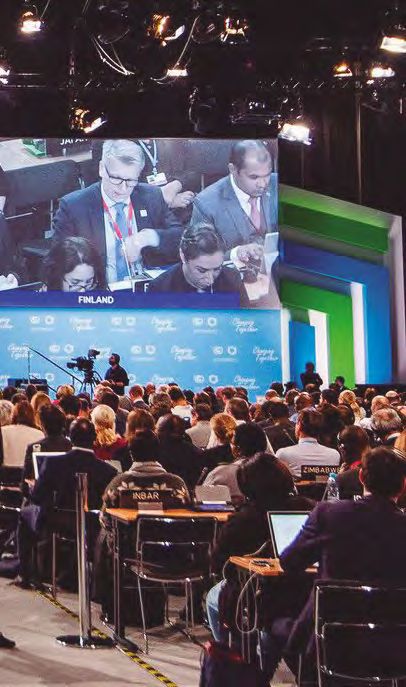
Report of the Presidency 2017-2019

                                             5
                                                                     Page 36

                                             Strengthening
                                             the Network
                                           5.1 The UCLG Retreat & Campus

                                                                               7
                                                                                          Page 48
                                           5.2 Executive Bureau

                                           5.3 World Council

                                                                               Our Congress
                                                                               Year

   4                                         6
                                 Page 32                             Page 44

                                             Our Policy
                                             Priorities, driven
                                             by the Policy
   Learning                                  Councils

                                                                               8
Learning Forum                                                                                Page 52
Action Learning

Enhancing Local Governments’
Capacities to achieve the SDGs with
our Learning Toolkit
                                                                               Communication
                                                                               Campaigns
                                                                               and Outreach

                                                                                                        5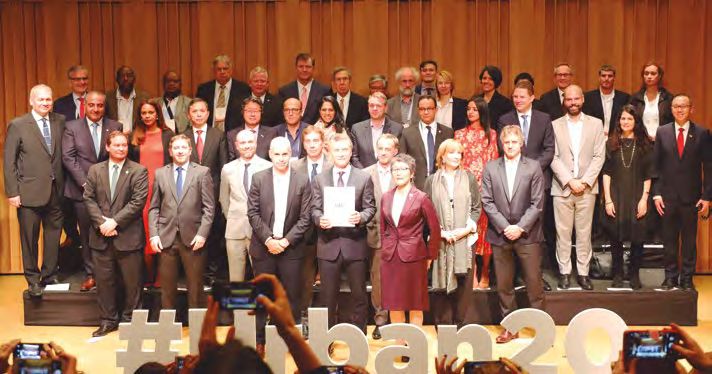
Report of the Presidency 2017-2019   Foreword

                                                                                    2018 was our year of partnerships,
                                                                                 during which we expanded an en-
                                                                                 hanced our collaborations with sister
                                                                                 organizations and brought new part-

    FROM LISTEN                                                                  ners on board in order to ensure that
                                                                                 our members do not have to face the

    TO CITIES,                                                                   global challenges by themselves.
                                                                                    During 2019, UCLG has consolidat-

    TO CITIES ARE
                                                                                 ed its visibility in the international
                                                                                 scene, in particular through enhanced
                                                                                 negotiations with all stakeholders.
    LISTENING                                                                    We have worked to strengthen our
                                                                                 policymaking in particular through the

                                     T
                                                                                 establishment of the UBUNTU advisory
                                                                                 board, and by focusing on co-creating
                                                      hroughout the three        policy at the World Congress.
                                                      years of the Presidency,      The results of this effort can be seen
                                                      our joint work has had     in consolidation of our consultation
                                                      the outcome of Bogotá,     mechanisms, and in the birth of our
                                                      and the localization of    UCLG Policy Councils, which have been
                                                      the Global Development     essential to further debates among our
                                                      Agendas, at the core       members and other constituencies,
                                                      of our joint action.       which have enabled us to develop dia-
                                                      The work of the World      logues with national governments and
                                                      Organization has been      mainstream thematic issues such as
                                     balanced between strengthening par-         peacebuilding, the ecological transi-
                                     ticipation and the involvement of all       tion, and the right to the city through-
                                     parts of the network, sections and mem-     out the entire network.
                                     ber-led initiatives, on the one hand; and      Our focus on developing joint
                                     international work, continuing to con-      action has given birth to our UCLG
                                     solidate relations with other networks      Waves of Action, whose first itera-
                                     and being the face and voice of local       tion culminated in a positive tide on
                                     government in numerous global forums,       Housing, Migration and Local Finance.
                                     on the other hand.                          40 cities and metropolitan entities
                                        In 2017, our focus was to enhance the    joined the Cities for Adequate Housing
                                     union and the synergies within the net-     Declaration, asking to make a shift
                                     work to be able to respond to a changing    from commodity to human right. 16
                                     world, and doing so throughout strength-    cities have joined our programme
                                     ened consultation mechanisms and            on Migration in the Mediterranean,
                                     sections that can invigorate the World      cities that have originated the wave
                                     Secretariat.                                that culminated into inputs towards

6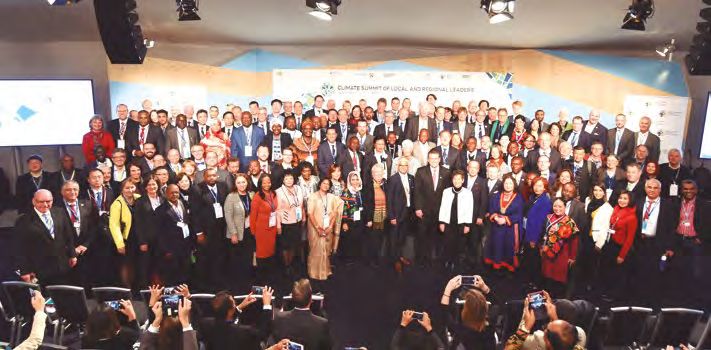
Report of the Presidency 2017-2019         Foreword

                                              During our World Congress, we will      increased activities in every continent,
                                           present the 5th Global Report on Local     providing visibility but also learning
                                           Democracy and Decentralization, fo-        and networking opportunities.
                                           cused on the localization of the SDGs,
                                           which has mobilised dozens of experts
                                           across the different world regions         What is next for our Movement?
                                           whose findings have fed our different      We have worked to ensure not just that
                                           work areas.                                cities have been listened to, but to
                                              Our role as Learning Network has        provide spaces in which all stakeholders
                                           been enhanced with the training of         are included. We are transforming our
                                           trainers dimension, with the devel-        very own Congress, the World Summit of
                                           opment, together with various stake-       Local and Regional Leaders, into a space
                                           holders, of our Learning Modules to        in which joint policy is created, among
                                           localize the SDGs, and with our focus      our entire constituency but also among
                                           on decentralized cooperation. The          all stakeholders that are gathered at our
the Global Compact on Migration. The       Learning Forum that has taken place        table.
International Municipal Investment         during the Congress will prove to be           To renew our leadership, to ensure
Fund, originated due to our Wave of        essential to innovate, to work in part-    that our movement enters the next dec-
Action on Local Finance, has mobilised     nership, and to develop learning meth-     ade in the best possible shape we have
over 20 cities that have joined the        odologies that can enhance ownership       updated our institutional rules and our
Community of Practice on this topic.       of the 2030 Agenda.                        good governance procedures, we have
   Our presence at the HLPF over the                                                  designed an all-UCLG gender strategy
last years has grown, from presenting                                                 that puts gender equality at the centre
our report on the localisation of the      Partnerships to achieve                    of our priorities, and we have renewed
SDGs on behalf of the Global Taskforce-    the global agendas                         our renewed policies on migration,
starting in 2017- to co-creating, with     The World Organization is consolidating    housing, the ecological transition and
Local 2030, a space for interaction        the partnerships that have been devel-     city diplomacy, with the help of our
with stakeholders and the Local and        oped with international organizations      consultation mechanisms, and with the
Regional Governments’ Forum, which         and civil society during the process       inputs from our regional sections.
took place for the first time in 2018 at   of negotiation of the World Agendas.
the HLPF, and again in 2019 at the SDG     Beyond maintaining our existing col-
Summit. This first LRGF was momentous      laborations with sister organizations
occasion with important political im-      like ICLEI and the other members of
pact, which is expected to transform       the Global Taskforce but also with new
into policy influence in the coming        partners such as: International IDEA,
years.                                     the International Union for Public
   With the localization of the global     Transport, the Cities Programme of the
agendas at the core of our work, the       Global Compact and others.
three editions of our report on Local         Our UCLG Retreat has grown into
and Regional Governments on the way        an essential moment to showcase how
Towards the Localization of the SDGs       the municipal movement can achieve
presented to the HPLF have showcased       the global agendas. Throughout these
our involvement in the global agendas,     three years, it has allowed us to shape
have gathered inputs from our mem-         our joint priorities, expand synergies
bership’s views and experience, and        among the network, and bring partners
has grown to incorporate perspectives      to the table. Our statutory meetings,
from organizations active in the Global    our Executive Bureau and our World
Taskforce which, in turn, has allowed      Council, have also evolved into poli-
the GTF to consolidate and grow as the     cymaking meetings, enhanced by the
instrument that amplifies the voices       gathering of our Policy Councils and by
of Local and Regional Governments          our political debates that have guided
around the world, and further exempli-     and focused our path.
fies UCLG and its membership’s deter-         Last but not least, it is worth high-
mination to mobilize the means re-         lighting the important step forward
quired to implement the 2030 Agenda        of the regional networks through the
through revitalized partnerships.          UCLG Sections which have dramatically

                                                                                                                              7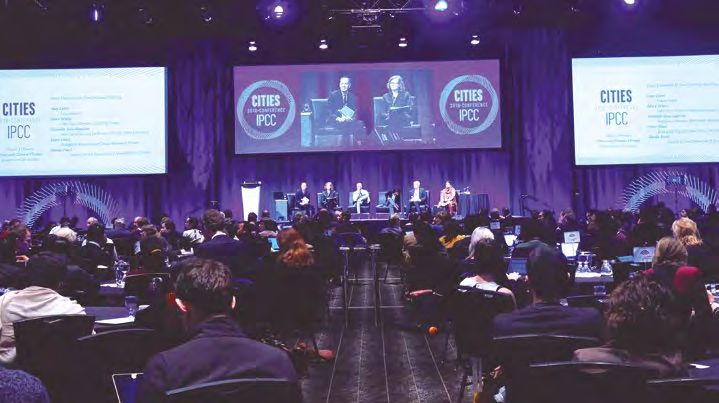
The presidency 2017-2019
1

ADVOCACY
           United Cities and Local Governments
           has amplified the voices of local
           and regional governments at
           the most strategic moments of
           the international agenda. As the
           constituency of local and regional
           governments that is most affected
           by the implementation of the NUA,
           we have a particular interest in the
           renewed UN-Habitat Assembly.
Report of the Presidency 2017-2019   Advocacy

                                     THE STRONG DELEGATIONS AND SOLID            and members of national governments,
                                     INPUTS TO THE HIGH-LEVEL POLITICAL          which has been taking place even
                                     FORUM HAS ALLOWED FOR A STRONG              during our statutory meetings. Our
                                     PUSH TOWARDS ESTABLISHING A DIA-            Executive Bureau in Strasbourg, in par-
                                     LOGUE BETWEEN LOCAL GOVERNMENTS,            ticular, held high-level meetings under
                                     national governments and the UN             the framework of UNACLA and our Policy
                                     system with as final objective the recog-   Councils, and our statutory meetings
                                     nition of the role that our constituency    have grown to become prime examples
                                     needs to play in the global development     of our policymaking.
                                     agendas.                                       UCLG has also been co-conveners,
                                        In particular, the celebration of        together with C40, of Urban 20, an
     Background                      a Local and Regional Governments’
                                     Forum, within the framework of the
                                                                                 initiative that strives to develop joint
                                                                                 positions among mayors of G20 cities
                                     HLPF and the SDG Summit, has been an        to inform and enrich the discussions
                                     incredible achievement for our constitu-    of G20 national leaders, providing the
                                     ency. The formal seat at the table within   expertise and visions of major cities in
                                     the UN system has allowed us to open        global development issues.
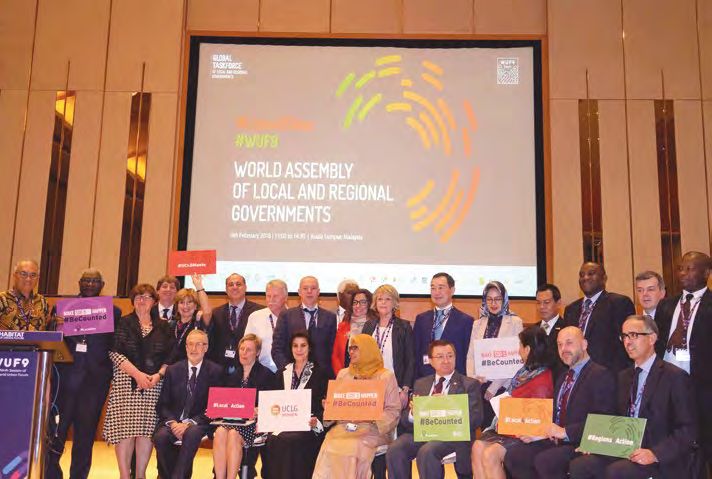
                                     up a space for dialogue at the highest         The 9th edition of the World Urban
                                     level, bringing all stakeholders to the     Forum (WUF), which took place in Kuala
                                     table, and allowing us to lay out our       Lumpur, was the first session to focus
                                     priorities and                              on the implementation of the New
                                        The Seville Commitment, which            Urban Agenda. A delegation of
                                     builds on our work on bringing together     representatives of local and regional
                                     different spheres of government that        governments mobilized at the World
                                     originated the LRGF, and that was           Assembly of Local and Regional
                                     promoted by our constituency, has           Governments to evaluate the imple-
                                     kickstarted a local-global movement         mentation of the New Urban Agenda.
                                     to expand and secure localization.             The celebration of the first
                                     Local and regional leaders, national        UN-Habitat Assembly, which was
                                     governments, and the international          spearheaded by the President of United
                                     system came together with the sole          Cities and Local Governments with his
                                     goal of expanding localization to ensure    presence at the Panel, has been integral
                                     we meet the universal development           for the renewal of the organ, as well as
                                     agendas.                                    for the integration of our constituency
                                        Enhancing dialogue among spheres         at the highest level of the urban dimen-
                                     of government has been a constant           sion of the UN.
                                     priority throughout the duration of the        Through our presence and our actions
                                     Presidency. One of our most important       at the leading for a on sustainable
                                     aims throughout these three years has       development and climate, such as
                                     been to hold dialogues between local        UNEA-4 and the various iterations of
                                     and regional leaders, and ministers         the COPs, UCLG has also been working
                                                                                 on showcasing the added value of our
                                                                                 climate strategy that considers all cities
                                                                                 and regions as integral who need to take
                                                                                 the lead towards an ecological transi-
                                                                                 tion and the recognition of our role in
                                                                                 achieving the climate agendas, and for
                                                                                 the need to carry out a true ecological
                                                                                 transition that shifts our patterns of
                                                                                 production and consumption to ensure
                                                                                 that we are able to fulfil the global
                                                                                 goals.
                                                                                    Our presence at the Financing for
                                                                                 Development fora have been an exten-
                                                                                 sion of our burgeoning strategy on
                                                                                 localizing finance. During these fora,
                                                                                 we have pushed for the inclusion of
                                                                                 local and regional governments in the
                                                                                 decision-making process of the FfD
                                                                                 Forum, and presented our publications
                                                                                 “Subnational governments around the
                                                                                 world - Structure and finance”.

10
Report of the Presidency 2017-2019 Advocacy
need for local and regional governments
to be able to access funding in order to
own the 2030 Agenda.
Our presence before the UN also
allowed us to advocate for the adop-
tion of new models of governance that
involve all spheres of government.
Models of governance that are, in turn,
essential to foster the inclusion of local
communities and ensuring that no-one,
nowhere, is being left behind. We have
also called on the UN to promote the
implementation of other develop-
ment agendas -such as the New Urban
Agenda- and the linkages between
them to accelerate the Global Goals.
We have brought forward the commit-
ments of the local and regional govern-
ments, showcasing how, through basic
service provision, it is the local sphere
the one that is carrying out change and
working to achieve the global goals, and
called on the UN system to go a step
further and to secure spaces of dialogue
between spheres of government in
further editions of the HLPF.
Our call for a formal seat at the global
table was heard, in particular, in the cel-
ebration of the first Local and Regional
Governments’ Forum, a petition of
THROUGHOUT THESE LAST THREE our constituency, co-organised by the
1.1 YEARS, UCLG HAS ENDEAVOURED TO
AMPLIFY THE VOICES AND THE
Global Taskforce and the Local 2030
Initiative. This first LRGF was momen-
2030 Development PRESENCE of local and regional govern-
ments at the highest level of the UN.
tous occasion with important political
impact, which is expected to transform
Agenda As facilitators of the Global Taskforce into policy influence in the coming
of Local and Regional Governments, years. Housing, financing, equality,
we have brought our “Towards the accountable institutions and enhanced
Localization of the SDGs” report, partnerships, which have been at the
through the Global Taskforce, for the forefront of our priorities, were also key
Our Constituency before past three years, and been a part of during these days. We have followed-up
the United Nations the Local 2030 Hub, a multi-stake-
holder hub led by the United Nations
Secretary-General’s Executive Office to
catalyze solutions and accelerate the
implementation of the SDGs. It aims to
foster innovative partnerships and an
action-oriented model for SDG imple-
mentation that will allow local actors
to deliver more at scale, identify and
address significant gaps and overcome
barriers to progress.
The Global Taskforce of Local and
Regional Governments, facilitated by
2030 Development UCLG, has worked on joint positions and
set the priorities for the various HLPFs.
Agenda Trough the Statement of the Local
Our Constituency before and Regional Governments issued by
the United Nations Global Taskforce, we have called on the
United Nations’ System to not leave
local governance and territorial cohe-
sion behind. We have also called on the
11Report of the Presidency 2017-2019 Advocacy
on the LRGF in 2019, with a second
iteration in the framework of the UN SDG
Summit, and we have proven to be essen-
tial partners for transformation at the first
UN-Habitat Assembly, also counted on a
Local and Regional Governments’ Forum.
During both iterations of the Local
and Regional Governments’ Forum, Cementing a
participants have advocated towards local-global movement
enhancing local involvement in the SDG for the localization of
strategies and reporting processes both
the SDGs – The Seville
at national and international level; they
showcased the effectiveness of inte- Commitment
grated territorial planning in building
resilient and inclusive communities,
and highlighted the need to re-think- 2019 MARKED THE FIRST QUADREN- agreeing that an effective localization
ing financing at the local and regional NIAL REVIEW OF THE SUSTAINABLE of the agenda must be based on local
spheres, and to set up an effective DEVELOPMENT GOALS through the contexts, and implemented by citizens
monitoring system at the local level. SDG Summit, and the year kicked off of local and regional governments so as
They further highlighted the impor- with a high-level international meeting not to leave anyone or any place behind.
tance of creating adequate frameworks in Seville to discuss the localization The synergy produced by the diverse and
to protect the right to housing as pillar of the Sustainable Development Goals fruitful debates was fully harnessed to
for achievement of SDG 11 and called (SDGs). Throughout the two days of reach a commitment to consolidate and
for the empowerment of women and high-level dialogue among spheres of focus the efforts in taking the next
strong, resourced local governments as government regarding the achievement step in the Local-Global movement to
underlying key factor for most goals. of the 2030 Agenda, the outcomes localize the 2030 Agenda with local
The 2018 HLPF allowed our constitu- culminated in the Seville Commitment, governments, civil society, and other
ency to have unique opportunity for the which reaffirmed the need for local actors at the forefront.
highest level of the international sys- cooperation among spheres of govern-
tem, represented by Amina Mohammed, ment and local communities to find real
Deputy Secretary General of the United local solutions for global challenges.
Nations, Maimunah Mohd Sharif, All participants reiterated their
Executive Director of UN Habitat as well commitments to the 2030 Agenda,
as the ECOSOC President and represent-
atives of the President of the General
Assembly to engage in a closed-doors
exchange on priorities from the differ-
ent parts of the world, further contrib-
uting to further our collective strength
before the United Nations.
The second iteration of the Local and
Regional Governments’ Forum, which
took place within the SDG Summit
addressed the way forward and expec-
tations of the constituency during the
so-called Acceleration Era. It paid special
attention to the links between the cli-
mate emergency and the implementation
of the 2030 Agenda. Throughout the day
of exchanges, participants pledged to
promote and allocate the financial tools
necessary to support localization across
all territories, on local and regional
levels, via integrated approaches to
sustainable development. Dialogues
across all spheres of global governance
will continue to be promoted.
12Report of the Presidency 2017-2019 Advocacy
1.2
New Urban Agenda
The role of local
and regional
governments within
a renewed UN-Habitat
OVER THE COURSE OF THESE PAST THREE for an integrated territorial approach CEMR, UCLG-ASPAC and UCLG-Africa.
YEARS, THE RELATIONSHIP BETWEEN to urbanization to bridge the artificial A clear commitment of the con-
OUR CONSTITUENCY AND UN-HABITAT urban-rural divide. It also reiterated stituency to contribute to the global
has been part of our ambitions for the Global Taskforce’s long standing dialogue and action for sustainable
securing a seat at the table for local and call for the governmental status of development was put forward. The wish
regional governments. UCLG, through local and regional governments to be to develop a transformational policy
president Parks Tau, and Co-President recognized through an enhanced sta- agenda for the better life of the commu-
and Mayor of Paris Anne Hidalgo, was tus in the UN system. Finally, it called nities was central in the joint statement
part of the Independent Panel to on the 2nd Committee of the UN General of the constituency.
Assess and Enhance Effectiveness Assembly to set out a clear, transparent Local governments called to improve
of UN-Habitat after the Adoption of roadmap to complete the third phase municipal infrastructure finance,
the New Urban Agenda. The panel was of the follow-up and review process as create an enabling environment and
charged with drawing up a report mak- defined in paragraph 173 of the New strengthen effective multilevel gov-
ing recommendations on enhancing the Urban Agenda. ernance, in order to allow local and
effectiveness, efficiency, accountability The outcome of this process has been regional governments to contribute to
and oversight of UN-Habitat. UCLG has the first UN-Habitat Assembly, which global sustainability. In order to put
continued its work on securing a seat at took place in Nairobi, replacing the tra- cities and regions at the centre of inter-
the global table for local and regional ditional UN-Habitat Governing Council. national decision-making processes,
governments within the UN System. One Our constituency of local and regional the World Assembly called to embark
important dimension of this ambition governments welcomed the universal on a new era of partnership in global
is the relationship of our constituency membership of the Assembly, gather- governance and renew the relationship
with UN-Habitat in the context of the ing all Member States on decision-mak- between our constituency and the UN.
UN review of the functions and govern- ing on urban development, however
ance mechanisms of the agency. pleading for a differentiated and
The Panel acknowledged that the structural mechanism of consultation
UN System has failed to recognize the of local governments within the new
“fundamental role” played by local UN-Habitat governance structure. The
governments in urban development. Assembly has seen the constitution of
The report recommended a governance the first UN Habitat Executive Board
system in which all spheres of gov- composed of 36 countries that will
ernment, including local and regional have the policy oversight in between
governments, play a strong role in Assemblies.
policy development, in close partner- During the week-long UN-Habitat
ship with civil society and other actors. Assembly, the delegation of the
More specifically, it called for a formal Global Taskforce, facilitated by UCLG,
role for a Local Government Committee actively participated in side-events
in a renewed UN-Habitat governance and multilevel and high-level dialogues
structure. which included, for the first time
In New York, the Global Taskforce of ever in the framework of UN-Habitat
Local and Regional Governments met to governing bodies meeting, a Local
adopt a joint statement on the report Governments’ Forum, in the presence
of the Independent Panel. The state- of the UN-Habitat Executive Director,
ment welcomed the proposal to set up Maimunah Mohd Sharif. The Forum
UN Urban and supported the call for gathered the representatives of the
the issue of urbanization to be main- organized constituency from all world
streamed across the UN. In this regard, regions active in local government
the statement highlighted the need networks such as CLGF and ICLEI, AIMF,
13Report of the Presidency 2017-2019 Advocacy
THE 9TH EDITION OF THE WORLD strengthen effective multilevel
URBAN FORUM (WUF), WHICH TOOK governance, in order to allow local and
PLACE IN KUALA LUMPUR, WAS regional governments to contribute to
THE FIRST SESSION TO FOCUS ON global sustainability. In order to put
THE IMPLEMENTATION OF THE NEW cities and regions at the centre of inter-
URBAN AGENDA. A delegation of national decision-making processes,
representatives of local and regional the World Assembly called to embark
governments mobilized at the World on a new era of partnership in global
Assembly of Local and Regional governance and renew the relation-
Governments to evaluate the imple- ship between our constituency and
The LRG Constituency mentation of the New Urban Agenda. the UN, within a broader context of
at the World Urban Forum The Statement of the World UN reform.
Assembly of Local and Regional
Governments affirmed our position-
ing, together with civil society, as
guardians of the Habitat III legacy
and as those best positioned to mon-
itor its implementation.
UCLG was the representative of
local and regional governments in the
Advisory Board in charge of drafting
the conclusions of the event to be sub-
mitted to the UN Habitat Council under
the title, “Kuala Lumpur Declaration
on Cities 2030”.
Local governments called to improve
municipal infrastructure finance,
create an enabling environment and
14Report of the Presidency 2017-2019 Advocacy
The second iteration of the U20
1.3 Summit took place in May 2019, with
the main topics being the role of cities
in housing, education, healthcare and
infrastructure, as well as how the joint
actions of cities could face the world’s
challenges.
The outcomes of the two editions
Our Constituency of Urban 20 were Communiqués with
before the G20 and the joint positions of the 35 mayors
gathered in U20 by mayor of Buenos
Urban 20 Aires Horacio Larreta and Governor of
Tokyo Yuriko Koike in 2018 and 2019
respectively to the Heads of the G20
each year, the Prime Ministers of Japan
U20 IS NOT A NEW NETWORK OF CITIES, and Argentina.
BUT RATHER A FORUM IN WHICH
CITIES DEVELOP COLLECTIVE MESSAGES
AIMED AT ENHANCING THE PRESENCE
OF URBAN AND LOCAL GOVERNMENTS
TOPICS IN THE G20 AGENDA. UCLG is,
together with C40, the co-convener of
the initiative, and has an active role in
supporting the U20 chairs in delivering
the objectives, meetings and outcome
documents, and ensuring the link
between U20 agendas and positions,
and those of the rest of the constitu-
ency.
The first Urban Mayor Summit took
place in Buenos Aires addressing,
among its priority topics, climate
action, the future of work, and social
integration and inclusion. Other rel-
evant topics addressed were: women
empowerment, food security,
access to finance, and infrastructure
for development.
15Report of the Presidency 2017-2019 Advocacy
UCLG is also a founding member Talanoa Dialogues, facilitated by our
1.4 of the Global Covenant of Mayors for
Climate and Energy (GCoM), an inter-
constituency, we aim to translate the
global processes into concrete local
national alliance of cities and local realities in order to enhance the pres-
governments that shares a vision to ence of local and regional governments
boost voluntary action to upscale the in the climate agenda, and practice the
struggle against Climate change, and implementation of the Paris Agreement
transition towards a low-emission and by and connecting it with other sus-
Climate resilient society. Efforts to ensure tainability agendas.
ownership of climate action across or The fourth edition of the United
and Resilience Network have taken place through our Nations’ Environmental Assembly held,
Agenda membership in GCoM and our regional
sections.
for the first time, a Cities Summit,
which our constituency of Local and
Throughout these three years, our Regional Governments will continue
UCLG HAS WORKED TO COMPLEMENT constituency has always advocated to work on as a critical component of
ITS SISTER NETWORKS AND OTHER for ensuring coherence and building future UN Environment Assemblies, to
ORGANISATIONS THAT ARE FOCUSED interlinkages among all of the inter- continue highlighting the importance
ON CLIMATE ADAPTATION AND MITI- national agendas, since they will only of localizing the SDGs and allow for
GATION. Our work, as the largest global be achieved, together, through locali- engagement of sub-national leaders
network of local and regional govern- zation. This is why we have pushed for into the global environmental policy
ments, has been centred on developing the localization of climate finance in decision-making.
a climate strategy that considers all gatherings such as the Climate Chance
cities and regions, and developing World Summit, which further provided
a narrative that calls for cities and the opportunity to open up the debate
regions to take the lead towards an eco- on how non-State actors can bring
logical transition. their own recommendations to the
The sustainable service provision facilitation dialogue in 2018.
delivered by local and regional govern- The Talanoa Dialogues have been
ments is the testimony that we cannot designed to foster the proactive
be mere witnesses, and that we need implications of all parties in the
to push for a greater recognition of achievement of the Paris Agreement,
our role in the accomplishment of the by helping countries implement and
Paris Agreement, and for greater com- enhance their Nationally Determined
mitments from all stakeholders to tur Contributions, sharing stories and
it into a reality. Our regional sections experiences, as well as by maintaining
have endeavoured to ensure ownership dialogues so others can benefit from
of climate action. them. Through the Cities and Regions
16Report of the Presidency 2017-2019 Advocacy
leaders, with the goal of accelerating
actions towards achieving the Paris
Agreement. The stakeholders gathered
in San Francisco issued the Call to
Global Climate Action, calling for col-
laborative and transformative actions
at all levels and in all sectors of soci-
ety in order to fulfil the commitments
acquired during COP21.
The Call to Global Climate Action Local action
Cities and Regions called to accelerate climate action by: at the Conference
listen to Science a. Committing to increased climate
of the Parties
ambition and updated, enhanced,
Nationally Determined Contributions
CONVENED BY THE by the year 2020 UCLG HAS WORKED WITHIN
INTERGOVERNMENTAL PANEL ON b. Charting a Clear Path to devel- THE FRAMEWORK OF THE LOCAL
CLIMATE CHANGE (IPCC), and co-or- oping net-zero climate emissions GOVERNMENT CLIMATE ROADMAP,
ganized by different networks of by mid-century, and committing facilitated by ICLEI, to enhance the
local and regional governments, the towards a long-term economic and influence of members in the interna-
Cities IPCC Conference took place in technological transformation that tional negotiation process through two
Edmonton, CA, with the aim to estab- ensures decent jobs and increased key strategies: enhancing the formal
lish a global research agenda working resilience role of local authorities in the nego-
to address the key gaps by the aca- c. Empowering bottom-up climate tiation process and developing the
demic, practitioner and city policy action, via supporting and accel- partnership between local authorities
makers. erating climate action at local and and civil society.
The partner organizations released regional levels. COP 23, organized under the pres-
the Joint Statement “The Science We idency of the Fiji Islands, was hosted
Need For The Cities We Want: Working by the Government of Germany and
together to implement the global the City of Bonn. UN Member States
research and action agenda on cities gathered to advance the implementa-
and climate change”, describing how tion of the Paris Agreement in terms
to work together in order to support the of transparency, adaptation, emission
implementation of the climate agenda. reductions, finance, capacity building
The Global Climate Action Summit and technology.
brought together stakeholders (from With our organization playing a key
national spheres of government to role in the organization and mobiliza-
the private sector) from all over the tion of different events, UCLG sent a
world, including over 100 local elected strong delegation of around 60 local
17Report of the Presidency 2017-2019 Advocacy
and regional leaders to advocate for 1.5 degrees, prior to COP24, added a required to create a serious and steady
the role of local and territorial action sense of urgency to the tail-end of the shift towards the ecological transition
in combatting climate change. The key year, with a severe warning that that that should maintain a well-balanced
innovation of COP23 was the organi- even a 1.5-degree scenario comes with use of our natural resources.
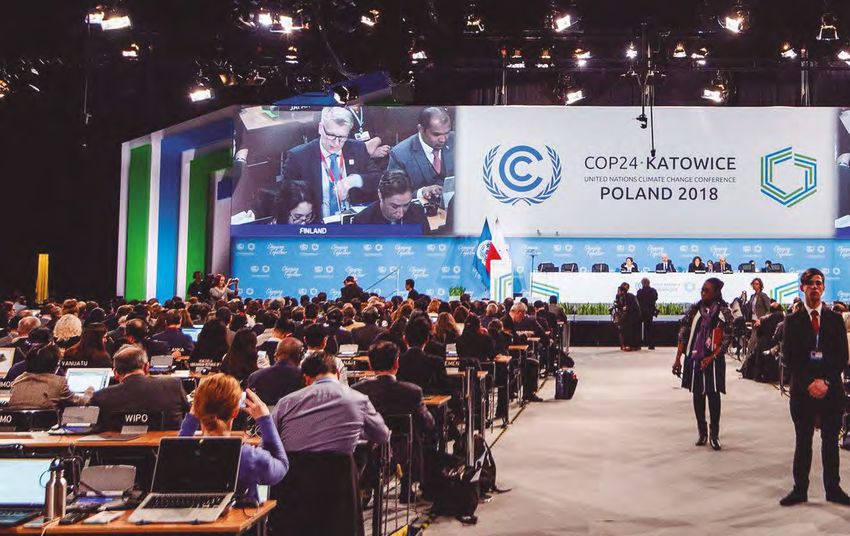
zation of the Climate Summit of Local significant global impacts: up to 69 At Katowice, our constituency
and Regional Leaders, organised by million people exposed to flooding and called on heads of states and ministers
ICLEI and with the support of the Global 15 percent of the population exposed to make unambiguous and signifi-
Taskforce. to severe heat. cantly bolder mitigation commitments
The Summit, which concluded with At COP24, a delegation of 80 local that align with the 1.5-degree target,
the conveying of the messages of the and regional leaders from all world and reflect the emissions reductions
Bonn-Fiji Commitment of Local and regions brought their commitment potential of cities. In Katowice, local
Regional Leaders, addressed four towards deep transformation, while and regional governments made a plead
key themes: Mainstreaming Climate calling on nations to translate global for a clear decision that this process
and Sustainability among all sectors; momentum into political decisions will be integrated into the Paris
Collaborative climate action: Forging and actions that achieve higher cli- Agreement implementation rules,
ahead through community engagement mate ambitions. securing our place as vital and active
& Integrated planning and sustaina- Together with local and regional partners in both pre-2020 and post-
ble investments in cities and regions; leaders from all international networks 2020 conversations.
Joining forces for transboundary of local and regional governments
climate action; and Raising the bar from the Global Taskforce, as well as
through coordinated action across all our own UCLG Sections and Members,
levels of government. CEMR, UCLG Africa and Climate Chance,
COP24 negotiations came at the brought our joint commitments to
tail end of a year marked by unprec- develop thoughtful, transformative
edented increase in temperatures work to fully develop an ecological
in all continents, as well as natural transition and shift the current trends
disasters affecting local populations that are pushing us towards climate
at an unprecedented large scale. The disaster, and continue to commit doing
release of the IPCC special report on the thoughtful, transformative work
18Report of the Presidency 2017-2019 Advocacy
THE UN ENVIRONMENT ASSEMBLY The Summit showcased success
(UNEA) is a Member-States Assembly stories on innovation for sustainable
convened by the UN Environment consumption and production in cities,
Programme that meets every two years under the focus of localizing SDGs, cre-
to set priorities for global environ- ating more integrated urban systems,
mental policies. The fourth session and implementing ecological transi-
of the UN Environment Assembly tion in the context of the New Urban
(UNEA-4) focused on innovative solu- Agenda.
tions for environmental challenges The first UNEA Cities and Regions
and Sustainable Consumption and Summit Outcome Document provided
Production. concrete recommendations on action
UNEA 4 Through the involvement of UCLG
and sister networks of the Global
for local, regional and national lev-
els contained in the Final Outcome
Taskforce, the first edition of the Cities Document. The Outcome Document
Summit demonstrated the potential pays particular attention to the issues
and role of local governments in shift- of multilevel governance coordination
ing towards a new model of sustainable and local sustainable financing of urban
consumption and production, through systems, and recalls that local govern-
multilevel and integrated urban ments should be included in nation-to-
systems. nation dialogues and that their access
The first ever Cities Summit within to funding streams from national
UNEA provided the opportunity for budgets should be facilitated.
high level dialogues between local and
regional elected officials and national
governments representatives on inno-
vative solutions to achieve liveable,
inclusive, and sustainable cities –
working across sectors and across all
levels of government.
19Report of the Presidency 2017-2019 Advocacy
UN-Habitat and UNDRR. Their commit- The agreement will allow to finalise
ment and action are key to achieving Learning Module 4 on the localization
the targets to be achieved by 2030. of the Sendai framework, and develop a
The Global Platform for Disaster pilot project on resilience profiles.
Risk Reduction took place in Cancun In 2018, UCLG set up a Taskforce for
and provided the first opportunity regional disaster prevention and man-
to globally review the implemen- agement, to:
tation of the Sendai Framework for a. provide a platform for local govern-
The local Disaster Risk Reduction. This revision ments to share knowledge and exper-
implementation addressed, among others, the Target tise on disaster management;
‘E’ of the Sendai Framework that calls b. provide a political and technical
of the Sendai
to substantially increase the number of platform to draw on lessons learned
Framework countries with national and local disas- and offer increasingly coordinated
ter risk reduction strategies by 2020. technical support in crisis situations;
UCLG HAS PLACED RESILIENCE AND Our delegation called on national c. improve and increase the availability
DISASTER REDUCTION HIGH ON OUR governments to ensure the necessary of local government expertise for
AGENDA, OWING TO THE THREATS financial, institutional and legislative disaster victims and municipalities;
PRESENTED BY A RISE IN NATURAL OR support, and requested assistance d. promote the role of local govern-
MAN-MADE DISASTERS. These major from the international community in ments in international disaster
upheavals are having a huge impact order to achieve the imminent goals management.
on communities’ lives, property and set by the Sendai Framework and the
infrastructure. The resilience of cities other international agendas. Our con-
and regions is at the heart of the Sendai stituency also took this opportunity to
framework localisation strategy. visualize their concrete experiences,
Local and regional governments exchange and explore partnerships for
are at the forefront of disaster risk the further development of local disas-
reduction, and essential for the local- ter risk reduction initiatives.
ization of the Sendai Framework, a Currently, UCLG is finalising a coop-
key priority for UCLG-Learning and our eration agreement with UN-Habitat
Network as a whole. UCLG has facili- on Urban Resilience and Disaster Risk
tated sessions on its achievement, and Reduction, with the goal of working
developed resources together with on urban resilience at the local level,
and localizing the Sendai Framework.
20Report of the Presidency 2017-2019 Advocacy
The Forum on Intermediary Cities
met within the framework of the “Think
Europe” Summit in Soria to rethink the
challenges that Europe was facing, and
the role of intermediary cities in ensur-
ing territorial cohesion. The “Think
Europe” summit offered an opportunity
to address the future of intermedi-
ary cities in Europe and North Africa
with a bilateral meeting attended by
Ministers, from Spain, and Morocco. A
historic meeting between government
representatives took place by invita-
tion of local governments. This meeting
tackled the development of an agenda
and a joint strategy of intermediary
cities to take advantage of their poten-
tial to transform and cohesion the
territory.
The outcome of the “Think Europe”
Summit was the Soria Declaration of
1.5 The local governments that signed
the Declaration-Charter of the
Intermediary Cities, which would be
publicly revealed in the conclusions of
Intermediary Cities of the World, the meeting. The participants of the
who committed to hold a second UCLG second edition of the International
World Forum of Intermediary Cities, Congress of Soria to Think Europe
and declared that: based on the 2030 Commitment, and
the members of the UCLG Forum of
a. A more concrete multi-level dia- Intermediary Cities, called to think
logue as a regulatory system to
Our Intermediary define and implement the global
about the future of the region and the
planet collectively, considering the
Cities Agenda agendas is needed
b. It is necessary to root the Global
needs and aspirations of the communi-
ties and committed to the values and
Development Agendas in the values principles reflected in the universal
and experiences of Intermediary 2030 Agenda.
1st World Forum on Cities.
Intermediary Cities and the c. There is a need for a better struc-
ture and definition of the “living
Soria Commitment systems” of territories that can
The UCLG Forum on Intermediary Cities be translated into strategies that
is a consultation and policy mech- can be developed, understood and
anism that culminates in an event supported at international level.
every two years. It is led by the City of d. It is essential to promote integrated
Chefchaouen, and with the support of a models of governance that involve
core group of pilot intermediary cities, all spheres of government, includ-
and held its first edition precisely in ing metropolitan governments and
Chefchaouen during July of 2018, with rural areas.
a follow-up gathering of the Forum in e. Acknowledging the role of interme-
Soria in 2019. diary cities as an important space of
First World Forum on Intermediary intermediation between the urban
Cities culminated with the adoption of and rural is essential to the struc-
the Chefchaouen Declaration-Charter turing and territorial organization
of the Intermediary Cities of the of the economy,
World, where the representatives of f. It is necessary to defend quality of
intermediary cities declared the need life and access to basic services in
to root the global development agen- their territories in order to reduce
das in the experiences of intermediary inequalities.
cities, as well as to develop systems g. The resilience of intermediary cities
of multi-level governance and an inte- is strongly linked to their identity,
grated approach to the development of culture and the defence of diversity.
territories.
212 MONITORING Global policies and the story of develop its capacity to provide the development is too often defined by local version. The V GOLD Report, the national perspective and does which will be presented at the World not consider the needs, experiences Summit of Local and Regional Leaders, and skills of the communities. Our is a critical piece for this work. Our organization works to establish ongoing reports on the state of a framework for monitoring and the localization of the SDGs, which reporting activities on the of the have been presented to the High- global development agendas through Level Political Forum, and the two the Global Observatory on Local reports of the World Observatory on Democracy and Decentralization Subnational Governments’ Finance (GOLD), and is and will continue to and Investment.
Report of the Presidency 2017-2019          Monitoring

         THE REPORT OF OUR                                                                  GLOBAL OBSERVATORY
        CONSTITUENCY TO THE                                                                 ON DECENTRALIZATION
         HLPF – “TOWARDS                                                                    AND LOCAL DEMOCRACY
        THE LOCALIZATION OF                                                                       (GOLD V)
             THE SDGS”

                                            in 2019 was especially significant,       UCLG has been working on the fifth
                                            provided that there was an unprece-       report of the Global Observatory on
                                            dented number of responses received       Decentralization and Local Democracy
                                            (180) from 80 countries, with just        (GOLD V) since the release of GOLD IV
                                            over 100 replies coming from local        in late 2016, with its preparation being
                                            and regional governments and/or           launched in 2018. GOLD IV addressed
                                            their national associations.              the challenges of metropolises,
                                               Combined with the results of the       intermediary cities, small towns and
                                            previous years’ questionnaires, as        territories and create a common agenda
                                            well as the analysis of the Voluntary     as a building stone for the Habitat III
                                            National Reviews submitted to the         summit, the New Urban Agenda and
                                            HLPF since 2016, this now allows          the SDGs. Today, GOLD V analyses the
                                            UCLG to have an almost complete           outcomes of this global process, and
                                            map of localization worldwide, sig-       assesses the state of implementation
                                            nalling to what extent and in which       of the global agenda and how impactful
                                            countries local and regional gov-         and participative local and regional
                                            ernments have a high or low impact        governments have been in their own
                                            on the decision-making process            institutional contexts.
                                            related to the SDGs, how much they            GOLD V, which will be launched at the
The monitoring and reporting system         were engaged and included in the          2019 UCLG World Congress in Durban,
of the SDGs is currently organized          VNR process, and how enabling the         has undertaken a thorough process of
through the Voluntary National Reviews      institutional environment has been        revision, edition and peer validation. The
(VNRs) that are submitted to the            for them to participate, mobilize         authors, the editors and the representa-
sessions of the High-Level Political        and act.                                  tives of UCLG’s Regional Sections met in
Forum (HLPF). In line with our ongoing         Alongside the surveys, the Report      Barcelona in September for a final round
work on localizing the SDGs, the Global     collected the essential expertise and     of discussion, collaboration and valida-
Observatory on Local Democracy and          knowledge of UCLG’s and the Global        tion, sealing the report’s ultimate draft.
Decentralization (GOLD) is supporting       Taskforce’s members and partners,             The Report builds on seven regional
this effort by contributing to the          globally and locally. Experts and         chapters plus a chapter dedicated to
HLPF’s yearly assessment cycles with        authors were mobilized to provide         Metropolitan Areas. The expert teams
reports on implementation of the global     insight and information on SDG local-     that contributed to the report included
agendas from the perspective of local       ization in different sectors. As each     over ten consultants from all regions
and regional governments.                   HLPF meeting focuses on a different       of the world. Each chapter explores
    For three years in a row, the Global    set of Goals, the past three years have   in depth the territorial and political
Taskforce of Local and Regional             allowed to build on expertise and         organization of the countries in the
Governments, facilitated by UCLG, has       knowledge on climate change, hous-        region, the institutional framework in
presented the report of the local and       ing, sustainable cities, education,       which local and regional governments
regional governments’ constituency on       health, sanitation, water manage-         are able to approach the SDGs and the
the Localization of the SDGs to the 2018    ment, risk management, peace and          other global agendas, and the copious
High-Level Political Forum. The report is   partnership.                              number of initiatives, policy actions,
developed by UCLG within the framework         The group of authors and part-         decisions, strategizing and planning
of its research agenda                      nering institutions that contrib-         with which local governments, their
    The 3rd edition of the Local and        uted to the reports has grown to          associations, their communities and
Regional Governments’ report to the         include international organizations       territories are actually and concretely
HLPF, Towards the Localization of the       (UN-Habitat, UNDP, ILO, PSI, ISWA),       contributing to the localization of the
SDGs, marked a new opportunity to           local governments’ networks (C40,         SDGs and the other global goals.
survey our constituency and obtain first-   ICLEI, CLGF, AIMF) and many commit-           The launch of the GOLD V report will
hand information from our membership        tees, regional sections and communi-      provide an opportunity to showcase
and network. The Survey conducted           ties of practice within UCLG.             the advances of the local and regional

24
Report of the Presidency 2017-2019 Monitoring
WORLD OBSERVATORY
ON SUBNATIONAL
GOVERNMENTS’ FINANCE
AND INVESTMENT
governments’ constituency in the pro- The Report on Housing aims at
cess of localization and how important contributing to support the work to
and impactful the daily tasks, policy be developed in the Community of
actions, bottom-up and grassroots initi- Practice set up by the signatories of
atives of local actors have been to make the Municipalist Declaration on the
implementation a reality at the local Right to Housing, which is transform-
level. It also gives UCLG an opportunity ing in a worldwide action across the
to present the outcomes of a three- constituency of local and regional
year-long research and analysis process governments. The report further
to mayors, representatives, elected offi- contributes to the Wave of Action
cials, members of our network and the on Housing with an in-depth report
global community, collecting invaluable built by regional expert teams for
feedback and first-hand information on Latin America, Asia-Pacific, Africa
the future of this process, as the 2030 and Europe.
deadline looms ever closer and the The World Observatory on Local
relentless, united effort of local and Government Finance and Investment,
regional governments worldwide will be jointly set up by the OECD and UCLG,
all the more essential to really leave no published its 2019 report, which
one and no place behind. provides detailed information on
The GOLD V report will also include the structure and organization
a thematic reporting effort on one of of local governments, their main
the core political issues raised by the responsibilities, and the nature and
current global conversation on devel- weight of their expenditures, revenues
opment: housing, the right to adequate and debt in 130 countries, and monitors
housing and housing policies as devel- the financial capacities of subnational
oped by or affecting local and regional governments and their role as
governments. development partners.
The Report collected 130 Country Fact
Sheets countries, an effort that upgrades
the already impressive amount of quality
information collected by UCLG and the
OECD in the previous publication. To do
so, regional focal points have been set
up to collect the data. In partnership
with the Organisation for Economic
Co-operation and Development, the
United Nations’ Capital Development
Fund, the French Development Agency and
Decentralization and Local Governance
(DeLog), it will validate the reliability of
the public data on subnational finance.
This process has allowed not just to
update the existing database and country
profiles, but also to start a systematic
analysis on the effectiveness of fiscal
decentralization processes worldwide and
consolidate collaboration with the OECD
and UNCDF.
253
The Waves of Action
2018-2019
26The Waves of Action, born at the
UCLG World Council in Hangzhou and
established at the 2018 Retreat and
Campus, strive to engage the whole
network in time-bound actions (of
up to 18 months) around specific
themes related to the global agenda.
The Waves are made up of a
series of coordinated actions
within a period of approximately
six to eighteen months, involving
different parts of the network.
Each wave focusses on a policy
priority and involves action in
at least three of UCLG’s four
strategic priorities, namely:
advocacy, learning, monitoring and
implementation. Far from being
just coordinated communication
or representation campaigns, they
also consist of learning actions,
follow-up processes, cases of local
implementation, etc.
27Report of the Presidency 2017-2019 The UCLG Waves of Action
UCLG followed-up on the discus-
3.1 sions of the Global Compact, and has
been advocating for the inclusion of
the perspectives of the constituency
at the meetings and the discussions
which have been taking place among
member states of the UN. We strive for
Local and Regional Governments to
The UCLG play a larger role in the Global Compact
than the one we already have, particu-
Waves of Action larly on the implementation process
2018-2019 and throughout the definition of the
Compact.
The Mediterranean City-to-City
Migration Project (MC2CM) aims to
THE WAVE OF ACTION ON MIGRATION contribute to improving the gov-
HAS BEEN, FOR THE PAST TWO YEARS, ernance of migration at local level
ENDEAVOURING ON CHANGING THE in cities in Europe and the Southern
NEGATIVE PERSPECTIVE OF THIS PHE- Mediterranean. The initiative is led by
NOMENON, and demonstrating the the International Centre for Migration
positive aspects of migration through Policy Development (ICMPD), in part-
joint work among the World Secretariat, nership with UCLG and UN-Habitat. The
Sections and Committees, under the
motto “all migrants, all citizens”.
MIGRATION project involves the United Nations High
Commission for Refugees (UNHCR) and
Under the motto “Housing is a is co-financed by the EC and the Swiss
right, not a commodity”, the UCLG Agency for Development Cooperation
Wave of Action on Housing defends (SDC). The cities participating are:
the right to housing in the framework Amman, Beirut, Lisbon, Lyon, Madrid,
of the Right to the City, together with a The main focus of the Wave of Action on Tangier, Tunis, Turin and Vienna.With the
diversity of actors. Migration throughout was the drafting support of the European Commission,
The Wave of Action on Local of the Global Compact for Safe, Orderly the second phase of the project, which
Finance has been integral for the crea- and Regular Migration. Though UCLG is set to end in 2021, has started devel-
tion of the UCLG Strategy on Localizing celebrates the commitments under- opment in the terrain, with even more
Finance, placing the topic at the core of taken in the adoption of the Global cities and partners mainly from the
the work of the World Organization, and Compact, we cannot help but stress the Global South.
leading to the creation of an need of further involvement of local
international coalition calling for and regional governments in the global
renewed financial mechanisms. migration processes.
The success of our Waves of Action
has proven that the synchronisation of
our work produces results, which is why
we have taken a step towards Waves
of Action that expand and evolve our
ongoing work. The next generation
of Waves of Action on Public Space,
Localizing the Sendai Framework, and
Local Democracy will allow us to work
together in issues that are relevant to
our membership, and to the world.
28Report of the Presidency 2017-2019 The UCLG Waves of Action
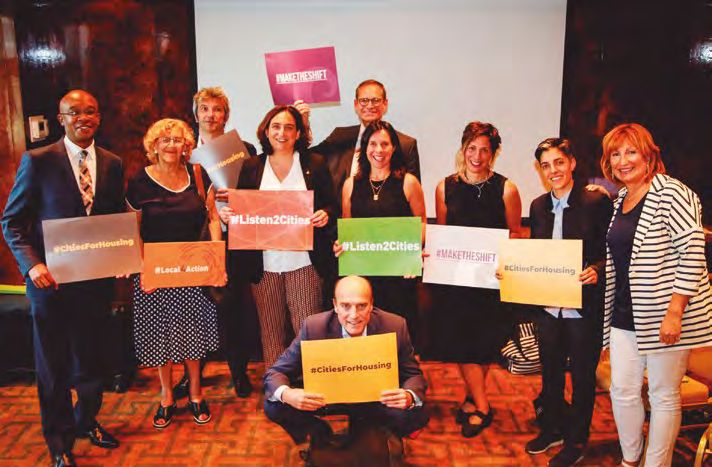
Regional Governments’ Forum, titled:
“#MakeTheShift: Cities for the Right to
HOUSING Adequate Housing”, arguing for Housing
to be considered as a right and not a
commodity in order for cities to fulfil the
human rights of their inhabitants.
UCLG members’ common message
on the right to housing was reinforced
by the adoption of the initiative by the
Mayors of Berlin, Montevideo, Madrid,
The UCLG Wave of Action on Housing Montreal and Strasbourg, as well as the
has collaborated with The Shift Vice President of Plaine Commune and
campaign, led by the UN Special New York’s Deputy Mayor on district
Rapporteur on the Right to Housing, strategy, who expressed their commit-
aiming at promoting human rights- ment towards the right to housing and
based housing strategies throughout adopted the Declaration as their own.
all spheres of government, tackling A total of 40 cities and metropoli-
worldwide housing commodification tan entities have so far adopted the
and moving forward the discussions Declaration.
around housing governance have been Housing as a means to ensure the
some of the key talking points of the Right to the City has been present at
Wave of Action, and moving forward the the World Urban Forum. In special ses-
relationship between spheres of gov- sion titled “Housing at the centre, as
ernment was seen as essential in order a vector for socioeconomic inclusion”,
to implement the Shift. participants from national and local
Housing was a fundamental topic of governments shared proposals on how
the Local and Regional Governments’ to reposition housing at the centre of
delegation at the High-Level Political urbanization and change the vision on
Forum in 2018. Mayor of Barcelona housing from beyond a building-only
Ada Colau presented the Declaration perspective.
of Cities for Adequate Housing at a
special session, prior to the Local and
29Report of the Presidency 2017-2019 The UCLG Waves of Action
a. Mapping the mechanisms and the
initiatives available within the UCLG
LOCAL FINANCE network and setting up instruments The next generation
to support fiscal decentralization. of Waves of Action
This mapping will serve as a base for
defining priorities for action.
b. Creating and co-leading a global The new generation of the
multi-stakeholder reference plat- Waves of Action were intro-
form as an advocacy space for duced at our UCLG Retreat in
the implementation of the Global 2019. The following topics were
The Wave of Action on Local Finance Partnership on Localizing Financing identified as able to conjure
has been integral for the creation of the through dialogue and cooperation political leadership through
UCLG Strategy on Localizing Finance, with key players of the local financ- policy and relevant work to our
placing the topic at the core of the work ing value chain organization, which will allow
of the World Organization, and leading c. Stimulating institutional momen- us to feed on it and give us the
to the creation of an international tum and debate at international opportunity to involve more
coalition calling for renewed financial key moments, especially during the partners and stakeholders in
mechanisms. Financing for Development Forum, our work.
The Strategy on Local Finance aims the High-Level Political Forums on
to build a new narrative on localizing SDGs, and COPs to share progress and Public Space: Tool for Equality:
finance for sustainable urbanization, key transformative propositions on encompassing gender and
which needs to elaborate on: how to Localizing Financing, aiming to gain accessibility to make public
increase local financial engineering more support and partners for sys- space a means to inclusion
capacities; mobilizing finance towards temic change.
local levels of government (where it Reinventing Local Democracy:
is most needed); and accessing long- In partnership with UNCDF and building on the need to regain
time sustainable investments, as in close collaboration with FMDV, a trust of the citizens and show
well as ensuring that all parts of the Municipal Investment Fund has been the potential of transparent
World Organization express common set up to help local governments and solid institutions in trans-
messages to advance the agenda on access finance, and a Community of formation of society.
localizing financing for sustainable Practice was set up and over 20 cities
urbanization. The key components of are joining the Community of Practice Localizing the Sendai
the strategy are: in this topic. Framework: the ecological
transition will need to pay
attention not only to mitigat-
ing climate change but also to
developing sustainable and
resilient societies. The Sendai
framework can be instru-
mental for local and regional
governments if understood
from a local and territorial
perspective.
30You can also read


