Rotorua Sport & Recreation Strategy - Rotorua 2030 A COMMUNITY VIEW
←
→
Page content transcription
If your browser does not render page correctly, please read the page content below
Rotorua Sport & Recreation
Strategy
A COMMUNITY VIEW
TĀTOU TĀTOU - WE TOGETHER

Rotorua 2030
September 2015
2
Iwi Tū, Iwi Ora
He Hāpori Herenga
Papa Whakatipu

Active people
Connected communities
Outstanding places to play

                             3
ROTORUA SPORT & RECREATION STRATEGY
TĀTOU TĀTOU - WE TOGETHER

Welcome to our way forward 2015-2020
                  Tena koutou katoa,
                  This Rotorua Sport and Recreation Strategy sets out
                  an exciting plan for achieving the Rotorua 2030 goal
                  of ‘outstanding places to play’. It reflects Rotorua’s
                  environmental and cultural strengths, builds on our
                  opportunities and is aligned with Council directions.

                  A key element of the strategy is how the Council will work
                  more closely with sport and recreation partners, user groups
                  and stakeholders. Ongoing collaboration, cooperation and
                  engagement create the platform that will help connect
                  communities and provide outstanding places to play. We
                  recognise this strategy sits in a dynamic environment so it is
                  critical that Council and key stakeholders continue to monitor
                  together to keep us on track.

                  The strategy development process has been led by Sport
                  and Recreation Portfolio Lead Councillor Charles Sturt in
                  partnership with a steering group of sport and recreation
                  stakeholders. This group has worked hard to ensure the draft
                  strategy best reflects the sport and recreation aspirations
                  of our community. I thank the group for all its efforts and am
                  now excited to hear your thoughts and ideas.

                  Noho ora mai,

                  Hon Steve Chadwick JP
                  Rotorua Mayor

   4
Steering Group message
          On behalf of the Sport and Recreation steering group I’m
          thrilled to be able to share this strategy with you all. Sport
          and recreation is central to most of our lives - it keeps us
          healthy, and it connects our communities with the amazing
          environment we live in.

          The steering group and I believe the goals and actions within
          this strategy, while sometimes challenging, are realistic
          and achievable, and will set us on the path to achieving our
          shared Rotorua 2030 vision. We recognise we can’t be all
          things to all people, and that choices must be made, and we
          feel this strategy continues to put the right focus on what sets
          us apart - what is uniquely Rotorua.

          We encourage everyone to take the time to read this
          strategy, to engage on its content, and share your thoughts
          on the good, the bad and indifferent.

          Councillor Charles Sturt
          Sharon Fleet
          Jan McLeay
          Gregg Brown
          Jonathan Dodd
          Ian Pedley
          Lynette Farkash
          Irene Law
          Mary Thompson
          Helen Beckett
          Jenny Nahu
          Bronwen Radford
          Bridget Anderson
          Pam Kenny
          Paora Te Hurihanganui
          Manu Soloman
          Jennie Taylor
          Marilyn Downey
          Stephen Te Moni

                                                                             5
Introduction & scope

Introduction

The purpose of this draft strategy is to set the direction for sport and recreation in
Rotorua. It identifies a clear set of objectives that will direct Rotorua Lakes Council’s
(RLC) ongoing work programme as well as support other sport and recreation
organisations, clubs and groups to work with Council to achieve our vision.

Delivering the actions within this draft strategy is not solely Council’s responsibility,
and the strategy recognises that for these objectives to be achieved our partner
organisations and stakeholders must work together and take responsibility where
required. Our key partner organisations, including Te Papa Takaro O Te Arawa, Sport
Bay of Plenty, Sport New Zealand, Department of Conservation, and Fish & Game
will be able to use this strategy to understand Rotorua’s future sport and recreation
direction to identify opportunities for greater collaboration and align strategies
where appropriate.

The draft strategy was developed by a steering group made up of sport and
recreation stakeholders. The steering group represents key community group
interests and has been meeting monthly to provide oversight and advice to the
strategy development process. In addition to the steering group input, further
information was incorporated from:

•   national and regional strategies
•   key partners as identified above
•   a wide range of stakeholder discussions
•   RLC Ideas Store
•   recreation survey
•   online survey
•   a range of presentations from organisations such as the Ministry of Health.

6
Scope

This draft strategy encompasses all sports and recreational activities within the
Rotorua district, along with supporting facilities and environments. For the purposes
of this strategy the following definitions have been used:

•   Sport is defined as any physical activity in which individuals or teams participate
    for enjoyment, friendship, competition or personal achievement. Community
    sports are generally led, organised and supported by regional sports providers,
    clubs, schools, iwi organisations, event providers, other community groups and
    private or commercial providers, with support in many cases from parents and
    caregivers. The strategy relates to both indoor and outdoor sports.

•   Recreation is defined as any physical activity done for wellbeing or enjoyment.
    Recreation includes playing in a playground, walking, going for a run, biking to
    work, or kicking a ball in the park. Recreation happens during people’s free time
    and is not competition focused.

ROTORUA SPORT & RECREATION STRATEGY
TĀTOU TĀTOU - WE TOGETHER                                                                 7
Why this strategy?

Together as a community we have developed the Rotorua 2030 shared vision, which reflects our
aspirations for what we want Rotorua to be.

This shared vision contains seven goals along with the commitment to engage with the
community to develop our future, support community leadership, and to work innovatively.

Rotorua 2030
Tātou tātou - we together

There is strong evidence that participating in sport and recreation delivers wide ranging benefits,
including:

Health & Wellbeing

Regular physical activity is linked to reduced risk of over twenty illnesses, including cardio
vascular disease and some cancers. Participation has been shown to be effective for reducing
depression, anxiety, psychological distress and emotional disturbance.

Economic

Sport and recreation plays a critical role in attracting visitors as well as new residents. It makes
an estimated economic contribution of $194 million per annum and employs an estimated 1082
people across the district
              vision
Social

Participation has been shown to have a positive effect on education including improved
attainment, lower absenteeism and drop out, increased progression to higher education. It has
also been shown to enhance self-esteem and reduce reoffending for youths at risk of criminal
behaviour.

This strategy aims to maximise the benefits for Rotorua and in doing so, contribute to delivering
the 2030 vision.

ROTORUA SPORT & RECREATION STRATEGY
TĀTOU TĀTOU - WE TOGETHER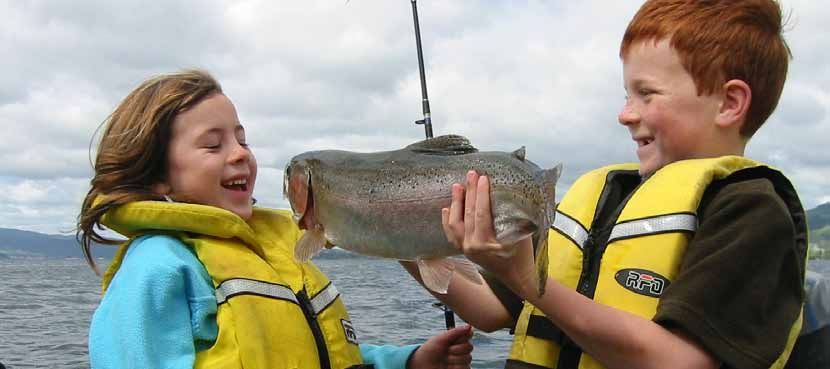
Our Vision

 During the discussions with the community that      To reflect this broader role the vision, ‘Rotorua
 guided the creation of this strategy, it became     has active people, connected communities
 quickly apparent that sport and recreation          and outstanding places to play’ was created.
 plays a significant role in achieving a number of   The following diagram shows how it connects
 our Rotorua 2030 goals.                             to the Rotorua 2030 goals.

 Rotorua 2030 shared vision

                                        OUTSTANDING
                                       PLACES TO PLAY
                                      PAPA WHAKATIPU

                                            Our places
                                            to play and
                                            connecting
                                          people to them

                                       Rotorua has
 ENHANCED             Leveraging      aCTIVE PEOPLE,               Connecting       a RESILIENT
                                                                   people and
ENVIRONMENT          and creating       CONNECTED                                   COMMUNITY
                       respect                                      creating a
 TIAKANA TO                            COMMUNITIES,                  sense of        HE hĀPORI
    TAIAO                             & OUTSTANDING                   place         PŪMANAWA
                                      PLACES TO PLAY

                                             Attracting
                                            people and
                                              events

                                         Business
                                      innovation and
                                        prosperity
                                      WHAKAWHANAKE
                                          PĀKIHI

                                                                                                9
Our objectives

Four objectives have been identified that collectively reflect the key
challenges and opportunities that our district faces

     1                                               2

Increase participation in sport and            Improve communication and
recreation                                     collaboration between communities
                                               and sport and recreation stakeholders
Success measures
                                               Success measures
1. Increase the number of school-aged
   children who spend more than 3 hours        1. Increase in the number of sport and
   per week taking part in sport and              recreation groups sharing facilities (including
   recreation from an estimated 94%               non-council facilities) and best practice
2. Increase the number of adults actively      2. Increase in the number of partnerships
   participating in sport and recreation          between sport and recreation organisations
   every week from an estimated 75%               delivering community sport programmes
3. Increase in the level of participation of
   targeted low participation group

     3                                              4

Provide sustainable access to high              Prioritise the enhancement and
quality facilities and environments            development of Rotorua’s unique
for sport and recreation that best             sport and recreation offerings
matches community expectations
                                               Success measures
Success measures
                                               1. Grow the contribution of recreation and
1. Increase in the percentage of residents        sport to Rotorua’s economy from $194
   who have visited parks, reserves and           million in 2011 to $390 million by 2030
   playgrounds in the last year from 90%       2. Increase in the number of events that
2. Improvement in the percentage of               show case Rotorua’s strengths, including
   residents satisfied with the level             it’s natural environment and culture
   of service for parks, reserves and
   playgrounds from 88%
3. Increase in the utilisation of RLC sport
   and recreational facilities

10
Sport & recreation in Rotorua
Our district is the home of a wide range of With youth, traditional sports such as
outstanding facilities and environments with swimming, basketball (boys and girls), rugby,
unique features not found elsewhere in New football, cycling (boys), netball, dance, and
Zealand. Treasured by residents and attractive gymnastics (girls) are most popular. Interests
to domestic and international visitors, they broaden as we age, and walking, gardening,
include: fishing, swimming, cycling and working out at
• 16 natural lakes over eight hectares in size the gym are popular for both men and women.
and three major rivers, that host a wide Perhaps unsurprisingly, given the popularity
range of sports, recreational opportunities of swimming for both youth and adults,
and events common themes from the RLC Ideas Store
• 800 hectares of parks, gardens and were improving Rotorua Aquatic Centre and
reserves which contain 72 playgrounds developing a waterpark with hydroslides.
available for free public use
• seven geothermal fields with hot pools and But while overall participation rates are good
spectacular steam eruptions; for youth and adults there are some groups
• 100,000 hectares of native and exotic with lower participation rates. For example,
forests there is a marked drop off during the teenage
• iconic volcanic landscapes including Mount years, girls are less active than boys, and
Tarawera, Maunga Kakaramea, Mount students at lower decile schools are less likely
Ngongotaha and Mokoia Island to participate. This can be due to a range of
• hundreds of kilometres of walking, cycling reasons, however factors such as available
and mountain biking tracks, including the time (due to balancing school, family and
internationally recognised trail network in work), cost, culture, personality, and available
Whakarewarewa Forest opportunities (due to facilities, equipment,
• a wide range of lakeside structures support and transport) are identified more
including boat ramps, jetties and pontoons frequently.
• international standard facilities including
the Energy Events Centre and Rotorua Our natural environment lends itself to
International Stadium, and planned BMX outdoor recreation, with a large number of us
track. enjoying the lakes and forests on a regular
basis. The lakes play host to a diverse range
According to the 2013 New Zealand Census, of activities, with fishing traditionally being a
approximately 65,000 people call Rotorua popular pastime and more recently waka ama
home. Results identified key differences from which is rapidly gaining in popularity. In the
the national averages in both our cultural forests, mountain biking in particular has seen
and age profiles, with higher proportions of significant growth and strategies are being
both Māori and youth aged 15 and under. The developed to enhance both our urban and off-
confederated iwi and hapu of Arawa are the road trail networks.
Tangata Whenua of our district. However, like
the rest of New Zealand we have an aging The economic contribution that sport and
population, and it is estimated that over the recreation makes to the Rotorua district has
next 30 years the proportion of residents aged been estimated (including market impacts,
65 and over will increase from 14 to 28 percent. productivity, health and personal benefits)
at approximately $194 million per annum –
Sport and recreation is central to most of our equivalent to around $3000 for every resident
lives. A 2011 review of Rotorua’s sports fields of Rotorua. Sport and recreation is also a
and facilities, which surveyed 21 sports, found significant source of jobs, with an estimated
that over 18,500 of us are members of a sports 1082 people in roles ranging from venue
club and at least 2000 of us volunteer to assist and grounds operations, sports coaches and
with the delivery of sport in our community. instructors, to sport and camping retail.
11Sport & recreation in New Zealand
Sport New Zealand (Sport NZ) is the Crown Connection
entity whose purpose is to “promote, Technology and digital connectivity are
encourage and support physical recreation changing the way, and the speed at which, we
and sport in New Zealand”. Its Community communicate.
Sport Strategy 2015-20 noted:
Almost two-thirds of Kiwis own or have access to
“While New Zealand has traditionally had high a smartphone (59%). Over three-quarters of New
sports participation rates for adults and young Zealanders have internet access (77%).
people, there are emerging trends which we
will have to address if we are to maintain these. The Offering of Sport
Things are changing and we can’t assume we There is greater demand for a diverse range
will always be a sporty, active nation.” of sporting opportunities to meet individual
preferences and health and lifestyle needs.
The same strategy also identified the
Over 100 different activities were identified as
following trends, opportunities and
sport and recreation activities people do in the
challenges for sport and recreation in New
2013/14 Active NZ survey.
Zealand.
The Structure of Sport
Demographics
New organisational forms, partnerships and
Urbanisation, an ageing population and
capabilities are required to create innovative
increasing ethnic diversity are changing the
approaches to delivering sport.
demand for Community Sport and the way
Kiwis participate.
An estimated 52,200 people work in sport and
recreation industries.
There are now 213 ethnic groups in the country,
with an increasing number of people identifying
Sport NZ is responding to these drivers for
with multiple ethnicities.
change by focusing on four key areas – young
people; strengthening the local delivery
The Consumption of Sport
of sport, especially in low participation
People are fitting sport into increasingly busy
communities; ensuring our traditional sports
and time-fragmented lifestyles; demand for
pathways remain strong; and continuing to
individualised sport and physical activity is on
drive high performance outcomes.
the rise, while demand for team and organized
sport is declining.
In particular they have identified there is
an opportunity for change in community
Over any 4 weeks, about a third of participants
sport, to deliver a community sports system
still belong to a sport and recreation club.
that puts the participant at the centre. This
However, traditional sports club membership is
means that participants will guide thinking
down in the last 6 years, and gym membership
and decision-making, and in understanding
is up.
their attitudes, what motivates them and the
barriers they face, the sport system can then
Young People and Sport
respond to their needs and expectations.
Young people have increasingly sedentary
lifestyles with more entertainment options
involving ‘screens’. Having the right quantity
and quality of PE and sport in schools is more
important than ever before.
On average, Kiwis aged over 12 spent over 80%
of their leisure time on passive media and social
entertainment activities.Our key challenges & opportunities
The sport and recreation environment in Rotorua is changing,
which provides a number of unique challenges and opportunities.
Our key challenges and opportunities include:
• barriers to participation such as cost and • providing opportunities for children, young
transport for some groups in our community people, elderly and adults with disabilities
(mixed abilities) to engage in sport and
• sport and recreation opportunities not recreation
matching changes in lifestyle, work patterns
and technology • growing Rotorua’s reputation as the first
choice for great events.
• maintaining capacity and capability within
clubs and groups at committee and volunteer
levels, coupled with increasingly complex
regulatory requirements such as health and
safety impacting on how they run
• strengthening the partnership with
Te Arawa to develop new sport and
recreation opportunities for Rotorua and
supporting indigenous sports
• building upon the success of mountain biking
and further developing Rotorua’s trail network
• developing aquatic sport and recreation
opportunities, such as waka ama, that leverage
our lakes and geothermal environment
• increasing the number of people who choose
to cycle and walk
• the alignment, collaboration, communication
and connectivity of all those organisations,
groups, communities, and individuals involved
in sport and recreation to support
• prioritising resources and providing affordable
and sustainable access to sport and recreation
facilities and environments against a backdrop
of increasing costs and the continuing need
for both quality existing and new facilities and
environments
• the resulting community experience of using
sport and recreation facilities and environments
ROTORUA SPORT & RECREATION STRATEGY
TĀTOU TĀTOU - WE TOGETHER 13Objective 1
Increase participation in sport and recreation
1
Whether it is for enjoyment, exercise or health reasons there is no doubt that participating
in sport and recreation is good for us. Increasing participation is not simply having people
participate more - it is about more people, participating more often, delivering Active People.
Increasing the number of people and frequency we participate improves our individual health
and wellbeing as well as benefiting our communities overall quality of life. It requires us to work
with specific communities to develop novel approaches and remove participation barriers. It
requires our clubs, groups and other organisations to be capable and future focused, and it
requires us to celebrate and leverage success.
STRATEGIES ACTIONS
1.1 Identify groups with lower • Deliver more programmes and facilities
for young people not engaged in sport and
participation rates and focus on recreation. For example, the Free Parking
delivering tailored programmes programme and youth spaces developments
or additional infrastructure that • Utilise existing research to identify and
removes barriers confirm low participation groups that will be
targeted. For example, teenage girls or catering
for an aging population
• For identified groups to work in partnership
with the community and relevant sporting and
community based organisations to develop
tailored programmes that remove barriers for
participation
• As part of the proposed neighbourhood
reinvigoration projects deliver safe and
attractive play spaces.
1.2 Strengthen the capability of • Promote governance and management
clubs and organisations delivering (including volunteers’ management) courses for
sport and recreation organisations
sport and recreation
• Support the formation and development of
organisations that take ownership for delivering
programmes and improvements within their
communities
• Identify and promote available best practice
resources to assist sport and recreation
groups with fundraising, events promotion and
management, and participation drives.
1.3 Inspire future sporting stars and • Promote sporting participation through role
sporting excellence through the models, including ‘open day’ programmes
celebration of sporting success. attended by Rotorua sporting stars
• Investigate options for creating a Rotorua
Sporting Hall of Fame
• Support partners to develop coaching
resources in areas where Rotorua has a natural
14 advantage; trail and aquatic related and
indigenous sports.Strategy in Action
Free Parking - increasing activity in youth spaces
In 2009 it was identified through the Council Youth Spaces project that there were barriers within four
community neighbourhoods that hindered the ability for youth to participate in sport and recreational
activities. In response, Council allocated $600,000 to develop skate parks and youth friendly spaces in
four of the district’s parks and reserves. Flexible youth spaces were developed in the parks with a mix of
skateable features which also act as seating and social spaces.
Building on the youth space developments for these communities, Council invested and attracted
sustainable funding for a youth space activity programme, the Free Parking programme. Over the
past 3 years, the Free Parking programme has taken a community approach to the utilisation of these
youth spaces by involving young people, schools, community organisations and sport codes to create a
community culture of participation.
Free Parking aims to address some of the traditional barriers to participation in sport and recreation
such as, transportation, costly participation fees, lack of awareness of what’s available and the
provision of facilities, by providing free and accessible activities in local Youth Spaces. The delivery of
Free Parking is now transitioning into each of the four communities through partnership agreements
using a community-led development approach. This will enable each community to deliver according
the communities needs and build on the initial success of this programme.
15Objective 2
Improve communication and collaboration between
communities and sport and recreation stakeholders
2
Local organisations, communities, groups, clubs and individuals working together and playing
their part will result in further opportunities for sport and recreation in Rotorua and getting
more people active. Facilities, access, funding, promotion and awareness are essential, so to
maximise sport and recreation opportunities we must coordinate efforts, leverage technology
and each other’s strengths, and develop partnerships in a long-term sustainable way,
delivering Connected Communities. These connections help create resilient, inclusive, liveable
and safe neighbourhoods that give us a sense of place. They also play a critical role in getting
more of us active and connect us to our outstanding places
STRATEGIES ACTIONS
2.1 Create opportunities to improve • Establish a regular (twice yearly) Rotorua
Sport and Recreation Forum that promotes
collaboration and support the dialogue between codes, clubs, schools, and
development of partnerships other organisations
between sport and recreation • Establish a Rotorua Outdoor Recreation
stakeholders Infrastructure and Access Collaboration Group
to promote dialogue and joint decision making
between outdoor recreation partners such
as landowners, Fish & Game, Department
of Conservation, Rotorua Trails Trust etc.
Members of this group would cooperate on
specific projects or opportunities, for example
the utilisation of unformed legal roads.
2.2 Improve communications • Develop a digital information hub for events,
delivery through greater sports and recreation facilities and services
to support clubs and other organisations and
coordination and better leveraging inform the community
digital media platforms. • Develop a Rotorua Sport, Recreation and
Leisure Expo that focuses improving health
outcomes by raising awareness of the sport
and recreation opportunities available
• Improve the use of social media as a key
platform for teams, clubs, sport and recreation
organisations to communicate with each other
and the wider community.
16Strategy in Action
“Making a Difference – Kia Tu Whakarereke” partnership
Swim Rotorua, Rotorua Lakes Swim School, Rotorua Aquatic Centre, Swimming New Zealand and
Te Arawa Lakes Trust are joining together to form the “Making a Difference – Kia Tu Whakarereke”
partnership with 10-12 schools in the Rotorua area. The proposed programme, which is currently
seeking funding, aims to provide an outreach swimming programme tailored to schools specific needs.
The partnership is designed to get more Rotorua children in learn to swim programmes, swimming
being a core life skill particularly for children of this region with its numerous lakes and rivers. The
partners collectively aim to improve water safety and also to encourage more families to see the value
of swimming as a life skill, fitness tool and as a sport. Schools are being asked what best suits their
needs, and then programmes will be tailored accordingly. The programme is targeting the improvement
of skills of those who are not traditionally well represented in the sport of swimming or other aqua
based sports.
17Objective 3
Provide sustainable access to high quality facilities and environments for
sport and recreation that best matches community expectations
3
Our communities expect high quality indoor and outdoor sports facilities along with natural
environments that cater for a range of needs - from community based participation to national
and international level competitions - delivering Outstanding Places to Play. These places
create sport and recreation opportunities that become part of our lifestyle - connecting us,
transporting us and surrounding us. This requires us to look to the future, balance community
expectations and not be afraid to make bold calls and prioritise where required.
STRATEGIES ACTIONS
3.1 Ensure plans for • Complete the Bay of Plenty Spaces and Places
Review to identify the gaps between future sport and
future sport and recreation infrastructure requirements and what’s
recreation facilities and currently available
environments reflect • Review and recommend changes to the sport and
evolving community recreation investments in the long term plan following
the Bay of Plenty Spaces and Places Review and taking
needs into account targeted groups and the prioritisation of
Rotorua’s unique sport and recreation offerings.
3.2 Increase community • Review and update as required reserve asset
utilisation of RLC facilities management plans along with associated level of
service
and environments while
balancing expectations • Review and recommend changes to the relevant sport
around overall cost, fees and recreation policies for fees and charges associated
with RLC managed facilities and environments.
and charges, access and
level of service
3.3 Maintain and • Renew sport and recreation infrastructure in line with
deliver new sport and the asset management plans and Council’s approved
long term plan
recreation facilities and
environments • Deliver new sport and recreation infrastructure (fitness
trails, parks, youth spaces, skate park, playgrounds,
paths, toilets, pump tracks, boat ramps etc...) in line with
Council’s approved Long-term Plan
• Further enhance key inner city environments such as
Kuirau Park and the Lakefront, in line with the Inner City
Revitalisation Strategy.
18Strategy in Action
Netball
Netball is the largest girls and women’s sport in Rotorua. It has a long and established history in the
district and is one of the few sports in recent years that have maintained its participation levels.
Rotorua hosts one of the oldest annual sports tournaments in the country with the Kurangaituku netball
tournament hosting around 200 teams, with an average of 12 players per team plus supporters. It is
important that facilities recognise the scale of this tournament which has been running for 82 years,
alongside local and regional requirements for club competitions.
Increasingly, many centres are playing netball indoors to mitigate the effects of weather. For Rotorua
this will mean understanding what indoor venues might be available for future competitions and how
we collaborate to deliver sustainable and affordable access
19Objective 4
Prioritise the enhancement and development of Rotorua’s
unique sport and recreation offerings
4
Te Arawa people, our lakes and forests, and the multitude of events offered in Rotorua are
what set sport and recreation in our district apart. These strengths, often envied by visitors, are
an immense source of community pride. Additionally, they make a significant contribution to
our economy, being a key reason our district is attractive to visitors and new residents alike.
However, we must continue to enhance and develop these strengths, to effectively deliver
Active People - Connected Communities - Outstanding Places to Play
STRATEGIES ACTIONS
4.1 Strengthen Rotorua’s • In partnership with the Rotorua Trails Trust and other
key stakeholders continue to sustainably develop and
urban and off-road trail maintain Rotorua’s trail network to achieve the vision,
network to create the ‘City Rotorua is the heart of mountain biking, contained in the
Rotorua ten-year cycle tourism strategy
of Trails’
• Complete development of the Rotorua Cycle Strategic
Plan to guide the development and design of the
Rotorua CyWay programme
• With funding from the government’s Urban Cycleway
programme deliver new urban cycleway infrastructure
as part of the Rotorua CyWay programme
• With a private investor refurbish the Rotorua Aquatic
Centre to increase the capacity and level of service in
line with community expectations.
• In partnership with schools, Swim Rotorua and the
4.2 Enhance our lakes and Te Arawa Lakes Trust, ensure that every young person
aquatic environment and in Rotorua has the opportunity to learn to swim
improve the accessibility • Review and recommend upgrades to lakes
for residents and visitors infrastructure and access (through planning, acquisition,
and advocacy) and investigate the feasibility of
seasonal public transport options for selected lakes
• Investigate the feasibility and options for an annual
community focused Rotorua Lakes festival.
4.3 In partnership with
Te Arawa build upon our • With Te Papa Takaro O Te Arawa identify and develop
programmes that increase participation in indigenous
unique cultural identity sports, building upon Rotorua’s unique cultural identity
and support the ongoing
• Review and recommend changes for infrastructure
growth of indigenous investment in the Long-term Plan that supports Te
sports Arawa aspirations and indigenous sports such as waka
ama.
20Strategy in Action
4.4 Deliver a Rotorua • Refresh the Rotorua Events Strategic Plan, ensuring
that it includes supporting major events that leverage
events experience like no Rotorua’s strengths
other
• Develop the resources available for both community
and commercial orientated events
• Support Rotorua’s communities to lead and run events
• Develop good practice guide for running events which
covers for example, consents, health and safety, traffic
management, and volunteers.
Mountain biking
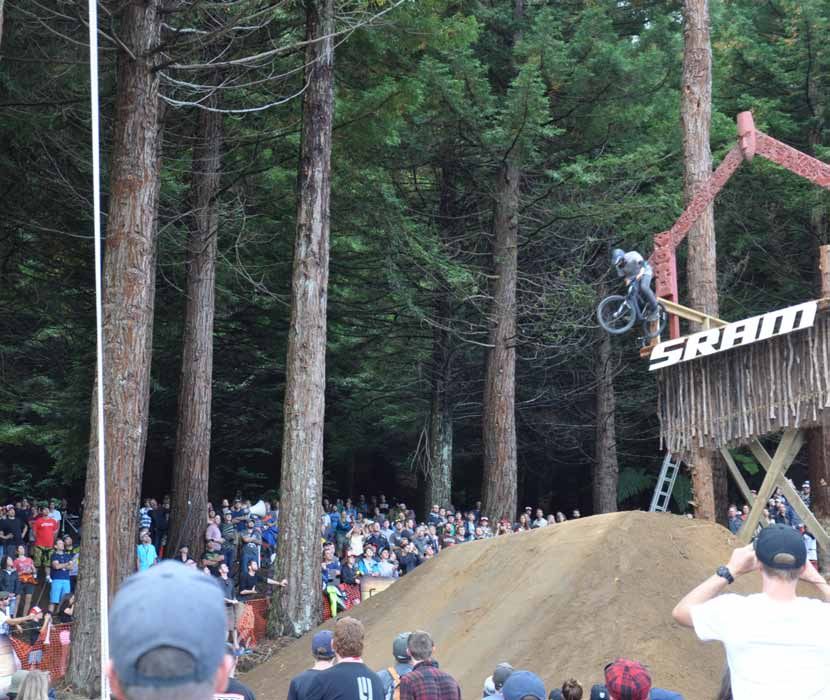
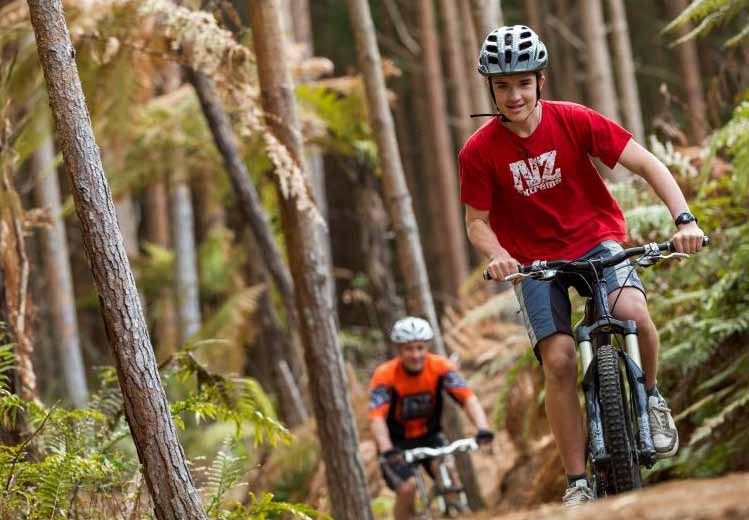
Mountain biking visitors to Whakarewarewa Forest have grown by around 15% per annum since
2009. As a biking destination, Rotorua has hosted world and national level championships as well
as numerous other cycling orientated events including the recent staging of Crankworx Rotorua part
of a global mountain biking festival. Rotorua is home to the New Zealand Mountain Biking Centre of
Excellence, and several professional Olympic riders base themselves here.
While mountain biking is already a major contributor to Rotorua’s economic activity, there remains
significant opportunities for growth. Conservative estimates are that biking tourism currently generates
at least $12 million annually for the Rotorua economy. In line with overseas cycling growth trends, it has
been estimated that the potential exists to grow this exponentially.
Continued overleaf
21Strategy in Action Fishing National Angling Surveys show that recreational trout fishing on Rotorua’s lakes and streams attracts approximately 180,000 angler visits each season. The diversity of angling experiences offered along with active fishery management makes the Rotorua district nationally and internationally renowned. Around 40% of angling activity comes from local anglers, with the remaining effort by national and international visitors driving a significant benefit to the local economy. Rotorua Lakes Council supports recreational angling through the provision of public boat ramps and jetties on the lakes and a variety of infrastructure around fishing sites and access points. These also serve other users of the lakes, and water-based activities make up an important regional attraction for locals and visitors to the district. Waka ama Waka ama has seen massive growth in recent years, with a busy calendar of events running throughout all seasons. With 15 lakes in the Rotorua district, we are spoilt for choice with venues for both training and competition. The local Rotohoe Series - a competition open to paddlers from across the country - is a much-anticipated event, showcasing the clear waters and picturesque scenery of Te Arawa, while providing valuable mid-year race experience before regional and national competitions kick-off in summer. There are currently five waka ama clubs in Rotorua catering for both social and competitive paddlers, with local schools also offering waka ama as a sports elective. While waka ama is a very physical and demanding water sport, it is the all-encompassing whakawhanaungatanga – or sense of belonging - that the sport embraces and which makes it a popular activity for all ages. 22
ROTORUA SPORT & RECREATION STRATEGY
         TĀTOU TĀTOU - WE TOGETHER

STRATegy
    S    ACTIONS                                        2015/16 2016/17 2017/18

   1.1       Delivery of youth focused programmes
             and facilities

   1.1       Delivery of programmes to lift
             participation for targeted groups

   1.2       Promotion of best practice guidance

   1.3       Rotorua sporting hall of fame

   2.1       Rotorua sport and recreation forum

   2.2       Deliver information hub for sport and
             recreation

   3.1       Complete Bay of Plenty spaces and
             places review

   3.2       Updates sport and recreation polices for
             fees and charges

   3.3       Delivery of new sport and recreation
             infrastructure

   4.1       Delivery of Cy-Way programme

   4.2       Aquatic Centre upgrade

   4.3       Identify infrastructure investment
             required to support the ongoing
             development of indigenous sports

   4.4       Refresh Rotorua events strategy

                    We would love to hear what you think!
                    Head to www.rotorualc.nz to feedback
                    on this strategy by October 31st.

                                                                                  23
You can also read


