Rules for Government of Western Australia Department of Commerce
←
→
Page content transcription
If your browser does not render page correctly, please read the page content below

Government of Western Australia
                 Department of Commerce
                 Building Commission

Rules for
pools and spas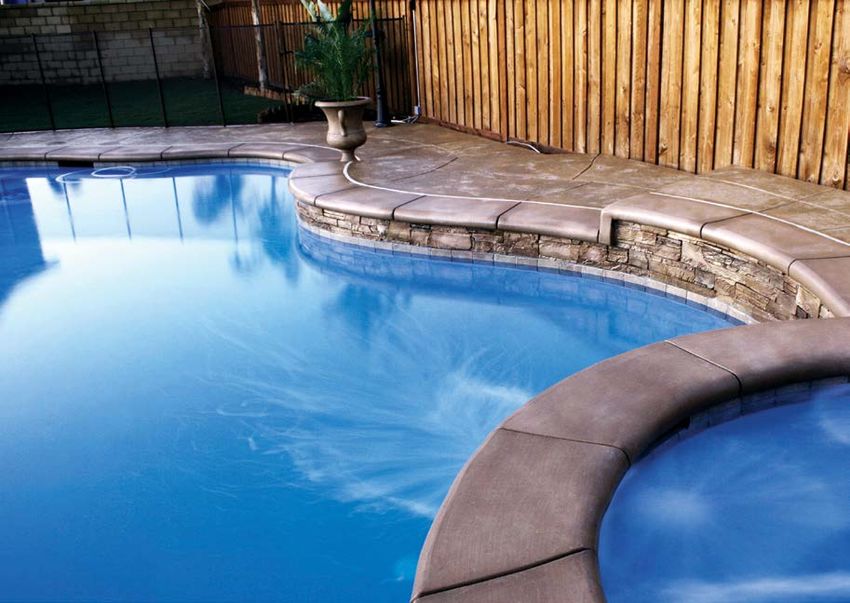
Contents
Section 1 – Why legislate?.................................................................................................................................................. 1

Section 2 – The rules and regulations................................................................................................................... 3

Section 3 – How do you comply?................................................................................................................................. 4

Section 4 - Frequently asked questions.........................................................................................................17

Section 5 – Further information................................................................................................................................20

Referenced document
Standards Australia
Australian Standard AS 1926.1-1993 Part 1: Fencing for swimming pools
(incorporating Amendment No. 1 only)

Disclaimer
The material contained in this booklet provides general guidance and information only and is current
at time of printing. Readers should not act or omit to act solely on the basis of anything contained
herein. In relation to a particular matter, you should seek appropriate professional advice. The State
of Western Australia and its servants and agents expressly disclaim liability, whether in negligence or
otherwise, for any act or omission resulting from reliance on this document or for any consequence of
such act or omission.

Section 1 – Why legislate?
Drowning is the most common cause of preventable death for children aged 0–5.
Over the past five years 16 toddlers have drowned in Western Australia. For every
drowning death, it is estimated that 10 children are admitted to hospital following
a near-drowning incident (160 children over the past five years).
In Western Australia, domestic swimming pools are the most common site in which
drowning for children aged 0–5 occurs with 94% of drowning incidents at locations
in and around the home. Of the 94%, 31% occurred at a relative or neighbour’s home.
These tragic incidents can be significantly         Factors relating to parents/carers:
reduced if we are all aware of the potential
hazards of water in our everyday life - using
                                                       • Absence of or poor supervision.
simple prevention methods and learning the life        • Parental ‘vulnerable period’ such as
saving skill of resuscitation.                            when family routine is broken (ie parents
                                                          acutely ill, visitors call, domestic duties).
There are specific laws in Western Australia that
mandate the installation of a safety barrier to        • Underestimating the young child’s
enclose private swimming and spa pools.                   capacity to gain access to areas where
                                                          parental supervision is necessary.
The laws are intended to protect the safety of
young children by restricting their access to the      • Unrealistic expectations of young
area containing the swimming or spa pool.                 children’s behaviour and self control.

Causes of accidental drowning                          • False sense of security when each
                                                          parent or carer mistakenly assumes that
Most drownings occur where there is no barrier            the other is supervising the young child.
between the residence and the pool area or
because the barrier is defective.                      • False belief that the pool safety devices
                                                          such as retractable ladders and lockable
The Royal Life Saving Society Australia has               covers, or an inadequate barrier, will
also identified a number of contributory factors          provide adequate protection.
associated with drowning and near-drowning
incidents through its ‘Keep Watch’ program and         • False belief that the presence of
associated research.                                      several or older children reduces the
                                                          threat of drowning.
                                                       • Other children may not appreciate a
                                                          child is in danger and simply assume
                                                          they are ‘playing’.

                                                                                                          1
Factors relating to children:                      Factors relating to the swimming or
       • Young children have limited strength,         spa pool:
          judgement and physical coordination.           • Absence of a barrier between the
       • Young children are attracted to water.             residence and swimming or spa pool.
       • A young child is not able to understand         • Ineffective gates or doors.
          the concept of danger and therefore may        • Ineffective placement or design of barrier.
          have difficulty in understanding that
          water can cause harm.                          • Tempting objects floating in the water.
       • An active, intensely curious child does not
          understand the consequences of falling
          into the water.
       • Infants and toddlers generally are not
          coordinated well enough to swim and
          breathe at the same time.
       • Very young children are susceptible to
          drowning because they are top heavy. A
          young child leaning forward to look into
          the water or reach for an object easily
          topples over and drowns even in several
          millimetres of water.
       • Child drowning is silent and coughs or
          splashing may not even be heard.
       • Children may disobey parent/carer
          instructions.

2
Section 2 – The rules and regulations
All private swimming and spa pools that contain water that is more than 300mm deep
must have a compliant barrier installed that restricts access by young children to the
pool and its immediate surrounds.
The legislative framework that mandates this           What is the role of local government?
requirement in Western Australia comprises:
                                                       Local government (as the permit authority)
    • the Building Act 2011 (WA) (the Act);            is responsible for issuing building permits for
                                                       swimming and spa pools and their associated
    • the Building Regulations 2012 (WA) (the          barriers. The approval process not only ensures
        Regulations); and
                                                       that the building and barrier standards are
    • Australian Standard AS 1926.1-1993               satisfied, but that the structures are registered
        Part 1: Fencing for swimming pools             with the local government so that periodic
        (incorporating Amendment No. 1 only)           inspections of the installed barrier can occur -
        (the Standard).                                generally once every four years.

What is required?                                      Are there penalties for
A building permit is required under the Act and        non-compliance?
the Regulations prior to installing, constructing or   Owners and occupiers are responsible for
altering swimming and spa pool barriers, including     ensuring that any fence or barrier restricting
windows, doors and gates that provide access to        access to a swimming or spa pool is maintained
a swimming or spa pool area. A building permit is      and operating effectively. If you do not comply
also required for the construction of swimming         with the Regulations and the Standard, you risk
and spa pools.                                         the lives of young children as well as facing
The Standard describes the minimum technical           substantial fines.
requirements applicable to swimming and spa
pool barriers.
Compliant safety barriers are required for in-
ground, above-ground, and indoor swimming
and spa pools that contain water that is more
than 300mm deep. Spa pools can, by definition,
include jacuzzis and outdoor hot tubs, however
this does not include spa baths that are normally
emptied after each use.
Whilst a portable wading pool that does not
contain water that is more than 300mm deep
does not require a mandatory child safety barrier,
parents and carers need to be aware that these
types of pools are still a constant source of
danger to young children.

                                                                                                           3
Section 3 – How do you comply?
Swimming and spa pool barrier regulations have changed over time, and depending
on when your swimming or spa pool was constructed, installed or approved, different
regulations may apply to the barrier requirements.
General barrier requirements (all Post November 2001
swimming and spa pools) Barriers for swimming and spa pools approved
A barrier enclosing a swimming or spa pool may after 5 November 2001 must not include as
consist of: part of the barrier any wall that contains a door,
unless this door is permanently sealed using a
• A fence, wall, or other barrier, or a device other than a key locking mechanism.
combination of them, that is in accordance
with the requirements of the Standard. Pre November 2001
• A gate that is in accordance with the A concession exists for swimming and spa pools
requirements of the Standard, opens that were constructed, installed or approved
away from the swimming or spa pool and prior to 5 November 2001. In this instance, the
is self closing and self latching. barrier may include a wall that contains a door,
providing that door complies with the Standard.
• A window if it is in accordance with the
requirements of the Standard.
4Where should barriers be located?
The following diagrams are graphical examples of where the barrier can be located around the
swimming or spa pool. Examples 1, 2, 3, and 4 are the current requirements and refer to swimming
and spa pools constructed or approved after 5 November 2001. Post November 2001 pools require an
isolation barrier between the pool and the residence.
Examples 5, 6 and 7 refer to swimming and spa pools constructed or approved prior to 5 November
2001 only. A concession allows for a door opening directly into the pool area as long as that door
complies with the Standard.
Post November 2001
Example 1 Example 2 Legend
Allotment boundary Allotment boundary
G
Gate complying
with AS 1926.1
Pool Pool
G D Child-resistant doorset
G
complying with AS 1926.1
w Child-resistant openable window
Outdoor Outdoor W
Allotment boundary
Allotment boundary
Allotment boundary
Allotment boundary
living living complying with AS 1926.1
Openable window NOT
complying with AS 1926.1
Sliding door NOT complying
Dwelling Dwelling
with AS 1926.1
uch Fence, retaining wall or other such
.1 barrier complying with AS 1926.1
gs Wall of dwelling with no openings
Street Street
Example 3 Example 4
Allotment boundary Allotment boundary
Pool Pool
G G
Outdoor Outdoor
Allotment boundary
Allotment boundary
Allotment boundary
Allotment boundary
living living
W
Dwelling Dwelling
Street Street
5Pre-November 2001
Example 5 Example 6 Example 7
Allotment boundary Allotment boundary Allotment boundary
Pool Pool Pool
G G
Outdoor
Outdoor Outdoor
Allotment boundary
Allotment boundary
Allotment boundary
Allotment boundary
Allotment boundary
Allotment boundary
living
living living
D W G D W D D
Dwelling Dwelling Dwelling
Street Street Street
Barrier design and construction Types of materials
Barrier standards are set out in Australian The barrier may be made of any materials
Standard AS 1926.1-1993 Part 1: Fencing for providing they are of a durable nature and
swimming pools (incorporating Amendment No. the components that make up the barrier,
1 only) and the Building Regulations 2012. The when finished, comply with the requirements
information in this section should not be seen as contained within the Standard, in particular
a replacement for referring to the Standard and strength and rigidity of openings.
the Regulations.
Barrier height
Although AS 1926.1-1993 has been superseded
by AS 1926.1-2007, the Government of Western All parts of a barrier must have an effective
Australia has not yet endorsed the newer height not less than 1200mm from the top
version. For this reason, the 1993 version of the of the barrier to the finished ground surface
Standard continues to apply to private swimming (Diagram 1).
pools in Western Australia. This is measured on the outside of the pool or
spa enclosure. Where the barrier has horizontal
The design and construction of barriers must be
members, the highest of the low members must
such that they comply with the requirements
be at least 1100mm from the top of the barrier.
of the Standard and the barriers must be
maintained so they comply with the Standard Barriers must be designed to be near vertical and
at all times. It is important to be aware that all where this cannot be achieved, they must not
dimensions provided are maximum or minimum lean towards the swimming or spa pool by more
dimensions that must not be either exceeded or than 15º to the vertical.
reduced respectively.
These are also important considerations for
designing a new swimming or spa pool or
where parts of an existing barrier design are
to change substantially.
6Effective barrier height
DIMENSIONS IN MILLIMETRES
100 max
Lowest upper
horizontal member
Vertical member 1200 min.
1100 min.
900 min.
Highest lower
horizontal member
Ground level
100 max
Diagram 1
Perforated materials or mesh Climbable objects
Any barrier that uses a material made of mesh To maintain compliance of the barrier and an
or other perforated material (rather than vertical effective minimum height of 1200mm, the
uprights or solid infill panels) that has holes or following conditions must be observed on the
gaps that exceed 13mm, but that are not more inside and outside of the barrier:
than 100mm, must have a barrier height not less
than 2400mm from the finished ground surface. Outside of the barrier (non-pool side)
Where a crank is provided on top of the fence When measured from the top of the barrier,
(common for cyclone wire fencing) an effective objects that may create a foothold for young
vertical height of 1800mm up to the crank must children to climb over, must not be within
be observed. 1200mm of the barrier (Diagram 2).
This type of fence must include a strainer wire or Objects like BBQs, garden retaining walls, garden
rail at the top and bottom of the vertical section furniture, water features/ornaments, and trees/
of the fence. shrubs can provide footholds.
7Climbable objects
DIMENSIONS IN MILLIMETRES
Non Climbable
object
300
12
00
cle
ar
pas
n
Climbable
objects
Climbable objects
Barrier
POOL SIDE OUTSIDE
Diagram 2
Inside the fence (pool side) pool owner to have any influence over what
a neighbour does within the confines of their
For barriers that are designed with vertical property that may impact on the compliance of
openings that exceed 10mm, but that are the barrier.
not more than 100mm, substantial horizontal
surfaces on the inside of the barrier must be This situation has been recognised by the
located no closer than 300mm (Diagram 2). This Regulations whereby a boundary/dividing fence
design requirement is to ensure that horizontal is considered to comply if the requirements are
surfaces on the inside of the barrier cannot be satisfied in relation to either side of the fence.
used to aid climbing of the barrier. Swimming and spa pool owners and occupiers
are encouraged to discuss with neighbours any
Boundary or dividing fences
barrier requirements so that all parties are aware
The Standard requires that where fences are that any modifications they may make to or near
used to form part of the barrier, the effective their side of the dividing fence may have an
height of 1200mm should be maintained on impact on the compliance of the barrier.
the outside of the barrier. However in the case
of boundary or dividing fences it is common to
have objects positioned against them on the
neighbour’s side of the fence (non-pool side)
that would be considered climbable. In these
cases it is very difficult for the swimming or spa
8Substantial horizontal surface in a barrier
A substantial horizontal surface is any horizontal or near horizontal surface that is greater than 10mm
either in depth or protrusion (such as steps, pot plants, trees/shrubs with low branches, brickwork,
render and window sills). Any substantial horizontal surface(s) on the outside of the barrier must be
spaced not less than 900mm apart. The highest of the low projection/indentation must be a minimum
of 1100mm below the top of the barrier (Diagram 3).
Barrier with projections and indentations
DIMENSIONS IN MILLIMETRES
Top of barrier Indentation
1200 min.
1100 min.
900 min.
Ground level Projection
Diagram 3
Horizontal members
If the barrier has been designed so that horizontal • If the barrier or sections of it are on
members brace the barrier (such as rails, rods, sloping land then these measurements
wires and bracing) on the outside of the fence, or must be maintained when taken
where vertical members have openings greater perpendicular from the ground.
than 10mm, but not more than 100mm, then the
following conditions must be maintained:
• The top surface of the highest of the low
members must be at least 1100mm from
• The horizontal members must not be less the top of the barrier (Diagram 4).
than 900mm apart. Measurements are
to be taken from the top surface of the
highest of the low members to the top
surface of the lowest of the high members.
9Horizontal members spacing
DIMENSIONS IN MILLIMETRES
Top of barrier
100 max
1200 min.
1100 min.
900 min.
Ground level
Diagram 4
Possible treatment of
horizontal surfaces
Modifying substantial
Where horizontal rails are located on the outside horizontal surface/members
and are spaced less than 900mm apart and they DIMENSIONS IN MILLIMETRES
have a horizontal surface greater than 10mm,
modifications can be made directly to the surface
to ensure it is no longer capable of being used
to aid climbing. Modification involves creating
a sloped surface so it is greater than 60° from
horizontal (Diagram 5).
The gap between the vertical members must not 60º min
be greater than 10mm to use this treatment.
POOL SIDE OUTSIDE
Cross section Detail
Diagram 5
10Vertical members Retaining walls
Any barrier that is designed with vertical If the swimming or spa pool is located on either
uprights must not have a clear space between side of a retaining wall this wall may form part of
them that is greater than 100mm. a barrier.
Ground clearance High side
The bottom of the pool barrier cannot be more A retaining wall or other such barrier on the
than 100mm from the finished and stabilised high side of the pool must not be less than
ground surface. 2400mm to the finished ground surface on
the inside of the pool enclosure. The outside
Stabilised ground surface surface of the wall must meet the design
The surface directly beneath the pool barrier requirements of the Standard, and the retaining
must be stable and not able to be eroded by wall must not slope away from the pool by more
weather, children or animals. Examples of than 15° to the vertical.
suitable materials include pavers, concrete, wood
sleepers, garden rocks/stones or grass.
Low side
A retaining wall or other such barrier on the low
side of the pool must not be less than 1200mm
high. The outside surface of the wall must meet
the design requirements of the Standard unless
it is not less than 2400mm in height.
The retaining wall must not slope toward the
pool by more than 15° to the vertical.
Where a fence sits atop and intersects a
retaining wall, the fence must extend to the
outer edge retaining wall and return 900mm
along the retaining wall in either direction. The
outside surface of the fence must not allow
a child to scale along the top surface of the
retaining wall and the outside of the fence and
then into the pool area. Shielding on the outside
of the fence may need to be considered to
prevent climbing/scaling.
11Gates and fittings
Direction of opening Latching device
Gates must be hung so that they swing away from A latching device must be fitted to the gate
the swimming or spa pool area because children that will secure the gate closed unassisted. The
can use their weight to push a gate forward. latching device must not allow the gate to
re-open without the proper use of the latch.
Automatic self closing device
When in the closed position, the gate must
All gates must be fitted with a device that will not have any gaps that exceed 10mm at the
return the gate to the closed position without latching device.
the use of manual force. The self-closing
function must operate from any position that This is to prevent the insertion of an implement
the gate is capable of opening, including when by a child that is capable of fitting in between
resting on the latch. The self-closing function the gap and releasing the latch device. In some
should not allow the gate to inadvertently cases the point at which the gate latch operates
bounce back open. may need to be shielded to prevent opening with
the aid of an implement.
When selecting and installing a gate it should
be noted that the effectiveness of self-closing Latch release mechanism
devices can be reduced as a result of prevailing
The mechanism that releases the latch must
wind direction and loads. This wind may prevent
be located not less than 1500mm above the
the gate closing as it moves through its arc of
finished ground level when measured on the
operation. Care should be taken when selecting
outside of the pool enclosure.
the gate type and position within the barrier
to ensure the wind does not impact on the self The release mechanism must not be less
closing and latching operations. than 1400mm above the highest of any low
horizontal members that may be part of the
Gate clearance barrier design (Diagram 6).
The bottom of the gate cannot be more than
100mm from the finished and stabilised ground
surface. When installing the gate, the need for
sufficient clearance to enable it to swing freely
through its arc of operation must be considered.
It is recommended that all surfaces beneath the
gate be hard-stand and not grass, as grass can
quickly overgrow and reduce the self closing and
latching functionality of the gate.
Gate hinges
Traditional self-closing techniques have been to
affix a tension spring to the gate and barrier frame.
Hinges that perform a self closing function
should not project more than 10mm from the
gate or frame because such projections may
create a foothold or hand grip for young children
to climb over. Where hinges do project more
than 10mm from the gate or frame, they must
be spaced to ensure that the top surfaces of the
hinges are more than 900mm apart.
12Location of latch
DIMENSIONS IN MILLIMETRES
Latch release
Top of barrier Top of gate
1400 min.
1500 min.
Diagram 6
In some instances the latching device and Shielding of latches for open
release mechanism are the same. Where the
design gates
release mechanism is not located as described
above, the gate will still comply if: Where the gate is designed so that vertical
members are spaced more than 10mm apart and
• The mechanism to release the latch is on the latch release mechanism less than 1500mm
the inside of the pool enclosure.
above the finished ground level then:
• The release mechanism is positioned so • The mechanism that releases the latch
that releasing the latch device would
device must be shielded to restrict the
require a young child to reach over or
opening of a gate by a young child by
through the gate at a height not less
reaching up and through the gate, either
than 1200mm.
by hand or with the aid of an implement.
• A height not less than 1100mm above • The latch and release mechanism must
the highest of the low horizontal
be shielded with material that has an
members is maintained (Diagram 7).
effective radius not less than 450mm
• The latch release mechanism is not less when measured from the latch release
than 150mm below the top of the gate mechanism. Within the shielded area no
or away from the edge of the handhold gaps of more than 10mm are permissible
where one has been installed (Diagram 7). (Diagram 7).
13Latch location where shield is required
DIMENSIONS IN MILLIMETRES
Top of fence Gap in shield Latch shield Top of gate
10 max.
150 min.
Latch
450 min.
1200 min.
Diagram 7
Above-ground swimming or spa pools ladders or steps after each use is not an option
for compliance.
Above-ground swimming or spa pools that have
side walls not less than 1200mm from the All owners or occupiers with above-ground
finished ground surface may not require a barrier swimming or spa pools are recommended to
to create an enclosure if it is free of: install an appropriate barrier regardless of the
design of the walls. Lockable swimming or spa
• bracing with horizontal surfaces; pool covers do not meet the requirements of
• substantial horizontal surfaces; or the Regulations.
• climbable objects. Portable and climbable objects in and around the
property remain a constant danger.
Where bracing is required to support the
swimming or spa pool and the bracing angles
out from the pool wall to the finished ground
surface, the top surface of the supports must
be greater than 60° from the horizontal.
However, any features that constitute a
climbable object, such as entry/exit ladders or
steps, or pool pumps, require a barrier with a self
closing and self latching gate. Removal of the
14Balcony Sill height between 900mm and
If the height of a balcony is less than 2400mm 1200mm
to the finished ground surface and projects into b) If the sill height is between 900mm and
the inside of a swimming pool or spa enclosure, 1200mm above the floor, the window must
then either of the following modifications to a comply with either of the requirements
balcony access must be made: described in (a) or be fitted with a securely
• the doors and windows that lead directly fixed fly screen frame that has a screen fixed
to the balcony area must meet the to it and is in good condition. The screen
requirements as described in the following fitted to the frame must be either powder
sections ‘Windows’ and ‘Doors’; or coated aluminium or stainless steel. Nylon
based fly wire is not of acceptable strength.
• if the doors and windows do not comply
then a barrier that meets the design and Sill height between 1200mm or
construction requirements as described
in this section must be installed and
greater
maintained on the balcony. c) Any window that has a finished sill height of
1200mm or greater above the floor does not
require treatment.
Windows
While option (c) does not require a treatment,
A window may form part of the barrier as it is recommended that treatment options as
long as it is modified so that it meets the described above in (a) or (b) are considered. Many
requirements of the Standard. objects in a room can provide a young child with
a climbable object to reach the 1200mm window
Opening windows sill and access the swimming or spa pool area
If the lowest panel of a window that is capable through the window.
of opening is less than 2400mm to the finished
ground surface when measured from inside
the pool enclosure, then one of the following
options must be completed:
Sill height less than 900mm
a) If the sill height is less than 900mm above
the finished floor surface when measured
from inside the building, the window must
have one of the following modifications:
• be covered by bars or mesh screens that
are fixed into position with fasteners
that require the use of a hand tool to
remove (such as an Allen key, spanner, or
screwdriver). Key locking devices are not
acceptable; or
• be fixed in such a way that the window
is not capable of opening more than
100mm. This 100mm clearance applies to
windows that open in either a horizontal
or vertical plane. Key locking devices are
not acceptable and the stopping device
must be permanently fixed.
15Doors
A wall of a building that is used as part of the • Not contain footholds protruding more
barrier may contain a door that complies with the than 10mm on the door or its frame. This
Standard, only if the swimming or spa pool was is to restrict the opportunity for a young
given building approval before 5 November 2001. child using the foothold to climb the door
and release the latching device. This
Opening doors must be observed in between the release
Where a sliding or hinged door contained in a of the latching device to 100mm above
wall that is permitted by the Regulations to the floor.
be used as part of the barrier, it must have the Owners and occupiers must remain aware that
following characteristics: young children are resourceful and are capable of
• Be fitted with a self-closing device that will using a climbable object found within the house
automatically return the door to the closed to reach up and release the latching mechanism
position. It must allow the self-latching of the door. Great care should be taken not to
device to operate without the application leave objects lying around that may be attractive
of manual force from any position that the to a young child or easy for them to use.
door is capable of opening, including when
resting on the latch.
Garage doors
Automated garage or perimeter gates do
• Be fitted with an automated self- not comply with the requirements of the
latching device that will prevent the
Regulations. It should not be taken for granted
door from being re-opened without the
that these can be used as part of the barrier
application of manual force on the latch
and any consideration to their use must be
release mechanism.
authorised by the local government prior to
• The operating part of the latch release swimming or spa pool installation.
mechanism must not be less than
1500mm above the floor.
16Section 4 - Frequently asked questions
Does my spa pool require a barrier? Is a building permit required to construct a
Yes. A spa pool, whether portable or fixed, comes pool or fence?
under the definition of a ‘swimming pool’ in the Yes. The Act and Regulations require an owner
Regulations and must have a compliant barrier. to obtain a building permit for the construction
or installation of swimming or spa pools that are
Who is responsible for ensuring the
capable of containing water to a depth greater
swimming or spa pool has a compliant barrier?
than 300mm.
Each owner and occupier of a property on
which there is a private swimming or spa pool A building permit is also required for the
containing water that is more than 300mm deep construction or installation of safety barriers
must ensure that a compliant barrier is installed for swimming or spa pools. It is possible for one
and maintained so that it is compliant with the building permit to cover both the swimming or
Regulations and the Standard at all times. spa pool and the barrier.
What is my local shire’s role in relation to On completion of works, the person named as
my swimming pool? the builder on the building permit (approval)
must obtain an inspection certificate and
Under the Regulations, your local government is
submit it along with a Notice of Completion to
responsible for monitoring compliance with the
the local government.
requirements that apply to your swimming or spa
pool barrier by: Contact your local government authority, or the
pool manufacturer for further information about
• receiving and issuing building permits obtaining a building permit for the swimming or
for swimming and spa pools and their
spa pool and their associated barriers.
associated barriers;
What can be used as a barrier?
• arranging inspections of barriers at least
once every four years; and A fence, wall, or other barrier, or a combination
of them that is in accordance with the
• issuing infringement notices or requirements of the Standard can be used; a
commencing legal proceedings if a barrier gate that is in accordance with the requirements
is found to be non-compliant. of the Standard and that opens away from the
Local governments can provide help to a new swimming or spa pool and is self closing and self
pool owner to select the most appropriate barrier latching; and a window if it is in accordance with
location and design based on the features of the the requirements of the Standard.
pool or spa prior to its installation. The barrier can be purpose built pool fencing,
brickwork, limestone, glass, metal, fibro-cement
and even brushwood as long as they meet the
requirements of the Standard.
Do I need a barrier all the way round my
swimming or spa pool?
This depends on when your pool or spa was
approved by your local government. Please
contact your local government to determine
the date of approval. They can also guide you
through the requirements.
17Can I use my boundary/dividing fence as I want to erect a swimming pool fence at
part of the barrier? my property; the pool is currently being
Yes. You must ensure that a height not less constructed replacing an old one but in a
than 1200mm is maintained on either side of different position. Can I have a pool that
the barrier. As far as practical, climbable objects uses the house line as the boundary?
on the neighbour’s side are not to be within The Regulations require that all pools or spas
1200mm of the top of the barrier line. You may installed on or after 5 November 2001 have
have little influence over what your neighbour an isolation fence between the pool and the
does to their side of the barrier, therefore residence. While a wall that contains a window
if 1200mm cannot be maintained on the complying with the requirements of the Standard
neighbour’s side, the measurement is to be taken may form part of the swimming pool barrier, doors
from the inside (pool side). leading from the residence into the pool enclosure
cannot, unless approved by the local government.
Where climbable objects are within 1200mm from
the top of the inside of the barrier then it is the Under what circumstances can an
owner and occupier’s responsibility to ensure that exemption be granted for having a door
the objects are moved away from the inside of the within a barrier around a pool that was
barrier or the height of the barrier is increased. approved after 5 November 2001?
Where boundary fences are used as part of the While a door from a residence cannot generally
barrier it is recommended that consultation with open directly into the swimming or spa pool
your affected neighbour occurs to ensure they enclosure (such as where the door forms part of
are aware of the impact any changes to their the barrier), there are certain circumstances where
side may have on the compliance of the barrier. a local government may approve such a door.
In this case it may not always be practical to use Local governments may only consider the
boundary fences as part of the barrier. approval of doors where:
If I use a wall of the building as part of the • It is the opinion of the local government
barrier can it contain a window? that to install a barrier between the
Yes. As long as the window is child resistant premises and the pool would create
in accordance with the Standard, it can be a structural problem that cannot be
contained within a wall that is part of the barrier. controlled by the owner or occupier of
the property.
Can I use a door as part of my barrier?
Only if the swimming or spa pool was given • The pool is totally enclosed by a building.
approval for building by the local government • It is the opinion of the local government
before 5 November, 2001. Swimming and spa that a separate barrier between the
pools approved after this date may not use a premises and pool would create a
wall of a building that contains a door unless sufficient problem for a person with
approved by the local government. a disability who is a resident at the
Is a deadlock, key lock or pad lock suitable premises and wishes to have access to
to limit or permanently secure gates, doors the pool.
and windows? For the purposes of approving the use of a
No. A device that limits or permanently secures door for a person with a disability, that person
these parts of a barrier can only be removed by needs to produce a certificate that has been
the use of a tool. Such tools may include Allen issued by the National Disability Services (ACN
keys, pliers, spanners and screw drivers. 008445485), certifying that the person has a
disability that makes it difficult for the person to
use a gate of the kind that would be required by
the regulations in a swimming pool fence.
Prior to deciding whether to give approval for the
use of a door, the local government must have
regard as to whether or not a young child resides
at the premises. Where a local government does
approve the use of a door it must comply with
the requirements of the Standard.
18If my pool was built prior to 5 November
2001, am I permitted to use bi-fold doors or
French Doors as part of the barrier?
No. Bi-fold doors are not permitted as they do
not meet the requirements of the Standard.
French Doors may only be used if one side is
permanently fixed closed and the other side
complies with the Standard such as a self closing
with a child resistant door set that meets the
requirements of the Standard.
I have an existing pre-November 2001
swimming pool and I want to install a new
spa pool. Part of the barrier is a wall with a
compliant door. Do I need a separate safety
barrier for the new spa pool?
Yes. Whilst the barrier to your existing
swimming pool is permitted to include a child
resistant door because of the concession for
swimming pools installed prior to 5 November
2001, your new spa must comply with the
current post-November 2001 requirements.
The post-November 2001 requirement does not
permit doors to form part of the barrier unless
approved by the local government.
Does my above-ground pool require a barrier?
Yes. Unless the walls of the pool are not less than
1200mm high and no climbable objects appear on
the outside of the pool, then a barrier is required.
For above-ground pools the filtration, pumps and
entry ladders will generally require a barrier
and gate, even though the height and outside
surface of the pool walls may comply.
I have recently purchased a cover for both
my swimming and spa pool. Is this sufficient
to comply with the barrier requirements?
No. Placing a cover over a swimming or spa pool
does not meet the barrier requirements under
the Regulations. When the cover is off there
is no barrier. Your statutory obligations are to
provide a compliant barrier to restrict access to
the swimming or spa pool area by young children
at all times.
19Section 5 – Further information
Local government
For information on the compliance of your swimming or spa pool barrier, please contact your local
government.
www.walga.asn.au
Royal Life Saving Society Western Australia
www.lifesavingwa.com.au
www.poolsafety.com.au
www.keepwatch.com.au
The Keep Watch program is funded by the Department of Health, Western Australia.
www.swimandsurvive.com.au
Kidsafe
www.kidsafe.com.au
SAI Global
To obtain copies of Australian Standard AS 1926.1-1993
www.saiglobal.com
2021
Department of Commerce
     Building Commission
     Level 1, 303 Sevenoaks Street
     Cannington, WA 6107
     Postal address:
     Locked Bag 14
     Cloisters Square, WA 6850
     Phone: 1300 489 099
     Facsimile: (08) 6251 1501
     National Relay Service: 13 36 77
     Website: www.commerce.wa.gov.au/building-commission
     Email: bcinfo@commerce.wa.gov.au
     Great Southern       (08)   9842   8366
                                                                 DP1057/2012/ August 14/ Online

     South-West           (08)   9722   2888
     Mid-West             (08)   9920   9800
     Goldfields           (08)   9026   3250
     North-West           (08)   9185   0900
     Kimberley            (08)   9191   8400
     This publication is available on request in other formats
     to assist people with special needs.

22
You can also read


