SAFETY IN THE WORKPLACE WITH COVID-19 - CONJUNCTION OF THE CORONAVIRUS LEGISLATION UNDER LEGISLATIVE DECREE 81/08
←
→
Page content transcription
If your browser does not render page correctly, please read the page content below

SAFETY IN THE WORKPLACE WITH
                                   COVID-19
                  CONJUNCTION OF THE CORONAVIRUS LEGISLATION UNDER LEGISLATIVE DECREE 81/08
HEALTH & SAFETY

                                      Ing. E. Lucchesini - Consulente per la Sicurezza Luoghi di Lavoro   1
Summary

                  • INTRODUCTION – CIVIL AND CONSTITUTIONAL LEGAL REFERENCES
                  • ASSESSMENT OF THE CORONAVIRUS RISKS
                  • OBLIGATIONS OF THOSE ACTING AS SAFETY GUARANTORS
HEALTH & SAFETY

                  • SMART-WORKING AND TELEWORKING
                  • COVID-19 AND THE INTERFERENCE RISKS
                  • PHASE 2 – REOPENING PROCESS

                               Ing. E. Lucchesini - Consulente per la Sicurezza Luoghi di Lavoro   2
Civil and constitutional legal references
                                      Art. 32 Constitution
                       The Italian Republic safeguards public health as a
                      fundamental right of the individual and of society,
                     and guarantees free treatment for the needy …..…..
HEALTH & SAFETY

                                       Art. 41 Constitution
                  Private economic initiative is free [art. 2082 and subsequent
                                    articles of the Civil Code].
                       It cannot be carried out against the interests of the
                                           community.
                  so as to jeopardise human safety, freedom and dignity [art.
                                     2087 of the Civil Code].
                         The law determines the programmes and checks
                  necessary for economic and public activity to be channelled
                      and co-ordinated for the good of the community. (1).
                                            Ing. E. Lucchesini - Consulente per la Sicurezza Luoghi di Lavoro   3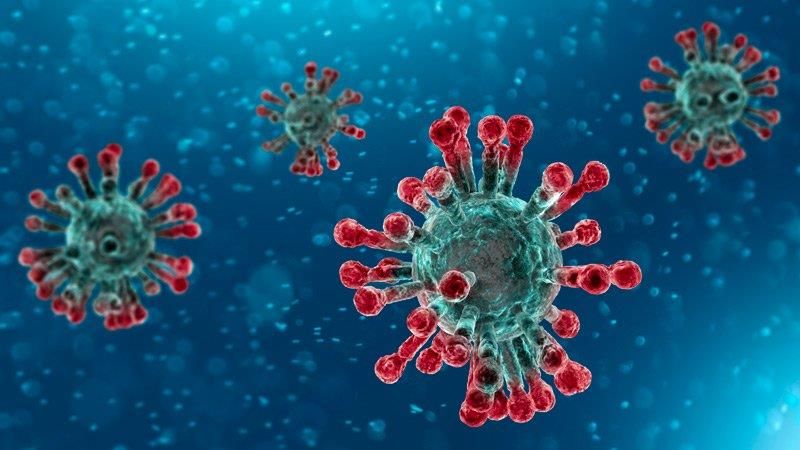
Civil and constitutional legal references
                                       Art. 13 Constitution
                      Personal freedom is inviolable. No form of detention,
                          inspection or personal searching is permitted,
                  or any other restriction of personal freedom, save for justified
                   acts on the part of the judicial authorities, and exclusively in
                             cases and ways provided for by the law.
HEALTH & SAFETY

                                       Art. 16 Constitution
                   All citizens may circulate and sojourn freely in all parts of the
                  Italian territory, save for the general limitations established by
                    the law for health or safety reasons. No restriction may be
                                     motivated by political reasons.

                                                 Note
                   In a dynamic and updated interpretation of the law that the
                     Government has decided to adopt in the situation of the
                  ongoing pandemic, the health of the community prevails over
                  the inviolable right to personal freedom sanctioned in art. 13.
                                             Ing. E. Lucchesini - Consulente per la Sicurezza Luoghi di Lavoro   4
Civil and constitutional legal references

                             Art. 2087 Civil Code
                  Entrepreneurs are required to adopt,                                 The safety and health of the worker revolves
                  in the carrying out of their activities, all                         around three types of integrity:
                  measures that, depending on the particular                           • physical integrity (health and safety in the
                  nature of the work, and on the experience                            workplace)
HEALTH & SAFETY

                  and techniques it requires, are necessary to                         • moral integrity (personal honour and dignity)
                  safeguard the physical integrity and the                             • psychological integrity (art. 28 Legislative
                  morale of their operators …..                                        Decree 81/08 ….
                                                                                       work-related stress, mobbing, etc.)

                                               Ing. E. Lucchesini - Consulente per la Sicurezza Luoghi di Lavoro                   5
Assessment of the CORONAVIRUS risk
                  The coronaviruses (CoV) are a wide-range family of
                  respiratory viruses that can cause mild to moderate
                  illnesses, from the common cold to respiratory
                  syndromes such as MERS (Middle East Respiratory
                  Syndrome) and
                  SARS (Severe Acute Respiratory Syndrome). They are
                  thus named because of the crown-like spikes present
HEALTH & SAFETY

                  on their surface.
                  Coronaviruses are commonly found in many animal
                                                                                                      Coronavirus umani comuni
                  species (such as the camel and bat species); however,                               1 - 229E (coronavirus alpha)
                  in some cases, albeit rare, they can evolve (the so-                                2 - NL63 (coronavirus alpha)
                                                                                                      3 - OC43 (coronavirus beta)
                  called spillover from other species) to infect man and                              4 - HKU1 (coronavirus beta)
                  thus to spread among the population. Covid-19 is a
                  new coronavirus strain that has never before been                                   Altri coronavirus umani
                                                                                                      5 - MERS-CoV (Middle East respiratory syndrome)
                  identified in man.                                                                  6 - SARS-CoV (Severe acute respiratory syndrome)
                                                                                                      7 - SARS-CoV-2 (causa la COVID-19)

                                           Ing. E. Lucchesini - Consulente per la Sicurezza Luoghi di Lavoro                                  6
Assessment of the CORONAVIRUS risk
                                                 CONTRADICTORY interpretations
                  In the fields of both technicians and occupational health doctors, two
                  diametrically opposed positions have emerged, a situation perhaps partly encouraged by
                  the State, which has de facto stepped into the shoes of employers by effectively carrying
                  out, by means of the Prime Minister's Decrees (DPCM), a risk analysis for firms on Italian
                  soil.
HEALTH & SAFETY

                  1st Position                                                                       2nd Position
                  Since Covid-19 does not                                                            Although not constituting a risk for
                  present a risk for firms, no                                                       the production chain,
                  evaluative measures are                                                            since it is a «pandemic» the
                  needed; it is sufficient to                                                        employer has an obligation to plan
                  adhere to the prevention and                                                       the prevention and protection
                  protection         measures                                                        measures in line with the situation
                  specified in the Ministerial                                                       of his firm, and to carry out
                  Decrees and Prime Minister's                                                       constant      checks    on     their
                  Decrees issued by the Prime                                                        applicative effectiveness.
                  Minister's office
                                          Ing. E. Lucchesini - Consulente per la Sicurezza Luoghi di Lavoro                        7
Assessment of the CORONAVIRUS risk
                  Health
                  Art. 2, paragraph 1, letter o) of Legislative Decree
                  No. 81/2008: “the state of
                  complete physical, mental and social well-being,
                  not consistent merely with the absence of illness or
                  infirmity”.
HEALTH & SAFETY

                  Prevention
                  Art. 2, paragraph 1, letter n) of Legislative Decree
                  No. 81/2008: “the set of regulations or measures
                  necessary, also in accordance with the particular
                  nature of the work, and the experience and
                  techniques it requires, in order to avoid or diminish
                  the occupational risks with regard to the health of
                  the population and the integrity of the external
                  environment”.
                                         Ing. E. Lucchesini - Consulente per la Sicurezza Luoghi di Lavoro   8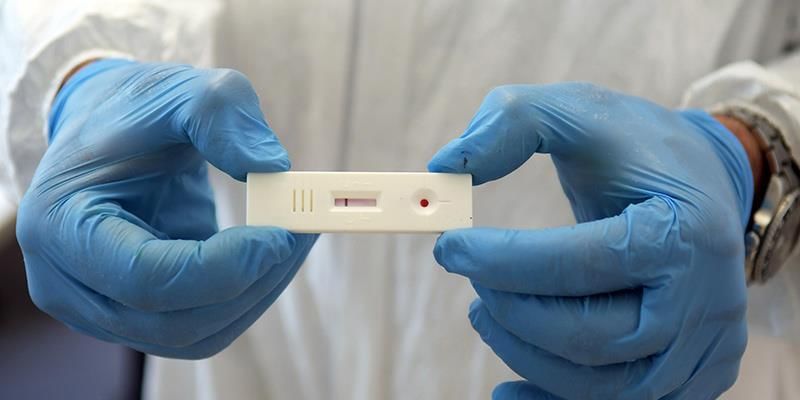
Assessment of the CORONAVIRUS risk

                  Art. 17 (Obligations that cannot be delegated)                                             Risks to safety      Firm
                  1. The employer may not delegate the
HEALTH & SAFETY

                  following activities:
                  a) the assessment of all the risks and the
                  ensuing drawing up of the document as                                                      Risks to health      State
                  specified in Article 28;                                                                   linked to Covid-19
                  b) the designation of the person in charge of
                  the service of risk prevention and protection.
                                                                                                             Organisational       Firm
                                                                                                             risks

                                         Ing. E. Lucchesini - Consulente per la Sicurezza Luoghi di Lavoro                          9
Assessment of the CORONAVIRUS risk
                  Art.28
                  1. The assessment in compliance with Article 17,
                  paragraph 1,
                  letter a), including the choice of work equipment
                  and of chemical substances or preparations used, as
                  well as the arrangement of the workplace, must
                  include all risks to the safety and health of workers
HEALTH & SAFETY

                  ….
                                                                                                                    New
                  2. 2. The document in compliance with Article 17,
                                                                                                                organisation
                       paragraph 1,
                  letter a), to be drawn up on conclusion of the
                  assessment, must have the exact date and must
                  include:
                  a) a report on the assessment of all the
                  risks to safety and health during the working
                  activities, specifying the criteria adopted for the
                  assessment itself.
                                            Ing. E. Lucchesini - Consulente per la Sicurezza Luoghi di Lavoro          10
Assessment of the CORONAVIRUS risk
Extension of the risk assessment
The assessment takes on a much wider
significance since it not only covers the
internal work activity but also “goes beyond”
the walls of the firm:
HEALTH & SAFETY
• teleworking
• Smart working
• Crowd workers (Uber, Blablacar, food
delivery, etc.)
• Bikers
Ing. E. Lucchesini - Consulente per la Sicurezza Luoghi di Lavoro 11Assessment of the CORONAVIRUS risk
Precision of the risk assessment
Safety risks: modification of the work spaces and
the operational modes of their occupants in
relation to social distancing.
Health risks: the coronavirus is currently
classified as a Bio-agent II; here we are not
HEALTH & SAFETY
treating health structures such as hospitals but the
normal production line of a factory floor, although 1.8m
it definitely has an impact in terms of
environmental and personal hygiene measures, on
microclimate management and on the protective
measures to be adopted for the entire work period.
Organisational risks: there needs to be an overhaul
of the management of workers coming from
outside the firm (art.26) such as maintenance
workers and suppliers, first and foremost
in compliance with social distancing measures.
Ing. E. Lucchesini - Consulente per la Sicurezza Luoghi di Lavoro 12Assessment of the CORONAVIRUS risk
Art. 29, paragraph 3 of Legislative Decree No.
81/2008 specifies four hypothetical situations
giving rise to the obligation to update:
• changes to the production process or to the
organisation of the work that have an impact on
HEALTH & SAFETY
the
health and safety of workers;
• a technological evolution allowing for improved
prevention;
• checks on serious injuries (contagion is
considered as an injury);
• outcome of health monitoring
Ing. E. Lucchesini - Consulente per la Sicurezza Luoghi di Lavoro 13Assessment of the CORONAVIRUS risk
Attualmente i ceppi Coronae sono classati BIO 2
Assessment of the biological risk
Attention is drawn to art. 266 of Title X,
Legislative Decree 81/08:
• The regulations of this title
apply to all work activities
HEALTH & SAFETY
involving the risk of exposure
to biological agents.
N.B.: risk exposure is referred to
generically, without specifying whether
the work activity
Per i danni effettivi è corretto ritenere il SARS-CoV-2 BIO 3
specifically involves the handling of
biological agents.
Ing. E. Lucchesini - Consulente per la Sicurezza Luoghi di Lavoro 14Assessment of the CORONAVIRUS risk
Assessment of the biological risk
Although there is no obligation to notify
the ASL (local health authority)
responsible for the territory as to the
approved use of bio agents 2 and 3 (art.
HEALTH & SAFETY
269), the situation is clarified in art. 271,
paragraph 2 (Risk assessment): Preventive and protective measures
against COVID-19
• Employers are required to apply the • Protection of respiratory tract
principles of good microbiological • Protection of hands (use of disposable gloves)
• Organisation of the work taking into account
practice and to adopt the preventive social distancing
and protective measures in relation to • Procedures for the sterilisation of surfaces and
environments
the risks ascertained…adapting them to • Recourse to smart working
the particular working situation. • Management of contracted work on the site
Ing. E. Lucchesini - Consulente per la Sicurezza Luoghi di Lavoro 15Obligations of safety authorities
The S.P.P. (Prevention and Protection Those responsible for guaranteeing the
Service) in the front line against COVID- safety of workers are, first and foremost,
19 the Protection and Prevention Officer
The prevention and protection measures (RSPP) and the medical officer, whose
scientific and technological expertise make
to be adopted are subdivided as follows:
them institutionally fit for their role.
• Typed (named), deriving from
HEALTH & SAFETY
specific obligations imposed by regulatory It is, however, obvious that the primary
frameworks; role is that of the employer
• Atypical (unnamed), deriving from art.
2087 of the Civil Code ….the safeguarding
of workers' health and safety;
Both are guided by a specific juridical
concept:
«the principle of the maximum safety
technologically feasible»
Ing. E. Lucchesini - Consulente per la Sicurezza Luoghi di Lavoro 16Obligations of safety authorities
TYPICAL measures: Training and
Information
Actions of the worker
Art. 20, paragraph 1 of Legislative Decree
No. 81/2008 states that “all workers must • To notify his employer of any time spent in red zones
safeguard their own health and safety and /or any contact with anyone coming from such zones
(1st phase of contagion)
and that of others present at the
HEALTH & SAFETY
• To notify his employer if he has a temperature over 37.5
workplace who would suffer the effects of C°
their actions or omissions”. • To notify his employer of the contagion of any family
member
In the times of the coronavirus: “the • To notify the ASL (local health authority) responsible
worker no longer merely safeguards his for the territory or his family doctor of his state of health
own health as required of him by his and to notify his employer of the results
employer, but shares with the latter the
responsibility of applying the safety
measures in place, in the sense that the
worker himself becomes a safety
authority“
Ing. E. Lucchesini - Consulente per la Sicurezza Luoghi di Lavoro 17Obligations of safety authorities
TYPICAL measures: Surveillance
TYPICAL measures: Surveillance
What to monitor? (art.15 of Legislative
What to monitor? (art.18 of Legislative
Decree 81/08)
Decree 81/08)
• the elimination of risks and, where this is
• provide workers with the necessary
not possible, their reduction to a minimum in
and suitable individual means of
relation to the knowledge acquired on the
protection, on consultation with the
basis of technical progress;
prevention and protection service
HEALTH & SAFETY
• the limitation to a minimum of the number
officer or, where present, the medical
of workers that are, or that may be, exposed
officer ;
to the risk (Prime Minister's Decree
• insist on the observance by the
08.03.2020);
individual workers of the prevailing
• priority of communal protection measures
regulations, as well as of the company
over protection measures for individuals
regulations regarding safety and
(surgical masks);
hygiene in the workplace and
• health checks for workers;
the use of the collective and individual
• the removal of the worker from exposure to
means of protection at their disposal;
risk for health reasons inherent to his person
priority of communal protection
(a body temperature of 37.5 °C or over) and
measures over protection measures for
his transfer, where possible, to other duties;
individuals
Ing. E. Lucchesini - Consulente per la Sicurezza Luoghi di Lavoro 18Gli obblighi dei garanti della sicurezza
Le misure ATIPICHE: Igienizzazione dei luoghi di lavori
Where cleaning What products to use Individual means of protection Added notes
should be done to use
Floors, rooms, offices, Sodium hypochlorite-based products • Low anti-slip shoes with reinforced The possible use of floor
communal spaces or quaternary ammonium salts toecaps; cleaning agents
• Protective clothing (trousers, sweater
and fleece);
• Heavy PVC gloves;
• Nitrile gloves;
• Disposable surgical mask or else FFP2
HEALTH & SAFETY
masks with a valve (if operating without
people);
• Class 1 safety glasses;
• Protective headgear (if appropriate)
Laboratory floors Sodium hypochlorite-based products ditto Carried out exclusively by hand
(industrial products for dilution) or and with dielectric rods to
quaternary ammonium salts avoid possible
electrocution with earthed
multi-sockets
Toilets Sodium hypochlorite-based products ditto
(industrial products for dilution)
Hydrochloric or acetic acid-based
descalers and anti-limescale
Glass surfaces Non- ionic tensioactive agents ditto
Surfaces of furniture Rapid- evaporation alcohol-based ditto
such as benches, desks, (ethanol) products
internal doors
(laminated) door handles
Specific laboratories Degreasers or alcoholic products ditto Read the user and maintenance
compatible with the equipment manual
Ing. E. Lucchesini - Consulente per la Sicurezza Luoghi di Lavoro 19The obligations of those acting as safety guarantors
ATYPICAL measures: sterilisation of the work places
HEALTH & SAFETY
Ing. E. Lucchesini - Consulente per la Sicurezza Luoghi di Lavoro 20Obligations of safety guarantors
TYPICAL measures: Health surveillance
Surveillance plays a determining role in all cases that can be correlated to
the coronavirus, and in particular:
• the identification of workers affected by previously existing specific
illnesses who may be declared as being unfit to frequent the work place
during the Covid-19 epidemic (notification on the part of the medical
officer to the employer of cases of workers not to be recalled to their
HEALTH & SAFETY
conventional work during PHASE 2)
• Notification by the employees to the medical officer, in compliance
with art.41, paragraph 2, letter C, of the onset of any illnesses (including
those potentially linked to the contraction of the virus), together with a
medical certificate issued by the family doctor. In this case, the medical
officer will advise the employer to keep the
worker in smart-working mode, to safeguard his health.
• Regarding the age of employees exposed and pregnant or breast
feeding employees…. I would like to repeat what is stated in art. 28
regarding the risk assessment, which must take into consideration
gender, age and provenance.
Ing. E. Lucchesini - Consulente per la Sicurezza Luoghi di Lavoro 21Obligations of safety guarantors
TYPICAL measures: Adoption of collective and
Individual means of protection (in Italian
D.P.C. and D.P.I. respectively)
HEALTH & SAFETY
Art. 74 By Individual means of protection we
mean any equipment designed to be
worn and kept in place by the worker to
protect him against one or more risks to his
health or safety while at work, as well as any
complement or accessory meant for the said
purpose
Ing. E. Lucchesini - Consulente per la Sicurezza Luoghi di Lavoro 22Obligations of safety guarantors
What to have outside the company?
Context Laws D.P.I. Notes
• public and private • Prime Minister's • Mask • Legitimate self-
indoor spaces open Decree (DPCM) • Disposable gloves certification
HEALTH & SAFETY
to the public 08.03.2020
• Ord. R.T. N° 26 of
06.04.2020
• Internal provisions
• Public and private • Prime Minister's • Mask • Legitimate self-
outdoor spaces Decree (DPCM) • Social distancing certification
open to the public 08.03.2020
• Ord. R.T. N° 26 of
06.04.2020
Ing. E. Lucchesini - Consulente per la Sicurezza Luoghi di Lavoro 23Gli obblighi dei garanti della sicurezza
Cosa disporre all’interno dell’azienda ?
Context Laws D.P.I. Notes
• Access to workplace • Prime Minister's • Mask • Legitimate self-certification
(journey to and from Decree (DPCM) • Social distancing
work) 08.03.2020
• Ord. R.T. N° 26 of
06.04.2020
HEALTH & SAFETY
• At the workplace • Covid-19 corporate • Mask • No protection needed If
DVR • Social distancing working alone in your own
• Service orders, internal • Disposable gloves office
procedures • Sanitising gel • If operating in communal
spaces = protection + social
distancing
• Journey from • Prime Minister's • Delivery of 2 pairs of gloves • Legitimate self-certification
workplace to home Decree (DPCM) and 2 masks for access to
08.03.2020 work the next day
• Ord. R.T. N° 26 of
06.04.2020
• Service orders, internal
procedures
Ing. E. Lucchesini - Consulente per la Sicurezza Luoghi di Lavoro 24Smart-Working and Teleworking
Transposition of the European Framework Law of 12 November 2011, no 183
Agreement in Italy of July 16, 2002 Provisions for the preparation of the annual and multiannual
Teleworking budget of the state
(Stability Law 2012)
Carrying out of telework Art. 22. Apprenticeship, placement contract
women, part-time, teleworking, tax incentives and
contributions
HEALTH & SAFETY
• subordinate teleworking carried out regularly at the
employee's home (teleworking at home); Paragraph 5.
The following teleworking incentive measures are
• teleworking regularly carried out on other premises, introduced:
defined by the employer, provided that the latter is not a) in order to facilitate reconciliation of living and
a regular workplace and therefore is not in the working time through teleworking….
availability of the employer but allows the latter to b) in order to facilitate employment of disabled
exercise managerial power control (remote workers through teleworking….
teleworking). d) in order to facilitate the reintegration of workers
in mobility, ... working activities carried out through
teleworking (also reversible) are contemplated.
Ing. E. Lucchesini - Consulente per la Sicurezza Luoghi di Lavoro 25Smart-Working and Telework
L. 22 May 2017, no 81 (1). Non entrepreneurial Self-employed
work protection measures and measures to favour flexible
articulation of hours and premises of subordinate work.
Art.18. smart working
Art. 22. Safety at the workplace
1. in order to increase competitiveness and facilitate the
1. The employer guarantees the worker’s health and
HEALTH & SAFETY
reconciliation of living and working time, the provisions of this
safety during smart working and to this end delivers
chapter promote smart working as a way of subordinate working
(annually), to the worker and to the Workers’ safety
established by means of an agreement between the parties, also
representative, written information in which the general
with forms of organization by phases, cycles and objectives and
and specific risks connected to this particular form of
without precise constraints of working hours or premises, with the
employment are stated.
possible use of technological tools for carrying out working
activities. The latter are carried out partially within company
2. The worker is obliged to cooperate in the
premises and partly outside without a fixed workstation, within the
implementation of the preventive measures set up by
limits of the legal duration of the daily and weekly working hours
the employer to deal with the risks associated with the
defined by the collective contract.
carrying out of the service outside the business premises.
2. The employer is responsible for the safety and the functioning of
the assigned technological tools
Ing. E. Lucchesini - Consulente per la Sicurezza Luoghi di Lavoro 26Smart-Working and Teleworking
Activity Shared features Differences Tools adopted
Smart working • Willingness of both • the employer • PC, Tablet, Smartphone
parties to • is responsible regarding
• resort to a way of the safety of the worker
working which is • -the employer checks the
HEALTH & SAFETY
different from that worker’s performance -
carried out within the employer is obliged
the company to provide written
• -equal salary and information on the
regulations general and specific risks
• for smart working associated with smart
workers and workers working
working within the
company -Worker
insurance coverage
• teleworking • Fixed Work station and
VDT
Ing. E. Lucchesini - Consulente per la Sicurezza Luoghi di Lavoro 27Lo Smart-Working ed il Telelavoro
Actility Shared features Differences Tools adopted
Teleworking • Willingness of both • choice of fixed • Fixed PC workstation
parties to workstation outside the (hardware, software, desk,
• resort to a way of company (worker’s chair, peripherals, internet
working which is choice); connection)
HEALTH & SAFETY
different from that • Orario rigido lavorativo
carried out within del tutto simile a quello
the company svolto in azienda
• -equal salary and • -fixed working hours (as
regulations when working at
• for smart working company premises);
workers and workers • the employer is obliged
working within the to verify VDT workstation
company -Worker and is obliged to provide
insurance coverage VDT components
(software and hardware)
as well as furniture
where needed
Ing. E. Lucchesini - Consulente per la Sicurezza Luoghi di Lavoro 28Smart-Working and Teleworking
SMART WORKING: OBLIGATIONS OF THE EMPLOYER
• Provide smart workers with information on where to
carry out their working activities and on the safety
preconditions (brief description of the organisation of
the work station)
• Have previously provided training and information
HEALTH & SAFETY
pursuant to articles 36 and 37
• Have previously implemented health surveillance
(VDT risk).
In all this, a big limitation remains: the impossibility of
the employer to verify the locations and articulation of
the workstations used by his employees; the
evaluation of all the related risks is therefore limited.
Ing. E. Lucchesini - Consulente per la Sicurezza Luoghi di Lavoro 29Covid-19 and interference risks
Safety in intra-company contracts Covid-19 and interference risks
Article 26 of Legislative Decree 81/08 highlights the points to Coordination between the various SPPs in sharing
be dealt with when managing intra-company contracts: containment procedures and social distancing;
• Attribution of PPE and/or CPE in the work
1. assessment of the technical-professional suitability of the
phases proximate to the typical ones of the
contractor company or of the self-employed person;
host company;
2. detailed information to the contractor on the specific risks
HEALTH & SAFETY
existing in the environment in which they will operate and • Suspension and/or remodelling of highest risk
on prevention and emergency measures adopted in relation activities
to their activity;
3. cooperation; • Update of the DUVRI
4. coordination;
5. elaboration of the DUVRI (Single Document of
Interferential Risk Assessment containing the measures
taken to eliminate or, where this is not possible,
minimize the risks of interference). Interference in the
COVID-19 period
Ing. E. Lucchesini - Consulente per la Sicurezza Luoghi di Lavoro 30Anticovid measures in phase 2
Ordinance of the Tuscany Region N ° 33 of Ordinance of the Tuscany Region N ° 33 of 13.04.2020
13.04.2020
1. before reopening the business extraordinary 4.the obligation to wash hands frequently and
sanitisation of the premises must be carried out, meticulously, to wear disposable gloves and face masks
including ventilation systems, where present. during all possible work phases. The employer provides
suitable cleaning agents for hands, protective masks
2. if the worker has a temperature or other flu-
and disposable gloves.
related symptoms relating to COVID-19 they must
not go to work and must stay at home. At the start 5. the obligation to keep a safety distance of at least
HEALTH & SAFETY
of the work shift the employer is required to ensure 1.8 m from other workers.
compliance with this provision, also by means of the
6. as far as possible, place separation panels between
employee’s self-certification.
workers and clients.
3. It is best to travel to and from work on your own,
7. the obligation for the employer (in the most suitable
avoiding contact with other people. Where not
and effective ways) to inform all workers about these
possible (when using public or private means - cars
provisions, delivering and/or posting specific
with a maximum of two people) the employer must
information brochures at entrances or visible places.
provide the worker with masks and disposable
gloves.
Ing. E. Lucchesini - Consulente per la Sicurezza Luoghi di Lavoro 31Anticovid measures in phase 2
Ordinance of the Tuscany Region N ° 33 of 13.04.2020 Ordinance of the Tuscany Region N ° 33 of
13.04.2020
8. the obligation to provide for regulated and 11.the obligation to guarantee the cleanliness and
staggered access, so that the interpersonal distance of hygiene of the environment
at least1.8 metres is always guaranteed; access is with a frequency of at least twice a day and,
regulated accorded to the available spaces, according to opening hours, to ensure adequate
differentiating, where possible, the entry and exit natural ventilation and air exchange.
routes
HEALTH & SAFETY
Reopening is possible only on compliance with the
9. access is allowed only to those who wear a
above measures.
protective mask, covering nose and mouth, disposable
gloves and after hand sanitisation. For this purpose
dispensers with liquid for the disinfection of hands and
disposable gloves will be put at the entrance of the
shop.
10. the obligation to provide information to guarantee
the social distancing of customers awaiting entry and
to warn customers, with appropriate signs at the
entrance as to the need to keep an interpersonal
distance of at least 1.8 m.
Ing. E. Lucchesini - Consulente per la Sicurezza Luoghi di Lavoro 32Anti-covid measures in phase 2
Further Specifications introduced by the BASIC DOCUMENTS FOR THE RE-OPENING OF
Ordinance of the Tuscany Region N ° 38 of ACTIVITIES IN PHASE 2
18.04.2020
• COVID-19 PHASE 2 DVR
Further Specifications introduced by the
• SANITISATION PROCEDURE
Ordinance of the Tuscany Region N ° 38 of
18.04.2020: • SANITISATION REGISTER
• differently from that stated in the previous • STATEMENT OF GOOD HEALTH FOR ACCESS
HEALTH & SAFETY
regulations, it is important to underline that at TO STRUCTURE
least 1 cycle of daily cleaning is required.
• The obligation to communicate with: • POSSIBLE UPDATE OF HEALTH PROTOCOL
protocolloanticontagio@regione.toscana.it • CHOICE OF PPEs ON THE BASIS OF COMPANY
• Clarifications on the use of PPE ACTIVITIES
• Clarifications as to the reception of clients in • INFORMATION AND TRAINING FOR
respect of the social distancing of 1.80 m EMPLOYEES AND CLIENTS
Further Specifications introduced by the
Ordinance of the Tuscany Region N ° 39 of
19.04.2020
• Introduction of rapid serological tests to
carry out on staff (on a voluntary basis)
Ing. E. Lucchesini - Consulente per la Sicurezza Luoghi di Lavoro 33Anticovid measures in phase 2
SEROLOGICAL TESTS OR SWABS?
Serological tests are of two types:
• The first TEST detects the IgM, that is, the
first antibodies that the body produces at the
start of the infection (detected after 5-7 days
from contagion and disappear after 2 weeks);
HEALTH & SAFETY
the TEST detects the recent infection
(asymptomatic if without a temperature)
• The second TEST detects the presence of IgG
antibodies that actually communicate the
successful immunisation of the subject; the
TEST detects the disappearance of the
The validity of the test is linked to the
infection ... in this case the swab is negative;
QUANTITATIVE method - that is to say the
however, this is no longer needed in that it is
antibody count in immune subjects…. This is
not functional to the isolation of the subject
the challenge in terms of reliability.
Ing. E. Lucchesini - Consulente per la Sicurezza Luoghi di Lavoro 34Anticovid measures in phase 2
SEROLOGICAL TESTS OR SWAB?
The oropharyngeal swab:
This test is performed in those subjects who present flu-
related symptoms such as:
• cough;
• sneezing;
HEALTH & SAFETY
• a runny nose;
• respiratory difficulties;
• body temperature above 37.5 ° C.
In addition to this, the patient must have had, in the last 2
weeks, previous contacts with people positive to the virus for
over 14 minutes. secretions from the mouth and nose are
taken with special sticks and then sent to the laboratory for
Polymerase Chain Reaction (Prc) process which allows for the
amplification of viral micro-organisms and the identification
of positive cases due to the presence of pathogens
Ing. E. Lucchesini - Consulente per la Sicurezza Luoghi di Lavoro 35Anticovid procedures at the S.N.S.
The Prevention and Protection Service together with the Coronavirus Emergency Group
has elaborated the procedures for the reopening/attendance of the SNS structures.
HEALTH & SAFETY
Ing. E. Lucchesini - Consulente per la Sicurezza Luoghi di Lavoro 36Anticovid procedures at the S.N.S.
The Prevention and Protection Service together with the Coronavirus Emergency Group
has elaborated the procedures for the reopening/attendance of the SNS structures.
HEALTH & SAFETY
Ing. E. Lucchesini - Consulente per la Sicurezza Luoghi di Lavoro 37THANKS FOR YOUR ATTENTION
HEALTH & SAFETY
eugenio.lucchesini@sns.it
spp@sns.it
emergenzacoronavirus@sns.it
info@studioeugeniolucchesini.com
Ing. E. Lucchesini - Consulente per la Sicurezza Luoghi di Lavoro 38You can also read


