SHARKS UNDER ATTACK Overfished and under protected - A CASE STUDY IN THE NORTH ATLANTIC - Greenpeace
←
→
Page content transcription
If your browser does not render page correctly, please read the page content below
A CASE STUDY IN THE NORTH ATLANTIC

SHARKS
 UNDER
ATTACK
      Overfished and
     under protected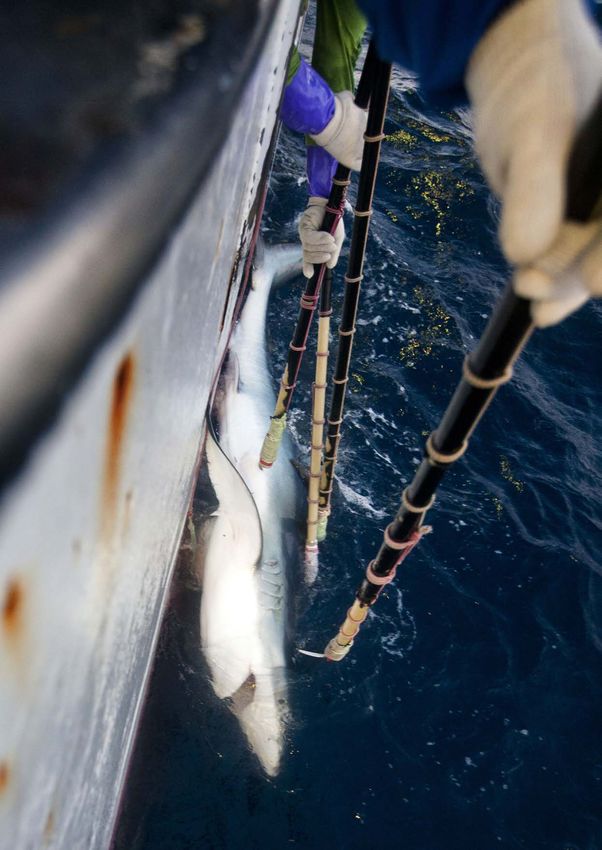
CONTENTS
                                              3    Executive summary

                                              5    Failing fisheries management

                                              6    North Atlantic sharks in decline

                                              7    Sharks and the need to protect the oceans

                                              8    Further information
                                                      - Shark finning
                                                      - Global Ocean Treaty

                                              9    Appendix
                                                      - Figure 1
                                                      - Figure 2
                                                      - Methodology

                                              11   References

A blue shark caught on a Japanese longliner                                                    1
© Paul Hilton / Greenpeace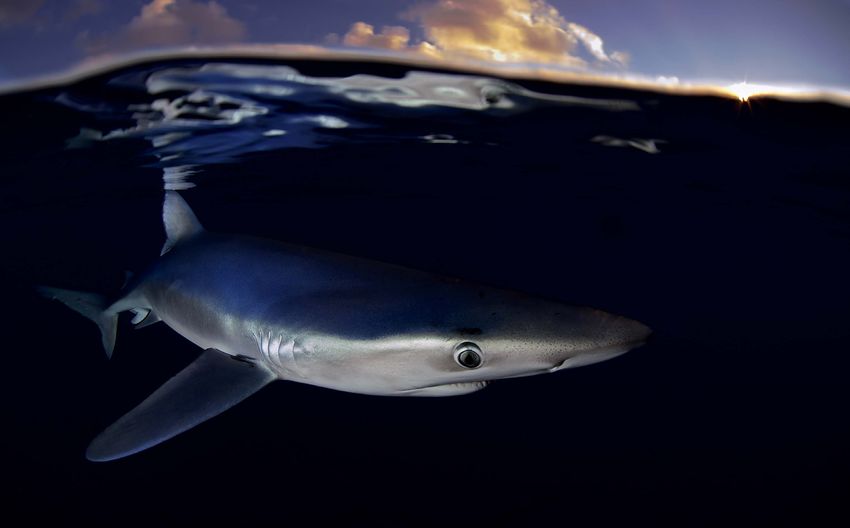
EXECUTIVE SUMMARY
                                     On the 11th April 2019, the Greenpeace ship            Key findings:
                                     Esperanza set sail from the Thames on a pole to
                                     pole expedition down the Atlantic Ocean. The           •   Despite being known as a swordfish fishery,
                                     expedition is part of a campaign to protect the            the North Atlantic swordfish fishery’s primary
                                     oceans, calling for an ambitious Global Ocean              catch is in fact sharks – which are both
                                     Treaty that could pave the way to protecting at            targeted directly and caught as bycatch – by an
                                     least 30% of the world’s oceans by 2030. Over              estimated ratio of 4:1 (by weight) in 20172.
                                     the course of this eleven month expedition, the
                                     Esperanza is exposing the threats currently facing     •   The Regional Fisheries Management
                                     the world’s oceans and undertaking scientific              Organisation (RFMO) responsible for the
                                     research to document and build the case for                management of this fishery is the International
                                     protection of ecosystems in international waters.          Commission for the Conservation of Atlantic
                                                                                                Tunas (ICCAT). Like many of its equivalent
                                     In June, on its route between the UK and the               organisations, it is consistently failing to put
                                     Azores, the Esperanza is passing through the               in place effective measures to ensure the
                                     North Atlantic swordfish (Xiphias gladius) fishing         future sustainability of its fisheries, and faces
                                     grounds – a prime example of the ways in which             widespread criticism for its incompetence.3
                                     the current management of our global oceans is             ICCAT does not currently set catch limits on the
                                     fundamentally failing to respond adequately to             number of sharks caught in the North Atlantic4.
                                     the biodiversity and climate crises the oceans are
                                     facing.                                                •   Shortfin mako (Isurus oxyrinchus) and longfin
                                                                                                mako (Isurus paucus) were designated as
                                     Shark fisheries suffer from chronic under                  ‘endangered’ by the International Union for
                                     reporting and deficient data collection and                Conservation of Nature (IUCN) in March 2019.
                                     figures remain contested. A recent paper has               The body which runs this fishery has itself
                                     estimated 100 million sharks1 are caught and               estimated that if shortfin mako populations are
                                     killed in fishing nets every year, a vast proportion       to have a 54% chance of recovery then the catch
                                     of which are unintended ‘accidental’ catch, yet            would need to be reduced to 05. But the actual
                                     serves to further the lucrative trade in shark fins.       last catch data available is 3,600–4,750 tonnes,
                                     This figure must be dramatically reduced if we             an amount expected to further deplete the
                                     want to see healthy oceans for future generations.         population6.
                                     However, existing institutions which may have
                                     the capability to bring about such a reduction         •   The fragmented and piecemeal approach
                                     are clearly not being effective despite decades            to managing international waters is clearly
                                     of warnings and calls to action. A governance              unable to deliver necessary protection against
                                     gap could be filled by a strong Global Ocean               the cumulative threats facing ocean wildlife.
                                     Treaty that takes a more holistic approach to              There is a clear need for a strong Global Ocean
                                     addressing threats to marine biodiversity and has          Treaty that will ensure regional and industry
                                     conservation at its heart.                                 bodies take a more holistic approach to the
                                                                                                conservation of our global oceans, including

                                     Shark catches must be                                      through the designation of fully protected
                                                                                                marine protected areas in order to help
                                     dramatically reduced if we want                            struggling fish populations recover.

                                     to see healthy oceans for future
                                     generations.

Greenpeace's ship the MV Esperanza
                                                                                                                                                  3
© Will Rose / Greenpeace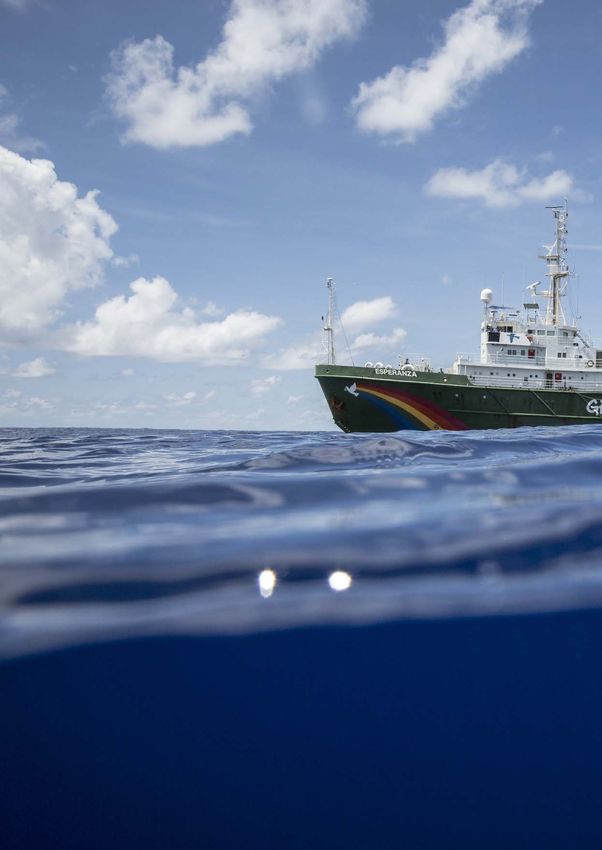
FAILING FISHERIES MANAGEMENT
                                 Fishing in international waters is primarily          shortfin mako (Isurus oxyrinchus), considered
                                 overseen by various Regional Fisheries                endangered.
                                 Management Organisations (RFMOs), each
                                 responsible for ensuring that fisheries are           Conservation measures adopted by ICCAT
                                 conducted in a sustainable manner and according       parties to protect sharks are extremely limited.
                                 to the terms of the United Nations Fish Stocks        Although it has adopted a recommendation
                                 Agreement (UNFSA). This includes the application      prohibiting the retention of shortfin makos,
                                 of the precautionary approach and the ecosystem       such prohibition contains numerous exceptions
                                 based approach, whereby impacts of fishing on         and is unable to allow for the recovery of the
                                 associated and dependent species and the wider        population. It has also come late, after ICCAT
                                 ecosystem, are to be taken into account.              parties failed for years to effectively limit catches
                                                                                       of this shark. Despite the existential threat to
                                 Fishing for swordfish in the North Atlantic is        shortfin mako globally, and the fact that the
                                 managed by ICCAT. Countries that are members          status of North Atlantic blue sharks, which are
                                 of ICCAT collectively agree on conservation and       the most fished shark species across the world’s
                                 management measures, such as the numbers              oceans, is considered highly uncertain10, catch
                                 of tuna and swordfish caught annually in              limits for blue and shortfin mako sharks are not
                                 the Atlantic, gear types and a range of other         imposed by any RFMOs around the world11 12.
                                 measures, including for monitoring, control and
                                 surveillance. Many RFMOs have a track record of       In the case of blue sharks, despite the size of
                                 ignoring scientific advice, putting the economic      the fishery, with catches in the whole Atlantic
                                 short term interests of the fishing industry before   ranging 68,000 tonnes, no limits have been
                                 conservation and failing to take into account         imposed13. North Atlantic blue sharks have not
                                 the conservation of marine ecosystems that            been classified as overfished, but their status
                                 fishing activities rely on. The depletion of shark    is considered highly uncertain14. ICCAT shark
                                 populations is a prime example.                       finning policy, on the other hand, continues
                                                                                       to be weak and does not require fins to be
                                 The performance of ICCAT regarding conserving         attached to shark bodies15. Further, the absence
                                 stocks and upholding the terms of UNFSA is no         of well-managed ocean sanctuaries, where shark
                                 exception and has been heavily criticised in recent   juveniles can be fully protected, is worrying, as
                                 years by external organisations7. For example, the    they could greatly benefit the recovery of their
                                 International Pole & Line Foundation (IPNLF), a       populations.
                                 group that represents a number of tuna fisheries
                                 globally, described ICCAT’s management of
                                 tropical tuna stocks as ‘totally incompetent’ in
                                 20188. A common theme of the criticism is that
                                 ICCAT is not consistently implementing the            The absence of ocean
                                 recommendations set out by its own scientific
                                 committee, disregarding the science and allowing      sanctuaries, where shark
                                 declining stocks to further deteriorate9.
                                                                                       juveniles can be fully protected,
                                 While management measures are tailored to             is worrying, as they could
                                 the species considered the main target, in this
                                 case swordfish, other species caught in the same      greatly benefit the recovery of
                                 fishing operations are essentially unregulated        their populations.
                                 and become depleted. Such is the case with the

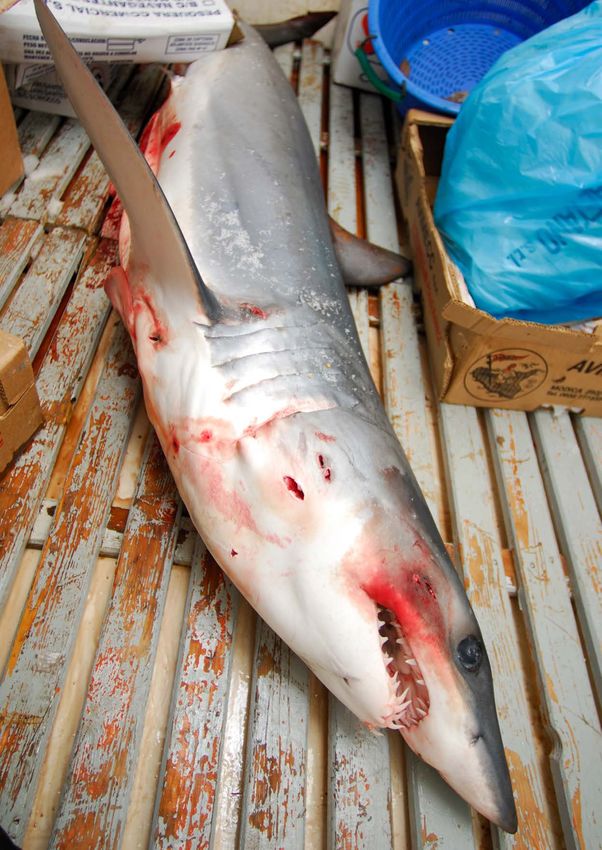
   A mako shark in a longline                                                                                                                  5
tuna fishing boat's cold store
    © Greenpeace / Marco Care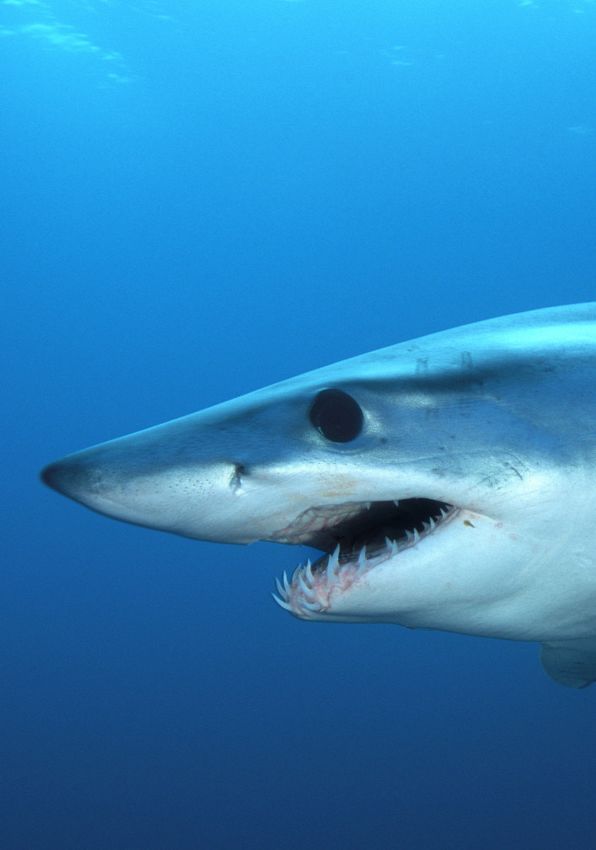
NORTH ATLANTIC SHARKS IN DECLINE                                                                                  SHARKS AND THE NEED TO PROTECT THE OCEANS
Along with tuna and swordfish, three shark             Atlantic, and in 2019 the IUCN changed the                 The overfishing of sharks in the North Atlantic
species are primarily caught in fisheries under        classification of shortfin mako from vulnerable to         mirrors the situation found in many other parts
ICCAT’s purview: blue (Prionace glauca), shortfin      endangered.18 For the species to have a fair chance        of the world. A 2014 global review of the status
mako and porbeagle (Lamna nasus). Swordfish            of rebuilding its population in the North Atlantic,        of 1,041 chondrichthyan fishes – sharks, rays and
and sharks are primarily fished in the North           ICCAT’s scientific body has recommended that               chimaeras – estimated that a quarter of them are
Atlantic by the Spanish and Portuguese longline        if shortfin mako populations are to have a 54%             threatened according to IUCN Red List criteria
fleets. Longlining is a fishing method that uses       chance of recovery then the catch would need               due to overfishing (targeted and incidental).24
very long cables behind vessels, with hundreds         to be reduced to 0. But the actual last catch              Only one third of these species are considered
or even thousands of baited hooks attached at          data available is 3,600–4,750 tonnes, an amount            safe, which is the lowest fraction of safe species
intervals.                                             expected to further deplete the population19.              among all vertebrate groups studied to date. The
                                                                                                                  report found that 46.8% of all examined species
Blue sharks are the most heavily fished shark          Another effort at shortfin mako conservation has           are data deficient. The situation has not improved
globally, primarily taken for their fins. Shark fin    been made by proposing to include it on CITES              much since. In May 2019, the Shark Specialist
soup is a delicacy in several countries, and rising    Appendix II, which would place much tighter                Group (SSG) of the IUCN released updated Red
demand is claiming as many as 73 million sharks        controls on its trade20. This proposal is backed by        List Assessments for 58 species of sharks and
a year globally16.While The public tends to think of   29 countries and the European Union, however               rays, 17 of which – one third – were classified as
shark fishing as mostly carried out by Asian fleets,   countries including Spain are under increasing             threatened with extinction.25
Spain is one of the world’s leading producers          pressure from industry to refrain from supporting
of unprocessed shark fins, and ranks third in          this proposal21. The dire state of shark populations,      The case in the ICCAT Convention Area is
reported shark catches globally, only behind           so telling of the failures of RFMOs to protect             unfortunately representative of what happens
Indonesia and India, and before Taiwan.17              vulnerable species, has already resulted in 20             under the purview of practically every single
Shortfin mako are in an even more perilous             commercially important shark and ray species               RFMO. Complex and ecologically important
position than blue sharks. They are particularly       being subject to trade measures.22 23                      species like blue shark require coordinated efforts
overfished in the Mediterranean and North                                                                         to protect breeding grounds and migration routes
                                                                                                                  across vast areas. A Global Ocean Treaty could
                                                                                                                  ensure that such an oversight in governance
                                                                                                                  would be filled for important species like these
ICCAT – managing overfishing                               taken from the North Atlantic in 2017, and all
                                                                                                                  that are currently falling through the gaps,
                                                           of ICCAT’s analysis indicate that the shortfin
                                                                                                                  including through the designation of fully
•   ICCAT carries out periodic assessments                 mako is seriously overfished. The outlook is not
                                                                                                                  protected marine protected areas. In one study
    of the blue, shortfin mako and porbeagle               good, with ICCAT estimating that a complete                                                                   Shark in the Pacific Ocean
                                                                                                                  of nearly 90 marine protected areas with varying       © Alex Hofford / Greenpeace
    shark stocks in the Atlantic, and makes                prohibition on catching shortfin mako will
                                                                                                                  degrees of protection, fourteen times more sharks
    recommendations on their management.                   provide only a 54% chance of rebuilding the
                                                                                                                  were found inside effectively protected areas
    However, it does not set limits on the total           population by 204033. ICCAT has agreed to a                                                                   the East Coast of North America, overpredating
                                                                                                                  than in unprotected areas.26 Sharks play a vital
    allowed catch for these species and the stock          prohibition of retaining makos, but its many                                                                  scallops, the decline of Great White Sharks leading
                                                                                                                  role in oceanic ecosystems, and have been part of
    assessments are relatively infrequent given            exemptions result in catches exceeding                                                                        to growing sea lion populations, and the changing
                                                                                                                  them for an estimated 450 million years. Whilst
    the scale of the fishery.                              scientific recommendations.                                                                                   distribution of migrating fish.
                                                                                                                  they display a great diversity of species, the large
•   Reported take of blue shark in the North           •   The porbeagle has not been assessed since
                                                                                                                  predator role they play is especially important in     Despite the negative press, a world without
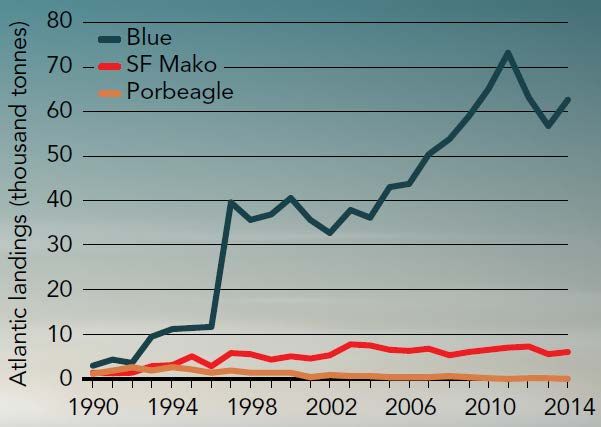
    Atlantic has been rising since 200031 and              2009, at which point it was considered to be
                                                                                                                  maintaining healthy marine life communities. In        sharks is a much scarier prospect than a world
    fluctuated around 40,000 tonnes in the period          overfished in the North Atlantic. The estimated
                                                                                                                  instances where large sharks have been fished          with sharks, but increasingly our oceans are
    2013-201732. The results of ICCAT analysis             catch of porbeagle in 2017 in the north Atlantic
                                                                                                                  out, often unexpected trophic changes have taken       losing these crucial species. 450 million years of
    indicate that the species is currently neither         was 26 tonnes, down from 426 tonnes in 2009
                                                                                                                  place – leading to further imbalanced ecosystems       evolution has simply not prepared the world’s
    overfished nor experiencing overfishing,               and 2,726 tonnes in 1994, a 99% decrease34.
                                                                                                                  with lesser predators unchecked. Examples of this      sharks to withstand humanity’s relentless ability
    though the uncertainty in the data is so high          ICCAT recommends that fishing mortality be
                                                                                                                  include the increase in cow-nosed rays in seas off     to hunt and fish.
    that the possibility cannot be ruled out.              'kept at levels in line with scientific advice', but
•   3,112 tonnes of shortfin mako sharks were              doesn’t set a total allowable catch35.

6                                                                                                                                                                                                                             7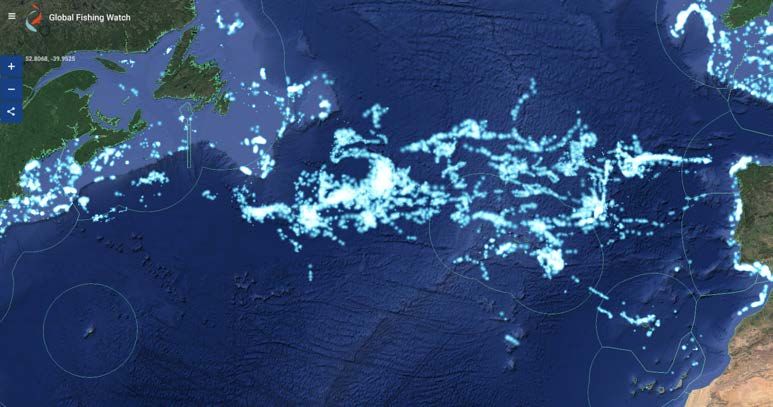
FURTHER INFORMATION                                                                                                    APPENDIX
Shark finning                                                                                                                                                                                              Figure 1

•   The EU prohibits shark finning at sea for any                                                                                                                                                          Graph showing blue,
    EU ships and all ships operating in EU waters.                                                                                                                                                         shortfin mako and
    Despite this, concerns persist that shark                                                                                                                                                              porbeagle landings in the
    finning continues to be practiced by EU-related                                                                                                                                                        Atlantic, 1990-201439
    enterprises. The majority of sharks caught by the
    EU are taken by Spain, but between 2013 and
    2014 only 235 inspections were carried out on the
    58,476 landings of sharks by Spanish ships – less
    than 0.5%36. Furthermore, the Virxen de Blanca, a
    Spanish North Atlantic longliner, was intercepted
    in 2018 off the coast of Ireland and was found
    to contain 1.3 tonnes of illegally produced shark
    fins37.
•   ICCAT efforts to introduce a ban on at-sea shark
    fin removal was blocked in 2017 by China and
    Japan38.
                                                          Shark fins onboard a Taiwanese vessel in the Pacific Ocean
                                                          © Greenpeace / Paul Hilton

                                                                                                                                                                                                           Figure 2
Global Ocean Treaty
                                                                                                                                                                                                           Fishing activity in the North
A strong Global Ocean Treaty must be adopted in 2020
                                                                                                                                                                                                           Atlantic, June 2018. Source:
to provide comprehensive protection to marine life in
                                                                                                                                                                                                           Global Fishing Watch40
international waters. For sharks and other migratory
species, the Treaty would, amongst other things:

•   Create fully protected areas for critical habitats,
    including nursery, breeding and feeding grounds,
    as well as migratory routes, in coordination with
    relevant management bodies, including RFMOs.
•   Ensure that human activities are strictly assessed
    and effectively managed so that sharks and other
    migratory species are afforded comprehensive
    protection from the cumulative impacts of human
    activities, climate change and pollution.
•   Trigger cooperation across ocean management
    bodies, including between RFMOs, for the
    conservation of sharks and other migratory species,                                                                Methodology
    as part of the implementation of the new Global
    Oceans Treaty.
                                                                                                                       The fishing activity in the North Atlantic has been followed using Global Fishing Watch41, a freely available
•   Trigger the collection of more and better data and                                                                 tool for tracking more than 65,000 commercial fishing vessels throughout the world. The data that were
    data sharing to inform and strengthen conservation                                                                 used to compile this report are all directly available from the various sources listed. The largest set of data
    of migratory species and all marine life across                                                                    comes from the International Commission to Conserve Atlantic Tunas (ICCAT), the Regional Fisheries
    international waters.                                                                                              Management Organisation (RFMO) responsible for tuna and tuna-like species in the Atlantic.
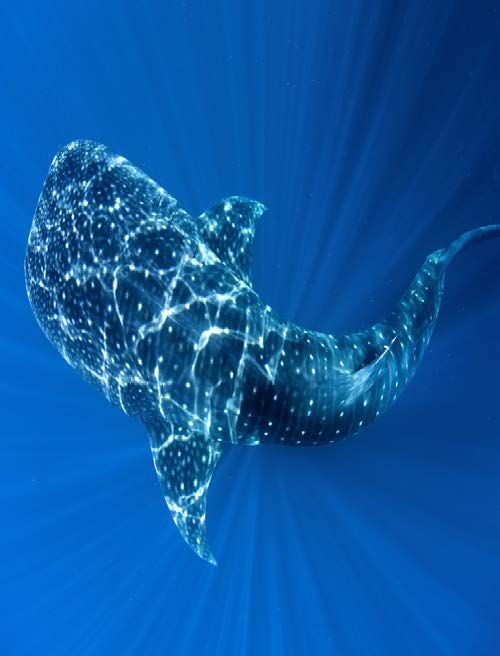
                                                          Whale shark
                                                          © Paul Hilton / Greenpeace

8                                                                                                                                                                                                                                          9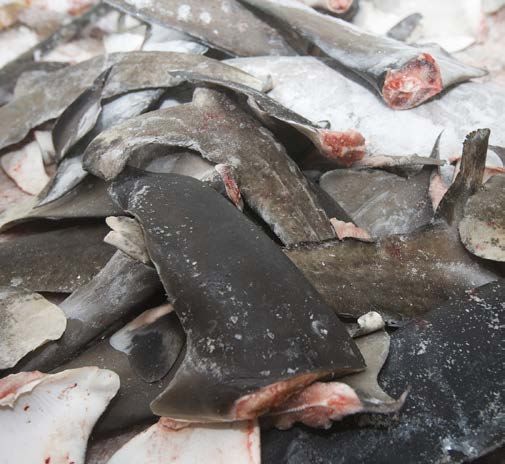
REFERENCES
                                      1.    Boris Worm, Brendal Davis, Lisa Kettemer, Christine A. Ward-Paige,        20.   CITES Consideration of Proposals for Amendment of Appendices I
                                            Demian Chapman, Michael R. Heithaus, Steven T. Kessel, Samuel H.                and II https://cites.org/sites/default/files/eng/cop/18/prop/060319/E-
                                            Gruber. 'Global catches, exploitation rates, and rebuilding options             CoP18-Prop-42.pdf
                                            for sharks', Elsevier, 21 December 2012 http://wormlab.biology.dal.ca/    21.   Fish Information & Services, Fisheries sector urges EU Council not
                                            publication/view/worm-etal-2013-global-catches-exploitation-rates-              to endorse inclusion of shortfin mako shark, 26 April 2019 https://bit.
                                            and-rebuilding-options-for-sharks/                                              ly/2ImwCRU
                                      2.    ICCAT, Report of the Standing Committee on Research and                   22.   Shark overfishing reflected in the updated 2019 IUCN Red List.
                                            Statistics (SCRS), 5 October 2018 https://www.iccat.int/Documents/              Experts call for conservation action as more species qualify as
                                            Meetings/Docs/2018/REPORTS/2018_SCRS_REP_ENG.pdf                                endangered https://www.iucnssg.org/press.html
                                      3.    PEW, International Fisheries Managers’ Response to Performance            23.   Food and Agriculture Organisation of the United Nations, Report of
                                            Reviews Insufficient, 1 May 2018 https://www.pewtrusts.org/en/                  the sixth FAO expert advisory panel, 21–25 January 2019 http://www.
                                            research-and-analysis/issue-briefs/2019/05/international-fisheries-             fao.org/3/ca3576en/CA3576EN.pdf
                                            managers-response-to-performance-reviews-insufficient                     24.   Dulvy NK, Fowler SL, Musick JA, Cavanagh RD, Kyne M, Harrison LR,
                                      4.    ICCAT, Recommendation by ICCAT on Management Measures                           et al. Extinction risk and conservation of the world’s sharks and rays,
                                            for the Conservation of Atlantic Blue Shark Caught in Association               eLife, 21 January 2014 https://elifesciences.org/articles/00590
                                            with ICCAT Fisheries https://www.iccat.int/Documents/Recs/                25.   Shark League, IUCN Classifies Makos as Endangered on Red List,
                                            compendiopdf-e/2016-12-e.pdf                                                    Underscores Urgent Need to Ban Fishing, 21 March 2019 www.
                                      5.    ICCAT, Atlantic Sharks Executive Summary https://www.iccat.int/                 sharkleague.org/2019/03/21/iucn-classifies-makos-as-endangered-
                                            Documents/SCRS/ExecSum/SHK_ENG.pdf                                              on-red-list-underscores-urgent-need-to-ban-fishing/
                                      6.    ICCAT, Report of the 2017 Shortfin Mako Assessment Meeting                26.   An effective MPA has twice as many large fish, five times more
                                            https://www.iccat.int/Documents/SCRS/DetRep/SMA_SA_ENG.pdf                      large fish biomass, and fourteen times more shark biomass
                                      7.    Undercurrent News, Industry joins NGOs in lamenting ICCAT’s                     than in unprotected areas. Edgar, Graham J., et al. (2014), Global
                                            failings, 21 November 2018 https://www.undercurrentnews.                        Conservation Outcomes Depend on Marine Protected Areas with
                                            com/2018/11/21/industry-joins-ngos-in-lamenting-iccats-failings                 Five Key Features, Nature, vol. 506, no. 7487, pp. 216–220., doi:10.1038/
                                      8.    Undercurrent News, Pole and line group: ICCAT ‘completely                       nature13022.
                                            incompetent’ on handling of tropical tuna, 20 November 2018               27.   Marine Stewardship Council, North and South Atlantic swordfish
                                            https://www.undercurrentnews.com/2018/11/20/pole-and-line-                      Spanish longline fishery – about https://fisheries.msc.org/en/
                                            group-iccat-completely-incompetent-on-handling-of-tropical-tuna/                fisheries/north-and-south-atlantic-swordfish-spanish-longline-
                                      9.    Pew report: International Fisheries Managers’ Response to                       fishery/about
                                            Performance Reviews Insufficient                                          28.   Marine Stewardship Council, North and South Atlantic swordfish
                                      10.   The last stock assessment was made in 2015 and there won’t be                   Spanish longline fishery – overview https://fisheries.msc.org/en/
                                            a review of their status until 2021, showing little attention paid by           fisheries/north-and-south-atlantic-swordfish-spanish-longline-
                                            ICCAT to the conservation of vulnerable species.                                fishery/@@view
                                      11.   Defender of Wildlife, 12th Meeting of the Conference of the Parties       29.   Oceana, Hunted for Fins https://oceana.org/sites/default/files/
                                            (CoP12) to the Convention on Migratory Species (CMS), Blue Shark                reports/hunted_for_fins1.pdf
                                            fact sheet https://defenders.org/sites/default/files/publications/Blue-   30.   Oceana, Shark bycatch https://usa.oceana.org/shark-bycatch
                                            Shark-Fact-Sheet.pdf                                                      31.   Report of the 2015 ICCAT Blue Shark Stock Assessment Session
                                      12.   Project Aware, World’s Fastest Shark is Racing Towards Extinction,              https://www.iccat.int/Documents/SCRS/DetRep/BSH_SA_ENG.PDF
                                            21 March 2019 https://www.projectaware.org/news/worlds-fastest-           32.   ICCAT Atlantic Sharks Executive Summary https://www.iccat.int/
                                            shark-racing-towards-extinction                                                 Documents/SCRS/ExecSum/SHK_ENG.pdf
                                      13.   ICCAT, Atlantic Sharks Executive Summary https://www.iccat.int/           33.   ICCAT Atlantic Sharks Executive Summary https://www.iccat.int/
                                            Documents/SCRS/ExecSum/SHK_ENG.pdf                                              Documents/SCRS/ExecSum/SHK_ENG.pdf
                                      14.   ICCAT, Atlantic Sharks Executive Summary https://www.iccat.int/           34.   ICCAT Atlantic Sharks Executive Summary https://www.iccat.int/
                                            Documents/SCRS/ExecSum/SHK_ENG.pdf                                              Documents/SCRS/ExecSum/SHK_ENG.pdf
                                      15.   Shark Trust, Baby step for blue sharks, 21 November 2017 https://         35.   ICCAT Atlantic Sharks Executive Summary https://www.iccat.int/
                                            nolimitsnofuture.org/2017/11/21/baby-step-for-blue-sharks/                      Documents/SCRS/ExecSum/SHK_ENG.pdf
                                      16.   Saeed Kamali Dehghan, Marine 'gold rush': demand for shark fin            36.   European Commission Report to the European Parliament and
                                            soup drives decimation of fish, The Guardian, 4 June 2019 https://              to the Council on the operation of Council Regulation (EC) No
                                            www.theguardian.com/environment/2019/jun/04/marine-gold-rush-                   1185/2003 on the removal of fins https://eur-lex.europa.eu/resource.
                                            demand-shark-fin-soup                                                           html?uri=cellar:be6ff5ef-02ea-11e6-b713-01aa75ed71a1.0022.02/
                                      17.   Spain reported catches of 89,212 tonnes of all condrichtyan species             DOC_2&format=PDF
                                            in 2011, and exported an average of 3,490t of shark fins annually         37.   The Marine Executive, Captain of Spanish Longliner Charged with
                                            between 2000-2011, Food and Agriculture Organization of the                     Shark Finning, 9 May 2018 https://www.maritime-executive.com/
                                            United Nations, State of the Global Market for Shark Products, 2015             article/captain-of-spanish-longliner-charged-with-shark-finning
                                            http://www.fao.org/3/a-i4795e.pdf                                         38.   Shark Trust, Baby Step for Blue Sharks https://nolimitsnofuture.
                                      18.   Shark League, IUCN Classifies Makos as Endangered on Red List,                  org/2017/11/21/baby-step-for-blue-sharks/
                                            Underscores Urgent Need to Ban Fishing, 21 March 2019 www.                39.   Project Aware, NGOs Urge ICCAT to Protect Sharks at Risk, 3
                                            sharkleague.org/2019/03/21/iucn-classifies-makos-as-endangered-                 November 2015 https://www.projectaware.org/update/ngos-urge-
                                            on-red-list-underscores-urgent-need-to-ban-fishing/                             iccat-protect-sharks-risk
                                      19.   ICCAT, Atlantic Sharks Executive Summary https://www.iccat.int/           40.   Global Fishing Watch https://globalfishingwatch.org/map/
                                            Documents/SCRS/ExecSum/SHK_ENG.pdf                                        41.   Global Fishing Watch https://globalfishingwatch.org/

10
A shortfin mako shark                                                                                                                                                                             11
© Flickr / Obra Shalom Campo Grande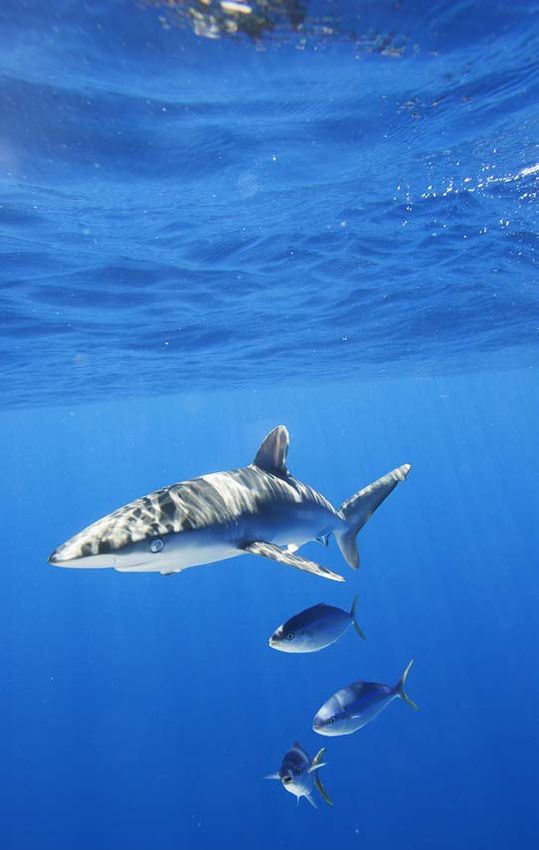
12
Blue shark near the Azores
© Robert Marc Lehmann / Greenpeace
You can also read


