SILSDEN PRIMARY SCHOOL AIRE VIEW SITE 2018-2019
←
→
Page content transcription
If your browser does not render page correctly, please read the page content below
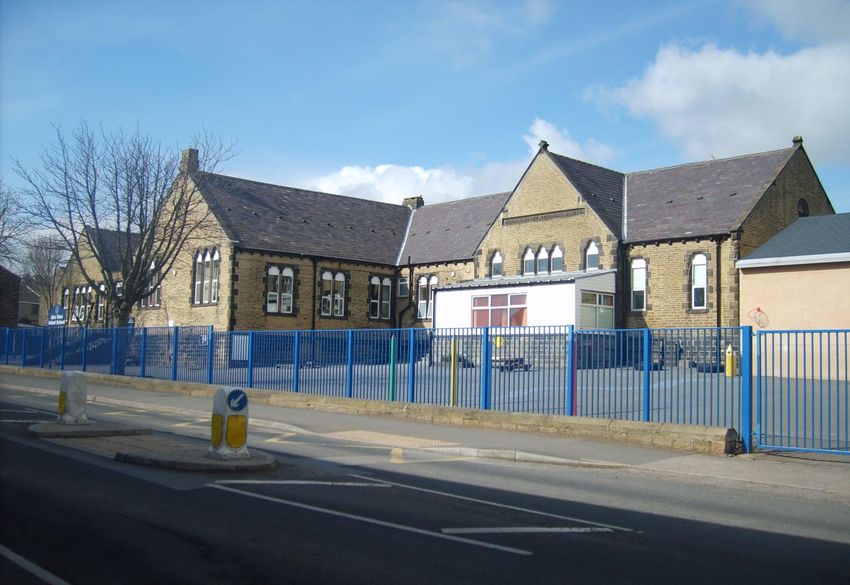
Aire View Site
                                       Elliott Street
                                 Silsden, Keighley
                        West Yorkshire BD20 0AW
                          Tel & Fax : 01535.653290
                   office@silsden.bradford.sch.uk
                        www.silsdenprimary.co.uk

SILSDEN PRIMARY SCHOOL
     AIRE VIEW SITE

       2018-2019
NAMES OF PEOPLE WHO CAN HELP YOU
Head Teacher Mr Karl Russell
Deputy Head Teacher/EYFS Leader Mrs Theresa O’Connor
Key Stage 1 Leader Mrs Alison O’Hara
EYFS/KS1 SENCO Mrs Wendy Sealey
School Business Manager Mrs Sally-Anne Boyes
Finance and Office Manager Mrs Penny Southgate
Senior Administrator Mrs Jane Fowler
Family Support Specialist Mrs Louise Heslop
School Nurse Andrea Priest/Sharon Mason/Jodie Baggs
Education Welfare Officer Mrs Anila Khan
Governing Body
Chair Mr Neil Whitaker
Vice Chair Mr George Droogmans
Co-opted Governor Theresa O’Connor
Co-opted Governor Jane Ogston
Co-opted Governor Janet Hardman
Co-opted Governor Susan Griffiths
Co-opted Governor Lynda Whitton
Staff Governor Alison Gornall
Associate Governor Ellena Cohen
LA Governor David Hill
Parent Governor Carol Patefield
Parent Governor Simon Blondel
Clerk to Governors Catherine Pratt
Governors are elected/serve for a period of four years. The Chair & Vice-Chair are nominated annually.
The work of the Governing Body
The Head Teacher and the Governing Body work in partnership to:
Decide the aims and policies of the school
Draw up the school improvement plan and long term strategic development plan
Ensure the school meets necessary legal requirements
Decide how the school budget should be spent
Ensure the curriculum is taught well
Set challenging targets for pupils
Appoint new staff
Act as a link between the community and the school
-2-STAFF WHO WORK IN SCHOOL
Teaching Staff Mrs T O’Connor Miss F Powell
Mrs A O’Hara Miss E Firth
Mrs W Sealey Mrs A Travers
Mrs S Roberts Mrs A Fisher
Mrs L Tucker Miss V Law
Mrs C Dale Miss A Whitaker
Mrs O Ahmad Miss E Daguzan
Miss N Bonham
Administrative Staff Mrs P Southgate
Mrs J Fowler
Family Support Specialist Mrs Louise Heslop
ICT Technician Supplied by Primary Technology
Support Staff –Teaching Assistants Mrs J Keith Mrs J Pickering
Mrs C Smith Mrs W Blake
Mrs M Pickard Mrs K Spencer
Mrs K Rowling Mrs W Clarkson
Mrs S Andrews Mrs A Ward
Mrs K Coburn Mrs J Gill
Mrs H Eakin Miss J Bogg
Kitchen Staff Mrs J Newiss (Kitchen Manager)
Mrs A Crocker (Deputy Kitchen Manager)
Miss L Parker
Lunchtime Supervisors Mrs W Clarkson (Senior Lunchtime Supervisor
Mrs F Watson Mrs A Pillinger
Mrs J Firth Mrs J Saunders
Mrs C Smith Ms L Nellist
Mrs S Hutchinson
Caretaking Staff Paul Collins Site Manager
Kitty Wongkalasin Caretaker
Nid Wongkalasin Cleaner
Walking Bus/FootstepsCo-ordinator Mrs C Smith
-3-USEFUL INFORMATION
ADDRESS Silsden Primary School - Aire View Site
Elliott Street
SILSDEN
Keighley
BD20 0AW
TELEPHONE (01535) 653290
E-MAIL office@silsden.bradford.sch.uk
WEBSITE www.silsdenprimary.co.uk
TELEPHONE Hothfield site (01535) 210666
Health Centre (01535) 652447
School Nurse (01274) 221203
CLASSIFICATION OF SCHOOL
Silsden Primary is a community school catering for children from the age of 3 to 11 years.
SESSION TIMES EYFS & KS1 9.00 am to 12 noon
1.15 pm to 3.30 pm
8.45 am to 11.45 am
12.30 pm to 3.30 pm
Children should not be in school until 8.50 am in the morning and 1.10 pm after dinner if absent in the morning.
This is because of the need for adequate supervision to ensure the safety of the children. Supervision is based
on the number of children staying at school over the lunch break. Children arriving before 8.50 am and after
3.40pm are the responsibility of the parents.
STARTING NURSERY
Children normally start nursery either at the beginning of the year or the term after their third birthday before
moving to the second phase of the Foundation Stage (Reception Year).
There are three intakes during the year to nursery with a total of eighty part time places at any time during the
academic year. They are offered to children whose names first appear on the waiting list for the intake period.
Choice of mornings or afternoons is offered but first preference is not guaranteed.
Once a nursery place has been accepted for either mornings or afternoons, transfer to the alternative sessions
will only be granted in exceptional circumstances. Any applications for a transfer must be made to the Head
Teacher who will refer each application to the Governing Body. It is in the interest of the child to maintain
continuity in their early years’ education with their established peer group. Change for any child can be
distressing and may have a detrimental effect on their social and emotional development.
-4-STARTING SCHOOL
Children start in the main school in the academic year in which their 5th birthday falls. All children are invited in
for several short periods to get to know their class and teacher before starting school. More detailed information
is sent when your child is offered a place.
TRANSFER
Children transfer to our Hothfield site in the September following their seventh birthday. There are many liaisons
with the Hothfield staff to ensure continuity of work. The children will also visit their new classes before the end
of the summer. This is to ensure that the transfer from one school site to the other is as smooth as possible for
the children, and is looked upon as an exciting step forward.
Transfer from the nursery to Reception will be similar. The nursery children visit school and become familiar
with the building throughout their time in the nursery. As the time approaches for them to transfer the transition
will be made gradually and will include visits to their new class to get to know the teacher and the children.
Transfer to the secondary school is not automatic. However the vast majority of children go to South Craven
Comprehensive School. This is in North Yorkshire.
ADMISSIONS POLICY
The school follows Bradford Local Authority’s Admissions Policy. Should there be more children requiring
admission than the school can accommodate the following criteria are used:
1. Children with brothers or sisters in the school.
2. Children living within the school catchment area.
3. Children living elsewhere in the Authority.
4. Children from outside the Bradford Authority.
Children with disabilities are welcome to attend the school, in line with our equal opportunities policy. The
building also has ramped access for wheelchairs and adequate toilet facilities.
As an expanding school, the admissions limit for Silsden Primary is 90.
ATTENDANCE
By law you are responsible for making sure that your children are educated between the ages of 5 and 16.
Once your child is registered at school he or she must go to school on time every day during term time unless
there is a good reason. It is important for your child’s future that he or she makes the most of his or her time at
school. This means attending regularly and turning up on time. If attendance problems do develop, the school
will support you to improve your child’s attendance and only if the issues persist will the matter be referred to the
Education Welfare Service.
If you know your child is going to be absent please inform school beforehand. If your child is
unexpectedly ill please telephone the school before 9.00 a.m. We will telephone you if your child is
absent and you have not contacted us. For safety reasons we need to know the whereabouts of every
child each day.
-5-Authorised absences include:
Illness
Medical appointments
Special day for religious observance
Exceptional circumstances (please see the Head Teacher)
In September 2013, the government changed the regulations for all schools in relation to authorising pupils’
leave of absence during term time. Regulations now state that applications for leave must be made in advance
by a parent with whom the child lives and can only be authorised by the school in exceptional circumstances.
The following are examples of the criteria for leave of absence, which may be considered as ‘exceptional’.
Service personnel returning from active deployment.
When a family needs to spend time together to support each other during or after a crisis.
Where inflexibility of the parents’ leave arrangements is part of the organisational or company policy.
This would need to be evidenced by confirmation from the organisation/company.
Where leave is recommended as part of a parent’s or child’s rehabilitation from medical or emotional
problems. Evidence must be provided.
This is not an exhaustive list and the Headteacher will consider the individual circumstances of each case.
Leave will not be granted on the basis of attendance record, academic performance or the experience being
offered and the ability to access a reduced cost holiday does not constitute an exceptional circumstance. Where
the Headteacher feels that there may be exceptional circumstances that do not fit the criteria she may refer to
the local authority for advice. The decision of the Headteacher is however final.
If any leave of absence is taken that has not been authorised, parents could be subject to a fixed penalty notice
issued by Bradford Council, (£60 per parent within 21 days or £120 within 28 days).
It is well recognised and understood that good consistent attendance at school is crucial to a child’s future
success and we hope our policy sends a clear message that Every Day Counts at school.
We trust that serious consideration is given to any application for leave of absence for the reasons outlined
above.
-6-SCHOOL ATTENDANCE FIGURES – September 2017 – May 2018
AUTHORISED ABSENCE UNAUTHORISED ABSENCE
TOTAL NO No. of pupils % of pupils % of No. of pupils % of pupils % of
OF PUPILS sessions sessions
186 165 88.7 3.1 67 36.0 1.3
Whole School Attendance 96.6%
THE SCHOOL
GENERAL ORGANISATION
At present the school has 22 classes (including two nursery classes). Each September children who are rising 5,
both new entrants and children from Nursery move into a Reception Class.
Year Group Age (years) Number of classes
Nursery (N) 3–4 2
Reception (R) 4–5 3
Year 1 5–6 3
Year 2 6–7 3
Year 3 7-8 3
Year 4 8–9 3
Year 5 9 – 10 2
Year 6 10 – 11 3
All classes have equipment and materials to suit both older and younger children. This means that some
children who progress quickly at some stages are not held back whilst children who sometimes need a little
longer time still have all the books and equipment they need.
Teaching takes account of the needs of the individual child using a variety of teaching methods. Children are all
so very different when they come into school they are encouraged to better their own achievements as they
progress rather than, at this stage, try to vie with someone else. This also means that there is no limit to how far
the older children can progress as work is geared to their capabilities and is not restricted by age or year group.
The Early Years Foundation Stage Curriculum and the National Primary Curriculum is followed.
The school curriculum includes language development, (speaking, listening, reading, writing), mathematics,
science, technology, (design, construction, information technology), creative and expressive arts, (P.E. music,
dance, drama, painting, clay, printing, fabric work, drawing, model making etc.), history, geography and religious
education. There are five statutory subjects, i.e. English, Maths, Science, Computing and R.E. The other
foundation subjects will be delivered as part of the whole curriculum ensuring a good sound, all round education
for all the children.
-7-THE SCHOOL DAY
The school starts at 9.00 a.m., the lunch break is from 12 noon to 1.15 p.m. and the day ends at 3.30 p.m.
The allocation of time during the day.
Teacher Supervision 8.50 am
Registration 9.00 to 9.10 am
Teaching time 9.10 to 10.15 am
Collective Worship 10.20 to 10.35 am
Playtime 10.35 to 10.55 am
Teaching time 10.50 to 12 noon
Lunchtime 12 noon to 1.15 pm
Teaching time 1.15 to 2.25 pm
Playtime 2.40 to 2.55 pm
Teaching time 2.55 to 3.30 pm
THE WORK AND ROLE OF THE SCHOOL
The school is the local community school. It endeavours to serve all the children of Silsden and neighbouring
areas, including those with specific needs. New ways of providing contact and support for younger children and
their families are constantly being introduced to help provide a sense of involvement with Aire View. This helps
to make the transition from home to school an easy one and one which is eagerly anticipated when young
children join with local friends and neighbours for their early education in the nursery.
The staff and governors seek to raise the educational achievement of all pupils to the highest possible
standard, through their dedication and commitment to the school.
AIMS OF THE SCHOOL
To develop the full potential of each child through access to all aspects of the curriculum, and by promoting
self-esteem and self-confidence.
To provide a broad balanced and differentiated curriculum which encompasses all National Curriculum
statutory requirements.
To offer a range of learning experiences to each individual child, where possible by first-hand experience,
within a warm, caring and stimulating environment.
To encourage children to use their initiative, consider other people’s points of view, and develop lively and
enquiring minds.
To promote an atmosphere of trust and empathy and to develop attitudes of mutual respect and
responsibility.
To encourage an understanding of the Christian faith and show tolerance and concern for other peoples’
beliefs and cultures.
To welcome and encourage parents to take part in all aspects of school life and take an active part in their
own child’s education.
-8- To establish an environment where adults and children work together as integral parts of the school and wider
community and that all feel happy and fulfilled during their time at Aire View Infant School.
NATIONAL CURRICULUM AND THE CURRICULUM
The National Curriculum is that part of the curriculum which is required by law. As a school we constantly
monitor and evaluate our long term planning. The Early Years Foundation Stage Curriculum encompasses
Nursery and Reception.
ASSESSMENT AND ITS REPORTING
All children’s work is assessed and records are kept. Where possible teachers assess children’s work in their
presence. Standard Assessment tasks (SATs) in English and Maths are taken in Year 2. A detailed written
report is sent out each summer and parents are welcome to discuss this with the teacher. In addition there is a
parents evening in the Autumn Term and Spring Term for parents to discuss their child’s progress. Ways of
recording children’s achievements as fully as possible are being developed. Samples of work for each child are
retained.
The records are brought up to date regularly and each child’s progress carefully tracked and monitored. The
children are aware of what is written and have the opportunity to suggest what is of importance to them that they
would like included. Targets for the coming period are discussed with the children so they know what we want
to help them achieve. The staff welcome every opportunity of sharing this information with you. In this way we
hope that your child’s early education will be a shared experience. Of course, you are not limited to these
invitations. We welcome your interest in your child’s education and look forward to developing this partnership
with you.
DEVELOPMENT OF WORK AND ATTITUDES
“Children relish what the school has to offer. They enjoy school, feel safe and valued and respond well to
adults”.
The work is such as will be found in most primary schools and all activities provided are considered necessary to
a child’s education, including catering for the National Curriculum. The length of time spent on activities varies.
Long “general work periods” allow children to spend time over, for instance, an extended piece of writing, or
equally
gives the opportunity to work in more than one area during a session. If necessary, work is carried over to the
next day so that children do have enough time to work in depth and time to complete work properly.
Because children are encouraged to work in depth, concentrating for relatively long periods of time on the work
in hand, you will realise they do not necessarily work in every area every day. The quality of work takes priority
over frequency. However, we do ensure that numeracy and literacy are given a daily high priority. Regular and
detailed record keeping ensures that children cover all aspects of work, and progress is carefully noted.
HOMEWORK
Regular curriculum newsletters are sent home to offer suggestions of how you can support your child at home.
Children may also bring spellings home to learn.
-9-Doing homework helps children to develop important skills, in particular those of independent learning. The
Government recommends regular homework for all children from Year 1 upwards. Young children should start
by reading or sharing a book with you for short periods of time. The Government guidelines state in broad terms
that Year 1 and Year 2 children should spend one hour a week on homework (reading, spelling, other literacy
work and number work).
Homework given by school will be properly planned and organised so that:
Children are not expected to do too much
The tasks will be realistic within the time available
The tasks will be clearly related to the work they are doing in school and not too difficult or too easy
Although there may be times when we should very much like you to work at home with your child, generally a
child has worked long hours at school and extra work at home can have a positively detrimental effect on a
child’s attitude to work at school, and so it is recommended that at the infant level children should not normally
be expected to do too much work in the evenings.
Sometimes a child is very keen to do certain things at home. It is helpful then if you would speak about it with
the class teacher so that you and she are working along the same lines.
EXTRA CURRICULAR ACTIVITIES
“The wide range of clubs and activities provided outside lesson times enhances children’s well being and
increases their enjoyment of learning”.
Children have opportunities to participate in a range of extra-curricular activities e.g. French, Football, Sewing,
Multiskills and Gymnastics. There are many other opportunities for children to attend other short courses in a
variety of sports. Swimming is available for Year 2 children during the school day on a weekly basis.
AWAY FROM SCHOOL ACTIVITIES
We offer an extensive range of activities to enrich the children’s curriculum entitlement. For example, visits to
the theatre, Hesketh Farm, Nell Bank, Skipton Castle and Blackhills Campsite. We also participate in activities
and events in and around the community.
LINKS WITH THE COMMUNITY
“The very wide range of opportunities offered to children to take on responsibilities in school and within the local
community means that all are developing a sense of value from working with others”.
Silsden Primary School has enjoyed strong links with the local community of Silsden for many years. The
children visit the local churches and are often seen out and about in the village in conjunction with their work
relating to the locality in which they live. The children visit residential nursing homes in the area leading up to
Christmas and the whole school sings Christmas songs in the village.
Parents and volunteer helpers work in school on a regular basis supporting children’s learning through a wide
range of activities eg reading, art and craft etc.
- 10 -The school continues it’s commitment to supporting many charities throughout the year both locally and
nationally.
Strong links are also maintained with the local health centre and the Children’s Centre. Also we welcome
students from the local colleges and Secondary schools.
The police service education officer visits at intervals. The ambulance and fire service and various branches of
the police service are generous in their help as are many other visitors.
ACTS OF WORSHIP
“Children’s personal development is outstanding as is their spiritual, moral, social and cultural development.
They reflect very sensitively about the world around them and appreciate the influence of different faiths on the
ways in which people lead their lives”.
The school complies with the 1988 Education Act in that the school’s acts of worship are “mainly broadly
Christian”.
In order not to undervalue the term “worship” and to ensure that it develops a real significance for children the
meeting together is still called Assembly. This allows for any occasion, which is not specifically worship.
Assembly has three main forms:
Worship - these are always Christian acts of worship. Sometimes we have a visiting Church Leader to lead
worship.
Celebration - once a week the school celebrates the worth and the uniqueness of individuals by having an
assembly, which highlights those children who have been recognised for their achievements.
General assemblies - these frequently highlight Christian and other faith’s standards of caring, sharing, truth,
honesty etc., but also reflect on families, seasons, sharing experiences etc, and health and safety issues.
Religious Education is taught to all pupils in accordance with the Local Agreed Syllabus for RE, a copy of which
is available for parents to borrow from school. The syllabus asks school to introduce pupils to the six main
religions of the Bradford District and the world, and to help them to both learn about and learn from these
religions.
We regularly invite visitors into school to help with RE, for example members of staff from the Bradford Interfaith
Education Centre, and we sometimes arrange for pupils to make study visits to local churches and other places
of worship as part of the school’s RE curriculum.
Opportunities to participate in collective Worship are provided in assemblies and in classrooms. The 1988
Education Reform Act provides for most acts of worship to be mainly Christian but permits the inclusion of
material form other faiths as well.
WITHDRAWAL
Parents (or Guardians) have the legal right to withdraw their children from RE and /or Collective Worship. If you
have any concerns about these areas of school life please discuss them with the Headteacher in the first
instance. If you wish to exercise either of these rights you should place your wishes in writing addressed to the
Head Teacher.
- 11 -WORK WITH FOOD
During their time in school, children will be introduced to many processes and many ways of preparing food.
It extends to cover several mathematical areas as well as aspects of language, history and tradition, technology,
geography and science. It is also an area from which a great deal of health and safety education is developed.
SEX EDUCATION (RELATIONSHIPS)
Silsden Primary School views education as a continuous process in which home, school and community work in
partnership, to nuture the development of self-esteem and self-confidence in each individual child.
Relationship education is part of the Personal, Social, Health and Economic (PSHE) framework. PSHE
addresses relationship education in line with Department of Education guidance, by developing skills, attitudes
and understanding to help children form supportive relationships and respect for themselves and others. Also
learning how to be able to keep physically, emotionally and socially safe and healthy. The curriculum is tailored
to the age and physical and emotional maturity of the children.
Silsden Primary School has a named PSHE teacher who will promote PSHE as a whole school responsibility.
The whole school community, parents, staff, school nurse and governors will be engaged in monitoring and
reviewing PSHE policies.
At Aire View the PSHE framework is developed through four broad themes:-
Developing confidence in talking, listening and thinking about feelings and relationships
Preparing to play an active role as citizens
Developing a healthier, safer lifestyle
Developing good relationships and respecting differences between people
At Silsden Primary School, PSHE relationship education will ensure that all children are able to name parts of the
body and describe how their bodies work, and can protect themselves and ask for help and support.
Relationship education will also focus on friendships, bullying and the building of self-esteem.
DISCIPLINE AND BEHAVIOUR
“The care shown by the school for the children is outstanding and lies at the heart of all it does. Behaviour is
good both in classrooms and around the school”.
You have a very important role in encouraging your child to behave well and your influence is critical in shaping
your child’s attitude and behaviour.
We believe that good behaviour and discipline in children should come from a partnership between home and
school. We expect children to keep to the School rules and that you will support the School in maintaining good
behaviour and discipline.
There are very few rules in school (see section on Home School Agreement). Most are related to safety or to
respect for people, materials and environment. Children who break any of the rules are usually dealt with by
- 12 -discussion, withdrawing privileges and/or making restitution. Where there is a persistent problem there is
usually consultation with parents so that we can work together to try and sort out the difficulty.
The school has a clearly defined written policy on the wider aspects of discipline, which is available for parents to
read.
Bullying - is taken very seriously and we consider name calling and teasing to be forms of bullying as well as
more physical forms.
EXCLUSION
Children will only be excluded from school for serious breaches of discipline such as:
physical violence or abuse to staff,
a violent attack on another pupil,
wilful damage to school property.
Usual exclusions are for a short period of time. A contract will be drawn up to ensure the child has a successful
re-entry into school.
If a child damages school property or the premises as a result of misbehaving, parents may be asked to meet the
cost of these repairs.
SPECIAL EDUCATIONAL NEEDS
“Children with learning difficulties and/or disabilities also achieve well. This is because teachers assess their
needs very accurately. They provide them with challenging tasks and high quality support.”
Every effort is made to ensure children remain in mainstream education, at their local school, whatever their
particular needs are. At Silsden Primary School there is a Special Educational Needs Co-ordinator for each site.
Many children need help or support at some time in their school life. For some this help will always be needed;
for others it may be just for a very short time to overcome a particular difficulty; then there will be children at all
stages in between.
This continuum extends to children who have particular strengths in one or more areas. For these children help
may be given to develop these strengths. Our aim throughout is to enable all children to fulfil their potential at
whatever level this may be.
Funds are occasionally made available to provide additional staff support for a child, a teacher or a class. In
addition, the school uses some of the teaching assistants’ time to support individual children for limited periods.
Any specialist provision made for your child will be discussed with you and, as with all children, the education of
children with special needs is regarded as a partnership between home and school.
SUPPORT SERVICES
The school is able to draw on many support services either to complement or supplement what is provided within
school.
- 13 -The school nurse and speech therapist visit regularly throughout the year to work with children in connection with
our health and language programmes. Some children have one full medical inspection during their time in the
infants. You will be informed and invited to be present, also at any subsequent review.
The school nurse also checks vision and hearing, and you will be informed if there is anything amiss. The school
also facilitates an annual fluoride varnish campaign.
The school has contact with many educationalists with special skills and we draw on them very regularly. These
include staff from special schools and support units, psychologists, social workers, local inspectors and advisory
teachers. Through these contacts we are often able to borrow equipment and materials for individual children
COMPLAINTS PROCEDURE
Any complaints should be addressed to the Headteacher in the first instance and hopefully these can be
resolved through informal discussion. We shall endeavour to deal with any complaint quickly and efficiently in
the best interest of the children.
Should anyone wish to take a complaint further, the governing body should be approached through the clerk. If
there is no satisfactory outcome from this, the LA should be approached.
A copy of the complaints procedure is available in school and on the website.
Confidential Information
Information we ask for at the beginning of each school year is treated confidentially. If your circumstances
change please inform school immediately.
SAFEGUARDING CHILDREN
SAFEGUARDING – KEEPING CHILDREN HEALTHY AND SAFE FROM HARM
School policies are in place to ensure that there is a consistent approach to practices throughout the school and
that they are understood and adhered to by staff, governors and volunteers. Adults have a tremendous impact
on young children and with this in mind adults at Silsden Primary School.
Are good role models for children
Enjoy their work and working with children
Are conscientious and hard working
Welcome and support visitors to school
Recognise and value strengths in each other and use these to support everyone
Work within the agreed policies of the school
Promote a happy, caring and safe school
Encourage children to think for themselves, ask questions and to find answers
Create an environment of trust whereby children are trusted to work seriously
Challenge and support children in their learning
There are numerous policies in place to safeguard our children and they include:
Child Protection – this is a sensitive area in which all staff do receive regular training. Here school,
along with other services for children and families all work together to support the needs of children.
There is also a named Governor for Child Protection.
Attendance – children’s attendance at school is monitored on a daily basis and notable absences or
patterns of absences are followed up by the Parental Involvement Officer and in more serious cases the
- 14 -Education Welfare Service and in extreme cases services for children (most commonly known as Social
Services). The school prides itself on our very good attendance figures.
Behaviour – high standards of behaviour are expected in school. However, from time as we all know
children do fall out from time to time. Where this is the case it is dealt with sensitively by an adult who
gives both children time to explain what the problem is and helps the issue to be resolved. Children are
often reminded about our school rules and they know that we have them in order for everyone to be
happy and keep safe.
Health and Safety – everyone here at Silsden Primary School knows they have a responsibility to ensure
that children and adults are able to work in a healthy and safe environment. The school has several fully
trained Paediatric First Aid members of staff who deal with accidents should they occur. There is a
named Governor responsible for Health and Safety.
Curriculum – through the planned curriculum we ensure that the issues of healthy eating, physical
exercise and safety are taught. This aspect is enhanced by the many visitors to school e.g. Police
Officers who talk to the children about issues such as road safety, safe people and dugs awareness for
our older children
Safer Recruitment and Selection – this aspect is taken very seriously. Governors and the school ensure
that all staff new to the school and volunteers who work in school on a regular basis undertake a DBS
check and full references are acquired before a person takes up post
Complaints – should parents have any complaints the school staff will listen to your concerns and will
follow up any issues arising. There is a clear procedure in place. The Head Teacher will always be
happy to meet with you and help resolve any issues. The school is committed to working closely with
parents/carers for the benefit of the children. Remember no problem is too small and can often be
prevented from becoming a bigger issue. If you continue to feel an issue has not been resolved then
you could contact the Complaints Committee of the Governing Body.
We all know that children thrive better and will be able to reach their full potential when school and families work
closely together. All of us here at Silsden Primary School are totally committed to this.
Within our school, we have a Family Support Group that meets regularly. The group is aimed at families who
have adopted, fostered children or suffered a parent bereavement within school. Dates of meetings are sent out
to all parents and carers. Any further information, please contact Mrs Louise Heslop, Parental Involvement
Officer.
A Privately Fostered Child means a child who is under the age of sixteen (or eighteen if disabled) and who is
cared for and provided with accommodation by someone other than a parent or a relative (defined as step-
parents, siblings, brothers or sisters of a parent or grandparent. To foster a child privately means to look after
the child for a period of twenty eight days or more. If this is your current situation you have a legal obligation to
inform Children’s Social Care because school also has to inform the relevant authority.
The abuse of children is a matter of deep concern to all of us. The School is committed to protecting children
from abuse.
Committees of Enquiry have recommended that procedures should be set up for co-operation between
departments (in particular Social Services and Education). Reports have also advised that a point of contact
should be available in schools.
All Bradford schools have a “Designated Lead Person” who has access to the Child Protection Service. He or
she will co-ordinate information and action in the case of suspicion or discovery of the abuse of a child.
The named persons for Child Protection are Mrs T O’Connor, Mrs O’Hara, Mrs L Heslop.
- 15 -SAFETY, HEALTH AND HYGIENE
SAFETY IN SCHOOL
The Safety Officer from the Directorate of Educational Services has pointed out the hazards resulting from
congestion in the corridors, and, supported by the Schools Officer, made the following recommendation:
“I recommend that all parents wait for their children outside to avoid
congestion in the corridors that have limited space”.
We are sorry that this may cause discomfort in the cold or rainy weather. However, we try to ensure that
children come out promptly and fully dressed at 3.30 p.m.
Congestion can also occur before school when children are taking off coats and changing shoes. This can be
dangerous. We do ask for your consideration with regard to keeping the corridors safe for children. We would
ask that you encourage your child to come into school without you, leaving the limited space available for
children, and also the parents of children who have only just started school. We also ask you not to bring
pushchairs into the school building.
This is the one time in the day when we ask that you help us balance the welcome we offer you with the needs of
safety for our children.
Dogs are not allowed in the playground and should also not be tied up to the railings and left unaccompanied.
Please ensure all school gates are fastened at all times. No parking is permitted on the yellow zig-zag lines
outside school entrances.
ILLNESS
A telephone call explaining a child’s absence is expected. If school does not receive a telephone call or
message we will contact you. You will not be required to notify us in writing upon your child’s return to school.
It is not current practice for staff to give children medicine in school. As children taking medicine are normally
unfit to be working hard all day in class, taking their full part, the situation should rarely arise.
Exceptions to all the above are children with long term health problems or who are on long term medication. For
children who need regular access to an inhaler, the inhalers should be clearly labelled with the child’s name and
correct dosage and given to the class teacher.
If a child feels too ill to cope in school, or if he or she is sick, we shall need to contact you and ask you to collect
your child. If you are not available we shall contact the person you have named for emergencies. If a child has
a head bump we shall inform you then you can decide if you would like to take your child home to keep under
observation.
Should there be an accident requiring medical attention it is essential that we are able to contact a parent or the
child’s guardian. It is therefore very important that in addition to the name of a neighbour or friend we also have
your work telephone number. Each year we send out a proforma in order for you to update the information.
If your child has had an attack of sickness/diarrhoea they must not return to school for at least 48 hours after the
symptoms have ceased.
- 16 -HAIR
It is possible that at some point, despite great care over hygiene (regular washing and daily brushing) your child
may catch head-lice. Lice often prefer the cleanest hair!
If this happens, please do not be alarmed. There is a straightforward procedure to be followed.
Examine your child’s head regularly for nits and lice. If you are not sure what you are looking for, call in at the
Health Centre and they will be pleased to help you.
FOOD
MILK
Our school provides a milk scheme that is available to all of our pupils. School milk is free for under-5s, and for
over-5s it is available at a subsidised* price of £0.22 per day.
How to register
If your child is under five:
Register online at www.coolmilk.com or complete a registration form available from the school
office
Register by a Tuesday at 5pm for your child’s free milk to start the following week
Free milk will continue until the Friday before your child’s fifth birthday. You will receive a
payment request four weeks before their birthday - if you wish your child to continue to receive
school milk, simply make a payment.
If your child is five or older:
Register and pay online at www.coolmilk.com
Alternatively, fill in a registration form available from the school office – once Cool Milk has
processed your form, you will receive a payment request
You can pay Cool Milk either online, over the phone or at a local PayPoint in half-termly, termly
or annual instalments.
Please pay by a Tuesday at 5pm for your child’s milk to start the following week
*Please note your child will not receive milk if you have not registered*
SNACKS
In keeping with our policy on healthy eating, children are not allowed sweets in school. We believe healthy
eating and drinking is achieved by maintaining a balance of healthy food and drink and occasional treats.
Snacks are allowed for children to eat during playtime as for some children it is a long time between having
breakfast and their mid-day meal.
In addition we are fortunate to be in a position to provide free of charge, a piece of fresh fruit or vegetable each
day to every child in school. If parents wish to send an additional or alternative snack the following food items
are allowed:
Piece of fresh fruit
Plain dried fruit e.g. raisins, dried apricots
Piece(s) of vegetable e.g. cucumber, celery, carrots
- 17 - Piece(s) of cheese or cheese string
Plain rice cakes
The following food items are not considered appropriate for school on account of additives, high salt, sugar or fat
content:
Cereal bar
Cheese dipper
Pepperami
Fruit winders
School bars
Fruit flakes
Nuts of any description (we have children with extreme nut allergies)
WATER
Several years ago we launched a new initiative in school to enable the children to have access to a drink of
water during the working day. It has been proven that there are many health benefits to drinking water regularly
throughout the day, including improved concentration particularly in the afternoons which will obviously have
educational benefits for the children.
Children can bring a sports cap type bottle which must be clearly labelled with their name. It is suggested that
the bottles are kept in school during the week to be refilled by the children and taken home on a Friday to be
washed. The bottles must be filled with water only.
DINNERS
Dinners are provided from Education Catering service. Dinners are prepared and cooked in the school kitchen at
Aire View Infant School. There is an emphasis on wholesome food and healthy eating. Care is taken over the
use of sweeteners, additives etc. Meals are planned on a four week rolling programme which is available from
school and the current week’s menu is also on display in school. Please inform us if your child has any specific
dietary requirements.
It is also very important if your child has any dietary needs e.g. vegetarian/food/nut allergies, that this is
put in writing for the attention of the Unit Manager at school (even if your child is on packed lunch).
Universal school meals are provided for all children in Reception, Year 1 and Year 2 classes. However, if you are
in receipt of certain benefits, please visit www.bradford.gov.uk to check eligibility to claim free additional
entitlements i.e. school uniform, school trips and extra-curricular clubs.
CLOTHING
SCHOOL UNIFORM
The new school colour from September 2017 is purple. You can order items via the online Uniform
Embroidery Service from F&F (tesco.com/ues). They can provide the uniform of your choose with a 5%
cash donation on every purchase you make to school.
- 18 -Alternatively, school uniform is available to purchase directly from Andrew Firths, 5 Low Street, Keighley or
Golden Leaf (Silsden).
It is helpful if children wear clothes, which are easy to manage for P.E. so that they can undress and dress
themselves.
Clothing should be named (and checked regularly) especially shoes and pumps. Coats should have a
strong loop by which they can be hung.
Please note that as the children do spend time outside in the winter we would appreciate it if they had
appropriate clothing ie warm coats with hoods. A named spring peg is useful for keeping wellingtons together in
bad weather.
There are spare clothes in school in case of accidents. It is much appreciated if these are washed and returned
as soon as possible. We are grateful for outgrown clothes in reasonable condition, especially knickers and
pants, but also other garments to keep our stock replenished.
CLOTHING FOR P.E.
For P.E children require a T-shirt, shorts and a pair of well- fitting pumps (please check sizes regularly as
children do tend to grow out of them quickly at this age). Jogging bottoms are optional.
Reception children do not require pumps or jogging bottoms.
Please also note that jewellery (including earrings) must not be worn in the interest of safety.
All P.E clothing and footwear needs to be in a NAMED PUMP BAG which will be left on the child’s peg and
perhaps taken home to be washed half termly.
SWIMMING
Year 2 children are offered the chance to have swimming lessons at the Stanley Bell Memorial Pool. They will
require swimming costume/trunks etc. and further details will be given to you when appropriate. Earrings are not
allowed.
It is essential that you inform the class teacher by letter if your child is not able to swim on a particular day for
any reason.
SHOES
Children are only required to change into “indoor” shoes in wet weather. Pumps or alternative soft shoes should
be kept in a pump bag for this purpose. Black shoes for school are required.
EAR RINGS
The Authority does not allow children to wear ear rings during P.E. for safety reasons. If children wish to wear
ear rings in school they must be able to deal with their removal and re-insertion themselves.
LOST PROPERTY
- 19 -Lost property is kept in a container in the school entrance. his is where all articles left lying around are put
except for small valuables which are kept separately by the Head.
On a termly basis notice will be given that lost property is on display. Anything which is then left unclaimed will
be disposed of.
Will you kindly ensure that all lunch boxes and containers are clearly labelled (flasks, sandwich boxes etc.)
HOME AND SCHOOL
“Parents are very appreciative of the excellent care, guidance and support that the school gives to their children.
They say that their children grow in a supportive environment and that the staff and teachers all want the children
to succeed”.
INTRODUCTORY SESSIONS
During your child’s time in school you will be invited to some informal sessions to hear about the school and
some of the work your child will be doing. This will include a general introduction, a look at mathematics, and a
session on language including reading and writing, and a look at some of the other areas in which children
engage.
At each session there will be opportunities to ask questions, and for general discussion.
REVIEWING CHILDREN’S WORK
If your child wants to show you a piece of work, a model, or whatever, just pop into the classroom. However,
you will want to review your child’s work regularly and teachers welcome this. Please make an appointment to
ensure that the teacher is not otherwise engaged. Immediately after 3.30 p.m. is usually a good time. If you
have particular difficulty in managing this, there are usually three evenings during the year when you will be
invited in, or sometimes special arrangements can be made. If this is necessary, please see the Head about it.
Should you be worried about any aspect of your child’s work do not hesitate to contact the class teacher or the
Head. Similarly, if we have a particular concern we shall contact you.
However, there does not need to be a problem before you can come into school. Your general interest is
appreciated and it is usually found that such visits are helpful all round.
COMMUNICATION
There are several means of communication. Newsletters go to many people in the community who have shown
an interest in our school, as well as to the parents and children both in school and near entry. It is intended as a
means of giving information and drawing together the events and activities of the term.
There are several notice boards outside in the playground for parents and visitors, giving up to date information
of current activities, a calendar of events and the holiday list.
Inevitably matters arise during the term and for anything of importance you are sent a note or text message.
Sometimes these seem rather frequent but it is felt to be important that you are kept as fully informed as
possible.
- 20 -PARENTS VIDEOING SCHOOL EVENTS
During the school year there will be a number of school events, productions, musical concerts and sporting
events etc. that parents/carers may wish to take videos/photographs of the child’s involvement. The
school/Governors would wish parents to take part in this activity for personal use.
These videos/photographs are not for sale under any circumstances. However should any parent object to their
child being videoed or photographed then the school would have to operate a total ban for that event.
If you wish to object to your child being videoed/photographed, please contact the school within 20 days of the
event, or as soon as possible if you are totally opposed to your child being videoed/photographed.
Where the children are performing for parents e.g. Christmas assemblies we ask that parents do not take
photographs/videos during the event. There will always be an opportunity for this at the end. I trust you will
appreciate that the children are very young and it can be quite daunting for them, performing in front of a large
audience. In addition, for safeguarding reasons, there will be some children that could be at risk if for example
photographs/videos were shared on social media.
TOYS
Children are discouraged from bringing toys mainly because they so often get lost or broken and then children
are upset.
USEFUL MATERIALS
In connection with Art, Science, Design and Technology we use a lot of materials which are normally thrown
away. Please send us anything which you think we could use, eg plastic bottles, yogurt pots, cotton reels,
fabric off cuts, fir cones etc.
CHARGING
From time to time classes organise visits to support the work they are doing. Under present legislation schools
can ask only for voluntary contributions towards the cost. However, no extra funding is available and therefore
visits can take place only if the cost can be covered. If you are in receipt of benefit related support, clubs and
trips will be covered by school.
HOME SCHOOL AGREEMENT
All schools are now required to have a home school agreement setting out aims and values, your responsibilities
and what we as a school expect of all our children. You will receive one of these with your information pack
which will be signed by the Head Teacher. This should be signed by your child and yourself and returned to
school.
For your reference the home school agreement states the following:
The child will make every effort to keep the five special rules:
Take care of everybody and everything
- 21 - Keep safe hands and feet
Walk quietly in school
Tell someone when you are worried
Listen carefully and behave sensibly
Parents/carers will make every effort to:
Make sure my child arrives at school regularly and on time
Make sure my child does not take holidays during term time
Make the school aware of any concerns or problems that might affect my child’s work or behaviour
Attend parents’ evenings and discussions about my child’s progress
Support the school’s policies and guidelines for behaviour
Encourage my child to keep the 5 special rules
The School will make every effort to:
Care for your child’s safety and happiness
Encourage your child to take care of their surroundings and others around them
Provide a balanced curriculum and meet the individual needs of your child
Keep you informed about general school matters and about your child’s progress
Be open and welcoming and offer opportunities for you to become involved in the daily life of the school
DISCLAIMER
It should be noted that the information in this booklet was correct at the time of issue. It should not be assumed
that there will be no changes affecting the relevant information before or during the next school year.
SCRIPT USED IN SCHOOL
Children often want to do some writing at home and will ask you to write down words for them. Sometimes the
teacher will ask you to do a few minutes writing practice with your child to help with letter formation.
The attached page shows the script we use for the alphabet, also the number formation which we use.
HOLIDAY LIST – September 2018 to July 2019
CLOSE RE-OPEN
Autumn Term Tuesday 4th September 2018
Half Term Friday 19th October 2018 Monday 29th October 2018
Christmas Friday 21st December 2018 Monday 7th January 2019
Half Term Friday 22nd February 2019 Monday 4th March 2019
Easter Friday 12th April 2019 Monday 29th April 2019
May Day Monday 6th May 2019
Spring Bank Friday 24th May 2019 Thursday 6th June 2019
Summer Friday 19th July 2019
- 22 -You can also read


