Small Posterior Cranial Fossa and Cerebellopontine Cistern Volumes Are Associated With Bilateral Trigeminal Neuralgia - Frontiers
←
→
Page content transcription
If your browser does not render page correctly, please read the page content below
ORIGINAL RESEARCH
                                                                                                                                              published: 15 October 2020
                                                                                                                                         doi: 10.3389/fneur.2020.573239

                                               Small Posterior Cranial Fossa and
                                               Cerebellopontine Cistern Volumes
                                               Are Associated With Bilateral
                                               Trigeminal Neuralgia
                                               Jiayu Liu 1† , Ruen Liu 1,2*, Bo Liu 1 , Jingru Zhou 1 , Cungang Fan 1 , Feng Jiao 1 ,
                                               Dongliang Wang 1 , Fang Li 1 and Bo Hei 1
                                               1
                                                Department of Neurosurgery, Peking University People’s Hospital, Beijing, China, 2 Department of Neurosurgery, Jiangxi
                                               provincial People’s Hospital Affiliated to Nanchang University, Nanchang, China

                                               Objective: To investigate whether small volumes of the posterior cranial fossa and
                                               cerebellopontine cisterns are associated with bilateral trigeminal neuralgia (BTN) and to
                            Edited by:
                          Teresa Lever,        provide further knowledge regarding the etiology and treatment of this rare disease.
  University of Missouri, United States
                                               Methods: We retrospectively analyzed clinical data and imaging examination results
                       Reviewed by:
                 Marcelo M. Valença,
                                               for 30 BTN patients between January 2009 and December 2019. Thirty age- and
                 Federal University of         sex-matched healthy individuals and 30 patients with unilateral trigeminal neuralgia (UTN)
                  Pernambuco, Brazil
                                               were selected as two control groups. The volume of the posterior cranial fossa (VPCF)
        Yohannes W. Woldeamanuel,
    Stanford University, United States         and volumes of the cerebellopontine cisterns were measured using ITK-SNAP 3.0, which
                  *Correspondence:             considers the cerebrospinal fluid (CSF) volume based on the region of interest (ROI).
                            Ruen Liu           Preoperative and postoperative statuses were based on visual analog scale (VAS) pain
                  liuruen@pku.edu.cn
                                               scores and Barrow Neurological Institute (BNI) scores.
                             † ORCID:

                           Jiayu Liu
                                               Results: A total of 30 patients (11 males; 19 females) were included, and the age of the
     orcid.org/0000-0001-6976-4568             BTN participants ranged from 41 to 77 (59.93 ± 9.89) years. The duration of TN ranged
                                               from 1 to 20 (5.36 ± 3.92) years, and the interval between the two sides ranged from 0
                  Specialty section:
                                               to 3 (1.10 ± 0.79) years. Three patients (10%) in the BTN group had familial trigeminal
        This article was submitted to
  Headache Medicine and Facial Pain,           neuralgia, with no other hereditary history of neurological disorders. In BTN patients, with
              a section of the journal         25 (83.3%) cases on the left side and 26 (86.7%) on the right side, veins were identified
               Frontiers in Neurology
                                               in the operative field and regarded as the individual or offending vessel. The mean VPCF
           Received: 16 June 2020
      Accepted: 11 September 2020
                                               was significantly lower in the patients with BTN than in the healthy controls (4,813 ±
        Published: 15 October 2020             1,155 mm3 vs. 5,127 ± 1,129 mm3 , p = 0.008). The volumes of the cerebellopontine
                             Citation:         cisterns on both sides were significantly smaller in the BTN patients than in the healthy
    Liu J, Liu R, Liu B, Zhou J, Fan C,
                                               controls (477 ± 115 mm3 vs. 515 ± 112 mm3 on the left side, p = 0.001; and 481 ± 114
Jiao F, Wang D, Li F and Hei B (2020)
    Small Posterior Cranial Fossa and          mm3 vs. 515 ± 110 mm3 on the right side, p = 0.007). There was no significant difference
Cerebellopontine Cistern Volumes Are           between the BTN group and the UTN group in terms of the VPCF (4,843 ± 1,184
  Associated With Bilateral Trigeminal
 Neuralgia. Front. Neurol. 11:573239.
                                               mm3 vs. 4,813 ± 1,155 mm3 , p = 0.402), and there was also no significant difference
     doi: 10.3389/fneur.2020.573239            between the two groups in terms of preoperative VAS pain scores or BNI scores.

Frontiers in Neurology | www.frontiersin.org                                          1                                        October 2020 | Volume 11 | Article 573239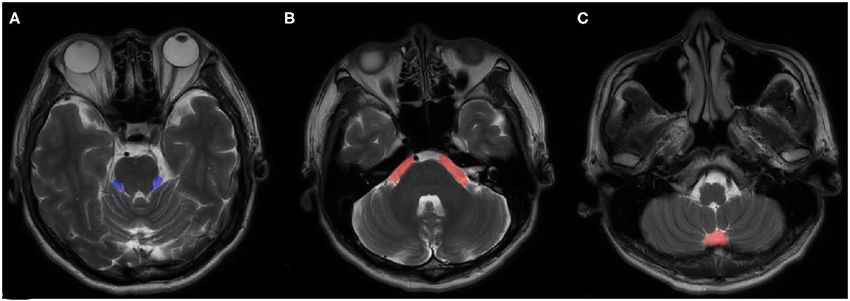
Liu et al.                                                                                                                        Bilateral Trigeminal Neuralgia

                                               Conclusion: Overcrowding in the posterior fossa will lead to closer neurovascular
                                               relations and, a higher incidence of NVC, and ultimately may be more likely to lead to TN.
                                               Veins are the common offending vessels that cause BTN; they might be associated with
                                               abnormal vascular development leading to NVC. Microsurgical vascular decompression
                                               (MVD) is a safe and effective method for the treatment of BTN, similar to UTN.

                                               Keywords: bilateral trigeminal neuralgia, posterior cranial fossa, cerebellopontine cisterns, microvascular
                                               decompression, neurovascular conflict

INTRODUCTION                                                                           Age- and sex-matched healthy individuals and patients with
                                                                                    UTN were selected as two control groups. Written informed
Trigeminal neuralgia (TN) is recurrent and intense pain in the                      consent was obtained from each participant, and the study was
region of the trigeminal nerve innervation (1). The pathogenesis                    approved by the institutional review board of the hospitals.
of TN is believed to comprise neurovascular conflict (NVC)
between the trigeminal nerve and adjacent blood vessels (2). By                     Magnetic Resonance Imaging
eliminating NVC, microsurgical vascular decompression (MVD)                         A preoperative MRI examination was performed in all cases,
can successfully relieve pain. Several studies have shown that the                  including 3D T1- and T2-weighted high-resolution sequences,
small space of the posterior cranial fossa is associated with NVC,                  for clear visualization of the trigeminal nerve and all vascular
suggesting a correlation between overcrowding of the posterior                      structures. The use of 3D time-of-flight magnetic resonance
cranial fossa and TN (3, 4).                                                        angiography (MRA) allowed the visualization of only vessels with
    In general, bilateral trigeminal neuralgia (BTN) is rare in                     high flow, which are principally arteries.
clinical practice (5), though its occurrence has been reported                         Imaging was conducted using a Discovery 750 3.0T (GE
as early as the 18th century (6). The pathogenesis remains                          Healthcare, Waukesha, WI) MRI scanner. T1-weighted
controversial. Some scholars believe that the pathogenesis of                       anatomical images in the sagittal plane were collected with a
this disease is different from that of UTN (7), but most                            3D fast spoiled gradient-echo sequence: repetition time (TR)
consider that it is the same type of disease. Although one                          = 4.9 ms, echo time (TE) = 2 ms, flip angle = 15◦ , field of
study showed that the mean MRI volumetry of the posterior                           view (FOV) = 240 mm, in-plane resolution = 1 ∗ 1 mm2 , slice
cranial fossa was smaller in a BTN group than in a unilateral                       thickness = 1 mm, and 170 slices. All scans were performed by
trigeminal neuralgia (UTN) (8), volume measurement does not                         the same imaging physician.
fully consider individual differences. Indeed, this measurement
is susceptible to the influence of head circumference and body                      Image Data Analysis
shape. Moreover, as a limitation, the number of cases was                           VPCF was measured using ITK-SNAP 3.0 (Cognitica,
small in that study. Cerebrospinal fluid volume (CSFV) is an                        Philadelphia, PA, USA, http://www.itksnap.org) that considered
effective space for the posterior cranial fossa. The CSFV in                        the cerebrospinal fluid (CSF) volume, as based on the region
the posterior cranial fossa can be used to evaluate the effective                   of interest (ROI), as well as the thickness and number of the
space in this region, and can accurately reflect the degree of                      individual layers. The measurement was limited to the region
crowding. In this study, we measured and compared the degree                        from the root entry zone (REZ) of the trigeminal nerve to that
of posterior cranial fossa crowding in Chinese patients with BTN                    of the vagus nerve of the medulla oblongata and included only
and investigated whether small volumes of the posterior cranial                     the fluid space of the precerebellar cistern, prespinal cistern
fossa and cerebellopontine cisterns are associated with BTN.                        and cerebellopontine cisterns (Figure 1). To minimize the
Additionally, clinical data for patients with BTN were analyzed to                  influence of cerebellar atrophy, the CSF volume from behind
provide further knowledge regarding the etiology and treatment                      the pontocerebellar cisterns, laterally, and from behind the
of this rare disease.                                                               cerebellar hemisphere as well as in the fourth ventricle were
                                                                                    not considered for the determination of VPCF. The ROI was
                                                                                    automatically marked on each layer in the 3D sequences and
METHODS
                                                                                    corrected manually by the radiologist, if necessary.
Patients
Clinical data for 30 patients with bilateral trigeminal neuralgia                   Operative Technique
who received MVD were collected between January 2009 and                            After the induction of general anesthesia, the patient was placed
December 2019 at the Department of Neurosurgery, Peking                             in the lateral park bench position with three-point fixation, and a
University People’s Hospital, the Seventh Medical Center of PLA                     retrosigmoid craniotomy was performed. The rostral edge of the
General Hospital and Characteristic Medical Center of Strategic                     craniotomy was extended until the caudal edge of the transverse
Support Force. Patients with secondary or atypical TN and                           sinus was visible and the junction between the transverse and
incomplete clinical data were excluded. Operations were carried                     posterior edges of the sigmoid sinus was adequately exposed.
out by the corresponding author Ruen Liu.                                           After opening the dura mater, the cerebellar horizontal fissure

Frontiers in Neurology | www.frontiersin.org                                    2                                    October 2020 | Volume 11 | Article 573239
Liu et al. Bilateral Trigeminal Neuralgia
FIGURE 1 | An example of ROI views on MRI. (A) cerebellopontine cisterns, (B) precerebellar cistern, (C) prespinal cistern.
was carefully dissected to minimize retraction of the acoustic TABLE 1 | Barrow Neurological Institute (BNI) pain intensity score, facial
nerve. With maximum protection of the petrosal veins, the numbness score, and total evaluation of the results.
trigeminal nerve was observed, and we inserted a Teflon (P) Evaluation of pain relief by the BNI pain intensity score
prosthesis between the offending vessels and the affected nerve to 1. No pain, no medication
separate the neurovascular conflict. If the arcuate eminence of the 2. Occasional pain, not requiring medication
petrosal bone was found to compress the trigeminal nerve during 3. Some pain, adequately controlled with medication
the operation, the abnormal bone was removed. 4. Some pain, not adequately controlled with medication
If no neurovascular conflict was observed during the
5. Severe pain/no pain relief
operation, the patient underwent microvascular decompression
(N) Evaluation of numbness by the BNI facial numbness score
with nerve combing. For nerve combing, the trigeminal nerve
1. No facial numbness
itself was then longitudinally divided along its fibers using a
2. Mild facial numbness, not bothersome
special nerve combing knife with a cutting edge of 0.90 mm
3. Facial numbness, somewhat bothersome
into 4–5 bundles from the REZ to the petrous bone (9). For
4. Facial numbness, very bothersome
concomitant patients, we believe that the side with more severe
(T) Total evaluation of results = (P) + (N)
symptoms should be treated first. Contralateral surgery should
2 Excellent
be performed if the contralateral side still has pain or aggravation
3 Good
after the first surgery (At least 3 months).
4 Fair
≥5 Poor
Data Collection
Baseline and medical history data were obtained from medical
records. The baseline data included age, sex, and preoperative
and postoperative pain status according to visual analog scale multiple comparisons. Significant differences between groups
(VAS) pain scores. VAS pain scores were recorded on a 11-point were indicated at p < 0.05.
scale, with zero indicating no pain and 10 indicating maximal
pain. Postoperative outcomes of TN were assessed by the Barrow
Neurological Institute (BNI) pain intensity score and the BNI RESULTS
facial numbness score, and the total of both scores was considered Baseline Characteristics
for further analysis (10) (Table 1). A total of 30 patients (11 males; 19 females) were included,
and the age of the BTN participants ranged from 41 to 77
Statistical Analysis (59.93 ± 9.89) years. Thirty age- and sex-matched healthy
SPSS statistical software 19.0 (IBM Corp., Armonk, NY, USA) individuals and 30 patients with UTN were selected as two
was used for data analysis. Numerical variables are expressed control groups. In the BTN group, 14 patients were initially
as the mean ± SD. Qualitative variables are described as the affected on the left side and 16 on the right side. The duration
absolute value of cases in the distinctive group. Statistical of TN ranged from 1 to 20 (5.36 ± 3.92) years, and the
significance between quantitative variables was assessed by the interval between the two sides ranged from 0 to 3 (1.10 ±
χ2 test, with Yates’s or Fisher’s correction, if necessary. Student’s 0.79) years. Three patients (10%) in the BTN group had familial
t-test was performed to evaluate the data and to follow a trigeminal neuralgia, but there was no other hereditary history of
normal distribution. Bonferroni correction was applied for neurological disorders.
Frontiers in Neurology | www.frontiersin.org 3 October 2020 | Volume 11 | Article 573239Liu et al. Bilateral Trigeminal Neuralgia
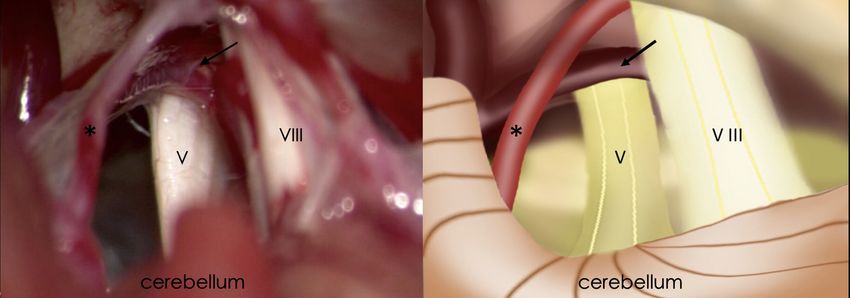
FIGURE 2 | Intraoperative findings of retrosigmoid craniotomy (Left) and corresponding schematic diagram (Right). Black arrow, the petrosal vein; Asterisk, superior
cerebellar artery; V, trigeminal nerve; VIII, vestibulocochlear nerve.
TABLE 2 | Clinical characteristics of the groups. there were no other serious complications. Two patients
had scalp tingling, five had facial numbness, and one had
Group BTN (Left) BTN (Right) UTN
transient vertigo, all of whom were cured by symptomatic and
VAS 9.17 ± 0.99 9.33 ± 0.76 9.23 ± 1.04 supportive treatment. In the follow-up period, no recurrence
BNI or any dysfunction of cranial nerves was found on either
2 25 24 26 side. Furthermore, there was no significant difference between
3 5 6 4
the two sides in terms of preoperative VAS pain scores
Offending vessels
(p = 0.316), offending vessels (p = 0.960) or BNI scores
SCA 2 1 19
(p = 0.739).
AICA 1 0 3
SCA + AICA 0 1 3 Volumes of the Posterior Cranial Fossa and
Only Vein 18 19 3 Cerebellopontine Cisterns
Vein + SCA 4 3 0 VPCF was defined as the volumes of the precerebellar cistern,
Vein + AICA 2 2 0 prespinal cistern and cerebellopontine cisterns on both sides
Vein + SCA + AICA 1 2 0 in BTN patients. The mean VPCF was significantly lower in
None 2 2 2 the patients with BTN than in the healthy controls (4,813 ±
1,155 mm3 vs. 5,127 ± 1,129 mm3 , p = 0.008). Additionally,
the volumes of the cerebellopontine cisterns on both sides were
Preoperative VAS scores were 9.17 ± 0.99 for the left side significantly smaller in the BTN patients than in the healthy
and 9.33 ± 0.76 for the right side. Among the BTN patients, controls (477 ± 115 mm3 vs. 515 ± 112 mm3 on the left side,
25 (83.3%) cases for the left side and 26 (86.7%) for the p = 0.001; and 481 ± 114 mm3 vs. 515 ± 110 mm3 on the
right side, veins were identified in the operative field and right side, p = 0.007). In contrast, there was no significant
were regarded as the individual or offending vessel (Figure 2). difference between the BTN and control groups in terms of the
In the other patients, the offending vessels were the anterior precerebellin cistern volume (3,084 ± 743 mm3 vs. 3,148 ± 721
inferior cerebellar artery (AICA), superior cerebellar artery mm3 , t = −0.9, p = 0.370) or the prespinal cistern volume
(SCA), SCA and AICA or none of these. The offending (771 ± 185 mm3 vs. 787 ± 180 mm3 , t = −1.0, p = 0.400)
vessels in all three familial patients were veins. The follow- (Table 3).
up period ranged from 6 to 110 months. For left-side cases, In the UTN group, the mean VPCF was significantly lower
postoperative BNI scores were excellent (T = 2) in 25 patients than that in the healthy control group (4,843 ± 1,184 mm3
(83%) and good (T = 3) in 5 (17%). For right-side cases, vs. 5,127 ± 1,129 mm3 , t = −2.61, p = 0.014). Moreover, the
24 (80%) patients had excellent outcomes, and 6 (20%) had volumes of the cerebellopontine cisterns on the affected side were
good outcomes (Table 2). All the offending vessels in this significantly smaller than those on the healthy side (472 ± 116
study corresponded to TN on the same side. There is no mm3 vs. 482 ± 121 mm3 , t = −2.46, p = 0.020). However, there
case with bilateral neuralgia that improved bilaterally only with was no significant difference between the BTN group and the
unilateral decompression. UTN group in terms of VPCF (t = −0.85, p = 0.402). There
No mortality, complete facial paralysis, intracranial was also no significant difference between the BTN group and the
haematoma, or postoperative hearing loss occurred, and UTN group in terms of the precerebellin cistern volume (3,084 ±
Frontiers in Neurology | www.frontiersin.org 4 October 2020 | Volume 11 | Article 573239Liu et al. Bilateral Trigeminal Neuralgia
TABLE 3 | Comparison of the volumes of the posterior cranial fossa and of the cerebellopontine cisterns on the affected side were also
cerebellopontine cisterns between the BTN and healthy control groups. significantly smaller than those on the healthy side (p < 0.05),
Group BTN Healthy controlled Statistically
similar to the results obtained by Rasche et al. (16) and Park
significance
et al. (17) based on two-dimensional measurement of the coronal
plane and cross-section.
Posterior fossa vol, mm3 4,813 ± 1,155 5,127 ± 1,129 t = −2.8; p = 0.008 Bilateral TN is rare in clinical practice, and the proportion of
CPA cistern vol, mm3 BTN in TN patients is reported to be 0.6–5.3% (5). In the present
Left 477 ± 115 515 ± 112 t = −3.5; p = 0.001 study, patients with BTN often presented with paroxysmal
Right 481 ± 114 515 ± 110 t = −2.9; p = 0.007 needling, knife cutting or radiating excruciating pain on both
Precerebellin cistern 3,084 ± 743 3,148 ± 721 t = −0.9; p = 0.370 sides, and the pain symptoms were similar to those of UTN.
vol, mm3 Furthermore, there was no significant difference between the two
Prespinal cistern 771 ± 185 787 ± 180 t = −1.0; p = 0.400 groups in terms of preoperative VAS pain scores (p > 0.05). BTN
vol, mm3 is often characterized by simultaneous or alternating attacks on
both sides, and in our study, the interval between the two sides
ranged from 0 to 3 years.
The pathogenesis of BTN is not clear, but several studies
743 mm3 vs. 3,087 ± 759 mm3 , t = −0.119, p = 0.906) or the have suggested that BTN is significantly related to microvascular
prespinal cistern volume (771 ± 185 mm3 vs. 772 ± 190 mm3 , t compression of the trigeminal nerve, which is consistent with
= −0.120, p = 0.900). unilateral pathogenesis (5–7). In this study, neurovascular
conflict during surgery was recorded for 93% (28/30) of the
Comparison Between the Bilateral TN and patients (Table 2). The offending vessels observed were the
UTN Groups AICA, SCA and veins. Some studies to date have linked BTN
For the 30 age- and sex-matched UTN patients, the preoperative to multiple sclerosis (MS). For example, research by Brisman
VAS score was 9.23 ± 1.04. The superior cerebellar artery (SCA) et al. reported the presence of MS in 4–10% of BTN patients
was identified in the operative field in 26 (87%) patients, though (18), and Gale et al. found that ∼8% of 210 patients with
veins were identified in only 3 (10%) patients. Postoperative BNI multiple sclerosis have trigeminal neuralgia (19). However, no
scores were excellent (T = 2) in 26 patients (87%) and good (T patients in this study were found to have MS, which is consistent
= 3) in 4 (13%) (Table 2). Conversely, there was no significant with the findings of another study of patients with BTN in
difference between the two groups in terms of preoperative VAS the Chinese population (8). We also observed that the mean
pain scores (p = 0.698 on the left side, p = 0.237 on the right MRI volumetry of the posterior cranial fossa was smaller in
side) or BNI scores (p = 0.718 on the left side, p = 0.488 on the the BTN group than in the UTN group, though with no
right side). significant difference between the groups for VPCF (p > 0.05).
We believe that the reason for this conflicting outcome is that
DISCUSSION the measurement of volume did not fully consider individual
differences. This measurement is susceptible to the influence of
Trigeminal neuralgia (TN), also known as painful convulsion, is head circumference and body shape, and the number of cases
mainly characterized by paroxysmal tearing and acute pain that was small, which is a limitation. As one study showed, the mean
occurs repeatedly in the trigeminal nerve distribution area on posterior fossa volume in ipsilateral TN patients was not different
one side of the face (11), with an incidence of 8/100,000 (12). from that in controls, even though smaller cisterns were found
Currently, the theory of peripheral lesions has been accepted in these patients (20). In contrast to our study, the method of
by most scholars (13). Regarding the pathogenesis of TN, measuring posterior fossae volume in the study by Park and Ha
it is believed that the trigeminal nerve becomes chronically involved manual measurement by invasive image-guided surgery
compressed by abnormal twisted microvessels in the REZ area, technology. In our study, the CSFV was used to evaluate the
resulting in inflammation and demyelination changes in the effective space of the posterior cranial fossa, accurately reflecting
root of the trigeminal nerve and thus in a “short circuit” of the degree of crowding. According to our results, the mean
membrane potential and neuropathic pain in the trigeminal VPCF was significantly lower in the patients with BTN than
nerve distribution area (14). One study (4) showed that the size, in healthy controls, and the volumes of the cerebellopontine
shape, and structure of the skull varies according to race and cisterns on both sides in BTN patients were significantly smaller
sex. Asians, especially women, have a higher incidence of TN (Table 3). Although previous studies have demonstrated that
and more crowding in the posterior fossa. The space occupied reduced posterior fossa volume is associated with UTN, our study
by tissues of the posterior fossa is small, resulting in NVC of is the first to find that small volumes of the posterior cranial
the trigeminal nerve and clinical symptoms. However, for people fossa and cerebellopontine cisterns are associated with BTN. This
with a large posterior fossa volume, there will be no symptoms finding strengthens the theory that BTN, similar to UTN, is the
of compression, clinical pain or other discomfort, even if the cause of neurovascular conflict. As mentioned above, trigeminal
blood vessels are in contact with the nerve (15). In our study, nerve compressed by vessels, resulting in inflammation and
the mean VPCF in the UTN group was significantly lower than demyelination changes in the root of the trigeminal nerve and
that in the healthy control group (p < 0.05). The volumes thus in a “short circuit” of membrane potential and neuropathic
Frontiers in Neurology | www.frontiersin.org 5 October 2020 | Volume 11 | Article 573239Liu et al. Bilateral Trigeminal Neuralgia
pain in the trigeminal nerve distribution area. Furthermore, 3 addition, postoperative BNI scores were excellent (T = 2) in 25
(10%) patients in the BTN group in our study had familial patients (83%) with BTN on the left side and in 24 (80%) with
trigeminal neuralgia. Previous studies (5, 21) have shown that BTN on the right side. Therefore, we believe that MVD is a
familial trigeminal neuralgia accounts for 7–17% of patients safe and effective method for the treatment of BTN, similar to
with BTN, which is consistent with the present results. In fact, UTN. It is worth noting that as shown by our study, patients
anatomical abnormalities of the skull base may explain the with BTN tend to have smaller cerebellopontine cisterns. The
familial incidence of TN (22). Takada et al. (23) reported 1 case region of the cerebellopontine angle is the MVD operation
of achondroplasia with TN, an autosomal inherited disease. The area. When the posterior cranial fossa is crowded, the space
disease in this patient was due to skull dysplasia, which led to decreases, and the operation becomes more difficult. Excessive
crowding of the posterior fossa and the production of NVC. Ugur traction of the cerebellar exposure field may damage nerves and
et al. (24) described a case of Dandy Walker malformation with blood vessels and increase postoperative complications. Venous
TN. Dandy Walker malformation is a congenital central nervous compression is characterized by the fact that veins often adhere
system malformation characterized by posterior fossa cysts and closely to nerves. Complete separation may cause blood vessel
cerebellar vermis dysplasia, and it is considered a multifactorial rupture, massive hemorrhage or, after cutting off blood vessels,
genetic disease. This suggests that TN may have been caused by a cerebellar stem vein infarct hemorrhage; it may also injure
small posterior fossa volume due to genetic factors in this patient. nerves. Therefore, adhesion release should not be performed
Although further study of familial BTN is needed, the results during the process, but removing the NVC is necessary. To better
of this study suggest that a small posterior fossa volume is an assess the difficulty of surgery and to help neurosurgeons develop
important factor in the pathogenesis of BTN. the best treatment plan, it is recommended that the degree of
Although few patients have small pontine arteries or veins posterior fossa crowding be evaluated before MVD.
near the trigeminal nerve REZ that cause NVC, most cases of TN In summary, overcrowding in the posterior fossa will lead to
are caused by the SCA (25). UTN patients, 26 (87%) patients, the closer neurovascular relations and a higher incidence of NVC
SCA was identified in the operative field in our study, which is and ultimately may be more likely to lead to TN. The purpose
consistent with the above finding. It is worth mentioning that of MVD is to separate the NVC by the surgical method and use
in 25 (83.3%) left-side cases and 26 (86.7%) right-side cases, Teflon for decompression. Therefore, we believe that MVD is
veins were identified in the operative field and were regarded an effective treatment for BTN compared with other treatment
as the individual or offending vessel. Moreover, the offending methods. However, the difficulty of surgery and postoperative
vessels in all three familial patients were veins. Smyth et al. (26) complications will increase when the posterior fossa space,
purported that familial TN is related to autosomal inherited as the operating area of MVD, is crowded. Therefore, we
vascular variant diseases. This study showed that the vascular recommend that the degree of posterior cranial fossa crowding
variation of familial TN is different from known autosomal should be evaluated before MVD to help the neurosurgeon
inherited vascular malformations, which might be related to determine the optimal surgical procedure. As described above,
variation of the vascular system in the posterior cranial fossa all patients in this study achieved satisfactory surgical results.
(26). Combined with the results of this study, BTN may also be Nonetheless, although this is the largest clinical study of this
associated with abnormal vascular development leading to NVC. rare disease, BTN, to date, we must admit that the sample
However, further research is needed to address this possibility. size was too small to enable comparison of the safety and
The significance of exploring the pathogenesis of BTN is availability of different treatments. In the future, multi-center
to determine the surgical treatment strategy. Current studies large-sample studies or meta-analyzes are necessary to obtain
suggest that MVD and radiofrequency thermocoagulation (RFT) effective conclusions.
are the most effective treatments (5–7). However, RFT of
the bilateral trigeminal nerves inevitably results in a series of CONCLUSION
complications, particularly numbness in the bilateral trigeminal
nerve distribution and decreases in masticatory function, which TN is a common and frequently occurring disease in
are often concerning to surgeons and patients. As NVC due neurosurgery, but BTN is rare in clinical practice. The etiology
to the small volume of the posterior fossa is the cause of and treatment of BTN are still controversial. Although cases of
BTN, we believe that MVD is the preferred effective treatment bilateral trigeminal neuralgia have been reported, clinical studies
for patients who can tolerate craniotomy. Takada et al. (23) on the etiology, diagnosis and treatment of BTN are currently
found that in patients with familial TN, MVD could achieve a lacking. Our study is the first to retrospectively analyze the
better therapeutic effect in those with a small CPA caused by clinical data, imaging examination results, surgical methods,
abnormal skull development. Additionally, MVD can preserve and treatment efficacy for 30 Chinese patients. First, we found
the function of the trigeminal nerve and reduce permanent small volumes of the posterior cranial fossa and cerebellopontine
dysfunction. Regardless, the disadvantage is the high recurrence cisterns to be associated with BTN. This finding strengthens the
rate. Combining the trigeminal nerve root in MVD is helpful theory that BTN is the cause of neurovascular conflict. Second,
to cure TN and reduce recurrence. In this study, microvascular veins were commonly the offending vessels that caused BTN,
decompression and nerve combing were used, and the clinical which might be associated with abnormal vascular development
efficacy was satisfactory (9). Although some patients experienced leading to NVC. Finally, our results show that MVD is a safe and
mild facial numbness, they recovered within half a year. In effective method for the treatment of BTN.
Frontiers in Neurology | www.frontiersin.org 6 October 2020 | Volume 11 | Article 573239Liu et al. Bilateral Trigeminal Neuralgia
DATA AVAILABILITY STATEMENT AUTHOR CONTRIBUTIONS
The raw data supporting the conclusions of this JL and RL contributed to the writing of this manuscript, study
article will be made available by the authors, without conception and design, and the editing of the manuscript. BL,
undue reservation. JZ, CF, FJ, DW, FL, and BH contributed to the editing of the
manuscript. All authors contributed to the article and approved
the submitted version.
ETHICS STATEMENT
FUNDING
Written informed consent was obtained from the individual(s)
for the publication of any potentially identifiable images or data This study was supported by Peking University People’s Hospital
included in this article. (2017-T-01).
REFERENCES 15. de Almeida Holanda MM, Pereira Neto NG, de Moura Peixoto
G, Pinheiro Santos RH. Trigeminal neuralgia secondary to basilar
1. Koopman JS, Dieleman JP, Huygen FJ, de Mos M, Martin CG, Sturkenboom impression: a case report. J Craniovertebr Junction Spine. (2015) 6:76–8.
MC. Incidence of facial pain in the general population. Pain. (2009) 147:122–7. doi: 10.4103/0974-8237.156062
doi: 10.1016/j.pain.2009.08.023 16. Rasche D, Kress B, Stippich C, Nennig E, Sartor K, Tronnier VM. Volumetric
2. Cruccu G, Finnerup NB, Jensen TS, Scholz J, Sindou M, Svensson measurement of the pontomesencephalic cistern in patients with trigeminal
P, et al. Trigeminal neuralgia: New classification and diagnostic neuralgia and healthy controls. Neurosurgery. (2006) 59:614–20; discussion
grading for practice and research. Neurology. (2016) 87:220–8. 614–20. doi: 10.1227/01.NEU.0000228924.20750.D4
doi: 10.1212/WNL.0000000000002840 17. Park SH, Hwang SK, Lee SH, Park J, Hwang JH, Hamm IS. Nerve atrophy and
3. Horinek D, Brezova V, Nimsky C, Belsan T, Martinkovic L, Masopust V, a small cerebellopontine angle cistern in patients with trigeminal neuralgia. J
et al. The MRI volumetry of the posterior fossa and its substructures in Neurosurg. (2009) 110:633–7. doi: 10.3171/2008.8.JNS08522
trigeminal neuralgia: a validated study. Acta Neurochir. (2009) 151:669–75. 18. Brisman R. Treatment of trigeminal neuralgia associated with multiple
doi: 10.1007/s00701-009-0283-8 sclerosis. World Neurosurg. (2014) 81:497–8. doi: 10.1016/j.wneu.2013.10.018
4. Reinard K, Nerenz DR, Basheer A, Tahir R, Jelsema T, Schultz L, et al. 19. Gale D, Prime S, Campbell MJ. Trigeminal neuralgia and multiple sclerosis. A
Racial disparities in the diagnosis and management of trigeminal complex diagnosis. Oral Surg Oral Med Oral Pathol Oral Radiol Endod. (1995)
neuralgia. J Neurosurg. (2017) 126:368–74. doi: 10.3171/2015.11.JNS 79:398–401. doi: 10.1016/S1079-2104(05)80235-5
151177 20. Park YS, Ha SM. Does a small posterior fossa increase nerve vascular
5. Pollack IF, Jannetta PJ, Bissonette DJ. Bilateral trigeminal neuralgia: a 14-year conflict in trigeminal neuralgia? Acta Radiol. (2015) 56:1514–8.
experience with microvascular decompression. J Neurosurg. (1988) 68:559–65. doi: 10.1177/0284185114561914
doi: 10.3171/jns.1988.68.4.0559 21. DiCorato MP, Pierce BA. Familial trigeminal neuralgia. South Med J. (1985)
6. Cherrick HM. Trigeminal neuralgia. Report of a bilateral case. Oral Surg Oral 78:353–4. doi: 10.1097/00007611-198503000-00030
Med Oral Pathol. (1972) 34:714–26. doi: 10.1016/0030-4220(72)90289-7 22. Auld AW, Buermann A. Trigeminal neuralgia in six
7. Brisman R. Bilateral trigeminal neuralgia. J Neurosurg. (1987) 67:44–8. members of one generation. Arch Neurol. (1965) 13:194.
doi: 10.3171/jns.1987.67.1.0044 doi: 10.1001/archneur.1965.00470020084011
8. Zhao H, Wang XH, Zhang Y, Zhang X, Tang YD, Zhou P, et al. 23. Takada Y, Morimoto T, Sugawara T, Ohno K. Trigeminal neuralgia associated
Management of primary bilateral trigeminal neuralgia with microvascular with achondroplasia. Case report with literature review. Acta Neurochir.
decompression: 13-case series. World Neurosurg. (2018) 109:e724–30. (2001) 143:1173–6. doi: 10.1007/s007010100010
doi: 10.1016/j.wneu.2017.10.072 24. Ugur HC, Torun F, Yilmaz E, Kanpolat Y. Trigeminal neuralgia in a
9. Liu J, Wu G, Jiang Y, Li L, Wang D, Liu R. Relationship between arterial patient with Dandy-Walker malformation. J Clin Neurosci. (2005) 12:815–7.
blood pressure during trigeminal nerve combing and surgical outcome in doi: 10.1016/j.jocn.2004.09.032
patients with trigeminal neuralgia. World Neurosurg. (2020) 137:e98–105. 25. Granata F, Vinci SL, Longo M, Bernava G, Caffo M, Cutugno
doi: 10.1016/j.wneu.2020.08.067 M, et al. Advanced virtual magnetic resonance imaging. (MRI)
10. Rogers CL, Shetter AG, Fiedler JA, Smith KA, Han PP, Speiser BL. Gamma techniques in neurovascular conflict: bidimensional image fusion
knife radiosurgery for trigeminal neuralgia: the initial experience of The and virtual cisternography. Radiol Med. (2013) 118:1045–54.
Barrow Neurological Institute. Int J Radiat Oncol Biol Phys. (2000) 47:1013–9. doi: 10.1007/s11547-013-0928-9
doi: 10.1016/S0360-3016(00)00513-7 26. Smyth P, Greenough G, Stommel E. Familial trigeminal neuralgia:
11. Eboli P, Stone JL, Aydin S, Slavin KV. Historical characterization of case reports and review of the literature. Headache. (2003) 43:910–5.
trigeminal neuralgia. Neurosurgery. (2009) 64:1183–6; discussion 1186–7. doi: 10.1046/j.1526-4610.2003.03172.x
doi: 10.1227/01.NEU.0000339412.44397.76
12. Spatz AL, Zakrzewska JM, Kay EJ. Decision analysis of medical and surgical Conflict of Interest: The authors declare that the research was conducted in the
treatments for trigeminal neuralgia: how patient evaluations of benefits absence of any commercial or financial relationships that could be construed as a
and risks affect the utility of treatment decisions. Pain. (2007) 131:302–10. potential conflict of interest.
doi: 10.1016/j.pain.2007.02.009
13. Barker FG II, Jannetta PJ, Bissonette DJ, Larkins MV, Jho HD. The long- Copyright © 2020 Liu, Liu, Liu, Zhou, Fan, Jiao, Wang, Li and Hei. This is an
term outcome of microvascular decompression for trigeminal neuralgia. open-access article distributed under the terms of the Creative Commons Attribution
N Engl J Med. (1996) 334:1077–83. doi: 10.1056/NEJM1996042533 License (CC BY). The use, distribution or reproduction in other forums is permitted,
41701 provided the original author(s) and the copyright owner(s) are credited and that the
14. Zakrzewska JM, McMillan R. Trigeminal neuralgia: the diagnosis and original publication in this journal is cited, in accordance with accepted academic
management of this excruciating and poorly understood facial pain. Postgrad practice. No use, distribution or reproduction is permitted which does not comply
Med J. (2011) 87:410–6. doi: 10.1136/pgmj.2009.080473 with these terms.
Frontiers in Neurology | www.frontiersin.org 7 October 2020 | Volume 11 | Article 573239You can also read


