SMOKING CESSATION IN PRIMARY CARE - A CROSS-SECTIONAL SURVEY OF PRIMARY CARE HEALTH PRACTITIONERS IN THE UK AND THE USE OF VERY BRIEF ADVICE ...
←
→
Page content transcription
If your browser does not render page correctly, please read the page content below
SMOKING
CESSATION IN
PRIMARY CARE
A CROSS-SECTIONAL SURVEY OF PRIMARY CARE HEALTH
PRACTITIONERS IN THE UK AND THE USE OF VERY BRIEF
ADVICE

MARCH 2019
REFERENCE
This report should be referred to as follows:
“Smoking Cessation in Primary Care: A cross-sectional survey of primary care health practitioners in
the UK and the use of Very Brief Advice”. Gillian Rosenberg, Carina Crawford, Sarah Bullock, Robert
Petty, Jyotsna Vohra. 2019

AUTHORS
Gillian Rosenberg
Carina Crawford
Sarah Bullock
Robert Petty
Jyotsna Vohra

ACKNOWLEDGEMENTS
We would like to specifically thank Dr Juliet Usher-Smith and Professor Paul Aveyard for their input in
the survey design.

CANCER RESEARCH UK
Cancer Research UK is the world’s largest independent cancer charity dedicated to saving lives
through research. We support research into all aspects of cancer through the work of over 4,000
scientists, doctors and nurses. In 2017/2018, we spent £423 million on research institutes, hospitals
and universities across the UK. We receive no funding from Government for our research.
This research was funded by the Cancer Policy Research Centre, Cancer Research UK.

Cancer Research UK is a registered charity in England and Wales (1089464), Scotland (SC041666) and
the Isle of Man (1103)
http://www.cancerresearchuk.org/

                                                   2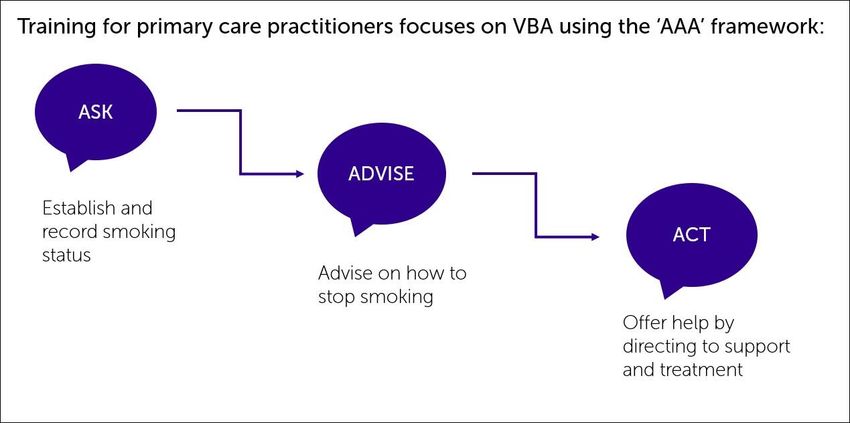
placed to engage with the smoking population.
FOREWORD                                                The report goes on to demonstrate that the
                                                        current pressures in primary care are
In 1948, Sir Richard Doll joined a research team        presenting a significant barrier to primary
which went on to show that smoking could                healthcare practitioners engaging in smoking
cause serious health damage, by which time the          cessation activity. This, combined with
UK had the highest prevalence of smoking the            insufficient training and cuts to smoking
world: in 1948, a staggering 82% of males and           cessation services, has left an activity vacuum
41% of females aged 16 and over were using              for what is the most cost-effective health
tobacco products.                                       intervention.
Since then, through a multi-pronged approach            With political, policy and profession will, with
by politicians, policy-makers and medical               adequate resourcing, and proactive training for
professionals, prevalence of smoking in the UK          primary care practitioners, there is the
has dropped impressively, with 2018 NHS data            opportunity for the UK to become smoke free;
showing that 15.1% of adults in the UK were still       where less than 5% of the adult population
current smokers. This equates to around 7.4             smoke by 2035 across all socioeconomic
million adults in the UK still smoking –                groups. If this target is achieved, we will have
increasing their risk of 15 types of cancer, as         addressed the biggest preventable risk factor
well as a range of cardiovascular and                   for cancer, the largest cause of death in the UK.
respiratory conditions. Within these statistics
are found marked inequalities – in England,
data suggests that smoking accounts for half
the difference in life expectancy seen across the
deprivation gradient, with the most deprived
quintile smoking at rates more than two times
higher than those seen in the least deprived
quintile. Smoking prevalence rates in 25 to 34-
year olds are almost two and a half those seen
in the over 65s.                                        Dr Richard Roope
If we are to enable smoking prevalence to               Clinical Champion for Cancer
continue to fall, then renewed engagement is            Royal College of General Physicians & Cancer
needed by all who are in positions of influence.        Research UK
Across the UK, nations are increasingly
prioritising the prevention of those factors that
impact on health. With smoking remaining the
largest preventable cause of ill-health and
premature death across the UK, primary care
must make every contact count. Recent data
from England alone showed that General
Practice      had    delivered    307     million
appointments in the previous 12 months –
representing 90% of all NHS patient contacts.
This presents primary care with a great
opportunity to improve the health of the UK
and, in particular, engage in activity that will
help lower smoking prevalence further.
This report highlights the impact that very brief
advice (VBA) can make, and primary care is well
                                                    2
EXECUTIVE SUMMARY
BACKGROUND
Smoking is still the single biggest cause of preventable
illness, cancer, and avoidable death in the UK(1),
placing an enormous burden and cost on the UK’s
health service. Alongside national and local
governments, the health service has a vital role in
providing evidence-based support to help existing
smokers to quit.
It is important that smokers are offered treatment to
quit in both primary and secondary care settings. In
the secondary care setting, evidence-based models
that routinely provide treatment to smokers admitted
                                                               Despite NICE guidelines recommending universal use
to hospital are already being rolled out. NHS England
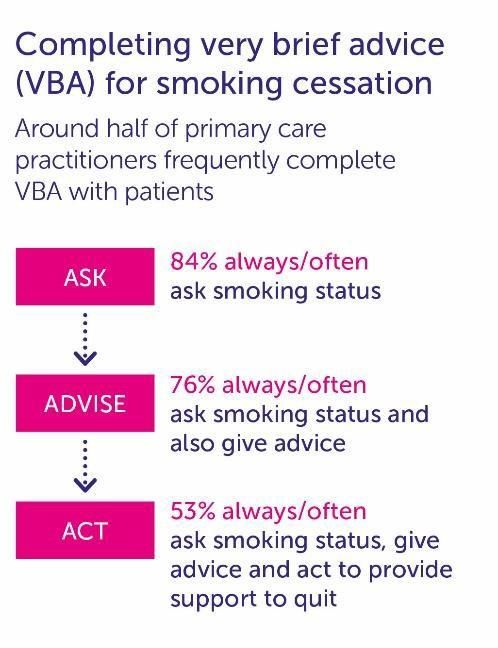
                                                               in primary care settings, around half (53%) of health
has committed to implementing this model in
                                                               practitioners reported frequently completing VBA.
secondary care and mental health trusts in England by
2023/24(2), which could achieve net savings between            When examining VBA steps individually (that is,
£30-60m after just one year(3).                                examining reported frequency of each step occurring
                                                               is isolation of the previous step), health practitioners
However, primary care remains a crucial part of the
                                                               often ask their patients about their smoking (84%) and
prevention pathway and will typically reach a larger
                                                               advise patients on how to quit (87%). However, fewer
number of generally healthier and younger smokers.
                                                               health practitioners reported frequently taking action
Cost-effective,    proven     smoking      cessation
                                                               to support their patients to quit (64%).
interventions can be delivered simply and quickly
through primary care to help reduce the number of              These findings could reflect the declining availability of
people smoking in the UK.                                      community SSS and reports that some commissioners
                                                               are withdrawing pharmacotherapy for smoking
Primary care health practitioners often have limited
                                                               cessation from their formularies. Both of these may
time to deliver comprehensive smoking cessation
                                                               limit health practitioners’ ability to act and therefore
support during consultations. NICE guidance
                                                               complete VBA fully during consultations.
recommends that primary care health practitioners
deliver Very Brief Advice (VBA) to patients that smoke,        Completion of VBA is also linked to health practitioner
which takes less than 30 seconds(4). VBA uses the ‘AAA’        awareness of local SSS in their area. Health
framework(5) where practitioners:                              practitioners are around twice as likely to refer if they
                                                               are aware of local SSS or they agree that they are
•   Ask their patient about smoking to establish their
                                                               sufficient in their area. This illustrates the importance
    smoking status, and record;
                                                               of raising awareness of local SSS among health
•   Advise their patients on how they can stop                 practitioners when and where they are available.
    smoking; and
•   Act by offering help to support them to quit. This         LOW REPORTED PRESCRIPTION OF
    includes referring patients to stop smoking                PHARMACOTHERAPY AND RECOMMENDATION
    services (SSS) or prescribing pharmacotherapy              OF E-CIGARETTES FOR SMOKING CESSATION
    with brief advice.
                                                               When combined with behavioural support, there is
                                                               good evidence for the use of both pharmacotherapy
KEY FINDINGS                                                   and e-cigarettes in supporting smokers to quit.
PRIMARY CARE HEALTH PRACTITIONERS ARE                          However, the number of health practitioners who
MORE LIKELY TO DELIVER VBA IF THEY ARE                         reported frequently prescribing pharmacotherapy for
AWARE OF LOCAL STOP SMOKING SERVICES                           patients who smoke is relatively low, with 22%
                                                               prescribing nicotine replacement therapy, 16%
                                                               prescribing varenicline and 4% prescribing bupropion.
                                                           3
NICE guidance recommends health practitioners                 responsible for this type of intervention (15%) and the
provide smokers interested in using an e-cigarette to         lack of referral options (15%).
quit smoking with information and advice(4). However,
only 1 in 4 (27%) health practitioners reported               POLICY RECOMMENDATIONS
frequently providing patients with advice about e-
                                                              In response to the report findings, Cancer Research
cigarettes as a tool to quit.
                                                              UK has several recommendations.
REFERRAL TO STOP SMOKING SERVICES IS
                                                              Primary care service commissioners and
VARIABLE ACROSS THE UK
                                                              planners across the UK should:
There is geographical variation in the action taken by
                                                              •   Prioritise smoking cessation and tobacco control
health practitioners for referring patients to SSS. In
                                                                  in regional plans.
England and Northern Ireland, health practitioners
                                                              •   In England, work with local authorities to ensure
most frequently refer to in-house SSS, whilst in Wales
                                                                  shared understanding of tobacco control
and Scotland, referral to external SSS in the
                                                                  responsibilities, seamless referrals to local SSS,
community (commonly pharmacy or specialist
                                                                  and availability of pharmacotherapies to all
services) is most common.
                                                                  smokers.
This may in part reflect inherent differences in how          •   Signpost to and/or provide all primary care health
local public health and primary care services are                 practitioners with training in the delivery of VBA.
delivered across the UK. Since the transfer of public         •   Ensure pharmacotherapy for smoking cessation is
health responsibilities from the NHS to local                     available on prescription and encourage primary
authorities in England in 2013, referral pathways from            care     health    practitioners    to     prescribe
primary care to local SSS appear to not be as strong as           pharmacotherapy with brief advice for smoking
in Scotland, Wales and Northern Ireland, where the                cessation.
health service retains responsibility for services.           •   Support the use of e-cigarettes as an aid to stop
PRIMARY CARE HEALTH PRACTIONERS REPORT                            smoking, recommending that they can also be
THAT AN OVERLOADED HEALTH SYSTEM, LACK                            used alongside behavioural support.
OF SUITABLE SERVICES, AND INSUFFICENT
                                                              Primary care health practitioners across the UK
TRAINING PREVENT THEM FROM DOING MORE
                                                              should:
Patients having too many issues to address in a
consultation was the most frequently reported barrier         •   Complete training in VBA and employ this tool to
(59%) for health practitioners initiating conversations           initiate conversations with all patients about
about smoking cessation with patients, and was more               stopping smoking.
pronounced for GPs compared to nurses, with nearly            •   Be aware of treatment options available to
three quarters (72%) citing this factor.                          patients in their local area, including prescribing
                                                                  pharmacotherapy or referring patients to SSS in
Some 40% reported that they perceived that patients               their practice or community.
were unreceptive to smoking cessation advice and              •   Support the use of e-cigarettes as an aid to stop
around 15% were concerned about negative patient                  smoking, recommending they can also be used
reactions. Additional barriers reported were the                  alongside behavioural support.
perception that other health care practitioners are
                                                              In England, to ensure that smokers can access support
                                                              in all parts of our public health system, smoking
                                                              cessation support in the NHS should be delivered
                                                              alongside and in partnership with local authority
                                                              smoking cessation services in the community. The UK
                                                              Government must provide local authorities with
                                                              sufficient funding for these services. A “polluter pays”
                                                              approach should be adopted so that the tobacco
                                                              industry makes a greater contribution to the
                                                              healthcare costs caused by smoking, via a Tobacco
                                                              Industry Levy.

                                                          4
METHODOLOGY
Cancer Research UK conducted a cross-sectional survey of primary care health practitioners to explore
the factors that impact the delivery of smoking cessation interventions across the UK. The online survey
of General Practitioners and Practice Nurses, delivered between January and March 2017, aimed to better
understand the type of smoking cessation advice reported by primary care health practitioners, their
awareness of smoking cessation services in their local area and their perceived barriers to referring
patients to these services.
5CONTENTS
1 INTRODUCTION ................................................................................... 7
2 RESEARCH AIMS AND OBJECTVES ........................................................ 9
3 METHODS .......................................................................................... 10
4 RESULTS ............................................................................................. 13
5 DISCUSSION ....................................................................................... 19
6 POLICY RECOMMENDATIONS ............................................................ 22
7 APPENDIX .......................................................................................... 23
8 REFERENCES ...................................................................................... 30
6INTRODUCTION
Smoking is the single biggest cause of preventable illness and avoidable death in the UK (1), accounting
for 115,000 deaths per year(1). Smoking is still the biggest cause of cancer in the UK, causing around
54,300 cases of cancer a year and is associated with at least 15 different types of cancer(6). This includes
72% of all lung cancer cases(6), which has one of the lowest cancer survival rates(7). It is estimated that
the cost to the NHS of treating smoking related illnesses in England is approximately £2bn a year(8).
The proportion of the UK population who smoke has declined over recent decades, from 46% in 1974(9)
to 15% in 2017(10). Furthermore, smoking prevalence in certain groups is significantly higher e.g. nearly
26% in routine and manual workers(10). For declines in the rate of smoking to continue, tobacco control
policy must continue to be both evidence-based and well implemented, following in the footsteps of
successful tobacco control policies that were instrumental in the declines of the past 35 years (see
Figure 1).
FIGURE 1: TOBACCO CONTROL POLICIES AND THE DECLINE IN SMOKING RATES
7National and local governments and the health service play an important role in providing smoking
cessation support. In the secondary care setting, there is growing appetite for implementing best
practice initiatives that routinely identify and treat smokers in hospitals to support patients to quit:
this model of care is known as the Ottawa Modeli. In the NHS Long Term Plan, NHS England committed
to implementing this model across all secondary care trusts by 2023/24 (2) which could achieve net-
savings of between £30 to £60 million after just one year(3). In Greater Manchester, a pilot of this model
has estimated a conservative cost-saving of almost £10 million per year and an additional 84 beds per
day available in the area(11). In Scotland, Wales and Northern Ireland a similar offer is provided in
selected trusts. These initiatives provide support to relatively small numbers of patients admitted to
acute care, who are typically sicker, older or living with multi-morbidities.
To reach a larger number of generally healthier and younger smokers, interventions offered through
primary care have great potential to drive down smoking rates across the UK. There is strong evidence
that cost-effective, successful smoking interventions can be delivered in primary care, to contribute to
a continued decline in UK smoking rates (12; 13; 14; 15; 16; 17; 18; 19; 20; 21; 22; 23). Quit attempts made by smokers
accessing NHS stop smoking services are around three times more likely to be successful than unaided
attempts(24), and primary care interventions are often simple and quick to implement (25). Recently
updated NICE guidance on stop smoking interventions and services(4) states that:
• Evidence-based stop smoking interventions and services should be available to everyone who
smokes, including: individual and group behavioural support, pharmacotherapy, nicotine
replacement therapy (NRT) and very brief advice.
• Health practitioners should, at every opportunity, ask people if they smoke and advise them to
stop smoking in a way that is sensitive to their preferences and needs.
• Health practitioners should refer people who want to stop smoking to local stop smoking
services; and if people opt out of referral, health practitioners should refer them to a
professional who can offer pharmacotherapy.
One recommended primary care smoking intervention is ‘Brief Advice’ (26). These interventions, which
typically last one to three minutes, have been found to increase the number of quit attempts made by
smokers using primary care services(27) and promote smoking cessation(19). Brief Advice in primary care
has the potential to be highly successful and cost-effective, since it does not require specific
equipment, and can be delivered by all types of primary care practitioners (27). Primary care
practitioners often have limited time in consultations, therefore NICE have recommended undertaking
‘Very Brief Advice’ (VBA), which can be delivered in 30 seconds(4). Training for primary care
practitioners in VBA uses the ‘AAA’ framework(5) (Figure 2):
• Ask their patient about smoking to establish their smoking status, and record;
• Advise their patients on how they can stop smoking; and
• Act by offering help to support them to quit. This includes referring patients to stop smoking
services or prescribing pharmacotherapy with brief advice.
i
The Ottawa Model refers to the successful smoking cessation programme developed by the University of Ottawa Heart
Institute, which ensures all patients who smoke are identified and offered evidence-based behavioural support and smoking
cessation pharmacotherapies.
8FIGURE 2: VERY BRIEF ADVICE—3A’S FRAMEWORK
In April 2013 the responsibility for public health in England was formally transferred from the NHS to
local authorities(28), and in 2015 the national public health grant experienced a £200 million in-year cut,
which led to reduced budgets for smoking cessation in 6 in 10 local authorities in 2016 (29). This has
made it increasingly difficult for primary care practitioners to implement the NICE guidelines, and
further cuts have been announced until 2019(30). Tobacco control leads in local authorities recently
reported that, as a result of these cuts, specialist smoking cessation services are under threat, along
with less staff time dedicated to tobacco control, fewer campaigns, and closure or suspension of the
local Tobacco Control Alliance(29). Alongside these challenges, barriers to primary care practitioners
delivering smoking interventions have been reported. These include access to training for
practitioners(31), time constraints when undergoing training and for implementing the intervention
itself(27) and (despite evidence to the contrary(32; 33)), the perception that the advice may be unwelcome
or will harm the practitioner-patient relationship(27). Vulnerable people, such as those in lower
socioeconomic groups and people with mental illness, experience additional barriers to accessing stop
smoking support(34; 35; 36).
It is important to understand the factors that affect primary care practitioners and services in delivering
effective smoking interventions. However, there is no recent UK-wide data on VBA in primary care, nor
is there data on the barriers and enablers to implementing this tool in primary care. Moreover, little is
known about how recent budget cuts and the transfer of stop smoking service to local authorities has
influenced the delivery of VBA across primary care in England. Addressing these gaps will be highly
valuable in ensuring that primary care fully contributes to smoking cessation in the UK.
RESEARCH AIMS AND OBJECTVES
A UK wide cross-sectional survey of primary care practitioners was conducted to investigate the
following:
• What type of smoking cessation VBA is given in primary care;
• What smoking cessation referrals are in made primary care;
• What are the perceived practitioner barriers to effective smoking cessation interventions;
• What is the relationship between awareness of local service provision and smoking cessation VBA.
9METHODS
An online survey consisting of four modules, three modules about primary care practitioner practices
for smoking, weight, and alcohol in their patients, and a demographic module was conducted. The
three risk factor modules asked identical questions, collecting data on the three stages of VBA (ask,
advise, act), service awareness, and perceived barriers. Results relating to the smoking and
demographic modules are included in this report.
SURVEY DEVELOPMENT
The survey was designed to be suitable for both General Practitioners (GPs) and Practice Nurses (PNs).
Questions were drawn from other survey tools and adapted where necessary to be relevant to
addressing smoking, weight and alcohol use in primary care in the UK. Where no existing tools could
be found, new questions were developed and piloted using a health professional panel, made up of
eight Cancer Research UK health facilitators who work with primary care practitioners, for length,
clarity, content and style of questions. The survey was refined in response to this feedback, namely to
ensure that the questions were suitable and understandable for both GPs and PNs across all four
nations in the UK. A small number of questions were removed to reduce participant burden. The survey
was further tested with a ‘soft launch’ by a market research company (Research Now) among 50 health
professionals. This showed good completion rates with the expected range of responses and time
taken to complete the survey. For the full details of the survey questions see Appendix 1.
DEMOGRAPHIC INFORMATION
Job type, years qualified, age, gender and Clinical Commissioning Group (CCG)/health board were
collected from survey participants.
CASE STUDY
Survey participants were presented with a brief case study, tailored to their specific role. This allowed
the respondents to consider their responses within the context of the consultation. For GPs, the case
study read “John is a 47-year-old male who presents with a painful knee joint” and for PNs the case
study read “John is a 47-year-old male who presents with painful ears”. Different case studies were
used for GPs and PNs to reflect the different types of patient that they would typically see in primary
care. By adopting issues not related to tobacco, this prevents the responses to the survey questions
from being affected by bias from the case study.
ASK — CONVERSATION RATES AND PROMPTS
The frequency that practitioners asked patients about smoking status was recorded using a 5-point
Likert scale ranging from always to never. The factors that prompted this were investigated in the case
study by asking “Which one of the following are most likely to result in you asking John about his
smoking status?”. Response options were: previous smoking-related health condition; smoking
associated symptoms; physical cues e.g. the smell of smoke; computer prompt; incentives payments;
known smoker from previous medical records; NICE tobacco guidelines; other. These are generalised
response options that may not all be applicable to the individual practitioner as some practices might
not have computer prompts or might not have incentives payments (e.g. QOF payments which are no
longer in place).
10ADVISE — ADVICE GIVEN
The frequency that practitioners gave smoking cessation advice to known smokers was recorded using
a 5-point Likert scale ranging from always to never. The frequency of different types of advice was
recorded using a 5-point Likert scale ranging from always to never. This included the suggestion that
they cut down on their smoking; record smoking levels (i.e. keep a smoking diary); arranging a follow
up appointment to further discuss smoking cessation; providing an information leaflet; highlighting
stop smoking services within / outside the practice; discussing e-cigarette use.
ACT — REFERRAL/PRESCRIPTION
The frequency that practitioners made referrals or prescriptions to known smokers was recorded using
a 5-point Likert scale ranging from always to never. This included referring to a stop smoking service
within / outside the practice and prescribing NRT.
SERVICE AWARENESS
Participants were asked a free text question “What smoking cessation options do you know about in
your area?”. The responses coded as at least one of: Smoking cessation services; in-house service;
community pharmacy; hospital; NRT/Champix; online/telephone; no service; other; no response. This
grouping and recoding was done to allow the quantitative analysis of these responses alongside other
variables collected in the survey. These are generalised response options that may not all be applicable
to the individual practitioner. Responses may reflect a lack of presence of a particular service, rather
than merely a lack of awareness.
Participants were asked whether there are sufficient local stop smoking services and if budget cuts had
negatively affected stop smoking services using a 5-point Likert scale ranging from strongly agree to
strongly disagree, with an additional “don’t know” option.
BARRIERS
Participants were asked “looking beyond the factors of insufficient time and money, please select the
three main factors you feel deter from you from providing smoking cessation interventions in
consultations”. Seventeen potential barriers were listed including patients have too many things to
address, patients appeared unreceptive to smoking cessation advice, and lack of referral options.
STAKEHOLDER ENGAGEMENT
The survey was developed with guidance from internal teams at Cancer Research UK in consultation
with practicing GPs, PNs and representatives of Cancer Research UK’s primary care facilitator team.
DATA COLLECTION
A total of 2,026 GPs and PNs were recruited by Research Now, a market research company experienced
in conducting surveys with health practitioners. For this study, practitioners from outside of England,
Scotland, Northern Ireland or Wales were excluded (n=6), resulting in a final sample of 2,020. All
participants were recruited from an online panel of members who had previously expressed an interest
of completing surveys. The survey was distributed and completed via an online platform hosted by the
market research company. Screening questions were conducted by the market research company,
ensuring only GPs and PNs were included—practitioners such as physiotherapists and dentists were
excluded prior to completing the survey. Automated sampling with geographical quotas for England,
Wales, Scotland and Northern Ireland was applied to ensure a generally representative sample of the
UK’s primary care GP and PN population. Data were collected between January and March 2017.
11DATA ANALYSIS Data were analysed using IBM SPSS version 23 and Statacorp Stata Statistical Software release 13. WEIGHTING Research Now administered the survey on behalf of Cancer Research UK. Weights were applied to geographical region to make the sample nationally representative with respect to the country of residence – see Table 1. STATISTICAL ANALYSIS Responses were categorised as binary variables: positive (“Strongly agree” and “Agree”) and negative “Disagree” and “Strongly disagree”); frequently (“Always” and “Often”) and infrequently (“Sometimes”, “Occasionally” and “Never”) unless otherwise stated. Awareness percentages refer to percentage of “group” aware of service. Responses of “don’t know” were excluded from the analysis. Categorical variables included in the analysis (type of primary care health practitioner, years qualified, practice size and country in UK) are shown in Table 1. Those with unknown practice size were also excluded from the analysis. Multivariable logistic regression was used to estimate odds ratios and test for statistically significant associations in responses to the survey questions for type of primary care health practitioner, years qualified, practice size and country in UK. The final multivariable regression models were developed using backwards stepwise elimination of non-significant variables (p≥0.05). Interaction terms were included for logistic regression models for analysis presented in section 4.2, 4.3 and 4.4 to determine if statistically significant associations in responses varied by provider type (i.e. whether responses were statistically significantly different between different groups, for instance for PNs and GPs qualified for different lengths of time, and practitioners in different countries. Only significant interaction terms (where investigated) (p
RESULTS
DEMOGRAPHICS
A nationally representative sample (n=2,020) of primary care health practitioners was surveyed and
weighted by country of residence. Gender, profession, years since qualification and practice size were
additionally recorded. The greatest proportion of respondents have been qualified for over 20 years
(44%) and worked in practices serving 5,000–20,000 individuals (72.1%) in England (83.8%). A full
demographic breakdown is shown in Table 1.
TABLE 1: SAMPLE CHARACTERISTICS (N=2,020)
                                             Unweighted              Weighted
                                             Sample         %        Sample   %
                  Groups                           n            %           n             %
                  Male                           683        33.8%         681         33.7%
 Gender
                  Female                       1,337        66.2%       1,339         66.3%
                  0–5 years                      169         8.4%         171          8.5%
                  6–10 years                     307        15.2%         308         15.2%
 Years
                  11–15 years                    331        16.4%         331         16.4%
 Qualified
                  16–20                          306        15.1%         306         15.1%
                  More than 20 years             907        44.9%         905         44.8%
 Healthcare       GP                           1,006        49.8%       1,006         49.8%
 profession       PN                           1,014        50.2%       1,014         50.2%
0% 10% 20% 30% 40% 50% 60% 70% 80% 90% 100%
Computer prompt
Smoking associated symptoms
Physical cues e.g. the smell of smoke
Known smoker from medical records
Previous smoking related health condition
Other
Incentives payments
NICE tobacco guidelines
Total General Practitioner (GP) Practice nurse (PN)
FIGURE 3: FACTORS THAT WOULD PROMPT AN ENQUIRY INTO THE SMOKING STATUS OF A
PATIENT PRESENTING TO PRIMARY CARE. Indicates where there was an independent significant
difference in the responses given by GPs and PNs
VBA: ADVISE
The vast majority of practitioners (87%) stated that they would frequently offer advice to smokers
attending primary care. The type of advice given included asking patients to stop smoking (89%), asking
patients to cut down (83%) and discussing the benefits of using a stop smoking service (79%). GPs and
PNs were less likely to discuss nicotine replacement either as NRT (53%) or e-cigarettes (27%) (Figure
4).
0% 10% 20% 30% 40% 50% 60% 70% 80% 90% 100%
Suggest they stop smoking
Suggest they cut down on their smoking
Discuss the benefits of using a Stop Smoking Service
Highlight Stop Smoking Services within the practice
Highlight Stop Smoking Services outside the practice
Discuss Nicotine Replacement Therapy
Provide a leaflet with information on smoking cessation
Discuss using e-cigarettes
Arrange a follow up appointment to further discuss smoking cessation
Ask them to record their smoking levels
Total General Practitioner (GP) Practice Nurse (PN)
FIGURE 4: ADVICE GIVEN BY GPS AND PNS IN THE UK DURING PRIMARY CARE CONSULTATIONS.
Indicates where there was an independent significant difference in the responses given by GPs and PNs
GPs and PNs reported significant differences in the advice offered to patients in primary care
consultations. PNs are more likely than GPs to ask patients to frequently record smoking levels (31%
vs 18%, OR 2.3, psmoking cessation services within the practice (69% vs 60%, OR 1.6, p
BARRIERS
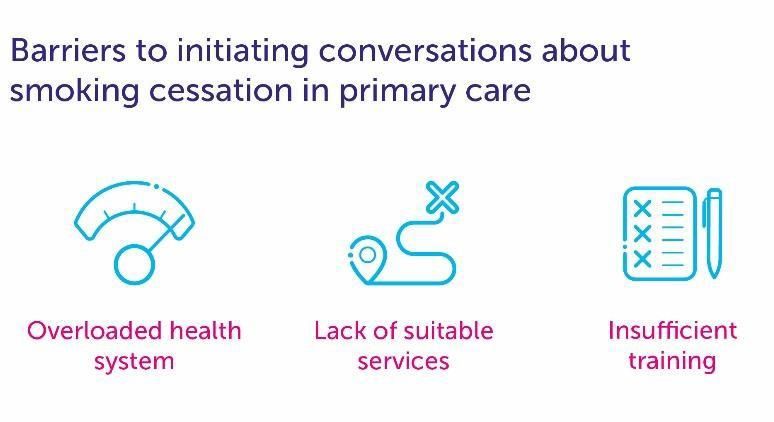
Health practitioners were asked to select from a defined list of top three factors that would prevent
the initiation of a conversation about smoking and smoking cessation in primary care. The top barrier
reported by 59% of respondents is that they have too many other things to address in a single
consultation with a patient. Forty percent reported that they perceived that patients were unreceptive
to smoking cessation advice. An additional barrier reported was the perception that other health care
practitioners are responsible for this type of intervention (15%), concerns around negative patient
reactions (15%) and lack of referral options (15%) were also cited as the top five barriers for all primary
care practitioners (see Figure 6).
0% 20% 40% 60% 80% 100%
Patients often come in with
too many other things to address
Patients are generally unreceptive
to smoking cessation advice
Other health care staff are primarily
responsible for this intervention
Concerns about negative patient reactions
Lack of suitable smoking cessation referral options
Many patients speak poor English, and there
are insufficient numbers of available translators
No suitable training available
There are more important behavioural
risk factors to discuss
This kind of intervention has no/limited impact
No computerised pop up / trigger
to discuss smoking cessation
Long waiting lists for smoking
cessation referral options
Unsure of the tobacco guidelines
This is a societal issue, not a medical one so it is
not the place of healthcare professionals to intervene
Uncomfortable discussing smoking with patients
Feels hypocritical given own smoking status
The tobacco guidelines are not appropriate
No further choices
None of the above
Other
Total General Practitioner (GP) Practice Nurse (PN)
FIGURE 6: SELF-REPORTED BARRIERS TO INITIATING CONVERSATIONS ABOUT SMOKING CESSATION
IN PRIMARY CARE. Indicates where there was an independent significant difference in the
responses given by GPs and PNs
PNs were more likely than GPs to cite: lack of suitable training (11% vs 5%, OR 2.4, pGeographical variations were also seen in the perceived barriers. Respondents in Wales were more likely to cite: patients are unreceptive to advice (54% vs 40% OR 1.8, p=0.003); and concerns around negative patient reactions (24% vs 19%, OR 1.9, p=0.01), and less likely to cite other health care staff are responsible for this intervention as barriers compared to English respondents (9% vs 16%, OR 0.5, p=0.048). Respondents based in Scotland were less likely to cite: the availability of smoking cessation services (8% vs 16%, OR 0.47, p=0.005); that many patients speak poor English; and there is a lack of translators as barriers (5% vs 9%, OR 0.48, p=0.04) when compared to English respondents. PRACTITIONERS DELIVERING VBA Just over half the practitioners (53%, n= 1,074) frequently completed all steps in the ASK, ADVISE and ACT pathway for VBA (Figure 7). The responses of these practitioners were analysed and compared to those who did not complete the pathway (i.e. those that frequently did the ASK, ADVISE but not ACT) to identify barriers affecting referral specifically. Barriers more frequently reported by practitioners that don’t complete the pathway include the perception of a “Lack of smoking cessation services locally” (22% vs 12%, OR 2.1, p
AWARENESS IS LINKED TO REFERRAL
There was an association between referrals and awareness of local smoking cessation services.
Practitioners who frequently referred to a smoking cessation service were more aware of in-house
smoking cessation services than those who did not (58% vs 39%, OR 2.1, p
DISCUSSION
This report explores the factors that impact on the delivery of smoking cessation interventions by
primary care health practitioners. It is based on a cross-sectional survey of GPs and PNs conducted
between January and March 2017. Current smoking cessation activities of GPs and PNs were
investigated with reference to the NICE recommended (37) VBA model of ASK, ADVISE, ACT. These
findings were analysed alongside perceived practitioner barriers to identify key areas for improvement.
A consistently strong association was found between the awareness of local stop smoking services and
increased delivery of VBA in primary care.
Just over half of the respondents (53%) reported frequently completing the VBA pathway, despite the
vast majority (84%) frequently initiating smoking cessation conversations. Those who did not
frequently refer to smoking cessation interventions were more likely to state that budget cuts have
negatively impacted on stop smoking services and were less likely to agree that there are sufficient
services in their area. They were also twice as likely to cite a lack of local stop smoking services as a
barrier to initiating smoking cessation conversations. Conversely, practitioners who were aware of an
in-house stop smoking service were twice as likely to refer to smoking cessation interventions as those
who were not. Where this resource is not available in the practice, practitioners may not understand
the importance of delivering VBA, particularly if there is no local specialist external service available.
The repeated association between the different stop smoking service variables and VBA reinforces the
importance of knowledge of and access to suitable referral options for successful smoking
interventions in primary care. To the author’s knowledge, this is the first study to investigate and
identify a clear link between action by primary care health practitioners and the awareness of stop
smoking services to which to refer.
Geographical variation was seen in the action that practitioners reported taking in relation to referral.
In England, the presence of a trained smoking cessation adviser within the primary care practice (an
‘in-house smoking cessation service’) was the most frequently cited option, whilst in Wales and
Scotland, referral to external stop smoking services in the community (usually pharmacy or specialist
services) were most common. This mirrored the awareness of local (external) stop smoking services,
with a significantly higher knowledge of in-house services in England than in Scotland and Wales. In
Northern Ireland the most common referral option was an “in-house smoking cessation service” and
this was also the type of service with the highest awareness, however the sample size was too small
for any further analysis.
These findings could reflect the different patterns of service provision across the UK (3; 36). External
services in Wales and Scotland are still under NHS provision whereas in England, external services sit
with local authorities. Therefore, these results could be indicating that the links between local
authority services in the community and primary care are not as strong as those between NHS services
and primary care (as in Scotland and Wales). In England, although arguably across the UK, there is a
need for better connections at a local level so primary care practitioners know where to refer if an in-
house service is not available(3). In addition although services in Scotland and Wales have experienced
reductions in funding (in terms of budgets not keeping pace with inflation in particular), these services
have not been cut in the same way as in England where actual reductions have been made to public
health budgets annually since 2015(38; 39)
Given the association with increased VBA activity highlighted above, these survey results illustrate why
it is vital that primary care practitioners know about the services available in their own local area.
However, awareness raising will not lead to an increase in VBA activity if suitable local services do not
exist.
                                                   19
Prescriptions for NRT or other pharmacotherapy (varenicline or bupropion) to reduce cravings and
address withdrawal symptoms were a less likely ACT option than referral to stop smoking services. The
best option for smoking cessation is referral to a stop smoking service. However, where this is not
possible, pharmacotherapy should be prescribed with brief advice (4; 37; 40; 41). The worrying overall
decline in NRT prescriptions in primary care has been highlighted in a recent study by the British Lung
Foundation (BLF)(42); in England levels of NRT dispensed in primary care in 2016–17 were around 25%
of what was dispensed in 2005–06. The BLF report also reflects guidance from some CCGs to not to
prescribe this medication. Within our study almost 80% of health practitioners recommended cutting
down on smoking, however less than a quarter frequently prescribed NRT. Research has shown that
just recommending cutting down delivers limited health benefit unless this is accompanied by NRT to
effectively reduce the “time” smokers inhale smoke for (number plus draw time). Therefore, it is
important to that CCGs ensure pharmacotherapy for smoking cessation is available on prescription and
encourage health practitioners to prescribe pharmacotherapy with brief advice for smoking cessation.
The barriers reported by GPs and PNs to initiating a conversation on smoking cessation fall into three
broad categories: an overloaded health system; lack of suitable smoking cessation service provision;
and insufficient training. Patients coming in with too many other things to address was the most
frequently reported barrier (59%). This may be because embedding preventative or health promotion
interventions in health systems is so challenging that it means these interventions are not often
prioritised(43). Alternatively, this could be reflective of the reality of managing patients with multi-
morbidity in primary care(44). This was even more pronounced for GPs compared to PNs, with nearly
three quarters citing this factor. Prevention has been repeatedly flagged as a key area for NHS
activity(45; 46), however this finding highlights the challenges of delivering on this in an overstretched
health system. The lack of appropriate provisions including suitable smoking cessation referral options
and more general resources, like translators, reinforces the systemic challenges health practitioners
face. Several barriers reported in this study, and in previous research(27; 31; 34; 35; 36), could be tackled by
improving smoking cessation training provision. To alleviate concerns about having insufficient time in
consultation, training on how to deliver effective VBA should highlight that this is a very quick
intervention, deliverable in 30 seconds. Training should also address dealing with patients who are
perceived to be unreceptive but in reality, may respond to advice, particularly when this involves the
offer of concrete support (i.e. referral to a service). An example of this type of training is the Royal
College of General Practitioners and Cancer Research UK e-learning module(47). This may be particularly
important when delivering VBA to target groups who have high smoking rates. Furthermore, this study
highlights the different approaches taken by GPs and PNs to smoking cessation interventions. This was
seen across the whole pathway of VBA — from different prompts to asking about smoking status,
different advice given to smokers and different preferred referral and prescription options. Therefore,
it is also important that training and guidance on smoking cessation in primary care is tailored to
practitioners appropriately.
There are a number of strengths to this research. It is the first UK-wide cross-sectional survey of health
practitioners to examine smoking cessation inventions in primary care. The survey was designed to
build on existing literature in this field to capture health practitioner activities, attempt to quantify
their perceived barriers to undertaking these activities and link this to awareness and attitudes
regarding smoking cessation services. The survey sample was large, with an equal number of GPs and
PNs, and was weighted to be nationally representative with respect to country of residence to allow
the findings to be generalised to the primary care health practitioner population across the UK.
Therefore, these findings could be used to inform recommendations for best policy and practice in
primary care to increase smoking cessation among patients.
This study also has limitations. It was cross-sectional in design and therefore only represents a snapshot
of activity and views at one time, in the early months of 2017. Also, it was reliant on respondents
20correctly remembering and reporting their activities over the previous year so may not accurately
quantify smoking cessation activities in primary care. Furthermore, this study investigates correlation,
not causation. Therefore, the analysis has focused on identifying associations, trends and consistent
themes that are valid for this type of study, and useful for the identification of areas for improvement.
The sampling strategy for this study was designed to ensure that the study was sufficiently powered
for this analysis. However, a limitation of this approach was that the study sample was drawn from
practitioners already registered with a market research company and may not be totally reflective of
the UK primary care health practitioner population. Another limitation of this study was that it could
only examine awareness and perception of local services, as opposed to actual service provision. It
would be interesting to see if these reported variables were reflective of actual smoking cessation
service provision ‘on the ground’.
This study provides insights into the role of primary care in smoking cessation, however further
research is needed in this area. Whilst this research shows the link between awareness of local services
and smoking cessation activities, there is very limited data on what services are available to primary
care practitioners in each area. It would be useful to map service provisions on to practitioners’
awareness to identify if there is a need for more services or an increased knowledge of existing services.
There are also different challenges exhibited by different groups when trying to quit smoking, for
example those from a lower socioeconomic background who have greater barriers to quitting as well
as higher smoking rates(36). More work is needed to identify both how to improve quit rates in target
groups and how to integrate these approaches into the primary care system. Current evidence suggests
that e-cigarettes are much less harmful than combustible tobacco(48; 49; 50) and patients report being
open to using them for smoking cessation(51). Research is now needed on how the issue of e-cigarettes
can be raised by primary care practitioners, given the popularity of these devices(52), particularly when
compared with licensed pharmacotherapies.
This research has identified key areas that can increase the effectiveness of smoking cessation
interventions by primary care practitioners in the UK. The availability of local stop smoking services is
essential for primary care practitioners to be able to deliver VBA and refer patients to services that are
effective for smoking cessation. The use of prescriptions for pharmacotherapy should also be
encouraged, particularly in the absence of local stop smoking services to refer to. Suitable training
opportunities addressing the specific needs of primary care practitioners must be readily accessible.
All of these options are reliant on adequate levels of funding for both primary care and public health.
In the absence of these resources, opportunities to support patients to stop smoking and to reduce the
burden of preventable cancers, and other conditions caused by smoking are being lost.
21POLICY RECOMMENDATIONS
People who smoke visit primary care services more regularly than those who do not: these visits
present a unique opportunity for primary care health practitioners to support these patients to quit
smoking and live healthier lives. It is important that primary care commissioners, planners and health
practitioners work together with the support of national and local governments to prioritise smoking
cessation nationally and locally.
In response to the report findings, Cancer Research UK has several recommendations.
Primary care service commissioners and planners across the UK should:
• Prioritise smoking cessation and tobacco control in regional plans.
• In England, work with local authorities to ensure shared understanding of tobacco control
responsibilities, seamless referrals to local stop smoking services and availability of
pharmacotherapies to all smokers.
• Signpost to and/or provide all primary care health practitioners with training in the delivery of
VBA.
• Ensure pharmacotherapy for smoking cessation is available on prescription and encourage
health practitioners to prescribe pharmacotherapy with brief advice for smoking cessation.
• Support the use of e-cigarettes as an aid to stop smoking, recommending that they can also be
used alongside behavioural support.
Primary care health practitioners across the UK should:
• Complete training in VBA.
• Employ VBA to initiate conversations with all patients about stopping smoking.
• Be aware of treatment options available to patients in their local area, including prescribing
pharmacotherapy or referring patients to specialist stop smoking services in their practice or
community.
• Support the use of e-cigarettes as an aid to stop smoking, recommending they can also be used
alongside behavioural support.
In England, to ensure that smokers can access support in all parts of our public health system, smoking
cessation support in the NHS should be delivered alongside and in partnership with local authority
smoking cessation services in the community. The UK Government must provide local authorities with
sufficient funding for these services. A “polluter pays” approach should be adopted so that the tobacco
industry makes a greater contribution to the healthcare costs caused by smoking, via a Tobacco
Industry Levy.
22APPENDIX
SURVEY
GP Case study
John is a 47-year-old male who presents with a painful knee joint
Nurses Case study
John is a 47-year-old male who presents with painful ears
1. Which one of the following are most likely to result in you asking John about his smoking
status?
1. Previous smoking related health condition
2. Smoking associated symptoms
3. Physical cues e.g. the smell of smoke
4. Computer prompt
5. Incentives payments
6. Known smoker from previous medical records
7. NICE tobacco guidelines
8. other
9. You decide to ask John about his smoking status and he tells you that he smokes daily. How
would you respond?
a. Free text
10. You decide to offer to refer John to a smoking cessation service. What smoking cessation
options do you know about in your area?
a. Free text
b. Don’t know
For the following questions please think about all the patients that you have seen at your practice
over the last year
11. How often did you know a patient’s smoking status from the patient notes that were open for
the consultation?
a. Always
b. Often
c. Sometimes
d. Occasionally
e. Never
12. How often did you asked a patient about their smoking status?
23a. Always
b. Often
c. Sometimes
d. Occasionally
e. Never
13. When you did ask about their smoking status, how often did you record this in the patient
notes?
a. Always
b. Often
c. Sometimes
d. Occasionally
e. Never
14. Thinking now about all the patients that you saw in the last year who are smokers: How often
did you give smoking cessation advice?
a. Always
b. Often
c. Sometimes
d. Occasionally
e. Never
15. When you gave advice about smoking cessation, how often did you record this in the patient
notes?
a. Always
b. Often
c. Sometimes
d. Occasionally
e. Never
16. How often did you mention cancer in conversations about smoking cessation?
a. Always
b. Often
c. Sometimes
d. Occasionally
e. Never
17. For all the patients in the last year that you gave advice about smoking cessation, how often
did you
(random order)
24Always
Often
Sometimes
Occasionally
Never
a. Ask them to record their
smoking levels
b. Suggest they cut down on
their smoking
c. Suggest they stop smoking
d. Arrange a follow up
appointment to further
discuss smoking cessation
e. Provide a leaflet with
information on smoking
cessation
f. Discuss the benefits of using
a Stop Smoking Service
g. Highlight Stop Smoking
Services within the practice
h. Highlight Stop Smoking
Services outside the practice
i. Make a referral to a Stop
Smoking Service within the
practice
j. Make a referral to a Stop
Smoking Service outside the
practice
k. Discuss Nicotine
Replacement Therapy
l. Prescribe Nicotine
Replacement Therapy
m. Discuss using e-cigarettes
n. Prescribe
Champix/Varenicline
o. Prescribe Zyban/Buproprion
p. Other
2518. When you made a referral for smoking cessation, how often did you record this in the patient
notes?
a. Always
b. Often
c. Sometimes
d. Occasionally
e. Never
19. Looking beyond the factors of insufficient time and money, please select the three main
factors you feel deter you from providing smoking cessation interventions in consultations. If
you do not feel three barriers exist, please select as many as you can and then select ‘no
further choices’. (random order)
No suitable training available
No computerised pop up / trigger to discuss smoking cessation
Unsure of the tobacco guidelines
The tobacco guidelines are not appropriate
There are more important behavioural risk factors to discuss
This is a societal issue, not a medical one so it is not the place of healthcare professionals to
intervene
Other health care staff are primarily responsible for this intervention
Uncomfortable discussing smoking with patients
Feels hypocritical given own smoking status
Concerns about negative patient reactions
Patients are generally unreceptive to smoking cessation advice
Lack of suitable smoking cessation referral options
Long waiting lists for smoking cessation referral options
This kind of intervention has no/limited impact
Many patients speak poor English, and there are insufficient numbers of available translators
Patients often come in with too many other things to address
Other
None of the above
No further choices
26Now thinking about the Stop Smoking Service provisions available in your area
20. To what extent do you agree or disagree with the following statement: There are sufficient Stop
Smoking Services in my area to refer my patients to.
a. Strongly Agree
b. Agree
c. Neither agree not disagree
d. Disagree
e. Strongly disagree
f. Don’t know
21. To what extent do you agree or disagree with the following statement: Budget cuts have
negatively affected Stop Smoking Services in my area.
a. Strongly Agree
b. Agree
c. Neither agree not disagree
d. Disagree
e. Strongly disagree
f. Don’t know
Finally we are interested in some basic information about you and your practice to ensure we have a
representative sample for this study
22. Are you?
a. Male
b. Female
23. How old are you?
24. How many years have you been qualified for?
a. 0-5 years
b. 6-10 years
c. 11-15 years
d. 16-20
e. More than 20 years
25. How many days a week do you typically work in general practice
a. One
b. Two
c. Three
d. Four
e. Five
f. Six
2726. What is the list size of the practice where you currently work?
a.GEOGRAPHIC BREAKDOWN OF SELF-REPORTED BARRIERS
TO INITIATING CONVERSATIONS ABOUT SMOKING
CESSATION IN PRIMARY CARE
UK England Scotland Wales N Ireland
(n=2007) (n=1682) (n=171) (n=98) (n=56)
Patients often come in with too many
58.7% 59.0% 54.6% 58.4% 64.7%
other things to address
Patients are generally unreceptive to
40.2% 39.5% 37.9% 53.9% 42.7%
smoking cessation advice
Other health care staff are primarily
15.9% 16.3% 15.7% 6.7% 20.6%
responsible for this intervention
Concerns about negative patient
15.4% 14.6% 18.7% 24.7% 14.7%
reactions
Lack of suitable smoking cessation
15.1% 15.6% 8.1% 14.6% 22.1%
referral options
Many patients speak poor English, and
there are insufficient numbers of 8.4% 9.1% 4.6% 4.5% 4.4%
available translators
No suitable training available 8.0% 7.8% 7.1% 11.2% 13.2%
There are more important behavioural
6.4% 6.3% 8.1% 6.7% 2.9%
risk factors to discuss
This kind of intervention has no/limited
6.3% 5.7% 9.6% 9.0% 10.3%
impact
No computerised pop up / trigger to
6.0% 5.9% 3.0% 9.0% 10.3%
discuss smoking cessation
Long waiting lists for smoking cessation
5.1% 5.5% 2.5% 2.3% 4.4%
referral options
Other 4.4% 4.7% 3.5% 2.3% 4.4%
Unsure of the tobacco guidelines 2.8% 2.9% 1.5% 3.4% 5.9%
This is a societal issue, not a medical one
so it is not the place of healthcare 2.1% 2.1% 2.0% 2.3% 2.9%
professionals to intervene
Uncomfortable discussing smoking with
1.7% 1.9% 1.0% 0.0% 1.5%
patients
Feels hypocritical given own smoking
1.3% 1.4% 1.0% 0.0% 1.5%
status
The tobacco guidelines are not
0.9% 0.9% 2.0% 0.0% 0.0%
appropriate
29REFERENCES
1. Peto R, Lopez AD, Pan H et al. (2015) Mortality from smoking in developed countries (1950-2020).
Oxford.
2. NHS England (2019) The NHS Long Term Plan.
3. Royal College of Physicians (2018) Hiding in plain sight: Treating tobacco dependency in the NHS.
RCP.
4. NICE (2018) Stop smoking interventions and services (NG92).
5. National Centre for Smoking Cessation and Training (NCSCT) Very Brief Advice training module.
6. Brown KF, Rumgay H, Dunlop C et al. (2018) The fraction of cancer attributable to modifiable risk
factors in England, Wales, Scotland, Northern Ireland, and the United Kingdom in 2015. Br J Cancer.
7. Quaresma M, Coleman MP, Rachet B (2015) 40-year trends in an index of survival for all cancers
combined and survival adjusted for age and sex for each cancer in England and Wales, 1971-2011:
a population-based study. Lancet 385, 1206-1218.
8. Action on Smoking and Health (2017) ASH Ready Reckoner. http://ash.org.uk/category/information-
and-resources/local-resources/.
9. ONS (2016) Adult smoking habits in Great Britain: 2014. Office for National Statistics.
10. ONS (2018) Adult Smoking habits in the UK: 2017.
11. CURE Programme CURE: Comprehensive Secondary Care Treatment for Tobacco Addiction.
12. Aveyard P, Begh R, Parsons A et al. (2012) Brief opportunistic smoking cessation interventions: a
systematic review and meta-analysis to compare advice to quit and offer of assistance. Addiction
(Abingdon, England) 107, 1066-1073.
13. Jepson RG, Harris FM, Platt S et al. (2010) The effectiveness of interventions to change six health
behaviours: a review of reviews. BMC public health 10, 538.
14. Lumley J, Chamberlain C, Dowswell T et al. (2009) Interventions for promoting smoking cessation
during pregnancy. The Cochrane database of systematic reviews, Cd001055.
15. Stead LF, Bergson G, Lancaster T (2008) Physician advice for smoking cessation. The Cochrane
database of systematic reviews, Cd000165.
16. Lancaster T, Stead L, Silagy C et al. (2000) Effectiveness of interventions to help people stop
smoking: findings from the Cochrane Library. BMJ (Clinical research ed) 321, 355-358.
17. McIvor A, Kayser J, Assaad J-M et al. (2009) Best practices for smoking cessation interventions in
primary care. Canadian Respiratory Journal : Journal of the Canadian Thoracic Society 16, 129-134.
18. Smith SS, McCarthy DE, Japuntich SJ et al. (2009) Comparative effectiveness of 5 smoking cessation
pharmacotherapies in primary care clinics. Archives of Internal Medicine 169, 2148-2155.
19. West R, Raw M, McNeill A et al. (2015) Health-care interventions to promote and assist tobacco
cessation: a review of efficacy, effectiveness and affordability for use in national guideline
development. Addiction (Abingdon, England) 110, 1388-1403.
20. NICE (2002) Guidance on the Use of Nicotine Replacement Therapy (NRT) and Bupropion for
Smoking Cessation. 1-27.
21. NICE (2006) Brief interventions and referral for smoking cessation in primary care and other
settings. National Institute for Health and Care Excellence.
22. Bauld L, Bell K, McCullough L et al. (2010) The effectiveness of NHS smoking cessation services: a
systematic review. Journal of Public Health 32, 71-82.
23. Bell K, Bauld L, McCullough L et al. (2007) The effectiveness of National Health Service intensive
treatments for smoking cessation in England: a systematic review. London: National Institute for
Clinical Excellence.
24. Kotz D, Brown J, West R (2014) 'Real-world' effectiveness of smoking cessation treatments: a
population study. Addiction (Abingdon, England) 109, 491-499.
30You can also read


