STAND-ALONE BUSHFIRE
PLAN FOR Warriapendi PS
      2019-2020
←
→
Page content transcription
If your browser does not render page correctly, please read the page content below
STAND-ALONE BUSHFIRE
PLAN FOR Warriapendi PS
2019-2020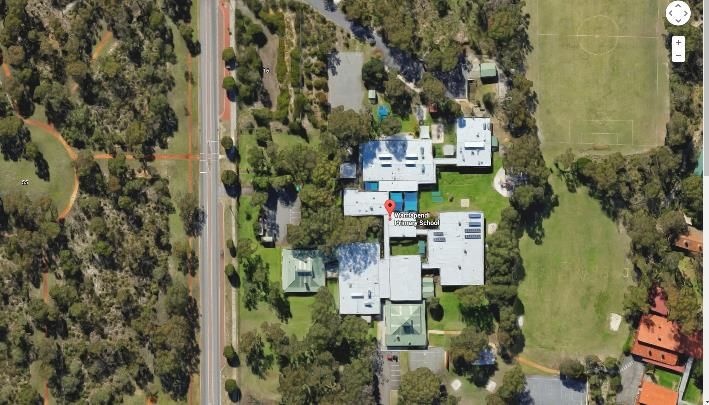
D19/0244402

                                        Warriapendi Primary School

                                     STAND-ALONE BUSHFIRE PLAN

Contents
INTRODUCTION ...............................................................................................2
    Overview .......................................................................................................2
    Distribution ....................................................................................................3
COMMUNICATION ...........................................................................................4
    Preparing for Bushfire Season .....................................................................4
    Pre-emptive Closure .....................................................................................4
    During Evacuation ........................................................................................5
    Reopening the School ..................................................................................5
TYPES OF FIRE EVENT ..................................................................................5
    1. Total Fire Ban ...........................................................................................5
    2. Catastrophic Fire Danger .........................................................................6
     2.1 Planned Pre-emptive Closure ...............................................................7
     2.2 During a Planned Closure .....................................................................7
     2.3 Re-opening School................................................................................8
    3. Bushfire ....................................................................................................8
     3.1. Bushfire – Warnings .............................................................................8
       3.1.1 Advice .............................................................................................8
       3.1.2 Watch and Act .................................................................................8
       3.1.3 Emergency Warning .......................................................................9
       3.1.4 All Clear...........................................................................................9
     3.2. Bushfire – Act .......................................................................................9
       3.2.1 Response when a bushfire starts and the school is open ..............9
       3.2.2 Response when a bushfire starts and the school is closed ..........10
       3.2.3 Recovery .......................................................................................10
APPENDICES .................................................................................................12
    Appendix A:         COMPLIANCE: Bushfire Preparation Checklist ...................12
    Appendix B:         Catastrophic Event Flow Chart .............................................14
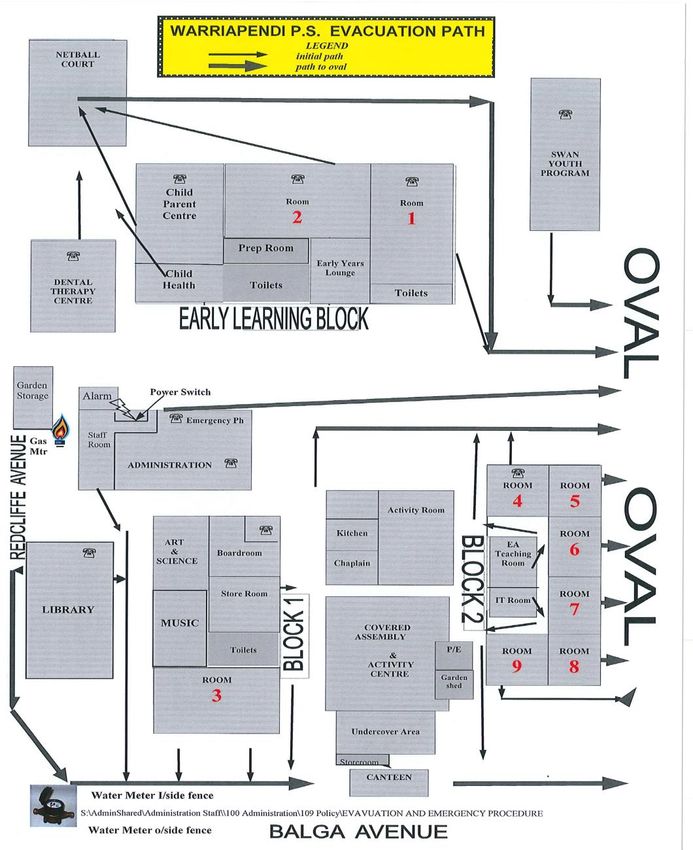
    Appendix C:         Sample School Site Plan and Evacuation Routes ................15
    Appendix D:         Communication Plan .............................................................17
    Appendix E:         Sample Emergency Response Contact List .........................18
    Appendix F:         Sample Bushfire Response Telephone Tree ........................19

                             In the case of an EMERGENCY
                                         Call 000

                                                           1
INTRODUCTION
This Stand-alone Bushfire Plan is for Warriapendi Primary School and has been developed
to assist Principals and their staff prepare for a total fire ban, catastrophic fire danger rating, or
a bushfire event. Sample messages to staff and parents are included in the Principal’s Guide
to Bushfire, as well as notices for the closure of the school.
The preparation of this Stand-alone Bushfire Plan should be developed in accordance with the
Emergency and Critical Incident Management Policy and the Principal’s Guide to Bushfire with
input from local emergency management agencies.
Warriapendi Primary School has 206 students and 17 staff. (There is 1 student that
require extra support when evacuating). The school is bordered by bush on Redcliffe
Avenue and between the school and Gladys Newton School.
Overview
General Information
This Stand-alone Bushfire Plan has been developed before 31 August each year after
consultation with:
families of students attending the school;
members of the emergency services (for example, local fire brigades, Regional office of
Department of Fire and Emergency Services (DFES);
Local Government Local Emergency Management Committee and Local Government
representatives; and
other school sites.
This Stand-alone Bushfire Plan includes a checklist of required actions to prepare the school
before the bushfire season as per the Principal’s Guide to Bushfire (refer Appendix A).
This Stand-alone Bushfire Plan also outlines activities to be undertaken by staff and students
at the different levels of a bushfire emergency including:
on days of Total Fire Ban;
days deemed Catastrophic Fire Danger Rating;
when there is a fire in the local district;
when a bushfire has the potential to, or is actually threatening the school; and
during the period immediately after a bushfire has impacted on the school (known as the
‘Recovery Phase’).
2The library, is nominated as the Safer Building Location for the school. This building has
been deemed and prepared for a bushfire emergency and will accommodate all persons
normally at the school.
Schools located in bushfire prone areas need to incorporate key bushfire messages in their
curriculum. Research shows that if students develop and undertake drills as part of the
emergency planning, the message is more meaningful and transfers to the home environment.
Additional benefits can be realised by taking activities home that need to be completed and
returned. This can serve to increase families’ level of awareness and preparedness in regard
to bushfire survival plans or household preparedness assessments.
Communication Plans (including emergency contacts and a Telephone Call Tree) need to be
in place for evacuation or planned closure. See Appendix D for a Communication Plan,
Appendix E for Sample Emergency Response Contacts and Appendix F for a Sample Bushfire
Response Telephone Call Tree.
IMPORTANT: This document contains samples and is designed as a guide only, with a view to
achieving reporting consistency across the Department of Education (the Department). It is
the responsibility of an individual school to ensure this document is completed with relevant
local information.
If a suitable Safer Building Location cannot be identified on site, as detailed in the Principal’s
Guide to Bushfire, the school must identify relevant and appropriate off site locations. It is
important that agreements and processes are put in place with the building owners and tested.
Distribution
The Principal must prepare and update the Stand-alone Bushfire Plan in readiness for the
bushfire season and then upload through the Department’s SharePoint system. Schools will
receive a notification when this needs to occur.
The Principal or delegated officer will:
review (and update where appropriate) the Stand-alone Bushfire Plan on an annual basis;
publish an up-to-date copy of the school’s Stand-alone Bushfire Plan on the school’s
website no later than 31 August of each year;
ensure that all new staff members, relieving staff and visitors are briefed about the
requirements of the Stand-alone Bushfire Plan during their site induction process;
include bushfire season reminders and information in newsletters;
update the School’s Information Booklet in Term 1 each year, including detailed information
about actions and procedures included in the Stand-alone Bushfire Plan; and
provide all staff members with pre-bushfire season updates during Term 3 and ongoing
information and instruction about the contents and requirements of the Stand-alone
Bushfire Plan during Term 4 and Term 1 staff meetings.
The safety and wellbeing of students, staff and visitors is at all times the Department’s
main priority. Staff are not expected to fight bushfires.
Any bushfire advice received by the school from Department of Fire and Emergency Services
(DFES), including local DFES regional office, Local fire brigades and Community Emergency
Services Manager, Local Government, Local Government Local Emergency Management
Committee, or external experts, is documented in the table below, identifying the date and
source of the advice.
3Date of Reviewing Officer Date Next scheduled
Review Submitted Review
31/8/19 Natasha Doyle 31/8/2019 31/7/2020
COMMUNICATION
There are several levels of communication requirements at school level before, during and
after bushfire events.
Preparing for Bushfire Season
The Principal must ensure all students, staff (including relief) and parents are aware of the
school’s Stand-alone Bushfire Plan. A copy of the school’s Stand-alone Bushfire Plan
should be published on the school’s website. Suggested draft text for the school newsletter
is available in Appendix B6 of the Principal’s Guide to Bushfire.
The Principal should establish contact with different members of the local community,
including emergency services, DFES, local volunteer fire brigades, Western Australia
Police Force, Local Government Local Emergency Management Committee and
Community Emergency Services Manager.
The school has an effective working emergency warning or alert system, and emergency
communication equipment is available and working and tested at least once before the
commencement of the Bushfire Season.
Schools have in place systems to account for students, staff and visitors in an emergency,
such as class rolls (or equivalent) and visitor registers. Consideration should be in place
for situations such as a loss of power affecting the ability to print from electronic sources.
Schools need to identify more than one suitable off-site location, in case one site is in the
area of the bushfire.
Arrangements are in place in relation to school buses if appropriate (notification of
contractors if pre-emptive closure is invoked; and the availability of buses if off-site
evacuation is required).
Pre-emptive Closure
The Department’s Incident Controller (normally the Deputy Director General, Public
Schools or delegated officer) will make the decision to close a school based on advice from
emergency services and this will be relayed to the Principal via the Regional Executive
Director.
Residential and Agricultural Colleges will remain open on a Catastrophic Weather Warning
day and have procedures in place to move into Safer Building Location or invoke off-site
evacuation if safe to do so.
The Principal is to notify staff and parents of closure using emergency contacts and the
Telephone Call Tree. See the draft message to parents in Appendix B7 of the Principal’s
Guide to Bushfire advising of pre-emptive closure, being mindful of parents' level of literacy
and understanding of English.
All other necessary parties are advised, including, but not limited to, other schools that may
have siblings at the school, community users of the school facilities (including before and
after school care, or holiday programs, community kindergartens, on site contractors,
Parents and Citizens Association and/or school council).
If appropriate, bus contractors will be contacted to arrange for the evacuation of students to
a designated area.
Notice of Planned Temporary School Closure should be posted as per the Principal’s
Guide to Bushfire, both physically at the school and electronically on the website.
4During Evacuation
The school will contact the Regional Executive Director and the Department’s Media Unit.
The school will contact parents via phone or email, ensuring they have a mobile phone
contact number for the school. It would be preferable that parents restrict calling the
school at this time to emergency calls only.
The school will notify bus contractors and other users of the school site.
NOTE: DFES uses the national Emergency Alert system to send community warning
messages via mobile telephones in affected areas. It is important not to rely on receiving an
alert. The school must still be prepared and have an action plan in case of an emergency.
It is important to remember that the Emergency Alert is just one way of receiving information
during an emergency. Other ways the school can stay informed include:
visiting the Emergency WA website www.emergency.wa.gov.au
calling the DFES information line on 13 DFES (133337).
listening to ABC radio, 6PR and other media news bulletins.
following DFES on Twitter at www.twitter.com/dfes_wa
For more information on Emergency Alert, visit: www.emergencyalert.gov.au
The Principal communicates directly with Regional and Central Office personnel including any
media communications. Staff should not comment directly to the media.
Reopening the School
The Regional Executive Director is to advise the Principal when the school can re-open.
Parents need to know when the school is re-opened. In the event of a pre-emptive closure
details are contained in the sample messages (Principal’s Guide to Bushfire advising of
pre-emptive Closure – Appendix B7).
The Notice of Planned Temporary School Closure should be physically removed from the
school premises and website.
All parties that were advised of closure (for example, bus contractors, Out of Hours users,
community kindergartens, Parents and Citizens Association and/or school council) should
be advised of reopening.
TYPES OF FIRE EVENT
In the event of a Total Fire Ban, catastrophic weather warning or a bushfire, the Stand-alone
Bushfire Plan will be activated.
1. Total Fire Ban
In the event of a Total Fire Ban, the Stand-alone Bushfire Plan will be invoked (refer to
Principal’s Guide to Bushfire for all procedures). This means:
no fires must be lit or used in the open air;
all open fires for the purpose of cooking or camping are not allowed; and
‘hot work’ such as metal work, grinding, welding, soldering, gas cutting or similar is not
allowed.
DFES advise that chainsaws, plant or grass trimmers or lawn mowers can be used during a
Total Fire Ban in suburban or built up areas which are cleared of flammable material, but not in
bushland or other areas where their use may cause a fire.
It is also necessary to ensure:
the equipment or machinery is mechanically sound; and
all reasonable precautions are taken to prevent a bushfire starting.
It is recommended postponing the activity altogether to minimise the risk of fire
5Unless a Harvest and Vehicle Movement Ban has been implemented by the Local Government
Authority, the school/college is able to harvest or move vehicles across paddocks for
agricultural purposes. However, there may be local government authority requirements such
as compliant fire-fighting equipment on hand and a required amount of water readily available
for fire-fighting purposes.
Individuals could be fined up to $25 000 or jailed for 12 months (or both) if the Total Fire Ban is
ignored.
For information on activities that can or cannot be carried out during a Total Fire Ban visit
https://www.emergency.wa.gov.au/#totalfirebans.
https://www.dfes.wa.gov.au/safetyinformation/fire/bushfire/BushfireFactsheets/DFES_Bushfire
Factsheet-Total_Fire_Bans.pdf.
If the information required is not available from the website, telephone the Total Fire Ban
Information Line 1800 709 355.
This information is also available by visiting www.dfes.wa.gov.au and;Emergency WA website:
www.emergency.wa.gov.au.
2. Catastrophic Fire Danger
The Catastrophic Fire Danger Index (FDR) has been added to the Australia-wide FDR system
since the 2009 bushfires in Victoria. If a fire starts in catastrophic conditions, its impact
potential includes death or injury to people and destruction of buildings.
Schools need to know what the Fire Danger Rating is for the area, and monitor local conditions
and keep informed. Understanding the Fire Danger Rating categories and what they mean will
help in making decisions about what to do if a bushfire starts.
The Fire Danger Rating is based on the forecast weather conditions and provides advice about
the level of bushfire threat on a particular day.
Category Fire Danger Action
Index (FDR)
100+ Schools on Bushfire Zone Register closed
on instruction from Deputy Director General,
Public Schools, through Regional Executive
Director. School to invoke Communication
Plan and cancel bus services. Appendix B
(refer to the Principal’s Guide to Bushfire for
all procedures and sample messages).
75-99 Monitor Emergency WA & DFES websites
Normal school operations
(any fire that starts is likely to be so fierce
that even a well prepared and well-
constructed school may not survive a fire).
50-74 Monitor Emergency WA & DFES website
Normal school operations
(The threat of a bushfire increases)
32-49 Monitor Emergency WA & DFES website
Normal school operations
(The threat of a bushfire increases)
612-31 Normal school operations
(The threat of a bushfire increases)
0-11 Normal school operations
Guidance notes:
At each rating the fire behaviour and potential impact will be different.
Check the FDR for the area by visiting the following links:
https://www.emergency.wa.gov.au/#firedangerratings
Further information can be obtained at:
https://www.dfes.wa.gov.au/safetyinformation/fire/bushfire/pages/firedangerratings.aspx
2.1 Planned Pre-emptive Closure
Regional Executive Directors will contact principals of affected schools directly when a planned
(pre-emptive) closure is to be invoked in a particular part of the State. The lead time for a
planned closure varies depending on weather patterns, but every attempt is made to give
principals as much notice as possible to prepare written documentation for parents. Schools
should have Telephone Call Tree in place to provide this information at short notice or after
hours.
Once advised of a pre-emptive closure, the school must inform the community that a closure is
imminent. The Principal needs to send messages to parents and inform staff members when
the closure is planned to occur and that the school is on standby. It may be that between
declaration of the closure and the day of closure, weather conditions improve sufficiently to
remove the need to close and the school can therefore stand down its Pre-emptive Closure
Plans.
The Regional Executive Director will confirm with the Principal the final decision to close the
school no later than 4:30 pm the day before the planned closure. If weather conditions
become less severe after 4:30 pm, the closure goes ahead regardless in order to provide a
level of certainty to parents.
DFES is the final authority on advice about which schools are in danger and the level of risk at
the time. The Deputy Director General, Public Schools makes the final decision as to whether
or not a planned closure of public schools is to proceed based on DFES’s advice.
2.2 During a Planned Closure
In order to make informed decisions, the Principal must stay informed of the current fire danger
rating and any fire activity by monitoring a range of information sources
Schools can stay informed by monitoring the following official sources:
visiting the Emergency WA website www.emergency.wa.gov.au
calling the DFES information line on 13 DFES (133337).
listening to ABC radio, 6PR and other media news bulletins
following DFES on Twitter at www.twitter.com/dfes_wa
72.3 Re-opening School
Parents need to know when the Catastrophic FDR has been downgraded and that it is
therefore safe for their children to return to school after a planned closure. The sample
messages to parents contains advice on how parents can monitor the situation. The school
will need to put communication plans in place, such as placing a notice on the school website
and providing a phone number for parents to call for information about the reopening of the
school. Consideration needs to be given to how parents who do not have internet access or
who have diverse needs (for example, multicultural, special needs) will be provided with
information.
3. Bushfire
In the event of a bushfire threatening the school, the school will call 000. The Stand-alone
Bushfire Plan will be invoked by way of the school siren (or hand-held siren).
3.1. Bushfire – Warnings
During a bushfire, emergency services provide as much information as possible through a
number of different channels.
If the school is likely to be threatened by the fire, activate the Emergency and Critical Incident
Management Plan immediately.
Before a bushfire starts, Fire Danger Ratings can provide advice about the level of bushfire
threat on a particular day and how difficult and dangerous conditions will be if a fire starts.
They are based on weather conditions forecast by the Bureau of Meteorology.
During a bushfire, DFES and the Parks and Wildlife (P and W) Service of the Department of
Biodiversity, Conservation and Attractions issue community alerts and warnings for bushfires
that threaten lives and property. They are only issued once firefighters have arrived at the
scene and determined that there is a threat or potential threat to the community.
The alert level changes to reflect the increasing risk to life.
DFES and Parks and Wildlife (P and W) Service of the Department of Biodiversity,
Conservation and Attractions will issue the following four bushfire warnings.
3.1.1
means a fire has started but there is no known danger. This is
general information to keep you informed and up to date with
developments.
Turn off evaporative air conditioners and ensure roof vents are closed. Undertake regular
checks and patrols of the school for bushfire activity, paying special attention to the
evaporative air conditioners.
3.1.2
means there is a possible threat to lives and property.
Conditions are changing, you need to leave the area or
prepare to move students, staff and visitors to their pre-
determined Safer Building Location and not an open area
on the site or evacuate.
If an order to evacuate is directed by the Incident Controller, the evacuation order will be
relayed via a variety of official sources such as the DFES website and Emergency WA
website. It is paramount that schools gather information pertaining to fires from official sources
in order to make an informed decision on whether to stay on-site or evacuate off-site.
83.1.3
means you are in danger as your area will be
impacted by fire. You need to take immediate action
to survive.
You will be advised whether you can leave the area or if you must shelter where you are as the
fire burns through your area. An emergency warning may be supported with a siren sound called
the Standard Emergency Warning Signal (SEWS). These factors should be reviewed on a
regular basis as they may change at any time and without notice.
If an order to evacuate is directed by the Incident Controller, the evacuation order will be
relayed via a variety of communications methods including the Bushfire Warning system.
It is paramount that schools gather information pertaining to fires from official sources in order
to make an informed decision on whether to stay on-site or evacuate off-site.
3.1.4
means the danger has passed and the fire is under control, but
you need to remain vigilant in case the situation changes. It
may still not be safe to return to school.
Further information in relation to Bushfire Warning System is available on the DFES Website
and a video is available at:
https://www.youtube.com/watch?v=a_H0D-38AGQ&feature=youtu.be
3.2. Bushfire – Act
3.2.1 Response when a bushfire starts and the school is open
3.2.1.1 Evacuation Procedure
School to evacuate off-site on advice from DFES
All classes remain with their teachers and support staff.
All other staff and visitors report to the administration building.
Teachers account for each child and identify students and support staff with known
respiratory conditions.
Doors, roof vents and windows must be closed and evaporative air coolers turned off.
Students and staff are to remain in classrooms unless directed otherwise by the fire
warden.
Fire wardens are designated to manage evacuation routes and liaise with staff.
The Principal and fire wardens will control the response and must liaise with DFES or
emergency services as soon as possible.
Students and adults with known respiratory conditions will be identified and given special
consideration.
Staging Area – identify and utilise an area where occupants and visitors are intended to gather
in preparation for an evacuation.
Parent Access
Schools must have clear communication methods with parents. Parents must be advised NOT
to pick up students and to monitor official communication channels for specific access
information. Appendix D and Appendix E Communication Plan and Emergency Response
Contact List must be completed with local content to ensure the school’s individual
communication requirements are detailed and used.
93.2.1.2 Safer Building Location Procedure – if evacuation is not possible
All classes remain with their teachers and support staff until otherwise advised by Principal
or delegated staff.
School move to Safer Building Location (Appendix C) if the Principal cannot ascertain
impact of a bushfire to school or on advice from DFES.
Doors, roof vents and windows must be closed and evaporative air coolers turned off.
Principal or delegated staff to monitor official communication channels to enable informed
decisions to be made.
All classes to remain within the designated Safer Building Location. See Appendix C for a
sample safer location evacuation diagram.
All other staff and visitors report to the administration building, before directed to the Safer
Building Location.
Teachers account for each child and identify students and support staff with known
respiratory conditions.
Fire wardens are designated to manage evacuation routes and liaise with staff.
The Principal and fire wardens will control this response and must liaise with DFES or
emergency services as soon as possible.
Students and adults with known respiratory conditions will be identified and given special
consideration.
Parent Access
Schools must have clear communication methods with parents. Parents must be advised NOT
to pick up students and to monitor official communication channels for specific access
information. Appendix D and Appendix E Communication Plan and Emergency Response
Contact List must be completed with local content to ensure the school’s individual
communication requirements are detailed and used.
3.2.2 Response when a bushfire starts and the school is closed
If the Department’s Incident Controller makes a decision on school closure-based advice from
emergency services, the Regional Executive Director will inform the Principal of closure.
The Principal is to notify staff and parents of the closure using the Emergency Response
Contact List (see Appendix D for a Sample Communication Plan).
The Department’s Incident Controller will, in consultation with the Regional Executive Director,
identify alternative accommodation of students and staff, if required. The Department’s Media
Unit will use media outlets to make public announcements of school closures, temporary
alternative accommodation and contact number(s) for further information.
The Department’s Incident Controller (in consultation with DFES) will inform the Regional
Executive Director when the school can reopen, who will inform the Principal accordingly.
3.2.3 Recovery
The priorities for the school during recovery are:
Health and safety of individuals;
Social recovery; and
Physical (structural) recovery.
General
When possible, return to normal routine as soon as possible.
Attend to staff and student welfare, considering counselling support.
Provide information for families and the community of any impact (including if there is
none) on the school and school routine following the bushfire.
Undertake a check of any equipment or stock used and arrange for
replacement/replenishment.
Address any physical damage to the school, isolating areas if required and, if necessary,
relocate to alternative accommodation. Contact the Department of Finance’s Building
10Management and Works to commence repairs. The Department should be advised of any
damage caused by the bushfire.
Attend to security if necessary (Contact Manager, Security and Emergency Management at
Central Office on 9264 4825).
Manage administrative details including insurance.
Debrief
What worked, what didn’t?
Was anything overlooked?
What could be done better next time?
Should any delegation be reassigned?
If changes are made, incorporate them into the Stand-alone Bushfire Plan and advise the
appropriate parties including staff and other authorities.
Share the knowledge with other schools.
Test the revised Stand-alone Bushfire Plan and procedures.
For further details and contacts refer to the Recovery Section of the Emergency and Critical
Incident Management Plan and the Principal’s Guide to Bushfire
11APPENDICES
Appendix A: COMPLIANCE: Bushfire Preparation Checklist
Bushfire Preparation Checklist for the
Bushfire season
Principals are responsible to ensure this checklist is completed annually and should be
thoroughly familiar with their current plans for dealing with bushfires.
All staff members should be aware of their responsibilities in accordance with the
Stand-alone Bushfire Plan
MANAGEMENT ACTIVITIES
Tick when task has been completed, or write NA if not applicable( ) Evidence
Has the school checked the Bushfire Zone Register on Ikon 31/8/19
and downloaded the latest Stand-alone Bushfire Plan.
Principal is thoroughly familiar with the school’s Stand-alone Plan reviewed
Bushfire Plan. 31/08/19
Students, staff, relief staff and parents/carers have been Staff meeting
made aware of the School’s Stand-alone Bushfire Plan. 02/09/19 and
newsletter sent
to parents/carers
with bushfire
information
04/09/19
The Stand-alone Bushfire Plan has been reviewed prior to Yes
the bushfire season (31 August each year) and a copy 02/09/19
uploaded to the electronic portal and on the school’s website.
The Principal or delegated staff establish contact with local Trevor Dunstan
emergency services, DFES, the Department of Biodiversity, DFES
Conservation and Attractions – Parks and Wildlife Services (if Bushfire Risk
relevant), the local volunteer fire brigade, WA Police, Local Management
Government Local Emergency Management Committee Liaison Officer
(LEMC), local government representative or Community 16/8/19
Emergency Services Manager (CESM) (if there is one for the
area), and incorporated their feedback into the plans (as
required).
Local Emergency services, (outlined above), are informed of Trevor Dunstan
the schools nominated pre-determined Safer Building informed
Location (not an open area) as part of the Emergency Critical 16/8/19
Incident Management Plan procedures.
Schools on the Bushfire Zone Register understand the 02/09/19
bushfire warning system and the Emergency Alert telephone
warning system
Schools on the Bushfire Zone Register have incorporated key
bushfire messages in the curriculum.
Schools know how to turn off evaporative air conditioner Yes
units, including awareness of the location of the switches,
and how to close roof vents.
Communication plans (include Telephone Call Tree – see Yes
Appendix F) are in place for directed evacuation or planned
closure
12MANAGEMENT ACTIVITIES
Tick when task has been completed, or write NA if not applicable( ) Evidence
Evacuation drills practised prior to the start of the bushfire Drill Week 7
season and at least once per term during the bushfire Term 3 2019
season. Drill Week 8
The bushfire season typically runs from late August to April in Term 4 2019
southern WA and June to late October in northern WA. Drill Week 8
Note: a minimum of three drills per year. Term 1 2020
School has a correctly functioning emergency warning or Checked &
alert system. working
Emergency communications equipment is available e.g. Yes
mobile telephones, hand-operated fire alarm (portable siren),
portable radios and spare batteries.
Class rolls and visitor register (or equivalent) are readily Yes
accessible in an emergency to account for students, staff and
visitors.
First aid equipment is available and staff members trained in Yes – All staff
first aid have been identified. have had first aid
training
Evacuation kit should be checked at least once per term. Yes – E.Russell
Arrangements are in place in relation to school buses
(notification of contractors if pre-emptive closure is invoked;
availability of buses if off-site evacuation is required)
Procedures are in place to restrict use of machinery (e.g. Gardener to be
angle grinders, mowers, and machinery with internal informed
combustion engines) in close proximity to bushfire fuels
where they may start a fire on severe Fire Danger Days.
A Safer Building Location from within the school buildings Library has been
has been identified. The Safer Building Location is not an identified by
open area and the school has processes in place to ensure DFES
the building is ready for use in a bushfire emergency. The
Safer Building Location is to be used when it is the safest
option or in the event that an off-site evacuation is not
possible (Refer page 5 of The Principal’s Guide to Bushfire).
The school’s Safer Building Location is: Library
More than one suitable off-site location needs to be Balga PS
identified in case one of the sites is under threat from the
bushfire.
Defendable Asset Protection Zone (20 metre radius from DFES have
buildings) is maintained throughout the year, clear of all checked grounds
rubbish, leaf litter, long dry grass, bark and flammable Term 3 2019
materials.
13Appendix B: Catastrophic Event Flow Chart
In the event of a catastrophic weather warning the Bushfire Plan will be invoked as per the following flow chart: (refer to The Principal’s Guide to Bushfire
for all procedures and sample letters)
PRINCIPAL’S RESPONSE TO
Catastrophic Fire Danger Rating (FDR)
Regional Executive Director alerts Principal that a Catastrophic FDR has been declared and to prepare
the school for pre-emptive closure
Principal notifies school community of impending planned closure, to be confirmed 4.30 pm on the prior day
Closure to be Principal notifies school community
invoked? NO closure will not go ahead – school will open as normal
YES
Principal activates school action plan, including:
notifying parents, bus contractors, community kindergartens, tenants, community hirers, out of school hours child care programs, school contractors
and construction workers that the school will be closed on the day concerned;
posting school closure signage; and
appointing two members of staff to attend from 8.00 am to 10.00 am on the day of the school closure (only if safe).
Principal and Regional Executive Director monitor FDR for the next day
Principal liaises with Regional Executive Director to
determine if school reopens next day
Principal notifies school community whether school remains closed or reopens
14Appendix C: School Site Plan and Evacuation Routes
Safer Building
Location
1516
Appendix D: Communication Plan

                                                                                                         START

                                                                                                                              EM WA WARNING             School Calls 000 – If
                                                                                                                                   ISSUED               smoke or fire sighted
                                                                                                                             Or School Notified by
                                                                                                                                DoE Regional
                                                                                                                             Executive Director of
                                                                      Inform Parents                                           Bushfire Events
                                                                         and Staff           YES      Bushfire Event
                                                                                                     Impacts Schools
                                           Have you been
                                           instructed to
                      Initiate
                                                                                                                                                     NO
                    Evacuation       YES   evacuate?
                                            Is it safe to leave?
                                                                      Initial Message
                       Plan

                                                                                                                               YES|NO
                                                                      Interim Message
                 Notify:                       Go to Safer
                                                                                                                                                        Monitor:
                    R.E.D                        Building
                                                                                                                                                        DFES Website
                    DoE Media                 Location and
                                                                                                                                                        Emergency WA
                                              Seek Further
                       Unit
                    Parents                    Information                                           NO or NOT SURE                                     ABC Radio 720
                                                                        ALL CLEAR                                                                       Seek Local
                    Bus Contractor                                                                                                                      Information
                    Offsite
                       Evacuation
                       Contact

                  Move to Offsite                   Move to Offsite
                  Evacuation – If                   Evacuation – If                    Initial Message                 Interim Message               ALL CLEAR
                  safe to do so                     safe to do so

                                                                                        17
Appendix E: Emergency Response Contact List
Assess Evacuate Inform Organise Undertake
EMERGENCY CONTACT & PHONE NUMBERS ROLES AND RESPONSIBILITIES
Police Local: 93459000 Evacuation: Principal Siren/Pause x 3 or
Mirrabooka Police Continuous handbell
Invacuation: Principal Continuous siren or
short whistle blasts
Ambulance / Hospital Local: 92242244 Checking Rooms Manager Corporate
Royal Perth Services /Principal
Local Ambulance 000
Fire DFES 133337 Evacuation: on-site Teachers
assembly point when
safe to evacuate off-site
Invacuation: classrooms Teachers
Bus Contractors Horizons West
93518980
Power Outage (Horizon 131 351 Accredited First Aid Staff member Name(s)
Power or Western Officers Natasha Doyle
Power) Jennifer Chan
State Emergency 132 500 Communication Principal /Manager
Service Corporate Services
Poisons Information 131 126 Next of Kin Notification Principal (Police if
death)
REGIONAL DIRECTOR James Webb
Name mobile: 0434325649 Reporting and Review Principal
PRINCIPAL Name Natasha Doyle mobile: 0401266975
MANAGER CORPORATE SERVICES Name Jennifer Chan mobile: 0412969488
In the case of an EMERGENCY
Call 000
18Appendix F: Bushfire Response Telephone Tree
START Bushfire Warning
Issued
Security EM Manager
Regional Executive Notified
Director
Notified and
Contacted Principal
School Identifies
Principal Initiates Ring 000 and Report
a Local Fire
Emergency
Response Contact
List
P&C School Staff Bus Contractor Off Site Neighbouring Schools
Evacuation Point
Other External
Notify Schools Offsite Contractors I.E.
Parents Evacuation Site Local Government
(If Applicable) WA Police
Ambulance
19You can also read


