STATION TRAVEL PLAN MANCHESTER AIRPORT - TRANSPENNINE EXPRESS
←
→
Page content transcription
If your browser does not render page correctly, please read the page content below
Station Travel Plan
Manchester Airport

TransPennine Express. Station Travel Plan. Manchester Airport. Version 2. Published 31/03/2019
Contents
• Introduction                                                              ➔   TransPennine Express Station Travel Plans are produced in line with guidance issued by Rail
                                                                                Delivery Group (RDG) formerly the Association of Train Operators (ATOC).

• Process                                                                   ➔   All information contained within the Station Travel Plan is correct as of the date of publishing.

                                                                                Station Travel Plans will be updated and republished on the anniversary of the publishing date.
• Stakeholders                                                              ➔   Use the Dark Blue arrows to navigate to each section of the document.

• Local Area                                                                ➔
• Accessing the Station                                                     ➔
       • Cycling                                                            ➔
       • Walking                                                            ➔
       • Public Transport                                                   ➔
       • Road Access                                                        ➔
• Customer Analysis                                                         ➔
• Evaluation                                                                ➔
• Delivery                                                                  ➔

 Station Travel Plan. Manchester Airport. Version 2. Published 31/03/2019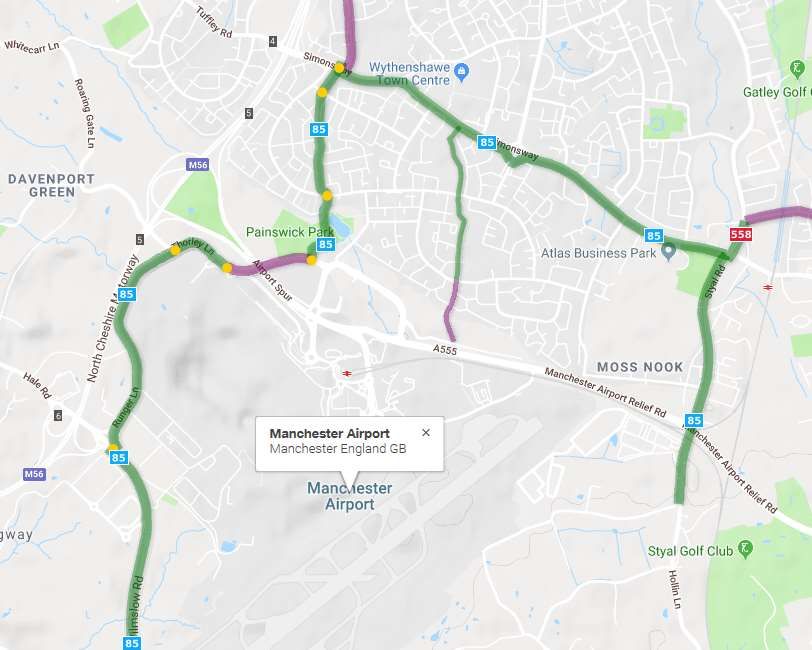
Introduction
What is a Station Travel Plan?
The Department for Transport defines as Station Travel Plan as: ‘A strategy for managing the travel generated by your organisation, with the aim of reducing its
environmental impact, typically involving support for walking, cycling, public transport and car sharing’
TransPennine Express maintains Station Travel Plans for all 19 stations where they are currently the Station Facility Owner (SFO).

Why Develop a Station Travel Plan?
Demand for rail continues to grow, with more and more people choosing to travel by rail each year. It is predicted that within the next 30 years demand for rail will more
than double. TransPennine Express is at the heart of this growth, with double digit percentage growth in passenger journeys year on year, with a doubling of customer
numbers since the franchise was established in 2004.
With growth of this magnitude, it is important that alongside investing in new trains, operating more services and enhancing the customer experience, we are considerate of
how customers travel to and from the station to access the railway network.
Against the landscape of a changing culture towards private transport, with many millennials choosing not to own a car, and instead adopt solutions such as Uber, dockless
bike hire and car sharing schemes, a station travel plan allows operators to identify the developments which are required to keep pace with society. It also allows us to
identify key areas of change, with the evident shift from internal combustion to electric cars and hybrids, we are able to set out plans for providing the infrastructure to
support this shift.
We will use the Station Travel Plan as a tool to identify and document opportunities to improve intermodal access and promote sustainable travel, informed by data from
the National Rail Passenger Survey and our own shadow survey, from which we can evaluate customer satisfaction with our developments as we strive to offer a seamless
and sustainable solution for all customers door to door journeys, paying particular attention to the scores for:
•     Connections with other forms of transport
•     Car parking
•     Cycle Parking
•     Method of transport used to access the station

Station Travel Plan. Manchester Airport. Version 2. Published 31/03/2019
Process
The development of our Station Travel Plans is led by TransPennine Express, with a commitment to produce and maintain Station Travel Plans for each of the 19 stations
which the franchise manages. The plan will be reviewed in full each year, but is intended to act as a live document with updates made throughout the year as projects are
delivered and changes realised.
The Accessibility and Integration Manager is responsible for the production and upkeep of the Station Travel Plans, and will consult with relevant Stakeholders at each
stage of the production of the plan. This group is likely to be comprised of representatives from the Local Authority, user groups, community rail partnerships, TOCs and
other transport operators.
The following process will be undertaken in the production and revision of the plan:

Step 1:                Site Audit
                       A tour of the station and surrounding area will be carried out to gain an understanding of the existing facilities. There will be a number of fact finding visits,
                       followed up by an accompanied visit with stakeholders to confirm details. This will form a base upon which any improvements will be measured.

Step 2:                Analysis
                       •    Review       of the latest NRPS data with interrogation of statistics for ‘Connections with other forms of public transport’ and ‘Facilities for car parking’.
                       •    Review       of the latest Shadow NRPS data with interrogation of statistics for ‘Connections with other forms of public transport’ and ‘Facilities for car parking’.
                       •    Review       of Customer Relations data to identify any trends with regards station access.
                       •    Review       of commercial data for car parking, sales of multi-modal tickets (where available)

Step 3:                Aims, Objectives and Targets
                       SMART objectives will be determined and agreed with the aim of delivering improvements based upon the findings of the analysis and site audit.

Step 4:                Action Planning
                       Specific tasks and timescales will be applied in order to achieve the agreed objectives.

Step 5:                Implementation and Delivery
                       The action plan will be implemented within the specified timescales. Where required, funding will be sought from all available sources. Where actions are
                       aligned to other business plan actions, the requirements may be combined to deliver efficiencies.

Step 6:                Monitoring and Refinement
                       The actions will be frequently reviewed against target to ensure that progress is being made. The Station Travel Plans will be reviewed and updated annually
                       to ensure they are relevant and continue to drive improvement.

Station Travel Plan. Manchester Airport. Version 2. Published 31/03/2019
Stakeholders
General
Rail North                                                           Rail Delivery Group                                                  Sustrans
Rail North works with the Department for Transport, Local            Set up after privatisation in 1993, the Association of Train         Sustrans are a national charity helping to make travel by foot,
Transport Authorities and other bodies to specify and deliver        Operating Companies (ATOC) brings together all train                 bike or public transport more popular for everyday journeys.
high-quality rail services across the north of England, including    companies to preserve and enhance the benefits for                   They work across communities, with policy-makers and other
being involved in the specification and management of the            passengers of Britain’s national rail network. A recent change       organisations to help people choose healthier, cleaner and
Northern and TransPennine Express franchises.                        to Rail Delivery Group brings with it a new mission statement:       cheaper journeys, contributing to better places and spaces to
                                                                                                                                          move through and live in.
Rail North’s Long-Term Rail Strategy for the North of England        “Enabling rail companies to succeed by delivering a successful
(2015) concentrates on four main areas:                              railway”                                                             Their vision is that by 2020 80% of local journeys will be made
                                                                                                                                          by bike, foot or public transport, double the current figure of
•   Better Connectivity, with targeted improvements to journey       The purpose of the Rail Delivery Group (RDG) is to enable
                                                                                                                                          40%. Improving the accessibility of TPE’s railway stations can
    times, service frequencies and improved connections to           passenger and freight operators and Network Rail to succeed
                                                                                                                                          clearly help reduce the need to travel by car and increase the
    make end-to-end journey times quicker.                           by delivering better services for their customers. This ultimately
                                                                                                                                          proportion of journeys undertaken using more sustainable
                                                                     benefits taxpayers and the economy. Their work is focused on
•   A more Coherent and user-friendly network: a network with                                                                             modes.
                                                                     four transformational portfolios:
    the visible coherence of the London Underground delivered
                                                                                                                                          Sustrans works to develop the National Cycle Network, which
    over the North’s wide geography. This needs defined              •   Today’s railway - improving punctuality, reliability and value
                                                                                                                                          is series of safe, traffic-free paths and quiet on-road cycling
    categories of train services as well as planning the North’s         for money
                                                                                                                                          and walking routes that connect to every major town and city.
    many routes to operate together as a single whole with a
                                                                     •   Customer experience - modernising ticketing and improving        The Network passes within a mile of half of all UK homes and
    single simplified fares structure.
                                                                         door-to-door journeys                                            now stretches over 14,000 miles across the length and breadth
•   Increased Capacity, both on-train so that passengers do not                                                                           of the UK.
                                                                     •   Industry reform - improving industry structures to enable
    experience excessive overcrowding and on-track so
                                                                         excellence
    additional demand for economically worthwhile passenger
    and freight movements can be accommodated.                       •   Tomorrow’s railway - better planning for the railway’s future
•   Cost effectiveness. As use of the North’s rail services          Source: www.atoc.org/about-atoc
                                                                     Source: www.raildeliverygroup.com/about-us
    grows, running costs per passenger and tonne of freight
    carried need to fall. The key to achieving this is investment.

                                                                                                                                                              Station Travel Plan. Manchester Airport. Version 2. Published 31/03/2019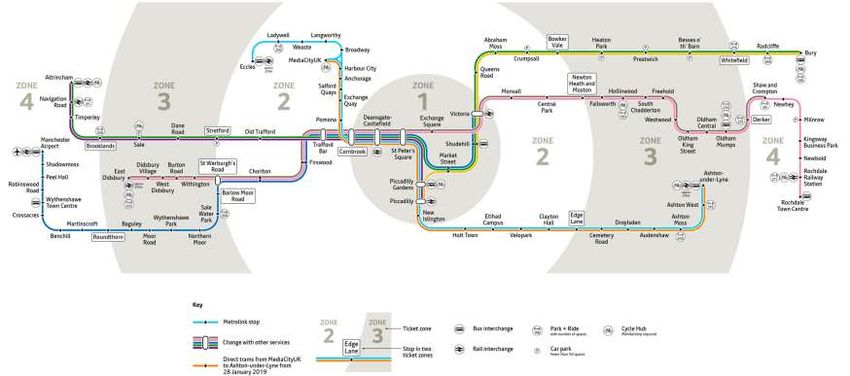
Stakeholders
Specific
Combined Authority
Transport for Greater Manchester                                   Manchester Airport Group
Transport for Greater Manchester are in the process of             MAG serves more than 58 million passengers and handles               The airport is committed to improving connectivity and, through
developing their Greater Manchester Transport Strategy 2040,       almost half a million tonnes of air freight every year through its   partnership working, support the delivery of the North’s
which will be delivered through a number of Local Transport        ownership and operation of the airports of London Stansted,          economic and transport priorities.
Plans.                                                             Manchester and East Midlands.
The Local Transport Plan defines how TfGM are going to make        Manchester Airport is a global gateway and the largest airport
it easier for people to travel across Greater Manchester over      outside London serving more than 27 million passengers a
the next few years and beyond. It outlines how they will provide   year, with over 210 destinations served by 70 airlines.
a viable, sustainable and accessible transport network capable     Manchester’s long-haul catchment area places around 22
of supporting the region's economic growth long into the future.   million people and 60% of all UK businesses within a two-hour
It also shows how they will reduce the impact that transport has   drive time – it extends north through the Lake District into
on the environment and help to improve health by reducing          Scotland; east across Yorkshire and the North East; south to
accidents and encouraging 'active travel'.                         Birmingham and the Midlands; and west into Merseyside and
                                                                   Wales.
It covers all modes of travel, including buses, heavy rail,
Metrolink, walking, cycling, cars and freight, as well as the      The on-site ground transport interchange station at Manchester
other issues which affect people's travel choices - fares,         Airport has a passenger throughput of more than 4.5 million rail
ticketing, passenger information, accessibility and safety.        and coach passengers. With improvements to the rail network,
                                                                   this is expected to grow to 11 million by 2030.
                                                                   The Manchester Airport Sustainable Development Plan,
                                                                   published in 2016, sets out the strategic context for the long-
                                                                   term development of the airport and contains detailed plans
                                                                   which cover:
                                                                   •   economy and surface access
                                                                   •   land use
                                                                   •   environment
                                                                   •   community activity

                                                                                                                                                            Station Travel Plan. Manchester Airport. Version 2. Published 31/03/2019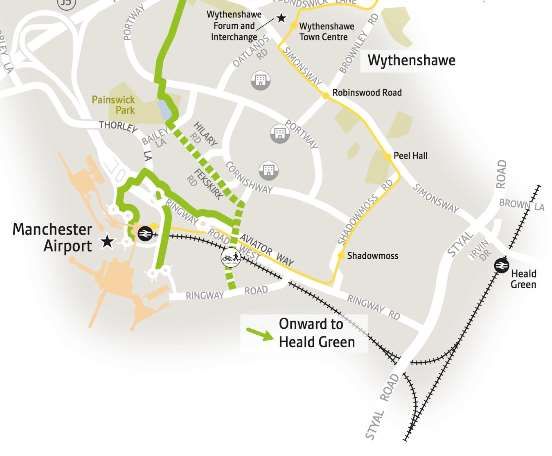
Local Area
Station Details
Station                                                                                                                                               Useful Links
Manchester Airport Railway Station               Manchester Airport Station is the busiest of the 19 stations managed by TransPennine Express.        Key Local Attractions and Events
Malaga Avenue                                    It serves as the origin and destination for most services, giving fantastic connections across the   www.tpexpress.co.uk/explore-the-north-
Manchester                                       North of England and into Scotland.                                                                  and-scotland/destinations/Manchester-
M90 3RR                                                                                                                                               airport
                                                 At the height of summer, Manchester Airport sees 350 flight departures each day, with over 27
                                                 Million passengers using the airport in 2017. There are developments underway which will see
Station Manager                                  this increase significantly, with terminal expansions and the creation of new gates to               Station Facilities Information
                                                 accommodate more aircraft.                                                                           www.tpexpress.co.uk/travelling-with-
Billy Vickers                                                                                                                                         us/station-information/Manchester-airport
Group Station Manager (Hub)                      Alongside these plans, other developments are taking place around the airport, including airport
                                                 city, which will lead to increasing numbers of people accessing the airport each year for
                                                                                                                                                      Station Footfall Statistics
                                                 employment. With limited car parking capacity, modal shift is key to providing access, with the
Local Authority                                  railway station and TransPennine Express services playing a major part.
                                                                                                                                                      www.orr.gov.uk/statistics/published-
                                                                                                                                                      stats/station-usage-estimates
Transport for Greater Manchester                 Additionally, there are plans for a HS2 Station within the airport boundary, which could have a
                                                 significant impact on how rail services operate in and out of the airport, or see the site develop
                                                 as a key interchange point from HS2 to rail.
Train Services
Manchester Airport is the terminus station for
many train services, with hourly connections
across the North of England.
Timetables can be found at
www.tpexpress.co.uk/travel-
updates/timetables

                                                                                                                                                         Station Travel Plan. Manchester Airport. Version 2. Published 31/03/2019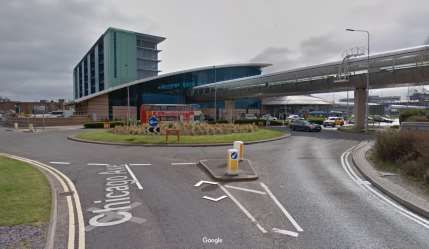
Cycling
National Cycle Routes
Overview                                                         Cycle Routes                                                                                                                        Useful Links
Route 85                                                                                                                                                                                             Sustrans
The key cycle route serving Manchester                                                                                                                                                               www.sustrans.org.uk
Airport is Route 85 which runs along Wilmslow                                                                                                                                                        The charity that makes it easier for people
Road, connecting to Simonsway         offer a                                                                                                                                                        to walk and cycle.
cycling link from Newall Green to Heald
Green, before turning south towards Styal Golf                                                                                                                                                       Cycling UK
Course.                                                                                                                                                                                              www.cyclinguk.org
                                                                                                                                                                                                     National cycling campaign group offering
Other NCN routes are available within a few
                                                                                                                                                                                                     advice to cyclists of all abilities.
miles of the airport, including: 558, 85, 70, 62,
6 and 82. Details of these routes can be found
on the Sustrans website.

                         Source: www.sustrans.org.uk/ncn/route

                                                                 ------   Traffic Free Route (National Cycling Network)              ------    On Road Route (National Cycling Network)
                                                                 ------   Traffic Free Route (Not on the National Cycling Network)   -------   On Road Route (Not on the National Cycling Network)

                                                                                                                                                                                                        Station Travel Plan. Manchester Airport. Version 2. Published 31/03/2019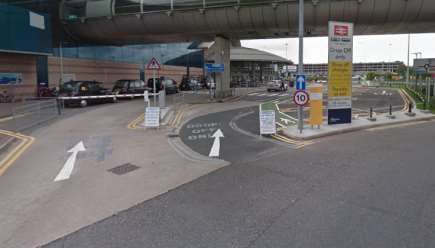
Cycling
Local Cycle Routes
Overview                                        Local Cycle Routes                                          Useful Links
Within the airport, there are no cycle lanes,                                                               Transport for Greater Manchester
with cyclists being required to navigate the                                                                www.tfgm.com/cycling
busy road network. In the longer term,                                                                      Information about cycling and walking within
Manchester Airport Group is looking to                                                                      Greater Manchester
develop a cycle and walking route from the
south side of Wythenshaw into the new Airport
City development, connected by a green
bridge, and making use of an existing route
which currently ends near aviation way.
MAG have produced a cycle route map to help
those accessing the airport by bike to avoid
some of the busier roads and make use of
local routes. They are also exploring
opportunities to increase cycle parking for
airport employees and those accessing other
nearby businesses.

                                                Source: www.tfgm.com/cycling/routes/airport-city-cycleway

                                                                                                               Station Travel Plan. Manchester Airport. Version 2. Published 31/03/2019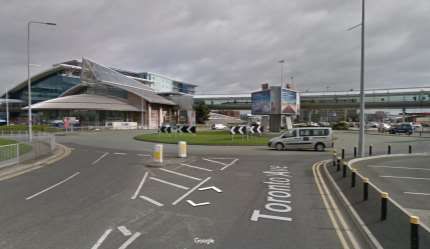
Cycling
Cycle Parking
Overview
Due to the lease agreements in place at
Manchester Airport Railway Station, there is
no opportunity to provide cycle parking at the
railway station itself, however Manchester
Airport Group provide cycle parking outside of
the Ground Transport Interchange, as well as
outside the office blocks at the Airport.
The capacity of this cycle parking was recently
increased, and is well used.

                                                  Station Travel Plan. Manchester Airport. Version 2. Published 31/03/2019
Walking
Pedestrian Access
Overview
Within the station, customers have a choice of
lift, escalator or ramp to reach the interchange
level. Once through the ticket gates, the
interchange itself is not an intuitive layout.
For customers accessing the terminals, they
need to use a second set of lifts, or the
escalators, both of which take them to the
skylink level which provides a link between all
three terminals and the station, making use of
travellators to speed up the journey.
Some customers accessing terminal 1 from
the GTI will use the pedestrian crossings at
ground level, and cross the car park rather
than using the Skylink.
Customers heading to the station from the
terminals similarly use the skylink. Using
either the lifts or the escalators to descend to
the interchange level can lead to confusion, as
customers need to double back on themselves
to use the Ticket Vending Machines or access
the booking office.
Signage has been added to encourage
customers to use this route to ease the
pedestrian flow around the booking office
area. Café barriers have been added to
contain customers whilst waiting for the next
available booking office window. This helps to
maintain a clear route for those with mobile
tickets to head straight
Station Travel Plan. Manchester Airport. Version 2. Published 31/03/2019Public Transport
Bus Services
Overview Bus Stands Useful Links
There are 13 bus bays at the Manchester National Rail Enquiries
Airport Bus Station, labelled A to M, serving a http://www.nationalrail.co.uk/posters/MIA.pdf
mixture of local and long-distance bus Onward travel posters are available for the
services, including National Express and majority of UK railway stations with local bus
Megabus. service information. These can be found
online or displayed at the station entrance
PlusBus
www.plusbus.info
Offering discounted city centre bus travel
when purchased with a rail ticket.
Traveline
www.traveline.info
08712002233
Providing information about local bus services.
NextBuses
www.nextbuses.mobi
A web or app based service which can help
you to Find the bus times for your stop. Simply
search for a bus stop by entering a postcode,
street & town or a stop name & town.
Image Source: National Rail Enquiries
Station Travel Plan. Manchester Airport. Version 2. Published 31/03/2019Public Transport
Light Rail Services
Overview Route Map
The Manchester Metrolink system was
extended to Manchester Airport in November
2014. This connects Manchester Airport to
Manchester City Centre via a local route
through Wythenshaw.
When the route was first introduced, services
from Manchester Airport terminated at
Cornbrook, with customers required to change
trams to reach the city centre. In January 2018
this service was extended through to
Manchester Victoria, making use of the
additional city centre capacity created by the
opening of 2CC (Second City Crossing). This
change also saw earlier and later journey
times introduced, along with more Sunday
services.
The Metrolink service is popular with
commuters accessing Manchester Airport
from surrounding suburban areas, however it
does not offer a rival service to rail for
journeys to/from Manchester City Centre due
to the journey times which are highly
protracted in comparison.
A trend has established for those travelling to
the city from Wythenshaw and stops closer to
the airport to use the Metrolink to connect with
rail services from the airport to reduce their
overall journey times.
Station Travel Plan. Manchester Airport. Version 2. Published 31/03/2019Road Access
Major Road Network
Overview Road Network Map
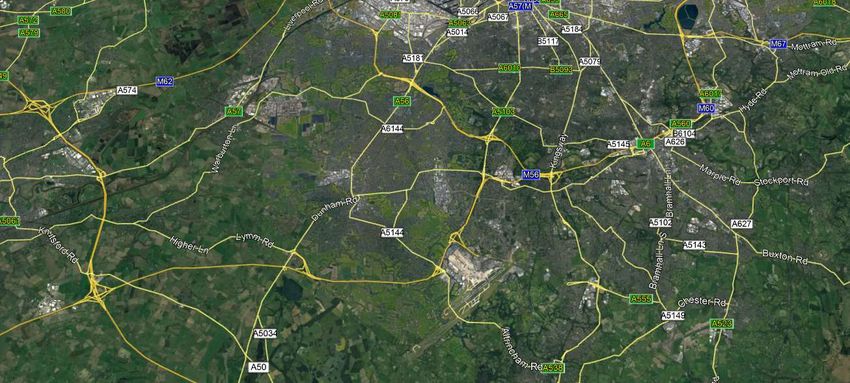
The main road serving Manchester Airport is
the M56, which is the link road between the
M6 and the M60 (Manchester Outer Ring
Road).
The M60 connects to many different
motorways including the M66 for journeys
north into areas of Lancashire, M67 for
journeys towards Sheffield, and the M62 to
Leeds and Hull, or Liverpool. This network of
motorways all within close proximity offers
good road connections in all directions which
is what makes personal cars such a popular
choice for airport users.
Accommodating these cars has been a
challenge, and Manchester Airport Group has
expanded its car parks where possible,
however they are keen to see a transition to
more sustainable travel methods to access the
airport as part of their expansion plans.
Image Source: Google Earth
Station Travel Plan. Manchester Airport. Version 2. Published 31/03/2019Road Access
Local Road Network
Overview Road Network Map
From the Airport, the journey to Manchester
City Centre by car is direct, but traffic levels
mean this journey can take between 20 and 40
minutes. New 30mph speed restrictions
(reduced from 40mph) on the route have been
introduced to improve safety and smooth the
traffic flow, but volumes remain high.
The area immediately surrounding the airport
is catered for by a similarly well-connected
network of A-roads, serving a number of more
rural areas.
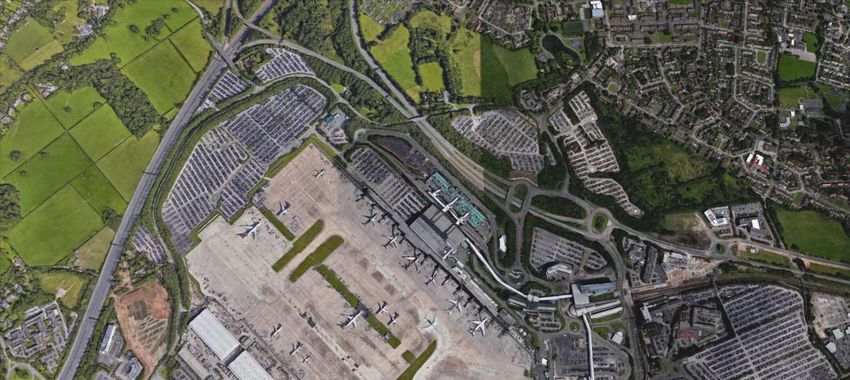
Within the airport complex, there is a network
of roads which connect the three terminals,
car parks, and support services which keep
the airport functioning.
Image Source: Google Earth
Station Travel Plan. Manchester Airport. Version 2. Published 31/03/2019Road Access
Immediate Road Network
Overview Road network serving the Ground Transport Interchange
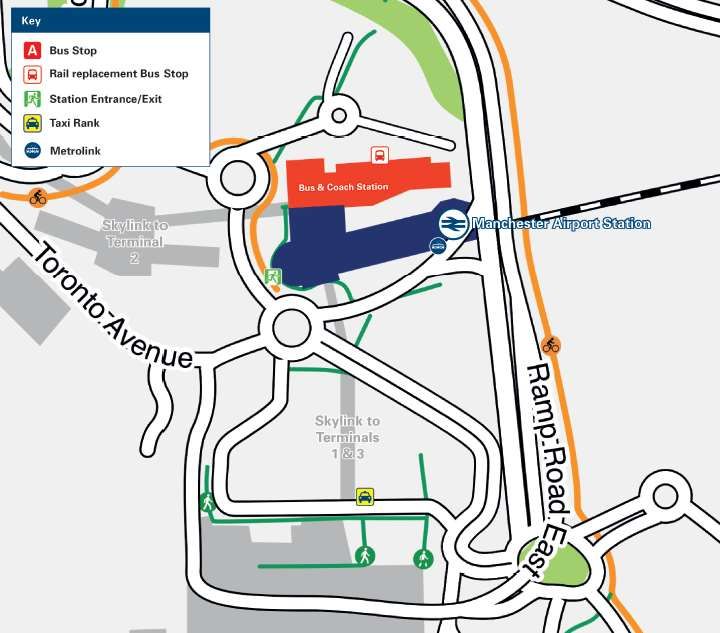
Customers wishing to access the railway
station by car need to make use of the
Manchester Airport Group parking or drop off
facilities. There are no specific or dedicated
facilities for station users.
There is a drop off point at the front of the
ground transport interchange, which requires
payment as part of a new initiative introduced
by the airport to promote sustainable journeys.
Station Travel Plan. Manchester Airport. Version 2. Published 31/03/2019Road Access
Car Parking
Overview
There is no car parking dedicated to users of
the railway station at Manchester Airport.
Customers wishing to access the railway
station by car need to make use of the
Manchester Airport Group parking or drop off
facilities.
More information about the parking available
at Manchester Airport can be found at
www.manchesterairport.co.uk/parking
Station Travel Plan. Manchester Airport. Version 2. Published 31/03/2019Road Access
Car Hire
Overview
Car hire is readily available from various firms
across Manchester Airport supported through
Manchester Airport Groups partnership with
Rentalcars.com.
More information can be found at
www.manchesterairport.co.uk/at-the-
airport/car-rental/
Station Travel Plan. Manchester Airport. Version 2. Published 31/03/2019Road Access
Taxis
Overview Taxi Rank Private Hire
There is a large taxi rank serving the Ground Arrow Cars
Transport Interchange. Taxi ranks are also PHOTO 0161 667 6999
available at each of the airport terminals.
MAG approved private hire firm.
Fully manned desks immediately outside arrivals at each terminal and
at Manchester Airport train station
Inclusion of these details doesn’t represent endorsement of these firms
Image Source: https://www.google.co.uk/maps
Station Travel Plan. Manchester Airport. Version 2. Published 31/03/2019Customer Analysis
National Rail Passenger Survey
Connections with other forms of public transport Useful Links
Spring 2015 Autumn 2015 Spring 2016 Autumn 2016 Spring 2017 Autumn 2017 Spring 2018 Transport Focus
TransPennine Express 78% 78% 71% 78% 79% 77% 83% www.transportfocus.org.uk
Long Distance 79% 78% 78% 80% 81% 81% 83% Producers of the National Rail Passenger
Survey and customer advocate.
Variance -1% 0% -7% -2% -2% -4% 0%
Industry 74% 76% 75% 76% 79% 78% 78%
Variance 4% 2% -4% 2% 0% -1% 5%
There is a noticeable increase in the score for ‘Connections with other forms of public transport’ between 2017 and 2018. Responses to
this question often capture customers opinions about the availability of connections with other train services, despite this being captured
in a separate question. In December 2017, several timetable changes came into place across the North of England, offering new
services and improved connectivity which likely affected this score. Similarly, development works at stations neared completion,
delivering new facilities and opportunities for customers, again impacting this score.
Facilities for car parking
Spring 2015 Autumn 2015 Spring 2016 Autumn 2016 Spring 2017 Autumn 2017 Spring 2018
TransPennine Express 50% 49% 46% 51% 48% 40% 50%
Long Distance 59% 58% 57% 61% 62% 58% 61%
Variance -9% -9% -11% -10% -14% -18% -11%
Industry 49% 50% 48% 50% 50% 50% 48%
Variance 1% -1% -2% 1% -2% -10% 2%
This indicator incorporates a number of factors, and is built through responses to a set of questions relating to car park quality, costs
and capacity. It is the latter of these which we believe is driving dissatisfaction. Car parking capacity has long been an issue for
TransPennine Express, with growing footfall at constrained station sites, meaning the opportunities to expand car parking provision are
minimal. It is expected that this score will continue to fall unless significant developments can be realised to create large new car parks
close to the stations.
Station Travel Plan. Manchester Airport. Version 2. Published 31/03/2019Customer Analysis
Shadow National Rail Passenger Survey
Scores for connections with other modes should be high,
Connections with other public transport with the train station sitting at the heart of the ground
(E.g. Buses, Taxis, Trams) transport interchange, where connections are available by
taxi, bus and tram, or by skylink to the three airport
88.0%
terminals.
86.0%
84.0%
82.0%
80.0%
78.0%
76.0%
74.0%
72.0%
70.0%
68.0%
2016 Q1 2016 Q2 2016 Q3 2016 Q4 2017 Q1 2017 Q2 2017 Q3 2017 Q4 2018 Q1 2018 Q2 2018 Q3
Station Travel Plan. Barnetby. Version 3. Published 31/03/2019Customer Analysis
Shadow National Rail Passenger Survey
This graph assesses the balance of the methods used to
Method of transport used to access the Station access the station.
Sustainable Non-Sustainable
100%
On Foot / Walked Motorbike
90% Bicycle (Parked at or near
Taxi
Station)
80%
Car Parked at or near
Bicycle (Taken onto Train)
Station
70%
Bus/Coach Car – Dropped off
60% Tram/Light Rail
Underground Train
50%
Overground (National Rail)
40% Train
As would be expected for an airport station, many
30%
customers are arriving by sustainable means as many are
going or returning from holidays.
20%
10%
0%
2016 Q1 2016 Q2 2016 Q3 2016 Q4 2017 Q1 2017 Q2 2017 Q3 2017 Q4 2018 Q1 2018 Q2 2018 Q3
Sustainable Non-Sustainable
Station Travel Plan. Barnetby. Version 3. Published 31/03/2019Evaluation
Summary of findings
Manchester Airport Railway Station is in a somewhat unique position, in that most users of the station are linking directly from the trains to the airport terminals or hotels within the airport
boundary, meaning that the need for various onward journey options, or modes for accessing the station is vastly reduced, as a high proportion make use of the skylink.
With the upcoming developments, there is an expected increase in commuting travel to/from the airport and the surrounding commercial and industrial sites, however MAG believe that this
needs to be supported by sustainable transport methods, and will not be looking to provide significant uplifts in car parking.
This presents a significant opportunity for rail, recognising the uplift which has already been seen since Amazon opened a warehouse close to the airport. Consideration should be given not
only to development of services and facilities to accommodate this change in ridership, but also to fares, and the potential to extend the airport staff railcard which is already in place. MAG is
looking at ways to encourage their staff to move to rail, tram and bus as a method for travelling to/from, and are keen to publicise links across the UK for customers accessing the airport. They
also have major plans in development for the Ground Transport Interchange which will see new retail units and a change to the pedestrian flow in anticipation of an uplift in use, which
TransPennine Express are supportive of.
As these developments are set to take place over a long period, with a gradual shift expected, it is important to recognise some opportunities which exist with shorter timescales. The
introduction of the Metrolink to the station has been a welcome addition, and has further developed the station as an interchange, with a flow being established from Wythenshawe to pick up
the train from Manchester Airport. However, the addition of the gateline has made this interchange more difficult. This could be solved through some collaborative working with Metrolink and
TfGM around ticketing and ticket retailing. This will form an action of this plan.
Similarly, the flow from the Ground Transport Interchange to the skylink and terminals whilst established, it not intuitive. TransPennine Express has looked at signage options around this area,
however more can still be done to improve this passenger flow. The area would also benefit from a level of de-cluttering to remove redundant signage and obstacles.
It is fair to say that Manchester Airport Station has very good onward links due to its position between the terminals, and it’s clustering with the tram and bus services, however the layout is
starting to create issues as the footfall increases. It is important to capitalise on planned investment and establish the station for the long term, with clear pedestrian flows which will improve
the customer experience.
Station Travel Plan. Manchester Airport. Version 2. Published 31/03/2019Delivery
Objectives, Targets & Actions
Objectives Targets Actions
• Encourage travel to/from our stations by sustainable • Year-on-Year percentage increase for modal share by The actions set out in this Station Travel Plan complement or
methods. sustainable methods are in addition to the 400 Franchise Commitments which
TransPennine Express will deliver within the 7-year franchise
• Increase awareness of the facilities which are available at
period, each of which is designed to revolutionise the train
our stations and in the surrounding area to support travel
service and improve the customer experience for rail users
by sustainable modes
across the North. A number of these commitments have
• Make improvements to the facilities at our stations to already been delivered and are already having a positive
support travel by sustainable modes to provide a effect. Full details of all of the franchise commitments can be
consistent standard across all TransPennine Express found on the Department for Transport website.
stations, adopting industry best practice where possible.
Minor Works schemes are also being developed on an annual
• Implement innovative solutions to enhance the experience basis which seek to improve the accessibility of our stations
of travelling to/from our stations by sustainable methods. through the delivery of small schemes e.g. installing handrails
and height adjustable booking office counters. The specific
• Regularly monitor and evaluate travel patterns to/from our
works for this station are not referenced in this document.
stations to gain an accurate representation of modal share,
and use these results to set appropriate targets and Each action set out in this plan has been written to be SMART
monitor the effectiveness of the work being undertaken to
• Specific
encourage travel by sustainable methods.
• Measurable
• Attainable
• Realistic
• Time-bound
Station Travel Plan. Manchester Airport. Version 2. Published 31/03/2019Delivery
Action Plan
Theme Description Impact Funding Source Deadline Risk Priority Update
Work with TfGM/Metrolink to provide a means for ticket
Ticketing purchasing for users transferring from Metrolink to rail (or vice Low None Agreed Summer 2018 Low Risk High No update
versa)
Work with MAG to explore ticketing options to support Aligned to
Ticketing commuters accessing new Airport City developments to ensure High None Agreed Airport City Low Risk Medium No update
high uptake of sustainable transport methods from the start development
Work with MAG to ensure that suitable solutions are developed Aligned to TPE and MAG are working on joint funding
Onward Travel to provide sustainable links from the railway station to the new High None Agreed Airport City Low Risk Medium proposals for the development of cycle
Airport City development and other areas of the airport site. development connectivity schemes around the airport.
Work with MAG to ensure that the redevelopment of the GTI
GTI Aligned to GTI
considers the long-term needs of the railway operations, and High Agreed Low Risk Medium Development proposals ongoing
Redevelopment eases customer flow from the station to the Skylink
redevelopment
Support MAG in their work with other operators in the GTI to
Queuing systems in place with additional ticket
Passenger Flow de-clutter the area and provide short term improvements to the Medium None Agreed Summer 2018 Low Risk High
machines provided to help reduce queues.
passenger flow ahead of the redevelopment of the GTI.
Station Travel Plan. Manchester Airport. Version 2. Published 31/03/2019You can also read


