Supporting people through Covid-19 - Citizens Advice Bureau June 2020
←
→
Page content transcription
If your browser does not render page correctly, please read the page content below
Citizens Advice Bureau

Supporting people
through Covid-19
       June 2020
Published in June 2020 by
Citizens Advice Bureaux New Zealand
Ngā Pou Whakawhirinaki o Aotearoa
PO Box 24249, Manners St, Wellington 6142, New Zealand

This document is available online at: www.cab.org.nz

Citizens Advice Bureau is present in more than 80 locations around Aotearoa.
The CAB service is provided by approximately 2,500 volunteers, who help
around 500,000 people each year.

CAB is a trusted, long-standing and respected part of the community.

Note: In this report we use some examples of client enquiries to highlight the issues
people faced and the help they sought from the CAB. The client enquiries have been
anonymised, with random names attributed, and any identifying details have been
removed so that confidentiality is maintained.

© Citizens Advice Bureaux New Zealand 2020
This work is licensed under a Creative Commons Attribution-NonCommercial-
NoDerivatives 4.0 International License.
This document may be cited as: Citizens Advice Bureaux New Zealand (2020) Citizens
Advice Bureau - Supporting People through Covid-19.

Supporting people through Covid-19

June 2020

Citizens Advice Bureau is a trusted place in the community for people to access reliable,
accurate information that is relevant to issues in their lives. Our service is delivered by
highly trained volunteers. Hundreds of thousands of people contact the CAB for help each
year.

When the Prime Minister announced on 23 March, that the country would be going into
lockdown at 11.59pm on Wednesday 25 March 2020, we knew that the CAB service would
be vital in supporting people through the lockdown and national state of emergency.

Everyone in New Zealand was going into uncharted territory, where things would be
nowhere near normal. People were immediately desperate for information, to find out how
they would be affected, what their rights and obligation would be and what help they could
access.

During the Covid-19 crisis and the disruption of lockdown, the CAB service was needed
more than ever before.

This report provides an overview of the work of the CAB in responding to Covid-19. It
captures the immense contribution of our volunteers, the agility of our organisation, and
the importance of the CAB service as we recover from the pandemic and people continue
to need support.

Kerry Dalton
Chief Executive,
Citizens Advice Bureau New Zealand

                                                                                              Page 1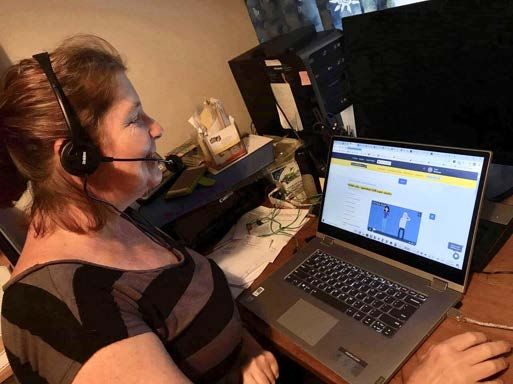
CAB timeline of Covid-19 events
                 January 2020 - first enquiries to CAB         An insight into enquiries
                 about Covid-19.                               from clients...
                                                                17 March - Increase in enquiries about self-isolation,
                  17 March - CABs close face-to-face            physical distancing and what that means for
 21 March         services. The CAB service continues to be     workplaces.
Alert level 2     available by 0800 367 222, website, email
                  and live chat.
                                                                23 March - The start of a flood of enquiries (more
 23 March                                                       than 2800) about how the wage subsidy should work.
                 23 March - CAB staff and volunteers start
Alert level 3
                 working from home.
                                                                24 March - A peak in clients wanting help to understand
                                                                what the restrictions of Level 4 will mean.
                 24 March - Over 1,160 calls to the CAB
 25 March
                 0800 number, an all-time high.                 We start getting enquiries from parents wanting help
Alert level 4                                                   understanding what Level 4 means for shared care
                                                                situations and access to their children, we help with
                 CAB staff and volunteers continue to           around 800 enquiries.
                 provide our service to people in prison and
                 respond to more than 600 calls from            Late March - As people start losing income, we start
                 prisoners during lockdown.                     getting a steady flow of people needing help with
                                                                accessing food. We help many people to access
                                                                emergency food assistance.
                 6 April - CABs proactively add information     Enquiries come in from essential workers, concerned
                 to the CAB website about local Covid-19        about their working conditions.
                 support services so people can easily find
                 local information.                             Early April - We start to see more tenancy issues,
                                                                such as people stuck between two tenancies having to
                                                                pay rent in more than one place, people struggling
                 9 April - A group of over 300 volunteers
                                                                with rent payments on reduced income or because
                 begin proactively calling potentially          some flatmates have moved out.
                 vulnerable people aged over 70, on behalf
                                                                Clients turn to us in frustration at not being able to
                 of NEMA and MSD. By the end of lockdown        access support from Work and Income, simply
                 14,000 phone calls would be made.              because they are unable to get in contact with them.

                 Week of 27 April - an average of 500 calls     Early-mid April - We see clients who aren’t able to
  28 April                                                      access information or services, because of digital
                 to the 0800 number each day this week,
Alert level 3                                                   exclusion.
                 as clients want to know what level 3 looks
                 like for them.                                 We start getting more and more enquiries from
                                                                migrant workers who have lost their jobs. These
                                                                clients don’t have access to any welfare support and
                                                                are struggling with the basic costs of rent and
                 CAB staff continue to update the website       food. We do our best to support them.
                 to be current and accurate. There is a
                 focus on the wage subsidy, continuing to
                 work from home, and money problems            Late April/May - As we enter Level 3 we start being
                 due to Covid-19.                              contacted by those who have had their wages or
                                                               conditions unilaterally changed (we assist with 4,000
  14 May                                                       employment enquiries). We also help clients who:
Alert level 2                                                     are really struggling financially and want our help
                18 May - Over 1,030 calls to the 0800             withdrawing money from their KiwiSaver.
                                                                  are facing redundancy without any real process.
                number, our second-highest on record.
                                                                  were required to use annual leave during lockdown
                                                                  and wonder if this was legal or not.
                CABs begin moving back into their offices         are flatmates or private boarders and have been
                                                                  asked to leave their accommodation, and aren't
                and re-establishing their normal schedules.
                                                                  covered by the legal protections introduced to keep
                                                                  people housed during this time.
   9 June
Alert level 1

                                And the work continues...
An agile and responsive CAB service
Citizens Advice Bureau staff and volunteers mobilised straight away. We adapted
our way of delivering services so we could work remotely and help people access,
navigate and understand information and how it applied to them. We moved quickly to
transition from being a predominantly face-to-face and phone service from bureau, to
delivering our service by phone, email and live chat from people's homes.

By midday on the day of lockdown, we had a
pool of over 300 volunteers, supported by             The change-over was seamless
paid managers, all working from their homes.          and there was no gap in service.
We routed all CAB landlines to our 0800
number, and a system was quickly set up
with a national roster of CAB personnel
answering calls.

CAB staff and volunteers triaged the incoming
calls by taking details, then carried out the
required research (or forwarded the enquiry
to another CAB volunteer to do this), and
then got back to the client to provide
them with the information and advice
they needed.

CABs also managed email enquiries and a number of bureau delivered the service via
live chat on the CAB website. We also quickly established a roster of volunteers who
were willing to deliver our phone service to people in prison.

During lockdown the responsive CAB structure allowed CABs to quickly switch to a
service delivered by email, phone and live chat from people's homes. While this
meant temporarily losing the value of the face-to-face service, the CAB service
continued to be accessible through its other channels.

                 Electronic
                    2%
                                        Electronic
                                           36%
                               Phone
                                35%
                                                             Lockdown
               Pre-Covid
                                                                                  Phone
Face-to-face                                                                       61%
   63%
                                                     Other
                                                      3%                                  Page 3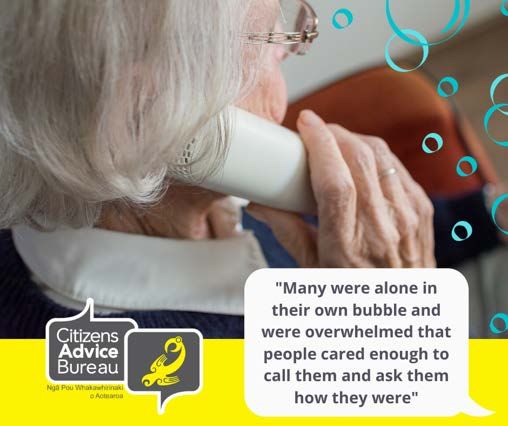
A snapshot of the support provided by CAB
  From the week of lockdown through to the shift to Alert level 1 on 9 June 2020, the CAB
  helped 27,646 people to navigate issues around their rights and responsibilities and to
  access services. Many of these enquiries involved complex and distressing issues.

  A further 14,000 people were called as part of the the NEMA (National Emergency
  Management Agency) and MSD (Ministry of Social Development) programme of checking
  in on people aged over 70.

  This is over 40,000 people assisted by the CAB service
  through the challenges of Covid-19, and the work continues...

    Top 10 categories of enquiry during Covid-19 lockdown

          Conditions of work
          Illness and disease
              Legal services
              Rental housing
               Relationships
              Consumer law
  Material welfare assistance
             Income support
  Citizenship and immigration
            Law enforcement
                                0   1,000           2,000            3,000            4,000

  Live chat enquiries

                                               A small team of volunteers made a
                                               significant time commitment to
                                               providing the CAB service via live chat.
                                               Some volunteers were on duty every day
                                               for at least 3 hours, and did that for many
                                               weeks.

                                               Live chat was a well-used CAB service
                                               channel during lockdown.

Page 4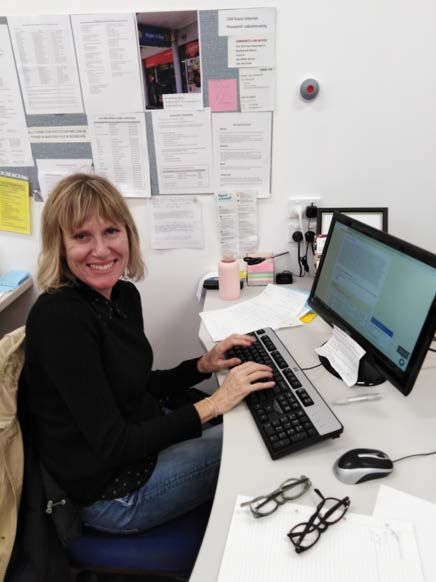
Web page views
                                                                Total web page views on
The information on the CAB website was                              www.cab.org.nz
constantly being updated to ensure
accurate information was available about
                                                                          1,978,745
people's Covid-19 rights and
responsibilities.

 The top 10 Covid-19 related web pages
    viewed on the CAB website were:

 1. How do I report a breach of the Covid-19 restrictions for the current alert level?
 2. I've lost my job. Do I have to wait before I can get an unemployment benefit?
 3. What support is available to workers affected by the Covid-19 pandemic?
 4. Who can get the Covid-19 Wage Subsidy and how do we apply for it?
 5. My employer has lost business because of Covid-19 and just made me redundant effective
   immediately. Is that legal?
 6. What process should an employer follow if they are making someone redundant?
 7. What help is available to someone who has been made redundant?
 8. What are my rights if my travel or holiday plans have been disrupted by Covid-19?
 9. I am flatting with three other people and they are kicking me out. Can they do this?
10. What support is available if I'm on a temporary visa in NZ during the Covid-19 pandemic?

Calls from prisoners                                                              '"One of the most
                                                                                  memorable comments
                                                                                  from a person in prison
CAB provides an 0800-phone line to people in prison.                              who I helped was:
During the Covid-19 lockdown the prisons were very tightly                        ''If I had known
                                                                                  organisations like yours
controlled - there were no visitors allowed and time out of
                                                                                  existed on the outside I
the cells was minimal.                                                            probably wouldn't be in
                                                                                  here today.'
                                                                                  It's comments like that
CABs received approximately 600 calls during this period.
                                                                                  give meaning to why I
These calls were answered by a small group of volunteers                          became a volunteer for
from around the country.                                                          CAB."

                                                                                    IAN, CAB VOLUNTEER
The common themes of the calls were:                                                  WHO SUPPORTS
   Information about support organisations upon release                              CLIENTS IN PRISON

    Child custody/visitation rights
    Starting a business
    Listening ear – providing support by just listening, many prisoners were struggling
    because they were not seeing family
                                                                                                             Page 5
Information and Advice – a vital service
      during Covid-19

      When people were plunged into the new
      reality of the Covid-19 pandemic and
                                                        The CAB aims are to:
      lockdown, many were desperate to access
      and understand information about the
                                                            ensure that individuals do not suffer
      new rights, responsibilities and entitlements
                                                            through ignorance of their rights and
      and how they applied to their
                                                            responsibilities, or of the services
      circumstances.
                                                            available, or through an inability to
                                                            express their needs effectively; and
      People turned to the CAB for help to
      navigate information and services and work
                                                            exert a responsible influence on the
      out what they could do in their particular
                                                            development of social policies and
      circumstances.
                                                            services, both locally and nationally.

      By the end of Alert level 2, we had helped
      people with 27,646 enquiries. Many
      people were in immensely stressful
      situations, worried about health issues,
      employment, income, housing and being
      able to afford and access food and other
      essential supplies.

                                                      During the Covid-19 crisis we helped people
                                                      with all sorts of complex issues around the
                                                      Wage Subsidy, redundancies, terminations of
                                                      tenancies, and access to emergency
                                                      accommodation and other support.

                                                      As part of helping people work through their
                                                      situation and options, we connected people to
                                                      other services, using our database of over
                                                      27,000 organisations and services. In a
                                                      space of a few weeks we updated around 500
The CAB website www.cab.org.nz was a vital
resource for people during the Covid-19 crisis        listings on our database to reflect changes to
                                                      the ways services and community groups
                                                      were operating during the lockdown.
   Page 6
For many digitally excluded clients, the CAB
Helping those who                                 was a portal to essential support

were digitally excluded                           services. Often the client was unable to
                                                  access information because they didn’t have
We assisted 1,076 people who were                 a computer or access to the internet or
experiencing digital exclusion during the         weren’t confident about going online. With
Covid-19 crisis. The circumstances of many        additional pressures on finances, some didn’t
of these CAB clients were often quite             have any credit on their phone.
desperate. These included people without
money, food and housing.                          Because the CAB 0800 number is free to call
                                                  from a landline or mobile phone, digitally
An overarching theme was the challenge of         excluded clients were still able to
accessing information and services when           contact us. We helped them with
this is all online. The issues that digitally     information and connecting them up to
excluded people were already experiencing         other services. It was very important to
around diminishing access to non-digital or       ensure that some of our most vulnerable
offline options were exacerbated by the           and isolated clients were not excluded from
necessary restrictions on face-to-face and        information and support because of lack of
paper-based communication.                        digital access or confidence.

How we helped
                                                   David has no food and can’t continue his work as
                                                   a contractor due to Covid-19. He has no money,
                                                   no petrol for his car, and no access to the internet
The range of support services that digitally       so hasn’t been able to apply for the Wage Subsidy.
excluded clients wanted the CAB's help to          We tried calling a number of foodbank options in
access were:                                       the area, but all were closed or require clients to
                                                   pick up. The Civil Defence Emergency
    Food parcels, food banks                       Management group said they could deliver a food
                                                   parcel, but it will take up to 3 days. We found the
    Support organisations for elderly people       Wage Subsidy application form and completed the
    Emergency accommodation                        online form for David with him providing the
    Health services                                information over the phone.

    Grocery deliveries
    Laundry services
    Access to heating options
                                                Daphne wanted to know how to arrange for grocery
    Phone numbers for other support
                                                delivery. She had a WINZ payment card that expires
    agencies and community organisations        either today or tomorrow. She has no support people
                                                and she wants to buy groceries with this card. She
 Digitally excluded people also sought the      doesn’t have a computer and can’t do online ordering.
                                                We called the nearest supermarket and provided the
 CAB's assistance to get the information
                                                customer services officer with Daphne’s phone
 they needed about their rights and             number (with her permission). The supermarket
 responsibilities, and about Covid-19.          undertook to call Daphne back and make
                                                arrangements for getting her groceries.

                                                                                                  Page 7
Supporting CAB volunteers with the
  necessary resources

  In order to assist people with the range of issues they were experiencing, our CAB
  volunteers had to have access to the most up-to-date and reliable information.
  Providing the necessary resources to volunteers was the job of the CAB National Office.

  As soon as information was announced by the Government about changes being
  introduced, the small team at CAB National Office created simple and easy to
  understand articles for the CAB website and knowledge base, covering Covid-19
  information across all areas of government. The team also constantly reviewed and
  analysed incoming enquiries and created questions and answers based on the most
  common enquiries.

  This was a fast-moving situation, requiring ongoing monitoring and responsiveness.
  During lockdown, around 100 new Covid-19 related information articles were
  created. This content was vitally important in supporting CAB volunteers to deliver the
  CAB service to clients.

Page 8
Helping people to navigate the issues

   Employment issues
   Covid-19 caused employment difficulties for many clients, with people facing job losses
   and changes in pay and conditions. We experienced spikes in enquiries related to
   employment, redundancy, employment disputes, leave, and dismissal, helping with over
   4000 employment enquiries.

   Many clients contacted us concerned about whether the wage subsidy was being
   used appropriately. We were also contacted by many people who had changes made
   to their pay and conditions of employment without their employer discussing this with
   them. We were disappointed to see many instances of employers not following
   correct legal processes.

   We were very concerned about the situation of migrant workers who lost their jobs.
   These people don’t have access to any formal income support and were struggling with
   the basic costs of rent and food.

Joan was unilaterally made redundant by her
employer, without any process around the
                                                 Edgardo was employed, on a working visa, at a hotel in
redundancy at all. She was then offered a
                                                 the South Island. The owner of the hotel dismissed him
new job by her employer with significantly
worse conditions. She wanted help to             without any notice or process at the start of the Covid-
understand whether what had happened             19 situation. As a migrant worker he was now totally
was legal, and what she could do about it.       without income, and was finding it difficult to cope. He
                                                 wanted help to know if he had any recourse with his
                                                 employer, as well as help with access to emergency
                                                 food.

            Tane was working employed 40 hours a week, and his
            employer applied for the wage subsidy. They unilaterally
            reduced Tane’s hours to 32 hours, and then said that they
            would only pay 80% of his wages for those 32 hours. He
            wanted help understanding whether this was meeting the
            obligations of the wage subsidy and help talking to his
            employer about it.

                                                                                                        Page 9
Ethnicity of clients with Emergency housing
emergency housing enquiries
Other
4%
Other ethnicity 4% CABs got a steady stream of requests for help to
Asian
Pacific
Peoples7%4% Māori access emergency housing, with clients in
Asian 7% Māori
32% various circumstances. This included people who
32%
European
European were homeless, living in vehicles, sheds and
8%
8%
temporary accommodation, sometimes with
children involved.
As we moved out of Alert Level 4 lockdown, people
New Zealander
New
20%
Zealander 20% who had been housed in temporary emergency
NZ European housing were anxious about what would
25%
NZ European happen next and sought our assistance to find
25%
out.
Tenancy issues
We received over 2,000 tenancy enquiries.
Alex wanted to know if he can issue his
flatmate with two weeks' notice during People were dealing with a range of issues
Covid-19 lockdown. The flatmate has been relating to the security of their housing as well
going out and not respecting lockdown rules. as the challenges of paying rent on reduced
Alex has tried talking to his flatmate but he
income.
has been abusive and said it's none of Alex's
business. Alex wants to get him out as soon
as possible. We provided advice to a number of tenants where
landlords are not operating within the Covid-
19 restrictions on terminations of tenancies.
Some tenants were also wanting support about
Maria is in a fixed term tenancy in a tourist how they could exit a fixed term tenancy.
centre, and lost her job due to Covid-19. The
rent is much more than she can afford now.
Maria wanted to know what her options are for There were many enquiries from people in
ending a fixed term tenancy early. flatting or private board arrangements.
Common questions were around the
requirements when asking flatmates and
boarders to move out, what can be done when
Tomas is stuck between two rental
people won’t move out, and what the flatmate or
properties due to Covid-19 lockdown. He
wants to leave his current tenancy but boarder can do when asked to leave.
can't. He has signed a new tenancy
agreement and the agent is saying that
Many people were confused about their rights as
he must pay the rent on the new place.
His current landlord is stating he also the protections that were put in place to keep
has to pay rent there while he is staying. tenants housed during the Covid-19 did not
apply to flatmates and private boarders.
Page 10Financial difficulties Natalie lost her job due to Covid-19 and was
in financial difficulty. She wanted to
With job losses and pay cuts, many withdraw her Kiwisaver, but needed help
knowing how she could do this. Her
people suddenly faced unexpected financial
provider told her that she needed a budget
problems. Clients contacted us and to have her application certified by a JP,
wanting help to know what support was despite it being Alert Level 3. We helped
available and how to access it. Natalie work through her options for getting
this done.
Many people needed income support for
the first time, and struggled to access Work
and Income. Others wanted to be able to
withdraw their Kiwisaver, due to Mohammed had just been made redundant, due
hardship, but this process was very difficult to Covid-19, his wife has a serious illness and
can’t work. They have two children to look after.
during lockdown. Other clients
Mohammed had never needed government
wanted support to manage their debt. We support before and wasn’t sure what support he
helped with over 2500 enquiries about could get while he looked for a new job. We
financial difficulties. helped him understand what support is available,
and how he can access it.
938 enquiries about food assistance
Clients turned to the CAB in frustration at
not being able to access support Gillian has two young children, and as a result
of Covid-19 was struggling to pay for food and
from Work and Income, simply because nappies. She had applied for emergency
they are unable to get in contact with them. support from Work and Income, but was told
that this would take at least a week, so she
contacted us to see if we could help her get
We also heard from many clients needing
enough food for that week. We organised a
food assistance and who are struggling food parcel for her.
with reduced income after losing work
or having their wages reduced.
Sefina contacted us in real financial difficulty. Two of her adult children had moved in with her
after they both lost their jobs due to Covid-19 and could no longer afford their accommodation.
We helped Sefina understand what government help was available to her, and organised a food
parcel to tide her over until she was able to access that support.
Page 11James contacted us wanting to know about
Care of children access rights to his children. He normally
visited his kids a couple of times a week as
well as had them for some weekends. He had
During this period, CAB volunteers no contact with his children during Level 4,
helped clients with 797 questions to do but wanted to resume contact at Level 3. His
with the care of children. ex-wife was concerned about whether this
was okay. James wanted clarification if it was
okay to mix bubbles in this circumstance.
With the announcement that New
Zealand would go into lockdown, parents
and caregivers sought advice about how 33.7%
n and dissolution
shared care arrangements would
Separation and
work. As we moved down Alert Levels, dissolution (36%)
Access / custody /
enquiries shifted to a focus on how to 50.6%
Access / custody / guardianship guardianship (48%)
change care arrangements, particularly
when one parent or caregiver had not
been able to have contact during Family &
Parenting issues
lockdown and where the parties were relationship (11%)
12.6%
enquiries
in conflict over the right way forward.
Parenting issues
Other care and support of children (5%)
Finding a JP
CABs play an important role in helping clients access Justices of the Peace by hosting regular
JP clinics. Many CAB volunteers are also JPs. CAB volunteers helped clients identify whether
JP services were needed (eg, in some cases a copy of a document that is not certified is
sufficient), or whether alternative options were available (eg, video calling with an
authorised witness). When NZ moved to Alert Level 3, CABs helped clients to work out
whether there were JPs in their communities who were operating from home, with
appropriate physical distancing and public health measures.
Providing insights to inform government
Through our national database of client enquiries, we had real time insights and
evidence of the issues from the thousands of people who were seeking help from the CAB
during the lockdown and different Alert Levels. We constantly fed these insights to
government agencies so they could identify information gaps, unmet needs, the
need for new policies and responses or changes to existing policies.
We saw issues as soon as people experienced them and provided 27 analytical reports to
government, presenting statistics and summaries of the main issues we were seeing.
Page 12CAB's amazing volunteer workforce
Our volunteers, who were experiencing the challenges of lockdown themselves, showed
immense community spirit, empathy and resilience in the way they gave their time
and energy to help others during this crisis.
“Throughout lockdown I answered calls from home and it was humbling to be
able to offer help to people who were in desperate need. This included
accessing food parcels and emergency housing, and helping people to
understand their rights in relation to employment issues, tenancy concerns
and child custody problems that had occurred because of Covid-19. The relief
in their voices and the grateful comments made every call special”
WENDY, VOLUNTEER AT CAB PALMERSTON NORTH
"I volunteer at the CAB because it is a meaningful
way to keep connected with and contribute to my
local community. I also love how challenging and
interesting it can be, having to demonstrate
empathy and compassion while at the same time
applying an analytical approach to helping solve
complex issues. And as a business owner, it’s a great
way to learn about my responsibilities and the
rights of my customers"
CALLUM, VOLUNTEER AT CAB WELLSFORD
Being able to help others tackle issues they are facing, and
providing them with information which will help them feel in
control of their own lives, is incredibly rewarding.
HELEN, VOLUNTEER AT CAB UPPER HUTT
"I am proud that we
belong to a
community that rallies
to support all the "With the interruption of Covid-19 our input in the
vulnerable and needy community became very much more important."
families in our area in TRISH, VOLUNTEER AT CAB THAMES
times of hardship
such as Covid-19."
VOLUNTEER AT CAB "I love being a volunteer and being
OTARA able to help people. In difficult times
like Covid-19 we can help people get
through it together."
Page 13CAB staff go above and beyond
The paid managers and coordinators of local CABs were critical to our seamless shift
to a service delivered by phone, email and live chat from our people’s homes.
They supported their volunteers and organised them into teams for providing the
service to clients. They were also often the ones receiving the calls from clients before
triaging them and passing them onto their volunteers. They kept in touch with their local
community networks and some played vital roles in their local Civil Defence welfare
programmes. They showed dedication and commitment to ensuring the CAB service
remained available to those who needed help during Covid-19.
There are many stories of the commitment shown by paid staff. Here is one of
them...
Jessica Brown, manager at CAB Te Awamutu, is on her local Civil Defence Welfare
Committee. When the call came in that Meals on Wheels had lost most of its volunteers and
couldn’t deliver meals to the older people that were relying on them, Jess got into gear.
Jessica recruited 10 volunteers in a day and then
coordinated those volunteers for 7 weeks to ensure
that vulnerable older people weren’t left without food.
On top of this Jess organised volunteer ‘buddies’, to
follow up and give ongoing assistance to people who
rang the Civil Defence 0800 number in need of help.
This was in addition to managing the CAB service of “Keep up the wonderful
information and advice during this time, which involved triaging work your organisation
calls from clients and managing a pool of CAB volunteers. does.”
"Amazing people providing "I really appreciate everything you are doing for the
amazing services to the community at this time. It really is crazy how fast this
situation has evolved, and your organisation has
community!”
adapted remarkably quickly. Well done to you all!"
"I am writing to thank you for your help and support during the Covid-19 pandemic emergency, and in
particular the great job you did with organising volunteers so that we could continue to deliver meals to
older vulnerable people in our community. I want to thank you personally for your amazing support, we
couldn’t have done this without you."
A thank you from Dr Kevin Snee, Chief Executive, Waikato District Health Board
Page 14Working with the National Emergency
Management Agency and Civil Defence
During the lockdown period CABs were not only receiving contacts from CAB clients, but
were also proactively checking on potentially vulnerable clients over 70 years of
age. We undertook this work in partnership with the National Emergency Management
Agency (NEMA) and Ministry of Social Development (MSD) as part of their national
welfare programme.
Over 300 CAB volunteers called 14,000
people aged over 70. Thankfully the vast
majority of those contacted were doing fine
and where needed, CAB volunteers were able
to connect people up with the support they
required. This included helping people to get
medical assistance, being a listening ear
to people who were lonely and anxious and
putting people in touch with support
services for groceries, transport and in-
home care.
"I was grateful just to be remembered as I was
totally alone for many weeks."
FEEDBACK FROM PERSON CALLED BY THE CAB
In addition, a number of CABs were involved in welfare initiatives at the local level,
such as providing follow up support to those who had rung the Civil Defence welfare line.
Auckland, North Shore and Pakuranga CABs were contracted by the Northern Region
Health Coordination Centre (made up of the Northland, Waitematā, Auckland and
Counties Manukau DHBs) to work with people of Asian, Middle Eastern, Latin
American African, or other minority ethnicity who were required to be in
isolation because they or someone they were in contact with, had Covid-19.
The CABs provided help to address needs such as accommodation, food security,
basic financial needs and connection to cultural services and supports. This work
is ongoing.
"We have been impressed with the expertise CAB has provided. They have good case management
skills, a wide network of agencies to connect with and act proactively to get prompt resolution for
the individual/whānau. They have brought a broader perspective in considering community care
and welfare needs and responses." Debra Ellis, Northern Region Health Coordination Centre
Page 15Reflections from a CAB volunteer about
making welfare calls to over 70s
LINDA, CHAIRPERSON & VOLUNTEER
AT CAB MATAMATA
“The people we were calling
were overwhelmingly grateful
that we were taking the time to
contact and speak with them.
Many were alone in their own
bubble and were overwhelmed
that people cared enough to call
them and ask them how they
were. Others spoke highly of the
love, care and support they were
receiving from family members,
friends, neighbours.
There were those who needed help, and it was a comfort to be able to use our
skills and resources as CAB workers to provide people with the information
and help they needed, including connecting them up with other support services.
Many of the people with whom I spoke, had vivid memories of shortages
experienced during wartime, through polio and influenza epidemics, and the
Great Depression of the 1930s. It was fascinating to listen to their stories. To
them the Covid-19 lockdown was just something they had to do, so they did it.
As the country has moved into Alert Levels 3 and now 2, people have spoken of
the pleasure they are getting from being able to go outside to walk and talk with
others. However, there are also some people who have said that they are now
experiencing an increased sense of anxiety. They are nervous about venturing
out to the supermarkets, driving and being close to strangers and may need
added support stepping back into their pre-Covid lives.
Speaking for myself and the other volunteers with whom I work; assisting with the
calls for the NEMA was one of the highlights of having to be in lockdown. It was an
absolute privilege to speak with so many wonderful New Zealanders and
something that I personally, will never forget.”
Page 16'A source of strength in adversity'
"Taku pou whakawhirinaki i ngā wā o te porotaika"
My source of strength in moments of adversity
Citizens Advice Bureau's Māori name ’Ngā Pou Whakawhirinaki o Aotearoa’ is not a
literal translation; instead it conveys the concept of the CAB and its service. It reflects
that we are a source of strength in times of adversity.
During the Covid-19 crisis we helped people with all sorts of complex issues around the
Wage Subsidy, redundancies, terminations of tenancies, and access to emergency
accommodation and other support. The enquiries to the CAB during this time paint a
clear picture of people struggling with the fundamentals of keeping their jobs,
keeping a roof over their heads, and keeping fed.
With the economic forecast predicting a further rise in unemployment, we know that
there will be a growth in people needing our service. The CAB will be called upon as
people navigate their new reality. The CAB is a critical part of the fabric of communities,
sustained by the passion of our volunteers for ensuring the well-being of others. The
CAB is vital to New Zealand's recovery.
Page 17You can also read


