Sustainable Travel Plan 2017 2022 - cloudfront.net
←
→
Page content transcription
If your browser does not render page correctly, please read the page content below
Sustainable Travel Plan

      2017 - 2022

        In partnership with:

                               1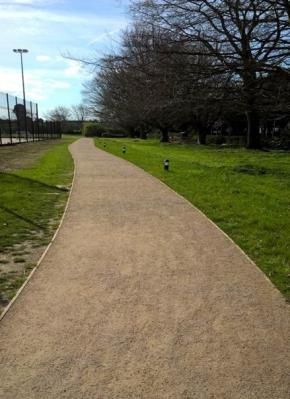
The University of Chichester

Foreword
I am delighted to introduce this update to the University of Chichester’s Sustainable
Travel Plan. Our first Travel Plan was implemented in 2011 and this and subsequent
plans have been the driver for change in the way our staff and students travel to and
from the University and between our campuses. Since the introduction of the first
plan, substantial changes have been made to the accessibility of our campuses by
low or zero carbon transport and the use of these travel modes has been actively
encouraged. Sustainable travel remains an integral part of all new campus
developments, including the building of our new Technology Park and more accurate
methods to measure transport movements have been implemented.

However, we wish to do more. We intend to continue to follow the travel hierarchy of
reducing the need to travel as a priority and if travel is a necessity, continue to
provide the means to encourage both our staff and students to pick the most
sustainable form of transport. We want to extend the remit of our Travel Plan to
include the supply of goods and services and ensure that the University is a “good
neighbour” by helping to reduce congestion on our local roads, whilst opening up our
facilities to the wider community.

The aim of this document is to provide an update of current modes of travel, our
activities carried out over the last three years to reduce the impact of our travel, the
drivers necessitating further change and the measures we intend to put in place to
effect this change.

Professor Seamus Higson

Deputy Vice-Chancellor (Sustainability and Enterprise)

                                                                                                2
The University of Chichester

Contents

Section Title                                                              Page
                                                                           No

        Foreword                                                               2

1.      Introduction                                                           4

2.      Initiatives implemented and progress against previous targets          6

3       Changes in travel patterns                                           10

4       New initiatives and targets                                          12

5       Monitoring and review                                                17

6       Transport impact of future building users                            19

7       Transport impact of the movement of goods and services               21

Appendices

1       Action Plan                                                          22

2       TRICS methodology and summary                                        30

3       Questionnaire response rates and questions                           31

4       Detailed analysis of questionnaire data                              33

5       Analysis of constraints and opportunities from focus groups          36
        and questionnaires

6       Future travel group                                                  47

                                                                                        3
The University of Chichester
1. Introduction
The University of Chichester is one of the oldest higher education institutions in the
UK. Established in 1839 it was granted University title in 2005 and is the only
University in West Sussex. Learning and teaching takes place on two campuses,
Bishop Otter campus (BOC) located approximately one mile from Chichester city
centre, and Bognor Regis campus (BRC) located half a mile from Bognor town centre.
Currently there are approximately 5,000 full and part time students and 860 full and
part time staff.
Since early 2011, the University has operated a Travel Plan, which forms part of the
University’s overall strategy to improve environmental performance. We strive to raise
aware across the University community and by sharing our knowledge and enthusing
today’s students they will become future leaders who aspire for a sustainable future.
During the past six years, a large number of initiatives have been put in place to reduce
the impact of University related travel. There is no doubt that unless we continue to
actively promote sustainable forms of travel increasing volumes of vehicle traffic will
lead to widespread congestion, local noise and air pollution and cause increased
levels of global greenhouse gas emissions. In addition, the University’s own
development programme, including the construction of the Engineering and Digital
Technology Park at the Bognor Regis campus has the potential to bring increased
traffic in this area. This new development will increase staff and student numbers at
the Bognor campus by approximately 1500 from 2020/21 onward. It is vital therefore
that all efforts are made to mitigate the impacts of these increased travel movements.
The University recognises the contribution it can make in reducing the impact of its
current and future operations and, by being a “good neighbour”, providing the means
and encouragement to staff, students and visitors to travel to, and between, its
campuses by the most sustainable manner possible. Previous Travel Plans have
focussed on staff and student commuting, visitor travel and business travel. The
scope of this Travel Plan has been extended to include the impact of the supply of
goods and services to the University and to take into account our planned
developments to enhance the student experience.
The aim of this updated Travel Plan, produced in conjunction with the Students’ Union,
is therefore to:
4The University of Chichester
“Encourage staff, students and visitors to travel to the University and on
University business by more sustainable means and reduce the impact of the
supply of goods and services, thus reducing the University’s carbon footprint
and impact on the local environment and community”.
The purpose of this document is to describe the strategy which will be put in place to
achieve this aim. It highlights improvements and changes in travel patterns achieved
since the introduction of the first Travel Plan, renewed impetus for change, objectives
and targets for continual advancement and initiatives designed to achieve this change.
This Travel Plan also includes a specific vehicle trip rate target for the Engineering
and Digital Technology Park, as a new development and actions and aims to achieve
this target.
This updated Travel Plan has been developed by a working party using an iterative
process. Existing documentation and performance data has been reviewed, best
practice within the sector has been identified, and staff and students consulted. Five
focus groups have been held concentrating on each mode of transport, with staff and
students specifically interested in the different travel types invited to attend. This
document has been reviewed by a number of committees, including the Green
Campus Group, Environmental Sustainability Group (ESG) and the Vice Chancellor’s
Group. It is supported by West Sussex County Council and takes into account current
and future development plans across both campuses.
5The University of Chichester
2. Initiatives implemented and progress against previous targets
Key Facts
A large number of initiatives have been successfully completed since the
implementation of the last Travel Plan.
Initiatives have focussed on all objectives of the Travel Plan.
Since the implementation of the previous Travel Plan, many initiatives have been
successfully completed encouraging sustainable travel. These are described in
Table 1.
Table 1 Initiatives implemented in the past three years to encourage sustainable travel
Objective Initiative
Reduce the Homeworking for staff has been extended, where appropriate, whilst
need to ensuring no detrimental effect on the University community.
travel where
New technology for remote meetings to negate travel needs has been
possible
introduced and publicised. Training and support has been provided.
Use of remote meetings has been incentivised through the University’s
environmental and wellbeing scheme.
Promote More lockers and showers have been provided and the availability of
and support these facilities publicised.
walking and
Cycling has been incentivised through the University’s environmental
cycling
and wellbeing scheme.
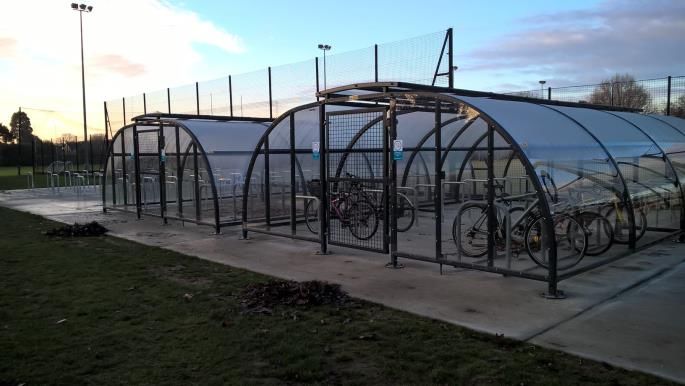
Approximately 80 more secure cycle storage spaces have been
provided.
Bike doctor clinics, bike marking and local and national cycling and
walking events have been supported.
A walking/cycle path has been constructed from the southern end of
College Lane to the Bishop Otter campus.
6The University of Chichester
Promote Information is now provided by our conference department to encourage
and support visitors hiring our facilities to travel to the University by public transport.
use of
Sustainable business travel has been incentivised through the
public
University’s environment and wellbeing scheme.
transport
Train transport routes and walking directions from the stations are now
available on our website.
Travel deals for students such as the Unirider are publicised on the SU
website.
Improvements have been made to the U7 timetable and route to facilitate
the needs of students in off campus accommodation.
Improvements have been made to the number of buses stopping on
campus.
Real time information on bus services has been introduced at both
campuses.
Promote Improvements have been made to the U7 intercampus bus service
and support timetable.
sustainable
An additional bus service (the Uniflyer) has been introduced, travelling
intercampus
direct between campuses.
travel
Use of the intercampus buses and organisation of meetings to enable
bus use have been incentivised through the University’s environment and
wellbeing scheme.
U7 and Uniflyer timetables have been combined and publicised.
The availability of cheaper pre-paid bus fares has been publicised.
Reduce The car share scheme has been further promoted.
reliance on
Publicity that car parking revenue is all used for sustainable travel
car usage,
initiatives has been provided.
particularly
single The use of car share spaces is regulated to prevent improper use.
occupancy
of vehicles
7The University of Chichester
A number of targets were set in the previous Travel Plan to be achieved before the
end of 2016. Progress against the targets as of the end of May 2017, is included in
Table 2. Most of the targets have been fully or partially achieved.
Table 2 Progress to 2013-2016 travel plan targets
Area Target set for the end of 2016 Target Comments
achieved
Remote Year on year increase in the Yes
meetings number of remote meetings held
from previous year.
Cycling 10% increase in number of staff No Data from the questionnaires suggest that
and students commuting by bike the proportion of staff cycling to work has
compared to the baseline in decreased by 2.3% and the proportion of
April 2013. students by 3.0%. However these figures
are not reflected by observations of the
cycle storage areas, which are generally
full, despite more now being available (see
Table 1).
45 staff/students attended bike Yes At least one bike doctor session has been
doctor sessions each year. held each year. University staff are now
holding their own bike maintenance
sessions.
5% increase in the number of Yes Seventeen members of staff bought a bike
staff joining the cycle to work through the scheme in 2013. In the last
scheme compared to the three years an average of 20 bikes have
number in 2013. been purchased through the scheme, an
increase of 17.6%.
Bike hire scheme in place for No This initiative was put on hold due to cost
Stockbridge and St constraints, but will be included in this
Christopher’s students. travel plan for Stockbridge students.
8The University of Chichester
Area Target achieved Comments
Target set for the end of
2016
Business System developed to Partially Requirements have been specified
travel record the carbon footprint for a new on-line expenses system .
of business travel and
reductions to subsequently
set targets met.
Commuter System developed to Partially A system has been developed and
travel record the carbon footprint refined through the questionnaire
of staff and student surveys. No reduction targets have
commuting developed and been set due to the difficulties
reductions to subsequently experienced in obtaining
set targets met. representative data.
Vehicle 15% reduction in vehicles Unknown Measurement of vehicles entering
movements arriving in the on and off the campus and off campus car
campus car parks during parks has shown to be an inaccurate
the morning. method of recording car usage, due
to the availability of on road car
parking in the vicinity of both
campuses.
Intercampus 15% increase in the Partially Average data from the two
bus usage average daily usage of the questionnaires in 2015 and 2016
intercampus bus suggests a modest increase of 2.4%.
compared to the baseline. This seems to contradict Uniflyer
utilisation figures which show a
larger increase compared to the
academic year 2014/15.
9The University of Chichester
3. Changes in travel patterns
Key Facts
TRICS SAM methodology has been used to determine the main modes of
transport used for commuting to and between campuses.
TRICS SAM data suggests most staff and students travel to University on foot.
Comparison of questionnaire data historically used to monitor travel behaviour
and TRICS data, has proven to be difficult.
Historically, the University has used on-line questionnaires to provide data on the
modes of transport utilised by both staff and students and the reasoning behind the
travel modes chosen. These questionnaires have also proved useful in helping to
identify the barriers preventing staff and students from choosing more sustainable
forms of transport. However, since the production of the first Travel Plan in 2010,
more reliable measures of transport analysis have been developed. Therefore, in order
to produce data for this Travel Plan, a TRICS SAM (Trip Rate Information Computer
System Standard Assessment Method for Travel Plans) survey was carried out at the
Bishop Otter campus (BOC) in October 2015 and at the Bognor Regis campus (BRC)
in February 2017.
Due to the change in methodology used, comparisons of modal split data obtained
recently with historical data cannot be made. However, this change equips the
University with a far more robust method of assessing the impact of travel initiatives
going forwards. Data obtained from the recent TRICS surveys at each campus will
be used as the baseline to monitor future progress to Travel Plan targets.
The TRICS surveys suggest that the main mode of transport to both campuses is
walking (Figure 1).
10The University of Chichester
Figure 1 Most staff and students commute to the University on foot
60
Staff and students (%)
50
40
30
20
10
0
Walking Cycling Bus Train Car share Car alone
BOC 56.8 2.9 7.2 0.6 12.0 20.4
BRC 44.6 5.4 11.0 0.7 17.6 20.7
This figure is greater for our Bishop Otter campus with 56.8% of staff and students
walking compared to 44.6% at our Bognor Regis campus. However, car sharing is
more prevalent at BRC, with 17.6% travelling by this mode compared to 12% at BOC.
Figures for staff and students travelling as single occupants in cars is similar for both
campuses (20.4% for BOC and 20.7% for BRC). Rail travel is also similar for both
campuses and surprisingly low at less than one percent of travellers. Although
recently there have been many comments from staff and students about the
uncertainty of rail travel due to the Southern Rail dispute, which may have affected
these figures.
The favoured public transport mode at both campuses is the bus, with 7.2 % of staff
and students at BOC using this method and 11.0% at BRC. Despite the installation
of additional facilities for cyclists at both campuses, such as more covered secure
cycle spaces and showers, only a low percentage of staff and students cycle to the
University (2.9% at BOC and 5.4% at BRC). This may be because staff are now
living further away from the University as shown by the questionnaire results (Figure
A1) and more students are choosing to live at home.
Summary of the TRICS surveys and information on the TRICS methodology used, is
included in Appendix 2.
11The University of Chichester
4. New initiatives and targets
Key Facts
Focus groups have been used to further identify the barriers to zero and low
carbon travel and generate new ideas.
The AUDE (Association of University Directors of Estates) Green Scorecard1
has been used as a basis for target setting enabling consistency with other
Higher Education Institutes (HEIs) approaches.
A vehicle trip rate target has been included for the Engineering and Digital
Technology Park with specific actions and aims to achieve this target.
Although some progress to the targets set in the previous Travel Plan has been
made, production of this Travel Plan has highlighted the difficulties in accurately
measuring travel behaviour. It has also underlined the need for a simpler approach
to target setting and the need to generate fresh ideas. In order to satisfy these
requirements, five focus groups involving different members of the University
community with varying travel needs and preferences and the current Travel Plan
steering group, have been carried out. These have been used to identify constraints
and opportunities for sustainable travel. Information from the on-line questionnaire
carried out in 2015, was used as the basis for the focus group discussions.
A summary of the opportunities identified is given in Table 3. Full analysis of the
constraints and opportunities from the focus groups and questionnaires can be found
in Appendix 5.
1
http://aude.ac.uk
12The University of Chichester
Table 3 Summary of opportunities identified
Objective Initiatives
Reduce the need to Continue to publicise and offer Skype to all departments.
travel where possible
Promote and support Publicise suggested safe routes for cycling and walking.
walking and cycling
Further improve on-campus facilities for cyclists.
Organise sustainable travel events.
Incentivise cycling to campus and on business.
Promote the health and cost benefits of cycling and walking.
Use developments at BRC to improve pedestrian and cycling
access.
Provide bicycle hire for students in off campus accommodation.
Promote and support Promote discounts available on rail travel.
the use of public
Consider joining Easit.
transport
Investigate usage of University bus tickets on other routes.
Ensure BRC developments include a turning circle for buses.
Add FAQ on public transport to the University and SU websites.
Consider reducing cost of bulk purchase bus tickets.
Continue to publicise public transport routes and timetables.
Promote and support Take opportunity to “rethink” bus provision when the U7 contract is
sustainable renewed in June 2019.
intercampus travel
Consider providing free bus travel between campuses.
Develop a new bus service model for door to door intercampus
travel including provision for disabled passengers.
Include WiFi on intercampus transport.
Install bus shelter for Uniflyer at BRC.
Investigate use of campus cards as payment for buses.
13The University of Chichester
Investigate using the room booking system to publicise the
organisation of meetings around bus times.
Consider removal of mileage claim allowance for intercampus
travel and reduce cost of bulk purchase of bus tickets.
Use pop up sustainable travel stand at experience days and
arrivals weekend.
Include intercampus transport information in sustainable travel
events.
Reduce reliance on Consider reducing parking charges for car sharers.
car usage,
Consider providing a surplus of car share spaces.
particularly single
occupancy of Consider implementing pricing system for car parking based on
vehicles engine size.
Consider increasing car parking charges at the same time as
reducing charges for more sustainable transport methods.
Consider changing parking charges and extending charging to 24
hours, 7 days a week.
Consider implementing a staff permit exclusion zone.
Introduce an application system for car parking permits.
Examine the feasibility of a park and ride scheme.
Consider providing monetary rewards for staff using sustainable
transport or extra holiday.
Install electric car charging points at each campus.
Consider use of electric pool cars.
Provide car parking spaces at the Technology Park in compliance
with WSCC parking standards.
In 2014/15, a number of HEIs decided to work with the Association of University
Directors of Estates (AUDE) to develop their own method for the measurement of
environmental performance. The University has adopted this system known as the
14The University of Chichester
AUDE Green Scorecard as the basis for target setting and performance monitoring of
all aspects of environmental performance, where feasible, in the future.
The main impact on the global and local environment and local community through
travel by our staff and students, is the use of sole occupancy vehicles. Implementation
of initiatives to increase travel by all sustainable modes will be required to reduce this
impact. Targets within the Green Scorecard related to travel adopted by the University
are provided in the Table 4.
As discussed previously, the University is currently constructing a Technology Park at
the Bognor Regis Campus. This development will enable the University to offer over
30 more undergraduate and post graduate degree courses increasing student
numbers by 1,500 and staff numbers by about 80 over three years from September
2018. In order to reduce the traffic impact of this development and comply with
WSCC’s Development Travel Plan Policy2, a target has been set to reduce the number
of vehicle trips generated over a 12 hour period (Weekday 7am to 7pm) by the site by
a minimum of 15%, five years after the building is occupied. A baseline travel
assessment for the site using TRICS data for similar operations, suggests that the
development will generate an additional 269 trips. Occupation of the new buildings
will be phased over three years from September 2018 to September 2020. The
University has therefore a target to reduce 12 hour vehicle trips to 229 by September
2024 (five years after the new development reaches 50% occupancy).
2
West Sussex County Council Development Travel Plan Policy
http://crawley.gov.uk/pub_livx/groups/operational/documents/plappother/int208867.pdf
15The University of Chichester
Table 4 New Travel Plan Targets 2017 to 2022
Objective InterimTarget Final Target
Increase in zero carbon travel 0.25% increase by the 0.5% increase by the end of
(cycling and walking) for staff. end of the 2018/2019 the 2021/2022 academic
academic year. year.
Increase in zero carbon 0.25% increase by the 0.5% increase by the end of
travel (cycling and walking) end of the 2018/2019 the 2021/2022 academic
for students. academic year. year.
Increase in zero and low 0.5% increase by the end 1.0% increase by the end of
carbon travel (cycling, walking of the 2018/19 academic the 2021/2022 academic
and public transport) for staff. year. year.
Increase in zero and low 0.5% increase by the end 1.0% increase by the end of
carbon travel (cycling, walking of the 2018/19 academic the 2021/2022 academic
and public transport) for year. year.
students.
Reduce 12 hour vehicle trips By September 2024
associated with the
Technology Park
development by 15%.
Reduction in fuel emissions By the end of the 2018/19
from University owned academic year.
vehicles.
Improvement in the By the end of the 2018/19
proportion of fleet that are academic year.
low or zero carbon.
These targets are also included in the University’s 2017 to 2022 Environment and
Sustainable Development Plan. An action plan to implement these initiatives with
timescales and responsible departments is provided in Appendix 1.
16The University of Chichester
5. Monitoring and Review
Key Facts
TRICS UK Standard Assessment Method for Travel Plans (SAM) appears to
be the best method for monitoring travel behaviour.
Questionnaires provide additional information on constraints to sustainable
travel and removal of these constraints.
TRICS surveys will be carried out biannually on both campuses.
Questionnaire surveys will be carried out annually on both campuses.
Progress to Travel Plan targets and completion of initiatives will be reviewed by
a Travel Plan group and reported to senior management through the
Environment and Sustainability Group (ESG).
Revision of this Travel Plan has highlighted the difficulties encountered in trying to
obtain representative data on travel patterns.
West Sussex County Council requires that Travel Plans be monitored in accordance
with the Trip Rate Information Computer System (TRICS) UK Standard Assessment
Method for Travel Plans (SAM). In the University’s experience, this appears to be the
most reliable form of travel measurement and so will be adopted as the main measure
against the targets. In order to monitor the worst case scenario for travel when most
students will be present on the campuses, TRICS SAM surveys will be carried out at
both campuses in April 2018, April 2020 and April 2022. This will provide data at the
end of the relative academic years, but avoids the student examination and departure
period in May. In order to determine the effect of Travel Plan initiatives on both parts
of the University community and tailor future plans, future TRICS surveys will
distinguish responses between students, staff and visitors.
In the interim periods, progress to target will be monitored by a review of the
completion of initiatives against the timescales in the action plan by the Travel Group.
Additionally, a travel survey in the form of a questionnaire, will be sent to all staff and
students annually to gauge whether progress is being made to remove constraints to
sustainable travel. Timing of the TRICS SAM surveys will enable measurement of the
17The University of Chichester
impact of the proposed developments at the Bognor Regis campus to be obtained
once a significant increase in staff and student numbers has been achieved. A further
TRICS SAM survey for the Technology Park will be carried out in April 2024 to monitor
achievement to the specific vehicle trip target, put in place for this development.
More robust methods for monitoring intercampus travel on the Uniflyer and on the bus
services provided through our bus provider, Stagecoach, will be implemented.
The Travel Group will meet at least every six months to monitor progress and
achievement of actions. The composition of the Travel Group includes individuals with
responsibility for the Technology Park development ensuring focus on this area
(Appendix 6). Regular reports will be made to the Environmental Sustainability Group.
An annual review of the plan, undertaken by the Travel Group, will ensure that the plan
remains robust in terms of both future planned capital developments and growth in
student numbers.
18The University of Chichester
6. Transport Impact of future building users
Key Facts
Measures to encourage sustainable travel have been incorporated in all
campus developments.
All new builds on campus are specified to the BREEAM excellent standard and
refurbishments to the BREEAM very good standard.
Sustainable travel is a major consideration in the development of the new
Technology Park.
Over the past few years the University has invested heavily in campus developments
to enhance the student experience and provide more opportunities for students.
Recent major developments include the construction of a new sports building (Tudor
Hale Centre for Sport), the Sports Dome, an extension to the Music Building and a
new Academic Building. Although these developments have not necessarily led to an
expansion in staff and student numbers, every opportunity has been taken to ensure
that their construction aligns with, or enhances the University’s objective to encourage
sustainable travel by staff, students and visitors. For example, extra shower and
locker facilities for walkers and cyclists were included in the Tudor Hale development.
A new footpath/cycle path leading into the Bishop Otter campus, additional enclosed
cycle storage, enhancement to the entrance to the Bishop Otter campus allowing
buses easier access, with a covered bus stop and real-time bus information display,
have all been included in recent campus developments.
The major development of the Engineering and Digital Technology Park on the Bognor
Regis campus, planned for completion in September 2018, will support a year-on-year
increase in student numbers to a maximum of 1500 additional students by 2021/22.
Staff numbers will also increase by 80 new members of staff by 2021/22. This new
development, which is being built to the BREEAM ‘Excellent’ standard, will enable the
University to offer over 30 more undergraduate courses in Science, Technology,
Engineering and Maths (STEM) subjects.
19The University of Chichester
The University appreciates that the construction and subsequent use of the
Technology Park will increase transport movements in the local area and has
incorporated measures in its design to encourage sustainable travel. A number of
these have already been discussed as they form an integral part of this Travel Plan.
For instance, the campus will be linked to the cycle route on the public highway. A
new vehicular access enabling local buses, as well as the University’s intercampus
bus service, to pick up and drop off at a designated bus stop within the campus will be
constructed and limited car parking that meets West Sussex County Council parking
standards will be installed.
Initiatives to encourage sustainable travel to the current facilities will be extended to
include the Technology Park during its commissioning and use. The overall targets
set for this Travel Plan will include the additional travel movements created by this
development. A vehicle trip rate target has been included explicitly to mitigate the
impact of the development. Specific actions are included in the action plan (Appendix
1) and monitoring processes have been further developed to incorporate the extra
requirements of the new development.
20The University of Chichester
7. Transport Impact of the movement of goods and services
Key Facts
The transport impact of the movement provision of goods and services is
included in the travel plan for the first time
Baseline data will continue to be obtained from TRICS surveys.
Reduction targets will be set at the end of the 2020/21 academic year.
The measurement of transport related to the provision of goods and surveys is
included in the TRICS SAM data (Table 5). Vehicular movements in relation to this
aspect of the University’s business are small compared to journeys undertaken
through commuting. Currently, limited emphasis is placed on this impact. However,
with the expansion of the University both in terms of the number of staff, students and
subjects offered, this aspect will become more significant. As the University moves to
take a more holistic approach to sustainability, procurement has been identified as an
area for attention. The transportation of goods and services will become part of this
focus. Data will continue to be obtained for both campuses through the TRICS surveys
and targets for improvement will be set at the end of the 2020/21 academic year.
Table 5 TRICS SAM data for vehicular movements associated with the provision of goods and
services
Vehicle type Bognor Regis Campus Bishop Otter Campus
% of all Number % of all Number
vehicles vehicles
Light goods 5 28 4 66
OGV (1) 2 8 1 15
OGV (2) 0 0 0 5
21Appendix 1 Action Plan
Objective Target Constraint Action Responsibility Timescale
Reduce the None Staff not using Continue to publicise use of Skype and offer training. IT Services Ongoing
need to available technology
travel where to negate the need Remove the additional costs to departments of using Skype. IT Services September 2018
possible to travel between
campuses.
Promote Increase in Roads are too Install a sustainability tab from the home page of the University Marketing, December 2017
and support zero carbon dangerous for website to ensure all sustainable travel information is easily Communications
walking and travel walking and cycling. accessible to staff, student and visitors. and Access
cycling (cycling and (MCA)
walking) for Include information from the sustainability tab on how to access the HSE December 2017
staff and campuses by walking and cycling including journey times and a cost
students by comparison with car parking, using journey planners such as
0.25% by the travelwestsussex.co.uk.
end of the
2018/2019 Publicise recommended routes for cycling and walking from main HSE September 2018
academic student accommodation areas in accommodation blocks.
year and by Organise sustainable travel events in October and April including the HSE October 2018
0.5% by the Bike Doctor and information on cycling and walking routes and onwards
end of the facilities.
2020/21 Use developments at BRC to improve pedestrian access and cycle Estate September 2018
academic routes. Management
year.
Students do not Provide cycle hire for students in Stockbridge, possibly using second Estate September 2019
bring bikes to hand bikes repaired by Stonepillow. Management
University
Sell second hand bikes on campus to individuals or use for loan Estate September 2019
scheme. Management
Promote bike facilities available in off campus student houses on HSE September 2019
student pad.
22The University of Chichester
Objective Target Constraint Action Responsibility Timescale
Promote Increase in The provision of a few large Investigate whether smaller storage areas for bikes such as Estate September
and zero carbon cycle storage areas means hoops may be more suitable enabling storage of bikes closer Management 2018
support travel staff and students have to to place of study, work, Halls of Residence and areas of
walking (cycling and leave their bikes some campuses used by visitors.
and walking) for distance from study areas and
cycling staff and offices. This does not
(continued) students by encourage a culture of cycling
0.25% by and reduces the accessibility
the end of of bike storage for visitors.
the Bike storage is deemed Install CCTV in bike storage areas Estate September
2018/2019 insecure. Management 2019
academic Weather makes cycling and Provide hanging lockers to enable the drying and secure Estate September
year and by walking impractical. storage of clothes. Management 2019
0.5% by the Staff and students are not Initiate a bike club where knowledgeable University members HSE September
end of the confident cycling and lack could provide information and advice on bike maintenance 2018
2020/21 bicycle maintenance and repair and recommended cycle routes.
academic knowledge.
year. A culture of cycling and Create an active travel logger to enable the incentivsation of HSE September
walking is not evident on the walking. 2019
campuses. Implement a cycle and walking reward scheme such as free HSE September
fruit or coffee. 2019
Provide maintenance equipment such as pumps and SU September
puncture repair kits on campus. 2018
Provide information on bike shops offering discounts on HSE September
bikes, servicing and accessories. 2018
Promote the health and cost benefits of cycling and walking HSE September
on posters in car parks. 2019
Investigate the provision of facilities for one way cycling Estate September
between campuses. Management 2020
Ensure developments at BRC include an extra 52 secure Estate September
cycle spaces and publicise availability. Management 2018
23The University of Chichester
Objective Target Constraint Action Responsibility Timescale
Promote Increase in Staff, students and visitors are Install a sustainability tab from the home page of the MCA December 2017
and zero and low not aware of public transport University website
support carbon links to the campuses. Include information from the sustainability tab on how to HSE December 2017
use of travel access the campuses by public transport, including journey
public (walking, times and a cost comparison with car parking.
transport cycling and Publicise U7 request stops and stops close to Stockbridge. HSE September
public 2018
transport) for Hold sustainable travel events in October and April and HSE October 2018
staff and include public transport information. onwards
students by
0.5% by the Publicise public transport routes and timetables in off campus HSE September
end of the student accommodation. 2018 onwards
2018/19 Add FAQ on public transport to the University and SU HSE September
academic websites. 2018
year and by Public transport is too Promote discounts available on rail travel such as Unizone HSE September
1.0% by the expensive. tickets and Young Person’s railcard. 2018
end of the Investigate usage of University bus tickets on other routes. Estate September
2020/21 Management 2020
academic Consider reducing cost of bulk purchase bus tickets. Estate September
year. Management 2019
Investigate use of electronic payment or campus cards on Estate September
buses. Management 2021
Consider joining Easit to enable further discounted rail travel Estate September
for staff and students. Management/HSE 2019
Consider the impact and feasibility of interest free loan Finance September
facilities to enable staff to buy season tickets 2019
Safety concerns. Ensure BRC developments include a turning circle for buses. Estate September
Management 2018
Public transport timings Take opportunity to “rethink” bus provision when the U7 Estate June 2019
inconvenient. contract is renewed in June 2019. Management
Analyse postcode information from staff and students and Estate September
determine whether transport links can be improved. Management 2018
24The University of Chichester
Objective Target Constraint Action Responsibility Timescale
Promote Increase in Lack of awareness of Install a sustainability tab from the home page of the Marketing, December 2017
and support zero and low intercampus travel options. University website Communications
sustainable carbon and Access
intercampus travel Include information on intercampus and business travel from HSE December 2017
and (walking, the sustainability tab.
business cycling and
travel public Include intercampus transport information in sustainable HSE October 2018
transport) for travel events in October and April. onwards
staff and
students by Intercampus travel is too Consider reducing cost of bulk purchase bus tickets or Estate September
0.5% by the expensive. providing free bus travel between campuses. Management 2019
end of the Investigate use of electronic payment or campus cards on Estate September
2018/19 buses. Management 2021
academic Consider removal of mileage claim allowance for Finance and September
year and by intercampus travel. Planning 2020
1.0% by the
end of the Car usage is more convenient. Ensure a common approach to business travel across all HSE/Estate September
2020/21 departments. Most departments purchase bus tickets for Management 2018
academic the department negating the need for individuals to claim
year. back the cost of the ticket.
Investigate use of electronic payment or campus cards as Estate September
payment for buses. Management 2021
Include WiFi on intercampus transport Estate September
Management 2021
Develop a new bus service model for door to door Estate September
intercampus travel including provision for disabled Management 2021
passengers.
Install bus shelter for Uniflyer at BRC Estate September
Management 2020
25The University of Chichester
Objective Target Constraint Action Responsibility Timescale
Promote Increase in Bus times are Investigate the use of the room booking system to publicise the organisation of IT Services September
and support zero and low not meetings around bus times. 2019
sustainable carbon convenient.
intercampus travel
and (walking,
business cycling and
travel public
(continued) transport)
for staff and
Reduce students by Car is the Examine the feasibility of using staff and student cards to pay for car parking. Estate September
reliance on 0.5% by the cheapest This could facilitate changes to payment charges such as reducing parking Management 2020
car usage, end of the option. charges for car sharers.
particularly 2018/19 Consider implementing pricing system for car parking based on carbon dioxide Estate September
single academic emissions of cars. Management 2019
occupancy year and by
of vehicles 1.0% by the Consider increasing car parking charges at the same time as reducing charges Estate September
end of the for more sustainable transport methods such as buses or trains. Management 2019
2020/21 Facilitate residents parking scheme near BRC, if desired by local residents Estate September
academic Management 2020
year. Consider changing parking charges and extending charging to 24 hours, 7 Estate September
days a week. This would mean car park users would pay for the time they are Management 2019
using and generate extra revenue for other initiatives. Provision of overnight and SU
permits would be required for those attending events with alcohol.
Ensure Technology Park development complies with WSCC maximum Estate September
standards for car parking for further education. Management 2018
Consider implementing a staff permit exclusion zone taking into account areas Estate September
with more developed public transport links. Management 2020
Consider providing monetary rewards for staff using sustainable transport or Finance and September
vouchers to spend on campus. Other organisations pay £2 a day or more as HR 2020
incentives for not travelling by car as a single occupant.
26The University of Chichester
Objective Target Constraint Action Responsibility Timescale
Reduce Increase in No convenient Subject to funding, examine the feasibility of a park and ride scheme ideally Estate September
reliance on zero and low public located between the two campuses. Management 2021
car usage, carbon transport is Examine the feasibility of a park and stride scheme HSE September
particularly travel available and it 2019
single (walking, is too far to Consider providing a surplus of car share spaces in the car park to encourage Estate September
occupancy cycling and walk or cycle. more to car share. Management 2019
of vehicles public Install electric car charging points at each campus. Estate September
(continued) transport) Management 2019
for staff and Need to use Consider the provision of electric pool cars. Estate September
students by own car for Management 2019
0.5% by the University
end of the business.
2018/19 Lack of Install a sustainability tab from the home page of the University website. MCA December 2017
academic awareness of
year and by alternative Include information from sustainability tab on the car share scheme with a link HSE December 2017
1.0% by the travel options. to the leaflet explaining how it works.
end of the
2020/21 Introduce an application system for car parking permits. This could be used to Estate September
academic promote alternative methods of travel. Management 2019
year. Promote national awareness events such as Bike Week, Travelwise Week, Car HSE From
Free Day and Liftshare week. September
2017
Include “no cars” clause in contract for students in Technology Park halls of Estate September
residence and provide information on alternative travel options. Management 2019/20
27The University of Chichester
Objective Target Constraint Action Responsibility Timescale
Reduce the To be set at Transport impact Include transport of goods and services in sustainability assessment HSE September
impact of the end of the of goods and being rolled out through the procurement working group. 2021
the 2020/21 services is not Provide training and communicate sustainability assessment to key HSE September
transport of academic currently included members of staff. 2021
goods and year. in all University
services procurement
policies or
strategies.
Suppliers are not Engage with “main” suppliers and set targets for impact reduction. Finance September
aware of need to 2021
consider transport
factors.
Potential impact Measure impact of actions taken by TRICS SAM assessment HSE April 2022
unknown
Reduce the Reduction in Economic and Monitor efficiency and effectiveness of the electric vehicle purchased Estate Management From delivery
impact of fuel emissions technical for the cleaning team.
the from University feasibility Consider an electric or low carbon vehicle to replace the Estate Estate At end of lease
University’s owned unknown. Management vehicle. Management/Financ
own vehicles by the e
vehicles end of the
Consider converting the transit vans to LPG. Estate December
2018/19
Management/Financ 2018
academic
e
year.
Consider replacing the safety buses/Uniflyer with hybrid or low/zero Estate December
Improvement carbon vehicles. Management/Financ 2018 or when
in the e/SU replacement
proportion of required.
fleet that are Consider replacing the mini buses used by Adventure Education with Adventure December
low or zero hybrid vehicles. Consider using these as additional safety buses. Education/Finance 2019 or when
carbon by the replacement
end of the required.
2018/19
academic
year.
28The University of Chichester
Objective Target Constraint Action Responsibility Timescale
Ensure travel All targets Travel plan fails Hold six monthly meetings of the travel plan steering group to review HSE Every six
plan meets its and target to to reduce the progress against objectives. months from
objectives and reduce the number of single October 2017
remains 12 hour trip occupancy Carry out an annual review of the plan to ensure it remains robust in HSE and October 2018,
applicable to rate by 15% vehicles on terms of both future planned capital developments and growth in steering group October 2019,
the University for the campus and the student numbers and review progress against targets. October 2020,
and supports Technology impact of our own October 2021
current and Park vehicles. and October
future development. 2022.
development Carry out annual on-line survey by questionnaire to all staff and HSE November 2017,
plans students to monitor changes in travel behaviour and constraints to November 2018,
sustainable travel. November 2019,
November 2020,
November 2021
and November
2022.
Carry out TRICS SAM assessments of travel patterns at both Estate April 2018, April
campuses. Management 2020, April 2022
and April 2024.
29Appendix 2 TRICS survey summary and methodology
TRICS is the industry standard method of assessing how much traffic is associated
with a site. It can be used for existing developments, or to predict the transport
impact of future developments. The TRICS database contains data from surveys
made of existing developments, which show in a standard format, for each hour of
the day, how many people were recorded arriving and leaving on foot, by bike and
by public transport. The number of vehicles, including goods vehicles entering a
development are also recorded. TRICS was founded and is owned by six County
Councils in the south of England, collectively the TRICS Consortium.
A summary of the information obtained from the TRICS surveys at both campuses is
given below.
Campus Date of survey No of people Total number
movements recorded of vehicles
recorded
Bishop Otter Tuesday 22nd October 2015 6131 1558
Bognor Regis Wednesday 2nd February 2017 1903 532
30The University of Chichester
Appendix 3 Questionnaire response rates and questions
Year 2010 2012 2015 2016
Number of student respondents 412 285 409 224
Number of staff respondents 279 146 353 273
Total 691 431 762 497
% % % %
Full time student response rate 8.3 5.7 8.0 4.2
Part time student response rate 4.6 7.5 5.8 4.5
Full time staff response rate 54.9 26.1 46.2 36.1
Part time staff response rate 8.1 17.0 12.9
(including (including (including
12.4
associate associate associate
lecturers) lecturers) lecturers)
Questions asked in the questionnaires in 2015 and 2016
1. Are you a student or a member of staff (if both please state the one you
travel for the most)?
2. What is your term-time postcode?
3. Are you full-time or part-time?
4. What gender are you?
5. What age are you?
6. Please select your main campus base:
7. Would you like to be included in the prize draw for a £10 voucher to be
spent in the Green Rewards shop?
8. How many days per week on average do you travel to/from the University?
9. What time do you usually arrive at the University?
10. What is the approximate distance you travel to the University?
11. What is your primary (main) mode of transport to and from the
University?
12. Approximately how long does it take you to travel to the University?
13. What is your secondary (other) mode of transport to/from the
University (if not applicable please select n/a)?
14. If you have a secondary mode of transport, what percentage of your
journeys are using this?
15. Aside from any already selected, what other methods of transport
could you feasibly use to travel to/from the University?
16. If you could, but currently do not walk to the University, please could
you tell us why this is the case. If it is not possible for you to walk to the
University, or you already do walk, please select not applicable.
17. If you could, but do not currently cycle to the University, please could
you tell us why this is the case. If it is not possible for you to cycle to the
University, or you already do cycle, please select not applicable.
18. If you normally travel to the University by car, what are your main
reasons for doing so?
31The University of Chichester
19. If you usually travel to the University by car, please could you tell us
the fuel type your car uses and the engine size? This information will help
us to calculate the overall carbon emissions from staff and students
travelling to the University.
20. Do you travel between campuses for any reason?
21. If yes, what reason(s) do you have to travel between campuses?
22. What method of transport do you usually use for intercampus travel?
23. If you use a car for intercampus travel, what are your reasons for not
using the U7 Intercampus Bus?
24. Have you changed your primary (main) method of travel to the
University since December 2012 or 2015
25. Have you changed your secondary (other) method of travel to
University since December 2012 or 2015?
26. Have you changed the way you travel between the campuses since
December 2012 or 2015.
27. What do you think of our walking facilities?
28. What would you like us to do to improve your walking experience?
29. What do you think of our cycle facilities and activities?
30. What would you like us to do to improve your cycle experience?
31. Would you be interested in cycling lessons for adults?
32. What do you think of our bus provision?
33. What could we do to improve bus facilities for you?
34. What do you think about our car parking facilities?
35. What do you think we could do to improve the car parking facilities?
36. Please select any of the following options that you would like more
information about:
32The University of Chichester
Appendix 4 Detailed analysis of questionnaire data
Questionnaire data has been used to compare staff and student travel patterns to
campus and between the campuses since 2010. Although the validity of this data
has been called into question by the recent TRICS assessment, analysis of potential
trends is still deemed to be pertinent.
Distance travelled to the University
Questionnaire results suggest that staff and students are now residing further away
from the University than in 2012 (Figure A1 and A2).
Figure A1 Over 30% of staff travel over 15 miles to the University
40
35
30
25
Staff (%)
2010
20
2012
15
2015
10
2016
5
0The University of Chichester
In 2012, approximately half of all staff and students responding to the questionnaire
resided within 5 miles of the University. In 2015 and 2016 this figure had decreased
to 34% and 35% respectively. The number of respondents travelling over 10 miles
has correspondingly increased from 29% to 43% in 2015 and 2016. This may be due
to high houses prices in the Chichester area forcing staff to commute from further
afield and the growing trend of students living at home whilst completing their studies.
Intercampus Travel
Travel between the two campuses is mostly carried out by staff to attend meetings
(Table A2 and Figure A5).
Table A2 Intercampus travel is mostly by staff
Questionnaire date Staff travelling between Students travelling between
campuses (% of total) campuses (% of total)
2015 66 34
2016 72 28
Figure A5 The majority of intercampus travel is by staff to attend meetings
180
160
Number of respondents
140
120
100
80 Student
60 Staff
40
20
0
Attend a Use the Teach Attend a Other
lecture facilities meeting
In 2015, more students were reportedly travelling between campuses than in 2012
(34% of the total intercampus travel compared to 27%). However, this figure had
34The University of Chichester
dropped back to 28% by 2016. The trend for student intercampus travel is expected
to continue as more academic courses are developed requiring use of facilities on both
campuses.
The most popular modes of intercampus transport are car as a sole occupant or the
University subsidised buses (Uniflyer or U7) (Figure A6). This situation has not
changed substantially since 2012, although the introduction of the Uniflyer in
September 2013 appears to have increased University subsidised bus usage.
Figure A6 Bus and car remain the most popular mode of intercampus transport
50.00
45.00
40.00
respondents (%)
35.00
30.00
25.00
20.00
15.00
10.00
5.00
0.00
Car -
Car - sole Car - as a Motorcycl Uniflyer
Bicycle Train Public bus taking a Taxi
occupant passenger e and/or U7
passenger
2012 0.55 3.83 1.64 37.70 9.84 7.10 1.64 0.55 37.16
2015 0.30 0.60 0.60 38.39 8.04 6.85 1.19 0.30 43.75
2016 0.42 2.10 0.00 44.96 11.34 4.62 0.42 0.84 35.29
Preferred modes of transport for the two parts of the University community have also
not changed since 2012. Most students still use the intercampus bus to travel between
campuses, whereas members of staff tend to use their own cars and generally travel
alone, as shown by data obtained in 2016 (Figure A7).
Figure A7 Students use the intercampus bus, staff travel by car alone
60
Respondents (%)
50
40
30
20
10
0
Axis Title
Students Staff
35The University of Chichester
Appendix 5 Analysis of constraints and opportunities from the
questionnaires and focus groups
Data from the questionnaire surveys carried out in November/December 2015,
November/December 2016 and the five focus groups completed in February and
March 2016, have been used to identify the current barriers to sustainable travel and
identify opportunities to remove these constraints. Where feasible, these have been
compared with data from previous years.
Cycling
The rating of cycling facilities at both campuses was found from the questionnaire to
be fairly similar (Figure A8), with most respondents rating them as satisfactory or
good.
Figure A8 Most staff and students rate campus cycling facilities as satisfactory or good
50
Respondents (%)
40
30
20 BOC
10 BRC
0
Satisfaction levels of BRC facilities remain similar to those obtained in 2012, whereas
a decrease is apparent at BOC. In 2012, 7% of respondents rated the facilities as
poor compared to 20% in 2015. This change may be related to the building works
currently being carried out on BOC, necessitating the removal of some cycle storage
areas.
Current plans on both campuses are to provide large secure areas for bike storage.
However smaller areas for bikes such as hoops may be more suitable enabling the
storage of bikes closer to place of study or work. The presence of bikes around the
campuses may also prompt others to cycle. Hoops outside the LRCs could be used
by visitors and hoops outside halls of residence may encourage more students to
36The University of Chichester
bring their bikes to campus. One of the current constraints identified by visitors to
both campuses is the lack of easily accessible bike storage.
Provision of other facilities such as a free air pump and the availability of puncture
repair kits for purchase may also remove barriers to cycling.
The greatest constraints to cycle use identified from the questionnaires are road
safety and the lack of cycle routes onto the campuses (Figure A9). The cycle focus
group identified that although this problem could not be resolved by the University
alone, knowledgeable cyclists are aware of “safe” cycle routes which could be
promoted via the website, in Freshers’ information and in off campus halls of
residence. In addition, cycle route websites could be used to create the University’s
own cycle routes. A dual purpose cycling and walking route from the southern end
of College Lane was constructed in 2017. The proposed technology park
development at BRC will include designated cycle routes through the campus.
The lack of areas for drying and storing wet clothes is a known barrier to cycling and
walking, which will be revisited in this travel plan. Capacity in the current building
stock to provide such areas is limited, but could potentialy be included in future
developments.
Figure A9 Road safety and lack of cycle routes are the greatest barriers to cycling
140
120
Number of respondents
100
80
60
40
20
0
Roads are Cycle There are Bike hire is I have There is not There are There is not There is not
too routes are no facilities not security enough not enough enough enough
dangerous insuffficient to dry or available concerns storage showers locker information
leave wet about space for are campus provision on bike
clothes leaving my bikes on campus facilities on
bike on campus
campus
37You can also read


