SYDNEY FOOTBALL STADIUM REDEVELOPMENT - Construction Air Quality Management Sub Plan Environmental Management Plan
←
→
Page content transcription
If your browser does not render page correctly, please read the page content below
SYDNEY FOOTBALL STADIUM REDEVELOPMENT
Construction Air Quality Management Sub Plan
Environmental Management Plan

SFS-JHG-00-PLN-PM060004
SSD-9835
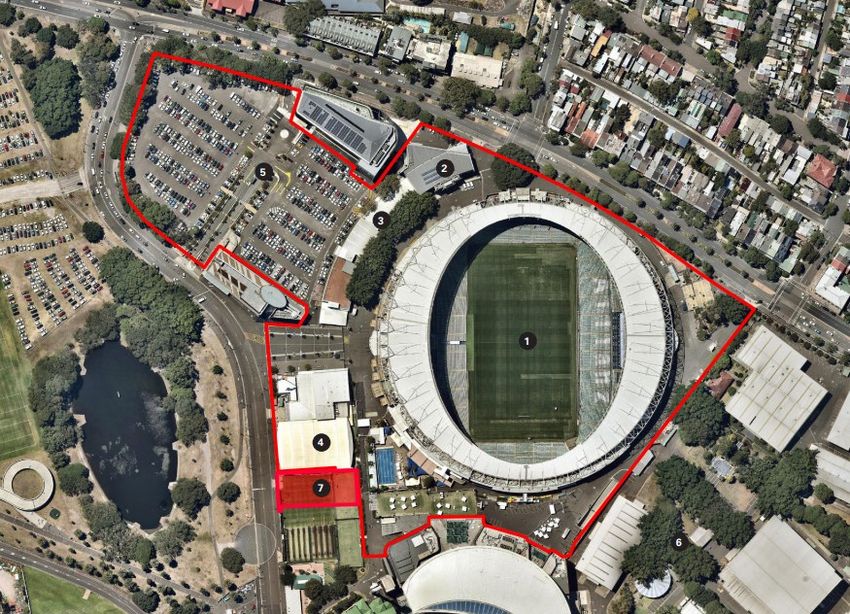
Table of Contents
Table of Contents ........................................................................................................... 2
1      Revisions and Distribution ..................................................................................... 3
    1.1        Revisions ...................................................................................................................... 3
    1.2        Distribution List ............................................................................................................. 3
    1.3        Compliance Matrix ........................................................................................................ 4
2      Definitions ................................................................................................................ 5
3      Scope of the Air Quality Management Plan........................................................... 6
    3.1        Objectives ................................................................................................................... 10
    3.2        Project Location .......................................................................................................... 10
4      Performance........................................................................................................... 12
    4.1        Project general context ............................................................................................... 12
    4.2        Targets ....................................................................................................................... 12
5      Legislation and Guidance Documentation .......................................................... 13
    5.1        Federal Legislation and Guidelines ............................................................................. 13
    5.2        State legislation........................................................................................................... 13
    5.3        Standards / Codes ...................................................................................................... 13
    5.4        Supporting Documentation .......................................................................................... 13
6      Dust and Air Quality Management Action Planning ........................................... 14
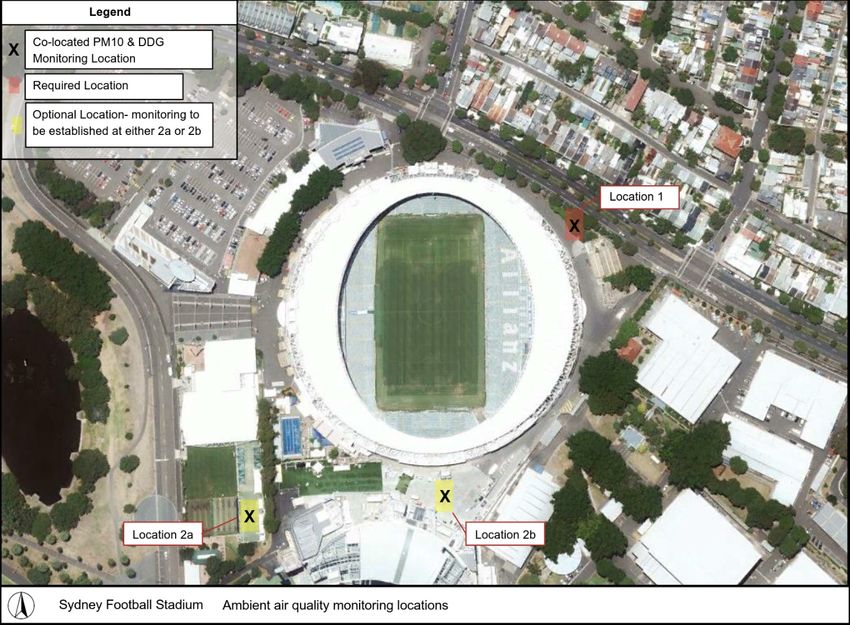
7      Monitoring .............................................................................................................. 18
8      Reporting................................................................................................................ 20
9      Corrective Action Plan .......................................................................................... 21
    9.1        Reactive Management Trigger Levels (PM10) ............................................................ 22
Appendix A – Air Quality Monitoring Locations ........................................................ 23

Revision No: D                        Document Number: SFS-JHG-00-PLN-PM060004

Issue Date: 13/01/2021                                                                                                              Page 2 of 23

When printed this document is an uncontrolled version and must be checked against the IMS electronic version for validity
1 Revisions and Distribution
1.1 Revisions
Draft issues of this document are identified as Revision 1, 2, 3 etc. Upon initial issue (generally Contract
Award) this will be changed to an alphabetical revision. Revisions will continue at Revision A, B, C etc.
Prepared By Reviewed By
Rev Date [Name & Approved By Remarks
[Name & Signature]
Signature]
1 10/01/2020 G Murray C Funnell
2 23/01/202 G Murray / H H Madden
Madden
A 31/01/2020 M. Turner S. Maclaren Issue for Construction
B 4/5/2020 C. Newling S. Maclaren Updated as per comments from
Site Auditor (Old Doc No.: SFS-
JHG-PLN-CEMP-005)
C 11/11/2020 H. Hofland C. Newling Update in response to audit and
incident
D 13/01/2021 S. Maclaren M. Chapple S. Maclaren
Incorporate Stadium Fitness
Facilities (SSD 9835 Modification
No.2 and GMR References
Copy Holder Details
Copy
Name Position
Number
Steve Maclaren HSEQ Manager 1
1.2 Distribution List
Client’s Representative Via Aconex
Project Manager Via Aconex
Project Site Manager Via Aconex
HSEQ Manager Via Aconex
Project Environment Via Aconex
Representative
The controlled master version of this document is available for distribution as appropriate and maintained
on the document management system being used on the Project. All circulated hard copies of this
document are deemed to be uncontrolled.
Revision No: D Document Number: SFS-JHG-00-PLN-PM060004
Issue Date: 13/01/2021 Page 3 of 23
When printed this document is an uncontrolled version and must be checked against the IMS electronic version for validity1.3 Compliance Matrix
Construction Environmental Management Plan requirements Reference
B26 The Air Quality Management Plan (AQMP) must address, but not be limited to the following:
a Be prepared by a suitably qualified expert; This Plan
b Describe the measures that would be implemented on site to ensure: Section 6
(i) The control of air quality and odour impacts of the Development during bulk earthworks
and piling activities;
(ii) That these controls remain effective over time;
(iii) That all reasonable and feasible air quality management practice and measures are
employed, including the relevant measures listed in Section 6 of the Air Quality Impact
Assessment (report 18274-S2 Version A) prepared by Wilkinson Murray dated May
2019;
(iv) That the mitigation and management measures are consistent with Guidance on the
assessment of dust from demolition and construction (IAQM, 2014);
(v) The air quality impacts are minimised during adverse meteorological conditions or
extraordinary events such as bushfires, prescribed burning, dust storms, sea fog, fire
incidents or any other activity agreed by the Planning Secretary; and
(vi) Compliance with the relevant conditions of this consent.
c Include performance objectives for monitoring dust and ensuring no unacceptable off-site air Section 7
quality impacts to users of Moore Park, nearby residences, Kira Child Care centre, UTS and and Section
other businesses. 9.1
d Includes an air quality monitoring program in accordance with Section 6.2 of the Air Quality Section 7
Impact Assessment (report 18274-S2 Version A) prepared by Wilkinson Murray dated May
2019 that:
(i) Is capable of evaluating the performance of the construction works;
(ii) Includes a protocol for determining any exceedances of the relevant conditions of
consent and responding to complaints;
(iii) Adequately supports the air quality performance objectives; and
(iv) Evaluates and reports on the effectiveness of air quality management for the
construction works
e Details on monitoring weather conditions and communicating changing conditions to the Section 7
workforce; and
f Stop work procedures if performance in B25(c) are not being met. Section 9
and 9.1
C24 Dust Minimisation This Plan
During construction works, the Applicant must ensure that: and Section
(a) Dust minimisation measures identified in the CEMP are implemented at all times; 6
(b) All construction waste and stockpiles are always covered;
(c) Exposed surfaces and stockpiles are suppressed by appropriate methods;
(d) All trucks entering and leaving the site with loads have their loads secured and covered;
(e) Trucks associated with the development do not track dirt onto the public road network;
(f) Public road used by Project related trucks are kept clean; and
(g) Hydraulic shears are used instead of rock breakers, where feasible.
C25 Air Quality Discharges Section 4.2
The Applicant must install and operate equipment in line with best practices to ensure that and Section
the construction works comply with all load limits, air quality criteria / air emission limits and 9.1
air quality monitoring requirements as specified in the CAQMSP required by Condition B26.
C26 Air Quality Discharges Section 7
Dust deposition monitoring must be undertaken during the construction works (as per
AS/NZS 3580). This would include monitoring points in appropriate locations on the site
boundary in Paddington and Moore Park. Monitoring locations must include sensitive
receivers that are most likely to be affected. The locations and frequency of the monitoring
are to be agreed in consultation with the EPA and detailed within the CAQMSP.
Revision No: D Document Number: SFS-JHG-00-PLN-PM060004
Issue Date: 13/01/2021 Page 4 of 23
When printed this document is an uncontrolled version and must be checked against the IMS electronic version for validity2 Definitions AMS – Activity Method Statement CA/Client – Contract Administrator/Client ECP – Environmental Control Plan EMP – Environmental Management Plan EPA – Environment Protection Authority Fm – Foreman / Supervisor JH – John Holland JHET – John Holland Event Tracker OEH – Office of Environment and Heritage OH – Occupational Hygienist PER – Project Environmental Representative PM – Project Manager SEP – Site Environmental Plan SFS – Sydney Football Stadium (the Project) SM – Site Manager / Superintendent TRA – Task Risk Assessment WRA – Workplace Risk Assessment Revision No: D Document Number: SFS-JHG-00-PLN-PM060004 Issue Date: 13/01/2021 Page 5 of 23 When printed this document is an uncontrolled version and must be checked against the IMS electronic version for validity
3 Scope of the Air Quality Management Plan
  EMS reference
  Environment Management Manual JH-MAN-ENV-001

The Sydney Football Stadium Redevelopment Stage 2 and the Stadium Fitness Facility (SFF) projects (in this document
both are jointly referred to as the Project) are an Infrastructure NSW initiative to build a new rectangular stadium. The
Project is part of the SCSGT Precinct, adjacent to the SCSGT and part of the wider Moore Park sports and entertainment
precinct,

The Sydney Football Stadium Redevelopment Stage 2 works include Detailed design, construction and operation of a
new stadium comprising:

• construction of the stadium, including:
    •      45,000 seats (additional 10,000 - person capacity in the playing field in concert mode) in four tiers
           including general admission areas, members seating and corporate I premium seating;
    •      roof cover over all permanent seats and a rectangular playing pitch;
    •      a mezzanine level with staff and operational areas;
    •      internal pedestrian circulation zones, media facilities and other administration areas on the
           seating levels;
    •      a basement level (at the level of the playing pitch) accommodating pedestrian and vehicular
           circulation zones, 50 car parking spaces, facilities for teams and officials, media and broadcasting
           areas, storage and internal loading areas;
    •      food and drink kiosks, corporate and media facilities; and
  • four signage zones.
• construction and establishment of the public domain within the site, including:
  • hard and soft landscaping works;
  • publicly accessible event and operational areas;
  • public art; and
  • provision of pedestrian and cycling facilities.
• wayfinding signage and lighting design within the site;
    •      reinstatement of the existing Moore Park Carpark 1 (MP1) upon completion of construction works
           with 540 at-grade car parking spaces and vehicular connection to the new stadium basement
           level;
    •      operation and use of the new stadium and the public domain areas within the site for a range of
           sporting and entertainment events; and
    •      extension and augmentation of utilities and infrastructure.

The Stadium Fitness Facility (SFF) scope is as follows:

The Stadium Fitness Facility (SFF) is owned and operated by Venues NSW and provides fitness
amenities for members of the Sydney Cricket and Sports Ground.
Stadium Fitness Facilities is integrated into the SFS redevelopment and will reinstate the facilities that
operated in conjunction with the former, demolished stadium on the site. The proposed Stadium Fitness
Facilities comprise:

A low level pavilion building located behind the southern entry abutment wall and a basement level
structure, which is largely integrated into the under-croft space beneath the approved SFS entry stairs to
accommodate
        1.       Gymnasium, training area and three group fitness areas.

Revision No: D                        Document Number: SFS-JHG-00-PLN-PM060004

Issue Date: 13/01/2021                                                                                                      Page 6 of 23

When printed this document is an uncontrolled version and must be checked against the IMS electronic version for validity
2. Two squash courts, sauna, spa and steam room as well as wet and dry change rooms.
3. Day spa and treatment rooms
4. Café with indoor and outdoor seating
5. 25 metre (m) and a 50m open-air swimming pool.
6. Function spaces on the rooftop, poolside and at the café for members and their guests.
7. Basement level plant and equipment, landscaping and associated services.
The Stadium Fitness Facilities will largely occupy the vacant under-croft space below the SFS entry stairs,
being largely imperceptible and occupying land that already forms part of the approved SFS
redevelopment footprint. A modest pavilion building, swimming pools, and minor outdoor structures will
also occupy land that was formerly used for the Indoor Cricket Centre, part of the Sydney Cricket
Ground’s (SCG) practice area, part of a tennis court, and part of the wall extending from the Moore Park
Terraces to the south along Driver Avenue. This small area of additional land is controlled by Venues
NSW and has been integrated into the site as part of the Stage 1 SSD DA (9249).
The Project is located at 40-44 Driver Avenue, Moore Park within the Sydney Cricket Ground (SCG)
Precinct bounded by Moore Park Road to the north, Paddington Lane to the east, the existing SCG to the
south, Driver Avenue to the west, and is located within the City of Sydney local government area and is
described as “40-44 Driver Avenue, Moore Park (Part Lot 1528 and Part Lot 1530 DP 752011 and Lot 1
DP 205794).
The site is largely surrounded by Centennial and Moore Parks, the Fox Studios and Entertainment Quarter
precincts and the residential suburb of Paddington (Figure 1).
The site is approximately 3km from the Sydney CBD and approximately 2km from Central Station, is
connected to Sydney’s transport network through existing bus routes and will benefit from a dedicated
stop on the Sydney CBD and South East Light Rail.
Revision No: D Document Number: SFS-JHG-00-PLN-PM060004
Issue Date: 13/01/2021 Page 7 of 23
When printed this document is an uncontrolled version and must be checked against the IMS electronic version for validityThe works are proposed to be staged as shown below in Table 1
Table 1 - Construction Staging
CC
Proposed works Duration Start Date Finish Date
No.
CC1 Bulk earthworks, retaining walls, enabling and 11 months March 2020 February 2021
temporary works (for example shoring) to
facilitate future stages.
CC2 Stadium sub-structure elements including piles, 7 months April 2020 October 2021
foundations, footing construction and in-ground
services
CC3 Structure - basement to concourse level 9 months July 2020 March 2021
construction.
CC4 Above concourse level works (structure – Level 7 months November May 2021
1 to Level 5) 2020
CC5 Roof, façade, fit-out and remaining elements. 18 months February 2021 July 2022
This Environmental Management Plan (EMP) Sub-Plan specifies the requirements of the John Holland
Environmental Management System (EMS) (which is certified to ISO AS/NZS14001) that Sydney Football
Stadium Redevelopment (the Project) will use to enhance its environmental performance. Consistent with
John Hollands Environment Policy, the intended outcomes of this EMP include:
- enhancement of environmental performance on the Project;
- fulfilment of the Project’s compliance obligations; and
- achievement of the Project’s environmental objectives.
This Sub Plan (the Plan) enables the Project to manage its environmental responsibilities in a systematic
manner and contribute to the environmental pillar of sustainability. This Plan is applicable to the Project
and applies to the environmental aspects of the Project’s activities, products and services that the Project
determines it can either control or influence considering a life cycle perspective.
This Air Quality Management Plan is applicable to all construction phase works (Stage 2) associated with
the Sydney Football Stadium Redevelopment (John Holland and subcontractors).
The Stadium Fitness Facility (SFF) is owned and operated by Venues NSW and provides fitness
amenities for members of the Sydney Cricket and Sports Ground.
Stadium Fitness Facilities is integrated into the SFS redevelopment and will reinstate the facilities that
operated in conjunction with the former, demolished stadium on the site. The proposed Stadium Fitness
Facilities comprise:
Revision No: D Document Number: SFS-JHG-00-PLN-PM060004
Issue Date: 13/01/2021 Page 8 of 23
When printed this document is an uncontrolled version and must be checked against the IMS electronic version for validityA low level pavilion building located behind the southern entry abutment wall and a basement level
structure, which is largely integrated into the under-croft space beneath the approved SFS entry stairs to
accommodate
1.Gymnasium, training area and three group fitness areas.
2.Two squash courts, sauna, spa and steam room as well as wet and dry change rooms.
3.Day spa and treatment rooms
4.Café with indoor and outdoor seating
5.25 metre (m) and a 50m open-air swimming pool.
6.Function spaces on the rooftop, poolside and at the café for members and their guests.
7.Basement level plant and equipment, landscaping and associated services.
The Stadium Fitness Facilities will largely occupy the vacant under-croft space below the SFS entry stairs,
being largely imperceptible and occupying land that already forms part of the approved SFS
redevelopment footprint. A modest pavilion building, swimming pools, and minor outdoor structures will
also occupy land that was formerly used for the Indoor Cricket Centre, part of the Sydney Cricket
Ground’s (SCG) practice area, part of a tennis court, and part of the wall extending from the Moore Park
Terraces to the south along Driver Avenue. This small area of additional land is controlled by Venues
NSW and has been integrated into the site as part of the Stage 1 SSD DA (9249).
The Project is located at 40-44 Driver Avenue, Moore Park within the Sydney Cricket Ground (SCG)
Precinct bounded by Moore Park Road to the north, Paddington Lane to the east, the existing SCG to the
south, Driver Avenue to the west, and is located within the City of Sydney local government area and is
described as as “40-44 Driver Avenue, Moore Park (Part Lot 1528 and Part Lot 1530 DP 752011 and Lot
1 DP 205794).
The site is largely surrounded by Centennial and Moore Parks, the Fox Studios and Entertainment Quarter
precincts and the residential suburb of Paddington.
The site is approximately 3km from the Sydney CBD and approximately 2km from Central Station, is
connected to Sydney’s transport network through existing bus routes and will benefit from a dedicated stop
on the Sydney CBD and South East Light Rail.
Finish
CC No. Proposed Works Duration Start Date
Date
CC1 Demolitions works, piling, civils including 5 months February 2021 July 2021
retaining walls
CC2 In-ground services, substructure, structure to 7 months April 2021 November
L0 including pools 2021
CC3 Remaining structure, façade, services 10 months May 2021 March
2022
CC4 Interiors 12 months July 2021 July2022
Revision No: D Document Number: SFS-JHG-00-PLN-PM060004
Issue Date: 13/01/2021 Page 9 of 23
When printed this document is an uncontrolled version and must be checked against the IMS electronic version for validity3.1 Objectives
The objectives of this Air Quality Management Plan are to:
- Ensure appropriate measures are implemented to address the relevant Conditions of Approval (CoA)
outlined in the State Significant Development Consent (SSD-9835).
- Ensure best management practice controls and procedures are implemented during the construction
activities to avoid or minimise the risk of air quality and odour impacts.
- Minimise dust generation and any other potential air quality impacts as a result of construction
activities.
- Implement proactive measures to mitigate impacts at the source, path and receiver to minimise
complaints from and potential impacts to sensitive receivers.
- Manage potential air quality issues so they are identified and controlled to meet legislative
requirements.
3.2 Project Location
The site is located at 40-44 Driver Avenue, Moore Park within the Sydney Cricket Sports Ground Trust (SCSGT) Precinct
bounded by Moore Park Road to the north, Paddington Lane to the east, the existing SCSGT stadium to the south,
Driver Avenue to the west, and is located within the City of Sydney local government area.
The site is legally described as Part Lots 1528 and 1530 in Deposited Plan 752011 and Lot 1 in Deposited Plan 205794
and is Crown Land, with the SCSGT designated as the sole trustee under the Sydney Cricket and Sports Ground Act
1978.
The site is largely surrounded by Centennial and Moore Parks, the Fox Studios and Entertainment Quarter precincts
and the residential suburb of Paddington.
The site is approximately 3km from the Sydney CBD and approximately 2km from Central Station, is connected to
Sydney’s transport network through existing bus routes and will benefit from a dedicated stop on the soon to be
completed Sydney CBD and South East Light Rail.
Revision No: D Document Number: SFS-JHG-00-PLN-PM060004
Issue Date: 13/01/2021 Page 10 of 23
When printed this document is an uncontrolled version and must be checked against the IMS electronic version for validityFigure 1: Site boundaries and structures: 1. Allianz stadium 2. Sheridan Centre 3. Sydney Roosters 4. Cricket NSW 5. MP1 Carpark 5. Fox Studios 7. Extension of boundary for the Stadium Fitness Facility Revision No: D Document Number: SFS-JHG-00-PLN-PM060004 Issue Date: 13/01/2021 Page 11 of 23 When printed this document is an uncontrolled version and must be checked against the IMS electronic version for validity
4 Performance

4.1 Project general context
-      Construction activities are undertaken in accordance with this AQMP (Air Quality Management Plan).
-      No verified complaints or community concerns relating to airborne dust or odour generation during
       the construction phase of the Project.
-      Corrective action in response to any complaint occurs within 48 hours following the receipt of a
       complaint.
-      No significant visible dust outside of the Project area boundary.

4.2 Targets
The following are the air quality impact assessment criteria (dust and particulate matter) used by
Wilkinson Murray (May 2019).

    Pollutant                              Averaging Period                        Impact                                   Criteria
    Total suspended                        Annual                                  Total                                    90 µg/m3
    particulates (TSP)
    Particulate matter ≤10                 Annual                                  Total                                    25 µg/m3
    µm (PM10)
    Particulate matter ≤10                 24-hour                                 Total                                    50 µg/m3
    µm (PM10)
    Particulate matter ≤2.5                Annual                                  Total                                    8 µg/m3
    µm (PM2.5)
    Particulate matter ≤2.5                24-hour                                 Total                                    25 µg/m3
    µm (PM2.5)
    Deposited Dust (DD)                    Annual                                  Total                                    4g / m² / month
    Deposited Dust (DD)                    Annual                                  Incremental                              2g / m² / month
**Adapted from EPA guideline; Approved Methods for the Modelling and Assessment of Air Pollutants in New South Wales (EPA
2016)
*Dust is assessed as insoluble solids as defined by AS/NZS 3580.10.1:2016 Methods for Sampling and Analysis of Ambient Air –
determination of particulate matter – deposited matter – gravimetric method

Wilkinson Murray (May 2019) subsequently developed reactive management trigger levels for PM10.
Further details are provided in Section 9.1. These levels were adopted for Stage 1 works with the Project
continuing to monitor PM10 for Stage 2 activities (as detailed in Section 7- monitoring of this Plan).

Revision No: D                        Document Number: SFS-JHG-00-PLN-PM060004

Issue Date: 13/01/2021                                                                                                                    Page 12 of 23

When printed this document is an uncontrolled version and must be checked against the IMS electronic version for validity
5 Legislation and Guidance Documentation
5.1 Federal Legislation and Guidelines
- National Environment Protection (Ambient Air Quality) Measure 2016 (NEPM AAQ 2016).
- National Environment Protection (Ambient Air Quality) Measure, Technical Paper No. 5 Data
Collection and Handling, 2001 (NEPM Technical Paper No. 5).
- National Environment Protection (Air Toxics) Measure, 2015 (NEPM AAQ 2015).
5.2 State legislation
- Protection of the Environment Operations Act 1997 (NSW)
- Protection of the Environment Operations (Clean Air) Regulations 2010 (NSW)
- Protection of the Environment Operations (General) Regulations 2009 (NSW)
5.3 Standards / Codes
- AS/NZS 3580.1.1: 2007 Methods for Sampling and Analysis of ambient air – guide to siting air
monitoring equipment.
- Approved Methods for the Sampling and Analysis of Air Pollutants in New South Wales (January
2007).
- Approved Methods for the Modelling and Assessment of Air Pollutants in New South Wales (2016).
- Guidance on the assessment of dust from demolition and construction (IAQM, 2014).
5.4 Supporting Documentation
- Construction Environmental Management Plan (CEMP)
- Construction Waste Management Plan (CWMP)
- Construction Soil and Water Management Plan (CSWMP)
- Site Environmental Plan (SEP)
- John Holland Safety Quality and Environment Risk Management Procedure
- Sydney Football Stadium Stage 2 Construction and Operation, Environmental Impact Statement
(EIS) and appendices prepared by Ethos Urban (12 June 2019)
- Sydney Football Stadium Redevelopment – Stage 2 – Air Quality Impact Assessment (Version A)
prepared by Wilkinson Murray, May 2019 for Construction Management Plan.
- State Significant Development Consent SSD-9835.
- Douglas Partners Asbestos Assessment (99553.00.R.004) – (February 2020)
- Douglas Partners Remediation Action Plan (99533.00.005) – (March 2020)
- Section B Site Audit Statement (JC-NSW27) – (March 2020)
- EP Risk Asbestos in Soil Management Plan (EP1599.002), (March 2020)
Revision No: D Document Number: SFS-JHG-00-PLN-PM060004
Issue Date: 13/01/2021 Page 13 of 23
When printed this document is an uncontrolled version and must be checked against the IMS electronic version for validity6 Dust and Air Quality Management Action Planning
Inductions, Training and Awareness Staff When
Responsible
Training will be provided to all Project personnel, including subcontractors on SM Prior to
the requirements of this AQMP through inductions and toolbox meetings personnel
commencing
onsite and at
toolbox
meetings
General Requirements Staff When
Responsible
Burning of materials and/or rubbish is not permitted on site All Staff At all times
During the Project, all reasonable and feasible measures will be implemented to All Staff At all times
minimise dust generation.
Design and Planning Staff When
Responsible
Plan the site layout to locate dust generating activities and spoil stockpiles away SM Prior to
from sensitive receivers, as far as practicable. commencing
works
Utilise existing perimeter hoarding as a solid screen or use temporary fencing FM Prior to
with shade cloth to minimise fugitive dust emissions. commencing
works
Keep site fencing, barriers and scaffolding clean using wet methods (or suitable PER As required
alternative methods)
Pre-Construction Staff When
Responsible
A stabilised construction access / egress will be established where construction PD / SM Prior to
traffic enters or leave from a public road. commencing
works
Plant and equipment movement and access Staff When
Responsible
Spoil, mud or the like spilt onto internal sealed roads and public roads (as SM / FM At all times
necessary) to be removed within a reasonable timeframe through use of a
street sweeper or other means.
All trucks entering or leaving the site with loads have their loads secured and SM / FM At all times
covered where applicable.
All plant and equipment (including trucks) are to minimise the amount of idling FM At all times
and shall be turned off (or throttled down if appropriate) when not in use for an
extended period of time.
Truck routes for construction waste transport to be in accordance with the SM At all times
endorsed Construction Traffic and Pedestrian Management Plan.
Impose and signpost traffic speed limits to minimise dust generation which must SM At all times
be adhered to at all times
Revision No: D Document Number: SFS-JHG-00-PLN-PM060004
Issue Date: 13/01/2021 Page 14 of 23
When printed this document is an uncontrolled version and must be checked against the IMS electronic version for validityPlant and equipment movement and access Staff When
Responsible
Plant and equipment are to be regularly inspected and maintained to ensure it SM / FM At all times
is running optimally. Use Pre-start Checks and Logbooks as appropriate to
record and determine suitability of inspection and maintenance.
Use diesel particulate filters on plant where feasible. SM At all times
Dust Control Measures Staff When
Responsible
Exposed surfaces and stockpiles are suppressed by appropriate methods. SM As required
All construction waste and stockpiles must be appropriately covered or SM
otherwise managed. As required
All stockpiles must be appropriately treated where inactive for a period of SM / FM At all times
greater than 28 days.
All trucks entering or leaving the site with loads must have their loads secured FM At all times
and covered where needed
Where there is a risk of mud or dirt being tracked onto public roads, rumble SM Prior to
grids or wash bays must be established for site entries and exits commencing
works
Dust and other material likely to fall from wheels, underside or body of any SM / FM As required
vehicles, trailer or motorised plant leaving the site must be removed as far as
practicable before leaving the premises.
Public roads used by Project related trucks are kept clean. FM / PER As required
(within 24
hours of any
tracking or
spills)
Airborne dust to be kept to a minimum through the use of dust suppression as FM / PER As required
appropriate, including but not limited to:
• Wetting of stockpiles
• Targeted dust suppression/wetting for specific activities. (e.g. loading of
trucks, excavation).
Bulk Excavation Staff When
Responsible
Earthworks and exposed areas / long-term soil stockpiles are to be stabilised as PER As required
soon as practicable following completion of works.
Use hessian, mulches or tackifiers (soil stabiliser) where revegetation is not PER As required
possible
Exposed surfaces (and stockpiles) are suppressed by appropriate methods. FM During active
works
Operations Staff When
Responsible
Where there is a risk of concrete cutting / sawing or drilling resulting in concrete FM During
dust being blown to nearby receivers, use dust suppression techniques such as construction
water sprays.
Ensure there is an adequate supply of water on site for effective dust suppression SM Daily
(using non-potable water supply where practicable).
Revision No: D Document Number: SFS-JHG-00-PLN-PM060004
Issue Date: 13/01/2021 Page 15 of 23
When printed this document is an uncontrolled version and must be checked against the IMS electronic version for validityManagement and Removal of Excavated Materials Staff When
Responsible
Unless being reused on site, remove materials that have a potential to produce FM At all times
dust from site as soon as possible.
Avoid any unnecessary movement of material from stockpiles FM At all times
Exposed surfaces and stockpiles are suppressed (dust minimisation) by FM At all times
appropriate methods
Implement appropriate speed limits on internal haulage routes to prevent dust FM At all times
generation (e.g. 25 km/hr on surfaced haulage routes and 15 km/hr on un-
surfaced haulage routes).
Management and Removal of Asbestos Contaminated Soil Staff When
Responsible
Capping of asbestos contaminated soils would be carried out in accordance PER/SM/FM At all times
with the documents listed in Section 5.4
An occupational hygienist will supervise all works in asbestos exclusion zones OH At all times
Clearances certificates would be issued by the occupational hygienist OH At all times
progressively to allow works to proceed in capped areas
Water carts and foggers would be used to manage dust FM At all times
Asbestos air monitoring would be carried out in on the site boundary and other OH
areas determined by the occupational hygienist
Adverse weather conditions Staff When
Responsible
Construction activities to be modified, reduced or controlled during adverse FM As required
conditions (i.e., high or unfavourable wind conditions, or during bushfires,
prescribed burns, dust storms, fog or fire) with the potential to increase off-site
dust generation. Corrective Actions are provided in Section 9.
Minimise disturbance to surfaces at risk from wind erosion: SM / FM As required.
• Minimise activities likely to produce dust during hot / windy conditions
(visual determination based on intended activity)
• Maintain landscaped areas to avoid or minimize areas of exposed soil.
• Wet down or cover exposed areas.
Revision No: D Document Number: SFS-JHG-00-PLN-PM060004
Issue Date: 13/01/2021 Page 16 of 23
When printed this document is an uncontrolled version and must be checked against the IMS electronic version for validityOdour management Staff When
Responsible
The Project will ensure that the carrying out of works does not cause or permit All staff At all times
the emission of offensive odours from the site, as defined under Section 129 of
the POEO Act.
Odorous material that may cause a disturbance to nearby receivers shall be FM As required
removed from site as soon as practicable or, if stockpiling is required, stockpiled
away from sensitive receivers and covered to prevent fugitive emissions.
Stakeholder Communications and Complaints Staff When
Responsible
Develop and implement a Stakeholder Communications Plan that includes PD/SM Prior to
community engagement before commencing construction works. The Plan commencing
should include: works
The name and contact details of the person responsible for air quality and
dust issues at the site boundary.
Contact information for the relevant site office.
Record all dust and air quality complaints, identify the causes, take appropriate FM As required
measures to reduce emissions in a timely manner and record the measures
taken.
Revision No: D Document Number: SFS-JHG-00-PLN-PM060004
Issue Date: 13/01/2021 Page 17 of 23
When printed this document is an uncontrolled version and must be checked against the IMS electronic version for validity7 Monitoring
Monitoring Required Staff Responsible When
Weather forecasts are to be reviewed daily and appropriate measures FM / PER Daily
implemented if dry weather or strong winds are anticipated.
Communicate adverse weather conditions to Fm to adjust work PER As required
practices, or stop work, accordingly.
Public roads adjacent to site entry and exit points shall be inspected FM / PER Daily (cleaning as
daily for soil or mud build-up as a result of construction activities. required)
Material tracked onto roads shall be cleaned with water-assisted dust
sweepers, as required.
Visual monitoring of dust emissions should be carried out continually FM / PER At all times
and appropriate controls put in place in the case of localised
generation of excessive dust with potential to disperse beyond site
boundaries. Corrective Actions are provided in Section 9.
Increase the frequency of site inspections when activities with a high FM / PER As required
potential to produce dust are being carried out and during any periods
of prolonged dry or windy conditions.
Any excessive air quality or visual amenity issues shall be recorded on FM / PER Weekly
the Enviro Inspection Checklist. Informal daily observations to be
recorded in site diaries – including consideration of weather conditions
and certain activities with a high dust generation potential.
Depositional dust monitoring gauges/samples shall be retrieved in PER Monthly
accordance with the approved sampling period (typically monthly),
with the samples sent to a NATA accredited lab for analysis and
reporting.
Asbestos air monitoring would be carried during works were asbestos OH Daily
may be impacted
Should complaints be received, review of monitoring data is to occur. PER Following a
complaint
Record inspection results and make available to relevant authorities. PER At all times
Undertake audits to assess compliance with this Plan and the PER In accordance with
effectiveness of environmental controls, in accordance with the CEMP CEMP
audit requirements.
Revision No: D Document Number: SFS-JHG-00-PLN-PM060004
Issue Date: 13/01/2021 Page 18 of 23
When printed this document is an uncontrolled version and must be checked against the IMS electronic version for validityDust Deposition Monitoring (bulk earthworks and piling Staff Responsible When
activities)
Dust deposition monitoring must be undertaken during bulk PER / PM prior to works
earthworks and piling c (as per AS/NZS 3580). This would include commencing.
monitoring points in appropriate locations on the site boundary and in
Paddington and Moore Park. Monitoring locations must include
sensitive receivers that are most likely to be affected. The locations
and frequency of the monitoring are to be agreed in consultation with
EPA and detailed within this AQMP.
Locations of depositional dust monitoring locations are found in PER During bulk
Appendix A. earthworks and
piling
Monthly depositional dust monitoring would be undertaken during bulk PER During bulk
earthworks and piling earthworks and
piling
PM10 Monitoring (bulk earthworks and piling activities) Staff Responsible When
Monitoring equipment should be capable of measuring ambient PM10 PER / PM During bulk
concentrations are providing notifications when levels exceed certain earthworks and
thresholds. piling
The notifications should be provided in a timely manner (i.e. 1 hour) to
facilitate the implementation of reactive management.
PM10 monitoring equipment would be consistent with the equipment PER During bulk
specified in the Air Quality Impact Assessment (Wilkinson Murray, earthworks and
May 2019). piling
This report recommended that optical equipment, such as an Aeroqol
Dust Sentry, is used for the monitoring. While it is noted that these
units are not approved under the Approved Methods for the Sampling
and Analysis of Air Pollutants in New South Wales (EPA, 2007), they
are well suited to reactive management of construction dust as they
can provide data in near real-time and have significantly lower capital
costs compared to other equipment.
Locations of PM10 monitoring locations are found in Appendix A PER During bulk
earthworks and
piling
Reactive Management Trigger Levels (PM10) are provided in Section SM/PER As per trigger level
9.1.
Revision No: D Document Number: SFS-JHG-00-PLN-PM060004
Issue Date: 13/01/2021 Page 19 of 23
When printed this document is an uncontrolled version and must be checked against the IMS electronic version for validity8 Reporting
Reporting Required Staff Responsible When
Details of field observations shall be reported via the Enviro PER At all times
Inspection Checklist, and communicated to all staff during pre-starts,
toolbox and team meetings.
All complaints / incidents regarding air quality shall be reported All staff Following
immediately to the PER. incident/complaint
The Project Director shall be notified immediately of all incidents and PER Following receipt
valid complaints. Relevant JH procedures for incidents and of incident /
complaints handling reporting shall be followed. complaint
JH Operations HSE Team is to be immediately informed of any PD / PER Following incident
incident that has caused or is likely to cause material harm to the
environment and will advise on the notification of relevant regulators
and stakeholders (As required by the Protection of the Environment
Operations Act 1997).
The JH Project Director shall notify the client of all significant PD Verbally within 2
incidents and valid complaints, verbally within 2 hours, and in writing hours, and in
within 24 hours. writing within 24
hours
A summary of monitoring results is to be provided monthly to the PD / PER Monthly
Project Director.
A summary of monitoring results is to be provided monthly to the PD / PER Monthly
client.
A summary of incidents and valid complaints shall be provided PD / PER Monthly
monthly to the client and include the actions that were taken to
address the complaint.
Revision No: D Document Number: SFS-JHG-00-PLN-PM060004
Issue Date: 13/01/2021 Page 20 of 23
When printed this document is an uncontrolled version and must be checked against the IMS electronic version for validity9 Corrective Action Plan
Problem Suggested Corrective Action
Excessive dust Increase frequency of water truck spraying
from excavation Avoid excavation during high wind events, particularly if wind direction is likely to impact
on any sensitive receivers.
Erect temporary dust screens, particularly between dust sources and sensitive receivers
where practicable.
Excessive dust Spray haul roads with water, use soil stabilisation binder, apply crushed rock or a
creation from combination of these measures.
hauling Reduce vehicle speeds.
operations Cover loads causing dust impacts.
Consider relocation of haul roads to less sensitive areas.
Clean dirty road surfaces increase frequency of spraying/chemical application.
Install shakedown devices at entry and exit points.
Excessive dust Spray stockpiles with water/water trucks.
from stockpiles Hydromulching/seed or stabilise stockpiles, cover stockpiles with geofabric (or similar)
where appropriate.
Locate stockpiles away from sensitive receivers.
Leave larger buffer zones.
Erect temporary dust screens, particularly between the source and sensitive receivers.
Creation of Repair or undertake maintenance on equipment, plant and vehicles where necessary.
excessive vehicle Remove non-compliant equipment, plant and vehicles from operation where repair or
emissions maintenance is not practicable.
Restrict equipment, plant and vehicle hours of operation when working in the vicinity of
sensitive receivers.
Community query Investigate the complaint and affected area to determine cause.
/ complaint on Follow the reporting requirements in Section 8 of this AQMP
dust levels Consult with Supervisors, Operators, Project Engineers, Construction Manager
Visually monitor the site if the activity is still occurring
Application of dust suppression (i.e., water trucks, chemical suppressants)
Establish wind fencing where practicable
Review and alter construction schedule to avoid certain activities such as earthworks
during periods of high wind (based on weather forecasts)
Other practicable management controls as determined at the time by the SM / PER
Monitor the site visually and/or through reporting results to establish if the controls and/or
mitigation measures are effective.
Where appropriate, exceedance and remediation methods implemented to be
communicated to Project team and wider work force.
Summary of exceedances and remedial action to be submitted to the Client.
Exceedance of Application of dust suppression (i.e., water trucks, chemical suppressants)
air quality criteria Establish wind fencing where practicable
Review and alter construction schedule to avoid certain activities such as earthworks
during periods of high wind (based on weather forecasts)
Other practicable management controls as determined at the time by the SM / PER
Monitor the site visually and/or through reporting results to establish if the controls and/or
mitigation measures are effective.
Where appropriate, exceedance and remediation methods implemented to be
communicated to Project team and wider work force.
Summary of exceedances and remedial action to be submitted to the Client.
Revision No: D Document Number: SFS-JHG-00-PLN-PM060004
Issue Date: 13/01/2021 Page 21 of 23
When printed this document is an uncontrolled version and must be checked against the IMS electronic version for validity9.1 Reactive Management Trigger Levels (PM10)
The following trigger levels are proposed for reactive management in relation to PM10 air quality
monitoring during bulk excavation and piling activities. The values have been developed with a view to
ensuring that ambient dust and particulate matter concentrations in the surrounding area comply with the
impact assessment criteria presented in Section 4.2 but are expressed in time scales short enough to
support reactive management.
Trigger Stage Averaging Trigger Value Action Required
Period (ug/m3)
1 Investigate 1 hour 85 SM/PER to undertake a review of possible dust
sources operating during the average period.
3 hours 80 Identify possible measures for these activities;
action if deemed necessary.
2 Action 1 hour 470 SM/PER to attend site and ensure implementation
of the control. Effectiveness of control actions to
3 hours 160 be reviewed and escalate where appropriate.
3 Stop Work 1 hour 940 Targeted shut down of dust generating activities
until the measured pollutant levels are below the
3 hours 320 stated trigger value.
Identify long-term solutions to dust issues.
Revision No: D Document Number: SFS-JHG-00-PLN-PM060004
Issue Date: 13/01/2021 Page 22 of 23
When printed this document is an uncontrolled version and must be checked against the IMS electronic version for validityAppendix A – Air Quality Monitoring Locations Revision No: D Document Number: SFS-JHG-00-PLN-PM060004 Issue Date: 13/01/2021 Page 23 of 23 When printed this document is an uncontrolled version and must be checked against the IMS electronic version for validity
You can also read


