TELSTRA CORPORATION LIMITED - Submission to the Productivity Commission Issues Paper on Natural Disaster Funding Arrangements
←
→
Page content transcription
If your browser does not render page correctly, please read the page content below
TELSTRA CORPORATION LIMITED

Submission to the Productivity Commission Issues Paper on Natural
Disaster Funding Arrangements

6 June 2014

TELSTRA CORPORATION LIMITED (ABN 33 051 775 556) |
FINAL| TELSTRA UNRESTRICTED | SUBMISSION TO PRODUCTIVITY COMMISSION | NATURAL DISASTER FUNDING   PAGE 1/19
                                                                                                   PAGE 1/19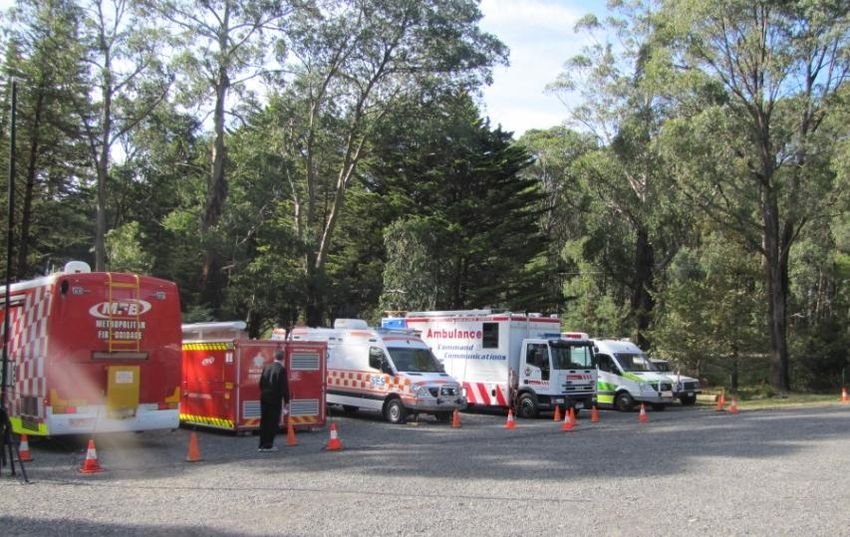
Telstra submission to the Commission on Natural Disaster Funding Arrangements

Contents

Executive Summary                                                                                   3
         Telstra’s approach to managing disasters                                                   3
         Reliance on other infrastructure - power and the NBN                                       3
         Recommendations                                                                            3
1       The impact on Telstra’s network of natural disasters                                        5
2       Telstra’s resilience, preparation and prevention actions                                    6
         2.1.       Network resilience                                                              6
         2.2.       Preparation and prevention                                                      8
3       Telstra’s relief assistance to customers and the wider community                            11
         3.1.       Disaster relief packages for customers                                          11
         3.2.       Community assistance                                                            11
4       Recovery from natural disasters and funding arrangements                                    12
5       Reliance on other infrastructure                                                            13
         5.1.       Power issues                                                                    13
         5.2.       Resilience of the NBN                                                           14
6       Opportunities for the Government and Telstra to deliver more cost
        effective and resilient emergency communications solutions                                  14
         6.1.       LTE Advanced Network for Emergency Services (LANES)
                    strategy                                                                        15
         6.2.       Mobile Black Spot Programme                                                     16
7       Government regulations impact Telstra’s ability to respond to and
        minimise the impact of natural disasters                                                    16
         7.1.       Prepaid mobile ID regulation                                                    17
         7.2.       Development approval delay                                                      18
8       Recommendations                                                                             18

TELSTRA CORPORATION LIMITED (ABN 33 051 775 556) |
FINAL| TELSTRA UNRESTRICTED | SUBMISSION TO PRODUCTIVITY COMMISION RE: | NATURAL DISASTER FUNDING   PAGE 2/19
                                                                                                      PAGE 2/19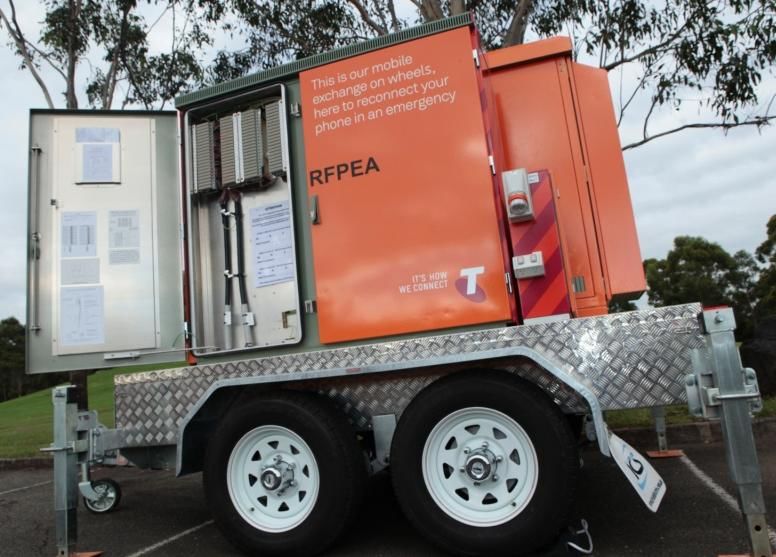
Executive Summary
    Telstra welcomes the opportunity to provide this submission to the Productivity Commission’s
    (Commission) inquiry into Natural Disaster Funding Arrangements.
    As the largest supplier of telecommunications services in Australia, Telstra plays a critical role in
    maintaining the continuity of communications to communities in times of natural disaster.
    Telecommunications services can be crucial as people need early warning information in order to
    evacuate and families need to be able to connect with loved ones to know they are safe. Telstra is
    committed to supporting people and communities by providing alternative services, and repairing
    infrastructure as quickly as possible to return services to normal after a natural disaster.
    Delivering communications continuity comes at a significant cost, both in terms of investing in robust
    infrastructure and the expenses involved in relief activities including restoring services to affected
    customers. Telstra believes that a cooperative approach involving Emergency Service Organisations
    (ESOs), government (at all levels) and private organisations (such as Telstra), is important for
    ensuring that the efforts to manage the impacts of natural disasters are efficient and cost effective.

    Telstra’s approach to managing disasters
    Telstra’s priority is to minimise the adverse impact that people and communities experience during
    and after natural disasters. While a key component of this is working to ensure Telstra’s networks are
    resilient to such events, Telstra recognises that relief actions are equally critical. This involves
    restoring communications services as quickly as possible, but also providing substitute (in some
    cases mobile) services so that those affected can communicate with their family, ESOs and others in
    their community, even before fixed network infrastructure is restored.
    Telstra’s physical assets such as exchange buildings, cables, towers, microwave dishes and mobile
    sites are all susceptible to damage from natural disasters, especially in the more remote parts of
    Australia.
    Telstra has an ongoing programme of investing billions of dollars in developing the capability of its
    fixed and mobile network. This investment helps to make the fixed and mobile network more resilient,
    so that in times of natural disasters there is continuity of communications services and customer
    losses are minimised. Telstra also provides significant disaster relief assistance to its customers and
    the wider community, both directly and in partnership with ESOs.
    Telstra’s resilience, mitigation, relief and recovery efforts are self funded. Telstra does not receive
    funding from the government. Its network is self insured, although Telstra does hold insurance for its
    major property sites. As a result, Telstra has an incentive to find the right balance between making its
    network as resilient as possible while offering competitive prices to customers.

    Reliance on other infrastructure - power and the NBN
    All telecommunications networks need power to operate. The vast majority of impacts on Telstra’s
    network during natural disasters are due to a loss of mains power in disaster affected areas.
    The National Broadband Network (NBN) will play a critical role as it is rolled out over the coming
    years. The continuity of fixed broadband and voice services will become increasingly dependent on
    the resilience of the NBN. Unlike the legacy PSTN copper networks, the NBN will require power to be
    available at multiple points in the network, including the customer premises in order to supply a voice
    service. Forward planning in relation to the roll out of the NBN will be critical to future disaster
    management.

    Recommendations
    Recommendation 1: Telstra recommends that the Commission encourage government bodies
    to strengthen their partnerships with private infrastructure organisations to deliver more cost-
    effective disaster management solutions.

TELSTRA CORPORATION LIMITED (ABN 33 051 775 556) |
FINAL| TELSTRA UNRESTRICTED | SUBMISSION TO PRODUCTIVITY COMMISSION | NATURAL DISASTER FUNDING         PAGE 3/19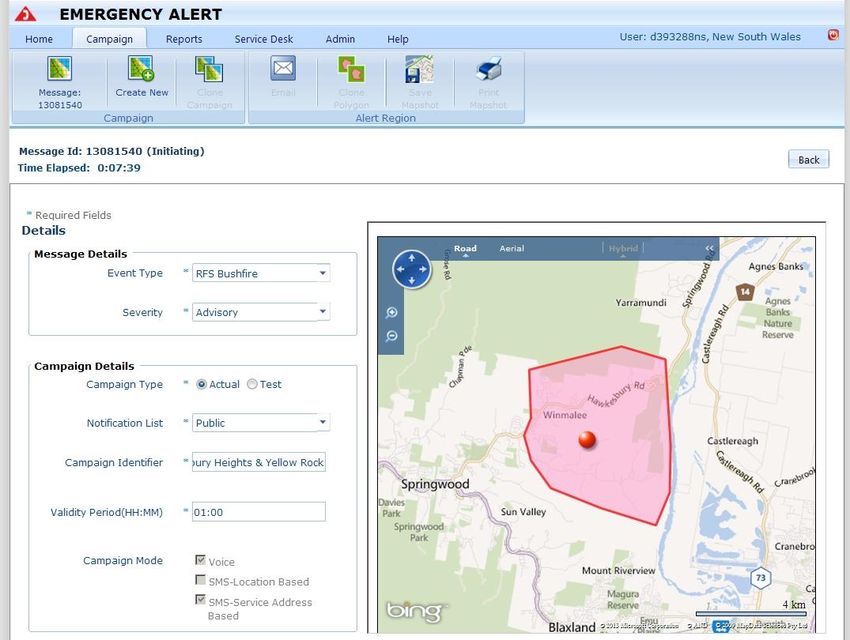
Telstra has successfully partnered with Federal and state governments to implement initiatives which
mitigate the impact of natural disasters on Australians and their property. Recent examples include:
the Emergency Alert system which uses Telstra’s network to distribute government warnings to
people in high risk areas; and
the Regional Mobile Communications Project (RMCP) in which Telstra and the WA Government
partnered to provide mobile communications to areas considered commercially unviable by
private infrastructure owners, which will aid public safety in those communities in times of
emergency and natural disasters.
The success of these initiatives highlights the opportunity for government organisations to partner with
private infrastructure owners to harness their expertise, capability and scale to build, roll out and
operate large projects for the purpose of increasing resilience and making disaster management more
cost effective. In particular, there is value in partnering with national infrastructure providers to deliver
outcomes that facilitate interoperability and avoid unnecessary duplication of infrastructure across
state and government agency boundaries. Telstra believes that a partnership approach can potentially
deliver large cost savings for the government and ESOs.
Future telecommunications opportunities include a public-private partnership to deliver a cost-effective
mobile broadband capability for ESOs, and delivering the Federal Government’s mobile black spots
programme.
Recommendation 2: Telstra recommends that the Commission encourage all levels of
government to undertake a review of the regulatory environment to identify and reform
regulations that may be hampering an efficient and cost effective approach to disaster
management.
Telstra believes it is timely for all levels of government (Federal, state and local government bodies) to
review the regulations which impact on mitigation, relief and restoration activities associated with
natural disasters, with a view to identifying reforms which could make relief efforts more efficient and
cost effective, as well as reducing the losses to individuals and businesses.
For example, Telstra provides free prepaid handsets with calling credit to evacuees in times of natural
disasters to ensure affected Australians can connect with their loved ones and to assist with making
the necessary phone calls to begin rebuilding their lives. The Government’s Prepaid identification (ID)
1
determination allows Telstra to provide these handsets to evacuees with lower ID validation
requirements than normally required. However, the Prepaid ID determination contains a number of
criteria which must be met for evacuees to qualify to receive a handset. In post disaster scenarios
these obligations can be time consuming and costly on Telstra and restrict its ability to provide relief
assistance to evacuees. Telstra believes that there may be scope for the government to consider
scaling back the obligations in the Prepaid ID determination. In particular, Telstra notes that some of
the obligations may be superfluous given that the prepaid services are temporary and must be de-
activated after 30 days.
Recommendation 3: Telstra recommends that the Commission ask the Government for further
information on its plans for the Australian Emergency Management Institute (AEMI) to become
a ‘virtual’ institute.
Telstra understands that the Government is intending to achieve savings of $0.9m over four years by
transitioning the AEMI into a ‘virtual’ institute and it would like to better understand how the
Government envisages a ‘virtual’ institute would operate.
Telstra has had a long-standing relationship with AEMI and sends key staff to this training facility bi-
annually. Telstra and its staff have found this training invaluable to prepare for and respond to natural
disasters. ESOs from around the country and other participants share learnings from experiences in
past emergencies which can be of immense value in being better prepared for future disasters.
1
Part 3 of the Telecommunications (Service Provider –Identity Checks for Prepaid Mobile Carriage Services) Determination 2013.
TELSTRA CORPORATION LIMITED (ABN 33 051 775 556) |
FINAL| TELSTRA UNRESTRICTED | SUBMISSION TO PRODUCTIVITY COMMISSION | NATURAL DISASTER FUNDING PAGE 4/19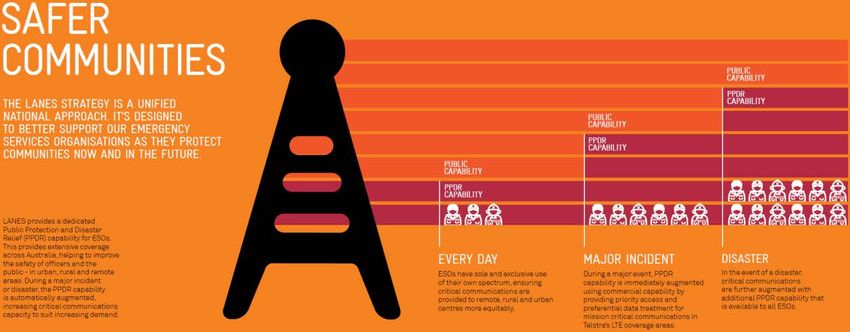
1 The impact on Telstra’s network of natural disasters

   As the largest supplier of telecommunications services in Australia, Telstra plays a critical role in
   maintaining the continuity of communications to communities throughout Australia in times of natural
   disaster.
   Telstra’s fixed network contains a significant number of exchanges and other network infrastructure
   including optic fibre which covers a distance of over 22,500km and connects 51,031 exchange and
   sub exchange buildings. Telstra has ADSL in 2,819 exchange areas covering 92% of Australian
   homes and businesses. Its cable network passes through 2.8 million homes.
   Telstra’s mobile network operates three technologies, 4G, 3G and 2G across a wide range of
   spectrum including the 850MHz, 900MHz, 1800MHz, and 2100MHz frequency bands. Telstra’s 3G
   geographic footprint is 2.3 million square kilometres. The spectrum in the 700MHz and 2500MHz
   bands that was recently secured by Telstra at auction will be used by Telstra to deploy the latest 4G
   technology when the spectrum becomes available in early 2015.
   There have been a number of disasters in recent years which have devastated communities and
   required government, businesses and individuals to work together to support families and rebuild
   communities. Such disasters include tropical cyclone Larry in 2006, Black Saturday Victorian bushfires
   in 2009, the Queensland floods in 2011, the tropical cyclone Yasi in 2011 and more recently the
   bushfires in the Blue Mountains west of Sydney in October 2013. Telstra played a critical role in
   maintaining communications for the communities affected by these disasters.
   Natural disasters can have a severe impact on Telstra’s network.
   In order to maximise continuity of services Telstra has an ongoing program of investing billions of
   dollars in developing the capability of its network. For example, in each of financial years 2012/13 and
   2013/14 Telstra invested over $3 billion in developing its fixed and mobile networks. Telstra also
   incurs substantial costs to restore services to affected customers and focuses enormous energy on
   rebuilding its network as quickly as possible.
   Telstra does not rely on government funding for mitigation, relief or response activities in relation to
   natural disasters. Telstra’s preparation for, and response to, natural disasters is self funded. Telstra’s
   network is self-insured and it holds insurance on its major property sites.
   Table 1 below illustrates the large number of Telstra services that were affected as a result of these
   recent natural disasters.

TELSTRA CORPORATION LIMITED (ABN 33 051 775 556) |
FINAL| TELSTRA UNRESTRICTED | SUBMISSION TO PRODUCTIVITY COMMISSION | NATURAL DISASTER FUNDING       PAGE 5/19
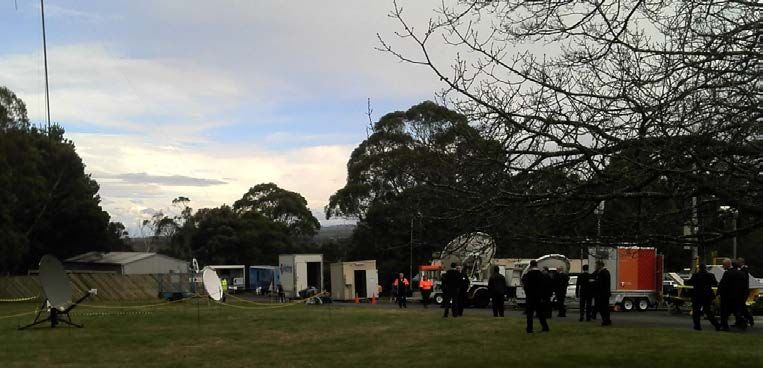
Table 1: Summary of recent natural disaster network impacts

     SEVERE TROPICAL        BLACK SATURDAY          QLD FLOODS ‘11         QLD TROPICAL            WA SEVERE         QLD EX-TROPICAL
      CYCLONE LARRY            VICTORIAN                                  CYCLONE YASI ‘11       WEATHER PERTH       CYCLONE OSWALD
             ‘06              BUSHFIRES ‘09                                                      & SOUTH WEST ’12      & FLOODS ’13

        28,000 PSTN            8,000 PSTN            23,200 PSTN            94,000 PSTN            70,000 PSTN        438,000 PSTN
          services          services impacted      services impacted      services impacted      services impacted   services impacted
          impacted

       40 mobile base        27 mobile base         159 mobile base       159 mobile base           165 mobile          777 mobile
     stations impacted      stations impacted      stations impacted      stations impacted        base stations       base stations

         3000 ADSL             2700 ADSL             13,600 ADSL            32,000 ADSL            20,600 ADSL        179,000 ADSL
          services          services impacted      services impacted      services impacted          services             services
          impacted

     190 network sites       40 network sites      375 network sites      680 network sites      863 network sites   1010 network sites
     lost mains power       lost mains power       lost mains power       lost mains power       lost mains power    lost mains power

         40 portable           53 portable            70 portable            110 portable           50 portable         65 portable
         generators             generators            generators             generators             generators          generators
          deployed              deployed               deployed               deployed               deployed            deployed

    While Table 1 illustrates the devastating effect natural disasters have on Telstra’s network, the vast
    majority of these impacts were due to the loss of mains power in disaster impacted areas. Once
    mains power was restored the majority of these services became available for use by customers.

2 Telstra’s resilience, preparation and prevention actions

    Telstra’s physical assets including its exchanges, towers, microwave dishes and mobile antennas are
    vulnerable to natural disasters particularly in more rural areas of Australia. While Telstra’s networks
    can be severely impacted, Telstra’s priority is to ensure that customer impacts are minimised. This
    includes making sure Telstra’s network is resilient as well as engaging in preparation and prevention
    strategies in the lead up to riskier seasons such as bushfire season in Victoria.
    Resilience increases in situations where multiple networks, such as fixed telephone and mobile
    networks, are available to customers as there is less chance of both network platforms being
    damaged or congested in the event of a natural disaster.

2.1. Network resilience
                                                                                    2
     In response to the January 2013 Far North Queensland floods , Telstra undertook a National
     Network Resilience Review resulting in close to 50 recommendations to increase the resilience of
     Telstra’s network. Telstra has started to implement these recommendations, which include strategic
     investments to improve core network architectures, deployment standards and operational processes
     to increase the resilience of the core network.
     Since the report was published in May 2013, significant improvements have been made to Telstra’s
     emergency 000 fixed line network, internet protocol (IP) core network, management networks which

2
  The Far North Queensland region was isolated from a communications perspective for 24 hours at the peak of an extreme flood
event where 4 major cable points between Brisbane and Townsville were washed away in 4 days.

TELSTRA CORPORATION LIMITED (ABN 33 051 775 556) |
FINAL| TELSTRA UNRESTRICTED | SUBMISSION TO PRODUCTIVITY COMMISSION | NATURAL DISASTER FUNDING                          PAGE 6/19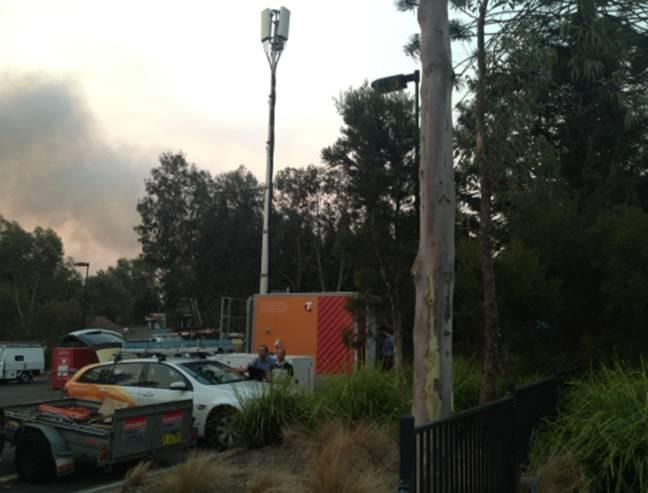
remotely monitor the availability and quality of services, and the mobiles, broadband and business
services networks.
More broadly, Telstra engages in the following to ensure the resilience of its network:
1. Building third level redundancy into the core network so that if the main connectivity path
is affected, other paths are available to keep customers connected. In high risk areas such as
far North Queensland, a third connectivity path has been built and is estimated to reduce
expected downtime from 33 minutes per year to four minutes per year ;
3
2. Providing improved backup power capability for continuity of services in case of power
failure. This includes backup power capability including stand-by generators and battery back-
ups.
3. Ensuring regular testing: of standby generators, batteries, rectifiers and associated alarms.
4. Deploying critical spares at strategic sites to allow a two to six hour response time in
emergencies depending on the platform held by either the vendor or Telstra for transmission,
core, aggregation and mobiles infrastructure.
5. Remotely monitoring the fibre network to improve restoration times The national
monitoring footprint was augmented to include over 5000km of fibre on core fibres between
Brisbane and Bamaga, near the tip of Cape York.
6. Reviewing and updating deployment standards for infrastructure so improved options
can be implemented for new deployments. For example, providing solutions to maximise fibre
diversity within the exchange environment.
7. Creating innovative technology solutions which allow Telstra to restore services
quickly to disaster impacted communities, and assist within the overall recovery effort.
Examples of such technology solutions include:
Cells on Wheels (COWs) – a portable mobile base station that provides temporary
coverage if a mobile site is lost or a temporary expansion of mobile coverage.
Figure 1: A COW at Winmalee shopping Centre, NSW to temporarily increase mobile network
capacity during bushfires, October 2013
3
For Emergency 000 Fixed line services.
TELSTRA CORPORATION LIMITED (ABN 33 051 775 556) |
FINAL| TELSTRA UNRESTRICTED | SUBMISSION TO PRODUCTIVITY COMMISSION | NATURAL DISASTER FUNDING PAGE 7/19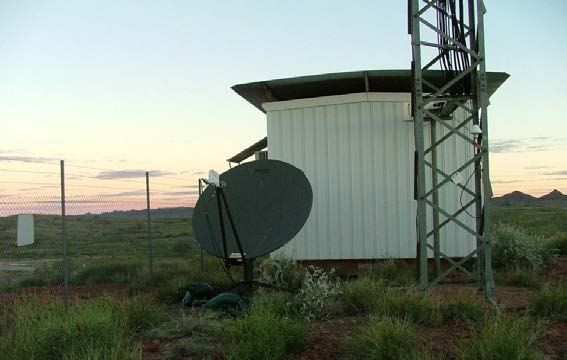
Satellite Cells on Wheels (SatCOWs) – provides Telstra Next G™ network coverage for
locations where there is no terrestrial backhaul network or power available. It is highly
portable (can be transported in a standard 4WD, light aircraft or helicopter) and can be
set up within 1.5 hours. In the aftermath of Cyclone Yasi a SatCOW was deployed to
Palm Island, restoring communications within 24 hours.
Figure 2: A Satellite Cell on Wheels (SatCOW) at Marble Bar 200Kms S/E of Port Hedland in
WA
Mobile Exchanges on Wheels (MEOW) – a temporary mobile exchange service which
can operate using generators, batteries or mains power to enable the quick installation
of temporary communication solutions, especially for those communities hardest hit by
the disaster. Telstra is not aware of any other carrier globally who offers innovative
technology solutions such as MEOWs.
Figure 3: A Mobile Exchange on Wheels (MEOW)
Use of Long Term Evolution (LTE) mobile broadband technology – such that
emergency service traffic within a virtual private network can be granted higher priority
so that vital communications are not disrupted in situations where the network is at risk
of being overloaded.
2.2. Preparation and prevention
Telstra also has the following capabilities and engages in the following measures to prepare for
and reduce the impact of natural disasters:
TELSTRA CORPORATION LIMITED (ABN 33 051 775 556) |
FINAL| TELSTRA UNRESTRICTED | SUBMISSION TO PRODUCTIVITY COMMISSION | NATURAL DISASTER FUNDING PAGE 8/191. Telstra’s Global Operations Centre (GOC): A state-of-the-art facility which monitors and
maintains Telstra’s networks 24 hours a day seven days a week. The GOC monitors national
and world events that may create demands on the network. It can quickly identify, even
anticipate, service incidents on any scale, at times before customers are even aware of them.
This aids in preparing for natural disasters. The GOC includes the Major Incident
Management (MIM) group, a customer focused team that provides escalated incident
management across all of Telstra’s networks, platforms, systems and escalated customer
incidents. In emergencies, the GOC takes the lead to restore critical services quickly to
communities, working in close collaboration with ESOs.
2. Emergency alert services: The Federal Government and Telstra have partnered to deploy a
telephony-based warning system that enables authorities to notify people at risk during natural
disasters or other emergencies that threaten public safety such as bushfires, floods, chemical
spills or major police incidents. The system can simultaneously send out 500 SMS messages
per second and 1,000 voice messages per minute. The system has been used on more than
1,350 occasions since 2010, with over 11 million alerts sent to affected community members.
Telstra looks to continually enhance the system as the expertise of users and their
requirements increase.
Figure 4: An example of an Emergency Alert message
3. Priority Assist customers with life-threatening medical conditions are given a higher
level of service restoration: Telstra customers whose life may be at risk without access to a
fully-operational phone service are prioritised for service restoration in general, and in times of
natural disasters.
4. Combined emergency services training exercises: Telstra participates in combined
emergency services exercises with organisations around the country. These exercises are
designed to test communication and collaboration between all organisations that play a role
during an emergency. Participation in these exercises is a key part of Telstra’s seasonal
TELSTRA CORPORATION LIMITED (ABN 33 051 775 556) |
FINAL| TELSTRA UNRESTRICTED | SUBMISSION TO PRODUCTIVITY COMMISSION | NATURAL DISASTER FUNDING PAGE 9/19preparation for natural disasters. Telstra’s involvement strengthens its relationships with ESOs
and allows critical communication plans and processes to be tested and refined, ahead of an
actual emergency situation. For example, in May this year Telstra’s National Emergency
Services Liaison Officers (ESLO) coordinated a communications training exercise (Exercise
CommAlpha) for all Victorian State Emergency Services and successfully tested the
deployment of some world first technologies to support ESO’s as well as provide briefings on
future mobile technologies being investigated by Telstra’s network engineers.
Figure 5: Exercise CommAlpha conducted in Gembrook, Victoria
5. Attending training at the Australian Emergency Management Institute (AEMI): The AEMI
is a specialised training facility for ESO’s and critical infrastructure providers to train and
prepare for natural disasters and emergencies of all kinds. Telstra sends key staff to the
AEMI training facility bi-annually to prepare for and respond to natural disasters. In particular,
the AEMI provides Telstra and other critical infrastructure providers the opportunity to network
with ESO’s from around the country to strengthen this relationship. ESOs from around the
country and other participants share learnings from experiences in past emergencies which
can be of immense value in being better prepared for future disasters. This is particularly
useful as it encourages inter-state and inter-agency cooperation by providing ESOs from
different states and territories the opportunity to share these learnings and experiences with
each other.
Figure 6: Telstra emergency network equipment display for emergency services at the AEMI, June
2013
6. Appointing Telstra ESLOs: Telstra has ELSOs in each state whose job is to be the primary
contact 24 hours a day seven days a week to provide priority assistance and liaise with
TELSTRA CORPORATION LIMITED (ABN 33 051 775 556) |
FINAL| TELSTRA UNRESTRICTED | SUBMISSION TO PRODUCTIVITY COMMISSION | NATURAL DISASTER FUNDING PAGE 10/19emergency agencies and other critical infrastructure providers in times of disaster. ESLOs can
work at the appropriate state, regional or municipal Emergency Management Centre, share
real time network information, provide assistance as required and also consult with ESO’s to
prioritise the recovery of the network.
7. Clearing areas of fire risk around key infrastructure: Telstra clears bushes and trees
around remote (rural or country) exchanges and other key infrastructure in the lead up to
bushfire season.
8. Periodic review of weather and network events: To ensure root causes to customer
impacts are eliminated or mitigated against in the future.
9. Making extra network capacity available: To minimise the impact on customers, extra
network capacity is made available to cope with the expected increased demand in and
around a disaster area (combined with actions such as the priority recovery of mobile base
stations).
10. Managing staff: Ensuring a sufficient number of staff, such as field technicians, are available
during risky disaster seasons and mobilising field technicians to prepare to enter the disaster
area once it is safe to do so.
3 Telstra’s relief assistance to customers and the wider community
In times of natural disaster, Telstra is committed to assisting both its customers and the wider
community. Many of Telstra’s resilience and preparation activities provide relief for Telstra’s
customers and the community including its Emergency Alert service which keeps the community
informed about disasters and any on-going risks to personal safety and the safety of property. In
addition, deployment of Telstra’s innovative technology such as COWs, SatCOWs and MEOWs
allow both Telstra’s customers and the wider affected community to stay in touch with loved ones
and ESOs.
3.1. Disaster relief packages for customers
Telstra provides both short and long term disaster relief packages for Telstra residential and small
business customers.
Where there is any interruption to these customers as a result of a natural disaster, Telstra provides
its customers with disaster relief packages including waiving customers’ service fees until service is
restored, providing free call diversion from an affected Telstra fixed phone service to another
Australian fixed or mobile service (regardless of the carrier) and allowing customers to make local
and STD calls from a mobile service at fixed line rates.
Telstra’s current policy is also to provide affected customers with $500 upfront credits for fixed line
services $100 of upfront credits for mobile services and $110 of upfront credits for BigPond
services.
3.2. Community assistance
Telstra assists communities and various levels of government in a variety of ways and is proud of its
long history of working effectively with ESOs in responding to natural disasters.
Telstra’s assistance is funded at its own expense and includes:
Enabling payphones in affected areas to provide free local and STD calls for people without
telecommunications to connect to their family and friends;
TELSTRA CORPORATION LIMITED (ABN 33 051 775 556) |
FINAL| TELSTRA UNRESTRICTED | SUBMISSION TO PRODUCTIVITY COMMISSION | NATURAL DISASTER FUNDING PAGE 11/19 Establishing communications services in evacuation centres including free phone lines and
temporary internet Wi Fi kiosks;
Establishing dedicated call centres at no cost to the Government to support relief efforts;
Providing free prepaid handsets with SIM cards and prepaid phone cards for use by evacuees;
Establishing wireless gateways for internet access;
Providing modems for relief organisations and the provision of chargers for people to recharge
phone handsets;
Distributing satellite kits to ESOs and some isolated communities;
Providing loan handsets to many locations outside designated evacuation centres; and
Installing temporary mobile facilities (e.g. COWS) to enhance services in impacted areas where
congestion arises due to the loss of fixed line services or to provide additional capacity to
Emergency Service Control Centres, such as in Crystal Brook in SA earlier this year.
The government also acquires other services from Telstra to assist with its relief efforts. These
services are provided to the government under pre-existing supply agreements.
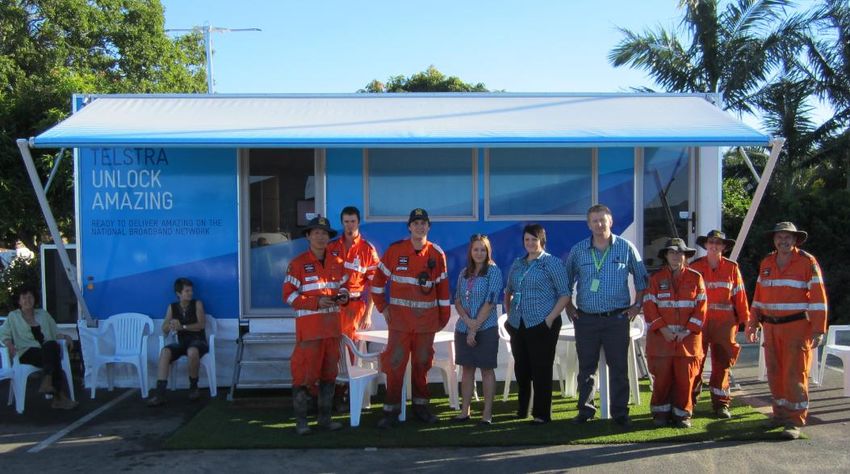
Figure 7: Community Recovery Unit in operation at Bundaberg North post Cyclone Oswald 2013
Additionally, Telstra provides emergency response leave for Telstra staff who volunteer with ESOs
and employees in disaster affected areas can use their annual volunteer day to support their local
communities in clean-up efforts. Telstra also matches employee donations to emergency appeal
accounts.
Telstra is proud to be able to assist the Government and the community in these ways and
continually looks at ways in which it can better support relief efforts.
4 Recovery from natural disasters and funding arrangements
Telstra incurs significant expense restoring and rebuilding Telstra’s network as a result of natural
disasters. As noted previously, Telstra does not rely on any funding from the government in times of
natural disasters to restore its network or rebuild damaged assets. Telstra’s disaster mitigation,
TELSTRA CORPORATION LIMITED (ABN 33 051 775 556) |
FINAL| TELSTRA UNRESTRICTED | SUBMISSION TO PRODUCTIVITY COMMISSION | NATURAL DISASTER FUNDING PAGE 12/19recovery and relief efforts are self funded and its assets are self insured. Telstra holds insurance on
its major property sites.
The costs of restoring Telstra’s network and deploying temporary COWs, SatCOWs and MEOWs
during and after disasters are absorbed by Telstra. As Telstra operates in a competitive
environment, the prices Telstra can charge customers are constrained. Telstra therefore has an
incentive to find the right balance between making its networks as resilient as possible while
keeping prices to customers as low as possible.
5 Reliance on other infrastructure
The resilience of Telstra’s network in times of natural disaster needs to be considered in the context of
its dependency on other infrastructure providers. Telstra believes the Government needs a holistic
strategy to improve resilience and, where there is no business case for private investment,
government funding may be appropriate.
5.1. Power issues
All telecommunications networks need power to operate. Power loss is a significant issue faced by
Telstra in maintaining the operation of its networks during extreme weather events, including fires,
flooding and cyclones.
Key elements of Telstra’s networks rely on a continuous supply of power. These include exchanges
and mobile base stations. If the power supply is disrupted, functionality may be lost to that equipment,
and to the services supported by that equipment. In recognition of this dependency, these network
elements are powered by batteries to ensure continuity of service during mains power interruptions.
Mains power is used to constantly charge the batteries. In this way, the telecommunications
equipment will continue to operate for a period of time (typically around 8 hours) after mains power is
interrupted without any manual intervention until the batteries expire. Telstra has a regime of regularly
checking and replacing these batteries to maintain the effectiveness of the services in the event of a
disaster.
Generators can also be used to supply power at exchanges if mains power is lost. Some exchanges
have onsite generators that will automatically start if mains power is lost and will run for as long as the
generator has fuel. Where a facility does not have an onsite generator, a mobile generator may be
deployed at the site if required and if the site is accessible. Telstra engages a supplier which has at its
disposal a range of generators ranging from smaller petrol generators to larger 50kva diesel mobile
generators coupled with 4000 litre long range fuel tanks. These generators are available for use
during power outages and Telstra’s supplier is able to install them at sites nominated by Telstra at
short notice, subject to access being available. If the fuel in a generator is depleted, battery power
cannot be maintained. Under normal conditions, power is restored before battery power runs out.
Where mains power is interrupted for a prolonged period and access is not able to be secured to the
site, because it is unsafe (for example, where roads have been washed away), the battery power will
eventually fail and the network element will cease operating.
If mains power to an exchange or mobile base station is lost, a network alarm will alert staff at
Telstra’s GOC. This prompts Telstra to arrange a service person to visit the site to attend to the power
loss or to recharge the batteries. In an ongoing flood situation, it is often not possible to immediately
attend the site, and the site may eventually lose power and cease operating. Loss of functionality at
an exchange will normally mean that services connected to that exchange will cease to operate.
If power is lost at the customer premises, or access point, service may be impacted depending on the
type of phone used by the customer. A standard landline phone draws the power it needs from the
copper wires that connect the phone to the network. Therefore, a loss of power at the customer
access point will not ordinarily impact service. However, if a customer is using a device that requires
its own source of electricity, such as a cordless phone system, and no battery or other suitable
TELSTRA CORPORATION LIMITED (ABN 33 051 775 556) |
FINAL| TELSTRA UNRESTRICTED | SUBMISSION TO PRODUCTIVITY COMMISSION | NATURAL DISASTER FUNDING PAGE 13/19backup supply is installed, service to that device will be impacted during a power outage. In this case,
no calls can be made, including calls to emergency services.
5.2. Resilience of the NBN
As telecommunications fixed access networks evolve from copper to fibre optics it is important to
understand the impact on service availability during power outages. As stated above, all
telecommunications networks need power to operate. Fibre optic networks are no exception and
require power to be available at multiple points in the network, including the customer premises, in
order to supply a voice service. This is different to the existing Telstra copper public switched
telephone network (PSTN) where a corded landline phone draws the power it needs from the wires
that connect the phone to the network. Therefore, unless the customer is using a cordless phone, a
loss of power at the customer’s premises will not ordinarily impact services delivered on Telstra’s
existing copper network.
NBN Co traditionally supplied battery backup units on all fibre-to-the-premises (FTTP) installations.
These allowed customers using corded phones connected to the UNI-V (voice) ports on the Network
Termination Device (NTD) to make calls for approximately 5 hours during a mains power outage.
However, at the Minister’s request, NBN Co are now progressively moving to a new model where
most new FTTP customers will have to choose whether or not they want battery backup. This new
model is scheduled to be fully implemented by 1 October 2014. NBN Co does not take responsibility
for maintaining NTD batteries.
In the case of a natural disaster where power may be lost to network buildings and at the customer
premises for extended periods, the restoration of power to a network building may no longer be
sufficient to restore service to a customer. Each customer premises will require as a minimum the
restoration of their domestic power for their service to be restored.
NBN Co does not provide a battery backup option for customers on their fixed wireless and satellite
networks. While discussion is underway regarding the move to a multi-technology model
incorporating NBN fibre-to-the-basement (FTTB), fibre-to-the-node (FTTN) and hybrid fibre-coaxial
(HFC) networks, it is too early to assess the impact of natural disaster on these networks under
management of NBN Co.
As the NBN is rolled out and Telstra migrates services off of its fixed line network, Telstra becomes a
retail service provider accessing the NBN across 121 points of interconnect and provisioning services
over ports on the NTD inside a customer’s premises. As Telstra has a long history of managing
service and network restoration in times of natural disaster, we have proactively engaged with NBN
Co to determine the roles and responsibilities of each party under such scenarios. This engagement
has resulted in a series of workshops where Telstra and NBN Co are seeking a model of
engagement which involves Telstra managing service restoration and NBN Co managing network
restoration following a natural disaster.
6 Opportunities for the Government and Telstra to deliver more cost effective
and resilient emergency communications solutions
To date, Telstra has successfully partnered with the Federal and state governments to mitigate the
impacts of natural disasters and ensure communities are better prepared to respond to emergencies.
Key examples include:
the Emergency Alert system (discussed above) which uses Telstra’s network to distribute
government warnings to people in high risk areas; and
the Regional Mobile Communications Project (RMCP) in which Telstra and the WA
Government partnered to provide mobile communications to 113 sites considered
TELSTRA CORPORATION LIMITED (ABN 33 051 775 556) |
FINAL| TELSTRA UNRESTRICTED | SUBMISSION TO PRODUCTIVITY COMMISSION | NATURAL DISASTER FUNDING PAGE 14/19commercially unviable by private infrastructure owners. This will aid public safety in those
communities in times of emergencies and natural disasters by allowing for emergency
information to be easily communicated to communities through traditional mobile handsets.
Additionally, the infrastructure was also provisioned to accommodate emergency services
antennas to allow them to use these facilities to expand their reach (at no additional cost to
those organisations). This program also provided some areas with access to internet and
mobile services for the first time and increased Telstra’s mobile coverage footprint in WA by
22% to 525,000 square kilometres.
The success of these initiatives highlights the opportunity for governments to strengthen partnerships
with private infrastructure owners by harnessing their expertise, capability and scale to build, roll out
and operate large projects which increase resilience and make the management of disasters more
cost effective. Other examples of such initiatives include the LTE Advanced Network for Emergency
Services (LANES) strategy which will be able to provide emergency services with dedicated
capability on Telstra’s mobile network, and the Government’s $100m mobile black spots coverage
program.
As natural disasters cross state borders, Telstra believes there is value in partnering with national
infrastructure providers to deliver such initiatives. This will support interoperability efficiencies and
avoid unnecessary duplication of infrastructure. This could result in significant cost savings for the
government and ESOs, including the delivery of more cost effective and resilient solutions to mitigate
and manage the effect of natural disasters.
6.1. LTE Advanced Network for Emergency Services (LANES) strategy
One of the key challenges for ESOs is the need to stay on top of rapid and constant innovation.
Telstra continually invests in its mobile network to bring its customers the benefits of mobile
innovation faster. By using Telstra’s carrier infrastructure for mobile broadband critical
communications, ESOs gain the benefits of a multibillion dollar investment – without having to
worry about frequent maintenance, updates, repairs and site leases. This reduces risky ESO
investments in an area where technology is continually evolving and helps ensure an upgrade path
to the future.
Recognising that ESOs have priority needs for critical communications, Telstra has developed the
LANES strategy. This strategy is an innovative approach to Public Protection and Disaster Relief
(PPDR) networks, which involves using dedicated capability on Telstra’s mobile network. This
provides ESOs with a unique opportunity to rapidly increase network capability, coverage and
reach, while still delivering the high levels of security they require. Dedicated PPDR radio
frequency spectrum is retained solely and exclusively for the use of the ESOs. However, if it
becomes congested, the excess traffic can be overflowed to Telstra’s public mobile network.
By co-locating the PPDR spectrum on the Telstra mobile network, ESOs gain access to the largest
mobile broadband network in Australia. This is an important consideration given that many are
seeing a sharp rise in public emergencies in urban, rural and remote areas. The Telstra mobile
network is Australia’s largest national wireless broadband network with more than 7,800 coverage
sites over 2.3 million square kilometres – more than any other mobile network in Australia. It would
be economically untenable for any ESO to replicate such infrastructure.
ESOs also need a flexible, long-term approach that enables them to take advantage of rapidly
evolving mobile broadband technologies, like video and GPS based services that can strengthen
critical communications. The Telstra mobile network is standards-based with support for helmet-
mounted video cameras, GPS and messaging innovations. Telstra also has relationships with
industry partners, who can work with ESOs to assist in creating an ecosystem of devices around
an Australian PPDR capability.
TELSTRA CORPORATION LIMITED (ABN 33 051 775 556) |
FINAL| TELSTRA UNRESTRICTED | SUBMISSION TO PRODUCTIVITY COMMISSION | NATURAL DISASTER FUNDING PAGE 15/19Figure 8: Graphical representation of the LANES strategy
6.2. Mobile Black Spot Programme
The Mobile Black Spot Programme is an Australian Government initiative to extend mobile phone
coverage and competition in regional Australia. The programme will invest in telecommunications
network infrastructure to improve the geographic coverage of high quality mobile voice and
wireless broadband services, as well as promote competition in the provision of these services.
The $100 million program over four years will potentially improve mobile coverage along major
transport routes, in small communities and in locations prone to experiencing natural disasters, as
well as addressing unique mobile coverage problems.
The Government will partner with one or more private infrastructure owners to deliver this program –
utilising the expertise, capability and scale of such parties to build, roll out and operate such a large
project. Telstra is supportive of this initiative which will improve communications services to rural and
regional communities of Australia, allow for disaster warnings and assist with the coordination and
management of emergency responses.
7 Regulation impacts Telstra’s ability to respond to and minimise the impact of
natural disasters
There are a number of regulations which impact Telstra’s mitigation, relief and restoration activities
associated with natural disasters. While governments aim to ensure regulations are necessary and
proportionate to their goals, the impact regulations can have on businesses’ abilities to respond to
natural disasters and conduct relief efforts may not always be fully appreciated at the time they are
introduced. Telstra believes there is scope to reform some of these regulations to allow businesses to
conduct mitigation, relief and restoration activities in a more efficient and cost effective manner, and
reduce the losses suffered by individuals and businesses.
To illustrate this point, set out below are two examples detailing how Telstra’s mitigation, response
and recovery efforts have been impacted by regulation.
TELSTRA CORPORATION LIMITED (ABN 33 051 775 556) |
FINAL| TELSTRA UNRESTRICTED | SUBMISSION TO PRODUCTIVITY COMMISSION | NATURAL DISASTER FUNDING PAGE 16/197.1. Prepaid mobile ID regulation
As discussed above, Telstra provides free prepaid handsets with calling credit to evacuees in times of
natural disaster to ensure affected Australians can connect to their loved ones, ESOs and begin
rebuilding their lives.
4
In 2013, the Federal Government introduced a determination which allows Telstra to provide these
handsets to evacuees with lower ID validation requirements than are normally required. This is
extremely useful because in practical terms evacuees may have misplaced or left behind their
identification during evacuation. The determination, however, contains a number of criteria which
must be met for evacuees to qualify to receive a handset under these circumstances as well as
imposing time consuming and costly obligations on Telstra which restrict its ability to provide relief
assistance to evacuees in the most efficient and cost effective manner.
For example, in order for an evacuee to receive a handset in these circumstances:
a state of emergency must have been declared by the relevant Minister;
the affected person’s principal place of residence must have been destroyed, rendered
uninhabitable or made inaccessible as a result of an emergency;
Telstra staff must confirm with the affected person that their principal place of residence has
been destroyed, rendered uninhabitable or made inaccessible as a result of an emergency;
if the handset is provided to an Emergency Assistance Organisation (EAO) the organisation
must be registered on the Australian Charities and Not for Profit Commission register.
In addition, the determination places the following restrictions and obligations on Telstra:
Telstra is not permitted to distribute prepaid services under this Determination until after the
Minister has declared the state of emergency and then only for a 7-day period thereafter;
The prepaid service must be temporary and must be de-activated by Telstra after 30 days;
Telstra must retain the following records for each mobile prepaid provided (regardless of
whether Telstra provided the prepaid service directly or via an EAO):
o mobile numbers issued;
o name and residential address of the exempt individuals;
o that the prepaid service was provided under Part 3 of the Determination; and
o if applicable, the name and business addresses of the EAOs.
Telstra must also maintain a register to record the following information:
o the date on which the emergency first occurred;
o the location or area affected by the emergency;
o a description of the nature of the emergency;
o the total number of prepaid mobile carriage services supplied by Telstra (directly or
indirectly); and
o the number associated with each prepaid mobile carriage service supplied.
Telstra appreciates that this regulation is designed to ensure process around the provision of
prepaid mobile handsets during disaster situations and that some obligations are intended to
address security concerns. However, given the importance of providing efficient and cost-effective
relief to those impacted by natural disasters, Telstra believes there may be scope for the
government to consider whether these obligations could be scaled back.
Telstra notes that some of the obligations may be superfluous given that the prepaid services are
temporary and must be de-activated after 30 days. For example, the information requirements for
Telstra to provide these temporary services now go beyond that required to provide a commercial
4
Part 3 of the Telecommunications (Service Provider –Identity Checks for Prepaid Mobile Carriage Services) Determination 2013.
TELSTRA CORPORATION LIMITED (ABN 33 051 775 556) |
FINAL| TELSTRA UNRESTRICTED | SUBMISSION TO PRODUCTIVITY COMMISSION | NATURAL DISASTER FUNDING PAGE 17/19service. While Telstra could get around this by going through the normal identification process,
this is not practical for those evacuees without access to their identification documents.
In addition, Telstra considers that regulation requiring staff to specifically ask affected individuals
whether their principal place of residence has been destroyed, rendered uninhabitable or made
inaccessible as the result of an emergency is unnecessary and is likely to cause distress to the
recipients of the emergency assistance.
7.2. Development approval delay
One of Telstra’s key priorities is to ensure extensive and reliable communications services are
available to all Australians, particularly in times of natural disasters. Telstra’s ability to provide this
service can sometimes be impacted by the local government approval process.
For example, Telstra sought to establish a mobile base station in Victoria in 2013 in a high risk fire
danger area with poor mobile reception which affects the ability of ESOs to contact residents in at-
risk areas in case of fire or other natural disasters.
Telstra’s application to build this mobile base station was rejected by local council a number of
times on the basis that the location of the tower was unsightly. After 15 months of consultation the
Council approved Telstra’s application to construct this tower in March 2014. Telstra believes the
development application was finally approved as a result of Telstra’s concern that more reliable
communications services were needed for its customers in the area and that the Council’s
Municipal Emergency Management Plan itself notes that the Council intends to use the internet
and social media as a key communications mechanism to residents in the event of a natural
disaster.
Subsequently, a single resident opposed the application and the matter is now before the Victorian
Consumer Affairs Tribunal. Telstra had originally intended to construct the mobile base station in
time for the 2014/15 fire danger season however that no longer appears to be possible.
Given the importance of providing reliable communications services to all Australians, particularly to
those in high-risk natural disaster areas, Telstra believes local governments could better give greater
weight to the importance of mitigation strategies for natural disasters when considering development
application proposals.
8 Recommendations
Recommendation 1: Telstra recommends that the Commission encourage government bodies
to strengthen their partnerships with private infrastructure organisations to deliver more cost-
effective disaster management solutions.
As discussed above, Telstra has successfully partnered with Federal and state governments to
implement initiatives which mitigate the impact of natural disasters on Australians and their property
including the Emergency Alert system and RMCP.
The success of these initiatives highlights the opportunity for Government organisations to partner with
private infrastructure owners to harness their expertise, capability and scale to build, roll out and
operate large projects for the purpose of increasing resilience and making disaster management more
cost effective. In particular, there is value in partnering with national infrastructure providers to deliver
outcomes that facilitate interoperability and avoid unnecessary duplication of infrastructure across
state and government agency boundaries. Telstra believes that a partnership approach can potentially
deliver large cost savings for the government and ESOs.
Future telecommunications opportunities include a public-private partnership to deliver a cost-effective
mobile broadband capability for ESOs, and delivering the Federal Government’s mobile black spots
programme.
Recommendation 2: Telstra recommends that the Commission encourage all levels of
TELSTRA CORPORATION LIMITED (ABN 33 051 775 556) |
FINAL| TELSTRA UNRESTRICTED | SUBMISSION TO PRODUCTIVITY COMMISSION | NATURAL DISASTER FUNDING PAGE 18/19government to undertake a review of the regulatory environment to identify and reform regulations that may be hampering an efficient and cost effective approach to disaster management. Telstra believes it is timely for all levels of government (Federal, state and local government bodies) to review the regulations which impact on mitigation, relief and restoration activities associated with natural disasters, with a view to identifying reforms which could make relief efforts more efficient and cost effective, as well as reducing the losses to individuals and businesses. For example, Telstra believes that given the importance of providing free, easily accessible communication mechanisms to disaster affected Australians, such as prepaid mobile handsets, there may be scope for the government to consider whether the obligations in the Prepaid ID determination could be scaled back. In particular, Telstra notes that some of the obligations may be superfluous given that the prepaid services are temporary and must be de-activated after 30 days. Telstra also believes that given the importance of providing reliable communications services to all Australians, particularly to those in high-risk natural disaster areas, local governments could give greater weighting to mitigation strategies for natural disasters when considering development application proposals. Recommendation 3: Telstra recommends that the Commission ask the Government for further information on its plans for the Australian Emergency Management Institute (AEMI) to become a ‘virtual’ institute. Telstra understands that the Government is intending to achieve savings of $0.9m over four years by transitioning the AEMI into a ‘virtual’ institute and we would like to better understand how the Government envisages a ‘virtual’ institute will operate. Telstra has had a long-standing relationship with AEMI and sends key staff to this training facility bi- annually. Telstra and its staff have found this training invaluable to prepare for and respond to natural disasters. ESOs from around the country and other participants share learnings from experiences in past emergencies which can be of immense value in being better prepared for future disasters. TELSTRA CORPORATION LIMITED (ABN 33 051 775 556) | FINAL| TELSTRA UNRESTRICTED | SUBMISSION TO PRODUCTIVITY COMMISSION | NATURAL DISASTER FUNDING PAGE 19/19
You can also read


