"The Happiest Muslims in the World" - Disinformation, Propaganda, and the Uyghur Crisis Uyghur Human Rights Project | July 2020 - Uyghur Human ...
←
→
Page content transcription
If your browser does not render page correctly, please read the page content below
“The Happiest Muslims in
the World”
Disinformation, Propaganda, and the Uyghur Crisis
     About the Uyghu
Uyghur Human Rights Project | July 2020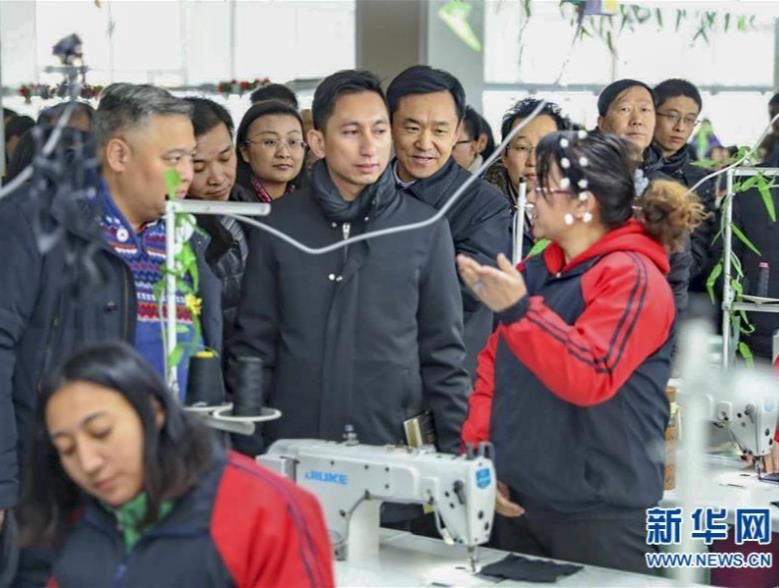
About the Uyghur Human Rights Project

The Uyghur Human Rights Project promotes the rights of the Uyghur people through
research-based advocacy. It publishes reports and analysis in English and Chinese to
defend Uyghurs’ civil, political, social, cultural, and economic rights according to
international human rights standards.

About the Authors

This report was written by UHRP staff members with input from a researcher who wishes
to remain anonymous.

Acknowledgements

The author wishes to thank all those who contributed to this report, including Henryk
Szadziewski and other members of the UHRP team.

Cover Design

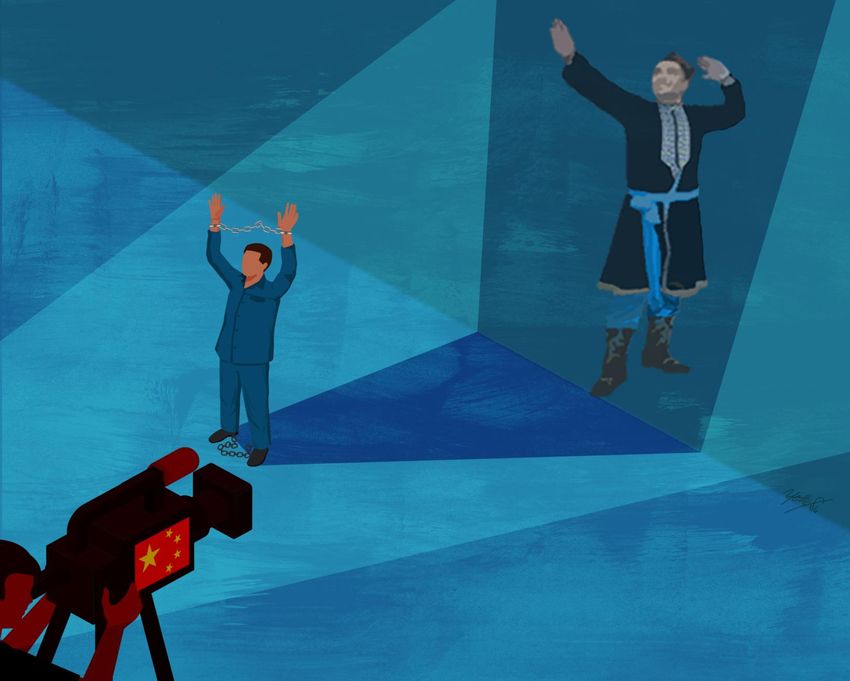
Illustration by Yettesu.

© 2020 Uyghur Human Rights Project
1602 L Street NW | Washington, DC 20036
+1.202.478.1920 | www.uhrp.org | info@uhrp.org

        twitter.com/UyghurProject

        facebook.com/UyghurProject

        instagram.com/UyghurProjectIG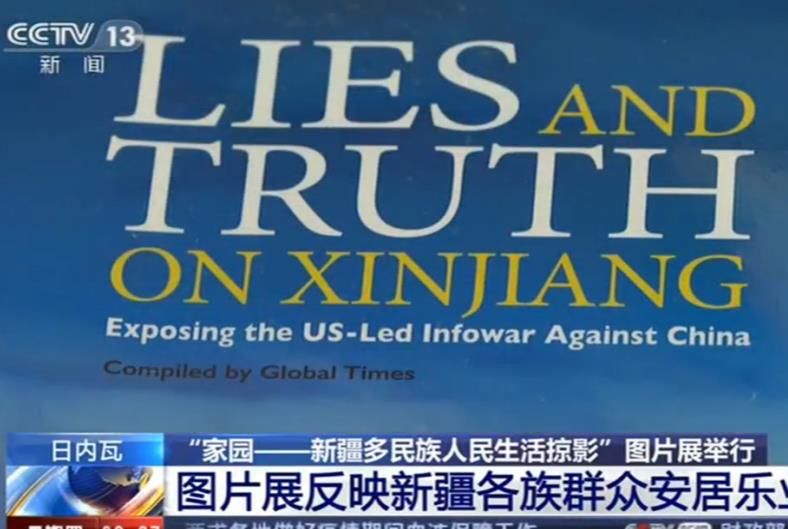
“The Happiest Muslims in the World”: Disinformation, Propaganda and the Mass Detention of Uyghurs

TABLE OF CONTENTS
KEY TAKEAWAYS .................................................................................................................. 2

INTRODUCTION .................................................................................................................... 3

BACKGROUND ....................................................................................................................... 5

INTERNMENT CAMPS.......................................................................................................... 8

         THE PROPAGANDA BUREAU AND THE UNITED FRONT WORK DEPARTMENT.......... 9
         DEVELOPING THE NARRATIVE IN CHINESE MEDIA & OTHER EFFORTS ................. 12
         THE CCP’S PUBLIC OPINION STRUGGLE IN THE INTERNATIONAL ARENA ............ 23

SOCIAL MEDIA ..................................................................................................................... 30

PROPAGANDA BLITZ ......................................................................................................... 35

HOSTAGE PROPAGANDA ................................................................................................ 39

CONCLUSION ....................................................................................................................... 44

RECOMMENDATIONS ....................................................................................................... 46

BIBLIOGRAPHY .................................................................................................................... 48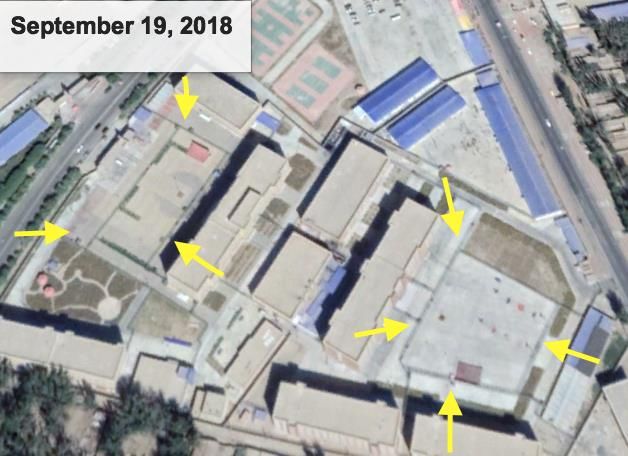
“The Happiest Muslims in the World”: Disinformation, Propaganda, and the Uyghur Crisis

KEY TAKEAWAYS
    •   As increasing evidence of the scale and nature of the
        extrajudicial detention campaign has emerged, the Chinese
        government has shifted the narrative on the camps, first from
        silence, to denial, to attempts to frame them as “vocational
        training centers,” a tool in a legitimate counter-terrorist
        struggle. Framing the mass detention of Uyghurs as a
        potential model for other countries’ counter-terrorism
        campaigns has dangerous implications for human rights
        worldwide.

    •   The Chinese government has deployed a multi-pronged
        information control strategy to prevent access to accurate
        information on what is occurring in East Turkistan, to
        portray the success of government policies through an
        aggressive propaganda campaign, and to attack individual
        activists, journalists and institutions reporting on the issue.

    •   The propaganda campaign takes the form of state-sponsored
        news articles and public statements by officials that paint a
        false image of the purpose of the camps, Chinese government
        orchestrated tours of the camps for foreign journalists and
        diplomats, and efforts to garner statements of support at the
        state level to legitimize the Chinese government’s policies.

    •   Social media platforms play an increasingly prominent role
        in the CCP’s public opinion struggle, including in the form
        of aggressive disinformation campaigns.

    •   Chinese state media is producing and disseminating videos
        featuring coerced statements by the family members of
        diaspora Uyghurs. These videos amount to a type
        of "hostage propaganda" in which Uyghurs deny that they
        have been mistreated in any way, and go on to denounce
        their    overseas   relatives   for    spreading     “lies.”
        These propaganda videos add to the trauma that Uyghurs
        overseas are already suffering due to their relatives being
        disappeared into camps or given long prison sentences.

2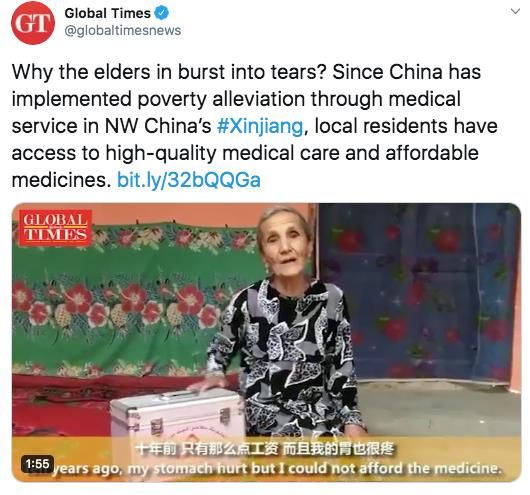
“The Happiest Muslims in the World”: Disinformation, Propaganda, and the Uyghur Crisis

                            INTRODUCTION

                            U     yghurs have endured persistent assimilation efforts by the
                                  Chinese Communist Party (CCP) despite the rights to
                            religious freedom and ethnic equality inscribed in the People’s
                            Republic of China’s (PRC) Constitution (1982).1 The CCP claims
                            that its Strike Hard Campaign Against Violent Terrorism,
                            launched in 2014, seeks to combat the “three evils” of terrorism,
                            separatism, and religious extremism in the Xinjiang Uyghur
                            Autonomous Region (XUAR), or East Turkistan. The Chinese
                            government views countering these three influences to be
                            essential to the country’s “national unity.” Despite Beijing’s
                            claims of widespread terrorism and religious extremism in China,
                            there is little evidence to confirm the validity of the government’s
                            claims. Rather, the crackdown is clearly aimed at erasing a
                            unique Uyghur ethnoreligious identity. Nevertheless, PRC
                            authorities have attempted to justify the curtailment of rights, the
                            securitization of society, and the establishment of internment
                            camps in the Uyghur region on the basis of a domestic equivalent
Investigative
                            of a “war on terror.”2
reporting and
                                 In 2017 increasing evidence emerged that the XUAR
testimony from
                            government was arbitrarily detaining large numbers of Turkic
witnesses and               and/or Muslim peoples, including Uyghurs and Kazakhs, in a
survivors have              rapidly expanded system of internment camps. Investigative
revealed that grave         reporting and testimony from witnesses and survivors have
human rights abuses         revealed that grave human rights abuses are taking place inside
                            the camps, resulting in physical torture, psychological trauma,
are taking place
                            and death. References to this internment campaign appeared on
inside the camps,
                            official Chinese government websites, including the now
resulting in physical       infamous photo of detainees in Lop county, Hotan, posted on the
torture, psychological      XUAR Ministry of Justice’s website in April 2017. This evidence
trauma, and death.          began to be scrubbed as the re-education campaign garnered

                            1The National People’s Congress of the People’s Republic of China, “Constitution of the People’s Republic of
                            China” (China, 1982).
                            2Xinjiang Uygur Autonomous Region (XUAR), or simply Xinjiang, is the given Mandarin Chinese name for
                            the historic area of East Turkistan. Xinjiang is a colonial name and literally translates to “new frontier.”

                                                                                                                                           3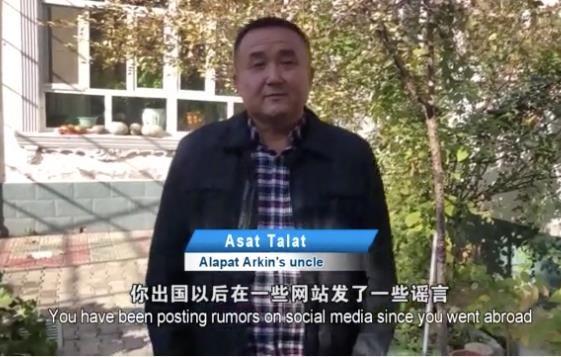
“The Happiest Muslims in the World”: Disinformation, Propaganda, and the Uyghur Crisis

international attention. A classified document, later published by
the International Consortium of Investigative Journalists, was
issued in November 2017. It instructed camp staff to “strengthen
their awareness of staying secret, serious political discipline and
secrecy discipline. It is strictly forbidden to bring video and video
equipment such as mobile phones and cameras into the teaching
and management areas and uploading pictures onto the internet
at will. Relevant important data should not be aggregated, not be
disseminated, and not be open to the outside.”3
     The Chinese government has deployed a multi-pronged and
aggressive information control strategy to prevent access to
accurate information on what is occurring in East Turkistan, to
portray the success of government policies through a global
propaganda campaign, and to attack individual activists,
journalists and institutions reporting on the issue. Elements of the
campaign include state media reports and public statements by
officials that portray the camps in a positive light; reports and
statements by international media outlets, foreign government
officials, and international experts that highlight the “positive
effects” of the camp system; and social-media posts that
disseminate false stories on a variety of platforms inside and
outside of China. The world beyond China’s borders is an                                            The Chinese
increasingly important target of the Party’s public opinion work.                                   government has
    The overseas media apparatus has been centralized under the                                     deployed a multi-
direct supervision of the Propaganda Department, with radio                                         pronged and
and television as the “mouthpiece” of the Party, “[i]n order to
                                                                                                    aggressive
strengthen the Party’s unified leadership of news and public
                                                                                                    information control
opinion work, and strengthen the management of important
                                                                                                    strategy to prevent
propaganda positions (宣传阵地), firmly grasping the right of
leadership over ideological work.” 4 Other institutions working
                                                                                                    access to accurate
inside and outside of China to develop and spread                                                   information on what
disinformation about Uyghur internment camps include the                                            is occurring in East
United Front Work Department (UFWD), which was recently                                             Turkistan.

3Bethany Allen-Ebrahimian, “Exposed: China’s Operating Manuals for Mass Internment and Arrest by
Algorithm,” The International Consortium of Investigative Journalists, November 24, 2019.
4   David Bandurski, “When Reforms Mean Tighter Controls,” Chinese Media Project, March 22, 2018.

4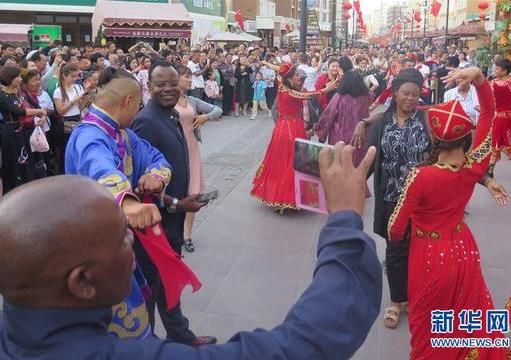
“The Happiest Muslims in the World”: Disinformation, Propaganda, and the Uyghur Crisis

             consolidated with state institutions that oversee religious and
             ethnic affairs.5
                 The CCP seeks to mislead the public by creating the narrative
             that the party-state is a victim of religious extremism and
             separatism and that the camps are not “camps” but rather
             humane institutions that promote vocational education. These
             portrayals of the camps as institutions that exist solely to teach
             “vocational skills” are highly disingenuous. Party Secretary
             Zhang Chunxian’s slogan from the beginning of the crackdown
             in 2014, that “the striking hand needs to be hard, and the
             educating hand needs to be hard as well,” communicates the true
             purpose of camps in East Turkistan: physically intimidating and
             politically indoctrinating Uyghurs whom the state has labeled
             “separatists.”6
                  This report analyses English language Chinese media sources
             aimed at foreign audiences to examine CCP messaging strategies
             on the Uyghur human rights crisis. The government’s domestic
             messaging on its policies in Uyghur region are beyond the scope
             of this report. The report concludes by laying out
             recommendations for governmental and non-governmental
             institutions. A multilateral effort is needed to hold the Chinese
             government accountable for its actions in East Turkistan.

             BACKGROUND

             S    ince 2017, an estimated one to two million Uyghurs and other
                  Turkic peoples in the XUAR have been detained in reeducation
             camps. 7 The expansion of these camps has occurred under the
             leadership of hardliner XUAR Communist Party Secretary Chen
             Quanguo. The reasons people are being sent to the camps are arbitrary
             and do not rise to the level of a crime; instead, many experts see them

             5Alex Joske, “Reorganizing the United Front Work Department: New Structures for a New Era of Diaspora
             and Religious Affairs Work” China Brief 19, no. 9 (2019): 6-13, Accessed June 17, 2020.
             6Feng Jin and Yao Tong, “新疆自治区党委召开稳定工作会议 [Xinjiang Autonomous Region Party Committee
             Held a Work Meeting],” 新疆日报 [Xinjiang Daily], January 1, 2015.
             7Joshua Lipes, “Expert Says 1.8 Million Uyghurs, Muslim Minorities Held in Xinjiang’s Internment Camps,”
             Radio Free Asia, November 24, 2019.

                                                                                                                        5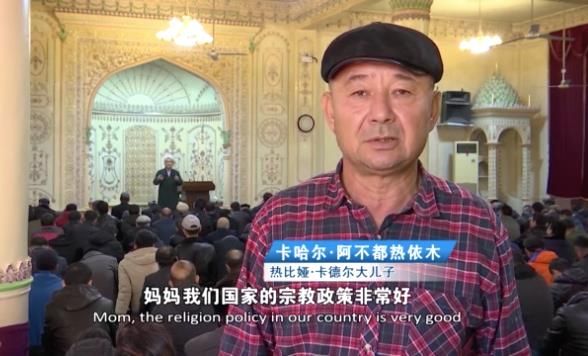
“The Happiest Muslims in the World”: Disinformation, Propaganda, and the Uyghur Crisis

as part of the CCP’s efforts to curb the influence of Uyghur culture and
Islam in the PRC. Satellite imagery and photographs obtained by
various international media outlets have highlighted the size and rapid
expansion of these camps.
     In testimonies former internees have described squalid physical
conditions in the camps.8 Their experiences provide evidence that the
camps are ideological reform centers aimed at forcefully “reeducating”
non-Han ethnic groups, eradicating their identities and Sinicizing them.
The CCP has employed a number of methods to indoctrinate internees:
hours of political and legal “education” and singing “red songs,”
torture, deprivation of food and medical care, and intense
psychological pressure.9 The conditions have led to numerous deaths
in East Turkistan, ranging from teenagers to elderly individuals. 10
    Uyghur culture is being suppressed outside of the camps as well,
with authorities limiting the use of the Uyghur language, censoring                                            The authorities have
Uyghur history, prohibiting fasting during Ramadan, demolishing                                                built a draconian
numerous mosques, severely restricting religious classes, and                                                  surveillance state,
forbidding Islamic clothing and names.11 The authorities have built a
                                                                                                               implementing facial
draconian surveillance state, implementing facial recognition systems,
tracking technology, surveillance applications, and police checkpoints                                         recognition systems,
throughout cities in the region.12                                                                             tracking technology,
    The PRC response to reports about the internment camps has                                                 surveillance
evolved over time. The CCP’s initial response was one of total denial                                          applications, and
when confronted with allegations of the mass internment of Uyghurs
                                                                                                               police checkpoints
and others in East Turkistan. The Chinese Consul General in
Kazakhstan denied the existence of “political education camps” in                                              throughout cities in
February 2018, and the Ministry of Foreign Affairs “stated they ‘had                                           the region.

8Congressional-Executive Commission on China. “Congressional-Executive Commission on China Annual
Report 2018” (United States, 2018), 1-19; Gulchehra Hoja, “Interview: ‘I Lost All Hope of Surviving,’” Radio
Free Asia, January 30, 2018; David Stavrou, “A Million People Are Jailed at China’s Gulags. I Managed to
Escape. Here’s What Really Goes on Inside,” Haaretz, October 17, 2019; Maya Wang, “‘Eradicating Ideological
Viruses,’” Human Rights Watch, September 9, 2018.
9Christopher Buckley, “China is Detaining Muslims in Vast Numbers. The Goal: Transformation” The New
York Times, September 8, 2018; Maya Wang, “‘Eradicating Ideological Viruses’: China’s Campaign of
Repression Against Xinjiang’s Muslims,” Human Rights Watch, September 9, 2018.
 Shohret Hoshur, Joshua Lipes, and Alim Seytoff, “Uyghur Teenager Dies in Custody at Political Re-
10

Education Camp,” Radio Free Asia, March 14, 2018; Shohret Hoshur and Joshua Lipes, “Elderly Uyghur
Woman Dies in Detention in Xinjiang ‘Political Re-Education Camp,’” Radio Free Asia, May 24, 2018.
11Rachel Harris, “Bulldozing Mosques: The Latest Tactic in China’s War Against Uighur Culture,” The
Guardian, April 7, 2019; Joyce Huang, “Rights Groups Decry China’s Ban on Fasting During Ramadan,” Voice
of America, May 8, 2019.
 Darren Byler, “The Global Implications of ‘Re-education’ Technologies in Northwest China,” Center for
12

Global Policy, June 8, 2020.

6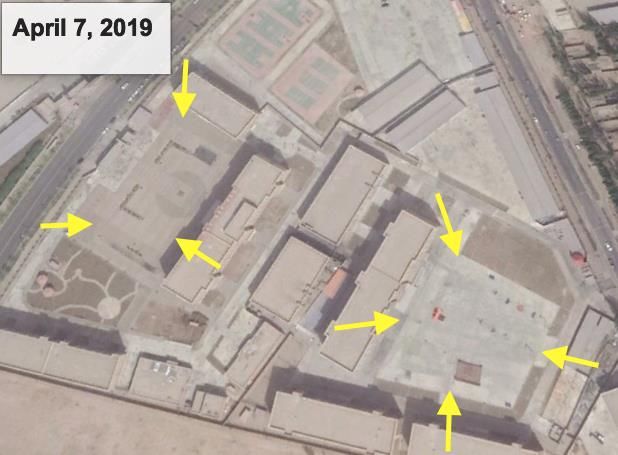
“The Happiest Muslims in the World”: Disinformation, Propaganda, and the Uyghur Crisis

             not heard of’ the situation” in May 2018.13 At the UN Committee on the
             Elimination of Racial Discrimination (CERD) Review in August 2018,
             senior XUAR policymaker Hu Lianhe said, “[t]he argument that 1
             million Uighurs are detained in re-education centers is completely
             untrue . . . There is no such thing as re-education centers.” 14 No
             government white paper published prior to October 2018
             acknowledged that any type of facility detaining ethnic Uyghurs
             existed.15
                  After being called to account for its policies at the August 2018 UN
             CERD Review, the PRC began to make greater efforts to justify those
             policies. In an October 2018 interview with Xinhua, XUAR Chairman
             Shohrat Zakir referred to the camps as voluntary, harmless
             “professional vocational training institutions.”16 An August 2019 State
             Council Information Office white paper asserts that the centers are
             humane and that their main purpose is to “effectively eradicate the
             conditions that enable terrorism and religious extremism to breed and
             spread.”17 The government in Beijing uses the “three evils”—terrorism,
             separatism, and religious extremism—as justification for the
             internment of Uyghur individuals, although there is no significant
             evidence of widespread religious radicalism among the Uyghur
             population. After admitting to the existence of “training centers” for
             “de-radicalization,” the Chinese government began to compare its
             camp system to de-radicalization programs in the West, with a Ministry
             of Foreign Affairs spokeswoman saying in October 2018 that “[t]he
             relevant practices in China are no different from those in the UK, France
             and the US.”18

             13AKIPress, “Consul General of China denies reports on 'political education camps for Uyghurs' in China's
             Xinjiang,” AKIPress, February 7, 2018; Gerry Shih, “China’s mass indoctrination camps evoke Cultural
             Revolution,” Associated Press, May 17, 2018.
             14United Nations Office of the High Commissioner for Human Rights (OHCHR), “Committee on the
             Elimination of Racial Discrimination reviews the report of China,” United Nations OHCHR, August 13, 2018;
             Stephanie Nebehay, “China Rejects Allegations of Detaining Million Uyghurs in Camps in Xinjiang,” Reuters,
             August 13, 2018.
             15
               The State Council Information Office of the People’s Republic of China, “Full Text: Human Rights in
             Xinjiang - Development and Progress” (China, 2017).; The State Council Information Office of the People’s
             Republic of China, “Full Text: Freedom of Religious Belief in Xinjiang” (China, 2016).
             16Nectar Gan, “Xinjiang Camps: Top Chinese Official in First Detailed Admission of ‘Training and Boarding’
             Centres,” South China Morning Post, October 16, 2018; Xiang Bo, “Full Transcript: Interview with Xinjiang
             Government Chief on Counterterrorism, Vocational Education and Training in Xinjiang,” Xinhua, October 16,
             2018.
             17The State Council Information Office of the People's Republic of China, “Vocational Education and Training
             in Xinjiang” (China, 2019).
              Embassy of the People’s Republic of China in the Islamic Republic of Pakistan, “Foreign Ministry
             18

             Spokesperson Hua Chunying's Regular Press Conference on October 24, 2018,” Embassy of the People’s
             Republic of China in the Islamic Republic of Pakistan, October 24, 2018.

                                                                                                                         7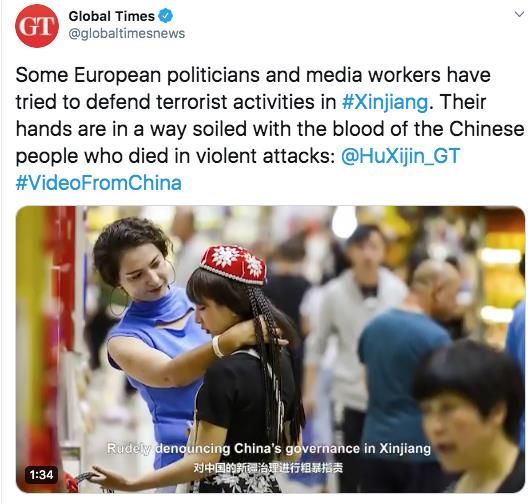
“The Happiest Muslims in the World”: Disinformation, Propaganda, and the Uyghur Crisis

     Since admitting that facilities holding large numbers of Uyghurs
exist, the PRC’s international disinformation campaign has solidified
around the term “vocational education and training centers.” The
disinformation campaign attempts to justify the existence of these
camps and convince the public that these facilities are “humane,”
“voluntary,” and beneficial to Uyghur culture. CCP op-eds,
government-guided tours (including camp facilities) for foreign media
and government officials, influencing foreign journalists to repeat CCP
talking points, and increasing use of social media have all been utilized
in an attempt to create a benevolent image of the internment camps in
East Turkistan.
     The following sections in this report detail the CCP’s
disinformation tactics. The section below describes the work of the
main organs spreading the official narrative, the United Front Work
Department and the Propaganda Ministry; analyzes the CCP’s
disinformation campaign, including tours of internment camps for
foreign media and diplomats; and analyzes the international
dimension of disinformation through CCP’s utilization of foreign
scholars and international news outlets for their messaging. The next
section addresses the virtual disinformation campaign and the party-
state’s efforts to use social media as a means to promulgate their state-
sponsored narratives, followed by a section which highlights the CCP’s
propaganda blitz following the “China Cables” leaks in November
2019. The final section describes the use of the family members of
Uyghurs abroad by the Chinese media.

INTERNMENT CAMPS

A      n overview of the information-control and -dissemination
       system within the XUAR and the PRC is crucial to
understanding the government’s disinformation on the Uyghur
human rights crisis. The creation, dissemination, and restriction
of information are centrally controlled by the Party to serve
political ends. The CCP treats the minds of its citizens as a
battlefield and pours enormous resources into “ideological
security” (意识形态安全), which refers to maintaining the correct
ideological line and preventing the spread and influence of

8
“The Happiest Muslims in the World”: Disinformation, Propaganda, and the Uyghur Crisis
political views not approved by the authorities.19 The Party sees
East Turkistan as a particularly important ideological battlefield,
and the ongoing crackdown has increased the amount of
“political study” Uyghurs must undergo in their everyday life. 20
Its efforts to bolster ideological security parallel its buildup of
police, paramilitary, and technological surveillance. In 2018 Chen
Quanguo gave a speech to the regional Propaganda and
Ideological Leading Group reaffirming the need for Party
committees at all levels to maintain Party authority and ensure
that “propaganda and thought work always follow the correct
political direction.”21
The Propaganda Bureau and the United Front Work
Department
The main organs carrying out public opinion struggle (舆论
斗争) and ideological work include the Propaganda Department,
which has consolidated control over the news media, and the
United Front Work Department (UFWD). Both of these
departments were reorganized in 2018 in order to increase the
CCP’s direct control. China’s media apparatus was placed under
direct control of the Propaganda Department, increasing its
oversight of news production. 22 The UFWD’s control of ethnic
and religious affairs was increased by the absorption of the State
Administration for Religious Affairs (SARA), and the State Ethnic
Affairs Commission was directly placed under UFWD
supervision. 23 In 2017, the central government established the
Xinjiang Bureau of the UFWD; it is likely not coincidental that the
UFWD’s Xinjiang Bureau was established concurrent to mass
“Document 9: A ChinaFile Translation: How Much Is a Hardline Party Directive Shaping China’s Current
19
Political Climate?” ChinaFile, November 8, 2013.
20Shohret Hoshur and Alim Seytoff, “Mandatory Indoctrination Classes For Unemployed Uyghurs in
Xinjiang,” Radio Free Asia, February 7, 2018.
21 “陈全国主持召开自治区党委宣传思想工作领导小组会议,” 新疆维一战线, December 20, 2018.
22 David Bandurski, “When Reform Means Tighter Controls,” Chinese Media Project, March 22, 2018.
Samantha Hoffman, “The United Front and the CCP’s ‘People’s War’ Against Religion,” Congressional-
23
Executive Commission on China, November 28, 2018.
9“The Happiest Muslims in the World”: Disinformation, Propaganda, and the Uyghur Crisis
detentions in the region.24 Both the regional government and the
Xinjiang Production and Construction Corps (XPCC), a
paramilitary organization under the direct control of Beijing,
have their own Propaganda Departments and United Front Work
Departments.
In 2014, Secretary of the XUAR Propaganda Bureau Li Xuejun
wrote that protecting ideological security was not only the duty
of the Propaganda Department, but the responsibility of all
departments and parts of society. He called on Party cadres at all
levels to enhance their understanding of the ideological struggle
and “establish a sense of being in a long-term war,” asserting that
“news and public opinion is the front line of ideology.”25 In 2019,
Propaganda Bureau Secretary Tian Wen continued the martial
theme, saying “Xinjiang’s ideological territory is the main
battlefield of the anti-succession struggle,” emphasizing the role
of “positive energy” and “preventing the spread of wrong ideas”
The Party allows no
to protect ideological security. 26 The work of the Propaganda
space for Uyghurs
Bureau and the UFWD are closely intertwined; media reports on
cadres’ “grassroots united front work” are organized and and others to air
overseen by the regional UFWD. The regional UFWD has called legitimate grievances,
for “effectively incorporating united front work into the firmly insisting that
propaganda work plan,” and increasing the importance placed all issues in the
on united front work in the Propaganda Bureau and news region can be blamed
media.27
on what it sees as the
The battle is not waged solely through spreading “positive
across-the-board
energy” but also relies on suppression of any negative news or
negative influences
dissenting opinion. The Party allows no space for Uyghurs and
others to air legitimate grievances, firmly insisting that all issues of Islamic and
in the region can be blamed on what it sees as the across-the- Western foreign
board negative influences of Islamic and Western foreign forces. forces.
Jessica Batke, “Surveillance, Suppression, and Mass Detention: Xinjiang’s Human Rights Crisis.”
24
Congressional-Executive Commission on China, July 26, 2018.
25 李学军,“新疆宣传部长谈反分裂斗争:意识形态工作要前移关口,”光明日报, January 23, 2014.
26时事报告”新疆维吾尔自治区党委常委、宣传部部长田文:坚决落实好新形势下宣传思想工作重点任务,”
February 21, 2019.
27 统战部, “自治区党委统战部组织自治区主要媒体赴和田、巴州、伊犁实地采访基层统战工作,” 新疆维一战线,
May 24, 2016.
10“The Happiest Muslims in the World”: Disinformation, Propaganda, and the Uyghur Crisis
The CCP not only fears the “infiltration” of Islam but is also
convinced that the West seeks to provoke violence in the Uyghur
region. Scholar Julia Famularo states that analysts in XUAR seek
to “draw a direct link between extremism and Western
liberalism,” citing an academic who wrote in the Journal of the
Xinjiang Police Officers’ Academy that Western nations “actively
cultivate ‘three evil forces’ organizations both within and outside
[Chinese] borders, supply support and funding, and make
abundant use of the Internet to permeate Xinjiang’s cultural
sphere and create serious violent terrorist movements.” 28 The
state regards Uyghurs as potential accomplices of these foreign
forces, and Uyghurs must prove that they are not “two-faced
people,” or individuals, particularly officials, secretly disloyal to
the CCP. 29 Efforts to indoctrinate the population take place
outside of the camps as well, including in the form of Party
organs mobilizing the population for loyalty oaths.
The official who made the Chinese government’s first major
response to questions about the crackdown was Hu Lianhe, the
Deputy Director of the United Front Work Department’s Xinjiang
Bureau. Hu gave China’s response at the UN Committee on the
Efforts to Elimination of Racial Discrimination Review, where he asserted
indoctrinate the that “[t]here is no such thing as re-education centres in
population take place Xinjiang.”30 Instead, “criminals involved in minor offenses” were
outside of the camps “assigned to vocational education and employment training
centres.” 31 Notably, Hu has held several other positions in the
as well, including in
central government apparatuses directing Xinjiang work,
the form of Party
including as Deputy Head of the Central Political and Legal
organs mobilizing Affairs Committee Secretariat for Coordinating Xinjiang Work
the population for and as one of the deputy heads of the Secretariat for the Central
loyalty oaths. Party Leading Small Group on Xinjiang Work.32 James Liebold,
Julia Famularo, “’Fighting the Enemy with Fists and Daggers’: the Chinese Communist Party’s Counter-
28
Terrorism Policy in the Xinjiang Uyghur Autonomous Region,” Terrorism and Counter-Terrorism in China:
Domestic and Foreign Policy Dimensions, 2018, Oxford University Press.
29 新疆日报 “评论:深刻认识“两面人”的危害,” April 12, 2017.
30 Lily Kuo, “China denies violating minority rights amid detention claims,” The Guardian, August 13, 2018.
United Nations OHCHR, “Committee on the Elimination of Racial Discrimination reviews the report of
31
China,” United Nations OHCHR, August 13, 2018.
James Liebold, “Hu the Uniter: Hu Lianhe and the Radical Turn in China’s Xinjiang Policy,” China Brief 18,
32
no. 16 (2018): Accessed June 17, 2020.
11“The Happiest Muslims in the World”: Disinformation, Propaganda, and the Uyghur Crisis
an expert on China’s ethnic policies, believes Hu to be one of the
primary theorists behind the forcible assimilation of the Uyghurs.
Hu claims to have developed a “scientific” theory of stability
which “requires the ‘standardizing of human behaviour’ (规范人
的行为) in order to achieve the perfect state of harmony.”33
The regional Propaganda Bureau and UFWD also contribute
to the international “public opinion struggle.” Former
Propaganda Bureau Secretary Li Xuejun stated in 2014 that with
“the help of the central external news units, Chinese-language
foreign media outlets, and major media resources in key
neighboring countries,” the Propaganda Bureau would “carry
out targeted propaganda activities to display and raise Xinjiang’s
good image.”34 The XPCC’s Propaganda Bureau also has a
Foreign Propaganda Office whose duties include contacting and
receiving foreign journalists and managing their interview
activities.35
Developing the Narrative in Chinese Media & Other
Official Efforts
China is increasingly asserting itself in the international
media, aiming to make its “discourse power” match its national
stature, and taking its “public opinion struggle” global. The CCP The Uyghur human
seeks to promote approved viewpoints and repress opposing rights crisis has been
ones. The Uyghur human rights crisis has been a major test of its a major test of [the
ability to shape discourse and control information on a subject
CCP’s] ability to
that seriously jeopardizes its reputation. Spreading “positive
energy” is a priority in its response to the public relations crisis
shape discourse and
caused by its treatment of Uyghurs. control information
Since launching its narrative about its mass detentions in the on a subject that
XUAR in 2018, CCP officials and media have deployed seriously jeopardizes
accusations of “fake news” while defending the camp system its reputation.
both domestically and internationally, dismissing criticism as an
33 Ibid.
34李学军.”新疆宣传部长谈反分裂斗争:意识形态工作要前移关口,” January 23, 2014.
35 “兵团精神文明建设指导委员会办公室” 兵团党委宣传部 , June 13, 2018
12“The Happiest Muslims in the World”: Disinformation, Propaganda, and the Uyghur Crisis
anti-China conspiracy. Additionally, the Chinese government
has invited diplomats, journalists, and scholars to visit East
Turkistan, staging a select few internment camps to appear to be
voluntary education centers. The Chinese government claims
that its methods have eradicated separatism and religious
extremism in the region, despite the lack of credible evidence to
prove that there was ever substantial extremism in the XUAR.36
In deflecting criticism of its human rights abuses, the Chinese
government and media has frequently accused Western countries
of a “double standard” when assessing cases of “terrorism” in the
People’s Republic of China.37 The supposed widespread existence
of religious extremism and terrorism serves as the key
justification for the government’s policies in the region, including
the establishment of the camp system. A 2018 Global Times
editorial titled “Protecting Peace, Stability is Top of Human
The Chinese Rights Agenda in Xinjiang” is a typical example of this rhetoric,
government claims claiming that the government’s actions had countered terrorist
that its methods have organizations’ efforts to brainwash its population, preventing the
eradicated separatism region from becoming “China’s Syria or China’s Libya,” and that
in the pursuit of stability “all measures can be tried.”38
and religious
extremism in the In an August 2018 article published by China Daily, the
official government media outlet accused Western governments
region, despite the
of distorting facts about the XUAR, writing:
lack of credible
As outsiders, they do not appreciate that tight
evidence to prove
security measures are badly needed to prevent the
that there was ever country’s far-west from being turned into an abyss
substantial of chaos. The terrorist attacks that have taken place
extremism there in recent years, and the ones committed
elsewhere in the country by terrorists from that
region, portends such a possibility.39
Sean Roberts, “Imaginary Terrorism? The Global War on Terror and the Narrative of the Uyghur Terrorist
36
Threat,” PONARS Eurasia, March 2012.
37 Xinhua, “West’s Coverage of Kunming Reveals Double Standard,” China Daily, March 3, 2014.
“Protecting Peace, Stability is Top of Human Rights Agenda for Xinjiang,” Global Times, August 12, 2018.;
38
Michael Clarke, “China’s Application of the ‘Three Warfares’ in the South China Sea and Xinjiang,” Orbis 63,
no. 2 (2019): 187-208, Accessed June 17, 2020.
“What China is Doing in Xinjiang is Being Deliberately Distorted: China Daily Editorial,” China Daily,
39
August 14, 2018.
13“The Happiest Muslims in the World”: Disinformation, Propaganda, and the Uyghur Crisis
The piece goes on to accuse Western media sources of being
under the influence of Uyghur “extremists.”40 The article
concludes by dismissing the “far-fetched” idea that the
government could detain a million people and reiterating the
CCP’s dedication to eradicating extremism.
By August 2018, following the admission at the UN that there
are facilities holding Uyghurs in the XUAR, the official media
began publishing stories laying out the official narrative on the
internment camps, referring to them as “vocational training and
education centers.” The first major Chinese media report on the
camps was an October 2018 video released by China Central
Television (CCTV) claiming that the centers are teaching trainees
necessary skills to reintegrate them into society (i.e., Mandarin,
“vocational skills,” and legal codes) in order to eliminate the
roots of terrorism. 41 Similarly, an August 2019 China Daily
editorial cites the total absence of terrorism in the region for two
years and an increase in regional tourism as evidence of the
efficacy of re-training “simple, uneducated . . . easily
brainwashed” rural Uyghurs in once underdeveloped areas.42
The PRC attempts to portray its policies as successful in
comparison to the counter-terrorism efforts of Western countries
such as the US, the UK, France, and Belgium. 43 Official media
sources tie separatism to poverty, underdevelopment, and lack of
skills rather than to oppressive conditions caused by intrusive
governmental policies. A Global Times article published in
November 2018 contends that China is employing humane
methods to transform “extremists” into “normal people,”
concluding by saying that its experience would be useful for
other provinces to learn from, including the Ningxia Hui
40 Ibid.
41“焦点访谈》 20181016 筑牢根基 源头治理 [Focus Interview: Building the Roots of Governance],” CCTV-13,
October 16, 2018.
42 “West Has to Discard Prejudice to See Real Xinjiang: China Daily Editorial,” China Daily, August 16, 2019.
Ben Blanchard and Tom Miles, “China Mounts Publicity Campaign to Counter Criticism on Xinjiang,”
43
Reuters, October 2, 2018.
14“The Happiest Muslims in the World”: Disinformation, Propaganda, and the Uyghur Crisis
Autonomous Region, another region with a large Muslim
population. 44
In other words, the official Chinese narrative has pivoted
from denying the existence of the camps to upholding them as
the “China model” for counter-terrorism, with dangerous
implications for human rights around the world. The China
Society for Human Rights Studies, a Chinese GONGO
(government organized non-governmental organization), held a
conference in Ürümchi in September 2019 titled the International
Seminar on Counterterrorism, De-Radicalization, and Human
Rights Protection, attempting to create some appearance of
international approval for its “counter-terrorism” methods.45 The
Global Times quoted a participating French professor as stating
that “[w]e have many issues concerning the treatment of
terrorism and the fight against terrorists. And I think there are
some answers given by the Xinjiang government for education
The official Chinese
and avoiding the strengthening of terrorism . . . I hope that France
narrative has pivoted and other European countries [haunted by terrorism] could take
from denying the the answers given by Xinjiang.”46
existence of the Qian Jinyu, director of the Human Rights Institution of the
camps to upholding Northwest University of Political Science and Law in Xi’an,
them as the “China described the “vocational centers” as operating fully within the
model” for counter- PRC’s legal framework in a July 2019 article. 47 However, scholars
terrorism, with of China’s legal system have pointed out that the legal basis for
the camps is flimsy, and “[t]he idea that these camps are
dangerous
voluntary is not credible.”48 The XUAR Regulation on De-
implications for extremification and the XUAR Implementing Measures for the
human rights around PRC Counter-terrorism Law were revised in October 2018 after
the world. the Chinese government acknowledged the existence of the
camps, but even these revisions do not provide a legal basis for
indefinite detention without charge. The revisions to the law add
44 Ai Jun, “Why Xinjiang Governance is Worthy of Copying,” Global Times, November 29, 2018.
45“International Seminar on Counterterrorism, De-Radicalization, and Human Rights Protection,” China
Society for Human Rights Studies, September 3, 2019.
46Xie Wenting and Bai Yunyi, “French Professor praises de-radicalization measures in Xinjiang,” Global
Times, September 10, 2019.
47 Liu Xin, “Double Standards Hinder Counter-Terrorism Work,” Global Times, July 11, 2019.
48 Jeremy Daum, “Explainer on Xinjiang Regulations,” China Law Translate, October 11, 2018.
15“The Happiest Muslims in the World”: Disinformation, Propaganda, and the Uyghur Crisis
language echoing official justifications for the camps, including
allowing for the establishment of “education centers” under
names such as “occupation skills education and training
centers or education and transformation establishments” in
order to “provide language, cultural, ideological, vocational,
legal, and psychological education” to people involved in
extremism and terrorism that did not rise to the level of a crime.49
However, as legal scholar Donald Clarke points out, the law still
“says nothing about those facilities being places of mandatory
detention and prescribes no procedures for identifying who
should be sent there.”50
Two State Council Information Office (SCIO) white papers
published in 2019, one in March titled “the Fight Against
Terrorism and Extremism and Human Rights Protection in
Xinjiang” and one in August titled “Vocational Education and
Training in Xinjiang,” present a misleading picture of
government policies in the region. The SCIO, also known as the
External Propaganda Office, is the organ leading the Chinese
government’s foreign facing propaganda effort, and is overseen
by the CCP’s External Propaganda Leading Group.51 The papers
describe the PRC’s humane treatment of ethnic and religious
groups in a propagandistic fashion, writing that the CCP policies
“remove the malignant tumor of terrorism and extremism that
threatens people’s lives and security” and “have prevent[ed] any
violation of human rights caused by counterterrorist measures.” 52
The papers both try to present an explanation of the legal
basis for detaining people in the camps, but Jeremy Daum, an
expert on the Chinese legal system, states that the white papers’
explanation of the legal basis for holding people in the camps falls
short.53 He notes that there was a change between the two papers,
49 Ibid.
50Donald Clarke, “No, New Xinjiang Legislation Does not Legalize Detention Centers,” Lawfare, October 11,
2018.
51 David Shambaugh, China Goes Global: The Partial Power (United States: Oxford University Press, 2013.
52 “The Fight Against Terrorism and Extremism and Human Rights Protection in Xinjiang,” The State Council
Information Office of the People’s Republic of China, March 2019.
“Vocational Education and Training in Xinjiang,” China Daily, August 17, 2019.
53 Jeremy Daum, “White Papering Over Detention,” China Law Translate, August 20, 2019.
16“The Happiest Muslims in the World”: Disinformation, Propaganda, and the Uyghur Crisis
not reflected in their official English translations, regarding the
legal basis for detaining people. In the first paper’s description it
was “possible that either the courts or the prosecution would
make a determination to waive criminal punishment, but the
latest white paper clarified that it must be the prosecution that
makes a decision to not pursue the charges.”54 However, Chinese
criminal procedure law requires that “[f]ollowing a non-
prosecution decision, all compulsory measures invoked against
the accused are to be removed.”55
The Chinese government also seeks to undermine the image
of the international media as impartial. Gheyret Saliyup (aka
Ailiti Saliyev), the Deputy Director of the XUAR Party
At a 2019 UN Human
Committee Foreign Propaganda Bureau, claimed that the “the
Rights Council side happiest Muslims in the world live in Xinjiang,” going on to say
event titled “Human information to the contrary is a product of Uyghur extremists
Rights Progress in “coordinat[ing] with hostile Western forces to wantonly spread
Xinjiang, China,” rumors, misrepresent, vilify and besmirch Xinjiang in the
Ambassador Chen Xu overseas media.” 56 At a 2019 UN Human Rights Council side
event titled “Human Rights Progress in Xinjiang, China,”
accused critics of
Ambassador Chen Xu accused critics of China’s human rights
China’s human rights
record in the region as having a “hidden political agenda.”57 UN
record in the region side events like these are organized by Chinese GONGOs like the
as having a “hidden China Society for Human Rights Studies (CSHRS), whose
political agenda.” secretary general also serves as the Director of the Propaganda
54 Ibid.
55 Ibid.
56 Ben Blanchard and Nick Macfie, “China Official Says Xinjiang's Muslims Are ‘Happiest in World,’” Reuters,
August 25, 2017.; “艾力提·沙力也夫:新疆的形象不容歪曲,” 人 民 网, August 25, 2017.
57“Remarks by H.E. Ambassador CHEN Xu at Side Event ‘Human Rights Progress in Xinjiang, China,’”
Permanent Mission of the People’s Republic of China to the United Nations Office at Geneva and Other
International Organizations in Switzerland, September 18, 2019.
17“The Happiest Muslims in the World”: Disinformation, Propaganda, and the Uyghur Crisis
Left: Photo exhibit at the 43rd UN Human Rights Council session sponsored by the Chinese mission to the UN Geneva and the China Society for
Human Rights Studies (Screenshot). Right: Materials distributed at the exhibit (Screenshot).
Department’s Human Rights Bureau, with which it shares an
office location.58
At the 43rd UN Human Rights Council (UNHRC) session, the
CSHRS held a number of events attempting to refute accusations
of human rights abuses, including a symposium, co-sponsored
by Cameroon, holding up China’s policies as a model for counter-
terrorism. The CSHRS touted the attendance of assistants to the
special mechanism of the UNHRC as well as officials from the
missions of Cambodia, Britain, Mexico, Malaysia, Syria, Algeria,
Serbia, Qatar, Laos, Niger and others. 59 CSHRS stated that the
United States and western media “condone terrorist forces” and
that “China is willing to share the ‘Chinese experience’ with the
international community and make a positive contribution to the
global counter-terrorism and de-radicalization.”60
Attempting to create the impression of transparency with the
international community, Beijing has also invited foreign media,
58Geoffrey Roberts, “One Chinese GONGO’s War Against International Human Rights,” China Change, May
1, 2020.
Ma Caicai, “International symposium on anti-terrorism, de-radicalization and human rights held in
59
Geneva,” China Society for Human Rights Studies, March 4, 2020.
60 Ibid.
18“The Happiest Muslims in the World”: Disinformation, Propaganda, and the Uyghur Crisis
Left: Diplomats from countries including Malaysia tour a camp in Kashgar, December 2018. Right: Diplomats from African nations and the
African Union in Ürümchi, on a tour which included a trip to a camp in Turpan, September 2019 (Photos: Xinhua).
officials, and dignitaries on state-sponsored visits to “vocational
educational and training centers,” up to 1,000 guests in total in
2019 according to a speech by Minister of Foreign Affairs Wang
Yi.61 In 2019, the government invited waves of diplomats for tours
of the camps, including from Russia, Kazakhstan, Kyrgyzstan,
Uzbekistan, Tajikistan, India, Pakistan, Indonesia, Malaysia,
Afghanistan, Thailand, Kuwait, 62 Pakistan, Venezuela, Cuba,
Egypt, Cambodia, Senegal, Belarus, 63 Laos, Cambodia, the
Philippines, Nepal, Sri Lanka, Bahrain, Nigeria, 64 Yemen,
Equatorial Guinea, Mozambique, Zambia, Cote d'Ivoire, South
Africa, Ethiopia, Zimbabwe, 65 Myanmar, Algeria, Morocco,
Vietnam, Hungary, Greece, Singapore, and the mission of the
League of Arab States.66
61“Wang Yi talks about 2019 China's Diplomacy: Firmly defend our core national interests, Provide a strong
support for achieving the two centenary goals,” Embassy of the People’s Republic of China in Ireland,
December 13, 2019.
62 “Diplomatic envoys from 12 countries visit Xinjiang,” Xinhua, January 8, 2019.
63“China Focus: Senior diplomats from 8 countries to UN Geneva office visit Xinjiang” Xinhua, February 25,
2019.
64 “China Focus: Diplomats from 7 countries visit Xinjiang,” Xinhuanet, August 23 2019.
65 “UN envoys from 8 countries visit Xinjiang,” Xinhuanet, September 3, 2019.
66 “China Focus: Foreign diplomats visit Xinjiang,” Xinhuanet, March 11, 2019.
19“The Happiest Muslims in the World”: Disinformation, Propaganda, and the Uyghur Crisis
Camp visited by BBC reporters in 2019; arrows show where tall fences and possible guard towers have been removed (Google Earth).
Visitors have been taken to a select few camps that have been
refitted to appear less like prisons than previously. In several
instances, watchtowers and razor wire fences were removed
from the exterior of designated buildings to make camps appear
less menacing months prior to scheduled international visits. 67
For example, at one facility in Kashgar which has been used for
tours and appeared in a number of propaganda videos,
temporary mats for basketball courts were placed on concrete
areas normally inaccessible to detainees in October 2018 before a
visit by Global Times editor Hu Xijin later that month. 68 Videos
taken by the BBC and Al Jazeera show Uyghur “trainees”
engaging in vocational training and cultural activities such as
Uyghur dance and music. 69 Using images of smiling internees
and footage of Uyghurs confessing that they have turned away
from extremist habits due to “vocational training,” the authorities
have created misleading visual images of the true conditions
inside these camps.
67Danielle Cave, Nathan Ruser, and Fergus Ryan, “Mapping Xinjiang’s Re-education Camps,” Australian
Strategic Policy Institute, November 1, 2018.
68 Ibid.
69 BBC News, “走進中國新疆的「思想轉化營」[Entering Xinjiang, China’s “Ideological Transformation
Camps]. BBC News 中文,” YouTube, June 18, 2019, video, 11:57; Al Jazeera English, “How China Spins the
Xinjiang Story to the Chinese,” YouTube, September 8, 2019, video, 8:50.
20“The Happiest Muslims in the World”: Disinformation, Propaganda, and the Uyghur Crisis
Journalists who took these tours described them as highly
controlled, noting that they were only allowed to speak to
detainees with minders present. 70 Many detainees repeated the
same phases verbatim, including “I want to say that I am here
voluntarily.” 71 One former detainee testified that while in the
camp he was told “that journalists might come to visit soon, and
that we needed to tell them that we had come there
voluntarily.”72 Despite the choreographed nature of the visits,
some reporters were able to confirm that the detainees were not
there willingly. When Bloomberg reporter Peter Martin asked
Mamat Ali, the head of a camp in Yéngisheher (Ch. Shule) county,
Journalists who took what would happen if the detainees refused to go, he replied, “If
they don’t want to come, they will have to go through judicial
these tours described
procedures.”73
them as highly
After visiting East Turkistan on a state-sponsored trip in 2019,
controlled, noting
Albanian-Canadian university lecturer Olsi Jazexhi described a
that they were only
place where Uyghurs are forcefully Sinicized, saying that the
allowed to speak to teaching of Mandarin Chinese, internees’ self-criticism, and
detainees with government minders’ constant presence all signaled to him a
minders present. highly securitized, repressive environment. 74 The regional
Many detainees government subsequently denounced Jazexhi’s reporting. 75
repeated the same Jordanian journalist Nihad Jariri also described the oppressive
environment in the region, noting that most mosques were closed,
phases verbatim,
people were prevented from praying, security checkpoints were
including “I want to ubiquitous, and that her meeting with a Uyghur translator was
say that I am here disrupted by police. The policed searched the translator’s phone
voluntarily.” and then forced Jariri to return to her hotel.76
Joshua Lipes and Alim Seytoff, “Skeptical Scholar Says Visit to Xinjiang Internment Camps Confirms
70
Western Media Reports,” Radio Free Asia, August 29, 2019.
71 Peter Martin, “How China is defending its detention of Muslims to the world,” Bloomberg, April 20, 2019.
Gene A. Bunin, ”’99 bad things:’ A man’s 2-year journey through Xinjiang’s complex detention network,”
72
The Art of Life in Chinese Central Asia, June 30, 2020.
73 Peter Martin, “How China is defending its detention of Muslims to the world,” Bloomberg, April 20, 2019.
74Olsi Jazexhi, “The situation in Xinjiang: report on my latest visit to China: Part 1,” Youtube, August 25, 2019,
video, 30:29. Olsi Jazexhi, “The situation in Xinjiang: report on my latest visit to China: Part 2,” YouTube,
August 25, 2019, video, 32:51.
“Albanian reporter's fake news about Xinjiang against professional ethics: regional govt,” Global Times,
75
December 3, 2019.
76Adile Ablet and Joshua Lipes, “Reports of China’s Repression in Xinjiang ‘100 Percent True’: Jordanian
Journalist,” Radio Free Asia, September 12, 2019.
21“The Happiest Muslims in the World”: Disinformation, Propaganda, and the Uyghur Crisis
At the 41st session of the United Nations Human Rights
Council in June of 2019, a senior XUAR official claimed that
“many trainees have graduated from the centers and lived a
happy life.”77 In December 2019, XUAR Chairman Shorat Zakir
announced that “[a]t present the trainees who have
participated . . . have all graduated” and that “training” would
continue “based on ‘independent will’ and ‘the freedom to come
and go.’”78 A Foreign Ministry spokeswoman said she could not
give an exact number of people “participating” since it was
“dynamic, there’s coming and going.”79 Given the opacity of the
situation on the ground it is difficult to know whether there has
been a substantial number of people released, and if so, whether
they have been replaced with new detainees. However, Beijing promotes the
increasing evidence is emerging that large numbers of people are idea that the camps in
being transferred into forced labor or the prison system.80
the Uyghur region are
In the face of overwhelming evidence about the nature of the
a humane and
camps system, the Chinese government has escalated its
voluntary method for
disinformation campaign, going so far as to declare victory in
2019, with Foreign Minister Wang Yi announcing that China’s “de-radicalizing”
“just position has won overwhelming support from the entire populations,
international community.”81 The CCP employs a multi-pronged despite
approach to deflect criticism of the PRC’s human rights violations. overwhelming
Beijing promotes the idea that the camps in the Uyghur region evidence that they are
are a humane and voluntary method for “de-radicalizing” entire
extrajudicial
populations, despite overwhelming evidence that they are
extrajudicial detention centers aimed at forcible assimilation. The detention centers
next section will analyze the international aspects of Beijing’s aimed at forcible
disinformation campaign—using international media as public assimilation.
77“Senior official addresses UN session on human rights protection achievements in Xinjiang” Xinhua, June
26, 2019.
Cate Cadell “China says some held in Xinjiang camps have graduated, condemns US bill,” Reuters,
78
December 8, 2019.
79 Ibid.
Naomi Conrad, Julia Bayer, Cherie Chen, “China convicts Uyghurs in sham trials at Xinjiang camps,”
80
Deutsche Welle, June 8, 2020.
81“Wang Yi talks about 2019 China's Diplomacy: Firmly defend our core national interests, Provide a strong
support for achieving the two centenary goals,” Embassy of the People’s Republic of China in Ireland,
December 13, 2019.
22You can also read


