The Manufacturing Industry in Turkey
←
→
Page content transcription
If your browser does not render page correctly, please read the page content below

The Manufacturing
                                        Industry in Turkey

                     January 2014

Investment Support and Promotion Agency of Turkey            1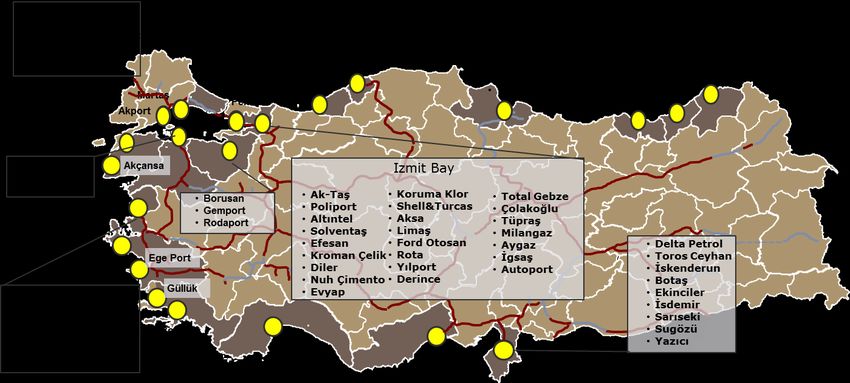
Disclaimer

Republic of Turkey Prime Ministry Investment Support and Promotion Agency (ISPAT) submits the information
provided by third parties in good faith. ISPAT has no obligation to check and examine this information and takes no
responsibility for any misstatement or false declaration. ISPAT does not guarantee the accuracy, currency,
reliability, correctness or legality of any information provided by third parties. ISPAT accepts no responsibility for
the content of any information, news or article in the document and cannot be considered as approving any opinion
declared by third parties. ISPAT explicitly states that; it is not liable for any loss, negligence, tort or other damages
caused by actions and agreements based on the information provided by third parties.

Deloitte accepts no liability to any party who is shown or gains access to this document. The opinions expressed in
this report are based on Deloitte Consulting’s judgment and analysis of key factors. However, the actual operation
and results of the analyzed sector may differ from those projected herein. Deloitte does not warrant that actual
results will be the same as the projected results. Neither Deloitte nor any individuals signing or associated with this
report shall be required by reason of this report to give further consultation, to provide testimony or appear in
court or other legal proceedings, unless specific arrangements thereof have been made. All opinions and estimates
included in this report constitute our judgment as of this date and are subject to change without notice and may
become outdated.

       Investment Support and Promotion Agency of Turkey                                                                                               2
                                                                                   ©2014 Deloitte Turkey. Member of Deloitte Touche Tohmatsu Limited
Glossary of Terms

Acronym         Definition                                   Acronym             Definition
ACP            The African, Caribbean and Pacific Group of   ICT                Information and Communications
               States                                                           Technology
ARI            Advanced Research and Innovation              IMF                International Monetary Fund
BMI            Business Monitor International                INSEAD             European Institute of Business
BR             Brazil                                                           Administration
CAGR           Compound Annual Growth Rate                   ISO                Istanbul Chamber of Industry
CBRT           Central Bank of the Republic of Turkey        IT (Country        Italy
CEO            Chief Executive Officer                       Code)
CIS            Commonwealth of Independent States            IT                 Information Technology
CT             Communications Technology                     İTU                Istanbul Technical University
CZ             Czech Republic                                LCV                Light Commercial Vehicle
DE             Germany                                       LED                Light Emitting Diode
EC             European Community                            M&A                Mergers and Acquisition
EFTA           European Free Trade Association               NL                 Netherlands
EIU            Economist Intelligence Unit                   N/A                Not Available
EMI            Emerging Markets Insight                      OECD               Organization for Economic Co-operation
ES             Spain                                                            and Development
EU             European Union                                OIZ                Organized Industrial Zones
EUR            Euro                                          OSTIM              Middle Eastern Industry and Trade
EUROMED        Euro-Mediterranean Partnership                                   Center
FDI            Foreign Direct Investment                     ÖSYM               Turkish Student Evaluation, Selection
FOB            Free On Board                                                    and Placement Center
FR             France                                        P&G                Procter & Gamble
FTA            Free Trade Agreements
                                                             PIP                Project Inventive Premium
GDP            Gross Domestic Product
                                                             PISA               Program for International Student
GE             General Electric
                                                                                Assessment
               Global Manufacturing Competitiveness
                                                             PL                 Poland
GMCI           Index
                                                             PPP                Purchasing Power Parity
IASP           International Association of Science Parks
      Investment Support and Promotion Agency of Turkey                                                                                    3
                                                                       ©2014 Deloitte Turkey. Member of Deloitte Touche Tohmatsu Limited
Glossary of Terms

Acronym       Definition
PMI          Purchasing Managers’ Index
R&D      Research and Development
RU       Russian Federation
RUSF     Resource Utilization Support Fund
SAN-TEZ  Industrial Thesis Program
SME      Small-Medium Enterprises
SSI      Social Security Institution
TCDD     Turkish State Railways
TDZ      Technology Development Zones
         Union of Chambers and Commodity
TOBB     Exchanges of Turkey
         The Scientific and Technological Research
TÜBITAK Council of Turkey
TÜLOMSAŞ Turkish Locomotive & Engine Industries
Turkstat Turkish Statistical Institute
UAE      United Arab Emirates
UK       United Kingdom
         United Nations Industrial Development
UNIDO    Organization
UNSD     United Nations Static Division
USA      United States of America
USD      United States Dollar
VAT      Value Added Tax
VTS      Vocational Training School
WEO      World Economic Outlook

      Investment Support and Promotion Agency of Turkey                                                                       4
                                                          ©2014 Deloitte Turkey. Member of Deloitte Touche Tohmatsu Limited
Table of Contents

Executive Summary                                 6         iii. Competitiveness of the
                                                                                                               36-48
                                                            Industry
     A. Overview of the Industry in Turkey        7-25
                                                            iv. Government Incentives                          49-50
       i. A Brief Macroeconomic Outlook of
                                                  8-10    A. Analysis of the Manufacturing
       Turkey
                                                                                                               51-84
                                                          Industry’s Sub-Sectors
       ii. A Glance at the Manufacturing
                                                  11-15     i. Overview of the Manufacturing
       Industry in Turkey                                                                                      52
                                                             Industry in Turkey
       iii. A General Overview of Foreign
       Trade in the       Manufacturing           16-20     ii. Pharmaceutical Manufacturing                   53-56
       Sector
                                                            iii. Food and Beverage
                                                                                                               57-61
        vi. Overview of Disposable Income                    Manufacturing
       in Turkey and Neighboring                  21-22
                                                            iv. Automotive Manufacturing                       62-66
       Countries
                                                            v. Machinery and Equipment
       v. FDI in Turkey                           23-25                                                        67-71
                                                            Manufacturing
     B. The Competitiveness of Turkey’s                     vi. Chemical Manufacturing
                                                  26-50                                                        72-75
     Manufacturing Sector
                                                            vii. Textile Manufacturing                         76-80
       i. Turkey’s 2023 Targets                   27-29
                                                            viii. Durable Consumer Goods
       ii. Availability of Factors of                                                                          81-84
                                                  30-35     Manufacturing
          Production and Costs

   Investment Support and Promotion Agency of Turkey
                                                            ©2014 Deloitte Turkey. Member of Deloitte Touche Tohmatsu Limited
                                                                                                                                5
Executive Summary
• Turkey has shown robust macroeconomic growth in • Students graduating from manufacturing-related
recent years thanks to the government’s growth departments in universities numbered over 32,000
program and is expected to show continuous in 2012, while there were more than 35,000
growth. The Economist Intelligence Unit (EUI) graduates from vocational training schools
expects an annual average growth rate in real GDP during the same period.
to be around 5% until 2017. Moreover, OECD
• According to the Ministry of Economy, Turkey has
forecasts a real GDP growth of 3.8% in 2014 and
Free Trade Agreements with 19 countries and
4.1% in 2015.
has started negotiations with another 13
• The manufacturing industry is one of the main countries. There are also 19 free trade zones in
drivers of the Turkish economy, accounting for Turkey which enable corporate, income and
24.2% of total GDP. According to Turkstat, customs tax, VAT and RUSF exemptions, along
Turkey’s manufacturing industry has been with many other opportunities.
increasing at a CAGR of 12% since 2003,
• The Turkish investment incentive program provides
exceeding the growth levels of the gross domestic
varying tax reductions between 15-65%
product and reached TL 220 billion in 2012.
depending on investment region and scale and
• According to the World Bank, Turkey’s per capita social security support for 2 to 12 years
household final consumption expenditure reached depending on region.
USD 5,900 in 2011. Turkey’s increasing level of
• Total R&D expenditures exceeded TL 11 billion in
disposable income and the high disposable income
2011, according to Turkstat.
levels of its export partners – mostly EU countries,
which exceeded USD 15 billion – make Turkey an • Turkey’s 2023 goals include reaching certain
attractive investment destination. benchmarks for exports in various sub-sectors,
including: machinery (USD 100 billion),
• Turkey’s has a young and extremely large
chemicals (USD 50 billion), textiles (USD 20
workforce – 7.5 million people between the ages of
billion), automotive industry (USD 75 billion),
24 and 34 – with competitive wage rates of USD
and electronics (USD 45 billion).
572* per month as of October 2013.
* Converted using 31 October EUR/USD exchange rate of 1.3672
Investment Support and Promotion Agency of Turkey
©2014 Deloitte Turkey. Member of Deloitte Touche Tohmatsu Limited
6A. Overview of the Industry in
Turkey
i. A Brief Macroeconomic Outlook of Turkey
ii. A Glance at the Manufacturing Industry in Turkey
iii. A General Overview of Foreign Trade in the Manufacturing Sector
iv. Overview of Disposable Income in Turkey and Neighboring Countries
v. Overview of Logistics in Turkey
vi. FDI in Turkey
Investment Support and Promotion Agency of Turkey ©2014 Deloitte Turkey. Member of Deloitte Touche Tohmatsu Limited
7Turkey’s fast-growing economy is expected to attract
more investment in the future
• Turkey has undergone profound economic Figure 1: GDP Growth Rate (Constant Prices)
transformation over the last decade and its
economic foundation is quite solid. It is the 16th
9%
largest economy in the world, in purchasing power
parity terms and the 6th largest economy in Europe
with a current GDP of approximately USD 786 4% EIU*
billion in 2012.
• Having boomed as fast as 9.3% and 8.8% in real -1%
terms in 2010 and 2011 respectively, EIU projects
that Turkey is expected to grow by 3.5% in 2013, -6%
4.9% in 2014, 5.1% in 2015, 5.0% in 2016 and
4.9% in 2017. OECD also projects a positive
outlook for the Turkish economy with a 3.8%
Source: Turkstat, EIU
growth rate in 2014 and 4.1% growth rate in 2015. f: forecast
• Monetary policy played a vital role in reining in Figure 2: Inflation, 2004-2012
inflation over recent years. The rate of inflation in
15%
Turkey has stayed under 10% since 2004 and
year-end inflation was capped as 6.2% in 2012. 12%
EIU forecasts that the average inflation rate will
further ease to 4% by 2018. 9%
6%
3%
0%
2004 2005 2006 2007 2008 2009 2010 2011 2012
Source: Turkstat
Investment Support and Promotion Agency of Turkey
©2014 Deloitte Turkey. Member of Deloitte Touche Tohmatsu Limited
8Capitalizing on its economic policies, the investment
environment in Turkey has become more welcoming to
foreign investors
Figure 3: The Central Bank of the Republic of
• The overnight lending rates have steadily decreased
Turkey O/N Interest Rates
over the years and were around 7.5% in September
60% 2013, which is a 500 basis point decrease from 2002.
• Fitch Ratings announced Turkey’s investment grade
50%
rating as BBB in November 2012 and Standard &
40% Poor’s announced a rating of BB+ in March 2013.
These events signal further upgrades and are
30% expected to boost the inflow of institutional funding.
20% • Moody's raised Turkish government bond ratings to
Baa3 and revised its outlook to stable from positive in
10% May 2013.
0%
Table 1: Turkey’s Credit Ratings
Borrowing Lending Rating Outlook Rating Outlook
Source: CBRT (Local (Local (Foreign (Foreign
Currency) Currency) Currency) Currency
Standard
BBB Stable BB+ Stable
& Poor’s
Fitch BBB Stable BBB- Stable
Moody’s Baa3 Stable Ba1 Positive
JCR BBB- Stable BBB- Stable
Source: Moody’s (May 2013), S&P (March 2013), Fitch (December 2013), JCR (May2013)
Investment Support and Promotion Agency of Turkey
©2014 Deloitte Turkey. Member of Deloitte Touche Tohmatsu Limited
9Overall, Turkey is 69th in Doing Business 2014 Report
• Foreign Direct Investment Law in Turkey – which • According to Doing Business 2014 report by the
complies with international standards- came into World Bank, Turkey is ranked 69th among 189
force in 2003. The objective of this Law is to countries on the ease of doing business.
regulate the principles to encourage foreign direct
• Turkey has a higher ranking compared to BRIC
investments; to protect the rights of foreign
countries. The averages of Eastern & Central Asia
investors; to define investment and investor in line
and Middle East & North Africa are ranked 71st and
with international standards; to establish a
107th respectively, below the rank of Turkey.
notification-based system for foreign direct
investments rather than screening and approval; Figure 4: Ease of Doing Business Analysis
and to increase foreign direct investments through Ranking, 2014
established policies.
Turkey 69
• With this law, unless stipulated by international
agreements and other special laws: Regional Average (Eastern
71
Europe & Central Asia)
1. Foreign investors are free to make direct
investments in Turkey, Romania 73
2. Foreign investors shall be subject to equal Russian Federation 92
treatment with domestic investors.
• As a result, the number of expats has increased China 96
significantly. According to the Ministry of Labor and
Regional Average (Middle
Social Security, number of work permits given to 107
East & North Africa)
foreigners increased by 86% in 2012 reaching
32,272. Since 2003 a total of 125,697 permits Brazil 116
were provided to foreigners.
India 134
• It is also crucial to note that the availability of free
transfer of funds in Turkey adds positively to its
0 50 100 150
investment friendly environment.
Source: Doing Business 2014, The World Bank
Investment Support and Promotion Agency of Turkey
©2014 Deloitte Turkey. Member of Deloitte Touche Tohmatsu Limited
10The impact of manufacturing within Turkey’s economy
is rapidly increasing as the economy continues to grow
Figure 5: The Size of the Manufacturing Industry
• Strong growth in manufacturing industry was
in Turkey, (in 1998 Constant Prices)
accompanied by strong growth in the overall
40 24,5% economy. The growth in manufacturing in the last
CAGR
6% 2 years was 10% and 2%, respectively.
24,0%
• Turkey achieved a respectable manufacturing
TL Billion
output growth rate of 4% in the first quarter of
23,5%
2013, where industrialized countries suffered
20
significantly. According to UNIDO, manufacturing
23,0%
output dropped by 2.9% in the Eurozone during
the same period. Manufacturing output fell by
22,5%
2.6% in the Czech Republic and 3.1% in Russia,
while it increased slightly in Brazil with 1.4% and in
0 22,0%
India with 2.5%.
Figure 6: Growth Rates of GDP
Size of Manufacturing Industry 14,5%
12,0%
Sectorial share of GDP 9,5%
Source: Turkstat
7,0%
• The manufacturing industry has a significant share 4,5%
in Turkey’s economy with a 24.4% share and a
2,0%
total of more than TL 29 billion, in constant
-0,5%
prices, in 2012. The industry has been one of the
-3,0%
main drivers of the Turkish economy.
-5,5%
• After the 2009 global economic recession, the -8,0%
industry recovered quickly and exceeded pre-crisis 2007 2008 2009 2010 2011 2012
levels with a CAGR of 8% from 2009 to 2012.
Manufacturing GDP
Source: Turkstat
Investment Support and Promotion Agency of Turkey
©2014 Deloitte Turkey. Member of Deloitte Touche Tohmatsu Limited
11Strong growth has been accompanied by an increase in
production and exports in turn
Figure 7: The Industrial Production Index Figure 8: Total Manufacturing Exports, 2007-2012
(2010=100), 2005 - 2012 (Gross Indices)
115 150
113
110 111
USD Billion
105 100
100 100 100
98
95 94 50
90
87 87
85 0
80 2007 2008 2009 2010 2011 2012
75
Export Import
2005 2006 2007 2008 2009 2010 2011 2012
Source: Turkstat Source: Turkstat
• The manufacturing industry has grown since the • Strengthened production within the manufacturing
economic crisis in 2009, as seen in the graph industry is manifested by an increasing number of
above. exports. Exports grew by a CAGR of 7% from
2007 to 2012 and 13% from the previous year to
• Turkey’s geographic proximity to Europe, Asia,
more than USD 143 billion. An analysis of
the Commonwealth of Independent States
Turkey’s manufacturing export data in 2012
(CIS), Middle Eastern and North African
reveals that the manufacture of basic metals had
countries make it a trade hub and an attractive
the highest share in total manufacturing exports
base for production for manufacturing companies.
with 20%, followed by textiles and apparel with
18%.
• Turkey’s imports grew a CAGR 5.6% from 2007 to
2012 to more than USD 176 billion.
Investment Support and Promotion Agency of Turkey
©2014 Deloitte Turkey. Member of Deloitte Touche Tohmatsu Limited
12Turkey’s manufacturing industry as a whole is
outpacing such countries as Russia, the Ukraine and
Romania…
Figure 9: Competitive Industrial Performance
2.500 The industrialization intensity
index measures the share of the
Manufacturing Export
2.000
Romania
manufacturing industry’s value
per Capita
1.500
Russia
Turkey added to the GDP. According to
1.000 Ukraine UNIDO, Turkey scored 0.5 in
Brazil
500
India
industrial intensity. Moreover,
0 Turkey’s share in total exports
0 0,2 0,4 0,6 0,8
Industrialization Intensity Index
for the manufacturing sector
Source: UNIDO
Note: The size of the bubble represents the share in world manufacturing exports.
was 0.9% in 2010 and
(2010)
manufacturing export per
capita was more than USD
1,200.
Investment Support and Promotion Agency of Turkey
©2014 Deloitte Turkey. Member of Deloitte Touche Tohmatsu Limited
13…and is expected to continue to grow in the future
Figure 10: Global Manufacturing Competitiveness • The Global Manufacturing Competitiveness
Index, 2013 Index (GMCI) shows the rankings in terms of
10 current and future manufacturing competitiveness.
The ranking is done through a survey of CEOs
7.98 DE
7.89 BR taken by Deloitte.
7.82 DE • According to expectations, Turkey will move up
7.13 BR
from 20th position in 2013 to 16th position within
the next five years. The country’s manufacturing
competitiveness ranking is bound to improve
5.99 TR because of the government’s recent initiative to
5.87 PL boost employment levels and its ability to leverage
5.81 UK potential in alternative energy generation as well
as within R&D and production.
5.71 CZ
5.69 PL • The factors in Turkey’s favor for improving
5.61 TR
5.59 UK manufacturing competitiveness in the future are:
5.27 NL – low corporate tax rates,
5.23 CZ
– low labor costs and
5.04 RU
4.64 FR – a high growth rate for per capita personal
disposable income.
4.35 RU
• Turkey’s strategic central location, extensive trade
3.75 IT relationships, an abundance of available labor, and
3.66 ES 3.58 ES policies that enable the increasing of manufacturing
3 IT
competitiveness could further elevate Turkey’s
3.45
positioning.
2013 in the next five years
Investment Tip: CEOs believe that Turkey
Source: Deloitte Global Manufacturing Competitiveness Index, INSEAD
will become a major global player in the
manufacturing industry.
Investment Support and Promotion Agency of Turkey
©2014 Deloitte Turkey. Member of Deloitte Touche Tohmatsu Limited
14Gross profit margins in the manufacturing industry
remained stable in the recent years
Figure 11: Gross Profit Margins in Manufacturing • The overall profit margins in
20% the industry remained stable in
the last five years.
15%
• While the pharmaceutical
industry suffered a sharp fall, it
10% still remains the most profitable
15,41% 14,91% 14,09% 14,48% sector among its peers with a
5% profit margin of 26% in 2011.
The profit margins for
machinery and chemicals were
0% as high as 20%, while the
2008 2009 2010 2011 consumer electronics,
Source: CBRT, Deloitte Analysis
automotive and textile
Figure 12: Profit Margins in Manufacturing Sub-Sectors industries enjoyed increases in
40% their profit margins finishing
2008 2009 2010 2011
with 19.5%, 11% and 15%
growth respectively in 2011.
30%
20%
10%
0%
Food Chemicals Automotive Textile
Beverage Pharmaceuticals Machinery
Source: CBRT, Deloitte Analys
Investment Support and Promotion Agency of Turkey
©2014 Deloitte Turkey. Member of Deloitte Touche Tohmatsu Limited
15Another advantage of Turkey is ease of trade. The trade
volume for the manufacturing industry surpassed USD
319 billion in 2012
Figure 13: Total Manufacturing Exports by Figure 14: Total Manufacturing Imports by
Country, 2012 Country, 2012
200
Other Other
150 41%
49%
Germany
USD Billion
9% China
Iraq 12%
7% 100
Iran UK
Germany
7% 3% 12%
South
UK 50 Korea
USA Italy
6% 3% Spain
4%Russia UAE India 3% 8%
Italy France Russia
4% 4% 4% 6% 3% 5% USA
France
0 5% 5%
2012
Export Import
Source: Turkstat (ISIC Rev 3 Codes 15, 16,17,18,19, 20, 21, 22, 23, 24, 25, 26, 27, 28, 29,30, 31, 32, 33, 34, 35, 36 ), Deloitte Analysis,
• Turkey uses its geographic advantage in manufacturing, exporting to a diverse range of countries from Europe
to the Middle East. Germany is Turkey’s leading export partner constituting 9% of total exports followed by Iraq
and Iran with a 7% share each.
• The top two countries Turkey imports from are China and Germany with a little more than 12% each, followed
by Italy with 8% and Russia with 5%.
Investment Support and Promotion Agency of Turkey
©2014 Deloitte Turkey. Member of Deloitte Touche Tohmatsu Limited
16Turkey is a regional hub and will expand its trade
volume because of its advantageous geographical
positioning
• Turkey is situated between Europe and Asia, allowing the country to create a link between three continents with
over 1.5 billion people and a GDP of USD 25 trillion.
• As major airway hubs in the region, Istanbul and Ankara airports provide a practical route of travel with a
maximum 4-hour direct flight to the capital cities in Europe, Western & Central Asia, the Middle East and Africa.
• Turkey’s geographical location and logistics capabilities, its unique positioning at the intersection of trade routes
and its rapidly progressing investment climate are the major factors contributing to Turkey’s strategic and
regional importance.
Figure 15: Turkey’s Geographical Positioning Table 2: Turkey’s Total Foreign Trade Volume
by Region
Trade Volume
Regions
(USD billion)
Free Zones in Turkey 3.34
Europe (EU) 146.65
Europe (Non-EU) 51.78
North America 21.75
Central & South America 8.11
Middle & Near East 63.86
Africa 19.28
Asia & Pacific 61.53
Other 12.71
Total 389.01
Investment Tip: Acceleration in Turkish foreign trade with
neighboring as well as distant countries underlines the
importance of Turkey as a major trade route.
Source: Turkstat, Deloitte Analysis
Investment Support and Promotion Agency of Turkey
©2014 Deloitte Turkey. Member of Deloitte Touche Tohmatsu Limited
17Moreover, trade volume is likely to continue expanding
because of Turkey’s trade relationships with the
European Union and its partners
• To accelerate growth in exports, Turkey Table 3: Trade between EU 28 Countries and
derives trade benefits from the following Turkey
partnerships: Export
• The European Community (EC) - Turkey Import
The EU 28
Customs Union: CAGR: -1.4%
CAGR: 3.3%
– The EC-Turkey Customs Union 100,0
USD Billion
facilitates the free movement of goods,
which eliminates customs duties and
quantitative restrictions on industrial 50,0
products and processed agricultural
products between the two parties. 0,0
– The free movement of goods does not 2008 2009 2010 2011 2012
apply to agricultural products and coal
& steel products, which are subject
only to preferential treatment.
• Euro-Mediterranean Partnership
(EUROMED):
– Turkey is a member of EUROMED,
Source: Turkstat, Deloitte Analysis
which promotes economic integration
and democratic reform across 16
neighboring nations of the EU in North
Africa and the Middle East.
Investment Support and Promotion Agency of Turkey
©2014 Deloitte Turkey. Member of Deloitte Touche Tohmatsu Limited
18Turkey has taken crucial steps to increase Free Trade
Agreements all around the world
• Turkey negotiates agreements with countries that participate in
EU free trade agreements.
• FTAs support the development of Turkey’s trading activities
with neighboring countries and creates a level playing field for
Turkish exporters.
• Turkey does not have to sign FTAs with the same requirements
as the EU and is free to tailor its own agreements with third
party countries.
• As of 2012, Turkey has FTAs with 19* countries. These
countries include: the European Free Trade Association (EFTA),
Macedonia, Bosnia-Herzegovina, Albania, Israel, Palestine,
Selected Countries in Negotiations with Morocco, Tunisia, Egypt, Georgia, Serbia, Montenegro, Chile,
Turkey for FTAs Jordan, South Korea and Mauritius. The top countries that
Turkey exports to are Egypt, with a total amount of USD 3.7
billion, followed by the ETFA countries with USD 2.6 billion of
exports, followed by Israel with USD 2.3 billion, and Morrocco
with USD 1 billion.
• Also it is important to note that there are a total of 13
countries/country blocks that Turkey has started FTA
negotiations. These countries include the following: the
Selected Countries Falling Under Turkey’s
FTA Negotiation Initiative
Ukraine, Colombia, Ecuador, Malaysia, Moldova, the Democratic
Republic of the Congo, Ghana, Cameroon, the Seychelles, the
Gulf Cooperation Council, Libya and the Faroe Islands
• Additionally, Turkey has launched initiatives to start
negotiations with the USA, Canada, Japan, Thailand, India,
Indonesia, Vietnam, Peru, the Central American countries,
other ACP countries, Algeria, Mexico, Singapore and South
Africa.
Source: Ministry of Economy
* Including EFTA: Iceland, Liechtenstein, Norway and Switzerland
Investment Support and Promotion Agency of Turkey
©2014 Deloitte Turkey. Member of Deloitte Touche Tohmatsu Limited
19The industry will also benefit from Turkey’s growing
disposable income as well as that of its export partner
Household Final 8-year CAGR of
Figure 16: Turkey’s Attractiveness in the Local Market and
Consumption Household Final
Export Markets Expenditure per Consumption
90.000 Capita* Expenditure
Azerbaijan, 839**
Cumulative per Capita USD
80.000 Azerbaijan: 7%
Ukraine, 1,679
70.000 Ukraine: 11%
Germany, 20,850
60.000 Romania, 3,280 Romania: 1%
Czech Republic, 6,949 Czech Republic:
50.000
Poland, 6,298 2%
40.000 Poland: 4%
UAE, 13,700
30.000 Russia, 4,019 UAE: -8%
Turkey, 5,857
20.000
Russia: 8%
10.000 France, 19,985
Turkey: 4%
0
2004 2005 2006 2007 2008 2009 2010 2011 France: 1%
Source: World Bank, Deloitte Analysis
* Constant 2005 USD
** 2010 data
• Turkey’s vibrant domestic consumer base make it an attractive market for the manufacturing industry.
• Moreover, Turkey’s largest export market, the EU, already has significant spending power and has established a
middle-class consumer base that demands high-quality goods. However, the EU is not the only significant trade
partner, other trade partners such as Azerbaijan, Russia and the Ukraine have also managed to increase their
household final consumption expenditure per capita from 2003 to 2011, thus opening the door for Turkish
exports.
Investment Support and Promotion Agency of Turkey
©2014 Deloitte Turkey. Member of Deloitte Touche Tohmatsu Limited
20Its heavy investment on infrastructure will create
effective links spanning Europe to Asia and Russia to
Africa
• According to the Global Manufacturing Table 4: Targeted Transport Areas for 2023
Competitiveness Index, physical infrastructure is
vital for decreasing costs and increasing efficiency Domestic
as well as improving productivity. Therefore, Passenger 2010 2023
Turkey aims to ramp up not only traditional Transport
infrastructure (e.g. roads, ports and bridges), but
also to increase advanced technology investments Highway 89.59% 72%
(e.g. information and communications technology) Railway 2.22% 10%
in order to remain globally competitive.
Airway 7.82% 14%
• Some of the major infrastructure projects include:
Seaway 0.37% 4%
• The 3rd Bosphorus Bridge (Yavuz Sultan
Selim Bridge) Project
• The new airport project, which will be
constructed on the European side of Domestic
Istanbul 2010 2023
Freight Carriage
• The Marmaray Project, which will connect
Highway 80.63% 60%
the Asian side of Istanbul to the European
side via an underground railway tunnel Railway 4.76% 15%
• Increasing the length of high-speed railway Airway 0.44% 1%
from 888 km to 10,000 km (with a CAGR of
Seaway 2.66% 10%
25%)
Pipeline 11.51% 14%
• According to the Ministry of Transport,
Maritime Affairs and Communications’
Strategy Plan, the Ministry’s goal is to grow
the information and communication Source: Ministry of Transport, Maritime Affairs and Communications
technology sector to a size of USD 160
billion.
Investment Support and Promotion Agency of Turkey
©2014 Deloitte Turkey. Member of Deloitte Touche Tohmatsu Limited
21Turkey has extensive infrastructure as ports are
connected to railways
Figure 17: Ports and Railways in Turkey
Railroads
Ports Improved
Plans for Improvement
Source: Ministry of Transport, Maritime Affairs and Communications
Investment Support and Promotion Agency of Turkey
©2014 Deloitte Turkey. Member of Deloitte Touche Tohmatsu Limited
22Foreign investors noting the number of opportunities
have already invested in Turkey’s manufacturing
industry
Figure 18: FDI in Manufacturing Figure 19: Types of FDI in Manufacturing
4,5 Branch
1%
Subsidiary
7%
USD Billion
3,0
New
1,5 Investments
92%
0,0
2008 2009 2010 2011 2012
Source: Ministry of Economy
• The manufacturing industry has garnered great interest from foreign investors over recent years with FDI in
2012 surpassing USD 4.3 billion.
• 319 foreign investors made investments in Turkey. According to the Ministry of Economy, 36 of these
investments were above USD 500,000; 30 of them were between USD 200,000-500,000 and 253 of them
were less than USD 200,000.
Investment Support and Promotion Agency of Turkey
©2014 Deloitte Turkey. Member of Deloitte Touche Tohmatsu Limited
23There have been numerous M&A deals in 2012…
Table 5: M&As in the Manufacturing Sector in 2012
Deal Value
Acquirer Origin Target Sector Stake
(USD million)
Paper & Paper
Dunapack Austria Dentaş Ambalaj 79.3% 110
Products
Rubber and Plastic
Nitto Denko Japan Bento Bantçılık 100% 100
Products
Paper & Paper
International Paper USA Olmuksa 43.7% 56
Products
Medical, Precision
and Optical
Essilor International France Işbir Optik 70% 45
Instruments,
Watches
Universe Capital Partners USA Transtürk Holding Textile & Apparel N/A 27
Electrical Machinery
Gemalto France Plastikkart 14.3% 7
and Apparatus
Rubber and Plastic
Eaton Corporation USA Polimer Kauçuk 100% N/A
Products
Asda Stores UK Gaat Textile & Apparel 100% N/A
Electrical Machinery
Johnson Controls USA Karat Güç Sistemleri 49% N/A
and Apparatus
Electrical Machinery
Imtech Netherlands AE Arma Elektropanç 80% N/A
and Apparatus
Source: Deloitte Annual Turkish M&A Review, Deloitte Analysis
Note: Turkstat USTS codes were used in sector specific classification.
Investment Support and Promotion Agency of Turkey
©2014 Deloitte Turkey. Member of Deloitte Touche Tohmatsu Limited
24… with considerable FDI in manufacturing industry
Table 6: M&As in the Manufacturing Sector in 2012
Deal Value
Acquirer Origin Target Sector Stake
(USD million)
Manufacture of
ADM Hong Kong Cevher Jant 46,2% N/A
Basic Metals
Paper and Paper
Silgan USA Öntaş Teneke 100% N/A
Products
Electrical
Atlas Copco Sweden Ekomak Machinery and 100% N/A
Apparatus
Textile & Wearing
Universe Capital Partners USA Idaş N/A N/A
Apparel
Electrical
Systemair Sweden HSK Machinery and 70% N/A
Apparatus
Electrical
Assa Abloy Sweden Sekotek Elektronik Machinery and 100% N/A
Apparatus
Medical, Precision
and Optical
Essilor International France Ipek Optik 70% N/A
Instruments,
Watches
Medical, Precision
and Optical
Essilor International France Opak Optik 51% N/A
Instruments,
Watches
Source: Deloitte Annual Turkish M&A Review, Deloitte Analysis
Note: Turkstat USTS codes were used in sector specific classification.
Investment Support and Promotion Agency of Turkey
©2014 Deloitte Turkey. Member of Deloitte Touche Tohmatsu Limited
25B. The Competitiveness of Turkey’s
Manufacturing Industry
i. Turkey’s 2023 Targets
ii. Availability of Factors of Production and Costs
iii. Competitiveness of the Industry
iv. Government Incentives
Investment Support and Promotion Agency of Turkey ©2014 Deloitte Turkey. Member of Deloitte Touche Tohmatsu Limited
26Turkey has ambitious 2023 targets in each sub-sector
of manufacturing
Table 7: Turkey’s 2023 Targets
Manufacturing Industry Goals Export Goals
Industry
Machinery and • Create custom-designed, • Turkey’s 2023 export goals for machinery is USD 100 billion,
Equipment high-quality, affordable and securing a 2.63% share of the global machinery market. The sector
Manufacturing environmentally friendly aims to provide 18.34% of Turkey’s total exports. The sub-sector’s
products quantitative export targets for 2023 can be summarized as follows:
• Create joint R&D centers • power generating machinery and equipment totaling
while increasing R&D USD 31 billion
spending
• special machinery and equipment for specific
• Become the preferred industries totaling USD 24 billion
machine manufacturer in the
• metal processing machines totaling USD 13 billion
world
• industrial machinery equipment and parts totaling USD
33 billion
Chemicals • Develop new and special • Turkey’s 2023 export goal for chemical manufacturing is USD 50
Manufacturing products with high value- billion, securing a 0.79% share of the global chemical market. The
added features sector aims cover 9.17% of Turkey’s total exports. The sub-sector’s
quantitative export targets for the industry can be summarized as
• Establish new brands
follows:
• organic and inorganic chemicals totaling USD 5.9
billion
• mineral fuels and mineral oils totaling USD 11.7 billion
• paints and raw materials totaling USD 2.5 billion
• soaps-detergents-cosmetics totaling USD 3.3 billion
• plastic and rubber products totaling USD 23.3 billion
Source: Turkish Exporters’ Assembly, Source: Ministry of Science, Industry and
Technology • pharmaceuticals totaling USD 3.3 billion
Investment Support and Promotion Agency of Turkey
©2014 Deloitte Turkey. Member of Deloitte Touche Tohmatsu Limited
27And offers a transparent investment environment
Manufacturing Industry Goals Export Goals
Industry
Electricity and • Changing Turkey’s status in the • Turkey’s 2023 export goal for electronics is USD 45 billion,
Electronics sector from implementing existing securing a 0.64% share of the global market. The sector aims
Manufacturing technologies to producing new to provide 8.25% of Turkey’s total exports. The sub-sector’s
technologies quantitative targets can be summarized as follows:
• Promoting R&D activities • electricity and energy totaling USD 14.9 billion
concerning medical electronics,
• electronic devices and components totaling USD
LED, wind and solar energy
14.9 billion
• Increasing investments to improve
• appliances and other devices totaling USD 10.6
environmentally friendly
billion
technologies
• information and communication technologies
totaling USD 0.5 billion
• other instruments and apparatuses totaling USD
4.1 billion
Furniture • Produce original, high quality • Turkey’s 2023 export goal for wood and wood products is
Manufacturing designs USD 16 billion, securing a 1.6% share of the global market.
The sector aims to represent 2.93% of Turkey’s total exports.
Turkey aims for furniture export to bring in revenue of USD 6
billion by 2023.
Source: Turkish Exporters’ Assembly, Source: Ministry of Science, Industry and Technology
Investment Support and Promotion Agency of Turkey
©2014 Deloitte Turkey. Member of Deloitte Touche Tohmatsu Limited
28It will remain an attractive candidate for investment
Manufacturing Industry Goals Export Goals
Industry
Textile • Boosting productivity with • Turkey’s 2023 export goal for textiles is USD 20 billion, securing a
Manufacturing modernization and restructuring 3.6% share of the global textile market. The sector aims to cover
of production capacity 3.67% of Turkey’s total exports by 2023, with the following targets:
• Focusing on high value-added • fiber and yarn totaling USD 2.5 billion
specialty fiber and yarn
• woven fabric totaling USD 5 billion,
production through the use of
new technologies • knitted fabrics totaling USD 3.5 billion,
• Focusing on technological textiles • technical textiles and non-woven surface fabrics
and multifunctional products with totaling USD 4 billion,
the R&D orks
• textiles for the home totaling USD 4 billion
• other textiles totaling USD 1 billion.
Automotive • Finding alternative uses for steel • Turkey’s 2023 export goal for land vehicles is USD 75 billion,
Manufacturing so as to customize and enhance securing a 2.4% share of the global market. The sector aims to be
its use. 13.76% of Turkey’s total exports, with the following targets:
• Accelerating the transition from • passenger vehicles totaling USD 31.3 billion
low value-added products to high
• motor vehicles for transportation of goods totaling
value-added products
USD 22.5 billion
• Improving the infrastructure for
• motor vehicles for the transportation of 10+ people
the local supplies
totaling USD 7.5 billion
• Improvingthe export potential of
• spare-parts-chassis-body totaling USD 12 billion,
all products
• motorcycle-bicycle-seat for invalids USD 1.67 billion,
• trailers and semi-trailers totaling USD 1.5 billion.
Source: Turkish Exporters’ Assembly, Source: Ministry of Science, Industry and Technology
Investment Support and Promotion Agency of Turkey
©2014 Deloitte Turkey. Member of Deloitte Touche Tohmatsu Limited
29Turkey has stronger numbers than most peer country
averages according to the 2013 Global Manufacturing
Competitiveness Index
Table 8: Key Statistics of Turkey
Supplemental Data Analysis: Key Statistics Turkey Peer Average
Manufacturing GDP CAGR (2005–2010) 3.8% 2.9%
Manufacturing GDP/Percentage of Total GDP (2010) 17.8% 18.3%
Labor Costs (USD/hour) (2011) 3.2 21.9
Manufacturing Exports/Percentage of Total Exports (2011) 77.3% 59.9%
Manufacturing Jobs Created per Hundred Persons (2001–2010) 1.1 -0.8
Highest Corporate Tax Rate (2012) 20.0% 26.2%
Researchers per Million Population (INSEAD 2012) 1,592.8 2,980.0
Per Capita Personal Disposable Income (USD) (2011) 7,797 15,886
Per Capita Personal Disposable Income CAGR (2001–2011) 14.1% 8.5%
Source: 2013 Global Manufacturing Competitiveness Index, Deloitte Analysis
Note: Peer countries include China, Germany, the USA, India, South Korea, Taiwan, Canada, Brazil, Singapore, Japan, Thailand, Mexico, Malaysia, Poland, the UK, Australia, Indonesia,
Vietnam, Czech Republic, Turkey, Sweden, Switzerland, the Netherlands, South Africa, France, Argentina, Belgium, Russia, Romania, the UAE, Colombia, Italy, Spain, Saudi Arabia,
Portugal, Egypt, Greece, and Ireland.
• Turkey’s manufacturing GDP achieved a 3.8% CAGR for the period of 2005-10 compared to the peer
countries’ average of 2.9%. In 2011, the country’s manufacturing sector share in total exports was 77.3%
compared to the peer countries’ average of 59.9%. This strong performance is an indicator of strong growth
and developing potential.
• Given the manufacturing industries’ contribution to Turkey’s GDP is slightly below the peer countries’ average
and per capita personal disposable income is well below the peer average, Turkey still has significant room for
manufacturing growth.
Investment Support and Promotion Agency of Turkey
©2014 Deloitte Turkey. Member of Deloitte Touche Tohmatsu Limited
30A positive outlook on the human resources side - young
and cost-effective labor
Figure 20: Employed Population, 2012 • Turkey’s workforce is one of the youngest and
largest in Europe, with the necessary with the
8 35% necessary education, skills, knowledge, expertise
30% 30% and performance.
Million People
6 27% 25% • More than 65% of the population is aged
20% between 24 and 54, which is a huge economic
4 18%
15% 15% advantage for Turkey.
2 10%
8% • According to the Central Bank of Turkey, the
5% manufacturing industry generated 11% more
3%
0 0% employment opportunities between 2009 and
15-24 24-34 35-44 45-54 55-64 65+ 2012, employing more than 4.5 million people in
Number of People Employment Rate 2012.
Source: Euromonitor • Moreover, Turkey has one of the lowest minimum
Figure 21: Number of Employees in wage rates in Europe with USD 572* per month in
Manufacturing, 2009-2012 October 2013.
4,6
Million Employees
4,4
Investment Tip: Many executives are aware
4,2 of the impact they can have because of the
4,5
4,4 4,4 availability and cost of Turkey’s highly-
4,0 skilled workforce.
4,0
3,8
Source: Eurostat
2009 2010 2011 2012 *Converted using 31 October EUR/USD exchange rate of 1.3672.
Source: CBRT
Investment Support and Promotion Agency of Turkey
©2014 Deloitte Turkey. Member of Deloitte Touche Tohmatsu Limited
31Turkey provides a superior, skilled workforce dedicated
to improving the manufacturing industry…
Figure 22: 2011-2012 Manufacturing Related Graduates in • There were a total of more than 68,000
Turkey students that graduated from vocational
training schools and universities in the
3.601 68.249
70.000 28.800 2011-2012 academic year. These students
60.000 are trained and educated in Turkey’s
50.000 premium universities specifically training for
35.848 manufacturing and manufacturing-related
40.000
30.000 industries. They then become a part of
20.000 Turkey’s growing manufacturing industry.
10.000 • Turkey is continuing to put emphasis on
0 education to improve the quality on its
VTS* Undergraduate Graduate Total workforce. There are many departments
Source: ÖSYM, Deloitte Analysis that are specifically designed to teach both
* Vocational Training Schools theoretical and applied work in
manufacturing. The departments related to
the manufacturing industry include: textile
manufacturing, electric-electronics,
chemical engineering, manufacturing
engineering, petroleum studies, industrial
studies, mechatronics and the like.
Investment Support and Promotion Agency of Turkey
©2014 Deloitte Turkey. Member of Deloitte Touche Tohmatsu Limited
32…and easy access to talent
Figure 23: Snapshot of Key Factors for Talent • The quantitative metrics indicated in Figure 24
provides a picture of the talent and capabilities of
Turkey. In this regard, Turkey has been developing
Program for International 445 in key performance areas such as number of
Student Assessment (PISA) researchers and within the Innovation Index.
Math Scores out of 1,000 Turkey ranked 68 out of 142 countries in the
(2009) Innovation Index, scoring high on knowledge and
Program for International 454 technology.
Student Assessment (PISA) • PISA scores are given in three broad catogories
Science Scores out of 1,000 that include reading, math and science. Out of 66
(2009) countries, Turkey placed 44th in math and science
Program for International 464 and 42nd in reading.
Student Assessment (PISA) • The country is making the following efforts to
Reading Scores out of 1,000 enhance the skills of its labor force:
(2009) – The Ministry of Education launched projects
Patents Granted (Turkish 4,543 within the framework of EU programs to meet
Patent Institute 2012) the needs of high-tech industries and improve
the number of qualified high-tech workers.
Innovation Index Score 36/100 – The Ministry of Science, Industry, and
(INSEAD 2013) Technology launched a program with the
Researchers in R&D per Million 884 Union of Chambers and Commodity Exchanges
People (2010) of Turkey (TOBB) to provide skilled laborers to
meet manufacturing sector needs.
Source: PISA, Turkish Patent Institute, INSEAD
Investment Support and Promotion Agency of Turkey
©2014 Deloitte Turkey. Member of Deloitte Touche Tohmatsu Limited
33Productivity in Turkey increased approximately 10%
from 2005 to 2012 surpassing total OECD productivity
Figure 24: Productivity Growth in Total Economy (2005=100)
125
Turkey
OECD Total
100
75
2003 2004 2005 2006 2007 2008 2009 2010 2011 2012
Source: OECD
• OECD measures labor productivity as GDP per hour worked. Turkey’s productivity has been increasing since
2005 and reached 110.2 in 2012, indicating a productivity increase of 10% from 2005, while total OECD
productivity only increased 6% during the same period.
Investment Support and Promotion Agency of Turkey
©2014 Deloitte Turkey. Member of Deloitte Touche Tohmatsu Limited
34A transparent relationship between employers and
employees was enacted with Law No. 6356
Employment and Severance Payment Figure 25: Days not Worked due to Strikes and
Lockouts, 2003-2008
• Termination of employment is governed by labor
4,4
law. According to Article 18 of the law, termination of
4,0
the employment contract of an employee having at
3,6
least 6 months’ service with an employer in a
3,2
workplace operating with 30 or more employees
Million Days
should be based on a valid reason relating to 2,8
efficiency or behavior of the employee, or the 2,4
requirements of the enterprise, workplace or the 2,0
work. 1,6
1,2
• Calculation of the severance paid is based on the 0,8
employee’s latest salary. However, the maximum 0,4
limit of severance pay for the second half of 2012 0,0
was TL 3,033.98. In the second half of 2013, the 2003 2004 2005 2006 2007 2008
ceiling for severance pay was increased to TL
3,254.44. Turkey UK Germany Italy Spain
Source: ILO
• As indicated in the Union Law, individuals are free • In Turkey, the workdays missed were a mere
to join a trade union, but they cannot be forced to 142,000 in 2008, while in developed countries
join one. such as UK there were more than 750,000 days
missed and Italy surpassed 720,000 days.
• According to Law No. 6356, Article 41 that governs
Trade Unions and Collective Bargaining • Both the employer and the employee can terminate
Agreements, labor unions have the right to sign the employment contract. Moreover, the employer
collective bargaining agreements with employers may terminate the employment contract of the
provided that more than 40% of the total number employee by paying, in advance, the salary of the
of employees of that employer are members of the employee that corresponds to the period of notice.
labor union. Source: Ministry of Finance, Official Gazette No. 28460, HSBC Country Guides
Investment Support and Promotion Agency of Turkey
©2014 Deloitte Turkey. Member of Deloitte Touche Tohmatsu Limited
35Another factor in manufacturing, the cost of energy, is
among the lowest for Turkey
• Lowering electricity prices is vital to relieve the Figure 26: Electricity Prices for Industry in
burden of the high cost of energy for the USD/MWh by Country, 2011
manufacturing industries of many different
countries. International investors have to be wary
of a country’s industrial electricity prices since it Slovak Republic 178,5
may be one of the factors deciding the future
profitability of their investments.
• The figure reveals that Turkey’s averge electricity Czech Republic 159,9
prices in 2011 are well below OECD-member
European countries.
• Turkey continues to have lower energy prices than OECD Europe 150,0
the Slovak Republic and the Czech Republic.
Turkey 138,6
Poland 121,8
0 50 100 150 200
USD/MWh
Source: IEA Statistics of Energy Prices and Taxes
Investment Support and Promotion Agency of Turkey
©2014 Deloitte Turkey. Member of Deloitte Touche Tohmatsu Limited
36The manufacturing industry has been receiving a boost
from growing R&D grants.
Figure 27: Gross Expenditures on R&D, 2012 • Total R&D expenditures increased a stunning 16%
from 2007 to 2011 exceeding TL 11 billion in
R&D as % of GDP
2,0%
2011.
• Higher education received more than 45% of the
1,5%
expenditures for R&D, while business enterprises
and the government received 43% and 11%,
1,0% Ukraine respectively.
Turkey
Poland
• 51% of the total R&D expenditures consist of labor
Malaysia costs, followed by machinery and equipment
0,5%
expenditures with 12%.
Mexico
0,0% Figure 28: Gross Domestic Expenditure on R&D by
0 5 10 15 Sector, 2007-2011
Gross Expenditure on
12
R&D (USD Billion) CAGR
Note: Bubble size represents countries’ GDP in terms of PPP USD Billion.
16% 1,3
Source: 2013 R&D Global Funding Forecast Report
9 1,1
• According to R&D Magazine, which is a highly 1,0
TL Billion
4,8
respected authority on R&D funding, Turkey is 0,8
6 3,9
above its emerging market peers such as India, 0,6 3,2
Mexico, Malaysia, Poland and the Ukraine in terms 2,5 3,0
of R&D spending as a percentage of the GDP. 3
4,3 5,1
• Although, the R&D spending is percentage wise 3,0 3,8
2,9
below European countries with 0.90% in 2012, 0
the spending has been increasing. 2007 2008 2009 2010 2011
• Moreover, R&D Magazine expects Turkey’s R&D’s Higher education Business enterprise Government
percentage of the GDP to increase to 0.95% in Source: Turkstat
2013.
Investment Support and Promotion Agency of Turkey
©2014 Deloitte Turkey. Member of Deloitte Touche Tohmatsu Limited
37TÜBITAK, Turkey’s scientific and technological research
council, has many R&D programs…
Table 9: TÜBITAK Support Programmes
Support Program Explanation
TÜBITAK Industrial R&D Project • Any company with share capital that is located in Turkey can benefit
Support Program from the program.
• TÜBITAK supports the project for a maximum of 36 months.
• The amount of support given to R&D-related projects is a minimum of
40% of the budget up to the maximum of 60% of the budget.
• A TL 7,500 incentive is given to the owner of the company
TÜBITAK Projects Markets Support • This program supports entities that come together to share information
Program and to work cooperatively on projects.
• At least one university must be a part of the group along with one of the
following entities: a chamber of industry, a board of trade and/or an
exporters’ association.
• If the organization is locally based, the grant given is TL 25,000. If it is
an international organization, the grant amount is TL 30,000.
TÜBITAK Industry - University • This program supports the transfer of know-how and technology from
Cooperation Program universities to SMEs and large corporations in order to create a product
or a process.
• The program grants 5% of the project budget in the form of Project
Inventive Premium (PIP). The PIP can be up to TL 1 million
• TÜBITAK supports the project for a maximum of 24 months
• If the company is an SME, 75% of the project budget is given as a grant
from TÜBITAK. If it is a large corporation, TÜBITAK grants up to 60% of
the project budget.
Investment Support and Promotion Agency of Turkey
©2014 Deloitte Turkey. Member of Deloitte Touche Tohmatsu Limited
38… supporting cooperation between industry and
academia
Support Program Explanation
• TÜBITAK SME R&D Initiative Program • Only, SMEs that are located in Turkey can apply for this program.
• TÜBITAK supports the project for a maximum of 18 months.
• TL 500,000 is the upper limit of the project budget – for support of the
project.
• 75% of the total budget is given for R&D-related projects.
TÜBITAK International R&D Project • The program supports corporations located in Turkey that take part in
Support Program international partnership support programs (i.e. EUREKA, EUROSTARS
and EU Framework Program).
• The duration for support begins at the project’s starting date and ends
when the project is completed.
• There is a grant of 60% provided for the project’s budget for large
corporations that conduct R&D and 75% grant for SMEs that conduct
R&D.
TÜBITAK Technology R&D and Support • The program supports corporations that invest in fundamental
Program for Primary Fields technology R&D specified by TÜBITAK.
• There are no fixed time periods unless explicitly specified in the
announcement.
• There is 60% grant for the project’s budget for large corporations that
conduct R&D and a 75% grant for SMEs that conduct R&D.
• A 10% grant is given for general expenses and more than 20% grant is
given for international service procurements.
Investment Support and Promotion Agency of Turkey
©2014 Deloitte Turkey. Member of Deloitte Touche Tohmatsu Limited
39The total grants awarded surpassed TL 300 million as a
result of TÜBITAK’s specially tailored R&D program
Figure 29: TÜBITAK R&D Grants for the Private SAN-TEZ
Sector, 2007-2012
• SAN-TEZ program supports R&D and innovation
1.500 500
partnerships between industry players and
universities.
1.200 400 • The program enables the participants to
commercialize their research findings by increasing
Number of Projects
the number of academic masters and doctorate
TL Million
900 300
theses.
• The program grant is given as cash to participants.
600 200 75% of the project budget is met by the
Ministry of Science, Industry and Technology,
300 100 while the rest is given by firm(s) in partnership with
the university.
• The total duration for support is 36 months. If the
0 0
stakeholders allow, the duration of the grant can be
2007 2008 2009 2010 2011 2012
Large Corparations SMEs Amount of Grant extended up to 6 months.
Source: TÜBITAK • The program support can include expenditures made
• TÜBITAK increased its project support from 732 to for hardware, consumables, service procurement,
1,350 projects, which is an increase of 84% from travel and personnel. However, the hardware
2007 to 2012. expenditures cannot surpass 65% of the project
budget and service procurement cannot exceed
• The total amount granted, in 2012, was more than
20% of the project budget.
TL 300 million. More than TL 175 million of
these grants were given to SMEs, while an excess
of TL 120 million were given to large corporations.
• 28% of the projects supported by TÜBITAK were
machinery and manufacturing projects, followed by
IT with 16% and electrics and electronics by 13%.
Investment Support and Promotion Agency of Turkey
©2014 Deloitte Turkey. Member of Deloitte Touche Tohmatsu Limited
40As investment in R&D sped up, the number of registered
national patents and trademarks skyrocketed
Figure 30: Number of Patents and Trademark Figure 31: Intellectual Property Rights Index,
Registrations in Turkey, 2007-2012 2013
1.200 60.000 Turkey
1.000 50.000 China
India
800 40.000
Greece
600 30.000
Romania
400 20.000
Egypt
200 10.000 Russia
0 0 Ukraine
2007 2008 2009 2010 2011 2012
Algeria
National Patent Registration
0 1 2 3 4 5 6
National Trade Mark Registration
Source: International Intellectual Property Rights Index
Source: Turkish Patent Institute
Note: Index is rated from 1- 8
• As investments in R&D sped up, the number of • Turkey scored an overall intellectual property rights
national patents skyrocketed in 2012 exceeding score of 5.5 in 2013, increasing its score by 0.2
1,000 registrations, which is a threefold increase from 2012. Turkey has achieved a significant
from 2007. position among top emerging markets on the
Intellectual Property Rights Index and even
• Moreover, national trademark registration is on the
surpassed some Eastern European countries like
rise with a CAGR 5% growth from 2007 to 2012,
Greece and Romania.
surpassing 52,000 registrations.
Investment Support and Promotion Agency of Turkey
©2014 Deloitte Turkey. Member of Deloitte Touche Tohmatsu Limited
41You can also read


