The Radiophone Project - Technology and Storytelling, Together Changing Rural Children's Lives - Sesame Workshop India
←
→
Page content transcription
If your browser does not render page correctly, please read the page content below
The Radiophone Project
       Technology and Storytelling,
 Together Changing Rural Children’s Lives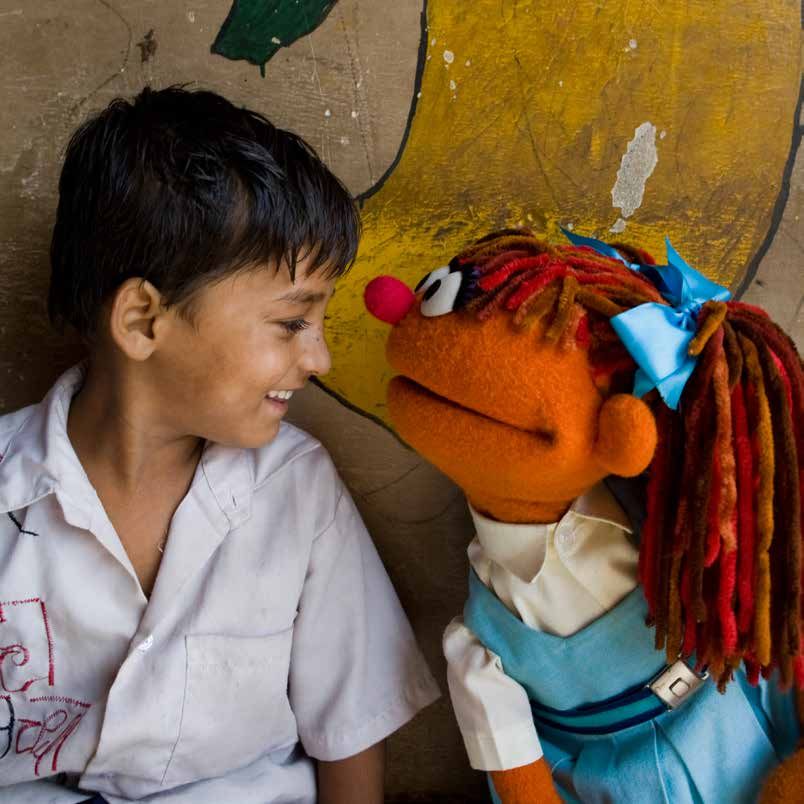
“The girls never used to go to school because their
          job was to herd the cows. After the Radiophone
          program, the community came together and
          appointed one person to herd everybody’s cows
          so that the girls can go to school.
          I call it cowpooling!”

The Radiophone Project

An initiative of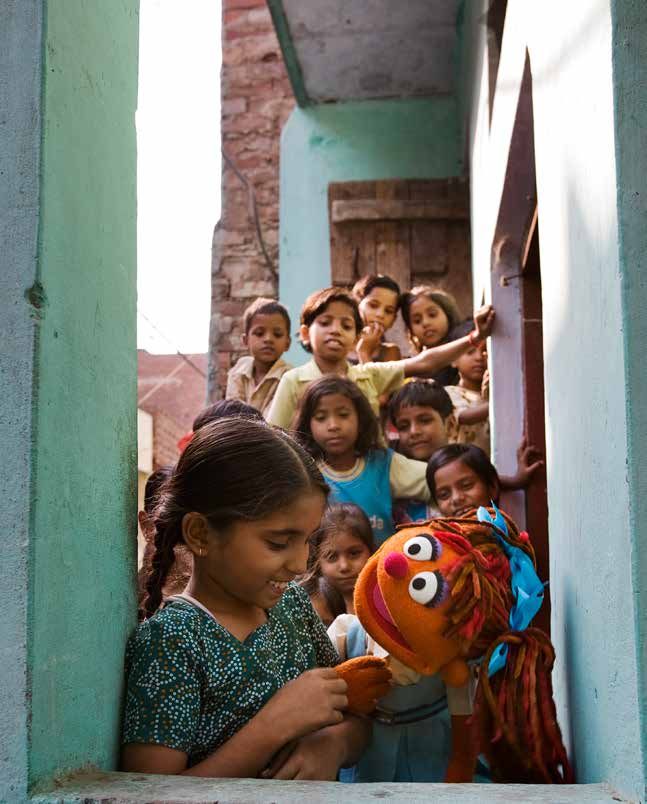
“Cow-pooling” so that girls can go to school, is one community’s creative response to
the dual concerns of female education and keeping the cattle safe. It is also emblematic
of the success of the Radiophone Project, which brings educational content to children
                                                                                               BACKGROUND
and communities that might otherwise have none.                                                Sesame Workshop India’s Galli Galli Sim Sim made its debut on TV in 2006.
                                                                                               Each year more than 18 million children watch it regularly on national cable channels -
The Galli Galli Sim Sim (GGSS) Radiophone Project, a signature children’s program delivered    Pogo and Cartoon Network and national public broadcaster, Doordarshan. GGSS, like its
over radio and telephone, is the latest expansion of the Indian adaptation of the popular      local Sesame Street counterparts all over the globe, uses the power of media to help
children’s show Sesame Street. With its proven education model, GGSS is increasing its reach   children reach their highest potential and prepare them for school and for life.
and base to include hitherto underserved rural populations.
                                                                                               We develop and distribute high-quality and engaging content through television, radio,
                                                                                               community radio (CR), print, digital and outreach, to reach children aged zero-eight.
                                                                                               Our content is geared towards developing young Indian children’s basic academic and
                                                                                               life skills, while celebrating India’s rich cultural diversity, in order to promote their overall
                                                                                               cognitive, socio-emotional and physical development.

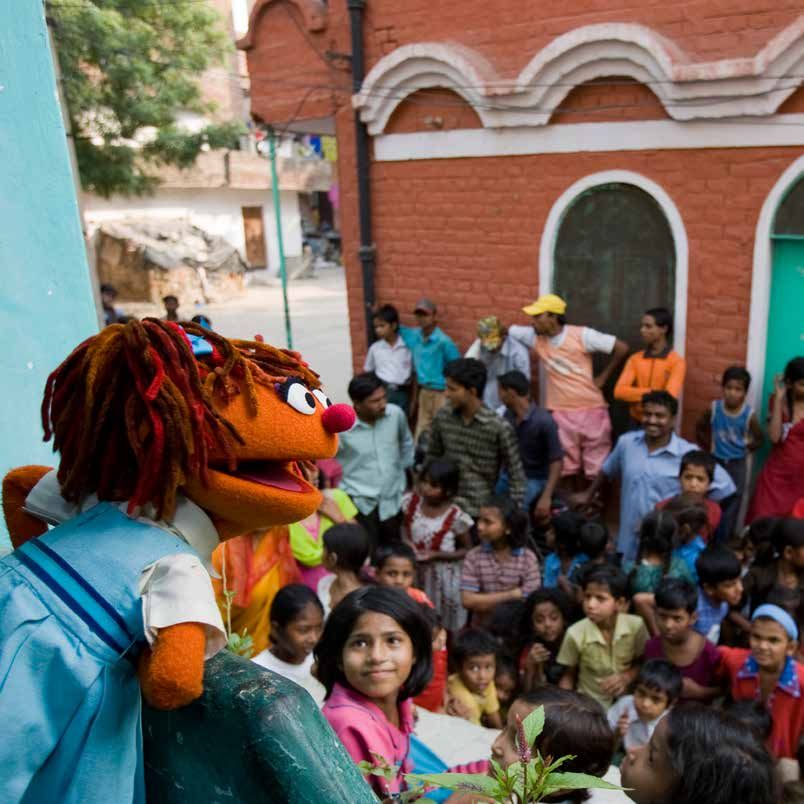
                                                                                               Galli Galli Sim Sim, like the global brand, is
                                                                                               grounded in research and uses the power of Muppets
                                                                                               to educate and entertain children every day. On GGSS,
                                                                                               our protagonists are five-year-old Chamki, a friendly
                                                                                               schoolgirl who stands for girls’ education; Googly,
                                                                                               a six-year-old furry blue monster with a curious streak;
                                                                                               Grover, a tall, gangly, dark-blue monster who speaks in
                                                                                               a variety of Indian accents and Boombah, an eight foot
                                                                                               lion who loves to eat healthy and do the “Bhangra”.

                                                                                               The Radiophone Project extended the reach of GGSS
                                                                                               further into communities and areas with little or no
                                                                                               access to entertaining and educational content,
                                                                                               especially for young children. The GGSS radio program,
                                                                                               was an extension of the Sesame philosophy,
                                                                                               integrating community-based program with emerging
                                                                                               media to reach many more children and their parents.
                                                                                               As explained on the next page, our radio audience
                                                                                               can use their mobile phones to listen to the program.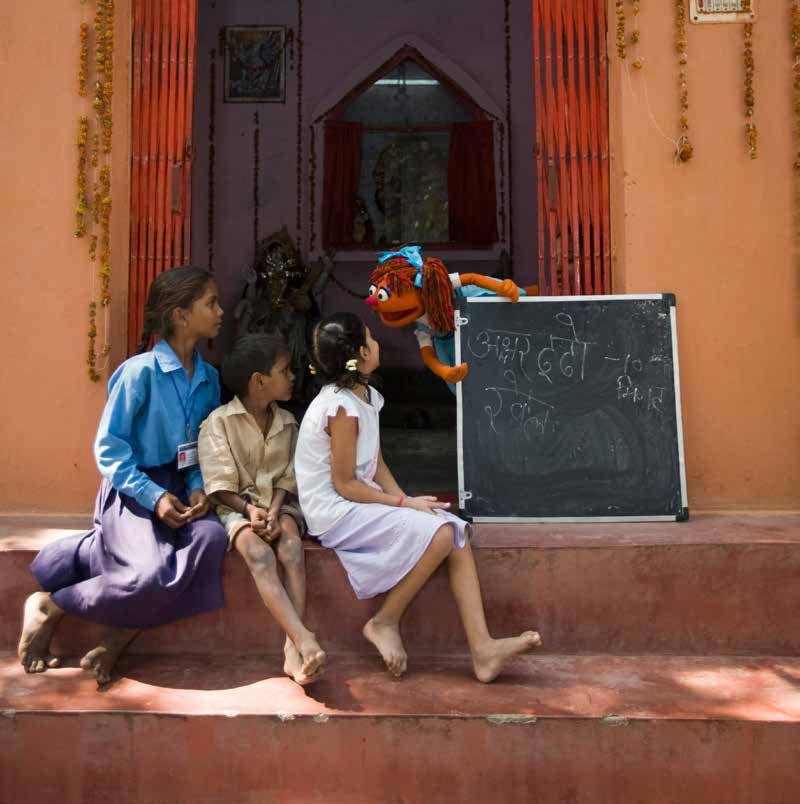
WHY?
                               While GGSS onscreen is immensely                           The Radiophone Project offers families
                               popular and effective with children across                 the option to access GGSS program
                               India, almost half the population has no                   wherever they are, at any time of night or
                               access to television.                                      day, providing on-going access to content
                                                                                          that is both engaging and educational.
                               The Radiophone Project was based on
                               the reality that phones are ubiquitous and                 The program set out to increase learning
                               radio more common than television.                         outcomes in children and generate a
                               According to recent FICCI1 Frames-KPMG                     community movement focusing on the
                               data, the number of radio listeners in India               importance of education and learning
                               has increased from approximately 230                       for children.
                               million in 2003, to 250 million in 2013.

                               While new technology develops at a
                               dizzying speed, people living in remote or
                               marginalized communities remain heavily
                               dependent on older technologies. Some
                               populations have traditionally been hard
                               to reach and consequently underserved.
                               Migrant families top this list.

                               Children in migrant families do not have
                               access to continuous schooling since they
                                                                                          Ramchandra is a regular listener of
                               are seldom in the same place long enough
                                                                                                                 and is particularly
                               to establish a routine. They remain part of
                                                                                          fond of GGSS. He wants his children to
                               a community, albeit a mobile one.
                                                                                          listen to it but he lives in the village Tigra,
                                                                                          which does not receive any radio signals.
                               Sesame Workshop India is proud to
                                                                                          He was told about the toll-free number
                               have successfully merged old and new
                                                                                          of the radio show.
   The Radiophone Project      technologies in the Radiophone Project,
  aims to expand access to     which brings educational content to
                                                                                          He carries the only mobile phone in his
engaging educational content   children and communities who might
                                                                                          household. Since he is a driver and only
  to improve development       otherwise have none.
    outcomes of children.                                                                 home in the evenings, this has created
                                                                                          an opportunity for the whole family to
                                                                                          listen to the program through Radio over
                                                                                          Telephone (RoT) every evening.

                               1
                                   Federation of India Chamber of Commerce and Industry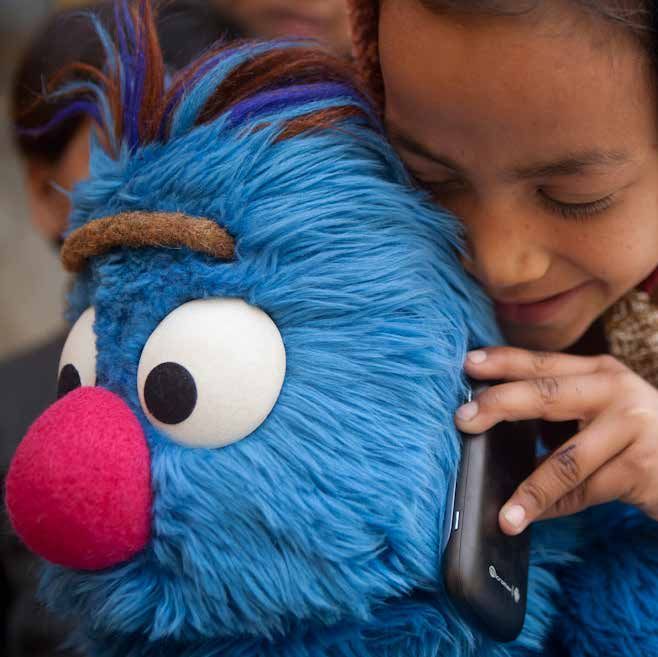
WHAT?
The project uses a combination of radio and telephone technologies to address the
educational needs of disenfranchised children. Listeners tune in to the voices of the
GGSS television show’s popular characters, which draws both children and caregivers
into the program through stories, songs and games.

The radio programs focus on:

                                               2
            AB    Literacy and Language       1 3 Math and Reasoning
       Health and Hygiene        Social-Emotional Skills          Environmental Awareness

Every broadcast takes relevant content and presents it in a fun and accessible way.
For instance, in the episode “Shik Shik”, characters eat corn with great enjoyment and
then have a “manjan break” (brushing-teeth break), when they brush their teeth and extol
the advantages of good hygiene. In the episode “Road Safety”, characters discuss how to
safely cross the road in order to get to a fair.

“Priti and Raunak decided to brush their teeth
regularly after listening to the GGSS program.
Everyone in their village used to brush with the
bark of neem tree, which is quite bitter, due to
which they used to throw it away.

Later they would lie to their mother that they had
brushed their teeth. Consequently, they suffered
from bad breath.

However, once they heard Chamki was brushing
her teeth in the program, they decided to ask
their father to get a brush for them. Since then,
the siblings have started brushing regularly.”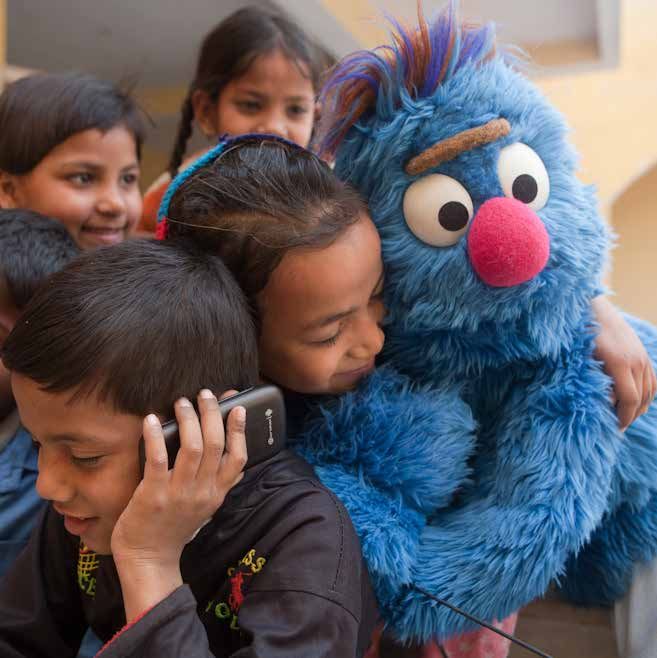
=

                                   WHO?
                                   The project involves 10 community radio (CR) stations in the Hindi-speaking belt of
                                   North and Central India. It reaches approximately 1.4 million people, including
                                   200,000 children, many of whom had never before heard any children’s program.

                                   Sesame Workshop collaborates with several key partners: Gram Vaani, a social tech
                                   company, which helped design the radio-over-telephone interface and supports the
                                   CR stations in managing data from the Gramin Rural Interface Network System (GRINS);
                                   The Restoring Force, which provides health, education and livelihood opportunities to rural
                                   children, participated in the pilot phase and helped design the current Radiophone project;
                                   and Ideosync Media Combine (IMC), specialists in development communication,
                                   conducted research for us at each stage of the project.

                                   As mentioned above, we paid particular attention to disenfranchised groups: migrants
                                   who have no access to regular education, girls who must cope with gender discrimination
                                   at several levels and families that are left out of the social and technological changes
                                   sweeping the country.

                                   LIST OF RADIO STATIONS
                                   S.N     LOCATION                            RADIO STATION                      FREQUENCY

                                   1.      Supi (Uttarakhand)                  Kumaon Vani                        90.4 MHZ
                                   2.      Chamba (Uttarakhand)                Henvalvani                         90.4 MHZ
                                   3.      Kanpur Dehaat (Uttar Pradesh)       Waqt Ki Awaaz                      91.2 MHZ
                                   4.      Orchha (Madhya Pradesh)             Radio Bundelkhand                  90.4 MHZ
                                   5.      Solan (Himachal Pradesh)            Radio Solan                        90.4 MHZ
                                   6.      Lalitpur (Uttar Pradesh)            Lalit Lokvani                      90.4 MHZ
                                   7.      Shivpuri (Uttar Pradesh)            Radio Sambhav                      107.8 MHZ
           Reaching over           8.      Mewat (Haryana)                     Alfaz e Mewat                      107.8 MHZ
      1.4 million people across    9.      Mewat (Haryana)                     Radio Mewat                        90.4 MHZ
    10 community radio stations.
                                   10.     Gurgaon (Haryana)                   Gurgaon Ki Awaaz                   107.8 MHZ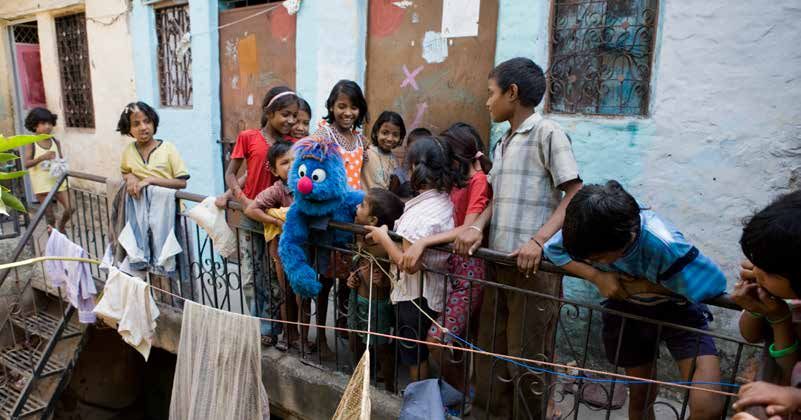
WHEN?                                                                                          The GGSS program gives voices
The bulk of the project lasted two-and-a-half years, although some stations continue to         to children and communities
broadcast the show. We started production in September 2011 and broadcast the first show         and makes universal issues
in June 2012. The 10 stations continued to broadcast until mid-2013. Some stations are still     applicable in local context.
airing the shows, whereas others discontinued after three broadcasts.

HOW?
We use radio as a way to promote behavior change and improve learning outcomes.
For the first time, local CR stations can access world-class global content and combine it
with content from their own communities. They make universal academic and social
issues applicable in the local context. Most importantly, they give the community a
voice in the program.

                                                 “A caller told us that he had bought
                                                 his children a new game two days ago,
                                                 which they had played with and spoilt.
                                                 This made him angry and he decided
                                                 to scold and punish them. But he heard
                                                 GGSS over the radio and it caused him
                                                 to pause and reflect upon his anger.

                                                 This made him realize that children are
                                                 supposed to make mistakes and it is the
                                                 duty of the adults to correct them.
                                                 He said today’s episode made him think
                                                 about using practical experience rather
                                                 than punishment to educate.”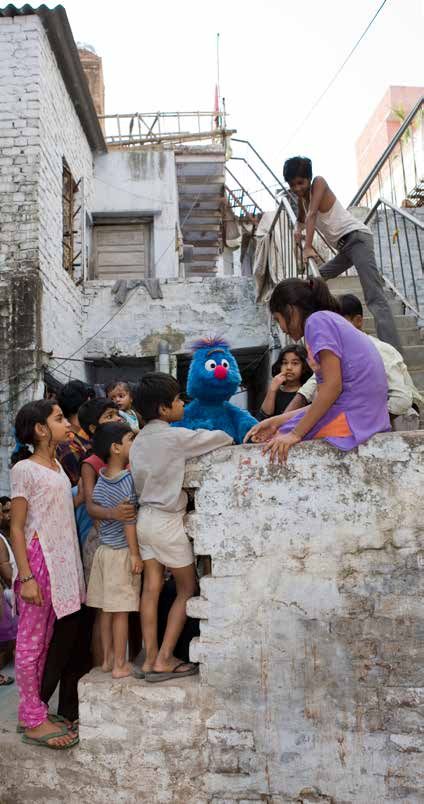
COMMUNITY INVOLVEMENT
Community participation is the core of the Radiophone Project’s formula and research       The project provided a promising opportunity for CR stations to collaborate with local
proves the reason for its success. A canned program would have no takers without           schools. Station staff members approached schools as a way of informing children
community participation.                                                                   about the program and also to hear about the impact of the show once it began airing.
                                                                                           Schools have responded positively to both - the initiative and to children’s participation.
What exactly does the phrase “community participation” mean? In this context, it means     This connection holds potential for future partnerships with local institutions.
acknowledging that people, whether they live in mountain villages or urban skyscrapers,
know their own lives and needs best and are the experts of their own ecosystem.            The radio stations further localize the content by adding a community segment at the
When given appropriate support and information, people will rise to the occasion           end of each episode. These segments focus on specific themes that are locally relevant
and become agents of their own transformation. We simply provide some tools                and are scripted and produced by the CR stations. In all, the 10 CR stations have produced
for this transformation.                                                                   more than 400 localized community segments so far. The project enables the CR stations
                                                                                           in producing a bank of locally relevant content, which can be used beyond the life of the
We remain committed to this principle through every step of the process, from planning     project. In addition, each GGSS episode has a vox pop (voice of the people) segment, with
and execution to follow-up. We invited the CR stations to review our content plan and      pre-recorded voices from the community talking on specific themes.
to collaborate on integrating this new children’s program within their limited broadcast
schedules and community interactions.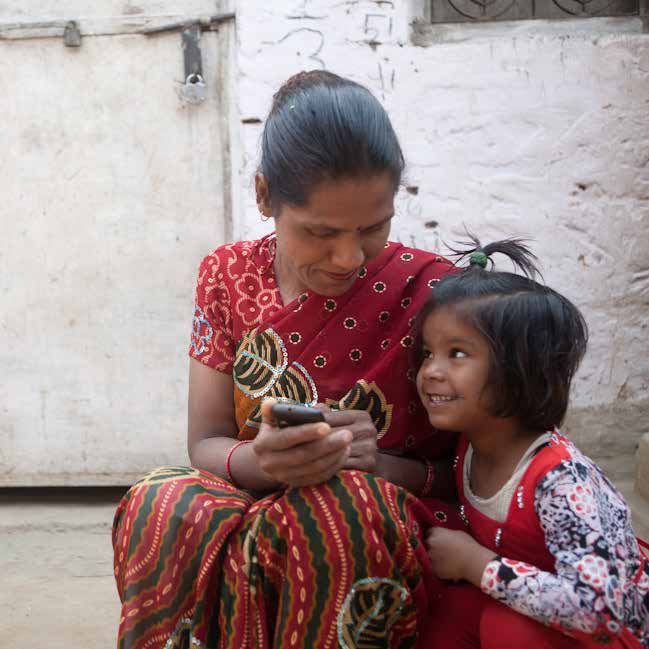
While GGSS is aimed specifically at children, a significant outcome has been the
response of people of all ages. IMC’s independent research on the project’s impact
found that all age groups listen together.

To increase community participation about local issues, the program design required all
CR stations to further organize community events after the launch. CR stations brought
together local leaders, key opinion leaders, regular listeners of the GGSS program and
other members of the community to discuss what had been identified through the program.
The 10 CR stations held 60 events. These events were designed to raise awareness around
issues of local importance and relevance, such as various schemes announced by the
Government of India to increase children’s attendance in schools, information under the
Right to Education Act, the need to improve sanitation & environmental conditions in the
community, improving access to education for girls and others.

A few examples of event themes:
• Gurgaon ki Awaaz - Tree plantation drive, storytelling, science activities
• Radio Bundelkhand - Water conservation, girls’ education, monsoon, health and safety
• Henvalvani - Food safety, sharing, hygiene
• Radio Dhadkan - Environmental degradation, seasonal diseases, nutrition
• Lalit Lokvani - Creative writing, health, maths and money sense
• Alfaz e Mewat - Traffic rules, storytelling, World Environment Day
• Waqt ki Awaaz - Zoo visit, sports, dental hygiene
• Radio Solan - Trash disposal, road safety, water conservation

                             Shaheen’s family had to discontinue her studies even though
                             she wanted to study further. She could not voice her opinion
                             before her father. She narrated what she wanted to tell her
                             father over the phone when the episode “                ”
                             was played.

                             When the episode was
                             broadcast by Radio Mewat,
                             her father realized his mistake
                                                                                            Addressing local issues have
                             and allowed Shaheen to                                         led to increased awareness
                             continue her studies.                                             and behavior change.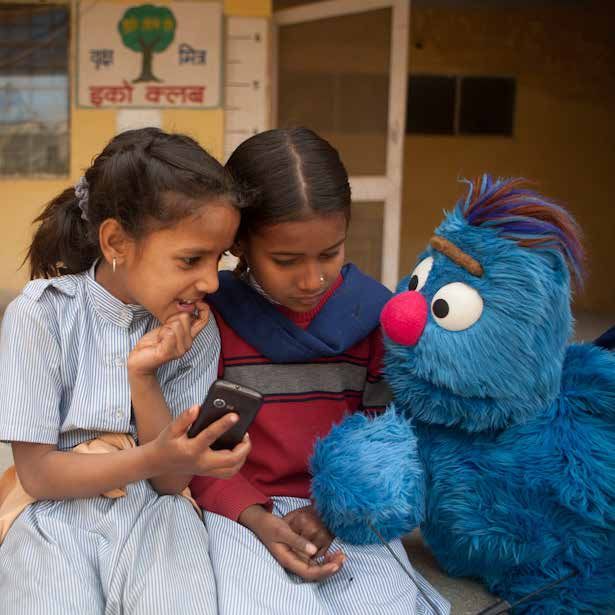
Over 70,000 calls
received on Radio over
                         NUTS, BOLTS & BANDWIDTH
  Telephone in a year.   The format of the show allows community members to call in and share their views, experiences
                         and give feedback. Each radio station is equipped with GRINS. GRINS is a plug-and-play server
                         for CR stations that helps with managing broadcasts and thematic archiving and retrieval of the
                         content. Stations can use playlists, an answering machine service and a phone-in system
                         [In addition, each radio station as part of Radio over Telephone (ROT) has a unique phone number.]

                         Audience members can leave a “missed call” and the system calls them back so that they can
                         listen to radio episodes from anywhere in the country with no airtime fee. CR stations can store,
                         retrieve and play back calls. From June 2012 to July 2013, we received over 70,000 calls on
                         Radio over Telephone.

                         The radio program, broadcast twice a week, has three key components:
                         • A pre-produced GGSS show provided to the local CR station
                         • A community segment produced by the local CR station
                         • A call-in interactive segment where local audiences participate in the show with
                           their suggestions, input, stories and so on

                         The program focuses on delivering thematic messages for children and parents, especially on
                         concepts of literacy and maths as well as health, hygiene and nutrition. The project also provides
                         community members with a platform to address the most critical issues in their town/city.
                         The content is light-hearted with a serious message and is delivered in an entertaining manner
                         by GGSS Muppets.

                         Grover is the narrator and Chamki & Googly the main characters. Boombah and Aanchoo join the
                         program and human characters such as Ahmed Chacha and Doctor Aunty round off the cast of
                         characters. Over many decades, Sesame Muppets have been an influential and beloved part of
                         childhoods all over the world. With the Radiophone Project’s expanded reach, the GGSS content is
                         now available to a new group of eager children and families who otherwise would have no access
                         to something like this. CR is replete with challenges: geographic limitations and the ever-present
                         need to generate new local content. The Radiophone Project meets these challenges
                         head-on and provides fun, learning and change to the communities it serves.

                                              When Muskan heard “The Hungry Dustbin” episode of GGSS,
                                              she started throwing trash in the dustbin. Earlier her mother
                                              used to keep telling her not to throw trash around but she
                                              would pretend not to have heard.
                                              However, now she makes it a point to throw trash without being
                                              prompted and also cleans up if any trash is strewn around the house.
IMPACT GGSS has been an outstandingly effective learning medium for the Radiophone Project’s close to million-and-a-half listeners. IMC’s rigorous research study showed a solid and heartening impact. In the short term, the broadcasts have had clear and concrete effects. Researchers found myriad stories of immediate impact: people stopped using tobacco; took their children to get inoculated; spent more time with their children; appreciated the art and usefulness of stories; developed better waste-management systems; held a women’s rights rally; started using soap; saving money and going to school. While a radio show cannot change societal norms overnight, there is no doubt that this one has had a significant impact in places where children and their families had little or no exposure to outside information and little or no agency to affect this information. IMC conducted both qualitative and quantitative research. CR station staff filled out diaries and community focus groups generated mind maps. IMC also collected Most Significant Change stories, which are stories that reflect some significant change in the community, based on discussions with the CR station. Researchers visited families and analyzed data from GRINS. The quantitative study included Learning Outcome Workshops held both before and after broadcasts. The study aimed to assess the impact of the GGSS radio program on young children’s learning in the areas of social health, literacy, health & hygiene, language, maths & reasoning, environmental awareness and emotional health. Fifty children between the ages of five and eight were assigned to a treatment group where they had access to the GGSS program content through community radios and fifty children were assigned to a control group that did not have access to GGSS community radio programs. Overall, around 550 coded diaries and 80 mind maps were generated. Multivariate regression analyses found that the GGSS program had a statistically significant impact on children in five out of six outcome measures: social health, literacy, health & hygiene, language, environmental awareness and emotional health. These effects were over and above the influence of children’s performance at baseline, age and family income. Findings reveal that the GGSS program has contributed to children’s learning.
30% stories showed
changes in quality of life
in listeners

34% showed changes in
childrens’ learning levels’

 Most Liked Episode
   Duration of calls (In hours and Minutes)

                                                                       The Radiophone Project has had some interesting
        02:42:20
                       02:36:48
                                                                       effects on gender dynamics.
                                      02:31:08

                                                                       CR has traditionally been predominantly the domain
                                                 01:57:18
                                                            01:56:45   of men. GGSS is helping change that, as station staff
                                                                       reported increasing numbers of calls from women
                                                                       and children.

                                                                       In addition to imparting information and meeting
                                                                       communities’ educational needs, the Project helped
                                                                       challenge traditional dynamics and gave voice to
                                                                       those who have previously gone unheard.
         Shik         Tandarust      Googly’s               Bhujo to
                                                 Teeka
         Shik         Boombah         Gullak                 Jaano
3X improvement in
vocabulary and storytelling
ability in children exposed
to GGSS content
The above graph showcases the most liked theme as per
the maximum number of calls by listeners on GRINS
Summative research shows significant impact
on literacy and language outcomes for children
exposed to GGSS content.
More community and commercial radio stations
have approached Sesame Workshop India and
have expressed interest in the Radiophone Project.
We would like to expand the initiative, while
preserving the local empowerment component,
which is its defining characteristic.
The above graph showcases the most liked theme as per the
maximum number of calls by listeners on ROTCONCLUSION ACKNOWLEDGEMENTS
Fun, learning and community belong together. The Radiophone Project has dramatically This phase of the Radiophone Project has been made
shown that providing children with access to engaging content will improve their possible with generous support from the Echidna Giving.
educational and developmental outcomes. It has also proved itself as an excellent
way to engage the community at large in crucial governance and social issues. We also thank MetLife Foundation for supporting us in
developing the first 30 radio episodes, lessons from which
were critical for this phase.
We have been able to:
• Reach previously-unreachable populations with engaging and entertaining content Assistance and encouragement from Qualcomm through
• Increase community participation Wireless Reach and HSBC through Future First have helped
• Develop CR stations’ capacity to produce children’s programs and add women us in developing components that enabled us to test the
listeners, among other things initiative.
Creative use of technology, excellent content creation & planning and most significantly, The project was designed along with a team of innovative
sustained community engagement & involvement have paid exciting dividends on partners, specifically Arti Jaiman (The Restoring Force),
Aaditeshwar Seth and Zahir Koradia (Gram Vani).
every level: plants are getting watered, children are having breakfast and
Venu Arora (Ideosync Media Combine) led the research
communities are coming together to question the status quo. implementation and also helped in driving discussions
with community radio stations. Pooja Murada (Institute of
This project has brought to light the need for creating and broadcasting children’s Rural Research and Development) extended her support
content across community media platforms. There is a requirement for capacity building during our visits to CR stations closer to Delhi, and offered
of community radio stations to create quality children’s content and having a dedicated us a venue to host our learning events. We would also like
space for such content on different media, especially in the community radio forum. to thank Shambhu Singh Raathi for extending his support
in research.
There is still much to do. As a GGSS radio station staffer reports,
The project would not have been successful without
“A listener, Rajpal, who sounded almost 60 years old, called up and told me
the wonderful support, enthusiasm and partnership
that it is not correct to encourage imagination. If a child imagines some place with the 10 radio stations: Alfaaz-e-mewat, Gurgaon ki
where she is not able to go or cannot be taken by her parents, it would break Awaaz, Henvalvaani, Kumaonvaani, Lalitlokvaani,
her heart. He even told us that he tells his grandchildren not to imagine.” Radio Bundelkhand, Radio Dhadkan, Radio Mewat, Radio
Solan and Waqt ki Awaaz.
What could be sadder than telling your grandchildren not to imagine?
This story captures the mission at the heart of the GGSS Radiophone Project: A very special thanks to Sohaila Abdulali for her efforts
in putting the report together and making it come alive.
We would also like to acknowledge and thank our
creative team of story & scriptwriters, producers and
muppeteers for their continued support in making
Galli Galli Sim Sim one of the best children’s
programs in the country.Sesame Workshop India, the organization behind Galli Galli Sim Sim,
uses the power of media to help children reach their highest potential.
We develop and distribute high quality and engaging content through
television, radio, community radio, print, digital and outreach, to reach
children aged 0-8. Our content aims to facilitate young Indian children’s
basic academic and life skills, while celebrating India’s rich cultural
diversity, in order to promote their overall cognitive, socio-emotional
and physical development.
To learn more, please visit
www.sesameworkshopindia.org
Or call: +91 11 46508425
TM/© Sesame Workshop. All Rights Reserved
10You can also read


