THE UNIVERSITY ARCHIVES 2019/2020 - The University of Sydney
←
→
Page content transcription
If your browser does not render page correctly, please read the page content below
THE UNIVERSITY ARCHIVES 2019/2020
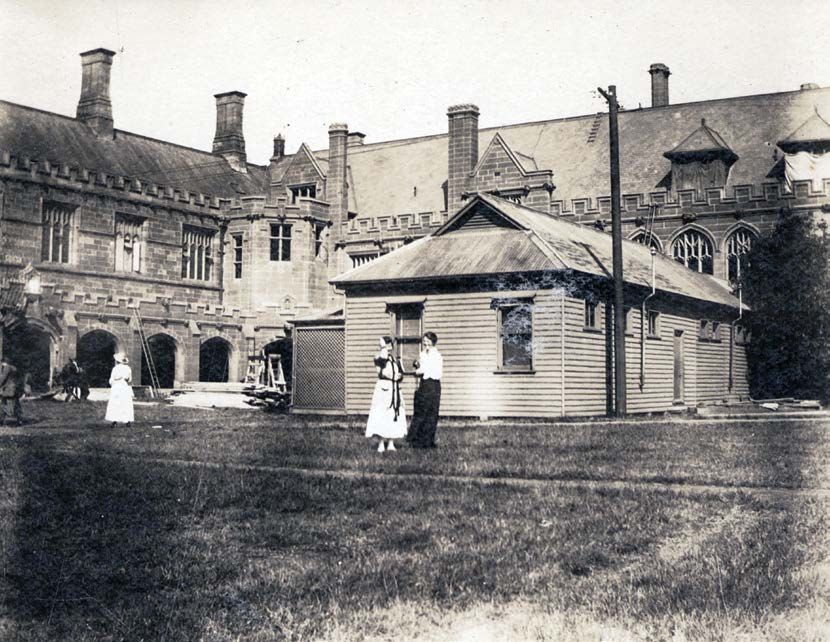
Forest Stewardship Council (FSC®) is a globally recognised certification overseeing   Cover image: Women’s common room in Quadrangle, 1917 [G3/224/0824]
all fibre sourcing standards. This provides guarantees for the consumer that
products are made of woodchips from well-managed forests, other controlled sources
and reclaimed material with strict environmental, economical and social standards.
The University Archives
                                                    2019/2020 edition
Record
                university.archives@sydney.edu.au

                                                                        Civil engineering students using new prime computer
                                                    +61 2 9351 2684

                                                                        system, 1987 [G77_2_0533]
 Contact us

                                                                                         Contents

                                                                                         Archivist’s notes............................. 2
                                                                                         The Gordon Bradley Lowe
                                                                                         Photograph Collection.....................4
                                                                                         Curious Men and Capable Women
                                                                                         Elizabeth Hahn and the Macleay
                                                                                         Collection.......................................9
                                                                                         Archives
                                                                                         – an invaluable resource.................. 13
                                                                                         University Menus.............................. 19
                                                                                         Miscellaneous................................. 23
                                                                                         Archive news................................... 28
                                                                                         Selected accession list................. 34
                                                                                         General information..................... 37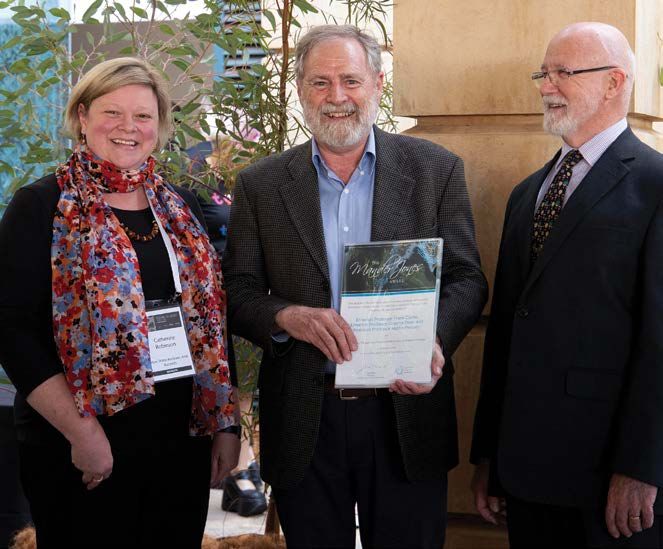
Archivist’s notes

         Sadly after 22 years, this will be my last Archivist’s Notes.       because they were kept with other, more significant, records
         Writing this I am on leave pending retirement in August             of a body or person. Either way, they provide a unique insight
         2020. For my last Notes I thought I’d look first at what my         to other times in the University’s history.
         predecessors Gerald Fischer and Ken Smith said about
         Record while they were University Archivist.                        The word “miscellaneous” can cause an archivist to cringe
                                                                             – but sometimes it is the only accurate way to describe
         Gerald started Record in March 1973 as a typed and duplicated particular records. There are such things in all archival
         newsletter about the University Archives. Its purpose was     holdings and the sample shown and described in the
         to “publicise details of recent accessions” but would also          eponymous article are as disparate as it is possible to imagine:
         “contain brief notes on records already held in the University
                                                                             from the autograph album/sketchbook of Nelly Rutherford
         Archives and on some aspects of University history.”
                                                                             at Sydney Teachers College (1906 to 1907) to the autograph of
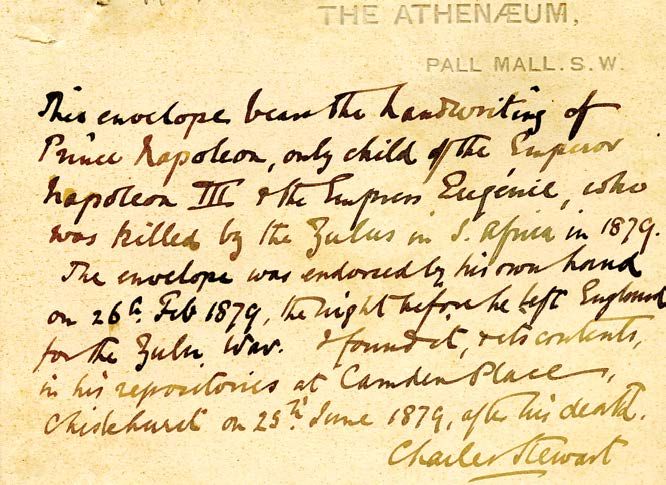
                                                                             Napoleon, Prince Imperial. Proof, if more was needed, that
         When Ken produced his first issue of Record he said that
                                                                             you never know what you will find in an archives.
         “...whilst there may be some minor changes in style and
         emphasis, the purpose remains the same. This is to produce
                                                                             There are two events covered later in Archives news section
         an informative, but readable, publication.” There would be,
                                                                             of this issue which give me great pleasure. Both are projects
         Ken continued, “...usually a short article on matters pertaining
                                                                             that have extended over some years, one longer than the
         to the University of Sydney, and its Archives, and the uses to
                                                                             other which have resulted in outstanding publications based
         which they are put.”
                                                                             on records held in the University Archives. The first is the
         As always, this issue of Record meets the objective thanks          Mander-Jones Award from the Australian Society of Archivists
         once again to the work of my colleagues Nyree Morrison              for Accounting Thought and Practice Reform. Ray Chamber’s
         (editor in all but title) and Karin Brennan.                        Odyssey by Professor’s Frank Clarke, Graeme Dean and Martin
                                                                             Persson. I well remember the first discussions I had with
         It is important that young historians are exposed to and use
                                                                             Graeme when he was professor of accounting and Professor
         archives as early in their career as possible. Dr Peter Hobbins,
                                                                             Peter Wolnizer, then Dean of Economics (as the faculty was
         previously of the Department of History has always been a
                                                                             then) about the papers of the late Professor Chambers and
         friend of the Archives and encouraged his students in the
                                                                             their importance. The second is the recent publication,
         use of original records. Elizabeth Heffernan has written on
                                                                             funded by the Gerald and Gwenda Fischer Bequest, of
         the Gordon Bradley Lowe photographs held in the University
                                                                             Emeritus Professor Geoffrey Sherington’s Alexander Mackie.
         Archives, and Eleanor Rogers has given an account of Elizabeth
                                                                             An Academic Life. This is an essential work for anyone
         Hahn as Curator of the Macleay Museum from 1959 to 1962.
                                                                             interested in the history of education in Australia.

         Gerald’s concern with records held in the Archives is given an
                                                                             While Record has moved from a newsletter to more of a
         interesting twist by Judy Butlin in her discussion of the writing
                                                                             journal, I believe Gerald’s and Ken’s objectives have continued
         of a biography of SJ (“Sid”) Butlin. The problem with the key
         records was their absence as no personal archives of Butlin         to be both valid and met: to publicise the holdings of the

         have survived. Judy’s article shows how a biographer has to         Archives and aspects of the University’s history in a way that is

         make do with what records do exist in order to fill the gaps.       both informative and interesting. I hope it long continues and
                                                                             I look forward to reading and contributing in a different way in
         University functions and food seem always to have been              the future.
         inseparable and Nyree has brought together an intriguing
         selection of menus from the Archives. While these records
         are true ephemera many have survived: by being consciously          Tim Robinson
         retained, possibly because they were autographed, or                University Archivist
Page 2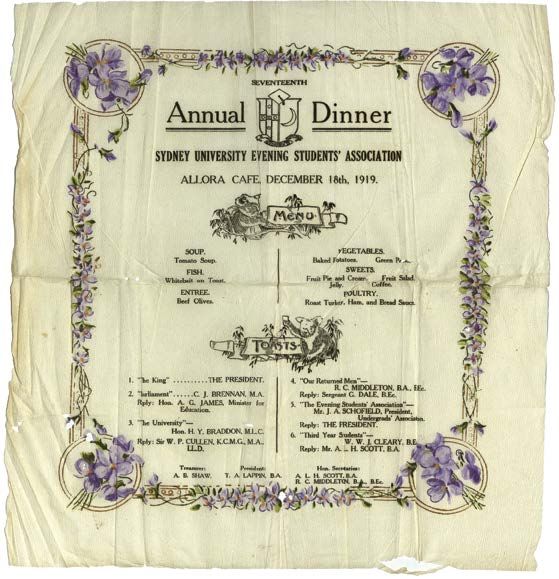
Archivist’s notes
Dr Kate Cumming, University Archivist

Hello! I stepped into the role of University Archivist in     While remote working, our Archives team has have
April, attempting to fill Tim’s very large shoes during the   continued to answer enquiries and to perform important
initial height of the pandemic and lock down. Thanks          collection management and descriptive work. In August
to an incredible team in the Archives and across the          we re-opened the Archives two days per week for very
broader Archives and Records Management area,                 happy staff and student researchers. To create records
I’ve thoroughly enjoyed my first few months via Zoom.         of the campus in lockdown, Archives staff have been
I have worked in records, archives, information and           taking photographs of the Camperdown Campus, some
data management roles for twenty-five years and I’m           of which are shown below.
very excited to now be working at such an incredible
                                                              I look forward to meeting many of you over the coming
institution. We have some exciting projects planned
                                                              months.
for the Archives, including pilot projects for increasing
online accessibility to the collection. We will keep you
updated on our progress in future editions of Record.

Fisher Library closure notice, 12 May 2020 [1354_030]

Closure sign at the Student Centre in the Jane Foss           Sign on the door of the Great Hall, 12 May 2020
Russell Building, 12 May 2020 [1354_037]                      (1354_059)
                                                                                                                       Page 3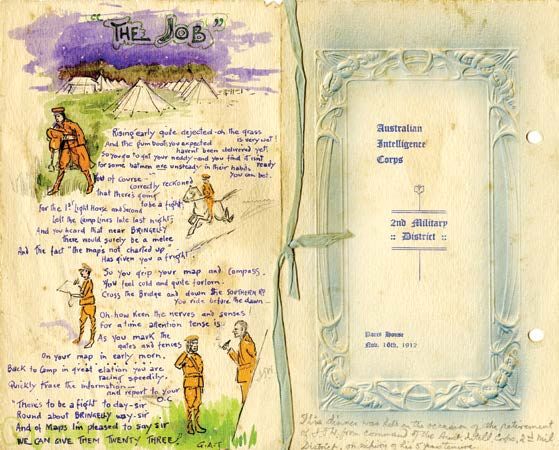
Imagining the Past

         In 2019 Dr Peter Hobbins from the University’s Department of History
         co –ordinated a class on “imagining the past” using primary sources for
         history honours students. This class was similar to the class Peter ran in
         2017 where students were encouraged to visit the University Archives and
         consult primary sources relevant to their interests. Here we present two
         short essays written by Elizabeth Heffernan and Eleanor Rogers.

         The Gordon Bradley Lowe Photograph Collection
         Elizabeth Heffernan

         The camera, as a means through which we see the world,         lie as much as any written account. War photography

         ‘is sightless 99 percent of the time.’ What we see, ‘we see    in particular is designed to present a certain vision to

         between blinks as between Venetian blinds.’   1
                                                                        its audience, and when that vision cannot be realised

                                                                        organically, it becomes easily manufactured.
         These are the words of writer and critic William H. Gass

         in his 1977 review of Susan Sontag’s book, On Photography.     Consider Frank Hurley’s dark room manipulation of scenes

         Though early Victorian beliefs held that ‘a photograph         from the Western Front. In this image, Over the Top, Hurley

         couldn’t lie’, today we accept the opposite as the norm.   2
                                                                        has staged the charging soldiers in the foreground and

         Photographs may ignore, omit, alter, stage, and outright       added clouds of shell-bursts in the distance. The overall

         Macleay Museum: HP90.28.2699 “Over the Top”, Zonnebeke, Sep 1917. Photographer: J F Hurley. Geology Department
         Lantern Slide Collection
Page 4
effect is one of horror and fear, visually manufactured
but viscerally real. Many accused Hurley of sensationalism
in this and his other photographs, but for him, the true
horrors of the front could only be realised by such
photographic manipulation. In Hurley’s eyes, Over the Top
was not a lie, but a way through which he could access and
convey what he saw as the truth and reality of the war.3

Hurley’s photographs were an explicit performance of
the subjectivity of wartime photography. There are many,
                                                              View showing three pyramids [1200/318]
less obvious examples that offer selective and refracted
glimpses of war through the blink of a camera shutter.
                                                              Gordon Lowe was one of fifteen Sydney University medical
One of these is the Gordon Bradley Lowe photograph
                                                              students to pass a special exam allowing them to enlist as
collection housed in the University Archives.
                                                              doctors with the Australian Imperial Force.4 He was first

Comprised of over four hundred and forty images, Lowe’s       assigned to the 3rd Australian General Hospital, where he

collection spans his service time as a World War I medical    operated on the island of Lemnos just off Gallipoli during

officer in Greece, Egypt, England, and France, between        the final months of the Anzac campaign. Following the

1915 and 1918. What is notable about the Lowe collection is   evacuation, he served in Egypt for the majority of 1916,

both what he photographs, but also what he chooses not to.    before travelling to Europe with the 5th Field Artillery

The parts of the war that were hidden, so to speak, by the    Brigade and later the 5th Field Ambulance, where he

aluminium bars of the Venetian blind Lowe decided to lower.   remained attached until the armistice. By the end of the
                                                              war, Lowe had sustained one light injury during the First
                                                              Battle of Bullecourt and had been promoted to Major.5
                                                              Lowe’s avid photography reflected his position as a medical
                                                              officer who was often away from the front line fighting.
                                                              The images he chose to capture seem more like those of
                                                              a tourist than a soldier: friends smiling and posing, candid
                                                              snaps of Egyptian and European locals, landmarks like the
                                                              Sphinx and pyramids of Giza taking up several shots each.
                                                              This was a common experience for the Australian soldier
                                                              overseas, who often enlisted with a desire to see the world,

HMAT Nestor, October 1915. Medical Officers AIF.              Abbassia Rifle brigade band going to Sunday
Photo taken by Chief Steward & Pursar Matthews.               Church parade [1200/137]
Gordon Bradley Lowe front row, second from right
[1200/001]
                                                                                                                             Page 5
Staff nurses
                                                                                                                    Brum &
                                                                                                                    Dickinson
                                                                                                                    in temporary
                                                                                                                    theatre 3rd
                                                                                                                    AGH [1200/160]

         View of shipping from Mudros Bay [1200/036]

         undertook a leisurely month-long cruise on their way to
         war, and, when granted leave, saw it as a holiday rather
         than the chance to visit home as most European troops did.
         Richard White calls this the Australian ‘tourist model’ of
         the war and argues that it further shaped the manner and
         frequency of soldiers’ correspondence, diary writing, and,
                                                                        Like Frank Hurley’s manipulation of his front line
         in Lowe’s case, photography.6
                                                                        photographs to force them closer to the truth of what

         Where war is featured by Lowe’s camera it is almost            he had experienced on the front, Lowe’s selective

         exclusively away from the front lines. He captures scenes      photography created its own kind of reality. Thumbing

         of military training exercises, doctors and nurses posing      through these photographs in the archives, war really

         for a photograph on their lunch breaks, and towering           does seem like a jolly and exciting adventure. Lowe notes,

         battleships in the Lemnos harbour with a beautifully           on the back of an image of soldiers cooking a meal,

         clear sky behind. The reality of war, of the First World
         War, is barely touched upon. There are in fact only
         three images of bombed out buildings in France, out
         of the four hundred and forty-six photographs in the
         collection. Where Lowe’s hospital patients are captured
         on film, they look healthy, are smiling, and fit, extremely
         uncomfortably, into the statistics of Australian casualties
         on both the Eastern and Western Fronts.

         Of course, there were the problems of censorship in the
         war. The fact that, if a horribly wounded soldier happened
         across Lowe’s operating table, he would have reached
         first for his medical supplies and not his camera—or so we
         hope. As a trained doctor, it is likely that Lowe respected
         the privacy of his patients. It must be also remembered
         that these were not photographs taken by a wartime
         photojournalist. They were Lowe’s personal, private
         recollections and mementos of his service in the war.
         It is therefore unsurprising that he chose to capture images
         of mosques in Cairo and snowfields in France over the
         remains, human and otherwise, left by a detonated shell.       L’eglise de Mesnil [1200/186]
Page 6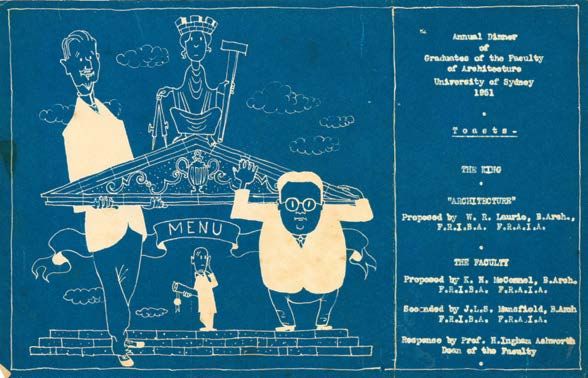
a war photography collection. Somehow, Lowe successfully
                                                               created, on top of the existing reality of the war, a new
                                                               reality that was devoid of the war itself.

                                                               Was this intentional? We cannot truly answer this
                                                               question. Gordon Lowe died in 1956 and his reasoning
                                                               for capturing certain images on camera and ignoring
                                                               others died with him. Was this a given in World War I,
                                                               a new kind of conflict where soldiers fought an enemy
                                                               they rarely saw? Surely not, for we see the true reality
                                                               captured by Hurley’s manipulation, by other raw or staged
                                                               photographs in the trenches. The camera captured the
                                                               First World War—just not through Gordon Lowe’s lens.

                                                               Yet we can also argue that a different kind of war is
                                                               present in the Lowe collection. The kind of war that is
                                                               boring to most people because it does not advertise the
                                                               horrors of the conflict. Lowe’s photographs recognise
                                                               this, perhaps because Lowe himself was bored—bored
                                                               enough to pick up a camera in the first place.

                                                               Judging Lowe’s collection as wartime photography
                                                               without the war makes us question our own understanding
                                                               of what war is. War is silly photographs in downtime.
Our daily bread. ASC Bakery Lemnos [1200/024]
                                                               War is being a tourist on your weekend pass in cities and
                                                               countries you never would have dreamed of visiting. War
‘The omnipresent Arnott’s Biscuits’ in the foreground.         is capturing the memories you want to remember instead
He photographs the men lining up for, he quips, “Our daily     of the ones you can never forget. War, to reiterate the
Bread.” In a series of images from the first anniversary       metaphor, is a Venetian blind of experiences: fragmented,
of Anzac Day, he captures moments of celebration from          disjointed, folding in on one another and stretching out
parades to horse racing through the streets of Cairo.          again and again. The shutter of Gordon Bradley Lowe’s
Were it not for the uniforms many of Lowe’s subjects           camera was the shutter of that same blind. Opening
wear, the photos could very well be from peacetime.            and closing, catching glimpses of certain scenes while
                                                               completely missing others. Lowe’s finger was on that
In her book On Photography, Susan Sontag argued that
                                                               shutter, and he chose when to blink. The war captured
‘Photographs injure time, scrambling moral and historical
                                                               in the Lowe photograph collection is his war—his own
differences.’7 Taken out of context, many of Lowe’s images
                                                               version of the truth, that was just as manufactured as
do just this. They are snapshots, moments, reflections of
                                                               Hurley’s Over the Top.
‘pieces’ of reality that disjoint our understanding of World
War I as a whole.8 Lowe’s collection shifts from natural       In his review of Sontag’s book, William Gass wrote that
Egyptian landscapes to staged photos of Irish families in      ‘When we see, there is always the ‘I’ as well as the eye.’10
England. The three isolated photos of shelled buildings in     Gordon Bradley Lowe’s photograph collection is certainly
France are sandwiched between a portrait of Lowe strolling     dictated by this first ‘I’. The photos are either taken by him
down a promenade in Nice and images of the untouched           or of him, and are more a progression of Lowe’s life in the

French countryside in a disconnect so jarring, it is those     war than the war itself. Yet I would argue that this does not

few battlefield photographs which feel out of place within     discount the significance of these photographs. Though they
                                                                                                                                Page 7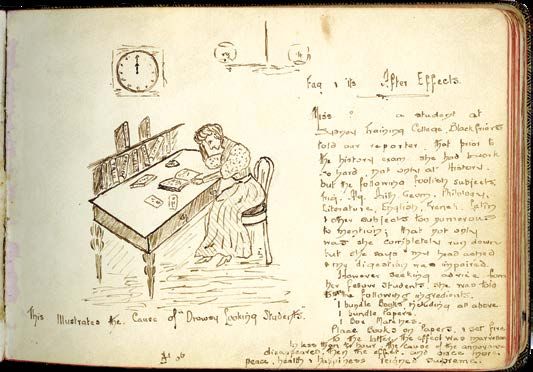
construct a narrative somewhat different to the established
         narrative of the war, it was a narrative, and a reality, that
         was true for Lowe at the time—and serves as a reminder
         that there is more to a photograph than meets the eye.

         Promenade de Auglais Nice 25.2.18 ‘It was on my first morning that this was snapped. The weather was
         dull and sky overcast. There seems to be some slight mistake about my face,’ GBL [1200/182]

         References

         1.    illiam H. Gass, “A Different Kind of Art”, New York Times,
              W                                                               5.	“The Wartime Stories of Two Young Men of Waverley”,
              18 December 1977, https://archive.nytimes.com/www.nytimes.          Wavelength: The Magazine of Waverley College 21, no. 1
              com/books/00/03/12/specials/sontag-onphoto.html.                    (Winter 2014): 7.
         2.	Duncan Anderson, Glass Warriors: The Camera at War               6.	Richard White, “The Tourist as Soldier: The Australian
             (London: HarperCollins Publishers, 2005), viii.                      Experience of the Great War”, War & Society 5, no. 1 (May 1987):
         3.	Steven Heyde, “History as a source for innovation in landscape       65-69.
             architecture: The First World War landscapes in Flanders”,       7.	Carl Rollyson, Understanding Susan Sontag (Columbia:
             Studies in the History of Gardens & Designed Landscapes 35,          University of South Carolina Press, 2016), 25.
             no. 3 (March 2015): 185-186.                                     8.	ibid, 22.
         4.	“Faculty of Medicine and the First World War, 1914-1918”,        9.	Anderson, Glass Warriors, 91.
             The University of Sydney, accessed 25 April 2019, https://       10. Gass, “A Different Kind of Art.”
             sydney.edu.au/medicine/museum/mwmuseum/index.php/
             Faculty_of_Medicine_and_the_First_World_War_1914-1918.

                                                                                                                  Colleen Girls & Irish
                                                                                                                  Motor Car March 1 1917
                                                                                                                  [1200/394]
Page 8
Curious Men and Capable Women
Elizabeth Hahn and the Macleay Collection
Eleanor Rogers
Picture Elizabeth Hahn, laboratory assistant to the Chippendale cabinets that stored the insects were a
University’s Zoology department, on the lawns of Science curiosity unto themselves—each drawer was of a different
Road looking for crickets. She is 18 years old, and she has wood selected from all parts of the world.6
just been appointed curator of the Macleay Museum.1
The Macleay collection received all sorts of requests,
The period of 1959-1962, Elizabeth’s curatorship at which now sit in the University Archives, including one
the Macleay Museum, was not just the nexus of natural from ‘His Highness Prince Roland Bonaparte’ in 1910 who
history and the organisation of knowledge, but one that ‘takes great interest in the study of ferns’, requesting that
is inextricably tied to this 18-year-old. if the collection had any ferns they would be happy to
trade ferns from Java or tropical America.7 The collection,
The story of the Macleay Museum begins with William having previously been a private individual collection,
Macleay’s collection of insects, which he brought to was difficult to administer. The succession of curators
Australia as Colonial Secretary in 1825.2 The collection was readily leant specimens to anyone who wrote. The
expanded by his son and donated to the University by his archive collection includes an exchange between a
grandson. The latter and most remembered, Sir William T Takano in Yokohama with interest in butterflies who
Macleay, was dedicated to the collection, most notably by offered a trade of 50 Japanese butterflies for 50 of the
funding permanent collectors stationed in Port Denison, Macleay collection.8
Wagga, Western Australia, Port Darwin and Fiji, as well as
funding two sea voyages to Port Jackson and New Guinea. With the movement towards taxonomy rather than
Macleay gifted the collection to the Senate with a £6000 collecting curiosities, pathways were maintained and
stipend for a curator, as well as a £16000 endowment for expanded. The father of modern taxonomy, Carl Linnaeus,
a suitable building to house the collection.3 The Macleay proposed a hierarchical classification of the natural
building was opened to the public in 1891, with George world, and Linnean societies began, including in Sydney.9
Masters, one of Macleay’s collectors, as its first curator. Achieving this hierarchical classification in a pre-internet
After his death in 1912, the University lost interest in age was an entirely different ordeal. A Mr Blackburn writes
honouring Macleay’s will and started encroaching on asking if it would be possible for curator George Masters
the Macleay building, altering it to house the Botany and to look at the Ommatophore Mastersi and ‘tell me whether
Zoology Departments and electing curators who held its claws are Pectinate’ for a paper he was writing.10 This is
other roles at the University.4 This history takes us to particularly mind-boggling when we think of the scale of
lecturer in entomology James (Jim) R Henry who was the objects being discussed and moved around.
curator of the Macleay, 1945-1958. He nominated his lab
assistant Elizabeth Hahn as his successor. A letter from Jenny Anderson to a Mr. Deuquet in Brussels
informs him that the paratypes Stigmodera Mediana
Collecting is, by nature, a highly international enterprise. ‘arrived here very badly smashed.’11 Anderson reflects in
The infrastructure for international trade and exploration a later memoir, ‘in the turmoil of moving specimens and
came from the drive for ‘curios’, exotic objects displayed storing them, many did perish, and many were lost or
in cabinets of homes in order to show to guests. The borrowed and never returned, for no proper records were
Macleay collection is, in many ways, a curiosity collection. kept over this period.’12 Vast networks spread with the
It has, for example, a ‘cyclops’ horse skull.5 Even the movement of small objects.
Page 9Elizabeth Hahn to Professor JA Keast, November 26
1962 [G20/DOC8K26]
the missing mounted fairy penguin specimens on loan to
the Australian Museum were not perhaps on display in
the public gallery.15 When I visited the Australian Museum
there were indeed two fairy penguins in a display.
Hahn decided that in order for the collection to maintain
significance, it must be complete, administratively
perfect, and open to the public. Hahn began by locating
‘types’ – that is, specimens originally used to prepare
descriptions of new species. Elizabeth wanted to publish
a preliminary list of insect types owned by the Macleay
in order to generate research interest. Her goal was to
publish this list with the Linnean Society in Sydney to
publicise the collection, but her proposal was rejected.
Because of this, she had to typeset it herself, a slow
process where she had to type on stencils. It took four
years to isolate some 4000 types among the hundreds of
The Macleay collection, in the context of this, listed thousands of species.16
incoming and outgoing specimens in ledger books, but,
as an article in MUSE delicately puts it, George Masters, Despite her rejection, she sent copies to the Linnaean
‘never quite finished the mammoth task…All subsequent Society, who, in recognition, replied complimenting her
curators and researchers have been frustrated by the efforts and included a photography portrait of Macleay.
lack of clear information attached to a given specimen This portrait, which I have been unable to locate, to me
or object. While Masters had an unrivalled knowledge
of Australian animals, much of it went unrecorded as he
disliked writing.’13
Anderson less delicately describes the state of the
collection ‘the glass-fronted cabinets and the jars stored in
them were so encrusted with dust that it was impossible to
see if there was any alcohol in a jar, let alone a specimen’.14
Hahn, inheriting these issues, took upon herself the
‘mammoth task’ by writing to people to locate specimens
that had been on loan for years, and politely enquired
what the nature of their research was, and when they
might be able to return them. In this way Hahn chipped
away at the cabinet of curiosity and began reorganising
the specimens at the Macleay. In a letter to Professor JA
Keast of Queen’s College Ontario, Hahn enquires whether
The offending penguins [Eleanor Rogers, 2019]
Page 10represents the Linnaean Society’s eventual recognition Hahn left the Macleay in 1963 to successor Jenny
of her efforts, and of her deservingness of the role in Anderson, who completed her Masters in entomology.
Macleay’s heritage. Elizabeth, in return, thanked them Hahn describes this as,
and notified them she would forward on the portrait to
the appropriate archives, which seems to me a perfectly one of the items on the very earliest [to-do] lists
bureaucratic response to the bureaucracy she had I had drawn up…to work towards an appointment
suffered under. of a graduate to the position of Curator, the better
to protect the collections and give more weight to
Her efforts have since been acknowledged in citations the struggle to improve the status and role of the
on everything from the Darnley Island mummy to dung Museum…I wonder at this initial clarity of purpose in
beetles.17 She describes the enormous task of cataloguing the my youth but even more that I actually carried it out.21
collection very simply, ‘orders were sorted into their genera,
then into species if possible, and put in rows alphabetically.’18 So, let us return to Elizabeth Hahn on the grass. Linnaeus
The act of taking everything out and reordering it is an used to say of his work ‘God created, but Linnaeus
inherently Linnaean one, but one that could be easily organised.’ 22 Well, Macleay collected, Hahn organised.
discredited as non-academic work, an administrative task
considering she had no formal training, but it is also likely the
task that saved the Macleay collection.
In her reference letter when leaving the position in 1963,
Dr. Woodhill wrote:
Prior to Miss Hahn’s appointment the Museum had
been considerably neglected but owing to her
enthusiasm and hard work (many more hours than
were officially required) it is now in excellent order
and is well known and used by many research workers.
All the records are accurately kept and the interior
of the building has been renovated. Miss Hahn also
published a record of some 4000 type specimens of
insects contained in the Museum. All this was done on
her own initiative.19
Phillips and Taylor argue that the division on ‘skilled’ and
‘unskilled’ labour is one made along gender lines, rather
the amount of training or ability required for them.20
In being a practical, efficient, administrative person
working directly at her job, Hahn was vastly superior to
any preceding curator in the history of the Macleay. It is
not just the natural world but the man’s world that she
had to tame.
WR Browne to Elizabeth Hahn declining her request
to publish an index of the insects of the Macleay,
June 23 1961 [G20/DOC8L41]
Page 11WR Browne to Elizabeth Hahn, informing her of the Elizabeth Hahn to WR Browne thanking The Linnean
gift of a portrait of George Masters to the Macleay Society of NSW for the portrait of George Masters,
Museum, October 11 1962 [G20/DOC8L43] October 19 1962 [G20/DOC8L44]
References 12. Anderson, “The Macleay Museum at the University of Sydney”.
13. Jude Phillips, “When One Door Closes”, Muse, March 2017.
1. Peter Stanbury and Julian Holland, Mr Macleay’s Celebrated 14. Anderson, “The Macleay Museum at the University of Sydney”.
Cabinet (University of Sydney Press, 1988). 112. 15. USA: G20/DOC8K26; Elizabeth Hahn to Professor J.A. Keast,
2. Ibid. November 26 1962
3. Ibid. 16. D E Hahn and D Elizabeth Hahn, A List of the Designated Type
4. By 1907, Geology occupied part of the Macleay Museum, and by Specimens in the Macleay Museum: Insecta (University of
1914, so did Botany. Alterations in 1915 included a ground floor Sydney, Macleay Museum, 1962).
laboratory and classroom followed in 1915-8 by a connecting 17. G B Monteith and M Rossini, “A New Name for the Australian
bridge over Gosper Lane to Old Geology. In 1918 two concrete Dung Beetle ’Onthophagus Bicornis’ Macleay, 1888
floors were inserted destroying the original open court, (Coleoptera: Scarabaeidae), with Notes on Type Locality,
galleries and natural lighting. The Macleay collections moved to Distribution and Biology,” Australian Entomologist, 44,
the top floor accessed by a timber stair. In 1924-5 an extension no. 3 (2017): 161.
for Botany was constructed across the east end with the loss Graeme L Pretty, “The Macleay Museum Mummy from
of the original entrance. Between 1945-58 the east end of the Torres Straits: A Postscript to Elliot Smith and the Diffusion
ground floor and the whole of the first floor were extensively Controversy”, Man 4, no. 1 (1969): 24–174.
subdivided. In 1990-2 parts of the building occupied by I D Naumann et al., “Type Specimens of Australian
biological sciences were renovated and refurbished to provide Hymenoptera (Insecta) Transferred from the Macleay Museum,
research facilities for molecular biology. University of Sydney, to the Australian National Insect
5. “The deformed head of a young horse found floating in the Collection, Canberra”, in Proceedings of the Linnean Society of
Hawkesbury River in 1841 - like a Cyclops it has only one New South Wales, vol. 114, 1994, 69–72.
central eye socket and was compared with a supposed
Nathan J. Emery, David L. Emery, and Lindsay W. Popple,
Bunyip in 1847.” Virginia Gawler, “Macleay Museum Reworked
“Redescription of Myopsalta Atrata (Goding & Froggatt)
- News and Events - University of Sydney”, University of
and Description of Two New Species of Myopsalta Moulds
Sydney News, 2004, https://sydney.edu.au/news/84.
(Hemiptera: Cicadidae) from Central Western New South
html?newsstoryid=170.a
Wales”, Records of the Australian Museum 67, no. 6 (2015):
6. Jenny Anderson, “The Macleay Museum at the University of
185–89.
Sydney”, Australian Natural History, The Australian Museum,
Sydney June 15 1965, Vol 15 No 2. 48 V W Froggatt et al., “University of Sydney, to the Australian
National Insect Collection, Canberra”, PROC. LINN. Soc. NSW,
7. University of Sydney Archives: Correspondence of the Macleay
Museum G20/DOC8B70; C Belhalte to the Curator of the vol. 114, 1994, 2.
Macleay Museum, June 8, 1910 18. Stanbury and Holland, Mr Macleay’s Celebrated Cabinet. 113.
8. USA: G20/DOC2T2; T Takano to the Curator of the Macleay 19. USA: G20/DOC8H75; Reference for Elizabeth Hahn written by
Museum, October 10, 1902 AR Woodhill, June 6, 1963.
9. Arthur Bache Walkom, The Linnean Society of New South Wales: 20. Anne Phillips and Barbara Taylor, “Sex and Skill: Notes towards
Historical Notes of Its First Fifty Years, 1925. 11. a Feminist Economics,” Feminist Review 6, no. 1 (1980): 79–88.
10. USA: G20/DOC8B73; Mr Blackburn to George Masters, 21. Stanbury and Holland, Mr Macleay’s Celebrated Cabinet. 120.
November 27, 1891. 22. Wilfrid Blunt, Linnaeus: The Compleat Naturalist (Princeton
11. USA: G20/DOC8D9; Jenny Anderson to C. Deuquet, November University Press, 2001).
18, 1964.
Page 12Archives – an invaluable resource.
Writing a biography – alternative sources of information when there are
no personal archives
Judy Butlin
SJ Butlin [G3/224/2636] RC Mills [G3/224/1773]
The University of Sydney Archives (USA) are a magnificent Sometime after RC Mills died, one of his sons, Patrick
and valuable repository of original documents relating to all (‘Pat’, 1928-2019), donated his father’s papers to the
aspects of the University, as an institution, and people who University’s Wolstenholme Library, the Economics
have been associated with the University over the years. Faculty’s library.1 Mills senior was instrumental in the
“nominal creation of the Wolstenholme Library”2 in the
Therefore, it is most regrettable that the Archives were not late 1930s, in memory of Sydney Herbert Wolstenholme,
the recipient of the personal collections of professional a bright young Economics lecturer who died in a tragic
papers of Professors Richard Charles Mills (1886-1952) and accident in 1938, a year after joining the staff. From 1943
Sydney James Butlin (1910-1977). The combined tenures of on, when Butlin became Professor of Economics (initially
these two men at the helm of the Department and Faculty in an “acting” capacity, while Mills worked full-time at the
of Economics at this University spanned exactly half a Universities Commission), Butlin actively supported the
century – from 1922 to 1971. The collected professional development and expansion of the Wolstenholme Library,
papers of Mills and Butlin have apparently not survived. including personally financing many of its purchases up
Page 13until his retirement from Sydney University in 1971. The such a disposal in the early 1970s could have been either
Library was closed in the late 1990s, and its residual incompetence or ignorance by people not knowing, or
holdings were absorbed into Fisher Library . caring about, the significance of what they were discarding.
Or it could have been deliberate obliteration of half a
Butlin did not take his personal collection of professional century of detailed records of the two “old-school”
papers home when he retired. Given his keen, long-term professors of Economics (presumably at the behest – or,
interest and involvement in archives, he would certainly at least, with the tacit approval – of one or both of the
not have destroyed them. It is probable – and would have recently appointed professors of Economics). With the
been in character – that either he, or his loyal and efficient senior players in that drama departed from the stage,
off-sider, Joyce Fisher (1914-1997, who retired about a the facts behind the disappearance of those papers will
year after he did), would have deposited his papers in the probably never be known.
Wolstenholme Library, alongside those of Mills, with the aim
of creating a single repository – or “archive” – of the history Given the disappearance of the personal papers of Mills
of the Faculty, and all things related to it. If that deduction and Butlin (which are, of course, irreplaceable), the
is correct, it raises the obvious question: who disposed of University Archives provide invaluable, alternative sources
the papers of Mills and Butlin, and when, and why? of information to a researcher of the careers of these two
significant, 20th-century Australian economists. This has
One possible clue as to the “when” lies in the University been the case of research by this author, Butlin’s daughter,
Archives’ Deposit Register of Non-Official Archives, into Butlin’s biography. In his case, this has involved not
Manuscripts, and Microfilms. Professor FA Bland (1882-1967), only the University of Sydney Archives, but also a number
who had been Professor of Public Administration from of other archives, including those of the University
1935 to 1947, had donated his papers in the 1960s to the of Cambridge , Trinity College Cambridge, Australian
Economics Faculty, via Butlin and TH (Tom) Kewley, Senior National University, Macquarie University, The Australian
Lecturer in the Government Department. In 1973, Bland’s War Memorial, Reserve Bank of Australia (including old
papers were relocated from the Wolstenholme Library and Commonwealth Bank records), and ANZ Bank.
Services Building to the Archives, because “Kewley felt this
[earlier] arrangement was not satisfactory”.3 That date may As this author has found in autobiographies and
have relevance to the fate of the papers of Mills and Butlin. In biographies of eminent academics and bureaucrats whose
early 1969, Butlin returned from sabbatical leave; and, in that careers intersected with Butlin’s career, many personal
same year, great turmoil began to erupt in the Economics reminiscences (both direct and attributed) differ from
Faculty (particularly over curricula and relations between documented historical facts – and usually in the subject’s
staff and students), precipitating Butlin’s decision to retire favour! The challenge to the researcher who seeks to be
early from Sydney and take up a personal chair at the as accurate and objective as possible is to cross-check
Australian National University in late 1971. Perhaps, given the all personal recollections and anecdotes against available
changes in the Faculty, the Wolstenholme Library’s holdings documentary “evidence”.
were “culled” in/around 1973, leading to Kewley’s initiative.
In this context, the University of Sydney Archives hold
In such a scenario, perhaps no-one in the Economics a treasure trove of records that provide elaboration of
Department took responsibility for reviewing boxes anecdotes and reminiscences about Butlin, and files that
and folders of old papers relating to that Department, reveal other unreported insights. The Archives have a
in contrast to Kewley’s actions for the Government comprehensive collection of minutes of meetings – of
Department. If so, and if this involved the casual disposal the University Senate and its various committees, of the
of the collected papers of Mills and Butlin (noting that Professorial and Academic Boards, of the Appointments
we know definitely that Mills’ papers had been deposited Board and its ad hoc committees formed to handle specific
in the Wolstenholme Library), then the root cause of appointments (often at the most senior levels), of Faculty
Page 14The ad hoc committee to consider applications for
the Chair of Economics in 19465 comprised: the Vice-
Chancellor (Sir Robert Wallace), the Registrar, Professors
Roberts, Anderson, Bland, Elkin, AH McDonald, Priestley
and Room. Its formal report to the Senate stated:
… the Committee decided in favour of Butlin principally
on the ground that his written work was of a more
scholarly character than Walker’s. The Committee is
unanimous, therefore in recommending Acting Professor
S. J. Butlin for appointment to the Chair of Economics.”
However, hand-written notes of the committee’s meetings
(author not specified) show that a wider range of criteria
was clearly in the minds of its members.
Amount of Butlin’s work is less than Walker’s – more
of scholarly mind than Walker – Butlin’s material is
exceedingly good…1 point to be considered – we should
attach weight to fact that Butlin has carried on for 3
years as Head of Department and has devised a new
curriculum – these are important points – they would
reinforce my view. (Anderson).
Handwritten committee meeting note for the Chair of Economics,
1946 [G3/190/22]
I should prefer to have Butlin in charge of the Faculty…
Different quality of mind over all other candidates”
committees, and many other committees, standing as well (Bland).6
as ad hoc. As a general rule, minutes, if prepared thoroughly
(as they generally seem to have been at the University over I’d vote for Butlin. Quality of his research work and
many decades), can often answer many of a researcher’s scope of it. He is more academic type. Impressed
questions, even if those questions are only tangentially with administrative work he has done (Roberts).7
relevant to the focus of a particular meeting. Minutes should Walker’s public speaking much better than Butlin.
not be assumed to be dry, boring or useless! Butlin is not a spellbinder – will never be public
speaker that Walker is. (Unattributed).
Some examples of historical anecdotes that have been
clarified, and additional details of Butlin’s manifold roles For the biographer, these candid observations, made
that have been gleaned, from minutes of University in confidence and not intended for wider consumption,
meetings (and sometimes from participants’ notes but accessible in the Archives over 70 years later, give
preserved on meeting files) held by the Archives include contemporaneous insights into the man’s attributes from a
inter alia: his formal appointment as professor in 1946, number of his soon-to-be peers in a variety of disciplines.
after three years in an “acting” capacity; his role in Sydney
University Press (SUP); his role in the establishment of two The establishment of SUP in 1962 was an achievement of
“homes” for the Economics Faculty, initially the RC Mills which Butlin was particularly proud; and he was passionate
Building and later the Merewether Building; his relations about his role as the Deputy Chairman of its Board from its
with students and colleagues; and his role in the selection inception until his death. But with the two Vice-Chancellors
of a vice-chancellor and of other professors of Economics. during this period being ex officio Chairman of SUP, Butlin’s
Page 15Merewether Building, to the left of the Institute Building, 23 March 1966 [G74/4/19/028]
role was not generally acknowledged publicly, though This letter documents an example of Butlin’s frequent habit
he did say formally once: “I in fact normally preside at of working discreetly “behind the scenes” to achieve an
meetings of the Board and am the member of the Board in outcome he believed to be important.
regular consultation with the Manager”.8 A perusal of SUP’s
Board minutes9 reveals the accuracy of that statement, Another of Butlin’s passions, outside his research and
showing that Roberts attended no Board meetings after the writing on Australian financial and economic history, was
first eight, and Williams attended very few meetings at all ensuring that “his” Faculty had suitable accommodation
and then limited his attendance to specific agenda items; – firstly in the RC Mills Building from the late 1940s and
Butlin really was at the helm. As to the actual establishment then in the Merewether Building from 1965. Unfortunately,
of the Board, Butlin was a prime mover behind it, in records held by the University Archives on the history
close collaboration with Roberts, as is evidenced by a of these two buildings are not as extensive as might be
hand-written letter by DRV (David) Wood, Assistant to the expected, apart from minutes of the Senate’s Buildings
Vice-Chancellor, and Grounds Committee, which tend to contain only
relatively brief updates. This author believes that Butlin
I will never forget the setting up of Sydney University would have retained, in his own files, a detailed set of all
Press. SJ Butlin, Ralph Fisher and myself discussed the papers he saw on these projects. That said, the minutes of
great need for it at the VC’s Xmas Party all those years the Economics Faculty meetings over the relevant period
ago. The ES Wood Estate had come to the University record Butlin’s practice of reporting to his colleagues
with no strings attached! Sir Stephen Roberts, I know the work-in-progress throughout the planning and
well always wanted a Press and, out of the blue, he construction phases of Merewether.
had a means of finding essential finance outside to
General A/C. He and SJB. agreed; Senate agreed; As already noted, at the time of Butlin’s retirement from
and then the SUP!10 Sydney in 1971, the Economics Faculty was going through
Page 16the early stages of the conflict over curricula, and other a member of the Senate’s “Vice-Chancellor Selection
matters, that plagued it for many years thereafter. It was, Committee” that in 1967 considered all applicants to
therefore, a rather brave stance taken by the student replace Sir Stephen Roberts.13 Other members of that
representatives attending his last Faculty meeting to committee were the Chancellor, Vice-Chancellor, three
table a formal “Submission by Students”, to be recorded non-professorial Fellows of the Senate, and two other
permanently in the minutes, outlining the value the professorial Fellows, one of whom was Chairman of the
students placed on his relations with his students and the Professorial Board. The committee reduced a large field
high esteem in which they held him:11 of applicants down to two front-runners, and Butlin was
deputed to seek confidential feedback on Williams from
“The Dean various notable international Economics academics.
Though it may be presumptuous to speak on behalf of Handwritten notes record that the committee voted 4:3
all those students who have passed through this Faculty, in favour of recommending Williams to the Senate.
we, the present students, feel that their sentiments
would be as one with ours. We wish The Dean to know Then the Senate voted, not on the committee’s
of our appreciation and understanding of all he has recommendation, but via a secret ballot between the two
done for our Faculty…As students we acknowledge candidates short-listed by the committee, suggesting
the part he played in the Faculty and its degrees, but a sense of controversy about the outcome. Butlin was
more intimate association with the affairs of students always extremely discreet and never spoke openly about
should be noted. He is unfailing in his attendance at confidential matters; but the records give a tantalising
student occasions: he encouraged the founding of insight into the processes that led to Williams’ appointment
the Economic Record; in the plans of the Merewether as Vice-Chancellor from September 1967.
Building from the beginning he stipulated that provision
be made for a Student Common Room and a room Likewise, records for the appointment of two more
to serve as Headquarters of the Students’ Economic professors of Economics in the late 1960s indirectly
Society. Except as the occasion demands, “The Dean”,
as he is most generally known, does not seek students,
but we all acknowledge that if we seek him he is always
available for unpretentious, wise discussion of matters
which affect us. The students record their best wishes
for his future work at the Australian National University.
Not recorded in the Archives, but now recorded in
this issue of its Journal Record, is the fact that the
Economics Students’ Association also held a farewell
function for Butlin, and presented him with a silver
tray, crystal whisky decanter and six crystal glasses,
with the tray inscribed simply: “Professor SJ Butlin. In
appreciation. Sydney University Economics Students.
29.10.71”. According to Joyce Fisher,12 that was the first
time that the Economics students’ body had made any
presentation to a departing academic.
For many years, Butlin was chairman of the Appointments
Board and sometimes involved in ad hoc committees Handwritten note of committee voting recommendations
for Vice Chancellor to replace Sir Stephen Roberts
for high-level appointments. As is documented, he was [G1/33]
Page 17throw light on the situation that evolved over subsequent The above anecdotes about Butlin are examples of the
years. Butlin was a member of the Professorial Board richness of relevant information held by the University
committee that in late 1967 recommended to the Senate of Sydney Archives in relation to one specific field of
the appointment of the first of those two professors biographical enquiry covering a period of up to over
(who took up duties in June 1968).14 But during 1968, nine decades ago, when SJ Butlin and his future wife,
while Butlin was absent overseas on sabbatical leave, DJ (Jean) Conen, began their Bachelor of Economics
the position of third professor was created and filled, degrees at Sydney.
with what appears, from the records,15 to have been
a high degree of unexplained urgency, and failure to Obviously, the primary focus of any institutional archive is
observe normal administrative practices. retention of the records of the institution’s core business.
But those records will often cover specific points of interest
Archived minutes and annotations on them may sound to a researcher that are only tangentially related to that core
dreary to some. But their contents can be a rich lode of business; and such points may sometimes be discovered
“gems” to the enquiring researcher who seeks not only by the researcher only through old-fashioned perusal of
bare facts, but also broader context. files by browsing slowly page-by-page, finding perhaps just
a single page or two on a file that gives the researcher key
Fortunately, in the decades since Butlin died, there information specific to their quest.
has been an increased tendency for senior academics
of the University to deposit their personal papers with Conversations with archival staff about the aims and scope
the University Archives. Such papers generally include of a research project can – and often do – lead to their
correspondence, making personal papers of one academic suggesting avenues of investigation that may not have
often relevant for researchers about other academics, occurred to the researcher from a simple search of the
and/or issues with which one or both of the academics archive’s catalogue. The knowledge and skills of the archival
was/were involved. staff are a key factor in the overall value of archives.
References
1. Personal conversations of Pat Mills with the author, 2016-19 7. Professor (later Sir Stephen) Roberts was soon to become
2. Butlin, SJ, “The Faculty’s Fifty Years”, in Economic Review ’70, Vice-Chancellor and would have had a strong interest in the
Jubilee Supplement, p.12 administrative capabilities of the successful appointee.
3. The Wolstenholme librarian from 1973 to its closure, Gloria 8. Butlin, SJ, Statement of Sydney James Butlin, in
Muir, told the author in February 2017 that she had no Commonwealth of Australia, Trade Practices Tribunal, Resale
recollection of any collections of personal papers in the Price Maintenance, Application under section 66H by A.H. &
Library. However, she did think that some items, which she A.W. Reed Pty Limited in respect of books, 1971, File No. 2 of
could not recall specifically, located in the Services Building 1971 No. 1 R.P.M., p.1
had been “chucked out” at some stage. She also said she 9. USA: Sydney University Press Board Minute G1/37/1-10,
had invited all Faculty staff in 1998/99 to take whatever books 1962-1980
or journals they wanted, before everything in Wolstenholme 10. USA: G1/37/10; Wood, DRV, to Malcolm Titt, (Director of SUP),
Library was packed up for transfer to Fisher Library. Bellingen NSW, 18 October 1976
4. USA: Deposit Register of Non Official Archives, Manuscripts, 11. USA: Faculty of Economics Minutes G3/6/4;9 September 1971
Microfilms; p.47 12. Personal conversations with the author
5. USA: Appointment to Chairs File G3/190/22; Applications for 13. USA: Senate Vice-Chancellor Selection Committee Minutes
Chair of Economics 1946 and Papers G1/33; 1966-1967
6. Professor Bland was a member of the Economics Faculty and 14. USA: Appointment to Chairs G3/190/112; Applications for
would have had a strong personal interest in the outcome of Chair of Economics 1967 - Second Chair
this appointment process.
15. USA: Appointment to Chairs G3/190/123; Applications for
Chair of Economics 1968
Page 18University Menus
Menus provide a fascinating view into the culture of a society. Social dinners,
the food and language in which the menu is presented document cultural
aspects of society, regional cuisines and changes over time.
Nyree Morrison, Senior Archivist
Various personal archives and papers of clubs and The menus themselves are a mixture of hand made and
societies held in the Archives contain menus for mainly typed copies to professionally printed ones, and often
annual dinners or dinners for staff leaving the University. they have autographs of those who attended. The following
The menus tend to be found within miscellaneous records are just a small selection of menus that have caught the eye
or files containing ephemera on social functions. of the Archives staff.
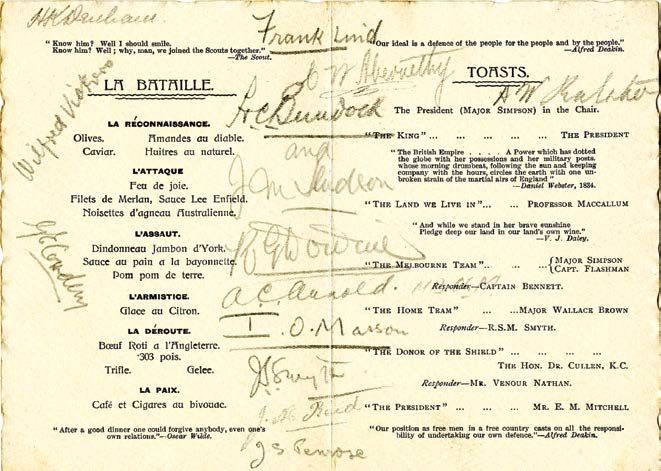
This menu for the Evening Students Association Annual Dinner is one of four (1919-1921)
which have been printed on very fine paper and are extremely delicate [Evening Students
Association S22]
Page 19Scouts Rifle Club 1908 [Miscellanea of Dr Vivian Morris Rich & Dr Joan Macartney, 1117/107834] Page 20
Australian
Intelligence
Corps, 2nd
Military
District
November
16 1912
[JT Wilson
personal
archives,
P162/16/7]

“This dinner
was held on
the occasion
of the
retirement of
J.T.W. from
command
of the Aust.
Intell. Corp,
2nd Mil
District, on
expiry of his 5
years tenure”

                  Page 21
Graduates of the Faculty of Architecture Annual Dinner, 1951 [Professor L Wilkinson personal
archives, accession 2480, Box 2]
Sydney Teachers College Camp, Richmond December 16 1926 [Sydney Teachers College Publications G69/60]
Page 22Miscellaneous
Nyree Morrison, Senior Archivist
In any archive there will always be a miscellaneous series which a few are featured in this edition of Record and
for those items that do not fit into existing series. The much more.
University Archives has an assortment of items which were
The miscellaneous series was created to control this
received from 1969 and came from a variety of sources.
assortment of items from various sources and were
The items have a connection to the University in some allocated sequential numbers with the prefix ‘M’ (for
way, and range from an album of photographs taken miscellaneous). The new Archives control system, CHAOS
at geology excursions in 1910; biographies on alumni; was introduced in 2007 and a new series was created –
plans by engineering students on various sections of the Series 1117: Miscellaneous items with various provenance.
University grounds, 1891-1913; original and copy letters Since 2007 ‘M’ numbers were no longer allocated to new
to and by Professor John Smith, Enoch Powell, John Le items registered to Series 1117. However, these items also
Gay Brereton, and John Bradfield to name a few; records have CHAOS generated item numbers when they were
relating to Thomas Fisher, including his will in which he registered in the new control system.
left just over £30,000 to the University; photographs of
The following is a small selection of items that may be
the Sydney Teachers Camp at Yarrawood; and, ephemera
of interest.
concerning various University events including menus of
Nelly Rutherford’s sketch book
Nelly L Rutherford was a student at Sydney Teachers students. Here are a few pages to show the artistic
College, 1906-1907. Her sketch book contains drawings, talents and the wit of some of the students.
paintings, poems and comments from her fellow
Page from Nellie
Rutherford’s sketch
book [1117/107202]
Page 23Page from Nellie
Rutherford’s
sketch book
[1117/107202]
Student results book of Frederick LW Wood documenting lectures delivered and the attendance of
students, but Wood used them to document the names of
Frederick Lloyd Whitfield Wood was the son of the students in his class, results and comments on their essays.
foundation professor of history at the University, The name of the high school attended for each student is
George Arnold Wood. Frederick was assistant lecturer also noted. The books document those day and evening
in history at the University in 1930, then lecturer, students attending British History I. Some of the comments
1931-1934. In 1935, he became a Professor of History on the students’ essays are quite harsh and include:
at Victoria University of Wellington.
“vague and stroppy”; “disgusting windbag”; “lots of
Three student result books spanning 1930-1932, were muddled tosh not on the point”; “hopelessly deficient
donated by Victoria University of Wellington Library, Special in knowledge and intelligence”; and “starts quite well,
Collections. The books seem to have been originally for but dissolves into pompous ignorama”
Snapshot of comments by FL Wood [1117/107821]:
“Rather poor stuff...just crawls across-does not answer questions directly...lots of rubbish-better at end”
“Silly at times & some amazing howlers...starts off silly-but improves?”
Page 24You can also read


