Three Year Cluster Action Plan 2018 - 2021 Bay Health Cluster - Gower Medical Practice
←
→
Page content transcription
If your browser does not render page correctly, please read the page content below
Three Year Cluster Action Plan 2018 - 2021
            Bay Health Cluster

                                             1|Page
Welcome to the Bay Health Three Year Cluster Plan 2018 – 2021
1. Bay Health Cluster Overview
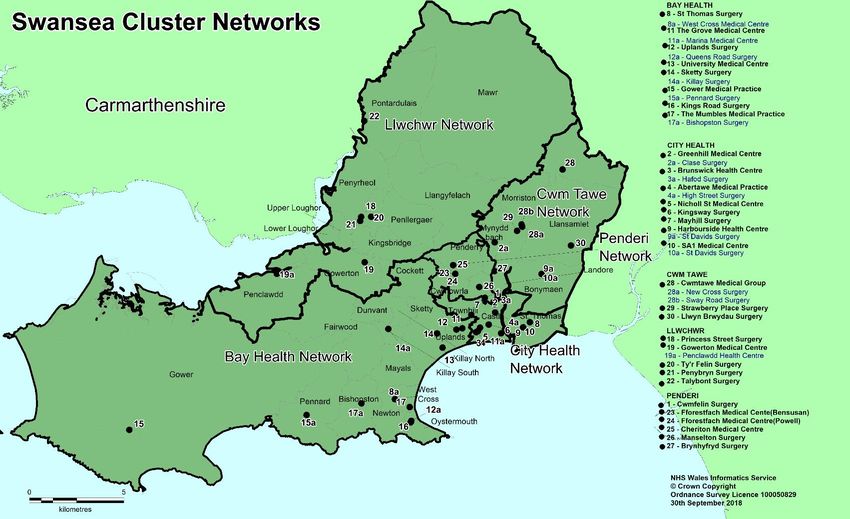
The Bay Health Cluster Network is one of five cluster network areas in Swansea, geographically covering Uplands, Sketty, West Cross,
Mumbles, Killay, and Gower also serving students resident at Swansea University.
2|PageBay Health includes eight general practices, community pharmacies, dentists and optometrists, community and hospital services working together
with partners from the local authority and the third sector. Individual practice populations range from 3,707 to 21,325, amounting to a cluster
network total registered population of 73,997.
Clusters across the area have agreed that they aim to work together in order to:
Prevent ill health enabling people to keep themselves well and independent for as long as possible.
Develop the range and quality of services that are provided in the community.
Ensure services provided by a wide range of health and social care professionals in the community are better co-ordinated to local needs.
Improve communication and information sharing between different health, social care and voluntary sector professionals.
Facilitate closer working between community based and hospital services, ensuring that patients receive a smooth and safe transition
from hospital services to community based services and vice versa.
Through the delivery of our cluster plan we are working to meet the Quadruple Aims set out for Health and Social Care systems in Wales in ‘A
Healthier Wales Our plan for Health and Social Care’ (2018):
Improved Population Health and Wellbeing
Better Quality and More Accessible Health and Social Care Services
Higher Value Health and Social Care
A Motivate and Sustainable Health and Social Care Workforce
2.1 Swansea wide ‘Headline’ Information
Population: 242,4000 residents. High concentrations of population in and immediately around the City Centre, the adjacent wards of Cwmbwrla
and uplands (6,800 people per square km, the highest density in the county) and also in Townhill and Penderi
Population has steadily grown between 2001 and 2015. Main driver of population growth in Swansea has been migration. Recorded live births
has steadily risen since 2001 and number of deaths have fallen.
Life expectancy in Swansea is increasing: Average life expectancy for males is 78 (Wales 78.5) and 82.4 for females (Wales 82.3). This will
impact significantly on the provision of health, social care and other public services in Swansea
Projected population Change: Welsh Government’s latest trend based population projections suggest that Swansea’s population will grow by
9% (21,600 people) between 2014 and 2039
3|Page2011 Census suggests that 14,326 people in Swansea were from a non white ethnic group: 6% of the total population and 20,368 (8.5%) of
Swansea’s Population were non white British (above the Wales average (6.8%). Census data (2011) suggests the largest non white ethnic
groups are: Chinese 2,052 (0.9%), Bangladeshi 1,944 (0.8%), Other Asian 1,739 (0.7%), Black African 1,707 (0.7%), Arab 1,694 (0.7%)
Welsh Language: Proportion of people able to speak Welsh in Swansea decreased from 13.4% (28,938) in 2001 to 11.4% (26,332) in 2011. A
fall of 9% despite an increase in population.
2.2 Our Local Health, Social Care and Wellbeing Needs and Priorities
Information has been collated on a wide range of health needs using the most up to date information available, within the Bay Health Cluster
area, in order to support the development of the focus areas for this plan.
4|PageHealth Profiles
Uptake on Bowel screening 53% . Target 60% (PHW Data 2016/17) Other Key Influencing Features
Uptake on Cervical Screening 79.5% . Target 80% (PHW Data
2016/17) Some areas are very rural with poor
Uptake on AAA screening 75.4%. Target 80%. (PHW Data 2016/17) transport links to the city centre
Uptake on Breast screening 75.8%.Target 70% (PHW Data 2016/17)
A high elderly population requiring
Estimated 9,900 (15.7%) known smokers within the cluster. community based care for multiple and
complex ailments
Public Service Board, Local Wellbeing Plan
76.68% of 16+ yr olds with a record of alcohol intake (ABMU average Focus:
76.58)
Early years: Making sure children have the
Comparatively higher rates on GP Disease Registers (2018) for : best start in life.
Cancer
Atrial Fibrillation Live Well. Age Well – making Swansea a
place to live and age well.
The lowest number of Emergency Department attendances (rate:
Working with nature- improving health,
100.43/1000, number:15,006) in the Swansea Clusters 01/09/17 -
31/08/18. supporting biodiversity and reducing our
carbon footprint
Strong communities- supporting
Lowest rate in ABMU of GP OOH attendances (rate:48.24/1000, communities to promote pride and
number: 7,208) 01/09/17 - 31/08/18. belonging.
Flu Immunisation Uptake (PHW Data 2017/18): PSB aims to make all services work together
Patients 65y and over: 69.3% (ABM 68.2%, Swansea 67.4%) by sharing resources, assets and knowledge
Patients under 65y at risk 48.5% (ABM 46.7%, Swansea 46.5%)
Children aged 2&3 Years 48.5% (ABM 49.1%, Swansea 47.4%)
5|PagePopulation & Community
Assets
Swansea University Cluster Features
Libraries 73,997 patients registered Key Population Features
8 Pharmacies Resident population; 70,800 (Community Area Profile: Source Mid 2016
Extensive countryside rounded estimated ONS)
10 Dentist Practices
Uplands Wellbeing Centre 5 Opticians
Volunteer capacity 24 Schools A comparatively low % of patients (7%) live within most deprived areas
Leisure Centres 5 Libraries
Over 17,000 (21%) of patients aged 65+ (15.6% for Swansea)
15 Electoral Wards Over 8,500 (10.9%) of patients aged 75+ (9.2% for Swansea)
Major employers in the cluster are: CCS
schools, ABMU Health Board (Singleton Swansea Council South
Hospital), Swansea University, University Delivery Area includes Sketty Over 2,500 (3%) of patients aged 85+ (2.7% for Swansea)
of Wales Trinity St Davids, Gower College Park with particular features
Large proportion of students, including those with multi-racial/cross cultural
Swansea, Welsh Ambulance Service NHS, arising from deprivation needs
Swansea West Industrial Estate (part of), High numbers of 20-24 year olds; 22,521 (31.8%)
Parc Fforestfach retail park, tourism and
agriculture.
Sketty 4 (the second most deprived LSOA in this area) is in the 10% most
deprived LSOAs in
Wales in both the employment and income domains, but much less deprived
in terms of
physical environment, housing and access to services
Service demands
A comparativlely low % of patients in both Bay West (3.5%) and Bay East
The number of registered patients aged 20-24 (4.1%) live with a long-term sickness or disability (Swansea 6.9%)
Some areas are very rural with poor transport links to the city centre
An average of 13.2 patients per month contact the Help Me Quit Service
between January 2018 and June 2018, with 29 patient achieving a 4 week
quit rate status.
6|Page2.3 Disease Register Information
Bay Health Register Total Swansea ABMU Cluster Trend/Highlights
Disease Register
2018 (%) rate % rate %
Atrial Fibrillation 1825 (2.4%) 2.2% 2.3% 2nd highest rate and highest numbers in
Swansea Clusters
Cancer 2634 (3.2%) 2.7% 2.9% Highest rate and numbers in Swansea
Clusters
Dementia 559 (0.7%) 0.7% 0.7% Joint highest percentage in Swansea
Mental Health 766 (1.0%) 1.1% 1.1% 3rd highest percentage rate in Swansea
Clusters
Obesity 4583 (6.1%) 9.0% 10 % Lowest rates in Swansea, second highest
numbers.
Palliative Care 107 (0.1%) 0.2% 0.2%
2.3 Antibiotic Prescribing
Items Apr 17 - Mar 18
Items % Variation Items Difference
Items April 16 - Mar 17
41,894 42,125 -0.55% -231
(With regard to antibiotic prescribing levels nationally there was a 2.2% reduction for the period noted in the table above
7|Page3. Strengths Opportunities Weaknesses Threats (SWOT) Analysis: Bay Health Cluster
Strengths
Weaknesses
Multi Disciplinary Team complement
Capacity within Cluster to implement /deliver programmes
Well established leadership and shared common purpose including Cluster Lead time
Comparatively lower levels of GP practice sustainablity No legal entity with which to draw in additional funding, no
issues ability to expand/rollout
Wide geographical area to cover
Bay Patient Reference Group in place Existing funds fully committed
Dedicated Cluster Implementation/ Business Development 'Head-space' for innovation
Capacity ( part time)
Strong Working Relationships with the
Third Sector
Cluster SWOT
Analysis
Opportunities Threats
Establish formal legal entitity 18/19 Contract Framework may mean lower levels of
practice engagement in Cluster work
Explore external funding
Programmes largely dependant on WG annual funding
Development of business plans based on evaluation
Risks to practices/staff regarding employment law for
working with other clusters
Cluster based staff
Enhancing practice level engagement to implement and
Workload and sustainability pressures.
develop Cluster agenda
Protected time for Cluster Lead to deliver workload and
leadership activities
8|Page4. Cluster Vision and Aims
In June 2018, Bay Health Cluster jointly agreed a Cluster Vision for the next three years. The Vision sets out how this Cluster sees its role in
providing Health, Social Care and Wellbeing with and for the population of the Bay area and its practices.
Our Vision
“All Bay Health Cluster primary care services working together in partnership with patients,
hospitals and the third sector to provide high quality services to meet patient’s needs. We
envisage a whole systems approach to transform services to meet the local needs of our
patients.”
Our aims
Bay Health aims to promote healthy lifestyles ensuring engagement of patients and communities
in supporting their own care and participating in shared decision making. We wish to expand our
multi-professional team to improve access to those housebound and improve education for
patients with chronic illness. Information technology is essential to improve access to health
online and we wish to seek out programmes for our patients to utilise, working in conjunction
with the local authority.
5. Bay Health Cluster Practice Priority Issues
Practices have expressed a range of areas which are a priority for them in delivering a sustainable and effective primary care service. These
issues have also been taken into account in developing the Bay Health Cluster Plan.
9|PageOur Cluster Plan
Strategic Aim 1: To understand and highlight actions to meet the needs of the population served by the Cluster Network with a
preventative approach
Our three year focus:
Alcohol Consumption – working to ensure levels of alcohol consumption and its side effects are reduced/managed
Overweight and Obese Population – working to reduce/manage overweight and obese patients
No What action will be taken Who is When will it What will success look Current position RAG
# responsible for be like? What will the Rating
delivering completed outcome be for
by patients?
Overweight and Obese
1.1 Implement Improving Health with Voluntary March 2019 Referrals into a 5 week First course will commence 6th
Technology. A 5-week course providing Sector course to run 6 times over November.
patients with a Fitbit and support. a 12 month period rotating
round the surgeries as a
venue to hold the events.
Each patient referred will
be provided with a fitbit.
Reduction in obesity
levels for participating
patients
1.2 Commissioning of administrative and clinical GP Lead March 2019 Accuracy of recording
time to measure patient BMIs BMI’s will be improved
1.3 Provision of communications tool for All March 2019 All Health Care Health Care Professionals
professionals to enable productive Professionals enable to feel uncertain of best way to
conversations about physical activity, diet, have productive initiate discussions
and weight/BMI discussions with patients
10 | P a g e1.4 Undertake MECC (Making Every Contact All Ongoing Complete mandatory
Count Training) for professionals to provide training for Making Every
additional support for patients Contact Count (MECC)
1.5 Increase the Health Literacy levels amongst All Ongoing Staff to use Health Public Health Wales to provide
Bay Health Cluster patients and citizens Literacy Tool routinely. training sessions.
Improved Health Literacy
among patient population.
1.6 Increase use of CO monitors during GP Practices Ongoing Increase smoking All practices have received CO
consultations cessation working with monitor, including branch practice.
ASH charity to promote Event held by PHW and ASH
smoking cessation Wales.
Alcohol Consumption
1.7 All new patients register will complete a GP Practices Ongoing Practices will understand Procedures to be reviewed by
screening questionnaire alcohol consumption Practices.
levels amongst their
patients, to inform service
delivery.
1.8 Appropriate lifestyle advice and appropriate GP Practices Ongoing Alongside the patient Undertaken during new patient
referral to be undertaken on patients with questionnaire and MECC checks by Practice nurse
increased alcoholic consumption training, practices will be
able to have open
discussions with patients
and refer appropriately.
Strategic Aim 2: to ensure the sustainability of core GP services and access arrangements that meet the reasonable
needs of local patients including any agreed collaborative arrangements
Our three year focus:
Fully implement a sustainable, evidence led, robust Multi-Disciplinary Healthcare Team within the Cluster which meets the
workforce requirements overall of all Cluster practices and their populations by 2021
11 | P a g e Deliver a comprehensive Cluster training programme which supports staff and clinicians to work in the most effective way possible
Significantly increasing the use of My Health Online for Bay Health practices.
No What action will be taken Who is When will it What will success look Current position RAG
# responsible be completed like? What will the Rating
for delivering by outcome be for
patients?
2.1 Scope preferred option for training Cluster March 2019 All frontline staff able to Some practices benefiting from
provider to enhance workflow in practices, Business and work in the most effective workflow good practice
commission. Implementatio way possible implementation
n Manager
Reduction in unnecessary
GP workload appropriate
to practice requirements
2.2 Increase use of My Health Online – All March 2019 Reduce impact on In collaboration with Digital
Work in partnership with Digital practices Communities and SVCS an event
Communities Wales to improve update. Better access for patients will take place to raise awareness
of My Health Online to encourage
More patients in Bay and increase uptake.
Health using MHOL
2.3 Develop a business case for the Cluster March 2019 To allow Bay Health to Links have been made with Red
permanent employment of Cluster MDT Business and employ Cluster staff Kite to build on previous expert
staff by the Health Board Implementatio without individual input.
n Manager practices being at risk
and Health
Board
2.4 Specialist Nurse in Chronic Disease to CCN March 2019 Once up skilled, CCN will CCN has commenced Minor
complete minor illness course and training be able to enhance the Illness course
to become an ANP in full. current role.
12 | P a g e2.3 To employ additional Specialist Nurse in Cluster March 2019 Cluster chronic conditions Awaiting new financial year and
Chronic Disease. Business and nurse supporting awaiting discussions with the HB
Implementatio practices and current on employment
n Manager chronic conditions nurse
and Health and develop services
Board within Bay health
Strategic Aim 3: Planned Care - to ensure that patients’ needs are met through prudent care pathways, facilitating rapid, accurate
diagnosis and management and minimising waste and harms. To highlight improvements for primary care/secondary care interface.
Our three year focus:
Diabetes: transforming care for patients with Type 2 Diabetes, ensuring care in place as a cluster, focusing on delivering the early
implementation of the National Enhanced Service for the ABMU Health Board
Mental Health: To continue to improve multi agency mental health services for adults children and young people with a quality
improvement approach
No What action will be taken Who is When will it What will success look Current position RAG
# responsible be completed like? What will the Rating
for delivering by outcome be for
patients?
3.1 Continued participation in the National GP March 2019 Reduction in ED Business case submitted for
Diabetes Audit practices/MDT attendances for approval to Investment Benefit
Hypoglycaemia Group
Providing diabetes care closer to home
Reduction in Amputations
Uptake of the DES – Gateway module
Reduction in hospital
length of stay/bed days
Reduced duplication
across primary &
secondary care
Improved self-
management by patients
13 | P a g e3.2 Improve Adolescent Mental health: Voluntary March 2019 Direct referral from Sessions commencing Oct/Nov
working with REACH to provide Sector/ SCVS practices to support 2018
counselling to patients aged 14-25 Adolescent Mental Health
Reduce waiting times
Reduce inappropriate
referrals to practices
3.3 To reduce social isolation improve mental Voluntary March 2019 Addressing mobility Additional sessions available.
health and wellbeing by working in Sector/ SCVS movements, mental Encourage referrals
collaboration with Action for Elders health issues and
providing the Balanced Lives scheme cognitive thinking, life
style adaption, health
promotion, social
interaction and peer group
stimulation.
3.4 Increase social prescribing utilising Voluntary March 2019 GP to be able to refer to Encourage signposting to
community activators in collaboration with Sector/ SCVS alternative services Activators
Action for Elders routinely and effortlessly
3.5 Social prescription pads to be created in Voluntary March 2019 GP to be able to refer to Currently in draft form
collaboration with SCVS and Bay Health. Sector/ SCVS alternative services
routinely and effortlessly
3.6 Continue implementing Wellbeing Grant Voluntary March 2019 Bids have been submitted via
Scheme Sector/ SCVS and ongoing VEAT
Strategic Aim 4: To provide high quality, consistent care for patients presenting with urgent care needs and to support the
continuous development of services to improve patient experience, coordination of care and the effectiveness of risk management.
To address winter preparedness and emergency planning
Our three year focus:
To improve Flu vaccination
Build on current Chronic Condition Specialist Nurse role capacity to meet needs of the population
14 | P a g eNo What action will be taken Who is When will it What will success look Current position RAG
# responsible be completed like? What will the Rating
for delivering by outcome be for
patients?
4.1 Flu immunisations to be given to GP March 2019 CCN and practice nurses 2017 – 18 Flu Immunisation
housebound by practice nurses or Bay practices/MDT increase flu uptake with Uptake Figures have been
specialist nurse housebound patients for provided to the cluster on a
over 65. practice, cluster and Health Board
level.
4.2 To effectively utilise the cluster chronic GP Practices / March 2019 Cluster chronic conditions Providing high quality and
conditions nurse to respond to patients Chronic and ongoing nurse supporting consistent care for those patients
with urgent care needs Conditions practices within Bay with urgent care needs.
Nurse health.
Sharing capacity between
practices within the cluster to
support the development of
services, improving patient
experience, coordination of care
and effective risk management,
and in addition, as a mechanism
to winter preparedness and
emergency planning.
Strategic Aim 5: To develop the Cluster as a structure for delivery of identified priorities.
Our three year focus:
Ensure appropriate Cluster Governance in place and develop Cluster to maximum appropriate level of maturity
Maximise use of additional funding sources for Cluster programmes
No # What action will be taken Who is When will it What will success look Current position RAG
responsible for be like? What will the Rating
delivering completed outcome be for
by patients?
15 | P a g e5.1 Agree operational model for Cluster that All March 2019 Cluster members able to First meeting to take place in Oct
best meets needs of Cluster deliver and provide clarity 2018 to build on previous
regarding roles and discussions
responsibilities.
5.2 Allocate protected time and headspace All March 2019 To create a forum to First meeting to take place in Oct
for innovation for cluster leadership roles collaboratively work on 2018. Cluster Lead allocated ½
funding bid, additional day per week to deliver all cluster
funding streams and work as per SLA.
developing services for
the Bay Health population
5.3 Establish clear cluster accountability All March 2019 Cluster programmes Lack of clear resource/capacity for
mechanisms for agreed work delivered more rapidly, implementation.
programmes with engagement.
5.4 Establish business planning cycle for Cluster March 2019 More vigorous approach In place on an ad hoc basis in
cluster to prioritise cluster projects and Business and to delivering cluster relation to cross cluster issues.
planning spend Implementation strategic direction and
Manager and minimising likelihood of
Health Board slippage, ensuring most
effective use of funding.
5.5 Establish Cluster communications Cluster March 2019 Strategic stakeholders Comms made on opportunistic
strategy, identifying key internal and Business and aware of key Bay Health basis eg via WG comms scheme
external stakeholders to influence to Implementation programmes. through Health Board. Cluster has
maximise impact, including sharing best Manager and relatively well developed comms
practice delivered in Bay Health Health Board Cluster members better activity but strategic approach
aware of outcome from required.
use of time and
resources.
5.6 Ensure Cluster compliant with GDPR for All March 2019 All staff with receive Training to be undertaken during
Cluster based/delivered activity GDPR training via online protected learning sessions
training provider
Bluestream
5.7 Review of cross cluster IT, Estates Cluster March 2019 Understanding of Clear understanding of resources
infrastructure to meet aims Business and infrastructure, resources, to be considered in planning of
Implementation cluster money to be services.
Manager invested
5.8 Implement mobile technology to support Cluster March 2019 To deliver services Vison anywhere has been
Cluster working Business and effectively and efficiently supplied to all clinical staff – other
Implementation opportunities to be identified
16 | P a g eManager and using modes of
NWIS technology
5.9 Enable practice and team time to collate All March 2019 Demonstration of Practices identifying time within
and set out data for external evaluation effectiveness of Cluster current constraints.
programme.
More prudent
commissioning of
services.
5.10 Develop potential for planning Cluster All Ongoing To have clear aims, Cluster vision set, priority areas of
spend across 3 year period objectives and vision of focus. 18-24 month spend plans in
areas in which Bay Health place.
wish to implement change
and develop existing
services
5.11 Identify and secure additional funding Cluster March 2019 External funding for the Some leverage of additional
streams Business and cluster accessed to funding and resources to be
Implementation deliver the aims of the reviewed.
Manager cluster
Strategic Aim 6: Other Cluster and area specific issues
Our three year focus:
To undertake quality improvements to services in identified Cluster Priority Areas: Urinary Tract Infections (Antibiotic Prescribing)
Further the role of the Bay Health Cluster Development Group to deliver Cluster Aims
No What action will be taken Who is When will it What will success look Current position RAG
responsible be completed like? What will the Rating
for delivering by outcome be for
patients?
6.1 UTIS: Recurrent UTI prescribing will be GP Practices March 2019 Review all patients on Document currently under
reviewed and where appropriate prophylatic antibiotics and production to disseminate to
prophylactic antibiotics stopped as per stop if appropriate in practices.
National guidance
17 | P a g ekeeping with recent
national guidance.
6.2 AF: Aspirin monotherapy to be reviewed GP Practices March 2019 All Bay Health practices Practices to commence work once
and all patients with a CHADSVASc2 will ensure that all document disseminated
score or more to be counselled regarding patients with lone AF
anticoagulation should no longer be
anticoagulated with
Aspirin.
All Bay Health practices
will ensure that all
patients with
CHADSVASc Score
greater than 2 will be
anticoagulated
appropriately with
Warfarin or a DOAC if not
contraindicated
6.3 Support the mainstreaming of services Cluster Oct/Nov 2018 Services mainstreamed Pharmacy outline case
via the business case application Development and Cluster funds summarised for consideration by
process through ‘Balancing the System – Managers, released where relevant ABMU Strategy and Finance
shifting resources from secondary to Cluster Lead Depts.
primary care’ for:
Mental Health Services for Tier 0 Physiotherapist preferred option
Pharmacist Provision model being costed.
Physiotherapy
on a Cluster basis Pharmacist case in draft.
MH counselling preferred options
to be presented in Nov.
18 | P a g e6. Cluster Finance Statement
Bay Health Cluster has a financial allocation from the Welsh Government of just over 217k. In addition Clusters have access to other funding
streams such as through the Health Board delivered PMS+ scheme. In 18-19 that has amounted to £26,488.
19 | P a g eYou can also read


