Toolkit for School Travel
←
→
Page content transcription
If your browser does not render page correctly, please read the page content below
Toolkit for
                School Travel

Green-Schools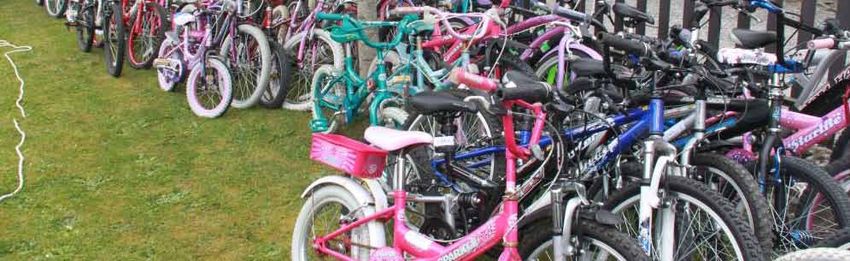
Foreword
The ‘school run’ has become a major factor in traffic congestion, particularly in the morning peak. To address
this issue, the National Transport Authority has been working, in conjunction with An Taisce and the Department
of Transport, Tourism and Sport, with the Green Schools programme to establish and oversee a school travel
module, which is funded by the Department. 850 schools and approximately 180,000 pupils are currently involved
in the travel module, which has been extremely successful in reducing the numbers of children who travel to
school by car. Recent surveys of over 10,000 pupils reveal a 27% drop in car use and a correspondingly significant
increase in numbers of pupils walking and cycling to school. In doing so, a number of critical social and economic
objectives are being met, including:

•   Congestion is reduced saving the economy money;
•   Children get more exercise and are healthier and more alert;
•   Pollution is decreased;
•   Parents save time and money;
•   People get to know their community and environment better;
•   Children and parents get more opportunities to interact socially.

This toolkit presents a set of measures for use by schools who are currently not engaged with the Green-Schools
programme and who wish to promote ways of reducing car use on the trip to and from school, and to reduce
the impact of traffic on the community around the school.

While it is possible for these schools to achieve a certain shift away from the car using the ideas in this toolkit,
there is greater potential to significantly impact on travel behaviour by engaging fully with the very successful
Green-Schools programme and to implement its travel module.

The success of the Green-School travel module is based on two factors. The first is that it is delivered through
the effective ‘7 Step’ methodology, which acts as a guide to teachers and pupils/students. The second success
factor is that experienced An Taisce Green-Schools Travel Education Officers are on hand to assist schools
interested in changing travel behaviour. They offer resources, advice, and the opportunity to network with
other schools.

The programme has had major beneficial impacts on the schools which have been engaged in it. We hope that
the ideas and case studies contained in this toolkit inspire those schools outside the Green-Schools programme
to begin to think about how their pupils travel to school. We hope they then get started on implementing some
of the measures contained in this document. Having seen what can be achieved, we hope that they are then
motivated into joining the Green-Schools programme in order to garner the full benefits across the wide range
of environmental themes promoted, particularly Travel.

Gerry Murphy,
Chief Executive Officer, National Transport Authority

                                                                                                                       1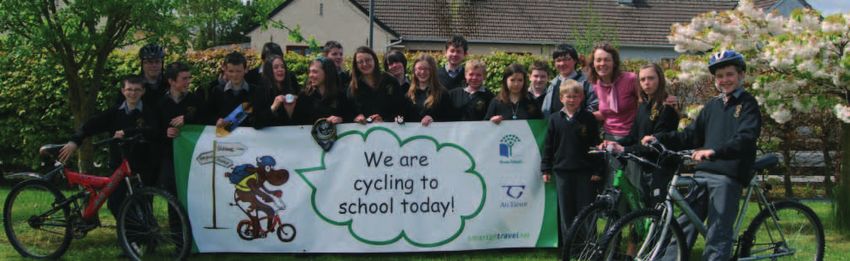
Contents
Section 1: Introduction   3

Section 2: Actions        6

Walking
Cycling
Public Transport
Car Share

Section 3: Resources      16

Useful Links
Sample Curriculum Links
Case Studies

Section 1: Introduction
        Intended Audience
        This toolkit outlines actions to promote more sustainable travel for the
    3   school trip through increased walking, cycling, public transport and car-sharing.
        The first intended audience are teachers, parents and other responsible
        members of a school community, who can then share and discuss the ideas
        with both primary and secondary pupils.

        Before you read this toolkit                             The success of the Green-School Travel programme
                                                                 is based on two factors. The first is that the Green-
        The toolkit was developed by An Taisce Green-            Schools Travel module is delivered through the
        Schools in cooperation with the National                 effective ‘7 Step’ methodology, which acts as a
        Transport Authority, and is based on case study          guide to teachers and pupils.
        evidence from the An Taisce Green-Schools                The 7 Steps are as follows:
        Travel programme.

        As of September 2010, over 850 schools and 180,000
                                                                  1. Establish a Green-Schools Committee
        pupils in the programme are implementing initiatives      2. Carry out an Environmental Review of
        to promote sustainable travel. To date, schools in              current travel patterns
        the Green-Schools Travel programme have been
                                                                  3. Devise a Travel Action Plan
        very successful in increasing walking and cycling and
        reducing car use. Results from 10,000 students in         4. Monitor and Evaluate progress
        112 schools who undertook the programme for the
                                                                  5. Identify Curriculum Links
        period 2008-2010 show a 27% reduction in private
        car use and a correspondingly significant increase in     6. Inform and Involve the Wider Community
        numbers of pupils walking and cycling to school.
                                                                  7. Develop a Green Code.
        Table 1:
        Targets Set for the Green-Schools Travel Programme

         Year                          Car                 Mixed mode          Public transport     Walk or cycle

         2011                          -15%                +3%                 +2%                  +10%

         2012                          -16%                +3%                 +2%                  +11%

3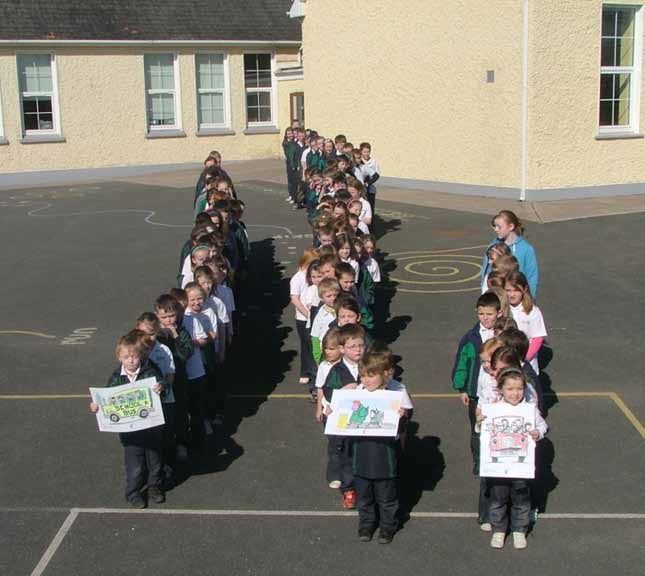
Toolkit for School Travel

     “If you are outside of the Green-Schools programme
     be optimistic but realistic about what you can achieve.”

Gaelscoil Naomh Padraig, Lucan launching their GLAS initiative (Gluaisfimid Linn Ar Scoil gach Mháirt)

The second success factor is that experienced An             Expectations will also vary depending on the nature
Taisce Green-Schools Travel Education Officers are on        of the schools environment, its local area, the quality   4
hand to assist schools interested in changing travel         of the walking and cycling experience on roads and
behaviour. They offer resources, advice, and the             streets nearby and the frequency of public transport
opportunity to network with other schools.                   connections. While schools in all types of places
                                                             have succeeded in significantly reducing car use, it
For those schools already engaged in the Green-
                                                             is anticipated that schools in urban areas, where the
Schools programme, Travel is the fourth theme.
                                                             distance travelled to schools is generally shorter and
While the most effective way to promote sustainable
                                                             public transport is available, would perform better.
travel to school is via this programme, for those
                                                             For this reason this toolkit contains a number of case
schools not yet involved and who are interested in
                                                             studies from urban and rural areas which show what
promoting sustainable travel, this toolkit will give you
                                                             can be achieved in different locations.
lots of ideas for action.

Be Optimistic and Realistic
If you are outside of the Green-Schools programme
be optimistic but realistic about what you can
achieve. Green-Schools research has shown that
80% of Irish pupils express a desire to travel in a
sustainable way to school, so you’ll find that it’s
relatively easy and fun to organise awareness-raising
campaigns. However, experience has also shown that
in order to convert awareness into behaviour change,
you’ll need strong support from a champion within
your school, parents and your Local Authority (e.g.
Road Safety Officer or Environmental Awareness
Officer). While every school is different, schools
should probably start with easy to do initiatives, such
as promoting a “one-day-a-week” initiative such
as Walk on Wednesday. Then as your school builds
confidence and capacity you can take on more of the
ideas listed in this toolkit.

                                                            An Taisce
                                                            The National Trust for Ireland
                                                                                                                           4
5

        Human Chart of pupils who took the bus, walked and were driven to school, Whitechurch NS, Co. Waterford

        In common with any Environmental management
        system, organisational mechanisms are critical. For
        those schools not in the Green Schools programme,
        a similar type of approach could be adopted. As with
        the Green-Schools steps, the first thing you will need   “Green-Schools research
        to do is to get a group together – this group can
        include pupils, parents, teachers, your caretaker, or    has shown that 80%
        other interested people. Next, do a survey of existing
        travel patterns which explores issues such as how
                                                                 of Irish pupils express
        pupils travel to school; what reasons they have for      a desire to travel in
        choosing each mode; how they would like to travel;
        how far they travel; what changes they would like to     a sustainable way to
        see in their journey to school etc.
                                                                 school, so you’ll find
        This will then give you some direction as to
        what ideas contained in this toolkit could be applied    that it’s relatively easy
        to your school. Then you can start implementing
        them. Remember to monitor how your Action Plan is
                                                                 and fun to organise”
        progressing, and to publicise and celebrate your work
        so your community can see what you’re doing and
        can support you in your activities.

5
Section 2: Actions
        This section outlines the possible actions that schools can take to
        get pupils using sustainable modes of transport. These actions focus
        mainly on walking and cycling, but also give ideas on the promotion
    6
        of public transport and car sharing.

            Remember to include both teachers and parents in your promotions!

        Walking –
        A Smarter Travel Choice                                                                port suggests
                                                                           The Slán 2007 re
        Walking is a great way to get around your                                               adults don’t
                                                                           that 55% of Irish
        locality and explore the area you live in. Walking                                   ily physical
                                                                           get enough da
        is a great form of exercise, and helps tone                                           adopt walking
                                                                            activity. If you
        muscle and burn calories, keeping you healthy.                                          ur chosen
        It has less impact on your joints than running                      or cycling as yo
                                                                                                ort on the
        and walking at a brisk pace is a good form of                       mode of transp
                                                                                               can build
        cardiovascular exercise. Walking is also cost                       school run you
                                                                                                  into your
        free, apart from the shoes. It is also pollution                     physical activity
        free so while you may wear out the shoes you                                            g it easier to
                                                                             daily life, makin
        won’t wear out the environment.                                                          bit.
                                                                             maintain the ha

        Why walk to School?
        Below are key points to help you get on your feet and       •   Even if you live too far from your destination
        also to promote walking to others:                              to walk the full way, you could always consider
        •    Walking is a good form of exercise and can                 ‘park n stride’. By this we mean you could drive
             boost your mood as it gets the ‘good feeling’              part of the way and walk the rest, as long as
             hormone flowing;                                           you have a safe, secure and sensible place to
                                                                        park your car. Many schools have liaised with
        •    It is a good way for children and adults to
                                                                        local supermarkets, churches or community
             interact with friends as you can arrange to
                                                                        centres who have offered their car park for
             meet up along the way;
                                                                        park ’n’ stride initiatives;
        •    You get to feel as if you belong to your community
                                                                    •   It could also make your area safer as the more
             as you become more aware of what is happening
                                                                        people who are out on the streets, the safer it
             around you;
                                                                        feels to walk in your area.
        •    It is both noise and air pollution free thus helping
             your local and global environment;

6
Toolkit for School Travel

   “Teachers report that children who walk to school are
   frequently more alert, relaxed and ready to start the
   school day compared to those arriving by car.”
   Department of Transport (UK): Effect of Travel Modes on Children's Cognitive Development, 2001.

  Top tips to promote walking                                 5. Fancy Dress Walks – around certain times of
                                                                        the year organise fancy dress walks to school,
  1. Raise awareness of walking – run a poster                          for example at Halloween, Christmas or St.
        competition to encourage people to start
                                                                        Patricks Day. You could also have a ‘no uniform
        walking more. You could also promote local
                                                                        walking day’ to raise money for your school or
        walking trails and the health benefits of
                                                                        a local charity.
        walking. You could also look at setting up an
        Irish Heart Foundation ‘Slí na Sláinte’ walking       6. Themed Walks – Consider running a themed
        route in your local area. See links at the back of              walk, such as a ghost tour, sports tour, local
        the document for further information.                           history tour around your local area or go
                                                                        for a nature walk and learn about the local                                         7
  2. Create an incentive – some people may need                         biodiversity. This could be tied into Geography,
        a little encouragement to start walking. This
                                                                        Science or History classes.
        could be a simple prize for the top walker of the
        month or you could have a healthy breakfast           7. International Walking Events – did you know
        morning for all those who choose walking as                     that Green-Schools National Walk to School
        their mode of choice on a certain day.                          Week takes place in May and International
                                                                        Walk to School month occurs in October?
  3. Develop an initiative – you could start a
        walking initiative such as Walk on Wednesday          8. Network – Speak to your Local Authority and
        (WOW). Simply pick a day you would like                         Community Guard about managing parking
        people to walk and then promote it. This could                  and traffic outside your school or to improve
        be linked to raising awareness and creating an                  pedestrian infrastructure in your area.
        incentive e.g. a poster competition to promote        9. Carry out a ‘Walkability Audit’ of your school
        WOW and then provide a healthy breakfast the                    and the area around it. This involves students
        last Wednesday of every month.                                  and teachers walking around their school or
  4. Walking Bus – where children are deemed too                        local area with clipboards, paper and a camera
        young to walk independently consider setting                    to ‘log’ areas for improvement.
        up a ’Walking Bus’. A walking bus is run by a
                                                                                                              Doon, Co. Limerick

        group of adult volunteers who walk a route to
        a school, stopping off at certain points to
        collect and drop off children. Walking buses
        can be time-consuming to set up as they
        require buy in from a lot of people. But once
        up and running, they can work brilliantly and
                                                                                                                                                    aire,

        really set children up for independent walking.
                                                                                                                 Action Day, Scoil Mháthair na Tróc

          Over 32,850 pupils in 250 schools
          took part in national WOW Day
          (Walk on Wednesday) on the
          19th May 2010.

                                                             An Taisce
                                                             The National Trust for Ireland
                                                                                                                                                                7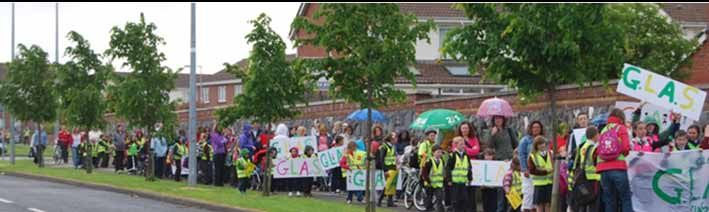
Walking Bus – Cornafulla N.S., Athlone       Walkabilty Audit – St. Michael’s Special School, Roscommon

        •                                                     The results of your Walkability Audit can be sent to
                                                              your Local Authority with a request to undertake
                                                              some of the improvements marked. For example –
                                                              repainting double yellow lines outside the school,
                                                              putting up signs at school gates asking parents to
    8                                                         park away from the gates, cutting back bushes on the
                                                              way into the school, moving bins blocking paths etc.
                  Golden Boot Awards!
                  The Golden Boot is a great                  Cycling –
                  way to encourage classes to                 Be Smart, Get a Bike
                  compete against each other                  Cycling is an inherent part of childhood and most
                  to be the ‘Greenest’ travellers!            young children receive bikes as toys from a very
                  Classes count how many people               young age. Children should be encouraged to use
                                                              their bike not only as a toy but as a mode of transport
                  walked, cycled, took public
                                                              to school and for other activities. Cycling is a skill
                  transport, car-shared or Park               which you can take with you from childhood to
                  ‘n’ Stride to school on a weekly            adulthood, however, this skill is often lost. It is widely
                 basis. At the end of every week              acknowledged that cycling is an efficient way to
                                                              travel either to places of study or places of work. The
                 (or term) the class with the
                                                              bicycle is also the smart mode of choice to get to the
                 most ‘Green Travellers’ wins                 shops, places of leisure and to visit your friends. This
                 the Golden Boot. You can make                toolkit sets out a few ways you can promote cycling
                 a Golden Boot for your class by              to students, teachers, parents and members of your
                 spray-painting a shoe, which is              local community.
                 mounted on a piece of wood.
                                                              Why cycle?
                                                              Cycling has many benefits which are not just limited
                                                              to your health, happiness and local environment.
                                                              Cycling emits less pollution than other modes of
                                                              transport - for every short journey made by bicycle
                                                              you can save 2kg on your CO2 emissions compared
            1 in 4 pupils live within 1                       to travelling by car. It is also a great form of
                                                              cardiovascular exercise even over a short distance,
            kilometre of their school. It                     which is essential for a healthy heart and lungs.
            takes only 10 to 15 minutes                       Cycling is a quicker way to travel over shorter
            to walk 1 kilometre (CSO                          journeys, particularly if you live in a town or city in
                                                              Ireland which is congested at peak times. Cycling
            Census, 2006)                                     also enhances your social skills as you can travel
                                                              independently; interact with other cyclists and the
                                                              cycling community.

8
Toolkit for School Travel

    “Cycling enhances your social skills as you can travel
    independently; interact with other cyclists and the
    cycling community.”

Bikes stacked up at St. Patrick’s Junior School, Skerries on their Cycle or Walk to School Day

There are so many good reasons to cycle but here            Before you cycle                                                 9
are a few to get you thinking:
                                                            If you are already cycling or thinking of getting back
•    Cycling is a great way to get exercise which           in the saddle, then these tips will assist you. Before
     releases endorphins, our ‘feel good’ hormones;         you start your journey:
•    Parents and teachers don’t need to worry about         •         If you wear a helmet, ensure it is a good fit,
     getting a parking ticket. Just remember to bring                 doesn’t obscure your line of vision and complies
     your lock;                                                       with the European Safety standard EN1078. The
•    If you’re a parent or a teacher switching from                   best place to get your helmet fitted is by calling
     the car to a bike then it’s cheaper as you save on               into your local bike shop;
     fuel, tax, parking, tolls, insurance and the NCT.      •         For the dark mornings and early evenings in the
     That’s smarter economics;                                        winter months ensure you have lights for your
•    You are doing your bit for the environment by                    bicycle (a red light at the back and a white light
     producing no emissions, reducing traffic noise                   at the front);
     and using less road space;                             •         High visibility gear is useful in times of low light
•    You don’t need a licence to own a bike and                       and during the winter months so ensure you
     it gives you the freedom to explore your city                    have a good quality hi-vis vest;
     or community;                                          •         Check your bicycle regularly to ensure your
•    Cycling as a teenager can give you a sense of                    brakes and gears work correctly. Other things to
     independence especially as you don’t need to                     look out for include correct tyre pressure, a well
     wait for a lift or the bus;                                      oiled chain, and that the steering and seating is in
                                                                      working order. If in doubt bring your bicycle
•    If more people cycle there would be less cars on
                                                                      to the nearest bike shop for a check-up.
     our roads and more natural surveillance of the
     streets, making our communities safer for all;
•    Your bike doesn’t have to stay in the shed. It
     can be taken on city roads, country paths and                                                  an be
     up into the mountains;                                                        Up to 10 bikes c
                                                                                                     space
•    Getting stuck in traffic is not a problem                                     parked in every
                                                                                                    1 car.
     for cyclists.                                                                 it takes to park
                                                                                                     uch
                                                                                    Imagine how m
                                                                                                     d free if
                                                                                    space we coul
                                                                                                     ycled
                                                                                    more people c

                                                           An Taisce
                                                           The National Trust for Ireland
                                                                                                                                 9
Arriving by Bike to Divine Word National Cycle Parking, Scoil Aodán Naofa, Carnew, Wicklow
School, Rathfarnham
Teachers - Would you like to buy a tax,
PRSI and levy-free bike?! Top tips to promote cycling
Then the Cycle to Work scheme is for you!
Below is a list of top tips to promote cycling either
Guidance on the scheme can be at your place of study, or in your local community.
10 found here - These tips are for fun events that will get people
thinking about the bicycle as the mode of choice in
http://www.revenue.ie/en/practitioner/ your area.
law/bik-exemption-for-bicycles.pdf
1. Cycle training – a good way to become
Teachers can direct questions by email
experienced and confident as a cyclist is to
to the appropriate Payroll area: undertake a cycle training course. A cycle
training course will allow you to practice
• Primary_Payments@education.gov.ie,
your cycling skills away from traffic, before
• pppayroll@education.gov.ie or venturing into quiet traffic situations. Contact
• NTSPayroll@education.gov.ie your Local Authority or Road Safety Officer
• Working parents can speak to their for further information and to find out if
it is happening in your area. Cycle training
employer about purchasing a bike
can take place during or after class time
under the scheme. depending on your school’s situation.
2. Raise awareness – you could have a poster
competition in your school or community to
promote cycling. You could also create a map
of the area showing local cycling routes and
cycle parking locations. Ask your local library
or sports centre to display the winning entries.
3. Create an incentive – sometimes it is a good
5,996 pupils received cycle idea to offer an award as this will create an
incentive. Award a ‘Cyclist of the Month’
training, as part of the Green- by giving them a prize for cycling the most
Schools Travel programme, often or the furthest. You could reward
cyclists by offering them a healthy breakfast
between September 2009 or a refreshing smoothie for each day they
and June 2010. cycle during a dedicated week. This could be
sponsored by a local business. The bicycle
lottery could be another incentive by giving
a raffle ticket to an individual every time they
cycle. The more you cycle the more tickets you
get, thus increasing your chances of winning.
10Toolkit for School Travel
“You could create a map of the area showing local
cycling routes and cycle parking locations.”
Children in St. Francis National School, Limerick, at their bike maintenance class
4. Create an initiative – to get people to 7. Bike Week – National Bike Week takes place
trial cycling or to feel more confident on a every June - Check out www.bikeweek.ie to 11
bike, you could encourage them to cycle register an event or to find events to take
one day a week. Green-Schools Travel has part in. There are also lots of tips and advice
a Cycle on Wednesday (COW) initiative on other events that will inspire ideas for
which encourages students, staff and your school.
parents to cycle to school on a Wednesday.
8. Cycle Champion – you will need to get
This is a great way to instil a cycling culture
someone to oversee all the organising and
as the more people cycle once a week the
administering of any cycling event taking
more likely they will cycle on other days of
place. Therefore it would be a good idea
the week.
to select a Cycle Champion to do this for
5. Get some cycle parking – if you are going you. This person should enjoy cycling, be
to cycle you will need somewhere safe and friendly and well organised. Having a Cycle
secure to leave your bicycle. Therefore Champion will ensure that events run
it would be a good idea to source some smoothly and it will also provide a contact if
cycle parking for your school. You will dealing with funding applications for cycle
need to ensure your parking is suitable training or parking in your school.
for the bicycles in question and that it is
in a suitable place for cyclists to use, for
example, parking where cyclists can lock
their bike frames (not the wheels), near
entrances, covered, well lit with people
g spaces
passing by. Publicise your cycle parking. If 1,830 bike parkin
people don’t know where it is, then it will in 115
not be used. Contact your local authority for were installed
rt of the
possible funding sources for cycle parking. schools, as pa
Travel
6. Bike doctor – lots of bicycles lie at the Green-Schools
bottom of the garden rusting away or in etween
the shed because they have a flat tyre. Why programme, b
09 and
not organise a bike mechanic to deliver a September 20
workshop to get those bikes back in shape?
Contact a local cycling enthusiast or bike
June 2010.
shop mechanic to deliver a workshop.
An Taisce
The National Trust for Ireland
11Secondary School Students using Dublin Bus
Public Transport – Why use public transport?
Make Time for Yourself – Below are some points on why you should use public
transport if and when you can.
12 Take the Bus, Train, Luas or DART
Public transport is an excellent way to travel For parents and teachers:
longer distances that may not be possible by • Travelling by car can bring on unnecessary stress
foot or bike. While public transport may not such as getting stuck in traffic and trying to find
be available in every part of Ireland, for many a parking space. Travelling by public transport
places there is a good network which can be allows you to relax, by letting someone else take
used instead of the car for many trips. you to your destination;
• You can reduce your transport costs as you only
Public transport can include bus, train and have to worry about paying for the fare and not
tram (LUAS). If public transport provides an for fuel, car parking and for any parking fines;
opportunity for parents, teachers or students • You don’t need to worry about finding a parking
in your school to leave the car at home one space or getting a parking ticket;
day a week, encourage them to give it a go and • You also don’t have to concentrate on driving
reduce their car use by 20%. They will also have and you can relax with the newspaper, a good
an opportunity to read a book, listen to music or book or listen to some music;
even watch a film, all the while avoiding the cost • Public transport is a good way to travel longer
of fuel, parking or tolls. distances and can also be combined with
walking and cycling for a multi-modal, active
Public transport can work out very cost and sustainable journey. Park ‘n’ Ride or Park ‘n’
effective compared to driving, and if more Stride schemes may also be available.
people left the car at home to catch the bus,
then there would be fewer cars on the road, For students:
reducing traffic jams, noise and greenhouse • It’s good for your social skills as you get to
gas emissions for everyone. Public transport interact with people on the journey;
also allows passengers to combine exercise • You can also read your favourite book or listen to
with travel, as they can walk or cycle to a local music on the way;
bus stop or train station. They can also invest
• It boosts your confidence and learning
in a folding bike, which you can take with you
experience as you learn to travel independently
on public transport, thus completing a truly and learn how to read timetables and
smarter, quicker and sustainable journey. transportation maps;
12Toolkit for School Travel
“More people using public transport instead of private
cars is good for business as there is less congestion and
allows for deliveries to be easily made.”
• You’ll have a walk or cycle to get to your public could be a free travel ticket for a week.
transport stop, so there’s a chance to shake You could have a sustainable travel healthy 13
away morning cobwebs before going into school breakfast or cups of tea for anyone with a
bright and alert. public transport ticket on a particular day.
Contact public transport operators to see if
For everyone: they have ‘goodies’ such as pens or rulers to
• More people using public transport instead give away to students travelling by train/ bus.
of private cars is good for business as there is
4. Talks on public transport – you could invite a
less congestion and allows for deliveries to be
local representative from a bus, rail or tram
easily made.
company to talk about public transport (for
example, how to read time tables, how to
Top tips to promote board, how to flag buses, fare structures and
how to pay) and responsible behaviour when
public transport using such transport.
Below are a list of points that will provide you
with some ideas to promote public transport
5. Do a display on the history of public transport
in your local library.
in your place of education, employment and
local community:
1. Raise awareness – like other modes you can
do this by having a poster competition to
encourage people to use public transport.
Green Trees
Highlight the benefits of using the bus, like a visual way
train, or tram. You could also source public If your school would
ren travel to school,
transport timetables and display them where to display how child
reen Tree’. Every
they are visible to all. you can create a ‘G
n pin a green leaf
2. If visitors are coming to your school, send morning children ca
velled on foot, by
them information on travelling to the school to the tree if they tra
by public transport e.g. where the stops are, port, by car-sharing
bike, on public trans
what buses or trains serve your area, walking ose coming by car
time from the station to your school. or Park ‘n’ Stride. Th
f to the tree. Over
can pin a brown lea
3. Create an incentive – you can use an promotions, the tre
e
incentive to encourage people to use public the course of your
turn from brown
transport, for example, offer a prize for best should slowly start to
poster promoting public transport. The prize to green!
An Taisce
The National Trust for Ireland
13Sustainable Travel Sustaining Friendships - Ballyglass N.S., Co. Galway
Car share • If an insured person who is going to take part
in a car sharing group has any doubt about
If walking, cycling and public transport are not their insurance cover should clarify same with
viable options for you then you could look at their insurer.
14
organising a car pool or car share scheme.
With regards to passengers being covered:
Car shares allow parents to link up with friends
or neighbours that may have children attending • Passenger cover for private cars is compulsory
the same school. Students who also have no under the Road Traffic Acts. Once the policy is in
order there is no problem.
viable alternatives to the car could also share.
Car shares allow you to split the cost of the
journey and reduce harmful green house gas
emissions as there are fewer cars on the road.
What about insurance?
People often raise the issue of insurance when ool and
The average drive to sch
thinking about car sharing. We suggest that drivers CO2 into
and passengers share the cost of fuel, parking and back releases 800g of
ate over
tolls - drivers should not make a profit from sharing the air – enough to infl
a car as this can invalidate their insurance and tax. If 60 balloons.
drivers have any concerns, they should contact their
insurance company directly to discuss. er exhaust
That’s ignoring all the oth
The Irish Insurance Federation advises that car bad for the
chemicals. It’s not just
sharing will not affect a driver's insurance as long as: r car you
environment – inside you
athing in
and your child will be bre
• The vehicle is not built or adapted to carry more
pollution
than eight passengers excluding the drivers; up to three times more
g along the
• The passengers are not being carried as part of a than if you were walkin
business of carrying passengers; pavement.
ool.org.uk
• The owner does not make a profit from the total Source: www.walktosch
money they receive for the journey;
• Agreement is made prior to the journey
commencing;
14Toolkit for School Travel
“Just because you car share it doesn’t mean you
have to drive the entire way you could do car share
Park ‘n’ Stride”
Why car share?
Below are some reasons to encourage car sharing:
• It’s a good way to share the costs of car travel
when other sustainable modes are not available;
• It’s better for the environment, as fewer cars are
on the road thus reducing noise and air pollution;
• It’s better to drive with company;
• By sharing the journey you are saving on fuel, 4. Create an incentive – Incentives
toll and parking costs; are a good way to encourage people to
car-share. In places with lots of demand for 15
• It’s a great way for children and parents to
interact with neighbours and friends. parking, the most effective way to encourage
car-sharing is to allocate priority parking for
• By taking turns driving children to school,
car-sharers, allowing them to access parking
parents have more free time in the morning
easier than those who don’t car share.
or evening.
5. Be creative – just because you car share it
Top tips to promote car sharing: doesn’t mean you have to drive the entire
way you could do car share Park ‘n’ Stride.
Below are some tips and ideas that will allow you
You could also look at car share schemes in
to promote car share schemes in your area:
your local community such as sharing several
cars between households.
1. Information day – have an information day
in your school. This could be incorporated
into a sustainable travel open evening where
people can be invited to pin their details and
location on a map allowing for connections
to be made between potential car poolers.
2. Coffee Mornings - People who are new to
car-sharing may feel a bit apprehensive about heme
Set up a car-sharing sc
car shares or may be worried that once they
start giving someone a lift, they have to for your school, club or
continue to car-share even if it doesn’t suit. community group on the
‘No pressure’ meetings or coffee mornings bsite.
give people a chance to get together, find national car-sharing we
out what’s involved and see if it’s for them. See www.carsharing
.ie
You could also come up with a code of up for
to request a group set
conduct to ensure good behaviour amongst
younger car poolers. your school, for free!
3. Raise awareness – this could be linked to
information days or you could run a separate
competition. This is a good way to get people
thinking about car shares and perhaps get
them interested.
An Taisce
The National Trust for Ireland
15Section 3: Resources
In order to promote sustainable travel to school you will need a dedicated
‘champion’ who can give his/her time on a regular basis. The ‘champion’
can be a teacher, parent, grandparent, guardian, non-teaching staff
16
or it can be a committee which is made up of all of the above.
The role of the ‘champion’ or committee is Useful Links
to promote walking and cycling (and public
Here are some useful websites and links to get you
transport/ car sharing, depending on your thinking about sustainable modes of travel.
location) to school through initiatives and
actions, as well as to garner support from the
wider community. The ‘champion’ or committee
For Teachers and Parents
should set key goals and monitor how these www.greenschoolsireland.org
goals are being met. It can be a challenging role www.smartertravelworkplaces.ie
but one which can be rewarding as walking
www.bikescheme.ie
& cycling numbers increase. The ‘champion’
or committee should seek the support of the
Board of Management and the Principal before Transport Information
work is undertaken and as it is critical that www.transportforireland.ie
the whole school signs up to promoting more
www.dublinbus.ie
sustainable travel.
www.buseireann.ie
Schools that undertake the Travel theme as www.dart.ie
part of the Green-Schools Programme are
www.luas.ie
also required to appoint a Green-Schools
co-ordinator and a committee, who with the www.irishrail.ie
support of An Taisce Green-Schools Travel www.cie.ie
Education Officers, work together to promote
www.dublincycling.ie
and achieve sustainable travel to school.
www.irishcycling.com
www.carsharing.ie
www.irishheart.ie
16Toolkit for School Travel
“In order to promote sustainable travel to school you will
need a dedicated ‘champion’ who can give his/her time
on a regular basis.”
Government Agencies and Policy Sample Curriculum Links 17
www.nationaltransport.ie The section below shows some examples of
www.dttas.ie how thinking about the journey to school can
be linked directly to the school curriculum.
www.environ.ie
These examples are taken from the Green-
www.epa.ie Schools programme and some further ideas
www.enfo.ie
can be found on the Green-Schools website.
In order to maximise the impact of travel plan
www.healthpromotion.ie actions, however, the full resources of the
www.irishspatialstrategy.ie Green-Schools programme would be required.
www.seai.ie
Information Sheet 1 –
Non-Government Agencies Travel Curriculum Links
www.irishheart.ie
This section gives you some practical ideas to link
www.grian.ie your Travel theme with the curriculum. In some cases,
the activities are more suited to primary school.
International resources
www.sustrans.org.uk
Geography (SESE)
• The Natural Environment: Looking at maps
www.livingstreets.org.uk or aerial photographs plot or identify natural
www.trafficclub.co.uk transport routes i.e. along rivers. Why were these
routes chosen? Children can identify features
www.bikeforall.net on the maps, such as mountains, contour lines,
rivers, forests, archaeological remains and so on.
www.honoloko.com
• The Built Environment: Looking at maps or
www.mobilityweek-europe.org aerial photographs plot or identify man-made
www.iwalktoschool.org transport routes i.e. train lines, roads, paths and
walkways. Again try to identify why these routes
www.panda.org/ were chosen.
An Taisce
The National Trust for Ireland
17• Weather Watchers (links with SPHE & Maths): • Walk Watcher: Children can stand near the
Monitor the weather forecast over a set period school gate and count the number of pedestrians
of time, or for an event i.e. for a WOW day. arriving at the school gate. They can observe if
Compare the weather forecast with the actual the numbers increase or decrease on particular
18 weather, and monitor how often the forecast days or in inclement weather.
was accurate. Children can be encouraged to
dress appropriately for the weather predictions. • Speed Checking: Invite a local Garda to monitor
the speed of traffic outside the school gates
• The School Environment:
with a speed gun. Children can work out the
Plot the catchment area of the school.
speed cars are doing in the area, number of cars
How far do pupils travel from home to speeding, number of cars under the speed limit,
school?
average speed etc.
What mode of transport do they take?
Does this impact on the environment? • Bike Monitors: Children can count the number
Are there alternative routes for pedestrians of bikes in the bike shed on an on-going basis.
or cyclists that are shorter, or so that they They can note bikes with working brakes, bells,
can avoid cars? fully pumped tyres, lights and so on. They can
• Study of humans and their impact on the work out the percentage increase in bikes or
environment: Pollution, Greenhouse Gases, the percentage that are fully functional etc.
Carbon Dioxide & Climate Change, Building of • Green Trees: Monitor the number of children
roads; Environmental impacts locally and globally
taking sustainable modes of transport with a
– brainstorm to think of all the effects of travel
Green Tree, where a green leaf is awarded to
on the local environment (i.e. congestion, air
pollution, cars parked on cycle lanes, speeding children choosing sustainable modes, and a
traffic etc.) and on the global environment brown leaf is displayed for children being driven
(climate change, use of fossil fuels, energy to school. Count the number of leaves on a
consumption, transport of goods and food/ regular basis and display the results in pie or
food miles etc. bar charts. The class should be aiming for
• Waste: How does waste from transport impact a completely green tree, at least once every
on the environment? What kinds of waste does so often.
transport produce? • Distance calculation: Work out how many steps
or kilometres you walk, cycle or are driven every
day on the way to school. Add them all up and
Mathematics
see if the combined distance would reach Cork
• Traffic survey: conducted at the school gate / Europe / America etc. Is everyone taking the
where children monitor the number of cars, recommended number of steps (exercise) per
buses, pedestrians, bikes etc. going by. They can day? How much fuel do you save by taking your
also monitor the number of people using each journeys by foot?
mode if possible. Display the results on pie or
• Database Management: Any of these monitoring
bar charts & rate from 1 to 5, with one being the
activities can be used to compile a database,
best for the environment. Link this activity to a
which must be managed to see how your Action
discussion on car occupancy numbers.
18Toolkit for School Travel
Plan is progressing, as part of the Monitoring & on crossing roads etc. Discuss the local area
Evaluation step. from the point of view of hazards encountered 19
• Carbon Foot printing: Students can work out by pedestrians or cyclists – write to the Local
how much carbon the average school journey Authority to request that some of these are fixed
uses. For students in the Greater Dublin Area, use or changed.
the journey planner on the National Transport • My School Community: Discuss the rights and
Authority’s website (www.nationaltransport.ie). responsibilities of children and adults on the
journey to school.
Drama (Arts Education) • Media Education: Submit an article to the local
• Exploration of topics such as ‘what if you met a press about an issue related to Travel which is of
dog or a bully on the way to school’. importance to the class.
• Explore other cultures by imagining what • Food & Nutrition – Link exercise with the
travelling to them would be like. importance of food for promoting growth,
keeping healthy and providing energy.
• National, European and Wider Communities:
Music Explore what other Eco-Schools are doing to
• Travel Songs: Learn the lyrics for travel-related promote sustainable transport. Link this with
songs, or pick a piece of music you like and re- a discussion on global climate change.
write it as a rap or song that suits the school.
• Transport Sounds: Re-create the sounds of Personal Safety & Wellbeing
different transport modes or sounds associated
• Discuss children’s safety on the school run –
with travel i.e. traffic lights, horns, indicators,
what to do if they have a problem, who can they
engines, wheels, puncture, bike bell etc. Identify
speak to, emergency telephone numbers, how
which sounds are pleasant. Why are the other
do they deal with a bully, what to do if they feel
noises unpleasant?
unsafe and so on.
• Invite walkers, hikers and cyclists in to discuss
SPHE their sport and why they enjoy it and are involved.
• Road Safety: Explore the issue of road safety How do interested children sample the sport?
with guest speakers and activities i.e. how to
• Invite guest speakers to discuss issues such as
cross the road, how to use a traffic crossing,
how to behave on public transport.
obeying the instructions of those responsible
for safety in the community, National Roads • Invite a local bike shop owner to carry out
Authority, local community guard, traffic workshops on maintaining bikes in working
warden, professional cyclists, road safety officer. order, repairing punctures etc., so that children
Display posters around the school with advice have the skills they need to maintain a bike.
An Taisce
The National Trust for Ireland
19• The school journey as an adventure – what have Visual Arts
children discovered about their local area on the
• Using the journey to school as inspiration,
school journey? Have they had any adventures?
draw the following:
20 • Litter in the local environment – is your journey
• Something you like about your journey
pleasant or are there litter black spots? Can you
to school
do a clean up to make it a more pleasant area?
• Something you dislike
Languages • Something unusual you saw on your journey
• School plays on road safety. • Design a bus ticket.
• Write a Green-Code for Travel. • Design a bike, or make models of different
• Write poems about the school journey or the modes i.e. planes, bikes, cars.
longest journey you’ve ever taken. • Do a collage of the local neighbourhood, and
• Discuss the impact of travel on the environment, get each child to draw themselves on the way
locally and globally. to school. Cut these out and stick them onto
the neighbourhood scene to illustrate everyone
• Have a debate about school travel, for example, walking to school.
is driving to school every day a good idea?
• Design posters promoting an aspect of road
• Read, write or tell stories about the school safety for display around the school.
journey, adventures, sights, good things, bad
things. • Design & laminate a poster asking parents not
to park in front of the school gates.
• Link with other countries – discuss how children
in other countries go to school. • Design a poster for the schools Travel Action Day.
• Glossary of Transport in different languages e.g. • Draw a picture of how you travelled to school
what is bicycle in Irish or Spanish? that day on a small square of paper. Use the
squares to make a bar chart showing how
everyone travelled to school that day.
Physical Education
• Cycle training during PE classes – links with SPHE Science (SESE)
(development of skills and fitness).
Models:
• Impacts of Exercise – on lungs / pulse / alertness
– link with maths. • Make magnetic cars out of matchboxes.
• Wellbeing – linking exercise with healthy eating – • Design & make models of bikes and machines
a car uses petrol/ diesel for fuel, what do humans with wheels, gears, chains and belts.
need to run properly? • Design and make an umbrella suitable for rainy
days. How would it differ for an umbrella for
sunny days? Link this with a discussion on the
20Toolkit for School Travel
origin of the umbrella. Experiment with different • Study of lichens – where do they grow?
materials before choosing the best type i.e. Do they like pollution? 21
foam, fabric, plastic, cotton, wood and so on. • Lung capacities & pulses – test children’s lung
• Design and make a land yacht (see Exemplar capacities and pulses. Explore the impact of
45 Science Teachers Guidelines Primary School exercise on your lungs and pulse.
Curriculum). • Observe the weather over a period of time &
• Design & construct a sustainable town? discuss the suitability of different clothes for
What would be so environmentally friendly different weather conditions.
about it? Think about the facilities your town • Explore how light is reflected (for example with
would need. torches and mirrors, or sunlight and the face of
• Link periodic table with gases given off by cars a watch) & link this with the role of the sun in
e.g. CO2. heating the earth & climate change.
• Noise pollution – discuss various traffic noises
Experiments and other sounds heard on the school journey.
• Energy – investigate the relationship between Which are pleasant? Which are unpleasant?
light and materials e.g. reflective materials – Explore how you can stop loud noises, for
compare a dull bag with a bag with reflective example, by wrapping items in different
strips by shining a torch/light on them – which is materials. Observe the effects a window has on
brighter. Conduct the same experiment with visi- noise i.e. is the noise louder inside or outside?
vests vs. normal jacket & bike lights vs. no lights.
• Forces – exploring how to slow a moving object Displays
or investigating brakes on a bike. Explore how a • Make posters to explain how burning fossil fuels
stronger force (or push) affects an object such as impacts on the environment.
a toy car. What happens to the car on a slope? • Make posters with travel facts & figures to
• Air Pollution – compare the front-of-school display around the school.
environment with inside the school grounds • Human Life Processes – Design a display showing
by smearing Vaseline on some slides so that all the different reasons why people travel, or
particles stick to the Vaseline. After one day / why products they use have to be brought to
week / month, which is dirtier? Relate this to dirt them. This can introduce the concept of ‘food
on buildings. miles’ or buying local produce. Children can draw
• Materials – explore what kind of materials make themselves on their way to school, and these can
the best model boats, airplanes, shoes and so on. be stuck onto a large display.
Examine ability to withstand moisture or cold,
grip on the ground, weight, ability to float etc.
An Taisce
The National Trust for Ireland
21History (SESE) • Settlers in Ireland: Children can explore the
history of settlers in Ireland. As an island, we
• Christopher Columbus’ voyage to America:
have had many visitors to our shores. Who were
Explore the journey itself & related issues, for
the first settlers in Ireland? How did they get
22 example;
here? How did they live? Why did many live close
Why did he do this journey? How did he travel? to water? How have things changed since then?
How long did he take to travel to the Americas? Children can study different groups, for example
Was it a sustainable form of transport? How - The Vikings; The Normans; The Celts; Recent
would he have travelled today to speed up his immigrants, for example, the Polish community,
journey? Is this suggested modern method a the Chinese community, returning Irish
sustainable form of travel? emigrants – what is their impression of Ireland?
• The History of Transport: Children can explore How did they travel here? How many different
the history of modes of transport we now take cultures are in your school?
for granted. This can link in with a study (writing
down the oral history) of how their parents or
grandparents travelled to school. They could
also study their lives (childhood, school, work,
friends, hobbies etc.) in general in the past.
Children can query when were planes, cars &
bikes invented? Who could afford to use them?
What did they look like? Were they strange
looking? What were they made from? Were they
comfortable? If you were to design a bike / car
/ plane (or ticket), what would it look like? If
possible, visit a transport museum to learn more
and see the vehicles in person.
22Toolkit for School Travel
This section gives a number of examples of schools
participating in the Green-Schools travel programme.
C a s e S t u d ie s
Case Studies Roscommon Community College 23
Location: Lisnamult, Roscommon Town
This section gives a number of examples of Type: Secondary School
schools participating in the Green-Schools Travel Start Date: September 2009
travel programme. Schools from Roscommon, Number of Students: 130
Dublin and Wicklow are included. Number of Teachers: 20
It gives an indication of some of the issues
that schools face in different types of areas, Introduction:
some of the methods they use to promote Roscommon Community College is located
sustainable travel behaviour and the outcomes in Lisnamult, Roscommon Town and has 130
of their work. pupils and 20 teachers. The School has already
While they are all part of the Green-Schools had Green Flags for Litter & Waste, Energy and
programme and have all graduated as far as Water. The School began work on the theme of
the travel module, this section will give other Sustainable Travel in September 2009.
schools good ideas and guidance in how to
develop a Smarter Travel culture.
Provision of Infrastructure:
The School is located on a bend where two
streets meet, Thornville Drive and St Theresa’s
Case Way. Vehicular traffic volume is minimal as
it is a residential area only with no through
Study One
traffic. There are ample footpaths but no zebra
crossings and no school crossing patrol in
operation at either end of the school day.
There is an off road shortcut between the
school and nearby primary school, Gaelscoil de
hÍde. There are also currently no cycle lanes but
the school now has cycle parking for 10 bikes
due to an increase in the numbers of students
cycling to school.
An Taisce
The National Trust for Ireland
23Modal Change:
Surveys available for comparison extend They saw a 62% reduction in single car use
from October 2009 to May 2010 and relate (from a mode share of 45% to 17%) and
to a student population of 125-127 pupils. subsequent increase in those opting for Park ‘n’
The school achieved a considerable change in Stride, walking and cycling. They also achieved
car dependency in their first year. a fantastic six-fold increase in cycling. This is
set out in the table and graph below:
24
Walk Cycle P ‘n’ S Bus Carpool Car
Survey 1 Oct 2009 20% 1% 1% 28% 6% 45%
Survey 2 May 2010 28% 6% 15% 28% 6% 17%
lts (%)
Travel Survey Resu
Survey 1
Survey 2
50%
45%
40%
35%
30%
25%
20%
15%
10%
5%
0% Carpool Car
P’ n’ S Bus
Walk Cycle
24Toolkit for School Travel
“62% reduction in single car use (from a mode share
of 45% to 17%) and subsequent increase in those opting
for Park ‘n’ Stride, walking and cycling.”
Work Undertaken To Date: event week. An Taisce's Travel Education Officer
Imelda Ryan-Jones visited the school to talk to pupils,
During Autumn 2009 an extensive travel survey and promotional photos were taken alongside 25
was carried out to gather baseline data on how a huge banner promoting cycling.
staff and students travelled to and from school.
On Monday 10th May 2010 a group of 30 First and
It was discovered that cycling to and from
Second years cycled to Castlecoot which is a 10.5 mile
school or to their bus stop appealed to more
round trip. Accompanying them were PE Teacher
students than walking, so the Green-Schools Laura Harrison, John Concar of Donamon Dynamo
committee decided it was very important that Cycling Club and Noel Feehily from Roscommon
students underwent specific training prior to Sports Partnership. On Tuesday and Thursday
cycling to school. of that week the school ran an art competition
encouraging students to create inspiring pieces of
Firstly they used An Taisce resources such art to help promote cycling to school. On Tuesday
as Green-Schools high visibility jackets for all pupils and Wednesday Pedal Right Cycle Training came to
and prizes for competitions such as bicycle helmets, the school and trained pupils in First and Second year
locks, lights, mini tool kit. These helped to get more who had started to cycle to school as well as pupils
students thinking more about cycling. The Green- who could take the initiative and start cycling to
School Committee invited local cycling enthusiasts, school. All 60 pupils completed the level 1 in full and
Donamon Dynamo Cycling Club, to visit the school to also had the opportunity to go out on the road for
talk to students. One of the teachers incorporated some of level 2.
the Green-Schools Travel Programme into the SPHE
On Friday there was a cycling quiz and lots of
subject which helped to give a wider interest in travel.
prizes from the Travel Education Officer and rewards
The Green-School Committee invited a student who for the pupils who had successfully completed the
had started to cycle to school on some days to be cycle training.
part of the Committee and be an ambassador for
During the May 2010 National Walk to School week 20
cycling. They also emphasised that students travelling
students walked all the way to school who would not
to school on the bus were doing their bit for
have normally walked to school and seventy five
encouraging sustainable travel. Car sharing amongst
walked part of the way, including walking to their bus
pupils who are dropped to school by parents was
stop instead of getting a lift in the car. It was a whole
encouraged to continue and also getting their
school effort to increase walking to school during this
parents to drop them further away from the school
national event week, and some students cycled also
so that the student could walk the rest of the way.
due to the recent National Secondary School Bike
Awareness-raising of the secondary school Bike Week Week a couple of weeks earlier.
took place during the weeks in the run up to 10th May
2010. Posters were created and posted throughout
the school to remind all pupils and staff of the special
An Taisce
The National Trust for Ireland
25Secondary School Bike Week 2011 was Opportunity for Success:
another well organised week of events
including the following:- The promotion of more sustainable travel has
obviously been successful in this school with a
Posters were created and displayed 62% reduction in single car use and subsequent
throughout the school to remind all pupils increase in not only cycling, but also walking and
and staff of the special event week and a Park ‘n’ Stride.
series of events were organised to run from
26 7th to 11th March. These include a Cycle to The local Gaelscoil primary school has invited
School Competition, Turbo Trainer Challenge, Secondary School students along to their Travel
Spinning Training (During P.E. Classes), Action Day with parents, and the students are looking
Travel Quiz, Cycling Trip, Donal Egan's Bike forward to this in the very near future.
Assembly Workshop and a Presentation of
Since starting work on the Travel theme, new
Irish Cycling Safety Standard Certificates to connections with Roscommon Sports Partnership,
1st, 2nd & 3rd Yrs. Students at Roscommon have been made and they will be visiting the school
Community College were the first secondary in the summer term 2011 to carry out further cycle
school in the county to achieve this award. training classes for students so there should be lots
Students were awarded prizes with An more cyclists in Roscommon Community College
Taisce Resources for their initiatives during getting on their bikes in the future.
Secondary School Bike Week. During the summer term of academic year, 2010-2011,
the Green-Schools Travel Education Officer will be
The school also participated in the hosting a ‘Staff Spin Session’ when teachers and other
Roscommon Town Easter Parade to members of staff can have a go on her bicycle and
promote sustainable travel to the recapture that great feeling of being back on a bike.
whole community. The school hopes to avail of An Taisce’s ‘Beauty and
the Bike’ initiative (a series of sessions for secondary
school girls to help overcome the negative images
they have of cycling) in the Autumn Term 2011-2012
and is looking forward to further promoting cycling
amongst the young women at the school.
26You can also read


