TRANSFER PREVIEW 2019-2020 - University of ...
←
→
Page content transcription
If your browser does not render page correctly, please read the page content below

TRANSFER PREVIEW 2019-2020
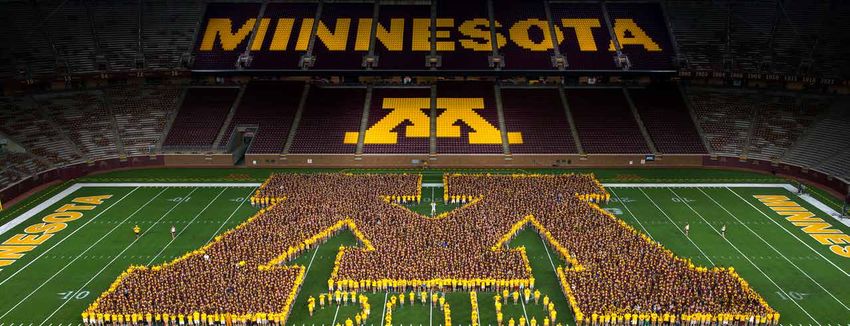
Ski-U-Mah! Today is a great day to start your University of Minnesota Twin Cities journey.
    Thumb through this booklet and explore our unmatched combination of world-class
    academics, exceptional faculty, and exciting opportunities. Check out our website
    and discover the traditions that our students have shared since 1851. Consider how
    a U of M degree—and our worldwide network of 400,000 alumni—can help you                 @UofMAdmissions
    achieve your dreams.
Ski-U-Mah!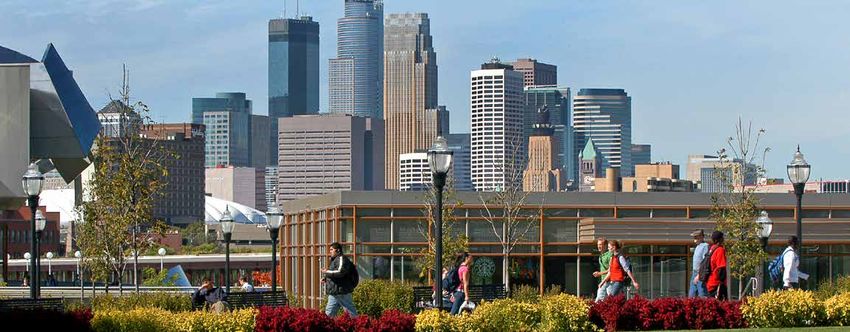
AM I A TRANSFER STUDENT?
You are considered a transfer student if you are a high
school graduate and have registered for or enrolled at a
post-secondary institution after high school. If you are a
high school student and enrolled in PSEO, College in the
Schools, or have earned AP credit, you are still considered
a freshman.

                                   The University of Minnesota is a
                                   member of the esteemed Association
                                   of American Universities.

  AT A GLANCE
             Myriad of choices
             150 undergraduate majors
             135+ minors
             38 professional programs
             180 graduate majors
             3,100 faculty
             900+ student organizations                                 Class size
             25+ foreign languages to learn                             80% of U of M classes have fewer than 50 students.
                                                                        36% of U of M classes have fewer than 20 students.
             Total enrollment (2017-2018)
             Full-time undergraduates: 31,535                           Notable rankings
             U.S. states represented: 50 and Washington, D.C.           Among U.S. public research universities:
             Countries represented: 136                                 • Best Value - The Princeton Review, Kiplinger’s,
                                                                          and Money Magazine
             Race/ethnicity                                             • #1 “rising star college” - Forbes Magazine
             African-American: 5.5%                                     • 9th overall - Shanghai Jiao Tong University
             American Indian: 1.4%                                        rankings
             Asian/Pacific: 11.7%                                       • 9th in research expenditures - Top American
             Chicano/Latino: 3.8%                                         Research Universities report
             White: 69.5%                                               • 10th for annual giving - Top American Research
             International: 8.9%                                          Universities report
             Not reported: 0.8%
                                                                        For a full list, visit z.umn.edu/AcademicRankings

                                                                                     UNIVE RSIT Y O F MINNE SOTA TRA N S F ER P REV IEW   3
At the U of M, we offer 150 undergraduate majors. As a U of M student, you will get to
    know other students in your major, connect with faculty and staff in the areas that
    interest you, and benefit from academic advising and career services tailored to your
    personal and career goals.

    CAHP Center for Allied Health Programs                  CSE    College of Science and Engineering
    CBS   College of Biological Sciences                    CSOM   Carlson School of Management
    CCAPS College of Continuing and 		                      DENT   School of Dentistry
          Professional Studies                                     (1 undergraduate major)
    CEHD College of Education + Human 		                    Design College of Design
          Development                                       MED    Medical School
    CFANS College of Food, Agricultural                            (1 undergraduate major)
          and Natural Resource Sciences                     NURS School of Nursing
    CLA   College of Liberal Arts

    WHAT’S YOUR MAJOR?
    Visit majors.umn.edu to learn more about our majors

    Accounting (CSOM)*
    Acting (CLA)
    Aerospace Engineering & Mechanics (CSE)
    African American and African Studies (CLA)*
    Agricultural and Food Business Management (joint program
      CFANS & CSOM)*
    Agricultural Communication and Marketing (CFANS)
    Agricultural Education (CFANS)                                                Business:
    American Indian Studies (CLA)                                                 –Accounting (CSOM)*
    American Studies (CLA)*                                                       –Agricultural and Food Business Management (joint program
    Animal Science (CFANS)*                                                       		 CFANS & CSOM)*
    Anthropology (CLA)*                                                           –Agricultural Communication and Marketing (CFANS)
    Apparel Design (Design)                                                       –Applied Economics (CFANS)
    Applied Economics (CFANS)*                                                    –Business and Marketing Education (CEHD)
    Architecture (Design)*                                                        –Entrepreneurial Management (CSOM)*
    Art (CLA)*                                                                    –Finance (CSOM)*
    Art History (CLA)*                                                            –Finance & Risk Management Insurance (CSOM)
    Asian Languages and Literatures (CLA)*                                        –Human Resource Development (CEHD)
    Astrophysics (CLA, CSE)*                                                      –Human Resources and Industrial Relations (CSOM)*
                                                                                  –International Business (CSOM)*
    Biblical Studies (CLA)*
                                                                                  –Management Information Systems (CSOM)*
    Biochemistry (CBS)*
                                                                                  –Marketing (CSOM)*
    Biology (CBS)*
                                                                                  –Public & Nonprofit Management (CSOM)
    Biology, Society, and Environment (CLA)
                                                                                  –Retail Merchandising (Design)
    Biomedical Engineering (CSE)
                                                                                  –Sport Management (CEHD)
    Bioproducts & Biosystems Engineering (CSE & CFANS)*
                                                                                  –Supply Chain & Operations Management (CSOM)*
                                                                                  –Sustainable Systems Management (CFANS)
                                                                                  Business and Marketing Education (CEHD)

4   UN IV ER S I T Y O F M I N N E S OTA T RANS F ER PREVI EW
Cellular and Organismal Physiology (CBS)                     Fisheries, Wildlife, and Conservation Biology (CFANS)*
Chemical Engineering (CSE)                                   Food Science (CFANS)*
Chemistry (CLA, CSE)*                                        Food Systems (CFANS)*
Chicano-Latino Studies (CLA)*                                Forest and Natural Resource Management (CFANS)*
Child Psychology (joint program with CLA & CEHD)*            French and Italian Studies (CLA)
Cinema and Media Culture, Studies in (Film Studies) (CLA)*   French Studies (CLA)*
Civil Engineering (CSE)
Classics (CLA)*                                              Gender, Women, and Sexuality Studies (CLA)*
Communication Studies (CLA)*                                 Genetics, Cell Biology and Development (CBS)
Computer Engineering (CSE)                                   Geoengineering (CSE)
Computer Science (CLA, CSE)*                                 Geography (CLA)*
Construction Management (CCAPS)*                             German, Scandinavian, and Dutch Studies (CLA)
Cultural Studies and Comparative Literature (CLA)*           Global Studies (CLA)*
                                                             Graphic Design (Design)
Dance (CLA)
Dental Hygiene (DENT)                                        Health Services Management (CCAPS)*
                                                             History (CLA)*
Early Childhood (CEHD)                                       Housing Studies (Design)
Earth Sciences (CLA, CSE)*                                   Human Resource Development (CEHD)
Ecology, Evolution, and Behavior (CBS)                       Human Resources and Industrial Relations (CSOM)*
Economics (CLA)*                                             Human Physiology (CLA)
Education:
–Agricultural Education (CFANS)                              Individualized Studies, Bachelor of (CLA)
–Business and Marketing Education (CEHD)                     Individually Designed Interdepartmental Major (CLA)
–Early Childhood (CEHD)                                      Industrial & Systems Engineering (CSE)
–Elementary Education Foundations (CEHD)                     Information Technology Infrastructure (CCAPS)
–Special Education (CEHD)                                    Integrated Degree Program (CEHD)
Electrical Engineering (CSE)                                 Inter-College Program (CCAPS)
Elementary Education Foundations (CEHD)                      Interior Design (Design)
Engineering:                                                 International Business (CSOM)*
–Aerospace Engineering & Mechanics (CSE)                     Italian Studies (CLA)*
–Biomedical Engineering (CSE)                                Jewish Studies (CLA)*
–Bioproducts & Biosystems Engineering (CSE)                  Journalism (Journalism, Advertising, Public Relations,
–Chemical Engineering (CSE)                                    Mass Communication) (CLA)
–Civil Engineering (CSE)
–Computer Engineering (CSE)                                  Kinesiology (CEHD)
–Electrical Engineering (CSE)
–Environmental Engineering (CSE)                             Landscape Design & Planning (Design)*
–Geoengineering (CSE)                                        Linguistics (CLA)*
–Industrial & Systems Engineering (CSE)                      Management Information Systems (CSOM)*
–Materials Science and Engineering (CSE)                     Manufacturing Operations Management (CCAPS)*
–Mechanical Engineering (CSE)                                Marketing (CSOM)*
English (CLA)*                                               Materials Science and Engineering (CSE)
Entrepreneurial Management (CSOM)*                           Mathematics (CLA, CSE)*
Environmental Engineering (CSE)                              Mechanical Engineering (CSE)
Environmental Sciences, Policy, & Management (CFANS)*        Medical Laboratory Science (CAHP)
Family Social Science (pathway to Social Work) (CEHD)*       Microbiology (CBS)*
Finance (CSOM)*                                              Mortuary Science (MED)
                                                             Multidisciplinary Studies (CCAPS)
Finance & Risk Management Insurance (CSOM)

                                                                               UNIVE RSIT Y O F MINNE SOTA TRA N S F ER P REV IEW   5
Music (CLA)*                                                                    Recreational Administration (CEHD)
    Music Education (CLA)                                                           Religious Studies (CLA)*
    Music Therapy (CLA)                                                             Retail Merchandising (Design)*
                                                                                    Russian (CLA)*
    Neuroscience (CBS)*
    Nursing (NURS)                                                                  Sociology (CLA)*
    Nutrition (CFANS)*                                                              Sociology of Law, Criminology, and Deviance (CLA)*
                                                                                    Spanish and Portuguese Studies (CLA)
    Ojibwe Language (CLA)                                                           Spanish Studies (CLA)*
    Philosophy (CLA)*                                                               Special Education (CEHD)
    Physics (CLA, CSE)*                                                             Speech-Language-Hearing Sciences (CLA)*
    Physiology (CLA)                                                                Sport Management (CEHD)*
    Plant and Microbial Biology (CBS)*                                              Statistics (CLA, CSE)*
    Plant Science (CFANS)                                                           Supply Chain & Operations Management (CSOM)*
    Political Science (CLA)*                                                        Sustainable Systems Management (CFANS)
    Product Design (Design)                                                         Technical Writing and Communication (CLA)*
    Psychology (CLA)*                                                               Theatre Arts (CLA)*
    Public & Nonprofit Management (CSOM)
                                                                                    Urban Studies (CLA)*

                                                                                    Youth Studies (CEHD)*

    MINORS*
    Any majors listed above with an asterisk (*) are available as a minor. In addition, the following minors are also available.

    Agronomy                                                    Forest Ecosystem Management and               Native American Environmental
    Applied Psychology in Educational and                         Conservation                                  Knowledge
      Community Settings                                        Gay, Lesbian, Bisexual, Transgender Studies   New Media Studies
    Asian American Studies                                      Geographic Information Science                Norwegian
    Austrian and Central European Studies                       German                                        Outdoor Recreation and Education
    Behavioral Biology                                          Greek                                         Park and Protected Area Management
    Bio-based Products Engineering                              Health and Wellness Promotion                 Pharmacology
    Business (see Management major)                             Health Psychology                             Portuguese Studies
    Classical and Near Eastern Archaeology                      Hebrew                                        Public Health
    Climatology                                                 History of Science, Technology, and           Public Interest Design
    Coaching                                                      Medicine                                    Racial Justing in Urban Schooling
    Comparative U.S. Race and Ethnicity                         Horticulture                                  Risk Management and Insurance
    Corporate Environmental Management                          Housing and Community Development             Social Justice
    Creative Writing                                            Information Technology                        Soil Science
    Danish                                                      Interdisciplinary Design                      Sustainability Studies
    Digital Media Studies                                       Interior Environments                         Sustainable Agriculture
    Dutch Studies                                               International Agriculture                     Swedish
    Ecological Engineering                                      Joint Military Science Leadership             Teaching English as a Second Language
    Entomology                                                  Latin                                         Translation
    Environmental Geosciences                                   Leadership                                    Urban and Community Forestry
    Family Violence Prevention                                  Learning Technologies Management              Water Science
    Fashion Studies                                             Marine Biology                                Wildlife Care and Handling
    Finnish                                                     Mass Communication
    Food Systems and the Environment                            Medieval Studies

6   UN IV ER S I T Y O F M I N N E S OTA T RANS F ER PREVI EW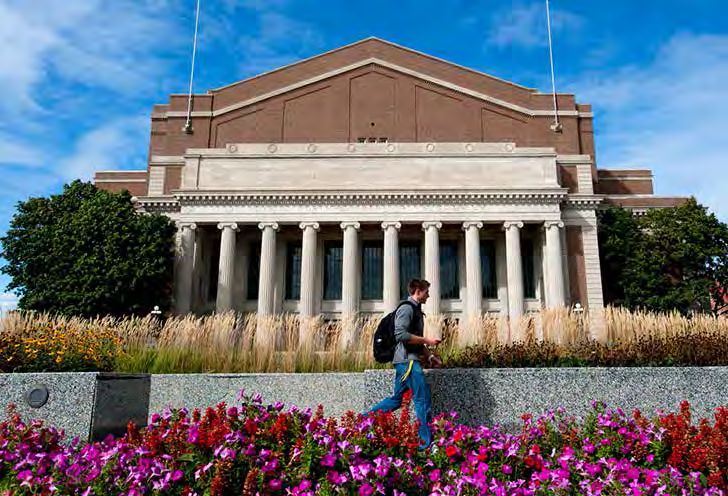
GREAT ACADEMICS
   When you choose the U of M, you will belong to a community of people who are discovering new ways to
   make our world a better place. That’s what “Driven to Discover” is all about! You will select your major from
   150 of the nation’s top academic programs, led by world-renowned professors to inspire and guide you.

   z.umn.edu/GreatAcademics
   On our Great Academics page, you will discover how
   you will benefit from:
     • University Honors Program—A multidisciplinary
        program ranked number one nationally by
        Public University Honors.
     • Undergraduate research opportunities—Conduct
        research in your field with 1:1 guidance from
        your professor.
     • State-of-the-art classrooms—Active-learning
        classrooms that use the latest technology to
        enhance your learning experience.

   University Honors Program
   The University of Minnesota has a long-standing tradition of educating top students from Minnesota and
   around the world. The University Honors Program offers students exciting and unique opportunities for
   interdisciplinary study, research, and collaboration, as well as the opportunity to graduate with Latin
   distinction (summa, magna, or cum laude).

   Current U of M Twin Cities and transfer students are accepted into the University Honors Program every fall
   semester on a space-available basis. Please note that admission is highly competitive. Application details
   are available at www.honors.umn.edu.

                                                                          UNIVE RSIT Y O F MINNE SOTA TRA N S F ER P REV IEW   7
TUITION & FEES

                                                                                                 $14,760
                                                                                                MN, WI, ND, SD residents

                                                                                                ND
                                                                                                         MN
                                                                                                SD               WI

                                                                                            ALL OTHER STATES
        GREAT VALUE
                     At the U of M, you will benefit from best-value
                                                                                            $30,438
                     tuition rates while earning a world-class education.
                     Ranked a “Best Value” by USA Today, Princeton Review,
                     and Kiplinger’s Personal Finance, we are proud to offer
                     prestigious degrees that are recognized by employers and
                     graduate schools worldwide.
                                                                                                          The 2018-19 figures above are provided to
                                                                                                          assist with college planning. Fees for the
                     z.umn.edu/GreatValue                                                                 2019-20 academic year will be finalized in
                     On our Great Value page, you will find more about financial aid.                     July 2019. The exact cost of attendance
                                                                                                          varies slightly from student to student
                                                                                                          based on the college of enrollment and
                                                                                                          courses taken.
        BIG TEN
                     As a Big Ten school, the University of Minnesota offers great academics, exciting athletics, rich traditions,
                     and a vibrant campus community. We love our 23 Big Ten teams, our annual trophy games with football
                     rivals, our “Pride of Minnesota” marching band, and all the other fun traditions that come with being part
                     of Gopher Territory. Rah Rah Rah for Ski-U-Mah!

                     z.umn.edu/BigTen

8   U N IV ER S I T Y O F M I N N E S OTA T RANS F ER PR EVI EW                                      ERIC MILLER/UNIVERSITY OF MINNESOTA ATHLETICS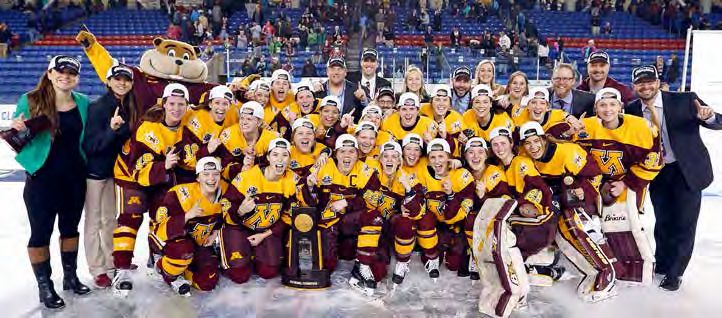
GREAT OPPORTUNITIES
   The incredible resources available at our world-class research
   university range from one of the nation’s largest study abroad
   programs to 900+ student clubs! There are countless opportunities
   to connect with your U of M classmates from around the globe,
   discover new passions, and explore the world around you.

   z.umn.edu/GreatOpportunities

                                                                   UNIVE RSIT Y O F MINNE SOTA TRAN S F ER P REVIEW   9
DIVERSITY ON CAMPUS
                Our commitment to diversity is one of the U of M’s most important traditions.              z.umn.edu/Diversity
                A multicultural campus ensures that as a University, we nurture and support
                future leaders for a globally inclusive society. Our classrooms encourage critical thinking, provide
                opportunities to grow intellectually, and are trusted places to challenge beliefs and theories.

                More than 200 of our student organizations have a focus on culture and diversity—including student cultural
                centers, multicultural fraternities and sororities, and clubs. Black Student Union, American Indian Student
                Cultural Center, Voices Merging, Hmong Student Association, La Raza Student Cultural Center, and Multicultural
                Performers United are just a few examples. In our vibrant student community, common passions and interests
                will unite you with your classmates, and individuality and multiculturalism will enrich your college experience.

                                                                     GREAT LOCATION
                                                                            Our welcoming campus community thrives in the
                                                                            midst of a vibrant cultural and business district! The
                                                                            Twin Cities metro is a top market for finding a job
                                                                            (Forbes.com), and you’ll find countless opportunities
                                                                            to soak up the art, music, and culture of our city.

                                                                            Our location in the Twin Cities is a major advantage
                                                                            for our students. Our great location will enhance your
                                                                            academic experience, jump-start your career, and
                                                                            satisfy your craving for new and unique experiences.

                                                                            z.umn.edu/GreatLocation

10   U N IV E R S I T Y O F M I N N E S OTA T RANS F ER PREVI EW
TRANSFER ADMISSIONS OVERVIEW
Transfer students are admitted to a particular college Individual colleges and programs review each
or program, each of which has its own admissions application using the primary and secondary review
requirements. In general, transfer applicants must factors listed below. In addition, these colleges and
have completed (or be completing) at least 26 semester programs utilize certain criteria that are unique to their
credits at the time of application. programs. To review specific admissions requirements,
prerequisite coursework, transfer credit guidelines,
Note: If you are transferring from one degree and more, visit z.umn.edu/TransferGuidelines. Academic
program to another on the Twin Cities campus, or if profiles of admitted transfer applicants are available
you are transferring from the University of Minnesota online as well.
system campuses of Crookston, Duluth, Morris, or
Rochester, you must complete a Change of College Primary review factors:
form. If you are returning to a degree program on • Grade point average—cumulative, and in specific
the Twin Cities campus from an absence of one year courses related to the student’s intended major.
or longer, you must complete an Application for • An especially challenging pattern of coursework,
Readmission. Both forms are available online at especially in courses related to the student’s
http://onestop.umn.edu/forms/index.html. intended major.
For transfer applicants with fewer than 26 college
University of Minnesota transfer admission credits completed, the following factors are also
criteria: reviewed:
Applicants may be admitted if they meet the entrance • High school rank percentile (students from
requirements of the college or program to which they non-ranking schools and those with GED
have applied, and of the major they wish to enter. or other high school equivalency are given
All students are considered for admission based on full consideration).
an individual, overall assessment of their application. • ACT or SAT scores.
• Rigor of the high school curriculum.
UNIVE RSIT Y O F MINNE SOTA TRA N S F ER P REVIEW 11Secondary review factors In addition to meeting specific college admission
• Evidence of exceptional achievement, aptitude, requirements, transfer students must be eligible to
or personal accomplishment not reflected in the return to their previous colleges or universities. The
academic record. University of Minnesota also reserves the right to deny
• A pattern of steady improvement in academic admission to an otherwise admissible applicant if the
performance. University determines that the applicant’s enrollment
• Participation in extracurricular programs related would not be in the applicant’s and/or the University’s
to your intended major. best interest.
• Non-academic experience in a field related to
your intended major. Priority and final deadlines
• Evidence of exceptional talent or ability in artistic, Applications that are postmarked or become complete
scholarly, leadership, or athletic performance. after the college’s priority deadline will be considered
• Evidence that enrollment would enhance the on a space available basis. A college may reach its
cultural, gender, age, economic, racial, or enrollment limit prior to the final deadline.
geographic diversity of the student body.
• Outstanding high school, college, or community
involvement.
• Work experience, paid or unpaid.
• Evidence of having overcome social, economic, or Visit z.umn.edu/TransferGuidelines for
physical barriers to educational achievement. college-specific deadlines and admission
• Military service. requirements.
• Extenuating circumstances.
12 U N IV E R S I T Y O F M I N N E S OTA T RANS F ER PREVI EW U N IVERS IT Y OF MIN NESOTA PREVIEW 12ACADEMIC PROFILE OF FALL 2018 ADMITTED TRANSFER APPLICANTS
BY COLLEGE
This table provides a general overview of the academic qualifications of last year’s admitted transfer applicants,
1
as reflected in students’ college GPA (grade point average). The data presented in the table are a composite
picture of admitted transfer applicants; they are not admission criteria. Admission decisions are based on an
individual, overall assessment of each application.
Please also review our admission requirements and deadlines for transfers.
Transfer GPA range
Number of Average distribution
College or program admitted transfer
students GPA 4.0- 3.49- 2.99- Below
3.5 3.0 2.5 2.5
Biological Sciences 108 3.56 69% 27% 4% 0%
Continuing and Professional Studies 101 3.10 25% 36% 28% 10%
(formerly CCE)
Design 206 3.36 43% 41% 14% 1%
Education + Human Development 110 3.35 36% 44% 14% 6%
Food, Agricultural and Natural Resource 246 3.35 42% 39% 17% 2%
Sciences
Liberal Arts 2,118 3.32 42% 38% 17% 3%
Management (Carlson School of) 101 3.82 94% 6% 0% 0%
Science and Engineering 2
412 3.65 75% 22% 3% 0%
Undergraduate Health Science Program: 9 3.10 22% 33% 33% 11%
Dental Hygiene
Undergraduate Health Science Program: 8 3.50 50% 50% 0% 0%
Medical Laboratory Science
Undergraduate Health Science Program: 14 3.23 43% 36% 21% 0%
Mortuary Science
Undergraduate Health Science Program: 30 3.46 60% 33% 7% 0%
Nursing
1
GPA is calculated on a 4.0 scale. Average GPA is calculated based on grades earned in postsecondary coursework eligible for transfer towards a
degree program at the U of M Twin Cities. Student count totals include only those students with postsecondary transfer coursework (on the same
A-F grading scale as the U of M) on file as of publication date.
2
CSE lists average cumulative GPA here; however, admission is also based on grades in selected engineering, science, and math courses. Please see
the College of Science and Engineering’s transfer admissions page at https://cse.umn.edu/r/future-transfer-students/ for more information.
UNIVE RSIT Y O F MINNE SOTA TRAN S F ER P REVIEW 13TRANSFERRING CREDIT TO THE UNIVERSITY OF MINNESOTA
Transfer credit review criteria
Credit for coursework taken at other institutions will be transferred subject to the
following considerations:
• The mission of the institution from which credits would be transferred,
• The comparability of the coursework with University of Minnesota coursework,
• The appropriateness of the coursework for meeting baccalaureate degree
requirements at the University of Minnesota, and
• Whether the institution is regionally accredited.
For more specific information about transferring credit to the U of M, please visit
z.umn.edu/TransferGuidelines.
Web-based course transfer system (Transferology)
Transferology is part of a nationwide network of transfer information. Transferology is a
free, web-based source for accurate, up-to-date information about how your courses
will transfer and apply to a degree program at the University of Minnesota Twin Cities.
Transferology benefits include easy access to course descriptions, academic program
information, course equivalency guides, planning guides, and student services. Start
now by going to www.Transferology.com.
Minnesota Transfer Curriculum
To simplify the transfer process, the University of Minnesota, Minnesota state
universities, and Minnesota community colleges have developed a Minnesota Transfer
Curriculum (MnTC). If you complete the MnTC or an associate of arts (AA) degree at a
participating school and then transfer to the University of Minnesota Twin Cities, you
have completed the core, the designated themes of liberal education, and first-year
writing portion of the University’s liberal education requirements (you may still need
to complete the writing intensive portion of the writing skills requirement).
For more information on transfer credit and the liberal education requirements,
please see z.umn.edu/TransferGuidelines.
14 U N IV E R S I T Y O F M I N N E S OTA T RANS F ER PR EVI EWMEET US IN PERSON!
On a campus visit, you can tour our historic campus, meet with a transfer
admissions specialist, and learn more about your programs of interest.
Campus tours are available to prospective transfer students and their
families and friends on both the Minneapolis and St. Paul campuses.
You can also check out our virtual tour at z.umn.edu/Virtual.
To register for information sessions or tours, go to z.umn.edu/CampusVisit
or call 612-625-0000.
• Transfer Thursdays Admissions Information Sessions
• Minneapolis Campus Tour
• St. Paul Campus Tour
• Pre-Health Student Resource Center Information Session
• College of Liberal Arts (CLA) Information Session
The following colleges also offer information sessions and/or
individual advising appointments for prospective transfer students.
• Carlson School of Management- 612-624-3313
• College of Biological Sciences- 612-624-9717
• College of Continuing and Professional Studies- 612-624-4000
• College of Design- 612-626-3690, DesTrsfr@umn.edu
• College of Education + Human Development- 612-625-3339 or
cehdinfo@umn.edu
• College of Food, Agricultural and Natural Resource Sciences-
612-624-6768
• College of Science and Engineering- 612-625-6403,
csetrans@umn.edu
• Dental Hygiene- 612-625-9121
• Medical Laboratory Sciences- 612-625-9490
• Mortuary Science- 612-624-6464
• Nursing- 612-625-7980
UNIVE RSIT Y O F MINNE SOTA TRA N S F ER P REVIEW 15RESOURCES FOR GETTING STARTED Multicultural Center for Academic
Admissions Information and Links for Veterans Excellence (MCAE)
http://admissions.tc.umn.edu/admissioninfo/ https://diversity.umn.edu/multicultural/
veterans.html 612-624-6386
612-625-2008 OR 1-800-752-1000
Office for Equity & Diversity
Disability Services https://diversity.umn.edu/ • 612-624-0594
https://diversity.umn.edu/disability/home
Office for Fraternity and Sorority Life
612-626-1333
www.begreekumn.org • 612-625-8405
Office of Admissions Parking and Transportation Services
http://admissions.tc.umn.edu
www.pts.umn.edu • 612-626-7275
612-625-2008 OR 1-800-752-1000
Student Parent HELP Center
One Stop Student Services Center www.sphc.umn.edu • 612-626-6015
(for financial aid information)
http://onestop.umn.edu/onestop/financialaid.html Undergraduate Course Catalog
612-624-1111 www.catalogs.umn.edu/ug/
Orientation and Transition Experiences University Honors Program
www.ofyp.umn.edu www.honors.umn.edu • 612-624-5522
612-624-1979 OR 1-800-234-1979
University Libraries
ACADEMIC AND STUDENT LIFE RESOURCES www.lib.umn.edu • 612-624-3321
Boynton Health University Recreation & Wellness
(on-campus healthcare) http://recwell.umn.edu/ • 612-625-6800
www.bhs.umn.edu • 612-625-8400
University Veteran Services
Center for Academic Planning and http://onestop.umn.edu/veterans
Exploration (CAPE) 612-625-8076
www.cape.umn.edu • 612-624-3076
Women’s Center
Commuter Connection https://diversity.umn.edu/women/
http://commuterconnection.umn.edu/ 612-625-9837
612-624-5491
U of M Admissions
Gender & Sexuality Center for Queer and Trans Life Williamson Hall
https://diversity.umn.edu/gsc/ • 612-625-0537 231 Pillsbury Drive, S.E.
Pre-Health Student Resource Center Minneapolis, MN 55455
www.healthcareers.umn.edu • 612-624-6767 University Housing
Learning Abroad Center http://housing.umn.edu
www.umabroad.umn.edu • 612-626-9000 612-624-2994
www.facebook.com/UofMinnAdmissions @UofMAdmissions @UofMAdmissionsYou can also read


