Tweddle Child & Family Health Service Submission to the Royal Commission Into Victoria's Mental Health System - SUB.0002.0028.0588 - AWS
←
→
Page content transcription
If your browser does not render page correctly, please read the page content below
SUB.0002.0028.0588

Tweddle Child & Family Health Service

Submission to the Royal Commission

Into Victoria’s Mental Health System

                                        05 July 2019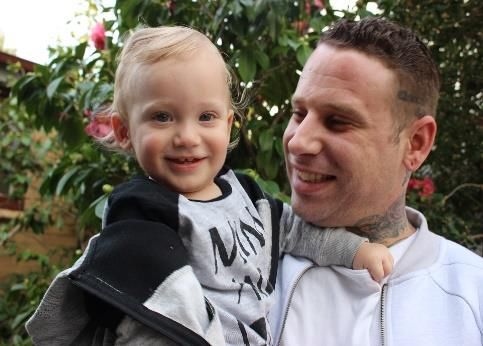
SUB.0002.0028.0588_0002

Contents
Executive Summary................................................................................................................................. 3
Background ............................................................................................................................................. 5
Question 1.           What are your suggestions to improve the Victorian community’s understanding of
                      mental illness and reduce stigma and discrimination?................................................. 11
Question 2            What is already working well and what can be done better to prevent mental illness
                      and to support people to get early treatment and support? ....................................... 15
Question 7            What can be done to attract, retain and better support the mental health workforce,
                      including peer support workers? .................................................................................. 16
Conclusion ............................................................................................................................................. 18

                                                                    Page 2 of 18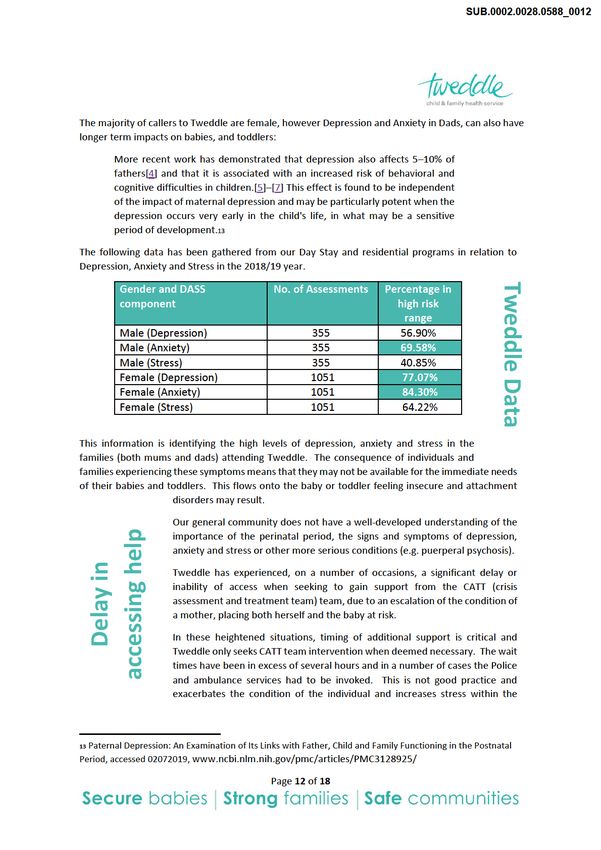
SUB.0002.0028.0588_0003
Executive Summary
As a specialist public hospital with almost 100 year experience in the delivery of early parenting
services, Tweddle Child & Family Health Service (Tweddle) is pleased to support the work of the Royal
Commission into Victoria’s Mental Health System.
Our role is in nurturing baby/parent interactions, through sleep, play and love to build stable, secure
individuals, families and communities.
We bring to the Royal Commission into Victoria’s Mental Health System, a perspective that is focused
on the needs of babies, toddlers and their families. We believe that, “Children’s relationships shape
the way they see the world and affect all areas of their development.”1
The neuroscience behind the developing brain and the science of epigenetics has experienced
exponential growth in the last decade and our expanding knowledge is shaping our practice and
improving our interventions when working with babies, toddlers and their families who are
experiencing challenges, including mental health challenges, with in the perinatal period.
“Children born to mothers experiencing depression have changes in their brain
architecture that seem to negatively affect their learning, behavior, and mental
health.”2
Our service model utilises a multidisciplinary team including, maternal & child health nurses, early
parenting practitioners, psychologists, mental health professionals including infant mental health
specialists. We utilise multimodal treatment options including in home, counselling and residential
programs, tailored to accommodate the needs of the family.
In order to have both a short term and a long term impact on the mental health of current and future
Victorians, Tweddle offers the following recommendations:
A strategic community awareness campaign regarding perinatal mental health.3 It may be useful
to explore the YouTube clip “Postnatal mental health | Talking about mental health - Episode 13”
developed by Mind, the mental health charity, in the UK.
Increased training on perinatal mental health to build the understanding of the importance of
the first 1,000 days and its impact on both mental and physical health across the lifespan.
Increase funding and access to home visiting programs to support the establishment of early
relationships for babies, toddler and their families.
That there be the provision of overt recognition of mental health knowledge and intervention
skills in the perinatal, infant and early childhood periods to enable them to be identified as
specialist skills.
That advocacy for a policy shift towards prioritising the first 1,000 days be undertaken in order
receive additional funds to support the current and future mental health needs in the
perinatal period.
1 https://raisingchildren.net.au/newborns/development/understanding-development/relationships-
development#why-loving-nurturing-relationships-are-important-nav-title
2 A Report From The California Task Force On The Status Of Maternal Mental Health Care accessed 02072019,
https://static1.squarespace.com/static/56d5ca187da24ffed7378b40/t/5b40f84503ce641f98dbd329/15309845
21889/Report-CATaskForce-7.18.pdf
3 https://www.youtube.com/watch?v=w0aaM9XzwTA
Page 3 of 18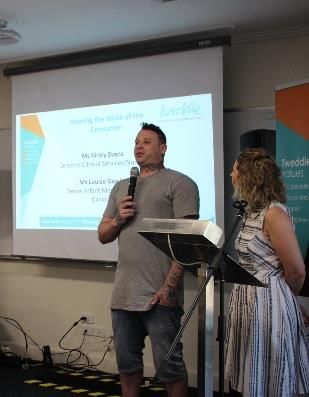
SUB.0002.0028.0588_0004
Increase access to MBUs and greater interagency collaboration with EPCs.
Family violence, addiction and physical health illnesses also coexist with mental
health conditions and we need to support the “whole” person and their family.
Facilitate MERTIL training or similar be available for all practitioners working with
babies, toddlers and their families.
Advocate for the development of skills sets to be developed and included in the
National Training Packages, Health and Community Services, and other relevant
undergraduate programs focused on i) infant mental health ii) fostering healthy
relationships in the perinatal period and iii). Skills in working with parents and
babies (dyadic and triadic relational therapy)
Establish more accessible perinatal psychology services, (private clinic in public
hospital model) at EPCs.
Establish a Centre of Excellence for Perinatal Mental Health and link key
stakeholders to the centre including EPCs.
Fund a research chair in perinatal mental health to work with stakeholders
including EPCs.
Develop an awareness campaign focused on fostering increased awareness and
to support help seeking navigation options through the perinatal period.
Advocate for further workforce initiative funding to support a greater
understanding of career pathways across mental health and child and family health.
Provide for additional funding for mental health and dual diagnosis training for
EPC staff
Advocate for Peer Support Worker roles to be embed in EPCs and that these roles
be adequately resourced with funding to support the role and the supervision and
mentoring that is required.
We recognise that any mental health issue does not exist in isolation and many also
experience family violence, addiction or physical health conditions. Service models
need to include the ability to implement coordinated care in order to comprehensively
address the needs of individuals and their families.
Tweddle offers the Royal Commission into Victoria’s Mental Health system its full
support and would welcome the opportunity to speak directly about the needs and
experiences of families in the perinatal period. Importantly we seek that you consider
the importance of focussing on infant mental health to bring about long term change
to the lives of babies, toddlers, their families and the Victorian community.
Page 4 of 18
SUB.0002.0028.0588_0005

Background
Tweddle Child & Family Health Service (Tweddle)4 is strongly committed to the support of and
improvement in the mental health of all Victorians.

As a public hospital nearing 100 years of service, Tweddle has a range of parenting programs, both for
voluntary and mandatory (child protection) family admissions.

It offers residential and community based early intervention and prevention health programs with a
priority on helping Victoria’s most vulnerable and at risk mums, dads, babies and toddlers.

Services include residential, community based day stay programs, assessment and intake, psychology
and social support services for individuals and families, parenting support programs in prisons,
childbirth education programs, in home parenting and relationship programs and peer support
programs for parents of children with a disability, developmental delay or chronic medical condition.
With the support of funding, newly launched therapeutic programs include Working Out Dads and
Circle Of Security.

Tweddle is an advocate for the infant/child in high risk family cases in the Children’s Courts and in the
Victorian Family Drug Court.

As one of Victoria’s three specialist Early Parenting Centres (EPCs), we describe ourselves as being the
“voice of the infant”. This is particularly important to us as the needs of babies and toddlers regularly
get lost in the much broader term of “children”.

                  “The First Thousand Days is a global movement addressing child
                  development in the first 1000 days of life from conception to age two.”5

The particular needs of the first 1,000 days are different from the needs of the later years of childhood.
The window of opportunity that the first 1,000 days provides, should drive us all, policy makers,
clinicians or parents, to work to ensure that we strengthen the foundations laid down during these
               years, in order to build strong resilient people and subsequently strong resilient
               communities that prosper.

                      “Science tells us that from our birth, our brains are growing and adjusting to
    The Science

                      our environment. Whether traumatic, friendly, threatening or soothing, our
                      experiences get wired into our biology6.”

                      A key focus of our submission is that Infant mental health is a specialist field and we
                      need to strengthen the service system by investing in the work that is undertaken in this
                      area along with services provided to mothers and fathers in the perinatal period.

                      We view the centres as being like intensive care beds, where the team works to ensure
                      coordinated care for babies, toddlers and their families who are experiencing high levels
                      of difficulty. In this situation all members of the family are experiencing varying degrees
                      of mental illness and have compromised mental health.

4 https://www.tweddle.org.au/
5 http://voice.unimelb.edu.au/volume-11/number-5/difference-1000-days-make-life-child
6 https://thrivewa.org/work/trauma-and-resilience/

                                                     Page 5 of 18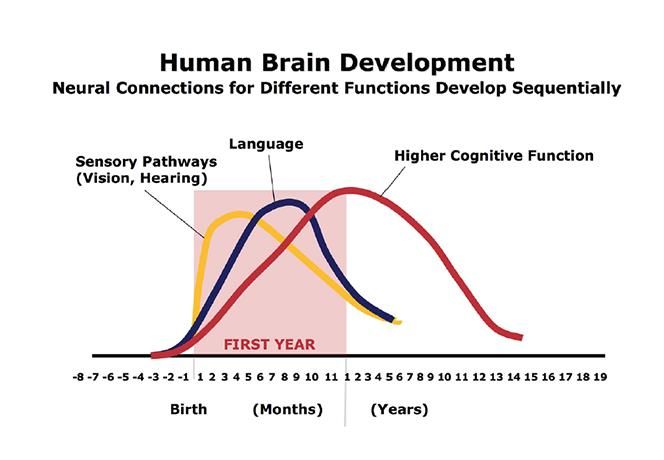
SUB.0002.0028.0588_0006

The toxic trio, mental health issues, addiction and domestic violence, are prevalent in our cohort of
families utilising our services. The 2018/19 data gathered from 1787 assessment and intake calls
indicates that 75% identified with mild, moderate or severe depression or anxiety.

                           During our Assessment and Intake process 75% of
                            callers identified, with mild, moderate or severe
                                           depression or anxiety

We stress that working within the first 1,000 days makes sense, both from a clinical and an economical
perspective. We work with families in order to address the needs of babies and toddlers and we do
this by improving the competency capacity and confidence of parents. It is at this point that treatment
has additional impacts and that in fact you are able to improve the mental health of the baby, the
mother and the father/partner. In short you are not only getting two but three for the price of treating
one (family).

In exploring the area of epigenetics7 and the relationship between maternal mental health and the
impact on the baby/toddler there is ample evidence that in order to prevent poor outcomes for the
individual into the future we need to intervene earlier.

7A Report From The California Task Force On The Status Of Maternal Mental Health Care, p.20
https://static1.squarespace.com/static/56d5ca187da24ffed7378b40/t/5b40f84503ce641f98dbd329/15309845
21889/Report-CATaskForce-7.18.pdf, accessed 02072019,
                                             Page 6 of 18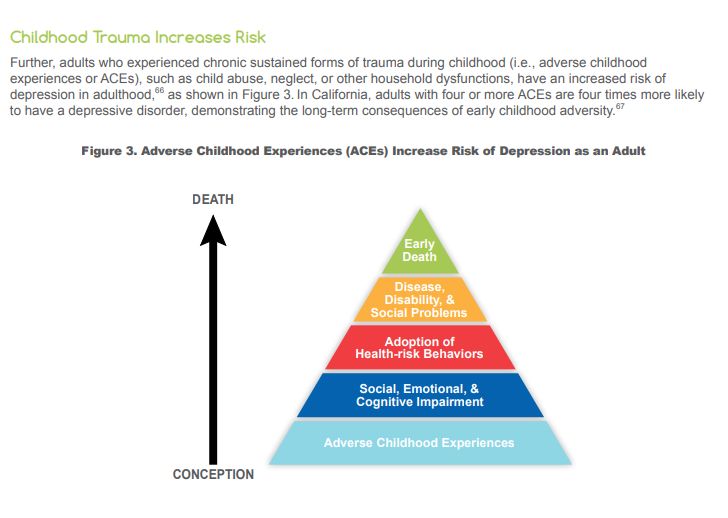
SUB.0002.0028.0588_0007

It is clear from the science that underpins infant and perinatal mental health that
investing in the very early years makes sense and is a sound and economically prudent
investment. The Harvard Centre on the Developing Child provides one source of ample

                                                                                                          The Science
evidence that we should heed:

          Extensive biological and developmental research over the past 30 years has
          generated substantial evidence that young children who experience severe
          deprivation or significant neglect—defined broadly as the ongoing disruption
          or significant absence of caregiver responsiveness—bear the burdens of a
          range of adverse consequences. Indeed, deprivation or neglect can cause more
          harm to a young child’s development than overt physical abuse, including
          subsequent cognitive delays, impairments in executive functioning, and
          disruptions of the body’s stress response.8

In understanding that Victoria has an opportunity to embrace both an early intervention
and a preventative strategy regarding mental health, we need to be clear on the need to build a fence
at the top of the cliff to stop people falling over the edge, as opposed to having an ambulance
(sometimes) at the bottom to try and “mend” the impacts of the “fall”.

We need to understand the “science” that explains what contributes to mental health issues
developing and then implement practice that interrupts this cycle.

            Brains are built over time, from the bottom up.

            The basic architecture of the brain is constructed through an ongoing process
            that begins before birth and continues into adulthood. Early experiences affect
            the quality of that architecture by establishing either a sturdy or a fragile
            foundation for all of the learning, health and behavior that follow. In the first
            few years of life, more than 1 million new neural connections are formed every
            second. After this period of rapid proliferation, connections are reduced
            through a process called pruning, so that brain circuits become more efficient.
            Sensory pathways like those for basic vision and hearing are the first to
            develop, followed by early language skills and higher cognitive functions.
            Connections proliferate and prune in a prescribed order, with later, more
            complex brain circuits built upon earlier, simpler circuits.

8http://developingchild.harvard.edu/index.php/resources/reports_and_working_papers/working_papers/wp12/

                                                 Page 7 of 18
SUB.0002.0028.0588_0008

             In the proliferation and pruning process, simpler neural connections form first,
             followed by more complex circuits. The timing is genetic, but early experiences
             determine whether the circuits are strong or weak. Source: C.A. Nelson (2000).
             Credit: Center on the Developing Child

This is further evident in the Adverse Childhood Experiences Study9

          “The CDC-Kaiser Permanente Adverse Childhood Experiences (ACE) Study is one of
          the largest investigations of childhood abuse and neglect and household
          challenges and later-life health and well-being.

          The original ACE Study was conducted at Kaiser Permanente from 1995 to 1997
          with two waves of data collection. Over 17,000 Health Maintenance Organization
          members from Southern California receiving physical exams completed
          confidential surveys regarding their childhood experiences and current health
          status and behaviors.”

In the document, “A Report From The California Task Force On The Status Of Maternal Mental Health
Care,”10 we see the diagrammatic representation of the impact that Adverse Childhood Experiences
(ACE) have on life outcomes and the increased likelihood that these babies, toddler and children will
experience depression and other conditions as an adult.

9   https://www.2020mom.org/ca-task-force-recommendations
10   https://www.2020mom.org/ca-task-force-recommendations
                                              Page 8 of 18
SUB.0002.0028.0588_0009

This data and information highlights the need to emphasise the importance of
understanding that Babies Brains Matter and intervening early in life during the periods
of increased development will benefit the individual, the family and the community both
physically, emotionally and economically.

The recommendations provided in the work at the Centre for the Developing Child,
Harvard University, provide us with the following advice for policy and programs when
considering the science of neglect:

         “Invest in prevention programs that intervene as early as possible. The earlier in
         life that neglected children receive appropriate intervention, the more likely
         they are to achieve long-term, positive outcomes and contribute productively to
         their communities. Key personnel in the primary health care, child welfare,
         mental health, and legal systems can work together to assure the earliest
         possible identification of families that require preventive assistance as well as
         children who need therapeutic intervention. Because child neglect often
         co-occurs with other family problems (particularly parental mental health
         disorders and addictions), specialized services that address a variety of medical,
         economic, and social needs in adults present important opportunities to identify
         and address neglectful circumstances for young children. Policies and programs
         that provide preventive interventions in high-risk situations before the onset of
         neglect present a particularly compelling goal.”

                                            Page 9 of 18
SUB.0002.0028.0588_0010
Victoria has an opportunity, through the development of the Royal Commission into Mental Health,
to join with international and national movements and focus on investing in the first 1000 days.
Tweddle stresses the importance of this opportunity and supports the Victorian government for its
openness in the consultation process and recommends that it provides for the future through
investing in the very young Victorians and their families.
Page 10 of 18SUB.0002.0028.0588_0011
Question 1. What are your suggestions to improve the Victorian community’s
understanding of mental illness and reduce stigma and discrimination?
Preamble:
“Studies in Australia and around the world have found that up to one in ten
women experience depression during pregnancy and one in seven women in
the year following birth. Anxiety disorders are also prevalent (around one in
five women in both the antenatal and postnatal periods) and comorbidity with
depression is high... All of these conditions have the potential to have a
negative impact on maternal and infant outcomes. This is more likely to occur
when a mental health condition is combined with serious or multiple adverse
psychosocial circumstances.11”
The Victorian community’s understanding of mental illness in the perinatal period is limited. The
greater majority would consider that pregnancy, childbirth and parenting are times of great happiness
and excitement. In reality the perinatal period presents
“…a significantly increased risk for onset and relapse of mental health conditions
– higher than at many other times in a woman’s life. … up to three-quarters of
women meeting DSM criteria for depressive and anxiety disorders are not
identified (Spitzer et al 2000; Coates et al 2004) and only one in ten women
requiring mental health care receives it (Bowen et al 2012). … As suicide in the
perinatal period was a leading cause of maternal deaths in Australia in 2008–
2012 (Humphrey et al 2015) and the rate of maternal deaths due to psychosocial
health problems is rising (Humphrey 2016), … mental health conditions in their
more severe form are often associated with impaired functioning, especially in
relation to a woman’s ability to care for her infant and the formation of secure
infant attachment, which may in turn be associated with poorer social,
cognitive, and behavioural outcomes in the child (1st 1001 Days APPG 2015)
The data profile of families presenting to Tweddle presents a very different story with 75%
presenting at the point of Assessment and Intake with mild, moderate or severe depression or
anxiety. This is supported by academic research including:
“Depression is a leading cause of disability worldwide.1 Since women are more
likely to be affected than men, 2–4 particularly during the childbearing years,5
maternal depression is highlighted as a global public health issue.6 Maternal
depression in the perinatal period is linked to a wide range of adverse child
outcomes, including compromised physical and cognitive development,
behavioural difficulties, and increased risk for later common mental disorders
in the off spring.”12
11 https://cope.org.au/wp-content/uploads/2017/10/Final-COPE-Perinatal-Mental-Health-Guideline.pdf
12 www.thelancet.com/psychiatry Vol 3 October 2016 p. 983
Page 11 of 18SUB.0002.0028.0588_0013
families in the residential program. Importantly, the impact on the children can be negative and
support the increased stress response and its subsequent sequelae.
Infant Mental Health is very poorly understood by the general community, by Health, Allied Health
Professionals and the general community.
Infant Mental Health refers to ....
"the developing capacity of the infant and young child (from pregnancy to 3 years
old) to experience, express and regulate emotions; form close and secure
relationships; and explore the environment and learn," all in the context of the
caregiving environment that includes family, community, and cultural
expectations. (Osofsky & Thomas, Zero to Three, 2012)
"The field of Infant Mental Health may be defined as multidisciplinary approaches
to enhancing the social and emotional competence of infants in their biological,
relationship, and cultural context." (Zeanah & Zeanah, 2001). It requires
"expertise and conceptualisation from a variety of different disciplines and
perspectives including research, clinical practice, and public policy". (Osofsky &
Thomas, Zero to Three, 2012).14
“Bonding and attachment happen when you consistently respond to your
newborn with love, warmth and care. Bonding and attachment are vital to your
baby’s development.15”
“A baby cannot exist alone, but is essentially part of a relationship…when you
describe a baby you are describing a baby and someone” Winnicott 198716
In the presentation in Adelaide in June 2019, Dr Heather Mattner, perinatal health
psychologist and midwife (Private psychology practice/Adelaide Nursing School and
health matters!
Infant mental
School of Psychology, University of Adelaide), highlights that “Social knowledge of PND
is poor,”17 She refers to Bruce Perry who said in (2010), …”empathy is vital because we
are born for love – feeling into, feeling with, seeing the world from baby’s perspective
– this is a lifelong process of relational interaction …you cannot love yourself unless
you have been loved and are loved. The capacity to love cannot be built in isolation.”
(ibid).
Parents with mental health conditions need very early interventions that are ongoing
and support the developing parent child relationship, in order to mitigate the risk to
the baby/toddler which could see rise to increasing stress hormones, cortisol and
adrenaline along with, if sustained, a heightened state, leading to attachment disorders
and other conditions impacting on infant mental health.
14 https://www.aaimhi.org/about-us/what-is-infant-mental-health/
15 https://raisingchildren.net.au/newborns/connecting-communicating/bonding/bonding-newborns
16 https://www.aaimhi.org/resources/winnicott-lectures-at-aaimhi/AAIMHI-v29-2-July-2016.pdf
17 https://health.adelaide.edu.au/healthy-development-adelaide/system/files/media/documents/2019-
06/mattner.pdf
Page 13 of 18SUB.0002.0028.0588_0014
Parents become fearful of the interventions that may occur, if they disclose
their feelings and mental health state to health professionals and others.
Comments that Tweddle staff hear regularly include the following:
New parents are struggling with
depression, anxiety and stress!
I was concerned that if I said anything …they would take my baby
(parent talking about their feelings of anxiety and depression)
My culture, (Vietnamese) doesn’t see that Mental Health issues exist.
My family would not accept that I could have a mental health issue.
(a mum in our residential program)
I thought people would see me as weak and that I should be able
to cope
(a dad in our residential program)
I’m worried that my partner might leave me if I tell them that I am
struggling with mental health issues.
(a mum in our residential program)
Here… I have no one around me and this would not happen if I was in
my own country with my family.
(a mum in our residential program)
I’m not depressed I just need the baby to sleep and then everything
will be fine.
Mother Baby Unit Beds
(a mum in our residential program)
My family tell me that no one else has a problem and
Delay in accessing
just get on with it…
(a mum in our residential program)
Everyone on Facebook and TV with a baby is coping and look great and it’s just
me that is struggling.
(a mum in our residential program)
In cases where parents are unable to access skilled and professional help in the perinatal
period, there is a risk of escalation into more heightened mental health episodes and an
inability to access the care that is required.
Mother Baby Units (MBU) have long waiting lists and limited bed numbers. Tweddle has
experienced situations where mothers are sent home under the “suicide” watch of their
partner and/or CATT team, because of a delay in accessing a MBU bed. This situation is
not acceptable and places undue stress on the individual, their families and on staff.
Page 14 of 18SUB.0002.0028.0588_0015
Tweddle recommends the Royal Commission consider the following:
i. A strategic community awareness campaign regarding perinatal mental health.18 It may be
useful to explore the YouTube clip “Postnatal mental health | Talking about mental health -
Episode 13” developed by Mind, the mental health charity, in the UK.
ii. Increased training on perinatal mental health to build the understanding of the importance of
the first 1,000 days and its impact on both mental and physical health across the lifespan.
iii. Increase funding and access to home visiting programs to support the establishment of early
relationships for babies toddler and their families.
iv. That there be the provision of overt recognition of mental health knowledge and intervention
skills in the perinatal, infant and early childhood periods to enable them to be identified as
specialist skills.
v. That advocacy for a policy shift towards prioritising the first 1,000 days be undertaken in order
receive additional funds to support the current and future mental health needs in the perinatal
period.
vi. Increase access to MBUs and greater interagency collaboration with EPCs.
Question 2 What is already working well and what can be done better to prevent
mental illness and to support people to get early treatment and support?
The introduction of Early Relational Trauma Informed Learning (MERTIL) has supported greater
understanding of infant mental health to Maternal and Child Health Nurses.
EPCs support families with babies and toddlers and their families who may be experiencing poor
mental health including, but to limited to, depression, anxiety and stress.
Whilst colloquially, EPCs have been known a sleep schools, the transition to dealing with more
vulnerable families over the decade has seen an increase in client acuity including an increase in
parental mental health conditions.
“In addition to, and often in the absence of, depressive symptoms, women attending an early
parenting program experienced a wide range of psychological distress, including fatigue, insomnia,
anxiety and stress. Different forms of distress improved in different magnitudes to the treatment
provided. These findings highlight the need for a multi-dimensional approach in the assessment and
treatment of postpartum distress.”19
Tweddle recommends the Royal Commission consider the following:
i. Facilitate MERTIL training or similar be available for all practitioners working with babies,
toddlers and their families.
ii. Advocate for the development of skills sets to be developed and included in the National
Training Packages, Health and Community Services, and other relevant undergraduate programs
focused on i) infant mental health ii) fostering healthy relationships in the perinatal period and
iii). Skills in working with parents and babies (dyadic and triadic relational therapy)
18https://www.youtube.com/watch?v=w0aaM9XzwTA
19Wilson, N., Wynter, K., Anderson, C. et al. BMC Psychiatry (2019) 19: 48. https://doi.org/10.1186/s12888-
019-2024-8 More than depression: a multi-dimensional assessment of postpartum distress symptoms before
and after a residential early parenting program
Page 15 of 18SUB.0002.0028.0588_0016
iii. Establish more accessible Perinatal psychology services, (private clinic in public hospital model)
at EPCs.
iv. Establish a Centre of Excellence for Perinatal Mental Health and link key stakeholders to the
centre including EPCs.
v. Fund a research chair in perinatal mental health to work with stakeholders including EPCs.
vi. Develop an awareness campaign focused on fostering increased awareness and
to support help seeking navigation options through the perinatal period.
Question 7 What can be done to attract, retain and better support the mental health
workforce, including peer support workers?
Attract, Retain And Better Support the Mental Health Workforce
Workforce challenges are facing the health system, as stated on the DHHS
knowledge bank website, “Victoria’s Health Workforce will experience
health matters!
Infant mental
significant shortages by 2025.”20 Tweddle is currently experiencing difficulty in
attracting staff who have skills and expertise in both mental health and child and
family health.
The opportunities for skilled staff with the relevant expertise have expanded
with the increased funding targeted at Maternal & Child Health, including
Enhanced Maternal and Child Health and this is further exacerbated by the
workforce conditions (pay and working hours) in Local Government being
perceived to be more attractive than those offered in Public Hospitals.
Therefore competing for health professionals, places a greater strain on
organisations and although EPCs in Victoria have undertaken a strategy of role
substitution21 where possible and sponsored overseas trained child & family
health nurses, there is grave concern as to how the current and future workforce demands are going
to be met.
Additional support to the new and existing workforce is an ongoing requirement for EPCs and
demands that we allocate our professional development expenditure prudently. Whilst the needs to
upskill staff continue to grow, we experience marked difficulty in trying to meet competing priorities
in relation to addressing skills needs. Therefore, in cases where we would like to ensure that all the
workforce undertakes consistently mental health training, including infant mental health training, we
are limited by budgetary constraints to providing for those with the greatest needs.
https://vicknowledgebank.net.au/future-workforce/drivers-of-change/
20
Further information available if required. One example is the Early Parenting Practitioner role, replaced the
21
Mothercraft nurse position.
Page 16 of 18SUB.0002.0028.0588_0017
Peer Support worker
In 2017 a young dad along with his baby boy who had been experiencing
significant adversity (mental health condition, addiction and family violence)
were referred to Tweddle’s DHHS funded HoPES Program, an 8 week intensive
home visiting program for high risk families (referred to Tweddle by Child
Protection).
He also attended Tweddle’s Circle of Security Program and demonstrated an
emphatic desire to turn his life around for himself and his son.
Almost one year later, he has become the sole carer for his boy, has been an
impressive and confident presenter at a Tweddle Professional Seminar, has lead
a consumer panel at Tweddle’s AGM and appeared in a 5 minute video talking
about the importance of being a good dad (https://vimeo.com/242838652).
This dad has become an ambassador for change, for fatherhood and for resilience. To support the
continuation of this remarkable transformation and intergenerational change, Tweddle has initiated a
Peer Support Worker pilot.
The initial aim of the role is to provide peer support to high risk parents attending Tweddle programs
with an eventual expansion to non-high risk families. Importantly, the Peer Support Worker role is
underpinned by education, a Certificate IV in Mental Health Peer Work offered by the Psychiatric
Disability Services of Victoria and Wodonga TAFE.
People with lived experience of parenting challenges, mental illness and other complex issues hold
expertise that is incredibly valuable. Peer workers, who know what it is like to experience adversity,
can share experiences of personal recovery.
Tweddle’s Peer Support Worker; role is funded through
discretionary income and cannot expand without the recognition
that this role fills a void in our workforce and it is important in
providing support to the recovery of struggling parents. In this role
they see the real life story of someone who has “walked the walk”
and it provides hope that they can achieve positive outcome too.
Every year Tweddle supports over 4,000 vulnerable mums and dads
and at risk-babies and toddlers.
Tweddle recommends the Royal Commission consider the following:
i. Advocate for further workforce initiative funding to support a greater understanding of career
pathways across mental health and child and family health.
ii. Provide for additional funding for mental health and dual diagnosis training for EPC staff
iii. Advocate for Peer Support Worker roles to be embed in EPCs and that these roles be adequately
resourced with funding to support the role and the supervision and mentoring that is required.
Page 17 of 18SUB.0002.0028.0588_0018
Conclusion
The long-term mental and physical impacts of the perinatal period is now clearly
evident. We know that babies need safe, secure, stable and stimulating relationships
relationships!
and environments to be able to grow and develop into highly functioning adults, who
It’s all about
are able to moderate their emotions, be productive, work in teams and contribute
to their communities.
The still face experiment by Dr. Edward Tronick22 clearly demonstrates the impact
that a lack of response from the care giver has on the baby/toddler. This mirrors
the experience for a baby when the primary care giver, is depressed or unavailable
to provide appropriate, timely and expected responses.
“The foundation of brain development is social and emotional development
grounded in caring relationships.”23
Families where mental health is less than optimal and lack of
support or effective interventions are not available, need help as
Babies brains
early as possible. They should not experience a mental health system that is not
connected, overburdened and under skilled in the areas of perinatal service provision.
matter!
The Royal Commission into Victoria’s Mental Health System, is facing the opportunity
to redesign a responsive, proactive and “joined up” service system that supports all
Victorians, including babies, toddlers and their families.
.
22 https://www.youtube.com/watch?v=apzXGEbZht0
23 https://www.naeyc.org/resources/pubs/yc/may2017/caring-relationships-heart-early-brain-development
Page 18 of 18You can also read


