UCC SUSTAINABILITY STRATEGY - JUNE 2016 University College Cork - Sustainability Exchange
←
→
Page content transcription
If your browser does not render page correctly, please read the page content below
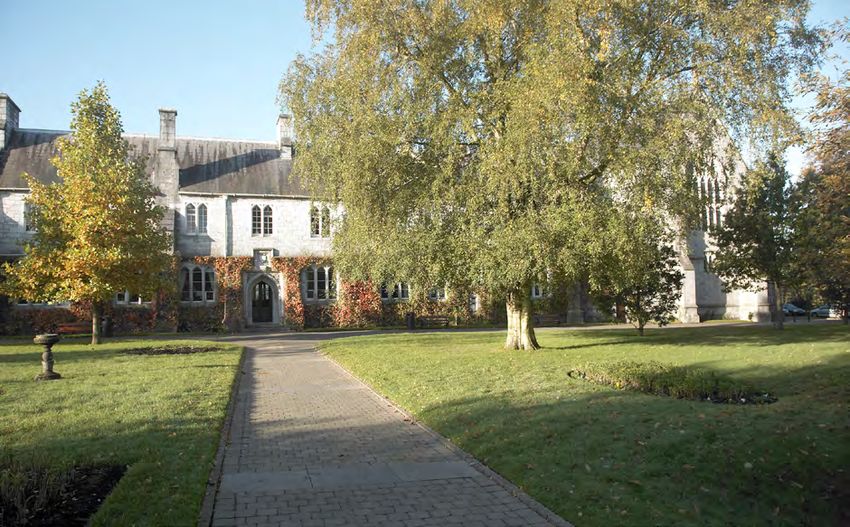
UCC
SUSTAINABILITY
  STRATEGY
    JUNE 2016

                 University College Cork
                 World’s First Green Campus

                 CLICK TO ENTER
UCC SUSTAINABILITY STRATEGY

    Table of Contents
    1.0     Introduction and Context              2    8.4     Food, Health and Well-being                   11
                                                       8.4.1   Strategic Aims:                               12
    2.0     Background, Structure and Resources   4
                                                       8.4.2   Objectives:                                   12

    3.0     Vision                                6    8.4.3   Performance indicators:                       12

    4.0     Mission                               6    8.5     Landscape, Heritage and Natural Resources     13
                                                       8.5.1   Strategic Aim:                                13
    5.0     Values                                6    8.5.2   Objectives:                                   14
                                                       8.5.3   Performance indicators:                       14
    6.0     Strategic Goal                        6

    7.0 	Overarching Objectives of the           7    8.6     Recycling and Waste Management                15

          UCC Sustainability Strategy                  8.6.1   Strategic Aims:                               15
                                                       8.6.2   Objectives:                                   15
                                                       8.6.3   Performance indicators:                       16
    8.0	Key Areas for Implementation             8
         of the Sustainability Strategy                8.7     Energy, Water and Climate Change              16
                                                       8.7.1   Strategic Aims:                               17
    8.1     Sustainability Citizenship            8    8.7.2   Objectives:                                   17
    8.1.1   Strategic Aims:                       8    8.7.3   Performance indicators:                       17
    8.1.2   Objectives:                           8
    8.1.3   Performance indicators:               8    8.8     Procurement and Contracts                     18
                                                       8.8.1   Strategic Aims:                               18
    8.2     Teaching and Learning                 9    8.8.2   Objectives:                                   18
    8.2.1   Strategic Aims:                       9    8.8.3   Performance indicators:                       19
    8.2.2   Objectives:                           10
    8.2.3   Performance indicators:               10   8.9     Commuting and Business Travel                 19
                                                       8.9.1   Strategic Aims:                               19
    8.3     Research                              10   8.9.2   Objectives:                                  20
    8.3.1   Strategic Aims:                       10   8.9.3   Performance indicators:                      20
    8.3.2   Objectives:                           11
    8.3.3   Performance indicators:               11

                                                                              CONTENTS            BACK     FORWARD   1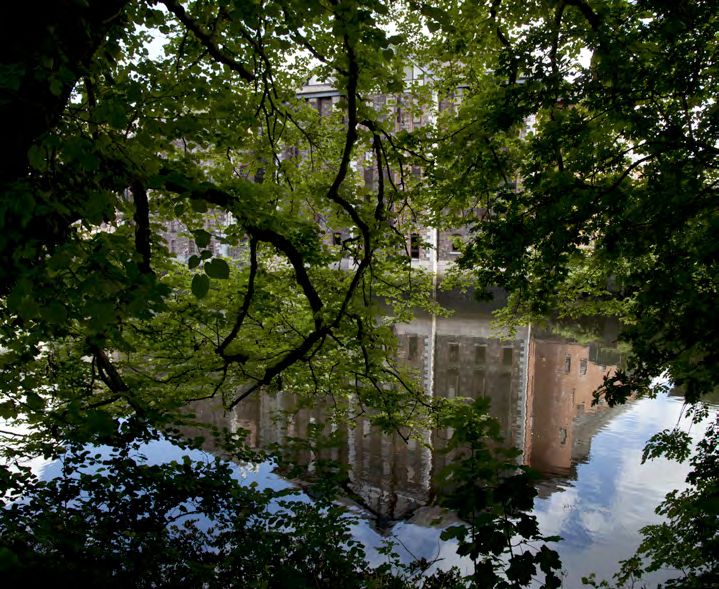
UCC SUSTAINABILITY STRATEGY

1.0 Introduction and Context
Founded in 1845, University College Cork – National University of Ireland, Cork            Over the past number of years UCC has expended considerable efforts in
(UCC) is one of four constituent universities of the federal National University of        addressing its environmental performance and has become a sectoral leader
Ireland. UCC is a leading Irish educational and research institution: University of        in sustainability. These efforts have been recognised both nationally and
the year four times in recent years (2003, 2005, 2011 and 2016), with a research           internationally (see Box 1). The next logical step in the process is the extension
income that is consistently one of the highest in the country. UCC has 20,700              of the environmental policy to a more comprehensive sustainability strategy.
students, 2,800 staff (UCC 2011) and an annual income of ca. ¤290 million.
                                                                                           UCC is rightly regarded as Ireland’s ‘Green University’ and in combination
UCC along with local and regional government, the business community, civil                with the University’s Strategic Plan 2013-2017 the implementation of this
society and other important institutions – is a major stakeholder in the long term         Sustainability Strategy will further enhance this reputation and performance.
sustainable development of the city, the county and the region. As a leading
higher education institution, as a major research institute, as an employer, as
a landowner, as a holder of significant cultural and heritage assets, and as a
partner in civic and commercial life, UCC is in a unique position to take an ethical
leadership role in achieving sustainability and resilience in Ireland and beyond. In
fulfilling all of these roles, UCC will play its part in advocating for best practice in
decision-making for the common good.

Sustainability and care for the environment are evident throughout the
University curriculum with relevant subjects taught across a range of academic
disciplines, including: civil engineering, energy engineering, chemical sciences,
biological sciences, environmental science, geography, spatial planning, geology,
sociology, medicine, law and philosophy. Complementary to and parallel with this
teaching, UCC has substantial and varied research activities on environmental
and sustainability related issues in all of its colleges and schools. Of particular
note in this regard are a number of the University’s flagship institutes e.g., the
Environmental Research Institute, Institute for Social Science in the 21st Century,
National Tyndall Institute, the APC Microbiome Institute, and more1.

Accordingly, UCC has a strong commitment, in keeping with its role in
environmental teaching and education, to reducing its environmental impacts.
This has been addressed in recent years through the development and
implementation of a documented Environmental Policy committing UCC to
improving its environmental performance and forming the framework for
environmental management on campus. This includes the strategies and
initiatives on: energy efficiency; waste and recycling; procurement; commuter
planning; infrastructure and estate management; education and communication.

1
    www.ucc.ie/en/research/institutes/                                                                               CONTENTS               BACK        FORWARD                 2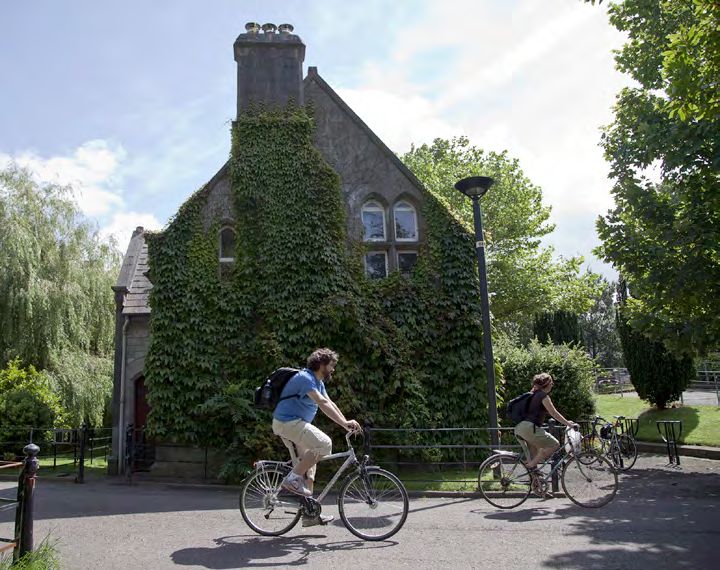
UCC SUSTAINABILITY STRATEGY

BOX 1: NATIONAL & INTERNATIONAL RECOGNITION FOR UCC’S GREEN ACHIEVEMENTS & SUSTAINABILITY PARTNERSHIPS (NOT EXHAUSTIVE)

UI Green Metrics                UCC in the top five in UI GreenMetric World University Rankings since 2012. http://greenmetric.ui.ac.id/

                                First University to receive the Green Flag award of the Foundation for Environmental Education (FEE)
An Taisce & FEE Global          (in conjunction with An Taisce, Irish operator of FEE projects) making it Ireland’s first Green Campus.
                                www.fee.global/ www.greencampusireland.org/ www.ucc.ie/en/greencampus/

ISO                             First University to be awarded ISO 50001 accreditation for its energy management system 2011.

                                Winner Green School/College Award, Irish ‘Green Awards’ 2011, 2012.
Green Awards for Business and
Sustainability
                                Winner Green Travel Initiative Award, Irish ‘Green Awards 2012.

LAMA                            Winner of Irish Local Authority Members Association Award for Best Energy Efficiency Project in 2013. http://lamaawards.org/

UNFCCC                          Holds observer status at UN Framework Convention on Climate Change (UNFCCC).

ULSF                            Signatory to the Talloires Declaration – University Leaders for a Sustainable Future. www.ulsf.org/programs_talloires.html

GUPES                           Signatory to GUPES - Global Universities Partnership on Environment and Sustainability. www.unep.org/training/programmes/gupes.asp

UNEP/GEMS                       UNEP/GEMS Water programme. www.unep.org/gemswater/

                                                                                                                        CONTENTS               BACK          FORWARD   3
UCC SUSTAINABILITY STRATEGY

2.0 Background, Structure and Resources
In September 2015, the United Nations General Assembly passed a resolution
which formally adopted 17 Sustainable Development Goals as summarised in
graphical form in Figure 1 (right). As a global University, University College Cork
is fully cognisant of the contribution it can make to the realisation of these goals.

Notwithstanding that all staff and students of the University should take
personal responsibility for the impacts of their actions, the majority of activities
of the University that impact on sustainability, are directed and influenced by
and/or fall under the responsibility of a number of key actors and key functional
areas in the University. These include key actors in teaching and learning,
research, operations, ancillary activities, and engagement with the wider
community. See Table 1 (page 5) for an overview of potential key actors and
responsibilities against sustainability goals which would facilitate implementation
of the sustainability strategy.

As the majority of activities of the University that impact on the environment          Figure 1: UN Sustainable Development Goals (SDGs)
(a significant element of sustainability management) are currently the
responsibility of the Buildings and Estates Office (e.g., energy, utilities, waste      primarily to engage the student body in ‘greening the campus’ in association
management, commuting, etc.) the B&EO take responsibility and leadership                with the related activities of Buildings and Estates in relation to environmental
in managing UCC’s environmental impact. Accordingly, overall management                 management.
responsibility for sustainability, by extension, within University College Cork
currently rests with the Director of Buildings and Estates, who reports to the          In addition UCC established a Green Campus Forum, which is co-chaired by
University Management Team and to the Governing Body as appropriate.                    the current Vice President for Teaching and Learning, and the Director of
                                                                                        Buildings and Estates, to allow for and facilitate the further engagement of the
A sustainability management group, comprising key technical personnel, is               university community in driving the sustainability agenda. In the Green Campus
convened as required to facilitate the day-to-day sustainability management.            Committee and Green Campus Forum, students and staff (both academic and
Sustainability aspects of activities under the direct control of the B&EO are           administrative) come together to discuss and initiate sustainability initiatives
controlled through the development and implementation of the appropriate                and projects, including: information, awareness raising, teaching and operational
policies, procedures and plans.                                                         measures concerned with Energy, Waste and Recycling, Water, Travel and
                                                                                        Commuting, Biodiversity and other areas of relevance. In this way, the wider
The Heads of each College, School and Administrative Unit are responsible for           University community can and do participate in driving the sustainability agenda.
ensuring that the activities within their area of responsibility are performed
in accordance with the current University Environmental Policy. This will be            The effective implementation of a coherent Sustainability Strategy would benefit
extended to responsibility for relevant areas of sustainability management.             from the clear designation of persons and areas of responsibility in relation
                                                                                        to key sustainability goals. As part of the development of the Sustainability
A Green Campus Committee, comprised of students and staff has been in                   Strategy the operation and interaction of Committee, Forum, and key personnel
operation since prior to the awarding of the first An Taisce Green Flag in 2010,        will be streamlined for effective implementation.

                                                                                                                  CONTENTS               BACK         FORWARD               4
UCC SUSTAINABILITY STRATEGY

Table 1: Suggested Key and Responsible Personnel in Relation to Sustainability Management in UCC

                                                   KEY PERSONNEL (NOT EXHAUSTIVE)                                    OVERALL RESPONSIBILITY
                                                                                                                     University Management Team via
 Overall Sustainability Management                 All personnel; from President to students
                                                                                                                     Green Campus Forum

 SUSTAINABILITY GOALS

                                                   Office of the VP for Teaching & Learning; Office of Student
                                                   Experience; Office of Staff Welfare & Development; Students
 To engage our student body, staff and             Union; Green Campus Forum; Heads of Colleges & Academics
 wider community in becoming active                Units (colleges/department/institute/research groups);            VP for Teaching & Learning
 citizens for sustainability                       Representatives of e.g. Community-Academic Research Links
                                                   initiative, CACSSS Community Engagement, & outreach staff
                                                   from across university

 To facilitate the development and                 Office of the VP for Research & Innovation; Office of the VP
 empowerment of future leaders in                  for Teaching & Learning; Green Campus Forum; Heads of             VP for Research and Innovation;
 sustainability through our research,              Colleges & Academics Units (colleges/department/institute/        VP for Teaching & Learning
 teaching and learning activities                  research groups); Key Administrative Staff; Students Union

                                                   Office of Buildings and Estates (including Estates Manager,
 To minimise the local, regional and global
                                                   Commuter Plan Manager, Energy Manager); Procurement &             Director of Buildings and
 environmental impacts of our educational,
                                                   Contracts Manager; Green Campus Forum; Heads of Colleges          Estates; Procurement &
 research, operations and infrastructural
                                                   & Academics Units (colleges/department/institute/research         Contracts Manager
 development
                                                   groups); Key Administrative Staff; Students Union

                                                   Office of Student Experience; Director of Student Health
 To enhance the health and well-being of the
                                                   & Wellbeing; Office of Staff Welfare & Development; Green
 University and wider community through
                                                   Campus Forum; Heads of Colleges & Academics Units
 the facilitation and promotion of healthy                                                                           Head of Student Experience
                                                   (colleges/department/institute/research groups); Key
 eating and living as an integral part of
                                                   Administrative Staff; Office of the VP for Teaching & Learning;
 sustainable living
                                                   Office of the VP for Research & Innovation; Students Union

 To promote and engage in the sustainable          Office of Buildings & Estates; Green Campus Forum; School of
 use and management of the landscape and           Biological, Earth and Environmental Sciences; Environmental
 natural resources of the University, in all its   Research Institute; Heads of Colleges & Academics Units           Estates Manager
 campus areas, with respect to ecosystem           (colleges/department/institute/research groups); Key
 services, natural and cultural heritage           Administrative staff; Students Union

 To be an overall positive force in the journey                                                                      University Management Team via
                                                   All personnel; from President to student
 towards creating a sustainable world for all                                                                        Green Campus Forum

                                                                                                                                 CONTENTS              BACK   FORWARD   5
UCC SUSTAINABILITY STRATEGY

3.0 Vision                                                                                            4.0 Mission
To be a world-class University leading the drive towards sustainability in Higher                     To facilitate the development and empowerment of future leaders in
Education Institutes and beyond, to our community, region and planet.                                 sustainability through our research, teaching and learning activities;

When we refer to sustainability we refer to those social, environmental                               To engage our student body, staff and wider community in becoming active
                                                                                                      citizens for sustainability;
and economic principles which allow us to create and live in a society
which meets the needs of the present without compromising the                                         To minimise the local, regional and global environmental impacts of our
ability of future generations to meet their own needs*; that lead us                                  educational, research, and ancillary operations, and infrastructural development;
towards a thriving, equitable and ecologically healthy world** for all.
                                                                                                      To enhance the health and well-being of the University and wider community
                                                                                                      through the facilitation and promotion of healthy eating and living as an integral
                                                                                                      part of sustainable living;

                                                                                                      To be an overall positive force in the journey towards creating a sustainable
                                                                                                      world for all.

                                                                                                      5.0 Values
                                                                                                      Our values mirror those of the University strategic plan; leadership, excellence,
                                                                                                      accountability, collaboration, integrity, innovation and diversity. We add to this
                                                                                                      the value of stewardship, in our role as educators, leaders, and agents in the
                                                                                                      journey towards sustainability.

                                                                                                      6.0 Strategic Goal
                                                                                                      Our key strategic goal is to increase the sustainability of the University
                                                                                                      through the embedding of sustainability goals and targets into all aspects
                                                                                                      of the University’s educational, research, ancillary operations, infrastructural
                                                                                                      developments and interactions with the community. And by doing so to
                                                                                                      maintain and improve our position as one of the leading green universities in
                                                                                                      Ireland and the world.

*Brundtland G et al (1987) Our Common Future: Report of the 1987 World Commission on Environment and Development
                                                                                                                                CONTENTS               BACK         FORWARD                6
**The Association for the Advancement of Sustainability in Higher Education www.aashe.org/
UCC SUSTAINABILITY STRATEGY

7.0 Overarching Objectives of the UCC Sustainability Strategy
University College Cork is firmly committed to the principles of                              •	Continue the University’s contribution to advancing the sustainability agenda
sustainability. Recognising that our activities impact upon the                                 nationally and within academic discourse;

environment, society and economy through our education, research
                                                                                             •	Play a key role in the societal transition to sustainability through teaching,
and operations, our infrastructural development and our influence on                             creating future sustainability leaders and generating new knowledge to
the wider community of which we are a part; we are cognisant of our                             facilitate and support a more sustainable future;
responsibilities in local, national and global terms.
                                                                                             •	Engage with local, national and international groups and stakeholders to
                                                                                                contribute to more sustainable communities;
We will endeavour to implement a measured and documented
programme of continuous improvement towards sustainability in                                •	Plan for integration of sustainability into all University strategies, plans and
all our activities as detailed below in key areas and in relation to                            policies as they come up for renewal;

achieving our stated mission, vision and strategic goals.
                                                                                             •	Actively promote the University, internally and externally, as Ireland’s ‘Green
                                                                                                University’.

•	Provide for continuous improvement for sustainability in all University activities;
                                                                                             The Sustainability Strategy can only be effectively implemented
•	Identify strategic aims, objectives and measurements of performance in each               with the support and efforts of staff, students, contractors and other
   key area that they are relevant and allow for meaningful comparisons over                 stakeholders, who will be kept informed of sustainability matters and
   time and across other normalised University metrics such as (a) building gross
                                                                                             initiatives and encouraged to engage in active involvement at all levels.
   internal floor area m2; (b) number of student full time equivalents (FTE); and (c)
   number of staff FTE etc.;

•	Cultivate a sustainability culture within the University that is student led,
   research informed and practice focused;

•	Foster sustainability citizenship among the University Community;

•	Facilitate participation of all the University community in sustainability initiatives;

•	Inform and raise awareness in all stakeholders (e.g., staff, students, contractors,
   visitors) of sustainability issues and the relationship to their own activities;

•	Make the Sustainability Strategy and other relevant information available to
   the public;

                                                                                                                        CONTENTS               BACK          FORWARD               7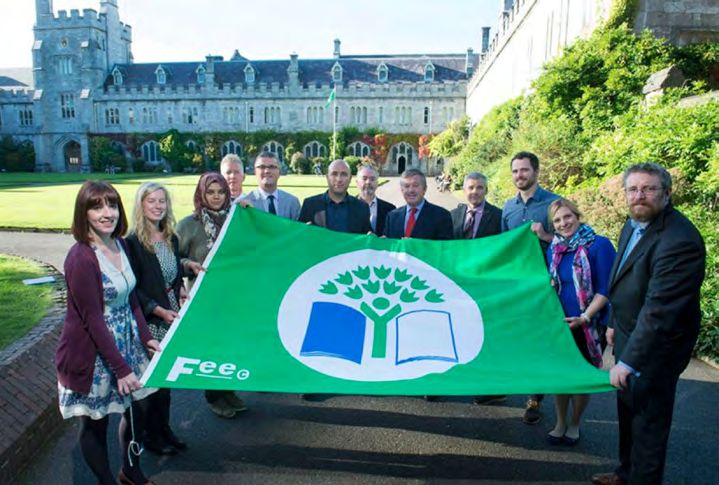
UCC SUSTAINABILITY STRATEGY

8.0 Key Areas for Implementation of the Sustainability Strategy
8.1 Sustainability Citizenship                                                                 8.1.2 Objectives:
                                                                                               •	To increase awareness and facilitate greater engagement of the University’s
The University is cognisant that each of us, individually, is an integral part of
                                                                                                  students and staff on sustainability issues;
the wider environment and accordingly should act as good citizens of Earth.
This University commits to support and promote such sustainability citizenship                 •	To encourage, support and promote initiatives for students and staff to take
amongst its student and staff population.                                                         responsible environmental and sustainability actions through behavioural and
                                                                                                  practice change;
UCC is proud to have been the first University in the world to receive the An Taisce           •	To retain the University’s ‘Green Flag’ and maintain its position as a leader in
Green Campus award, and the University sees the Green Campus programme as a                       the Green Campus community;
significant component of its sustainability efforts. The University strives to promote
sustainability citizenship through its Green Campus programme in a manner that                 •	To maintain and improve the University’s position in the world Green Metrics
is student-led, research informed and practice focused. Furthering the promotion                  and/or other sustainability rankings systems for Higher Level Institutes;
of sustainability citizenship beyond the Green Campus programme and through all                •	To facilitate and support voluntary student and staff environmental and
aspects of University life is key to the full implementation of the sustainability strategy.      sustainability relevant organisations and initiatives;
                                                                                               •	To further engage with the Students Union, the Societies Guild and individual
  SUSTAINABILITY                   KEY PERSONNEL                        OVERALL                   societies around this issue.
      GOAL                        (NOT EXHAUSTIVE)                   RESPONSIBILITY

                         Office of the VP for Teaching & Learning;                             8.1.3 Performance will be measured using the following indicators:
                         Office of Student Experience; Office of
 To engage our                                                                                 •	Number of students and/or staff involved in Green Campus initiatives;
                         Staff Welfare & Development; Students
 student body,
                         Union; Green Campus Forum; Heads of
 staff and wider                                                                               •	Campus awareness of UCC sustainability initiatives;
                         Colleges & Academics Units (colleges/       VP for Teaching &
 community in
                         department/institute/research groups);      Learning                  •	Number of student organisations/societies on-campus relating to sustainability;
 becoming active
                         Representatives of e.g. Community-
 citizens for                                                                                  •	Number of staff organisations/societies on-campus relating to sustainability;
                         Academic Research Links initiative,
 sustainability
                         CACSSS Community Engagement, &                                        •	Number of students and staff involved in such sustainability relevant organisations;
                         outreach staff from across university
                                                                                               •	Number of students and staff involved in off-campus organisations that
                                                                                                  engage in sustainability relevant activities;

8.1.1 Strategic Aims:                                                                          •	Overall participation in sustainability initiatives, activities and societies as % of
                                                                                                  staff and student FTE figures;
•	To engage our student body, staff and wider community in becoming
   active citizens for sustainability, and establish sustainability citizenship as a           •	Green flag status;
   central component of the University ethos – with students and staff giving
                                                                                               •	Status in the Green metrics and/or other green/sustainability rankings measures;
   a commitment to learning more about sustainability and taking responsible
   action.                                                                                     •	Any relevant recognised awards/achievements in sustainability citizenship by
                                                                                                  students and staff.

                                                                                                                           CONTENTS               BACK          FORWARD               8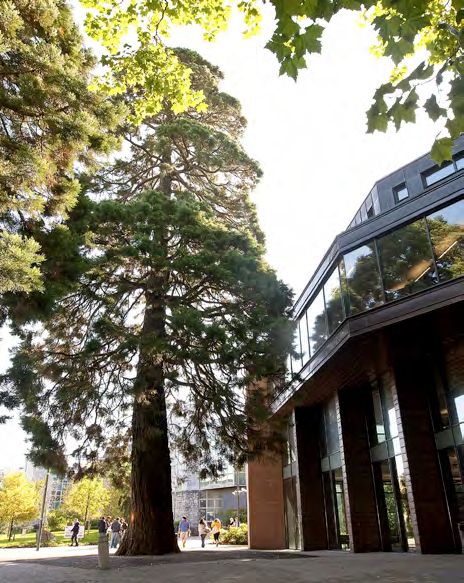
UCC SUSTAINABILITY STRATEGY

8.2 Teaching and Learning

Sustainability issues are reflected throughout the University’s undergraduate and
                                                                                      SUSTAINABILITY                 KEY PERSONNEL                          OVERALL
postgraduate education programmes, both within traditional environmentally                GOAL                      (NOT EXHAUSTIVE)                     RESPONSIBILITY
focussed fields such as science and engineering and increasingly in other
disciplines (literally from A to Z – Archaeology to Zoology). Increasing the                                Office of the VP for Teaching & Learning;
number and quality of courses in which sustainability issues are featured is a                              Office of Student Experience; Office of
                                                                                      To engage our
                                                                                                            Staff Welfare & Development; Students
focus area of the Office of Teaching and Learning, and is used as a performance       student body,
                                                                                                            Union; Green Campus Forum; Heads of
indicator for the calculation of numerous Green rankings systems. In addition         staff and wider
                                                                                                            Colleges & Academics Units (colleges/        VP for Teaching &
the University wide module on Sustainability taught by a range of staff from          community in
                                                                                                            department/institute/research groups);       Learning
across various disciplines and colleges in the University is available to students    becoming active
                                                                                                            Representatives of e.g. Community-
of all programmes. As well as formal environmental education there are                citizens for
                                                                                                            Academic Research Links initiative,
significant opportunities for UCC students to engage in informal sustainability       sustainability
                                                                                                            CACSSS Community Engagement, &
education through membership of student organisations such as Environmental                                 outreach staff from across university
Society and the Green Campus initiative, fully supported by the University.
                                                                                      To facilitate the
Building on this performance through further engagement with Teaching and                                   Office of the VP for Research &
                                                                                      development and
Learning activities is ongoing. Over 35 courses relating to sustainability are                              Innovation; Office of the VP for
                                                                                      empowerment
offered by the university. Events such as Bioblitz and engagement in culture                                Teaching & Learning; Green Campus
                                                                                      of future leaders                                                  VP for Teaching &
night provide an opportunity to use event based pedagogy in teaching and                                    Forum; Heads of Colleges & Academics
                                                                                      in sustainability                                                  Learning
learning in sustainability at UCC. Over 35 conferences and seminars are held on                             Units (colleges/department/institute/
                                                                                      through our
                                                                                                            research groups); Key Administrative
sustainability across the rich breadth of programmes on sustainability in almost      teaching and
                                                                                                            Staff; Students Union
all schools and departments.                                                          learning activities

                                                                                     8.2.1 Strategic Aims:

                                                                                     •	To foster a culture of sustainability citizenship within the University Community
                                                                                        through both formal and informal teaching and learning opportunities and
                                                                                        activities;

                                                                                     •	To facilitate the development and empowerment of future leaders in
                                                                                        sustainability through our teaching and learning programmes and activities.

                                                                                                               CONTENTS                BACK             FORWARD              9
UCC SUSTAINABILITY STRATEGY
8.2.2 Objectives: 8.3 Research
• To understand and document the environmental or sustainability content of University College Cork is one of Ireland’s leading research intensive Universities
current academic programmes and curriculum; and has an active research community working on multiple aspects of
sustainability. UCC’s sustainability researchers can be found throughout the
• To promote, increase and raise awareness of current programmes with University’s four colleges (Arts, Celtic Studies and Social Science; Business and
environmental or sustainability content across all four colleges; Law; Medicine and Health; and Science, Engineering and Food Science) working in
the constituent schools, associated research centres and through multidisciplinary
• To encourage the active participation in non-formal sustainability education in institutes and SFI centres2 such as the Environmental Research Institute (ERI),
particular the Green Campus initiative; Institute for Social Sciences in the 21st century (ISS21), Tyndall National Institute,
MaREI Institute, APC Microbiome Institute and more. In excess of ¤20M is secured
• To encourage and support the development of sustainability literacy within annually for environmental and sustainability research, with hundreds of research
teaching and learning; papers, patents and some commercial applications/translation each year.
• To capitalise on the diverse nature of student population to increase students’ Transdisciplinarity on sustainability research is facilitated and encouraged through
knowledge of global sustainability issues; initiatives such as the Environmental Citizenship Research Priority Area supported
through the Office of the Vice President for Research and Innovation. The
• Where appropriate, sustainability to be taken into account in discussions University continues to win significant funding for sustainability research from EU
leading to course approval. research programmes, national agencies and through collaboration with industry.
SUSTAINABILITY KEY PERSONNEL OVERALL
8.2.3 Performance will be measured using the following indicators: GOAL (NOT EXHAUSTIVE) RESPONSIBILITY
To facilitate the Office of the VP for Research &
• Number of sustainability relevant education programmes;
development and Innovation; Office of the VP for
empowerment Teaching & Learning; Green Campus
• Proportion of students on sustainability relevant education programmes; VP for Research and
of future leaders Forum; Heads of Colleges & Academics
Innovation
in sustainability Units (colleges/department/institute/
• Proportion of ‘other’ students taking sustainability relevant modules; through our research groups); Key Administrative
research activities Staff; Students Union
• Participation by members of the public and other stakeholders in courses with
sustainability content;
8.3.1 Strategic Aims:
• Detail other opportunities/awards for achievement/leadership/engagement in
relation to teaching and learning of sustainability.
• To facilitate the development and empowerment of future leaders in
sustainability through our research activities;
• To maintain and enhance the University’s standing in research on sustainability
topics.
www.ucc.ie/en/research/institutes/
2
CONTENTS BACK FORWARD 10UCC SUSTAINABILITY STRATEGY
8.3.2 Objectives: 8.4 Food, Health and Well-being
• To encourage research and innovation in the sustainability area; University College Cork takes the view that the health and wellbeing of its staff
and students are fundamental to achieving its mission. Students who are in good
• To promote and facilitate transdisciplinarity in sustainability research; health, content and self-confident will be best placed to realise their academic
potential during their time at UCC. In addition, if staff are healthy and happy in
• To encourage and promote networking on sustainability across the University’s their workplace they are more productive, which will create a more effective
colleges; scholarly environment. The University has been awarded formal recognition by
the HSE South for its efforts in Health Promotion and Improvement, under the
• To continue and enhance the strong links between University operational units umbrella of the UCC Health Matters initiative. In addition a considerable number
and academic and research units; of sustainable food initiatives have been developed and promoted from within
UCC, which positively impact both the University population and the wider
• To encourage researchers in sustainability domains to make greater use of the community e.g. the Cork Food Policy Council3, and the developments towards
University’s infrastructure and community for research; sustainable food provision on campus by the current main on-site catering
contractor, KSG4.
• To capture and record details of University research projects with
environmental or sustainability objectives; The University considers that its food, health and wellbeing initiatives are
integrally linked with achieving its sustainability objectives and sees many
• To promote, increase and raise awareness of current research that delivers synergies e.g., promotion of walking or cycling as commuting options,
environmental or sustainability objectives across all four colleges. encouraging local sustainable and healthy food options, growing of food on
campus, etc. Further development of integration and promotional opportunities
around food, health, well-being and sustainability will be a key focus of the
8.3.3 Performance will be measured using the following indicators: Sustainability Strategy.
• Research funding for sustainability related research; SUSTAINABILITY KEY PERSONNEL OVERALL
GOAL (NOT EXHAUSTIVE) RESPONSIBILITY
• Proportion of total research income related to sustainability;
To enhance the
Office of Student Experience; Director
health and well-
• Number of sustainability related research projects; of Student Health & Wellbeing; Office
being of the
of Staff Welfare & Development; Green
University and wider
• Number of sustainability researchers; Campus Forum; Heads of Colleges &
community through
Academics Units (colleges/department/ Head of Student
the facilitation
institute/research groups); Key Experience
• Number of publications on sustainability and environment (average per year); and promotion of
Administrative Staff; Office of the VP
healthy eating and
for Teaching & Learning; Office of the
• Scholarly events related to sustainability and environmental research; living as an integral
VP for Research & Innovation; Students
part of sustainable
Union
• Number of internal interdisciplinary and transdisciplinary collaborations; living
• Detail other opportunities/awards for achievement/leadership/engagement in
relation to research in sustainability relevant areas.
3
corkfoodpolicycouncil.com
4
www.ksg.ie/2015/02/winner-of-the-irish-sustainable-restaurant-of-the-year/
CONTENTS BACK FORWARD 11UCC SUSTAINABILITY STRATEGY
8.4.1 Strategic Aims: 8.4.3 Performance will be measured using the following indicators:
• To enhance the health and well-being of the University and wider community • Proportion of staff and students engaged in regular exercise;
through the facilitation and promotion of aspects of healthy eating and living
as an integral part of sustainable living. • Health surveys of students and staff;
• Availability of sustainable food choices in campus food outlets;
8.4.2 Objectives:
• Proportion of students and staff actively selecting local sustainable food (food
• To ensure support services are in place for students to protect their surveys);
psychological wellbeing during this time of change and to make their first
years away from home healthier and more sustainable; • Detail food growing initiatives on-campus;
• To facilitate and encourage physical activity as a normal component of • Detail integration and awareness raising projects, research and initiatives
University everyday life; between key actors in food, health, well-being and sustainability;
• To create a greater awareness of the opportunities available to students in • Student and staff involvement in relevant societies/organisations on and off
relation to physical and recreational activities; campus;
• To encourage an informed attitude to sustainable food options and the place • Detail other opportunities/awards for achievement/leadership/engagement in
of food in staff and students’ life; relation to food, health and well-being in sustainability relevant areas.
• To promote the consumption of healthier and more sustainable food options in
campus outlets and in the University community’s home life;
• To contribute to advancing the food, health and well-being in relation to
sustainability agenda nationally and within academic discourse.
CONTENTS BACK FORWARD 12UCC SUSTAINABILITY STRATEGY
8.5 Landscape, Heritage and Natural Resources SUSTAINABILITY KEY PERSONNEL OVERALL
GOAL (NOT EXHAUSTIVE) RESPONSIBILITY
University College Cork has the good fortune to be located (largely) on the
To promote and
banks of River Lee on beautiful grounds with a significant area of formal
engage in the
gardens, informal green areas and riverside walks. The campus is home to
sustainable use and Office of Buildings & Estates; Green
a significant amount of biodiversity including a variety of flowering plants, management of Campus Forum; School of Biological,
grassland, many native and exotic trees, substantial riparian areas, and the the landscape and Earth and Environmental Sciences;
various associated wildlife5. A recent habitat survey of the Main and North Mall natural resources of Environmental Research Institute;
Estates Manager
Campus6 recorded a total of twenty-two distinct habitats, many of moderate- the University, in all Heads of Colleges & Academics Units
to-high importance to local biodiversity. Such natural resources, habitats and its campus areas, (colleges/department/institute/research
biodiversity not only contribute to the staff and student experience, but are with respect to groups); Key Administrative staff;
critically important in the maintenance of ecosystem services including the ecosystem services, Students Union
regulation of climate and disease; the maintenance of water and nutrient natural and cultural
cycles and crop pollination; and they provide a multitude of health and cultural heritage
benefits. The management and richness of our natural and cultural heritage To minimise the Office of Buildings and Estates
and resources are integrally linked with achieving our sustainability objectives. local, regional and (including Estates Manager, Commuter
Director of Buildings
The estate is already managed with care of the environment to the fore global environmental Plan Manager, Energy Manager);
and Estates;
including: composting green waste; minimising chemical use; identification impacts of our Procurement & Contracts Manager;
Estates Manager;
and conservation of key habitats; mapping and protection of significant trees7 educational, Green Campus Forum; Heads of
Procurement &
etc. Further development of usage, integration and promotional opportunities research, operations Colleges & Academics Units (colleges/
Contracts Manager
around these resources will be a key focus of the Sustainability Strategy. and infrastructural department/institute/research groups);
development Key Administrative Staff; Students Union
8.5.1 Strategic Aim:
• To promote and engage in the sustainable use and management of the
landscape and natural resources of the University, in all its campus areas, with
respect to ecosystem services, natural and cultural heritage;
• To minimise the local, regional and global environmental impacts of our
educational, research, operations and infrastructural development.
5
In May 2014, during an ‘intervarsity BioBlitz’ some 451 species were recorded on the UCC campus
6
The first stages in a University-wide habitat and biodiversity survey CONTENTS BACK FORWARD 13
7
www.ucc.ie/trees/UCC SUSTAINABILITY STRATEGY
8.5.2 Objectives: 8.5.3 Performance will be measured using the following indicators:
• To provide for maintenance of grounds in a manner that is in keeping with • Proportion and amount of open spaces on campus (% and m2 per staff/
the needs of a University of the stature of UCC, but also mindful of the role as student FTE);
custodians of the campus for future generations;
• Proportion of campus covered in vegetation;
• To continue to manage our grounds with due regard to the environment,
e.g., minimising use of herbicides and pesticides; using onsite compost in • Proportion of ‘wild’ and/or semi natural areas on campus;
preference to artificial fertiliser or purchase compost; planning and conducting
all works in a manner which consider habitats requiring protection; • Proportion of non-retentive surfaces;
• To assess, maintain and increase the biodiversity of our campus; including • Proportion of campus mapped for biodiversity, with numbers of key habitats
identifying and characterising wildlife habitats, significant species and and species;
significant trees;
• Number and effectiveness of natural resource awareness campaigns and
• To protect and enhance our key natural resources, particularly in relation to initiatives;
priority habitats and species;
• Number of projects/partnerships with local authorities and community groups;
• To promote and facilitate social and physical access to these resources, and
raise awareness of the associated ecosystem, biodiversity, heritage, social and • Detail other opportunities/awards for achievement/leadership/engagement in
health related values; relation to sustainability and natural resources management.
• To sympathetically integrate our natural resources into the everyday use and
enjoyment of the Campus and wider Community;
• To promote and enhance the use of our natural resources in teaching
and learning and research on sustainability as well as in everyday use and
recreation;
• To engage and foster partnership with local authorities and community
groups to integrate, link and create a network of natural heritage and resource
areas for the benefit and use of the campus and wider community and the
maintenance and improvement of ecosystem services.
CONTENTS BACK FORWARD 14UCC SUSTAINABILITY STRATEGY
8.6 Recycling and Waste Management 8.6.1 Strategic Aims:
The University is committed to reducing the volume of waste generated and to • To minimise the local, regional and global environmental impacts of our
increasing the proportion of that waste which is recycled. Resource management educational, research, operations, and infrastructural development;
practices are based on reduce, reuse and recycle principles. The University strives
to reduce the acquisition of new materials, re–using existing materials and increase • To manage and reduce waste generation by the University community
recycling to the best possible standards. In recent years, substantial progress has through behavioural and practice change, in accordance with the EU ‘waste
been made on recycling activity through the introduction of a dry mixed recycling management hierarchy’.
programme resulting in significant year-on-year improvements – in the period
from 2007 to 2013, recycling rates increased from ca. 21% to ca. 75%. This has
resulted in a saving of ¤1,000,000 over the last 6 years. Further efforts to improve 8.6.2 Objectives:
waste management performance through operations, innovation and behavioural
changes will be explored in the coming years as part of the Sustainability Strategy. • To implement best practice approaches to resource and waste management
across the University, through direct implementation in University central
SUSTAINABILITY KEY PERSONNEL OVERALL administration and services;
GOAL (NOT EXHAUSTIVE) RESPONSIBILITY
• To propagate best practice within academic/research units through
To minimise the
empowerment, encouragement and provision of appropriate support;
local, regional and
global environmental Office of Buildings and Estates (notably
impacts of our Estates Manager & General Services Director of Buildings
• To conduct periodic waste audits on a rolling basis in different units i.e.,
educational, Office); Procurement & Contracts and Estates; systematic review of waste streams to identify opportunities to minimise
research, operations Manager; Green Campus Forum; Estates Manager generation, maximise reuse and recycling and select the most environmental
and infrastructural Heads of Colleges & Academics Units General Services; preferable means of handling residual wastes;
development, (colleges/department/institute/research Procurement &
specifically in groups); Key Administrative Staff; Contracts Manager • To maximise onsite composting of, and recovery of nutrients from green waste
relation to waste Students Union generated on the campus grounds;
management and
recycling • To work with the onsite food service providers to investigate the reduction and
efficient management of post-consumer food waste;
• To engage with architects, construction contractors and others to minimise
the amount of waste associated with the design, construction and demolition
of buildings on campus;
• To take a life cycle approach to consideration of waste for large purchases
including capital projects.
CONTENTS BACK FORWARD 15UCC SUSTAINABILITY STRATEGY
8.6.3 Performance will be measured using the following indicators: 8.7 Energy, Water and Climate Change
• Quantities of total waste and individual categories of waste generated (kg per UCC is cognisant of the environmental and societal impacts of energy and water
staff FTE and kg per student FTE); use and is committed to reducing it impacts through continuous performance
improvement. The University has a dedicated energy manager and in 2011
• Waste recycling rates (%); became the first third level institution worldwide to achieve the ISO 50001
standard for Energy Management Systems. It has a long track record in energy
• Number and type of audits and actions arising; management and has been particularly successful in winning grant support
from the Sustainable Energy Authority of Ireland (SEAI) to support energy
• Initiatives/workshops/training in relation to behavioural change (proportions saving initiatives. UCC has current projects involving lighting, metering, heat
of staff/students reached); recovery, ventilation, photovoltaics and wind energy for example. Reducing the
greenhouse gas emissions associated with its activities is also important for UCC.
• Detail other opportunities/awards for achievement/leadership/engagement in The University is committed to monitoring and reducing its ‘carbon footprint’ not
relation to waste management initiatives. only for its direct activities but also in so far as possible for indirect activities such
as commuting, business travel, etc. Since 2007, there has been a 9% decrease in
total energy consumption, and 750,000 cubic metres of water has been saved.
SUSTAINABILITY KEY PERSONNEL OVERALL
GOAL (NOT EXHAUSTIVE) RESPONSIBILITY
To minimise the
local, regional and
global environmental
Office of Buildings and Estates (notably
impacts of our
Energy Manager); Procurement &
educational,
Contracts Manager; Green Campus Director of Buildings
research, operations
Forum; Heads of Colleges & Academics and Estates; Energy
and infrastructural
Units (colleges/department/institute/ Manager
development,
research groups); Key Administrative
specifically in
Staff; Students Union
relation to energy,
carbon and water
management
CONTENTS BACK FORWARD 16UCC SUSTAINABILITY STRATEGY
8.7.1 Strategic Aims: 8.7.3 Performance will be measured using the following indicators:
• To minimise the local, regional and global environmental impacts of our • Energy consumption (kWh per student FTE);
educational, research, and ancillary operations, and infrastructural development;
• Greenhouse gas emitted (kg CO2 equivalent staff/student FTE);
• To reduce energy intensity and greenhouse gas emissions (carbon footprint)
of the University’s operations; • Water consumption (m3 per staff/student FTE);
• To reduce the water use on campus. • Quantity of water reused (m3 per staff/student FTE);
• Proportion of energy from certified renewable sources and onsite renewables (%);
8.7.2 Objectives:
• Number and effectiveness of awareness raising campaigns in relation to
• To comply with legal requirements as regards energy use; energy, carbon footprint and water;
• To optimise energy use: continuously improve energy performance and • Detail other opportunities/awards for achievement/leadership/engagement in
systems; reduce consumption 3% year on year and by 33% by 2020 with a relation to energy, carbon and water management initiatives.
baseline of 2006-08;
• To prioritise the use of low carbon energy sources and effectively utilise
efficient products and services;
• To periodically measure and track the University’s greenhouse gas inventory or
‘carbon footprint’ including both direct and indirect emissions;
• To develop and implement a comprehensive University carbon management
plan including a commitment to reduce greenhouse gas emissions and
investigate the possible opportunities of carbon sinking;
• To lead in development and on-site demonstration of cutting-edge
technologies and systems for renewable energy generation, energy efficiency,
water reduction and reuse;
• To develop a water management plan to minimise impact on water resources
including reducing both water consumption and water pollution;
• To explore the reuse of grey water for appropriate applications.
CONTENTS BACK FORWARD 17UCC SUSTAINABILITY STRATEGY
8.8 Procurement and Contracts 8.8.1 Strategic Aims:
UCC by its nature procures a large amount of goods and services, and the • To minimise the local, regional and global environmental impacts of
environmental and wider sustainability implications of such expenditure can be our educational, research, and ancillary operations, and infrastructural
significant. This is a great opportunity for the University to reduce the negative development;
impacts of its purchasing decisions by implementing a systematic green or
sustainable procurement policy and process. This policy would outline a series • To systematically include sustainability criteria in the selection criteria for the
of environmentally, ethically and socially- conscious purchasing practices and purchase of goods and services for the University;
reiterate the University’s commitment to sustainability through the support of
green, responsible, and potentially local businesses. Furthermore, owing to the • To consider life cycle perspectives during the selection of goods and services
scale of the procurement, such a system (along with similar action by other wherever practical and appropriate.
public procurers) can affect real change in the marketplace resulting in great
availability and more competitive pricing of environmental preferable products. 8.8.2 Objectives:
SUSTAINABILITY KEY PERSONNEL OVERALL • To develop a sustainable/green procurement policy and process, and related
GOAL (NOT EXHAUSTIVE) RESPONSIBILITY guidance to assist drafters of tenders within the University to consider
sustainability criteria at the different stages of the procurement process, including:
To minimise the
local, regional and
– Contract subject matter definition
global environmental
impacts of our
– Technical Specifications
Procurement & Contracts Manager; – Selection Criteria/Exclusion Criteria
educational,
Office of Buildings and Estates; Green Procurement & – Award Criteria
research, operations
Campus Forum; Heads of Colleges & Contracts Manager;
and infrastructural
Academics Units (colleges/department/ Director of Buildings
development, • To promote green procurement best practice when participating in
institute/research groups); Key and Estates
specifically in procurement consortia;
Administrative Staff; Students Union
relation to the
purchase or goods • To engage with key suppliers to bring about environmental improvements
and services by and throughout the supply chain, including:
for the University
– Substituting products containing harmful substances
– Consideration of environmental impacts on a life cycle perspective
– Selecting products that meet the requirements of recognised labelling
schemes e.g., EU Ecolabel
• To require contractors and suppliers to achieve environmental management
standards equivalent to certified environmental management systems such as
ISO14001, EMAS;
• To promote where appropriate and practical sustainable buying principles e.g.,
the principles embodied in schemes such as Fairtrade™.
CONTENTS BACK FORWARD 18UCC SUSTAINABILITY STRATEGY
8.8.3 Performance will be measured using the following indicators: 8.9 Commuting and Business Travel
• Development of sustainable/green procurement policy and process; Aware of the sustainability implications of its ca. 18,000 students and 2,500
staff commuting to the University, UCC has developed a comprehensive
• Development of guidance document(s) on green procurement for suppliers/ Commuter Plan. Led by a dedicated Commuter Plan Manager, this plan provides
providers; for active car park management and for alternative modes of travel are to be
systematically addressed, facilitated and promoted. This includes initiatives
• Number of contracts awarded to suppliers of “green” products and services; such as: free University Park + Ride system, enhanced public transport links;
cycling facilities; dedicated parking for car-pooling; walking routes. The plan is
• Number of contractors/suppliers/providers who have achieved environmental updated and informed by regular commuting surveys. Staff are encouraged and
or sustainability related awards/standards/certifications; incentivised to use public transport for business travel wherever possible (e.g.,
costs for travel to Dublin, served by regular train service are only refunded at
• Detail other opportunities/awards for achievement/leadership/engagement in regular train fare). Alternatives to travel such as videoconferences are facilitated
relation to sustainable procurement initiatives. and promoted by the University – staff are encouraged to minimise travel and/or
the negative impacts thereof.
SUSTAINABILITY KEY PERSONNEL OVERALL
GOAL (NOT EXHAUSTIVE) RESPONSIBILITY
To minimise the
local, regional and
global environmental Office of Buildings and Estates (notably
impacts of our Commuter Plan Manager); Procurement
Director of Buildings
educational, & Contracts Manager; Green Campus
and Estates;
research, operations Forum; Heads of Colleges & Academics
Commuter Plan
and infrastructural Units (colleges/department/institute/
Manager
development, research groups); Key Administrative
specifically Staff; Students Union
in relation to
sustainable transport
8.9.1 Strategic Aims:
• To minimise the local, regional and global environmental impacts of
our educational, research, and ancillary operations, and infrastructural
development in relation to transport;
• To promote and encourage the use of sustainable modes of transport for staff
and student commuting, and minimise associated impacts of commuting on
University neighbours and the wider city community, and the climate.
CONTENTS BACK FORWARD 19UCC SUSTAINABILITY STRATEGY
8.9.2 Objectives: 8.9.3 Performance will be measured using the following indicators:
• To reduce the number of vehicle-kilometres per staff/student; • Proportion of staff/students choosing sustainable travel modes8;
• To reduce the greenhouse gas emissions associated with commuting; • Proportion of staff/students cycling to college;
• To reduce ‘single user’ car journeys and maximise car-pooling; • Number of bicycle racks;
• To optimise business travel and reduce associated emissions by promoting • Number of park and ride patrons;
non-travel options and encouraging multi-purpose trips;
• Number of Electric Vehicles chargers installed;
• To encourage use of public transport over car use for business travel;
• Accessibility of, and linkages between other campus areas and main campus;
• To promote park and ride services;
• Number and effectiveness of awareness campaigns on sustainable transport
• To increase awareness of the sustainable transport options and the impacts of options and impacts;
the potential different modes of transport.
• Detail other opportunities/awards for achievement/leadership/engagement in
relation to sustainable transport initiatives.
Any non single car occupancy journey e.g. walking, cycling, public transport, park and ride, car pooling.
8
CONTENTS BACK FORWARD 20GREEN
CAMPUS
TOURS
The university has developed an online guided tour of some of the many exciting green
initiatives on campus which have led to our position as one of the most sustainable
campuses in the world. The app includes a guided audio tour, with additional video,
image and web content. This is available for free download from the following stores:
Click on a link to get the app: Google Play Apple
BACK TO COVERYou can also read


