UK Civil Hydrography Programme - 2019 edition Bathymetry
←
→
Page content transcription
If your browser does not render page correctly, please read the page content below
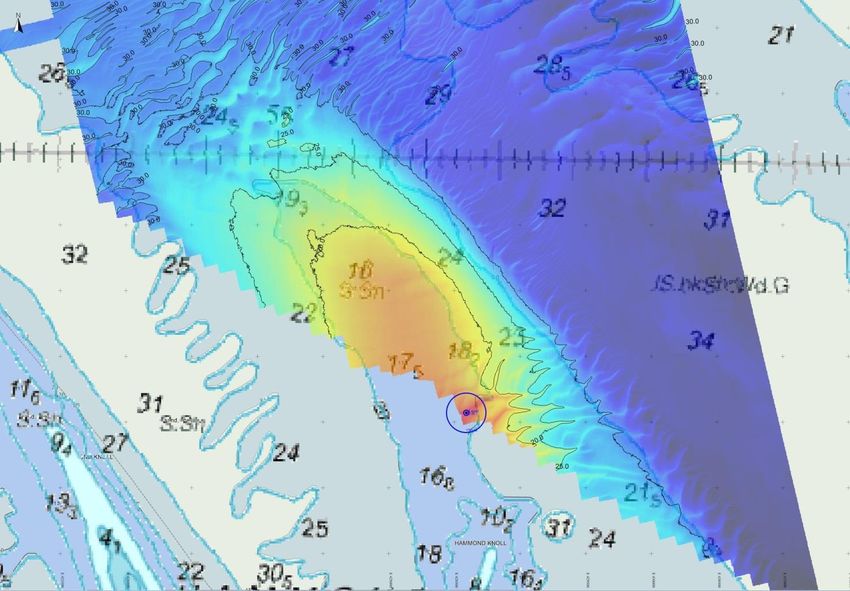
UK Civil Hydrography
    Programme
                      2019 edition

Seabed characterisation        Bathymetry

Wreck investigation            Backscatter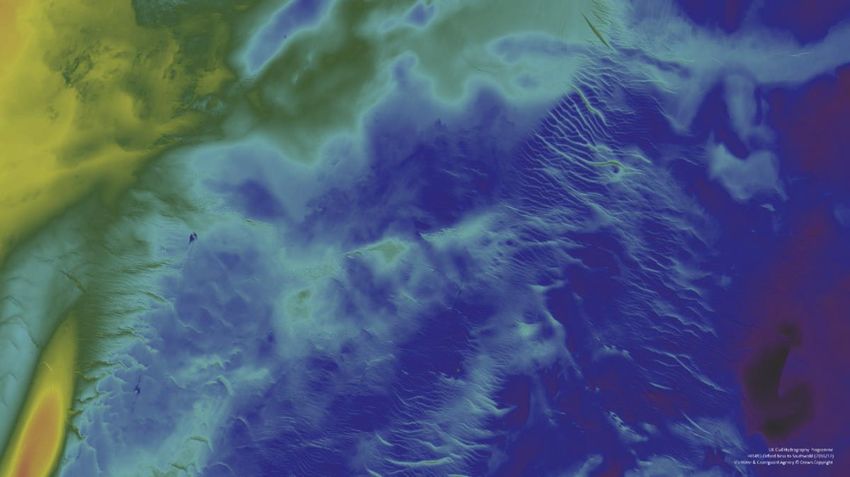
UK Civil Hydrography Programme

Contents
Foreword                                                                            2

Introduction                                                                        3

News from the CHP                                                                   4
       • Hydrography and Meteorology Team                                           4
       • CHP Survey Contracts                                                       4
       • 2018/19 surveys                                                            4

Civil Hydrography Annual Seminar 2019                                               5

Survey Vessels 2018/19                                                              6
Autonomous Survey Vessels (ASV) 2018/19                                             7

Collaboration & Partnerships                                                        8
       • Regional Coastal Monitoring Programmes                                     8
       • MPA Evidence Gathering Programme                                           8

How the MCA Gathers Hydrographic Data                                               9
      • Standards                                                                   9
      • Technical Requirements                                                      9
      • Quality Assurance                                                           9

Propose a Survey                                                                    10

Survey Safety                                                                       11

Hydrographic Notes                                                                  11

Wreck Investigations                                                                11

Sharing Data with the MCA                                                           12

Guidelines for Offshore Developers                                                  13
       • Survey requirements                                                        13
       • MGN 543: Hydrography                                                       13
       • Where to Deliver                                                           13

Annex 1: Completed CHP Surveys 2018/19                                              14
Annex 2: CHP Survey Plans 2019/20                                                   16
Annex 3: Civil Hydrography Annual Seminar 2019 Programme                            17
Contacts                                                                            19

                                            1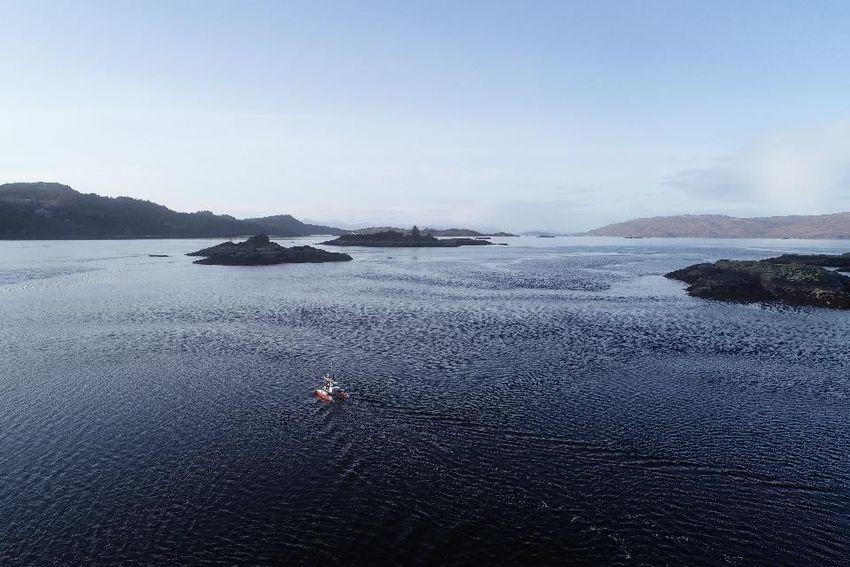
UK Civil Hydrography Programme

Foreword
The UK Civil Hydrography Programme
                                                      The Civil Hydrography Annual Seminar (CHAS)
As an executive agency of the Department for          represents the main opportunity for the MCA to
Transport, the Maritime and Coastguard                present its proposed survey plans for the
Agency (MCA) plays a key role in implementing         forthcoming year and obtain feedback from our
and enforcing the Government’s maritime               stakeholders. With continued pressure on
safety and environmental protection strategies.       public spending, there will always remain scope
We are committed to preventing loss of life,          for owners of other marine data gathering
continuously improving maritime safety and            programmes to come together and realise
protecting the marine environment. As ever,           collaborative opportunities.      Improved co-
our mission remains: safer lives, safer ships         ordination and co-operation is an enabler for us
and cleaner seas.                                     all, providing better value for money and
                                                      reducing the burden on the taxpayer. Brexit
Within this remit, the MCA has overall                may be upon us, but we are as open as ever to
responsibility for the UK’s hydrographic              collaborative opportunities going forward as we
obligations under the Safety of Life at Sea           have ever been, within the UK and with
Convention (SOLAS) but works in close                 European partners.          From the MCA’s
partnership with the UK Hydrographic Office           perspective, this greater collaboration results in
(UKHO) to ensure that these obligations are           more information getting on to nautical charts.
met.
                                                      It is very gratifying therefore, to see the
The MCA manages a multi-million pound                 continued growth of attendance at CHAS and
budget to systematically survey the waters            the continued willingness of organisations to
around the UK. This programme is known as             co-operate and collaborate to minimise the
the “Civil Hydrography Programme” (CHP).              duplication    of    survey  effort    between
Under the CHP, commercial contracts are let to        organisations, wherever possible, and to realise
ensure accurate hydrographic information is           the benefits that brings.
gathered for updating the nation’s nautical
charts and publications. This year has seen a
renewal of these contracts to three new               Paula English
contractors, as well as the introduction of the       Acting Head, Hydrography & Meteorology
use of Autonomous Surface Vessels on to the           Maritime & Coastguard Agency
CHP.

                                      HI 1609 – Cockle Shoal

                                                  2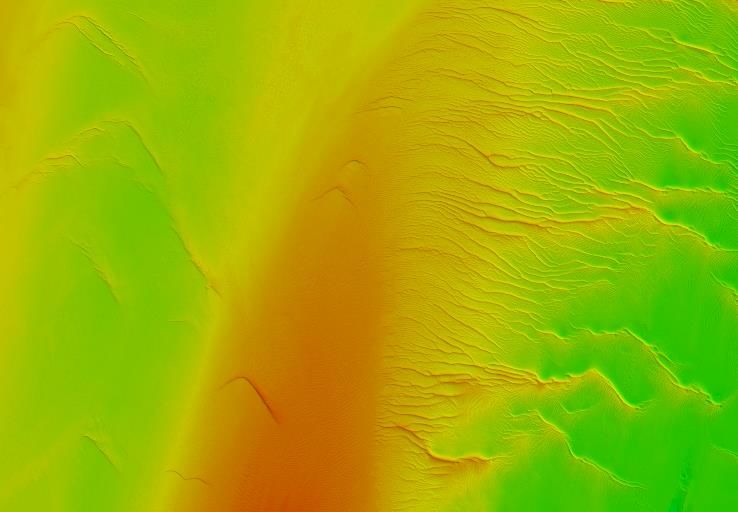
UK Civil Hydrography Programme

Introduction
The CHP prioritises areas of highest                   hydrographic     information    is   gathered.
navigational safety risk and surveys and maps          Additionally, more focused work includes high-
UK home waters - defined by the boundaries of          resolution wreck investigations, water column
the UK’s Exclusive Economic Zone, an area in           data collection and seabed grab sampling.
excess of 720,000km2 - in order to keep our
nation’s nautical charts and publications              Prior to final data being accepted from
current, safe and fit for purpose.                     contractors, it passes through a rigorous quality
                                                       assurance process at the UKHO’s Bathymetry
The MCA makes extensive use of geographic              Scientific Analysis Group, where checks are
information systems (GIS) to prioritise survey         made against items such as data density,
areas using a contemporary risk analysis               interline consistency, geodetic parameters and
methodology capable of reflecting the changing         tidal observations. Once data has passed
pressures of the maritime sector.                      validation, it is archived to the UKHO’s
                                                       bathymetric database ready for inclusion in
The hydrographic survey work commissioned              their nautical charting products.
for the CHP is undertaken by contractors, who
gather and report seabed data using their own          The UKHO hosts the Marine Environment Data
personnel, equipment and vessels. The core             and Information Network (MEDIN) Data Archive
CHP work scope has been divided into the               Centre (DAC) for bathymetry data. Bathymetry
following streams:                                     data collected through the CHP are made freely
                                                       available to visualise and download from
                                                       https://www.gov.uk/guidance/inspire-portal-and-
• Routine resurvey - navigationally critical           medin-bathymetry-data-archive-centre
  shallow water areas with mobile seabed;
                                                       The British Geological Survey hosts the MEDIN
• Shallow water - predominantly 0 to 40m               DAC for geology, geophysics and backscatter
  water depth; and                                     data. Backscatter data collected through the CHP
                                                       are made freely available to visualise and
• Shallow to medium water - 0 to 200m                  download from
  water depth.                                         http://www.bgs.ac.uk/GeoIndex/offshore.htm

This year saw the introduction of an additional        The MCA regularly collaborate with other
contract, Supplementary Hydrographic Survey            public-sector organisations in order to increase
Services, which the MCA may utilise to                 efficiencies under the ‘gather once, use many
maximise our involvement and input in                  times’ philosophy. The MCA have made the
collaborative opportunities, where the provision       CHP more accessible by:
of hydrographic survey services or technical
expertise may be required to support such              •    Sharing UK CHP Hydrographic Survey
initiatives.                                                Specification
                                                       •    Making CHP data accessible via the
To support the requirements of the CHP, the                 MEDIN bathymetry DAC and
MCA     specifies    state-of-the-art    survey             backscatter DAC
technologies    including    high     resolution       •    Providing British Geological Survey
multibeam echosounders (MBES) and Real-                     CHP seabed samples for further
Time Kinematic (RTK) Global Positioning                     analysis
Systems (GPS) to ensure accurate high-quality

                                                   3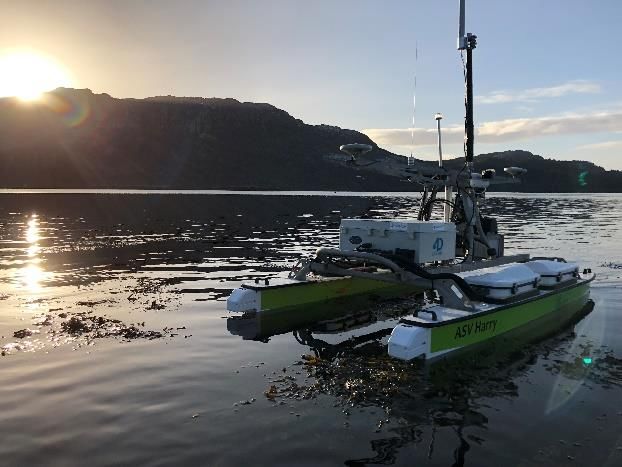
UK Civil Hydrography Programme

News from the CHP
Hydrography & Meteorology Team
The MCA Hydrography and Meteorology                     CHP 2018/19 surveys
(HydroMet) team comprises:                              In addition to delivering the full proposed
                                                        programme of high priority areas, the MCA
• Head of Hydrography and Meteorology –
                                                        HydroMet team secured further funding for an
  Andrew Colenutt
                                                        additional 2 high priority areas.
• Acting   Head    of   Hydrography          and
  Meteorology – Paula English                           In total, 11 CHP surveys have been conducted
                                                        during 2018/19, covering approximately
• Hydrography Programme Lead – Heloise
                                                        3,900km2 of seabed:
  Warner
• Hydrography and Meteorology Programmes                Shallow Water:
  Coordinator - Rebecca De Bono
The Navigation Safety Branch, led by Assistant          •   HI 1561 Sussex Bay West
Director, Richard Bell, comprises HydroMet,             •   HI 1572 Little Ormes Head to Hilbre Point
Maritime Surveillance, Navigation Safety Policy         •   HI 1573 Point Lynas to Little Ormes Head
and Radio Spectrum and Technical Standards              •   HI 1574 Barrow East and Barrow West
teams.                                                  •   HI 1581 Runabay Head to Belfast Lough
                                                        •   HI 1585 North Foreland to South Foreland
CHP Survey Contracts
The MCA HydroMet team commenced the                     Shallow to Medium Water:
tender process to award the current CHP                 • HI 1513 Blyth to Sunderland
contracts in April 2018. As part of this process,       • HI 1567 Linne Crowlin and Loch Carron
elements of the work scope relating to survey           • HI 1570 Inner Sound to Loch Gairloch
prioritisation, analysis and reporting have been        • HI 1579 North Falls and Sunk TSS East
revised to maximize efficiencies and                    • HI 1580 Hearty Knoll to Haisborough Sand
deliverables and provide best value for money.
Working closely with colleagues at the UKHO,            Two extension areas were also conducted for
the team have also reviewed and updated the             HI 1572 and HI 1573 and were funded by Vale
UK CHP Survey Specification.                            of Glamorgan Council.

The current CHP work scopes have been
awarded to the following marine survey
contractors following a rigorous competitive
tendering exercise:

Clinton Marine Survey: Lot 1 (Shallow) & Lot 5
(Supplementary Survey Services)
MeriTaito: Lot 2 (Shallow to Medium)
A-2-Sea Solutions: Lot 3 (Routine Resurvey)
EGS International: Lot 4 (Richard Montgomery)

                                                    4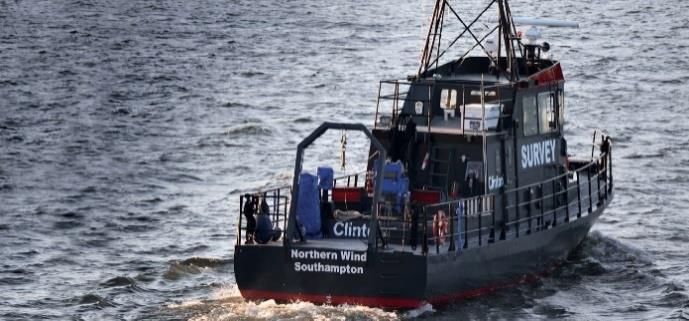
Civil Hydrography Annual Seminar 2019

Civil Hydrography Annual Seminar 2019
The MCA annually convene the Civil                 With over 90 attendees representing nearly 40
Hydrography Annual Seminar (CHAS). This            organisations, the event has proved as popular
year’s event was hosted by the International       and relevant as ever.
Maritime Organization, in London on 14th
March.                                             The MCA advocate a coordinated and
                                                   integrated approach to the longer-term survey
CHAS is the only Government-led marine event       planning, which hopefully will enable the
of its kind that opens its doors to the UK         hydrographic sector to manage funding
hydrographic survey and seabed mapping             streams more effectively, develop new
community.                                         partnerships     and    strengthen    existing
                                                   collaborations between stakeholders.
The aims of CHAS are three-fold:
•   To provide an open forum for public            Other key factors instrumental in advancing the
    sector organisations to come together          hydrographic sector and establishing efficient
    to share data gathering programmes for         ways of working include making high resolution
    the forthcoming years                          bathymetric data freely available under the
                                                   Open Government Licence and the stronger
•   To encourage co-operative working and          adoption of the UK CHP Survey Specification.
    survey planning integration                    In addition, there is a positive approach within
                                                   the sector for exchanging ideas and problem
•   To realise the financial benefits of co-       solving in relation to data acquisition,
    funding such work.                             processing and interpretation.

                                HI 1495: Orford Ness to Southwold

                ASV Harry working on HI1567 - Linne Crowlin and Loch Carron.

                                               5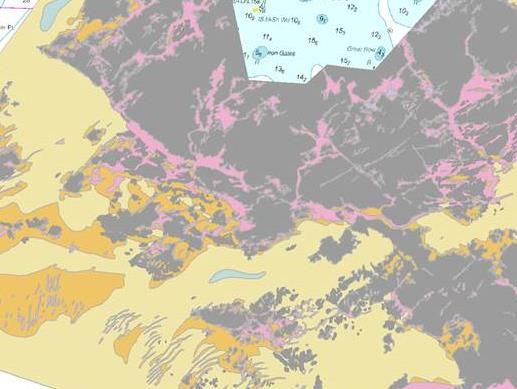
Civil Hydrography Annual Seminar 2019

Survey Vessels 2018/19

   MV Northern Wind © Clinton Group              MV Lode © Clinton Group

  MSV Pohjanmeri © MeriTaito Group              SV Kaiku © MeriTaito Group

                         FPV Morven © A-2-Sea Group

                                      6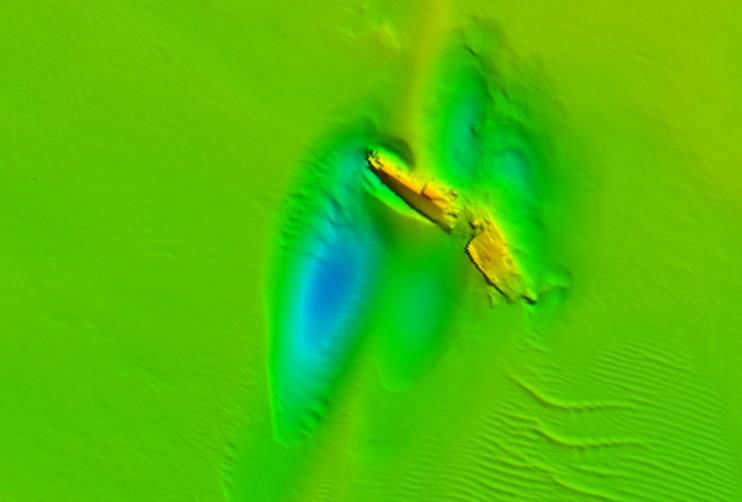
Civil Hydrography Annual Seminar 2019

Autonomous Survey Vessels (ASV)
           2018/19

             ASV Harry ©

              XOcean ©

                  7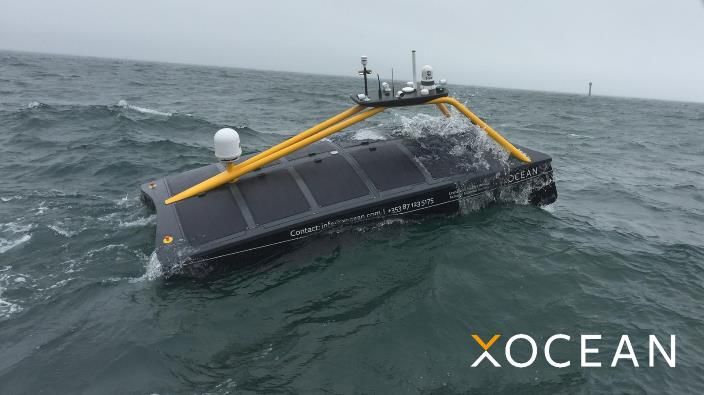
Civil Hydrography Annual Seminar 2019

Collaboration & Partnerships
Within the hydrographic community, effective,       Glamorgan Council (on behalf of the Swansea
genuine collaborations have been established        and Carmarthen Bay Coastal Engineering
between     public    sector  organisations,        Group). These were HI 1572 - Little Ormes
government departments and with research
                                                    Head to Hilbre Point and HI 1573 - Point Lynas
and industry partners.
                                                    to Little Ormes Head.
Sharing medium-term survey programmes
and working together through partnerships           In 2019/20, we will be exploring opportunities
and MoUs has enabled survey capability to be        to collaborate with Sedgemoor District Council
taken     forward    within   and    between        in the South West, with Scarborough Borough
organisations whilst maximising the leverage        Council in the North East and we hope to
of public-funded survey assets and resources.       further develop potential opportunities for
                                                    collaboration with the Welsh Coastal
A number of successful partnerships with the        Monitoring Programme.
MCA have arisen out of CHAS - most notably,
the National Network of Regional Coastal
Monitoring Programmes (RCMPs) through               MPA Evidence Gathering
close collaboration with the Channel Coastal        Programme
Observatory (CCO) and previously the EU-
                                                    Since 2013, CEFAS (Centre for Environment,
funded ‘INIS Hydro’ seabed mapping project.
                                                    Fisheries and Aquaculture Science) under the
                                                    auspices of DEFRA (the Department for
Regional Coastal              Monitoring            Environment, Food and Rural Affairs) has
Programmes                                          collected seabed mapping data to underpin
                                                    evidence gathering for marine protected area
The Memorandum of Agreement to carry out            designation.
nearshore bathymetric surveys of the English
Coastline now has signatories from the              The development of a joint MoA and adoption
following Lead Authorities of the National          of the UK CHP Survey Specification will
Network of Regional Coastal Monitoring              enable data gathered for environmental policy
Programmes (RCMPs): New Forest District             making to also be suitable for the operational
Council (Southeast RCMP); Teignbridge               update of nautical charts. This approach
District   Council   (Southwest     RCMP);          ensures the potential for maximum data re-use
Metropolitan Borough of Sefton (Northwest           and in turn, reduced cost-burden to HM
RCMP); and Scarborough Borough Council              Government.
(Northeast RCMP).
                                                    Working in close partnership with the CCO,
Under this MoA, all data gathered under these       RCMPs Lead Authorities, CEFAS and others,
RCMPs are made freely available under the           realises cost savings and efficiencies by
Open Government Licence; are collected              combining resources, expertise and technical
using the UK CHP Survey Specification; and          advice to achieve surveys to IHO Order 1A in
submitted under the UK Civil Hydrography            areas of mutual interest. Further collaborative
Programme to additionally support the update        surveys are scheduled in the forthcoming
of nautical charts and products by the UK           years.
Hydrographic Office.

In 2018/19 two collaborative surveys were
undertaken in partnership with the Vale of

                                                8
Civil Hydrography Annual Seminar 2019

How the MCA gathers hydrographic data
Hydrographic survey is the process of gathering a wide variety of data for the purpose of describing
the seafloor. To ensure that data is collected to the highest possible quality for navigational charting,
the MCA specify the following requirements.

Standards                                              Quality Assurance
All surveys are conducted to the IHO Order 1a           Data Quality Control
survey standard, as defined by the                      • In addition to QC procedures employed by
International Hydrographic Organisation (IHO)              CHP survey contractors, technical
publication ‘Standards for Hydrographic                    personnel from both the MCA and UKHO
Surveys, Special Publication S44, Edition 5’,              routinely   visit   contractors’     vessels
with    the    exception    of    single-beam              throughout survey operations to verify data
echosounder (SBES) check lines under the                   quality.
Routine Resurvey Programme.                             • Prior to final survey data being accepted
                                                           from contractors, it passes through a
Technical Requirements                                     rigorous quality assurance process at the
                                                           UKHO, where checks are made for items
Multibeam Echsounder (MBES)                                such     as    data    density,    inter-line
• Multibeam bathymetry is collected during                 consistency, geodetic parameters, tidal
   all CHP surveys.                                        observations etc.
• The MCA usually require 100%                          • Contractors are asked to provide error
   bathymetric coverage in all areas they                  budgets prior to and after every survey so
   survey.                                                 that the contribution of individual error
• System detection capability is defined by                sources are tightly defined. This ensures
   IHO requirements. Contractors are                       rigorous quality control of the final survey
   required to detect objects whose size is                dataset.
   greater than a cube measuring 2m3, in
   water depths of up to 40m, and a cube with           Additional Measurements
   sides equal to 10% of depth in deeper                • Rigorous tidal reduction is required on all
   waters.                                                 CHP surveys.
• A minimum of 9 soundings per minimum                  • Depths are reduced to Chart Datum (CD).
   detectable object are required.                      • Seabed grab samples are typically taken
• Sound velocity measurements are                          at 5km intervals to ground-truth multibeam
   routinely taken throughout the survey in                backscatter observations.
   order to position the soundings correctly.           • MBES water column data is collected over
• Contractors are often required to conduct                all found wrecks to support an assessment
   tidal-stream observations at particular                 of their condition and ensure shoalest
   locations.                                              depth is found.

                                                   9
Civil Hydrography Annual Seminar 2019
Propose a Survey
Should you know or be aware of any areas of UK seabed that require update to the nautical charts
and publications that cover them, please let us know. The MCA assess CHP survey areas using a
contemporary risk-based methodology, but we are keen to receive any information that can aid us
in our responsibilities to the mariner and the safety of life at sea. E-mail your suggestions for
hydrographic survey to: hydrography@mcga.gov.uk.
Typical indications of an area requiring re-survey are:
• Old underlying survey data (check using the "Source Data Diagram" on the latest chart);
• A change in traffic patterns (e.g. increases in cruise ship visits);
• An accident occurring due to inaccurate or incomplete survey data; or
• Changes to the seabed due to sandwave movement / channel migration.
HI 1561 – Sussex Bay West
HI1509: Approach to Loch Ryan
10Civil Hydrography Annual Seminar 2019
Survey Safety
Much of the hydrographic work completed by the CHP is undertaken by contractors who are required
to gather seabed data using their own personnel, and vessels owned or chartered by themselves.
Acquired data is then submitted to both the MCA and UKHO.
I. Any vessel undertaking work on behalf of VI. Paris MoU. Should a vessel employed on
the CHP must adhere to MCA safety and the CHP develop a high ship risk profile
regulatory guidelines. MCA safety (HRS), then the MCA reserves the right to
requirements include: remove said vessel from the contract until
she meets ‘standard’ (SRS) or ‘low’ (LRS)
II. Contractors are always required to supply risk criteria.
and adhere to a Safety Management Plan .
VII. All vessels participating in CHP surveys
III. All offshore personnel are required to have are visited by an MCA or a UKHO contract
a valid medical certificate to at least the overseer at least once every 2 months. A
ENG1 standard. report covering each visit is kept on file by
the MCA HydroMet team. Visits are
IV. All offshore personnel are required to have primarily intended to focus on the quality of
appropriate and valid safety training survey procedures and deliverables, but
certification. also include an informal safety
assessment. If significant safety concerns
V. Every vessel that participates in CHP are raised, then the contract overseer is
survey operations is subject to approval by required to notify the local MCA marine
the MCA (via MCA marine office office.
inspection) prior to work starting. Repeat
inspections are undertaken annually for the
duration of MCA contracts.
Hydrographic Notes
Reports of any newly discovered dangers to surface or sub-surface navigation are passed
immediately by the CHP contractors to the MCA and UKHO using the H102 Hydrographic Note form.
The nature of the CHP means that H-Notes are regularly sent in. This information is then immediately
passed on to the mariner.
During survey operations in 2018/19, over 160 H Notes were submitted.
Wreck Investigations
All wrecks found in a CHP survey are investigated with additional lines and detailed bathymetry and
water column data. Sitting proud of the seabed, wrecks and other man-made obstructions often form
the critical depth in each area of seabed. It is therefore crucial we have confidence that the shoalest
point on these obstructions are found so the mariner can navigate safely.
11Civil Hydrography Annual Seminar 2019
Sharing Data with the MCA
If you are considering performing a hydrographic survey and are willing to share your data with us,
we can pass it on to the UK Hydrographic Office to help them compile new or updated nautical charts
and so help improve safety for mariners.
Your survey does not need to be carried out to full charting standards to be of use. Even without a
full search for dangers, a modern survey can improve on our knowledge of the seabed. There will
be no legal liability on you for the way that we use your data.
The MCA are always happy to give help and advice on hydrographic data gathering requirements in
order to increase the usefulness of hydrographic survey data. Ideally bathymetry data would be
rendered and delivered in digital form, with:
• Data in one of the following: CARIS HDCS A report of the survey that describes how the
directory (i.e. “HIPS”), Generic Sensor data was gathered and processed would be of
Format, Fledermaus PFM or ASCII xyz use, especially if it includes:
• Spurious data cleaned from the final, • A list of the equipment and software
delivered, dataset with rejected used;
soundings included, but flagged as • How positioning equipment was set up,
deleted calibrated and used;
• Details of the method used for data- • How the echo-sounder transducer was
cleaning set up and levelled, together with all
• Digital data as full density (i.e. prior to sensor offsets;
any gridding or binning being applied), • Details of the horizontal datum to which
though if gridded datasets have been the positions are referred (or the grid, if
created then please include these too appropriate);
• The soundings reduced using observed • How tides were measured, how the tide
tides (not predicted tides from Tide pole or tide gauge was levelled and how
Tables) depths were reduced to chart datum.
• Depths referenced to Chart Datum for the
area. Data which fully complies with all aspects of
IHO Order 1a would be ideal.
HI 1580 – Hearty Knoll to Haisborough Sand
12Civil Hydrography Annual Seminar 2019
Guidelines for Offshore Developers
The MCA have issued guidelines which are
Post-decommissioning of all or part of the
intended to aid developers when submitting
development: Cable route(s) and the area
consent applications which impact upon
extending to 500m from the installed generating
hydrography. These guidelines should be read
assets area.
in conjunction with Marine Guidance Note
(MGN) 543 which replaces MGN 371. They are Any additional hydrographic survey undertaken
available on the MCA pages on gov.uk. for any other purposes should be carried out to
the standard described in section 6.c.
The MGN 543 guidance note highlights issues The development may result in an alteration to
that need to be taken into consideration when maritime traffic patterns as vessels seek
assessing the impact on navigational safety alternative passage around the installed
and emergency response (search and rescue, generating assets area. Where this is the case,
salvage and towing, and counter pollution) it may be considered necessary that a
caused by offshore renewable energy hydrographic survey of these alternate
installation developments. It applies to passages and their immediate environs
proposals in United Kingdom internal waters, extending to 500m be undertaken. MCA can
Territorial Sea and Exclusive Economic Zone. provide guidance here if required.
All hydrographic surveys listed above should
Survey Requirements fulfil the requirements of the MCA’s
All hydrographic surveys should provide full ‘Hydrography Guidelines for Offshore
seafloor coverage that meets the requirements Developers’ and ‘Post-Construction
of the IHO Order 1a survey standard. Particular Hydrographic Guidelines for Offshore
attention should be given to horizontal and Developers’, which are both available on the
vertical sounding accuracy, together with target MCA website.
detection requirements and, we would request
that all data and reports are passed on to the Where to Deliver
UKHO for the update of the UK’s nautical charts
and publications. On completion of each survey, the bathymetric
data and associated report of survey should be
MGN 543: Hydrography delivered to the MCA. The MCA is responsible
for collecting and supplying data to the UKHO
In order to establish a baseline, confirm the safe to update nautical charts and publications for
navigable depth, monitor seabed mobility and the purposes of navigation safety. The
to identify underwater hazards, detailed and commercial sensitivity of your data will always
accurate hydrographic surveys are required of be respected.
the development at the following stages:
Pre-consent: The site and its immediate Send your data & reports to:
environs extending to 500m outside of the
development area shall be undertaken as part Head of Hydrography & Meteorology
of the licence and/or consent application. The Maritime & Coastguard Agency
survey shall include all proposed cable route(s). Spring Place
105 Commercial Road
Post-construction: Cable route(s). Southampton
SO15 1EG
13Civil Hydrography Annual Seminar 2019
Annex 1: Completed CHP Surveys
2018/19
14Civil Hydrography Annual Seminar 2019 15
Civil Hydrography Annual Seminar 2019

Annex 2: CHP Survey Plans 2019/20

                                         HI 1588 Summer Isles to Stoerhead

            HI 1569 Sound of Raasay
                                                               HI 1582 Moray Firth

 HI 1568 Sound of Sleat to Loch Alsh
                                                         HI 1591 Saint Abb’s Head to Farne Islands

         HI 1597 Turnberry Point to Troon

                                                       HI 1590 Dogger Bank South West
  HI 1593 Lock Ryan to Turnberry Point

        HI 1571 Red Wharf to Gwynt-y-Mor

                                                                   HI 1596 Outer Dowsing Channel
    HI 1592 Fishguard to Cardigan

 HI 1506 Bristol Channel – Ilfracombe to Gower                  HI 1584 Northern Approach to Sunk

                                            HI 1560 Gribbin Head to Dodman Point

 Civil Hydrography Programme 2019/20 – Shallow & Medium

                                                  16
Civil Hydrography Annual Seminar 2019
Annex 3: Civil Hydrography Annual
Seminar 2019 Programme
Civil Hydrography
Annual Seminar 2019
Thursday 14th March 2019
International Maritime Organization, London
09:15 Registration
10:00 Welcome and Keynote address
• Richard Bell Assistant Director, Navigation Safety, MCA
SESSION 1: The Civil Hydrography Programme 2018/19 Chair: Paula English
10:15 Civil Hydrography Programme 2018/19 (CHP)
• Paula English Acting Head Hydrography & Meteorology, MCA
10:30 Survey Results 2018/19 (Lot 1 – Shallow Water)
• Sara Andersson/ Project Manager, Clinton Marine Survey
Jessica Ask Hydrographic Manager, Clinton Marine Survey
10:45 Survey Results 2018/19 (Lot 2 – Medium Water)
• Patrik Niskanen/ Sales Manager, MeriTaito
Iiro Kuusisto Deputy Survey Manager, MeriTaito
11:00 Survey Results 2018/19 (Lot 3 – Routine Resurvey)
• Ben Elliott/ Survey Manager, A-2-Sea Solutions Ltd
Ross Taylor Business Manager, A-2-Sea Solutions Ltd
11:15 Morning Coffee Break
SESSION 2: The CHP 2019/20 and other programmes Chair: Heloise Warner
Outline of the CHP for 2019/20:
11:45 • Shallow and Shallow to Medium Water Programmes
• Routine Resurvey Areas Programme
• Paula English Acting Head Hydrography & Meteorology, MCA
• David Parker Civil Hydrography Manager, UKHO
17Civil Hydrography Annual Seminar 2019
12:05 The National Network of Regional Coastal Monitoring Bathymetry Programme
• Charlie Thompson Director, Channel Coastal Observatory
12:20 JNCC/Cefas FY18/19 Survey Programme
• John Sperry/ Hydrographic Surveyor and Processor, CEFAS
Jessica Taylor Applied Marine Ecologist, JNCC
12:35 Lunch Break
SESSION 3 Chair: David Parker
14:00 Unlocking the CHP data vault
• Rhys Cooper Team Leader – Continental Shelf Geoscience, BGS
Utilising Civil Hydrography data for Management of Biological Resources: an
14:15
Irish Sea Perspective
Senior Scientific Officer - Seabed Habitat Mapping,
• Annika Clements
AFBI
14:30 Strategic Coastal Monitoring in Wales - collaborating across the white ribbon
• Clive Moon Vale of Glamorgan Council
14:45 Afternoon Coffee Break
SESSION 4 Chair: Richard Bell
15:15 Surveying a Dangerous Wreck
• Alison Kentuck Receiver of Wreck, MCA
15:30 Autonomous Hydrographic Surveys
• Duncan Mallace 4DOcean
15:45 UK’s Contribution to Seabed 2030
• Edward Hosken UK Hydrographic Office
16:00 Close
• Paula English Acting Head Hydrography & Meteorology, MCA
18Civil Hydrography
UK Civil Hydrography Annual
Programme Seminar
| 2015 Edition2019
Contacts
Maritime and Coastguard Agency
Spring Place
105 Commercial Road
Southampton
SO15 1EG
Tel: 020 3817 2000
Web: www.gov.uk/mca
Hydrography and Meteorology Team
Tel: 020 3817 2428 Paula English, A/Head Hydrography & Meteorology
020 3817 2222 Heloise Warner, Hydrography Programmes Lead
020 3817 2244 Rebecca DeBono, HydroMet Programmes Co-ordinator
E-mail: hydrography@mcga.gov.uk
Use of Admiralty charts contained within are © Crown copyright and/or database
rights. Reproduced by permission of the Controller of Her Majesty’s Stationary
Office and the UK Hydrographic Office (www.ukho.gov.uk).
© Crown copyright 19You can also read


