United Nations Sustainable Development Cooperation Framework for the People's Republic of China 2021-2025 - United Nations ...
←
→
Page content transcription
If your browser does not render page correctly, please read the page content below
//

United Nations
Sustainable
Development
Cooperation
Framework
for the People’s
Republic of China

2021-2025


Table of Contents

FOREWORD
EXECUTIVE SUMMARY ..................................................................................................... 1
CHAPTER 1: COUNTRY PROGRESS TOWARDS THE 2030 AGENDA ..................... 3
   1.1 Country Context ............................................................................................................... 3
   1.2 China’s Vision for Sustainable Development .................................................................. 4
   1.3 Progress Towards the SDGs............................................................................................. 4
   1.4 Gaps and Challenges ........................................................................................................ 6
CHAPTER 2: UN DEVELOPMENT SYSTEM SUPPORT TO THE 2030 AGENDA .... 8
   2.1 Cooperation Framework Strategic Priorities .................................................................... 8
   2.2 Cooperation Framework Outcomes ............................................................................... 12
   2.3 Synergies and Sustainability between Cooperation Framework Outcomes................... 18
   2.4 UN Comparative Advantages and UNCT Configuration .............................................. 18
CHAPTER 3: COOPERATION FRAMEWORK IMPLEMENTATION PLAN .......... 20
   3.1 Implementation Strategy ................................................................................................ 20
   3.2 Governance Architecture................................................................................................ 20
   3.3 Risk Management and Assumptions .............................................................................. 20
CHAPTER 4. MONITORING AND EVALUATION PLAN ............................................ 22
   4.1 Monitoring Plan.............................................................................................................. 22
   4.2 Cooperation Framework Review and Reporting............................................................ 22
   4.3 Evaluation Plan .............................................................................................................. 22
Annex 1. Results Matrix for UNSDCF for 2021-2025 ........................................................ 23
Annex 2. UNCT Configuration – Assessment of capacities ............................................... 30
Annex 3. Legal Annex ............................................................................................................ 31
Annex 4. Resource Mobilization, Implementation and Harmonized Approach to Cash
Transfers (HACT) .................................................................................................................. 34
List of Abbreviations ............................................................................................................. 37
FOREWORD

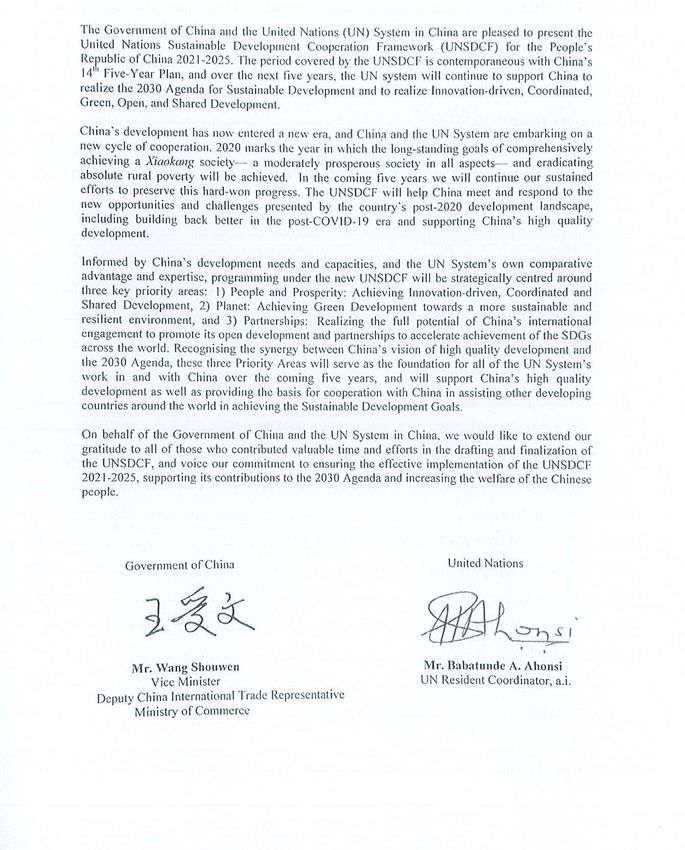
* The UNSDCF was signed on August 18, 2020.
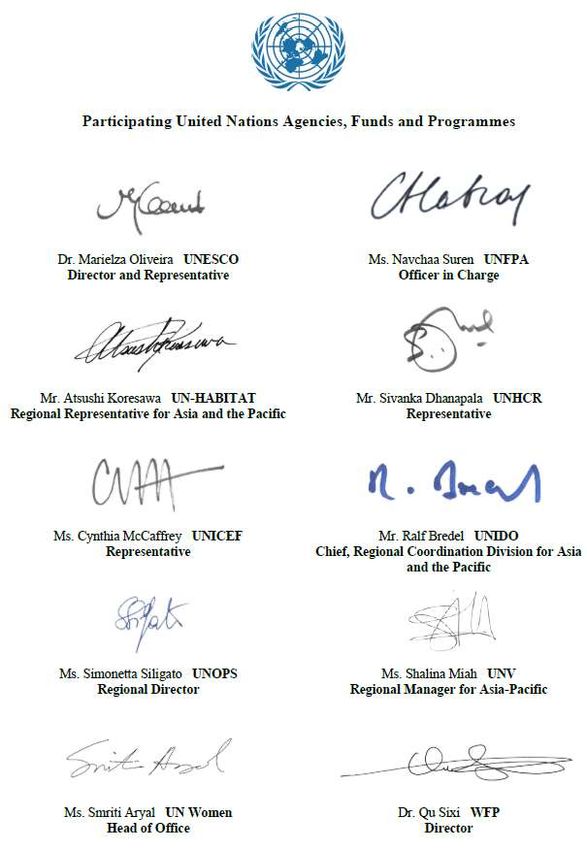
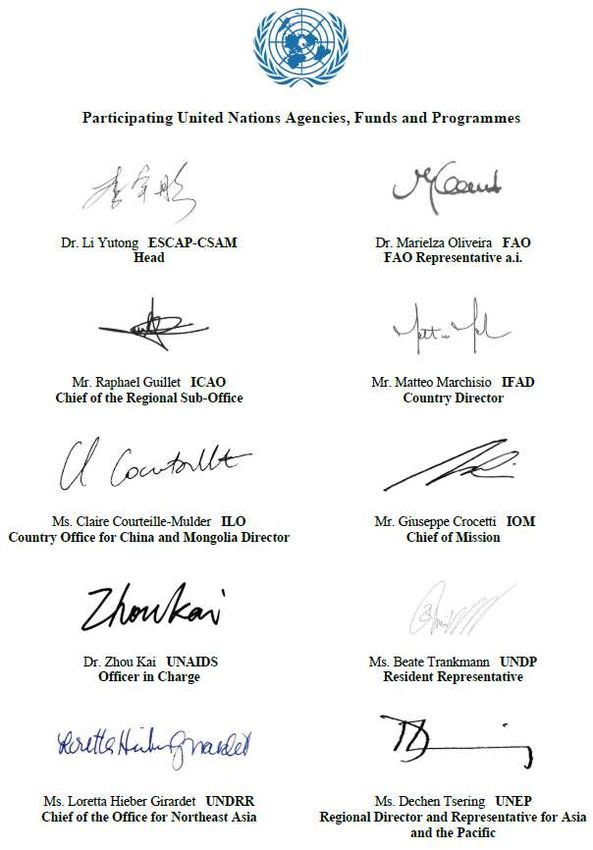
PARTICIPATING UN ENTITIES

EXECUTIVE SUMMARY
1. China has made remarkable economic and social progress over the past 40 years, with impressive
   poverty reduction achievements and improvements in many social indicators including health and
   education. Having reached upper-middle income status, China is now entering a new era in its
   development, as declared by President Xi Jinping in his address to the 19th National Congress of
   the Communist Party of China in October 2017, an era in which the principal challenge that drives
   policy-making is no longer a lack of productive capacity, but is the “contradiction between
   unbalanced and inadequate development and the people’s ever-growing needs for a better life”.

2. In this context, China is pursuing a transition from a development model that prioritized rapid
   economic growth to a more balanced pursuit of “high-quality development”, development that is
   innovation-driven, coordinated, green, open and shared by all. This is substantially aligned with the
   2030 Agenda for Sustainable Development. China is finalizing its 14th Five-Year Plan (FYP) for
   Economic and Social Development (2021-2025). In the next five years, development will remain
   the country’s top priority and emphasis will be placed on keeping main economic indicators within
   an appropriate range, increasing people’s well-being and bridging internal development gaps,
   including through ecological improvements and higher living standards. China will build on the
   poverty alleviation achievements of the 13th FYP period and develop new goals for the reduction
   of relative and multidimensional poverty.

3. China is the world’s largest developing country which still needs development support from the
   international community. At the same time, being a major economy, China’s growth is benefitting
   much of the world through trade, investments and engagement in global development efforts.
   Through South-South cooperation (SSC), China continues to provide help to the best of its
   capabilities to other developing countries to support the achievement of the Sustainable
   Development Goals (SDGs). As a supporter of multilateralism, China supports international
   cooperation in addressing global development challenges, under its vision of “active promotion of
   building a human community with a shared future”.

4. In response to China’s new development paradigm, and based on widespread consultations with
   Chinese Government, three Strategic Priorities have been identified for the 2021-2025 United
   Nations Sustainable Development Cooperation Framework (UNSDCF) for China to support
   China’s development priorities in the next five years. The three Strategic Priorities are:

        Priority 1 - People and Prosperity: Achieving Innovation-driven, Coordinated and Shared
        Development. Equitable and high-quality economic, social and human development for all
        throughout the life-course.

        Priority 2 – Planet: Achieving Green Development towards a more sustainable and resilient
        environment.

        Priority 3 – Partnerships: Realizing the full potential of China’s international engagement
        to promote its open development and partnerships to accelerate achievement of the SDGs
        across the world.

5. Under the three Strategic Priorities, there are six high-level Outcome results. The UN system will
   contribute towards their achievement.

                                                   1
Outcome 1: Relative poverty and multi-dimensional poverty are reduced, and more
coordinated development leads to reduction in gaps between rural and urban areas and
among regions, as more people in China, including left-behind groups, benefit from
sustainable, innovation-driven and shared high-quality economic development, with
enhanced access to economic opportunities arising through innovation, entrepreneurship and
rural revitalization, enjoying decent work, sustainable livelihoods, and the right to
development equally for both women and men.
Outcome 2: People’s lives in China are improved further as headway is made in ensuring
access to childcare, education, healthcare services, elderly care, housing and social assistance,
and more people in China, including left-behind groups, benefit from equitable and high-
quality public services and social protection systems as well as accelerated efforts to reduce
gender inequality and other forms of social inequality throughout the life-course.
Outcome 3: People in China and the region benefit from a healthier and more resilient
environment.
Outcome 4: China accelerates its transition to a people-centred, inclusive, low carbon, and
circular economy.
Outcome 5: China’s international financing, investments and business engagements, including
through connectivity initiatives, programmes and projects, contribute to SDG attainment in
partner countries.
Outcome 6: Through South-South cooperation and humanitarian cooperation, China makes
greater contributions to SDG attainment and the principles of the 2030 Agenda, including
leaving no one behind.
6. The implementation of the Cooperation Framework will be coordinated through a Joint Steering
Committee, co-chaired by the leader of the Ministry of Commerce and the UN Resident
Coordinator, with membership from the United Nations Country Team (UNCT) in China and the
relevant agencies within the Government. During implementation of the Cooperation Framework,
the Steering Committee will meet once a year to review progress towards the targeted results and
recommend strategic adjustments or new opportunities to accelerate action during the subsequent
period.
7. The UNCT will be configured in accordance with the principle of a “needs-based, tailored country
presence”, called for in the UN Development System repositioning resolution. The UNCT will
include both resident and non-resident entities who have committed through signature to
contributing towards at least one of the Cooperation Framework Outcomes. The UNCT will also
draw on expertise from across the broader UN system, including its regional and global levels as
necessary to support the successful implementation of the UNSDCF.
2CHAPTER 1: COUNTRY PROGRESS TOWARDS THE 2030
AGENDA
1.1 Country Context
8. In the 40 years since the launch of reform and opening up, China’s economic and social
achievements have been remarkable. China is the only country to have moved from the low human
development group in 1990 to the high development group, with a Human Development Index
(HDI) of 0.758 in 2018,1 reflecting broad-based improvements in income, health and education.
9. During the current United Nations Development Assistance Framework (UNDAF) period (2016-
2020) China achieved further notable progress in advancing social, economic and environmental
sustainability. In 2019, GDP reached 99.1 trillion Yuan, representing a 6.1 percent increase over
the previous year in constant prices; permanent urban residents exceeded 60 percent of the
population; emerging industries continued to grow and upgrading in traditional industries
accelerated; the rural poor population was reduced by 11.09 million and the poverty headcount ratio
fell to 0.6 percent; pollution prevention and control efforts continued with overall improvements in
the environment; and basic old-age insurance, health insurance, and subsistence allowance
standards were raised. Having attained upper-middle income country status, China has now
announced a new “high-quality development” vision, featuring comprehensive and sustainable
improvements in people’s lives, a model that is substantially aligned with the 2030 Agenda for
Sustainable Development.
10. However, China is also facing a complex and difficult macroeconomic environment. The
demographic dividend has gradually vanished and the ageing of the population accelerates. The
effectiveness of the investment- and credit-based model that underpinned earlier rapid growth is
declining, and GDP growth, while still strong by international standards, has been slowing in recent
years. Trade frictions continue. Demand for low-skilled labour that played a large part in making
China “the factory of the world” is shifting to lower income countries. Challenges are emerging in
promoting new urbanization and rural revitalization. The still unquantifiable economic impact of
the COVID-19 pandemic both in China and abroad creates further uncertainties in the coming
period.
11. In response, in the next five years under the 14th FYP, development will remain the country’s top
priority. Emphasis will be placed on keeping main economic indicators within an appropriate range,
bridging internal development gaps and increasing people’s well-being as well as warding off and
defusing risks. Pursuing a people-centered development vision, China will strive to strengthen
endogenous development drivers, energize market entities, improve infrastructure, enhance
industrial innovation capability and competitiveness, promote ecological improvements and raise
people’s living standards.
12. Beyond China’s own development progress, the country has a large and steadily growing role in
promoting global development. As the biggest developing country, China engages actively in SSC2,
helping narrow the disparities between Global South and Global North. Other developing countries
are often eager to learn from China’s experience and benefit from its expertise.
1 http://www.hdr.undp.org/en/data
2 https://digitallibrary.un.org/record/673444
31.2 China’s Vision for Sustainable Development
13. Since 2012, China has accelerated its move to a new mode of economic development and put
forward a vision of “innovation-driven, coordinated, green, open and shared” development. These
are widely referred to as the “five new development concepts”, which are substantially aligned with
the 2030 Agenda for Sustainable Development, and were highlighted as key guiding principles in
China’s National Plan for Implementation of the 2030 Agenda for Sustainable Development issued
in 2016.
14. China’s current development vision calls for a shift from pursuit of rapid growth to high-quality
development, as defined by these five concepts. The country has made “innovation-driven
development” the key component of its strategy to maintain healthy economic growth by
transforming the growth model from traditional factor- and investment-driven to innovation-driven.
“Coordinated development” aims to address the issue of unbalanced development through focusing
on integrated and comprehensive impact, and achieve coordinated development between rural and
urban areas and among regions. “Green development” represents a vision that “lucid waters and
lush mountains are invaluable assets”, aiming to develop eco-friendly growth models and
sustainable ways of life in China. “Open development” places high priority on sharing development
benefits with the rest of the world based on mutual benefit and “win-win cooperation”, reflecting
China’s strong engagement in global development. “Shared development” puts people at the centre,
pursuing development for the people and by the people and enabling all people to benefit from
development achievements. These five new development concepts are closely aligned with the 17
SDGs in the 2030 Agenda.
15. China sees the year 2020 as a milestone, when the goal of eliminating absolute poverty and
comprehensively achieving a “Xiaokang Society” - a moderately prosperous society in all respects,
will be realized. As China enters this new post-Xiaokang era, the Government has laid out ambitious
new long-term goals of “basically achieving socialist modernization” by 2035 and become a “great
modern socialist nation” by 2050.
1.3 Progress Towards the SDGs
16. China has demonstrated its commitment to the 2030 Agenda and SDG realization, both at home
and abroad, including through the issuance in 2016 of its National Plan on Implementation of the
2030 Agenda for Sustainable Development. China shares and contributes, through its progress in
implementation of the 2030 Agenda, to the vision of a world of universal respect for human rights
and human dignity, the rule of law, justice, equality and non-discrimination; of respect for race,
ethnicity and cultural diversity; and of equal opportunity permitting the full realization of human
potential and contributing to shared prosperity. At the same time, the strongest driving force behind
China’s impressive SDG achievements is not just the SDGs themselves: it is the considerable
alignment between the 2030 Agenda and China’s own development agenda. China participated in
the first round of Voluntary National Review in 2016 and all the High-level Political Forums,
published two SDG Progress Reports in 2017 and 2019 respectively. In common with many other
countries, China presently has available official data for roughly one third of all SDG indicators
proposed by the expert group. The UN will support the government’s efforts to improve SDG
monitoring and measurement, including through the development of a national indicator system,
and the improvement in compiling more disaggregated data including on vulnerable groups.
17. The Government’s concerted effort to lift all rural residents living below the current poverty line
out of poverty by 2020, has been designated as one of its three “great battles” in the effort to
4comprehensively achieve the Xiaokang society, with the number of rural poor reduced to 5.51
million as of 2019.3
18. In core social sector goals of nutrition, health care, education and sanitation (SDGs 2, 3, 4 and 6) a
series of sustained and steadily expanding government initiatives have produced strong progress in
service provision, in education enrolment and coverage rates, and in key indicators including under-
five stunting, maternal and child mortality rates and expected years of education. China’s ability to
produce sufficient grain to feed its 1.4 billion people is a major contribution to global food security.
China is now developing its next wave of health sector reforms. These are focused on the
rationalization of service delivery at different health system levels and on new challenges created
by the ageing population and the need for behavioural changes to prevent communicable and non-
communicable diseases such as cancer, diabetes, stroke and heart disease, along with road and
traffic accidents, the leading causes of premature death.4
19. In SDG 4, having achieved universalization of nine years of free and mandatory education, the
Government is emphasizing increasing enrolment in pre-primary and senior high school level
education, with the goal of universalizing these as well, and is targeting improvements in vocational
education to offer training and better paths forward for students who do not complete high school
or attend university, and to better meet the demands of the new innovation-driven economic model.
20. Regarding SDG 5, based on the Constitution and Law on the Protection of Women’s Rights and
Interests, China has established the legal system to protect women’s rights. China has also made
significant achievements in women’s employment, poverty alleviation, education, health and social
security. As in much of the world, China will require a sustained effort to ensure gender equality
and women’s empowerment, including by strengthening ongoing efforts to address prevailing
social and economic drivers of gender inequality.
21. China’s progress toward SDGs 6, 7, 8 and 9 has also been strong overall, driven by Government
investments in infrastructure, business promotion and innovation. The penetration ratios of
centralised water supply and tap water in Chinese rural areas were 87% and 82% respectively at
the end of 2019, up from 82% and 76% at the end of 2015 (SDG 6). China has achieved universal
electrification (SDG 7), including in remote rural areas, and is steadily increasing the share of
renewables in total energy mix. China’s economic growth (SDG 8) is still strong by any
international standard, and employment generation is a top priority, with steady growth in
employment and an average of over 13 million urban jobs created each year. A new priority is
strengthening the inclusiveness and quality of employment, through policies aimed at gender
equality in employment (including equal pay between men and women), and decent work for
persons with disabilities and for all young people, including the relatively low-skilled. For SDG 9,
China has made notable progress in pursuit of an innovation-based approach, drawing on Fourth
Industrial Revolution technologies, to drive industrialization and infrastructure expansion. But
there is room for improvement in terms of harnessing innovations for resource efficiency and
greater adoption of clean and environmentally sound technologies by industry.
22. China’s contribution to the global dimension of SDG 10 is large and multi-faceted. The significant
income increases for China’s 1.4 billion people have reduced global inequality markedly. China is
the largest importer from Africa and many developing countries elsewhere, contributing to their
development as well. Through international development cooperation including on infrastructure
connectivity, China is directly contributing to development around the globe. China’s ambitious
new urbanization agenda is strongly aligned with SDG 11. Progress has been made in provision of
public services for rural migrant workers and their families, including those left behind in rural
areas and a social security system covering both urban and rural residents is taking shape. Steady
3 National Bureau of Statistics of China, http://www.stats.gov.cn/tjgz/tjdt/202002/t20200201_1724811.html
4 http://www.gov.cn/zhengce/content/2019-06/04/content_5397350.htm
5progress has also been made in building government subsidized housing projects to meet basic
needs and the middle-income group has been expanding.
23. Government efforts to boost responsible consumption (SDG 12) include improved urban waste
management and the planned phased reduction of single use plastics. China’s climate actions (SDG
13) include increasing the use of renewable energy and promoting new energy vehicles, in which
China is a global leader. While China’s annual greenhouse gas emissions are lower than many
countries on a per capita basis, in absolute terms they have become the largest in the world,
reflecting the size of China’s economy and the fact that China is still a developing country. In terms
of the enabling policies to manage climate-related hazards and risks, China has adopted a
comprehensive National Plan on Disaster Prevention and Reduction (2016-2020) which embraces
a paradigmatic shift from post-disaster relief to pre-disaster prevention. Towards SDG 15, China is
actively engaged in biodiversity conservation and as of end 2018 had set up 2,750 nature reserves
with a total area of 1.47 million square kilometres.
24. Under SDG 16, China has conducted a long-term anti-corruption programme, and implemented the
National Programme of Action for Child Development (2011-2020), the Law on the Protection of
Minors and the National Plan of Action on Combating Trafficking in Persons (2013-2020). At the
same time, China is making more efforts to promote and enforce non-discriminatory laws and
policies for sustainable development, ensure responsive, inclusive, participatory and representative
decision-making at all levels and provide adequate and timely access to information for the public.
25. China’s major contributions to SDG 17 through the country’s international development initiatives
have been highlighted earlier.
1.4 Gaps and Challenges
26. Some acute problems caused by unbalanced and inadequate development across urban-rural and inter-
regional divides and different population groups, await solutions; and the quality and effect of
development are not what they should be. China’s ability to innovate needs to be stronger, the real
economy awaits improvement; there is a long way to go in protecting the environment and addressing
climate change.
27. The long-term challenge of relative poverty will remain, and addressing it will be the next priority
in China’s poverty alleviation agenda. To consolidate achievements to date and truly eliminate
poverty, robust approaches and mechanisms for tackling relative poverty as well as more expansive
definitions of poverty including the urban population, and relative and multidimensional measures
will be needed.
28. Further progress will entail addressing a number of cross-cutting challenges. Persistent internal
development gaps across urban-rural and inter-regional divides, income inequalities and gaps between
different population groups in terms of key measures of well-being remain, and present challenges to
ensuring employment, education, healthcare, housing, and elderly care and achieving equalization in
public service delivery.
29. While China’s development has been highly inclusive, challenges remain in “leaving no one
behind”. The UN analysis during the development of the Cooperation Framework identified a
number of groups who are more at risk of being left behind in China. These include rural migrant
workers in urban areas, people living in relatively remote regions with arduous natural conditions,
persons with disabilities, the growing elderly population, left-behind rural children, children and women
in difficulty, rural smallholder farmers, informal sector workers, victims of human trafficking, and
people living with HIV. For China’s women and girls, there still remains room for improvement in
6addressing the social and economic drivers of gender inequality. These groups frequently overlap, and
the intersecting vulnerabilities and cumulative discrimination leave some groups particularly
marginalized. These groups often also experience differentiated vulnerabilities to climate and
disaster risks and impact from disaster events (e.g. earthquakes, landslides).
7CHAPTER 2: UN DEVELOPMENT SYSTEM SUPPORT TO THE
2030 AGENDA
2.1 Cooperation Framework Strategic Priorities
30. The development of this UNSDCF is guided by the following principles:
i. Leaving no one behind
ii. Right to Development and Dignity
iii. Gender Equality and Women’s Empowerment
iv. Sustainability
v. Resilience
vi. Accountability
31. Based on these principles and on widespread joint and individual agency consultations with
government counterparts and other development partners, three overarching Strategic Priorities for
2021-2025 were formulated. They are closely aligned with the Government’s policy agenda, and
will be reviewed carefully again by the UN in collaboration with the Government after the release
of China’s 14th FYP to identify ways to further enhance that alignment:
Priority 1 - People and Prosperity: Achieving Innovation-driven, Coordinated and Shared
Development. Equitable and high-quality economic, social and human development for all
throughout the life-course.
This strategic priority aims to support China’s goal of achieving innovation-driven,
coordinated and shared development and improving the lives of all people in China. Its core
facets are the promotion of innovation and cooperation in advanced technologies, boosting
coordinated development between rural and urban areas and among regions and reducing
relative poverty and multi-dimensional poverty. It aims to ensure that all people in China,
including left-behind groups, share in high-quality, inclusive, participatory and innovative
people-centred development, allowing them to develop to their full potential, be able to enjoy
decent work, quality jobs and sustainable livelihoods as well as well-being, dignity and benefit
from accelerated efforts to reduce gender inequality and other forms of inequality throughout
their life-course.
Priority 2 – Planet: Achieving Green Development towards a more sustainable and resilient
environment.
This strategic priority aims to support China’s goal of green development through actions to
ensure a healthier and more resilient environment – on land, under water, in the oceans and in
the atmosphere - including the transition to people-centred, low carbon and circular economy
and risk-informed development and enhanced natural resources management capacity.
Priority 3 – Partnerships: Realizing the full potential of China’s international engagement to
promote its open development and partnerships to accelerate achievement of the SDGs across
the world.
This strategic priority aims to support China’s open development by drawing on domestic and
international resources and strengthening its growing role, influence and potential in
8international development and to promote economic, social, environmental, and cultural
sustainability and contribute to achievement of the SDGs in China and across the world.
32. Under the three Strategic Priorities, there are six high-level Outcome results for which the UN
system will contribute towards the achievement:
Strategic Priority 1
People and Prosperity: Achieving Innovation-driven, Coordinated and Shared Development
Outcome 1: Relative poverty and multi- Outcome 2: People’s lives in China are
dimensional poverty are reduced, and more improved further as headway is made in
coordinated development leads to reduction in ensuring access to childcare, education,
gaps between rural and urban areas and among healthcare services, elderly care, housing and
regions, as more people in China, including left- social assistance, and more people in China,
behind groups, benefit from sustainable, including left-behind groups, benefit from
innovation-driven and shared high-quality equitable and high-quality public services and
economic development, with enhanced access to social protection systems as well as accelerated
economic opportunities arising through efforts to reduce gender inequality and other
innovation, entrepreneurship and rural forms of social inequality throughout the life-
revitalization, enjoying decent work, sustainable course.
livelihoods and the right to development,
equally for both women and men.
Output 1.1: UN analytical inputs and technical Output 2.1: UN analytical inputs and technical
assistance have helped to strengthen China’s assistance have helped to strengthen China’s
capacity to implement policies that better capacity to design and implement gender-
incentivize and stimulate public and private responsive and evidence-based policies and
innovation and investment to reduce skills programmes to sustainably address China's
mismatches, income inequality and the gap demographic transition.
between urban and rural areas, and consolidate
achievements in poverty alleviation
Output 1.2: UN analytical inputs and technical Output 2.2: With UN analytical inputs and
assistance have helped to strengthen the capacity of technical assistance, China is better able to deliver
China’s government, workers’ and employers’ equitable and high-quality and gender-responsive
organizations, as well as other relevant health and care services accessible to all
stakeholders to develop and implement laws, throughout the life-course, designed to respond to
policies and regulations to promote more the country’s changing demographics and disease
widespread access to an equitable labour market burden.
and job opportunities, and that provide adequate
protection and equal recognition of employment
value for all persons of working age in diverse Output 2.3, UN analytical inputs and technical
forms of work arrangements. assistance have helped to strengthen China’s
capacity to providee access to adequate and high-
quality social protection mechanisms and services
for all people in China throughout the life-course.
9Output 2.4: UN analytical inputs and technical
assistance have helped to strengthen China’s
capacity to develop and implement evidence-based
laws, policies and programmes to promote gender
equality, and reduce domestic violence, social
exclusion, and other forms of social inequality
discrimination.
Shared Output 1.3 and 2.5: The public discourse, awareness and engagement in equitable and inclusive
sustainable human, social and economic development and the SDGs is increased.
Shared Output 1.4 and 2.6: With UN analytical inputs and technical assistance, China is better able to
deliver inclusive, adaptive and quality lifelong education, learning and skills development which is
accessible to all and relevant for life and work in the context of a rapidly evolving economic and social
transformation.
Strategic Priority 2
Planet: Achieving Green Development
Outcome 3: People in China and the region Outcome 4: China accelerates its transition to a
benefit from a healthier and more resilient people-centred, inclusive, low carbon, and circular
environment. economy.
Output 3.1: Farmers, fishers, foresters, and Output 4.1: Innovative new models to reduce
livestock owners (both male and female) have GHG/CO2/ODS emissions are available, including
enhanced skills, abilities, and access to adopt public-private partnership approaches to implement
and implement sustainable and resilient sustainable low-carbon practices, with UN
practices in their work, with UN programmes, programmes, analytical inputs and technical
analytical inputs and technical assistance. assistance.
Output 3.2: UN analytical inputs and technical Output 4.2: UN analytical inputs and technical
assistance have helped to strengthen China’s assistance have helped to strengthen the capacity of
resources and capacity for developing, national and sub-national authorities to develop,
implementing and enforcing sustainable and implement and monitor national commitments and
safe agriculture, food production and national policies that address climate change, disaster
consumption practices, urbanization and risk, reduce environmental pollution, and ensure
biodiversity conservation policies and sustainable, healthy and resilient living environments.
investments at national and local levels.
Output 3.3: With UN analytical inputs and
technical assistance, China develops and adopts
innovative technologies, approaches, and
gender-responsive practices in support of
climate and disaster resilience and biodiversity
conservation, including for left-behind groups.
Output 3.4: UN analytical inputs and technical
assistance have helped to strengthen China’s
capacity to engage in multilateral agreements to
which it is a Party and transboundary platforms
to address emerging environmental, agricultural,
and health issues linked to climate change.
10Shared Output (3.5 and 4.3): The public discourse and action on the impact of climate change,
disasters, the importance of biodiversity conservation and sustainable production and consumption
patterns is increased.
Strategic Priority 3
Partnerships: Achieving Open Development
Outcome 5: China’s international financing, Outcome 6: Through South-South cooperation and
investments and business engagements, humanitarian cooperation, China makes greater
including through connectivity initiatives, contributions to SDG attainment and the
programmes and projects, contribute to SDG principles of the 2030 Agenda, including leaving no
attainment in partner countries. one behind.
Output 5.1: With UN analytical inputs and Output 6.1: With UN analytical inputs and technical
technical assistance, China’s regulatory assistance, the Government and other Chinese
authorities, corporate sector and development institutions have strengthened the design and delivery
banks are better able to develop, implement and of evidence-informed development and humanitarian
financially support socially, environmentally, cooperation assistance better in line with international
culturally and economically sustainable and economic, social, and environmental sustainability
risk-informed investment programmes and standards and priorities of partner countries and other
business models that contribute to global SDG stakeholders.
attainment.
Output 5.2: With UN analytical inputs and Output 6.2: China, as a developing country, has
technical assistance, China’s public investment strengthened South-South and trilateral cooperation
policies and implementation strategies and partnerships with other countries, platforms and
contribute more to global economic, social, entities including the United Nations development and
cultural and environmental sustainability and humanitarian system and agencies, for the
the SDGs. achievement of the SDGs around the world.
112.2 Cooperation Framework Outcomes
Outcome 1: Relative poverty and multi-dimensional poverty are reduced, and more
coordinated development leads to reduction in gaps between rural and urban areas and
among regions, as more people in China, including left-behind groups, benefit from
sustainable, innovation-driven and shared high-quality economic development, with
enhanced access to economic opportunities arising through innovation, entrepreneurship and
rural revitalization, enjoying decent work, sustainable livelihoods and the right to
development equally for both women and men.
UN Contributions to Outcome 1
33. The UN will support the Government to develop long-term approaches and mechanisms for solving
relative poverty and multi-dimensional poverty, strengthen the organic connection between poverty
alleviation and rural revitalization, enhance the Government’s multi-dimensional poverty
monitoring capabilities, and incorporate relevant cooperation into subsequent poverty alleviation
projects.
34. To support the Government’s rural revitalization strategy, increase rural opportunities and incomes
and contribute to reduction of relative poverty and of rural-urban development gaps, the UN will
focus on initiatives to promote modern agriculture production and agribusiness, and pilot
agricultural operations of varying scale and form, improve specialized agricultural services and
promote the integrated development of the primary, secondary, and tertiary industries in rural areas.
Targeted approaches will be supported by the UN to support rural entrepreneurship and e-
commerce opportunities, to encourage rural youth to return to their home areas to start businesses,
to encourage farmers to seek employment or start businesses in places close to their homes, and to
increase non-farming income opportunities for rural smallholders, including through agro-
processing and local value addition, including by leveraging culture. The UN will leverage its
expertise and resources to help promote the transformation and upgrading of agriculture, forestry,
animal husbandry, fishery and agro-processing industry through innovation, and support the
Government’s endeavors for modern agricultural facilities, safe drinking water, and better living and
working environments in rural areas. To stimulate public and private investment in rural areas, the UN
will undertake a series of initiatives with Government and—with the consent of the national
Government—work with subnational governments and the corporate sector to invest in the SDGs and
reduce the gap between urban and rural areas.
35. The UN will support the Government to develop a modernized economy through innovation, promote
advanced manufacturing, accelerate the upgrading of traditional industries, stimulate
entrepreneurship and innovation, boost the real economy by fostering new growth areas and drivers
through research, development and international cooperation on the internet, big data, artificial
intelligence and other frontier and disruptive technologies. UN will expand support to small and
medium enterprises, helping them promote innovation, apply advances in science and technology,
improve internal management, enhance social responsibility and manage risk to improve
productivity, working conditions and decent work, and promote inclusive growth.
36. The UN will support the Government in pursuing a proactive employment policy, striving to achieve
fuller employment and create better-quality jobs, improve public employment services, and build an
educated, skilled, and innovative workforce. Through programming in the areas of technical and
vocational education and training, specialized skills training, and lifelong learning, the UN will
help promote capacity building and knowledge sharing, raise productivity of the working-age labour
force, open more channels for young people, rural migrant workers, people living with HIV and others
to find jobs and start their own businesses, and promote gender equality at work. The UN will support
12the government’s policy response to the impact of disruptive technologies and the demands of the
Fourth Industrial Revolution, through policy and legislation recommendations, frontier research,
and evidence-based analysis, enabling the labour force to realize a smooth and inclusive workforce
transformation, ensure equal opportunities for all people in China to fully participate in the labour
market and enjoy decent work, and strengthen occupational health safety.
Outcome 2: People’s lives in China are improved further as headway is made in ensuring access
to childcare, education, healthcare services, elderly care, housing and social assistance, and
more people in China, including left-behind groups, benefit from equitable and high-quality
public services and social protection systems as well as accelerated efforts to reduce gender
inequality and other forms of social inequality throughout the life-course.
UN Contributions to Outcome 2
37. The UN will carry out a series of activities to support the Government in more effective and
innovative delivery of public services so as to ensure and promote people’s wellbeing. The UN will
support China to achieve its goal of comprehensively establishing a basic public service standard
system by 2025, and will develop a list of public services other than the national basic list for the
reference of the Government.
38. The UN will support the Government’s efforts to promote education modernization and advise on
the development of a lifelong learning national policy framework and associated standards and
curricula through technical assistance so as to ensure fair access to good education for all. The UN
will support the development of compulsory education in rural areas to promote coordinated
development in line with that in urban areas; scale up early childhood education, preschool
education, online education and continuing education with emphasis placed on access for children
facing special difficulties, including orphans, children affected by migration (including those left-
behind and migrant children), locally integrated refugees and those in rural and remote areas;
support the strengthening of general and vocational education (compulsory and senior secondary)
to promote inclusion of information literacy and information technologies mainstreaming in
learning as well as foundational and life-skills approaches; promote university partnerships through
SSC and academic recognition and student exchange to provide open and distance learning
platforms and teacher training; provide support to the Government to design demonstration courses
on SDGs to build capacity in the young generation and unlock their huge potential in contributing
to sustainable development; build national capacity in delivering comprehensive sexuality
education to equip young people with knowledge, skills and attitudes for a healthy and productive
life free from HIV and sexually transmitted infections, unintended pregnancies and gender-based
violence.
39. The UN will continue to collaborate with the Government to implement its Healthy China Action
Plan 2019-2030 and realize Universal Health Coverage (UHC) in China. The UN will support the
deepening of health sector reform that takes basic healthcare services as a public good, which has
a focus on building a People Centred Integrated Care service delivery model with strong primary
health care, as well as supporting the development and implementation of health related legislation.
The UN will support utilization of increased investment in the prevention and treatment of
emerging and infectious diseases and support preparedness of communities and health systems for
responding to health emergencies. The UN will support reducing the risk of communicable and
non-communicable diseases, including through healthier diets, more physical activity, improved
hygiene practices, reduced alcohol, tobacco and drug consumption, along with efforts to reduce
unintentional death and injury caused by road and traffic accidents and improve occupational health
services. The UN will support the health system to improve neonatal, child, adolescent and maternal
13health and nutrition services, and early childhood development services, strengthen sexual and
reproductive health information and services, and improve health-seeking behaviours and family
care practices. The UN will support HIV treatment and prevention, the elimination of mother-to-
child transmission of HIV, and enhanced capacity of Government, community-based organizations,
and other partners to prevent stigma and discrimination.
40. The UN will support the Government to strengthen the social protection system through technical
and programmatic support, policy research and capacity building . It will inform national and
subnational decisions on improving the basic medical insurance system, pension schemes,
unemployment insurance, work-related injury insurance, social assistance systems, support and caring
for children, women and elderly people left behind in rural areas, as well as rehabilitation services and
full social inclusion for persons with disabilities. The UN will continue to work with the Government
to develop ways of providing adequate protection to workers in informal employment, including
gig workers, care workers and migrant workers. Further efforts will be focused on continued
provision of support and assistance in migration management and strengthening multi-sectoral
coordination and response systems relating to prevention and response to domestic violence and
human trafficking.
41. The UN will support the Government to address the rapidly ageing population by strengthening the
Government’s research on population dynamics, low fertility and ageing through UN technical
support and policy analysis. The UN will support the Government’s efforts in promoting the
development of women, children and persons with disabilities, ensuring their legitimate rights and
interests, preventing and responding to violence and crimes against women and children. The UN
will work with and assist the Government’s efforts to create a cleaner cyberspace including through
collaboration with information and communications technology (ICT) providers in consultation
with the Government, and build the skills of children, adolescents, and women to better protect
themselves. Gender equality will be highlighted in relevant UN-supported initiatives including
through actions to further the Government’s own efforts to promote gender equality by enhancing
women’s economic empowerment, reducing gender-based violence and harassment, promoting the
redistribution of unpaid care work and the role of women in leadership and management positions,
and addressing the gender pay gap.
Outcome 3: People in China and the region benefit from a healthier and more resilient
environment.
UN Contributions to Outcome 3
42. In support of international commitments towards climate change mitigation, disaster risk reduction and
other activities to preserve the environment, the UN will invest in policy engagement, advocacy and
modelling of actions for the implementation of the United Nations Framework Convention on Climate
Change, the Paris Agreement, the Stockholm Convention on Persistent Organic Pollutants , the
Minamata Convention on Mercury , the Montreal Protocol on Substances that Deplete the Ozone Layer,
the Basel Convention on the Control of Transboundary Movements of Hazardous Wastes and Their
Disposal and the Sendai Framework for Disaster Risk Reduction 2015-2030. The UN will help facilitate
the coordination of regional and transboundary work addressing environmental challenges through
regional UN entities and existing platforms and mechanisms.
43. The UN will provide technical support and assistance to model and operationalize green development
concepts and technologies for rural revitalization across China, continue to support the development
of and training in innovative approaches and practices, including co-management models,
14especially in poor areas. Agroecology, and environmental-friendly sustainable livelihood approaches
will be promoted on a widespread basis, including at selected World Heritage sites and Biosphere
Reserves, based on which nature education modules will be developed as a complementary source of
livelihood focusing on biodiversity monitoring and traditional knowledge in disaster risk reduction.
Technical support will be provided for the development and implementation of integrated
management plans and policies on sustainable agriculture and biodiversity conservation, and for
enhancement of public awareness and concern on biodiversity conservation and the sustainable
utilization of natural resources.
44. Amongst other activities towards supporting the creation of a more resilient and healthy
environment, the UN will: help strengthen protected area and wetland management; reduce and
remediate land degradation; support the adoption of sustainable agricultural practices to reduce
eutrophication of aquatic environments, soil and water pollution; promote fertigation and phase out
of harmful fertilizers and chemicals towards increasing soil health and reducing carbon emissions;
strengthen capacity building for climate-smart agriculture and sustainable agriculture; and promote
sustainable forest management to enhance reforestation, restoration and rehabilitation, while
contributing to improved carbon sequestration and reduced greenhouse gas emissions. In the area
of food security and agricultural development, the UN will promote food loss and waste reduction
to increase productivity and food security; support capacity development of national and local
authorities to fight against animal, plant pests and diseases; advance modern family farming to
promote nutrition-sensitive agriculture development and inclusive food value chain development;
strengthen preventive biosecurity and sanitation measures in China’s food value chain; support
demonstration and training on sustainable and resilient practices and technologies in agricultural
mechanization, conservation agriculture and integrated straw management; and promote the application
of ICT in agriculture.
45. The UN will support the development and testing of innovative new models to reduce greenhouse
gases, CO2 and ODS emissions, to address indoor air pollution through operational research and to
increase access to safely managed sanitation at home and in public facilities, particularly in rural
poverty areas and lower-income urban settings so as to promote more sustainable, healthy and
resilient living environments and reduce the human impact of environmental pollution. Risk-
informed and child-friendly approaches to urban planning will be promoted. Support will be
provided by the UN to improve the living environment in rural areas including through the rural toilet
revolution, and improved garbage and sewage treatment.
Outcome 4: China accelerates its transition to a people-centred, inclusive, low carbon, and
circular economy.
UN Contributions to Outcome 4
46. The UN will support China to advance the greening of industry, assist the Government in
stimulating the development and creation of new green industries that provide environmental-
friendly goods and services. UN-supported interventions will be delivered at the policy,
institutional, and enterprise levels to facilitate the uptake of cleaner and sustainable production
practices in a comprehensive manner.
47. Innovative policy and technical support will focus on emission trading and green energy subsidies
to accelerate the energy transitions and to reduce greenhouse gas emissions. through demonstration
models, the UN will promote the use of renewable low carbon and off-grid energy solutions for
rural villages, increasing the energy efficiency of industrial production and public buildings, and of
15motors. The focus of the UN will be to support China to make the new technologies available and
creating an enabling environment for widespread adoption and building user capacity.
48. The UN will support the development, promotion and application of advanced
hydrochlorofluorocarbons (HCFCs) replacement technologies and policy interventions to phase out
the use of HCFCs in the refrigeration, foam, cleaning and other industries. Technical support will
be mobilized to support China to consolidate the transition to new energy vehicles; “green logistics”
with low carbon transport and sustainable packaging to cut solid waste and also reduce weight for
lower carbon footprint; and forward-looking solutions to recycling of lithium car batteries and
similar.
49. Across all these areas of cooperation promoting sustainable economic diversification, green growth
and environmental health, the UN will encourage the establishment of public-private partnerships.
To inspire action towards a circular economy among future decision makers, the UN will promote
the inclusion of climate change mitigation, sustainable consumption and environmental
conservation in formal curricula and non-formal education and learning courses as well as engage
with young leaders from the public and private sectors. The UN will lend support to efforts to
rapidly overcome the impact of the COVID-19 outbreak towards the transition to a more inclusive,
people-centred, low carbon, and circular economy.
Outcome 5: China’s international financing, investments and business engagements, including
through connectivity initiatives, programmes and projects, contribute to SDG attainment in
partner countries.
UN Contributions to Outcome 5
50. Through the sharing of information on policy making, capacity building, trilateral cooperation,
knowledge support and the review and sharing of good practices and experience, the UN will
facilitate China’s efforts to further strengthen the synergy between the 2030 Agenda and the
country’s international financing, investments and business engagements, including through
connectivity initiatives, programmes and projects, to promote the accelerated achievement of the
SDGs and make a greater contribution to global development efforts.
51. The UN in China will actively collaborate with UN Country Teams in host countries of relevant
cooperation towards establishment and effective implementation—when not in place—of
regulations and legislative frameworks in these host countries, and towards increased capacity to
align investments with national and SDG priorities.
52. Through provision of technical assistance and sharing global good practices to the Government, the
UN will promote the creation of mechanisms that incentivize international investment by public
and private financial enterprises in support of the 2030 Agenda. The UN will assist businesses to
follow international best practice and guidelines in their investments abroad, to achieve social and
environmental sustainability. Specific efforts will be made to build the capacities of industry
associations and businesses on their international engagements and investments to contextualise
existing corporate social responsibility and responsible business practices and to ensure that they
have the skills to engage in SDG-related investment, including through connectivity initiatives,
programmes and projects.
53. Specific efforts will be made to broker partnerships to increase access to medicine and local
production in other developing countries, particularly in Africa. Existing major initiatives proposed
16by China targeted at fostering sustainable development will be leveraged to further promote
environmental sustainability, including factoring in impact on greenhouse gas emissions and
climate change. Initiatives will be undertaken to engage with domestic and multilateral banks and
funds, carry out cooperation in e-commerce and ICT connectivity, systematically identify and
establish new partnerships with the private sector, including the ICT industry, and leverage their
expertise, networks, influence and financial support. The UN will join and support China in
developing and sharing innovative technologies and accelerating the digitalization of China and the
world including through connectivity initiatives, programmes and projects.
54. The UN will provide support to help maximize the potential of China’s international initiatives and
engagements to realise achievement of the 2030 Agenda, and promote multilateral development
banks such as the Asian Infrastructure Investment Bank and the private sector’s reach, technology
and resources for the attainment of the SDGs globally, using socially, environmentally, culturally
and economically sustainable approaches. Joint research will be conducted with multilateral
development banks and other lenders to demonstrate the value and methodology of integrating
SDG-related considerations in investment decisions, as well as develop innovative financial
instruments and facilitate implementation of projects using these instruments.
55. The UN recognizes the need to further cooperation with China under Outcome 5 in the context of
the great global changes caused by the COVID-19 pandemic and its impact.
Outcome 6: Through South-South cooperation and humanitarian cooperation, China makes
greater contributions to SDG attainment and the principles of the 2030 Agenda, including
leaving no one behind.
UN Contributions to Outcome 6
56. While mobilizing international resources in support of China’s development in various areas, the
UN will utilise a coordinated approach in leveraging mechanisms of China’s South-South and
international development cooperation, including the South-South Cooperation Assistance Fund
and the UN Peace and Development Trust Fund, to advocate with the Government and provide
technical assistance, develop guidelines and practices on humanitarian and development
cooperation informed by global standards and norms, as well as capacity development at the
institutional, administrative, community, and individual levels, to promote the implementation of
the 2030 Agenda by relevant developing countries.
57. The UN will promote the new modalities on development cooperation, including additional
triangular models, support SSC as assistance to China in solving the problem of relative poverty.
Using its global presence, the UN will strengthen partner countries’ capacities to plan for, receive
and efficiently utilize Chinese development cooperation and humanitarian assistance and facilitate
actions towards an inclusive and equal approach to cooperation.
58. The UN will continue to support the Government in deepened engagement in multilateral
development and humanitarian forums, including a wide range of global UN platforms. Gender-
responsiveness and equity and the SDG principle of leaving no one behind will be mainstreamed
within all collaboration between the UN and China’s development cooperation entities.
59. The UN will also explore how to couple its grants, loans and development aid with additional
private sector financing in mutual agreement with the Government
17You can also read


