WASTE MANAGEMENT AND PLAN - JANUARY 2018 MINIMISATION - Wairoa ...
←
→
Page content transcription
If your browser does not render page correctly, please read the page content below

WASTE
MANAGEMENT
    AND
MINIMISATION
    PLAN

  JANUARY 2018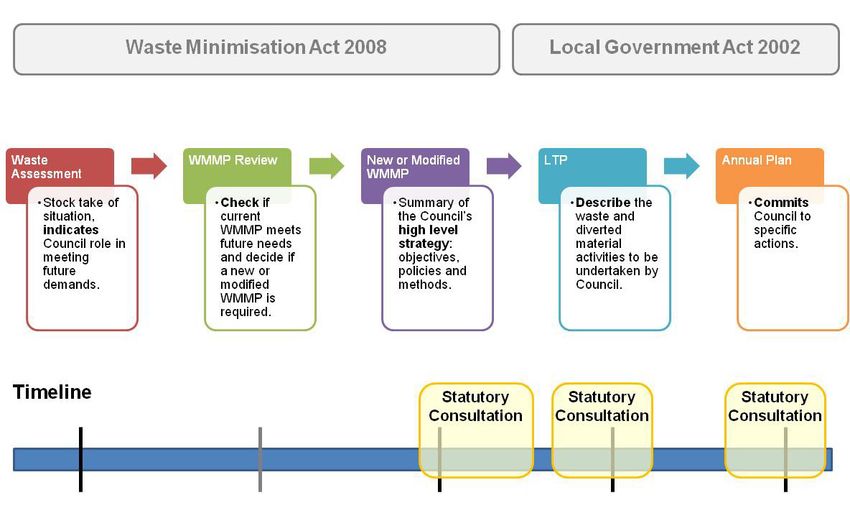
WAIROA

DOCUMENT PREPARATION & QUALITY ASSURANCE

                              NAME                      DATE
 Prepared by                  Ewen Skinner              November/December
                              Morrison Low              2017
 Reviewed by                  Luke Knight,
                              Property Manager,
                              Wairoa District Council
 Peer reviewed by
 Document approved
 Adopted by Council           Resolution 2018/54        September 2018

WAIROA WASTE MANAGEMENT & MINIMISATION PLAN
                                                    1
WAIROA

                                                    CONTENTS
PART A                                                                                      4
1         INTRODUCTION                                                                      4
2         VISION, GOALS, OBJECTIVES AND TARGETS                                             4
    2.1      Vision for the future                                                           4
    2.2      Goals, objectives & targets                                                     5

3         THE WASTE SITUATION                                                               6
    3.1      Overview of existing waste management & minimisation infrastructure services    6
    3.5      Cost of the current level of service                                           10

4         POLICIES, PLANS AND REGULATION                                                    10
5 PROPOSED METHODS FOR ACHIEVING EFFECTIVE WASTE MANAGEMENT
AND MINIMISATION                                          12
5.1       Council’s role                                                                    12

5.2       Maintaining service affordability                                                 12

PART B                                                                                      15
1         ACTION PLAN                                                                       15
2         FUNDING                                                                           20
3         MONITORING, EVALUATING AND REPORTING PROGRESS                                     20
3.1 MONITORING AND EVALUTATION                                                              20
3.2 REPORTING                                                                               20
4         GLOSSARY                                                                          21
    4.1 Key definitions & abbreviations                                                     21
APPENDIX A                  OPTIONS ASSESSMENT                                              22
Review of the Wairoa District Council Waste Assessment                                      47

population healthservice                                                                    48

Organic waste                                                                               49

Hazardous waste                                                                             49

Medical waste                                                                               49

Construction and demolition waste                                                           49

Tyres 50

Conclusion                                                                                  50

Dr Nicholas Jones                                                                           50

APPENDIX C                  LEGISLATIVE CONTEXT                                             51
4.1.1           THE NEW ZEALAND WASTE STRATEGY 2010                                         51

WAIROA WASTE MANAGEMENT & MINIMISATION PLAN
                                                            2
WAIROA
TABLES
Table 1 Objectives 5
Table 2 Council services currently provided and their funding methods 10
Table 3 Summary of District specific issues and preferred options to respond to each issue 13
Table 4 Proposed WMMP Action Plan – showing both existing and new actions 16
Table 5 Options assessment 22
FIGURES
Figure 1 Waste to landfill 7
Figure 2 Diversion material – recycling 8
Figure 3 Diversion material - greenwaste 8
Figure 4 Projected Household Growth 9
Figure 5 Statutory planning sequence 11
WAIROA WASTE MANAGEMENT & MINIMISATION PLAN
3WAIROA
PART A
1 INTRODUCTION
Wairoa District Council (Council) has a statutory responsibility under section 42 of the Waste Minimisation Act
2008 (WMA) to “promote effective and efficient waste minimisation” within the District. In order to do this, the
Council is required to adopt a Waste Management and Minimisation Plan (WMMP) under section 43 of the Act.
This WWMP is a guiding document which identifies Council’s vision, goals, objectives, targets and methods for
achieving efficient and effective waste management and minimisation. It also provides information on how
Council intends to fund the activities of the WMMP over the next six years.
In addition to the legislative framework within which this WMMP has been developed, it has also been developed
in the context of the New Zealand Waste Strategy 2010 (NZWS) and its two goals:
• Goal 1: reducing the harmful effects of waste
• Goal 2: improving the efficiency of resource use
In preparing this WMMP, Council has considered the options to respond to the identified waste issues in the
District (see Appendix A), and has also determined that there has been no real change in the composition of
waste generated or going to landfill since the 2012 Waste Assessment. Council continues to rely on the 2012
Waste Assessment, and those matters covered in detail in the 2012 Waste Assessment are not repeated in full in
this WMMP but are summarised where appropriate. A copy of the 2012 Waste Assessment is attached as
Appendix B to this WMMP.
In developing the Plan to address solid waste in the District, the Council has considered the waste minimisation
hierarchy of reduce, reuse, recycle, recover, treatment and disposal.
2 VISION, GOALS, OBJECTIVES AND
TARGETS
Working together, Council and the community can achieve more effective and efficient waste management and
minimisation in the District. Council is proposing the following vision, goals, objectives and targets. Taken
together these form the strategy for Council’s WMMP.
2.1 VISION FOR THE FUTURE
Council’s vision defines who we are, what we are trying to achieve and who our intended customers are in a
single succinct statement.
3 COUNCIL’S VISION:
4 CONNECTED COMMUNITIES, DESIRABLE LIFESTYLES, TREASURED ENVIRONMENT
WAIROA WASTE MANAGEMENT & MINIMISATION PLAN
4WAIROA
MANAGEMENT & MINIMISATION GOAL:
TO MANAGE WASTE IN A COST-EFFECTIVE WAY THAT REDUCES HARMFUL EFFECTS &
IMPROVES EFFICIENCY OF RESOURCE USE
Sitting beneath this vision is a statement outlining the expected strategic result for each activity. The vision is
supported by nine Council Outcomes.
2.2 GOALS, OBJECTIVES AND TARGETS
2.2.1 GOALS
The goals that we will use to achieve the vision are:
1. Increase economic benefit by using resources more efficiently.
2. Reduce the harmful effects of waste to human health and the environment.
2.2.2 OUR OBJECTIVES
Our objectives to meet our goals are:
Table 1 Objectives
GOALS OBJECTIVES
Provide effective and efficient waste minimisation and management
GOAL 1: services supported by the right funding mechanisms
Increase economic benefit by
Our community is informed and educated about waste minimisation,
using resources more efficiently
recycling and re-use opportunities in the District
Avoid or mitigate any adverse effects on public health and the
GOAL 2: environment
Reducing harmful effects of
Our community has opportunities to minimise waste and maximise the
waste to human health and the
environment diversion of material though reduction, reuse, recycling and recovery (in
priority order)
2.2.3 OUR TARGETS
We have a number of targets for measuring our progress towards our vision.
HOW WE MEASURE OUR TARGET
SUCCESS
DIVERSION The amount of material diverted from landfill by the Wairoa community
increases from 75 tonnes to 100 tonnes (note, target excludes greenwaste
diversion)
COMPLIANCE There are no significant non-compliance events
CUSTOMER SATISFACTION Customer satisfaction with Council waste services is above 80%
WAIROA WASTE MANAGEMENT & MINIMISATION PLAN
5WAIROA
3 THE WASTE SITUATION
3.2 OVERVIEW OF EXISITNG WASTE MANAGEMENT AND
MINIMISTAION INFRASTRUCTURE SERVICES
A summary of the current services provided by Council and non-Council providers is outlined below. For a
detailed description of Council and non-Council solid waste services, refer to Chapter 1 of the attached 2012
Waste Assessment in Appendix B.
3.2.1 SERVICES PROVIDED BY COUNCIL
The main services and facilities include:
• kerbside rubbish collection (user pays bags/stickers) in Wairoa and most rural townships (contracted
to Quality Roading Services Limited (QRS)). Some rural customers do not receive a kerbside collection
service but are invited to take their refuse to the nearest collection point
• kerbside recycling collection (45L crates, collected weekly) to residents in Wairoa (contracted to QRS).
Other areas receive a fortnightly collection from nominated collection points
• operation of the Wairoa Landfill, including recycling and greenwaste drop off facilities
• drop off points for recycling in Waikaremoana and Raupunga
• drop off point for refuse at Waikaremoana
• street litter bins in Wairoa, Frasertown and Mahia
• removal of litter, illegally dumped rubbish and abandoned vehicles
• monitoring of five closed landfills at Frasertown, Mahia, Nuhaka, Raupunga and Ruakituri
• inorganic collection
• education programmes such as zero waste education and ‘paper for trees’ programmes in schools,
waste education for marae and businesses and involvement in nationwide initiatives such as product
stewardship
• an Agrecovery programme for farm chemical containers is administered by QRS.
With the exception of the Agrecovery programme, Council does not provide hazardous waste disposal facilities.
3.2.2 NON-COUNCIL PROVIDED SERVICES AND FACILITIES
Private companies meet the waste collection requirements of business and households beyond those supplied
by Council. These services are provided at an additional cost and include:
• CR and AT Whyte provide mixed waste collections to businesses and are able to collect recyclables
form business customers
• Kea Hire operates a wheelie bin hire service to residential customers in Wairoa township and Mahia,
and also provide a greenwaste collection service
• Tuai refuse collection is managed by Ruapani ki Waikaremoana Trust (trading as Waikaremoana
Contracting)
• Wairoa Scrap Metal Limited collects scrap metal including cars and whiteware for recycling
• Companies dispose of their collected residential and greenwaste at the Wairoa landfill.
3.3 PUBLIC HEALTH PROTECTION
The range of public and private waste services in the Wairoa District ensures public health will be adequately
WAIROA WASTE MANAGEMENT & MINIMISATION PLAN
6WAIROA
protected in the future. Wairoa has access to a consented, lined landfill for at least 14 years1. The urban
community has adequate access to Council drop-off and collection services for refuse and recycling, but in some
beach settlements demand for waste services is increasing. Further waste minimisation is achievable as outlined
in this Plan. This Plan proposes services for better waste minimisation.
In its feedback on the Wairoa District Council Waste Assessment, the Hawkes Bay District Health Board
(HBDHB) stated that although a full review of the Waste Assessment may not be necessary, it is important the
information used for planning purposes is reliable and reasonably update, therefore Council may wish to append
updated information to the Waste Assessment document when undertaking further review of the WMMP. The
HBDHB acknowledges the issues Wairoa District Council faces regarding the ongoing financial sustainability of
the Wairoa landfill and providing a viable kerbside collection service. They suggest Council explores options to
address these issues to be able to continue providing these important services for the community.
This feedback has been considered in the development of this Plan, and the full Hawkes Bay District Health
Board review can be found in Appendix B 2012 Waste Assessment.
3.4 SUMMARY OF THE VOLUME AND COMPOSITION OF
WASTE AND DIVERTED MATERIALS
As shown in Figure 1, Council is currently sending approximately 2,000 tonnes of waste to the Wairoa landfill
annually. The amount of general refuse going to landfill has remained relatively static since 2014/15.
Landfilled Waste
2,500
2,000
Landfilled Waste (tonnes)
1,500
1,000
500
-
2009/10 2010/11 2011/12 2012/13 2013/14 2014/15 2015/16 2016/17
Year
Figure 1 Waste to landfill
1
The landfill’s consents expire in 2031 but the site has capacity to accept waste beyond this date
WAIROA WASTE MANAGEMENT & MINIMISATION PLAN
7WAIROA
Diverted Material - Recycling
90
80
70
Diverted Recycling (tonnes)
60
50
40 Other
Recycling
30
Steel
20
10
0
2009/10 2010/11 2011/12 2012/13 2013/14 2014/15 2015/16 2016/17
Year
Figure 2 Diversion material – recycling
1,200
1,000
Diverted material (tonnes)
800
600
Greenwaste
400
200
-
2009/10 2010/11 2011/12 2012/13 2013/14 2014/15 2015/16 2016/17
Year
Figure 3 Diversion material - greenwaste
WAIROA WASTE MANAGEMENT & MINIMISATION PLAN
8WAIROA
Figure 2 shows that the highest amount of recycled waste diverted is steel with the other classes of material
(glass, paper, plastics and aluminium cans) diverted being significantly lower.
Figure 3 shows that approximately 1,000 tonnes of greenwaste is being diverted from the landfill. The volume
has increased steadily since 2011 when approximately 700 tonnes of greenwaste was diverted.
It should also be noted that not all material that is presented at the weighbridge at the Wairoa landfill as
divertible material is actually able to be diverted.
3.4.1 SEWAGE TREATMENT RESIDUALS
Sludge from the Wairoa wastewater treatment plant is dewatered using geo-bags. After dewatering and a period
of stabilisation and storage, the sludge is transported to Wairoa landfill for disposal. Alternatives for dealing with
dewatered sludge rather than sending to landfill will be investigated in the future.
3.5 FORECAST FUTURE DEMAND
Household numbers are is expected to slowly increase in the District over the next 30 years. In 2017 the
household numbers in the District were 3,210, and Economic Solutions Ltd predicts the household numbers will
be 3,435 under a medium growth forecast. In this respect, refuse generated is expected to remain relatively static
in coming years. There is the potential for economic growth to increase if opportunities in the Hawkes Bay
Regional Economic Development Strategy (REDS) are realised including working with Rocket Lab to develop
opportunities to leverage business attraction off their Mahia initiative. Also, if waste is accepted from the
Gisborne District, waste volumes received at Wairoa landfill are expected to increase.
Figure 4 Projected Household Growth
WAIROA WASTE MANAGEMENT & MINIMISATION PLAN
9WAIROA
3.6 COST OF THE CURRENT LEVEL OF SERVICE
Council provides its waste services and facilities at an annual cost of approximately $1.3 million. Funding is
predominantly provided through user charges (facility gate fees and rubbish bag sales) and rates (general and
targeted). It is anticipated that the current level of service will be relatively constant over the next ten years and
will be provided at a cost of $1.3 - $1.4 million per annum.
A low population base combined with actively encouraging waste diversion is likely to put pressure on the
affordability and sustainability of the landfill operation due to the fixed operating costs. The community’s ability
to continue funding the activity and, in particular, maintain the assets over time, is an area of concern. Losing
the ability to sustain a local landfill could impact negatively on the future local environment and economy.
With significant capacity remaining at the landfill, this has led to discussions around the future of the service in
Wairoa and options such as accepting waste from outside the District. Economic benefits, should collaboration
with Gisborne District Council proceed, would include:
• reduced rates impact (charges would remain static or increase to incentivise diversion and as a
result increase levies)
• increased revenue.
In addition, households and commercial customers pay for waste disposal when using the Wairoa Landfill.
Table 2 Council services currently provided and their funding methods
COUNCIL SERVICE FUNDING METHODS
Waste minimisation education, promotion, • National waste disposal levy
enforcement (e.g. bylaw), communication,
monitoring and policy development • General rate
Kerbside collection of waste • Targeted rate
• User charges (via refuse bag purchase)
Kerbside collection of recyclables • Targeted rate
Waste disposal • User charges
• General rate
• Sale of recyclables
Provision of public litter bins • General rate
4 POLICIES, PLANS AND REGULATION
There is a clear legislative and policy framework within which the Council provides waste services and facilities
within its District. A summary of the framework and legislation is outlined below, however a full and complete
list of the legislation, plans and regulations that create the waste framework within which this WMMP is based,
is included in Appendix C.
While the Waste Minimisation Act sets out the legislative requirements regarding waste, the New Zealand Waste
Strategy 2010 (NZWS) provides the Government’s strategic direction for waste management and minimisation
WAIROA WASTE MANAGEMENT & MINIMISATION PLAN
10WAIROA
in New Zealand.
Local, regional and national plans and policies affect the Council’s provision of waste and diverted material
services. Primarily, they are requirements under the WMA and the Local Government Act 2002. Figure 5 below
illustrates the statutory planning requirements that the Council is required to follow.
Figure 5 Statutory planning sequence
4.2 KEY LEGISLATION
A summary of the key legislation affecting waste is listed below. A more detailed description of this legislation,
and a list of other related legislation, is included in Appendix C.
• Waste Minimisation Act 2008
• Local Government Act 2002
• Resource Management Act 1991
• Climate Change Response Act 2002 (Emissions Trading)
• Litter Act 1979
• Health Act 1956.
4.3 OTHER RELEVANT DOCUMENTS
The Council and Hawkes Bay Regional Council have a number of other strategic documents that are integral to
waste management, including:
• Hawkes Bay Regional Policy Statement 2006 (and subsequent amendments)
• Wairoa Waste Services Asset Management Plan.
WAIROA WASTE MANAGEMENT & MINIMISATION PLAN
11WAIROA
5 PROPOSED METHODS FOR ACHIEVING
EFFECTIVE WASTE MANAGEMENT AND
MINIMISATION
5.2 COUNCIL’S ROLE
In undertaking this WMMP Council has considered what options are available for it to achieve effective and
efficient waste management and minimisation to meet future demands for services and facilities.
The role of the Council includes:
SERVICE PROVISION Providing or facilitating the provision of waste management or waste
minimisation service
GOVERNANCE Council further investigating demand and the cost effectiveness of services
and options to meet demand, either alone or in collaboration with other
councils or private sector parties
REGULATION The Council using a legal mechanism to facilitate or promote waste
management and waste minimisation e.g. bylaws and District Plan rules
COMMUNITY Providing information and promoting awareness and involvement in waste
LEADERSHIP management and waste minimisation activities
ADVOCACY Promoting actions to address waste reduction and waste management
issues which are outside the Council’s direct control e.g. advocate for
appropriate legislation, standards and guidelines to the Regional Council
and the Government
FINANCIER Investing in initiatives that facilitate waste management and minimisation
activities, e.g. grants and subsidies
In providing waste management and minimisation services, the Council will aim to make existing services more
cost effective and ensure that any increases to levels of services are both cost effective and affordable. The
Council will, as far as practicably possible, make services accessible to the majority of the District.
5.3 MAINTAINING SERVICE AFFORDABILITY
There is likely to be an increased cost to Council to continue to operate the landfill given the falling use of
Council’s kerbside waste collection service, slow population growth, the Wairoa landfill not fully recovering
costs, together with the current waste services contract being up for renewal shortly. These factors will put
pressure on the affordability and sustainability of the landfill. In looking at ways to address these factors, Council
has entered into discussions with District Council (GDC) about how Council and GDC could work more
collaboratively in the waste area.
Wairoa has a landfill that has capacity to take waste from the Gisborne District which could be beneficial to both
councils. Wairoa District is a mainly rural district that wishes to continue to provide waste management services
to its community.
WAIROA WASTE MANAGEMENT & MINIMISATION PLAN
12WAIROA
5.4 IDENTIFIED DISTRICT WASTE ISSUES
Council has reviewed progress against the previous WMMP action plan and has identified waste issues that need
to be addressed. The options considered to deal with these issues include education, regulation and service
provision, and is attached as Appendix A. Options were assessed for alignment with the vision, goals and
objectives, costs and ease of implementation before a preferred option was identified. Table 3 below provides a
summary of the issues, and Council’s preferred option to deal with each issue.
Table 3 Summary of District specific issues and preferred options to respond to each issue
# ISSUE PREFFERED OPTIONS TO RESPOND TO ISSUE
1 Low participation rate in • Review user charges, refuse bag price and landfill gate fees to
Council’s kerbside refuse ensure fair cost recovery
collection service
• Prepare a strategy for the future provision of kerbside collection
services during the term of the next kerbside collection contract
2 Ensuring long-term • Collaborate with Gisborne District Council on initiatives that will
affordability of the benefit both districts including utilisation of the Wairoa landfill,
Wairoa landfill WMMP vision, goals and objectives to promote waste
management and minimisation, and waste procurement
• Review user charges, refuse bag price and landfill gate fees to
ensure fair cost recovery
• Continue to regularly assess options for ongoing waste disposal
that include both use of the Wairoa Landfill and alternative
landfills
3 Potential for increasing Review user charges, refuse bag price and landfill gate fees to
costs when the waste
•
ensure fair cost recovery
services contract is
retendered • Prepare a strategy for the future provision of kerbside collection
services during the term of the next kerbside collection contract
4 The amount of divertible Manage the landfill asset as a centre for a range of waste
material continuing to be
•
minimisation activities
landfilled even with
recycling and • Establish landfill reception area for diverted materials
greenwaste services • Improve public access to greenwaste recovery area
being provided
• Provide regular and detailed information about waste services,
waste prevention and waste reduction to the community
• Increase level of refuse and recycling service provision to Mahia
5 Volatility in the • Develop mechanisms with the contractor for dealing with the
commodity markets that volatility of commodity markets, and include in the contract at
may result in temporary the next contract renewal
stockpiling or landfilling
of some recyclable
materials
WAIROA WASTE MANAGEMENT & MINIMISATION PLAN
13WAIROA
# ISSUE PREFFERED OPTIONS TO RESPOND TO ISSUE
6 Potential for new waste • Establish landfill reception area for diverted materials
streams appearing at the
landfill, such as forestry • Provide a hardfill disposal area for sorting construction and
waste, construction and demolition waste at the landfill
demolition waste, Annually monitor landfill composition through waste audits
•
agricultural waste,
hazardous wastes, e- • Work with local businesses, community groups, Maraes and
waste and the contractors to identify diversion opportunities; such as working
opportunities or issues with farmers to encourage Plasback collection
this may bring • Work with communities, particularly in rural areas, to develop
and support community-based waste management systems
including the potential provision of a community run
reuse/recovery shop at the landfill site
• Undertake a cost benefit analysis to provide a hazardous waste
storage facility at the Wairoa landfill for temporary storage of
hazardous material
• Provide an annual household hazardous / e-waste / amnesty
collection day at the landfill
• Provide regular and detailed information about waste services,
waste prevention and waste reduction to the community
7 Varying seasonal • Increase level of refuse and recycling service provision to beach
demands, particularly townships during peak seasonal periods
during the peak holiday
season over Christmas • Provide public place recycling facilities in busy visitor areas such
and New Year, when the as Mahia and Wairoa and review with a view to ongoing
number of people in provision, if effective and efficient
places such as Mahia can
increase significantly
creating additional
short-term waste
management issues
8 Increasing demand for • Increase level of refuse and recycling service provision to Mahia
waste services in areas e.g. investigate and provide permanent recycling drop off
such as the Mahia facility, increased frequency of collections
Peninsula by residents
and visitors • Maintain existing drop-off points for diverted material in beach
townships and investigate the feasibility of establishing recycling
drop-off points at suitable locations for rural resident use,
including trialling new locations
WAIROA WASTE MANAGEMENT & MINIMISATION PLAN
14WAIROA
PART B
1 ACTION PLAN
1.1 ACTION PLAN
The proposed action plan shows how Council’s proposed actions address the key issues and how the activities
will be funded.
WAIROA WASTE MANAGEMENT & MINIMISATION PLAN
15WAIROA
Table 4 Proposed WMMP Action Plan – showing both existing and new actions
IMPLEMENTATION
OBJECTIVE ACTION NEW/EXISTING FUNDING SOURCE
TIMEFRAME
1. Provide effective Provide regular and detailed information about waste services, waste prevention and Existing Ongoing Rates
and efficient waste waste reduction to the community
minimisation and Levy
management
services supported Increase level of refuse and recycling service provision to beach townships during New 2018 and ongoing Refuse bag sales
by the right peak seasonal periods
funding Rates
mechanisms
Levy
Review user charges (refuse bag price and landfill gate fees) to encourage appropriate New 2018/19 Gate fees
use of the kerbside service and ensure fair cost recovery through user charges
Refuse bag sales
At the next contract renewal develop mechanisms with the contractor for dealing with New 2018 Rates
the volatility of commodity markets and include in the contract
Prepare a strategy for the future provision of kerbside collection services during the New 2018 - 2020 Rates
term of the next kerbside collection contract
Continue to regularly assess options for ongoing waste disposal that include both use Existing Ongoing Rates
of the Wairoa Landfill and alternative landfills
Manage the landfill asset as a centre for a range of waste minimisation activities Existing Ongoing Rates
• Establish landfill reception area for diverted materials New 2018/19 Gate fees
Levy
WAIROA WASTE MANAGEMENT & MINIMISATION PLAN
16WAIROA
IMPLEMENTATION
OBJECTIVE ACTION NEW/EXISTING FUNDING SOURCE
TIMEFRAME
• Improve public access to greenwaste recovery area Existing Ongoing User charges
Provide a hardfill disposal area for sorting construction and demolition waste at the New 2018-2020 and Rates
landfill ongoing
Provide public place recycling facilities in busy visitor areas such as Mahia and Wairoa Existing Ongoing Levy
and review with a view to ongoing provision if effective and efficient
Investigate the potential for a commercial recycling collection in urban parts of the Existing Ongoing User charges
District
Collaborate with Gisborne District Council on initiatives that will benefit both Districts Expansion of 2018 and ongoing Rates
including utilisation of the Wairoa landfill, WMMP alignment to promote waste existing
management and minimisation, and waste procurement
2. Our community is Provide educational programmes such as Enviroschools and support other New 2018/19 Rates
informed and programmes aimed at waste management and minimisation and sustainability
educated about
waste
Work with communities, particularly in rural areas, to develop and support Existing Ongoing Rates
minimisation,
community-based waste management systems including the potential provision of a
recycling and re- Levy
community run reuse/recovery shop at the landfill site
use opportunities
in the District
Work with local businesses, community groups, Maraes and contractors to identify Expansion of Ongoing Rates
any other materials that could be included in recycling systems; such as working with existing
farmers to encourage a shared Plasback collection
Provide regular and detailed information about waste services, waste prevention and Existing Ongoing Rates
waste reduction to the community
Levy
WAIROA WASTE MANAGEMENT & MINIMISATION PLAN
17WAIROA
IMPLEMENTATION
OBJECTIVE ACTION NEW/EXISTING FUNDING SOURCE
TIMEFRAME
3. Avoid or mitigate Investigate options for effective enforcement such as delegating to community groups Existing Ongoing Fines
any adverse effects and/or contractor. Review performance of enforcement activity regularly and consult
on public health with community to identify key issues to focus enforcement Rates
and the
environment
Continue to provide kerbside refuse and recycling collection services in Wairoa Existing Ongoing Rates
Refuse bag sales
Continue existing litter bin and loose litter clearance Existing Ongoing Rates
Continue to provide a collection service for illegal dumping Existing Ongoing Rates
Investigate alternatives for disposing of dewatered sludge to the Wairoa Landfill New 2018/2021 Rates
Provide an annual household hazardous / e-waste / amnesty collection day at the New 2018/19 and ongoing Rates
landfill
Undertake a cost benefit analysis to provide a hazardous waste storage facility at the New 2020/21 Rates
Wairoa landfill for temporary storage of hazardous material
Regularly monitor landfill composition through waste audits New 2018/19 and ongoing Rates
WAIROA WASTE MANAGEMENT & MINIMISATION PLAN
18WAIROA
IMPLEMENTATION
OBJECTIVE ACTION NEW/EXISTING FUNDING SOURCE
TIMEFRAME
4. Our community Maintain existing drop-off points for diverted material in beach townships and New 2018 ongoing Rates
has opportunities investigate the feasibility of establishing recycling drop-off points at suitable locations
to minimise waste for rural resident use, including trialling new locations Levy
and maximise the
diversion of
material through
reduction reuse,
recycling and
recovery (in
priority order)
WAIROA WASTE MANAGEMENT & MINIMISATION PLAN
19WAIROA
2 FUNDING
2.1 FUNDING THE PLAN
The action plan will be funded using the suite of tools available to Council in the delivery of solid waste
services. The activities will be funded by:
• general rates
• targeted rates
• fees and charges (including gate fees, licensing fees, user pays)
• subsidies and grants
• debt (if required).
The cost of the provision of waste services is expected to remain relatively stable at $1.3 million per annum.
2.2 WASTE MINIMISATION LEVY FUNDING
EXPENDITURE
Council will continue to use the Waste Minimisation Levy funding income to fund waste education,
investigations, trials, and to fund capital expenditure for diversion facility upgrades.
2.3 GRANTS
Section 47 of the Waste Minimisation Act gives councils the ability to give grants to a person, organisation or
group to promote or achieve waste management and minimisation. Under this WMMP the Council will give
grants at its discretion and on any terms of condition it deems appropriate provided there is an allocated and
approved budget for that activity.
3 MONITORING, EVALUATING AND
REPORTING PROGRESS
3.1 MONITORING AND EVALUTATION
The Council intends to monitor and report on progress regarding the WMMP. Accurate information on how
services provided by Council are performing is essential for monitoring the effectiveness of the Plan’s vision,
objectives, goal s and methods and planning for future demand.
Council will review its key performance indicators as part of the 2018-2028 Long Term Plan. Monitoring and
performance data will be gathered through community satisfaction surveys, Council records (Call Centre
records, KPIs, etc.) and contractors. Progress against targets will be reported through Council publications,
website and the annual report.
3.2 REPORTING
The Council will report progress of the implementation and effectiveness of this WMMP through:
• Annual Reports
• Council’s website.
The Council will also provide progress reports of expenditure of its waste levy funds to the Ministry for the
Environment.
WAIROA WASTE MANAGEMENT & MINIMISATION PLAN
20WAIROA
4 GLOSSARY
4.1 KEY DEFINITIONS AND ABBREVIATIONS
Clean fill/clean fill Inert materials disposed of, into or onto land, at a consented clean fill. Materials
material typically include construction and demolition waste such as concrete,
uncontaminated soil and rock.
Commercial waste Waste from premises used wholly or mainly for the purposes of trade or
business, recreation or entertainment, excluding mines, quarries and
agricultural waste. May also include some household waste collected by
commercial operators
Diverted material Anything no longer required for its original purpose and, but for commercial or
other waste minimisation activities, would be disposed of or discarded, and
includes any materials that are recyclables, compostable, or can be recovered
and/or reused, as determined by the Council by resolution
Hazardous waste Waste that is potentially harmful to human and/or environmental health. It
typically has one or more of the following hazard properties: explosive,
flammable, oxidising, corrosive, radioactive, toxic or ecotoxic, or it may react
with air or water to have one of these properties
Household waste Solid waste generated by households. Household waste does not include
divertible waste, hazardous waste, commercial waste, prohibited waste, trade
waste or liquid waste of any nature, or any material banned or prohibited under
the Council’s solid waste bylaw
Organic waste Compostable materials that are organic in origin and appropriate to be used as
feedstock for composting, and includes greenwaste and food waste
Recycling The reprocessing of waste or diverted material to produce new materials
Reuse shops Items that are salvaged or diverted from the waste stream, undergo little or no
modification and are sold at shops run by the community or territorial
authorities
Sewage treatment Solid wastes generated through the process of wastewater treatment
residuals
Solid Waste Analysis A study to determine the composition of waste as described by the Ministry for
Protocol (SWAP): the Environment
Transfer Station A facility where solid waste materials such as residual waste, construction and
(TS) demolition waste, recyclables, organics waste and household hazardous
wastes are delivered for consolidation before being taken away for treatment,
processing, recycling or disposal
Waste Anything disposed of or discarded, and
• includes a type of waste that is defined by its composition or source (for
example, organic waste, electronic waste, or construction and
demolition waste)
• to avoid doubt, includes any component or element of diverted material,
if the component or element is disposed of or discarded
Waste disposal levy A levy imposed under the Waste Minimisation Act 2008 on waste
Waste minimisation The reduction of waste and the reuse, recycling and recovery of waste and
diverted material
WAIROA WASTE MANAGEMENT & MINIMISATION PLAN
21WAIROA
APPENDIX A OPTIONS ASSESSMENT
Table 5 below expands on the issues listed in Part 5 and presents options that Council could introduce to address those issues. The options cover education, regulation and
service provision options that are then assessed for alignment with the vision, goals and objectives, costs and ease of implementation.
Table 5 Options assessment
ALIGNS
WITH
EASE OF
ISSUE DESCRIPTION APPROACH OPTIONS VISION, COST COMMENTARY
IMPLEMENTATION
GOALS &
OBJECTIVES
1. Low Some customers Educate a) Provide High Low Simple Education and information sharing is an on-going approach
participation in Wairoa prefer information to that Council uses and is an easy option to implement at a
rate in to dispose of the community relatively low cost to encourage a change in behaviour.
council’s their waste on the benefits of This would need to be provided in conjunction with any
kerbside directly at the using the change in landfill charges, cost and/or methodology for the
refuse Wairoa landfill kerbside delivery of the kerbside collection service.
rather than collection service
WAIROA WASTE MANAGEMENT & MINIMISATION PLAN
22WAIROA
ALIGNS
WITH
EASE OF
ISSUE DESCRIPTION APPROACH OPTIONS VISION, COST COMMENTARY
IMPLEMENTATION
GOALS &
OBJECTIVES
collection using the Regulate b) Review user Medium Low Relatively simple The community may be encouraged to use the kerbside
service. kerbside charges, refuse collection service either through an increase in the
collection bag price and the minimum charge at the landfill or a decrease in the refuse
service which is minimum landfill bag price.
impacting on gate fees to However, an increase in the minimum charge at the landfill
the affordability ensure fair cost may need to be significant to discourage the direct drop-off
of the kerbside recovery of residential refuse at the landfill and provide
collection
encouragement to the community to use the kerbside
service. A rates
collection service.
subsidisation
may be required Change may need to be implemented through a number of
in the future. step changes to the charge until enough customers are
High public use incentivised to use the kerbside service.
of the landfill During the term of the next kerbside collection contract it
also increases would be beneficial to collate data, complete an analysis of
the risk of a fair cost recovery through user charges and prepare a
health and strategy for the future provision of the kerbside collection
safety incident services.
at the landfill. There is a possibility of an increase in illegal dumping,
although this has been shown to be minor when similar
changes have been implemented elsewhere. This can be
mitigated by advertising the other services available.
Additional enforcement resources could also be required in
the short-term.
WAIROA WASTE MANAGEMENT & MINIMISATION PLAN
23WAIROA
ALIGNS
WITH
EASE OF
ISSUE DESCRIPTION APPROACH OPTIONS VISION, COST COMMENTARY
IMPLEMENTATION
GOALS &
OBJECTIVES
c) Prepare a Medium Low Simple A strategy will guide the future provision and decision
strategy for the making on kerbside collection services in the District.
future provision
of kerbside
collection
services during
the term of the
next kerbside
collection
contract
Service d) Discontinue the Low Nil Relatively complex This option is not supported as it does not align with the
kerbside Council’s obligation under the Waste Minimisation Act 2008
collection service to ensure that collection services are provided to meet the
demand for services, either by the Council or otherwise.
There are limited private service providers in Wairoa
meaning that if a kerbside service was not available then
there are limited options for those that want to continue
with the kerbside service.
WAIROA WASTE MANAGEMENT & MINIMISATION PLAN
24WAIROA
ALIGNS
WITH
EASE OF
ISSUE DESCRIPTION APPROACH OPTIONS VISION, COST COMMENTARY
IMPLEMENTATION
GOALS &
OBJECTIVES
e) Cease High Low Relatively simple This option will reduce the risk to Council and the public of
acceptance of a health and safety incident occurring at the landfill.
refuse bags A kerbside collection service already operates. For those
dropped off by who don’t have ready access to this, service alternatives
the public at the may be enhanced or introduced e.g. drop off facilities
landfill established, frequency of the kerbside collection increased
over peak seasonal periods.
There is a possibility of an increase in illegal dumping,
although this has been shown to be minor when similar
changes have been implemented elsewhere. This can be
mitigated by advertising the other services available.
Additional enforcement resources could also be required in
the short-term.
WAIROA WASTE MANAGEMENT & MINIMISATION PLAN
25WAIROA
ALIGNS
WITH
EASE OF
ISSUE DESCRIPTION APPROACH OPTIONS VISION, COST COMMENTARY
IMPLEMENTATION
GOALS &
OBJECTIVES
f) Introduce a High Medium Relatively complex The introduction of a bin collection service has a number of
rates-funded advantages for residents and the contractor:
district-wide Convenience of service attracts customers
kerbside bin
•
collection service • Ease of storage of refuse
• Health and safety legislative change particularly
in relation to manually handling of waste
• Reduced health and safety risk due to the use of a
mechanical collection methodology
• Increased awareness of the environmental impact
of plastic bags supports the use of multiple use
bins
Disadvantages include:
• The cost of a bin collection service is more than a
bag collection service
• The capital cost of the bins (however over the life
of the bins this is cheaper than the cost of single
use bags)
The community would have to be consulted with over any
change from a bag to a bin collection service.
Any change in collection methodology could be assessed
through the tender process when the current contract term
expires.
WAIROA WASTE MANAGEMENT & MINIMISATION PLAN
26WAIROA
ALIGNS
WITH
EASE OF
ISSUE DESCRIPTION APPROACH OPTIONS VISION, COST COMMENTARY
IMPLEMENTATION
GOALS &
OBJECTIVES
2. Ensuring the Due to the low Regulate a) Increase the Medium Medium Relatively simple There are a number of funding mechanisms available to the
long-term volume of waste charges at the Council to pay for waste services including general rate,
affordability produced by the landfill to ensure targeted rate, user charges and waste minimisation levy
of the Wairoa fair cost recovery funds. The Council uses a number of these to pay for the
Wairoa community, services it delivers.
Landfill. landfill revenue The choice of funding mechanism is related to who benefits
is not covering from the service and is also related to incentivising
the full cost of residents’, businesses’ and visitors’ behaviour to reduce
landfill waste disposal.
operations.
Increasing landfill charges may result in a reduction of
refuse going through the gate as residential customers
change to using Council’s kerbside collections more fully
(refer commentary above under issue 1).
It would be beneficial to collate data, complete an analysis
of fair cost recovery through user charges and prepare a
strategy for the future provision of the kerbside collection
services during the term of the next kerbside collection
contract.
b) Review refuse Medium Low Relatively simple Refer commentary above and for Issue 1.
bag user charges
and the
minimum landfill
gate fees to
ensure fair cost
recovery through
user charges
WAIROA WASTE MANAGEMENT & MINIMISATION PLAN
27WAIROA
ALIGNS
WITH
EASE OF
ISSUE DESCRIPTION APPROACH OPTIONS VISION, COST COMMENTARY
IMPLEMENTATION
GOALS &
OBJECTIVES
Service c) Collaborate with High Low Relatively simple Increasing the tonnage at the landfill by bringing waste
Gisborne District from GDC will have a positive impact on the financial
Council to viability and sustainable operation of the landfill.
investigate A shared service/service level agreement will need to be in
opportunities place with clear performance measures.
that would
Alignment of both of the Councils’ WMMP vision, goals and
benefit both
objectives and the ability to collaborate though
Districts
procurement will benefit both Districts.
including: GDC
waste to be sent
to the Wairoa
landfill; aligned
WMMP vision,
goals and
objectives to
promote waste
management
and
minimisation;
waste
procurement
d) Use the findings High Low Simple (Refer to the Section 17A review report).
of the landfill
review to drive a
revised contract
that will enable
the financial
sustainability of
the landfill
WAIROA WASTE MANAGEMENT & MINIMISATION PLAN
28WAIROA
ALIGNS
WITH
EASE OF
ISSUE DESCRIPTION APPROACH OPTIONS VISION, COST COMMENTARY
IMPLEMENTATION
GOALS &
OBJECTIVES
e) Continue to Medium Low Relatively simple Regularly assessing options for waste disposal will enable
regularly assess Council to assess if its landfill services are sustainable and
options for cost effective or whether an alternative option would better
ongoing waste service the future needs of the District.
disposal that
include both use
of the Wairoa
Landfill and
alternative
landfills
3. Potential for The current Educate a) Inform the High Low Simple Education and information sharing is an on-going approach
increasing waste services community that Council uses and is an easy option to implement at a
costs when contract has about the relatively low cost to encourage a change in behaviour.
the waste been in place for kerbside This would need to be provided in conjunction with any
services 11 years. The collection change in landfill charges, cost and/or methodology for the
contract is level of change services and how delivery of the kerbside collection service e.g. moving to the
retendered. in the waste they operate so bin collection service, reminding residents about how and
industry and as to ensure what can be recycled.
practices, effective and
(Refer commentary above under issue 1).
Council’s efficient waste
financial management
position and and
customer minimisation
expectations occurs
WAIROA WASTE MANAGEMENT & MINIMISATION PLAN
29WAIROA
ALIGNS
WITH
EASE OF
ISSUE DESCRIPTION APPROACH OPTIONS VISION, COST COMMENTARY
IMPLEMENTATION
GOALS &
OBJECTIVES
will have a Regulate b) Contract Medium Medium Medium Significant changes in good practice in waste management
significant specifications - High have occurred over the duration of the current contract. A
impact on the and procurement new contract will need to incorporate updated good
nature of the reflect a focus on practice to ensure waste is managed to protect human
future contract, good practice for health and safety and the environment as well resource
price and how waste recovery.
waste services management, (Refer commentary above under issues 1 and 2).
are delivered. resource
recovery and
landfill
operations
rather than a
focus on cost to
deliver the
service
c) Prepare a Medium Low Simple A strategy will guide the future provision and decision
strategy for the making on kerbside collection services in the District.
future provision
of kerbside
collection
services during
the term of the
next kerbside
collection
contract
WAIROA WASTE MANAGEMENT & MINIMISATION PLAN
30WAIROA
ALIGNS
WITH
EASE OF
ISSUE DESCRIPTION APPROACH OPTIONS VISION, COST COMMENTARY
IMPLEMENTATION
GOALS &
OBJECTIVES
d) Review refuse Medium Low Relatively simple Refer to commentary for Issue 1 and 2.
bag user charges
and the
minimum landfill
gate fees to
ensure fair cost
recovery through
user charges
Service e) Do not recover Low High Relatively simple Council would need to make a conscious decision not to
all costs for the recover full costs in order to sustain the provision of some
operation of waste services.
waste services Impact on Council’s overall financial position would need to
contract be considered.
(Refer commentary above under issues 1 and 2).
f) Investigate Low-medium Medium Relatively simple Investigating in detail the current levels of service,
changing the community satisfaction, where current levels of service are
level of service not meeting demand, can be done relatively easily.
provided to the However any changes to levels of service will require
community consultation with the community. Changes to levels of
service could also trigger a review under Section 17A of the
Local Government Act.
(Refer commentary above under issue 1).
WAIROA WASTE MANAGEMENT & MINIMISATION PLAN
31WAIROA
ALIGNS
WITH
EASE OF
ISSUE DESCRIPTION APPROACH OPTIONS VISION, COST COMMENTARY
IMPLEMENTATION
GOALS &
OBJECTIVES
4. The amount Users are not Educate a) Provide regular High Low Simple Education and information sharing is an on-going approach
of divertible fully utilising the and detailed that the Council uses.
material services already information
continuing available for about waste
to be recycling, services, waste
landfilled greenwaste and prevention and
even with additional waste reduction
recycling service could be to the
and provided to community
greenwaste divert more of b) Establish a grant Medium Low Relatively simple Grant schemes can provide seed finding for waste
services these materials scheme to minimisation initiatives that support the Council’s WMMP
being from landfill. support targets and objectives. Some councils in New Zealand
provided. community utilise waste minimisation levy funds received to provide
initiatives grants for developing business and community-based
focused on waste resource recovery centres and activities.
minimisation
Regulate c) Through a solid High High Complex and This option will have compliance/monitoring costs that
waste bylaw lengthy timeframes may end up wasting time and resource. This is because the
restrict / ban to get from source of non-compliance will be difficult to determine with
specific types of inception to the certainty required to enable infringement notices/fines
waste in kerbside implementation to be issues. There will be high costs associated with the
collection bags drafting of the appropriate policy/bylaw, consultation,
and crates hearing and socialisation of such a ban.
In addition, the Council would need alternatives in place for
the acceptance of any banned materials e.g. transfer
station, processing facilities.
WAIROA WASTE MANAGEMENT & MINIMISATION PLAN
32WAIROA
ALIGNS
WITH
EASE OF
ISSUE DESCRIPTION APPROACH OPTIONS VISION, COST COMMENTARY
IMPLEMENTATION
GOALS &
OBJECTIVES
Service d) Investigate the High Medium Relatively complex, Provision of additional recycling/greenwaste drop of points
provision of requires suitable is subject to Council having the right land in the right
additional sites, consents and location to accept such a land use without impacting on its
recycling drop off contracts to service neighbours and comply with planning provisions. If Council
points or sites does not own land in the right location it will need to either
facilities acquire or lease land and resource consent may be needed.
including at the If Council entered into an agreement with a landowner with
landfill: property in the right place, the opportunity could be
establishing a maximised e.g. collection points at entry/ exist points of
• small townships, at service stations, supermarkets, outside
reception area
for diverted schools and in locations that will encourage broad use of
materials the facilities.
improving In addition, there is the opportunity to increase diversion of
• a number of waste streams that are currently disposed of to
access to the
greenwaste the landfill e.g. greenwaste, construction and demolition
recovery area waste. Diversion activities could be phased in over time
at the landfill using the “do a little do a lot” premise.
• providing a
hardfill
disposal area
for sorting
construction
and demolition
waste
WAIROA WASTE MANAGEMENT & MINIMISATION PLAN
33WAIROA
ALIGNS
WITH
EASE OF
ISSUE DESCRIPTION APPROACH OPTIONS VISION, COST COMMENTARY
IMPLEMENTATION
GOALS &
OBJECTIVES
e) Provide an Medium Low- Relatively simple Provides the ability for the community to get involved
opportunity for a medium Need to consider the level of risk and ensure that health
social enterprise and safety requirements can be met given the site is part of
reuse shop at the an operating landfill
landfill provided
appropriate
infrastructure is
in place
f) Manage the High Medium Relatively simple The landfill is a hub for waste minimisation activities
landfill asset as a (recycling/re-use centre, greenwaste collection, education)
centre for a that could be expanded to encourage the diversion of waste
range of waste from the landfill.
minimisation
activities
g) Increase the level High Medium Complex Kerbside collection frequency could be increased over
of refuse and seasonal peaks, drop-off facilities provided e.g. moloks that
recycling service you need to pay in the slot to access which is good for 24/7
provision to access for visitors.
Mahia Changes to levels of service require community
consultation, will require changes to contracts and may
require suitable sites to best provide for the increase in the
level of service.
5. Volatility in Volatility may Educate a) Inform the High Low Simple Education and information sharing is an on-going approach
the result in community that that the Council uses.
commodity temporary stockpiling or The community’s success in recycling achievement should
markets. stockpiling or landfilling may be celebrated when commodity markets are strong and the
landfilling of be required short community kept informed of commodity downturns and
some materials. term Council and the contractor’s management of those periods.
WAIROA WASTE MANAGEMENT & MINIMISATION PLAN
34WAIROA
ALIGNS
WITH
EASE OF
ISSUE DESCRIPTION APPROACH OPTIONS VISION, COST COMMENTARY
IMPLEMENTATION
GOALS &
OBJECTIVES
Regulate b) Develop High Low - Complex The terms and conditions of commodity risk and its
mechanisms Medium management would require negotiation with a preferred
with the Contract tenderer and the outcome included in the resulting
for dealing with contract.
the volatility of
commodity
markets and
include in the
contract at the
next contract
renewal
6. Potential for New waste Educate a) Progressively High Low Simple Educating the relevant sectors of the community on
new waste streams such as educate and responsible waste, recycling, recovery, treatment and
streams forestry waste, target the disposal in advance of trends developing will enable
appearing. construction community businesses in particular to plan for future waste disposal
and demolition (residential / requirements.
waste, business /
agricultural industry) on the
waste, safe disposal of
hazardous new waste
waste, e-waste streams that are
may emerge likely to emerge
bringing issues e.g. e-waste,
and construction and
demolition waste
WAIROA WASTE MANAGEMENT & MINIMISATION PLAN
35WAIROA
ALIGNS
WITH
EASE OF
ISSUE DESCRIPTION APPROACH OPTIONS VISION, COST COMMENTARY
IMPLEMENTATION
GOALS &
OBJECTIVES
opportunities b) Work with local High Low Simple Educating and providing support to the community on
with it. businesses, waste minimisation opportunities is an on-going approach
community used by Council. Council can facilitate discussions and act
groups, Maraes as a go-between to encourage the use of services by third
and contractors parties (e.g. Plasback) and could identify collaboration
to identify opportunities with Gisborne District Council to reduce costs
diversion of good waste management.
opportunities;
such as working
with farmers to
encourage a
Plasback
collection
Regulate c) Consider Medium High Refer to Issue 4 regarding the development of a solid waste
identified issues bylaw. Regulatory controls, such as a solid waste bylaw,
for waste could address the recent emerging issues including
streams when greenwaste and construction and demolition waste. Costs
developing a for coverage of these waste streams would not be high, but
solid waste would form part of the overall cost associated with the
bylaw drafting of the appropriate policy/bylaw, consultation,
hearing and socialisation of the bylaw as indicated in Issue
4 above.
WAIROA WASTE MANAGEMENT & MINIMISATION PLAN
36WAIROA
ALIGNS
WITH
EASE OF
ISSUE DESCRIPTION APPROACH OPTIONS VISION, COST COMMENTARY
IMPLEMENTATION
GOALS &
OBJECTIVES
d) Set landfill High Medium Relatively simple Landfill charges may incentivise greater separation of these
charges that waste streams.
incentivise
diversion of
forestry waste,
construction and
demolition
waste,
agricultural
waste,
hazardous
waste, e-waste
Service e) Annually monitor High Medium Simple Regular monitoring of landfill composition and reporting
landfill will help identify trends and enable an early response to be
composition developed to avoid negative impacts on people and the
through waste environment.
audits
WAIROA WASTE MANAGEMENT & MINIMISATION PLAN
37WAIROA
ALIGNS
WITH
EASE OF
ISSUE DESCRIPTION APPROACH OPTIONS VISION, COST COMMENTARY
IMPLEMENTATION
GOALS &
OBJECTIVES
f) Anticipate that High Medium- Relatively complex New waste streams will require different responses and
the Wairoa high facility management so is not easy to plan for unless trends
landfill will need are already emerging.
to accommodate Plan and manage the landfill as a centre for a range of
an increased waste minimisation activities. Using national experience of
diversity of waste other councils assess potential waste streams and how
and require these may be diverted from landfill.
planning and
Establishment of a reception area for diverted materials,
management of
provision of a hardfill disposal area for sorting construction
the landfill
and demolition materials, development of a reuse/recovery
accordingly
shop, hazardous waste storage facility are some of the
through the new
activities that may be introduced at the landfill to increase
waste services
diversion.
contract
g) Support and High Medium Complex Investigate commercially owned and operated resource
enable where recovery facilities in the region that recover and or process
practicable, diverted materials.
commercial
operators in
relation to
resource
recovery
facilities e.g. for
forestry waste,
hazardous
waste, farm
waste e.g. plastic
wrap, e-waste
WAIROA WASTE MANAGEMENT & MINIMISATION PLAN
38You can also read


