WE RISE TOGETHER LIFTING AUSTRALIA TO BE THE GLOBAL LEADER IN FIRE & FLOOD RESILIENCE BY 2025 - FIRE & FLOOD RESILIENCE BLUEPRINT - The Minderoo ...
←
→
Page content transcription
If your browser does not render page correctly, please read the page content below
WE RISE
TOGETHER
   LIFTING AUSTRALIA TO BE THE
 GLOBAL LEADER IN FIRE & FLOOD
            RESILIENCE BY 2025

       FIRE & FLOOD RESILIENCE
                    BLUEPRINT
        Version 1: September 15, 2020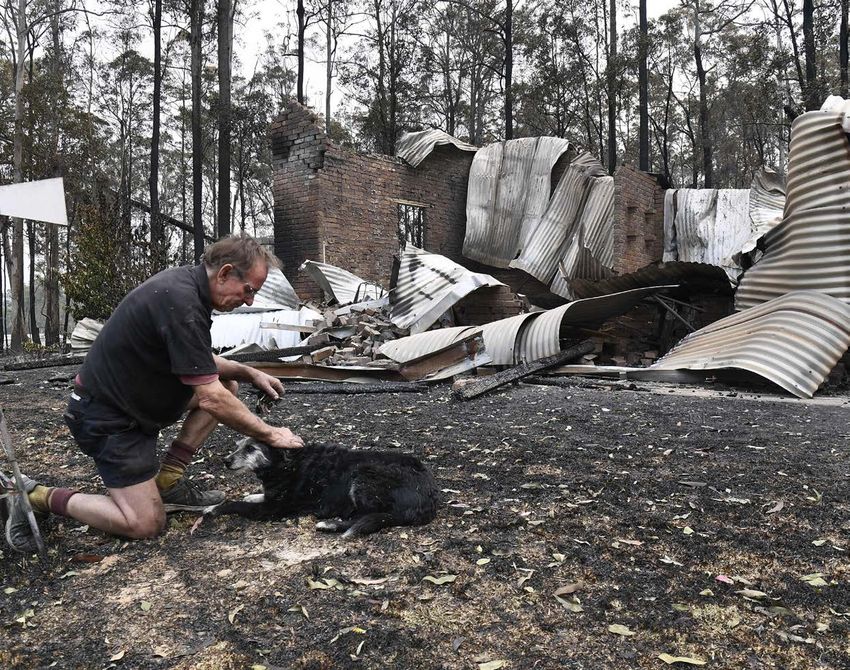
FOREWORD
                                                                                                                                                For many Australians, 2020 will be the toughest year of their lives.
                                                                                                                                                Our nation, devastated by drought, bushfires and floods, now grapples
                                                                                                                                                with the fear and disruption of a pandemic and the economic hardship
                                                                                                                                                that will bring.
                                                                                                                                                From early January, Minderoo Foundation has been on the frontline in
                                                                                                                                                fire ravaged communities across Australia, working with our partners.
                                                                                                                                                We’ve performed and funded thousands of hours of recovery work.
                                                                                                                                                We have looked in the eyes of people who have lost everything. We’ve
                                                                                                                                                shared their pain, been inspired by their courage, and have actively
                                                                                                                                                listened to figure out how we could best help.
                                                                                                                                                What we were told repeatedly by these people was that they did not
                                                                                                                                                want to leave their land while they rebuilt. We took that feedback
                                                                                                                                                and with it we designed, constructed, and delivered the Minderoo
                                                                                                                                                Foundation Recovery Pod. Together with partners, this innovative
                                                                                                                                                temporary housing solution has now created a ‘home’ for hundreds of
                                                                                                                                                Australian families – with more being delivered every day.
                                                                                                                                                But without a game changing intervention we know the fires will return.
                                                                                                                                                We must rise — together — to make these disasters a thing of the
                                                                                                                                                past. This means going to the root cause of the problem, and to bring to
                                                                                                                                                fruition the best available modern and forward looking solutions.
                                                                                                                                                Minderoo Foundation is proud to present this Blueprint to lift Australia
                                                                                                                                                to be the global leader in fire and flood resilience, developed in
                                                                                                                                                conjunction with our outstanding and dedicated partners.
                                                                                                                                                Our first mission, Fire Shield, aims to ensure no dangerous bushfire in
                                                                                                                                                Australia will burn longer than an hour by 2025.
                                                                                                                                                This extraordinary task will require unprecedented cooperation across
                                                                                                                                                communities, governments, industry, not for profits and the research
                                                                                                                                                sector. It is the kind of challenge we are prepared to take on: to assist in
                                                                                                                                                its orchestration, bringing together the best minds and ideas in lockstep
••                                                                                                                                              with partners, and most importantly emergency services.
Signs of regrowth are seen amongst the bushfire affected blue gum forestry west of Parndana on
February 23, 2020 in Parndana, Australia. Photo Credit: Lisa Maree Williams via Getty Images.                                                   To protect Australia and, one day, the world from the deepest ravages
Copyright @ 2020. The Minderoo Foundation Pty Ltd. All rights reserved.                                                                         and heartache of fire and flood.
The purpose of this document is to provide general and preliminary information and the document
does not contain a complete analysis of every material fact on the subject matter set out herein.                                               Andrew Forrest, Chair
The document is published in good faith, it is not intended to be advice and should not be relied upon                                          Nicola Forrest, Co-Chair
by any person. The Minderoo Foundation Pty Ltd accepts no responsibility for any act or omission
resulting from reliance upon the information or recommendations set out herein. The Minderoo                                                    Minderoo Foundation
Foundation Pty Ltd makes no warranties, representations or guarantees pertaining to the reliability,
timelines, suitability, accuracy or completeness of the contents of this document and any such                  ••
warranties, representations or guarantees are expressly disclaimed.                                             Top: Adrian Turner, Nicola
                                                                                                                Forrest AO, Kim Wilkie and
Boston Consulting Group (“BCG”) its subsidiaries and affiliates disclaim all liability relating to or arising
from access, use or reliance on any qualitative or quantitative analysis referenced in this document.
                                                                                                                DrAndrew Forrest AO at
Except for claims which cannot be capped at law, in no event will BCG, its subsidiaries and affiliates be       Minderoo Foundation Fire
liable for direct, indirect, incidental, special or consequential losses arising from the information in this   Fund announcement press
document, whether arising out of contract (including under an indemnity), tort (including negligence),          conference in Perth, Western
statute, strict liability, third party claims or otherwise, resulting from or related to this document,         Australia – January 2020.
whether or not such party knew of should have known of the possibility of any such damages.                     Photo credit: Benjamin Horgan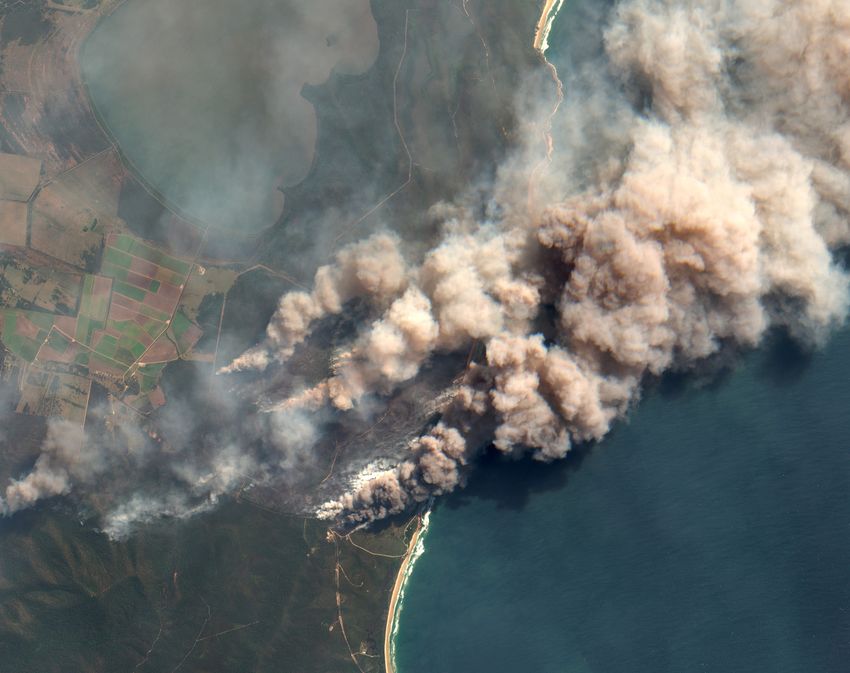
P.4                                                                                                                                                                                                                 P.5

                                                                                                       CONTENTS
                                                                                                       ABOUT US.................................................................................................................... 6
                                                                                                       THE MOONSHOT....................................................................................... 8
                                                                                                       OUR PARTNERS ......................................................................................10
                                                                                                       WHY WE NEED A BLUEPRINT ................................................................... 12
                                                                                                       DEFINING RESILIENCE .............................................................................16
                                                                                                       OUR MISSIONS .......................................................................................19
                                                                                                           Fire Shield............................................................................................................................................................................. 21
                                                                                                           Resilient Communities...................................................................................................................................................... 31
                                                                                                           Healthy Landscapes......................................................................................................................................................... 43

                                                                                                       BUILDING A FIRE & FLOOD RESILIENCE DATA COLLECTIVE....................... 51
                                                                                                       MOBILISING FOR MISSION DELIVERY...................................................... 55
                                                                                                       FIRE & FLOOD RESILIENCE BLUEPRINT WORKING GROUP....................... 57
                                                                                                       REFERENCES.......................................................................................... 58
                                                                                                           Endnotes............................................................................................................................................................................... 58
                                                                                                           Other Sources..................................................................................................................................................................... 63

••
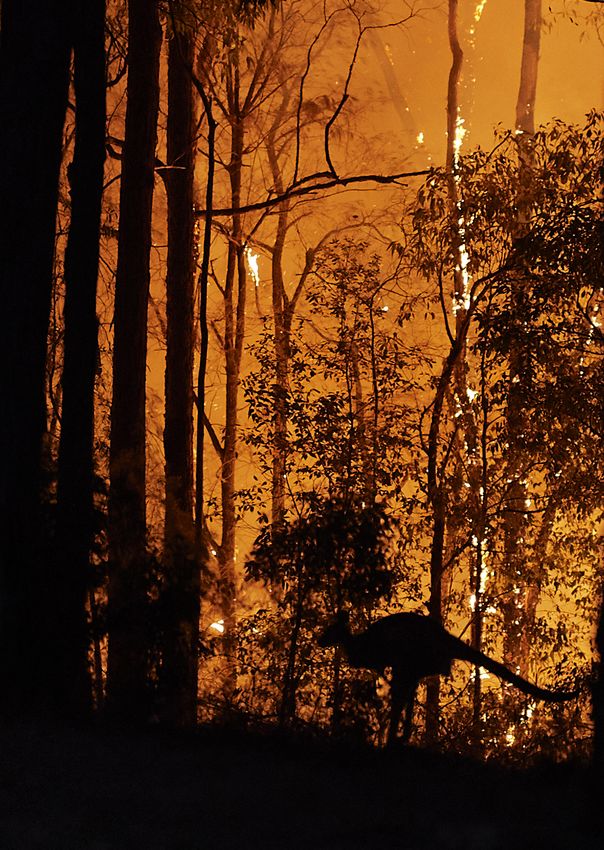
A kangaroo escapes as a fire front approaches a
property in Colo Heights, Australia. – November 15, 2019.
Photo credit: Brett Hemmings/Getty Images

Return to Contents                                          Minderoo Foundation   Return to Contents                                                                                                                                                          Minderoo Foundation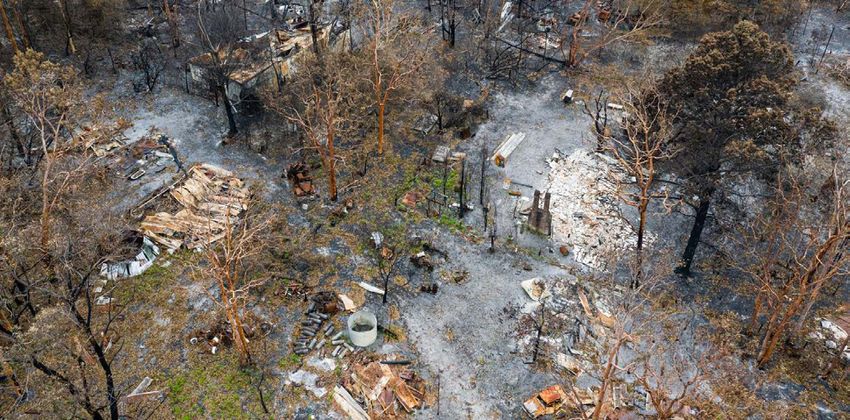
P.6                                                                                                   P.7

                     ABOUT US                                                                                              Our journey from here.
                                                                                                                           Our role is unique. We see ourselves as an enabler, facilitating dialogue,
                                                                                                                           orchestrating and convening groups (people, businesses, government,
                                                                                                                           philanthropy and the research sector). We rely on ground truth from active
                                                                                                                           community-focused programs, including temporary accommodation pods,
                     Minderoo Foundation is a modern, philanthropic organisation that                                      to identify the most important resilience related problems. Our priority is to
                     tackles tough, persistent issues with the aim of driving systemic change.                             enable the the most effective solutions to be delivered faster.
                     Australia’s resilience to fires and floods is one of the most significant                             We are inclusive, accountable and community first in our approach.
                     and complex challenges facing the country today and one on which our                                  Our collaborative method to lifting resilience is proven and builds on the
                     social, economic and environmental future depends.                                                    experience we have from our on the ground response to the most
                     In the aftermath of the devastating “Black Summer” fires across Australia                             recent fire season.
                     in 2019-2020, Minderoo Foundation established the Fire Fund — recently                                We are outcome-focused and evidence based. As a not for profit,
                     renamed to Fire and Flood Resilience Initiative — and committed AU$70                                 we go where the evidence takes us.
                     million to response, recovery and long-term resilience.
                                                                                                                           Finally, we are an impact investor. We will make investments when
                     Our vision is audacious. We want to reduce harm caused by fire and floods                             and where they are needed to lift resilience through place-based
                     by harnessing the collective power of communities, industry, government,                              and systemic change and to ensure that solutions benefit the most
                     philanthropy and the research sector to lift Australia to be the global                               disadvantaged groups. We are a values driven organisation and have
                     leader in disaster resilience by 2025.                                                                a strong balance sheet to help ensure the program is a success,
                                                                                                                           together with partners.

                     Our journey so far...                                                                                 ••
                     Our recovery efforts started in January 2020, while Australia was still                               Philanthropists and others are seeing Australia
                     burning. Our team was deployed into towns and regions affected by the                                 burn and saying, will we be next? I am saying,
                     bushfires to gain an understanding of what each community needed.
                     Communities visited included Kangaroo Island and Woodside in South                                    you may well be — so help create a blueprint
                     Australia; Armidale, Wytaliba, Tenterfield, Torrington, Drake, Moruya,                                for Australia and that blueprint can be used for
                     Mogo, Malua Bay and Merimbula in New South Wales; and Mallacoota and                                  California, that blueprint can be used for Brazil,
                     Bairnsdale in Victoria.                                                                               that blueprint can be used all over the world.
                     We met with people who had lost their homes, livestock, infrastructure and                            Let’s start it here. We have had the warning light.
                     businesses and listened to their stories. We are so grateful for all those who                        Dr Andrew Forrest AO
                     shared their stories.                                                                                 January 2020
                     We are extremely proud of all our many programs in helping the community
                     recover. The highlight for us all has been the deployment of temporary
                     housing pods to those in need. Our team has covered thousands of miles
                     across New South Wales and South Australia and as at August 2020, 182
                     pods have been delivered in 216 days. Our commitment plus those of our
                     partners will see 256 pods to be delivered in 259 days.

                                                                                                                           ••
                                                                                                                           Left: Recovery pod located on
                                                                                                                           Kangaroo Island, South Australia
                                                                                                                           – 19 February, 2020.
                                                                                                                           Photo credit: Minderoo
                                                                                                                           Foundation Fire Fund team.
                                                                                                                           Right: Values booklet created
                                                                                                                           for distribution to Fire Fund
                                                                                                                           staff and volunteers.

Return to Contents                                                             Minderoo Foundation    Return to Contents                                                             Minderoo Foundation
P.8                                                                                                             P.9

                                                               THE                                                                          THE BLUEPRINT IS COMPRISED
                                                                                                                                            OF MULTIPLE MISSIONS.

                                                               MOONSHOT                                                                     Fire Shield:
                                                                                                                                            Imagine if we could put out any fire in less than an hour?
                                                                                                                                            Resilient Communities:
                                                                                                                                            Imagine if every community in our country had the skills and
                                                                                                                                            resources to cope with fire and flood disasters?
                                                               An audacious vision requires an innovative approach.                         Healthy Landscapes:
                                                               We take inspiration from the Apollo mission of the                           And what if we could improve our ecosystems’ “immunity”
                                                               1960s. What was thought impossible, 10 years later                           to fire and flood disasters?
                                                               was possible. We will use a similar missions-based
                                                               approach to achieving our own moonshot. Our
                                                                                                                                            ••
                                                                                                                                            A firefighter defends a property from a bushfire at Hillville near Taree, 350km north of
                                                               initiative, through collaboration with our partners,                         Sydney – November 12, 2019. Photo credit: Peter Parks/AFP via Getty Images
                                                               will translate big, bold, complex challenges into
                                                               concrete problems to solve, based on a clear, time-
                                                               bound ambition with a view to lasting change.
                                                               Our initiative will be built on the following
                                                               underlying principles:
                                                               • Be evidence based: mission priorities and
                                                                   success measures will be underpinned by robust
                                                                   research and evidence.
                                                               • Be world class: reflective of best practice
                                                                   approaches to fire and flood resilience globally.
                                                               • Be collaborative: partner with diverse
                                                                   stakeholders in communities, emergency
                                                                   services, industry, academia, philanthropy and
                                                                   government.
                                                               • Be scalable: willingly seek out unconventional
                                                                   approaches that have the ability to deliver
                                                                   outcomes at scale.
                                                               • Be an enabler: open up opportunities for
                                                                   broader stakeholder investments in order
                                                                   to create lasting fire and flood resilience.

••
At 9:32 a.m. EDT, the swing arms move away and a plume
of flame signals the liftoff of the Apollo 11 Saturn V space
vehicle and astronauts Neil A. Armstrong, Michael Collins
and Edwin E. Aldrin, Jr. from Kennedy Space Center Launch
Complex 39A. Photo credit: David Neff/Contributor

Return to Contents                                                                               Minderoo Foundation   Return to Contents                                                                 Minderoo Foundation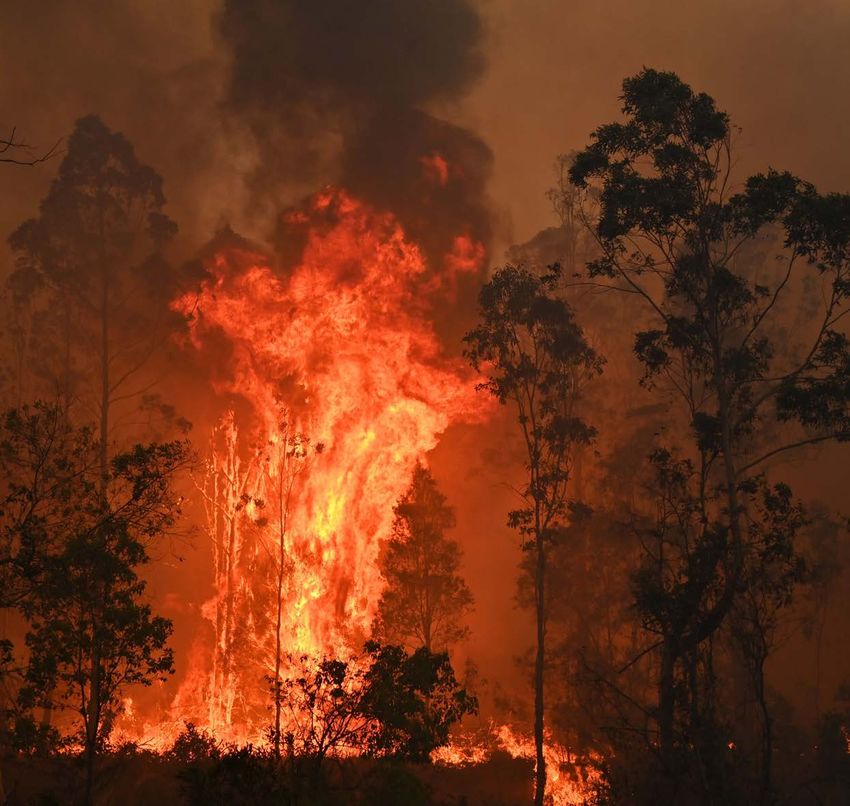
P.10                                                                                                                P.11

OUR                                                     These big, bold targets have the power to
                                                        deliver significant and lasting generational
                                                        change. But we cannot achieve them by ourselves.

PARTNERS
                                                        We are deeply grateful to all our partners to date
                                                        and to Australia’s emergency services, front line                          Disaster Relief                Finch           Firetech Connect                Fortescue
                                                                                                                                      Australia
                                                        responders, and other charity and volunteer
                                                        organisations. There has been a tremendous
                                                        amount of hard work and goodwill that has been
                                                        invested in the spirit of collaboration to create
                                                        this blueprint.
                                                        We also note that the blueprint is a “living                                   Givit                      Hertz                   IAG                 Insurance Council
                                                                                                                                                                                                                 of Australia
                                                        document” that will be refined over time as the
                                                        evidence base for the initiative’s missions deepens
                                                        and extends. We welcome further collaboration to
                                                        build on the blueprint and mobilise our missions
                                                        for a fire and flood resilient Australia.
                                                                                                                                International Union               KPMG                  Lifeline                  Macquarie
                                                                                                                                for Conservation of                                                           Infrastructure and
                                                                                                                                      Nature                                                                      Real Assets

                                                                                                                                    Movember                    Munic Re           National Australia         National Bushfire
        Accounting for Nature       Advance.org                Allianz                    AustCyber                                                                                  Bank (NAB)               Recovery Agency

       Australasian Fire and     Australian Academy     Australian Business            Australian Energy                              Optus                  Resilience         Resilient Cities Catalyst       Risk Frontiers
        Emergency Service            of Science        Roundtable for Disaster         Market Operator                                                     New South Wales
        Authorities Council                              Resilience & Safer
                                                           Communities

        Australian Lions        Australian Red Cross      BackTrack Works                  BlazeAid                            Rotary Australia World    Science & Technology           Suncorp                   SwissRe
          Foundation                                                                                                         Community Service Limited         Australia

            Boston              Bushfire and Natural      Business Council           Commonwealth Bank                                Telstra                The B Team               The Nature             The Salvation Army
        Consulting Group           Hazards CRC              of Australia                of Australia                                                         Australasia             Conservancy

                                                       WE HAVE WORKED CLOSELY WITH MANY FEDERAL
                                                       AND STATE GOVERNMENTS AND EMERGENCY
           Conservation           Deloitte Australia   SERVICES DEPARTMENTS.                                                         Turner                 Wesfarmers                 Westpac                Wonnarua Nation
           International                               We are very grateful for their support and contribution                                                                                              Aboriginal Corporation
                                                       to this blueprint.

Return to Contents                                                                             Minderoo Foundation      Return to Contents                                                                          Minderoo Foundation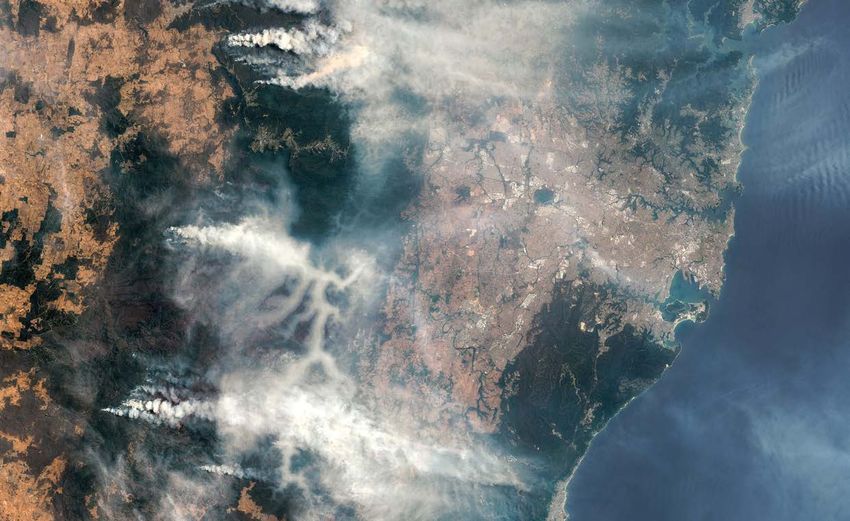
P.12   Why We Need a Blueprint                                                                            P.13

WHY WE NEED
A BLUEPRINT
In the last two decades, climate induced natural disasters – including fires
                                                                                                                                          THE EVENTS OF ‘BLACK SUMMER’ FIRES
                                                                                                                                          2019-2020 WERE DEVASTATING.
and floods – have wreaked havoc on Australian communities, causing over                                                                   The cost to lives, landscapes and wildlife due to fire and floods in
AU$25 billion in damage and AU$100 billion in downstream economic costs.                                                                  a single year (2019-2020) is unprecedented. Insurance claims for
Over 350 lives have been lost, millions of hectares of forest and bushland                                                                damage are expected to exceed AU$2.5 billion.2
burnt, with irreversible damage to communities, livelihoods                                                                               It is estimated that as many as 70 of our nationally threatened
and cultural lands.1                                                                                                                      species have had more than half of their of their known habitat
                                                                                                                                          burnt during 2019-2020.3 Our unique vegetation was most

                                                         1500+
                                                                                                                                          affected. Of the 30 threatened species that had 80 per cent of
2019-2020                                                                                                                                 their range burnt, 29 were plants.4 In addition to this devastation,
TO DATE                                                                                                                                   fires were quickly followed by torrential rain and flash floods
                                                                                                                                          that caused a further AU$45 million damage on the east coast.5
                                                                                                                                          Recovery efforts are still underway.
                                                         There were an estimated 1500 bushfires.
                                                                                                                                          ••

                                                         17
                                                                                                                                          A fire rages in Bobin, 350km north of Sydney – November 9, 2019.

                                                            MIL+
                                                                                                                                          Photo credit: Peter Parks/Contributor via Getty Images

                                                         Estimated over 17 million hectares had been
                                                         burned across NSW, VIC, QLD, ACT, WA and SA.

                                                         3,300
                                                         Estimated over 3,300 houses destroyed.

                                                         3 BIL+
                                                         Estimated 3 billion animals
                                                         were killed or displaced.

                                                         33
                                                         Tragically 33 people
                                                         lost their lives in the fires.

                                                         *WFF Australia July 2020

Return to Contents                                                                        Minderoo Foundation   Return to Contents                                                                  Minderoo Foundation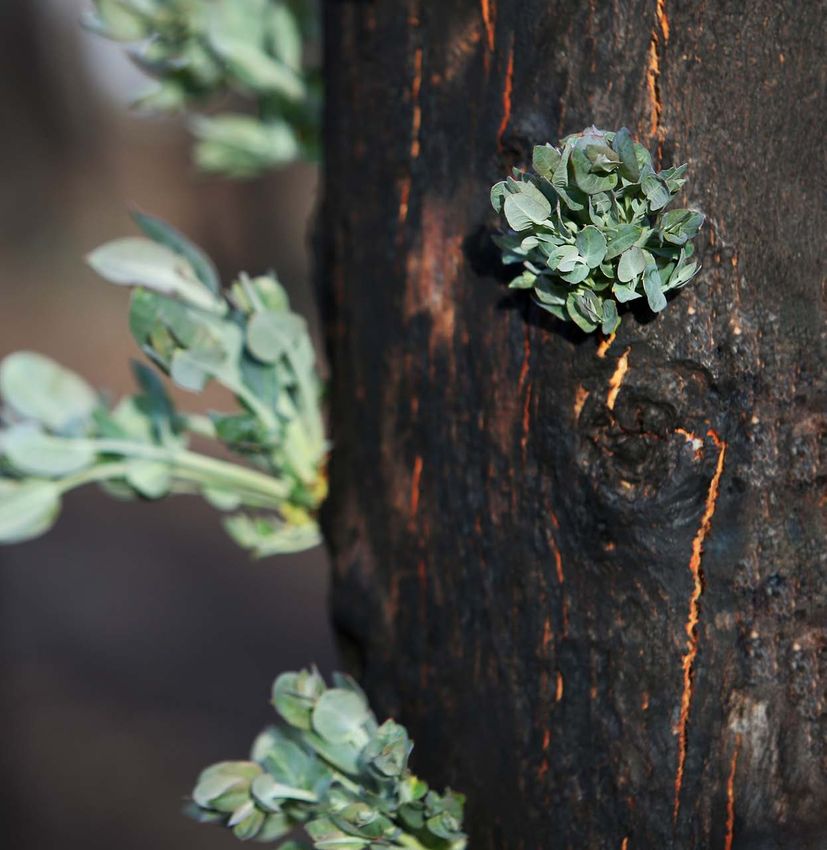
Why We Need a Blueprint                                                                             P.14   Why We Need a Blueprint                                                                         P.15

                                                                                                                ECONOMIC COST
Scientific predictions suggest an increase in the scale, frequency,
and severity of fires and floods in the coming decade with climate                                              Building disaster resilience is vital to limit the risks and costs.
change as the primary driver.6 The cost of these disasters is
expected to reach an average of AU$33 billion per year by 2050.7
Building disaster resilience is vital to limit the risk and cost
associated with these events. 8 Evidence from a study in the
United States suggests that every US$1 spent on resilience saves
US$4–11 in response and recovery costs.9 A 2017 study has
                                                                                                                   NATURAL DISASTERS INCREASE                                BY 2050
indicated that Australian Federal and State Goverment spending
on recovery from disasters may be as much 27 times the funding
directly provided for natural disaster resilience.10
It is time to reverse this trend.
                                                                                                                                                                             AU$33              BIL
                                                                                                                                                                             per year economic cost
••
Resident pats his dog after returning to find his house destroyed in the bushfires
near the small town of Nana Glen, some 600kms north of Sydney – November 13,
2019. Photo credit: William West/AFP via Getty Images
                                                                                                                                                                             2000 TO 2020

                                                                                                                   IN FREQUENCY
                                                                                                                   SEVERITY & SCALE
                                                                                                                                                                             AU$2.5
                                                                                                                                                                             in damage
                                                                                                                                                                                                 BIL

                                                                                                                THE RESILIENCE OFFSET
                                                                                                                 Currently Australia spends up to 27 TIMES      more on recovery than
                                                                                                                 on resilience. A U.S study shows that this may be a worldwide problem.
                                                                                                                 It is time to reverse this trend.

                                                                                                                                                  Investment In Resilience

                                                                                                                           US$1                                                     US$4-$11
                                                                                                                           Resilience                                             Response + Recovery

                                                                                                                                                   Savings In Recovery

Return to Contents                                                                   Minderoo Foundation   Return to Contents                                                               Minderoo Foundation
P.16 Defining Resilience P.17
DEFINING Disaster risk is influenced by:
Hazard
Exposure
The social, economic, built and natural
environments in the path of hazard.
RESILIENCE
The probability of an event like fire and Preliminary analysis suggests that around one-third
flood occurring. of Australia is expected to be exposed to increased
In the next decade, summer fires are expected to fire hazard over the next decade, with a significant
be nearly twice as frequent as in the past decade, increase in exposure in highly populated areas in
significantly increasing fire hazard (Figure 1).13 Some south east Australia, among others.15 A changing
regions, including the south east, will see their fire climate is also expected to increase exposure of
The UN definition of resilience, captured within The Australian Government’s National Disaster Risk hazard double by 2050. Major rainfall disruptions Australian communities to coastal flooding, as well
the Sendai Framework for Disaster Risk Reduction Reduction Framework articulates the urgent need (including floods) are expected to become 56 per as flooding from storms and high rainfall events.
(2015-2020), is as follows: for a focused and nationally coordinated effort to cent more frequent in Australia over the same For example, in the next decade, some regions in
•• improve disaster resilience.
It describes several ‘drivers for action’:
period.14 south-east Queensland are expected to experience
a 75 per cent increase in the number of residential
The ability of a system, community or buildings exposed to flooding from storms and high
society exposed to hazards to resist, • Natural hazards are more frequent and intense,
and disaster impacts are long term and complex. rainfall events, with damage costs almost doubling.16
absorb, accommodate, adapt to, transform
and recover from the effects of a hazard • People and assets are more exposed and
vulnerable, and the disaster costs are growing. Vulnerability
in a timely and efficient manner, including The potential for environments to be
through the preservation and restoration • Essential services are interconnected and
of its essential basic structures and interdependent.12  adversely impacted by hazard
functions through risk management.11 We have used both the Sendai Framework
Areas with above-average hazard are also some of
the most populous areas in Australia. Preliminary
and the National Disaster Risk Reduction
analysis indicates these areas contribute 65 per
Framework as the framing for the development
cent of Australia’s GDP, contain 70 per cent of
of this blueprint.
Australia’s critical institutions and around half of
Australia’s critical infrastructure, and are home to
21 million people, in addition to precious indigenous
and natural assets.17 This makes them vulnerable to
Change in hazard relative to 2010-2019
adverse impacts from hazard, and investments in
resilience will be critical to limiting this vulnerability.
2020-2029 2030-2039 2040-2049
2020-2029 2040-2049
••
Figure 1: Over a third of Australia
(~2.4m sq km) will experience
increased summer fire hazard over
the three next decades, based
on an RCP 4.5 carbon emission
scenario. South east Australia may
be ~2.5x more likely to experience 2.8M km2 5.5M km2 6.2M km2
summer wildfire with ~24% more
land area exposed to increased
hazard18
-100% >500%
Change ininhazard
hazard
•• Change
relative to 2019-2020
A NSW Rural Fire Service firefighter mops up after a
bushfire in the suburb of Llandilo in Sydney, Australia –
November 12, 2019. Photo credit: Sam Mooy/Getty Images
Return to Contents Minderoo Foundation Return to Contents Minderoo Foundation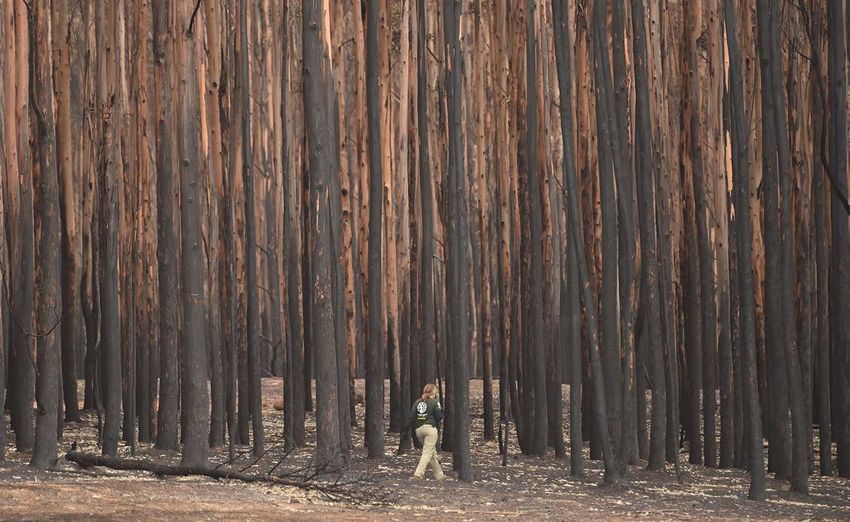
P.18                                                                                            P.19

                                                                             OUR MISSIONS
                                                                                                  Our blueprint identifies three missions,
                                                                                                  to be achieved by 2025:

                                                                                                  FIRE SHIELD
                                                                                                  What if a fire never became a disaster?
                                                                                                  Mission: reduce the scale and impact of bushfires by being
                                                                                                  able to extinguish dangerous fires within an hour by 2025.

                                                                                                  RESILIENT
                                                                                                  COMMUNITIES
                                                                                                  What if every community had the skills and resources to
                                                                                                  mitigate their disaster risk and bounce back stronger?
                                                                                                  Mission: lift Australia’s 50 most vulnerable communities
                                                                                                  to be on par with Australia’s 50 most resilient communities
                                                                                                  by 2025.

                                                                                                  HEALTHY
                                                                                                  LANDSCAPES
                                                                                                  What if our environment was optimised for risk
                                                                                                  reduction and natural ecosystem resilience?
                                                                                                  Mission: halve hazard exposure in Australia’s
                                                                                                  50 most fire and flood prone regions by 2025.

••
Residents watch a large bushfire as seen from Bargo,
150km southwest of Sydney, on December 19, 2019.
Photo credit: Peter Parks/Contributor

Return to Contents                                     Minderoo Foundation   Return to Contents                                                        Minderoo Foundation
Our Missions P.20 P.21
These missions do not specify solutions to all
of the challenges posed, they will be developed
collaboratively. Our priority is to inspire
unconventional approaches and new step change
breakthroughs. Indeed, the missions and their
solutions will evolve based on evidence, and
In today’s uncertain and fast-changing world,
where big trends such as technological change
and fire and flood disasters are compounded by
unexpected shocks such as COVID-19, the need for
evidence based solutions is particularly important.
Once we have addressed these challenges and
FIRE SHIELD
What if a fire never became a disaster?
stakeholder knowledge and experience. lifted resilience in Australia, we envisage enabling
Mission: reduce the scale and impact of bushfires by being
Crucially, however, goals are quantified – so we global partners to adapt and apply the same able to extinguish dangerous fires within an hour by 2025.
will know when they have been achieved, or if learnings in other parts of the world.
approaches are failing and need to be re-evaluated. Our collaborations will also lead to the creation of
a Disaster Resilience Data Collective, to provide
shared access to nationally and globally significant
information.
DETECT SHARE PREDICT RESPOND
MISSION DESIGN
ELEMENTS
Ultimately, our initiative will contain multiple
missions, operating in parallel. Missions are
designed on the following eight principles: This is the challenge we set ourselves for the The Fire Shield Mission will focus on reducing the
Fire Shield Mission. Fires become more difficult scale of fires by improving our ability to detect and
to extinguish the longer they burn and the larger respond to them.
Clear and ambitious small number of high-value, ambitious technical goals.
A they become. Detecting and responding to fires The mission will use an evidence based
Comprehensive design and scope with clear, measurable performance goals.
quickly can help to minimise the scale of a fire approach to achieve the following goals:
Outcome first lear end-user, clear transition path, ongoing engagement
C
and therefore its potential negative impacts.19 Detect
with off-ramp opportunities. We may not always want to extinguish fires Immediately identify fires from the
quickly, given the role of fire in regenerating ground, air and space.
Fast fail earn fast, learn smart, move forward. Clear stage gates with ongoing
L the landscape and native plant species, but we Share
assessment of progress and realignment with the end goal in mind. need to have the capability to extinguish a fire Share information in real time for
that has the potential to become a disaster. immediate decisions.
High standards et a high bar for performance excellence.
S
Attract high-calibre contributions with a track record of delivery. Emergency Management Australia and State- Predict
based fire services are a key end user for this Better predict what the fire will do.
Open and collaborative C o-design, collaboration and co-delivery. mission and we will work closely with them to
Respond
Everyone owns the delivery of the mission and everyone owns the outcome. ensure Fire Shield outcomes can be integrated Respond quickly to extinguish fires
for the best possible impact. that are deemed to be a threat.
Resourced for results S ufficient support and resources to achieve success.
Continual optimisation through ongoing project management.
The Fire Shield Mission will draw on the
collaboration, knowledge, resources and
Well-managed obust planning, monitoring and evaluation in order to make
R
innovation of emergency services, utility
informed decisions about progress.
companies, technology companies,
governments and communities.
Flexible and agile Processes should support delivery and not be onerous.
Informal ongoing discussions are preferred over rigid reporting.
Return to Contents Minderoo Foundation Return to Contents Minderoo FoundationFire Shield P.22 Fire Shield P.23
DETECT: • The Moderate Resolution Imaging
IMMEDIATELY IDENTIFY FIRES
Spectroradiometer: (MODIS) sensor uses
thermal detectors that can identify fire even in
FROM GROUND, AIR AND SPACE the absence of smoke. 26 However, MODIS is
not above Australia permanently and this data
Our future in 2025: fires are detected is available with a temporal resolution of four
early and accurately and monitored to
provide real time knowledge for appropriate •
observations per day. 27
The Latrobe Valley Information Network:
CALIFORNIA FIRES
response. The network has 45 multifunction sensors The devastating images from California in August 2020
covering 1470km2 in Victoria. These sensors illustrate the effect bushfires can have on people, habitats
are coupled with an online real-time map and and homes. The two largest fires now burning in California –
Insight alert. 28 The network’s use extends beyond started by lightning – are both already in the top five largest
disaster response to providing information to fires in the history of the State. It is a sobering reminder of
Early detection is key to preventing dangerous help farmers decide where and when to water the need for us to come together to take on the ongoing
fires. A CSIRO experiment showed that within crops, such as live and historic rainfall data, threat of fire across our societal, natural, built and economic
two hours of ignition, fire area increased by and information on soil moisture and localised environments.
300 per cent. In even moderately dry summer micro-climate weather conditions. 29 Attentis,
conditions, every ten-minute delay in detection the company behind the network, won the 2019 ••
Flames surround Lake Berryessa during the LNU Lightning Complex fire in Napa,
can see a fire’s area grow by up to 1500 m2 Best Government IoT Project30 for its innovative California – August 19, 2020. Photo credit: Photo by Josh Edelson/AFP via Getty
(or 0.15 ha). 20 approach. Images
• Networked Systems: There are bushfire
detection, mapping and intelligence systems
being developed in other countries that combine
Manual and citizen-sourced detection is still often satellite and ground-based sensor data with
relied on in Australia to detect fires21 although deep machine learning software to detect fire
satellite observations are increasingly the primary as early as three minutes after ignition. 31 These
form of fire detection in more remote areas. 22 systems have not been tested in Australia.
A range of technologies have been developed to
improve the accuracy and timeliness of detection. 23 This Mission will look further afield to incorporate
For example: novel ways of providing situational awareness for
• Advanced satellites: Himawari-8 can detect our emergency services and communities.
infrared radiation (the energy emitted by
volcanic eruptions and fires) at a spatial
resolution of under 2 km. 24 It can detect hotspots
every ten minutes. 25
OUR OPPORTUNITY
A combination of emerging technologies will provide us with
more accurate, near-real-time detection and understanding
of fires, allowing communities time to safely evacuate and
emergency services more time to respond. Ground-based,
aerial and satellite detection capabilities will detect indicators
of ignition, such as heat, smoke or lightning strikes, in real time
and transmit location data and images to alert emergency
services personnel.
Return to Contents Minderoo Foundation Return to Contents Minderoo FoundationFire Shield P.24 Fire Shield P.25
SHARE: Enhanced situational awareness requires data to
INFORMATION IN REAL TIME
be seamlessly incorporated from multiple trusted
detection sources.
FOR IMMEDIATE DECISIONS This data can be used to provide intelligence to the
people who need to make quick decisions and take
Our future in 2025: Every first responder, fast actions. There are examples of data integration
emergency services representative and platforms that can provide inspiration for solutions
community member has timely, accurate that could be used in a firefighting context. These
and relevant information about fires in platforms could integrate data feeds not only from
their area. satellites and aerial imaging but also from many
different sources and thousands of devices (including
Providing people on the ground with accurate, smartphones, GPS trackers, cameras, audio devices
timely and relevant information is critical for and wearable technology) to provide up-to-date
informed decisions and actions before, during and information and overcome device compatibility
after disasters.32 Australia has seen significant challenges.34
progress in disaster communication in recent years, Solutions are also being developed to provide
with a national focus on engaging and empowering real-time traffic flow and incident data to enable
communities.33 But sometimes communications can emergency responders to find the fastest route to
still breakdown just when they are needed most. people in need of help and divert the public away from
Two-way communication of information from a specific area.35 It will be important to understand the
emergency services to the community, and from the
community to emergency services, is vital.
effectiveness of these capabilities in rural and remote
areas where fires are likely to occur, rather than in
••
An ACT Rural Fire Service member oversees water-bombing
technologically connected cities. Insight operations taking place on a fire in Bungendore, Australia –
January 9, 2013. Photo credit: Brendon Thorne/Stringer
Sometimes there are communication break
points that occur when fire events move so There is an opportunity to make information
fast that warnings cannot keep up, 36 fires easier to access and interpret by emergency
cause infrastructure outages, 37 or systems are services and communities.
overwhelmed. 38 This can slow the communication
of life-saving information, 39
and cause confusion. 40 Currently, information can be challenging to
Communications compatibility interpret due to:
challenges also exist between • Incomplete information or information
private sector operators (that presented in a way that is difficult to
use Ultra High Frequency (UHF) comprehend. For example, during the
radios) and Government Radio Black Summer fires, some South Australian
Network (GRN) radio users, communities lacked information about fire
41
between users in different direction and estimated
states42 and between different time fires would arrive.44
agencies within the same state.
This can hamper efforts to
• Fragmentation of different information
sources. Submissions to the Royal Commission,
OUR OPPORTUNITY
provide emergency services post-Black Summer, have revealed that Improvements in capturing, aggregating,
with timely, complete and Australian lives were put in danger due to the analysing, and sharing data in close to real-
accurate information.43 lack of real time, ground truth information. time can substantially improve situational
Instead, people had to cobble together bushfire awareness and the quality of decision making.
and weather information from disparate The integration of multiple information sources
sources.45 into tailored and actionable hazard notifications
• Language barriers. Nearly half of all Australians will provide the appropriate information in
•• aged 15-65 have some difficulty reading a format that aids decisions by emergency
A New South Wales police officer
prepares to flee his roadblock on the or writing in English,46 and 25 per cent of service personnel and provides timely
Princess Highway near the town of Australians speak a language other than English information for the community.
Sussex Inlet – December 31, 2019.
Photo credit: Sam Mooy/Getty Images at home,47 making multilingual warnings vital.
Return to Contents Minderoo Foundation Return to Contents Minderoo FoundationFire Shield P.26 Fire Shield P.27
PREDICT: The range of tools in use or in development in
HAVE A FORWARD VIEW TO
Australia include:
DATA QUEST
•
PREDICT WHAT A FIRE WILL DO Phoenix Rapidfire, a fire modelling tool
developed by the Bushfire CRC and the Minderoo Foundation was the primary Challenge Partner for
Bushfire Data Quest 2020. The 2020 Bushfire Data Quest saw four
Our future in 2025: We accurately University of Melbourne, now housed at Fire multidisciplinary expert teams participate in a one-week research
Prediction Services at the Australasian Fire sprint to determine whether artificial intelligence and machine learning
predict the spread and intensity of any and Emergency Service Authorities Council. can be applied to satellite and sensor data to detect bushfires earlier,
fire in Australia. It predicts bushfire movement across different predict fire behaviour and help emergency services respond more
types of topography and vegetation, taking effectively to protect people and landscapes.
Short-term predictive capabilities are crucial to
account of fire history, roads and other The research sprint took place online in August 2020. Preliminary
protecting life and property. These capabilities
structures, and weather (temperature and results show promising potential to extend this work beyond research
help us to understand how fires are likely to spread
wind) conditions.50 and into application for better prediction and response.
and develop over time and inform planning and
responses from communities and emergency • Aurora, a bushfire prediction, detection and
services. When prediction is accurate, it can save simulation system, developed in a collaboration
communities – in 2018 predictive analytics allowed between the Bushfire CRC and the University of
Queensland Fire and Emergency Services to Western Australia, forecasts the progression of
evacuate thousands of residents from the town of wildfire.51 The system is also linked with an online
Gracemere before fire struck. 48 However, when bushfire map called FireWatch, which predicts
prediction is wrong the results can be tragic. expected fire behaviour.52
During the 2009 Black Saturday fires, existing fire • Spark, a simulation toolkit being developed
behaviour models under-predicted the speed at by CSIRO’s Data61. Spark aims to allow users
which the fires spread. A key recommendation to develop custom fire predictions, utilising
underlying fire behaviour modelling capabilities. Internationally, other predictive and modelling ••
afterwards was for detailed work to understand how tools are used including:
A Satellite image of Bush fire smoke over the city of Sydney in
fire progresses across the landscape.49 It also provides flexibility in inputs and Sydney, Australia – December 21,2019. Photo credit: Orbital Horizon/
visualisation tools.53 • Prometheus, a tool developed by the Canadian Copernicus Sentinel Data 2020/Gallo Images via Getty Images
• Manual fire prediction methods are also fire management service, is a deterministic
used by response agencies across Australia, wildland fire growth simulation model.
often in conjunction with the software tools Prometheus provides fire behaviour and spread
mentioned above. outputs which can be used for applications
such as forecasting fire growth, for operational
decision making or planning prescribed burns.54
• WIFIRE Firemap is a data-driven predictive
tool used for predictive modelling and analysis
of fires with high spread potential and partners
with Californian fire departments. It also
Insight provides information on previous fires, weather
conditions, satellite detections and vegetation
Bushfire prediction in Australia builds on a long legacy of bushfire information.55
and natural hazard research, utilising empirical models to predict
Many organisations are investing in enhancing these
the spread and intensity of bushfires. Predictive tools are often
optimised for local conditions, which means their effectiveness can
predictive tools to make them more accessible,
more adaptable to local conditions, and to model
OUR OPPORTUNITY
vary depending on where they are used. They also need ground Improving how tools predict fire behaviour,
more complex fire behaviours. Examples of these
truth data to improve accuracy and modelling to take into account complex behaviours include the atmospheric and how effectively organisations use those
changing conditions. Few, if any, tools contemplated the scale of the conditions created by extreme fires and the extent tools to respond to fires, could help to reduce
fires last season and the number of pyro cumulonimbus clouds. to which ember spotting increases the severity of the impact of fires on our communities. As
fires. The challenges of modelling such complex with any modelling problem, data is critical.
behaviours are accompanied by difficulties in Improving how we integrate data and
accurately predicting fire spread and intensity modelling with on-the-ground operations will
overnight and sourcing accurate and timely ground maximise the value of these tools and our
truth data.56 responses.
Return to Contents Minderoo Foundation Return to Contents DRAFT DOCUMENT - IN CONFIDENCE - NOT FOR DISTRIBUTIONFire Shield P.28 Fire Shield P.29
RESPOND: As Australia and many other countries around
INCORPORATE NEW RESPONSE
the world experience longer and more severe fire
seasons, response resources will become increasingly
CAPABILITIES TO ENHANCE constrained. Black Summer showed us what the future
SPEED AND EFFECTIVENESS might hold. From September to December 2019,
South Australia deployed around 2000 firefighters
Our future in 2025: We have the resources, to other states but, as major fires continued to burn,
capabilities and coordination to be able to those states could not send support to South Australia
when it was needed.60 The same is expected to
respond to fire within an hour of detection. happen at an international scale as longer fire seasons
in the northern and southern hemispheres cause fire
seasons to overlap.61 As recently as August 2020
Insight the Governor of California requested assistance
from Australia while firefighters in California fought
Fast responses typically reduce the hundreds of blazes.62 At this time, the first fires of
damage caused by fire. Data from the US the Australian bushfire season had already begun in
suggests that 90 per cent of fires that were
responded to in up to one hour lasted an
North-east NSW.63
If many bushfires of great intensity occur at the
OUR OPPORTUNITY
average of 14 hours, whereas 90 per cent of As larger, longer and more simultaneous
same time, there will be a strain on firefighting fires demand more from our firefighters and
fires that were responded to after 72 hours resources and capacity. Tracking resources across firefighting resources, close collaboration
lasted up to 47 days.57 the multiple agencies that fight fires will become between states will be vital. There is a range
more critical to avoid longer response times; a of promising technologies to trial, adopt,
challenge that emergency services are developing Enhanced and emerging suppression, scale and integrate into Australia.73 Given
In Australia, response times to landscape fires are tools to address.64 containment and extinguishment solutions will the range of technologies and protocols
not published consistently at the national level, but The sustainability of Australia’s volunteer model further enable rapid response to fires across a that currently exist and compatibility and
examples suggest that responses are often rapid in will be further challenged by longer fire seasons. range of landscapes and weather conditions. procedural challenges, new solutions will
many regions. Response times are measured from Australia relies on volunteer firefighters, with 10 Combining existing technologies in new ways need to be carefully integrated into existing
alarm time to the time at which the first responding volunteers to each employed firefighter. can also provide powerful solutions. systems.
vehicle arrives at the scene. In Queensland in However, the volunteer firefighting force has declined Examples of emerging response technologies
2018–19, for example, it took 11 minutes from the by 10 per cent over the past decade.65 Moreover, include:
time an alarm was raised to respond to 50 per cent the Black Summer bushfires had a major impact
of landscape fires, and 20.5 minutes to respond to on Australia’s volunteer firefighting force. Access • Enhanced water-bombing: Waterbombers with
90 per cent of landscape fires.58 It is the exceptions increased water-carrying capacity and speed.67
to psychological support services for fatigue and
that are problematic – longer burning, larger fires trauma by firefighters was the highest in 2019-2020 • Novel fire retardants: These include options
tend to cause more ecological damage, although since 2005.66 Fewer volunteers, combined with such as water-enhancing gels that slow water
the extent of life and property loss depends more longer and more intense firefighting campaigns, evaporation and enable water to stick to
on fire location than on duration and scale.59 will have an impact on physical and mental health, vegetation68 and those that are non-toxic and/or
and employment, for volunteer fire fighters. long-lasting.69
• Aerial drones: Drones are being tested for
a number of uses such as aerial ignition for
prescribed burns, scouting and inspection, impact
assessment, logistics, search and rescue and
clearing supply routes.70 Drone technology can
also be used beyond direct firefighting, such
as inspection of remote telecommunication
and power assets to direct maintenance and
preparation efforts.71 Integrating drones in
firefighting will require regulatory changes that
currently restrict their use.72
••
A helicopter fighting fires to protect a property in Balmoral,
150 kilometres southwest of Sydney – December 19, 2019.
Photo credit: Peter Parks/AFP via Getty Images
Return to Contents Minderoo Foundation Return to Contents Minderoo FoundationFire Shield P.30 P.31
WHAT NEXT?
The Fire Shield Mission aims to reduce the scale
and impact of bushfires by being able to extinguish
dangerous fires within an hour by 2025 in order to
stop fires from becoming disasters.
Individually these elements will have some effect
on our ability to mitigate large scale fire damage,
but collectively they will reduce the risk of seeing
fires at the scale of those seen in the 2019/20
bushfire season. We will work closely with
emergency services, industry and researchers to
RESILIENT COMMUNITIES
What if every community had the skills and resources to mitigate
their fire and flood disaster risk and bounce back stronger?
To stop a fire from becoming a disaster and provide facilitate and fast track piloting and testing of new
emergency services with the ability to put out a fire technologies in the operational environment to give Mission: lift Australia’s 50 most vulnerable communities to be on par with
within an hour there are several things that need our emergency services the best opportunity to Australia’s 50 most resilient communities by 2025.
to be true. We need to immediately identify when contain fires within an hour and reduce the potential
and where fires are igniting. We need to provide for devastating impact by 2025.
that information in an accurate and timely fashion We will know that we have achieved our goal when
to enhance decision making. We need to know how we see a measurable reduction in scale and
the fire will behave in order to get one step ahead severity of bushfires and the average time between
of it and understand which fires have the biggest bushfire ignition and response brings us within our
potential to become disasters. We need to have the one-hour target.
ability to extinguish the fire as quickly as possible,
should we identify the need to do so.
LEADERSHIP KNOWLEDGE RESOURCES INVESTMENT
Preliminary analysis suggests many regional
Insight and rural communities have lower levels of
disaster resilience.78 Today these communities
Around one-third of Australia’s population are home to almost 5 million people and this
lives in highly resilient regions while nearly number is expected to grow over the next
50 per cent of Australia’s population live in decade.79
communities that have a low-to-moderate
level of disaster resilience.74 The Resilient Communities Mission will use this
blueprint evidence base to identify outcome-
focused targets for the following priorities:
As the climate changes, many communities will Leadership
Empower and enable local leaders to develop and
face more frequent fires and floods, and the enact resilience plans.
effects of these will be even more widespread.75
Across Australia, the resilience of communities Knowledge
Accelerate new models of resilience education,
to disaster is highly varied.76
training and accreditation for generational change.
Highly resilient communities tend to have
Resources
healthy social fabric, diverse and vibrant Simplify access to resources before, during and
economies, and robust built environments. after a disaster event.
This sets them up with strong coping capacity
Investment
to prepare for and bounce back from disasters. Accelerate new investment models to help shift the
They also have the institutions and networks to balance of investment from recovery to resilience.
learn and adapt over time.77
A community-led but nationally coordinated
approach will result in initiatives that are locally
relevant and have the potential for wider outcomes
across communities.
••
The Australia Flag flies under red skies from the
fires in East Gippsland, Australia – January 04, 2020.
Photo credit: Darrian Traynor/Getty Images)
Return to Contents Minderoo Foundation Return to Contents Minderoo FoundationResilient Communities P.32 P.33
LEADERSHIP: A strong community resilience plan will help
ENABLE LOCAL LEADERS
each community to:
Better understand disaster risk and plan
TO DEVELOP AND ENACT for emergencies.
RESILIENCE PLANS One way to save lives and reduce the costs of
disaster damage is to provide communities with
Our future in 2025: Every Australian a better understanding of the disaster risks they
community has created and enacted face, so that they can put in place emergency
its own fire and flood resilience plan. plans that reflect and respond to those risks. 81
Communities can use forward-looking predictive
Communities that lead their own resilience plans models to understand how their natural hazard risks
are more successful in planning and preparing are changing, and plan and respond to disasters
for potential disasters, and responding to and effectively. Effective plans are based on scenarios
recovering from disasters if they occur. 80 Some of possible outcomes. 82
inspiring examples have come to light recently of
Australian communities that have actively come Prioritise the assets that are most important
together to mobilise and rebuild post-disaster. to them.
Pre-disaster planning has the potential to play a A clear view of what is most important to each
Foster community connection to improve helped the community to mobilise AU$135 million
valuable role too in preparation and prevention. community will guide planning, investment and
social and mental health outcomes. of government funding and donations to revamp
Strong community resilience plans are multi- actions before, during and after disasters. For
Well-connected communities are more effective its nature-based tourism vision. 90 Disaster
dimensional and address the social, economic, example, for Strathewen in Victoria, the school was
at solving shared problems, which in turn improves response can also support local economies by
natural and physical environment. They focus on a vital part of the community:
their ability to understand risks, respond to crises, prioritising local contractors in disaster clean-up
how communities can safely coexist with fires and
floods and take action to mitigate their effects.
•• and recover from disasters. 85 Just one of many
examples is The Channon, a small community
efforts. In responding to the Black Summer fires,
Resilience NSW awarded 99 per cent of bushfire
It was extraordinarily important to give in New South Wales, that has built cohesion and clean-up contracts to local or regional businesses,
the children a sense of continuity and it connectedness through village hall meetings, supporting up to 1000 jobs. 91
was really important to give parents an environmental activism groups and monthly food
opportunity to go and rebuild their lives.83 swaps. This helped the community come together Understand and manage the local
Member of the community – Strathewen, Victoria to fight fires, build a plan for disaster resilience and, natural environment.
more recently, protect vulnerable people during the Effective community resilience plans include a
For other communities it might be something of COVID-19 outbreak. 86 strong understanding of local land management,
social or cultural significance. In Queensland, including local ecosystems, risks, intrinsic and
volunteer firefighters saved a roadside ‘Christmas’ Build a vibrant and diverse local economy. economic value, and how to live within landscapes
pine tree that had been decorated by local Many areas in regional Australia rely on industries, most effectively. Annual prescribed burns that
communities for seven years. 84 A documented, such as tourism and agriculture, 87 that are target 10 per cent of at-risk land can reduce
prioritised list of local assets (such as historical, vulnerable to disasters. 88 This reliance affects fire extent by up to 50 per cent, and a single
cultural, social, economic and environmental) economic sustainability when disasters do prescribed burn can produce ongoing benefits for
can provide focus for community and emergency occur, as well as communities’ ability to invest in up to 20 years. 92 Understanding the natural value
services efforts in responding to fire and flood resilience. 89 Communities with a vibrant economic of landscapes will also inform how communities
disasters and building resilience. vision can stimulate job creation and attract prioritise natural assets in their resilience plans. 93
government funding. For example, after the Black
Saturday fires in 2009, the Victorian community
of Marysville developed an economic vision that
••
Recovery pod construction in Adelaide, South Australia– 22 May, 2020.
Photo Credit: Minderoo Foundation Fire Fund Team
••
Sallianne with volunteers from the Turramurra Sikh Temple
in Mogo, New South Wales – January 2020.
Photo Credit: Minderoo Foundation Fire Fund Team.
Return to Contents Minderoo Foundation Return to Contents Minderoo FoundationResilient Communities P.34 Resilient Communities P.35
Adapt the built environment in line with Communities need support to develop and enact
the risk of disaster. resilience plans, and there is a growing number
Communities can reduce the impact of disasters by: of initiatives focused on this. A strong community
resilience plan requires a level of shared knowledge,
• Applying integrated land use planning to locate, community engagement, and local leadership in
design and maintain physical structures to risk reduction, elements that are not always present KNOWLEDGE:
account for disaster risk. 94 Current planning
regulations do not always prevent assets from
in communities affected by disasters.103 Providing
communities with practical guidance and resources ACCELERATE THE CREATION Insight
being built in disaster-prone areas or compel sets them up to create and implement effective OF NEW MODELS OF RESILIENCE People-based networks will be important
people to re-locate. As hazard profiles change,
land use planning and building standards will
plans based on shared responsibility.104
EDUCATION, TRAINING to building resilience knowledge. There are
need to keep pace. 95
A number of global, federal and state-based
programs have been created, to focus on boosting AND ACCREDITATION FOR many examples in Australia and overseas
of creating people-based networks to share
• Building and retro-fitting the built environment
to applicable standards. 96 Much of Australia’s
resilience and post-disaster recovery. GENERATIONAL CHANGE experiences on flood and fire resilience.
For example, in Victoria, Mallacoota’s
building stock was constructed before hazard These include: Our future in 2025: All Australians
community-led recovery after the 2019-
safety standards were in place; for example, 74 • The Resilient Cities Catalyst that continues the understand what resilience is and what 2020 fires was based on that of Strathewen
per cent of homes burned in Black Summer were spirit of the Rockefeller Foundation funded 100 they can do to build fire and flood resilience a decade earlier.115 Mallacoota flew in a
built before bushfire safety standard AS3959 Resilient Cities project.105 in their local community. member of Strathewen’s working group
was introduced in 1991. 97 • The National Bushfire Recovery Agency to act as a mentor and share knowledge
• Protecting critical infrastructure. 98 Infrastructure Assistance Program that provides recovery Knowledge of all aspects of disaster
between the communities. An overseas
failures during disasters have a significant assistance for families, individuals, small resilience will become increasingly important
as communities face more frequent and example is the Fire Adapted Communities
impact. 99 For example, in the Black Summer businesses and primary producers.106
widespread fire and flood events.110 Learning Network (FAC Net) in the US which
bushfires, 1400 telecommunications facilities • Resilience NSW which supports communities connects fire adapted community leaders
were impacted at the peak of the fires,100 in NSW in disaster recovery and building Aspects of resilience range from disaster risk,
and shares success stories and lessons
resulting in outtages of four hours or more community resilience to future disasters.107 to mental health and wellbeing, to vegetation
to around 27,400 fixed lines.101 Critical learned through events, tools and resources.
characteristics and condition, to land management,
infrastructure can be strengthened by removing • The Victorian Bushfire Reconstruction
to attracting investment in local infrastructure, as There is an opportunity to build on these
and Recovery Authority (VBRRA) that and other frameworks to create more
it from direct exposure (e.g. underground well as businesses, and recovery strategies.
has developed tools and resources for expansive networks that facilitate peer-to-
power lines),102 modularising (e.g. micro-grids), This knowledge will support communities to
community-led recovery.108 peer learning and mentoring.
and investing in spare capacity (e.g. generator develop and execute their resilience plans.111
power). There is an opportunity to mobilise the • The South Australia Council of Social Service
An incredible resilience knowledge base already
knowledge and resources of the public and (SACOSS) – Disaster Resilience Project that
exists within communities, individuals and
private sectors to help communities protect provides practical resources, information, and
organisations. Capturing, storing and sharing this
valuable local infrastructure that contributes to tools to support communities in recovery and
knowledge – between communities, and between
their resilience. resilience efforts.109
generations - will help to maximise the value from
this knowledge over time. This can occur through
formal education and training as well as less formal
peer-to-peer knowledge sharing mechanisms.
•• Trusted technology enables exciting ways to
The remains of burnt out buildings are seen along main street in the New
OUR OPPORTUNITY: South Wales town of Cobargo – December 31, 2019. Photo credit: Sean
Davey/AFP via Getty Images
capture, store and share resilience-related
knowledge.112 Technology is enabling new ways
OUR OPPORTUNITY:
We see an opportunity to partner to inspire learning and connect people - and is A community led, collaborative and systematic
with Government agencies and other particularly important in capturing the attention approach to building resilience knowledge
organisations to support communities on and the voice of youth. – both formally and informally – will be an
the ground to build upon and extend existing important factor in supporting Australian
Citizen science networks are examples of ways
community resilience-building initiatives. communities to understand fire and flood, to
that technology can be used to create engagement
We can provide consistent frameworks be aware of the role of fire and flood in natural
on resilience-related topics. Data visualisation
that can be localised to each community, to landscapes, and to build community resilience.
that connects the community to awareness of how
help them build disaster resilience – from
responders operate within a fire and flood event
prediction and preparation to response and
allow the community to contribute and engage
recovery.
through web based technologies. Virtual reality
is another example, with specific applications
including Flood Action VR113 and FLAIM Trainer.114
Return to Contents Minderoo Foundation Return to Contents Minderoo FoundationYou can also read


