WE WILL FIND A LIFE-CHANGING TREATMENT FOR DEMENTIA - Spring issue 2021 - Alzheimer's Research UK
←
→
Page content transcription
If your browser does not render page correctly, please read the page content below

WE WILL FIND A
   LIFE-CHANGING
   TREATMENT FOR
   DEMENTIA

thinkresearch
     Spring issue 2021
think
Welcome to
                                                                                                                This Spring, we’re urging the
                                                                                                                 government to deliver on its
                                                                                                                election promise and double
                                                                                                              funding for dementia research.
                                                                                   In your                            Turn to page 12 to add
                                                                                                                               your support.
                                                                                   think newsletter
                                                                                          Dementia                            Making
                                                                                          News                                progress
                                                         research                         4 Could air
                                                                                            pollution
                                                                                                                              6 Finding a
                                                                                                                                dementia
                                                                                            and even                            treatment
                                                                                            professional                        by 2025
                           This new year will be one in which we make                       football be
                                                                                                                              8 How your
                           great progress. And inside your issue of think                   linked to
                                                                                                                                fundraising
                                                                                            dementia?
                           you’ll read about the positive and confident                                                         can change
                                                                                                                                the world
                           steps we’ll be taking throughout 2021.
                                                                                                                              10 Our new
                                                                                                                                 brain health
                           Our labs are reopening. Our policy experts are                                                        campaign
                           ensuring dementia research remains a top priority        4                         6
                           for government. New initiatives such as EDoN (Early
                           Detection of Neurodegenerative diseases) are taking
    our work on early diagnosis to new levels and will allow future treatments
    to have the biggest and most positive impact on people’s lives. And at every          Positive                           Info and
    opportunity, we are making important advances in our mission.                         steps for                          activities
                                                                                          2021
                                                                                                                             18 Dementia
    Absolutely none of this could happen without you. With your continued                                                       Research
                                                                                          12 Creating
    help we’ll regain the momentum that’s been lost during the pandemic - and                change at a                        Infoline
    we’ll get ever closer to finding a life changing treatment for dementia.                 national level                  20 Tea-time
                                                                                          14 Getting back                       teasers
    Thank you for everything you do for us. And I hope you enjoy this issue.                 to the lab
                                                                                          16 “This gives
                                                                                             me a feeling
                                                                                             of hope”

    Hilary Evans
                                                                                    12                        18
    Chief Executive
    Alzheimer’s Research UK
2    / Welcome                                                                                                                       Contents / 3
Dementia News

                                                                                       Is there a link between dementia
                                                                                       and professional football?

                                                                                       In October 2020, World Cup winner Nobby Stiles sadly passed away
                                                                                       after living with prostate cancer and advanced dementia. A month
                                                                                       later, his England team mate Sir Bobby Charlton received his own
    Could air pollution increase dementia risk?                                        dementia diagnosis. Subsequently, there have been a number of stories
                                                                                       in the news about playing professional football and dementia risk.
                                                                                       In 2017, a Football Association commissioned study found that former
    Research from the American Academy of Neurology has suggested that                 footballers were 3.5 times more-likely to die from dementia as well as being
    women living in areas of high pollution in the US could be at increased            more likely to receive dementia-related medications. The FA then brought
    risk of brain shrinkage.                                                           together an independently-chaired medical advisory group, including
    When fossil fuels such as coal and crude oil are burned, a mixture of solid        representatives from Alzheimer’s Research UK. We remain as an independent
    particles and liquid droplets is produced. This is known as ‘particulate           advisor to the FA, helping to prioritise the direction of future research.
    matter’. And by studying the MRI scans of older women who live in areas            We still don’t know what may lead some professional footballers to develop
    where levels of this matter are known to be high, scientists believe they have     dementia. Yet more research into these and all possible causes will help us to
    found a link between increased air pollution and brain shrinkage. This, their      better understand how anyone - and not just sportsmen and women - may
    report states, is equivalent to a 24% increased risk of Alzheimer’s disease.       develop the condition.
    It’s important to note that this study only looked at older women, and didn’t
    consider all types of air pollution. But it is a well-conducted piece of work
    and it adds to a growing body of research into how and where we live can            Get behind the headlines
    impact our risk of dementia.
                                                                                                You can keep up to date with these and other dementia news stories at
    At Alzheimer’s Research UK, we’re committed to improving our understanding                  alzres.uk/think-jan-news. For more on how lifestyle can affect dementia
    of how lifestyle and environmental factors can help reduce this risk, and                   risk, turn to page 10 and read about our new Think Brain Health campaign.
    having clean air for all to breathe should remain a critical public health goal.

4    / Dementia news                                                                                                                                     Dementia news / 5
Finding an effective                                                           2) A commitment to early detection
                                                                                   “For a future treatment to be most effective,

    dementia treatment                                                             it will have to be given to people at the
                                                                                   earliest opportunity. That’s why we need to

    by 2025
                                                                                   identify better, faster ways of spotting the
                                                                                   diseases that cause dementia, and why
                                                                                   projects such as EDoN (Early Detection
                                                                                   of Neurodegenerative diseases) continue
                                                                                   to be a top priority for us.”
    Our aim is to bring about a life-changing treatment for
                                                                                   “EDoN is the largest such initiative in
    dementia within the next five years. Which means that                          the world. Our aim is for it to collect
    2021 will be a very important and decisive year. Here                          huge amounts of digital data donated by
    our Director of Research, Dr Susan Kohlhaas sets out                           volunteers using smartphone apps and
    some of our key priorities for the year ahead.                                 wearable devices, like watches. By linking this data to clinical tests (such as
                                                                                   brain scans) it can then identify patterns that could help to detect the
    1) A commitment to protecting the future of dementia research                  earliest signs of diseases like Alzheimer’s. I would urge all readers to find out
                                                                                   about our work with EDoN at alzres.uk/think-edon.”
      “As these charts show, last year was undeniably difficult for
      our sector.”                                                                 3) A commitment to collaboration
                                                                                   “During the pandemic, the entire research community has come together
                                                       and, perhaps                in the effort against COVID-19. This crack team includes dementia

           95% 35%
                     A massive                      most worrying of all,          researchers, cancer specialists and every expert with an insight into the
                                                                                   human body, illness and disease. By collaborating they’ve been able to cut
                                                                                   red tape, make advances and get closer to finding a vaccine than they
                                                                                   would have individually.”
              of dementia researchers          of researchers tell us that they    “By developing more strategic partnerships with organisations who share our
                  had their projects             are considering leaving the       priorities we can further increase our own knowledge and expertise. And
                       delayed                       dementia research             what’s more, we can also leverage new funding for our sector in an uncertain
                                                      field altogether.”
                                                                                   financial time.”

    “We’re determined to prevent this loss from happening. Dementia
    research needs these scientists, their ingenuity and expertise. And we           Read more from Dr Kohlhaas
    want our field to be the first choice for science graduates, so our work is
                                                                                            Susan brings an immense wealth of experience to her role at Alzheimer’s
    always powered by the freshest ideas. It’s why we’re redoubling our efforts             Research UK. You can read a longer interview with her at
    to support researchers, strengthening our sector and working hard through               alzres.uk/think-jan-research
    2021 to ensure that dementia research attracts the very brightest and best.”
6    / Making progress                                                                                                                                 Making progress / 7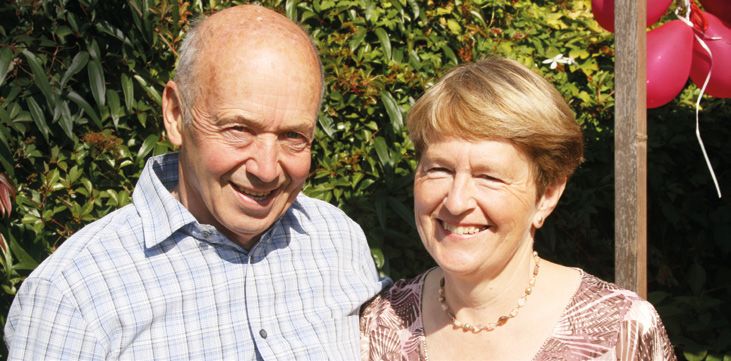
Your fundraising can
    change the world
    Our fundraisers do whatever they can to raise vital funds
    for dementia research, and over the past year, many
    of you came up with ingenious ways of supporting our
    work. Here are just a few highlights.
    30 days, 30 amazing challenges
    Lucas Brownlee is only 7, but that didn’t
    stop him taking on a spectacular fitness
    challenge during lockdown. “I did a
    different set of exercises every day for                                         Peter and Margaret Hargreaves

    30 days” says Lucas, whose great
    grandmother had been diagnosed with                                              Green fingers and some great fundraising
    Alzheimer’s disease. “I did a hundred press
    ups and then a hundred jumping jacks. I                                          For 44 years, Peter and Margaret Hargreaves have been creating a show-
    ran, rode my bike, kicked footballs and lots                                     stopping garden at their home in the village of Barton under Needwood in
    more.” These awesome efforts raised a                                 Lucas
                                                                                     Staffordshire. This labour of love has won fans and admirers from across the
    massive £1,054 for dementia research.                                 Brownlee   country, and they’ve been twice featured on the BBC’s Gardener’s World.

    Pub quizzes, but without the pub                                                 They’ve also been using their efforts to raise money for dementia research.
                                                                                     By hosting annual open days through the National Garden Scheme, they’ve
    Mark Wardle holds quizzes at The Royal Oak in Edwinstowe. After losing his       raised an incredible £18,000 for Alzheimer’s Research UK over the last 16
    mother-in-law June to dementia, he used his talents to raise money for           years. This summer, they were able to host a socially distanced version of
    dementia research. Lockdown didn’t stop Mark’s regulars attending his            their open day, raising £1,300.
    Mighty Quiz night, and by pitting their wits virtually they raised a whopping
    £760 (almost eight times the initial target)!
                                                                                       Feeling inspired?
     Fancy hosting your own Mighty Quiz?
                                                                                                If these wonderful efforts have left you feeling inspired then we’d love to hear
     At alzres.uk/think-jan-quiz you can order your own free Quizmaster                         from you! We’ve put together a brand new information pack, full of fun ideas
     pack and join teams up and down the country raising important funds                        for your own fundraising. You can download or order your own free copy at
     for dementia research.                                                                     alzres.uk/think-jan-fundraise

8    / Making progress                                                                                                                                        Making progress /    9
Our brains are amazing!                                                       We want more people to know about this, so we’re
                                                                                                                                                THINK
  Let’s look after them
                                                                                launching a new campaign called Think Brain
                                                                                Health. Over the coming year, we’ll be sharing
                                                                                eye-catching films and more to explain how:
                                                                                                                                            BRAIN
                                                                                                                                              HEALTH
  More than half of people in the UK know someone who is
  living with dementia. Yet many still don’t know much about                                                                       keeping connected,
  the condition, or that up to 40% of cases could be linked to
  risk factors we can influence. This month, we launch Think
  Brain Health - a campaign that gives people the information                                                                              staying sharp
  they need to make positive choices in their daily lives, and
  reduce their risk of developing dementia.
                                                                                                                                    and doing the kinds
  When it comes to our risk of developing dementia, our age and genetics                                                            of things we do to
  – which we can’t change - are important factors. This is why some people                                                          look after our heart,
  live a healthy life and still develop dementia.
  But research has shown us that there are also factors we can influence,       ….can help more and more people to reduce their risk of dementia.
  and that taking steps to look after our brains can reduce your likelihood
  of developing the diseases that cause dementia.
                                                                              “The last thing we wanted to do was add another burden to
                                                                              people’s daily lives,’ says Prof Jonathan Schott, our Chief
                                                                              Medical Officer. ‘But when you consider how only a third of
                                                                              people realise it’s possible to reduce their risk of developing
                                                                              dementia, it was clear that we had to get the right messages
                                                                              out there. As with all aspects of our health, the better
                                                                              informed we are, the easier it is to make positive choices. And when it
                                                                              comes to raising awareness that you can reduce your risk of developing
                                                                              dementia, we believe Think Brain Health can be a game changer.”

                                                                                Think Brain Health!
                                                                                      To find out how you can get involved with our exciting new campaign,
                                                                                      please visit alzres.uk/think-jan-brainhealth

10 / Making progress                                                                                                                          Making progress / 11
Creating change                                                              Ensuring access to future treatments

                                                                              “Many things could delay the roll-out of a new
 With your support, we use every opportunity                                  treatment but we can start breaking these barriers
 to prove that dementia research is a number                                  down today. We’ve outlined the obstacles a new drug
 one priority for the UK public. Samantha                                     could face, such as cost, or approval times, with our
                                                                              Treatments of Tomorrow report. And we’ve looked at
 Benham-Hermetz is our Director of Policy                                     how new treatments could impact the NHS with our
 and Public Affairs. She explains how we                                      Thinking Differently analysis. In 2021, our Dementia
 use our connections with the NHS, the                                        Access Taskforce will continue to convene regulators, researchers and
                                                                              the pharmaceutical industry - so we can work together and find creative,
 pharmaceutical industry and government to                                    effective solutions to each of these challenges.”
 speed up progress in research and represent you.
 Holding decision-makers to account
                                                                            Pushing for ever-faster progress
 “In 2019 the UK government made an election promise to double dementia
                                                                            “To speed up discovery and access to
 research funding and we remain encouraged by this commitment. Since
                                                                            new dementia treatments, there are
 then the coronavirus pandemic has taken precedence in discussions
                                                                            many areas where the government
 around public health, and rightly so, but we must ensure the government    should target investment and
 sticks to its promise. That’s why we’d like you to sign an important new   support. In 2021 we’ll make the case
 petition, urging the government to maintain its commitment.”               for such interventions, proving their
                                                                            cost-effectiveness and benefit to
                                                                            public health.”
            Sign our petition for                                           “We’ll also make a compelling case
            dementia research                                               for early diagnosis. Any future
                                                                            treatment will have the biggest
     People with dementia need our                                          impact if given at the earliest
     support more than ever, and                                            opportunity, but the majority of
     Alzheimer’s Research is urging                                         current diagnoses only occur when
     the government to deliver on its                                       a person’s dementia has developed
     election promise and double its                                        to a significant degree. On page 7,
     funding for dementia research.                                         you can read more about our efforts
     Please add your support today,                                         to detect dementia-causing diseases
     at alzres.uk/think-jan-petition                                        at a much earlier stage.”

12 / Positive steps for 2021                                                                                                    Positive steps for 2021 / 13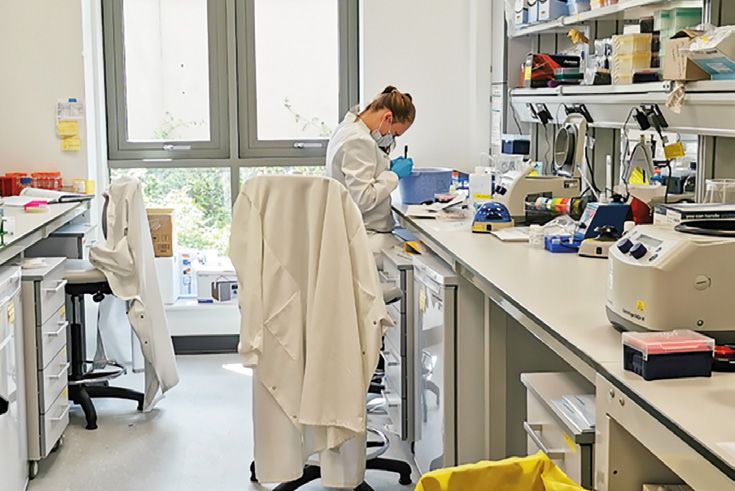
Getting back to the lab
  Dr Meghan Larin, a postdoctoral researcher, and Emma
  Randall, a research assistant, work as part of the UK
  Dementia Research Institute at Cardiff University. Here,
  they explain how their studies continued during lockdown
  and how you have helped their laboratories to reopen.
  What did your research look like while your lab was closed?
  Meghan: It was a mix of experimental planning and reading to catch up on
  the newest research in our field. It was difficult not to sit and physically
  investigate an idea though, especially the exciting ones! I also continued to
  support the students in our lab, and we had regular virtual meetings, partly
  to help everyone maintain some sense of normality.                                UK Dementia Research Institute at Cardiff University

  Emma: I was lucky, as I got to come
  in three times a week, as I was given                                           What did you miss the most?
  essential worker status throughout
  lockdown. It was quite surreal                                                  Meghan: I missed being able to do something hands-on and actually carrying
  though, as the whole building was                                               out experiments. While I really enjoy reading and coming up with new
  mostly deserted. All other work was                                             hypotheses for my research, it’s not much fun if you can’t test them out!
  home based, and this meant reading                                              Emma: I agree with Meghan; I’ve missed getting results back in the lab! It’s
  and planning experiments for when                                               really important for us to get our experiments up and running again and take
  labs reopened.                                                                  dementia research forward. That’s what we’re all here for and why everyone
  What is it like being back?                                                     has been eager to get back up to speed as quickly as possible.

  Meghan: A bit intimidating! With a
  long list of rules to follow the first
  day was stressful, but it’s much                                                  Show your support for early-career researchers
  easier now. When I stopped my
  experiments in March, I was starting                                                      The pandemic has created financial insecurity for the dementia research
                                                                                            sector and, as a result, 35% of researchers are sadly considering leaving
  some stem cell work. So I had to                                                          the field. But you can help us provide a confident future for talented
  organise all the necessary chemicals      A socially                                      scientists like Meghan and Emma. Please add your support today at
  and set up our lab before I could         distanced                                       alzres.uk/think-jan-help
                                            selfie!
  actually start.

14 / Positive steps for 2021                                                                                                                    Positive steps for 2021 / 15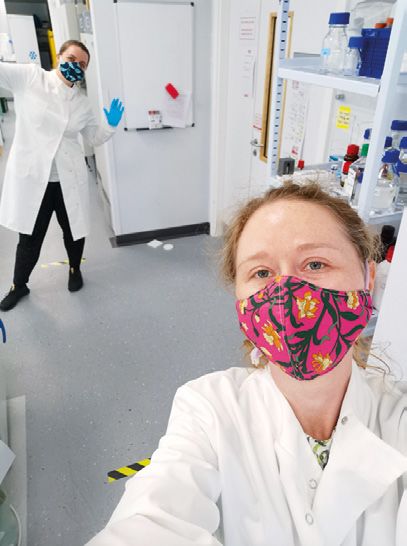
“This gives me a Tony and
Rosemary
remainder of his life. As a way of coping, Rosemary grew determined to
help dementia research.
feeling of hope”
Goddard
“Everything opened my eyes to the need for research into Alzheimer’s
disease. I’d dearly love for treatments to be found. So I threw myself into
raising money. My daughters, neighbours and the community rallied round.
This focus helped me cope with such a difficult situation.”
In 2009, Rosemary Goddard’s life Tony sadly passed away in December 2018. It was a year later that
was turned upside down when her Rosemary decided to update her Will and made the incredible decision to
husband Tony was diagnosed with include a gift to Alzheimer’s Research UK. “It gives me a feeling of hope to
have done it,” she says. “I want children to grow up in a world that can treat,
early-onset Alzheimer’s disease. or preferably even prevent Alzheimer’s and other dementias. But that can
He was just 63. Rosemary explains only happen with research. And so it makes sense to support Alzheimer’s
why she wants to protect future generations from the Research UK in every way I can.”
heartbreak she has experienced, and why she’s chosen to
support Alzheimer’s Research UK with a gift in her Will. “I’d dearly love for
dementia treatments
to be found,” says
supporter Rosemary
“Tony worked on our dairy farm for 35 years. But shortly after he retired he Goddard.
was diagnosed. It meant he was deprived of the retirement he’d always
hoped for and worked towards. It was an incredibly sad thing to happen.”
Rosemary first noticed changes in Tony’s behaviour when they moved into
a new home a few years earlier. Known for his DIY skills, Tony struggled in
renovating the house, finding it difficult to lay paving or do things he’d have
normally done with precision and ease. He also became withdrawn and
uninterested in his other hobbies and passions. But it was during a stressful
family trip to Canada in 2006 that it became clear something was seriously
wrong. Tony wasn’t himself, and after returning home and meeting his GP
he received his heartbreaking diagnosis.
“His illness shaped the next 12 years for all of us,” says Rosemary. “They were Help and advice
extremely difficult and emotionally exhausting. Tony would go missing and
lose all practical ability, but he was still in denial. My granddaughter once If you’re
you’rethinking
thinkingabout
aboutwriting
writingororupdating
updating your
your ownown Will,
Will, youyou
maymaybe be
said she wished she had known Grandad as he used to be.” interested
interested ininour
ourfree
freeguide.
guide.ItItexplains
explainsthethe legal
legal terminology
terminology involved,
involved, and
and
how how youbest
you can can provide
best provide
for thefor the people
people you love.youShould
love. Should
you wish youto,wish to,
it shows
After many years, Rosemary and the family made the difficult decision it
howshows how you
you could alsocould
leavealso
a giftleave a gift forresearch.
for dementia dementiaDownload
research.a Download
copy at
to move Tony into a care home, where he was looked after for the a copy at alzres.uk/think-jan-guide
alzres.uk/link, or if you prefer we can post or iftoyou prefer
you. we can
You can post
get in it tobyyou.
touch
You can get
emailing in touch by emailing giftsinwills@alzheimersresearchuk.org
giftsinwills@alzheimersresearchuk.org or by calling us on
01223
or us on 01223 896 606.
896 606.
by calling
16 / Positive steps for 2021 Positive steps for 2021 / 17
Dementia Research                                          Our Dementia Research Infoline is here to answer your questions,
                                                             and to help you understand more about dementia and research. We can

  Infoline – 0300 111 5 111
                                                             help you with:
                                                             y Information about the symptoms and causes of dementia, how to get
                                                               a diagnosis and what treatments are available.
                                                             y Information about dementia risk and how you can reduce yours.
  Do you have questions about the difference between
                                                             y Questions about current dementia studies, or the research that
  dementia and Alzheimer’s disease? Maybe you’ve been          Alzheimer’s Research UK is funding.
  worried about a relative during the pandemic? Or perhaps
                                                             y The research evidence behind myths, claims or current newspaper articles.
  you’ve read a news article about dementia research and
                                                             y The opportunity to take part in dementia research studies.
  you’re unsure what it means?
                                                             More than ever, people with and without dementia are needed to take
                                                             part in these research studies. Please call us on the number below to
                                                             register your interest.

                                                                                                                                                              e   search
                                                                                                                                                          ia R             In
                                                                We publish a range of booklets on dementia which                                     nt

                                                                                                                                                 e

                                                                                                                                                                            fo
                                                                are free, easy to read and provide trustworthy, up

                                                                                                                                              Dem

                                                                                                                                                                               lin
                                                                                                                                                                                   e
                                                                to date information. You can read and order the
                                                                booklets online from alzres.uk/think-jan-info.
                                                                If you prefer, give the Infoline a call and we’ll send
                                                                you copies. Some are available in other languages.                                03
                                                                                                                                                       00 1             11
                                                                                                                                                                  11 5 1

                                                              Call us on 0300 111 5 111
                                                                        We’re open from 9am-5pm (Mon - Fri, excluding bank holidays. Calls
                                                                        are charged at the same rate as 01 or 02 numbers and should be included
                                                                        in any free call packages you have). Alternatively you can email
                                                                        infoline@alzheimersresearchuk.org or write to Dementia Research
                                                                        Infoline, Alzheimer’s Research UK, 3 Riverside, Granta Park,
                                                                        Cambridge, CB21 6AD

                                                             The Dementia Research Infoline is a member of the Helplines Partnership.
                                                             All enquiries are treated as confidential. We regret that the Infoline doesn’t
                                                             offer counselling or guidance relating to the care of someone with dementia.
                                                             However, we can help you find services that offer support in these areas.

18 / Positive steps for 2021                                                                                                                  Positive steps for 2021 / 19
Tea-time teasers
As quickly as you can.... find the five microscopes.
Then, find the only word that’s printed in its own colour.
ORANGE GREY
VIOLET
PINK
RED
BLUE YELLOW
PURPLE
3 Riverside, Granta Park, Cambridge CB21 6AD.
Follow us on Tel: 0300 111 5555 Website: alzheimersresearchuk.org
facebook.com/alzheimersresearchuk Registered charity number: 1077089 and SC042474.
twitter.com/AlzResearchUK A member of the Association of Medical Research CharitiesYou can also read


