Western Australian Aboriginal Tourism Action Plan 2021 2025
←
→
Page content transcription
If your browser does not render page correctly, please read the page content below
Western Australian Aboriginal Tourism Action Plan
2021 – 2025
Acknowledgement of Country

The Government of Western Australia acknowledges the traditional
custodians throughout Western Australia and their continuing
connection to the land, waters and community.
We pay our respects to all members of the Aboriginal communities
and their cultures; and to Elders past, present and emerging.
Aboriginal and Torres Strait Islander people are advised that this
document may contain images of people who are deceased.

Tjina / Jina / Djina / Djena
Multiple languages, one overarching meaning - Discoveries
Discovery of our future, our pathways, our potential.
Discovery of our country, one foot at a time.

The Tjina: Western Australian Aboriginal Tourism Action Plan is a whole-of-government initiative,
with Tourism Western Australia as the lead agency

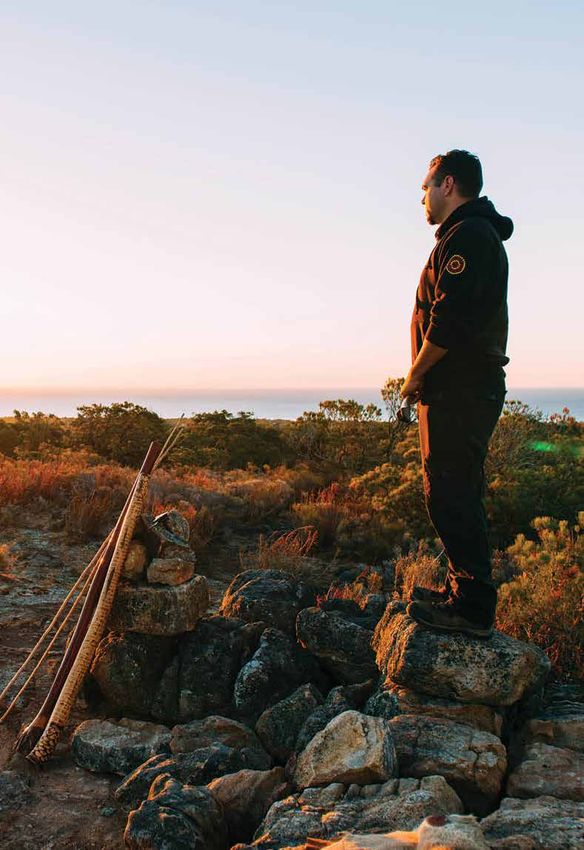
This page: Wula Gura Nyinda Eco Adventures, Shark Bay World Heritage Area
Front & Back Cover: Uptuyu Aboriginal Adventures, Oongkalkada, south of Derby

Design: Scamper Design + Nani Creative scamperdesign.com nani.com.au
Hon Mark McGowan MLA
Foreword                                          Premier of Western Australia

Aboriginal culture is an important part of Western Australia’s history that should
be celebrated. My Government values, celebrates and promotes Aboriginal
peoples’ culture, languages, relationships to country, knowledge, and heritage.
One of the great things about travelling is experiencing the sights, sounds, tastes and
traditions of local cultures. Visitors to Western Australia have long been fascinated
with our rich Aboriginal history and keen to take part in Aboriginal tourism activities.
Tourism represents a significant opportunity for Aboriginal people to secure
sustainable economic, social and job outcomes. The Tjina: Western Australian
Aboriginal Tourism Action Plan 2021-2025 (Tjina Plan) outlines how to seize this
chance to further strengthen our Aboriginal tourism offering.
The word ‘Tjina’ appears across several Aboriginal language groups and broadly
translates to ‘discoveries’. This is a fitting title for this plan as there is no better way
to experience Western Australia’s spectacular natural environment than through
an Aboriginal lens, learning from the stories and traditions handed down through
the generations.
Global travel restrictions due to the COVID-19 pandemic have had an impact on
Aboriginal tourism, which heavily relies on international visitors. The Tjina Plan has
been produced in line with the Western Australian Government’s WA Recovery Plan.
It will play an important part in ensuring we have an incredible range of Aboriginal
tourism experiences available – not only for the intrastate market, but also for out-of-
state visitors.
My Government is committed to making Western Australia the nation’s leading holiday
destination for authentic Aboriginal cultural tourism experiences and to make our
State the destination of choice for visitors who want to immerse themselves in our First
Australians’ culture to learn about their traditions, language, history and customs.
We are committed to enhancing the lives of Aboriginal people by strengthening
communities through access to education, health and employment opportunities.
For Aboriginal people, participating in the tourism industry can bring prosperity,
jobs, pride and preservation of culture as well as enabling families to remain
together on-country, sharing their knowledge with visitors.
Success takes a whole-of-government approach, in collaboration with the broader
tourism industry, to create an environment where Aboriginal people can sustainably
participate in the tourism sector. The Tjina Plan sets the direction for government
and the tourism industry to deliver transformational change for Aboriginal tourism
through job creation, establishing new innovative cultural experiences and
positioning Western Australia as an aspirational cultural holiday destination.
The opportunity is now for public and private sector partners to work together to
implement the Tjina Plan to make Western Australia the must-visit destination for
authentic Aboriginal cultural experiences.
Hon David Templeman MLA
                               Foreword                                                 Minister for Tourism

                               Western Australia’s rich, diverse and authentic Aboriginal cultural experiences give
                               us a unique point of difference over other holiday destinations and will play an
                               important role as international travel returns following the COVID-19 pandemic.
                               Visitors are eager to immerse themselves in an Aboriginal cultural experience tied
                               to the land and its people, where they can experience spectacular landscapes
                               while learning more about the oldest living culture on earth. In fact, research shows
                               experiences like these are on the wish list of 81 per cent of visitors to Western Australia.
                               As part of the McGowan Government’s COVID-19 Recovery Plan, we are focusing on
                               developing infrastructure in Western Australia, which will allow the State’s catalogue
                               of Aboriginal tourism experiences to grow, ensuring we are well placed to welcome
                               back all international visitors.
                               This will be achieved through the Tjina: Western Australian Aboriginal Tourism
                               Action Plan 2021-2025 (Tjina Plan) developed by Tourism Western Australia, along
                               with other government agencies and the Western Australian Indigenous Tourism
                               Operators Council.
                               The Tjina Plan identifies outcomes across the following three focus areas:
                               1. Make Western Australia the premier Australian destination for Aboriginal tourism
                                  through promoting the State’s extraordinary Aboriginal tourism experiences;
                               2. Build capacity for Aboriginal people to participate in the tourism industry
                                  through direct employment or by fostering the growth of sustainable Aboriginal
                                  tourism businesses; and
                               3. Facilitate the development of more authentic Aboriginal cultural tourism
                                  experiences across Western Australia to meet visitor demand.
                               There are many projects underway, or recently completed, that will create new
                               opportunities to grow Aboriginal tourism, including tourism precinct development
                               in Murujuga National Park at the Burrup Peninsula, joint management of national
                               parks and the new WA Museum Boola Bardip, to name a few.
                               The recent sealing of the Cape Leveque Road has improved visitor access to the
                               Dampier Peninsula, which will allow for the development of new Aboriginal tourism
                               experiences and, in turn, create jobs and provide economic benefits to the community.
                               The potential to grow this sector will not be achieved through the actions of
                               governments or the private sector alone – collaborative partnerships will be
                               the key. I look forward to seeing these and other Aboriginal cultural tourism
                               experiences evolve and to welcoming more Aboriginal people to participate
                               in the tourism industry.

Koomal Dreaming, Dunsborough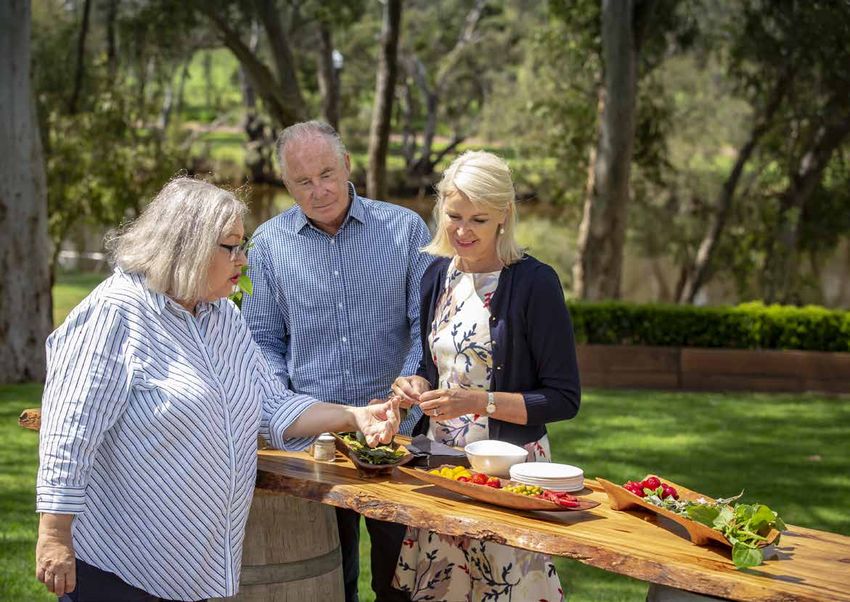
Our Purpose                                                     Our Objective
    The Tjina: Western Australian Aboriginal Tourism Action Plan provides government         To see Western Australia recognised as the premier
    with an agreed approach to align, collaborate and communicate cross-agency               destination for Aboriginal tourism in Australia.
    activities aimed at growing a diversified and sustainable Aboriginal tourism
    sector for Western Australia. The Tjina Plan builds on the successful work achieved      This will be achieved by:
    to date, leverages investment, and focuses on progressing the actions needed             • Encouraging visitors to disperse into regional
    to drive the long term vision.                                                             Western Australia to experience Aboriginal culture
    This is not an Aboriginal Tourism Strategy – it’s an Action Plan with an accountable     • Integrating Aboriginal tourism experiences as an
    set of actions to drive tangible outcomes.                                                 essential part of the mainstream tourism industry
    Over the four-year journey, government will work alongside the Western Australian        • Supporting the sustainability of existing Aboriginal
    Indigenous Tourism Operators Council and the Aboriginal tourism industry                   tourism businesses
    to realise a shared vision for Aboriginal tourism in the State.
                                                                                             • Embedding Aboriginal culture into Western
                                                                                               Australians’ way of life
                                                                                             • Showcasing the world’s oldest living culture as
                                              Our Vision                                       Aboriginal people share their stories and culture
                                                                                               with visitors from around the world
                                                                                             • Promoting Aboriginal culture and connection
                                                                                               to country.

                                                                                             The vision will be achieved through a partnership
                                                                                             approach led by Tourism Western Australia
                                                                                             (Tourism WA) across three key areas:
                                                                                             • Positioning Western Australia as the premier
                                                                                               Aboriginal tourism destination
                                                                                             • Building the capacity for Aboriginal people
                                                                                               to enter the tourism sector
                                                                                             • Facilitating the development of Aboriginal
                                                                                               cultural experiences.
   the place for sharing cultural experiences and enriching the lives of Aboriginal people

Tjina Western Australian Aboriginal Tourism Action Plan 2021-2025                                                                                     5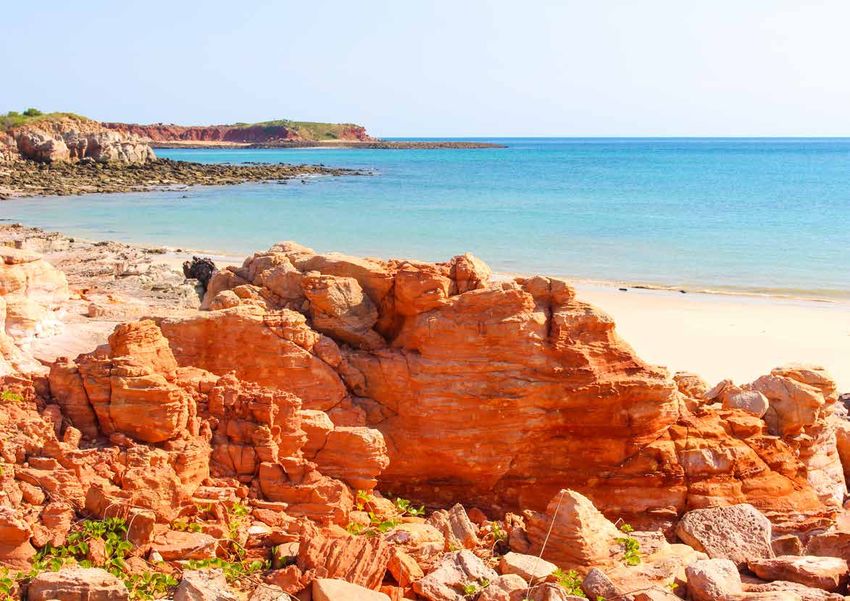
Major Partner

The Western Australian Indigenous Tourism Operators Council (WAITOC) is the peak
tourism body in Western Australia representing the interests of Aboriginal tourism
businesses. Serving the Aboriginal tourism industry since 2000, WAITOC is Australia’s
most successful industry-led association advocating and supporting the growth
of Aboriginal tourism, not only in Western Australia but also across the nation.
Governed by a board comprising Aboriginal tourism operators elected from across
the State, this authentic and connected leadership model means WAITOC provides
Tourism WA and broader government with the insights, knowledge and context
needed to support and enhance the Aboriginal tourism sector, making it the major
partner in the Tjina Plan process.
From inception nearly 20 years ago, WAITOC has played a significant role in
marketing the State’s suite of Aboriginal tourism experiences and in delivering
the biennial Australian Indigenous Tourism Conference. In recent years, WAITOC
has expanded its remit by delivering business development support to grow the
number of sustainable Aboriginal tourism businesses.
Today, WAITOC has some 140 Aboriginal tourism business members and more than
80 associate members from all regions of Western Australia. It represents not only
owner-operated tourism ventures but also family-run businesses and community
based enterprises, fully representing the diversity and creativity apparent across
the Aboriginal tourism sector.
In July 2019, Tourism WA and WAITOC entered into a four-year partnership to
support Aboriginal tourism. The agreement funds WAITOC’s marketing, business
support and governance activities with WAITOC funded to deliver key actions
identified in the Tjina Plan.
This partnership has been expanded to support WAITOC’s delivery of business
development activities in the greater Perth area and the Dampier Peninsula,
and for the hosting of the World Indigenous Tourism Summit in the near future.
The success of the Tjina Plan is dependent on a true partnership between Government
and WAITOC. The four-year journey needs to be taken together, along with Western
Australia’s Aboriginal tourism operators and communities that are in tourism.

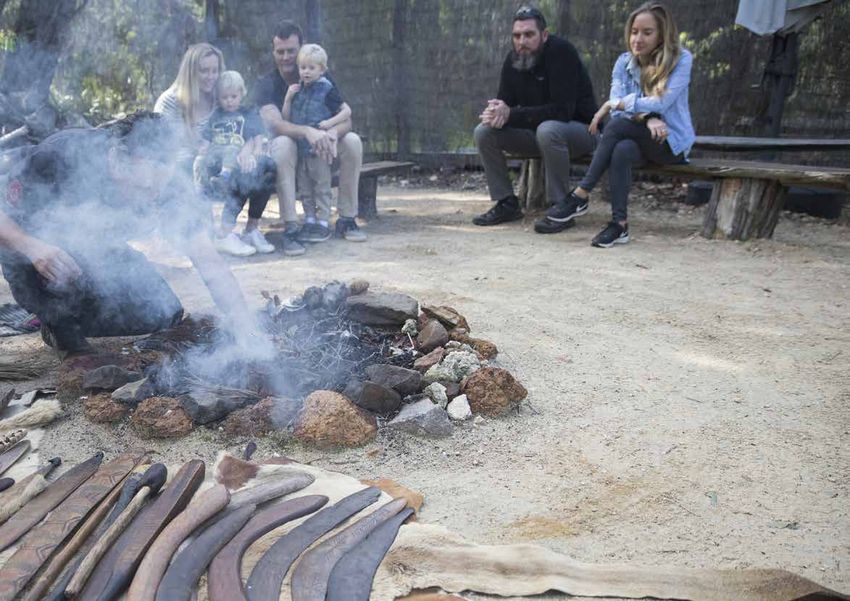
                                                                                        Ngurrangga Tours, Millstream-Chichester National Park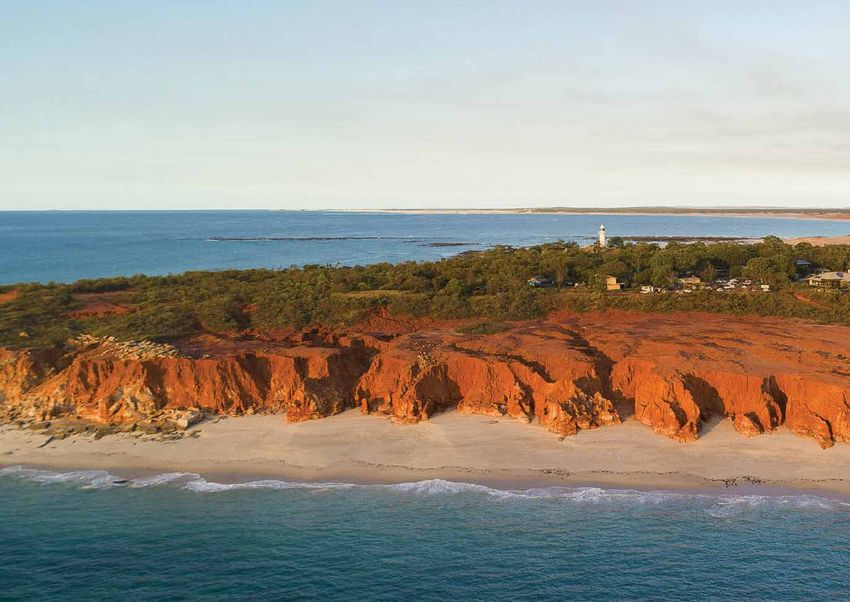
Tjina Western Australian Aboriginal Tourism Action Plan 2021-2025
COVID-19 Recovery                                                   Partners

COVID-19 has had an impact on the Aboriginal                        The Tjina: Western Australian Aboriginal Tourism             The WA Government hosted a tourism consortia that
tourism industry. The vulnerabilities of the wider                  Action Plan requires a truly collaborative approach          brought together government and interested parties
Aboriginal population have driven extra biosecurity                 to succeed. There is a great depth and diversity             to discuss the current status of the industry. The
precautions to safeguard those living in the State’s                among the Aboriginal tourism offering in Western             Aboriginal Tourism Consortium was jointly hosted
remote Aboriginal communities, meaning many                         Australia, and they cover a vast geographical                by the Minister for Tourism and the Minister for
communities have remained closed to tourists and                    distance. All partners play a vital role at various stages   Aboriginal Affairs in September 2019.
travellers.                                                         of program planning, idea identification, training,
                                                                                                                                 As part of the Government’s commitment to foster
                                                                    nurturing, building and supporting each business.
The State Government’s $5.5 billion WA Recovery Plan,                                                                            jobs and economic growth in the tourism industry,
sets a pathway for economic and social recovery. The                The Tjina Plan integrates with broader government            this consortium was integral to engaging and
Recovery Plan identifies a package of investment                    plans including the Government’s WA Recovery Plan            collaborating with the Aboriginal tourism sector
that positively impacts the broader tourism industry                aimed at recovering the overall economic and social          to further inform the implementation of the WA
including initiatives that specifically support Aboriginal          environments as a result of COVID-19 as well as              Government’s jobs and economic diversification
tourism, and which are identified as action items in the            Tourism WA’s Corporate Plan 2020-2021. The Tjina Plan        agenda. The outcomes from the Aboriginal
Tjina Plan.                                                         also provides synergies to the Action Plan for Nature-       Tourism Consortium informed government policy
                                                                    based Tourism in Western Australia 2019 and 2020.            development and helped to shape the Tjina Plan.
                                                                    Within Western Australia, the Aboriginal Engagement          The Tjina Plan acknowledges the existing partnership
                                                                    Directorate of the Department of the Premier and             between the WA Government and WAITOC. Other
                                                                    Cabinet works to build positive relationships between        organisations that play a role in supporting the
                                                                    Aboriginal people and the WA Government to deliver           implementation of the Tjina Plan include:
                                                                    mutual and lasting benefits. Specifically, Tourism WA’s      • Indigenous Business Australia (IBA)
                                                                    State Government partners in the delivery of the Tjina :
                                                                                                                                 • Indigenous Land and Sea Corporation (ILSC)
                                                                    Western Australian Aboriginal Tourism Action Plan are:
                                                                                                                                 • National Indigenous Australians Agency (NIAA)
                                                                    • Department of Biodiversity, Conservation
                                                                       and Attractions (DBCA)                                    • Business Events Perth
                                                                    • Department of Jobs, Tourism, Science                       • Tourism Australia
                                                                       and Innovation (JTSI through Tourism WA)                  • Tourism Council Western Australia
                                                                    • Department of Local Government,                            • Western Australian Regional Tourism Organisations
                                                                       Sport and Cultural Industries (DLGSC)                       - Australia’s Coral Coast
                                                                    • Department of Planning, Lands and Heritage                   - Australia’s Golden Outback
                                                                       (DPLH) - Aboriginal Heritage                                - Australia’s North West
                                                                                                                                   - Australia’s South West
                                                                    • Department of the Premier and Cabinet (DPC)
                                                                                                                                   - Destination Perth
                                                                       - Aboriginal Engagement Directorate
                                                                    • Department of Primary Industries
                                                                       and Regional Development (DPIRD)
                                                                    • Department of Training and Workforce
                                                                       Development (DTWD)
                                                                    • Department of Transport (DoT) including
                                                                       Main Roads WA
                                                                    • Small Business Development Corporation (SBDC)

Tjina Western Australian Aboriginal Tourism Action Plan 2021-2025                                                                                                                    9
Aboriginal Tourism Snapshot

Aboriginal tourism is a fundamental part of the WA Government’s vision for a                       Increased tourism opportunities will provide additional employment throughout
robust and resilient Western Australian tourism industry that creates jobs and                     Western Australia that supports Aboriginal families remaining on-country. It is
economic prosperity in the city and the regions. Aboriginal cultural experiences                   an industry where skills gained are transferable to future employment and where
contribute to the State’s unique identity, setting Western Australia apart from other              industry champions are created, who become role models to inspire youth into
holiday destinations.                                                                              the workforce.
There are more than 120 Aboriginal tourism businesses in Western Australia that                    Latest visitor research shows 81 per cent of visitors to Western Australia are
contribute 339 full time employee jobs (FTE) and $43.8 million in economic impact1.                interested in participating in an Aboriginal tourism experience. However, less
However, the benefits of Aboriginal tourism go far beyond financial value and                      than one in five visitors (17 per cent) have this experience2, demonstrating that the
giving our State a tourism brand. They include tangible and lasting differences to                 current supply does not match the continually increasing demand.
individuals, families and communities, ongoing connection to country, sharing of
                                                                                                   The Tjina Plan addresses the gap between the supply and demand for
culture, historical awareness and more.
                                                                                                   Aboriginal tourism experiences, through cross-government agency initiatives.

                                                                                                                       Aboriginal tourism businesses
                                                                                                                       in Western Australia

                  of visitors to Western                   Only
                 Australia are interested                                                                                    million in economic impact
                  in participating in an
                   Aboriginal tourism
                        experience
                                                           have this
                                                           experience
                                                                                                                         full time employee jobs

                                                                          1 Contribution of Aboriginal Tourism Businesses to the WA Economy 2016-17 (ACIL Allen)   2 Visitor Experience and Expectations Research 2019-20 (Tourism WA)

10                                                                                                                                           Tjina Western Australian Aboriginal Tourism Action Plan 2021-2025
Narlijia Experiences, Broome Tjina Western Australian Aboriginal Tourism Action Plan 2021-2025
Dale Tilbrook Experiences, Swan Valley
A. Positioning Western Australia as the premier Aboriginal tourism destination

1. To promote the State’s extraordinary authentic                   vii. Tourism WA will work with WAITOC to facilitate         2. To support more Aboriginal tourism events
   Aboriginal cultural tourism experiences:                              opportunities for Aboriginal people and                   that showcase authentic Aboriginal culture
                                                                         Aboriginal tourism businesses to be integrated            and traditions:
                                                                         into established mainstream tourism operations
i     Tourism WA will support WAITOC as the peak                         and itineraries.
      industry body representing Aboriginal tourism                                                                             i.    Tourism WA will support emerging and established
      businesses and encourage the sustainability of                viii. Tourism WA will work with partners to deliver an            regional events that celebrate authentic Aboriginal
      WAITOC into the future.                                             Aboriginal Tourism Recovery Program that aims               cultural experiences with funding through the
                                                                          to retain a diversity and density of signature              Regional Aboriginal Events Scheme.
ii.   Tourism WA will continue to celebrate the State’s                   Aboriginal tourism experiences to meet inbound
      extraordinary Aboriginal culture through its                        visitor demand.                                       ii.   Tourism WA will encourage the integration of
      global brand campaigns.                                                                                                         Aboriginal cultural experiences into Tourism WA
                                                                    ix. Tourism WA together with WAITOC will undertake                sponsored sporting and cultural events.
iii. Tourism WA will integrate Aboriginal cultural                      an audit of Aboriginal tourism businesses to
     experiences into core marketing activities, to                     identify the range of cultural tourism experiences      iii. Tourism WA will provide financial and conference
     showcase the diverse range available in Western                    that can be promoted to domestic and                         support to WAITOC to deliver the World
     Australia.                                                         international visitors.                                      Indigenous Tourism Summit in Perth.
iv. WAITOC will deliver marketing and promotional                   x.   Tourism WA will work with DLGSC to leverage            iv. Tourism WA will continue to provide financial
    activities to create awareness and drive visitors to                 promotional outcomes from Aboriginal cultural              and conference support to WAITOC to deliver the
    the State’s suite of Aboriginal tourism operations                   programs offered by cultural institutions. This will       biennial Australian Indigenous Tourism Conference.
    and events.                                                          include showcasing the dedicated Aboriginal
v.    Tourism WA will grow the visibility of authentic                   gallery and all new exhibitions, lifelong learning     3. To create a uniquely Western Australian
      Aboriginal cultural tourism experiences to the                     programs and tourism products within the new              cultural welcome for visitors:
      international market by supporting and assisting                   WA Museum Boola Bardip.
      operators to expand their distribution channels                                                                           i     The WA Government will encourage the public and
      and encourage attendance at trade events.                                                                                       private sectors to use appropriate local Aboriginal
vi. Tourism WA will work with Tourism Australia (TA)                                                                                  language in naming (including dual naming) of
    to increase the number of Western Australian                                                                                      tourism assets.
    Aboriginal tourism businesses featured in TA’s                                                                              ii.   Tourism WA will use Aboriginal language for
    international consumer marketing programs.                                                                                        welcomes and place names in activities and
                                                                                                                                      marketing assets.
                                                                                                                                iii. Tourism WA and DLGSC will work with Tourism
                                                                                                                                     Australia to encourage a culture of authentic
                                                                                                                                     Aboriginal art, products and artefacts to be
                                                                                                                                     supplied, while the leisure market will be
                                                                                                                                     encouraged to purchase authentic products
                                                                                                                                     across Australia.
                                                                                                                                iv. Tourism WA will initiate discussions with the
                                                                                                                                    State’s gateway infrastructure providers, including
                                                                                                                                    ports and airports, to integrate Aboriginal
                                                                                                                                    cultural welcomes in their facilities and services.

Tjina Western Australian Aboriginal Tourism Action Plan 2021-2025                                                                                                                       13
Go Cultural Aboriginal Tours & Experiences, Yagan Square, Perth
Tourism training program –                                          B. Building the capacity for Aboriginal people to enter the tourism sector
Wunambal Gaambera

                                                                    1. To encourage the engagement of Aboriginal              iii. Tourism WA and DTWD will encourage mainstream
                                                                       people in the tourism and hospitality industry              tourism operators to employ Aboriginal people via
                                                                       through direct employment:                                  better use of the Aboriginal Jobs Board, use of the
                                                                                                                                   resources available at the Jobs and Skills Centres,
                                                                                                                                   and use of the WA Government’s traineeship/
                                                                    i.    Tourism WA, WAITOC and DTWD will partner with            apprenticeship scheme incentives.
                                                                          tourism industry and training partners to deliver
                                                                          vocational education and training opportunities     iv. DBCA will facilitate tour guide training through the
Bush classroom in Wunambal Gaambera, Kimberley
                                                                          to enable Aboriginal people to secure skills and        Aboriginal Ranger Program so that participants
                                                                          job placements within the sector.                       can broaden their future employment prospects to
A classroom in the bush is creating a win, win, win
                                                                                                                                  include tourism.
situation in Wunambal Gaambera Country in                           ii.   DTWD and Tourism WA will create marketing
WA’s north.                                                               collateral to promote hospitality and tourism
North Regional TAFE is delivering the Certificate 1                       career opportunities to Aboriginal people           3. To support Aboriginal people with an aspiration
Tourism Training Program, customised in this                              through the Jobs and Skills Centres network.           to start their own Aboriginal tourism business:
instance as an entry level to tour guiding.
                                                                    iii. DTWD and TAFE will ensure tourism and hospitality
The first win is for the tourism industry with                           training is being made more appropriate and          i.    Tourism WA will continue to support WAITOC’s
Wunambal Gaambera sharing the unique Wanjina-                            accessible to potential Aboriginal students and            business/product development program, and
Wunggurr culture and natural wonders with visitors                       the tourism sector.                                        its efforts to leverage further funding through
from Kimberley cruise ships.                                                                                                        partners such as IBA and NIAA, for coaching/
The second win is for the Wunambal Gaambera                                                                                         support activities.
                                                                    2. To encourage mainstream tourism operators
community which is now better equipped to educate                                                                             ii.   Tourism WA will investigate incubation hubs, or
                                                                       to engage existing Aboriginal tourism business
visitors about their culture and caring for Country.                                                                                small business support models, for Aboriginal
                                                                       owners to deliver cultural experiences:
The third win is for the individual students who gain                                                                               tourism businesses.
a qualification and the skills to go with it, so they
                                                                    i.    Tourism WA and WAITOC will build a database         iii. DPIRD will support Aboriginal business
can deliver a tourism service and gain employment.
                                                                          of existing skilled Aboriginal tourism operators,        development in the regions through the
Training was delivered on-country over three, week-                                                                                Aboriginal Business Governance and Leadership
long visits, with some students travelling up to 11                       guides and Welcome to Country performers
                                                                          that mainstream tourism operators can engage             Program and other targeted Aboriginal
hours to attend. Training took place throughout the                                                                                economic development initiatives designed
day from the Munurru (King Edward River) Uunguu                           to deliver cultural activities, welcomes and
                                                                          story-telling.                                           to build capacity, support new start-ups, grow
Ranger Base Camp, a ‘live’ environment which saw                                                                                   existing business and facilitate access to funding
students engage with visitors staying at the camp                   ii.   WAITOC and Tourism WA will investigate the               and capital.
ground and visiting art sites. Wunambal Gaambera                          development of a booking service to improve
Aboriginal Corporation funds the tourism training                         access to and ease of engaging Aboriginal           iv. SBDC will provide one-to-one business advisory
program from its Uunguu Visitor Pass income.                              tourism operators to deliver cultural experiences       support to businesses as well as access to low
                                                                          for mainstream tourism operators and events.            cost business skills workshops through existing
More than 60 Munurru rock art tours were delivered
                                                                                                                                  programs in the metropolitan area.
by Wunambal Gaambera people in 2019 and
four cruise vessels were welcomed ashore on the
Uunguu Coast with smoking ceremonies, junba
(traditional dance) and guided rock art tours.

Tjina Western Australian Aboriginal Tourism Action Plan 2021-2025                                                                                                                     15
Kooljaman at Cape Leveque, Dampier Peninsula
C. Facilitating the development of authentic Aboriginal cultural experiences                                                  Dampier Peninsula

1. To support the Murujuga Aboriginal Corporation                   2. To support communities on the Dampier
   to achieve sustainable tourism outcomes within                      Peninsula to develop the potential to be a
   Murujuga National Park, Burrup Peninsula:                           significant Aboriginal tourism destination:

i.    The WA Government supports the progression of                 i.    Tourism WA and WAITOC will showcase the
      the World Heritage nomination for Murujuga (the                     Dampier Peninsula’s new accessibility and
      Dampier Archipelago and surrounds, including the                    tourism amenities in marketing and promotional
      Murujuga National Park) in partnership with the                     activities now that the Cape Leveque Road has
      Murujuga Aboriginal Corporation.                                    been fully sealed.
ii.   The WA Government and partners will support                   ii.   DPC and the Kimberley Development Commission        Southern Cross Cultural Walks, Dampier Peninsula
      the staged development of a tourism precinct                        (KDC) will provide administrative support for the
      at Conzinc Bay to include a Living Knowledge                        Dampier Peninsula Working Group to address land
      Centre, Camping with Custodians campground,                         tenure and other matters to support Aboriginal      The Dampier Peninsula, in Western Australia’s
      jetty and other tourism facilities, and to facilitate               economic development through tourism.               Kimberley region, is a unique location with significant
      tour enterprises.                                                                                                       environmental, cultural and heritage values.
                                                                    iii. Tourism WA and KDC will support Aboriginal
                                                                         communities on the Dampier Peninsula to              It has one of the highest concentrations of Aboriginal
                                                                         secure tourism economic and employment               tourism offerings in Australia, and now more people
                                                                         outcomes through investment in new visitor           have the opportunity to experience it thanks to a
                                                                         day-use facilities and development of new            $65 million joint State Commonwealth Government
                                                                         accommodation infrastructure.                        funded project to seal the remaining 90 km of the
                                                                                                                              Broome-Cape Leveque Road, completed in late 2020.
                                                                    iv. DBCA will work with Aboriginal traditional owners     Remote locations often have access issues, none
                                                                        on planning for the establishment of the proposed     more so than those in the Kimberley region during
                                                                        marine park in the Buccaneer Archipelago and          the wet season.
                                                                        associated tourism opportunities.
                                                                                                                              This project facilitates year-round access to the
                                                                    v.    DPIRD will support the development of new and       Peninsula’s communities and key attractions and
                                                                          existing tourism businesses through a targeted      is seen as the catalyst to unlocking the Dampier
                                                                          Dampier Peninsula business support program.         Peninsula’s true tourism potential.
                                                                    vi. WAITOC and Tourism WA will provide capacity           The WA Government is working with the Aboriginal
                                                                        building support to diversify and increase the        communities to address land tenure and
                                                                        cultural touring experiences available to visitors.   infrastructure issues, invest in day-use facilities for
                                                                                                                              visitors, and provide capacity building support to
                                                                                                                              diversify and increase the cultural tourism offerings
                                                                                                                              on the Dampier Peninsula.
                                                                                                                              The expected results include job creation, financial
                                                                                                                              returns for operators, a boost in local skills and
                                                                                                                              enterprise capacity, and an increase in unique visitor
                                                                                                                              experiences.

Tjina Western Australian Aboriginal Tourism Action Plan 2021-2025                                                                                                                   17
Camping with Custodians Kimberley Coastal Expeditions – 3. To expand, promote and diversify the
Wijingarra Tours Camping with Custodians campground
network of Aboriginal owned and operated
Camping with Custodians is an exciting,
accommodation offerings:
Australian-first initiative that creates unique
touring experiences for travellers, and provides
income, employment and training opportunities i Tourism WA and WAITOC will continue to provide
for Aboriginal communities across the Pilbara support to the existing Camping with Custodians
and Kimberley. campgrounds during their foundation years, to
expand the experiences available to visitors at
Built on Aboriginal lands along key touring routes,
each site and create resilient and sustainable
Camping with Custodians campgrounds offer a
enterprises that provide economic and job
high level of amenity and allow tourists to meet
outcomes for Aboriginal communities.
locals and learn about Aboriginal culture and
traditions. ii. Tourism WA will project manage the development
of additional campgrounds, including the
The campgrounds support Aboriginal people living
immediate priority destination of the Dampier
on Country and encourage the inter-generational
Peninsula where an additional three campgrounds
transfer of cultural knowledge which is shared
will be created over the next two years, including at
with visitors through tours, art and story-telling.
Djarindjin and Lombadina.
Camping with Custodians sites are supported by
iii. Tourism WA and WAITOC will continue to promote
Tourism WA through the pre-planning, approvals,
the Camping with Custodians network of
land assembly and construction stages, with Wijingarra Tours, Raft Point, Kimberley
campgrounds to visitors.
the host communities provided with ongoing
training, capacity building, business development
and marketing support. There are currently One of the fastest growing tourism sectors in
five operational Camping with Custodians Western Australia is cruising and an Aboriginal
campgrounds across the north west, with plans tourism venture in the Kimberley is getting aboard.
for three more to be included in the network over Wijingarra Tours is a family owned and run
the next couple of years. business that provides cultural experiences at
remote Kimberley locations for passengers on
board coastal expeditions.
Each year between May and September, a guide
crew locates to a base camp 180 kilometres north
of Derby for the duration of the cruise season. The
guides welcome cruise passengers to Aboriginal
culture and provide guided walks to nearby rock art.
Art provided through the Mowanjum Art and Culture
Centre is sold on a commission basis to visitors, with
some works produced and sold on site.
Tourism WA has worked closely with Wijingarra
Tours to help build capacity. The venture is a win-
win with a local business working with cruise lines
to offer passengers an extraordinary insight into
Aboriginal culture.
Mimbi Caves Tours & Campground, near Fitzroy Crossing
18 Tjina Western Australian Aboriginal Tourism Action Plan 2021-20254. To explore opportunities that support the 6. To increase Western Australia’s conservation
Culture in the Parks
development of cultural tourism through estate by 20 per cent through the Plan for
Indigenous Land Use Agreements: Our Parks initiative, creating cultural tourism
opportunities for Aboriginal people:
i. Through the Yamatji Nation Indigenous Land Use
Agreement, the WA Government has committed i. DBCA will lead the implementation of Plan for Our
funds to upgrade tourism facilities at Pink Lake Parks through Indigenous Land Use Agreement
and Lucky Bay and will work with Yamatji Nation negotiations, participating in on-country trips and
to maximise Aboriginal tourism opportunities in undertaking management planning and land
the MidWest. assembly processes to create new conservation
reserves jointly vested and managed by
5. To promote and diversify the range of quality Traditional Owners.
Aboriginal tourism offerings to meet the ii. DBCA will implement the Plan for Our Parks
demand of the cruise market: initiative in consultation with traditional owners
to conserve Western Australia’s unique places,
i Tourism WA will support the inclusion of Aboriginal and provide new and enhanced tourism
tourism enterprises into shore excursion programs destinations and experiences. Mookaroo First Rains Community Festival,
across the State’s cruise destinations. Leschenault Peninsula Conservation Park
ii. Tourism WA will support commercial Aboriginal
tourism products on the Kimberley coast Western Australia has a wealth of national parks
delivering cultural tourism experiences to the and conservation reserves which, by their very
growing expedition cruise sector. nature, provide a fitting setting for authentic and
memorable Aboriginal cultural tourism experiences.
DBCA’s Culture in the Parks program shares potential
tourism ideas in local communities and works with
Aboriginal Ranger Program interested Aboriginal people to get these ideas off
the ground.
The $20 million Aboriginal Ranger Program administered by DBCA is empowering people and communities in Assistance is practical, including help with licence
remote and regional Western Australia as traditional owners manage country and become stronger role models applications, waiving of licence fees to help get
for young people. Under the program, Aboriginal organisations employ and train rangers to perform environmental the business started and other on-ground support.
conservation work, cultural site protection, traditional knowledge transfer and tourism management. Business support and marketing is provided
through WAITOC.
Rangers and their communities are seeing social, cultural and economic benefits including strengthening
community wellbeing, identity and pride. Under the Culture in the Parks program, the number
of Aboriginal operators licensed to operate in
Looking to the future, the program hopes to continue to support Aboriginal women to manage country and national and conservation parks has grown from
strengthen the capacity in Aboriginal communities. nine to 30 in five years.
‘I like to learn about culture, knowledge from elders and passing that knowledge to younger generation. Tourism experiences include walking tours, bus and
The oldies loves to come out. We engage the young people through the school. The young people come out boat tours, bush tucker tasting and sharing culture,
for trips. Troubled kids get out on country and this changes their attitudes to life.’ language and stories. These experiences give visitors
Ngurrara Woman Ranger, Karajarri-Ngurrara Desert Fire and Biodiversity Project an understanding and respect for Aboriginal culture
and a different view of the State’s parks.
Tjina Western Australian Aboriginal Tourism Action Plan 2021-2025 19Kings Park Aboriginal Tours Boorna Waanginy –
and Cultural Experiences The Trees Speak
Kings Park and Botanic Garden is Perth’s most visited The Dreamtime stories of the Aboriginal six seasons of WA’s
tourist attraction and the ideal place for visitors to immerse south west were the stars of a spectacular opening Perth
themselves in Nyoongar culture through walking tours, self- Festival event in 2017 and 2019.
guided trails, programs for school students and public artworks. More than 400,000 people came to see Kings Park transformed by
It is also the ideal location to look out from the scarp of Kaarta a 1.5 kilometre spectacular light and sound walk through event.
Koomba and imagine what the view would have been like for
The free event ran over four nights, each year, from 8pm to 11pm
the Whadjuk Nyoongar people before the city was established.
giving everyone who wanted to a chance to experience this
In 2019 Kings Park and Botanic Garden (Kaarta Koomba) important cultural event.
welcomed two new Aboriginal cultural tourism operators,
Visitors learned about the Dreamtime stories through an
'Nyungar Tours' and 'Go Cultural Aboriginal Tours and
immersive tunnel of light and sound projected onto the
Experiences' to deliver tours. These owner-operated businesses
towering trees along Fraser Avenue. Interactive experiences
are both proving popular with tourists from around the world.
lead them into the State’s Botanic Garden, with the experience
With a long Aboriginal history and deep spiritual connections culminating in a strong cultural and environmentally
for the Whadjuk Nyoongar people, Kaarta Koomba is an ideal sustainable take home message entitled ‘Seeds of Change’.
location in which to immerse visitors in this ancient element of
This memorable installation was created with guidance from
Western Australian culture and Kings Park is excited to promote
Nyoongar community Elders, Whadjuk Working Party members
these new products and help grow local Aboriginal businesses.
and the South West Aboriginal Land and Sea Council.
Boorna Waaginy, Kings Park. Image by Toni Wilkinson
7. To implement the Aboriginal tourism initiatives iii. In partnership with traditional custodians and 8. To support, promote and leverage tourism
identified in the Two-Year Action Plan for WAITOC, DBCA will support Aboriginal cultural through Western Australia’s authentic and
Nature-based Tourism in Western Australia tourism experiences and events at lands managed diverse Aboriginal arts and culture sector:
2019 and 2020 to establish more signature and by the department to meet visitor demand.
Aboriginal cultural experiences in Western iv. Rottnest Island Authority, a DBCA agency, will work i. DLGSC will continue to support and grow the
Australia’s parks: to deliver the initiatives detailed within the Rottnest annual Revealed WA Aboriginal Art Market
Island Management Plan 2020-2024 (RIMP), under and Exhibition that features Western Australian
the strategic focus area: engage with, promote Aboriginal artworks by artists from across the
i. DBCA will partner with Aboriginal groups to
and preserve the Island’s environment and cultural State and provides opportunities for artwork sales.
manage country and to explore opportunities
heritage, with a focus on Aboriginal cultural
to provide diversified visitor experiences with ii. DLGSC will continue to support the Regional
heritage. These initiatives detailed in the RIMP are
the support of WAITOC, including through the Exhibition Touring Boost (RETB), which aims to
consistent with the Two-Year Action Plan for Nature-
Aboriginal Ranger Program. share Western Australian culture more widely
based tourism in Western Australia 2019 and 2020.
ii. DBCA, with the support of WAITOC, will continue within WA and attract visitors, through touring
v. DBCA will partner with Aboriginal organisations high quality visual arts exhibitions and by
the Culture in the Parks program, which aims
and artists, and DLGSC, to reflect Aboriginal culture promoting cultural tourism opportunities through
to grow and diversify Aboriginal tourism
and heritage in interpretation materials in parks. engagement with Aboriginal Artists, Aboriginal
experiences and events in national parks and
other conservation reserves. vi. DBCA will work with event organisers and partners Art Centres and Aboriginal communities.
to investigate opportunities for cultural events,
similar to the Kings Park Boorna Waanginy event.
20 Tjina Western Australian Aboriginal Tourism Action Plan 2021-2025iii. DLGSC will support and promote Western 9. To deliver quality major cultural attractions iii. The State Government has committed $50 million
Australia’s regional and remote Aboriginal that celebrate Aboriginal people, culture, art towards the planning, design works and seed-
Art Centres, artists and cultural organisations and lands: capital for an Aboriginal Cultural Centre in Perth.
through the Regional Art and Culture Investment
iv. DPC will take a lead role in developing and
Program’s Aboriginal Business Development and
i. DLGSC has released the WA Cultural implementing a plan for the future use of the
Capacity Building Program and the Aboriginal
Infrastructure Framework 2030+ for the WA former Prison (Quod) on Wadjemup (Rottnest
Arts Commissioning Fund. Aboriginal Art Centres,
Government that incorporates the priority focus Island) through the formal recognition of the
artists and cultural organisations deliver quality
area to maintain and celebrate WA’s Aboriginal history of Wadjemup and the deep meaning and
creative and educational experiences for visitors.
art, culture and heritage, and highlights connection the island has for its Traditional Owners
iv. DLGSC and DPIRD will support the long-term opportunities such as: and for Aboriginal people across the State.
re-establishment of the Gwoonwardu Mia Gascoyne
- Identifying synergies between initiatives v. DPLH will work to deliver the initiatives detailed in
Aboriginal Heritage and Cultural Centre.
supporting Aboriginal Art Centres, Aboriginal the Fremantle Prison Masterplan which includes
v. DLGSC will facilitate the delivery of online Cultural Centres, Aboriginal Ranger Programs, Connect to Aboriginal Experiences and Stories
portal(s) for Aboriginal art sales. The initiative and Aboriginal tours and experience operators. – be a place for truth-telling, reflection, healing
will foster collaboration and promote Western - Advocating for the incorporation of Aboriginal art, and reconciliation. Partner with Aboriginal
Australian works on the local, national and culture, language and heritage (contemporary people, families and communities to explore new
international stage. and traditional) in infrastructure design across WA. and meaningful ways for Aboriginal stories and
experiences to be told and heard at the Prison.
vi. Tourism WA to work with the State’s network of ii. The new WA Museum Boola Bardip will feature
Aboriginal Art Centres to introduce tour delivery Aboriginal stories, collections and programs. vi. At Whiteman Park DPLH will work with Aboriginal
experiences to add a dynamic visitor experience people to develop a cultural tourism experience
and to add to the sustainability of the art centres. and improve visitor interpretation.
Revealed WA Aboriginal Art Market and Exhibition
Art has proved to be a fantastic medium to connect visitors to Public attendance at the 2019 Revealed Art Market increased
Western Australia’s rich Aboriginal culture, history and stories. by 72 per cent on the previous year, with a record 22,681 visitors
While just 13 per cent of Australia’s Aboriginal and Torres generating more than $619,235 in sales. The sales in 2019 alone
Strait Islander population lives in WA, regional Aboriginal art totalled almost 30 per cent of Revealed’s sales history. The
production in the State makes up approximately 60 per cent 2020 Revealed Art Market had to be cancelled due to COVID-19
of Australia’s Aboriginal art centre economy3. restrictions. The Revealed Exhibition, however, was uploaded to
an online catalogue, which generated $135,104 in artwork sales,
This high rate of contribution to the national Aboriginal art
with buyers as far afield as the USA and Switzerland.
industry is a direct result of the State’s continued investment
in initiatives like the Revealed: Emerging WA Aboriginal Mangkaja Arts Resource Agency is a successful Aboriginal owned
Art program, which supports and fosters emerging artists. art centre and studio space located in Fitzroy Crossing. By taking
Revealed has grown exponentially over its 12-year history and part in the Revealed program, Mangkaja artists have gained
now celebrates and supports Aboriginal art and artists through access to new audiences and a growing market, and developed
a one-day art market, month-long exhibition, professional new techniques which contributes to the gallery’s economic,
Sonia Kurrura having a great time with a giant development and artists’ symposium. social and cultural growth for the Fitzroy Valley community.
gold Perspex masterpiece! © Mangkaja Arts 2017
3. Australian Institute of Health and Welfare. (2017). Aboriginal and Torres Strait Islander health performance framework 2017 report: Western Australia. Canberra: Australian Institute of Health and Welfare.
Tjina Western Australian Aboriginal Tourism Action Plan 2021-2025 2110. To support Aboriginal employment and iii. DLGSC will encourage appropriate Aboriginal
economic development through trails projects: tourism opportunities in the implementation
of the “WA Hiking Strategy, 2020-2030”.
i. DLGSC, in partnership with DBCA, will develop iv. DLGSC will support the establishment of new,
and test a series of training modules in trail or expand existing, Aboriginal guided
construction and trail maintenance suitable for experiences on trails by supporting outdoor
assisting communities to build and/or maintain leadership development projects identified
their own trails. The modules will be available in the trail planning framework. For example,
to potential Aboriginal workforces, such as cultural paddle tours.
Aboriginal Ranger Programs. v. DLGSC will encourage local governments and other
ii. DLGSC will encourage trails planning in remote land managers to consider Aboriginal tourism
communities where improving road access is opportunities in the development of new trails.
creating opportunities for viable Aboriginal vi. DPLH will work to identify cultural heritage places
tourism activities, such as the Dampier Peninsula, of significance on or adjacent to trails for visitor
the northern Goldfields and the east Pilbara interpretation signage.
(consistent with the existing Western Australian
Strategic Trails Blueprint 2017-2021).
Raft Up Pilot Project –
Fitzroy River, Kimberley Region
When a community works together and uses the natural assets
right on its doorstep, great things can happen.
Up in the Danggu Geike Gorge National Park, locals and kayak
instructors Stephen Myers and Alicia Drew had an idea that About the design
would utilise the beautiful Fitzroy River.
This was the beginning of Raft Up which saw local people
develop the skills, qualifications and practical experience to The graphics featured throughout the Tjina: Western
become qualified kayak guides. The result was a boost in local Australian Aboriginal Tourism Action Plan, have been
capacity and confidence to run nature-based activities to created by Kevin Wilson, a Wongai man from the
share “on country” experience, and grow the tourism potential Goldfields region.
in the Kimberley. "The dots flow in groups, coming together at points
Bunuba community and the Parks and Wildlife Service are of the journey along their shared path. In the same
considering setting up a company under a joint management way that a group of people can work together,
body to deliver guided canoe/kayak tours for visitors, to be run moving slightly in different directions and meeting
by local rangers. at critical points to share stories and ideas."
The WA Government will continue to establish new, or expand The designer's concept for these graphics, reflects
existing Aboriginal guided trail experiences, by supporting pilot the Purpose of the Tjina Plan, which is to discover
projects like this one. a shared vision for Aboriginal tourism in the State.
Bunuba Guide Sherika during the Raft Up project
22Koomal Dreaming, Yallingup Tjina Western Australian Aboriginal Tourism Action Plan 2021-2025
Department of Biodiversity, Conservation and Attractions
Department of Jobs, Tourism, Science and Innovation
Department of Local Government, Sport and Cultural Industries
Department of Planning, Lands and Heritage
Department of the Premier and Cabinet
Department of Primary Industries and Regional Development
Department of Training and Workforce Development
Department of Transport
Small Business Development Corporation
You can also read


