DRAFT Wicklow Local Economic and Community Plan (LECP) 2016-2022 - HSE
←
→
Page content transcription
If your browser does not render page correctly, please read the page content below

Wicklow Local Economic and
  Community Plan (LECP)
        2016-2022

          DRAFT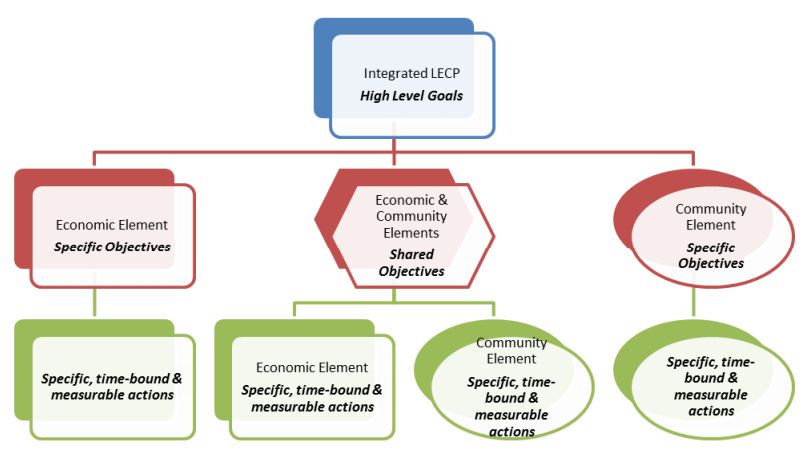
Draft Version 00

Table of Contents
INTRODUCTION, BACKGROUND AND PLAN FORMATION....................................................................... 3
    Introduction and background .............................................................................................................. 3
    Purpose and Scope of Plan .................................................................................................................. 4
    1.       Policy Context .............................................................................................................................. 5
2        SUMMARY OF THE SOCIO-ECONOMIC PROFILE OF COUNTY WICKLOW ......................................... 8
3        VISION GOALS AND OBJECTIVES .................................................................................................... 16
    Vision ................................................................................................................................................. 16
    High Level Goals ................................................................................................................................. 17
4        SUPPORTING ACTIONS ................................................................................................................... 20
5        IMPLEMENTATION, MONITORING AND REVIEW ........................................................................... 42
    Implementation and Delivery Responsibilities .................................................................................. 43
    Monitoring and Review ..................................................................................................................... 43
Appendix 1              Glossary of Terms .......................................................................................................... 45
Appendix 2              National and Regional Policy and Strategy Context ...................................................... 47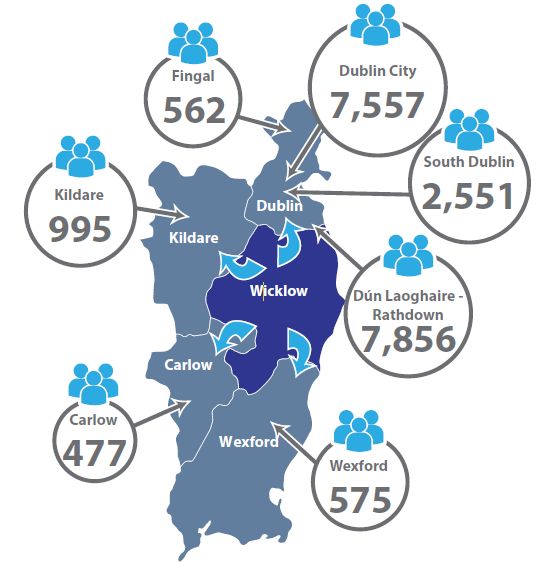
Draft Version 00

INTRODUCTION, BACKGROUND AND PLAN FORMATION

Introduction and background
Wicklow is strategically located on the east coast of Ireland with close linkages to national and
international gateways. Owing to the county’s natural beauty, Wicklow is also known as the Garden of
Ireland. With its coastal and mountainous landscapes, and mix of towns and rural villages, Wicklow
possesses an array of unique natural and built heritage and vibrant communities. With a growing
population that currently stands at 136,6401, of which 35% of are under the age of 25 years, the county
has much to offer to external and indigenous investors over the coming years. This Local Economic and
Community Plan (LECP) will position Wicklow as a county prepared to harness its many unique
physical, natural and human resources, in order to improve the quality of life for all who live, work
and visit the county, as the county moves into the future with confidence.

The Local Government Reform Act 2014 has resulted in a
changing and expanding role for local authorities, beyond their                        "The ultimate
traditional functions. Under the Act local authorities are
considered to be “the main vehicle of governance and public                           purpose of local
service at local level, leading economic, social and community                        government is to
development”2. The remit of local government now includes
stronger community development, aligning local government
                                                                                     promote the well-
and local development more closely and possessing a more                             being and quality
central role in local development. Creating and supporting
stronger inter-agency collaboration and improved targeting of
                                                                                      of life of citizens
public funding are critical elements of this new direction in                        and communities"
governance.
                                                                                         -Putting People First: Action
                                                                                        Programme for Effective Local
The new measures originally arose from the government’s 2012                                  Government, 2012
plan ‘Putting People First: An Action Programme for Effective
Local Government’, which proposed a series of local government
reform measures to “to promote the well-being and quality of life of citizens and communities”.
Other measures set out under this action programme, include the integration of the Local Enterprise
Office (LEO) functions within local authorities, as well as the establishment of Economic Development
and Enterprise Support Strategic Policy Committees (SPCs) and Local Community Development
Committees (LCDCs) within each local authority area.

The Local Government Reform Act 2014 is the legal basis for the reforms proposed under the
government’s 2012 plan. One of the key provisions of the Act is the formulation by every local authority
of a LECP. The LECP is a six-year plan containing the measures necessary to promote and support
community and economic development in County Wicklow and will also be the primary mechanism
at local level to bring forward national programmes such as the Action Plan for Jobs and the Report of
the Commission for Economic Development of Rural Areas (CEDRA).

1
    Census 2011
2
    Department of Environment, Community and Local Government – see:

http://www.environ.ie/en/Publications/LocalGovernment/Administration/FileDownLoad,41988,en.pdf

                       Wicklow Local Economic and Community Plan 2016-2022                                               3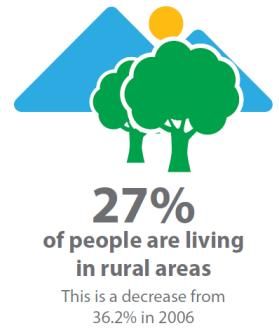
Draft Version 00

Strategic Environmental Assessment (SEA) Directive and Habitats Directive
The LECP will be screened for potential effects on the environment or for adverse effects on Natura
2000 sites, in accordance with the requirements of the SEA Directive and the Habitats Directive.

Purpose and Scope of Plan
The objectives and actions presented in this LECP have been developed with consideration of
national and regional strategies and policies to ensure consistency in attained with overall policy. The
LECP is also influenced by the Europe 2020 targets of employment, R&D, climate change and energy
efficiency, education and poverty and social exclusion reduction, which are being implemented at a
national level through the government’s framework National Reform Programmes (NRP). The actions
put forward in this LECP therefore complement similarly themed strategies and actions represented
in other strategies and plans. However, the objectives and actions set out in this LECP are more
unique in nature in that they have been developed in consultation with key stakeholders, including
community and business organisations and the general public and reflect the key local issues facing
the county at present. In addition, the objectives and actions are underpinned by an evidence base.

Plan formation
The Wicklow LECP has been prepared in accordance with the Local Government Reform Act and is
consistent with the guidance issued by the Department of the Environment, Community and Local
Government (DECLG). Five main phases were followed in the formulation of the LECP, as presented
below:
Phase 1          Preparation of socio-economic analysis and adoption of the LECP Statement;
Phase 2          Public consultation and engagement providing the opportunity for community and
                 voluntary organisations, agencies and the general public to provide written
                 submissions in respect of the draft plan;
Phase 3          Development of objectives and action and consultation on the draft proposals;
Phase 4          Finalisation and adoption of the LECP;
Phase 5          Monitoring and review of the implementation of the LECP.

The fundamental elements in the development process of the LECP are presented in

Figure 0-1, in which the transition from the overarching vision for the LECP is translated in to a series
of high level goals, from which objectives are agreed. It is from the objectives that the actions are
developed and adopted, and it is through the implementation of the actions that the LECP will be
realised.

                  Wicklow Local Economic and Community Plan 2016-2022                                  4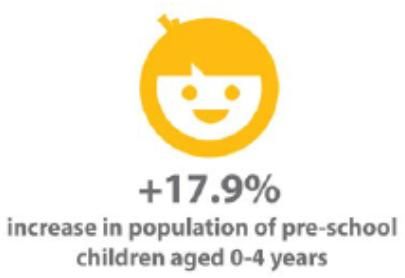
Draft Version 00

                                 High Level
       Vision                                               Objectives                      Actions
                                   Goals

Figure 0-1 Translation of Vision into High Level Goals, Objectives and Supporting Actions

         1. Policy Context - EU, National, County level

         2. Consultation - Public Meetings; Written Submissions; Stakeholder Workshops

         3.Evidence Base - Socio-economic Profile; Economic Framework Report; County
         Wicklow Poverty Profile

    1. Policy Context
The LECP provides the framework required at a local level to achieve the policy objectives set at
national and regional levels. The Wicklow LECP has been informed by, and is consistent with, a
number of overarching government national and regional level policy, (See Appendix 2).
In assessing the LECP for consistency with other strategies and plans, including the Regional Spatial
and Economic Strategies (RSESs), consideration will be given to evaluating the impact of the LECP on
a number of parallel priorities, including sustainability; equality; poverty; rurality; age and disability.

The 2014 Act provides for the establishment of a Strategic Policy Committee for Economic
Development and Enterprise and Local Community Development Committees in each local authority.
                  Wicklow Local Economic and Community Plan 2016-2022                                    5
Draft Version 00
The role of the County Wicklow Economic Development and Enterprise Support SPC is to drive
economic policy and enterprise development in the county and to oversee the development of the
economic elements of the LECP, while the LCDC will oversee the development of a coherent and
integrated approach to local and community development in the county.
In addition to Wicklow County Council, there are a wide range of State and other agencies which
administer roles at a local level within the county. Agencies such as Kildare and Wicklow Education
and Training Board (KWETB), County Wicklow Partnership, Bray Area Partnership, Wicklow County
Child Care Committee, Department of Social Protection (DSP), Health Service Executive (HSE) and
Tusla (Child and Family Agency) operate within the county, applying national and regional
programmes and policies at a local level. Under the Social Inclusion and Community Activation
Programme (SICAP), a dedicated social inclusion unit within Wicklow County Council engages with
marginalised communities within the county and there are a wide range of service providers using an
integrated and community development approach to address issues relating to disadvantage, social
exclusion and inequality.
A critical element to the implementation of the Wicklow LECP is to identify and implement actions
with lead agencies responsible for their execution under the plan. The Community element of the
plan seeks to ensure that the plan can be implemented in a collaborative manner with relevant
existing and future community framework documents, to harness maximum synergy across the
community planning framework for the county. The economic element of the plan seeks to build on
the strengths of the county to develop additional employment opportunities and economic activity in
the county. The plan will also support linkages between businesses and business networks, education
and training bodies and promote development of infrastructure and collaborations aimed at
facilitating increased economic development.
Implementation of the LECP shall be consistent with the following:
o The Regional Planning Guidelines or Regional Spatial and Economic Strategy (whichever is in
place);
o The Core Strategy and objectives of the County Development Plan; and
o Any other County Development Plan and Local Area Plan provisions responsible for the
protection and management of the environment including environmental sensitivities.
Lower tiers of decision-making including the preparation of plans or strategies or the progression of
applications for development would need to be subject to SEA, AA and EIA processes as appropriate.
2. Consultation
A number of measures were employed to enable public consultation and input into the plan. These
included written submissions, public meetings and stakeholder engagement. The PPN were
fundamental to this process, raising awareness and facilitating consultations.
Stakeholder Engagement
Stakeholder engagement is a core element of the LECP development process. Recognising the close
synergy between public engagement and informed decision-making, the purpose of the stakeholder
engagement and consultation process was to:
Acknowledge the public, community and business groups as valuable stakeholders
Wicklow Local Economic and Community Plan 2016-2022 6Draft Version 00
Provide stakeholder groups and members of the public an opportunity to contribute to the
plan formation
Promote greater dialogue and engagement between the public and decision-makers
Ascertain the concerns and issues of stakeholders with regard local and county-wide issues
With submissions and contributions from business, community and voluntary organisations, in
addition to individual submissions from members of the public, this LECP strongly reflects the hopes
and aspirations of those living and working within the county.
The response to the public consultation process was very comprehensive and gives a citizen based
local focus to the policy context. The detail of the response will inform the annual work plans of the
LECP.
The third element in the formulation of the plan is the evidence base summarised in Section 2.
Wicklow Local Economic and Community Plan 2016-2022 7Draft Version 00
2 SUMMARY OF THE SOCIO-ECONOMIC PROFILE OF COUNTY WICKLOW
Socio-Economic Profile of County
Demographics
Situated on the east coast of Ireland, County Wicklow’s location within the Greater Dublin Area
(GDA) and proximity to County Dublin are of key contextual importance in the socio-economic
development of the county. Historically, the settlement patterns and economic development of the
county have been heavily influenced by the construction of key infrastructure, notably the N11 and
railway, which are located on the east coast.
Having experienced a population increase of 8.3% between 2006 and 2011, matching that of the
national average; County Wicklow has a population of 136,640. 35% of the population of the county
are under the age of 35 years, while 11% are aged over 65 years.
CSO data shows that between 1991 and 2011, the largest change in
population occurred in the 45 to 64 age group, with an increase of
93% in this age cohort. This will have significant impacts on the
county’s development over the coming years with regards to
health care services demand, dependency and housing.
Approximately 36,800 people the county’s population live in rural areas
(areas outside of the designated county towns and villages), and while the
proportion living in rural areas has declined, County Wicklow’s rural
population has experienced an increase in population between 2006 and
2011, albeit at a slower rate than urban areas, with growth of 3.9%. Bray is
the largest settlement in the county with 22% of the county’s population
residing here, followed by proportion of population by Wicklow-Rathnew,
Arklow, Greystones-Delgany and Blessington.
Owing to the combined youth and older population of the county, the total age dependency rate in
2011 is 51%, an increase of 5.2 % between 2006 and 2011; Wicklow’s dependency rate is marginally
above the national average rate. The high dependency rate has implications for the county in terms
of family resource provisions, healthcare, education, transportation and a range of other service
requirements.
Nationality and Ethnicity
Almost 10% of the county’s population are non-Irish nationals, according to the last Census,
marginally below the national average rate of 12%. British national comprise the highest proportion
of non-Irish nationals in the county, with 3,749 British nationals; followed by Polish nationals (2,754
person) and Lithuanian nations (848 persons). Together these three nationalities comprise 55% of all
non-Irish nationals resident in the county. Of the main settlements, Blessington and Arklow possess
the highest proportion of non-Irish national residents, with 14% respectively, followed closely by
Bray (13%) and Greystones (12%). Integration of minority groups including non-Irish nationals into
our communities is an important focus for Wicklow County Council and community groups, and the
Wicklow Local Economic and Community Plan 2016-2022 8Draft Version 00
actions established in this report reflect the need to increase social inclusion, provide access to
services including health and education, and building closer community relations within the county..
The Irish Traveller population represent 0.5% of the county’s population, with 721 Irish Traveller
persons resident in County Wicklow, a large proportion of which are under the age of 18 years. The
largest number of Travellers live in Bray environs (180 persons) and the Wicklow - Rathnew environs
(195 persons). Social inclusion and support for the provision of services including suitable housing,
health and education provisions are key areas addressed under the objectives and actions of this
LECP.
Household Formation
Approximately 20% of private households in the county are one person households, compared to a
rate of 24% nationally; while husband and wife with children accounts for c.35% of all households.
Lone parent households accounted for approximately 12% of all private households in County
Wicklow compared to a national rate of 11% nationally3. The average number of children per family
in the county is 1.4, which is the same as the national average. Quality child related service
provisions and family resource centres throughout the county is an important aspect of community
development and the objectives and actions contained within the LECP address these issues.
Housing
Wicklow has a high number of mortgage based owner occupied households. It is the third most
expensive area in the country in which to buy a house, or to rent a home. Wicklow has more than
the national average of social housing. There is a high rate of people in receipt of rent supplement
(1,943) and the length of claims is growing. Over 70% are considered long term, a worrying figure
that has grown significantly in recent years. This points to a high level of need for social housing in
the county.
Disability
13% of County Wicklow residents have a disability, with some people having more than one
disability. It is worth noting that of the 17,616 people in County Wicklow with a disability, 5,173 or
32% are aged 65 years or older. 29% of persons with a disability are aged 45 to 64 years, while 11%
are aged 14 years or younger.
Carers
In County Wicklow 5,131 people provide regular unpaid personal help to a friend
or family member, of which 37% of carers are male and 63% are female. Over
20% of the carers in the county provide care for more than six hours per day.
3
Note this figure includes Father with Children, Mother with Children. The number of father/mother
with children living on their own in County Wicklow is 5,666 households or 11.9 percent of all private
households.
Wicklow Local Economic and Community Plan 2016-2022 9Draft Version 00
Sectoral economic features
The jobs ratio is a good indicator of measuring the sustainability of the
county’s settlements (full time employment to working age, i.e. in the
population range 16-64 years), as full-time employment fosters higher
income levels, promotes household formation and increased consumption.
The present County Wicklow employment-to-population ratio is 42%, this
reflects the poor economic conditions of recent years.
County Wicklow has a labour force of 65,581, with c.27,500 persons active in the labour force,
denoting a jobs ratio of 42%. The labour force participation rate for people with a disability was 30%
compared to 62% for the overall population.
Census 2011 Place of Work, School or College, Census of Anonymised Records (POWSCAR) data
confirms that a high proportion of the county’s working population commute outwards from the
county for employment. There is a large component of County Wicklow residents (21,050 persons)
that are commuting out of the County for employment, highlighting that
Wicklow has a close functional and economic relationship with its
surrounding counties, in particular the connection with the Dublin
region, of which 88% of all outward commuting residents from Wicklow
travel to for employment.
The settlements of Greystones-
Delgany and Blessington
demonstrate significantly high
levels of residents commuting
outwards, with levels of 88% and 84% respectively; while
Arklow had the lowest rate of residents leaving the local
area to work elsewhere.
Creating new opportunities for business development and
growth and securing improvements in infrastructure that
will facilitate and stimulate business growth and
employment creation opportunities are core elements of
the actions contained within the LECP. This may provide
residents new opportunities to live and work within the
county.
Education, Training and Skills
County Wicklow is advantageously positioned in close proximity to Dublin, Carlow and Kildare
providing it with access to high quality educational institutions. Wicklow County Campus, located at
Clermont House, Rathnew, is a dedicated Higher Level educational facility, developed by Wicklow
County Council in partnership with the Institute of Technology Carlow. The county also possesses a
number of adult further education and training centres, managed and operated by Kildare and
Wicklow Education and Training Board (KWETB). These centres are largely located in the main county
settlements of Bray, Wicklow Town, Arklow, Blessington, Baltinglass and Carnew.
Wicklow Local Economic and Community Plan 2016-2022 10Draft Version 00
Wicklow has a very well educated population; however there are clear spatial variations in
educational attainment across the county, with the highest levels in the urban areas in the North
East of the County. The objectives and actions established in this plan seek to support persons
wishing to avail of further education, training and up-skilling by increasing availability and
accessibility. Improved education and training skills within the labour force also assists significantly in
attracting new investment to the county, and are key to developing sustainable economic and social
capital.
Employment
A review of the socio-economic groups and industrial groups present in the county was undertaken
to ascertain the employment characteristics of the county. The review found that the highest
number of Wicklow residents are working in non-manual sectors (31%), followed by 21% working as
employers and managers; while 16% of workers describe themselves as farmers and 8% of workers
are higher professionals. Upon review of the employment composition of the various industrial
groups, c.30% of working Wicklow residents are employed in the ‘Wholesale, Retail Trade,
Transportation and Storage’ sector, while a further quarter are employed in ‘Education, Human
Health and Social Work’ related roles.
Wicklow possesses a very high rate of persons commuting
outwards from the county for employment, of which 88% are
commuting to the Dublin region, demonstrating strong
economic interconnections with the Dublin region.
Wicklow also provides considerable employment to persons
from outside of the county. Of in-commuters travelling to
Wicklow, c.30% are from Dún Laoghaire-Rathdown functional
area and c.26% are from county Wexford. The inward and
outward commuting patterns evident in the county highlight
the strong employment interdependence between Wicklow
and its neighbouring counties.
Unemployment
Wicklow experienced a significant increase in unemployment levels during the course of the
recession; however the county is now starting to recover from this extremely challenging period. Live
Register figures for the county indicate employment levels rising, with the number on live register
decreasing by 10.9% between October 2014 and October 2015. Construction related skills (including
craft and plant operative skills groups) rank highest in the county’s live register figures as
demonstrated by the many construction related occupations listed in CSO and DSP live register
figures, emphasising the continuing unemployment issues endured by these sectoral groups. While
the county has experienced a decline of almost 19% in persons under the age of 25 on the live
register (reduction of c.280 persons October 2015 compared to October 2014), youth unemployment
remains a key area of concern.
The actions concerning additional support in the areas of further education, training and increasing
employment opportunities in the county strongly reflect the need to reduce live register numbers
further, reduce social exclusion and improve quality of life for our county’s citizens. The actions also
support reducing social exclusion through measures that promote increasing the education and
Wicklow Local Economic and Community Plan 2016-2022 11Draft Version 00
employment opportunities for those with disabilities, and promoting social enterprise that provide
employment opportunities to disadvantaged persons. This is an important issue for the county
considering Census 2011 determined that the unemployment rate in the county amongst persons
with disabilities was 31%, compared to a 19% unemployment rate for the overall population.
Foreign and Indigenous Economic Sectors
The Industrial Development Agency (IDA) of Ireland and Enterprise Ireland (EI) are the primary
agencies for facilitating and securing foreign direct investment (FDI) and indigenous investment in
County Wicklow. Wicklow Local Enterprise Office (LEO), which receives policy direction and funding
from Enterprise Ireland, provides local enterprise support services throughout the county.
Data provided from the Wicklow LEO (2015) determines
that there are over 5,300 micro enterprises4 operating in
County Wicklow (based on CSO 2012 data),
incorporating a range of sectors.
Approximately 75%5 of micro enterprises trade in the
Irish economy only. By year end 2014, ninety-seven
Wicklow LEO client companies had received EI grant aid.
These employ 450 whole-time equivalent employees,
and there was a net increase of 106 jobs during 2014. Furthermore, approximately €530,000 was
approved to twenty-nine EI client projects in Wicklow in 2014.
2014 data from IDA Ireland shows that there are currently nineteen
IDA client companies located in County Wicklow, covering a range of
sectors, providing employment to 2,342 persons, including seven
biopharmaceutical and medical device firms, six Information and
communications technology and five engineering firms.
Retail
The strength and performance of the county’s retail sector is a key area of concern, as retailers
continue to face challenges arising from the economic recession and continued leakage spend. These
challenges are reflected in the high commercial vacancy rates experienced in many settlements of
the county. Arklow has the highest vacancy rates of the five largest county settlements at 13.9%,
followed by Wicklow Town and Bray. The LECP objectives and actions presented, aim to assist in
increasing retail conditions throughout the county through various measures including the
establishment of town teams, the creation of a county-wide retail strategy, and providing support on
a wider scale through the review signage improvements, and support for town centre improvements,
including enhancement of the public realm.
4
Ten or less employees
5
2012 figure
Wicklow Local Economic and Community Plan 2016-2022 12Draft Version 00
Deprivation and Disadvantage
Data derived from the 2011 Pobal HP deprivation revealed that County Wicklow is the second most
affluent local authority area within the Mid-East region. Notwithstanding this, the county was
negatively impacted as a result of the economic recession as reflected in the changes exhibited
between 2006 and 2011 Pobal HP Index Absolute Deprivation scores. In general, County Wicklow is
not characterised by affluence or deprivation extremes. Of the eighty-two Electoral Divisions (EDs) in
the county, forty-three EDs are categorised as marginally below average and thirty-seven are
categorised as marginally above average affluence or deprivation levels, while one ED in the county,
Rathmichael (Bray) falls under the category of ‘disadvantaged’, exhibiting higher levels of
unemployment and dependency amongst its population than other EDs. However, at Small Area (SA)
level, there are more significant differences in affluence and deprivation within settlement areas,
and the County Wicklow Socio-Economic Profile highlights the difference between the north of the
county and the southern areas of the county in terms of deprivation levels.
Safe Communities
Wicklow has the 11th highest rate of Gardai in the country. The county has very low numbers of
Garda stations in the state, the 5th lowest rate per 1,000 population. Wicklow has the 5th highest rate
of recorded crime of the 21 Garda divisions nationally.
Further information and research reports are available on www.wicklow.ie
Wicklow Local Economic and Community Plan 2016-2022 13Draft Version 00
Strengths and Weaknesses, Opportunities and Threats
A SWOT (Strengths, Weaknesses, Opportunities and Threats) analysis for the county’s economic and
community context is presented below, developed from the findings of the County Wicklow
Economic Think Tank Action Plan (2015), the County Wicklow Socio-Economic Profile (2015) and the
subsequent County Wicklow Strategic Economic Framework (2015). The findings of these documents
and consultation within the county have helped to inform the output of the LECP.
Wicklow Local Economic and Community Plan 2016-2022 14Draft Version 00
STRENGTHS WEAKNESSES
Strong population growth. High levels of outward-commuting amongst the resident
Wicklow has the third highest disposable income rate per capita in population.
Leinster after Dublin and Kildare. Construction and craft related workers remain the largest
High levels of third level participation amongst students. group of unemployed,
Proximity to third level institutions in Dublin and Carlow. Some areas particularly in the south have poor access to
Good access to key national and international road, rail, air and sea third level education.
transport routes; access to high quality national and international Infrastructural constraints in certain settlements may
infrastructure inhibit development.
A diverse economic market and a wide range of employment High levels of retail leakage to neighbouring counties.
opportunities High levels of commercial vacancy in some of the County’s
Strong settlements within the County. settlements.
Strong tourism sector. Loss of manufacturing industries in areas of the County.
Presence of an established film industry. Traffic congestion in towns and on M11/N11 at peak
Strong farming economy. times.
High quality road corridor along the eastern side of the County. Poor broadband connectivity in parts of the County,
High speed fibre broadband accessibility and connectivity in areas of particularly in rural areas of the County.
the County. Restricted public transport in some rural communities
Wicklow County Campus in Clermont, Rathnew. resulting in barriers accessing commercial services,
Distinctive and attractive geographical characteristics including education and employment opportunities.
coastline and Wicklow Mountains. Lack of connectivity to Dart and Luas may constrain
Coastal and mountain recreational amenities. development.
High quality natural and built environment. Pattern of day trip tourism, rather than longer-stay.
OPPORTUNITIES THREATS
A high youth cohort will translate into higher working population in Insufficient delivery of new housing to accommodate
the longer term. the increasing population.
The high rate of third level participation may help to attract Increasing pressure from coastal erosion.
investors to the County. Proximity to Dublin may inhibit economic growth and
Build on the county’s proximity to Dublin and the national and divert investment from the county.
international access routes. Long-term unemployment and long-term
Potential to build on Wicklow’s strong craft food and drink industry unemployment amongst youth population in some
and enhance the Wicklow ‘brand’ areas.
Development of Wicklow County Campus can deliver skills needed Continued retail leakage may lead to the
at a local level and reduce loss of educated employees to other deterioration of town centres affecting community
employment locations. and economic sustainability.
Potential to enhance business performance through better dialogue Inability to control delivery of broadband restricts
between Wicklow County Council and the County’s business potential to direct development to preferred
community. locations.
Stronger education and business linkages may lead to greater Lack of committed investment in transport
employment and training opportunities. infrastructure may constrain development in north
The identification of strategic locations for increased FDI investment east of county
will create employment opportunities. Continuance of current public transport policy likely
Availability of development lands at Fassaroe facilitates to affect connectivity between settlements and
development and investment to a wide hinterland. restrict efficient delivery of education, employment
Potential to combine the County’s strong agri-food sector with other opportunities and services.
strong sectors such as tourism. Lack of clear identity for the county in marketing and
Potential to develop clusters and specialism’s related to the film promotion.
industry within the County. Need to match development in accommodation
Opportunities for enterprise and tourism initiatives building on the quantity and quality with initiatives to expand visitor
recreational tourism reputation of the county. numbers.
New opportunities within the renewable energy and green
technology sectors to harvest natural energy supplies.
Funding for Arklow under the Rural Economic Development Zone
(REDZ) initiative will aid local community employment and rural
development projects.
Opportunity to develop a coordinated strategy through local County
Tourism body, Fáilte Ireland and the ‘Ireland’s Ancient East’ tourism
initiative.
optimise economic benefits and well-being across the county
The provision of the NBP throughout the County to increase the
spatial distribution of enterprise development.
Wicklow Local Economic and Community Plan 2016-2022 15Draft Version 00
3 VISION GOALS AND OBJECTIVES
Vision
A dedicated vision for the LECP has been developed to translate Wicklow’s ambition in the subject of
socio-economic development in to a direct course for action over the coming six year lifetime of the
LECP. The vision was formulated through a collaborative approach between Wicklow County
Council, the LCDC and the SPC for Economic Development and Enterprise Support.
OUR VISION FOR WICKLOW
"Our Vision is for a county which provides a high quality of life and
well-being for all; values socially inclusive urban and rural
communities; is driven by a dynamic and innovative economy;
promotes and prioritises sustainable development and protects and
enhances the county’s unique and rich natural and cultural heritage".
The vision was used to influence and direct the development of a series of high level goals in order to
frame the direction and priorities of the LECP.
In formulating this LECP, Wicklow County Council, Wicklow LCDC and Economic Development &
Enterprise SPC abide by the following underlying principles:
COMMITMENT, CO-OPERATION AND PARTNERSHIP
- All those involved will commit to the process and work together for the common good of the County
AGENTS OF CHANGE
- All those involved will be open to change and be receptive to new ideas and approaches to the development
of the County
COMMUNITY CONSULTATION AND ENGAGEMENT
- Citizen engagement is a core element of this process
SOCIAL INCLUSION AND EQUALITY
- There will be a specific focus on the marginalized and disadvantaged in the County
Wicklow Local Economic and Community Plan 2016-2022 16Draft Version 00
SIMPLICITY
- The LCDC and SPC will avoid duplication of effort and keep structures as simple as possible and communicate
clearly
MAXIMISING OUTCOMES
- The LECP will focus on maximising the use of resources and achieving value for money
SUSTAINABLE DEVELOPMENT/RESILIENCE AND SOCIAL INCLUSION
- The principles of sustainable development, resilience and social inclusion will underpin the LECP
High Level Goals
The high level goals developed for the purpose of the LECP outline the priority areas for the community
and economic development of the county over the lifetime of the LECP. The high level goals were
informed by a combination of national policy documents, County Wicklow Socio-Economic Profile,
undertaken specifically for the purpose of the LECP, and consultation with stakeholders from community
and business groups. Priority areas identified during the completion of the CWETT Action Plan have also
informed the high level goal themes.
Ten high level goals were developed, comprising five primarily economic and enterprise related goals
and five primarily community development and social inclusion goals. The goals address various aspects
of social and economic development, including;
promoting capacity building within communities, both rural and urban
supporting social inclusion amongst vulnerable groups and individuals
supporting enterprise development and innovation from grass roots and promoting the
development of social enterprise
harnessing the natural environment and promoting low carbon development and innovation;
supporting for the development of infrastructure to advance the socio-economic development
of all communities
supporting business growth
building a competitive workforce for the future through education and training support
The goals are complementary to each other and when taken together support the development and
promotion of Wicklow as an attractive location for all ages to live, work, invest and visit.
The collaborative community and economic development approach of the LECP recognises that
community and economic development are mutually supportive. Through the development of high level
goals, and the subsequent formulation of objectives and actions, the LECP and Wicklow County Council
can support community and economic led development that will address a wide range of socio-
economic issues including deprivation and disadvantage, and enhanced education, training, economic
and employment opportunities.
Wicklow Local Economic and Community Plan 2016-2022 17HIGH LEVEL GOALS Draft Version 00 Wicklow Local Economic and Community Plan 2016-2022 18
Draft Version 00

                     Figure 0-1 Integrated elements of the LECP (Source: DECLG, 2015)

The development of the objectives was strongly informed by the County Wicklow Socio-Economic
Profile, which established an overview of the county’s diverse characteristics. The County Wicklow Socio-
Economic Profile was based on a series of database sources including Central Statistics Office (CSO),
Department of Social Protection (DSP) Live Register data, Pobal HP Deprivation Index and
GeoDirectory, which allows for measurable indicators to be established. Subsequent to the
completion of the socio-economic profile, Wicklow County Council commissioned the Wicklow Strategic
Economic Framework, which, informed by the data contained in the County Wicklow Socio-Economic
Profile, evaluated the economic development potential of the county and considered sectors that have
the potential to grow and create new employment and investment opportunities. The Wicklow
Strategic Economic Framework sets out a series of recommendations, and these recommendations have
contributed to the development of objectives set out in this LECP.
Objectives
The objectives incorporated in to this report reflect the vision and aspirations of the county, promoting
and supporting stronger community and socio-economic development and inter-linkages.
1.1: Build Capacity and social capital across all communities
1.2: Maximise opportunities for urban regeneration and rural development
2.1: Develop strong representative fora in the County
3.1: The LCDC will provide the strategic direction for the delivery of integrated services
3.2: The LCDC will provide representation for additional services and resources where gaps are
identified or where new issues arise
4.1: Establish a strong social and community enterprise sector in the county
5.1: Address access to education/ training to increase life opportunities for all
6.1: Support inward investment and promote the creation and expansion of new and existing
employment opportunities in the county to drive economic development within the county

                 Wicklow Local Economic and Community Plan 2016-2022                                19
Draft Version 00
6.2: Support and develop the Wicklow County Campus to allow it reach its full potential as a centre
of learning and innovation in the county
6.3: Support the provision of high quality infrastructure throughout the county that will facilitate
and support economic expansion
6.4: Enhance the attractiveness of town centres and retail premises across the county
7.1: Stimulate and support the development and expansion of micro-enterprises and SMEs,
facilitating the growth of economic activities, development of innovative sectors, promotion of
business engagement and the creation of new employment opportunities
7.2: Harness the county’s existing assets and encourage collaborative opportunities and business
engagement amongst sectors to develop new markets and initiatives, maximising opportunities for
business development and employment creation
8.1: Promote and direct the tourism development of the County in a sustainable manner that
conserves, promotes, protects and enhances the County’s natural, built and cultural heritage and
derives optimal economic benefit from visitors to the county
8.2: Capitalise on the immediate and future economic opportunity in the Film and Television
Industry and support the expansion of the industry in the county
8.3 Realise the potential benefits of the county's maritime assets
8. 4: Support the rural economy and promote rural economic diversification
8.5: Maximise the economic development in the county through improved and strategic branding
and marketing
9.1: Support the development of renewable energy and a low energy future for Wicklow
10: Harness efficiently the full resources of the county and promote interagency collaboration
4 SUPPORTING ACTIONS
To achieve the high level goals established under the LECP, a series of detailed objectives have been
proposed. Each objective is accompanied by a number of supporting actions, through which the high
level goals will be achieved. The actions incorporated in this LECP are strategic in nature and reflect
the high level goals and objectives developed during the plan process.
Wicklow Local Economic and Community Plan 2016-2022 20Objectives and Actions
Draft Version 00
Goal 1: Develop Community capacity in disadvantaged communities and
engage in urban regeneration and rural development
Objective 1.1:
Build Capacity and social capital across all communities
Action Action Lead Partners
Number Organisation
1. Conduct research to establish a sound evidence WCC LDCs, HSE,
base to ensure equality of access to funding for KWETB,
community projects across the county
2. Provide training and support for community LDC KWETB
engagement in regeneration and development
Objective 1.2
Maximise opportunities for urban regeneration and rural development
Action Action Lead Partners
Number Organisation
1. Actively pursue new funding opportunities for WCC LDCs
urban regeneration and rural development
through EU, national and local schemes
2. Set up a philanthropic County fund for WCC LDCs
regeneration and community enterprise and
innovation
3. Build and expand on the REDZ Pilot Initiative in WCC LDCs
Arklow REDZ zone
Goal 2: Active Citizenship underpinned by good governance and participation
in decision making
Objective 2.1:
Develop strong representative fora in the County
Action Action Lead Partners
Number Organisation
1. Support the PPN as the main structure for public WCC LDCs
participation in the County
2. Support the Volunteer Bureau in increasing WCC LDCs
volunteerism
Wicklow Local Economic and Community Plan 2016-2022 21Draft Version 00
3. Support existing and emerging representative WCC LDCs
networks e.g. the Comhairle na nÓg, Older
Person’s Council, Disability Fora
4. Provide Governance training for community LDC Volunteer
groups Bureau
5. Provide capacity and skills training for community LDC
activists to partake in decision making and access
funding opportunities
Goal 3: High quality integrated services available to all communities, in
particular disadvantaged communities and vulnerable groups
Objective 3.1:
The LCDC will provide the strategic direction for the delivery of integrated services
Action Action Lead Partners
Number Organisation
1. The LCDC will put in place LCDC LDCs, CYPSC
structures/protocols/Memorandum of
WCCC, ECADTF
Understanding with the following organisations
and future organisations as appropriate, to ensure K&WWADTF
an integrated delivery of services aligned with the HSE, WCC, JPC
LECP
KWETB,WTG
Local Development Companies on SICAP Ltd, BTCDG Ltd,
and LEADER
Children & Young People’s Services Others as
Committee on county strategy based on appropriate
‘Better Outcomes Brighter Futures’ and
Child Friendly County status
Wicklow County Childcare Committee on
childcare
ECADTF, K&WWADTF, Tiglin on drug and
rehabilitation services
HSE on implementation of ‘Healthy Ireland
Strategy’ and ‘Connecting for Life Kildare
and West Wicklow’ (Suicide prevention)
Wicklow County Council on ‘Age Friendly
County’
JPC on safe and secure communities
KWETB on youth services
WTDC & BTDC
Others as appropriate
Wicklow Local Economic and Community Plan 2016-2022 22Draft Version 00
Objective 3.2
The LCDC will provide representation for additional services and resources where gaps are identified or
where new issues arise
Action Action Lead Partners
Number Organisation
1. Engage with transport providers and funders to WCC LDCs, KWETB,
make representation on issues of transport and DSP, HSE
access to services as opportunities arise
2. Make representation on the consequences of LCDC WCC
reductions in public and community services
3. Facilitate expansion of services where possible and WCC LDCs, KWETB,
outreach opportunities through e.g. new HSE
opportunities for shared services, use of existing
premises e.g. libraries
Goal 4: A vibrant and innovative community and social enterprise sector
Objective 4.1
Establish a strong social and community enterprise sector in the county
Action Action Lead Partners
Number Organisation
1. Establish a Social Enterprise forum in the County to LDC’s WCC, KWETB
develop a strategy that will include:
Map social enterprise activity in the county
Build on the success of the County
Wicklow Social Enterprise Network
Develop a training and support
programme for pre-development, set-up
and scale-up stages
Develop a network for support and peer
learning
Identify sources of funding
Set up an incubation hub
2. Commence a County-wide initiative that promotes WCC LDCs, KWETB
‘social benefit clause’ in procurement contracts
Wicklow Local Economic and Community Plan 2016-2022 23Draft Version 00
Goal 5: Address access to education/ training to increase life opportunities for
all
Objective 5.1 Support training, education and lifelong learning based on analysis of employment
trends and the skill needs of employers
Action Action Lead Partners
Number Organisation
1. Establish an ‘Education and Training’ forum to be led KWETB WCC, IT Carlow
by KWETB (Wicklow
- focusing on education and training services and Campus) and
provisions within the County other education
providers,
- undertake an employability and skills deficit report DSP,LDCs, Youth
- identifying gaps and barriers to access Services, CoC
- facilitating greater interagency collaboration
- developing an education and training strategy for
the County
Protocol between forum and LCDC
2. Increase the number of apprenticeships available KWETB WCC, COC,
within the County and increase awareness of LDCs, IT Carlow
apprenticeship schemes (Wicklow
Campus), DSP,
Youth Services,
3 Support the development and alignment of WCC WCC, KWETB,
programmes with identified existing and future LDCs, CoC, IT
enterprise & industry needs Carlow
(Wicklow
Campus)
4 Support the development of agricultural training Teagasc WCC, IT Carlow
and business management initiatives in the county (Wicklow
to improve skills, productivity and innovation Campus),
within the sector. KWETB, LDCs
5 Target youth unemployment and support KWETB DSP, LDCs
programmes that will enhance employability
opportunities.
6 Develop ‘first step’ training focusing on social KWETB LDCs, DSP,
wellbeing and life skills and progressing to more Youth Services,
vocational specific training in identified areas CoC, Local
Wicklow Local Economic and Community Plan 2016-2022 24Draft Version 00
identified by employers and trainees Employers
Investigate the potential of the establishment of a WCC Sub Group
dedicated maritime education and training CWETT, BIM,
programme in County Wicklow. EI, LEO, KWETB
7 Promote and incentivise up-skilling and conversion KWETB CoC
courses in the county's further education centres,
and in collaboration with industry, promote the
provision of work placements for participants and
graduates.
8 Investigate the delivery of programmes that WCC SEAI, IT Carlow,
fosters and promote community resilience and KWETB
sustainability in business and industry
Goal 6: Develop infrastructure and measures that are positive and supportive
to investment, enterprise innovation and knowledge creation in strategic
locations
Objective 6.1: Support inward investment and promote the creation and expansion of new and existing
employment opportunities in the county to drive economic development within the county.
Action Action Lead Partners
Number Organisation
1 Investigate the identification and prioritisation of WCC/LEO IDA, Expert Group
locations within the county for inward investment6
2 Develop a strategy7 for IDA held lands/property to WCC/LEO IDA
facilitate employment opportunities.
3 Prepare a marketing plan to proactively promote WCC/LEO KWETB, IT Carlow, COC,
the county as an investment location, highlighting IDA, EI,
the links between existing firms, third level
institutions and local services
6
Variations or amendments to land use plans arising, such as those relating to zoning, would need to be subjected to SEA
and AA processes as appropriate.
7
The preparation of such a strategy would need to be subject to SEA and AA processes as appropriate.
Wicklow Local Economic and Community Plan 2016-2022 25Draft Version 00
4 Establish a high level Inward Investment expert WCC/LEO Business sector, third
group to propose actions relating to future skills level institutions
needs, economic infrastructure and undertake
horizon scanning to identify emerging
opportunities
5 Investigate the establishment of a County Wicklow WCC/LEO EI, HBAN
Investor Fund
6 Establish an inventory of available WCC/LEO IDA, Commercial letting
commercial/industrial properties and develop agencies, CoC, ABEC Ltd,
property solutions to cater for business use. WEP Ltd
Objective 6.2: Support and develop the Wicklow County Campus to allow it reach its full potential as a
centre of learning and innovation in the county
Action Action Lead Partners
Number Organisation
1 Review the Wicklow County Campus Strategic Plan WCC/LEO IT Carlow
2008 - 20138
2 Continue to develop Wicklow County Campus as a WCC/LEO IT Carlow (other 3rd level
centre of excellence in education, innovation and institutes) KWETB, DES,
enterprise, facilitating the campus to develop to its NOVA, IDA , EI, CoC
full potential.
3 Create a training and lifelong learning network in WCC/LEO IT Carlow, KWETB
the county and develop greater linkages with third
level institutions.
4 Assess the need and capacity for a county R&D WCC/LEO IT Carlow, KWETB, DES,
innovation centre, in consultation with industry NOVA, IDA , EI, COC, WEP,
and third level institutions. ABEC, industry experts
5 Promote life-long learning in the county, WCC/LEO IT Carlow (other 3rd level
supporting initiatives to address educational institutes) KWETB,
disadvantage and increasing access to education
programmes to disadvantaged persons.
6 Examine the feasibility of developing a film WCC/LEO IT Carlow(other 3rd level
industry hub and learning centre in collaboration institutes), other higher
with industry and education providers. level institutions, KWETB,
CWETT, Screen Training
Ireland, industry experts
8
The review of this Plan would need to be subject to SEA and AA processes as appropriate.
Wicklow Local Economic and Community Plan 2016-2022 26Draft Version 00
7 Promote higher education awareness in the WCC/LEO IT Carlow(other 3rd level
county, increase the numbers of students institutes) and other
attending the Wicklow County Campus and expand education providers, KWETB,
the number of courses being offered. CWETT
8 Develop an infrastructure strategy9 for Wicklow WCC/LEO IT Carlow(other 3rd level
County Campus to include ICT, broadband and to institutes)
identify other infrastructure requirements.
Objective 6.3: Support the provision of high quality infrastructure throughout the county that will facilitate
and support economic expansion10.
Action Action Lead Partners
Number Organisation
1 Continue to support the provision of WCC IW, TII, NTA, DCENR
necessary infrastructure to attract
investment and incentivise economic
expansion of the county
2 Continue to improve transport infrastructure WCC TII, NTA, WRT
at strategic locations to help facilitate
connectivity and access thereby promoting
social, economic and tourism development
3 Continue to support and promote the WCC NTA, TII
provision of a direct high quality public
transport system servicing the Fassaroe
lands, Bray to facilitate economic
development and investment opportunities
4 Continue to support and promote the WCC/IW
construction of a Waste Water Treatment
Plant for Arklow11.
5 To facilitate the sustainable development of WCC NTA,DTTAS
the Laragh-Glendalough area by continuing
to support the provision of infrastructure
which will manage the needs and associated
environmental requirements of various
sectors including tourism.
6 Survey harbours to identify existing and WCC CWETT, DTTAS DAFM
future infrastructure needs. (see action 2
9
The preparation of such a strategy would need to be subject to SEA and AA processes as appropriate.
10
Infrastructural and enabled development would need to be subject to conformance with the County Development Plan
and other land use plans. Lower tiers of decision-making would need to be subject to SEA, AA and EIA processes as
appropriate.
11
This is consistent with the provisions of the Arklow Town and Environs Development Plan; any application arising would
need to be subject to AA and EIA as appropriate.
Wicklow Local Economic and Community Plan 2016-2022 27Draft Version 00
Maritime)
7 Undertake a county-wide audit of broadband WCC Sub group of CWETT, DCENR
rollout to assess the extent of progress in
delivering the target of the NDP in County
Wicklow, and identify any areas experiencing
a delay in broadband connections or
experiencing access difficulties.
8 Continue to support increased sustainable WCC NTA
transport modes and encourage greater
promotion of cycling as a regular means of
transport.
Objective 6.4: Enhance the attractiveness of town centres and retail premises across the county.
Action Action Lead Partners
Number Organisation
1 Establish Town Teams to enhance the WCC CWETT, CoC, Retailers, Voluntary
management and development of town Groups, An Garda Siochana, MDs,
and village centres including support for CWP,REI
the improvement of town centre
environments, shop front improvement
schemes, commercial rates review and
accessibility.
2 Develop a county wide retail marketing WCC CWETT, CoC, Retailers, MDs, Town
strategy to support a comprehensive shop Teams, REI
local initiative, promoting local enterprise,
markets and produce.
3 Develop a pay-parking policy for the WCC MDs
county.
4 Promote the reinvigoration of the WCC CWETT, COC, Retailers, MDs, Town
county's towns and villages and enhance Teams, REI
the overall attractiveness of streetscape,
public realm and civic and recreational
facilities and strengthening the link
between town centre living and
shopping12
5 Investigate trends in consumer behaviour WCC REI
to identify how to address challenges
posed by online shopping.
6 Roll out the Purple Flag initiative to WCC CWETT, CoC, Retailers, Voluntary
towns, to encourage excellence in the Groups, An Garda Siochana, MDs,
12
Subject to conformance with the County Development Plan and other land use plans.
Wicklow Local Economic and Community Plan 2016-2022 28You can also read


