People matters Workforce and Organisational Development Strategy 2014-2019
←
→
Page content transcription
If your browser does not render page correctly, please read the page content below
People matters ~ Workforce
and Organisational
Development Strategy
2014-2019

PEOPLE MATTERS ~ WORKFORCE AND ORGANISATIONAL DEVELOPMENT STRATEGY 2014-2019 -   1
Contents
1.         Overview .............................................................................................. 4
2.         Links to Trust strategic objectives and goals ......................................... 4
3.         Summary .............................................................................................. 6
4.         The current position: where are we now?............................................. 7
     Local Context............................................................................................................................................. 7
     The Trust serves the communities within the following boundaries: ...................................................... 7
     Service Challenges..................................................................................................................................... 7
     Staff in Post ............................................................................................................................................... 8

5.         Drivers for the Workforce and Organisational
           Development Strategy .......................................................................... 9
     1.      Developing a Performance culture ................................................................................................ 10
     The work stream will ensure:.................................................................................................................. 10
     2.      Delivering Opportunities through sustainable structures, systems and processes ...................... 11
     3.      Supporting employee Health and Wellbeing ................................................................................. 11
     4.      Embedding participative change and continuous Improvement capability within the organisation
             11
     5.      Managing Talent and succession Planning .................................................................................... 12
     The work stream will ensure:.................................................................................................................. 12
     6.      Innovate the leadership skills and capacity ................................................................................... 12
     The work stream will ensure:.................................................................................................................. 12
     7.      Bringing the Values to life .............................................................................................................. 12
     The work stream will ensure:.................................................................................................................. 12
     8.      Develop a highly Engaged workforce............................................................................................. 12
     The work stream will ensure:.................................................................................................................. 12

6.         Work streams ...................................................................................... 13
     The desired outcomes will be delivered through the 8 workstreams summarised above, which will be
     managed by one of the three subgroups of the Workforce and organisational development
     committee: .............................................................................................................................................. 13
     1.Developing a Performance culture (P&R) ............................................................................................ 13
PEOPLE MATTERS ~ WORKFORCE AND ORGANISATIONAL DEVELOPMENT STRATEGY 2014-2019 -                                                                                    2
2.Delivering Opportunities through sustainable structures, systems and processes (OW) ................... 14
3.Supporting employee Health and Wellbeing (OD) .............................................................................. 15
4.Embedding participative change and continuous Improvement capability within the organisation
(OD) ......................................................................................................................................................... 16
5.Managing Talent and succession Planning (OW) ................................................................................. 17
6.Innovate the leadership skills and capacity (OD) ................................................................................. 18
7.Bringing the Values to life (OD) ........................................................................................................... 19
8.Develop a highly Engaged workforce (OD) (LiA Sponsor Group) ......................................................... 20
6. Governance issues ............................................................................... 21
7. Evaluation, learning and review........................................................... 22
8. Communication plan ........................................................................... 22
9. References .......................................................................................... 22
10. Associated documents ......................................................................... 24
11. Equality Impact Assessment Screening Form .......................................25
PEOPLE MATTERS ~ WORKFORCE AND ORGANISATIONAL DEVELOPMENT STRATEGY 2014-2019 - 31. Overview
This document details the integrated workforce and organisational development strategy, detailed
Workforce Plans and Development Strategies will continue to be developed in consideration of this
overarching document and the strategic objectives of the organisation.
Following Transforming Community Services in April 2011, this document considers integration of care
systems and development of whole care pathways, covering the patient journey through acute and
community services.
Over the lifespan of this document there is an expectation that new care pathways will be established,
continuing the shift of workforce from acute to community settings. Northern Devon Healthcare NHS
Trust is in a unique position to be innovative and deliver systems of seamless care across the healthcare
community. The workforce will be developed in order to deliver the required skills, in the right place,
within prescriptive timeframes, whilst protecting the employment of our existing employees.
The NHS nationally and locally is going through radical review and large scale change, the strategy is
pivotal to ensure the workforce are supported to lead transition and feel engaged whilst enhancing a
workforce with the appropriate skills, knowledge and leadership to ensure that we are proactively able
to adapt to the challenges ahead. Change, is likely to be expedited throughout the next five years and
the strategy aims to ensure the workforce is flexed, supported, engaged and developed in order to
deliver the inevitable transition.
2. Links to Trust strategic objectives and goals
Not applicable
Strategic
Workstream description
Objective/Goal
Delivered
Enabler
Patient pathways: we will deliver clinically effective care grounded in safe systems
Effective care
and processes
Clinical quality: we will provide locally sustainable services that are supported
Sustainable services through resilient clinical partnerships with other individual organisations and robust
clinical networks that reach across the health system
Integrated care: We will maximise the opportunities of an integrated health and
Integrated care social care delivery systems to provide the right care at the right time in the right
place for the individual patient
Exceptional People: We will find, recruit and retain exceptional staff who are fully engaged with
workforce the purpose and success of the Trust
PEOPLE MATTERS ~ WORKFORCE AND ORGANISATIONAL DEVELOPMENT STRATEGY 2014-2019 - 4Not applicable
Strategic
Workstream description
Objective/Goal
Delivered
Enabler
Innovative
People: We will be able to innovate reliably as part of our business model
improvement
Modern Infrastructure: We will maintain and develop clean, modern and welcoming
environments environments at each Trust location
Financial health Finance: We will secure and protect sustainable financial health
Finance: We will be able to respond successfully to all external imperatives and
Governance and
pressures while continuing to transform the Trust and respond to the changing
compliance
health and social care environment
Organisational strength: We will establish and sustain broad awareness of our
Marketing position as a high performing provider of care and as an estimable peer in the health
system
Structure and Organisational strength: We will create and sustain the right business structure and
partnerships the partnerships necessary to make the business robust and resilient.
PEOPLE MATTERS ~ WORKFORCE AND ORGANISATIONAL DEVELOPMENT STRATEGY 2014-2019 - 53. Summary
The Workforce and Organisational Development Strategy sets out an enabling framework in
support of the Trust’s objective to recruit and develop a ‘flexible multi-skilled workforce’ to
further support the organisations values, whilst ensuring sustainability. Delivering local
integrated health and social care, to support people live as healthily and independently as
possible, recoginising the different needs of our local communities across Devon.
The strategy provides a clear mechanism for engaging and developing staff and leaders to
enable cultural changes necessary to deliver the vision, and ensure the values are at the heart
of all we do. The strategy details an ambitious 5 year programme that will not be without its
challenges but designed to align activities with the performance improvements and service
changes needed to lead in the changing environment of health and social care.
The focus is on developing our internal capacity and capability to balance the challenges of
providing high quality, safe patient care with the efficiencies necessary for re-investment, in
order to achieve our financial plans. The strategy is organised around eight work streams:
1. Developing a Performance culture
2. Delivering Opportunities through sustainable structures, systems and processes
3. Supporting employee Health and Wellbeing
4. Embedding participative change and continuous Improvement capability within the
organisation and wider health and social care.
5. Managing Talent and Succession Planning
6. Innovate leadership skills and capacity
7. Bringing the Values to life
8. Develop a highly Engaged workforce
A POSITIVE Workforce will be supported through these eight work streams, ensuring we have
the right people in the right places with the rights skills, underpinned by strategies that value
and support the workforce to deliver innovative high quality, compassionate, safe care.
The Workforce and Organisational Development strategy and wider staff engagement strategy
will facilitate the cultural changes necessary to maintain the organisations high performing
status and achieve further success through its workforce. The Trust will work to the LIVE
principles:
a) Build strong leadership
PEOPLE MATTERS ~ WORKFORCE AND ORGANISATIONAL DEVELOPMENT STRATEGY 2014-2019 - 6b) Supporting Improvements and Innovation
c) Support, develop and Value staff
d) Build a culture of Excellence across the organisation
Consideration has also been given to NHS Operating Framework 2013-14 with particular reference to:
• The five domains, which set out the high-level national outcomes that the NHS should be
aiming to improve.
• Our staff continue to be the most vital resource in delivering outcomes
• Ensuring a clear focus on quality and the national priorities set out in this NHS Operating
Framework, bringing together QIPP, finance, activity, workforce, informatics and transition to
the new structures.
4. The current position: where are we now?
Local Context
The Trust serves the communities within the following boundaries:
● Wider Devon (the area covered by Devon County Council and Torbay Unitary Authority,
but not including Plymouth unitary authority) – population 900,000.
● Northern Devon (the area covered by North Devon District Council and Torridge District
Council) – population 157,300. Northern Devon includes the key urban areas of
Barnstaple and Bideford. The remaining population is drawn from the highly rural
network of small hamlets and villages across the area.
● Eastern Devon (the area covered by Exeter City Council, Mid Devon District Council and
East Devon District Council) – population 328,600. Eastern Devon includes the major
urban area of Exeter, along with other market towns of Exmouth, Crediton, Tiverton,
Cullompton, Honiton and Sidmouth.
● By 2030 the Office of National Statistics projects that the population for northern Devon
will increase by 19% to 186,800, and eastern Devon will increase by the same
percentage to 388,700. However, for every 10% increase in the raw population numbers
in Devon, the level of demand is projected to increase by 15-20% due to the growing
proportion of people over 65 and associated long term conditions.
● These factors will present major challenges to the wider health community. It is
understood nationally that existing patterns of health care will rapidly become
unaffordable as the population ages and lives (longer) with complex health needs and
long-term conditions.
Service Challenges
Through the term of this strategy there will be numerous challenges that will need to be addressed in
terms of transition and delivery of patient focused care:
• Service transition is likely to focus on:
PEOPLE MATTERS ~ WORKFORCE AND ORGANISATIONAL DEVELOPMENT STRATEGY 2014-2019 - 7• Help people to stay well
• Integrate care
• Personalise support
• Co-ordinate pathways
• Think carer, think family
• Home as the first choice
As such the strategy focuses on a positive approach to workforce and organisational development,
engaging, supporting and developing staff to deliver the future Healthcare for the population served by
Northern Devon Healthcare NHS Trust.
Staff in Post
At the start of this strategy Northern Devon Healthcare NHS Trust has an established Full Time
Equivalent of 3541.9 (Headcount 4870) (1st April 2014), the workforce equates to 12.13% of the NHS
workforce in Devon.
With just under a third of all employees being registered nurses or midwives and a fifth of staff being
administrative and clerical workers which includes managers, as 1.9% (64.78 FTE) staff employed as
senior managers, with 56% being in Band 5 or above.
Staff Group Headcount WTE
Add Prof Scientific and 131.0 98.6
Technic
Additional Clinical 940.0 722.9
Services
Administrative and 1067.0 799.5
Clerical
Allied Health 476.0 362.7
Professionals
Estates and Ancillary 253.0 140.1
Healthcare Scientists 68.0 59.2
Medical and Dental 584.0 246.9
Nursing and Midwifery 1351.0 1112.2
Registered
Grand Total 4870.0 3541.9
PEOPLE MATTERS ~ WORKFORCE AND ORGANISATIONAL DEVELOPMENT STRATEGY 2014-2019 - 85. Drivers for the Workforce and Organisational
Development Strategy
Vision : We will deliver local integrated health and social care to support people live as healthily
and independently as possible, recognising the different needs of our local communities across
Devon.
Our approach is summarised as;- Best Care, Highest Standards, Right Place
Our values guide the way we behave and interact with those we serve and work with:
• Diversity
• Integrity
• Compassion
• Excellence
• Support
Our delivery Strategies set out 3 key aims:
• Reshaping community Services
• Improving Emergency care
• Improving Hospital Productivity
The Workforce and Organisational Development Strategy supports the delivery of these key
strategies by;
• Enabling cultural change
• Building confidence in leadership
• Enhancing change capacity
• Developing a sustainable and innovative workforce
and:
• Ensuring the workforce is engaged, valued and developed to deliver services that are
focussed for the benefit of the patient.
The Francis Report was published in 2013 and emphasised the importance of a compassionate culture
within the NHS, focused on safety and patient centred approaches. Keogh report and Berwick review,
stressed further importance of culture, capability, performance management and openness. The
Workforce and Organisational Development Strategy reflect the critical issues.
The strategy has been written to ensure effective engagement and development of staff to meet the
potential for large scale change. The strategy is pivotal to ensure the workforce are supported and
empowered to lead transition and feel engaged whilst managing the talent and enhance the workforce
with the appropriate skills future proofing and enhancing a workforce that has the required skills to
PEOPLE MATTERS ~ WORKFORCE AND ORGANISATIONAL DEVELOPMENT STRATEGY 2014-2019 - 9innovate future health and social care services, further developing knowledge and leadership to ensure
that we are proactively able to adapt to the challenges ahead and remain the employer of choice.
Strategic Priorities and illustrative outcomes
N.B. The priorities below represent the foundation of the Workforce and Organisational Development
strategy, and will inform all work streams. The illustrative outcomes under each priority have been
collated from existing documents and interviews with a cross-section of stakeholders and through values
based workshops:
The focus is on developing our internal capacity and capability to balance the challenges of
providing high quality, safe patient care with the efficiencies necessary for re-investment and in
order to achieve our financial plans and service redesign. The strategy is organised around the
eight identified POSITIVE work streams:
1. Developing a Performance culture
2. Delivering Opportunities through sustainable structures, systems and processes
3. Supporting employee Health and Wellbeing
4. Embedding participative change and continuous Improvement capability within the
organisation
5. Managing Talent and succession Planning
6. Innovate the leadership skills and capacity
7. Bringing the Values to life
8. Develop a highly Engage workforce
1. Developing a Performance culture
The work stream will ensure:
• Managers manage performance of their direct reports and teams effectively – displaying
supportive leadership in line with the values.
• There is a transparent process to support high performance and address under-performance,
supported by an effective performance management framework, centred around quality of
patient care.
• Individuals at all levels have the right capability and behaviours necessary to deliver key
objectives. Staff take personal responsibility for their own contribution and proactively
influence the performance of their peers and managers.
• The organisation proactively supports the development of high performing teams.
• Supervision and support through teams becomes part of business as usual.
• Implement a robust electronic system to support performance reviews.
PEOPLE MATTERS ~ WORKFORCE AND ORGANISATIONAL DEVELOPMENT STRATEGY 2014-2019 - 102. Delivering Opportunities through sustainable structures, systems and processes
The work stream will ensure:
• Everyone in the organisation, as well as external stakeholders, understand the Northern
Devon Healthcare NHS Trust strategies and core values.
• Groups and teams are clear on their accountabilities, and there is effective collaboration
across organisational boundaries.
• Decision-making and other organisational processes are streamlined, clearly understood and
used across the organisation. Quality of care, patient safety and commercial effectiveness
are at the heart of all decision-making.
• The organisation proactively manages and influences its external stakeholder environment
to improve quality of patient care.
3. Supporting employee Health and Wellbeing
The work stream will ensure:
• Occupational Health services that are focused not only on intervention but prevention.
• Continued implementation of strong sickness absence management and attendance with
the support of a health and wellbeing lead and case management approaches.
• Development and maintenance of fast track referrals to physiotherapy services.
• Implementation of resilient training to complement stress management workshops already
being delivered.
• The provision of a number of health and wellbeing initiatives including health
checks/assessments and links to national health campaigns.
• Implementation of the full Health and wellbeing action plan as agreed in February 2014.
4. Embedding participative change and continuous Improvement capability within
the organisation
The work stream will ensure:
• Managers are effective transformational leaders – able to coach and develop their team,
build shared vision and help nurture a positive climate of high engagement – focused on
improving quality of patient care.
• There is a clear line of sight of simple, easy to understand objectives –throughout the
organisation, as well as across organisational boundaries.
• Leaders display the adaptive leadership capabilities required to engage people effectively in
participative change processes across the organisation.
• Staff feel empowered to drive continuous improvement to improve quality and efficiency of
care.
• The organisation as a whole embraces an ethos of continuous learning. Effective processes
and structures are in place to drive learning, continuous improvement and innovation.
PEOPLE MATTERS ~ WORKFORCE AND ORGANISATIONAL DEVELOPMENT STRATEGY 2014-2019 - 115. Managing Talent and succession Planning
The work stream will ensure:
• An effective talent management system and career development framework supported by
a recruitment process fit for the 21st century ensuring people are developed to their full
potential.
• Managers proactively develop and recognise talent, nurturing staff to meet their full
potential.
• An organisation wide talent register will be developed.
• Performance and appraisal systems identify staff talent and inform succession plans.
6. Innovate the leadership skills and capacity
The work stream will ensure:
• Leaders role model the strategic leadership needed to develop shared vision and alignment
across the organisation, centered around quality of patient care.
• Innovation through implementation of think tanks and development workshops
• Development of a breadth of bespoke leadership development opportunities both
internally and externally to the organisation.
• Authority is given to develop innovative models.
• A robust process of coaching, mentoring and supervision for leaders at all levels.
7. Bringing the Values to life
The work stream will ensure:
• Leaders are effective cultural leaders. They role model and help nurture the values in others,
to improve quality of patient care.
• The values are embedded into the systems and processes of the organisation.
• The values become an established part of the culture and its process of continuous
improvement. Each person role models the values in their day-to-day behavior.
• Values are embedded through a multiple of media.
8. Develop a highly Engaged workforce
The work stream will ensure:
• Staff feel proud to work for Northern Devon Healthcare NHS Trust and would recommend
its services to family and friends.
• Reporting, supervisory and regulatory systems are streamlined – managing the tension
between simplicity and effectiveness.
• Risk is managed effectively across the organisation and in line with the values.
• Development of an engagement culture.
• Leadership through a Listening into Action Model
PEOPLE MATTERS ~ WORKFORCE AND ORGANISATIONAL DEVELOPMENT STRATEGY 2014-2019 - 12• Additional methods of communication are developed
• Agreement of a full engagement strategy.
6. Work streams
The desired outcomes will be delivered through the 8 workstreams summarised above,
which will be managed by one of the three subgroups of the Workforce and
organisational development committee:
The sub committees are:
• Pay and Reward Sub group (P&R)
• Organisational Development Committee (OD)
• Operational Workforce Development Committee (OW)
1.Developing a Performance culture (P&R)
Performance Management: High performing individuals and departments delivering excellent services.
Performance management is the process of delivering both services and lasting improvement. The
Organisation aspires to do this by ensuring individuals, teams, and ultimately the organisation, know
what they should be doing, how they should be doing it, take responsibility and recognised for what
they achieve.
In order to move to a consistent operating culture, the organisation recognises the need to have
systems and processes that underpin and support staff who are performing. Clarity about objectives and
responsibility for delivery together with robust risk management and performance management is at
the heart of delivering any high quality service.
A new Performance Management Framework will be introduced in 2014 and further enhanced by an
electronic toolkit to support staff and managers.
The Performance Management Framework will bring together Strategies, Plans, Policies and
Performance measures (national, regional and local) that enable service users, staff, managers and other
stakeholders to see how individual’s, teams and the Trust ‘benchmarks’ in comparison to its own
performance and in setting clear expectations.
The overall aim is to ensure key measures support workforce and clinical delivery, enhancing the
delivery of high quality patient care. The performance framework will provide clarity of purpose and
benchmarking against current performance – with summaries of goals, demonstrating clear links to the
overarching Trust strategy and values. Business Intelligence, management processes and staff will work
together to improve performance across the Trust through:
PEOPLE MATTERS ~ WORKFORCE AND ORGANISATIONAL DEVELOPMENT STRATEGY 2014-2019 - 13Setting of SMART objectives that the Trust, managers and staff at all levels understand which include.
• The ability to plan resources to meet required performance.
• “Real time” review reports to measure improvement.
• Staff to be managed at all levels through positive and active management.
The performance framework will be designed to provide a consistent approaches to the way service
performance and quality are managed, monitored and reviewed at all levels in the organisation i.e.:
corporate, departmental, service and personal levels.
The framework will reward and recognise, to achieve a performance culture, it is desirable to have a
performance system that supports reinforcement of positive behaviors. The development of
performance tools will give an ability to identify where recognition should be targeted.
Work has been undertaken with Divisions to develop leadership and management Competencies which
will be implemented to enhance leadership capability based on the NHS leadership academy toolkit.
Further development of values based activity, supporting behaviors, and embedding in HR practices
such as recruitment, appraisal, personal development planning and learning will be implemented. In
addition, work will be undertaken to review and optimise the current portfolio of leadership and people
development offerings. Marketing and content will be introduced as required to support the strategy
and cultural change agendas.
Development activity will be conducted as required across the organisation to develop capability to
support the operationalisation of earned autonomy.
Representatives from Staff side will be part of all Workforce and Organisational Development
Committees and will support the monitoring process. Following approval of the strategy, a detailed
delivery plan will be submitted to the Workforce and Organisational Development Committee, together
with a proposal for measurement and evaluation – which will indicate outcome measures, together with
an indication of the channels and frequency by which performance will be assessed and reported.
This Section of the Strategy will be supported by an implementation plan, and overseen by the Pay and
Reward subgroup, which is a sub group of the Workforce and Organisational Development Committee.
Success will be measured through the achievement of organisational objectives, measured via a suite of
outcome metrics. Additional measures will be provided by patient and staff surveys.
2.Delivering Opportunities through sustainable structures, systems and processes
(OW)
The organisation is committed to developing a structure with clear decision-making accountabilities and
processes that support effective achievement of this strategy. The Trust has a Board and Committee
PEOPLE MATTERS ~ WORKFORCE AND ORGANISATIONAL DEVELOPMENT STRATEGY 2014-2019 - 14structure that forms part of the preparation for Foundation Trust status. The Board comprises of the
Chief Executive, Seven Executive Directors and six Non-Executive Directors. The Executive structure
combines elements of functional and Divisional structures.
Service Line Management has been implemented to support services across the geographical patch
ensuring services are managed as close to the patient as possible. However, it is suggested that decision
making and accountability has not been fully divested, which may have led to lack of clarity about the
level of management and autonomy in Service Lines. Additionally, as some corporate functions sit
outside of Performance Boards, there may be some tension between different parts of the organisation
rather than a real connection with a shared vision and challenge.
We will therefore, look at reaching a consensus as an organisation around the criteria we expect from
Services in order for them to achieve greater autonomy. We will develop these proposals with
colleagues and ensure the approach supports autonomy, while focused on the Trust’s vision. At the
same time, we may expect to see corporate functions growing their customer focus in their relationship
with Service Lines recognising many corporate functions need to work in partnership to deliver
performance targets.
Effective business processes support the Trust’s strategy, by promoting a common culture and identity
based on principles of strong governance, a set of definitions, values, policies and processes that guide
the Trust’s work and behavior with a clear system of delegated authority. There is the opportunity to
review, streamline and clearly describe the business processes we use, and to make clear where and
how decisions are taken. Driving continuous improvement in structures, systems and processes, it is
envisaged that periodic reviews be implemented to capture learning, further development and
implement recommendations to further improve alignment of structures, systems and processes. This
will be a critical component in developing a culture of organisational learning and driving continuous
improvement across the organisation.
This Section of the Strategy will be supported by an implementation plan, and overseen by the
Operational Workforce subgroup, which is a sub group of the Workforce and Organisational
Development Committee. Success will be measured through the achievement of organisational
objectives, measured via a suite of outcome metrics. Additional measures will be provided by patient
and staff surveys.
3.Supporting employee Health and Wellbeing (OD)
Managing the health and wellbeing of our workforce is key to successfully deliver such a strategy, there
will be a focus on stress and mental health, musculoskeletal, ageing workforce and proactive health.
There will be a focus on Leadership, management and culture to include
• managing attendance,
PEOPLE MATTERS ~ WORKFORCE AND ORGANISATIONAL DEVELOPMENT STRATEGY 2014-2019 - 15• presenteeism,
• return to work,
• reward and recognition,
• culture,
• communication.
Individual responsibility and empowerment will be supported through self-control of health and work
life balance.
Occupational health services will continue to be developed to ensure continued enhancement of
services, timely improved intervention and support of cultural change.
A detailed Health and wellbeing strategy with supporting action plan was agreed in February 2014 and
this is embedded within this document.
Annex 5.3 Board
25.03.14 - Health and
This Section of the Strategy will be overseen by the Organisational Development subgroup, which is a
sub group of the Workforce and Organisational Development Committee. Success will be measured
through the achievement of organisational objectives, measured via a suite of outcome metrics set out
in the Health and Wellbeing strategy.
4.Embedding participative change and continuous Improvement capability within the
organisation (OD)
Successful organisations can explicitly articulate their strategic objectives and provide a clear line of
sight between values, objectives, individual / team activities and performance.
Continuously learning and improving our services through inspired, innovative leadership is a key
principle. We aim to continually improve and where necessary change the way we deliver services based
on best possible patient outcomes. Improving our knowledge and capacity for change, management has
the potential to significantly improve staff engagement and ‘bottom-up’ capacity for service
improvement moving from a model of ‘pull’ to ‘push’.
Staff engagement will focus on an ability to contribute towards improvements at work and be involved
in the decisions that affect them. Development of participative change processes will aim to engage staff
and access the capacity and capability of the whole workforce, maximising the impact of change. It is
also important that as an organisation we continue to develop capability and capacity to manage
PEOPLE MATTERS ~ WORKFORCE AND ORGANISATIONAL DEVELOPMENT STRATEGY 2014-2019 - 16participative change processes, whilst embracing a learning organisation, based on a culture that supports continuous improvement and innovation. As a pioneer trust within the Listening into Action (LiA) process, the initiative will represent a new approach to people engagement and change management – emphasising greater levels of empowerment and participation at all levels across the organisation. The aim of this intervention is to embed a more participative engaged approach to cultural change and service development across the whole organisation. As part of the transformation process, people at all levels will be supported to develop clarity around organisational objectives and their role in delivering this strategy. Large group interventions will be undertaken such as those planned as part of Electronic Health Records implementation, with the aim of improving effectiveness and driving higher engagement across the whole organisation. Within this engagement process, development activity will be undertaken to build organisation wide understanding of the principles and skills needed to manage adaptive change. This will also be supported by personalised development programmes for leaders improving their ability to lead adaptive change, and greater support through coaching and mentorship will be made available. There is an aim to drive a step change in the organisation’s ability to support bottom-up innovation and continuous improvement of every scale – from changing a specific process with a team to completely redesigning how care is delivered. This will be achieved by developing innovation and organisational processes, whilst continuing to develop mind-sets and skills supporting a culture of learning This Section of the Strategy will be supported by an implementation plan, and overseen by the Organisational Development subgroup, which is a sub group of the Workforce and Organisational Development Committee. Success will be measured through the achievement of organisational objectives, measured via a suite of outcome metrics. Additional measures will be provided by patient and staff surveys. 5.Managing Talent and succession Planning (OW) As an organisation we will actively promote the identification and development of current and potential future leaders. Talent management is necessary to ensure recruitment, development and retention of a workforce with the skills and attitude that will enable it to deliver strategic objectives and live the values. It is concerned with ensuring that all staff are able to fully use their skills and abilities and also identifying those with high potential and high aspirations to progress. PEOPLE MATTERS ~ WORKFORCE AND ORGANISATIONAL DEVELOPMENT STRATEGY 2014-2019 - 17
Research has demonstrated that identifying and managing high-potential employees has a significant
impact on achieving outcomes. A new process to map leadership and management positions is being
developed, and will be deliver a new approach to identify, develop and reward high potential employees.

The Organisation currently has limited formal succession planning methods in place. There are
potentially vulnerable positions, where specific knowledge or skills are held by an individual. There is the
need to develop a tool to identify these vulnerable positions and therefore there is a significant need to
develop resilience and capacity across the organisation. A revised approach to developing and managing
succession within the organisation will be developed this will be supported through a talent
management role within Recruitment.

Cultural change is easier to achieve if there is a manageable workforce flow into and out of the
organisaton. Therefore any future succession planning processes will need to balance the need to bring
in ‘new blood’ and grow our own leaders of the future.

This Section of the Strategy will be supported by an implementation plan, and overseen by the
Operational Workforce subgroup, which is a sub group of the Workforce and Organisational
Development Committee. Success will be measured through the achievement of organisational
objectives, measured via a suite of outcome metrics. Additional measures will be provided by patient
and staff surveys.

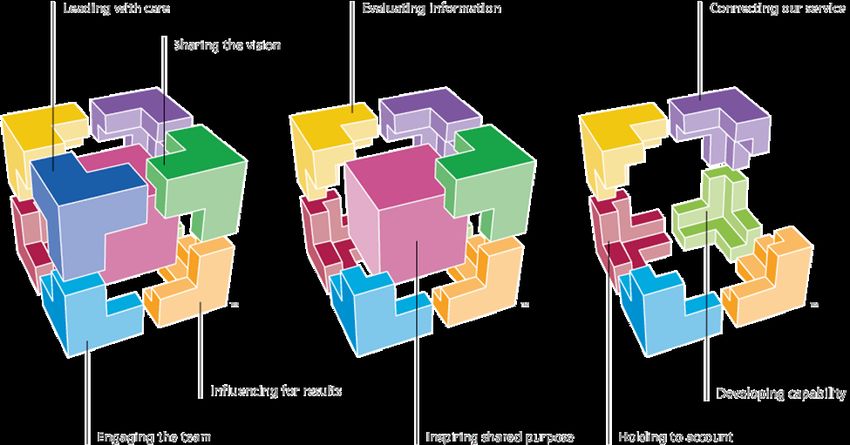
6.Innovate the leadership skills and capacity (OD)
The organisation is committed to defining and developing the leadership structures and processes that it
needs to support the cultural changes necessary to thrive. There is scope to clearly articulate and
implement the NHS leadership model as pictured below, which allows for greater clinical input into
decision making and co-leadership of services. Consideration of clinical networks and staff forums will
be explored to support innovation whilst enhancing skills and capacity.

Current observations suggest that there remains significant elements of transactional leadership being
exhibited (staff do not feel involved in the decisions that affect them at work). A key component of this
work stream will be to ensure staff and leaders understand the role of strategic and cultural leadership
and are able to utilise transformational leadership traits.

The overall approach for senior leadership development will be “learning through doing” using
exploratory and reflective models considering the following principles

    •   70% of learning is from on-the-job experiences, tasks, and problem solving,
    •   20% of learning is from feedback and from working around good or bad examples
    •   10% from development and reading

PEOPLE MATTERS ~ WORKFORCE AND ORGANISATIONAL DEVELOPMENT STRATEGY 2014-2019 -                            18
Skills development, behavioural change and team development will be conducted in tandem, utilising a number of strategies with activity to develop a shared picture of desired outcomes for the organisation. Consensus will be sought on transformation programmes and staff will be engaged in participative change processes. Gap analyses will inform specific leadership development interventions using “LIVE” principles, as well as dedicated sessions to enhance specific leadership awareness, skills, competencies and behaviors. Work will be undertaken to implement the revised NHS leadership framework by level, specifying competencies and decision-making accountabilities by role. This model will be integrated into all areas of the organisation – such as recruitment, induction, performance management and career development. This Section of the Strategy will be supported by an implementation plan, and overseen by the Organisational Development subgroup, which is a sub group of the Workforce and Organisational Development Committee. Success will be measured through the achievement of organisational objectives, measured via a suite of outcome metrics. Additional measures will be provided by patient and staff surveys. 7.Bringing the Values to life (OD) In 2012/2013 the Trust undertook an exercise to revise its values and continues enhance this work through values workshops and use of compassion circles. Over 300 Trust staff members, across every service of the organisation have been involved within the process to develop the values. There is recognition that embedding values into everyday behaviors and systems is now vital. PEOPLE MATTERS ~ WORKFORCE AND ORGANISATIONAL DEVELOPMENT STRATEGY 2014-2019 - 19
Such implementation requires a greater visibility of values, the incorporation of them into our daily
business and support for managers and clinicians in demonstrating behaviors aligned with the values
and holding to account. Values will be implemented into:

    •      Recruitment
    •      Appraisal
    •      Training
    •      Induction

Facilitating dialogue around the values and supporting effective delivery of transformation is critical,
developing a strategy that embodies the values and vision of the organisation is important, in terms of
how the strategy is managed and implemented, this will be established and articulated throughout 2014.

Opportunity lies in implementing a participative approach to staff engagement that embodies and drives
greater alignment to the organisational values. It is expected that through all management of change
processes, the values will serve as a template to support initiatives, innovation or change. Over the
longer term, the aim will be to establish staff/managerial events and activities that facilitate on-going
dialogue around bringing the values to life.

This Section of the Strategy will be supported by an implementation plan, and overseen by the
Organisational Development subgroup, which is a sub group of the Workforce and Organisational
Development Committee. Success will be measured through the achievement of organisational
objectives, measured via a suite of outcome metrics. Additional measures will be provided by patient
and staff surveys.

8.Develop a highly Engaged workforce (OD) (LiA Sponsor Group)
Engagement: A fully engaged, diverse workforce which goes the extra mile.

Staff engagement can be described as ‘a positive attitude held by the employee towards the organisation
and its values. An engaged employee is aware of business context, and works with colleagues to improve
performance within the job for the benefit of the organisation. The organisation must work to develop
and nurture engagement, which requires a two-way relationship between employer and employee.’ (IES)

Staff engagement is a key measure of patient satisfaction, there is a direct correlation between Staff
Survey and Patient Survey results. Key correlations between engagement and aspects of working life
include:

    •      involvement in decision making
    •      the extent to which employees feel able to voice their ideas and Managers listen to these views,
           and value employees’ contributions

PEOPLE MATTERS ~ WORKFORCE AND ORGANISATIONAL DEVELOPMENT STRATEGY 2014-2019 -                              20
• opportunities employees have to develop their jobs and the extent to which the organisation is
concerned for employees’ health and wellbeing.
The organisation has committed to the Listening into Action Pioneer scheme and will be key in further
enhancing staff engagement.
Staff engagement is critical to achieving the transformation challenges that are being developed. Key
drivers of engagement are:
• Understanding of vision, strategy and objectives,
• Confidence in senior leadership,
• Robust communication ,
• Transparent management of change processes handled well and staff feeling valued by the
organisation.
All elements of this strategy are aimed at enhancing staff engagement. However, it is important to have
an overall work stream that focuses on the engagement of our staff.
A communications strategy will be developed in support of the strategy, this will outline how internal
and external communications will be developed to engage staff. A branded staff communications /
engagement channel will be considered establishing two-way dialogue between the Executive Team and
front line staff. Monthly events will be held to enable Senior Managers to engage directly with front line
staff and managers across the Trust.
The Trust will continue to enhance listening opportunities through regular staff surveys in order to
receive feedback from staff on the drivers for engagement. This will include the mandated friends and
Family test for staff. The use of surveys will complement the action planning processes, which underpin
the national annual staff survey. Continued use of intelligence gathered from staff surveys and action
planning processes will drive continuous improvement.
This Section of the Strategy will be supported by Listening into Action Sponsor group. Success will be
measured through the achievement of organisational objectives, measured via a suite of outcome
metrics. Additional measures will be provided by patient and staff surveys.
6. Governance issues
The Workforce and Organisational Development Committee will monitor progress of work streams led
by its subgroups, The subgroups will identify and report blocks and barriers, which are escalated to the
Workforce and Organisational Development Committee. Data is reported monthly through the
integrated performance reported and submitted to the NTDA and Health Education England upon
PEOPLE MATTERS ~ WORKFORCE AND ORGANISATIONAL DEVELOPMENT STRATEGY 2014-2019 - 21request. The Workforce and Organisational Development Committee submits its minutes to the Trust
Board.
7. Evaluation, learning and review
Progress against the strategy and associated plans will be reviewed monthly, and through reports
presented to the Workforce and Organisational Development Committee. Annual compliance reports
for the Subgroups and Workforce and Organisational Development Committee are also submitted to the
Trust Board.
The Workforce and Personnel Teams in conjunction with General managers and Service leads, will
develop action plans in support of the eight work streams at Divisional and Cost centre level in
collaboration with the relevant stakeholders, e.g. Ward Managers, Clinical Leads, or General Managers,
and back office teams. Exception reports for all action plans will be monitored by the Workforce and
Organisational Development Committee through the subgroup minutes and the data contained within
any plan will be updated as required.
Best practice, ideas, and innovations are shared within the Trust and with organisations regionally. This
allows teams to learn from others, both internal and external to the organisation whilst ensuring that
the Trust is continuously assessing its processes and procedures.
8. Communication plan
In order to meet the objectives this strategy it will be supported by a communication plan, which is
sensitive to the differing needs of all audiences and tailors messages which meets individual needs in a
way that is suitable, In addition:
• We will develop a set of key messages/points for emphasis, that should be
repeated to all audiences at every opportunity. Whilst some messages may be
developed nationally, the Trust will develop local key messages in relation to the
key areas.
• The Workforce and Organisational Development Committee will establish clear
lines of communication and reporting mechanisms. These will be posted onto
the Intranet.
9. References
Darzi Lord (2008) High quality care for all: NHS Next Stage Review final report. DoH, London
Department of Health (2010) Revision to the NHS Operating Framework 2010/2011. DoH,
London
Department of Health (2010) Equity and excellence, Liberating the NHS. DoH, London
Department of Health (2009) The Operating Framework for NHS in England 2009/2010. DoH,
London
PEOPLE MATTERS ~ WORKFORCE AND ORGANISATIONAL DEVELOPMENT STRATEGY 2014-2019 - 22Department of Health (2008) NHS Next Stage Review: Our vision for primary and community
care. DoH, London
Department of Health (2006) A high quality workforce. Online (accessed 20th August 2010)
www.dh.gov.uk/en/Publicationsandstatistics/Publications/PublicationsPolicyAndGuidance/DH_
085840
Department of Health (2005) A national framework to support local workforce strategy
development: A guide for Human Resource directors in the NHS and social care, DoH, London
Department of Health (Undated) Quality, Innovation, Productivity and Prevention : the twelve
Workstreams. Online (accessed 20th August
2010) http://www.dh.gov.uk/en/Healthcare/Qualityandproductivity/DH_112316
Directgov (2010) Time to train: request time at work to learn new skills Online (accessed 20th
August
2010) http://www.direct.gov.uk/en/Employment/Employees/Timeoffandholidays/DG_183635
NHS Information Centre (2010) Occupational Codes manual Version 8.1. Online (Accessed 20th
August
2010) http://www.ic.nhs.uk/webfiles/data%20collections/NHS_Occupation_Code_Manual_Vers
ion_8_1.pdf
NHS Staff Council (2010) NHS terms and conditions handbook amendment number 17, NHS
Staff Council London
NHS South West (2008) The Strategic Framework for Improving Health in the South West
2008/09 to 2010/1, NHS South West, Taunton.
NHSLA (2010) NHSLA Risk Management Standards for Acute Trusts Primary Care Trusts and
Independent Sector Providers of NHS Care.NHSLA, London
NHSLA (2010) Clinical Negligence Scheme for Trusts Maternity Clinical Risk Management
Standards Version 1 2010/11.NHSLA, London
Northern Devon Healthcare NHS Trust (2008) Our Ambitions. Northern Devon Healthcare NHS
Trust, Barnstaple
PEOPLE MATTERS ~ WORKFORCE AND ORGANISATIONAL DEVELOPMENT STRATEGY 2014-2019 - 23Royal College of Anaesthetists, Royal College of Midwives, Royal College of Obstetricians and
Gynaecologists, Royal College of Paediatrics and Child Health (2007) Safer Childbirth: Minimum
Standards for the Organisation and Delivery of Care in Labour RCOG, London.
Skills for Health (2009) Workforce planning: introduction and six-step approach, Skills for
Health, London.
10. Associated documents
Workforce Plans
Workforce Plan Data
Integrated Business Plan
Workforce risk assessment
Integrated performance reports
Health and wellbeing strategy and action plan
PEOPLE MATTERS ~ WORKFORCE AND ORGANISATIONAL DEVELOPMENT STRATEGY 2014-2019 - 2411. Equality Impact Assessment Screening Form
Equality Impact Assessment Screening Form
Title People matters ~ Workforce and Organisational Development Strategy 2014-2019
Author Darryn Allcorn, Interim Director of Workforce and Organisational Development
Directorate Personnel and Development
Sub
Workforce Development
Directorate
Document Class Document Status Issue Date Review Date
Strategy Review April 2014 April 2015
What are the aims of the document?
This document details the integrated workforce and organisational development strategy,
1 detailed Workforce Plans and Development Strategies will continue to be developed in
consideration of this overarching document and the strategic objectives of the organisation.
What are the objectives of the document?
The strategy provides a clear mechanism for engaging and developing staff and
leaders to enable cultural changes necessary to deliver the vision, and ensure the
values are at the heart of all we do. The strategy details an ambitious 5 year
programme that is designed to align activities with the performance improvements
and service changes needed to lead in the changing environment of the NHS.
The focus is on developing our internal capacity and capability to balance the
challenges of providing high quality, safe patient care with the efficiencies necessary
for re-investment, in order to achieve our financial plans. The strategy is organised
around eight work streams:
• Developing a Performance culture
• Delivering Opportunities through sustainable structures, systems and
processes
• Supporting employee Health and Wellbeing
• Embedding participative change and continuous Improvement capability
within the organisation
• Managing Talent and succession Planning
PEOPLE MATTERS ~ WORKFORCE AND ORGANISATIONAL DEVELOPMENT STRATEGY 2014-2019 - 25• Innovate the leadership skills and capacity
• Bringing the Values to life
12. Develop a highly Engage workforce
A POSITIVE Workforce will be supported through the eight work streams, ensuring
we have the right people in the right places with the rights skills underpinned by
strategies that value and support the workforce to deliver innovative high quality
compassionate and safe care.
How will the document be implemented?
3 The document will be implemented through the ongoing work streams and led by the sub
groups of the Workforce and Organisational Development Committee
How will the effectiveness of the document be monitored?
Progress against the objectives of the strategy and associated plans will be reviewed
monthly, and through quarterly and annual reports presented to the Workforce and
Organisational Development Committee. Annual compliance reports for the Workforce and
Organisational Development Committee are also submitted to the Trust Board.
The Workforce Teams in conjunction with General managers and Service leads will develop
action plans for work streams at Divisional and Cost centre level with the relevant
4 stakeholders, e.g. Ward Managers, Clinical Leads, or General Managers, and back office
teams, exception reports for these action plans will be monitored by the Workforce and
Organisational Development Committee and the data contained within the plans identified
updated as required in line with financial targets.
Best practice, ideas, and innovations are shared within the Trust and with organisations
regionally. This allows teams to learn from others, internal and external to the organisation
and ensures that the Trust is continuously assessing its processes and procedures.
Who is the target audience of the document?
5 All staff
Is consultation required with stakeholders, e.g. Trust committees and equality groups?
6
Yes
Which stakeholders have been consulted with?
• Executive Directors
7
• Heads of Service
• General Managers
• Heads of Department
8 Equality Impact Assessment
PEOPLE MATTERS ~ WORKFORCE AND ORGANISATIONAL DEVELOPMENT STRATEGY 2014-2019 - 26Please complete the following table using a cross, i.e. X. Please refer to the document “A
Practical Guide to Equality Impact Assessment”, Appendix 3, on Tarkanet for areas of
possible impact.
• Where you think that the strategy could have a positive impact on any of the equality
group(s) like promoting equality and equal opportunities or improving relations within
equality groups, cross the ‘Positive impact’ box.
• Where you think that the strategy could have a negative impact on any of the equality
group(s) i.e. it could disadvantage them, cross the ‘Negative impact’ box.
• Where you think that the strategy has no impact on any of the equality group(s) listed
below i.e. it has no effect currently on equality groups, cross the ‘No impact’ box.
Positive Negative No
Equality Group Comments
Impact Impact Impact
Age X
Disability X
Gender X
Gender
X
reassignment
Human Rights
(rights to privacy,
dignity, liberty
X
and non
degrading
treatment)
Marriage and
X
civil partnership
Pregnancy,
maternity and X
breastfeeding
Race /
X
Ethnic Origins
Religion
X
or Belief
Sexual
X
Orientation
If you have identified a negative discriminatory impact of this strategy, ensure you detail the
PEOPLE MATTERS ~ WORKFORCE AND ORGANISATIONAL DEVELOPMENT STRATEGY 2014-2019 - 27You can also read


