A Guide to New York City Taxes: History, Issues and Concerns - Business Real Estate Personal Income Sales and Use Excise
←
→
Page content transcription
If your browser does not render page correctly, please read the page content below

A Guide to New York City Taxes:
History, Issues and Concerns
Business
Real Estate
Personal Income
Sales and Use
Excise

                                  Marilyn M. Rubin
                                    December 2010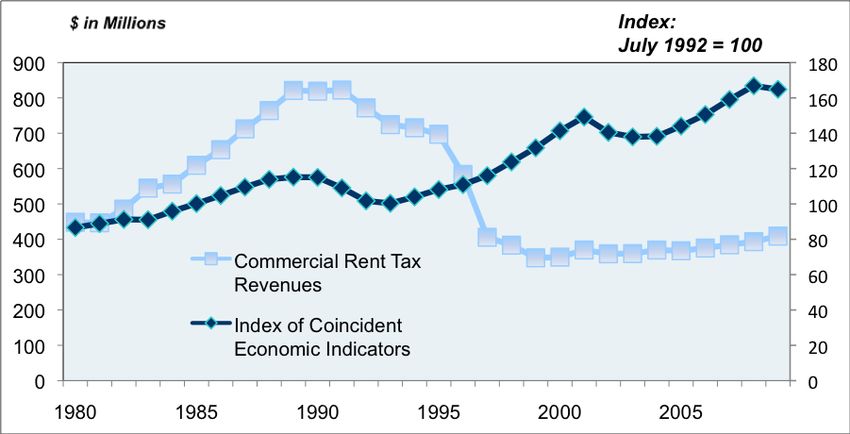
A GUIDE TO NEW YORK CITY TAXES:
               HISTORY, ISSUES AND CONCERNS

                                   Marilyn Marks Rubin
                                     John Jay College

                                       December 2010

                     Funded by the Peter J. Solomon Family Foundation

Marilyn Marks Rubin                                      Peter J. Solomon
Professor                                                Chairman
John Jay College                                         Peter J. Solomon Company
City University of New York                              520 Madison Avenue
445 W. 59th Street                                       New York City, NY 10022
New York City, NY 10019                                  (212) 508-1600
(212) 237-8091                                           pjsolomon@pjsolomon.com
mrubin@jjay.cuny.edu                                     http://www.pjsolomon.com/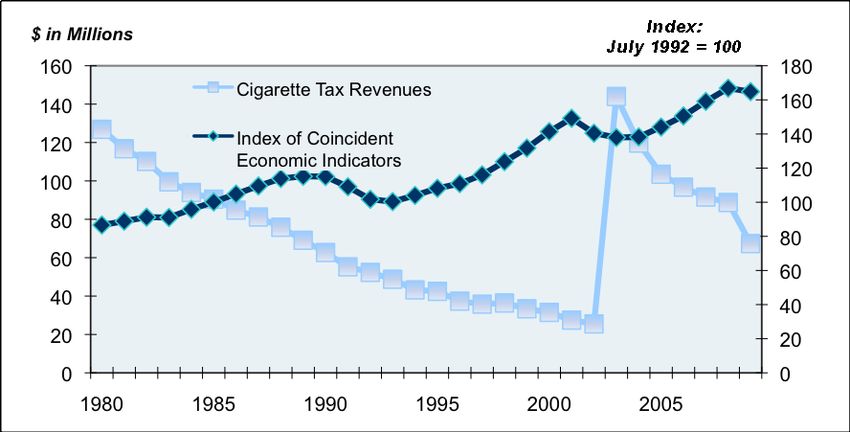
Preface

The origin of the Guide was a report on New York City taxes prepared in 1979 by Dr. Marilyn Rubin, a
consultant to me when I served as Deputy Mayor for Economic Policy and Development under Mayor Edward
I. Koch.

When I entered NYC government in the late 1970s, the City was deep in its financial crisis and tax policy and
its effect on the City’s budget and economy were critical. I was surprised to learn that there was no
comprehensive summary of all the taxes imposed by the City, and that the Mayor and other policy makers
lacked basic information to make decisions. In the ensuing 31 years, no government office, public policy
organization nor academic institution has, to our knowledge, provided a comprehensive and comprehensible
report on taxes in New York City. Before embarking on this project, we confirmed that observation.

I commissioned Dr. Rubin through the Peter J. Solomon Foundation and under the auspices
of John Jay College, where she is a Professor of Public Administration and Economics, to prepare this
Guide. She is a recognized expert on state and local taxes and is an elected fellow of the prestigious National
Academy of Public Administration (NAPA), chartered by the U.S. Congress to help government leaders build
accountable, efficient and transparent organizations that deliver results. I am indebted to Dr. Rubin for her
usual thorough and thoughtful analysis. Her colleagues Dr. Catherine Collins at George Washington Institute
of Public Policy and Dr. Yi Lu at John Jay College provided extensive input into the report as did current and
former students in the College’s MPA Program: Annemarie Eimicke, Dov Horwitz and Lauren McNerney.

Dr. Rubin and I are grateful to the many professionals who have read and commented on the report including
David Frankel, Commissioner of the New York City Department of Finance, and Michael Hyman, the
Department’s Assistant Commissioner for Tax Policy, and his staff. We thank John Grathwol, Assistant
Director of the NYC Office of Management and Budget, and his staff, for providing us with the data we
needed to produce the report, and Ronnie Lowenstein, Executive Director of the NYC Independent Budget
Office (IBO), and her staff for their helpful comments, particularly Michael Jacobs, David Belkin, Ana
Champeny and Alan Treffeisen. We also thank Steve Spinola, President of the NYC Real Estate Board, and
Michael Slattery, the Board’s Senior Vice President, for their valuable comments, Stephen Solomon and
Kenneth Moore of Hutton & Solomon, LLP for their input on some of the more technical aspects of the City’s
taxes and Diane Coffey, my partner at our firm, for her editing and publishing assistance.

New York City and State are once again faced with severe budget issues. We hope that this Guide, clearly
defining the history of NYC taxes, their rates and bases, who pays them and the issues associated with each
will allow more informed tax policy decisions and a better understanding of the effect of changes. As we
completed the Guide, the State had passed its 2010 budget, which includes several changes to its tax structure
and rates (see Exhibits 3 and 4 in Executive Summary). With the exception of the increased NYS tax on
cigarettes, which was already in place before the Guide was completed, these changes are not reflected in the
report, nor are any changes made to NYC taxes, including the elimination of Off-Track Betting.

In closing, the work is ours and, while we have received many helpful suggestions from the persons listed
above, we bear full responsibility for its accuracy and completeness. We welcome comments.

Peter J. Solomon

Chairman, Peter J. Solomon Company, L.P.

December 2010
CONTENTS

Executive Summary ………………………………………………………………………             i

Real Property Tax ……………………………………………………………………..….         1-1

Real Property Transfer Tax ……………………………………………………………..     2-1

Mortgage Recording Tax ………………………………………………………………...       3-1

Commercial Rent Tax ……………………………………………………………………           4-1

Personal Income Tax ……………………………………………………………………..         5-1

Sales and Use Tax ………………………………………………………………………...         6-1

Cigarette Tax ……………………………………………………………………………..            7-1

Hotel Tax ……………………………………………………………………………….…               8-1

General Corporation Tax ………………………………………………………………..       9-1

Unincorporated Business Tax …………………………………………………………...   10-1

Banking Corporation Tax ……………………………………………………………….       11-1

Utility Tax …………………………………………………………………………………             12-1

Other Taxes ……………………………………………………………………………….             13-1

Executive Summary

EXECUTIVE SUMMARY

Introduction                                            businesses to both the City and State are much
                                                        higher than those in other localities in the nation.
The purpose of the Guide to New York City Taxes
is to provide information to a wide range of            Cities as Creatures of the State
readers on New York City taxes in a format that is
broad in scope and non-technical in its                 Under the U.S. Constitution, states retain the
presentation.                                           power to impose any tax that does not violate the
                                                        U.S. Constitution or their own state constitutions.
The information presented in the Guide can be           This means that states are generally free to decide
found in several other sources.1 None, however,         how, what and whom to tax. The U.S.
provides a broad non-technical picture of NYC           Constitution, however, does not mention local
taxes, showing their structural elements as well as     governments. Instead, each state decides what
other relevant details – how they have evolved          types of local governments to allow and what
over time, how much revenue they generate and           powers they may exercise. Cities are thus
how they compare to similar taxes imposed in            creatures of the state unless specific state action
other U.S. cities. Nor do these other sources, with     alters this relationship by permitting home-rule for
few exceptions, look at the extent to which NYC         local governments.
taxes are imposed in addition to New York State
taxes on the same base.                                 The creature of the state principle is based on
                                                        what is known as Dillon’s Rule, which dictates
The Guide provides this information for all of          that municipalities only have the powers explicitly
NYC’s major taxes as of FY2009. It also presents        given to them by the state. Established in 1872 in
issues and concerns associated with each tax that       a treatise on municipal corporations authored by
need to be addressed as part of the City’s ongoing      Iowa Supreme Court Judge John F. Dillon, the
efforts to maintain its competitive position for        creature of the state principle remains the legal
businesses and its standing as one of the best          doctrine governing current city-state relationships
places to live in the U.S.                              throughout the U.S., as modified by individual
                                                        state laws permitting home rule.
Overview
                                                        Most states, including New York, have modified
New York City is home to more than 8.3 million          Dillon’s Rule by providing home-rule powers to
people. It is the largest city in the U.S., more than   certain or all local governments, either under their
twice the size of Los Angeles, the second-largest       constitutions or by statute. Home rule
city in the nation, and close to three times the size   municipalities are taken out from under Dillon’s
of Chicago, the third most populous. If New York        Rule and permitted to operate under their own
City were a state, it would rank as the 12th largest    charter, which establishes local governance and
in the U.S. with respect to population size. This       administrative practices. In general, however,
would place it behind New Jersey with its 8.7           home rule authority does not extend to autonomy
million residents and ahead of Virginia with its 7.9    over the power to tax, with few exceptions.
million residents.
                                                        The only tax-related action that NYC, a home rule
New York City’s tax structure also resembles that       jurisdiction, is permitted to take without NYS
of a state but with two critical differences. The       legislative and gubernatorial approval is the
first is that states are sovereign with respect to      setting of its annual Real Property Tax rates and
taxation; cities are creatures of the state. The        even this action is taken within NYS constitutional
second is that the taxes paid by NYC residents and      and statutory constraints. All other actions related

                                                                                                           i

to the NYC Real Property Tax and to any other tax      exceed the costs of service provision, they become
are subject to initiation or approval by the NYS       part of the City’s General Fund.3
Governor and Legislature.
                                                        Figure 2: NYC Revenue Sources, FY 2009
NYC and NYS Taxes: A Double Burden

The second factor that differentiates New York
City from the 50 states is that City residents and
businesses pay high taxes to both NYC and NYS,
sometimes on the same base. Figure 1 shows that
of the 19 taxes imposed by the City and included
in its General Fund revenues, 11 are also levied by
the State.2 NYS imposes more than 20 taxes that
impact City residents and/or businesses, including

                                                        Source: NYC Office of Management and Budget
the Estate and Gift Tax and the Insurance Tax (see
Exhibit 2 for a list of NYS taxes). This taxing of
                                                       Taxes. The Real Property Tax is the City’s largest
the same base by NYC and NYS is one of the
                                                       revenue producer, accounting for 40% of total tax
concerns associated with City taxes discussed later
                                                       revenues and 24% of revenues from all sources in
in the Executive Summary.
                                                       FY 2009. Together with the City’s three other real
                                                       estate related taxes, more than 45% of tax
                Figure 1: NYC and NYS:
                                                       revenues and 27% of City revenues from all
                 Taxing the Same Base
                                                       sources were attributable to property owners and
                  Personal Income Tax                  renters (see Exhibit 1). The three other real estate
                     Sales/Use Tax                     related taxes are: the Real Property Transfer Tax
                General Corporation Tax                (RPTT), the Mortgage Recording Tax (MRT) and
                Banking Corporation Tax                the Commercial Rent Tax (CRT).
                       Utility Tax
                      Cigarette Tax
                                                       The second-largest NYC tax source is the Personal
                Mortgage Recording Tax
               Real Property Transfer Tax
                                                       Income Tax (PIT). In FY 2009, the PIT yielded
                 Alcoholic Beverage Tax                $6.5 billion, accounting for 18% of all NYC tax
                    Off-Track Betting                  revenues and 10.6% of City revenues from all
           Wireless Communications Surcharge           sources.

                                                       The Sales/Use Tax, the third-largest NYC tax
Taxes and Other NYC Revenue Sources                    source, generated 12.8% of all City tax revenues
                                                       and 7.6% of City revenues from all sources in FY
Taxes are the primary source of NYC revenues. Figure   2009. The City also levies selective sales taxes,
2 shows that in FY 2009, of the $60.6 billion total    known as excise taxes, on cigarettes, hotels,
City revenues, $35.9 billion or 59.1% was              beer/liquor and certain other items and
attributable to taxes, almost three times the 20%      transactions.
attributable to State aid, the second-largest source
of City revenues and almost six times the 10%
                                                       NYC business taxes imposed on general
from Federal aid.                                      corporations, banking corporations and utilities
                                                       and its tax on unincorporated businesses together
Fees for services, licenses, fines and similar         generated 15.7% of all NYC taxes and 9.2% of
charges, accounted for 7.4% of total City revenues     total City revenues in FY 2009.
in FY 2009. Generally, fees are equal to the cost
of providing a service. To the extent that fees

                                                                                                            ii

Trends in NYC Tax Revenues4
Total NYC tax revenues in 2009 were $35.8 September 11th and the national recession. Real
billion, a decrease of 7.1% over the $38.6 billion tax revenues resumed their positive growth trend
in 2008. These revenues are, however, in current in 2003 and continued to increase until 2007. In
or nominal dollars which do not take inflation into 2008, real revenues fell by 2% – a year before the
account. Constant dollar values are adjusted for City’s economy went into decline – and again in
inflation and show real tax changes over time. 2009.
For example, as shown in Figure 3, real tax
revenues adjusted for inflation began to decline in Figure 4: Constant 2000 Dollar Total NYC Tax
Revenues and Real Economic Growth, 1980-2009
2008 rather than in 2009 as indicated by current
dollar values. In real terms, FY2009 tax revenues
were slightly below FY2005 revenues.
Figure 3: NYC Total Tax Revenues in Current and
Constant 2000 Dollars, 2000-2009
Sources: Index of Coincident Economic Indicators, NY Federal
Reserve Board; Moody’s.com NY State & Local Government
Product Deflator used to convert current dollar values into constant
2000 dollars.
Sources: Current Dollars, NYC OMB; Moody’s Economy.com NY One of the reasons that the relationship between
State & Local Government Product Deflator used to convert current tax revenues and economic change differed in the
dollars into constant 2000 dollars.
2008-09 period as opposed to the early 1990s is
the City’s growing reliance on economically
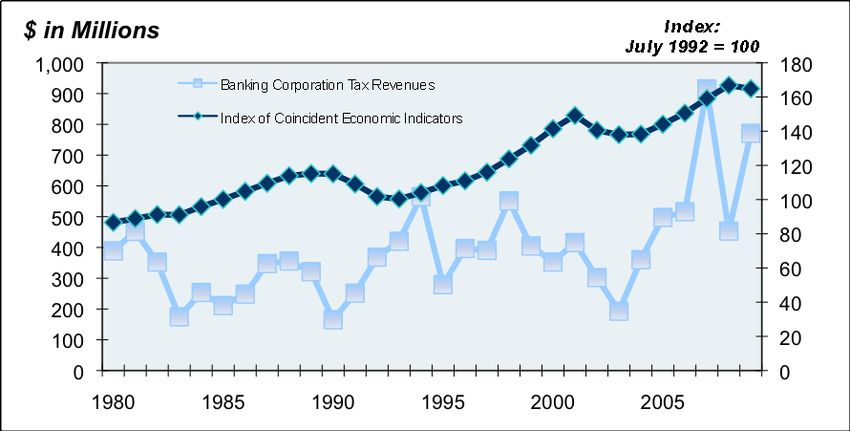
Figure 4 shows how real dollar tax revenues over
sensitive taxes, particularly personal and business
the last 30 years have generally tracked NYC
income taxes. In 1990, personal and business
economic conditions as measured by the NYC
income tax revenues comprised 26% of the NYC
Index of Coincident Economic Indicators.
tax base; by 2009 they represented 33%.
The NYC Index of Coincident Economic
Indicators was developed by the Federal Common Issues and Concerns
Reserve Bank of New York.5 It combines
individual indicators of economic activity, The following sections of the Guide to New York
including employment, to measure overall City Taxes describe the structural elements of each
changes in economic conditions in the City. NYC tax as well as other relevant details about the
The Index provides a broader measure of tax – how it has evolved over time, how much
economic conditions than does a single revenue it generates and how it compares to
indicator such as unemployment or income. similar taxes in other U.S. cities.
In the 1980s, real growth in tax revenues closely Although the taxes differ with respect to structure
tracked economic conditions in the City. During and their contribution to City revenues, several
the 1990s, tax revenues continued to grow – with a issues and concerns are common among them.
dip only from 1994 to 1995 – when economic These issues and concerns shown in Table 1 are
conditions in the City declined. discussed briefly below and explained more fully
in the descriptions of the individual taxes in the
Tax revenues increased along with the economy following sections of the Guide.
until 2002 when they slumped in the wake of
iii
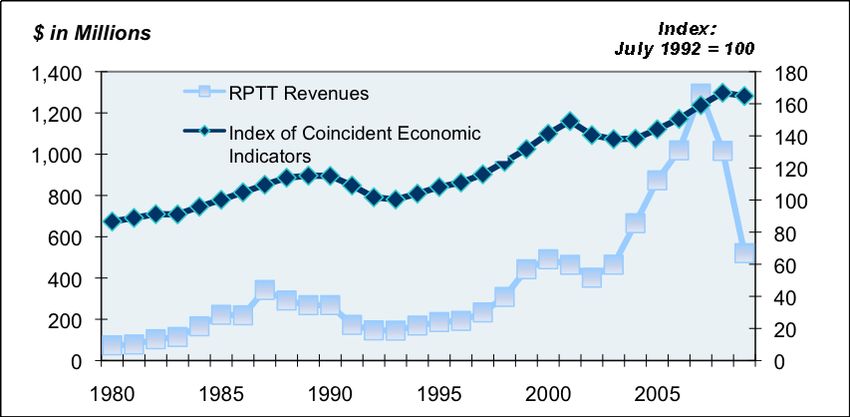
Table 1: Common Issues and Concerns Related to Major NYC Taxes*
Tax NYC/NYS Double Electronic Regulatory Unique
Tax Same Taxation Commerce Reforms Tax
Base
Real Property
Real Property Transfer
Mortgage Recording
Commercial Rent
Personal Income
Sales/Use
Hotel
Cigarette
General Corporation
Unincorporated Business x
Banking Corporation
Utilities
*
Table does not show taxes that account for less than 0.1% of City tax revenues (see Exhibit 1).
NYC and NYS Taxing the Same Base. Of the 19 Unincorporated Business Tax (UBT) and the PIT
taxes levied by NYC and included in its General on the same income stream.
Fund, 11 are imposed by the State on the same
base (see Figure 1, p.ii). Among U.S. cities, Double taxation also occurs when commercial
comparative tax burden studies always show NYC tenants occupying space below 96th Street in
with the highest or close to the highest combined Manhattan pay the Commercial Rent Tax as well
city/state burden.6 as increases in Real Property Taxes on their
buildings.
NYC has the highest corporate tax rate of any
local government in the U.S., and the highest Electronic Commerce. The growth in e-commerce
combined state/local corporate income tax
is a new challenge. NYC taxes were instituted
rate.
Among local governments imposing some when doing business required a physical presence
type of personal income-based tax, only and geographic borders generally defined the
Philadelphia has a higher tax rate than NYC – boundaries for purposes of taxation. Today, as a
but a lower combined state/local rate. result of changing communications technologies,
The combined NYC/NYS Real Property geographic borders for purposes of many types of
Transfer Taxes and Mortgage Recording taxation are rapidly disappearing.
Taxes give NYC the highest real estate
closing costs in the country. The growth in sales made over the Internet and the
fact that most individuals pay no sales or use tax
Double Taxation. Many City taxpayers, especially
on many of these purchases has negatively
City residents, pay more than one tax on the same
impacted the City’s tax revenues. The combined
income stream. For example, NYC residents who
New York City/New York State loss of revenues
are S Corporation owners/ shareholders pay the
in FY 2009 resulting from untaxed e-commerce
NYC General Corporation Tax (GCT) or the NYC
sales is estimated at $257 million.7 Cigarette Tax
Bank Tax, and the NYC Personal Income Tax
and Hotel Tax revenues are also adversely
(PIT) on income derived from the corporation.
affected by Internet transactions.
Additionally, NYC business owners who are
residents with more than $42,000 in taxable
income for City PIT purposes pay the The increased use and reliability of tele-
communications technology means that more
iv
business can be conducted electronically and that       taxes is also imposed on the same base as another
physical location is no longer as necessary as it       NYC tax.
once was. This, too, has an adverse impact on tax
revenues as businesses act to reduce their tax          Conclusions
liability through increased use of the Internet and
other telecommunications technologies.

            NYC imposes a wide variety of taxes and has a tax
                                                        burden exceeding that of all other U.S. cities.
   Government Regulatory Reforms                        Most of the City’s taxes were enacted more than
                                                        50 years ago, long before dramatic technological
   Passage of the Federal
  Gramm-Leach-Bliley Act     advances changed the environment in which taxes
   (GLBA) in 1999 removed the demarcation               are imposed. Over time, the City’s tax base has
   between banks, securities firms and other            also become increasingly sensitive to changes in
   financial institutions.                              the City’s economy.
   Changes resulting from GLBA blurred the line         The tax burden in NYC, the complexity and
   between businesses that have to file under the
                                                        inequitable application of a number of taxes, the
   NYC Bank Tax and those that have to file under       impact of technology and the increasing volatility
   the City’s General Corporation Tax. NYS has          of the City’s tax base are the impetus for the
   begun a study of the possibility of creating a       Guide to New York City Taxes. The information
   single tax structure for financial institutions.     presented in the Guide can provide a baseline for
Government deregulation of utilities also has tax       any efforts undertaken to modernize the City’s
implications. Before deregulation, utilities were       revenue structure.
permitted to operate only within specific service       Conclusions regarding taxes in New York City,
territories. Customers could purchase tele-             their comparative burden and and their effect on
communications services and electric power only
                                                        taxpayer behavior obviously cannot be reached
from their local regulated utilities.                   without considering the City’s expenditures and
                                                        the relationship between City and State taxes.
Deregulation has changed the marketplace so that
cheaper telecommunications services and power in        As we complete the Guide, the State has passed its
other parts of the region and nation will be an         2010 budget which includes several changes to its
increasingly important issue for the City’s             tax structure and rates (see Exhibits 3 and 4). With
competitive position. NYC/NYS utility taxes             the exception of the increased NYS tax on
contribute to making the City’s utility costs among     cigarettes which was already in place before the
the highest in the country.                             Guide was completed, these changes are not
                                                        reflected in the report.
Changes in the regulatory environment make the
distinction between NYC’s General Corporation
Taxpayers and some Utility Taxpayers more
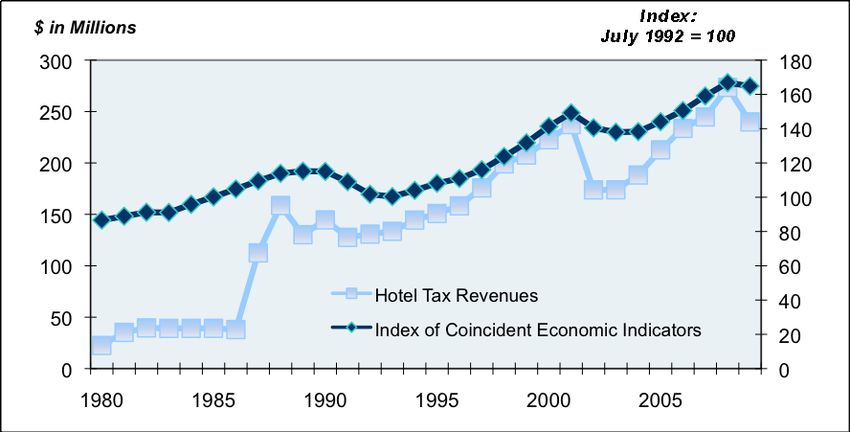
problematic. NYC Real Property Tax revenues are
also impacted since utility properties are taxed
differently than other types of business properties.8

Unique Tax

 NYC is one of only two jurisdictions in the U.S.
to impose a specific tax on unincorporated
businesses (UBT) and to levy a Commercial Rent
Tax (CRT). As discussed above, each of these

                                                                                                          v
Endnotes
1
  The 2007 New York City Independent Budget Office               Management and Budget (OMB). Constant 2000 dollar
(IBO) publication Comparing State and Local Taxes in             values for all taxes were calculated using the Moody’s
Large U.S. Cities provides information on taxes imposed in       Economy.com NY State & Local Government Product
the nation’s 9 largest cities. The report is found at            Deflator provided to the author by IBO with permission
http://www.ibo.nyc.ny.us/iboreports/CSALTFINAL.pdf.              from Moody’s Economy.com. The legislative history of
The March 2010 NYC Office of Management and Budget               each tax is primarily based on information reported in the
Tax Revenue Forecasting Documentation, Financial Plan            March 2010 OMB Tax Revenue Forecasting
Fiscal Years 2009–2013 includes information used to              Documentation, Financial Plan, Fiscal Years 2009-2013.
                                                                 5
forecast NYC taxes. It is available at                             James Orr, Robert Rich, and Rae Rosen. Current Issues in
http://www.nyc.gov/html/omb/downloads/pdf/methodology            Economics and Finance. Federal Reserve Bank of NY.
_2010_02.pdf. The NYC Department of Finance Webpage              October 1999 Vol. # 5, no. 14. Can be found at
provides information on each of the City’s taxes. The            http://www.newyorkfed.org/research/current_issues/ci5-
information is available at                                      14.pdf.
                                                                 6
http://www.nyc.gov/html/dof/html/business/business_tax_b           See, for example, Tax Rates and Tax Burdens in the
usiness.shtml.                                                   District of Columbia–A Nationwide Comparison 2008. Can
2
  The General Fund is the primary City fund. Most taxes          be found at
and expenditures are in the General Fund. Two additional         http://www.cfo.dc.gov/cfo/frames.asp?doc=/cfo/lib/cfo/cas
taxes are imposed by the City and dedicated to the NYC           h_reports/08study-final.pdf. Also see IBO report referenced
Police and Fire Departments. Neither is included in General      in Endnote 1 above.
                                                                 7
Fund revenues.                                                     Bruce et al. State and Local Government Sales Tax
3
  Letter from NYC Independent Budget Office to NYC               Revenue Losses from Electronic Commerce. Can be found
Council advising that “fees need not exactly reflect the cost    at http://cber.utk.edu/ecomm/ecom0409.pdf
                                                                 8
of providing a service, so long as it is reasonably related to
  Utility properties are classified as either special franchise
the provision of the service and is not a subterfuge for         properties or Real Estate Utility Corporations. The
raising general revenue.” October 2000.                          valuation of special franchise properties is done by the
http://www.ibo.nyc.ny.us/iboreports/spignerletter.pdf.           NYS Office of Real Property Services.
4
  Current dollar revenue data used in the Guide are based on
tax collection data reported by the NYC Office of

                                                                                                                                 vi
Exhibit 1: New York City Taxes and Other Revenue Sources, FY 2009
                                                         Revenue in        % of Total           % of NYC
                                                         Millions of $     NYC Taxes            Revenues from All
                   Revenue Type                                            Revenues             Sources

        Total Revenues                                      $60,646               -                   100.0%
           Taxes                                             35,873             100.0%                  59.2
             Real Estate Related Taxes                      16,179                45.1                  26.6
                       Real Property Tax                     14,339              40.0                   23.6
                       Real Property Transfer Tax               742                2.1                   1.2
                       Mortgage Recording Tax                   515                1.4                   0.8
                       Commercial Rent Tax                      583                1.6                   1.0
                                     1
             Personal Income Tax                              6,450               18.0                  10.6
             Sales and Excise Taxes                           5,032               14.0                   8.3
                       Sales/Use Tax                          4,594               12.8                   7.6
                       Hotel Tax                               342                 1.0                   0.6
                       Cigarette Tax                            96                0 .3                   0.2
             Business Taxes                                   5,602              15.6                    9.2
                       General Corporation Tax                2,320                6.5                   3.8
                       Unincorporated Business Tax            1,785                5.0                   2.9
                       Banking Corporation Tax                1,099                3.1                   1.8
                       Utility Tax                             398                 1.1                   0 .7
             Other Taxes                                      1,662                4.6                   2.7
                       Commercial Motor Vehicle Tax             48                    *                   *
                       Auto Use Tax                             28                    *                   *
                       Taxi Medallion Transfer Tax              11                    *                   *
                       Beer and Liquor Excise Tax               24                    *                   *
                       Retail Beer, Wine and Liquor              5                    *                   *
                        License Tax
                       Horserace Admission Tax                    0.03                *                   *
                       Off-Track Betting Surcharge                   4                *                   *
                                                    2
                       Other Tax-related Revenues              1,542              4.3                    2.5
             Audits                                             947                2.6                   1.6
           Transfers                                          1,124                   -                  1.9
           Charges for Services, Fines, etc.                  4,481                   -                  7.4
           Non-government grants                              1,103                   -                  1.8
           State Categorical Aid                              12,124                  -                 20.0
           Federal Categorical Aid                            5,941                   -                  9.8

       *Less than 0.1%. 1Does not include $138 million in PIT revenues dedicated to the Transitional Finance Authority
       (TFA). NYC did not begin including these revenues as part of its General Fund until FY 2010. In FY2009,
       inclusive of these revenues, PIT revenues were $6,588 million. 2 Includes tax waivers, PILOTS, interest
       payments. Total includes School Tax Relief (STAR) payments to the City from NYS, which were $1.2 million in
       FY 2009. Total is net of refunds and does not include revenues from the premiums tax on foreign and alien fire
       insurers that are dedicated to the Fire Department or the E-9/11 S and Wireless/Cellphone Surcharges, which are
       part of the Police Department’s revenue budget.
       Source: NYC Office of Management and Budget

                                                                                                                         vii
Exhibit 2: New York State Taxes, FY 2009
                                                            Revenues in        % of Total        % of NYS Revenues
                Revenue Type                                Millions of $      NYS Taxes         from All Sources

       Total Revenues1                                         $117,256             -                   100.0%
            All Taxes2                                          58,921             100.0%                50.2
                Real Estate Related Taxes                        1,371               2.3                   1.2
                  Real Estate Transfer Tax                        701                1.2                   0.6
                  Mortgage Recording Tax3                         670                1.1                   0.6
                Estate and Gift Taxes                            1,165               2.0                   1.0
                Personal Income Tax                              36,840             62.5                   31.4
                Sales and Excise Taxes                           12,613             21.4                   10.8
                 Sales/Use Tax                                   10,374             17.6                   8.9
                 Motor Fuel                                       504                0.9                   0.4
                 Cigarette and Tobacco Products                  1,338               2.3                   1.1
                 Alcoholic Beverage                               206                0.3                   0.2
                 Highway Use                                      141                0.2                   0.1
                 Auto Rental                                       50                0.1                    *
                Business Taxes                                   6,614              11.2                   5.6
                 General Corporation Tax                         2,729               4.6                   2.3
                 Banks                                           1,062               1.8                   0.9
                 Insurance                                       1,005               1.7                   0.9
                 Petroleum Business Taxes                        1,107               1.9                   0.9
                 Utility Taxes                                    711                1.2                   0.5
                Other Taxes                                       318                0.5                   0.3
                                     4
                 Pari-mutuel Total                                 10                 *                     *
                                     4
                 Off-Track Betting                                 18                 *                     *
                 Hazardous Waste Assessment                         1                 *                     *
                 Waste Tire Management                             24                 *                     *
                 Wireless Communication                           191                0.3                   0.2
                 Other                                             74                0.1                   0.1
         1
            Total revenue from NYS Financial Plan 2009-2010, p. T-25 plus estimated Mortgage Recording Tax.
         2
            Tax data are from NYS Department of Taxation & Finance Annual Tax Collections and may differ slightly from other
         published data. Audit collections are not reported separately for each tax as reported for NYC taxes in Exhibit 1.
         3
            MRT is estimated by the author; it is not included in the Department of Taxation & Finance Table 2. The State MRT is
         collected by the local recording offices at the time the mortgage is recorded.
         4
           Includes uncashed tickets and racing fee.
         * Less than 0.1%

                                                                                                                            viii
Exhibit 3: NYS FY 2010 Budget: Major Actions with Specific Application to NYC Taxes

             Tax                                               Action

Personal Income Tax: Itemized    For Tax Years 2010 through 2012, for taxpayers with NYAGI over $10 million,
Deductions for High-income       the only itemized deduction allowable in calculating NYS Personal Income
Filers                           Tax liability is 25% of their charitable contributions claimed for Federal
                                 Income Tax purposes. NYC has the option to accept this change for purposes
                                 of calculating City PIT liability.

                                 Currently, for taxpayers with more than $1 million in NYAGI, the only
                                 itemized deduction permitted for NYC PIT purposes is 50% of charitable
                                 contributions claimed for Federal Income Tax purposes.

Personal Income Tax: New         For TY 2010, the maximum City PIT rate increased for all taxpayers with
York City Tax Rate               taxable income of $500,000 or over is increased to 3.4%. This 3.4% does not
                                 include the 14% additional tax imposed on all City PIT filers. Including the
                                 14% increases, the top marginal PIT rate increased to 3.876%, up from the
                                 current 3.648% top marginal rate.

Sales Tax: Exemption on          The current NYS Sales Tax exemption for clothing and footwear up to $110
Clothing and Footwear            per item is suspended for one year. NYC and other localities have the option to
                                 exempt clothing and footwear up to $110 per item (or $55 per item) from local
                                 sales taxes. The current NYC Sales Tax exemption applies to clothing and
                                 footwear up to $110 per item.

Hotel Tax: Responsibility for    Currently, when a hotel room is booked over the Internet through a remarketer
Tax Collection                   (sometimes referred to as an intermediary) such as Travelocity or Expedia, the
                                 hotel operator is responsible for collecting the tax on the price charged to the
                                 remarketer and remitting it to the NYC Department of Finance. The remarketer
                                 is responsible for collecting and remitting the tax on the mark-up (the
                                 difference between the price paid to the hotel and the price paid by the guest).

                                 Under the new law, the room remarketer will collect the Hotel Tax on the full
                                 charge to the customer and pay the hotel the portion of the tax on the room
                                 price charged by the hotel. The hotel will be responsible for remitting these tax
                                 payments to the NYC Department of Finance. The remarketer will receive a
                                 credit for the tax it has paid to the hotel and will remit that portion of the tax it
                                 collects on the mark-up to the Department of Finance.

                                 The 2010 NYS Budget treats remarketers as hotel operators, requiring them to
                                 also collect the NYS and NYC Sales Taxes based on the price paid by the hotel
                                 guest for the hotel room.

Exhibit 4: Major Tax Actions Adopted in New York
State 2010 Budget

                                                                                                                    ix
Exhibit 4: Major Tax Actions Adopted in New York State FY 2010 Budget1

    Budget                                                 Action
    Section

    A         Modifies qualified emerging technology company and bio-fuels production tax credit for limited liability
              companies (LLCs) and partnerships.
    B         Makes compensation for past services taxable for non-residents who had NYS nexus at time of payment.
    C         Treats certain S Corporation income as NYS source income for non-resident shareholders.
    N         Narrows the definition of vendor for purposes of the Sales/Use Taxes.
    P         Provides a credit against State PIT for persons or entities investing in low income housing.
    Q         Increases the cap on the film production tax credit by $420 million per year for 2010 through 2014; allows up to
              $7 million per year in post-production tax credits.
              Provides that Empire Zone de-certifications imposed in 2009 were applicable to tax years beginning on or after
    R         1/1/08. Clarifies that businesses certified as qualified Enterprise Zone entities (QEZEs) or qualified investment
              projects prior to 6/30/2010 retain eligibility for Empire Zone investment and employment incentive tax credits.

    S         Extends the exclusion for Sales Tax exemptions for business aircraft and vehicles included in transactions
              between affiliated entities.
    W         Repeals provisions allowing private-label credit card lenders to take Sales Tax credit/refund on uncollectable
              accounts.
    X         Repeals the Sales Tax vendor credit for monthly filers (receipts of $300,000 or more in taxable sales/quarter).
    Y         Defers most business tax credits over $2 million for tax years 2010, 2011 and 2012 until tax year 2013 or later.
    Z         Conforms NY Bank Tax deductions for bad debts to Federal Internal Revenue Code (IRC) calculations.
    AA        Codifies requirement for hotel room remarketers to collect NYS/NYC Hotel Taxes and Sales Taxes on hotel
              rooms.
    EE        For TY 2010, increases the NYC Personal Income Tax base rate to 3.4% for taxable income over $500,000.2
              Suspends NYS Sales Tax exemption on clothing and footwear priced at $110 and less from October 2010 through
              March 2011. Reinstated at $55 in April 2011 through March 2012; full reinstatement April 1, 2012. Gives local
    GG        governments option to keep exemption of $55 or $110.

              For Tax Years 2010 through 2012, the only itemized deduction allowed for NYS taxpayers with NYAGI of $10
              million or more is 25% of charitable contributions claimed on their Federal Income Tax returns. Local
    HH        governments have the option of accepting this change for purposes of calculating local PIT liability.

    M         Makes permanent 2008 amendments related to closely held REITS for General Corporation and Bank Taxes.
    N         Clarifies that certain publicly traded REITS are not subject to provisions for closely held REITs.
    W         Relates to exclusion of transportation services provided by affiliated livery vehicles in NYC from City and State
              NYS Sales Taxes.
    Y         Modifies the definition of little cigar for purposes of NYS Tobacco Tax.

1
    Prepared August 5, 2011 based on NY State Senate S.6610-C and Assembly 9710-D.
2
    Does not include 14% additional tax, which increases NYC top marginal PIT rate to 3.876%.

Sources: Pokalsky, Ken. Summary of Business-Related Provisions of S.6610-C/A.9710-D. The Business Council of New York
State, Inc; Albany, New York, August 4, 2010.

                                                                                                                                  x
Real Property Tax
1.0 REAL PROPERTY TAX
1.1 Overview
Class 1: Residential properties with up to
New York City has imposed the Real Property 3 units and certain vacant land for
Tax (RPT) in its current format since 1983 under residential use2
the NYS Real Property Tax Law, as amended by Class 2: Residential properties not
Chapter 1057 of the Laws of 1981 – generally included in Class 1, including cooperative
properties (co-ops) and condominiums
referred to as S.7000A.1 Some type of property tax
(condos)
has been levied in the City since the mid-17th
century when a voluntary tax was imposed on
Class 3: Regulated utility corporation
properties and special franchise
certain types of property including land and properties, excluding land and certain
houses. buildings
Class 4: All other properties including
In FY 2009, the City’s RPT yielded $14.3 billion, office buildings, industrial facilities,
accounting for 40% of NYC tax revenues and retail establishments, and hotels/motels.
23.6% of City revenues from all sources. The
NYC Department of Finance administers and All properties in the 4 classes are subject to the
collects the tax. RPT with certain exceptions. State law mandates
that property owned by government entities and
The RPT is imposed on the value of land and not-for-profit organizations be fully exempt from
buildings located within the City with certain the RPT (see Exhibit 1.1).
exceptions described in Section 1.3. Unlike all
other NYC taxes whose rates are established by Properties owned by City residents in specific
the State, the RPT rates are set annually by the demographic categories, such as veterans, senior
NYC Council, within constraints established under citizens and disabled persons are eligible for
the NYS Real Property Tax Law. partial exemptions and/or abatements from the
RPT. Certain residential, commercial and
The RPT statutory tax rates set for each of the industrial properties are also eligible for partial
City’s four classes of property are not, however, property tax exemptions and/or abatements under
the real (effective) tax rates paid by taxpayers. The several NYC tax relief programs.3
EFT, the tax paid on every $100 of market value,
is discussed in Section 1.4. Exemptions reduce a property’s taxable value
and thus its RPT liability. In FY 2009, the tax
1.2 Factoring in the State dollar value of RPT exemptions was $11.4
billion (see Table 1.1).
The State of New York does not impose its own Abatements are subtracted directly from RPT
liability, generally at a specified dollar
tax on real property.
amount. The total value of abatements in FY
2009 was $472.7 million.
1.3 The New York City RPT Taxpayer
Some taxpayers receiving exemptions and/or
As a result of changes made in S.7000A to the abatements provide the City with payments-in-
NYC property tax structure, the City has had a lieu-of-taxes (PILOTS). In FY 2009, the City
classified property tax system with four property collected $221 million in PILOTS.4
classes in place since 1983.
1-‐1
Table 1.1: Tax Dollar Value of NYC Real Property Tax Exemptions, FY 2009
Property Type # Exemptions % of Total Tax Value* % of Total
($ in millions)
Total 734,700 100.0% $11,385.9 100.0%
Government 11,182 1.5 4,945.9 43.4
Public Authorities 9,463 1.3 2,525.6 22.2
Institutional 15,363 2.1 1,736.9 15.3
Residential 82,533 11.2 1,396.2 12.3
Commercial/ Industrial 6,333 0.9 543.0 4.8
Individual Assistance 609,826 83.0 238.3 2.1
*Tax dollar value of exemption is calculated as the exempt property value multiplied by the tax rate. The exempt property value is
actual assessed value (or, for partially exempt properties, a portion of actual assessed value). Actual assessed value is the product of
the assessment ratio multiplied by market value.
Source: NYC Department of Finance, Annual Report, NYC Property Tax FY2009, page 13.
1.4 The New York City RPT Base responsible and the total assessed value in each
class (class shares are discussed below).
The Real Property Tax base is determined by the
total taxable value of property in the City and the Taxable Value of NYC Property. For purposes of
average Citywide tax rate set by the NYC Council the RPT, taxable value is equivalent to assessed
when it establishes the total RPT levy needed for value, the base for determining taxpayer liability.
budget-balancing purposes. The average City- Each of the elements in the calculation of taxable
wide rate is not, however, used to calculate value and tax liability for individual properties is
individual taxpayer liabilities which are shown in Figure 1.1 and explained below.
determined by applying class-specific tax rates to
each property’s market value. Class-specific tax Market Value. The starting point for calculating
rates are set by the Council based on the share of the taxable value of a property is its market value.
the total tax levy for which each class is Market value can be defined conceptually as “the
cash price a property would bring in a competitive
Figure 1.1: Calculating NYC Property and open market.”5 The NYC Department of
Tax Liability Finance determines market value for NYC
properties using three approaches: (1) the
Market value as determined by the NYC comparable sales or market data approach, (2) the
Department of Finance (DOF) income approach, and (3) the cost or summation
Multiplied by
approach.
Class-specific Assessment Ratio
established by the DOF
Minus All properties in the City are reassessed each year
RPT Tax Exemptions, if applicable between June and January. Once the new market
Equals value of a property is determined, it is multiplied
Assessed or Taxable Value by the class-specific assessment ratio to determine
Multiplied by the new assessed value.
Class-specific Tax Rates set by the
NYC Council An assessment ratio is the ratio of assessed
Equals value to market value. For example, a 10%
NYC RPT Liability before Abatements assessment ratio means that a property with a
Minus $100,000 market value is assessed at 10% of
RPT Tax Abatements, if applicable this value or $10,000. The RPT statutory tax
Equals rate is applied to the $10,000 to calculate tax
NYC RPT Liability liability.
1-‐2
(1) In the Comparable Sales Approach, the market Under S.7000A, NYC is permitted to set
value of a property is determined based on sales assessment ratios for each of the 4 classes. The
prices of comparable properties that have recently current target assessment ratio for Class 1
been sold. Comparable properties are those with properties is 6% while the ratio for each of Class
characteristics similar to the property being 2, 3 and 4 properties is 45%.
valued, such as location, lot size, square footage,
architectural style, age of the home and property For Classes 1, 2 and 4, when market values
use, especially density of use. increase in any given year, class-specific
restrictions, i.e., caps, imposed by S.7000A and
Dollar adjustments are made for differences subsequent legislation determine how assessment
between the property being valued and the increases are to be phased in.
comparable properties, based on periodic physical
inspections by the City and a Computer Assisted Class 1: Assessment increases are capped at
Mass Appraisal (CAMA) model.6 6% annually and at 20% over any 5-year
period.
The Department of Finance uses the Classes 2 and 4: Assessment increases are
comparable sales approach to estimate the phased in over a 5-year (transition) period
market value of Class 1 properties. with no annual caps except on 4-10 unit rental
buildings and co-op and condo buildings with
10 units or less. For these properties,
(2) In the Income Approach, two techniques are assessment increases are capped at 8%
generally applied to determine market value for annually and at 30% over any 5-year period.
purposes of the RPT. In the first, the estimated Annual taxpayer liability is the lower of the
future net operating income (NOI) of the property transitional or actual values.
being valued is divided by an appropriate Class 3: There are no caps on assessment
capitalization (CAP) rate.7 In the second increases or phase-in requirements.
technique, a multiplier is applied to the gross
income of the property being valued to estimate Real Property Tax Rates. As shown in Figure 1.1,
market value.8 tax liability is calculated by multiplying the
assessed value of a property by its class-specific
The Department of Finance uses the income statutory tax rate established by the City Council
approach to estimate the market value of Class annually. In 2009, these rates were:
2 and Class 4 properties.
Class 1: 16.787%
(3) In the Cost Approach, property valuation is Class 2: 13.053%
generally determined on the basis of the value of Class 3: 12.577%
the land on which the property is sited plus Class 4: 10.612%
reproduction/replacement costs minus
The statutory rates are not, however, the real, i.e.,
depreciation.
effective tax rates (ETR), imposed on property
The Department of Finance uses the cost owners.
approach to estimate the market value of Class
3 properties. The ETR is calculated by dividing the Real
Property Tax liability of a property by its
market value and multiplying by 100.
Assessed Value. Assessment is the process by For a property with a $100,000 market value
which a taxing jurisdiction establishes the assessed and a 10% assessment ratio, taxable value
or taxable value of a property relative to its market would be $10,000. If the statutory RPT rate is
value. The NYC Department of Finance (DOF) 5%, tax liability would be $500. The ETR
determines assessed values for City properties would be 0.5% ($500/$100,000 x 100), far
based on assessment ratios. less than the statutory 5%.
1-‐3
The RPT as the Budget Balancer. As mentioned 1.5 The RPT in Other Jurisdictions
earlier, the NYC Council sets the average City-
wide RPT rate once expenditures and revenues New York and most other states do not levy a tax
from all other sources e.g., aid from NYS have on real property. It is, however, imposed at some
been estimated. When revenues from all other level of government in all 50 states and in the
sources are not sufficient to bring the budget into District of Columbia. Because of different
balance, RPT rates are usually increased. In 2008, assessment practices, statutory property tax rates
the City-wide rate was reduced to $11.66; in 2009 cannot be compared across jurisdictions. What can
it was increased slightly to $11.70. be compared, however, are property tax structures.
Class Shares of the Property Tax. The total City State laws may require or permit local
RPT levy is shared among its 4 property tax governments to structure their property taxes so
classes. Provisions in S.7000A ensured that each that different assessment ratios and/or different
property class would continue to provide the same tax rates are applied to different types of
share of the City’s RPT levy that it contributed in properties. Among the largest cities in each of the
1981. S.7000A also restricted the ability of the 50 states, 16 use market value as their taxable base
City to shift taxes from one class to another by in assessing residential properties (see Exhibit
requiring that taxes be levied in accordance with 1.2). The median assessment ratio for the 50 cities
base proportions, i.e., shares of the RPT pie in is 60%; 2 of the 50 cities have assessment ratios
1981. less than the 6% applied to Class 1 properties in
NYC.
In 1989, State legislation reset the base year for
calculating base proportions to 1991. This meant Due to extreme fiscal stress and the need for
that for each of the City’s 4 property classes its additional revenues, many local governments have
base proportion share of the total tax levy must been re-evaluating their RPT incentive programs.
remain the same as it was in 1991, after Some have begun to charge non-profit institutions
adjustments for new construction, demolitions, for essential services. For example, local
alterations and changes in taxable status. governments in Indiana are imposing fees on them
for police and fire services. Some jurisdictions are
NYS law also prohibits base proportions for each turning taxes into fees which can be levied against
class in any one year from increasing more than otherwise tax exempt organizations.
5% over its base proportion in the previous year.
Any increase that would be in excess over the 5% 1.6 New York City RPT Revenue Trends
in one class must be distributed to the other
classes. In FY 2009, NYC Real Property Tax revenues
stood at $14.3 billion, a 9.8% increase over the
The NYC Council has sole discretion to $13.1 billion in 2008. Figure 1.2 shows that in
decide how the excess is apportioned among current dollars, property tax revenues have
the remaining classes. increased every year since 2000. In constant
dollars, there has been more fluctuation, with
In several years, the NYS Legislature, at the revenues falling slightly in 2005, 2007, and 2008.
request of the City, has lowered the 5% cap; in
2009, it was reduced to 0% for the third
consecutive year. The impact of the base
proportions requirement and the reducible cap on
the inter-class share of the property tax burden has
been to favor Class 1 properties over the other
three classes.
1-‐4
Figure 1.2: NYC Property Tax Revenues, Current and 1.7 New York City RPT History
Constant 2000 Dollars, 2000-2009
Since the implementation of S.7000A in 1983,
NYC has been operating under a Real Property
Tax system in which different assessment ratios
and tax rates are applied to 4 statutorily defined
property classes. Several changes since 1981 have
been made by the NYS Legislature to modify the
RPT tax law. A description of these changes and
actions taken under NYC local rule are described
in Exhibit 1.3.
Sources: Current Dollars, NYC OMB; Moody’s Economy.com NY
State & Local Government Product Deflator used to convert current
dollars into constant 2000 dollars. 1.8 Issues and Concerns
Figure 1.3 shows that constant dollar RPT revenues Preferential Treatment of Class 1 Properties. As
rise and fall within a narrow margin over shown in Table 1.2, in FY 2009, Class 1 properties
relatively long periods of time, indicating that the accounted for 52% of the $811.1 billion market
RPT is a stable tax. Figure 1.3 also shows that value of all properties in the City (excluding fully
RPT revenues are relatively insensitive to exempt properties), but for 10.5% of the City’s
changing economic conditions, as measured by the total billable assessed value. In contrast, Class 4
NY Federal Reserve Board Index of Coincident properties accounted for 22.2% of market value in
Economic Indicators. This means that the tax does the city, but for 47.3% of billable assessed value.
not fluctuate as dramatically as other taxes when Within Class 2, rental buildings accounted for
the economy goes into recession. It also means 7.7% of market value compared with 15.4% of
that when the economy is growing, revenues are billable assessed value.
not as responsive as they are for other taxes.
Table 1.2: NYC Billable Assessed Value,* by Tax Class, FY
Figure 1.3: Constant 2000 Dollar RPT Revenues and Real 2009 ($ in millions)
NYC Economic Growth, 1980-2009
Class Market % of Billable % of
Value Total Assessed Billable
(MV) Market Value Assessed
Value Value
Total $811.1 100.0 $133.0 100.0
Class 1 422.8 52.1 14.0 10.5
Class 2 186.0 22.9 46.5 35.0
Rentals 62.3 7.7 20.5 15.4
Sources: Index of Coincident Economic Indicators, NY Federal
Reserve Board; Moody’s.Com NY State & Local Government Co-ops 35.8 10.1 12.9 9.7
Product Deflator used to convert current $ values from NYC OMB to
constant 2000 dollars. Condos 20.2 2.5 6.4 4.8
Class 3 22.4 2.8 9.6 7.2
Class 4 179.9 22.2 62.9 47.3
*Billable assessed value is the assessed value on which tax liability is
based. For properties in Classes 2 and 4, it is the lower of the actual
or transitional assessed value minus any exemptions.
Source: NYC Department of Finance, Annual Report, NYC Property
Tax FY2009, page 1.
The lower assessment ratios for Class 1 properties,
along with the 6%/20% caps on their assessment
1-‐5
increases, have resulted in their favorable property data from comparable buildings, many of which
tax treatment relative to properties in the other contain rent-controlled or rent-stabilized units. As
three classes. For example, the caps made it a result of applying the income approach using
difficult for the City to take full advantage of the data from comparable rental buildings, co-ops and
run-up in residential property market values earlier condos are assigned market valuations that may
in this decade. bear little relationship to their actual value.
Annual State legislative amendments to the Tax Exemptions and Abatements. As discussed in
adjusted base proportion statutes to reduce the 5% Section 1.3, the total assessed value of exemptions
cap on market value adjustments – made at the and abatements in FY 2009 was almost $11.4
City’s request – have also contributed to the billion. Relief for some taxpayers will result in
preferential treatment of Class 1 properties. higher taxes for others if the City is to meet the
revenue targets needed to balance the budget.
Valuation of Co-ops and Condominiums. Under
NYS Real Property Tax Law, the NYC Non-transparency of the RPT. The RPT is
Department of Finance is required to value a difficult tax to understand with each of its
residential condominiums and cooperatives in four classes having its own assessment ratio,
Class 2 as if they were rental apartments. This tax rate and specific caps on assessment
means that the actual sales prices of co-ops and increases. The City Council’s discretion to adjust
condos cannot be used to determine market value base proportions makes the RPT even less
as is the case with Class 1 residential properties. transparent.
Instead, DOF must base its valuation on income
Endnotes
1
For a summary of events leading up to the adoption of S.7000A see 2006 report issued by the NYC Independent Budget
Office (IBO) http://www.ibo.nyc.ny.us/iboreports/propertytax120506.pdf
2
Outside Manhattan residentially zoned vacant land or land not residentially zoned but adjacent to a parcel improved
with a 1-3 family residence is included in Class 1. If the vacant land is in Manhattan and meets certain other conditions,
alternative requirements apply.
3
For industrial and commercial properties see
http://www.nyc.gov/html/dof/html/property/property_tax_reduc_taxreductions.shtml#individual
For residential property owners see
http://www.nyc.gov/html/dof/html/property/property_tax_reduc_taxreductions.shtml#commercial
4
Information supplied by NYC OMB, May 2009
5
Joe Eckert, Property Appraisal and Assessment of Administration (Chicago, International Association of Assessing
Officers, 1990, 35)
6
Computer Assisted Mass Appraisal (CAMA) is a term to describe software packages used to help taxing jurisdictions
establish market values for property tax calculations.
7
The CAP rate is determined in several ways, including market extraction, band-of-investments or a built-up method.
The NYC Department of Finance uses the band-of-investments approach, which is explained on
http://www.nyc.gov/html/dof/html/pdf/10pdf/income_guidelines_fy11.pdf
8
Gross income multipliers are determined using income and expense statements for a sample of rental properties in each
decile range and the CAP rate to estimate market value. The sample data are used to set the gross income multiplier for
each income band. This approach is explained on
http://www.nyc.gov/html/dof/html/pdf/10pdf/income_guidelines_fy11.pdf
1-‐6
Exhibit 1.1: New York City RPT: Exempt Properties
by Type of Organization and Use of Property*
420(a) Charitable Moral/mental health of
Educational men/women/children
Hospital Religious
420(b) Bar Association Library
Benevolent Medical Society
Bible Missionary
Enforcement of Law Patriotic
relating to children or Public Playground
animals Scientific
Historical Supervised Youth
Infirmary Sportsmanship
446 Cemetery
462 Parsonage Manse
*To be fully exempt from the NYRPT, properties must be in one of the exempt
categories described in Sections 420(a), 420(b), 446 or 462 of the NYS RPT Law.
Source: NYC Department of Finance
Exhibit 1.2: Residential Property Tax Rates, Largest City in each U.S. State, 2008
State/City Statutory Assessment State/City Statutory Assessment
Rate/$100 Ratio Rate/$100 Ratio
AK: Anchorage 1.72 100% MT: Billings 1.86 34%
AL: Birmingham 7.53 10 NC: Charlotte 1.3 82.9
AR: Little Rock 7.05 20 ND: Fargo 45.54 4.4
AZ: Phoenix 8.75 10 NE: Omaha 2.05 96
CA: Los Angeles 1.1 100 NH: Manchester 1.69 98.6
CO: Denver 7.06 8 NJ: Newark 2.6 60
CT: Bridgeport 3.87 70 NM: Albuquerque 4.52 30
DC: District of Col. 0.85 100 NV: Las Vegas 3.27 35
DE: Wilmington 3.38 47.2 NY: New York City* 15.43 6
FL: Jacksonville 1.6 100 OH: Columbus 5.94 33.4
GA: Atlanta 4.1 40 OK: Oklahoma City 10.98 11
HI: Honolulu 0.33 100 OR: Portland 1.95 52.1
IA: Des Moines 4.5 45 PA: Philadelphia 8.26 32
ID: Boise 1.32 100.5 RI: Providence 2.37 100
IL: Chicago 6.72 10 SC: Columbia 26.26 4
KS: Wichita 12.32 11.5 SD: Sioux Falls 1.49 85
KY: Louisville 1.24 100 TN: Memphis 7.47 23.3
LA: New Orleans 12.93 10 TX: Houston 2.52 100
MA: Boston 1.02 100 UT: Salt Lake City 1.19 100
MD: Baltimore 2.27 100 VA: Virginia Beach 0.89 100
ME: Portland 1.77 91 VT: Burlington 1.78 100
MI: Detroit 6.58 32.1 WA: Seattle 0.94 83.4
MN: Minneapolis 1.2 92.5 WI: Milwaukee 2.42 100
MO: Kansas City 6.32 19 WV: Charleston 1.44 60
MS: Jackson 17.16 10 WY: Cheyenne 7.1 9.5
*NYC assessment ratio applies only to Class 1 properties.
. Source: Tax Rates and Tax Burdens in the District of Columbia - A Nationwide Comparison, 2008.
1-‐7
You can also read


