ABCD Department of Foreign Affairs Value for Money Review of the Irish Passport Service June 2008 - DFA
←
→
Page content transcription
If your browser does not render page correctly, please read the page content below
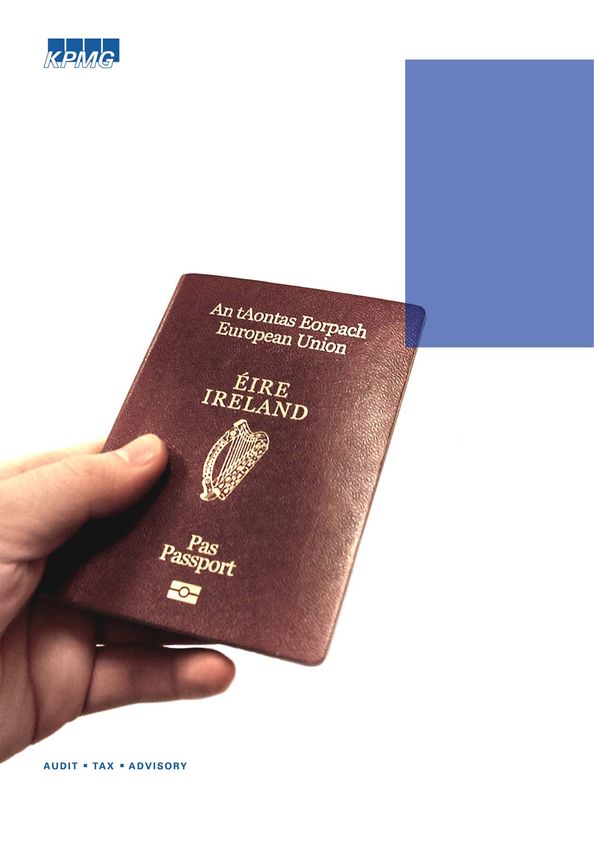
ABCD
                                           Department of
                                           Foreign Affairs

                                           Value for Money
                                           Review of the Irish
                                           Passport Service

                                           June 2008

                                           ADVISORY

       © 2008 KPMG. All rights reserved.
ABCD
Department of Foreign Affairs
Value for Money Review of the Passport Service
June 2008
Notice: About this report
This report has been prepared on the basis of Terms of Reference agreed with the Department of Foreign Affairs
and set out in a Project Initiation Document. This report is for the benefit of the Department of Foreign Affairs
only.
Other than in the limited circumstances as set out in the Project Initiation Document, we have not verified the
reliability or accuracy of any information obtained in the course of our work.
This report is not suitable to be relied on by any party wishing to acquire rights against KPMG for any purpose or
in any context. Any party that obtains access to this Report or a copy (under Freedom of Information Act 2000 or
otherwise) and chooses to rely on this Report (or any part of it) does so at their own risk. To the fullest extent
permitted by law, KPMG does not assume any responsibility and will not accept any responsibility in respect of
this Report to any party other than the original addressee.
i
Please see note on cover page about this report.
© 2008 KPMG. All rights reserved.ABCD
Department of Foreign Affairs
Value for Money Review of the Passport Service
June 2008
Glossary of Terms
APIS - Advanced Passenger Information System
APS - Automated Passport System
AVATS - Automated Visa Applications and Tracking System
CO - Clerical Officer
DFA - Department of Foreign Affairs
FTE – Full-time Equivalent
ICAO - International Civil Aviation Organisation
ICR – Intelligent Character Recognition
ICT – Information Communication Technology
IF4TD - International Forum for Travel Documents
IPO - Irish Passport Office
KPIs - Key Performance Indicators
NIPX - Northern Ireland Passport Express
OPW – Office of Public Works
PID - Project Initiation Document
PMDS - Performance Management and Development System
PPOB – Passport Office Balbriggan
PPOC - Passport Office Cork
PPOM - Passport Office Molesworth Street
PX - Passport Express
TCO - Temporary Clerical Officer
UK – United Kingdom
UKIPS – UK Identity and Passport Service
UNHCR - UN High Commissioner for Refugees
ii
Please see note on cover page about this report.
© 2008 KPMG. All rights reserved.ABCD
Department of Foreign Affairs
Value for Money Review of the Passport Service
June 2008
Contents
1 Executive Summary 4
1.1 Introduction 4
1.2 Context 4
1.3 Overview of the Passport Service 4
1.4 Level and Trends of Outputs 4
1.5 People 4
1.6 Financial 4
1.7 Future Demand 4
1.8 Performance 4
1.9 Recommendations 4
2 Introduction 4
2.1 Background 4
2.2 Terms of Reference 4
2.3 Approach 4
2.4 Acknowledgements 4
3 Context 4
3.1 Introduction 4
3.2 Legislative Context 4
3.3 Policy Context regarding over 65s 4
3.4 Strategic and Operational Context 4
3.5 International Context 4
3.6 Conclusions and Implications 4
4 Overview of Service 4
4.1 Introduction 4
4.2 Structure 4
4.3 Applicant Fees 4
4.4 The Applicants’ Process 4
4.5 Passport Issuing Process 4
5 Levels and Trends of Outputs 4
5.1 Introduction 4
5.2 Passport Service Workload 4
5.3 Applications 4
5.4 Passports Issued 4
5.5 Fraud 4
5.6 Observations and Recommendations 4
iii
Please see note on cover page about this report.
© 2008 KPMG. All rights reserved.ABCD
Department of Foreign Affairs
Value for Money Review of the Passport Service
June 2008
6 People 4
6.1 Introduction 4
6.2 Resources 4
6.3 Staff Costs 4
6.4 Absence Due to Sick Leave 4
6.5 Performance Management 4
6.6 Observations and Recommendations 4
7 Financial 4
7.1 Introduction 4
7.2 Vote Allocation and Financial Policy 4
7.3 Income and Expenditure 4
7.4 Indirect Costs 4
7.5 Budgeting and Financial Performance 4
7.6 Observations and Recommendations 4
8 Future Demand 4
8.1 Introduction 4
8.2 Population Demographics 4
8.3 Travel and Tourism 4
8.4 Future Passport Requirements 4
8.5 Observations 4
9 Performance 4
9.1 Introduction 4
9.2 Economy 4
9.3 Efficiency 4
9.4 Effectiveness 4
9.5 Existing Key Performance Indicators (KPIs) 4
9.6 Suggested Key Performance Indicators (KPIs) 4
9.7 Recommendations 4
Appendix 1 85
Appendix 2 88
Appendix 3 89
Appendix 4 90
Appendix 5 91
Appendix 6 95
iv
Please see note on cover page about this report.
© 2008 KPMG. All rights reserved.ABCD
Department of Foreign Affairs
Value for Money Review of the Passport Service
June 2008
List of Tables and Figures
Figure 1: Organisational Structure of the Department and the Passport Service 29
Table 1: Tasks Undertaken at each Passport Office 29
Table 2: Overview of Applicant Fees 30
Table 3: APS Non-Recurring Costs 33
Table 4: APS Recurring Costs 33
Figure 2: Passport Issuing Flow Diagram 35
Table 5: Summary of Workload from the Irish Passport Service 36
Figure 3: Applications and Issued Passports 37
Table 6: Total Number of Passport Applications by Type and Office 2006 38
Table 7: Returned Applications (2006) 39
Table 8: % Returns to Applications (2006) 39
Table 9: Reasons for the Return of Applications (2006 and 2007) 40
Figure 4: Types of Passport Issued in 2006 42
Figure 5: Total Number of Irish Passport Applications by Type and Office (2006) 42
Figure 6: Total Number of Applications to Irish Passport Offices in Dublin
(Balbriggan and Molesworth Street) and Cork, by Month (2002-2006) 43
Figure 7: Percentage of Irish and UK Passports Issued by Month (2006) 44
Table 10: Production Output per APS Machine (2006) 45
Figure 8: Production Output by APS Machine per Month (2006) 46
Table11: Staff by Office (N = (%)) (2007) 48
Table 12: Staff Increases by Passport Office (2006-2007) 49
Figure 9: Irish Passport Service Staff by Grade and Office (2006-2007) 50
Table 13: Staff Costs per Passport Office (including overtime, 2003 to 2007) 51
Table 14: Overtime Costs per Office from 2004 to 2007 (€) 52
Figure 10: Overtime by Office as a % of Total Staff Costs 52
Figure 11: Percentage of Overtime Payments in 2006/07 vs Applications 2006/07 53
Table 15: Sick Days per Employee (2006) 54
Table 16: Passport Service High Level Income and Costs – Cash Based Accounting
(2002-2006) 59
Table 17: Passport Service High Level Income and Costs-Accruals Concept Accounting 60
Table 18: Overall Comparisons between Cash-Based and Accrual-Based Approach 60
v
Please see note on cover page about this report.
© 2008 KPMG. All rights reserved.ABCD
Department of Foreign Affairs
Value for Money Review of the Passport Service
June 2008
Table 19: Passport Office Salaries and Wages Costs (2002-2006) 61
Table 20: Office Machinery and Office Costs (2002-2006) 61
Table 21: Automated Passport System (APS) Costs 62
Table 22: Passport Service Biometric Costs (€) 62
Table 23: ICT Staff Costs Relating to Passport Service Activities (€) 63
Table 24: Indirect ICT Unit Costs Relating to Passport Service Activities (€) 63
Table 25: Cash-Based Accounting including Indirect ICT Costs and OPW Costs 64
Table 26: Cost (Total Direct and Indirect) and Income per Passport Issued (Cash-Based) 64
Table 27: Cost (Total Direct and Indirect) per Passport Issued (Accruals Based) 65
Figure 12: Population Projections for NI and the Republic of Ireland up to 2021 69
Figure 13: Net Migration Statistics for NI and RoI (2001-2005) 70
Figure 14: Work Permits Issued in the Republic of Ireland (2000-2003) 70
Table 28: Number of Refugees in Ireland (2000-2005) 71
Figure 15: Seasonally Adjusted Overseas Trips from Ireland (2001-2006) 72
Table 29: Annualised Passport Fees 74
Table 30: Overtime Costs by Office (2004 – 2007) 75
Table 31: Direct and Indirect Cost per Passport Application (Cash-Based) 77
Table 32: Cost per Passport Issued (Cash-Based) 77
Table 33: Staff Costs (including overtime) per Application Processed and Passport
Issued (€) (Cash-Based) 77
Table 34: Suggested Key Performance Indicators 80
vi
Please see note on cover page about this report.
© 2008 KPMG. All rights reserved.ABCD
Department of Foreign Affairs
Value for Money Review of the Passport Service
June 2008
1 Executive Summary
1.1 Introduction
The Department of Foreign Affairs commissioned KPMG to conduct a Value for Money Review of
the Passport Service. The purpose of the review was to evaluate the efficiency and effectiveness of
the Passport Service and to provide appropriate recommendations to the Department that will
underpin the provision of a cost effective, quality passport service in the coming years.
1.2 Context
There have been a number of legislative and policy changes in recent years which have the potential
to impact upon the volume and complexity of the Passport Service’s workload. The most recent of
these is the Passport Act (2008). This is the first piece of primary legislation governing the issuing
of Irish passports. It sets out a citizen’s right to a passport, and also provides for a series of offences
and penalties for fraudulent acquisition, misuse and abuse of passports.
In addition, the Irish Nationality and Citizenship Act (2004) changed the nature of citizenship rights
and this in turn has made the process through which entitlement to a passport is established much
more complex. This has created additional complexity in processing applications. The legislative
framework also includes the Data Protection Act, which imposes obligations on public bodies
concerning the manner in which data are collected, processed and retained, as well as legislation
regarding the rights and responsibilities of guardians of children and, in particular, the issuing of
passports to children.
The policy context within which the Service operates also has a significant role to play in shaping
service delivery and demand. Most notable is the Government policy which provides for free Irish
passports to citizens over the age of 65. Approximately 10% of passport applicants fell into this
category in 2006.
The strategic and operational context within which the Passport Service exists is centred primarily
round the plans and objectives of the Department of Foreign Affairs. It is evident that progress has
been made in the delivery of a number of key actions associated with the objectives of the
Department’s Business Plan 2007 (Consular and Passport Division, Passport Office business unit).
International developments will also impact upon the future provision of services by the Passport
Service. For example, international standards will drive future requirements of the document itself.
The Passport Service has been responding to international challenges and, in recent years, there
have been major advances in the service, such as the roll out of the automated passport system and
the introduction of biometric features on all new passports.
1.3 Overview of the Passport Service
The Consular and Passport Division of the Department of Foreign Affairs is responsible for
providing consular assistance to Irish citizens abroad, and for passport and visa services. The
Passport Service business unit falls under the remit of the Consular and Passport Division. There
are four Passport Offices (three in Ireland and one in London) and 75 Missions/Embassies abroad.
7
Please see note on cover page about this report.
© 2008 KPMG. All rights reserved.ABCD
Department of Foreign Affairs
Value for Money Review of the Passport Service
June 2008
The processes associated with the Passport Office can be broken down into: (i) the application
process (the process the applicant must undertake to apply) and (ii) the passport issuing process (the
process undertaken within the Passport Office to process application forms and produce passports).
1.3.1 The Applicants’ Process
A citizen may apply for an Irish passport in four main ways:
• Through the Passport Express Service
• By regular Post
• In person at a Passport Office, and
• Through Irish Missions abroad.
1.3.2 Passport Issuing Process
A new automated passport application and production system (APS) was installed in the Passport
Office in 2004. The APS provides for:
• Electronic data capture
• Verification of entitlement to passport
• Production of passports
• A workflow system to link the component parts, and
• Administrative functions such as management reports, stock control and payments.
A flow diagram illustrating the passport issuing process is included in Section 4.5 of the report.
1.4 Level and Trends of Outputs
The Passport Service can be defined as having two main outputs. These are:
• Passport applications which are successful, resulting in the issuing of Irish Passports
• Passport applications which are unsuccessful, resulting in the application being denied or
returned to the applicant for amendments.
The table below provides a summary overview of the total number of passport applications
received, the total number of applications rejected and the total number of passports issued in 2006
and 2007.
Summary of Outputs from the Irish Passport Office
Output Parameter 2006 2007
No. of Original Applications 625,734 608,782
Application returned to customers for amendment 65,579 90,237
No. of Passports Issued 614,215 609,695
Passports Issued as a % of Original Applications 98.16% 100.15%
Passports issued as a % of Original Applications (excluding 96.87% 98.7%
emergency/temporary issues)
Source: The Department (2007)
*An application may be rejected numerous times and therefore can be counted more than once.
8
Please see note on cover page about this report.
© 2008 KPMG. All rights reserved.ABCD
Department of Foreign Affairs
Value for Money Review of the Passport Service
June 2008
As noted above, 2007 showed an issue rate of 100.15% of applications. This can be attributed to
teething problems at the end of 2006 arising from the new photograph criteria associated with the
introduction of biometric passports. These problems resulted in a higher than normal rejection rate
and a backlog of applications. In addition to this, the number of passports issued included
Emergency, Contingency, Temporary and Duty Officer passports. The applications for these
passports would also have been used to produce full passports. In 2006, these applications totalled
to 8,097, whilst in 2007 they amounted to 8,819. When Emergency, Contingency, and Temporary
passports are excluded, this gives issues of 606,118 in 2006 (96.87% of original applications) and
600,876 in 2007 (98.7% of original applications).
The Passport Service experiences a significant increase in the number of passport applications
throughout the summer months. The peaks in demand arise around May, June, July and August.
These peaks in demand are similar to those experienced in the UK.
Following the introduction of biometric passports late in 2006, the Passport Service was required to
return a large number of applications to applicants for a variety of reasons, including incomplete
forms, insufficient documentation and poor quality photographs. In 2006, a total of 65,579
applications were returned for amendment and re-submission, and 90,237 in 2007.
1.5 People
1.5.1 Resources
The Passport Service currently has a staffing complement of 487 staff. The breakdown is
illustrated below.1
Staff by Passport Office – FTE (2007)
Molesworth Balbriggan Cork London Total %
Director of Passport Service 0.25 0.25 0.25 0.25 1 0.21
AP 1 1 1 0 3 0.62
HEO 5 5 2 1 13 2.67
EO/SO 18 19 13 5 55 11.29
CO 87 100 71 13 271 55.65
TCO 32 57 30 25 144 29.56
Total 143.25 182.25 117.25 44.25 487 100%
Source: The Department (2007)
In 2006, the decision was taken to increase the numbers of CO staff to reduce the levels of TCO
staff and staff overtime. Even with the agreed increase of COs, the use of TCO grade staff in
2007 was still relatively high at 29.57% of the staffing complement, although this is a substantial
reduction since the introduction of the sanctioned increase. In 2006, of the total complement of
432 staff, 207 were TCO grade, which equated to 47.9%.
The usage of TCOs within the Passport Service has been a traditional method for servicing peaks in
demand during the summer. The Passport Service has seen a shift in its demand profile with the
peak season starting earlier each year. As a result, individual offices have felt additional pressure to
have their complement of TCO staff in place early for the peak season.
1
Passport Service staff have informed KPMG that, to date, 21 posts remain vacant: 2 HEO posts and 19 CO posts.
9
Please see note on cover page about this report.
© 2008 KPMG. All rights reserved.ABCD
Department of Foreign Affairs
Value for Money Review of the Passport Service
June 2008
1.5.2 Training
All Passport Office staff need to be trained to undertake their duties, which include pre-scanning,
scanning, checking, fraud checks etc. Although the approach taken to this is broadly similar across
offices, there is no standardised approach to this staff training. Each office acts independently and
has autonomy in its training approach.
Full induction training is not necessary for returning TCO staff and, as such, standardised refresher
training is required. Going forward, the Passport Service should consider a standardised approach to
training taking into consideration staff grades and role.
The Passport Service has in place a Performance Management System (PMDS), which is used to
review the performance of individual members of staff and offices. The Automated Production
System (APS) enables the production of in the region of 50 output reports and greater use could be
made of it as a management tool. These systems could be used in tandem to a greater extent to
compare the differing workloads across the offices and the range of complexities of applications.
1.5.3 Staff Costs
The following table shows the staffing costs of the Passport Service across each office from 2004 –
2006.
Staff Costs per Passport Office (including overtime, 2003-2007)
2004 2005 2006 2007
Salaries and Wages € € € €
Molesworth 6,871,498 **9,531,786 4,519,769 4,931,018
Balbriggan 196,083 - 4,717,107 5,918,538
Cork 1,973,959 2,500,047 2,977,409 3,405,823
London 1,667,033 2,141,124 1,825,887 2,141,985
Missions* 1,667,033 2,141,124 1,825,887 1,917,182
Total Cost 12,375,605 16,314,081 15,866,059 18,314,546
Number of applications 586,889 648,228 691,313 699,019
Cost(€)/application 21.09 25.17 22.95 26.20
Number of Issues 550,000 569,475 614,215 609,695
Cost(€)/Issue 22.50 28.65 25.83 30.04
Source: The Department (2007)
* Staff cost for the missions are assumed to be proportionate to the London Office costs for the period 2003-2006.
** No breakdown of the individual costs of the Balbriggan and Molesworth Street offices was available
There are a number of key drivers which impact on staff costs within the Passport Service,
including staff overtime and the use of TCO staff.
The Passport Service is a resource intensive organisation and, in order to meet its customer charter
and achieve high standards of customer service, it must be adequately resourced. Any staff
shortages could potentially have an adverse impact on the level of customer service which can be
offered. Unless productivity or efficiency within the Service can be increased, or customer demand
can be managed, the Service will continue to need additional staffing resources as the number of
applications increases.
10
Please see note on cover page about this report.
© 2008 KPMG. All rights reserved.ABCD
Department of Foreign Affairs
Value for Money Review of the Passport Service
June 2008
1.5.4 Overtime
Overtime payments have been an ongoing issue within the Passport Service. An analysis was
conducted of the staff payments made between 2004 and 2007 across each of the offices. As shown
in the following table, overtime costs in the individual offices decreased from 2005 to 2006.
However, these costs rose sharply again in 2007. This has occurred despite the increase of
permanent staff which was aimed at reducing the levels of overtime and the pressures on the
Service.
Overtime Costs per Office from 2004 to 2007
Molesworth € Balbriggan € Cork € London € Overall €
2004 322,965 3,033 168,261 * 494,259
2005 575,121 494,261 412,037 34,268 1,515,687
2006 475,461 450,904 366,987 35,815 1,329,167
2007 513,187 674,135 314,606 18,058 1,519,986
Source: The Department (2007)
*Not available.
Overtime payments reflect the seasonal peaks in demand. It is noted that the overtime payments for
2007 show a lower monthly peak in 2007 than in 2006.
It is also noted that as a percentage of staff costs, overtime has decreased from 11.8% in 2005 to
10.3% in 2007. This figure still remains significant despite the increase in permanent CO staff.
1.5.5 Absence
The Passport Service experiences relatively high levels of staff absence (with an average of 8.9 sick
days per employee in 2006 compared to an overall Departmental rate of 6.93). The Passport
Service should continue to hold this under review, and should use this as a Key Performance
Indicator (KPI) against which it can try to reduce the level of sickness.
1.6 Financial
1.6.1 Income and Expenditure
The table below shows an overview of the high level income and costs associated with the Irish
Passport Service during the period 2002-2006.
The Passport Service generates income from the fees which are charged to its customers for the
production of passports.
As with all Government departments, the Passport Service reports under the cash-based accounting
concept as shown in the table below. High level information on the accruals concept is provided in
Section 7 of the report.
11
Please see note on cover page about this report.
© 2008 KPMG. All rights reserved.ABCD
Department of Foreign Affairs
Value for Money Review of the Passport Service
June 2008
Passport Service High Level Income and Costs – Cash-Based Accounting €’000 (2002-2006)
2002 2003 2004 2005 2006
Cash-based Accounting
Receipts 23,192 23,426 30,135 32,651 30,856
Current Expenditure (17,982) (19,965) (21,267) (29,741) (33,736)
Capital Expenditure (4,725) (16,092) (10,701) (2,247) (4,086)
Surplus/Deficit 485 (12,631) (1,833) 663 (6,966)
Source: The Department (2007)
The most costly elements of direct expenditure to the Passport Service are machinery and
equipment. Significant investment in office machinery has taken place across the last five years
within the Service, and this is likely to continue, given the need for the Passport Service to continue
to meet customer demands and to develop ways of combating the threat of passport-related fraud.
Within the Passport Service, two major projects have recently been implemented - the Automated
Passport System (APS) and the introduction of the biometric chip (e-passport). These innovations
were key to the Passport Service being able to meet the demands being placed on it for more and
better quality passports, and its targets as recorded in the customer charter.
The final financial position of the Passport Service has varied year on year and we have noted that,
generally in a year where large scale capital investment has taken place, the Service has recorded a
deficit. In 2006, the Passport Service recorded a deficit of almost €7 million on a cash accounting
basis. When indirect costs, such as Information and Communication Technology (ICT), were also
taken into account, this deficit increased to almost €8 million.
1.6.2 Indirect Costs
In addition to the direct costs associated with the delivery of the Passport Service as shown in the
previous table, there are a number of costs associated with the running of the Service that are not
directly charged to the Service but are highlighted in the expenditure of other units within the
Department. The largest of these are those costs associated with the Information and
Communication Technology (ICT) Unit in the Department.
A member of staff within the ICT Unit is dedicated to the Passport Service to ensure that it has
appropriate systems to deliver the Service. In addition there are other members of the ICT Unit,
such as analysts, who are responsible for delivering IT related projects within the Passport Service
on an ad hoc basis. For example, a team of IT staff was involved in the Biometrics Project. Since
2004, the total cost of IT staff time involved in Passport Service-related work is €491,000. These
costs were allocated to the ICT Unit budget. Furthermore, an average annual expenditure of €2
million is paid by the Office of Public Works (OPW) for rent on Passport Service Offices.
1.6.3 Capital Expenditure
The Service also incurred high-levels of costs relating to capital expenditure, of which €6 million
related to the Biometrics Project and €33 million for the full implementation of the APS Project.
Other countries, such as the UK and the Netherlands, have avoided this large scale capital
expenditure by outsourcing the production of the passport booklets to private companies under
Service Level Agreements (SLA). The Passport Service should undertake a cost benefit analysis of
outsourced and in-house passport production before the end of the useful life of the current
equipment.
12
Please see note on cover page about this report.
© 2008 KPMG. All rights reserved.ABCD
Department of Foreign Affairs
Value for Money Review of the Passport Service
June 2008
At present, there are no processes in place to identify the future financial investment requirements
necessary to upgrade the technical equipment used to produce passports. This is a key issue for the
Service as it is likely that, in the future, there will be the need to upgrade both the hardware and
software to ensure that the Passport Service can continue to produce a passport capable of coping
with the additional biometric information that may be required to combat the increasing and ever
evolving threat of fraud.
The Department also has no set financial objectives regarding the extent to which the Passport
Service is required to be self-financing or otherwise.
1.7 Future Demand
There are a number of factors that will impact on future demands placed on the Passport Service,
mainly to changes in the Irish population and increasing travel by Irish citizens. In addition,
international requirements concerning a range of security features on the passport document will
also influence production standards.
It is anticipated that the population of Ireland (North and South) will increase by approximately 1
million from 2006 to 2021 to just under seven million. This will result in increasing demand for
passport-related services. Given that 69% of the population currently hold a passport, it would be
reasonable to expect that there could be approximately 4.3 million passports in existence.
The level of travel among Irish citizens has also been increasing. In 2001 four million personal and
business trips were undertaken, compared to seven million in 2006. This increase in travel is also
likely to impact on the level of demand for passports.
1.8 Performance
1.8.1 Economy
In 2006, the Passport Service generated fee income of €30.8 million. The Passport Service has also
foregone in the region of €4.4 million in fees through the provision of free passports to the over 65s.
The annualised passport fee for Ireland is €7.50, which compares favourably against comparator
organisations in the UK, Denmark and the Netherlands.
In 2006, the cost (direct and indirect) of the Passport Service was €38.8 million, which equates to
approximately 5% of the total Departmental budget. The major cost elements associated with the
service are staff costs and office machinery costs.
In 2006, staff costs accounted for 47% of the direct Passport Service costs. Overtime continues to
be an issue for the Passport Service, and a total of €1.5 million was recorded in 2007 despite the
introduction of additional permanent CO staff.
1.8.2 Efficiency
In 2006, the Passport Service processed over 691,313 applications. This included applications that
were returned to customers for amendment and resubmission. During 2006, over 65,000
applications were returned to applicants for re-submission. The main reasons for returns were
13
Please see note on cover page about this report.
© 2008 KPMG. All rights reserved.ABCD
Department of Foreign Affairs
Value for Money Review of the Passport Service
June 2008
submission of sub-standard photographs or failure to submit supporting documentation such as
original copies of civil birth certificates. This impacts on the efficiency of the Passport Service as
these applications are effectively processed at least twice. In 2006 the average cost per application
processed was €56.20. The average cost per passport issued in 2006 was £63.25 as shown in the
table below.
Cost per passport issued (Cash Based)
Year Passports Cost per passport (Direct Cost per passport
Issued only) €’s (Including indirect) €
2004 550,000 58.12 58.56
2005 569,475 56.17 58.75
2006 614,215 61.58 63.25
Source: The Department (2007)
The level of staff absence due to sickness is another factor that impacts upon the efficiency of the
Passport Service. In 2006, the Passport Service average level of sick days per employee was 8.9,
compared to a Department-wide rate of 6.93. The highest levels of sickness were among the TCO
and CO grade staff which accounted for around 90% of all sickness. In total, over 1,300 days were
lost due to sickness.
1.8.3 Effectiveness
The PMDS system allows each individual office to monitor staff performance and can allow offices
to benchmark on an individual and team basis. Broadly speaking, reports have shown that staff
have been meeting the individual targets that have been set for them and are generally performing
well. The APS can also produce a wide range of reports on each element of the passport processing
system, which is at present not being fully utilised.
We have found that the Passport Service provides a high level of customer service to the Irish
public, and that they are extremely accommodating to members of the public, especially in dealing
with applicants who need their passports with a quick turnaround. This is supported by the most
recent customer satisfaction survey, which was generally very favourable and reflected the high
level of public service that is provided.
1.8.4 Key Performance Indicators
Following an analysis of the overall performance of the Passport Service we developed a number of
Key Performance Indicators (KPIs), which are aimed at improving the efficiency and effectiveness
of the Service. The following table notes the KPIs, the rationale behind their selection and the
current level of performance. The Department will now set targets against these indicators and
timescales indicating when the targets should be met.
14
Please see note on cover page about this report.
© 2008 KPMG. All rights reserved.ABCD
Department of Foreign Affairs
Value for Money Review of the Passport Service
June 2008
Suggested Key Performance Indicators
Suggested KPI Rationale Actions required Current position
Raise public awareness of guidance
All correctly completed To continue to 100%
(to improve quality of application).
Passport Express meet customer
applications should be service charter. Where possible work with An Post
processed within 10 and the Post Office to improve PX
working days. and NIPX applications.
Internal Review process to identify
areas to improve processes.
Collect data that will allow the
Passport Service to report progress
towards the target.
Reduction in the To improve Raise public awareness regarding 12.9 % of
proportion of applications efficiency and to application and photograph applications
that are returned to reduce the requirements. (2007)
customers for number of
amendment and applications that Raise awareness of the application
resubmission. are processed guidelines provided online.
more than once.
Staff perform to agreed To contribute Set SMART productivity targets for Data not yet
productivity levels towards improved individual staff and teams. available at this
efficiency. level
Reduce the level of staff To improve Improve working environment 8.9 days
sickness and absence efficiency.
Consider staff reward scheme (2006)
Identify and resolve any local issues
Implement task rotation
Reduction in overtime To improve Improve processes to deal with 9% of total staff
costs efficiency. peaks in demand costs (2006)
Analyse overtime ‘triggers’.
Notwithstanding the KPIs noted above the Department may also wish to consider developing
further KPIs that are specific to each of the functional areas within the Service, such as finance,
customer satisfaction human resources and security/integrity.
1.9 Recommendations
A number of recommendations have emerged following our review as detailed below.
15
Please see note on cover page about this report.
© 2008 KPMG. All rights reserved.ABCD
Department of Foreign Affairs
Value for Money Review of the Passport Service
June 2008
1.9.1 Recommendation 1
In order to manage the level of demand and improve processing efficiency, the Passport Service
should further promote Passport Express and Northern Ireland Passport Express (NIPX) as the
preferred method of application. The UK Identity and Passport Service (UKIPS) has successfully
done this through advertising campaigns and working directly with travel agents and the Post
Office. The Irish Passport Service should consider a similar approach.
1.9.2 Recommendation 2
To emphasise the various requirements of the application process, for example photographs, the
Passport Service should develop a public awareness campaign, including targeting the Post Office
and Travel Agents.
1.9.3 Recommendation 3
The Passport Service should investigate ways in which to spread demand more evenly over the year
(examples could include enhanced advertising).
1.9.4 Recommendation 4
In considering the level of demand and the recent implementation of APS, the Passport Service
should undertake a detailed process review of the passport application process to ensure staff
resources are appropriately matched to demand.
1.9.5 Recommendation 5
The Passport Service should consider providing a standardised training approach for core tasks,
including refresher training courses for returning TCOs.
1.9.6 Recommendation 6
The Passport Service should make more use the APS reporting systems in conjunction with PMDS
to compare the different workloads across offices, the complexities of applications, and individual
productivity and performance.
1.9.7 Recommendation 7
The Passport Service should keep the level of overtime under close review in 2008. In particular,
the Service should pin-point overtime triggers in order to anticipate and avoid overtime, where
possible.
1.9.8 Recommendation 8
The Passport Service should continue to keep the level of absence under review, and should use this
as a KPI against which it can try to reduce the level of sickness. As the sickness rate in the
Molesworth Street Office is particularly high, the Passport Service (in conjunction with the
Department’s Human Resources Section) should undertake a review of this office in order to
address any specific issues.
1.9.9 Recommendation 9
The Passport Service should consider a reward scheme that is appropriate to its circumstances to
encourage a reduction in absence rates and increase productivity.
16
Please see note on cover page about this report.
© 2008 KPMG. All rights reserved.ABCD
Department of Foreign Affairs
Value for Money Review of the Passport Service
June 2008
1.9.10 Recommendation 10
An assessment of the future financial implications for the Passport Service arising from the impact
of the policy waiver for over 65s should be undertaken to allow the Passport Service to plan for
future financial requirements.
1.9.11 Recommendation 11
The Passport Service should undertake a cost benefit analysis of producing passports, in-house and
outsourced, before the end of the useful life of the current APS hardware.
1.9.12 Recommendation 12
The Passport Service should develop a capital development plan to ensure equipment etc is
adequately provided for.
1.9.13 Recommendation 13
More detailed Management information System (MIS) data should be produced, including direct
and indirect costs, to enable the Service to become more accountable.
1.9.14 Recommendation 14
The Department should develop a clear statement relating to the financial objectives of the Passport
Service, i.e. self-financing or otherwise.
1.9.15 Recommendation 15
The Passport Service should plan the level of resources required to deliver services in the future
taking into account the level of population increases and associated increased travel.
17
Please see note on cover page about this report.
© 2008 KPMG. All rights reserved.ABCD
Department of Foreign Affairs
Value for Money Review of the Passport Service
June 2008
2 Introduction
2.1 Background
The Mission of the Department of Foreign Affairs (the Department) is to advance Ireland's political
and economic interests in the European Union and in the wider world, to promote Ireland's
contribution to international peace, security and development both through the European Union and
through active participation in international organisations, in particular the United Nations, to
protect Irish citizens abroad, and to pursue reconciliation and partnership on the island of Ireland.
The Department of Foreign Affairs issues passports to Irish citizens through its Passport Offices in
Dublin, Balbriggan, Cork, London and through its network of Diplomatic and Consular Missions.
The Department now issues in the region of 600,000 passports per annum. The demand for
passport, consular and visa services is expected to continue to grow over the coming years as the
Irish economy continues to flourish.
2.2 Terms of Reference
The Department commissioned KPMG to conduct a Value for Money Review of the Irish Passport
Service. The Terms of Reference for the review are set out below.
2.2.1 Purpose of the Review
The purpose of the review, as set out in the terms of reference, is to evaluate the efficiency and
effectiveness of the Passport Service and provide appropriate recommendations to the Department
that will underpin the provision of a cost effective, quality passport service in the coming years.
2.2.2 Scope
The scope of the Value for Money Review spanned all of the Passport Service (including the
Passport Offices in Balbriggan, Molesworth Street (Dublin), Cork and London, as well as all of the
missions and consulates abroad). Specifically, the aim of the review was to:
• Review the strategic and business objectives of the Passport Service and their compatibility with
the overall strategy of the Department of Foreign Affairs
• Define the outputs associated with the Passport Service and identify the level and trend of these
outputs. This will include the various passport types and the services provided both from the
Passport Offices (Balbriggan, Dublin, Cork and London) and the Embassies and Consulates
abroad
• Examine the extent that the objectives of the Passport Service have been/are being achieved,
and comment on the effectiveness with which they have been achieved. In this regard, the
review should take account of the importance of security and integrity in the passport
production and issue process
• Identify the level and trend of costs and staffing resources associated with the Passport Service
and comment on the efficiency of the Service
18
Please see note on cover page about this report.
© 2008 KPMG. All rights reserved.ABCD
Department of Foreign Affairs
Value for Money Review of the Passport Service
June 2008
• Evaluate the degree to which the objectives warrant the allocation of public funding on a current
and ongoing basis and examine the scope for alternative policy or organisational approaches to
achieving these objectives on a more efficient and/or effective basis (e.g. through international
comparison)
• In examining this question, the review must take account of the requirement for ongoing
investment in the passport system to maintain the existing level of service, and to take account
of alternative or future changes to passport features, security-related requirements, processes
and technological advancements, and
• Review existing performance indicators for monitoring the performance of the Passport Service
and, where appropriate, make recommendations for improvement.
In addressing these questions, the review examines the management and administration framework
that underpins the Passport Service, including:
Human Resource Management
• Flexibility and responsiveness of the human resource management system to respond to levels
of demand for passports
• Systems to encourage and reward high levels of productivity
• Role and usefulness of the Performance Management and Development System (PMDS).
Financial and Performance Management
• Use of the financial management system to support planning and budgeting, and measure
performance in the management of the Passport Service
• Adequacy of costing information and scope for enhancement as a management tool
• Use of other appropriate performance metrics.
2.3 Approach
The assignment was undertaken in 4 main stages, an overview of which is provided in the following
paragraphs:
• Project planning and set-up
• Data collection and analysis
• Site visits to comparators, and
• Consideration and reporting.
2.3.1 Project Planning and Set-Up
KPMG meet with the Department’s Project Steering Group to discuss and refine the scope and
detail of the study.
19
Please see note on cover page about this report.
© 2008 KPMG. All rights reserved.ABCD
Department of Foreign Affairs
Value for Money Review of the Passport Service
June 2008
2.3.2 Data Collection and Analysis
KPMG undertook a range of data collection exercises with both Passport Service and Department
staff (the data collection exercise was conducted between August and December 2007). The range
of data collected included:
• Financial data
• Human Resources data
• Activity/Productivity data, and
• Performance management data.
A number of stakeholder interviews were also held with key Departmental staff.
2.3.3 Site Visits to Comparators
In order to consider the processes and procedures of other countries, and to provide data against
which to compare the performance of the Irish Passport Service with, three visits were made to key
staff responsible for issuing passports in:
• Netherlands
• Denmark, and
• UK.
During the visits, KPMG gathered data relating to passport fees, costs, application processing
procedures and staffing. A summary of comparator findings can be found in Appendix 5.
2.3.4 Consideration and Reporting
Data gathered during the previous stages was collated in order to consider the efficiency,
effectiveness and economy of the Passport Service. The Departmental Steering Group were
provided with both draft and final reports.
Further detail in relation to the scope and approach of the review is contained in Appendix 1.
2.4 Acknowledgements
KPMG would like to thank the staff from the Passport Service and the Department who worked
with the KPMG team to provide supporting evidence for the review.
20
Please see note on cover page about this report.
© 2008 KPMG. All rights reserved.ABCD
Department of Foreign Affairs
Value for Money Review of the Passport Service
June 2008
3 Context
3.1 Introduction
In reviewing the Passport Service (or ‘the Service’), we have considered the legislative and policy
environment in which the Passport Service operates. In line with the terms of reference, we have
also reviewed the extent to which the strategic and business objectives of the Passport Service are
compatible with those of the Department of Foreign Affairs, henceforth referred to as the
Department. In addition, we have reviewed the international context within which the Service
operates.
In this section, we consider the following:
Section Heading
3.2 Legislative Context
Irish Passports Act (2008)
Irish Nationality and Citizenship Act (2004)
Data Protection Act (1988-2003)
Acts relating to Children’s Passports - Adoption Act, 1952; the Guardianship of Infants Act,
1964; the Status of Children Act, 1987
3.3 Policy Context
3.4 Strategic and Operational Context
Departmental Strategy Statement 2005-2007
Departmental Passport Service Business Plan 2007
Departmental Annual Report 2006
Departmental Customer Charter 2007
Departmental Customer Service Action Plan 2006-2008
3.5 International Context
3.6 Conclusions and Implications for the Passport Service
3.2 Legislative Context
3.2.1 Passports Act 2008
The Passports Act 2008 is the first piece of primary legislation governing the issuing of Irish
passports. Passports are currently issued under general administrative provisions set out in the
Ministers and Secretaries Act 1924.
The purpose of the Passports Act 2008 is to establish a comprehensive legislative basis for the
regulation and issuance of Irish passports by the Minister for Foreign Affairs. In addition to setting
out the citizen’s right to a passport, it provides for a series of offences and penalties for the
fraudulent acquisition, misuse and abuse of passports. A few of the most salient elements of the Act
are discussed in the following paragraphs.
21
Please see note on cover page about this report.
© 2008 KPMG. All rights reserved.ABCD
Department of Foreign Affairs
Value for Money Review of the Passport Service
June 2008
Section 6 is at the core of the Act and provides for the right of all Irish citizens to apply for and be
issued with a passport, subject to the Act. It sets out the application process and the appropriate
persons to make an application.
Section 12 of the Passport Act 2008 outlines the circumstances in which a passport shall not be
issued, as well as situations where the Minister has discretion in this regard. The constitutional
right to travel is not an unqualified right. Section 12 seeks to reflect that position in legislation. A
refusal is mandatory in circumstances where there is uncertainty regarding citizenship or identity,
where applicants are subject to orders under the Bail Act 1997, in cases where false information is
provided, and in situations relating to problems with consent of parents or guardians.
Issues relating to the provision of passports to minors are covered in Section 14 of the Act. This
provides for a general rule that the Minister shall not issue a passport to a minor without the consent
of each guardian. Consent of each guardian is required except in certain limited circumstances, such
as; (i) a court has directed so; (ii) the Minister determines that to issue a passport in the absence of a
guardian’s consent is in the child’s best interests; or (iii) a guardian is not contactable. The
reference to the best interests of the child in this principle is consistent with Ireland’s obligations
under Article 3 of the Convention on the Rights of the Child. Section 14 (8) introduces the concept
of enduring consent whereby consent by a guardian to the issuing of a passport shall be deemed to
be valid for future passports until the child reaches 18, unless consent is subsequently revoked by a
guardian. Where enduring consent applies, the Minister has discretion in subsequent applications to
require the signature of only one guardian.
Section 19 proposes the establishment of an independent appeals mechanism. This provision was
included by Government amendment of the Act at Committee stage in December 2007 and provides
for appeals to an independent appeals officer(s) in relation to decisions to refuse or cancel a
passport.
Sections 14 and 19 have the potential to increase complexity and add to the workload in terms of
the Passport Service. In relation to Section 14, the Passport Service may have to review for
previous applications for signatures. Continuing evolution of case law on the rights of unmarried
parents may require ongoing revision of procedures. The volume of additional work in relation to
appeals will depend on a number of factors, including the public's reaction and the success rate in
appeals in respect of refusals to issue.
3.2.2 Irish Nationality and Citizenship Act (2004)
An Irish Passport may only be issued to an Irish citizen. The Nationality and Citizenship Act 2004
stipulates that anyone born on the island of Ireland on or before 31 December 2004 is entitled to be
an Irish citizen. The citizenship entitlement of every person born on the island of Ireland on or after
1 January 2005 is governed by the citizenship of the person's parents at the time of the person's birth
or the residency history of one of the parents prior to the birth.
Where a child is born in Ireland on or after 1.1.2005 to a parent who is a non national (other than an
EU/EEA/Swiss national), the child will qualify for Irish citizenship if, at the time of the birth of the
child in the island of Ireland, one of his/her parents had reckonable residence in the island of Ireland
for three of the four years immediately preceding the birth of the child.
Once a parent has been granted refugee status any child born in Ireland after that date is
automatically an Irish citizen. There is no three year reckonable residence requirement for parents
who are granted refugee status.
22
Please see note on cover page about this report.
© 2008 KPMG. All rights reserved.ABCD
Department of Foreign Affairs
Value for Money Review of the Passport Service
June 2008
3.2.3 Data Protection Act
To guard against fraud, it is necessary to require applicants to produce adequate evidence of their
identity and their entitlement to an Irish passport. This in turn means the Department acquires a
considerable volume of personal data.
The Department and the Passport Service are required to comply with the provisions of the Data
Protection Act 1988 and 2003 (Amendment), along with all other organisations keeping personal
information. They must give individuals access to their personal information, and must correct or
delete any information found to be inaccurate or irrelevant.
3.2.4 Legislation Regarding Consent of Guardian and Issuing Passports to Children
Consent of guardians is required before a passport can be issued to a child. This area is currently
governed by the terms of several acts, mainly the Adoption Act 1952, the Guardianship of Infants
Act 1964, the Status of Children Act 1987, and with various court decisions dealing with cases
arising under these Acts.
The Passports Act 2008 introduces the concept of the child’s best interests in relation to issuing a
passport. Section 14 outlines the circumstances in which the consent of a parent or guardian is not
required. The change is consistent with the principles in European Court of Human Rights case
law.
3.3 Policy Context regarding over 65s
Since 1st of August 2005, Irish passports have been issued free of charge to Irish citizens aged 65
years and over, whether in Ireland or abroad. The initiative was part of an overall Government
strategy to focus benefits of prosperity on senior citizens. It was intended to build upon the existing
free public transport, TV licence, phone and electricity schemes for older people. In 2006, over
58,000 people (approximately 10% of applicants) received a free passport.
As will be discussed in later sections, this policy also has revenue implications as these applications
represent in the region of €4.4 million of lost income and the policy creates a subsidy requirement
for the Passport Service.
3.4 Strategic and Operational Context
3.4.1 Departmental Strategy Statement 2005-2007
One of the high level goals set out in the Departmental Strategy Statement 2005-2007 relates to the
Consular and Passport Services Division. This goal is as follows:
“To protect and support the interests of Irish citizens abroad, maintain and strengthen links with
people of Irish ancestry, and provide a modern and efficient passport and consular service”.
Underpinning this high level goal are 3 key objectives:
• Deliver a high quality passport service to the public
• Provide a high quality consular service to Irish citizens, and
23
Please see note on cover page about this report.
© 2008 KPMG. All rights reserved.ABCD
Department of Foreign Affairs
Value for Money Review of the Passport Service
June 2008
• Provide an effective visa service for people travelling to Ireland in co-operation with the
Department of Justice, Equality and Law Reform.
Each objective is accompanied by a number of strategies, developed to facilitate the achievement of
the objective. An overview of the strategic objectives and related key performance indicators is
shown in Appendix 2.
3.4.2 Departmental Passport Service Business Plan 2007
The Department’s Business Plan 2007 (Consular and Passport Division, Passport Office Business
Unit) contains a number of specific objectives and actions to underpin the delivery of the
Departments Strategy Statement 2005-2007. In relation to the overarching objectives of the
Department, four specific objectives have been developed for the Passport Service with 13 related
Business Unit actions, as detailed in Appendix 4.
Four of the most salient actions are:
• Work with HR in the recruitment of sanctioned numbers of staff
• Work with the consular section on the drafting of new passport legislation
• Improve public awareness of the Passport Service’s photograph policy, and
• Reduction in the rejection rate for photographs.
A number of these strategic actions, such as the recruitment of additional permanent staff and the
drafting of passport legislation have been implemented. However a number still have to be
completely implemented. As noted in Section 5, of all applications rejected, the proportion rejected
due to issues with photographs increased from 38% in 2006 to 56% in 2007. This would indicate
that further work is required by the Passport Service to increase public awareness of photograph
requirements. Furthermore, the number of rejected applications and re-submissions has also
impacted negatively on the efficiency of the Service.
3.4.3 Departmental Annual Report 2006
The Department Annual Report 2006 sets out the progress made against the objectives set out in the
Department’s Strategy Statement 2005-2007. It also sets out the Department’s performance against
standards contained in the Department’s Customer Charter 2007. Some of the key achievements
outlined in the report include:
• The issuing of over 614,000 passports to Irish citizens in 2006 (equivalent to almost 12,000 per
week)
• Increased use of the Northern Ireland Passport Express (NIPX) service
• The on-time and cost-efficient introduction of the e-passport (including biometric2 features) in
October 2006, meaning that Ireland has one of the most secure passports in the world and that
its citizens continue to benefit from the US visa waiver programme, and
2
An e-passport is a combined paper and electronic identity document that uses biometrics to authenticate the citizenship of travellers.
The passport's critical information is stored on a tiny Radio Frequency Identification (RFID) computer chip, much like information
stored on smartcards. Like some smartcards, the passport book design calls for an embedded contactless chip that is able to hold digital
signature data to ensure the integrity of the passport and the biometric data.
24
Please see note on cover page about this report.
© 2008 KPMG. All rights reserved.ABCD
Department of Foreign Affairs
Value for Money Review of the Passport Service
June 2008
• The development of a newly designed website and the introduction of an online passport
application tracking facility.
3.4.4 Departmental Customer Charter 2007
The Department of Foreign Affairs is committed to providing all customers with a high standard of
service in accordance with the principles of Quality Customer Service approved by Government.
The Department’s Customer Charter sets out the standards of service that it aims to provide to
customers on issues such as telephone contact, written correspondence and applications for
passport, visa and consular services.
The Charter was prepared following a public consultation process that included a customer service
survey and a survey of Passport Service customers. The Department regularly measures and
evaluates performance against the standards set out in the Charter.
3.4.5 Department Customer Service Action Plan 2006-2008
The Customer Service Action Plan notes that the Passport Service is committed to providing a
quality customer service to applicants for passports. In order to inform the preparation of their
current Customer Charter and Customer Service Action Plan, the Department surveyed users of the
Passport Service and its website3 in 2004. The survey covered various aspects of customer service
including telephone contact, written correspondence and public office management.
Results from the survey helped inform the Customer Service Action Plan, which includes a number
of actions around key areas such as provision of accurate and accessible information in relation to
passports and visas, customer choice in relation to payment methods, contact points etc, and the
provision of quality consular services overseas.
3.5 International Context
As will be discussed in the following paragraphs, there are a number of European and international
regulations stipulating document requirements in relation to passports; many of these regulations
have been introduced to reduce fraud and increase national security.
Internationally, there is also a cultural aspect which impacts upon personal identification and travel
documents. For example, many countries across Europe (such as the Netherlands and Denmark)
have already established national identity cards and the UK is in the process of introducing such
cards. Culture does impact demand for such documents, and personal data protection is important.
There can be a fear amongst the public that such identity cards will result in an erosion of personal
privacy.
3.5.1 ICAO
The International Civil Aviation Organisation (ICAO) is the UN agency responsible for the
regulation of international air travel. As part of this brief, the ICAO sets international standards for
machine readable and e-passports. ICAO requirements are for countries to produce e-passports
which include one biometric.
3
Passport Office Customer Satisfaction Survey (2004)
25
Please see note on cover page about this report.
© 2008 KPMG. All rights reserved.You can also read


