Animal Protection in EU Trade Negotiations - BRIEFING: MERCOSUR
←
→
Page content transcription
If your browser does not render page correctly, please read the page content below
BRIEFING: MERCOSUR

Animal Protection
in EU Trade Negotiations
Eurogroup for Animals
Rue Ducale 29 – 1000 Brussels
Tel: +32 (0)2 740 08 20
Email: info@eurogroupforanimals.org
Website: www.eurogroupforanimals.org/trade-and-animal-welfare
Follow on Twitter @Steph_ghislain and like on Facebook
CONTENTS

1
Introduction............................................................................................................................................................................................................6

2
Animal Welfare in Mercosur countries............................................................................................................................................................8

3
Animal Welfare in the EU-Mercosur Association Agreement................................................................................................................ 12

       3.1 Market access for animal products.................................................................................................................................................... 12

       3.2 Trade in goods........................................................................................................................................................................................ 23

       3.3 Controls and audits............................................................................................................................................................................... 24

       3.4 The SPS chapter - consequences on the precautionary principle.............................................................................................. 26

       3.5 The Technical Barriers to Trade (“TBT”) Chapter: Impact on animal welfare standards and labelling............................... 27

       3.6 Animal welfare cooperation................................................................................................................................................................ 29

       3.7 Trade and Sustainable Development................................................................................................................................................ 31

4
Conclusions and Recommendations............................................................................................................................................................. 37

Annex 1: Existing cooperations between Mercosur and the EU on animal welfare........................................................................ 38

Annex 2: Welfare issues related to feedlots................................................................................................................................................ 39

Report published by Stephanie Ghislain, Trade & Animal Welfare Programme leader.

We would like to warmly thank Animal Equality Brazil for their contribution to this report, as well as Clementine Baldon,
lawyer at the Paris Bar, for drafting the legal analysis on the chapters on technical barriers to trade (TBT), sanitary and
phytosanitary (SPS) measures, and customs and trade facilitations.

                                                                                                                                                                                                                            3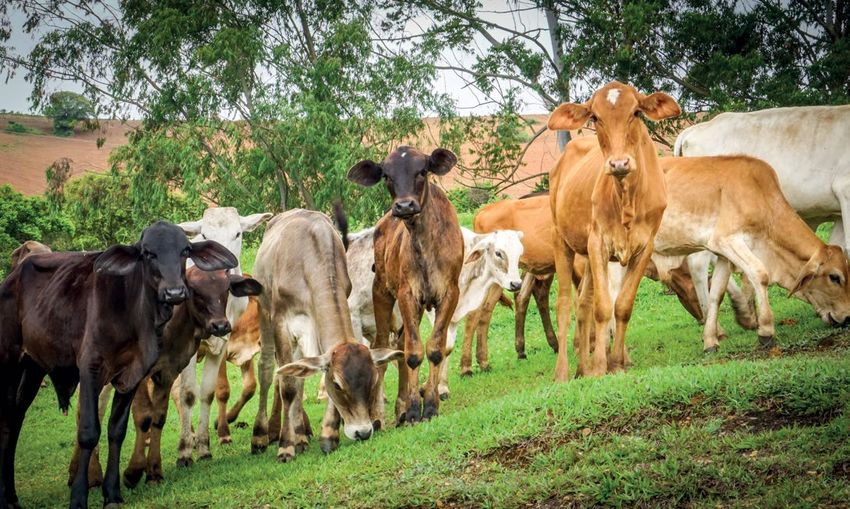
EUROGROUP FOR ANIMALS BELIEVES THAT THE
    EU-MERCOSUR AGREEMENT, AS IT STANDS NOW,
    IS A BAD DEAL FOR ANIMALS, NATURE AND PEOPLE

    THE NEGATIVE IMPACT IT CAN HAVE WILL BE
    CONCRETE AND OBSERVABLE IN THE SHORT TO
    MEDIUM TERM:

    w The EU-Mercosur Agreement will increase trade                 antibiotics are key to fight antibiotic resistance, which
      and production in animal-based food, which has                is according to the World Health Organisation “one of
      detrimental implications on animal welfare: less              the biggest threats to global health, food security, and
      production and more live exports in Europe, and               development today”1 and is closely linked to animal
      increasing numbers of feedlots in Latin America.              welfare standards. A provision explicitly mentioning
                                                                    the precautionary principle can be found in the Trade
    w The agreement is likely to fuel intensification of            and Sustainable Development (TSD) chapter, but
      the animal production sector in both regions. The             the definition of the principle has been narrowed – it
      increased output in the beef and soy sector will trigger      does not mention food safety – and the enforcement
      further deforestation. In addition to directly impacting      mechanisms of the chapter are weak.
      climate change, deforestation also has a devastating
      impact on animals populating these forests. The loss
      of habitats for wild animals causes more frequent and      Possibilities of cooperation between the countries
      closer interactions between wild and farmed animals,       opened by the agreement cannot counterbalance the
      and with humans. This pressure on biodiversity is seen     negative impacts of the agreement. The provisions
      as a major cause of the spread of zoonoses (animal         are too weak and too dependent on both political
      diseases transmissible to humans). Intensive farming       willingness and resources, which can be scarce.
      facilities themselves are also a hotbed for zoonoses.      In addition, if there was political willingness and
                                                                 resources, such cooperation could take place outside
    w The chapter on Technical Barriers to Trade could           this trade agreement.
      constitute an obstacle to the EU imposing a method of
      production labelling system to imported products.          w Considering the importance of the animal production
                                                                   sector in these negotiations, the provisions included
    w The chapter on sanitary and phytosanitary (SPS)              in the agreement on animal welfare cooperation are
      measures foresees a simplification in the audit system       weak. While they recognise animal sentience and
      to facilitate trade, which would lower the possibilities     provide the possibility to also cooperate on on-farm
      to carry out audits on the ground. As animal welfare         practices, they do not set any objective – not even to
      can only be checked on farms and not at the border,          enhance the protection and welfare of animals.
      this will have an impact.
                                                                 w The TSD chapter includes stronger language than
    w The SPS chapter does not recognise the right of the          usual, but it remains a reiteration of international
      EU to apply the precautionary principle. The only            commitments with no additional means to implement
      provision referring to measures based on this key            them. In addition, there is no material consequence
      principle in the EU imposes that these measures              to the violation of these commitments. The chapter
      should be temporary and reviewed as fast as possible.        does not include a section on sustainable agriculture
      This is important, as several food safety measures           referring to animal welfare as a dimension of this
      based on this principle benefit animal welfare. This         concept and does not list fish welfare as a criteria for
      is the case of the ban on hormone-fed meat, the use          sustainable aquaculture.
      of ractopamine or the chemical rinsing of meat; and
      soon, on the use of antibiotics to promote growth
      and increase yield. The measures related to the use of

    1
        https://bit.ly/2LFGV4m

4
SUBSEQUENTLY, EUROGROUP FOR ANIMALS CALLS
ON THE EUROPEAN COMMISSION:

w To review the market access offer to further limit the
  volume granted in tariff-rate quotas (TRQs) for animal-
  based products, especially for bovine and chicken
  meat.

w To include animal welfare conditions for all trade
  preferences granted to animal products. The EU-
  Mercosur agreement is rumoured to contain, for the
  first time in any trade agreement, a condition based on
  animal welfare standards. This applies to the import of
  shelled eggs into the EU. This would be welcomed by
  Eurogroup for Animals, but we call on the EU to extend
  this approach to other products, especially where the
  trade volume is higher.

w To establish proper monitoring mechanisms to assess
  the impact of the implementation of the trade deal on
  the animals, the environment and the people, and to
  introduce tools that would allow to revert the negative
  impact that could be detected by these mechanisms.
  This could be done by strengthening the TSD chapter
  and its enforcement mechanisms.

w To include a comprehensive cooperation mechanism
  on animal welfare, covering not only farm animals
  but also animals used in science and wildlife, with the
  clear objective to improve the protection and welfare
  of animals by enacting and implementing stronger
  legislation.

w To review the TBT chapter to avoid any obstacle to the
  future imposition of a method-of-production label on
  imported products.

w To introduce a provision in the SPS chapter protecting
  the right of the EU to rely on the precautionary principle
  in the field of food safety.

EUROGROUP FOR ANIMALS ALSO CALLS ON THE EU
MEMBER STATES AND MEMBERS OF THE EUROPEAN
PARLIAMENT:

w To put pressure on the European Commission to amend
  the agreement along these lines;

w To reject the Agreement if these amendments are not
  adopted.

                                                               5
1
    INTRODUCTION

    On 28 June 2019, after 20 years of negotiations, the                        and beef, and Mercosur is the EU’s first source of imported
    EU and Mercosur (the Southern Common Market;                                meat, representing 43% of the EU’s total meat imports in
    Argentina, Brazil, Paraguay and Uruguay2) announced                         2018. The bloc mostly exports bovine, poultry and horse
    the conclusion of an unprecedented Association                              meat to the EU.3
    Agreement.

                                                                                Figure 1: Meat exports from Mercosur to the EU in 2018,
    This agreement contains, on the one hand, a section on
                                                                                in percentages of the EUʼs total imports of such products
    political cooperation and, on the other hand, a free trade
    agreement (FTA). The final details of the agreement are                      100%
    currently being worked out by the Parties, and the text
                                                                                  80%
    should reach the European Parliament and the Council of                                                                82%
                                                                                                76%
    the EU for ratification at the end of 2020 at the earliest.                   60%

                                                                                  40%
    The EU-Mercosur Agreement, if ratified, will become the                                                   44%
    most significant trade agreement to date for the EU. The                      20%
    Latin American bloc is a key global producer of chicken                        0%
                                                                                               bovine        poultry       horse

    2
        Venezuela is also a full member of Mercosur, but was suspended on 1 December 2016.
    3
        These figures are based on Eurostat data.

6   Trade Agreement | ANIMAL WELFARE IN THE EU-MERCOSUR
The region is also home to an incredible range of              The Association Agreement has not yet been published
biodiversity in forests such as the Amazon, the Cerrado        in full, but this report is based on texts that are already
and the Gran Chaco. Deforestation, which is mostly pushed      available on the European Commission’s website: the
by the production of beef, soy and timber, is a key two-fold   “Agreement in Principle” and the various chapters of the
challenge: not only does it hugely impact animals living in    trade part of the Agreement (FTA). According to officials in
these biotopes, but it does so to fuel a system based on       the European External Action Service (EEAS), the “Political
intensive farming, which is very detrimental to farmed         And Cooperation Agreement” (PCA), the second half of the
animal welfare.                                                text, was still under negotiation at the end of 2019, and no
                                                               conclusion has been announced yet. The PCA will include
Considering the sectors it will stimulate (like the beef       an important section on institutional arrangements, which
sector in Mercosur and the dairy one in Europe), the EU-       will describe the monitoring mechanisms involving civil
Mercosur Agreement is likely to fuel existing crises such as   society that will also apply to the FTA. On the trade front,
deforestation or climate change.                               the countries are rumoured to still be negotiating certain
                                                               aspects of the market access rules. However, the parties
The agreement will also have a negative impact on the          present the text as being concluded, with no possibility to
welfare of animals:                                            re-open negotiations.
• The trade preferences granted by the text are
  considerable, and are not based on the condition that
                                                                 Eurogroup for Animals believes the EU-Mercosur
  higher animal welfare standards are met.
                                                                 agreement, as it stands, is a bad deal for animals,
• The provisions on animal welfare cooperation have              nature and people. The negative impact it could
  been watered down into vague statements without                have will be concrete and immediate, while the
  clear objectives.                                              possibilities for cooperation that could be opened
                                                                 by the text are uncertain and may only deliver in
• The Trade and Sustainable Chapter does not bind the            the long run, if at all. In addition, such cooperation
  Parties to more than their international commitments,          could take place outside a trade agreement.
  and does not create any additional tool to ensure that
  such commitments are respected.
• The chapter on technical barriers to trade (TBT) could
  restrict our chances to implement a universal method-
  of-production labelling system.
• The chapter on sanitary and phytosanitary (SPS)
  measures opens the way to even fewer audits on
  the ground – which are the only ones that can check
  animal welfare conditions – and does not put forward
  the precautionary principle, which has allowed the EU
  to adopt trade measures that have benefitted animal
  welfare, such as the ban on hormone beef and on
  chlorinated chicken.

Eurogroup for Animals                                                                                                         7
2
    ANIMAL WELFARE
    IN MERCOSUR COUNTRIES

    Mercosur is a major producer of highly competitive               European consumers usually have a positive image of the
    agricultural products, notably meat. The bloc slaughters         farming method in Latin America; animals are imagined
    around 55 million cattle each year, as well as 6.6 billion       as living a great life in extensive pasture. However,
    chickens. The four countries are also home to 394                production methods are also intensifying in Mercosur
    million laying hens.                                             countries. Secondly, there is more to farm animal welfare
                                                                     than available space and low density. As defined by the
    The situation is diverse in terms of farm animal welfare.        OIE, an animal is in “a good state of welfare if (as indicated by
    All countries have anti-cruelty legislation, but in many         scientific evidence) it is healthy, comfortable, well nourished,
    cases, there is a lack of more specific binding regulations to   safe, able to express innate behaviour, and if it is not suffering
    ensure the implementation of sufficient standards at farm        from unpleasant states such as pain, fear, and distress”.
    level. When such standards do exist, they are most often         This includes issues like disease prevention, veterinary
    contained in guidelines, handbooks or voluntary codes.           treatments, protection during transport, appropriate
                                                                     shelter and humane handling.

8   Trade Agreement | ANIMAL WELFARE IN THE EU-MERCOSUR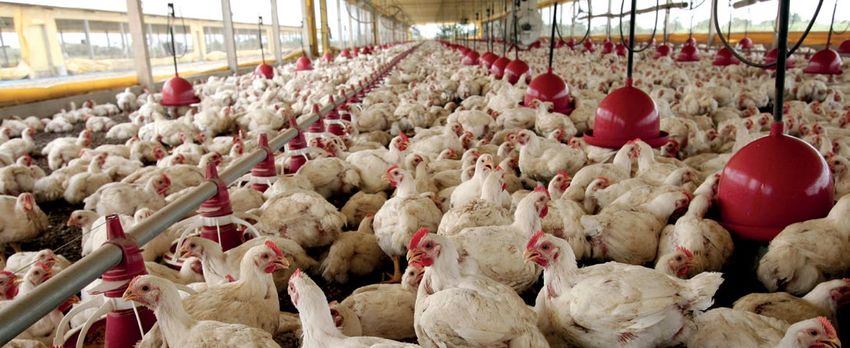
According to a study recently published by the Commission,
             BRAZIL                                                                a cooperation the EU started with Brazil under a specific
                                                                                   Memorandum of Understanding on animal welfare7 has
In Brazil, many NGOs describe the animal welfare standards                         been key in raising awareness about welfare issues; but due
as usually better than expected. 81% of Brazilians perceive                        to political difficulties, the only legislative result so far has
farm animal welfare to be important,4 and there are several                        been in the transport of animals destined for live exports.
private initiatives launched in the country to improve farm
animal welfare that should be highlighted.5                                        Slaughter
• In 2008 the Brazilian Ministry for Agriculture, Livestock
                                                                                   Brazil has basic regulations linked to slaughter, but they
  and Food Supply (MAPA) launched a national programme
                                                                                   are seen as insufficient. These rules are contained in wider
  on slaughter in partnership with the NGO World Animal
                                                                                   legislation focusing mainly on food quality, animal health
  Protection, “Programa Nacional de Abate Humanitário”
                                                                                   or agricultural policy8 and, while they improve the welfare
  (National Humane Slaughter Programme). It led to the
                                                                                   of animals to a certain extent, they do not address the
  provision of animal welfare training to more than 3000
                                                                                   question directly.
  veterinary officials in charge of controlling the handling
  of animals in slaughterhouses.
                                                                                   Brazilian NGOs consider that, if we add up the production
• Based on this initiative, several key companies in the                           of slaughterhouses in violation of the rules to clandestine
  Brazilian meat supply chain, including the refrigeration                         slaughters, around 8 billion animals die in cruel conditions
  company Friboi and the carrier company TRP, created                              each year in Brazil. This also creates concerns for public
  their own animal welfare department.                                             health.
• JBS, one of the main meat processing companies in the
  world, even defined animal welfare as one of its five                            In 2012, MAPA conducted audits of Brazilian
  priorities. Subsequently, each JBS slaughterhouse has                            slaughterhouses, concluding that 9.6% of federal
  a staff member in charge of welfare, and the company                             slaughterhouses allowed to export meat did not respect
  improved the equipment of its trucks to address welfare                          the Brazilian regulations on slaughter.9 For state and
  in animal transport.                                                             municipal slaughterhouses, which are focused on local
                                                                                   consumption, the non-compliance rate was around 80%.
• BRF, Seara and Aurora, the three main Brazilian
  companies in the pig meat sector, launched initiatives.                          While the level of compliance was deemed high in federal
  BRF was the first to announce it will stop using gestation                       slaughterhouses, an audit carried out four years later
  crates by 2026, and Seara and Aurora followed. At                                by the EU’s Directorate for Health and Food Safety in
  the moment, BRF has already removed 30% of the                                   slaughterhouses exporting bovine meat to the EU still
  gestation crates used in its supply chain, while 50% of                          revealed shortcomings in animal welfare procedures:
  Seara’s farms are crates-free. BRF is also working on                            unsuitable stunning material and restraining devices,
  immunocastration.                                                                excessive stunning times, and very different rules on
                                                                                   feeding (the EU requires animals in slaughterhouses to
While all these initiatives are positive and show that                             be fed after 12 hours; Brazilian legislation after 24h). The
animal welfare is becoming important for Brazilian                                 audit being also on controls and certification procedures,
consumers, it is still important to progress at legislative                        it is interesting to note that some of these shortcomings
level. Firstly, a study by Charity Entrepreneurship showed                         had not been noted by the Brazilian Control Authority. In
that only 54% of commitments made at corporate level                               addition, many of these issues were already identified by
actually materialise.6 Secondly, there is a need for external                      the EU in the previous audit.
checks to ensure proper compliance with announced
standards. Finally, without legislation, wrongdoers cannot                         The 2016 report concludes that the two establishments
be sanctioned.                                                                     visited in Rondonia and Tocantins had “weaknesses” in
                                                                                   animal welfare requirements. In its analysis, it states clearly

4
    https://www.istoedinheiro.com.br/o-ovo-e-galinha
5
    Jörg Hartung, Mateus Paranhos da Costa and Carmen Perez, O Bem-Estar Animal na Alemanha e no Brasil: Responsabilidade e Sensibilidade, 2019.
6
    Charity Entrepreneurship, 35 Independent Pieces of Evidence for why new corporate campaigns might (or might not) work, 23 May 2019.
7
    See more details on this cooperation in Annex 1 - Existing cooperation between Mercosur and the EU on animal welfare.
8
    Jörg Hartung, Mateus Paranhos da Costa and Carmen Perez, O Bem-Estar Animal na Alemanha e no Brasil: Responsabilidade e Sensibilidade,
    2019.
9
    Amigos da Terra - Amazônia Brasileira, Radiografia da carne no Brasil, 2013.

Eurogroup for Animals                                                                                                                                  9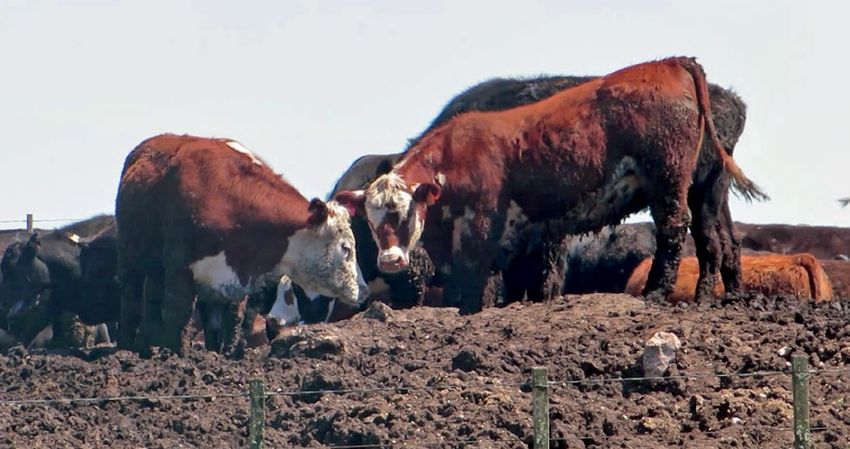
that the situation in terms of stunning did “not provide
     guarantees at least equivalent to the requirements laid down                                       ARGENTINA
     in Article 9.2 of Council Regulation (EC) No 1099/2009”.10
                                                                                          In Argentina, observers have noted issues concerning
     A 2017 audit, not only on beef but also on poultry and                               the enforcement of the legislation on both transport and
     horse meat, reversed this assessment, stating that all                               slaughter, mainly due to the difficulty of monitoring the
     visited establishments complied with requirements and                                entire territory. However, in December 2019, the National
     that the Brazilian Control Authority could ensure such                               Service of Agri-Food Health and Quality (Senasa) published
     compliance. Regions visited in the 2016 audit do not seem                            a new resolution establishing minimum requirements
     to be allowed to export to the EU anymore.11 This 2017                               on animal welfare, in particular concerning the livestock
     audit took place after the “Carne Fraca” sanitary scandal,                           sector.13 This text is quite basic, reflecting OIE-level
     and is less detailed and descriptive about compliance with                           standards, but it defines minimum standards that should
     animal welfare standards.                                                            apply throughout farm animals’ lives, including at time of
                                                                                          slaughter. Senasa’s resolution defines ‘animal welfare’ as
     The latest audit for Brazil took place in 2018. Such high                            the “physical and mental state of an animal in relation to the
     frequency is a result of the “Carne Fraca” scandal. This audit                       conditions in which it lives and dies”.
     stated, in one line, that all animals were stunned properly,
     but also found that the rules in place do not ensure that                            The adoption of such a resolution by Senasa could
     non-compliant establishments are swiftly removed from                                be perceived as a positive sign that the Argentinian
     the list of establishments allowed to export to the EU.                              government is willing to better address farm animal
                                                                                          welfare. However, the risk is still high that enforcement
     Transport                                                                            and control will be lacking, especially due to the national
                                                                                          economic crisis and thus cuts in public expenditure.
     Brazil has only basic regulations on the transport of
     animals in general (for instance from production place to                            Another resolution enacted by Senasa, adopted in 2003,
     the slaughterhouse), but, like the rules on slaughter, these                         prohibits the practice of forced feeding for ducks and
     regulations are contained in wider legislations and are                              geese on the basis of cruelty.
     seen as insufficient.12
                                                                                          The EU’s 2016 audit on Argentina’s beef sector stated that
     In 2018, Brazil published a new ‘normative instruction’                              out of four slaughterhouses visited, two had unsuitable
     establishing minimum standards specifically for the live                             handling and restraining facilities, which could lead to
     transport of ruminants destined for live exports. Within                             deficient stunning. The requirement to feed and bed
     this legislation, an article instructs that OIE guidelines                           animals after 12 hours was also “not strictly adhered to”.
     for the transportation of terrestrial animals should                                 The audit identified “weaknesses in the control system
     be followed. The introduction of these standards was                                 that compromise the guarantees concerning their proper
     welcomed and supported by many Brazilian animal welfare                              implementation in the EU-listed establishments, in particular
     NGOs, even if they only apply during road transport from                             the requirements on restraining”.14
     farm to port, and not to the sea part of the journey. In
     addition, NGOs argue that these standards will not be                                There has been no further audit on the bovine sector.
     implemented properly, as MAPA, the body responsible for
     their implementation, does not have enough resources or
     employees to conduct inspections to make sure that they
     are respected.

     10
          European Commission, DG SANTE, Food and Veterinary Office, Final report of an audit carried out in Brazil from 20 May to 2 June 2016 in order to
          evaluate the operation of controls over the production of fresh bovine meat destined for export to the European Union as well as certification procedures
          and to follow-up previous, relevant audits, DG(SANTE) 2016-8827 - MR.
     11
          List of non EU certified slaughterhouses.
     12
          Jörg Hartung, Mateus Paranhos da Costa and Carmen Perez, O Bem-Estar Animal na Alemanha e no Brasil: Responsabilidade e Sensibilidade,
          2019.
     13
          Argentinian National Service of Agri-Food Health and Quality, Resolution N°1697/2019, 9 December 2019 / Servicio Nacional de Sanidad y
          Calidad Agroalimentaria, Resolución N° 1697/2019, 9 de Diciembre de 2019.
     14
          European Commission, DG SANTE, Final report of an audit carried out in Argentina from 21 June 2016 to 04 July 2016 in order to evaluate the
          operation of controls over the production of and the certification procedures for fresh meat from bovidae and wild leporidae destined for export to the
          European Union, DG(SANTE) 2016-8854 - MR.

10   Trade Agreement | ANIMAL WELFARE IN THE EU-MERCOSUR
© Animal Welfare Foundation
URUGUAY PARAGUAY
Uruguay adopted its own national legislation on the Paraguay enacted national legislation on the protection of
protection and welfare of animals in 2009,15 mainly animals in 2013 but the text is not very detailed. On farm
addressing companion animals. Its general anti-cruelty animals it only contains one provision, using soft language,
language applies to farmed animals too, but the language limited to slaughterhouses.
is vague, stating that both slaughter and transport should
not cause unnecessary suffering. However, Uruguay Paraguay is relying more and more on cattle herding.
incorporated EU’s rules on slaughter in a resolution in According to data from SENACSA (Paraguay’s National
2012. Service for Animal Health and Quality), the livestock herd
located in the Chaco area, which is home to important
Another decree adopted in 2018 creates a control system forests, has grown from 4.5 million in 2010 to more than
for the slaughter of birds by monitoring the quantity 6 million in 2017.17 The total cattle herd in the country
and weight of the birds, but with no reference to animal numbers around 12 million animals. According to our
welfare.16 With Chile, Uruguay also led the effort to create contacts in the region, the situation in terms of animal
an “OIE regional collaborating centre for animal welfare welfare is not reassuring. EU audits state, however, that in
research” for the Americas. all slaughterhouses visited both in 2015 and 2019, animal
welfare standards were respected. Both audit reports
contain the same assessment: “the stunning of animals was
efficient and back-up equipment was available”.18
15
Ley 18471/2009 de protección, bienestar y tenencia de animales, 21 de abril de 2009 / Law 18471/2009 on the protection, welfare and
ownership of animals, 21 April 2009.
16
Decreto N°195/18 - Se crea el sistema de control de faena de aves con el propósito de monitorear la cantidad y el peso de aves en las plantas
para tal fin, 25 de Junio de 2018 / Decree N°195/18 - Establishing a control system of slaughtering of birds with the purpose of monitoring the
quantity and weight of birds in the slaughterhouses for this purpose, 25 June 2018.
17
Døvre, B. (2019). Deforestation in the Paraguayan Chaco: how can banks manage risks from financing the cattle sector? Global Canopy.
18
European Commission, DG SANTE, Final report of an audit carried out in Paraguay from 15 October 2019 to 25 October 2019 in order to evaluate the
official controls and certification systems over the production of fresh bovine meat and casings ( follow up) and meat preparations intended for export to
the European Union, DG(SANTE) 2019-6683 & Final report of an audit carried out in Paraguay from 18 November 2015 to 30 November 2015 in order
to evaluate the operation of controls over the production of fresh bovine meat destined for export to the European Union, as certification procedures,
DG(SANTE) 2015-7598.
Eurogroup for Animals 113
ANIMAL WELFARE IN THE EU-MERCOSUR
ASSOCIATION AGREEMENT
it often means that overall more animals will be used in
3.1 production systems.19
MARKET ACCESS FOR ANIMAL PRODUCTS
In addition, the increase of cheaper imports meeting
Trade liberalisation impacts animals by decreasing the lower standards on the European market contributes to
price of exporting animal products to the EU, stimulating disrupting the level playing field, which can put pressure
production in partner countries where animal welfare on authorities not to further improve – or even maintain –
standards are most often lower than in the EU. animal welfare standards.
As the EU is also an important food exporter, it also Mercosur countries considered increasing market
provides incentives to further increase production – or to access for their meat products as a key priority in these
intensify it – on the continent. Therefore, regardless of negotiations and, overall, the additional market access
the level of animal welfare standards in partner countries, granted by the EU is not based on the condition that
as trade liberalisation aims to stimulate certain sectors, higher animal welfare standards are met.20 The Tariff-
19
This is the case when increases in exports towards a country are not only the result of reshuffling existing exports to other countries.
20
To this day, only the regulation on welfare at the time of killing is imposed on imported products. This is checked through certification
requirements and audits.
12 Trade Agreement | ANIMAL WELFARE IN THE EU-MERCOSURrate Quotas (TRQs) granted by the EU in the beef, chicken, Years later, in the midst of the EU-Mercosur negotiations,
egg and pig meat sector will decrease the cost of exporting 12 EU Member States (Austria, Belgium, France, Greece,
to the EU, which is likely to stimulate exports and general Hungary, Ireland, Latvia, Luxembourg, Poland, Romania,
production in these sectors. Slovakia and Slovenia) called on the European Commission
to impose non-tariff conditions – such as the respect of
The view of the European Commission is that the volume animal welfare standards, as well as SPS and environmental
of exports from Mercosur countries will not change much, standards – on trade with Mercosur in sensitive products
but that the profits made by the exporters will, especially like beef and chicken.26 Unfortunately, this call from
for beef products.21 This is questionable. Several Mercosur Member States was not reflected in the text as it stands.
countries have recently enacted policies encouraging
the development of national “Champions” in the meat
industry, and many observers see meat production in Bovine meat
those countries only increasing.22 One cannot imagine that
economic incentives will not add up to this trend towards EU documents assess that each year the EU imports
more production in what are becoming increasingly around 200,000 tonnes of fresh and frozen beef cuts from
intensified systems. In addition, the interim report on the Mercosur countries.27
SIA carried out by the EU on these trade negotiations also
indicates that beef production and exports to the EU are Over the past ten years, total imports of fresh beef into
expected to increase according to the scenarios they have the EU have increased from 104,286 to 137,910 tonnes.
tested – scenarios that did not envisage a tariff reduction Imports from Mercosur countries have followed a similar
of the scale obtained by Mercosur in the final agreement.23 trend, from 74,104 to 96,578 tonnes (representing 70% of
all EU fresh beef imports).
Eurogroup for Animals believes that no additional access
to the EU market should be granted for animal-based With regards to frozen beef, the EU’s total imports fell
products unless convergence in terms of animal welfare drastically between 2006 and 2008 from 219,096 to
standards is ensured. The optimal way to achieve this would 87,633 tonnes. They are now stabilised around 75,000
have been to have only granted conditional Tariff-rate tonnes, most of which comes from Mercosur countries
quotas linked with animal welfare requirements. This idea (89%) and are boneless frozen beef.28 29
had been voiced by the previous SIA carried out by the
University of Manchester in 2009, which recommended Eurogroup for Animals is concerned about the indirect
the “timing of reductions in tariffs and quota restrictions consequences of granting further preferential access to
for environmentally/biodiversity sensitive products to the European beef market to third countries. The growing
be conditional on compliance with a set of sustainability pressure on European beef producers gives them more
criteria”.24 The European Commission decided not to incentive to increase live exports to third countries such as
take this recommendation on board, pointing instead Lebanon, Turkey, Algeria and Israel, where after harrowing
at legislation that can be adopted by each party on journeys the animals are slaughtered in patent violation of
sustainability-related topics.25 even the basic OIE standards.30
21
In informal discussions with officials - December 2017 and documents produced by the Commission
- Accord Commercial UE-Mercosur, créer des débouchés, tout en respectant les intérêts des agriculteurs européens, available at:
https://trade.ec.europa.eu/doclib/docs/2019/july/tradoc_158140.pdf
22
Shefali Sharma, Institute for Agriculture and Trade Policy (IATP) and Sergio Schlesinger, The Rise of Big Meat: Brazil’s Extractive Industry, November
2017.
23
The London School of Economics and Political Science, Sustainability Impact Assessment in Support of the Association Agreement Negotiations
between the European Union and Mercosur - Draft Interim Report, 3 October 2019.
24
The University of Manchester, Trade Sustainability Impact Assessment (SIA) of the Association Agreement under negotiation between the European
Community and Mercosur - Final overview trade SIA EU-Mercosur - Final report revised, March 2009.
25
European Commission, Position paper trade Sustainability Impact Assessment (SIA) of the Association Agreement under negotiation between the
European Union and Mercosur, July 2010.
26
Eurogroup for Animals, News, 12 Member States write to defend Animal Welfare Standards in beef imports, 2 October 2017.
27
Documents produced by the Commission - Accord Commercial UE-Mercosur, créer des débouchés, tout en respectant les intérêts des agriculteurs
européens, available at https://trade.ec.europa.eu/doclib/docs/2019/july/tradoc_158140.pdf
28
HS 02023090.
29
For more details see tables in Annex 2 - Statistics.
30
See various investigations led by Animals International - https://www.animalsinternational.org
Eurogroup for Animals 13Country Volume in 2018 [t] Main destinations Trends
Fresh beef
Argentina 46,096 Germany (45%), Decreased until 2014 (29,164 tonnes)
Netherlands (37%), before increasing again.
Italy (13%)
Uruguay 25,096 Netherlands (58%), Steady increase since 2011 (13,576
Germany (16%), Spain (9%), tonnes) to 2017 (26,468 tonnes).
UK (8%), Italy (5%)
Brazil 22,436 Netherlands (47%), Huge drop in 2008 (from 80,509 to
Spain (19%), 11,651 tonnes); increase back to
Germany (17%), 26,520 tonnes (2014), followed by a
Italy (9%) small decrease to current levels.
Paraguay 2,951 Netherlands (40%), Increase from 101 tonnes in 2008
Germany (26%), to 3,859 tonnes in 2017 (a few years
UK (18%), Spain (12%) without import).
Total 96,568
Country Volume in 2018 [t] Main destinations Trends
Frozen beef
Brazil 47,312 Italy (54%), Huge decrease in 2007 (105,956 to
Netherlands (21%), 32,089 tonnes), increasing then again
Spain (9.5%), UK (7%), to 47,306 tonnes.
Uruguay 14,625 Italy (31%), Imports tripled in 2008 (from 11,379
Netherlands (22%), to 31,716 tonnes), then they decreased
Spain (15%), again to current levels.
Germany (12%),
Portugal (7%)
Argentina 1,891 Germany (30%), Steady decrease from 24,936 tonnes to
Netherlands (28%), current level
Greece (16%),
Italy (12%)
Paraguay 1,886 Italy (74%), Exports have been fluctuating between
Portugal (18%) zero and 1,500 tonnes, with a level
more stable in the past couple years
Total 65,714
According to the texts that were published by the European
Commission, the EU has granted to Mercosur:
• A new tariff-rate quota of 99,000 tonnes, at a 7.5% • The in-tariff of the Hilton Quota31 (currently at
tariff (split into 54,450 tonnes for fresh beef and 44,550 20%) will be decreased to zero. Altogether Mercosur
tonnes for frozen beef). It seems that the management countries have access, within this existing quota, to
of the TRQ will be ensured by the EU, but there are no 46,800 tonnes: 29,500 for Argentina, 10,000 for Brazil,
further details on country allocation. 6,300 for Uruguay and 1,000 for Paraguay.32
31
This quota originates from GATT negotiations in 1979 and allocates different volumes of beef to each relevant trade partner.
32
Volumes allocated per country are mostly covering fresh beef. In the case of Argentina, Uruguay and Brazil, another product could be covered :
thin or thick skirt (HS code 02061095). However, Mercosur countries are not exporting this product to the EU. Paraguay’s allocation also covers
boneless frozen beef (HS code 02023090).
14 Trade Agreement | ANIMAL WELFARE IN THE EU-MERCOSURIn addition to these concessions, Mercosur countries will Determining the future use of the ‘hormone-free beef’
still have access to 10,000 tonnes under the ‘hormone- quota is complex. As with all erga omnes quotas, there is
free beef’ TRQ. At the moment, mostly Uruguay and, to no EU record on who uses what volume. Uruguayan sources
a lesser extent, Argentina have made use of this quota, report that the country used up around 16,000 tonnes
which was originally created to solve a dispute between of this quota in 2016/17. To our knowledge, Argentina,
the EU and the United States regarding the EU ban on the which got access to the quota in 2015, also saw its imports
use of certain growth promoters in meat production.33 under the quota increasing. Yet in the coming years,
Mercosur countries’ use of the ‘hormone-free beef’ TRQ
It is important to point out that the ‘hormone-free beef’ will decrease, as the volume to which non-US countries
quota has contributed to spreading feedlots to countries will have access to under this quota has been reduced to
that used to have only grass-fed cattle. This is because 10,000 tonnes.
according to the legislation opening the quota, access
to it is on the condition that the beef is produced using a Regarding quotas related to frozen beef, we face a similar
specific method of production that demands a grain diet, issue, as they are erga omnes. It is thus difficult to know what
which implies the use of feedlots, both very detrimental to volume of these TRQs is used up by imports originating
cattle welfare. This is the case of Argentina and Uruguay. from Mercosur countries. It must be noted, however, that
at least 90% of their volume is used every year. It can thus
Finally, Mercosur countries will continue to benefit from be assumed that extra volumes granted at a preferential
existing trade preferences existing for frozen beef: (1) rate in the sector of frozen beef to Mercosur countries in
54,875 tonnes34 opened erga omnes with 20% in-tariff; the Association Agreement are very likely to be used.
(2) 63,703 tonnes, opened erga omnes with 20% in-tariff,
among which 50,000 tonnes for frozen beef intended for The 2019 interim report on the SIA studies the beef sector
manufacture of processed food mainly composed of beef in more detail and concludes, using scenarios where the
and 13,703 tonnes for frozen beef intended for other tariff reduction is lower than the one obtained in the final
process products (with additional duties per tonne).35 36 agreement, that Mercosur beef exports to the EU will
grow by 60,000 tonnes if tariffs are reduced by 15%, or
These additional preferences are likely to be used by 140,0000 tonnes if tariffs are reduced by 30%. In reality,
Mercosur countries. To assess this, it is useful to consider the decrease within the existing Hilton quota will be by
the extent to which existing preferences are used. In the 100% (20% to zero) and the decrease outside any quota
case of the Hilton quota (mostly fresh beef but also frozen will be of more than 80%.37 Even if the increase of Mercosur
beef for Paraguay), all Mercosur countries have made good beef imports into the EU will be limited to a certain extent
use of their allocation in the past three years, filling up by the use of tariff-rate quotas, it is very unlikely that the
between 80% to 95% of the volume. new preferences will not be fully used.
Fresh Beef Before the agreement After the agreement
Hilton Quota 45,800 tonnes (20%) 45,800 tonnes (duty free)
Hormone-free beef Quota Around 20-25,000 tonnes (duty-free) maximum 10,000 tonnes (duty free)
New Quota - 54,450 tonnes
Total 66,800-71,800 tonnes, 106,250-111,250 tonnes,
with preferences with better preferences
33
In 2019, as the US was complaining that it did not reaped enough benefits from the TRQ, the EU modified it to allocate 35,000 of its 45,000
tonnes solely to the US. This leaves only 10,000 tonnes available erga omnes.
34
TRQ 431/2008.
35
TRQ 412/2008.
36
The 1000 tonnes exported by Paraguay have always been frozen beef, while the 45,800 tonnes exported by the three other countries have always
been fresh beef.
37
The current MFN rate - 12.8% + 303.4 EUR/100 kg - can be transformed into an ad valorem rate (43% according to the SIA). It can then be
compared to the tariff applied within the TRQ (7.5%).
Eurogroup for Animals 15THE RISE OF FEEDLOTS
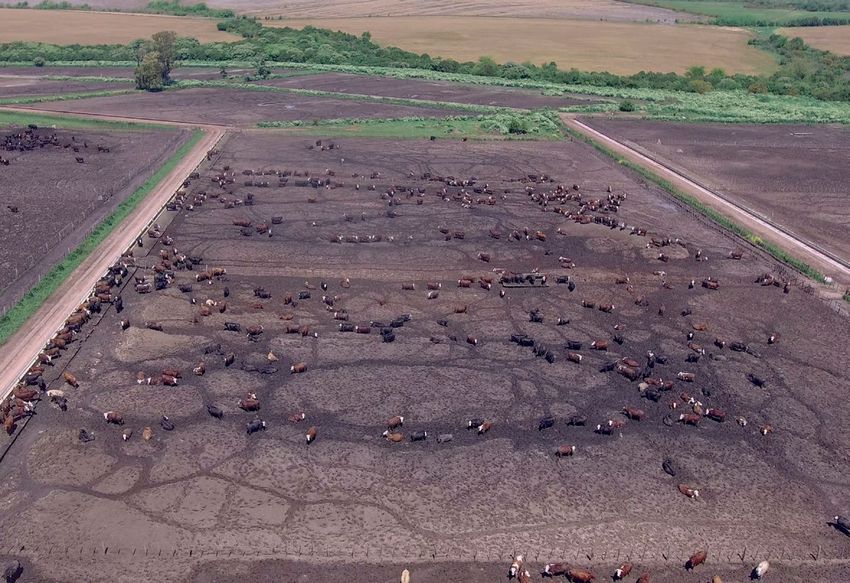
IN LATIN AMERICA:
IMPACT ON CATTLE WELFARE
In intensive production systems, cattle spend between 50 Argentina is following the same path. The country is facing
and 120 days in a feedlot, which corresponds to 10-15% of an unprecedented issue: it has not been able to fulfill its
their lifespan. Confining cattle on feedlots and feeding them allocated volume under the Hilton quota (29,500 tonnes)
highly concentrated grain diets adversely impacts animal for the coming year.39 Senasa, which registers the producers
health and welfare, as well as harming the environment willing to secure a slot to export beef to the EU under this
and threatening public health. Cattle finished on feedlots quota, postponed the registration deadline, which was
disproportionately suffer from respiratory diseases, the initially set as 27 February 2020,40 for six months. By 21
number one cause of mortality in these systems, followed February 2020, less than half of the total volume under the
by digestive problems, calving, and death resulting from TRQ had been allocated. The reason is that Argentinian
extreme weather conditions. farmers are increasingly relying on feedlots to produce
beef, which means they do not respect the conditions set
The imposition of a diet mostly based on grains – and by the Hilton Quota for Argentina, which is to only use
therefore of the use of feedlots, which are necessary to grass as feed.
ensure the animal does not eat more grass – is mandatory
to get access to the duty free ‘hormone-free beef’ quota While the majority of the Brazilian cattle herd is still on
established by the EU. Animals on feedlots in Latin pasture, the numbers of feedlots in Brazil jumped by 442%
American countries are mostly destined for the EU market. between 1990 and 2017, and by 55% between 2010 to
While Mercosur countries used to produce beef solely on 2013 alone.41 At the moment, feedlots represent just 10%
pasture, this is changing. In 2013-2014 Uruguay went from of Brazil’s meat production. Yet expectations are that the
“traditional rangeland grazing systems to intensive fattening amount of meat produced in feedlot systems will double in
systems where feed concentrates are used”.38 The number of the next few years. Feedlots could be seen as a way to avoid
feedlots in Uruguay reached more than a hundred in 2018, the weight loss linked to the dry season in Central West
all registered and approved to export to the EU. Brazil.42
The outcome of investigations in the country by the Animal
Welfare Foundation, with the help of For The Animals
Uruguay, is clear. “At all places visited during our investigations
on beef production in Uruguay – at feedlots, auctions and
during transport – we detected violations of the OIE guidelines
on animal welfare relevant to feedlot production, and of
standards which would apply for farm animals in the EU”, such
as the General Farming Directive (98/58/EC). Violations
included a lack of weather protection, signs of health
problems, a lack of bedding areas, and wet and muddy
areas.
38
Del Campo, M., Montossi, B.F., de Lima, S., & San Julian, R. (2014). Animal Welfare And Meat Quality: The Perspective Of Uruguay, A “Small”
Exporter Country. Meat Science, 98(3). 470-476.
39
Until now, it almost used up the allocation every year: by 95,22% in 2017/2028 and 99,97 % in 2018/2019.
40
Argentinian National Service of Agri-Food Health and Quality, Press release,
Prórroga para la inscripción de establecimientos que quieran exportar carne vacuna de la cuota Hilton a la UE, 21 February 2020.
41
Peterson et al, The Expansion of Intensive Beef Farming to the Brazilian Amazon, Global Environmental Change, Volume 57, July 2019, 101922.
42
Olivier Flake and Joao F. Silva, USDA Foreign Agricultural Service, Global Agricultural Information Network Report,
Brazil : Livestock and Products Annual: 2019 Annual Livestock Report, 9 May 2019.
16© Animal Welfare Foundation
WELFARE ISSUES RELATED TO FEEDLOTS
Animals in feedlots frequently suffer dust pneumonia, an animals faster, compromises their ability to control their
infection caused by exposure to fine dust – especially in dry thermoregulation. Extreme weather conditions – rain or
weather conditions – and endotoxins from dried manure, heat waves, which cause dust or mud on feedlots – further
combined with heat or cold stress and metabolic disorders. expose the animals to various health and welfare problems.
Viral and bacterial infections can also cause respiratory
diseases, which find fertile ground in animals with weak The interim SIA also underlines that, with an agreement,
immune systems. beef production in the EU will decrease slightly and
production in the Mercosur countries will grow. This
After respiratory diseases, grain overload (acute rumen would have implications in terms of cattle welfare. In
acidosis) is the most common disorder among feedlot Mercosur countries, transport conditions are harsher, and
cattle. Because their digestive system is best suited to finishing animals on feedlots is becoming more common.
roughage provided by grass-based diets, the most natural In addition, the SIA is vague or optimistic about the
way for cattle to eat is to graze throughout the day. Digestive impact of agricultural expansion on deforestation. While
disorders can also cause bloating, and if persistent, liver many organisations claim that soy and beef production
abscesses, parakeratosis and foot disorders such as drive deforestation in Mercosur countries, the SIA only
laminitis. Animals will display reduced rumen activity, an comments that land is still available and can be reallocated
accumulation of fluids in the rumen, and other symptoms to agriculture, also pointing at a potential increase in the
such as diarrhoea and dehydration, infections of the lung, density of animals. They do not, however, provide further
heart or kidney, and neurologic symptoms due to the toxic evidence to support their approach, and do not take into
effects of blood acidosis on neurons. account the potential impact a change in stocking density
or the place of production could have on cattle welfare.
The health and welfare problems in feedlot-finished
cattle are interconnected. Firstly, the high-grain diet The growth of the beef sector in Mercosur countries, as in
causes potentially fatal digestive and metabolic disorders. the EU, will also have an impact on wild animals living in
Secondly, this diet, which is formulated to fatten exploited ecosystems.
Eurogroup for Animals 17 Brazilian farm, with curtains open.
Chicken meat Mercosur poultry meat exports to the EU mostly come from
Brazil. In 2018/2019, 11% of Brazilian chicken production
The outcome of the EU-Mercosur negotiations for chicken went to the EU.43 As one of the main global producers of
meat is a surprise. The “Agreement in Principle” published this meat, Brazil received preferential access to the EU
by the EU announces a tariff-rate quota of 180,000 tonnes, market for its chicken through two tariff-rate quotas: (1)
divided into boneless and boned chicken. Access within 170,807 tonnes for salted chicken at 15.4% in-tariff;44
this quota will be duty free. A lower figure had been floated (2) 16,698 tonnes for frozen cuts of chicken, duty free.45
around earlier, but negotiators had mentioned to civil Another EU quota is also open to all countries: 17,524
society that the EU was likely to provide more access in the tonnes split between different sorts of chicken pieces, with
chicken sector to compensate for a weaker offer on beef. specific duties for each tariff line.46 Most years, these three
quotas are used up, except the one on salted chicken which
has been less used from 2017 onwards.
Country Volume in 2018 [t] Main destinations Trends
Fresh and frozen chicken
Brazil 92,630 Netherlands (47%), Steady decrease from 2004 (240,580 tonnes)
Spain (21%), Germany (15%), to 2017 (69,235 tonnes); increase again in
UK (13%) 2018.
Argentina 5,173 UK (60%), Netherlands (28%), Increase until 2009 (14,493 tonnes), then
Spain (11%) slow decrease to current levels.
Uruguay 66 UK (100%) Remained small amount for the past 10 years.
Total 97,843
43
Sources (2018/2019): IBGE, ABIEC and ABPA.
44
Commission Regulation (EC) No 616/2007 of 4 June 2007 opening and providing for the administration of Community tariff quotas in the sector
of poultrymeat originating in Brazil, Thailand and other third countries - HS code 02109939.
45
Commission Regulation (EC) No 1385/2007 of 26 November 2007 laying down detailed rules for the application of Council Regulation (EC) No
774/94 as regards opening and providing for the administration of certain Community tariff quotas for poultrymeat - HS code 020714.
46
Commission Regulation (EC) No 533/2007 of 14 May 2007 opening and providing for the administration of tariff quotas in the poultrymeat
sector.
18 Trade Agreement | ANIMAL WELFARE IN THE EU-MERCOSURCountry Volume in 2018 [t] Main destinations Trends
Salted chicken 48
Brazil 82,003 Netherlands (65%), Around 80,000 tonnes before 2008, then
UK (26%), Germany (6%), around 180,000 tonnes between 2008 and
Belgium (2%) 2016, then decrease back to 2008 levels.
The EU’s general chicken meat imports (fresh and frozen) reached an agreement that, according to studies carried
have steadily increased over the past five years, from out on broiler mobility, a maximum density of 30 kg/
149,209 tonnes in 2013 to 233,543 tonnes in 2018. m² should be respected. ABPA, on the other hand, only
Imports of Mercosur chicken, however, steadily decreased recommends a maximum stocking density of 39kg/m². It
from 2004 to 2017, before increasing again. The EU’s is common for some Brazilian farms to apply a density of
general imports of salted chicken increased until 2016 up to 42kg/m².
(from 204,032 tonnes in 2008 to 276,770 tonnes in 2016),
before decreasing mainly due to the drop in Brazilian Half of the Brazilian chicken production is concentrated
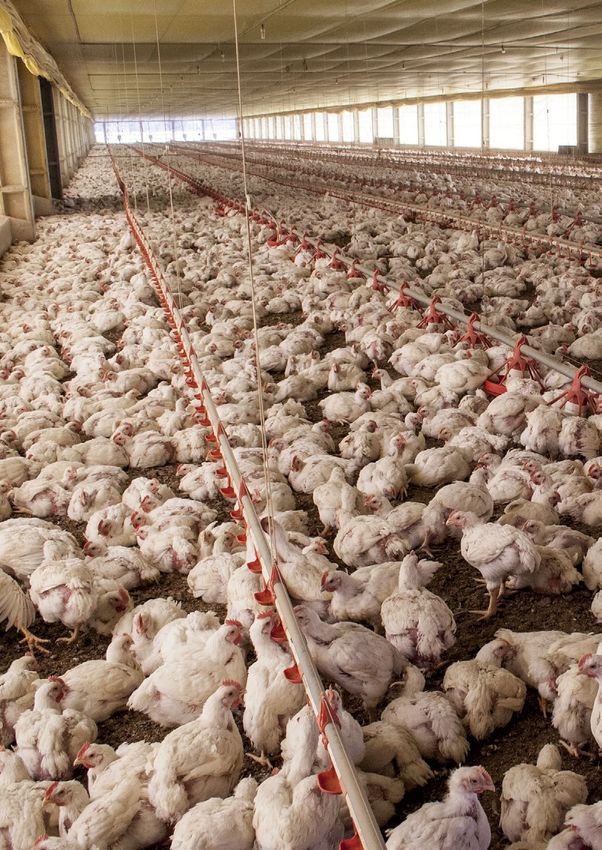
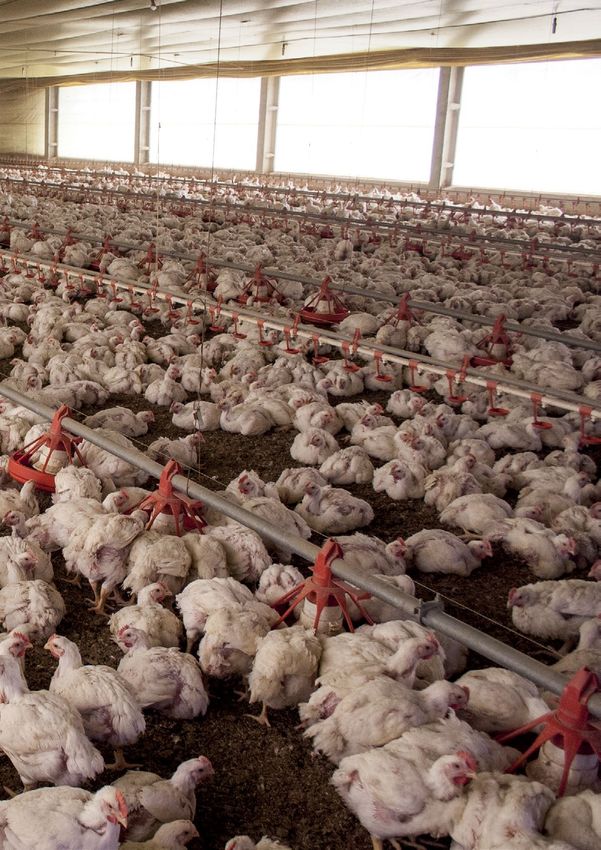
imports (partly because of the import restrictions imposed in two Southern States (Parana and Santa Catarina). The
by the EU for sanitary reasons). Brazil used to be the first majority of chickens are raised in open barns (with curtains)
source of salted chicken imported into the EU but has due to concerns related to heat. Outdoor systems (organic
now become the second behind Thailand. With this trend, ones) are an exception.50 According to a study carried out
and as all quotas available for chicken are usually fully in 2015 comparing 22 Belgian and Brazilian chicken farms,
used, it is likely that imports will increase with the newly all located in the South of Brazil and exporting to the EU,
allocated quota. EU producers believe the ratification of the welfare of broilers raised in Brazil was generally higher
the agreement will also lead Brazilian companies to export than in Belgium.51 This result was linked, among others, to
more quantities outside the quotas, allowing them to the more favourable climate allowing for apertures and
become price setters for the chicken filet on the EU market. natural light. However, recent reports underlined that
The costs of producing poultry meat in Brazil are roughly many Brazilian producers have started to replace this more
24% lower than in the EU, mainly due to lower cost in feed friendly model of production to raise chickens in closed
and labour. According to French producers, the increased barns, with air conditioning systems, in order to better
volume of chicken imports from Brazil could represent as control the temperature and the light.52 In Paraná, which
much as the French production.47 48 is the Brazilian state with the largest chicken production,
almost 30% of the farms have already converted to a “dark
Comparing broiler welfare standards implemented in Brazil house” system. By abandoning open barns, producers
with those applied in the EU is complex, given the size of argue the age of slaughter can be reduced from 42 to 40
the country and the differences between production days and the mortality rate falls from 4% in conventional
systems used in the various regions and states, ranging systems to 2% in “dark houses”. The reason behind such
from conventional to more technological warehouses. consequences is that birds become more apathetic and
On-farm welfare standards in the Brazilian chicken fight less to mostly eat and sleep, which is not positive from
sector are not regulated by legislation. ABPA,49 which an animal welfare perspective. This phenomenon in Brazil
represents the animal protein sector and producers in underlines the importance to enshrine good practices into
Brazil, only establishes general recommendations to legislation, to avoid any step backwards. In this case, it
follow basic welfare standards. However, according to local seems that previous systems were not favoured based on
animal welfare organisations, ABPA often prevents any animal welfare concerns, and therefore, animal welfare
improvement on welfare in the sector. For instance, animal was not considered in deciding whether to transition to
welfare specialists, both organisations and certificators, another model.
47
Interprofession de la volaille de chair (French Interbranch Organisation of Broiler Poultry”, A quarter of chicken filets consumed in EU come from
third countries: are additional imports quota really necessary?, Presentation behind the European Parliament Committee on Agriculture and Rural
Development, 18 November 2019.
48
HS code 02109939
49
Associação Brasileira de Proteína Animal.
50
Brazilian Normative Instruction 46/2011 establishes that chicken meat can only be considered organic if chickens had access to outside.
51
Tuyttens et al, Assessment of welfare of Brazilian and Belgian broiler flocks using the Welfare Quality protocol, Poultry Science, June 2015.
52
Jörg Hartung, Mateus Paranhos da Costa and Carmen Perez, O Bem-Estar Animal na Alemanha e no Brasil: Responsabilidade e Sensibilidade, 2019.
Eurogroup for Animals 19As the Brazilian industry is strongly integrated, the distance loose farrowing accommodation is gaining ground on the
between the farm and the slaughterhouse is reduced, but continent, it is still uncommon in most Member States.
the quality of the road may be poor.53 It is interesting,
however, to note that the study comparing the Belgian and In Brazil, MAPA and the NGO World Animal Protection
Brazilian poultry farms did not look in detail at transport currently cooperate to develop alternatives to gestation
and slaughter conditions. crates, and several key Brazilian pig meat companies have
made commitments to phase out their use. BRF, the leader
Finally, it is important to underline that “the occurrence in the sector in Brazil, has already eliminated 30% of its
of antibiotic-resistant bacteria and genes was extensively cages and has committed to being cage-free by 2026.58
reported in Brazil”,54 with the highest resistance found It has also started work to develop immunocastration
in poultry-related products55 (see below the section on and reduce teeth clipping. These voluntary moves are
antimicrobial resistance). motivated by the trade opportunities attached to higher
welfare products, as reflected by the recent commitments
announced by Carrefour Brazil in January 2020.59
Pig meat
The EU does not import large volumes of pig meat, but is Eggs and egg products
a major exporter. At the moment, one tariff-rate quota
covers several cuts of pig meat, imposing different duties At the moment, Mercosur countries are not very relevant
depending on the part. This quota is open to all WTO trade partners for shelled eggs. Only Brazil has been
partners and amounts to 35,265 tonnes. It is barely used exporting around 35 tonnes per year over the past five
by our partners. years, which represents 0.6% of the EU’s total egg imports.
However, imports of fresh eggs into the EU have increased
According to the agreement in principle, the EU has since 2014 (from 3,026 tonnes to 6,683 tonnes in 2018),
granted 25,000 tonnes to Mercosur countries at a lower so it will be important to monitor trends if the agreement
duty rate (83€ per tonne). Over the past five years, only with Mercosur is ratified.
Uruguay and Brazil have exported a few hundred tonnes of
pig meat to the EU. A report from Wageningen University For egg products, on the other hand, Argentina is a relevant
considered that it is likely these exports are small because partner. With a share of egg products imports oscillating
of the EU’s “stringent levy system”.56 Mercosur countries between 7% and 13% (369 tonnes in 2018), Argentina
still use ractopamine in the pig sector, a substance banned is the EU’s third source of egg products. Imports of egg
in the EU, but Brazil has a ractopamine-free export sector products into the EU started increasing again in 2013
that could benefit from the opportunities granted by the (3,279 tonnes to 5,065 tonnes in 2018).
EU-Mercosur agreement.57
In Mercosur countries, battery cage systems are not
Many Brazilian pig meat producers still use gestation prohibited, so most laying hens are kept in such conditions.
crates to keep females apart from their piglets. In the EU, In Argentina, approximately 90% of the industry relies on
the use of such crates is restricted: sows can be housed conventional battery cages,60 and in Brazil, 89% of eggs are
individually for at most the first four weeks of gestation, produced by hens kept this way.61 However, 120 important
and from one week before farrowing to the end of lactation. companies in Brazil and 20 in Argentina have announced
Farrowing and lactation occur in farrowing crates. Even if that they are planning to only sell cage-free eggs in these
53
Ibid.
54
Gabriela Reichert, Emerging contaminants and antibiotic resistance in the different environmental matrices of Latin America, 2019.
55
Dante Javier Bueno, Egg Production Systems and Salmonella in South America, 2017.
56
Wageningen UR - Livestock Research, Antibiotic use in Brazilian Broiler and Pig Production: an indication and forecast of trends, Report 714, March
2014.
57
https://www.reuters.com/article/us-china-swinefever-suppliers-insight/u-s-farmers-look-past-trade-fears-to-cash-in-on-chinas-hog-crisis-
idUSKCN1UI02I
58
Jörg Hartung, Mateus Paranhos da Costa and Carmen Perez, O Bem-Estar Animal na Alemanha e no Brasil: Responsabilidade e Sensibilidade, 2019.
59
Carrefour, Press release, Carrefour commits to selling pork produced to high animal welfare standards, 23 January 2020 - Carrefour Brazil
announced that all own-brand pork products will come from producers respecting the following commitments: by December 2022, 100% of
sows will transition to group housing, allowing a maximum of 28 days in cages; by December 2022, ear notching identification will be abolished;
surgical castration will be abolished by December 2025 and immunocastration will be adopted; the cutting or grinding of animals’ teeth will only
be carried out in extreme cases, when aggressive behavior among animals is identified.
60
Data from the International Egg Commission.
61
Jörg Hartung, Mateus Paranhos da Costa and Carmen Perez, O Bem-Estar Animal na Alemanha e no Brasil: Responsabilidade e Sensibilidade, 2019.
20 Trade Agreement | ANIMAL WELFARE IN THE EU-MERCOSURYou can also read


