Caring for soil is caring for life - Ensure 75% of soils are healthy by 2030 for healthy food, people, nature and climate - sieusoil
←
→
Page content transcription
If your browser does not render page correctly, please read the page content below
Caring for soil is caring
         for life
Ensure 75% of soils are healthy by 2030
  for healthy food, people, nature and
                 climate
Interim report of the Mission Board for Soil health and food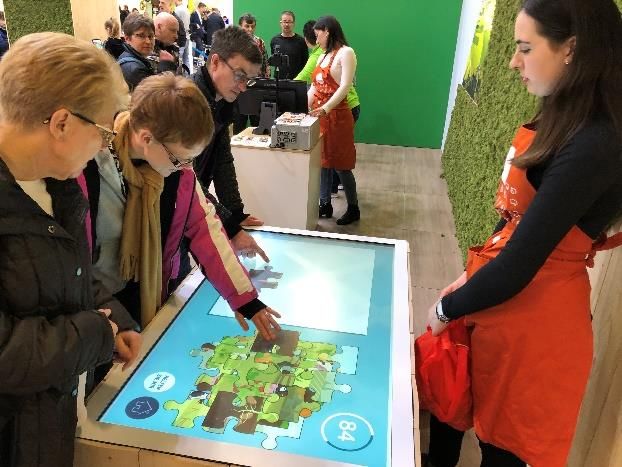
Caring for soil is caring for life – Ensure 75% of soils are healthy by 2030 for healthy
food, people, nature and climate

European Commission
Directorate-General for Research and Innovation
and
Directorate-General for Agriculture and Rural Development
Directorate B — Quality, Research & Innovation, Outreach
Unit B2 — Research and Innovation
Contact Annette Schneegans
Email AGRI-SOIL-MISSION-BOARD@ec.europa.eu
       RTD-PUBLICATIONS@ec.europa.eu
European Commission
B-1049 Brussels

Manuscript completed in May 2020.
First edition.

Authors – Mission board members: Cees Veerman (Chair), Teresa Pinto Correia (Vice-chair), Catia Bastioli,
Borbala Biro, Johan Bouma, Emil Cienciala, Bridget Emmett, Emile Antoine Frison, Alfred Grand, Lachezar
Hristov, Zita Kriaučiūnienė, Marta Pogrzeba, Jean-Francois Soussana, Carmen Vela, Reiner Wittkowski.

This document has been prepared for the European Commission, however it reflects the views only of the
authors, and the European Commission is not liable for any consequence stemming from the reuse of this
publication.

More information on the European Union is available on the internet (http://europa.eu).

Print      ISBN 978-92-76-19953-3                doi: 10.2777/4833                 KI-02-20-463-EN-C
PDF        ISBN 978-92-76-19954-0                doi: 10.2777/918775               KI-02-20-463-EN-N

Luxembourg: Publications Office of the European Union, 2020

© European Union, 2020

The reuse policy of European Commission documents is implemented based on Commission Decision
2011/833/EU of 12 December 2011 on the reuse of Commission documents (OJ L 330, 14.12.2011, p. 39).
Except otherwise noted, the reuse of this document is authorised under a Creative Commons Attribution 4.0
International (CC-BY 4.0) licence (https://creativecommons.org/licenses/by/4.0/). This means that reuse is
allowed provided appropriate credit is given and any changes are indicated.
For any use or reproduction of elements that are not owned by the European Union, permission may need to
be sought directly from the respective rightholders. The European Union does not own the copyright in
relation to the following elements:
Image credits:
Page 18: © Rowan Heuvel, Vineyard Estate Source: unsplash.com
Page 21: © Arianna Pasa, Salon de l’Agriculture 2020
Page 22: © Kerstin Rosenow, International Green Week, 2020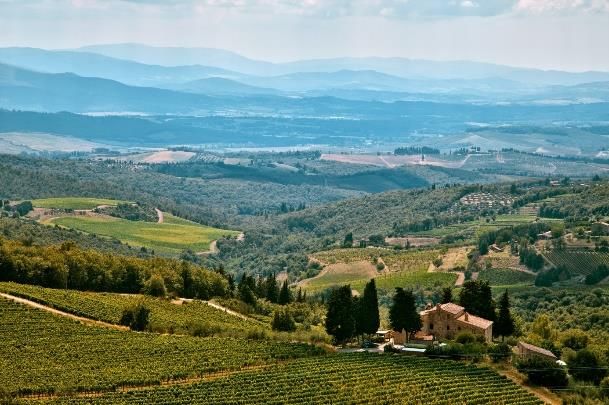
EUROPEAN COMMISSION

       Caring for soil is caring
               for life
  Ensure 75% of soils are healthy by 2030
    for healthy food, people, nature and
                   climate

                         Mission Board Soil health and food

This document is an interim report of the Mission Board’s progress towards the
definition of a Mission in the area of Soil health and food. The draft Mission outline
presented will be the basis for further discussion and consultation, including with
European citizens, resulting in adjustments and refinements for the Mission Board’s
final advice.

                  Directorate-General for Research and Innovation
2020           Directorate-General for Agriculture and Rural Development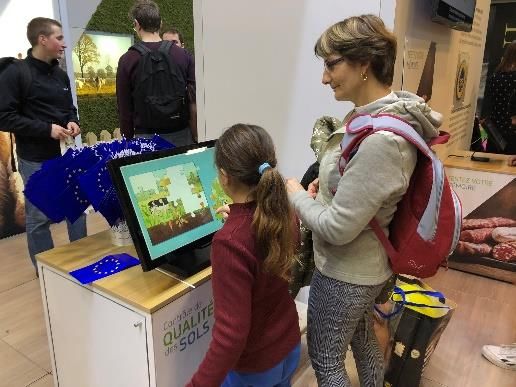
Table of Contents
CITIZEN SUMMARY ...................................................................................... 3
1 The mission explained .............................................................................. 5
    1.1     Our vision – what do we want to achieve?                                                        5
    1.2     Why do we need healthy soils? The need for a Mission                                            6
    1.3      A novel approach to soil health                                                                8
    1.4     Support to the Sustainable Development Goals and EU policies                                    11
2 The Mission Portfolio ................................................................................ 13
    2.1     Scope and building blocks of the mission                                                        13
    2.2     Co-creation of knowledge and innovation in living labs and lighthouses 14
    2.3     Research needs for soil health innovation                                                       15
    2.4     Monitoring soils and the impacts of measures for soil health                                    17
    2.5     A supportive environment for healthy soils and societal benefits                                17
    2.6     Timeline of activities                                                                          19
    2.7     Synergies with other missions and EU programmes                                                 20
3. Communication and citizen engagement..................................................... 21
References .................................................................................................. 23
ANNEXES .................................................................................................... 24
Annex 1         Status of soil health across Europe in 2020 ................................... 24
Annex 2         Indicators for soil health in support of the mission .......................... 33
Annex 3         Match of mission targets with Green Deal Objectives ...................... 35
Annex 4         Soil relevant targets matching the SDG Goals ................................ 38
Annex 5         The mission as a response to the corona pandemic......................... 40
Annex 6         A Manifesto for citizens ............................................................... 43
Annex 7         Activities for Communication and Citizen Engagement .................... 50

                                                            2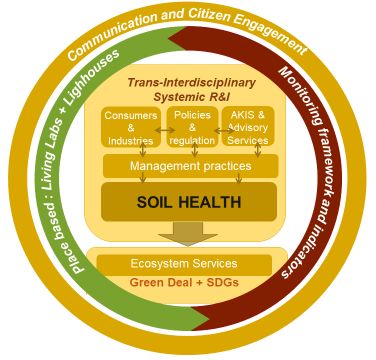
CITIZEN SUMMARY

Life on Earth depends on healthy soils. The soil under our feet is a living
system – home to many fascinating plants and animals, whose invisible
interactions ensure our well-being and that of the planet. Soils provide us with
nutritious food and other products as well as with clean water and flourishing
habitats for biodiversity. At the same time, soils can help slow the onset of
climate change and make us more resilient to extreme climate events such as
droughts and floods. Soils preserve our cultural heritage and are a key part of
the landscapes that we all cherish. Simply put, healthy living soils keep us,
and the world around us, alive.

However, we tend to take these benefits for granted and as a result have
neglected the health of our soils. The increasing demand for land for urban
development and infrastructures is consuming our most fertile soils. At the
same time, inappropriate or unsustainable use of soil and how we deal with our
waste is affecting soil health, which in turn, disrupts the capacity of soils to
carry out the vital services that they perform. Climate change is putting
further pressure on soil health.

Why do we need to act now? Soils are fragile and they can take thousands of
years to form but can be destroyed in hours! This means that we need to take
care of soils now so that they can be regenerated and safeguarded for future
generations.

Soil degradation is largely driven by how we live. Left unchecked, it will
aggravate many challenges facing the European Union. It is no surprise that
soil condition is at the heart of the new Green Deal for Europe and the
United Nations Sustainable Development Goals, both of which aim to
reduce biodiversity loss and pollution, reverse climate change while striving for
a healthy environment and sustainable land use. The Mission will also have a
major role in responding to risks from the coronavirus and other
emerging infectious diseases. Some of the microbes which live in the soil
are one of our most promising sources of new therapeutic drugs.

The mission “Caring for Soils is Caring for Life” will raise society’s awareness of
soils and put Europe on a path towards sustainable land and soil management.
The Mission will be a joint endeavour, bringing in people from all walks of life,
be they farmers, scientists, business communities, politicians or citizens
including the consumers, we all are.

Together, all of us will help to design and apply solutions to achieve the main
goal of the Mission which is: By 2030, at least 75% of all soils in each EU
Member State are healthy and are able to provide essential services
that we depend on. Mission activities will combine research and innovation,
training and advice as well as demonstration of good practices for soil
management using “Lighthouses” and “Living labs”. When combined with other

                                            3
supporting actions this will ensure widespread uptake of solutions. In addition,
the Mission will develop improved ways for monitoring the status of soils,
mobilise investments, encourage changes in policies and behaviour and ensure
we do not export our soil degradation problems to other countries
around the word.
Through actions that restore degraded land, empower land managers to
sustainably use the soil and create the conditions to reward soil health, the
Mission will have wide-reaching impacts on food, people, planet and
the climate.
While previous Missions brought us to the moon, Caring for Soils is a Mission
that will keep us safely on Earth with healthy soils!
41 The mission explained
1.1 Our vision – what do we want to achieve?
In the context of this mission, soil health has been defined by the Board as ”the
continued capacity of soils to provide ecological functions for all forms of life, in
line with the Sustainable Development Goals and the Green Deal”.
Life on Earth depends on healthy soils. Soil provides food, clean water and
habitats for biodiversity while contributing to climate resilience. It supports our
cultural heritage and landscapes. Although as citizens we pay very little
attention to soil, it is a fragile resource that needs to be carefully managed and
safeguarded for future generations.
The proposed Mission will shed light on this vital, almost unrecognised resource
and put Europe on a trajectory towards sustainable land and soil
management as part of a wider, green transition. It will be a joint endeavour
by stakeholders, researchers, policy-makers, industry and citizens to co-design,
co-create and implement solutions for the restoration and preservation of soils
all over Europe.
In terms of policy, the Mission will be a main tool for achieving the objectives of
the UN Sustainable Development Goals (SDGs) and the EU Green Deal. The
Green Deal sets ambitious targets of which the restoration and preservation of
healthy soils are key elements. These targets are crucial to ensure that life on
earth will still be possible in future years, set against global trends of population
growth, climate change, increasing demand for food or loss of biodiversity. The
Mission will also have a major role in the recovery of the European society from
the corona pandemic (Annex 5).
The mission’s main goal: By 2030, at least 75% of all soils in each
EU Member State are healthy, i.e. are able to provide essential
ecosystem services1.
This goal corresponds to a 100% increase in healthy soils against the current
baseline. It is based on an analysis of the state of soil health in Europe (Annex
1) which indicates that 60-70% of our soils are unhealthy as a direct result of
current management practices. A further poorly defined percentage of soils are
also unhealthy due to indirect effects of air pollution and climate change.
1 “By ecosystem services we mean the services provided and the benefits people
derive from these services, both at the ecosystem and at the landscape scale,
including public goods related to the wider ecosystem functioning and society well-
being” (Haines-Young and Potschin 2018; MA 2005).
5In line with the above goal, the following objectives will be achieved by
20302:
Land degradation including desertification in drylands is strongly
reduced and 50% of degraded land is restored moving beyond land
degradation neutrality.
High soil organic carbon stocks (e.g. in forests, permanent pastures,
wetlands) are conserved and current carbon concentration losses on
cultivated land (0.5% per year) are reversed to an increase by 0.1-0.4%
per year. The area of peatlands losing carbon is reduced by 30-50%.
No net soil sealing and an increased re-use of urban soils for urban
development from the current rate of 13%-50%, to help stop the loss of
productive land to urban development and meet the EU target of no net land
take by 2050.
Reduced soil pollution, with at least 25% area of EU farmland under
organic agriculture; a further 5-25% of land with reduced risk from
eutrophication, pesticides, anti-microbials and other contaminants,
and a doubling of the rate of restoration of polluted sites.
Prevention of erosion on 30-50% of land with unsustainable erosion rates.
Improved soil structure to improve habitat quality for soil biota and
crops including a 30 to 50% reduction in soils with high-density subsoils.
20-40% reduced global footprint of EU’s food and timber imports on land
degradation.
Through its actions, the mission will have a wide-reaching impact not only on
soil health but also on practices in agriculture, forestry and urban areas as well
as the functioning of food and bio-based value chains. Soil health will clearly be
the starting point for systemic transformations across the whole food chain from
primary production to food industries and consumer behaviour. Foremost, the
mission will result in society rethinking the ways in which it values and
cares about soil.
1.2 Why do we need healthy soils? The need for a Mission
Soils forms the skin of the earth and are essential for all life-sustaining
processes on our planet. Generating three millimetres of top soil takes
one century, so soils are a fragile, key non-renewable resource in our lifetime.
2
EU goal, objectives and targets are feasible. But they will require transformations
that may not be easy to trigger across all EU regions in the given timeframe.
6If soils are healthy and are managed sustainably, they provide essential
environmental, economic, and social benefits for people. Ecosystem services
provided by soils include amongst others:
producing adequate quantities of nutritious and safe food, feed, fibre and
other biomass for industries;
regulating and storing water and recharging aquifers, purifying
polluted water, and reducing the impact of droughts and floods thereby
helping adaptation to climate change;
capturing carbon from the atmosphere and reducing emission of
greenhouse gases from soils, thereby contributing to climate mitigation;
nutrient cycling supporting crop productivity and reducing contamination;
preserving and protecting biodiversity by preserving habitats both above
and within the soil;
supporting the quality of our landscapes and greening of our towns and
cities.
But soils are threatened all over Europe and globally, mostly as a result of
human activities. Land degradation is caused amongst others by unsustainable
management practices in agriculture and forestry, contamination from
industries and soil sealing through urbanisation and infrastructures. Food
choices, processes in the food chain and food waste are also affecting soil
health. The following examples from the EU reflect the gravity of the problem
(see Annex1):
2.8 million potential contaminated sites, but only 24% inventoried and
65,500 remediated;
21% of agricultural soils with cadmium concentrations above the limit for
drinking water; 83% of EU soils with residual pesticides; and 51% of land
with mercury deposition which put soil and ecosystem services at risk
65-75% of agricultural soils with nutrient inputs at levels risking
eutrophication of soils and water and affecting biodiversity;
2.4% soil sealed and only 13% urban development on recycled urban land;
Cropland soils losing carbon at a rate of 0.5% per year and 50% of
peatlands drained and losing carbon;
24% of land with unsustainable water erosion rates;
23% of land with high density subsoil indicating compaction;
25% of land at High or Very High risk to desertification in Southern,
Central and Eastern Europe in 2017 - and an increase of 11% in
desertification in just 10 years;
the costs associated with soil degradation in the EU exceed 50 billion
€ per yeari.
7The process of soil degradation can lead to a collapse of landscapes and
ecosystems, making societies more vulnerable to extreme weather events, risks
to food security and even political instability. Land degradation is further
exacerbated by the effects of climate change.
By 2050, 50 - 700 million people worldwide are likely to be forced to migrate
due to a combination of climate change and land degradation ii. Scenarios for the
EU indicate an increasing vulnerability of soils to desertification throughout this
century. Climate change may result in structural food shortages by 2050 as
many areas become too hot and dry to produce food while fertile soils along
rivers and seas may be flooded due to sea level rise. A loss of only 0.1 % of
carbon from degraded soils emitted into the atmosphere is equivalent to carbon
emissions of 100 million extra cars on the road. Healthy soils in contrast are
major carbon “storehouses” and essential for mitigating emissions from climate
greenhouse gases: more carbon resides in soil than in the atmosphere and all
plant life combinediii.
Soil health may be lost quickly but is slow to restore and the time for
action has already been delayed for too long. It is time to act. It is our
responsibility to ensure that future generations inherit clean,
productive and resilient soils.
The Mission will provide the guidance, the means and the critical mass to
direct research, innovation, investments and policies towards the common
goal of restoring soil health in the EU and beyond. It will be the powerful
tool needed to mobilise the whole society in a way that we cannot foresee will
happen otherwise.
1.3 A novel approach to soil health
The Mission’s approach is based on the recognition that:
It is people and their actions that need to change. Hence the need to focus
on communities (land managers, citizens, consumers, stakeholders,
researchers, policymakers, industrialists) to work together.
Soils can only be tackled within a systems’ approach, recognizing its
interfaces with land, water and air which form ecosystems and landscapes;
societal needs for food, fibre, nature, industries and the well-being of
people; and the fluxes and flows between rural and urban areas.
Soils are dynamic, living systems that deliver essential ecosystem
services across farming, forestry, urban and conservation sectors. These
services contribute to the SDGs and the Green Deal. They deliver benefits
from local to landscape, national and global scale.
The diversity of soils and their services needs to be valued and taken
into account in all actions at different scales. This diversity calls for tools and
8mechanisms that are adapted to the local context and allow for wider
societal involvement.
Soil health should be continuously monitored in a harmonised way and the
mission proposes a new short list of six key soil health indicators. Besides
the direct, local management, soil health is affected by processes at the
scale of landscapes. Therefore, the Mission proposes two complementary
indicators related to landscape heterogeneity as well as to forest area and
composition. Finally, it has identified an indicator to track our global
footprint to ensure that we do not export our soil problems (Annex 2).
The proposed Mission is ambitious, bold and urgent and will deliver major
environmental, economic and social impacts. It is relevant for the entire
EU territory in line with the ambition of “leaving no soil behind”! It proposes a
novel approach to solving problems of land degradation and addressing the
societal challenge of ensuring soil health. The EU has committed itself to
preserving soils including through international commitments. The Mission is
therefore timely and essential.
Activities and outcomes of the proposed Mission are measurable and time
bound. Specific land management practices have been defined and more
detailed ones will be developed, tailored to the different contexts and scales of
intervention. These practices need to be implemented now to achieve the
expected outcomes by 2030. Progress on success of the Mission will be
measured by indicators of land management and by soil health targets as
summarised below in Table 1 (see also Annex 3).
In developing the mission, the board has built on evidence from data
analysis and foresight. It has taken into account the views of citizens and
stakeholders, gathered at major events and through a survey with more
than 2.000 participants.
9Table 1: Targets and Indicators of the Mission Goal and Objectives
Mission Goal:
75% of all soils healthy by 2030 as indicated by no decline in any of
6 soil health indicators
according to benchmarks for healthy soils for each local context
Specific Targets and Indicators
Objectives Land Management Soil Health Targets Six Soil Health
Targets Indicators
Land 50% degraded land Strong reduction in All 6 soil health
degradation restored degradation and indicators
and desertification
desertification
Soil organic Conservation of high A switch from a 0.5 % Soil organic carbon
carbon carbon soils and a loss per year to a 0.1- stock
reverse of carbon loss 0.4% increase in SOC
in croplands. concen-tration in Vegetation cover
cropland soils
30-50% reduced area of
peatland losing carbon
Soil sealing Urban recycling of Switch from 2.4% to no Soil structure
and net land land from 13 to 50% net soil sealing including soil bulk
take density and absence
No net land take by of soil sealing and
2050 erosion
Vegetation cover
Soil pollution 25% of land under 5-25% additional land Presence of soil
organic farming (i.e. over and above the pollutants, excess
25% in full organic) with nutrients and salts
Doubling of rate of reduced risk from a
remediated sites range of pollutants
prioritising brown field
sites
Erosion 50% degraded land Prevention on 30-50% of Soil structure
restored land with unsustainable including soil bulk
erosion risk density and absence
of soil sealing and
erosion.
Vegetation cover
Soil structure 50% degraded land Reduction by 30-50% of Soil bulk density and
restored soil with compaction other measures of soil
structure
While not being a soil indicator in the strict sense, mission activities will be assessed against
their impact on the health of soils outside Europe
Global Strengthened 20-40% reduction of Food, feed and fibre
footprint international current global footprint imports leading to
cooperation; trade land degradation and
regulations, including deforestation
carbon tax
101.4 Support to the Sustainable Development Goals and EU policies
To be effective, many players, across sectors, and at various scales need to
take action on soil health, from local to European and even global levels. The
Mission will be a main tool to advance in the implementation and reach
the targets of the Sustainable Development Goals (SDGs). Critically, the
SDGs which require action on soil are: SDG2 (zero hunger); SDG 6 (clean water
and sanitisation); SDG 13 (climate action) and SDG 15 (life on land). Neither
soil nor soil health are mentioned in the targets and indicators of the SDGs,
except for SDG 15, target 33. The mission board has therefore developed soil
relevant targets matching the SDG goals (shown in Annex 4) to support
monitoring progress towards the SDGs in the EU.
At European level, the Mission will be key for implementing the Green Deal
and meeting its ambitions to increase the EU’s climate performance, achieve
zero-pollution, preserve and restore biodiversity, safeguard our forests
and promote a healthy and environmentally friendly food system (Annex
3). The recently adopted Farm to Fork and the Biodiversity strategies both
mention the mission and its “aim to develop solutions for restoring soil health
and functions”iv v.
The Mission will exploit existing tools and instruments and contribute to the
environmental objectives of the Common Agricultural Policy (CAP), the Water
Framework Directive, the Habitats Directive and the Circular Economy Action
Plan. Moreover, it will support global commitments to achieve land degradation
neutrality in the EU by 2030.
Finally, the Mission will be central to the EU’s post coronavirus recovery
package and investment plan amongst others through its potential to
finance major initiatives for soil decontamination, reducing soil sealing,
reusing organic waste and carbon farming.
The Mission will result in reducing risks from coronavirus and other emerging
infectious diseases and protect the potential of the soil biome to provide
therapeutic solutions to Covid-19 secondary infections. Soil degradation reduces
crop productivity and resilience to climate change, but is also likely to release
infectious organisms that become air-borne on eroded soils, or survive longer in
soils with reduced biodiversity (for more details see Annex 2).
Reaching 75% of healthy soils in the EU by 2030 will ensure that:
Soil borne infectious diseasesvi (Tetanus, Botulism, Polio virus, etc.) are better
controlled;
3 SDG Target 15.3: By 2030, combat desertification, restore degraded land and
soil, including land affected by desertification, drought and floods, and strive to
achieve a land degradation-neutral world.
11 The potential for the soil biome to provide future therapeutic solutions to
secondary infections from Covid including antibiotic resistance vii and other
biotechnological and medical applications is not lost due to unintended
degradation of soil biodiversity;
EU agriculture resilience to climate shocks is strengthened, leading to reduced
risks for food security and food sovereignty;
Dependency on critical imports of feed is reduced by fostering EU-grown plant
proteins on healthy soils, reducing deforestation and hence the risks of
infectious diseases emergence.
At a glance: The Mission’s support to strategic EU targets which
underpin the goal of Healthy Soils for Food, Nature, People and
Climate
Food: 25% of organic farms by 2030 (Farm to Fork; EU Nature
Restoration); Integrated Nutrient Plans (Biodiversity; Farm to Fork); neutral
or positive environmental impact of the food chain (Farm to Fork);
Recycling of organic wastes into renewable fertilisers (Farm to Fork);
People: Urban Greening Plans (EU Nature Restoration); 25% of organic
farms by 2030 (F2F; EU Nature Restoration);
Nature: Protection of land (Biodiversity); Increased circular use of
excavated soils (Biodiversity; EU Nature Restoration; Circular Economy,
updated Bioeconomy Strategy); Biodiversity friendly soil (Biodiversity);
10% high diversity Landscape features (EU Nature Restoration); Improved
protection and targeting for sensitive receptors (EU Nature Restoration;
Zero Pollution; Farm to Fork);
Climate: Certifying carbon removals (Farm to Fork); ensuring the food
chain has neutral or positive environmental impact (Farm to Fork).
122 The Mission Portfolio
2.1 Scope and building blocks of the mission
Through its portfolio, the Mission will provide the vision, the work plan, the
citizen engagement and the Research and Innovation (R&I) tools to re-
design production systems and transform the ways on which land and soils are
managed.
Figure 1: Soil Health drivers and impacts (centre of
the figure), and the Mission building blocks (in italics)
The Mission will deploy a range of activities and tools for knowledge sharing,
co-creation of knowledge and research and for scaling up innovation to
improve soil management; the so-called building blocks. Furthermore, it will
encourage changes to the various drivers of soil health to reverse the
trends that have led to soil degradation.
13These drivers include markets and consumer behaviour, policies, incentives and
regulation as well as education and advise. The involvement of stakeholders
and citizen engagement will be key in this process. Figure 1 summarises the
rationale of the mission.
The Mission’s building blocks are based on
1) an ambitious cross-scale, inter and transdisciplinary R&I programme;
2) co-creation and sharing in Living Laboratories and Lighthouses within
and across farms and forest, landscape and urban settings;
3) a robust soil monitoring programme by each MS equivalent to that for
other natural resources (air, water and biodiversity) using agreed
methodologies including selected indicators;
4) communication and citizen engagement embedded into all activities.
The policy framework, consumer attitudes, market mechanisms and
other incentives along with independent advisory services and
information platforms for land managers are fundamental drivers of land
use and soil management. The transition towards healthy soils requires that
these drivers are addressed as part of the necessary changes that will ensure
the success of the Mission activities.
For its implementation, the mission will tap into various sources of funding
at European, national, regional and local levels. An implementation and
investment plan will outline the combination of instruments needed to roll-out
the Mission including: research and innovation, infrastructures and other types
of investment as well as training, education, communication and citizen
engagement. The plan should combine public and private funding,
cooperation between sectors and also provide opportunities for international
cooperation. In carrying out the mission, care will be taken to ensure that all
activities, images and language in communications, are gender inclusive and
that any outreach activities consider a range of accessibility issues.
2.2 Co-creation of knowledge and innovation in living labs and lighthouses
This Mission aims to reverse the traditional linear vision of research and
development, by establishing a dense network of “living laboratories” and
“lighthouses” for various types of land uses (farms, forests, industrial areas
and urban settings).
Living Laboratories (or living labs) are spaces for co-innovation through
participatory, transdisciplinary and systemic research. They allow highly
committed landowners and land managers, stakeholders from various sectors,
public authorities and citizens, including consumers, to work together with
researchers from multiple disciplines to develop solutions and identify gaps in
14our knowledge. This includes the enhanced use of agroecological principles and
of organic agricultural practices that have shown evidence of notable effects on
soil health. The living labs will also undertake research on land managers’
motivations, socio-economic drivers, incentive mechanisms, business models
and enabling environments for successful transformation towards improved soil
health and improved ecosystem services.
Some of these living labs will be “lighthouses” i.e. places for demonstration of
solutions, training and communication. In the area of agriculture for instance,
lighthouses will showcase practices that are exemplary in terms of providing
sustainably produced, healthy food, feed or fibre as well as ecosystem services
linking rural and urban communities. They will bring together land managers,
advisors and citizens, the latter ones having an important role as consumers
and drivers of practices in agriculture and the food chain.
Depending on the regional situation, lighthouses and living labs will address
specific “needs” for soil health and build the necessary partnerships across
spatial scales and value chains.
Living labs and lighthouses will be grouped within regional clusters of 10-15
units (farms, forests, industrial areas and urban settings) which will allow co-
innovation at landscape and watershed levels viii. Networking between these
clusters will allow sharing and benefiting from experiences all over Europe.
The ambition is to establish in the first years of the Mission at least five,
preferably 10 living labs and/or lighthouses in each of the regions ix of
the EU. This will result in 1000 – 2000 living labs and lighthouses as
incubators and demonstrators of change.
2.3 Research needs for soil health innovation
The magnitude of soil health related problems and the urgency to resolve them
requires transformational changes in policy, management practices and a re-
design of production systems and land management. Research and
innovation must urgently address all these dimensions. Knowledge exists
within individual disciplines but there is hardly any integrated knowledge on soil
health combining insights from various disciplines and sectors. To maximise
impact, research will be tailored to local/regional circumstances and be linked to
living labs while also allowing for more fundamental work. This requires
interdisciplinary teams working in a transdisciplinary mode. The approach
needs to be systemic encompassing biophysical fluxes and their interactions, as
well as human and socio-economic drivers. Integration of natural and social
sciences at an equal level is crucial and a definitive novel step.
Research and innovation activities will take place at a variety of spatial
scales:
15 At the plot and field scale, some of the areas to be considered include: a
better understanding of soil biological and ecological processes that
contribute to soil health; an exploration of the potential of the soil biome for
crop production and carbon sequestration as well as biotechnological and
medical innovation; remediation of contaminated and other degraded soils,
by approaches including phyto-remediation and conversion of land to non-
food uses.
At the farm scale, there is a need to better assess how agroecological and
organic farming principles can be applied in a specific context to devise
climate and shock resilient systems. This requires a better understanding of
soil ecology, biology and of carbon, water and nutrients cycles. Similar
principles apply for forestry and other land uses. Other areas for R&I include
the development of the circular economy, the safe reuse of organic wastes,
integration of social components of the farming system, redesign of the
business models and exploitation of information and communication
technologies such as precision farming, artificial intelligence and remote
sensing.
At the landscape scale, integrated management principles must be devised
to adapt landscapes to climate change. This includes collaborative actions by
land managers to reverse land degradation and preserve water bodies while
increasing soil carbon and biodiversity. Context specific needs for systemic
innovation relating people’s diets, land use practices, landscape level
ecosystem services and soil health need to be addressed as well.
At the regional and country scales, priorities include: developments in
remote sensing and in big data approaches; foresights on soil health in the
EU addressing the impacts of climate change, the potential for mitigation, for
food production and ecosystem services. Action is also required on
independent advisory mechanisms tailored to the socio-ecological context in
each region so that these services can effectively support adaptive
management practices by land managers.
At a global scale, understanding and tracking robustly and consistently our
footprint on soils outside Europe (e.g. soil carbon, land degradation,
pollution, water use) and developing cooperation, regulations, capacity
building and investments to reduce it.
At the food system scale, understanding how to encourage consumers to
follow choices based on a concern for sustainability in production and
increase awareness about the links between soil health, the quality and
safety of food and human health. There is also a need to better define
critical thresholds of chemical pollutants in soils, e.g. from heavy metals,
pesticides, drugs and plastics, some of these compounds originating directly
from food, food packaging (e.g. micro plastics) or food waste.
162.4 Monitoring soils and the impacts of measures for soil health
The effectiveness of different forms of soil improvement can only be assessed
by monitoring land use systems at different spatial scales and over time, with
efficient indicators. Modern measuring and monitoring techniques, including
proximal and remote sensing, offer new opportunities to evaluate the effects of
management. Building on closer integration between existing pan-European
monitoring instruments (e.g. the LUCAS Soil Module) and Member State
national programmes, such data will help to populate performance indicators.
The Mission proposes to use six fundamental indicators: 1) Presence of soil
pollutants, excess nutrients and salts 2) Vegetation cover; 3) Soil organic
carbon; 4) Soil structure including soil bulk density and absence of soil sealing
and erosion; 5)Soil biodiversity; 6) Soil nutrients and acidity (pH) which we
have matched to individual issues. Vegetation cover and soil sealing are not
direct indicators of soil health but are included for their direct impact on soil
health in farmland, forestry and urban settings.
The Mission argues against a silo approach where only a single indicator is
tracked, as improvement in one indicator should not come at a cost of
another. Measurements are soil-specific showing characteristically different
ranges of values for different soil types. An unhealthy soil is present if any
indicator is below an agreed threshold defined for that soil type, land use
and climate zone. Two complementary indicators are proposed related to soil
health at the landscape scale, since landscape structure has a crucial effect on
biodiversity, water cycle and soil erosion: 7) landscape heterogeneity
(composition and configuration) and 8) area and composition of forest and
other wooded lands.
The new monitoring system will integrate citizen science and crowd
sourced data, multimedia and other data coming from lighthouses that
open-up the monitoring for the citizens. The means for this exist and can be
used already.
2.5 A supportive environment for healthy soils and societal benefits
Research, innovation and monitoring alone will not be enough to mainstream
improved soil management throughout Europe.
Public policies, incentives, investments, information, advice and society
at large, need to be mobilized to create an enabling environment for
the sustainable management of soils. All of us as consumers will have a
central role to drive for the change needed.
The following list shows main priorities for action which will be pursued as part
of the wider activities of the mission to act on drivers of soil health:
17(i) Policies and legislation to be harmonized to support regenerative, circular
bio-economy value chains;
(ii) CAP new payment schemes to reward effectively practices that
improve and restore soil health through more diverse, regenerative and
systems-based approaches in agriculture and forestry based on long-term
contracts;
(iii) De-risking and guarantee mechanisms for land managers and
businesses that engage in transformation towards increased soil health,
such as long-term loans guaranteed by a specific financial organisation.
(iv) Regulations and taxes that reward the purchase of goods produced in a
manner that improves soil health;
(v) A new Soils Directive to be developed to provide a regulatory framework
enabling changes as defined by mission roadmap and robust aligned soil
monitoring programmes by each MS;
(vi) Spatial planning to reduce and possibly reverse soil sealing by stopping
urban sprawl and the destruction of soils by transport infrastructures and
enhance mosaic landscapes;
(vii) Context specific Knowledge and Innovation Systems (AKIS), including
specific advisory services which links to individual land managers, to be
designed, tested and validated;
(viii) Online, easy to use, multiple language platforms to access and share
knowledge and experiences;
(ix) Changes across food systems, including at transformation, retail and
consumer level, to be fostered to provide the ‘market pull’ to drive the
changes needed;
(x) Public and private sector investments in R&D to foster sectoral
innovations for soil health monitoring and improvement, including
regional innovations led by cities and regions for couples transformation
of soil health and food systems, or waste management systems.
182.6 Timeline of activities
Activity Year ‘21 ‘22 ‘23 ‘24 ‘25 ‘26 ‘27 ‘28 ‘29 ‘30
CO-DESIGN PHASE
1. Identifying and mapping in each EU region: (1) “soil
needs”, objectives and priorities for action; (2)
structures for implementing mission activities, (3)
funding & other mechanisms for setting up living labs
(LLs) and lighthouses (LHs)
2. Building communities at different spatial scales and
levels
CO-IMPLEMENTATION PHASE
Setting up and running regional LLs and LHs across
regions in Europe; building clusters and networks
Carry out R&I activities to support objectives of the
mission
Training and access to independent, advisory services
for all land managers
MONITORING AND CO-ASSESSMENT
Support development of monitoring systems in Member
States according to agreed, validated protocols and
identified benchmarks
Mid-term evaluation of activities
Monitor mission activities and outcomes for improved
soil health
CROSS-CUTTING, ENABLING ACTIONS
Communication and citizen engagement
Science-policy dialogue and other activities to address
drivers of soil health: e.g. policies, soil legislation,
regulation and taxes for food, global foot-printing tools
Support to (Agricultural) Knowledge and Innovation
Systems
Data (e.g. freely available data products), information
and support to an EU Soil Observatory
192.7 Synergies with other missions and EU programmes
Soils play a central role in addressing major challenges on climate change,
biodiversity, food production, food safety or water management.
This was recognised by the President of the European Commission, Ursula von
der Leyen, when outlining her vision for a greener Europe: “Climate change,
biodiversity, food security, deforestation and land degradation go
together”.
The Soil Health Mission will have important spillovers on other missions and
contribute to
Healthy Oceans, Seas, coastal and inland waters: by reducing pollution from
fertilisers, pesticides and other contaminants;
Climate Adaptation and Societal Transformation: by enhancing carbon and
biodiverse rich soils as the basis for climate resilient agriculture and rural
landscapes or by raising citizens and land managers awareness to the need
for a transformative change in land use practices;
Climate Neutral and Smart Cities: by reducing and progressively stopping
soil sealing and enhancing soil health of city soils, contributing to the
greening of European towns and cities and a better urban environment;
Cancer: by promoting safe (non-polluted) food and healthy diets as an
important element of cancer prevention.
The Mission will equally benefit from activities carried out by the other missions,
e.g. in the context of regional and urban activities for climate adaptation.
Cooperation between the five missions is therefore required.
As part of the mission’s plan for implementation, synergies will be established
with a number of EU programmes and EU infrastructures including:
EU Horizon Europe partnerships on (1) agro-ecology and (2) food systems;
Horizon Europe activities under Cluster 6 and other parts of the Horizon
Europe programme under Pillars I and III;
EU infrastructures;
H2020 projects : European Joint Programme EJP Soilsx and CIRCASAxi;
EIT Climate Knowledge and Innovation Communityxii and EIT Foodxiii
JRC activities, e.g. in the context of the EU Soil Observatory as a repository
of mission outcomes and of LUCAS soilxiv;
European Space Agency (ESA) for Society - Thematic Exploitation Platforms
on Food Security, Forestry, Coastal, Urbanxv;
Copernicus programme (Land Monitoring, Climate Change and Emergency
Management Services);
20 Pro Silva– Integrated forest management for resilience and sustainability xvi.
By connecting activities and seeking for synergies between various
programmes, initiatives and infrastructures, the Mission will enhance the
sharing of knowledge and innovations, speed up the widespread uptake
of solutions and increase impact of actions on soil health.
3. Communication and citizen engagement
Communication and citizen engagement
are key elements of the mission and
crucial for its success. People at large
are not fully aware of the manifold
functions of soils and the relevance of
these functions for humankind. Yet, the
success of the Mission and the
sustainable management of soils will
depend on actions taken not only by land
managers but also by consumers,
industries, spatial planners and society
at large. In developing the Mission, the Board has built on feedback of
stakeholders and citizens at numerous events and through a survey which
received more than 2.000 replies. In responses, people considered the climate
services provided by soils as particularly important.
Communication activities throughout the Mission will bring soils closer to the
attention of citizens and stakeholders while engagement activities will allow
citizens to be a main player in the mission process. Living labs and lighthouses
will be main vehicles for citizen engagement, bringing together researchers,
practitioners, communities and other stakeholders to develop together solutions
with a tangible impact.
They will also contribute within each Member State to the provision of a soil
information hub of the ‘best of’ resources including: soil health data; video and
education tools; family based activities to engage with soil; information to
source accredited approaches for Continuous Professional Development (CPD)
for land managers; information on locations and activities of Living Lighthouse
and Living Laboratories within the MS and across the EU.
The Mission Board has developed a draft communication and citizen
engagement strategy. It is a living document that will be constantly updated
according to mission progress and specific needs arising (see Annex 7).
21For its outreach activities, the Mission will
make use of a rich landscape of regional,
national and European networks working
in the Mission area.
It will team up with citizen science
initiatives and existing structures of living
labs. The European Innovation
Partnership EIP AGRI will be a main tool
to reach out to the agricultural and
forestry sector. The Mission will feed into
the EU Soil Observatory and reach out to international partners, e.g. through
the Global Soil Partnership and its Healthy Soils Facility.
22References
i The Implementation of the Soil Thematic Strategy and Ongoing Activities
(EC, 2012): Costs are estimated at €38 billion annually for 25 EU
countries but this figure did not include costs from biodiversity decline,
sealing or compaction.
ii
IPBES (2018): The assessment report on land degradation and restoration
iii
Schwartz J.D., Soil as Carbon Storehouse: New Weapon in Climate Fight?,
in Yale Environment 360,
https://e360.yale.edu/features/soil_as_carbon_storehouse_new_weapon_
in_climate_fight
iv
EU Biodiversity Strategy for 2030 - Bringing nature back into our lives;
Communication from the Commission to the European Parliament, the
Council, the European Economic and Social Committee and Committee of
the Regions; COM(2020) 380 final
v
A Farm to Fork Strategy for a fair, healthy and environmentally-friendly
food system; Communication from the Commission to the European
Parliament, the Council, the European Economic and Social Committee
and Committee of the Regions; COM(2020) 381 final
vi
Jeffery and van der Putten (2011). Soil borne human diseases. JRC.
doi:10.2788/37199
vii
Zhu et al. (2019). Soil biota, antimicrobial resistance and planetary
health. Doi: 10:1
viii
https://www.macs-
g20.org/fileadmin/macs/Annual_Meetings/2019_Japan/ALL_Executive_Re
port.pdf 016/j.envint2019.105059
ix
Regions are defined according to the NUTS 2 classification: https://eur-
lex.europa.eu/legal-content/EN/TXT/PDF/?uri=CELEX:02003R1059-
20191113&from=EN
x
EJP Soils: (https://projects.au.dk/ejpsoil/about-ejp-soil/)
xi
CIRCASA: https://www.circasa-project.eu/
xii
KIC CLIMATE: (https://www.climate-kic.org/)
xiii
EIT FOOD: https://www.eitfood.eu/
xiv
ESDAC - https://esdac.jrc.ec.europa.eu/
xv
European Space Agency (ESA): (https://eo4society.esa.int/thematic-
exploitation-platforms-overview/)
xvi
ProSilva: www.prosilva.org
23ANNEXES
Annex 1 Status of soil health across Europe in 2020
This document represents an informal review by the Soil Health and Food
Mission Board (MB) and the European Commission’s Joint Research Centre
(JRC) to help define the main goal of the mission: namely, that 75% of the
soils of the European Union (EU) should be healthy by 2030. The review
concludes:
A review of the current evidence of the state of EU soils by the MB and JRC is
that current management practices result in, approximately, 60-70% of EU soils
being unhealthy, with a further, as yet, uncertain percentage of soils unhealthy
due to poorly quantified pollution issues. A 75% goal of healthy soil by 2030
through a radical change in current land management practices is both feasible
and necessary. Soils will also benefit from improvement to indirect drivers of
change such as reductions in air pollution and carbon emissions.
The following sections provides the evidence base for this statement.
Some basic assumptions:
EU Land area: 4,233,255 km2
Agricultural area of EU is 42% of land area: 1,760,000 km2
Croplands occupies 23% of the EU: 1,060,000 km2
Artificial areas occupy 5% of the EU: 222,592 km2
‘Natural’ soils (i.e. without intensive management regimes): 52% of the EU
1. Nutrients
The Gross Nutrient Balance Indicator (EUROSTAT 2020) shows that there is
currently an excess of fertilizer applications in the EU: data show that for
agricultural land there is a surplus of 50 kg N/ha and 2 kg P/ha.
The European Commission (EC 2018) reports that Nitrates Vulnerable Zones
(NVZ) cover 2,175,861 km2 of the EU (latest figures for 2015 and includes MS
that apply a whole-territory approach). NVZ represent approximately 61% of
agricultural land. This means that there are obligations to reach a balanced
fertilisation for 61% of agricultural soils (arable and grasslands).
SOER 2020 (EEA) reports that for 65-75% of agricultural soils, nitrogen values
exceed critical values beyond which eutrophication can be expected (De Vries et
al., in prep).
There are also issues from atmospheric deposition of nutrient nitrogen in non-
agricultural systems. CIAM/IIASA (2018) reported that critical loads for
24eutrophication were determined for 2.65 million km2 (62%) of European land in
2017. (See also Section 6 on Contamination).
Therefore, area of land with failure of soil health indicator due to direct
inputs nutrient issues in agricultural systems (excluding air pollution
issues) = 27% – 31.5%
2. Organic carbon
LUCAS Soil data show that cultivated and permanent crops have the lowest SOC
levels of all major land cover classes (around 17 g/kg C). By comparison,
average levels for permanent grasslands in the EU are 2.4 times higher
(Hiederer 2018).
Most croplands in EU are most likely to be already at sub-optimal levels – 1.5%
of all land use have SOC levels below 1% C. This rises to 2.6% of arable soils
(JRC LUCAS). This would account for approx. 0.6% of land outside of
agriculture.
LUCAS soil organic carbon concentration change analysis (2009-2015) for
points where land cover was the same in both dates, show a decrease of about
0.5 % per year on croplands which was statistically significant on the most
carbon poor soils (Hiederer 2018). Subsequent estimates of overall SOC stock
changes (all soils) indicate that the total SOC change between LUCAS 2009/12
and 2015 show that about 60 % of EU agricultural areas experienced changes
below 0.2% of the average stock. The trend in in carbon stocks in grassland
was loss of about 0.04 % and in arable land a loss of about 0.06% (Panagos et
al 2020). 10% of the area is predicted to have changes larger than ± 12 g kg –1
over the 6 year interval
Area of land with failure of soil health indicator due to low and
declining carbon stocks = 23% (BUT there will be overlap with (1)).
0.6% falls outside of agricultural areas.
3. Peat
Byrne et al. (2004) reported an area of 340,000 km2 of peat soils in the EU
Member States and Candidate Countries (Tanneberger et al.2017, has updated
figures on extent per country). On this basis, peats cover 8% of EU land area,
of which 50% of peatlands are estimated to be drained which will result in the
oxidising of the peat and loss carbon to the atmosphere (JRC 2016). Results
from hydrological reconstructions indicated 60% of peatlands are drier than
they were 1000 years ago due to these direct human impacts and climatic
drying (Swindleset al. 2019).
Not all peat being degraded is under agriculture. Schils et al., 2008 estimates
about 20,000 km2 of drained peat (ca. 6% of peatland) is not in agricultural
use as cropland or grassland (0.5% of EU).
25Area of land failing soil health indicator due to peatland degradation =
4.8% under (1) or (2) but 0.5% is outside agricultural areas.
4. Water Erosion
Pangos et al. (2015) reports that 24% of land has unsustainable soil water
erosion rates (>2. t /ha). Mean soil erosion by water for EU is 2.46 t ha-1 yr-1,
resulting in a total annual soil loss of 970 Mt. This covers a wide range of land
use types with around 70% of the land in agricultural systems. This means that
area not overlapping with (1) and (2) could be estimated as 17% (47% of 24%
eroding land).
However, a new report by JRC (Panagos et al. 2020) shows erosion by water on
arable land is 10% greater than the mean for the EU (this means that we can
consider all 23% of cropland as affected). Permanent crops have highest soil
erosion rates. Arable and permanent crops cover 30% of EU land.
In addition, there are notable erosion rates on shrubland and sparse vegetation
with mean soil loss rate of 2.69 t ha–1 yr–1 and 40 t ha–1 yr–1, respectively.
Together, these land cover types occupy 30.8% of the EU (not under
agriculture).
A JRC erosion model (Borelli et al. 2017) shows wind erosion in EU is
0.53 Mg ha−1 y−1. 9·7% of arable land has problems with wind erosion, with
5·3% and 4·4% displaying moderate and high rates of wind erosion,
respectively. However, these will fall in the above estimates of agricultural land.
Area of land failing soil health indicator due to soil erosion = 23%
cropland and 30% non-agricultural areas.
5. Compaction
There are very uncertain numbers for compaction. Based on partial data
coverage for the EU (modelling of representative soil profiles), the best
available estimates suggests that 23% of land assessed had critically high
densities (JRC 2016). JRC 2009 estimated that 33% of soils are susceptible to
compaction, of which 20% moderately so. The issue is more likely in
agricultural soils but it is also found in organic-rich forest soils so some overlap
with (1) and (2). Confirms the multiple pressures on soil.
Area of land failing soil health indicator due to soil compaction = 23-
33%, 7% of which are outside agricultural area.
6. Pollution
There are many unknowns especially in relation to diffuse soil pollution in
natural landscapes (i.e. 52% of EU) and there are more than 700 recognised
soil pollutants (NORMAN, 2014).
In terms of local soil pollution, JRC (Paya Perezet al. 2018) reported 2.8 million
potentially contaminated sites in EEA-39 but the area of land is not known.
26There is no standardised agreement on a definition of contaminated sites which
can range from petrochemical plants to petrol stations. An indicator on
“Progress on the remediation of contaminated sites” is based on risk
assessment approach where efforts are mainly focused on investigation of sites
where polluting activities took/are taking place. The report noted the
occurrence of 650,000 registered sites where polluting activities took/are taking
place in national and regional inventories. 65,500 sites have been remediated.
The Cocoom InterReg Project estimated that there are more than 500,000
landfills in EU. 90% are in regarded as non-sanitary landfills (i.e. predating the
Landfill Directive (1999)). NASA estimates that the average size of landfills in
US is 200 ha. Even if we take just 10% of that value for EU, it would mean that
landfills occupy 100,000 km2 (2.3%) of EU territory (no actual figures exist).
The situation is more complex for diffuse pollution. Numerous studies show the
impact of pollution on soil but it is difficult to assess area or extent. For
example, there are no data on the extent of pesticide contamination, POPs,
microplastics, veterinary products/pharmaceutical, emerging concerns such as
pFAS. Pimentel & Levitan (1986) reported that 3,000 types of pesticides have
been applied in EU agricultural environment during the past 50 years. They
estimated that less than 0.1% of the pesticide applied to crops actually reaches
the target pest. Of LUCAS soils tested, 83% of soils contained one or more
residue of pesticides and 58% contained mixtures. (Silva et al. 2019).
De Vries et al. (In prep) and cited in EEA (2020) state 21% of agricultural soils
have cadmium concentrations in the topsoils which exceed groundwater limits
used for drinking waters.
There are 2.93 million km2 (69%) of European land where critical loads are
exceeded for acidification and 2.65 million km2 (62%) of semi-natural
ecosystems are subjected to nutrient nitrogen deposition leading to
eutrophication in 2017 (CIAM IIASA 2018). Critical loads are defined where
inputs of a pollutant may impact on ecosystem structure and function. Slootweg
et al. (2007) reported that the EU ecosystem land at risk from deposition of
some heavy metals such as mercury and lead in 2000 were as high as 51% and
29% respectively.
Lema & Martinez (2017) report 10 million tons of sewage sludge production for
EU-27, 37% of the sludge produced in the EU is being utilized in agriculture.
Plastics Europe (2016) reported that 3.3% of total EU plastic demand (49
million tonnes) was used in agriculture. Agriculture produced 5% of plastic
waste of EU (EC, 2018).
Organic farming covered 13.4 million hectares of agricultural land in the EU-28
in 2018. This corresponds to 7.5 % of the total utilised agricultural area of the
EU-28 (EUROSTAT 2020b). We can assume that pesticides are applied in most
27You can also read


