Central American dry corridor: An exploration of the potential of a job creation strategy for Guatemala and Honduras - ILO
←
→
Page content transcription
If your browser does not render page correctly, please read the page content below
STRENGTHEN Publication Series
Working Paper No. 23 – 2020

Central American dry corridor:
An exploration of the potential
of a job creation strategy for
Guatemala and Honduras

Federico Fraga

                                                Development
                                                and Investment
                                                Branch
         This document has been produced        Employment
         by the International Labour Office
         with the financial assistance of the   Policy
         European Union.                        Department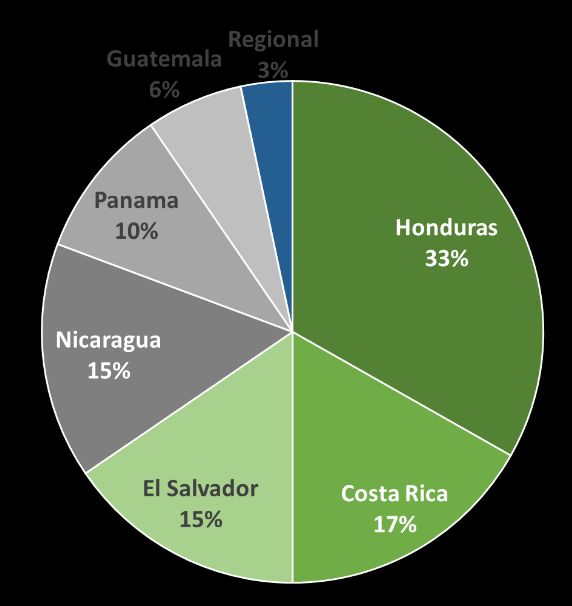
Copyright © International Labour Organization 2020

Publications of the International Labour Office enjoy copyright under Protocol 2 of the Universal Copyright Convention. Nevertheless, short
excerpts from them may be reproduced without authorization, on condition that the source is indicated. For rights of reproduction or translation,
application should be made to the Publications Bureau (Rights and Permissions), International Labour Office, CH-1211 Geneva 22,
Switzerland. The International Labour Office welcomes such applications.
Libraries, institutions and other users registered in the United Kingdom with the Copyright Licensing Agency, 90 Tottenham Court Road,
London W1T 4LP [Fax: (+44) (0)20 7631 5500; email: cla@cla.co.uk], in the United States with the Copyright Clearance Center, 222
Rosewood Drive, Danvers, MA 01923 [Fax: (+1) (978) 750 4470; email: info@copyright.com] or in other countries with associated
Reproduction Rights Organizations, may make photocopies in accordance with the licences issued to them for this purpose.

ISSN 1999-2939; 1999-2947 (web .pdf)

First published 2020

The designations employed in ILO publications, which are in conformity with United Nations practice, and the presentation of material therein
do not imply the expression of any opinion whatsoever on the part of the International Labour Office concerning the legal status of any country,
area or territory or of its authorities, or concerning the delimitation of its frontiers.
The responsibility for opinions expressed in signed articles, studies and other contributions rests solely with their authors, and publication does
not constitute an endorsement by the International Labour Office of the opinions expressed in them.
Reference to names of firms and commercial products and processes does not imply their endorsement by the International Labour Office, and
any failure to mention a particular firm, commercial product or process is not a sign of disapproval.

ILO publications can be obtained through major booksellers or ILO local offices in many countries, or direct from ILO Publications,
International Labour Office, CH-1211 Geneva 22, Switzerland. Catalogues or lists of new publications are available free of charge from the
above address, or by email: pubvente@ilo.org
Visit our website: www.ilo.org/publns

Printed by the International Labour Office, Geneva, Switzerland
Content
Executive Summary .......................................................................................................................iv
Acronyms and abbreviations.........................................................................................................vi
Introduction .................................................................................................................................. 1
1.     Context: Central American Dry Corridor, climate change and vulnerability......................... 2
2.     Response actions in the region: Identification of initiatives and relevant actors ................. 6
     1.1.      Climate finance.............................................................................................................. 7
     1.2.      Initiatives and relevant actors ....................................................................................... 8
3.     Country analysis .................................................................................................................. 19
     1.3.      Guatemala ................................................................................................................... 19
       1.3.1.         Context ................................................................................................................ 19
       1.3.2.         The Guatemala Dry Corridor (GDC) ..................................................................... 20
       1.3.3.         Development, decent work and climate change: institutional response ........... 21
     1.4.      Honduras ..................................................................................................................... 28
       1.4.1.         Context ................................................................................................................ 28
       1.4.2.         Honduras Dry Corridor (HDC) .............................................................................. 29
       1.4.3.         Development, decent work and climate change: institutional response ........... 30
4. Reflections on the potential of an job creation strategy in the context of the Dry Corridor
of Guatemala and Honduras ....................................................................................................... 36
References................................................................................................................................... 41

                                                                      iii
Executive Summary
This document aims to explore the context, reasons and effects on
livelihoods of policies and programs to improve or adapt to the impacts of climate
change in the Central American Dry Corridor (CDC), with a focus on Guatemala
and Honduras. In particular, it explores the situation of environmental and
socioeconomic vulnerability in the region and the institutional responses to face the
growing challenges, both in terms of international cooperation and government
actions and plans. Based on all this, a series of considerations are made of the
potential of an job creation approach in the region, as a strategy to generate decent
work together with adaptation to climate change through public investment programs
in green infrastructure.
Central America is one of the regions in the world with the greatest exposure
to natural disaster risks and climate variability, and this problem is increasingly
evident in the CDC. Recurring periods of drought combined with excessive rainfall
and severe floods are severely affecting rural livelihoods. Food
insecurity, insufficient income, decrease in local food production, lack
of employment and forced migration are some of the negative consequences for the
rural population, which is already vulnerable due to its precarious socioeconomic
conditions, disproportionately affecting women, indigenous peoples, boys and girls,
among others.
This situation has captured the attention of the international community, and in
recent years, actions have been implemented that are aligned with the adaptation
priorities of governments. In general, they are oriented in the necessary
direction; promote resilience and rural development seeking to strengthen local
capacities, adopt practices for the productive and sustainable management of
resources and, ultimately, improve the situation of the main economic actors in the
region: families producing basic grains.
In any case, there are two obvious factors. On the one hand, much work remains
to be done; the region requires greater technical and financial support and meets all
the conditions to be one of the priorities in the channeling of international climate
financing. On the other, the complexity and multiplicity of its socio-economic and
environmental challenges will continue to demand the design and implementation of
strategies that can address them simultaneously and in a complementary manner.
Both Guatemala and Honduras have developed numerous strategies and
actions, framed in various national plans and policies, to face these challenges. This
includes medium and long-term development planning, as well as specific plans for
the labour market and adaptation to climate change. In both cases, the need to
promote actions linked to environmental management and natural resources that
promote soil conservation and integrated water management for various purposes
(human consumption, sanitation, irrigation, catchment and drainage) is
highlighted. All this, within the framework of a national employment policy that
promotes the transition towards decent employment, especially in rural areas, the
diversification of income and the identification of agro value chains, putting local
and ancestral knowledge at the center and the needs of the most vulnerable
population groups.
In this context, the consideration of an job creation strategy becomes timely,
and could be perfectly aligned with government plans. This could have a series of
impacts on local livelihoods that include the creation of employment in the short
term and the assurance of livelihoods and the contribution towards the diversification
of income in the medium and long term. But in addition, a series of spill overs could
ivbe generated, anchored in the ILO´s mandate and the basic principles of the EIIP
approach. Among them is the support in the transition towards a formalization of
employment, a clear priority for both governments for the next decade. This, in a
context of promotion of fundamental values also prioritized by governments,
including gender equality, special attention to vulnerable groups, the promotion and
strengthening of local capacities and knowledge and the use of a participatory
approach that puts communities at the centre.
vAcronyms and abbreviations
ACC - Adaptation to climate change
ACS - Alliance for the Dry Corridor (Honduras)
BCIE - Central American Bank for Economic Integration
CAC - Central American Agricultural Council
CCAD - Central American Commission for Environment and Development
CDC- Central American Dry Corridor
CDKN - Climate and Development Knowledge Network
CEPREDENAC - Coordination Centre for the Prevention of Natural Disasters in
Central America
CES - Economic and Social Council (Honduras)
CFU - Climate Funds Update
CGIAR - Consultative Group on International Agricultural Research
CNCC - National Council on Climate Change (Guatemala)
CONADUR - National Council for Urban and Rural Development (Guatemala)
CONRED - National Coordinator for Disaster Reduction (Guatemala)
CRRH - Regional Committee of Hydraulic Resources
DRR - Disaster Risk Reduction
ECLAC - Economic Commission for Latin America and the Caribbean
EIIP - Employment Intensive Investment Program
ENACCSA - National Strategy for Adaptation to Climate Change in the Agro-Food
Sector (Honduras)
ENCC - National Strategy for Climate Change (Honduras)
ENSAN - National Strategy on Food Security and Nutrition (Honduras)
ERCC - Regional Strategy on Climate Change (Central America)
EU - European Union
FAO - Food and Agriculture Organization of the United Nations
GDC – Guatemala Dry Corridor
GDP - Gross Domestic Product
GEF - Global Environment Facility
GIZ - German Corporation for International Cooperation
GPDD - Global Partnership for Disability and Development
HDC – Honduras Dry Corridor
IADB - Inter-American Development Bank
ICEFI - Central American Institute of Fiscal Studies
IFAD - International Fund for Agricultural Development
IICA - Inter-American Institute for Cooperation on Agriculture
viILO - International Labour Organization
INE Guatemala - National Statistics Institute (Guatemala)
INE Honduras – National Statistics Institute (Honduras)
INVEST-H - Office of Strategic Investment of Honduras
IUCN - International Union for Conservation of Nature
IWGIA - International Working Group for Indigenous Affairs
KfW - German Development Bank
KOICA - Korea International Cooperation Agency
LMCC - Framework Law for Regulating Vulnerability Reduction, Compulsory
Adaptation to the Effects of Climate Change and Mitigation of Greenhouse Gases
(Guatemala)
MAC - Framework for Joint Action (Honduras)
MAGA - Ministry of Agriculture, Livestock and Food (Guatemala)
MARN - Ministry of Environment and Natural Resources (Guatemala)
MERGERCA - Regional Strategic Framework for the Management of Climatic Risks in
the Agricultural Sector of the Central American Dry Corridor
MINTRAB - Ministry of Labour and Social Security (Guatemala)
MSME - Micro, Small and Medium Enterprises
NbS - Nature-Based Solutions
OHCHR - Office of the High Commissioner for Human Rights
OPEC - Organization of the Petroleum Exporting Countries
PAHO - Pan American Health Organization
PANCC - National Action Plan on Climate Change (Guatemala)
PAN-LCD - National Action Plan to Combat Desertification (Honduras)
PNA - National Adaptation Plan (Honduras)
PNCC - National Climate Change Policy (Guatemala)
PNED - National Employment Policy (Guatemala)
PNEH - National Employment Policy (Honduras)
PRISMA - Salvadoran Research Program on Development and the Environment
REDD - Program for the Reduction of Emissions caused by Deforestation and Forest
Degradation
SAG - Secretariat of Agriculture and Livestock (Honduras)
SEGEPLAN - Planning and Programming Secretariat of the Presidency (Guatemala)
SERNA - Natural Resources and Environment Secretariat (Honduras)
SESAN - Food and Nutrition Security Secretariat (Guatemala)
SICA - Central American Integration System
STSS - Ministry of Labour and Social Security (Honduras)
UN - Organization of the United Nations
UNCCD - United Nations Convention to Combat Desertification
viiUNDP - United Nations Development Program
UNEP - United Nations Environment Program
UNFCCC - United Nations Framework Convention on Climate Change
UNICEF - United Nations Children's Fund
UNOCHA - United Nations Office for the Coordination of Humanitarian Affairs
USA - United States of America
USAID - United States Agency for International Development
WB - World Bank
WFP - World Food Program
viiiIntroduction
In Central America, climate change and environmental degradation have
increased the vulnerability of families living in the Central American Dry
Corridor (CDC), leading to food and nutrition insecurity and the deterioration of
livelihoods. These families live in areas with limited infrastructure and services, and
have almost no resources to deal with environmental risks. As a result, their
livelihoods and employment options are being undermined, particularly in the
agricultural sector.
The joint EU-ILO Strengthen projects support Guatemala and Honduras in
understanding the employment impacts of different sectoral policies and
programs. One of the focus areas of the project in the rural sector was natural
resources management. This was identified as an area that can have significant
effects on employment in rural areas, both directly and indirectly, but is often not
recognized as such and was not selected by the project teams in the two countries as
priority sectors.
However, the CDC that crosses Honduras and Guatemala is an area where
interventions associated with natural resources management and adaptation to
climate change have the potential to generate effects on employment. As part of the
project, this work aims to explore the employment effects of policies and programs
to improve or adapt to the impacts of climate change in the CDC. The objective of
this assignment is to explore the justification and effects on the use of this type of
intervention in Honduras and Guatemala, taking into account gender and ethnic
issues. In particular, the potential of the ILO’s EIIP approach in the region is
considered as a strategy that could generate decent work together with adaptation to
climate change through public investment programs in green infrastructure. Special
attention is given to vulnerable groups, including rural youth, indigenous men and
women.
The rest of this document is structured as follows. Section 2 presents the general
context of the CDC, including the factors that are affecting livelihoods, the
socioeconomic conditions that limit adaptation capacities and the most vulnerable
population groups. Section 3 presents some issues related to climate finance in
Central America, as well as some of the most important initiatives and actors
involved to face the current challenges. In section 4, an analysis related to Guatemala
and Honduras is carried out in two separate sub-sections. These include a brief
description of the socioeconomic context and an approach to the most important
government plans in terms of medium and long-term development, as well as those
specific to the labour market and adaptation to climate change. Finally, section 5
presents a series of reflections on the potential of a job creation strategy in the
region.
11. Context: Central American Dry Corridor,
climate change and vulnerability
Central America is one of the regions in the world with the greatest exposure to
natural disaster risks and climate variability. The geographical characteristics of the
area make it particularly vulnerable to phenomena such as droughts, hurricanes,
floods, landslides and geological events, including earthquakes and volcanic
eruptions (ECLAC, 2015).
For example, the results for the period 1998-2017 of the German Watch global
risk index, which analyses the extent to which countries are affected by the impacts
of extreme weather events (e.g. storms, floods, extreme temperatures and heat and
cold waves), show that four out of seven countries of Central America were among
the first twenty countries most affected globally: Honduras (2nd); Nicaragua (6th),
Guatemala (14th) and El Salvador (16th) (Eckstein et al., 2019).
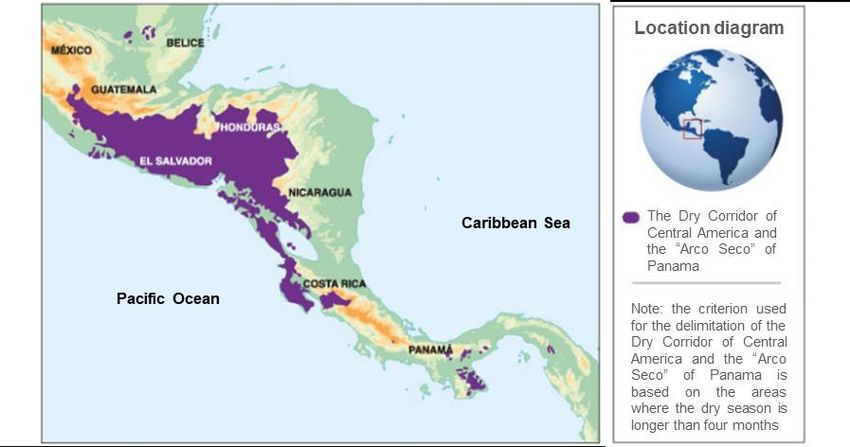
The problem is increasingly evident in the CDC. The CDC is defined by FAO
(van der Zee et al., 2012) as a group of ecosystems that combine in the ecoregion of
the tropical dry forest of Central America. It extends along the Pacific coast from
Chiapas (Mexico) and includes the low lying areas of the aforementioned ocean and
much of the central pre-mountain region (0 to 800 m.a.s.l.) of Guatemala, El
Salvador, Honduras, Nicaragua and part of Costa Rica (to Guanacaste). It also
includes the area known as "Arco Seco" that corresponds to Panama, as well as
fragments near the Caribbean coast in Honduras (see Figure 1).
Figure 1. Geographical delimitation of the Central American Dry Corridor
Source: FAO (2015, p. 1)
A comprehensive description of weather and climate dynamics in the CDC
goes beyond the scope of this work. These have already been documented for
example by van der Zee et al. (2012) and ECLAC (2015). In general terms, the CDC
is being affected by an increase in average and extreme temperatures, as well
as more erratic patterns and lower level of rainfall. This translates
into recurrent periods of drought combined with excessive rainfall and severe
flooding. The intensity and duration of these climatic events are amplified due to
human-induced degradation of ecosystems, including high rates of deforestation and
2soil erosion (van der Zee et al. , 2012); (Magrin et al. , 2014); (ECLAC, 2015);
(Calvo-Solano et al., 2018).
All of these represent a real threat to rural livelihoods in the CDC, especially
for the most vulnerable (UNCCD, 2018). It is worth to highlight that vulnerability to
climate change must be understood as a multidimensional concept (Burkett et al.,
2014). It is not only a function of the (biophysical) characteristics of climate risks,
but also of the capacity to adapt to them. In other words, climate events occur in a
social context that conditions the extent of their impact on local livelihoods (Shah et
al., 2013). In what follows, some of the vulnerabilities that characterize rural
communities in the CDC are described:
In the region there are around 10.5 million people. According to the FAO study
(van der Zee et al., 2012, p.10), in the CA-4 countries (Guatemala, Honduras,
El Salvador and Nicaragua), "the percentage of rural population varies from
38% in El Salvador to 52% in Honduras and Guatemala. Of the total of rural
families, the percentage of families producing basic grains (corn, beans and
sorghum) varies from 54% in El Salvador and Honduras to 67% in Guatemala,
with an average of 62%. The rest of the rural population (38%) is engaged in
salaried jobs and other agricultural and non-agricultural activities".
These producers mainly carry out small scale and rainfed subsistence
agriculture, marketing their products only when they have surpluses. Although
they tend to remain in their properties during the sowing period, they usually
supplement their income by selling their labour (generally unqualified) to
different sectors (in general commercial farms), which forces them to move to
places that are not always nearby. Revenues are low and do not meet basic
needs. Thus, about 80% of small producers live below the poverty line, which
affects more than half of the inhabitants of the region, and 30% is in extreme
poverty (van der Zee et al. al., 2012).
Most of the activities in the agricultural sector are carried out in the form of
self-employment. In Guatemala, 48.3% of the producers are self-employed,
while in Honduras, 71.4% (van der Zee et al., 2012). This increases their
vulnerability, since formal labour agreements and social protection coverage
are less likely to exist. In fact, a recent ILO report (2018a) shows that
informality in the agricultural sector exceeds 98% in Honduras, 97% in El
Salvador, 96% in Nicaragua and 95% in Guatemala, without significant
differences sex.
In many cases, agricultural activities occur on marginal lands (such as hillsides,
degraded soils, and areas prone to flooding), which increases their vulnerability
to climate hazards (van der Zee et al., 2012); (Vignola et al., 2015). In addition,
small farmers tend to be located in isolated areas with poor infrastructure. This
hinders their access to markets, services and technical and financial assistance,
and leaves them severely exposed to the greater frequency and intensity of
climate events (ILO, 2017a).
The average increase in temperatures is an additional challenge for rural
employment in the CDC. According to ILO (2018b), this increases the
prevalence of heat stress and health risks, as well as the proportion of working
hours during which workers need to rest. This reduces yield and productivity,
particularly in regions that are most exposed to extreme heat and in sectors that
are characterized by external and day labour, such as agriculture. In a context
3of labour informality, these negative effects are amplified by the lack of social
security coverage due to illness and work accidents.
In this context, the constant and cumulative succession of extreme weather
events, especially in the last decade, has increased the vulnerability of CDC families,
resulting not only in the deterioration of their livelihoods, but also in a complex
situation of food and nutrition insecurity:
The lack of reliable access to water has a direct impact on rainfed agricultural
production. UNOCHA (2016), estimated that, at the end of 2015 and after the
most serious drought of the last 30 years, more than 3.5 million people from
Guatemala, Honduras and El Salvador faced food insecurity and required
immediate assistance, including food, health care and recovery of their
livelihoods.
Under these circumstances, the inhabitants of the regions within the CDC
usually adopt adaptation and survival measures that in the medium and long
term result in an even greater deterioration of their living conditions. In general
terms, UNOCHA (2016) highlights that families tend to reduce the number
and/or size of meals consumed per day, get into debt to buy food and supplies,
consume cheaper or lower nutritional quality foods, cut down trees to sell
firewood and even sell their breeding cattle and/or consume their seed reserves,
among others. The reduction in water supply in the region, added to the already
existing lack of adequate sanitation, also has general effects on health, with a
direct correlation with diseases such as diarrhea, which is in turn a direct cause
of malnutrition.
On the other hand, the insufficient income, decrease in local food production
and the lack of employment in rural areas of the CDC is one of the main drivers of
child labour and migration to urban centres, as well as to nearby countries, mainly
the United States (USA).
For example, regarding child labour, UNICEF (2016) revealed that after the
2014-2016 drought, 30% of households surveyed in Honduras' Dry Corridor
(HDC) were forced to put younger members of their families to work, mostly
between 12 and 17 years old.
In connection with migration, a WFP-led investigation (2017a) with geographic
focus in the zones corresponding to the CDC of El Salvador, Guatemala and
Honduras affected by droughts between 2014 and 2016 concluded in the
existence of a clear relationship between food insecurity and emigration for the
three countries:
o Nearly 50% of the families interviewed revealed food insecurity, while
close to 75% had been forced to resort to survival measures such as the sale
of their land.
o While 19% of households revealed unacceptably low levels of food
consumption, even in those with acceptable levels, low levels of dietary
diversity were perceived.
o The three main reasons given by migrants from the areas most affected by
the drought were "being without food" (57%), followed by "being without
money" (17%) and "loss of crops" (7%).
4Although migration can sometimes be considered as an adaptation strategy that
brings certain benefits (such as income diversification), there is evidence on the
complexity and particularly negative features of this phenomenon in Central
America, especially in the last decade. Central American migrants usually come
from contexts with high levels of violence, to which must be added the social dangers
and vulnerabilities (kidnappings, robberies, abuses) that they face during their transit
to USA (ECLAC, 2018a). In particular, migration trends show a relative increase in
women and young people (including unaccompanied minors) who are often
disproportionately affected by violence and trafficking for sexual exploitation
(UNOCHA, 2016); (WFP, 2017a); (ECLAC, 2018a).
Figure 2. Apprehensions of El Salvador, Guatemala and Honduras migrants by Mexican authorities
and historic precipitation
Source: WFP (2017a, p.8)
In this context, some groups are especially vulnerable:
Food insecurity and the consequent deficit of calories, proteins and iron (among
others) can be fatal especially among children under 5 years, pregnant or lactating
women (and their children) and the elderly, as well as threatening the
reproductive capacity of young women (UNOCHA, 2016).
Although the gender effects due to climatic events are complex and deserve a
thorough analysis, there is consensus that rural women tend to be more vulnerable
than men. Women, for example, are mainly engaged in agricultural work, but
they also spend long hours at home and performing family care tasks, bearing the
burden of providing food, water and fuel. Normally, the time consumption of
these activities is relatively greater than in other places, given the poor access to
infrastructure (including transport and services). In the face of long periods of
drought, women and girls must travel longer distances in search of water. Among
other consequences, this limits even more their time available for education and
to carry out alternative activities, including those that can generate income, as
well as to extend their networks outside the community, which are fundamental
for accessing employment opportunities ( FAO-IFAD-ILO, 2010); (OHCHR,
2016).
5 The CDC is home to approximately 3.5 million indigenous people. In particular,
Guatemala has the largest indigenous population in the region; about 45% of the
national population, and 61% of the total of basic grain producers are indigenous
(IWGIA, 2018); (PRISMA-CDKN, 2014a); (van der Zee et al., 2012). In general,
these have some characteristics that make them exceptionally vulnerable:
o Several studies have shown that the development of indigenous peoples in the
Central American countries is lagging behind the national average. Structural
factors such as discrimination, exclusion and dispossession of their lands due
to megaprojects (mining, hydroelectric, large-scale crops) are some of the
causes. Thus, poverty, malnutrition and low access to education and health
affect them disproportionately. This situation is aggravated by climatic
variability, since its economic, social and cultural activities are closely related
to natural resources (PRISMA-CDKN, 2014a); (ILO, 2017b).
o On the other hand, although migration can be a survival strategy for the rural
population in general, this may not be the most appropriate solution for
indigenous groups, who are more prone to suffer discrimination and
exploitation in their areas of destination, since they also tend to lack training
and skills to perform qualified jobs. It is worth noting that, compared to the
non-indigenous population and indigenous men, indigenous women are even
more exposed to social and economic threats when they are displaced: in
addition to the relatively high degree of discrimination and marginalization they
suffer, they are more likely to concentrate in sectors with precarious working
conditions, violations of safety and labour rights (PRISMA-CDKN, 2014a);
(ILO, 2017b).
Another highly vulnerable group is that of disabled people. They also tend
to be among the poorest and to face limitations in terms of access to
education and training, medical care, employment, physical and financial
assets and opportunities for social integration. These limitations expose
them to disproportionate risks in disaster and emergency situations, given
their lack of accessibility in evacuation and disaster response efforts
(among others) (GPDD, 2009).
2. Response actions in the region: Identification
of initiatives and relevant actors
Central American countries have joined and integrated conventions, protocols,
declarations and initiatives related to the environmental issue, and participate in
global negotiations on the environment and climate change. In the region,
environmental management is promoted through the Central American Commission
for Environment and Development (CCAD) as part of the Central American
Integration System (SICA). The Commission carries out actions associated with the
environment, climate change, energy, human resources and risk management (van
der Zee et al., 2012).
In particular, the Commission launched at the end of 2010 the Regional
Strategy on Climate Change (ERCC), which provides the framework for action in
political and institutional matters for SICA countries. The ERCC contemplates
actions of the public and private sector and civil society and is articulated on certain
strategic programmatic areas, including adaptation, risk management, the promotion
6of mitigation measures and the strengthening of capacities, among others (CCAD-
SICA, 2010).
Despite these efforts, and following PRISMA-CDKN (2014b), countries of the
region have not made significant progress in their impact on global agreements and
negotiations. Likewise, most of the actions promoted in practice have been strongly
determined by international cooperation, whose offer of support has been based
mainly on mitigation measures (e.g. REDD+ programs, promotion of renewable
energies). This is not necessarily aligned with the regional priorities, which
according to the ERCC "should focus on adapting to climate change at the regional,
national and local levels and proactively promote in the international climate change
negotiations the development of financing mechanisms for adaptation" (CCAD-
SICA, 2010 p.79).
1.1. Climate finance
In this scenario, there is a need for the region to process the opportunities and
challenges that the global agenda entails in terms of attracting climate financing,
considering that there are instruments under the UNFCCC to channel funds in a
balanced way between adaptation and mitigation (PRISMA -CDKN, 2014b).
Although Central America is one of the most vulnerable regions to climate
change, the level of international climate financing for adaptation and mitigation
actions does not seem to be aligned with this reality. An ICEFI study (2017), based
on the Climate Funds Update (CFU)1 statistics, showed that between 2003 and 2016
USD 211.5 million had been approved in resources coming from the largest
international climate funds. This represents only 1.2% of the total funds approved
worldwide (USD 17,352 million) and 6.4% of the total funds approved for Latin
America (USD 3,303).
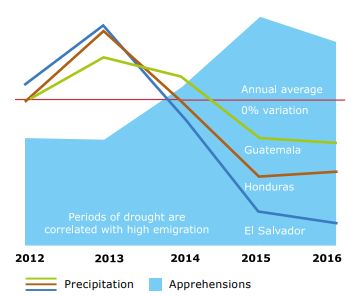
Figure 3. Central America: distribution of climate funds approved by country (2003-2016)
Source: own elaboration based on ICEFI (2017)
1
CFU is a joint initiative of the Heinrich Böll Foundation and the Overseas Development
Institute, which monitors climate funds from the moment donors commit resources to
disbursement. Their statistics do not include the public expenditure that each State invests
directly, nor those made by the private sector, since this information is usually not
available, is not recorded uniformly or is found in very scattered information sources
(ICEFI, 2017 p. 17 and 18).
7When analysing the amounts by countries within Central America, different
realities are observed. While more than one third (USD 70.2 million) went to
Honduras, Guatemala channelled only 6% of the funds, with USD 13.2 million.
Regarding the objective of the approved funds, in the case of Honduras, the majority
was allocated to mitigation activities (86.5%), while the resources allocated to
adaptation projects barely exceeded 12%. In contrast, in the case of Guatemala, more
than two thirds of the funds were allocated to adaptation projects (71.3%), while the
rest went to adaptation and emission reduction initiatives (ICEFI, 2017).
Although levels of financing are still insufficient, in recent years there has been
growing concern about the vulnerability of the CDC and initiatives and political
actions have been promoted to address the current challenges, which range from
local territories to the region as a whole (PRISMA- CDKN, 2014a).
1.2. Initiatives and relevant actors
In what follows, we describe some of the most outstanding initiatives that have
recently been and/or are still in the process of being implemented, as well as the main
actors in terms of cooperation and execution of projects. However, it is beyond the
scope of this work to carry out an exhaustive mapping of all the initiatives in progress
and their characteristics. Among other reasons, and as highlighted in studies such as
Coyoy et al. (2016), there are no national databases (at least with public access) that
compile the information of each of the approved projects with international
financing, as well as the results and impacts of these interventions. There are also
large disparities in the scope of information available at the level of international
agencies and organizations. Thus, in some cases, information was available on
official documents such as project evaluations (e.g. World Bank, IFAD) and,
therefore, it was possible to delve into certain specificities (e.g. objectives, activities,
results). In other cases, this was not possible, since there were only general
descriptions of the projects, contained for example in news sections of the agencies.
It is important to note that, on the Honduran case, most of the projects are part
of the "Alliance for the Dry Corridor" (ACS). This is an initiative of the Government
that aims to remove 50,000 families from poverty in the 2015-2020 period, reduce
malnutrition in target communities and establish the bases for rural growth through
investment in agriculture, nutrition and infrastructure. It gathers the support of
several international organizations and donors, including the Government of Canada,
BCIE, the European Commission, the US Government and the World Bank
(INVEST-H, n.d. (a)).
Within the United Nations system, FAO, IFAD and WFP have been developing
a strategic alliance with actions at different levels in favour of food security and
agricultural and rural development. The following is a description of their approach
and some of their activities:
FAO´s work
FAO promotes risk management and the increase of rural resilience in Central
America since 2009. Following FAO (n.d., p. 4) “In 2011, a FAO Regional Disaster
Risk Management Strategy in Latin America and the Caribbean (2011-2013) was
formulated. At the sub regional level, a Regional Strategic Framework for Climate
Risk Management in the agricultural sector of Central America’s Dry Corridor was
developed in 2012, and a Resilience Agenda was adopted with the World Food
Programme, the Central American Agricultural Council, the Central American
Commission on Environment and Development, the Coordination Centre for the
8Prevention of Natural Disasters in Central America, the Regional Committee on
Hydraulic Resources and the Inter-American Development Bank”.
FAO's work is articulated under the “Disaster Risk Programme to strengthen
resilience in the Dry Corridor in Central America”. This provides a framework to
promote actions both for immediate response to disasters, as well as reducing
vulnerability and increasing resilience in the forestry, agricultural and fishing
sectors. The Program aims to benefit 50,000 families of small-scale producers, and
is based on 4 pillars: i) institutional strengthening and formulation of risk
management policies; ii) development of risk monitoring systems for the issuance of
early warnings; iii) adoption of risk prevention and mitigation measures to reduce
community vulnerability and iv) improving preparedness and coordination for
emergency response (FAO, n.d.). Some of the most recent are:
Between 2016 and 2017 the "Emergency response to drought and resilience in
the CDC" was developed in Guatemala and El Salvador. In Guatemala, 2224
households in Chiquimula and Jalapa benefited from various activities, which
included the implementation of family gardens with water harvesting and
irrigation systems (in addition to training); distribution of seeds and inputs
among producers who lost their seeds due to drought; installation of water dams
and community reservoirs; establishment of Mutual Contingency Funds and the
implementation of early warning systems (FAO, 2017a).
On the other hand, with a medium/long-term vision, FAO and UNDP (with the
financial support of the Government of Germany) agreed at the end of 2017 on
the NAP-Agriculture Guatemala project (FAO, 2017b). This program supports
the Government's National Action Plan on Climate Change (PANCC), and
promotes activities related to the efficient and sustainable use of water for
irrigation in the Dry Corridor of Guatemala (GDC) communities (including
management of micro-basins and pilot irrigation plans); capacity development
of public sector workers (mainly from MAGA) and cost-benefit analysis for
decision-making regarding the adoption of adaptation practices in livestock in
the southeast of the country.
In 2018, FAO and the Korea International Cooperation Agency (KOICA)
agreed on the project "Adaptation of rural communities to climate change and
variability to improve their resilience and livelihoods in Guatemala". It implies
an estimated investment of USD 5 million for the period October 2018-
December 2021, and will be applied in three departments, including one
belonging to the GDC (Baja Verapaz). It seeks to benefit 5,000 producers by
increasing their capacity to adapt to climate change through restoration
practices on their degraded lands and forest landscapes, as well as micro-
enterprise development (FAO, 2018).
In addition, in 2017 SICA, BCIE, FAO and UN Environment began to work
together to raise a proposal to the Green Climate Fund, with the objective of
obtaining financing for an estimated amount of USD 400 million for an
ecosystem-based adaptation program with a focus on the efficient use of water
for the CDC and the Dominican Republic. At the date of preparation of this
document, the project was still being formulated and a final proposal had not
yet been submitted (FAO News, 2017); (UN News, 2018); (MARENA, 2019)
9IFAD´s work
IFAD supports various projects in the CDC areas of El Salvador, Guatemala,
Honduras and Nicaragua that also aim to improve the adaptation and resilience
capacities of small farmers. In general terms, its projects include the construction of
water catchment structures, the generation of information and research that
contributes to forecast climate risks and vulnerability, and aid to farmers with basic
improvements in their homes, such as the construction of low energy stoves, cisterns
and latrines (UN Guatemala, n.d.).
In interviews with representatives of IFAD in Honduras and Guatemala, it was
reported that the agency typically makes loans to governments to finance the
projects. IFAD is involved in the design of these projects, but in general the
execution/implementation is carried out by the relevant Ministries. The methods of
work and execution vary according to the case. Some have worked, for example,
together with coffee producers, who already have methods to work at the community
level. For example, in Honduras, rural road rehabilitation has been carried out, where
associations of coffee producers provide the necessary machinery and personnel to
work, while working hours are paid with project funds. In others, tenders are held
and local organizations submit their bids. Sometimes (non-reimbursable) resources
are also transferred to local organizations (which IFAD has previously
strengthened). These usually also hire local suppliers; the use of local labour and
resources is already established in the working methods and priorities of the offices
at the territorial level.
Regarding the employment dimension, it was commented that the work that is
eventually generated with the projects is temporary and that, normally, local
organizations do not make employment contracts. On the contrary, these are
generally informal agreements. In this regard, it was claimed that it is necessary to
start generating discussions regarding labour rights, workers´ protection, working
conditions and the promotion of social dialogue. The representatives of IFAD
pointed out that ILO could play a very important role in this regard.
Specifically, two projects were identified in Guatemala and two in Honduras,
which are described below:
i. Sustainable rural development program for the Northern region of
Guatemala /PRODENORTE (IFAD, 2018a)
It has a total cost of USD 40 million and is co-financed by OPEC. It began in
January 2012 and would be completed in September 2019.
Its overall objective is to significantly reduce the poverty and exclusion of rural
and indigenous families and communities in the northern region of Guatemala
(departments of Alta and Baja Verapaz and the department of Quiché). To achieve
this, it seeks to improve access to markets and generate rural businesses in
agricultural and non-agricultural activities for small farmers and micro-
entrepreneurs, aiming to increase production, employment and income. It also seeks
to strengthen strategic alliances with the private sector and the promotion of
associations of rural and indigenous entrepreneurs.
10The expected results are:
Employment creation and development of business skills through the
transformation of subsistence activities (agricultural and non-agricultural)
into profitable rural businesses and micro-enterprises oriented to local and
external markets, linked to productive and value chains.
Strengthening the capacities of rural and indigenous communities and
producer associations to promote self-managed local development.
Promotion of access to savings and credit services through microfinance.
Improved access to markets and the integration of rural and indigenous
communities through the expansion of community infrastructure and rural
roads.
Adoption of sustainable production and rehabilitation technologies that
contribute to reversing deforestation, soil erosion and the degradation of
natural resources. It includes actions of agroforestry and reforestation for
the protection of water sources (with associated forest use) and soil
conservation.
According to the last available project evaluation (October 2018), the program
has had significant achievements in terms of social capital (capacity development,
organizational strengthening, participation of women and youth) and access to credit
and financing. However, other activities (improvement of rural roads, reforestation)
present a significant delay.
ii. National Rural Development Program for the Eastern Region of Guatemala /
PNDR-Oriente (IFAD, 2018b)
This project was developed between December 2004 and December 2017, with
a total financing of USD 34 million, also co-financed with OPEC.
It was designed to reduce poverty in rural areas with high rates of poverty and
extreme poverty, through the development of local capacities and the non-
reimbursable transfer of rural assets and services to peasant organizations so that
they could develop profitable and sustainable economic activities, with a focus in the
departments of Zacapa, El Progreso, Jalapa, Jutiapa and Santa Rosa (the first four
corresponding to the Dry Corridor region).
The program transferred investment funds for productive development, the
promotion of new enterprises for the generation of income and basic infrastructure.
The organizations that executed the projects managed to increase their productive
assets, while the beneficiary families of infrastructure obtained basic assets that
represent improvements in their quality of life. It is estimated that the project
benefited 185,650 people. The strengths of the project were in its incentives to
organized participation, investment financing and technical assistance. The Program,
however, did not achieve significant effects on market access and environmental
management, while the number of female beneficiaries (9,000) was below the target
(12,000).
iii. Sustainable rural development program for the southern region of
Honduras (IFAD, 2018c)
It has a total cost of USD 37 million and is co-financed by OPEC and BCIE. It
began its implementation in February 2011 and would be completed in March 2019.
11It operates in the southern region of the country with focus on the departments
of Choluteca, El Paraíso, Francisco Morazán, La Paz and Valle. Its objective is to
increase income, employment and food security of small agricultural producers,
micro entrepreneurs integrated into agricultural and non-agricultural value chains,
traditional fishers of inland lands, indigenous Lenca populations and rural women
and youth.
Expected results are:
Training and technical assistance to people who operate small rural
businesses so that they can add value to their products and obtain more and
better access to national and external markets.
Consolidation of rural savings associations and improvement in access to
rural financial services.
Strengthening organizational, decision-making and business capacity of
rural communities and producer associations, supported by better municipal
planning.
Improvement of productive processes and technologies to reduce food
insecurity and vulnerability among small subsistence producers. To this
end, activities such as the implementation of micro irrigation systems are
contemplated; payment schemes for environmental services for the
integrated management of micro-basins, construction of aqueducts and
other engineering works; sustainable tourism; reforestation activities.
Improvement in social infrastructure, for example through the construction
of residential water tanks for water harvesting, stoves and latrines.
iv. Competitiveness and Sustainable Development Project in the Southwest
Border Region of Honduras / PRO-LENCA (IFAD, 2017)
It has a total cost of USD 34 million and is co-financed by the Global
Environment Facility (GEF). It began in 2016 and would end in 2021. It is
implemented in the departments of Intibucá, La Paz and Lempira. The target
population comprises approximately 11,000 rural families made up of small
agricultural producers, artisans weakly linked to markets, micro entrepreneurs and
small-scale traders, young women, mothers who are heads of household,
unemployed young people, as well as people from communities with a strong
indigenous cultural tradition without access to productive resources (Lenca).
The project's objective is to improve income, employment opportunities, food
security and general living conditions of the rural population, with a focus on social
inclusion and gender. It pays special attention to the needs of members of vulnerable
groups, such as women, youth and ethnic minority populations.
Expected results are:
Strengthening of rural organizations, improvement of productive systems
and generation of market surpluses, facilitating the participation of women,
young population and indigenous peoples.
Improve the socioeconomic situation of small rural producers by
implementing productive development plans and sustainable business
plans with market access, and technical and financial support services.
Rational management of natural resources and protection of the
environment, reducing environmental vulnerability and improving rural
infrastructure in support of productive investments. It involves the
12rehabilitation and construction of road infrastructure and water
management systems, promotion of agro-ecological systems, conservation
and management of micro-basins and recovery of forests with multiple
uses.
WFP´s work
WFP has supported relief interventions and efforts to recover from the effects
of drought in the CDC especially since late 2015. Among its actions, immediate
support to populations suffering from food insecurity, for example, stands out. Food
Assistance for Assets (FFA)2 schemes (UN Guatemala, n.d.). As an example, the
WFP was responsible for executing the PRO-ACT program, promoted by the
European Union at the end of 2016, the description of which is presented later in this
section. In addition, WFP has strategic plans for Honduras and Guatemala, which
are described below.
i. Honduras strategic plan 2018-2021 (WFP, 2018a)
The Government of Honduras has relied on WFP to optimize national social
protection systems, strengthen government capacities at the central and decentralized
levels, increase resilience to the effects of climate change and improve food and
nutrition security among vulnerable populations.
In this context, WFP has formulated a strategic plan with an expected total cost
of USD 116 million, with 5 strategic objectives. Among them stand out the safe
access to nutritious foods between children in pre-school and primary age; the
reduction in the levels of stunting and micronutrient deficiencies among the most
vulnerable groups and the increase in resilience to climate change and food security
among agricultural workers, small producers and indigenous communities.
To this end, the following activities are foreseen:
Provide nutritious school meals daily and sourced from small farmers, for
pre-school and primary school children, supplemented with health, hygiene
and nutrition activities, education for gender transformation and school
gardens.
Provide capacity building to local authorities, school staff, parents and
small farmers, including technical assistance and training in the
management of school meals programs, its logistics, food quality standards,
transparency, responsibility, education on nutrition, access of small farmers
to institutional markets and risk management (category 9: capacity
building).
Provide capacity building to health institutions at all levels and nutrient-
enriched foods in specific areas for girls, pregnant women and lactating
women, and children under 2 years (category 6: food, capacity building).
2
Food Assistance for Assets (FFA) is one of WFP's flagship initiatives aimed at meeting the
immediate food needs of the majority of food insecure people through cash, voucher or food
transfers, and improving their security and long-term resilience. Women and men receive
transfers in cash or food to meet their immediate food needs, while building or increasing
assets that will improve their livelihoods by creating healthier natural environments, reducing
the risks and impact of shocks, and strengthening the resilience to natural disasters. It includes
activities of land rehabilitation, construction and repair of roads and reforestation (WFP,
2018c)
13 Provide FFA to food insecure households to support the creation and
rehabilitation of livelihoods complemented by strengthening the capacity
of decentralized government authorities in the management of resilience
building and adaptation programs to climate change.
Complement government transfers to the most vulnerable households
affected by disasters to facilitate assistance and early recovery while
supporting the strengthening of emergency response institutional
capacities.
Provide technical assistance and capacity building in emergency
preparedness and response (including links to social protection) to
institutions at the national and sub-national levels.
ii. Guatemala strategic plan 2018-2022 (WFP, 2017b)
It has a total estimated cost close to USD 70 million, and seeks to reinforce
national efforts on food security with a focus on Alta Verapaz, Baja Verapaz,
Chimaltenango and Sololá. Five strategic objectives are proposed, similar to those
outlined for Honduras, including the reduction of growth retardation of children
under 2 years; strengthening national programs and institutions as well as social
protection to reduce food insecurity in all its forms, including during post-disaster
situations; improve access to markets among small rural producers to promote
adaptation to climate variability and shocks.
To this end, the following activities are foreseen:
Provide specialized nutritious foods to children from 6 to 23 months and
education to women and men to ensure that the diet of the target population
provides the right nutrients.
Strengthen government capacities to reduce and prevent all forms of
malnutrition and in gender equality, emergency preparedness and response,
and policy planning.
Provide FFA to create assets that strengthen resilience to climate change
and other shocks.
Strengthen the capacities of small farmer organizations to improve
production systems that allow small farmers to reach a wider range of
markets in an equitable and fair manner; buy surplus production from small
farmers; and promote access to institutional markets related to public social
programs.
Provide capacity building to farmers' organizations and their members
regarding the role of women in the value chain.
Provide food assistance to vulnerable populations in emergency situations.
On the other hand, important development and cooperation programs were also
identified from the European Union and the governments of Switzerland, Germany
and the USA, described below.
European Union
Two projects were identified; one regional and one destined for Honduras:
i. Building resilience in the Central American Dry Corridor/Response to El Niño
phenomenon – Regional Project
14This program began its implementation in October 2016 (with completion
scheduled for October 2018), with an estimated total cost of EUR 10 million. It
emerged with the aim of increasing the resilience of the families most affected by
the 2014-2016 drought resulting from El Niño phenomenon, mainly subsistence
farmers and day labourers in Guatemala and Honduras, and to a lesser extent in El
Salvador and Nicaragua (EU, n.d. (a)).
EU aid is aimed at different activities according to the zones, including food
assistance, soil and water conservation, improvement of land productivity,
reforestation and rehabilitation of degraded ecosystems, and other actions to increase
the resilience of livelihoods and diversify income, improve risk management and
develop capacities at both the community and municipal levels (WFP, 2017c).
The implementation of the project has been in charge of WFP, under the name
"Pro-Resilience Action (PRO-ACT)". It has provided cash-based assistance to meet
the immediate needs of the most affected families. In addition, training in crop
management and soil conservation, asset rehabilitation and nutrition education has
been provided (WFP-EU 2018).
In the case of Guatemala, the investment amounts to EUR 4 million. The
beneficiary departments are El Progreso and Zacapa and the actions are carried out
in collaboration with the MAGA and the Secretariat of Food and Nutritional Security
(SESAN) (WFP, 2017c). In the case of Honduras, the project amounts to a total of
EUR 3.3 million and is part of the investment made by the EU within the ACS. It
seeks to benefit 2,500 small producers and their families (a total of 12,500 people)
in the departments of La Paz, El Paraiso and Choluteca (EU 2017).
ii. EUROSAN: Food security, nutrition and resilience in the Dry Corridor
(Honduras)
Aiming at Honduras and also framed in EU actions as part of the ACS, it
implies a total investment of EUR 33 million, of which EUR 30 million are provided
by the EU. It has an estimated duration of 6 years (June 2015 to June 2021), and is
implemented in coordination with the Government of Honduras and FAO.
The overall objective of the project is aligned with the objectives of the National
Strategy on Food and Nutritional Security (ENSAN) and focuses on improving the
food and nutritional security of 15,000 rural families through 4 main actions: i) the
increase of rural food well-being through an agricultural extension system and the
construction of water collection systems; ii) improvement of nutritional status
through an extensive nutrition and health system; iii) strengthening of institutional
and human capacities, giving priority to the training of indigenous and peasant
leaders and iv) supporting the development of national policies on food well-being
and nutrition (EU, n.d. (b)).
Government of Switzerland
Three projects were identified on its website, all aimed at Honduras.
i. Community management of watersheds for climate change adaptation
It is aimed at adapting to climate change through the integrated management of
water resources corresponding to the upper basin of the Goascarán River (shared by
Honduras and El Salvador), where drought and heavy rains, together with the loss of
15You can also read


