Electricity Market Integration in the GCC and MENA: Imperatives and Challenges - July 2018 Doi: 10.30573/KS-2018-WB19 - Kapsarc
←
→
Page content transcription
If your browser does not render page correctly, please read the page content below

Electricity Market
Integration in the GCC and
MENA: Imperatives and
Challenges

July 2018                                                      Doi: 10.30573/KS--2018-WB19

Electricity Market Integration in the GCC and MENA: Imperatives and Challenges           1

About KAPSARC
The King Abdullah Petroleum Studies and Research Center (KAPSARC) is a
non-profit global institution dedicated to independent research into energy economics,
policy, technology and the environment, across all types of energy. KAPSARC’s
mandate is to advance the understanding of energy challenges and opportunities
facing the world today and tomorrow, through unbiased, independent, and high-caliber
research for the benefit of society. KAPSARC is located in Riyadh, Saudi Arabia.

Legal Notice
© Copyright 2018 King Abdullah Petroleum Studies and Research Center (KAPSARC).
No portion of this document may be reproduced or utilized without the proper attribution
to KAPSARC.

Electricity Market Integration in the GCC and MENA: Imperatives and Challenges             2

Key Points

R
        ising electricity demand and growing fiscal constraints have encouraged governments in the Gulf
        Cooperation Council (GCC) and Middle East and North Africa (MENA) regions to consider more
        cooperative approaches to delivering reliable and affordable electricity services. The development
of an effective, integrated electricity market is expected to help achieve these objectives efficiently and
sustainably. KAPSARC’s workshop on this subject yielded the following insights:

    Removing price distortions in supply side – that is, wholesale level – decisions through effective
    price reform measures is crucial to addressing the concern of ‘implicit wealth transfer’ in cross-border
    electricity trading and developing an effective and viable regional electricity market in the GCC and
    MENA regions.

    Non-discriminatory open access to the grid and third-party sales are both essential for improving
    competitiveness and market liquidity at national and transnational levels.

    Market integration is a long process that requires continuous political support. Liberalization of national
    electricity markets is desirable but not a prerequisite. As a way forward, the building of an integrated
    market could follow a ‘national control and regional cooperation’ approach.

    As the existing trading regime in the region focuses more on long-term bilateral transactions, effective
    utilization of resources will require the development of a short-term market to deal with load and time
    differences, but without undermining long-term objectives.

    Future market designs will need to be adapted to provide greater flexibility and trading opportunities
    closer to the point of dispatch.

    A certain degree of compatibility in regulatory frameworks is required for integrated electricity markets
    to function effectively. To progressively align and implement regulatory approaches requires an
    independent institution at the regional level.

Electricity Market Integration in the GCC and MENA: Imperatives and Challenges                                  3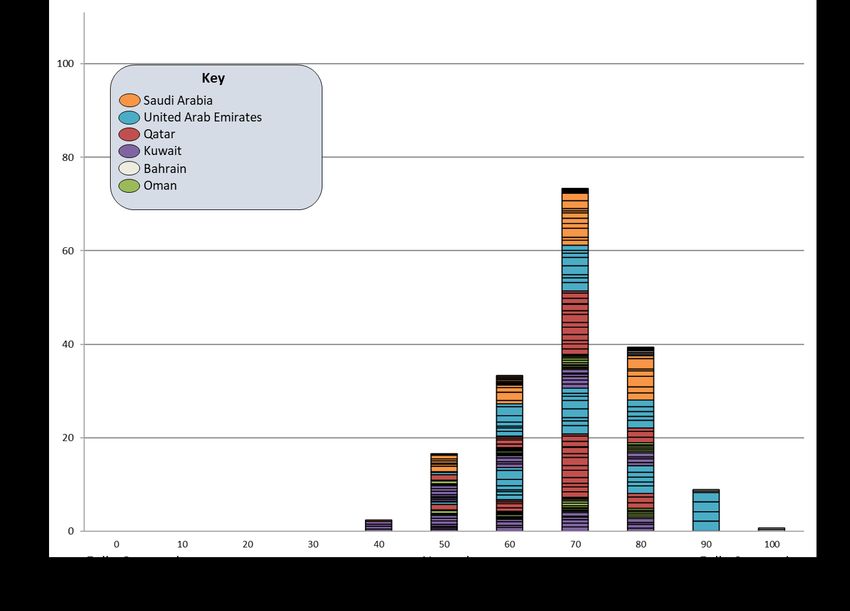
Key Points

                                       14 GW
                         5 GW   3 GW

                            2016
                            2016       2030
                                       2030
                                                                        30 GW
                                Jordan                   16 GW 13 GW                                   10 GW 7 GW
                                                                                                                    20 GW

                                                                2016
                                                               2016     2030
                                                                        2030     4 GW                     2016      2030
                                                                                                                    2030
                                                                                         3 GW   8 GW                                            60 GW
                                                                 Kuwait                                      Qatar
                 67GW
                                                                                     2016
                                                                                     2016       2030
                                                                                                2030                            29 GW
                                                                                                                                        21 GW
                                                               120 GW                 Bahrain
  39 GW
          29GW
                                               78 GW                                    2016                                       2016         2030
                                                                                                                                    2016         2030
                                                       61 GW                                                                            UAE
     2016
     2016         2030
                  2030
          Egypt

                                                                                                          8 GW          16 GW
                                                   2016
                                                     2016      2030
                                                               2030                                              6 GW
                                                  Saudi Arabia
                                                                                                             2016        2030
                                                                                                                         2030
                                                                                                                 Oman
                                                                                Generation capacity
                                                                                Peak demand
                                                                                Projected demand

Figure 1. Electricity demand continues to rise in the GCC and MENA regions.

Source: Collated from multiple sources based on information available in the public domain. Figures may not tally
precisely with the updated information available from the utilities.

Electricity Market Integration in the GCC and MENA: Imperatives and Challenges                                                                      4
Executive Summary
A
number of power systems around the world process. However, due to the single/principal buyer
have combined to form regionally integrated model predominating in the electricity industry in the
electricity markets in order to achieve regions, open access and third-party sales are either
efficiency, reliability and environmental objectives. not allowed or are only loosely defined. The following
Beyond the physical interlinking of national grids, measures would be required to improve market
the concept has gained little traction in the Gulf liquidity, both within and across borders, and develop
Cooperation Council and Middle East and North a competitive marketplace, reaping the benefits of
Africa regions to date. However, a renewed political load and time differences: the implementation of open
commitment to regional integration has revived access together with fully-supported, fair, transparent
interest among the countries in these regions. With and common regulatory rules for access to and
rising power demand and growing financial pressure, pricing of grid services in the region. Major barriers to
the development of a regional electricity market has the implementation of open access exist in exclusive
the potential to offer many benefits to the participating long-term power purchase contracts and the fear of
countries, both in the short run and long run. The losing the revenue base to cross-subsidize other low
design and development of an integrated electricity paying customers.
market in these regions will require an understanding
of a range of economic, regulatory and policy Liberalization of the electricity market is underway in
challenges. The key highlights follow. a number of countries in the region, but local priorities
have shaped its pace and design rather than regional
For decades, resource-rich countries in these objectives. International experience suggests that
regions have been providing energy subsidies with electricity market integration is a dynamic transition
the aim of social protection and redistribution of process which takes time to mature, but where both
the hydrocarbon wealth among their citizens. While ‘liberal’ and ‘nationalistic’ approaches can however
subsidized retail tariffs have their own implications co-exist. Thus, initiating structural reforms may be
for the sector’s performance, subsidized fuel for desirable but not a prerequisite to market integration.
power generation has made the task of integrating A market design that facilitates the development of
electricity markets especially difficult because of a regional market while at the same time allowing
concerns about implicit wealth transfer in cross- countries to undertake reforms at their own pace is
border electricity trading. Removing supply-side price required. Experience shows that making liberalization
distortions through effective price reform measures a precondition for developing a regional electricity
will be necessary for the development of an effective market has not succeeded in the past.
and viable regional electricity market. Until such time,
the option of facilitating electricity trading at market- While electricity as a product can be differentiated
determined prices could be explored in the short run over time, the existing trading portfolio of the Gulf
by developing an acceptable regulatory approach. Cooperation Council Interconnection Authority is
However, benchmarking and transparency of fuel largely characterized by long-term transactions. By
prices will remain contentious issues. contrast, the day-ahead market accounts for the
majority of traded volume in a number of power
Promoting competition in wholesale and retail pools in Europe, Australia and the United States.
electricity markets through open access is an Development of the short-term market needs to
essential element of the market liberalization be encouraged to take advantage of regional load
Electricity Market Integration in the GCC and MENA: Imperatives and Challenges 5Executive Summary
diversity. Inducing competition, reflecting the value regulatory frameworks should be explored. Both
of electricity at shorter operational timescales and top-down strategies, such as the European Union’s
rewarding flexibility can be the guiding principles for vision of creating a pan-European integrated
future market design. Restrictions and/or delays in market, and bottom-up strategies like aligning or
achieving electricity price and volume approvals from creating common market rules/regulations, will be
multiple agencies have discouraged the emergence required to integrate markets. Moreover, effective
of a short-term market for cross-border electricity integration will also require coherent system
trading. operation practices and coordination at two levels:
horizontal, between system operators, and vertical,
Institutional arrangements for cooperation and as with a system operator dealing with both market
coordination in formulating and aligning necessary participants and governments.
Electricity Market Integration in the GCC and MENA: Imperatives and Challenges 6Background to the Workshop
E
fforts to integrate power systems and markets Understanding the experiences of other
in both the Gulf Cooperation Council (GCC) integrated markets and their potential
and the wider Middle East and North Africa relevance for this region.
(MENA) region are gaining momentum. With rapidly
growing electricity consumption in the overall Identifying and suggesting good practices
region, the development of an effective, integrated for creating an efficient and interconnected
electricity market can offer many benefits. These market.
include the efficient utilization of local resources,
more cost-effective integration of variable renewable Drawing lessons for policymakers and other
generation. It also opens up the possibility of larger- stakeholders in developing an effective and
scale deployment of renewables to the participating well-functioning integrated market in the region.
countries.
The insights gathered from the workshop
However, realizing these potential benefits discussions will help inform the design and
requires a deeper understanding of a wider set of development of an integrated electricity market
economic, legal, technical and political factors in in the region. This workshop summary includes
order to address the challenges. In this context, a brief update on the current status of regional
a roundtable dialogue focusing on Electricity market development and highlights key issues
Market Integration in the GCC and MENA regions: around market design and structure, regulation,
Imperatives and Challenges was organized, with
system operation, and public policy in relation to
the following objectives:
electricity market integration.
Gaining a better appreciation of the key
issues – policy and political, market design
and structure, regulation and system operation
– affecting the efficient integration of the
electricity markets and cross-border electricity
trade in the region.
Electricity Market Integration in the GCC and MENA: Imperatives and Challenges 7Current Status of Power Sector
Development in the Region (GCC & MENA)
E
lectricity consumption has increased rapidly relied on oil and gas. However, they are now slowly
over the past two decades – by around 6 to 12 diversifying away from increased reliance on oil and
percent annually – due to rising populations, gas. Self-sufficiency was previously seen as the
urbanization, industrialization and increasing best way of ensuring electricity security. Moreover,
prosperity in the region. With the economic outlook reliance on neighbors to meet domestic energy
positive, this trend is expected to continue. Key needs may have been viewed as a sign of weakness
characteristics of the electricity industry in the region, in the Gulf countries. The comfortable financial
and progress on power system and electricity market position of many of the countries in the region had
integration, are summarized below. allowed them to over-invest in generation capacity
in the past. However, growing fiscal constraints and
Capacity planning focuses rising demand have encouraged governments in the
region to consider more cooperative approaches to
on ensuring internal self- delivering reliable and affordable electricity services.
sufficiency The findings of a KAPSARC study into the political
economy of a regional electricity market indicate a
As countries in the GCC are major oil and gas moderately to strongly positive consensus on the
producers, their electricity production has typically need for a common electricity market (Figure 2).
100
80
(influence*salience)
60
Exercised power
40
20
0
0 10 20 30 40 50 60 70 80 90 100
Fully opposed Neutral Fully supportive
Position spectrum
Figure 2. The political context of a GCC electricity market.
Source: Presentation titled The Political Economy of a Regional Electricity Market, Workshop on Regional Electricity
Sector Integration in the GCC and MENA: Imperatives and challenges.
Electricity Market Integration in the GCC and MENA: Imperatives and Challenges 8Current Status of Power Sector Development in the Region (GCC & MENA)
Countries are at different have been unbundled in some of the countries,
but the full separation of monopoly transmission
stages of market reform, businesses is yet to be achieved. The electricity
with different levels of markets are largely characterized by a single
commitment buyer model, with limited scope for competition
in the wholesale market (Figure 3). Though
The electricity sector is not yet run on a sound several countries in the region have initiated
commercial footing. Electricity tariffs are regulated electricity market reforms, none have identified
but have been kept artificially low in the past. the development of an effective and integrated
Utilities/independent power producers (IPPs) regional electricity market as one of their objectives.
are also provided with subsidized fuel for power Further, specific laws/policies are either missing
generation, which further distorts price formation. or do not clearly define and promote cross-border
Electricity market liberalization and reforms electricity trade. Several countries in the region,
are underway in a number of countries, though including Saudi Arabia, Oman, Abu Dhabi, Dubai,
these are at different stages of implementation. Egypt and Jordan, have established electricity
Generation, transmission and distribution functions regulators who face the daunting challenge of
Degree of liberalisation/market contestability
Vertical Vertical Unbundling Wholesale Retail market
integration integration with market
IPPs
Combined functions Vertically integrated Separation of Increased Introduction of
under state utility along with competition competition in competition in retail
ownership private sector and supply generation markets
participation in from monopoly
generation transmission and
distribution (different
forms possible)
Sharjah Bahrain Oman
Ras al-Khaimah
Fujairah
Umm al-Quwain Dubai Abu Dhabi
Ajman
Jordan Egypt
Kuwait
Qatar
Single Buyer
Saudi Arabia
Model
Figure 3. Electricity market structure in GCC and neighboring countries.
Source: Presentation titled Electricity Market Structure and Regional Integration, Workshop on Regional Electricity
Sector Integration in the GCC and MENA: Imperatives and challenges.
Electricity Market Integration in the GCC and MENA: Imperatives and Challenges 9Current Status of Power Sector Development in the Region (GCC & MENA)
balancing the interests of consumers, companies interconnected to form the GCC grid. Outside
and governments. While regulatory frameworks are the GCC, Egypt and Jordan are the two major
still evolving, they do not yet adequately address the electricity markets contiguous with Saudi Arabia.
issues associated with cross-border electricity trade. While the Jordan-Egypt interconnection has a 450
megawatt (MW) capacity, the Egypt-Saudi Arabia
Cross-border transmission interconnection is under development, with a total
infrastructure is widely designed capacity of 3,000 MW, and is expected
to be fully operational by 2025. A 200 MW Jordan-
underutilized Saudi Arabia interconnection is also planned to be
operational by 2025. Despite significant transfer
The Gulf Cooperation Council Interconnection capacity (Figure 4), effective utilization of GCC
Authority (GCCIA) was formed in 2001 to link interconnections has been around 5-6 percent,
the power systems of the GCC countries over compared with around 50 percent on average
three separate phases. With the completion of in Europe (EFET 2017). This low utilization level
the UAE-Saudi Arabia interconnection in 2011, is due to the fact that interconnections were
the electricity grids of all the Gulf countries were originally planned to share reserve capacity and
Jordan
Syria
GCC North Grid
Palestine Kuwait Bahrain
Libya 450 MW 200 MW
Qatar
550 MW 3000 MW
GCC South Grid
UAE
1200 MW
600 MW
Egypt 750 MW Oman
400 MW
900 MW
Saudi Arabia
Existing
Under construction/planned
To other countries
Figure 4. Cross-border interconnections in GCC and neighboring countries.
Source: GCCIA, 2018.
Electricity Market Integration in the GCC and MENA: Imperatives and Challenges 10Current Status of Power Sector Development in the Region (GCC & MENA)
provide stability and support to the grid during states – which takes place largely through bilateral
emergencies, rather than to maximize economic contracts comprising ‘in-kind’ and ‘in-cash’ models
gains through cross-border electricity trading. – has shown an upward trend since 2016 (Figure 5).
However, power trading among the GCC
1000
900
800
700
600
GWh
500
400
300
mostly unscheduled exchanges
200
mostly unscheduled exchanges
100
0
2010 2011 2012 2013 2014 2015 2016 2017
Years
Figure 5. Power trading on GCCIA interconnectors.
Source: GCCIA, 2018.
Electricity Market Integration in the GCC and MENA: Imperatives and Challenges 11Price Distortions and Cross-Border
Electricity Trading
W
hile regulating energy prices has been objected to a single/principal buyer selling electricity
a common practice around the world, outside its national boundaries. There have also
resource-rich countries in the region have been instances where fuel suppliers have either
been offering significant energy subsidies for social forfeited the entire profit, if any, from power trading
protection reasons and to redistribute hydrocarbon activities or have demanded a substantial share
wealth among their citizens. The electricity sector in the earnings from cross-border electricity trade.
is no exception: subsidies exist at both ends – While fuel suppliers may be justified in seeking
production and consumption. Retail electricity rates compensation to partially or fully mitigate their
in the region have been kept artificially low for a loss in revenue through providing subsidized fuel,
long time. Electricity generators are also supplied such decisions do not incentivize single/principal
with fossil fuels at a price well below international buyers to actively engage in cross-border electricity
levels by the respective state-owned oil and gas trading for wider economic gains. In this regard, past
companies to make electricity more affordable to
experiences in developing regulatory approaches
their consumers. Heavy reliance on subsidized fuel
to share the benefits of the Kyoto Protocol’s Clean
for power generation continues to distort the real
Development Mechanism may offer some useful
cost of electricity production in the region, making
insights on the effectiveness, efficiency and equity
the task of integrating electricity markets especially
aspects of benefit-sharing mechanisms. As both
difficult because wholesale price distortions can
the production cost of fossil fuels and the price paid
lead to implicit wealth transfers that are often
by the generators are often not clearly disclosed,
unacceptable to electricity-exporting countries. Such
aggregating and sharing profit from cross-border
concerns have been raised in the past and continue
electricity trading will remain opaque.
to pose a major challenge for the future integration
of electricity markets. Thus, to develop an effective
and viable regional electricity market, price Implicit wealth transfer:
distortions, particularly at the wholesale level, need Correcting the wholesale
to be removed or reduced through effective price
reform measures. Underpricing electricity and other prices
forms of input subsidies for power generation remain
Removing price distortions from supply-side
major stumbling blocks to facilitating cross-border
electricity trade in the region. Some of the issues decisions will not only help more accurately identify
and suggestions that relate to this are highlighted the unsubsidized cost of electricity production but
below. will also make it easier to target subsidies where
these are needed most. The policy of providing
Electricity trade without subsidized fuel for power generation is clearly
one of the major barriers to developing a viable
removing fuel subsidies: electricity market in the region. To address the
Sharing profits concerns of implicit wealth transfer in the cross-
border electricity trade, should eligible players be
State-owned companies supplying subsidized fuel allowed to trade electricity at a market-determined
to utilities/IPPs for power generation have often price until fuel subsidies are eliminated or
Electricity Market Integration in the GCC and MENA: Imperatives and Challenges 12Price Distortions and Cross-Border Electricity Trading
removed? Can an acceptable regulatory approach A reference price linked to the cost of fossil fuel
be developed that will make it possible to introduce production in resource-rich countries?
cost-reflective pricing for the electricity meant for
cross-border trading, with a certain trade-off? A reference price based on the opportunity
cost of the economic rent/revenue foregone
Fuel prices: Benchmarking by failing to sell fossil fuels in the international
and transparency market?
Regardless of the approach followed, there will
Benchmarking fuel prices in an effort to estimate
be methodological challenges in measuring the
the supply-side price distortions raises the question
level of subsidy, and arguments for and against
of what constitutes an appropriate reference price.
various options for benchmark fuel prices. Other
Does this reference price mean:
than adopting a reference price mechanism for
Prices in international markets, an approach fuel prices, a lack of transparency and availability
used by the International Energy Agency in of data will also make the quantification of implicit
quantifying the subsidies? supply-side price distortions difficult.
Electricity Market Integration in the GCC and MENA: Imperatives and Challenges 13Access to National and Regional Markets
O
pen access to the transmission network by There are two main reasons for the prevailing
market participants is an essential element reluctance to allow open access in the region. The
of the electricity market liberalization first is the exclusive take-or-pay kind of long-term
process, designed to introduce competition in contracts, through which generators must still be
the electricity markets, leading to more efficient paid as per the contract terms if open access results
sector operation. Integration of internal electricity in loss of load to the incumbent utility. The second
markets through nondiscriminatory open access is the fear of losing large customers that may be
to the transmission network, including cross- cross-subsidizing other low paying customer groups.
border interconnections, can potentially result in The introduction and implementation of open access
increasing the size of the wholesale market, thus would require the following:
enhancing the conditions for competition among
the players, both within and across borders. Authorizing legislation that mandates open
However, to achieve this, the concept of open access and supports competition, together with
access should ideally include the possibility of political commitment.
third-party sales as well.
Regulatory frameworks that provide fair rules for
In general, the current market designs in the
access, including the pricing of grid services.
region do not support open access, as only a
few countries have allowed market participants
Unbundling of transmission and distribution
to access transmission network services on
functions from generation to avoid potential
payment of cost-reflective wheeling charges. In
conflicts of interest.
the region, only Egypt has removed the single
buyer market restriction so that IPPs are allowed to
As most countries in the region have not yet
sell electricity directly to large customers through
enacted open access provisions, rules and
bilateral contracts using third-party open access
regulations pertaining to this – including cross-
provisions. However, as reform initiatives are still
border interconnections – should be introduced
in the first stages of implementation, third-party
and harmonized to enhance cross-border electricity
sales through open access have yet to pick up.
trade. The European Union’s (EU’s) first Electricity
On the other hand, in Saudi Arabia only those
non-utility generators connected to the grid that Directive (96/92/EC) incorporated the principles
have a generation license from the Electricity and of free electricity trade between member states.
Co-Generation Regulatory Authority are allowed It also required national incumbent utilities to
to use the transmission network to meet their own offer a choice to consumers and traders by
captive demand at different locations, paying the granting third-party network access to facilitate
wheeling charges as set by the regulator. In other the integration of electricity markets across the
countries, open access is either loosely defined EU. The European Network of Transmission
or non-existent. The limited and restrictive open System Operators (ENTSO-E) further enabled
access provisions leave the market with one main cooperation and coordination between transmission
single buyer/principal buyer that can engage in system operators (TSOs) to ensure effective and
cross-border electricity trade in each country transparent access to transmission networks,
in the region, resulting in limited liquidity in the including the network for cross-border electricity
transnational electricity markets. exchanges.
Electricity Market Integration in the GCC and MENA: Imperatives and Challenges 14Market Structure and Design
Integration of internal Should the member countries focus on pursuing
their own ‘national interest’ first, and then
electricity markets: Is reform explore how they can ‘enhance’ such benefits in
a pre-condition? the context of an interconnected market?
A number of countries in the GCC and MENA Gradualism as the way
regions have initiated power sector reforms
to liberalize their national electricity markets. forward for pan-Arab market
Countries are at different stages of market reform, integration?
with different levels of commitment. The degree
of liberalization/market contestability is still limited Developing a power market that functions well is
(Figure 3). International experience suggests a continuous process: Europe took more than two
that developing an integrated power market is an decades to become one of the largest and most
evolutionary process which takes time to mature liquid electricity markets in the world following the
(e.g., Nord Pool) and where both ‘liberal’ and adoption of the first EU liberalization directive (First
‘nationalistic’ approaches can co-exist (compare Energy Package) in 1996. Considering the political
the Nordic region with continental Europe). Setting challenges and feasibility of introducing more
preconditions on GCC member states to liberalize comprehensive structural reforms in some countries,
their electricity sector so as to develop a regional a market design which facilitates the development
electricity market has been unsuccessful in the past. of a regional market while at the same time allowing
Further, the appetite for and feasibility of developing
member countries to liberalize electricity markets at
competition and improving market liquidity may also
their own pace will be preferable. Member countries
be minimal for the smaller countries in the region.
should continue taking small steps that will enable
them to establish more effective and well-functioning
Motivations for market integrated markets in the future. In this regard,
integration: What is in it for formulating a common plan setting out the strategic
me? regional objectives, steps needed for developing
short-term and long-term electricity markets, and a
Integrating electricity markets can bring about varying mechanism for review and coordinated monitoring
degrees of efficiency and social welfare gains to will help achieve this vision.
participating countries. Benefiting from potential
opportunities requires long-term regional strategic Market design options: No
thinking, and countries often tend to focus on their
own national priorities. The key challenge for the
one-size-fits-all
countries in the region is how to balance the national
The existing trading regime followed by the GCCIA
and regional objectives, set against the background
focuses more on long-term bilateral transactions.
of the following dilemma:
However, the day-ahead (short-term) market
Should member countries first think ‘regionally’ accounts for the majority of traded volume in the
and then ‘discover’ the value for each individually major power pools in Europe, the United States and
in the interconnected market? Australia. In the GCC region, however, procedural
Electricity Market Integration in the GCC and MENA: Imperatives and Challenges 151. Market Structure and Design
delays in obtaining the necessary approvals on price Scenario 2: GCCIA to act as a regional market,
and quality of electricity from the respective electricity technology and know-how provider for local markets
regulators have discouraged electricity trading on that are connected through a market coupling
short-term operational timescales, such as day- mechanism. Faster and more effective than scenario
ahead and intraday. As more countries in the region 1 if member states are committed to creating
aspire to add renewable energy, encouraging and ‘national’ exchanges; it does deal with the main
appropriately valuing the new products and services challenges of the region.
– such as ancillary services and demand response
– will help support the required flexibility in the grid. Scenario 3: GCCIA as a nucleus for intra-country
New arrangements in the form of forward markets markets. All GCC markets would be connected as
(commitment to supply electricity at an agreed price one, providing maximum competition and liquidity.
and time in future) and financial markets (e.g., futures, This concept requires the establishment of a regional
swaps, options) are also gaining popularity in more regulator.
liberalized markets for future risk management and,
therefore, can be explored for their adaptability in Regional cooperation with national control rules
the region. The three suggested possible scenarios, remains the core philosophy behind the suggested
without any path dependency, for market integration
market design concepts. As there is no one-size-fits-
in the GCC are as follows:
all solution to the challenge of achieving seamlessly
integrated electricity markets, international
Scenario 1: GCCIA to act as a market coupling
experience needs to be appropriately customized to
mechanism. Member states create their own markets.
suit the local context.
This may postpone the creation of competitive
and transparent electricity markets in the member
countries.
Electricity Market Integration in the GCC and MENA: Imperatives and Challenges 16Regulatory Alignment and Regional
Cooperation
A
symmetries in national approaches Technical standards for interconnection of power
regarding regulation and system operation systems, such as voltage, frequency tolerance
in cross-border jurisdictions can lead to and thermal limits.
suboptimal solutions and a non-level playing field
for market participants. Thus, to ensure the regional An appropriate institutional arrangement will
market functions efficiently and delivers the intended be necessary to facilitate the cooperation and
objectives, a certain degree of compatibility in coordination required for aligning the national
regulatory frameworks so as to develop an effective
regulatory frameworks is crucial. Considering the
and integrated market. This sort of institution must
needs of different counties, a progressive alignment
work in close coordination with relevant national
and implementation of regulatory approaches would
level entities and, more importantly, with electricity
be more desirable in the following areas:
regulators, transmission companies and system
operators. Europe can offer a good example of
The harmonization of relevant aspects of system
this: the Agency for the Cooperation of Energy
security in grid operation.
Regulators (ACER) defines the guidelines for
transnational electricity networks and markets,
Regulations on network access conditions,
but national regulators are empowered to set the
including interconnections.
rules for system operations in electricity markets
within their jurisdictions. ENTSO-E, the European
Key principles of economic regulation for the
TSOs’ representative body, further develops
electricity industry, which has clear implications
the frameworks – i.e., the grid codes – ensuring
for cross-border electricity trade.
overall alignment, and these are then approved
and implemented by the TSOs. ACER monitors
Approaches to long-term regional transmission
implementation and enforcement. GCCIA, which in
planning.
the past has provided its members with substantial
experience of power system integration at technical,
Capacity allocation and pricing for
institutional and regulatory levels, could serve as a
interconnections.
good starting point.
Electricity Market Integration in the GCC and MENA: Imperatives and Challenges 17About the Workshop
T
his workshop took place in Riyadh on May 10, Anwar Hussain – Saudi Aramco, Saudi Arabia
2018. It brought together more than 30 regional
and international experts to discuss the key Haley Hutson – Director, PwC Middle East, Dubai, United
issues relating to the formation of an integrated Arab Emirates
electricity market in the GCC and wider MENA region.
It provided an update on the current status of electricity
systems and markets in the region and addressed Ehab Aljudaibi – Acting Executive Director Trading, Saudi
Power Procurement Company, Saudi Arabia
market design and structure, regulation and system
operation, policy and political drivers.
Rafael Leal-Arcas – Professor, Queen Mary University of
List of participants London, United Kingdom
Iqbal Adjali – Research Fellow, KAPSARC, Saudi Arabia
Abdulrahman Al Mohaizai – Director General of Legal
Affairs and Licensing, Electricity and Cogeneration
Hisham Akhonbay – Research Fellow, KAPSARC, Saudi Regulatory Authority, Saudi Arabia
Arabia
Paul Mollet – Research Fellow, KAPSARC, Saudi Arabia
Turki Al Aqeel – Research Associate, KAPSARC, Saudi
Arabia
Nawaf Al-Nafisee – Quality Analyst, KAPSARC, Saudi
Arabia
Lujaen Basri – Research Associate, KAPSARC, Saudi
Arabia
Grzegorz Onichimowski – Manager of Market
Operations, GCC Interconnection Authority, Saudi Arabia
Yagyavalk Bhatt – Senior Research Analyst, KAPSARC,
Saudi Arabia
Nawaz Peerbocus – Chief Economist, Saudi Electricity
Company, Saudi Arabia
Hans-Arild Bredesen – Chief Executive Officer, Nord
Pool Consulting
Mohammed Al Qahtani – MEIM, Saudi Arabia
Brian Efird – Program Director, Policy and Decision
Science, KAPSARC, Saudi Arabia Osamah A. Alsayegh – Executive Director, Kuwait
Institute for Scientific Research, Kuwait
Rolando Fuentes – Research Fellow, KAPSARC, Saudi
Arabia Ehsan Sharief – Executive, GCC Interconnection
Authority, Saudi Arabia
Rayed Al-Harthi – Manager of EHV Planning Department,
Saudi Electricity Company, Saudi Arabia Graeme Sims – Executive Director, Regulatory and
Supervision Bureau, Dubai, United Arab Emirates
Shahid Hasan – Research Fellow, KAPSARC, Saudi
Arabia Guodong Sun – Research Fellow, KAPSARC, Saudi
Arabia
David Hobbs – Head of Research, KAPSARC, Saudi
Arabia Waleed S. Alsuraih – Lead Energy Specialist, The World
Bank, United Arab Emirates
Sadeem AlHosain – Research Associate, KAPSARC,
Saudi Arabia Yasir A. Alturki – Associate Professor, King Saud
University, Saudi Arabia
Electricity Market Integration in the GCC and MENA: Imperatives and Challenges 18About the Workshop Hatem Waheed – Executive Chairman and President, David Wogan – Senior Research Associate, KAPSARC, Egyptian Electricity Regulatory Agency, Egypt Saudi Arabia Bertrand Williams Rioux – Research Fellow, KAPSARC, Frank Wouters – Director, EU-GCC Clean Energy Saudi Arabia Network, United Arab Emirates Matthew Wittenstein – Senior Electricity Analyst, Nagatomi Yu – Senior Researcher, Institute of Energy International Energy Agency, France Economics, Japan Electricity Market Integration in the GCC and MENA: Imperatives and Challenges 19
Bibliography
European Federation of Energy Traders. 2017.
“Whatever happened to cross-border transmission
capacity?” Press release, 19 July. https://www.
efet.org/Files/EFET%20PR111_Whatever%20
happened%20to%20our%20cross-border%20
transmission%20capacity.pdf

Electricity Market Integration in the GCC and MENA: Imperatives and Challenges   20
Notes

Electricity Market Integration in the GCC and MENA: Imperatives and Challenges   21
Notes

Electricity Market Integration in the GCC and MENA: Imperatives and Challenges   22
About the Team

                     Shahid Hasan

                     Shahid is a research fellow at KAPSARC working on topics related
                     to the future development of a regional electricity market in the
                     GCC. He previously consulted extensively on policy, regulatory and
                     market design issues for governments, electricity regulators, public
                     utilities and the electricity industry in India and Southeast Asia.

                     Douglas Cooke

                     Douglas was previously the program director of Energy Transitions
                     and Climate Change at KAPSARC. He is a senior public policy
                     practitioner with three decades of experience in advising
                     governments on energy policy and regulation, focusing on energy
                     market reform, international energy dialogue and energy security.
                     Douglas has also held a variety of senior executive roles at the
                     International Energy Agency.

                     Iqbal Adjali

                     Iqbal is a senior research fellow at KAPSARC specializing in energy
                     systems modeling, with a focus on electricity sector transitions. He
                     holds a Ph.D. from Oxford University and an MBA from Cranfield
                     University.

                     Yagyavalk Bhatt

                     Yagyavalk is a senior research analyst at KAPSARC. His research
                     interests include evaluating energy policies, with a focus on
                     renewable energy. He has previously worked as a researcher,
                     providing sustainable development and decentralized renewable
                     energy system solutions to the rural areas of north India.

About the Project
Mindful of the potential opportunities that could be harnessed by developing a common
electricity market in the GCC and wider MENA region, KAPSARC has initiated a
regional electricity market integration research project. It examines a range of issues
relating to electricity market integration, including experiences of other power pools and
their potential application for this region. The project will focus on understanding and
examining the policy and legislative, market design and structure, regulatory and system
operation dimensions of electricity markets, to identify good practice arrangements and
to provide insights into policy and regulatory issues. The various outputs are intended to
fill existing knowledge gaps and facilitate the ongoing efforts toward regional electricity
market integration. This workshop forms part of this initiative and is the first in a series of
workshops aimed at bringing experts and stakeholders together to discuss this topic.

Electricity Market Integration in the GCC and MENA: Imperatives and Challenges                    23
www.kapsarc.org Electricity Market Integration in the GCC and MENA: Imperatives and Challenges 24
You can also read


