First World War Memorial, AUCKLAND (List No. 9816, Category 2)
←
→
Page content transcription
If your browser does not render page correctly, please read the page content below
New Zealand Heritage List/Rārangi Kōrero – Report for a Historic Place
 First World War Memorial, AUCKLAND (List No. 9816, Category 2)

View of First World War memorial looking West from Matakana Road (Alexandra Foster, HNZPT, 2 March 2020)

Alexandra Foster
DRAFT: Last amended 30 March 2020
Heritage New Zealand Pouhere Taonga
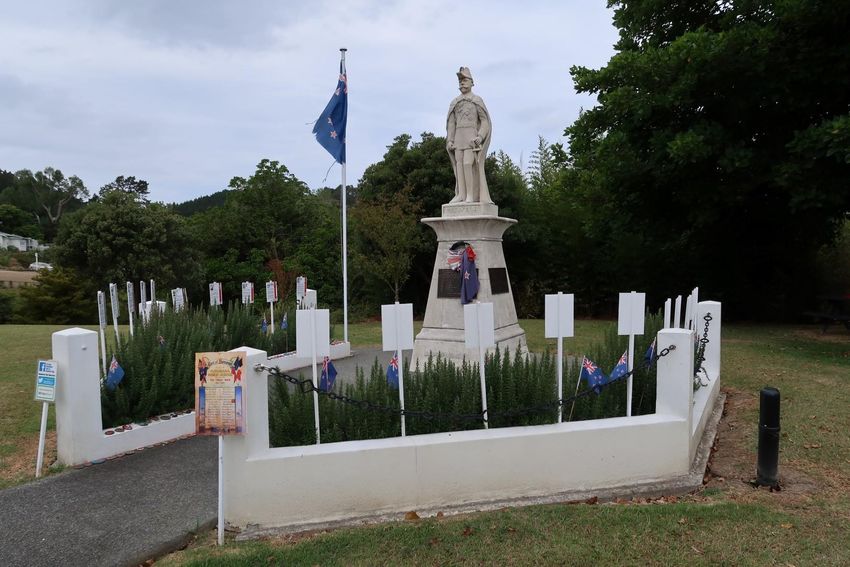
TABLE OF CONTENTS

EXECUTIVE SUMMARY                                                                                            3

1.       IDENTIFICATION                                                                                      5
1.1.     Name of Place                                                                                       5
1.2.     Location Information                                                                                5
1.3.     Legal Description                                                                                   5
1.4.     Extent of List Entry                                                                                6
1.5.     Eligibility                                                                                         6
1.6.     Existing Heritage Recognition                                                                       6

2.       SUPPORTING INFORMATION                                                                              7
2.1.     Historical Information                                                                              7
2.2.     Physical Information                                                                               13
2.3.     Chattels                                                                                           16
2.4.     Sources                                                                                            16

3.       SIGNIFICANCE ASSESSMENT                                                                            18
3.1.     Section 66 (1) Assessment                                                                          18
3.2.     Section 66 (3) Assessment                                                                          19

4.       APPENDICES                                                                                         21
4.1.     Appendix 1: Visual Identification Aids                                                             21
4.2.     Appendix 2: Visual Aids to Historical Information                                                  26
4.3.     Appendix 3: Visual Aids to Physical Information                                                    29
4.4.     Appendix 4: Significance Assessment Information                                                    32

Disclaimer

Please note that entry on the New Zealand Heritage List/Rārangi Kōrero identifies only the heritage values of
the property concerned, and should not be construed as advice on the state of the property, or as a comment of
its soundness or safety, including in regard to earthquake risk, safety in the event of fire, or insanitary
conditions.
Archaeological sites are protected by the Heritage New Zealand Pouhere Taonga Act 2014, regardless of
whether they are entered on the New Zealand Heritage List/Rārangi Kōrero or not. Archaeological sites include
‘places associated with pre-1900 human activity, where there may be evidence relating to the history of New
Zealand’. This List entry report should not be read as a statement on whether or not the archaeological
provisions of the Act apply to the property (s) concerned. Please contact your local Heritage New Zealand office
for archaeological advice.

              Heritage New Zealand Pouhere Taonga – List Entry Report for a Historic Place, List No. 9816          2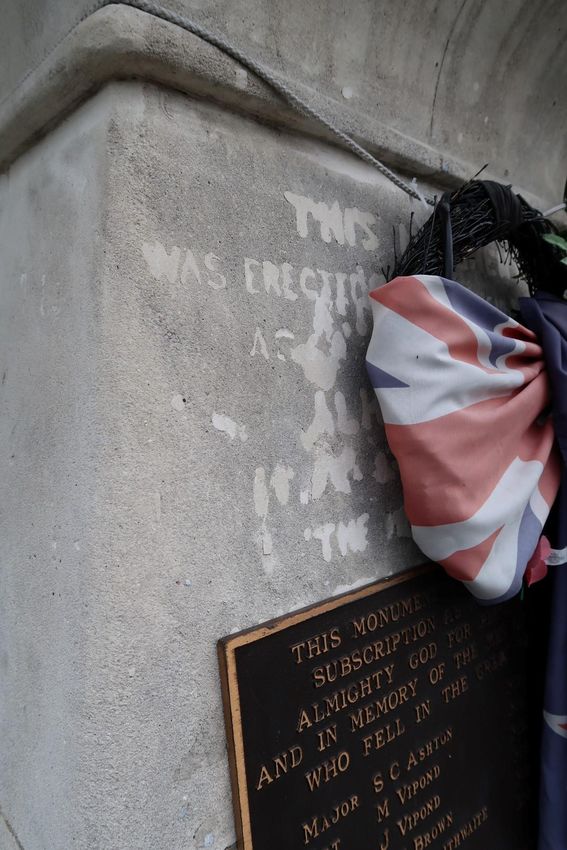
EXECUTIVE SUMMARY

Purpose of this report
The purpose of this report is to provide evidence to support the inclusion of First World War Memorial
in the New Zealand Heritage List/Rārangi Kōrero as a Category 2 historic place.

Summary
First World War Memorial, erected at Matakana less than two years after the end of the conflict,
reflects the impact of the war on small communities who wished to acknowledge the losses and
remind future generations of the events. As a landmark in the town, the monument is a tangible
reminder of the sacrifices made by the community a century ago and remains a place where the
community gathers to commemorate annually. The stone memorial, sculpted by William Henry Feldon,
consists of one of the earliest statues of King George V atop a large plinth with a roll of honour. Its
pared classical design reflects the developing trend towards reduced ornamentation in the twentieth
century.

In an area with a long history of pre-European settlement and conquest, Matakana was established in
the 1840s at the head of the Matakana River on land acquired by the Crown in the Mahurangi
purchase. River access was of vital importance to the early settlers for transport and communication
and so the township grew around the Matakana wharf which also supplied the wider district. When
war broke out in 1914, 36 men from Matakana and the surrounding district enlisted and served in the
New Zealand armed forces, thirteen of whom died while in service. The Matakana community rallied
during the war years to raise funds for the war and kept abreast of the news through reports which
were received at the wharf. Following the war the community resolved to erect a memorial to their
dead and commissioned William Henry Feldon to create a monument.

First World War Memorial was sculpted by Feldon during 1919. Feldon was one of a small number of
New Zealand sculptors who created war memorials for New Zealand as many were imported from
Europe. Feldon’s sculpture for Matakana incorporated a statue of King George V in full Field Marshall
attire complete with medals, his sword, and the 7 November 1919 proclamation of two minutes of
silence. It was erected in December that year at the corner of the main roads in Matakana which met
at a junction with the road to the wharf. The memorial was unveiled on 23 April 1920 and the
community had regular services for ANZAC Day and Armistice Day in the years following.

             Heritage New Zealand Pouhere Taonga – List Entry Report for a Historic Place, List No. 9816   3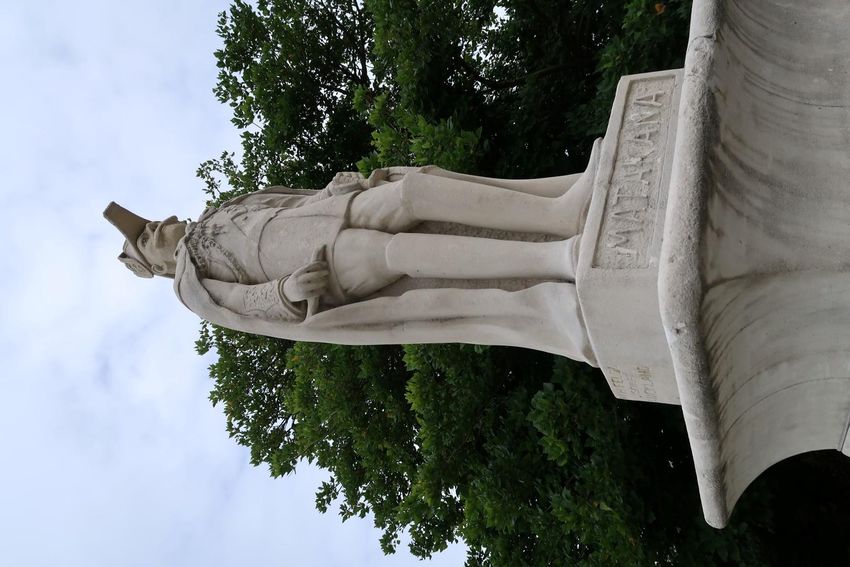
The First World War Memorial did not remain as prominent as in its first years. In the early 1930s a car
garage was erected immediately adjacent to the monument and there were structures close to the
memorial until 1955 when the Campbell family gifted the land the memorial was located on to the
local council. The memorial was also damaged by vandalism including paint bombing, being
decapitated on multiple occasions, and from inappropriate cleaning techniques. In 2006 the memorial
was relocated 50m south of its original location despite some local opposition. In recognition of the
importance of the memorial the local council subsequently created a new court of honour on the new
site and, following the eventual loss of the head in 2012, an extensive restoration of the memorial was
funded to conserve the statue and replace the head as part of the nationwide commemorations of the
centenary of the First World War. The place has seen a resurgence in local interest and regular
commemorations are held around the memorial.

             Heritage New Zealand Pouhere Taonga – List Entry Report for a Historic Place, List No. 9816   4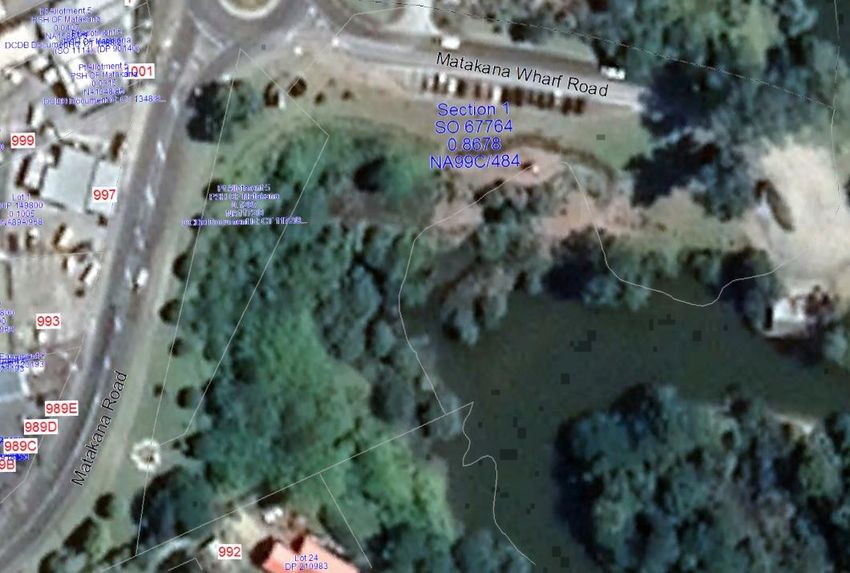
1.          IDENTIFICATION1
1.1.        Name of Place

             Name
             First World War Memorial

             Other Names
             Matakana War Memorial
             King George V Monument
             King George War Memorial
             George V Monument
             WWI Memorial Statue

1.2.        Location Information

             Address
             Matakana Road
             Matakana
             AUCKLAND 0985

             Additional Location Information
             NZTM Easting: 1754111.4
             NZTM Northing: 597589.62

             Local Authority
             Auckland Council

1.3.        Legal Description

             Section 1 SO 67764 (NA99C/484, Local Purpose (Esplanade) Reserve), Pt Allot 5 Parish of
             Matakana (NA1172/8), and Legal Road, North Auckland Land District.

1   This section is supplemented by visual aids in Appendix 1 of the report.
2   Approximate location of statue.

                 Heritage New Zealand Pouhere Taonga – List Entry Report for a Historic Place, List No. 9816   5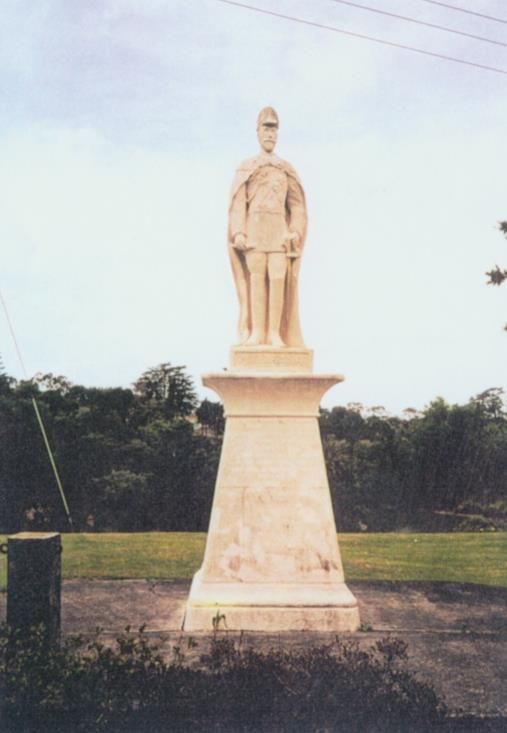
1.4.   Extent of List Entry

       Extent includes part of the land described as Section 1 SO 67764 (NA99C/484, Local Purpose
       (Esplanade) Reserve), Pt Allot 5 Parish of Matakana (NA1172/8), and Legal Road, North
       Auckland Land District and the structure known as First World War Memorial thereon. (Refer
       to map in Appendix 1 of the List entry report for further information).

1.5.   Eligibility

       There is sufficient information included in this report to identify this place. This place is
       physically eligible for consideration as a historic place. It consists of land and a structure fixed
       to land which lies within the territorial limits of New Zealand.

1.6.   Existing Heritage Recognition

       Local Authority and Regional Authority Plan Scheduling
       Scheduled in Auckland Unitary Plan, Operative in part [15 Nov 2016], Schedule 14.1 –
       Schedule of Historic Heritage, ID No. 00548, Matakana War Memorial, Category B. For
       Category B items on Schedule 14.1, modification and restoration has Restricted Discretionary status;
       and demolition, relocation, new buildings or structures and subdivision has Discretionary Activity
       status. Maintenance and repair is permitted.

       New Zealand Archaeological Association Site Recording Scheme
       This place or sites within this place have been recorded by the New Zealand Archaeological
       Association. The reference is – R09/2148 Matakana War Memorial.

       Other Heritage Recognition
       Auckland Council Cultural Heritage Inventory: Heritage ID No. 16100 George V Monument/
       WWI Memorial Statue.

           Heritage New Zealand Pouhere Taonga – List Entry Report for a Historic Place, List No. 9816        6
2. SUPPORTING INFORMATION
2.1. Historical Information
Early History
Matakana forms part of a coastal land area which was settled and conquered a number of
times over the centuries and prior to the arrival of Europeans by different iwi groups
including Ngāi Tāhuhu, Ngāti Raupo, Ngāti Manuhiri, Ngāti Rongo, Te Kawerau ā Maki and
the Marutūahu confederation and has a complex history.3 The Matakana River was named
after the pā located at the river mouth and means glowering eyes.4 The town lies within the
Mahurangi Purchase, a 100,000 acre coastal strip between Auckland and Te Arai, obtained
by the Crown in April 1841. The purchase deed was signed by leaders of Ngāti Pāoa, Ngāti
Maru and Ngāti Whanaunga, who had previously obtained the land by conquest.5
Although some European settlers moved to area around Matakana River during the 1840s to
take up opportunities for timber felling and milling, formal European settlement beside the
river at Matakana and Sandspit, then known as Upper and Lower Matakana respectively,
began in the early 1850s.6 John Long Heydin, who established the first timber mill at
Matakana, purchased the Crown Grant for the Allotment 5 Parish of Matakana, which
included the land the memorial was later erected on, in 1851 and crown land auctions of
farms were held in 1853.7 The river formed an essential part of life for the early settlers as
their link to Auckland for communication, travel and transport of goods such as furniture,
building supplies and food into the settlement and export of produce such as firewood,
timber and stock to the Auckland market.8 Matakana was one of a number of settlements
established near water access in the area. Other settlements included Warkworth beside the
Mahurangi River in 1854, and Leigh and Big Omaha from 1858 east of Matakana along the
coast.9
3 Jaden Harris, ‘Matakana Wharf Reserve, Matakana: Evaluation of the historic heritage values’, DFG Heritage, Auckland,
October 2013, p. 6; Graeme Murdoch, ‘History of Human Occupation’ in, Auckland Regional Council Regional Parks
Service, Tawharanui Regional Park Management Plan: 1st Review, Auckland, 1992, pp. 33-51.
4 Murdoch, 1992, p. 34.
5 H Mabbett, The Rock and the Sky: The Story of Rodney County, Auckland, 1977, pp.17-18
6 Reportedly settlers first moved to Sandspit in c.1842 and to Matakana in 1848. Exports of firewood from Matakana were
reported in newspapers by 1850.
7 Deeds Index (DI), 1B.167, LINZ; David R Grant, We Gathered Here: A History of Matakana, Whangarei, 2017, p. 145; Harris,
2013, p. 6. Heydin’s Mill was likely to have been located upriver of the future wharf, northeast of the memorial land.
8 Grant, 2017, p. 26.
9 Mabbett, 1977, pp. 97-98, 123.
Heritage New Zealand Pouhere Taonga – List Entry Report for a Historic Place, List No. 9816 7Over the following decades farming became established in the surrounding district as well as
flax and timber mills. Matakana was well-located to serve as river access for these settlers as
it was relatively inland compared to some other settlements. A wooden wharf was
constructed at Matakana in 1879 and tracks to Matakana, and specifically the wharf, became
formalised as roads through the late 1870s and 1880s.10 A junction formed at the south east
corner of Allotment 5 where the roads east to Whangateau and Leigh, west to Warkworth
and Sandspit, and north to Whangaripo met the road to the wharf. The wharf was a busy
port with regular inward and outward vessels that supplied the community’s needs.11 Shops
were soon opened in close proximity to the wharf and by 1914 a small town centre had
developed near the junction with multiple shops, a saddler/bootmaker, a library, two
churches, a public hall, a school, a post office, a hotel, a boarding house and a dairy factory.12
Matakana in the First World War
With the outbreak of the First World War (1914-1918), the Matakana community
enthusiastically joined the rest of the country in supporting the war effort.13 The community
raised money to donate to the effort through concerts and patriotic committees and 36 men
from Matakana and the surrounding district served in the New Zealand armed forces.14 The
wharf continued to be an important location for the community during these years as with
boats still being the primary method of transport until around 1930, it was the departure
point for the enlisted men and the place where news of the war, including reports of deaths
of the local soldiers were received by those at home.15 Of the men who enlisted to serve
from Matakana, thirteen died overseas and in New Zealand while in service.
Creation of Matakana War Memorial
To commemorate those deaths, the Matakana community came together again following
the war to commission and raise funds for a war memorial. The use of war memorials to
commemorate ordinary soldiers’ deaths began in Britain and Europe following the huge loss
of life in the Crimean War before which most memorials only recognised higher classes,
10 SOs 1008, 1114 A, LINZ; Harris, 2013, p. 6.
11 Grant, 2017, p. 28.
12 ibid., p. vii.
13 Rodney & Otamatea Times, Waitemata and Kaipara Gazette (ROTWKG), 16 Sep 1914, p. 5.
14 Grant, 2017, p. 379.
15 E J M Jones, Shadows on My Wall: Memoires of Errol Jones, Auckland, 2010, as cited by Adrienne Miller and Grant
McLachlan, ‘Nomination of Matakana War Memorial for the List’, Auckland, 2019, copy in BDG 1790, HNZPT, Northern
Regional Office, p. 48.
Heritage New Zealand Pouhere Taonga – List Entry Report for a Historic Place, List No. 9816 8particularly the deaths of nobility.16 Settlers had brought the practice with them and early
war memorials in New Zealand were erected in the first decades of the twentieth century to
commemorate the New Zealand Wars and the South African War. The commission for
Matakana’s war memorial was given to William Henry Feldon, a local sculptor who, after
serving during the war, actively sought commissions to create war memorials for
communities around New Zealand.17 He was one of only a small number of New Zealand
based sculptors given war memorial commissions as most of the war memorials erected
around the country, especially statue memorials, were purchased from Europe.18 This was
due both to the cost of commissioning a sculpture and because it was often believed that
only European artists had the talent to create sculptures that would convey the high ideals
required.19
Feldon sculpted the First World War Memorial for Matakana from Ōamaru stone, a soft local
stone. The statue of King George V stood atop a block with ‘MATAKANA’ inscribed on the
front. The King was depicted wearing the military uniform dress of a Field Marshall complete
with a cocked bicorn hat, tunic, medals, cloak, and boots, holding his sword in his left and a
scroll in his right to represent the 1918 armistice.20 The statue was on top of a large plinth
with an inscription naming the men who died in order of their rank. The named men came
from Matakana, Sandspit, Whangateau and Whangaripo. These men had died in a number of
different conflicts including Gallipoli, Ypres, Palestine and the Somme, as well as men who
had died from illnesses including measles in New Zealand and England.21 One of the names
was added in 1921 following the soldier’s death in Auckland hospital from tuberculosis
contracted while serving overseas.22 Like many others towns around New Zealand, the
Matakana community chose to only include the names of the dead as the memorials were
partly conceived ‘as surrogate tombstones that should pay primary tribute to the dead’
unlike in Australia where many memorials listed all the names of those who served.23
16 Jock Phillips, To The Memory: New Zealand’s War Memorials, Nelson, 2016, p. 15.
17 NZH, 24 Jan 1920, p. 8; Chris Maclean and Jock Phillips, The Sorrow and the Pride, Wellington, 1990, p. 113.
18 Phillips, 2016, pp. 139-140.
19 Elise Caddigan, ‘Historic Heritage Evaluation: Papakura - Karaka War Memorial’, Auckland Council Heritage Unit, Auckland,
Mar 2017, p. 53.
20 Miller and McLachlan, 2019,.
21 Grant, 2017, pp. 382-405.
22 ibid., p. 388.
23 Phillips, 2016, pp. 133.
Heritage New Zealand Pouhere Taonga – List Entry Report for a Historic Place, List No. 9816 9The memorial was completed and erected in December 1919 on a small section of Allotment
5, land which the Campbell family had owned since 1901, at the south east corner of the
wharf junction.24 Susan Campbell, who was described in her obituary as the Mother of
Matakana, gave her permission for the monument to be placed on the family’s land
overlooking the township and the wharf.25 Although news reports indicate that the Prime
Minister was planned to unveil the memorial in January 1920, its official unveiling was held
on 23 April 1920 by the Honourable Joseph Gordon Coates, Minister for Defence and Public
Works.26 The First World War memorial was the tenth unveiled nationally and the first statue
memorial erected to commemorate the conflict.27 The event was well attended by the
community and over the following years the memorial was the site of local ANZAC Day and
Armistice Day commemorations for many years.28
Use of the place after erection of monument
The wharf junction continued to be an important centre for Matakana in the years after the
erection of the First World War Memorial. In 1929 the land around the memorial was leased
to Thomas (Jack) Walden who built a garage on the land beside the monument and operated
a car dealer from that location.29 When the garage burnt down in 1936, a new garage and
dealership was built on the opposite side of Matakana Road while some smaller structures
remained around the monument.30 The wharf was significantly damaged in 1938 in a major
flood and was largely rebuilt on a concrete base.31 As part of the centenary celebrations
planning, the council considered acquiring that portion of the Campbells land to create a
public reserve with swimming baths and included the memorial and the wharf but the plans
were interrupted by the outbreak of the Second World War and didn’t proceed.32 Unlike in
some communities, no additions were made to the First World War Memorial to
commemorate the lives lost between 1939 and 1945. This possibly reflects a decrease in the
prominence of the statue in the township over time as well as the reduced isolation of
24 DI 6B.643, LINZ.
25 Auckland Star, 25 Sep 1930, p. 21.
26 NZH, 24 Apr 1920, p. 8.
27 Miller and McLachlan, 2019, p. 53.
28 Grant, 2017, pp. 374-5.
29 ibid., 2017, pp. 95-97.
30 ROTWKG, 16 Dec 1936, p. 2; Tudor Washington Collins, ‘Long distance shot of an inhabited area in Matakana’, PH-2013-7-
TC-B211-03, Auckland War Memorial Museum, c.1940; Grant, 2017, p. 97.
31 Harris, 2013, p. 10.
32 ROTWKG, 3 May 1939, p. 4; Grant, 2017, p. 375.
Heritage New Zealand Pouhere Taonga – List Entry Report for a Historic Place, List No. 9816 10Matakana associated with car transport. The Campbell family cleared the land around the
memorial in the 1950s and gifted the land on which the memorial stands to the Council in
1955 after which it became part of the Matakana Wharf Reserve.33
Maintenance of the statue has been inconsistent over the years. It became covered in mould
and lichen with environmental damage causing erosion of the soft stone and this was
exacerbated by the statue not being ‘laid on the same plane as it was found in the ground’.34
The monument was also damaged by vandalism several times including a red paint bomb
attack and in the late 1940s an attempt to topple the statue with a rope pulled by a car
resulted in the decapitation of the statue.35 The head was soon reattached but on later
occasions was again removed but recovered.36
Relocation and restoration
By the early 2000s the monument was sometimes referred to as King George V statue,
reflecting the reduced recognition of the monument’s war memorial connections.37 With an
increasing population at Matakana, traffic was causing problems at the township and the
council decided to improve the road by building a roundabout at the wharf junction.38 This
necessitated the relocation of the statue and, despite some local opposition, the memorial
was moved within the Wharf Reserve 50m south of its original location in 2006.39 A public
toilet block, which had first been suggested in 2002, was subsequently erected beside the
monument’s original location.40 The council created a new court of honour around the
monument which was now sited in an open clearing fronting Matakana Road with an oblique
view of the roundabout. The head of the statue was removed again in 2006 and in 2012 at
which time it was lost.41 In 2013-2014, as part of the nationwide commemorations of the
start of the First World, funding was granted by the Council and government for the creation
33 RT NA1172/8, LINZ.
34 Ana Machado, ‘Condition Report: Matakana War Memorial’, Prepared for Auckland Council, July 2019, p. 4, copy in BDG
1790, HNZPT, Northern Regional Office; Maclean and Phillips, 1990, p. 159. When the statue was sculpted the bedding
planes of the stone were no longer positioned horizontally but vertically thus making it more prone to catching water.
35 Grant, 2017, p. 375.
36 Miller and McLachlan, 2019, p. 58.
37 ibid., p. 68.
38O’Conner Planner Consultants, ‘Land Use Consent to Relocate A Historic Object – the King George V Monument’, 20 Apr
2005, copy in BDG 1790, HNZPT, Northern Regional Office.
39 Grant, 2017, p. 375. ‘Dissenting correspondence’ in Miller and McLachlan, 2019, p. 397.
40
Rodney Times (RT), 12 May 2009, URL: http://www.stuff.co.nz/auckland/local-news/rodney-times/2338501/Wait-over-for-
Matakana-toilets.
41 Miller and McLachlan, 2019, p. 72; RT, 9 Feb 2006, 16 Feb 2006, in Miller and McLachlan, 2019, pp. 440-441.
Heritage New Zealand Pouhere Taonga – List Entry Report for a Historic Place, List No. 9816 11of a new head for the statue and general maintenance of the statue. Ana Machado, a
conservator, restored the statue and Steven Woodward sculpted a new head with an
Admiral of the Fleet hat which was installed in April 2014.42 A bronze plaque with the original
inscription was added and a second plaque to commemorate the Second World War was
added on the south side. A rededication service with a large turnout was held after the new
head was attached.43 In subsequent years interest in the memorial has increased and ANZAC
services have been held regularly. The resurgence of interest and appreciation of the
monument as a war memorial is part of a nationwide pattern beginning in the 1990s and
continuing through the centenary of the First World War.44
Associated List Entries
N/A
42 Miller and McLachlan, 2019, p. 15.
43 ibid., p. 74.
44 Phillips, 2016, pp. 202-203.
Heritage New Zealand Pouhere Taonga – List Entry Report for a Historic Place, List No. 9816 122.2. Physical Information
Current Description
Context
First World War Memorial is located at the eastern side of the Matakana township. The
monument lies within the Matakana Wharf Reserve which encompasses the land north from
the monument to the corner where the statue was formerly located and the public toilets
have been constructed, and then east down the hill to the river where the 1940s concrete
and timber wharf is located.
To the northwest of the First World War Memorial is the commercial centre of the township
which incorporates a number of historic buildings including St Leonards Church (Anglican)
(List No. 7130, Category 2 historic place), Matakana House, and the Matakana Dairy Factory
(Former).
Site
The site incorporates the monument, comprised of the statue of King George V on top of a
large plinth, within a court of honour, and the surrounding open space where public
gathering occurs during ANZAC commemorations, and also extends part way into the native
trees on the downhill slope to the east.
The central part of the site is flat with a small slope up to the road edge on the west
boundary and the downhill slope at the east boundary which continues to Matakana River. A
picnic table decorated with a large painted ANZAC poppy is located in the south eastern part
of the open space. The site fronts the main road into Matakana from the west and is a
prominently visible landmark.
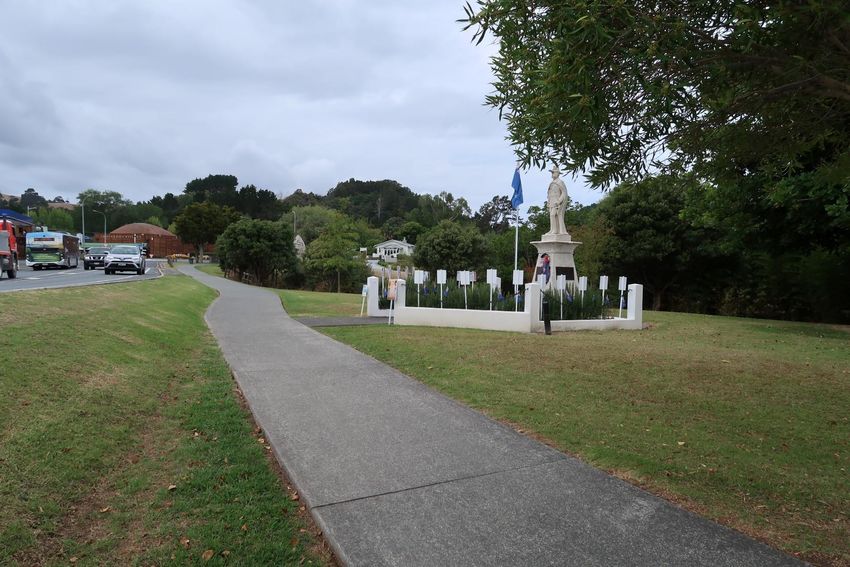
The court of honour is a paved octagon around the monument partly enclosed by a low
concrete post and chain fence with a rosemary hedge in a raised garden bed. Rosemary is
associated with memory and remembrance and sprigs of the herb have been traditionally
worn for ANZAC Day and Remembrance Day.45 Information cards on stakes are set at regular
intervals in the garden bed with details of each of the men named on the memorial. Around
45 Australian War Memorial, ‘Rosemary’, URL:https://www.awm.gov.au/commemoration/customs-and-ceremony/rosemary
[accessed 18 March 2020]
Heritage New Zealand Pouhere Taonga – List Entry Report for a Historic Place, List No. 9816 13the edge and base of the fence are a large number of stones painted with poppies and other
symbols of war remembrance.
Monument
The monument is entirely carved from Ōamaru Stone. The relatively streamlined design has a
pared classical style which references the developing modern, art deco aesthetic with little
ornamentation or other decorative features. The ashlar masonry plinth has a square
chamfered base below a tapered shaft with a cavetto moulded capital. The original base was
heightened with an additional stone piece when the monument was relocated. The
commemorative inscription is engraved into the western face of the shaft and has been filled
with mortar and partly covered with a brass plaque bearing a copy of the original inscription
with the names of the men below.46 The inscription reads: This Monument Was Erected By
Public Subscription As A Thanksgiving To Almighty God For Peace And Victory And In The
Memory Of The Men Of This District Who Fell In The Great War 1914-1918. A second brass
plaque is located on the southern face with an inscription which commemorates the men
who died while serving in the Second World War and their names. This inscription reads: In
Memory Of The Men Of This District Who Fell In World War II 1939-1945. The northern and
eastern faces are plain.
The King George V statue atop the plinth stands on a square base with Matakana carved into
the east face and ‘W.H FELDON, SCULPT, AUCKLAND’ engraved on the north face. The torso
of the sculpture is wearing a field marshal dress uniform, a coat, and holding a scroll in the
right hand, representing the 7 November 1919 proclamation for two minutes of silence, and
a sword in the left. The uniform is detailed with an aigullette, Knight of the Garter sash, and
medals including Knight of the Garter, Knight Grand Commander of the Indian Empire, Knight
Grand Cross of St Michael, St George, Knight of the Thistle and Royal Victorian Chain. The
head of the statue is wearing an Admiral of the Fleet hat and has the King’s distinctive
moustache.
Comparisons
46 There are three differences between the original inscription and the plaque. These are that the end date of the war has
been changed from 1919 to 1918, ‘VIZ’ has been omitted, and one of the names has been misspelled from E O Brown to E
C Brown. See Miller and McLachlan, 2019, p. 17.
Heritage New Zealand Pouhere Taonga – List Entry Report for a Historic Place, List No. 9816 14First World War Memorial, Matakana is one of many war memorials erected around New
Zealand in the aftermath of the 1914-1918 conflict. These memorials were erected by
communities at the local and national level and in a variety of forms. These ranged from the
First World War Memorial Beacon (List No. 9652, Category 2 historic place) in 1915,
cenotaphs including Fallen Soldiers’ Memorial (List No. 1183, Category 2 historic place) in
Bulls, and ANZAC Memorial Bridge (List No. 3969, Category 1 historic place) in Kaiparoro, to
the Auckland War Memorial Museum (List No. 94, Category 1 historic place) and National
War Memorial (List No. 1410, Category 1 historic place) in Wellington.
The Matakana memorial was the first statue memorial erected to commemorate World War
One. Statue memorials had been erected in New Zealand to commemorate the South African
War in the years before 1914 including some sculpted in New Zealand – the 1905 Fallen
Troopers Memorial (List No. 2273, Category 2 historic place) in Ōamaru by Carlo Bergamini
who also created memorials for Palmerston, Waimate, Dunedin, and Riverton.47 Other New
Zealand created statue memorials include a 1924 bronze World War One statue memorial by
Frank Lynch for the Devonport First World War Memorial (List No. 4515, Category 2 historic
place), and Richard Goss’ sculpted figures for the 1923 World War One Memorial (List No.
4186, Category 2 historic place) in Cambridge and for the 1922 War Memorial atAuckland
Grammar School (List No. 4472, Category 1 historic place).
The statue is unusual in depicting King George V in military uniform. Feldon later also created
the Arawa Soldier Memorial (within Rotorua Government Gardens Historic Area, List No.
7015), which includes King George in full regal regalia at the top of the statue. This example is
more intact than First World War Memorial, Matakana. The Matakana statue is an early
depiction of the King internationally with the only earlier examples being in India (1914
statue in Chinnai City, likely sculpted by Herbert Hamilton, 1916 statue in Delhi by Edgar
Bertram Mackennal’s which the King sat for). These and later statues erected to
commemorate his death also all depict the King in his royal regalia.48
47 Phillips, 2016, p. 81
48Indian Columbus, ‘The Statue of King George V in George Town’, 20 Nov 2018, URL:
http://indiancolumbus.blogspot.com/2018/11/KingGeorgeMadras.html; 'Herbert Hampton', Mapping the Practice and
Profession of Sculpture in Britain and Ireland 1851-1951, University of Glasgow History of Art and HATII, online database
2011, URL: https://sculpture.gla.ac.uk/view/person.php?id=msib2_1203104115 [accessed 30 Mar 2020]; Shri Ram Nath
Kovind, ‘His Majesty King George V, 1916, Sir Edgar Bertram Mackennal, Marble, URL:
https://presidentofindia.nic.in/eartcategorydetail.htm?8&type=cat.
Heritage New Zealand Pouhere Taonga – List Entry Report for a Historic Place, List No. 9816 15Construction Professionals
William Henry Feldon – Sculptor (1919)
Steven Woodward – Sculptor (2014)
Construction Materials
Ōamaru stone (whitestone)
Bronze (2014 plaques)
Key Physical Dates
December 1919 Erection of War Memorial
Post 1920 Vandalism
c.1940s Statue decapitated and repaired
Post 1955 Became part of Matakana Wharf Reserve
2006 Statue relocated within reserve; Court of Honour created
2012 Head removed and lost
2013-4 Conservation, restoration, and new head installed.
Uses
Commemoration Memorial - World War One
Commemoration Memorial - World War Two
2.3. Chattels
There are no chattels included in this List entry.
2.4. Sources
Sources Available and Accessed
Primary Source information such as deeds indexes, land titles and survey plans were used.
Contemporary newspaper reports were accessed on the National Library’s Papers Past
website. Secondary sources that were consulted included local histories, historical reports
and an extensive application provided by the nominators.
The site was visited and fully accessed in March 2020.
Further Reading
Grant, David R, We Gathered Here: A History of Matakana, Whangarei, 2017.
Phillips, Jock, To The Memory: New Zealand’s War Memorials, Nelson, 2016.
Heritage New Zealand Pouhere Taonga – List Entry Report for a Historic Place, List No. 9816 16Machado, Ana, ‘Condition Report: Matakana War Memorial’, Prepared for Auckland Council, July 2019. Heritage New Zealand Pouhere Taonga – List Entry Report for a Historic Place, List No. 9816 17
3.       SIGNIFICANCE ASSESSMENT49
3.1.     Section 66 (1) Assessment

          This place has been assessed for, and found to possess aesthetic, historical, and social
          significance or value. It is considered that this place qualifies as part of New Zealand’s historic
          and cultural heritage.

          Aesthetic Significance or Value

          First World War Memorial has aesthetic significance as a visually prominent landmark on the
          main road into Matakana. Despite being relocated in the early twenty-first century, the
          setting of the monument in a clear grassed area facing the main road into the settlement
          reflects the importance of the memorial as a place of commemoration in the community.

          Historical Significance or Value

          First World War Memorial has historic significance because it represents the importance that
          local communities around the country placed on acknowledging their First (and later Second)
          World War losses in a public way. It also has historic value as one of the earliest war
          memorials erected in New Zealand to commemorate the internationally significant First
          World War. The monument was created as part of a national and international pattern of
          commemoration of those events and was the first statue memorial to commemorate that
          war in New Zealand. It is an unusual example of a statue memorial being a sculpture of a
          monarch rather than of a soldier. The memorial demonstrates the impact of the First World
          War on small communities around New Zealand with the names of the thirteen men who
          died recorded on the monument.

          The place also demonstrates the historic importance of Matakana as a gathering and
          connecting point for the surrounding area during the early twentieth century when water
          transport was the main way to travel and receive news from outside the settlement.

          Social Significance or Value

          First World War Memorial has social significance as a place of congregation and
          commemoration for the Matakana community. The place has enduring community esteem
          having been created by the local community in 1919 and remaining today a tangible

 49For the relevant sections of the Heritage New Zealand Pouhere Taonga Act 2014 see Appendix 4: Significance
   Assessment Information.

              Heritage New Zealand Pouhere Taonga – List Entry Report for a Historic Place, List No. 9816       18
reminder of the events of the First World War for descendants of those involved in the
conflict and the impact it had on small communities. Reflecting the resurgence of interest in
war memorials and commemoration, local residents hold regular ANZAC Day services at the
memorial. The community has also demonstrated their ongoing appreciation of the place in
their opposition to its relocation and the establishment of an open space around the
monument after it was moved which is now used for those ANZAC Day services.
3.2. Section 66 (3) Assessment
This place was assessed against the Section 66(3) criteria and found to qualify under criteria
a, b, e, f and h. The assessment concludes that this place should be listed as a Category 2
historic place.
(a) The extent to which the place reflects important or representative aspects of New
Zealand history
War memorials, such as First World War Memorial, are important landmarks in towns across
New Zealand and their widespread creation by individual communities represents the
significant impact that war had on these communities and on the nation in the twentieth
century. These memorials became significant public spaces in most towns, including
Matakana, where commemorations for those who fell and the service of returned personnel
could take place. The monument, which was erected in 1919, is an early example of these
memorials and commemorative spaces and reflects the local creation and decision making
regarding local war memorials.
(b) The association of the place with events, persons, or ideas of importance in New Zealand
history
The place has significance for its association with the First World War and the contribution of
Matakana and the surrounding district to that effort. The memorial commemorates the loss
of life in a number of different campaigns during the war including at Gallipoli and other
major war fronts.
The place also has some significance for its association with William Henry Feldon, a New
Zealand sculptor who was one of a small number who created First World War memorials in
New Zealand. It is also associated with King George V, the current reigning monarch during
the war and when the monument was created. It is the first statue in the King’s likeness in
Heritage New Zealand Pouhere Taonga – List Entry Report for a Historic Place, List No. 9816 19New Zealand and an internationally unusual example of the King being depicted in military uniform. (e) The community association with, or public esteem for the place The First World War Memorial is important to the Matakana community as a local land mark and place where commemorative services are held on ANZAC Day. Although commissioned by the community, local esteem for the memorial diminished over the years until interest was renewed in 2006 at which time some members of the community objected to its relocation. Since it was moved, the memorial has been restored as part of the national commemorations of the centenary of the First World War. The memorial has been used frequently by the local community in recent years reflecting the national resurgence of interest in war memorials and observance of ANZAC Day. (f) The potential of the place for public education Located in a prominent public location on the main road into Matakana enables easy access to the site with the memorial providing contemporary visitors the chance to reflect on the place and impact of the war on the local community. (h) The symbolic or commemorative value of the place The First World War Memorial has commemorative value as a place which was created to remember the men who lost their lives between 1914 and 1918 and continues to fulfil this role into the present through regularly held ANZAC Day services. Following the relocation of the memorial the commemorative function of the place has been reinforced with the creation of a court of honour and the use of the surrounding open space by the community for services. It also commemorates King George V as the military leader of New Zealand troops during the conflict and thus New Zealand’s place in Empire. Summary of Significance or Values First World War Memorial is a significant place for the extent to which it reflects the impacts of the First World War on small communities in New Zealand and demonstrates how communities recognised and commemorated the losses of the war. It has significance as a work by William Henry Feldon, a New Zealand sculptor, who was one of a small number who created memorials in New Zealand. The place is of importance to the Matakana community as a landmark that is used regularly for commemoration. Heritage New Zealand Pouhere Taonga – List Entry Report for a Historic Place, List No. 9816 20
4.     APPENDICES
4.1.   Appendix 1: Visual Identification Aids

       Location Maps

                                                                  Matakana

          Heritage New Zealand Pouhere Taonga – List Entry Report for a Historic Place, List No. 9816   21
Maps of Extent Extent of First World War Memorial indicated by solid red line (Google Earth with QuickMap overlay) Extent includes part of the land described as Section 1 SO 67764 (NA99C/484, Local Purpose (Esplanade) Reserve), Pt Allot 5 Parish of Matakana (NA1172/8), and Legal Road, North Auckland Land District and the structure known as First World War Memorial thereon. Heritage New Zealand Pouhere Taonga – List Entry Report for a Historic Place, List No. 9816 22
Current Identifiers - RT NA99C/484

   Heritage New Zealand Pouhere Taonga – List Entry Report for a Historic Place, List No. 9816   23
Heritage New Zealand Pouhere Taonga – List Entry Report for a Historic Place, List No. 9816 24
RT NA1172/8

Heritage New Zealand Pouhere Taonga – List Entry Report for a Historic Place, List No. 9816   25
Legal Road - 87484

   Heritage New Zealand Pouhere Taonga – List Entry Report for a Historic Place, List No. 9816   26
4.2.         Appendix 2: Visual Aids to Historical Information

          Historical Photographs

          View of Matakana in c. 1940 after the garage was relocated opposite the memorial.50

          Detail of above image showing location of First World War Memorial (circled red). Note
          structures around the monument and garage on opposite side of the road.

50   Tudor Washington Collins, ‘Long distance shot of an inhabited area in Matakana’, PH-2013-7-TC-B211-03, Auckland War
      Memorial Museum, c.1940.

                  Heritage New Zealand Pouhere Taonga – List Entry Report for a Historic Place, List No. 9816              27
Picture of First World War Memorial in 1999 before relocation. Note original head attached
and view towards river behind.51
51 Dinah Holman, 1999, sourced from Auckland Council Cultural Heritage Inventory record number 16100.
Heritage New Zealand Pouhere Taonga – List Entry Report for a Historic Place, List No. 9816 284.3. Appendix 3: Visual Aids to Physical Information
Current Photographs of Place (All Alexandra Foster, HNZPT, 2 March 2020)
View showing First World War Memorial and court of honour fronting Matakana Road,
looking north towards wharf junction.
Heritage New Zealand Pouhere Taonga – List Entry Report for a Historic Place, List No. 9816 29Showing statue in Field Marshall Uniform with medals. Heritage New Zealand Pouhere Taonga – List Entry Report for a Historic Place, List No. 9816 30
View of east face of plinth showing mortared original inscription above brass plaque below
covering the names.

   Heritage New Zealand Pouhere Taonga – List Entry Report for a Historic Place, List No. 9816   31
4.4.   Appendix 4: Significance Assessment Information

        Part 4 of the Heritage New Zealand Pouhere Taonga Act 2014

        Chattels or object or class of chattels or objects (Section 65(6))
        Under Section 65(6) of the Heritage New Zealand Pouhere Taonga Act 2014, an entry on the
        New Zealand Heritage List/Rārangi Kōrero relating to a historic place may include any chattel
        or object or class of chattels or objects –
            a) Situated in or on that place; and
            b) Considered by Heritage New Zealand Pouhere Taonga to contribute to the significance of
                that place; and
            c) Proposed by Heritage New Zealand Pouhere Taonga for inclusion on the New Zealand
                Heritage List/Rārangi Kōrero.

        Significance or value (Section 66(1))
        Under Section 66(1) of the Heritage New Zealand Pouhere Taonga Act 2014, Heritage New
        Zealand Pouhere Taonga may enter any historic place or historic area on the New Zealand
        Heritage List/Rārangi Kōrero if the place possesses aesthetic, archaeological, architectural,
        cultural, historical, scientific, social, spiritual, technological, or traditional significance or
        value.

        Category of historic place (Section 66(3))
        Under Section 66(3) of the Heritage New Zealand Pouhere Taonga Act 2014, Heritage New
        Zealand Pouhere Taonga may assign Category 1 status or Category 2 status to any historic
        place, having regard to any of the following criteria:
       a) The extent to which the place reflects important or representative aspects of New
              Zealand history
       b) The association of the place with events, persons, or ideas of importance in New Zealand
              history
       c) The potential of the place to provide knowledge of New Zealand history
       d) The importance of the place to tangata whenua
       e) The community association with, or public esteem for, the place
       f)     The potential of the place for public education
       g) The technical accomplishment, value, or design of the place
       h) The symbolic or commemorative value of the place

              Heritage New Zealand Pouhere Taonga – List Entry Report for a Historic Place, List No. 9816    32
i) The importance of identifying historic places known to date from an early period of New
Zealand settlement
j) The importance of identifying rare types of historic places
k) The extent to which the place forms part of a wider historical and cultural area
Additional criteria may be prescribed in regulations made under this Act for the purpose of
assigning Category 1 or Category 2 status to a historic place, provided they are not
inconsistent with the criteria set out in subsection (3)
Additional criteria may be prescribed in regulations made under this Act for entering historic
places or historic areas of interest to Māori, wāhi tūpuna, wāhi tapu, or wāhi tapu areas on
the New Zealand Heritage List/Rārangi Kōrero, provided they are not inconsistent with the
criteria set out in subsection (3) or (5) or in regulations made under subsection (4).
NOTE: Category 1 historic places are ‘places of special or outstanding historical or cultural
heritage significance or value.’ Category 2 historic places are ‘places of historical or cultural
heritage significance or value.’
Heritage New Zealand Pouhere Taonga – List Entry Report for a Historic Place, List No. 9816 33You can also read


